77 Sunset Strip: A Bit Kookie

As we continue with our “Favorite Crime Solvers of the Past,” we turn to 77 Sunset Strip. Even if you never watched the show, you might be familiar with the theme song where they snapped and kept repeating “77 Sunset Strip.”

📷facebook.com

Created by Roy Huggins, the show debuted on ABC in 1958 and ran until spring of 1964. This was the third appearance by Detective Stuart Bailey. In 1946, Huggins’ novel, The Double Take, was published. In 1948, Bailey stepped into the big screen, starring in I Love Trouble played by Franchot Tone. A decade later he showed up on television played by Efrem Zimbalist Jr.

Bailey, a former WWII secret agent and foreign languages professor, works with former government agent Jeff Spencer (Roger Smith). Their office is at 77 Sunset Strip, Suites 101 and 102. Suite 103 is occupied by Suzanne Fabry (Jacqueline Beer), a French switchboard operator who handles phones for several clients including Bailey and Spencer. Occasionally she helps them solve a crime.

Other characters come and go from the offices including Roscoe (Louis Quinn), who gives out horse-racing tips when he’s not at the track; he often is an operative for the duo.

📷allposters.com

Gerald “Kookie” Kookson (Ed Byrnes) is a bit of a kook. He loves rock and roll, is witty, appreciates looking good, and works as a valet at the club next door. But he wants to be a private detective and makes full partner during the show. Kookie provides some comedy with his slang like “ginchiest” for coolest or “piling up Zs” for sleeping. During season 2, Byrnes asked for more money with his character expanding his role, but the answer was a firm no, so he left the show. Warner Brothers eventually settled with him, and he returned in May of that year.

Other occasional visitors include Lt. Roy Gilmore (Byron Keith) and the Frank Ortega Trio (played by themselves), a jazz band, who perform next door. They recorded for Warner Brothers who was also behind the television show.

The show had a fun, witty edge to it making it interesting to watch the interactions of the characters in addition to the crime solving. Bailey and Spencer were updated versions of forties’ noir detectives. Some of the shows had very different plots, something like the shows Moonlighting would feature a few decades later. “The Silent Caper” had no dialogue and, in another one, Bailey finds himself in a ghost town and he’s the only main character in the episode. During the last season in “The Target,” roles were played by crew members who were usually behind the camera including director William Conrad, associate producer James Lydon, and writer Tony Barrett.

Guest stars were plentiful and included Robert Conrad, Dyan Cannon, Cloris Leachman, Shirley MacLaine, Elizabeth Montgomery, Mary Tyler Moore, Roger Moore, William Shatner, Marlo Thomas, Robert Vaughn, and Adam West.

📷starstills.com

Mack David and Jerry Livingston wrote the famous theme which became a top 10 hit on the Billboard chart. The duo worked on several other Warner Brothers crime shows including Surfside Six, Bourbon Street Beat, and Hawaiian Eye, all based on the 77 Sunset Strip formula and exotic location.

By 1963, ratings were declining and the show revamped. If you read my blog often, you realize this is one of my pet peeves. If they want to change the casts, I understand that. However, in this one, like so often, Bailey is suddenly working alone and there is no mention made of any of the other characters, just as if they never existed. They did this on Happy Days, The Doris Day Show, and several other popular series.

In addition to booting the cast, Jack Webb was brought in as executive producer and William Conrad as director. And if the name William Conrad sounds familiar, yes, it is the same person as the man who starred on Cannon. During the fifties and sixties, Conrad racked up 32 directing credits.

Bailey is now a solo investigator. The title didn’t change, but the old office is no longer there nor the club nor the theme song. A new one written by Bob Thompson was used, and the show took on a darker, more serious nature. Bailey gets a secretary named Hannah who we rarely see.

📷ebay.com

The show was on Fridays for its entire run, just switching time slots now and then. By season two it was in the top ten. In seasons three through five, it got its biggest competition from Route 66, which it beat in the ratings. The final season, the show got moved to a later slot, going up against The Alfred Hitchcock Hour but, neither of them were in the top thirty.

Big surprise, viewers weren’t fans of the changes or the more serious tone of the show, and they drifted away. The show was cancelled in February. Efrem Zimbalist Jr. moved over to the FBI. Roy Huggins had a hugely successful career. He would write for and create more top shows including Run for Your Life, Maverick, Alias Smith and Jones, The Rockford Files, and The Fugitive. Viewers at least got the satisfaction of knowing that making such drastic changes to the show caused the end of that story. Stream a few of the early seasons on Philo, Roku, or Pluto TV and let me know what you think.

Sisters: “All kinds of weather, we stick together”

This month we are examining shows about brothers and sisters in Sibling Rivalry. Today it’s Sisters.

📷cineblend.com

Sisters debuted on NBC in May of 1991 which was a weird time to start a show, but they decided to air seven episodes as a test run. It was successful, so it was put on the fall schedule for that year. It was on the air for six seasons. Ron Cowen and Daniel Lipman created the series and filled the role of producers.

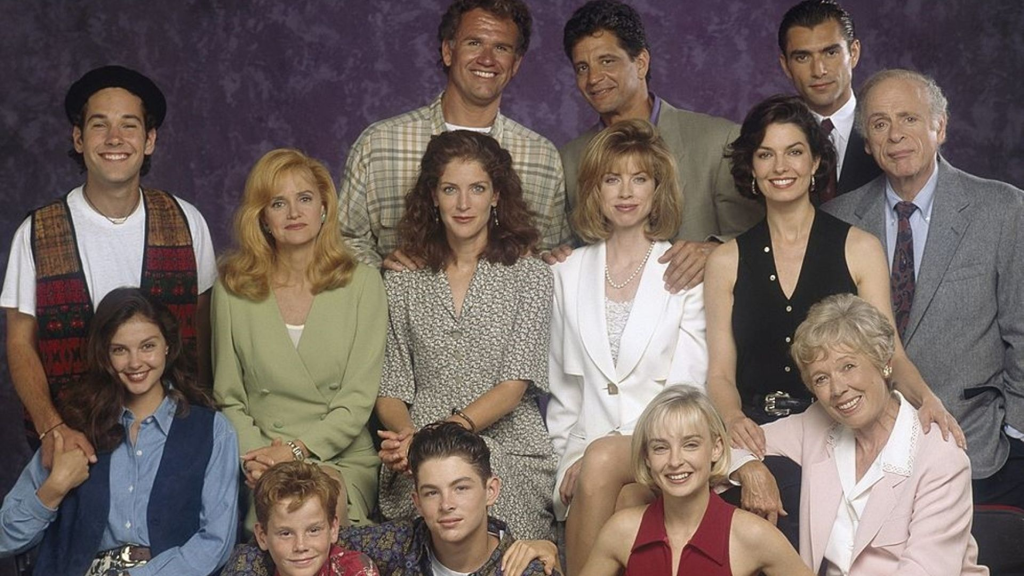
The show featured four sisters, the Reeds, who live in Winnetka, Illinois. The sisters were very different but were close. Their father had been a successful doctor who was not involved in the girls’ lives much but was involved in the lives of other women. Their mother Beatrice (Elizabeth Hoffman) became an alcoholic to help her through his absence and affairs.

📷reelgood.com

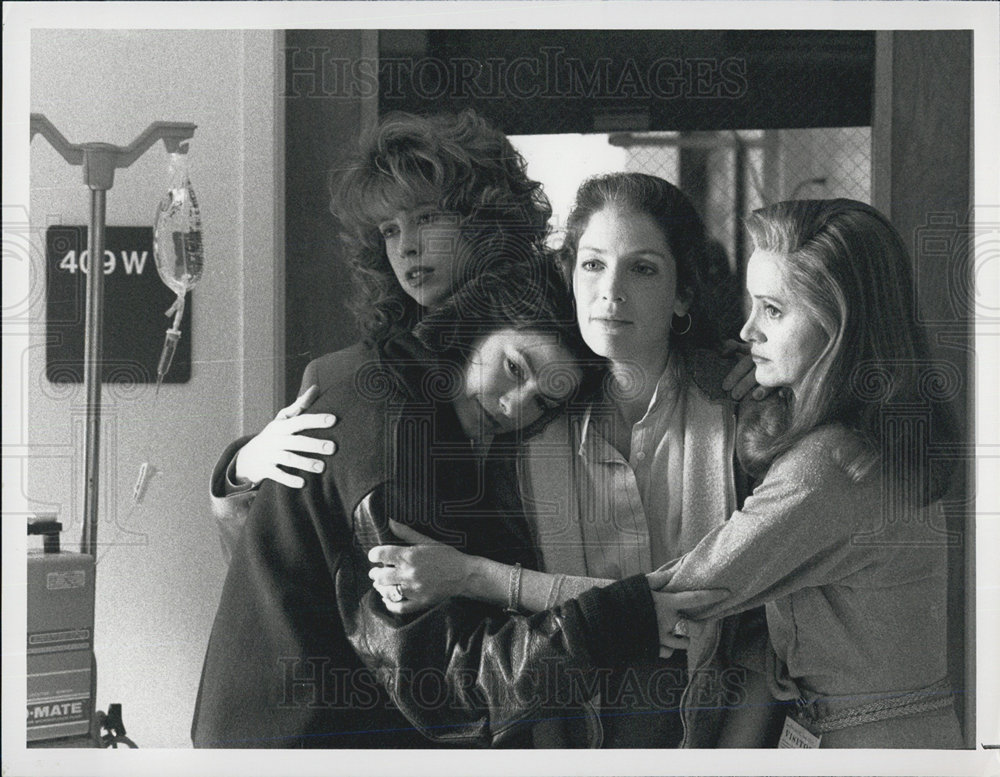
Dr. Reed made it known he wanted sons and the girls all were given “boy” nicknames. Alex (Alexandra) (Swoosie Kurtz) was the oldest. She was wealthy and married to Wade (David Dukes), a plastic surgeon. They have one daughter Reed (played by three actresses over the course of the show: Kathy Wagner [s1], Ashley Judd [s2-4] and Noelle Parker [s6]. Teddy (Theodora) (Sela Ward) was a laid-back artist who never could figure out what she wanted to do with her life. She has a daughter Cat (Heather McAdam) from her prior marriage. Georgie (Georgiana) (Patricia Kalember) was married to John (Garrett M. Brown) and was a stay-at-home mom of two boys, Evan (Dustin Berkovitz) and Trevor (Ryan Francis). Frankie (Francesca) (Julianne Phillips) the youngest, was a businesswoman trying to make a name for herself. She was a bit of a workaholic and an overachiever.

📷imdb.com

Ward was brought in to audition for the role of Frankie, but after reading the script she felt she was better suited to Teddy.

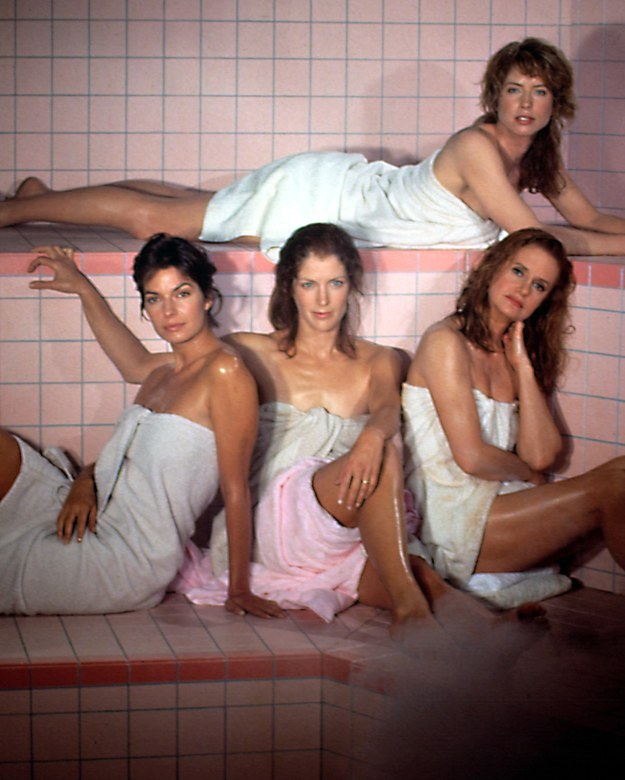
The first two seasons opened with the sisters having a weekly steam bath and chatting about what was going on in their lives. The sisters did not love this part of the show. Phillips said, “it was miserable.” She said “they were sprayed with mineral oil, sat in a cold towel for hours on a smoke-filled soundstage.  . . . We were all severely uncomfortable, and it would go on forever.” Kalember said that it helped the actresses become close though. She said, “if you aren’t able to bond under those circumstances, you are not human.”

A lot of flashbacks are included on the shows, allowing us to learn where some of their personality traits developed and situations in their past that still influence the present. The show found the perfect blend of comedy and drama. They also had a few Moonlighting-like episodes where they were based on movies like The Wizard of Oz or the sisters were in fantasy situations.

📷parade.com Sela Ward

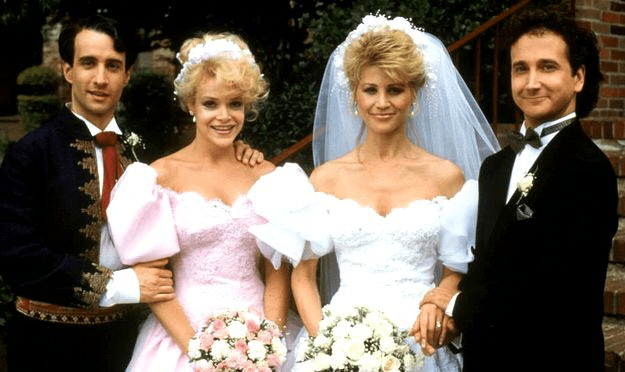
During season one Beatrice sells the family home and moves into a condo. She is arrested for driving under the influence. Alex suspects her husband of having an affair only to learn that he is a cross dresser. Teddy returns home to Winnetka and learns that her ex-husband Mitch (Ed Marinaro) is now dating Frankie. She struggles with this and pursues Mitch who discourages her. One night they end up together, but he asks Frankie to marry him, and they plan a quick wedding that Teddy ruins. Frankie stops seeing Mitch, and Teddy realizes she behaved badly and decides to go back to California; however, before leaving she learns Georgie’s son Evan has leukemia, so she stays to help her sister.

In season two, Georgie is dealing with Evan’s treatment. Alex realizes Wade has been cheating on her for six months and they divorce. Reed drops out of school to punish them. Frankie and Mitch spend some time together for a business investment and decide to elope. Teddy realizes she is pregnant and knows it is Mitch’s. She tells her family it was a one-night stand; later Mitch figures out it was his, but Teddy has a miscarriage. Beatrice starts dating Truman (Philip Sterling) who lives in a condo near her. Teddy gets a job at a boutique but that doesn’t last, and she goes through several jobs during the season, eventually designing clothing for local women. Wade tries to convince Alex to come back home and she oddly begins dating her plumber. Alex and Wade reconcile. Frankie learns she cannot have a child, so she asks Georgie to be her surrogate.

📷tvguide.com Swoosie Kurtz

Season three finds Beatrice eloping. There is an elaborate ceremony planned that they don’t show up to and Reed ends up marrying her boyfriend Kirby (Paul Rudd). Georgie gives birth to Thomas George and has a hard time not being a mom to him. Teddy finds an investor and is very successful but then he sells it to another person without consulting her. The new investor does not see eye-to-eye with Teddy’s vision, so she leaves the company. Frankie and Mitch divorce and fight over custody of Thomas. In another weird twist for Alex, she discovers she has breast cancer and develops a comedy routine to perform.

A lot of activity occurs in season four. Cat is raped and the police investigator, Falconer (George Clooney) helps her remember and identify him. He is eventually shot at the courthouse by a former victim. Frankie gets out of her stressful job and buys Sweet Sixteen, a local diner. Teddy runs into Falconer at an AA meeting, and they begin dating. Georgie struggles with a deep depression. Her son Trevor runs away from the school he was at and does not contact the family. Alex is hired for a television talk show. She meets Big Al (Robert Klein) who owns a large appliance store and sponsors her show. They eventually marry. Georgie and John have separated with all the drama in their family, and they reunite. You always know it’s a bad sign when another sibling is brought into the fold because it usually means ratings are down. In this show, Charley (Charlotte) (Sheila Kelley) meets her sisters because she needs a bone marrow match. None of them can help her but a donor is found, and she becomes part of the family. At the end of the year, Trevor returns after a tornado hits Winnetka, Reed comes home and gives birth to a daughter, Teddy and Falconer marry on a plane during a storm, and Big Al is arrested for tax evasion on his wedding night.

📷pinterest.com
Patricia Kalember

Teddy learns in season five that she is not meant to be happy. Falconer is murdered by a criminal he was going to testify against in court, and Teddy starts drinking again. Georgie sees a therapist who causes her to remember things about her father molesting her that never happened. (The therapist was played by her real husband, Daniel Gerroll) They begin an affair, and she leaves John, thinking this is her great love, but the doctor ignores her. Frankie’s old investment ends in her managing a boxer whom she begins to date. Big Al gets out of prison and decides to run for mayor. Truman has Alzheimer’s and Beatrice has to deal with that. He wants her to end his life when the disease has advanced. She does and to help her afterward, Charley offers her a job as a receptionist at her free clinic. Teddy has a brief relationship with Jack Chambers (Philip Casnoff) the man who got Falconer’s transplanted heart. Frankie has moved to Japan to market a new cow character she created.

In the final season, Georgie goes to graduate school for psychology. She begins seeing a 24-year-old student. Teddy and Cat are carjacked. Teddy buys a gun for protection and is accidentally shot in the head with it. She is in a coma, and Alex convinces Dr. Sorenson (Stephen Collins) to operate. Teddy and Sorenson start a relationship after her recovery. Cat decides to enter the police academy. Reed returns to Winnetka after divorcing Kirby and losing custody of her daughter. She starts a high-priced prostitution company and Alex turns her in and Reed is sentenced to community service. Big Al needs a heart transplant which he survives.

📷imago.com Julianne Phillips

In the finale, Georgie reads her thesis about sisters which makes Alex and Charley mad. Beatrice has a major stroke and dies, which brings the sisters back together. Frankie moves back to Illinois. Georgie and John reconcile at Bea’s memorial service. Teddy is pregnant with a daughter she has already named Beatrice Rose.

The ratings for this show were never stellar. It was in the fifties for the early seasons but dropped to #75 for season five and #103 for season six. However, it received eight Emmy Award nominations. Sela Ward won for Outstanding Actress in 1994. Swoosie Kurtz was nominated that same year and in 1993. Kurtz was beat out by Kathy Baker for her role in Picket Fences.

I think the success of the show, despite some soap-opera-like plots was the fact that it blended humor with heart. Also, the actresses were believable as sisters. Phillips said that “if God himself came down and said, ‘I’m going to design a show: Who would you like to work with?’ you couldn’t pick better people.” She went on to say that “There was something that just clicked. That chemical, indescribable thing. There was a real comfort and connection. It doesn’t happen often.”

📷meethk.com

Kurtz agreed. She said that “from the beginning we had chemistry on camera, but we had chemistry in real life too. . . . I’m an only child, so I thought this is my chance. Siblings by proxy.”

I could not find out why, but the show is not available on DVD. There is an avid fan club for this series, and they have campaigned to bring it to Netflix or another streaming service, but so far, they have had no luck. It’s too bad because it is a show well worth revisiting. For now, you’ll just have to take my word for it.

We Love Spending Time with “Perfect Strangers”

Linn -Baker and Pinchot Photo: tvfinales.com

We are talking about our favorite duos from the eighties and nineties in our blog August series. Although most of these shows feature husband and wife teams, today we are turning the dial back to a show about two cousins: Perfect Strangers. I am always envious of my husband because they have a group of first cousins who are very close and grew up together. While I have scads of second cousins, once removed and such, I have no first cousins and always missed those relationships. Perfect Strangers is about two cousins who develop that type of relationship.

Perfect Strangers is another one of those shows that was quite popular when it was on the air, and it was for eight years, but it doesn’t get much recognition any longer.

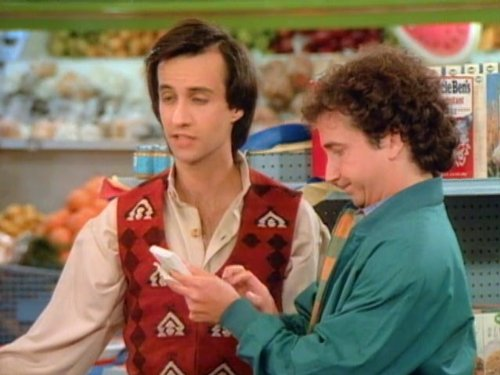
The series was created by Dale McRaven for ABC; McRaven was also the creative force behind Mork and Mindy. Bronson Pinchot had appeared in Beverly Hills Cop as Serge, a gay art gallery employee who had a foreign accent. ABC signed on to the project based on Pinchot starring. However, in the meantime, Pinchot had signed on to Geena Davis’s sitcom, Sara. Sara was quickly canceled and Bronson became available, so a pilot was made with Louie Anderson in the role of the American cousin. It was obvious that this was not the best pairing, and eventually the role was offered to Mark Linn-Baker after an appearance he made on Moonlighting. He and Pinchot had great chemistry and the show was placed between Who’s the Boss and Moonlighting, very popular shows, on Tuesday nights.

Photo: imdb.com

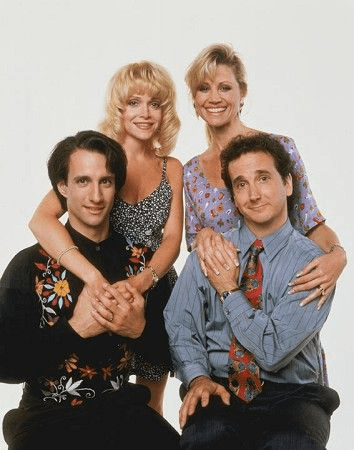
The short first season of six episodes debuted in March of 1986. The show was about Larry Appleton (Linn-Baker), a Wisconsin boy, who moved to Chicago and was enjoying life on his own after growing up in a large family. His utopia is shattered when his cousin Balki Bartokomous (Pinchot), arrives from Mypos, a Mediterranean island, intending to move in with him. Balki’s name was originally Vev, but Pinchot suggested Balki based on his sister’s nickname for her dog. Larry Appleton got his name because Lawrence University is in Appleton, Wisconsin, where I graduated from high school. Neither actor went to Lawrence, but both of them are Yale alumni. Both Linn-Baker and Pinchot got not only their BA degree from Yale but also both received their Masters of Fine Arts in drama.

Larry tells Balki he needs to live somewhere else. Balki had been a shepherd, and most of his impressions of what America was like were taken from pop culture, television shows, and commercials. Larry, a photographer, relents and invites Balki to live there, thinking of himself as more worldly and able to teach Balki the truth about American life. Ironically, it is often Larry who is more inept and gets the pair into some interesting situations.

Photo: pinterest.com

Season two found the show on Wednesday nights. The cousins begin dating flight attendants–Jennifer (Melanie Wilson) dates Larry and Mary Anne (Rebeca Arthur) dates Balki. They meet the girls at the gym and realize that they live in the same building.

In season three, Balki is able to stop sleeping on the living room sofa and gets his own room when the pair moves into a much larger apartment. Somehow Jennifer and Mary Anne still live in their building but no one ever talks about moving. Larry is hired as a reporter for the Chicago Chronicle, and Balki is hired for the mail room. For some reason, halfway through the season the show was moved from its successful spot on Wednesdays to Fridays.

During season five, Harriette (Jo Marie Payton-France), the elevator operator, was given a new show, Family Matters which was also on Friday nights. That show, which for better or worse, introduced America to Steve Urkel, was on the air for nine years. Larry and Jennifer are still going strong while Balki and Mary Anne are lukewarm. Larry proposes to Jennifer during season six.

Season seven finds Jennifer and Larry in a large Victorian house. Of course, they realize they need renters to afford the expensive Chicago mortgage and who moves in but Balki and Mary Anne. Balki becomes an animator with his own comic strip at the newspaper. Eventually, Mary Anne moves out but in the finale, they reconcile, marry, and travel to Mypos for their honeymoon. The show retained its viewers but then it was moved to Saturday nights in February of 1992 before returning to Fridays. The TGIF campaign for ABC’s Friday night shows was very successful, and the network was trying to do something similar for Saturday nights.

Season eight, ironically also a six-episode season, picks up several months after the wedding, and we realize that both Jennifer and Mary Anne are noticeably pregnant. In the finale of the series, babies Robespierre and Tucker join the show.

Photo: pinterest.com

The first six seasons found the show consistently in the top forty. Given its placement between two popular shows in its debut year, five of the first six episodes landed in the top ten. After the show was moved to Saturdays, it experienced a drastic decline in viewers. When the show was moved back to Fridays, it found its audience again. The show’s final season was supposed to be thirteen episodes but it was shortened to six. It was in the top twenty for the final season, and 15 million households watched the finale.

The theme song for the show, “Nothing’s Gonna Stop Me Now,” was written by Jess Frederick and Bennett Salvay. They composed the themes for Full House, Step-by-Step, and Family Matters as well.

We have talked about a lot of shows who have some famous fans and this show was no exception. Bronson Pinchot said Nelson Mandela was a fan of the show. Pinchot was invited to a banquet in South Africa where President Mandela was in attendance. One of the President’s assistants gave Bronson a note that read, “I’m dying to meet you, but if I go to your table, I have to go to everyone’s table. But I wanted you to know that I know my cousin is here.” Later that evening Bronson met Winnie Mandela.

Photo: pinterest.com

The Emmys also recognized the show. In 1987 Bronson Pinchot was nominated for a Lead Actor in a Comedy Series. He did not win, but had some tough competition with Ted Danson for Cheers, Harry Anderson for Night Court, Bob Newhart for Newhart, and, winner, Michael J. Fox for Family Ties. Two years later, Doris Roberts was nominated for Outstanding Guest Actress in a Comedy and lost to Colleen Dewhurst for Murphy Brown. Other nominees included Diahann Carroll for A Different World, Eileen Brennan for Newhart, and Maxine Stewart for The Wonder Years.

I’m sure that Perfect Strangers is in syndication somewhere, but I cannot remember the last time I saw it listed on television. There is a DVD set out for the entire series. I do remember watching this show most weeks and enjoying it, although it was not in my Top Ten. Yes, it had some too-typical and obvious plotlines like the girls living in the same building and both Balki and Mary Anne moving into the Appletons’ new house. However, the writing was pretty good and the characters were fully developed. The twist of naïve Balki often being wiser than native Larry is also a fun influence. It’s definitely a show that deserves more recognition than it has received in the past three decades. I’d love to know if you take some time to watch the DVDs, find it on the air somewhere, or just have fond memories of watching it in the past.

We’re Asking for “Anything But Love”

Later Cast Photo: imdb.com

This month, we are taking a look at some of our favorite duos from the eighties and nineties in “Duos to Love.” I decided to begin with a show that was on when my two oldest boys were babies. I was able to watch a bit more television at night because they slept pretty well. One of the shows we watched was Anything But Love. You don’t hear a lot about it anymore, but it starred Jamie Lee Curtis and Richard Lewis. While usually the pilot has different actors and the premise stays the same with different stars, this show was the opposite. In the pilot, Hannah and Marty are involved in a love triangle with D.W. Moffett. Hannah is a well-respected editor. The network liked the characters but not the plot. After viewing the pilot, the network makes Hannah a researcher, Lewis a reporter, and Moffett is sent on his way.

John Ritter can’t get between them Photo: imdb.com

The sitcom began airing on ABC in the spring of 1989 and continued until June of 1992. Lewis plays Marty Gold and Curtis is Hannah Miller. They work for a Chicago magazine and realize that they are attracted to each other but want to keep their relationship on a professional basis.

Wendy Kout created the show and it was produced by Adam Productions, a company of John Ritter’s.

Rounding out the cast were editor Norman Kell (Louis Giambalvo), assistant editor Jules Kramer (Richard Frank), writer Pamela Peyton-Finch (Sandy Faison), and Marty’s current girlfriend Alice (Wendie Malick). Hannah gets deeply philosophical articles to write, like her first assignment, which is “The Tortilla Wars: Does Chicago Prefer Corn or Flour?” At the end of season one, Alice dumps Marty.

The second season tweaked a few things. The magazine has a new owner in Catherine Hughes (Ann Magnuson) who promotes Hannah from researcher to writer. TV critic Brian Allquist (Joseph Maher) comes on board as does Harold (Billy Van Zandt) and Kelly (Jame Milmore) as new office personnel. In order to talk about her feelings for Marty, Hannah’s landlord and best friend, Robin (Holly Fulger), joined the show. At the end of season two, Hannah admits her feelings to Marty who acknowledges that he also has the same feelings for her.

Photo: GQ.com

The third season had a delayed airing and came back on the air in February. While Hannah and Marty explore their relationship, a new photographer, Patrick (John Ritter), gets a special assignment. Hannah and Patrick work together and they start to have feelings for each other as well. Hannah has to decide if she wants to accompany him to Africa for a new assignment when she realizes he has some ideas she could never approve and their relationship ends.

The fourth season finds Hannah thinking she is pregnant, and she and Marty decide to get married. Not long before the ceremony, the clinic calls to say the test was negative. Hannah and Marty call off the wedding but not the romance. They decide to continue dating and getting to know each other better.

The show began its life airing on Tuesday nights. It was up against The Tuesday Night Movie and Moonlighting. Considering Moonlighting had a very similar theme but complex and sophisticated plots, this didn’t seem like a great idea. The second season found it on Wednesday nights. It was opposite Jake and the Fatman on CBS and a variety of shows that cycled through that time slot on NBC. Ratings began to decline. When it had a delayed return for season three, viewers drifted to other shows, and the network had a hard time luring them back. For season four, they still faced Jake and the Fatman, but now on NBC a show called Seinfeld was scheduled which insured that the ratings would not be likely to improve.

However, ABC did not cancel the series; 20th Century Fox which produced the show with Ritter’s company guessed that the show would not have a sixth season and decided that there were not enough episodes or interest for syndication, so rather than putting more money into the show, they were ready to move on.

Critics seemed to like the show. Rick Kogan, TV critic for the Chicago Tribune described it as “a charming, quirky, witty and intelligent show. . . a member in good standing of that small club of quality shows. But for reasons that have alarmed many in the TV biz, the series is being killed.”

The theme song was “Anything but Love”; it was written and performed by J.D. Souther. Beginning in the second season, it changed to an instrumental version. Souther worked on a variety of soundtracks for shows and even received twelve acting credits for shows and movies including recurring characters on thirtysomething and Nashville.

Considering that the critics liked it, fans liked it before it began moving and going through delays, it starred Lewis and Curtis, and it was on the air for four years, I am always surprised it is not discussed more. This is the opinion of a reviewer on imdb.com: “This was such a lovely show and I miss that sort of thing that isn’t on television anymore. It was very smart, very silly and combined slapstick and clever dialogue well. The show reminded me in some respects of films from the thirties that had witty dialogue and a screwball sensibility and the chemistry between Jamie Lee Curtis and Richard Lewis was endearing and believable. One was given the impression that everyone enjoyed what they were doing. A favorite episode of mine involved someone running into an ex at a restaurant and the three four different stories of how the situation occurred. The best was a Fellini-like observation of the event. It is one of those clever obscure shows that deserves to be on DVD just for my sake.”

The good news is that the first two seasons are included in Volume 1 of a DVD, and it’s only $10 on Amazon. The bad news is that seasons three and four don’t exist. The first two seasons were definitely the best, but it is too bad you can’t watch the entire series. Ratings are very good on Amazon. It would be well worth paying $10 for that much good writing. I’ll close with this review on the DVD from George: “First, about the show. It is wonderful, and holds up well after 30 years. Snappy lines, young Jamie Lee Curtis is excellent in her role, as is the always quirky Richard Lewis. Many guest appearances, good writing (which has become rather rare in TV shows, riddled nowadays with “reality” TV). The DVD includes a couple of nice extras too. Four to five stars for the show.”

Imogene Coca: Born to Perform

After learning about Your Show of Shows last week, we are going to take a closer look at some of the forces behind the award-winning show. We begin with Imogene Coca.

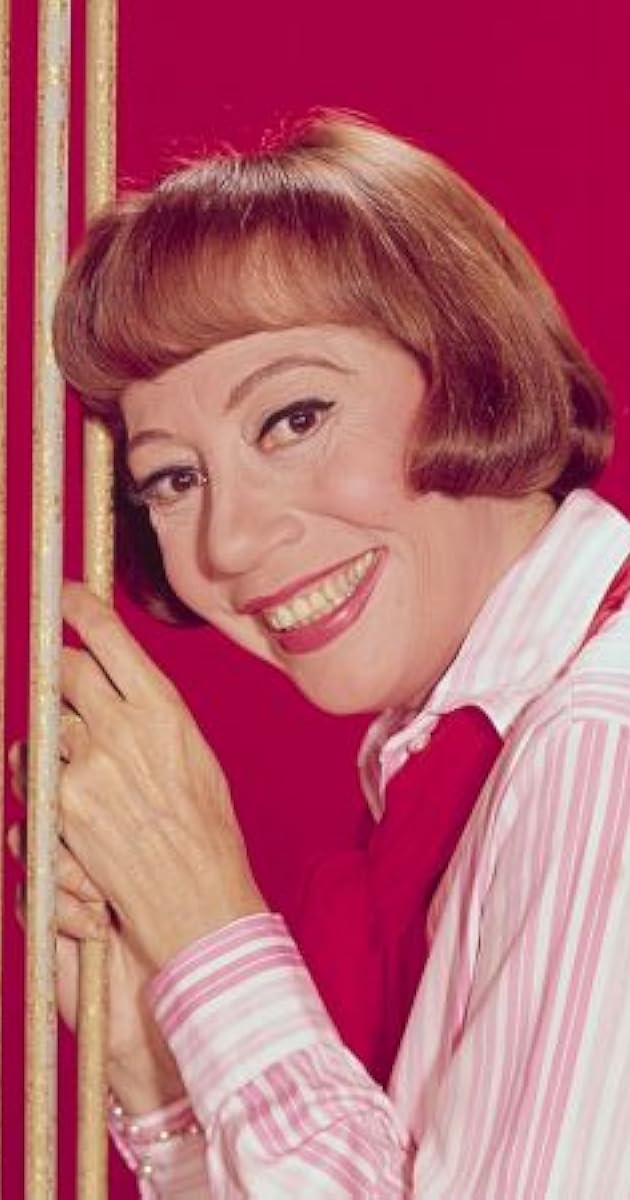
Imogene Coca - IMDb
Photo: imdb.com

Imogene Coca was born Emogeane Coca in 1908. Her father was a violinist and vaudeville orchestra conductor, and her mother was a dancer and magician’s assistant.

Emogeane Fernández Coca (1908 - 2001) - Genealogy
Photo: geni.com

She began appearing in vaudeville as a child acrobat. She also took piano, dance, and voice lessons as a child. She was drawn to dance and studied ballet and moved from Philadelphia to New York to become a dancer while still a teenager. Her first job was in the chorus of a Broadway musical, “When You Smile.” For a few decades, she appeared in stage musical revues, cabaret, summer stock, and movies.

In 1935, Coca married Bob Burton. They were married until 1955 when he passed away.

Coca discussed her early career: “I never thought of myself in comedy at all. I loved going to the theater and seeing people wearing beautiful clothes come down the staircase and start to dance. I wanted to play St. Joan.”

In her forties, Coca decided to add comedian to her slate of talents, and she was a natural. In 1948 she appeared on Buzzy Wuzzy on television. If you have never heard of it, don’t feel bad. I thought it might be a kid’s show. ABC was trying to develop its network, with all of its five stations. Jerry Bergen a comedian wanted to try a variety series. This 15-minute-long show lasted only four weeks.

She might not have had an illustrious beginning, but tv was good to Imogene. For fifty years, she would appear on tv, including six shows as a regular cast member.

The Sid Caesar, Imogene Coca, Carl Reiner, Howard Morris Special (TV  Special 1967) - IMDb
Photo: imdb.com with Caesar, Reiner and Morris

In 1950 she joined the cast of Your Show of Shows, becoming a household name. She was nominated for five Emmys on the show. She won the award in 1952 and lost the other years to Gertrude Berg, Lucille Ball, Red Skelton, and Eve Arden. When discussing the chemistry that she and Caesar had, Imogene said “Two people couldn’t be less alike than Sid and myself. But we kind of know what the other one’s going to do. We pick up each other’s vibes.”

A born comedian, Life magazine described her as taking “people or situations suspended in their own precarious balance between dignity and absurdity, and pushing them over the cliff with one single, pointed gesture.” A critic at the time, said she was not the typical, loud, brash comedian and was “a timid woman who, when aroused, can beat a tiger to death with a feather.”

Pin on Imogene
Photo: imdb.com Cast members

Your Show of Shows was a great success and everyone tuned in Saturday nights to catch the latest show. Fans loved the ongoing skits such as Coca and Caesar playing the bickering couple, the Hickenloopers or a Bavarian town clock that had real life figures and broke down whenever it chimed the hour.

Many viewers mentioned the parodies the show did of movies. These were similar to the ones the Carol Burnett Show also did so well. Two of the scenes that came up often in viewers’ memories were the scene spoofing On the Waterfront when Marlon Brando tells his brother “I could have been a contender” and the parody of From Here to Eternity when Deborah Kerr and Burt Lancaster have a romantic moment on the beach. In Your Show of Shows version, the couple is continually hit with waves until they almost drown.

Comedy Legend Imogene Coca: I'm Cuckoo for Coca | The Scott Rollins Film  and TV Trivia Blog
From Here to Obscurity parody Photo: scottrollinsfilmandtvtriviablog

When the network chose to break up the Caesar-Coca team and give them their own shows, Coca had her own show, but it only lasted a year. For the rest of the fifties, she appeared primarily on drama shows which often aired plays.

In 1960, Imogene tried marriage a second time. She wed King Donovan and they would be together until his death in 1987.

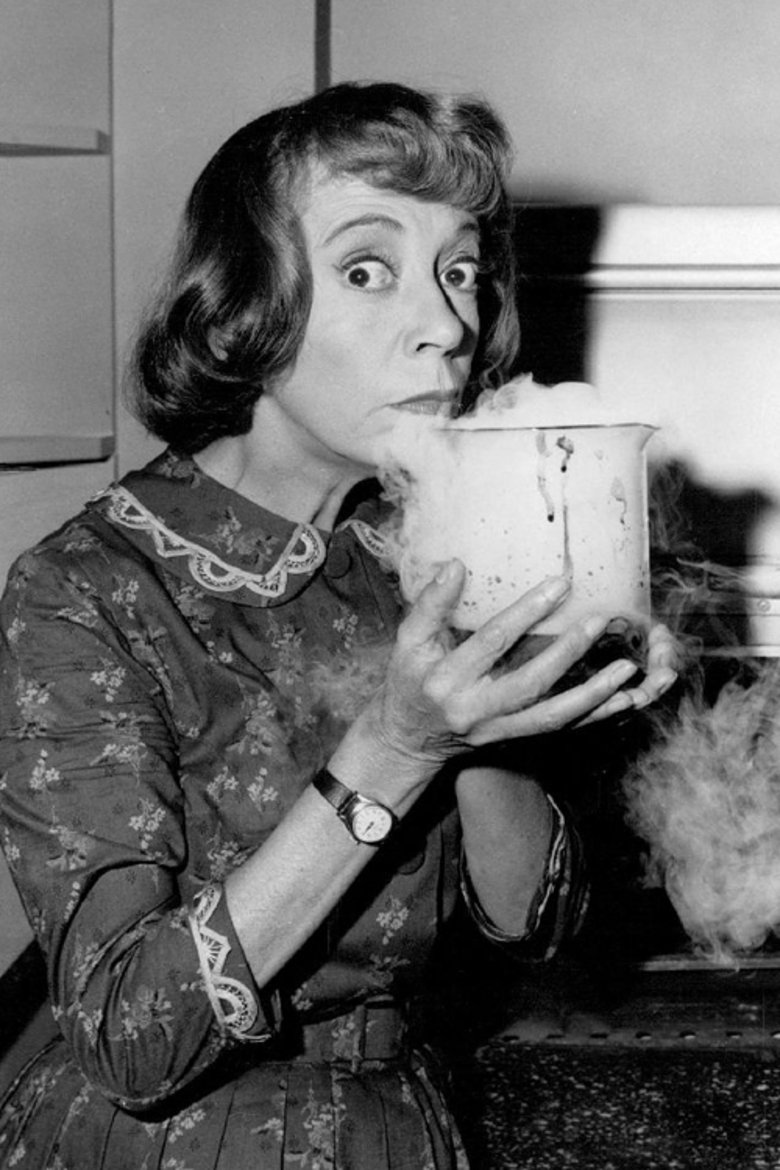
From 1963-64, she joined the cast of Grindl which also lasted only one season. Coca played Grindl. She was an employee of the Foster Temporary Service, and she worked for Anson Foster (Jim Millhollin). Grindl accepts and completes a variety of jobs including babysitter, bank teller, and theater ticket taker. Most of the assignments get her involved in some type of crime or mystery. The show was on Sunday nights between Walt Disney’s Wonderful World of Color and Bonanza which was a great spot, but it also competed with the popular Ed Sullivan Show.

Grindl - DVD PLANET STORE
Grindl Photo: dvdplanetstore.com

In 1966-1967, she jumped into another new sitcom, It’s About Time. This wacky show was created by Sherwood Schwartz and also starred Jim Millhollin. The premise is that two astronauts who were traveling faster than light end up in prehistoric Earth time and when they are unable to return, make friends with the locals living there. This show preceded The Ed Sullivan Show but then ended up competing with Walt Disney’s Wonderful World of Color.

1966-67 Television Season 50th Anniversary: It's About Time (part 3 of 3) -  YouTube
It’s About Time Photo: youtube.com

During the seventies, she appeared on many shows, including Bewitched, Night Gallery, The Brady Bunch, and Love American Style.

Her busy career didn’t flounder in the eighties. She continued to guest star on shows including Trapper John, MD and Mama’s Family. She appeared in an episode of Moonlighting which produced her sixth Emmy nomination. She would lose to Shirley Knight for thirtysomething.

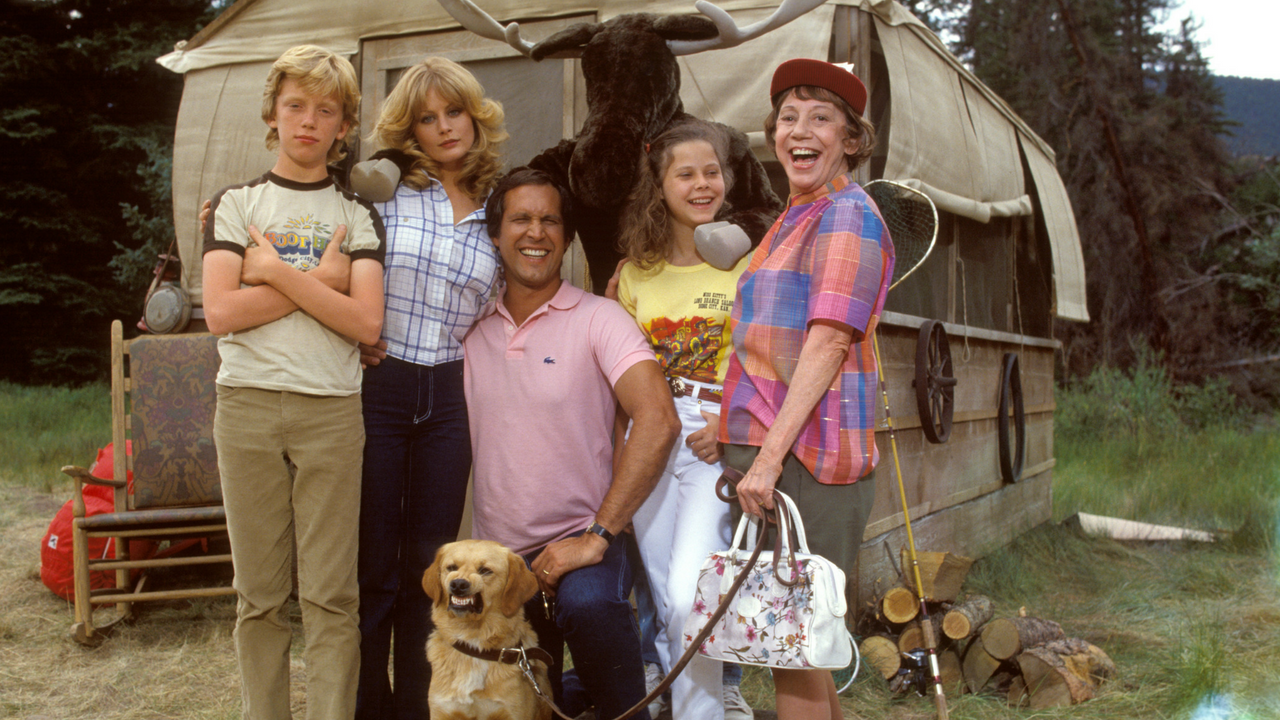
She was in movies off and on through the decades and perhaps is best known for her role of Aunt Edna in National Lampoon’s Vacation.

National Lampoon's Vacation – IFC Center
Aunt Edna in National Lampoon’s Vacation Photo: ifccenter.com

Of course, during these decades she also continued to appear on many variety and game shows. You will spot her in reruns of The Carol Burnett Show, The George Gobel Show, and Bob Hope and Dean Martin specials among other shows. She also did not ignore her early love of Broadway. She received a Tony Award nomination for “On the Twentieth Century.”

The Brady Bunch: Jan's Aunt Jenny | The Very Special Blog
On the Brady Bunch Photo: theveryspecialblog.com

In 1988 at age 80, Coca received the Lifetime Achievement Award in Comedy; her male counterpart receiving the award that year was George Burns. She was also honored in 1995 with the Women in Film Lucy Award, named for Lucille Ball.

Coca finished her career voicing characters for children’s programming. Sadly, she suffered from Alzheimer’s disease. She passed away at home in 2001. When he heard of her passing, Sid Caesar said, “All the wonderful times we shared together meant the world to me.”

Greatest Women in Comedy - Legacy.com
Photo: legacy.com

Imogene Coca was truly a special person. She had several different careers rolled into one. It’s hard to imagine that she did not begin comedy until her forties because she was one of the best. I’m sad that at the end of her life she was not able to retain the beautiful memories she gave us during her professional life. Thank you for creating a lifetime of special moments that you left for us.

This Show was Too Close for Comfort

When I looked up the definition for “too close for comfort” it said “close enough to make a person feel nervous, worried or upset.” That is exactly how this show made me feel.

Photo: sitcomsonline.com

I realize that I was hard to please in the 1980s. Coming out of the 1970s with M*A*S*H, The Mary Tyler Moore Show, and The Bob Newhart Show, I did not enjoy All in the Family, The Jeffersons, Alice, Maude, or Diff’rent Strokes. I did watch Cheers, Family Ties, The Cosby Show, Who’s the Boss, and Moonlighting during that decade. Too Close for Comfort, along with Three’s Company, just didn’t strike me as funny.

When you invest in a show, you feel like these characters are part of your life. Ted Knight’s role of Ted Baxter on The Mary Tyler Moore Show was a flawed human being for sure, but I felt like we had spent a lot of time together, and I was able to see beyond the brash, obnoxious exterior to the vulnerable and kind being inside. It was if we had spent lots of hours over the kitchen table having coffee. Characters like Baxter teach us about the world and about ourselves. Ted Knight as Henry Rush was more like the neighbor whom I caught glimpses of out the kitchen window but there was no way to learn more about the character other than the surface appearances. The show was based more on plots than characters.

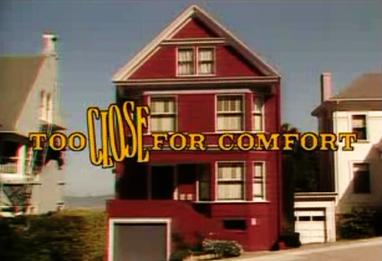
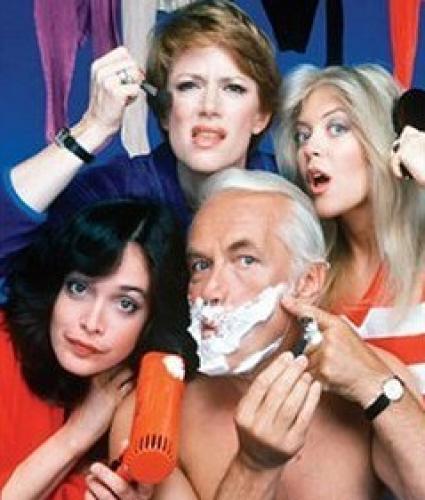
Too Close for Comfort was based on the British sitcom Keep It in the Family. It debuted in 1980. Henry Rush is a cartoonist who writes about the Cosmic Cow (a space crime fighter) and lives in San Francisco with his wife Muriel, a photographer (Nancy Dussault) and his two adult daughters Jackie (Deborah Van Valkenburgh) who works at a bank and Sara (Lydia Cornell) who is a college student.

Photo: wikipedia

The house was a two-family residence and the girls decide to rent from their parents. Henry is not sure it’s a good idea, but it’s the only apartment they can afford because he charges $300 rent for the bottom of the Victorian house. Monroe (Jim Bullock) is a friend of Sara’s who was cast only in one episode but ended up joining not only the cast but living with Henry and Muriel.

The show was on Tuesday nights. The show followed Three’s Company and its main competition was BJ and the Bear.

In season two, Muriel becomes pregnant and Henry’s niece April also comes to live with the Rushes.

See the source image
Photo: pinterest.com

One of the signatures of Henry Rush was the variety of college sweatshirts he wore. Fans from around the country would send them to the network hoping to see them on the series. The first sweatshirt to make an appearance was the University of Michigan.

The third season found the show on Thursday nights and ratings declined significantly. The show was up against Cheers on NBC and Simon and Simon on CBS. April moves out and Muriel’s mother Iris (Audrey Meadows) moves in to help with the baby. The show was cancelled by the network. The fourth season went into syndication with new episodes.

See the source image
Photo: sitcomsonline.com

A fifth season began, but the show changed so much it really was a new series. The title was changed to The Ted Knight Show, the family now lived in Marin County where Henry bought a newspaper, a new theme song was created, a new opening was shot, and both daughters left the show. However, Monroe moved with Henry and Muriel. The new episodes began airing in April of 1986; 22 episodes were taped and after the first 12 aired, Knight passed away from colon cancer. The final ten episodes were run, and then the series ended.

See the source image
Photo: sitcomsonline.com

During the various seasons, the girls changed careers a lot. Jackie moved from the bank to a department store to a fashion designer. Sara held a bunch of part-time jobs while she was in college. She then became a bank teller, a weather woman at the local station KTSF, and an entrepreneur who sells Cosmic Cow Cookies.

In a Fox News interview, Cornell discusses how she received the role of Sara. She said she had to take a bus for the audition and showed up an hour late after being in the rain. The secretary told her auditions had closed but Arne Sultan said to let her audition as long as she came in. They gave her a script to read and a line said “She gives her dad a raspberry.” Sara picks up an imaginary raspberry and hands it to her dad. Sultan asked her what she was doing, and then explained a raspberry was a Bronx cheer. She felt very stupid and they were all laughing. The casting director and executives decided at that time she was perfect for the part and asked her to report to work the next day.

See the source image
Photo: episodate.com

I know that there have been far worse shows than Too Close for Comfort, but I’m not content having the bar set there because there have also been far better shows. Rather than my usual recommendation of buying the DVDs for a weekend of binge watching, I’m going to tell you to buy a good book instead.

The Scarecrow and Mrs. King: You’re Not in Kansas Anymore

In a recent blog (August 10, 2020), we learned a bit about Kate Jackson and some of the successful series she was a part of.  One of those shows was The Scarecrow and Mrs. King. No, it’s not a dream sequence where Mrs. King travels around Oz with her best friend. In this case, Scarecrow (Bruce Boxleitner) was a spy. Amanda King (Kate Jackson) was an ordinary divorced housewife and the mother of two young boys. They worked together in covert operations.

Photo: moviedatabase.com

Created by Brad Buckner and Eugenie Ross-Leming, The Scarecrow and Mrs. King ran for four seasons, producing 89 episodes. Rounding out the cast was Dorothy West (Beverly Garland), Amanda’s mother whom she lives with; Francine Desmond (Martha Smith), another secret agent; Billy Melrose (Mel Stewart), Scarecrow’s boss; and Amanda’s boys Jamie (Greg Morton) and Philip (Paul Stout).

Photo: statesidestills.com
With Beverly Garland

The way they begin working together was a bit unlikely, but that is the way most spy shows go. The show is set in the Cold War era and is full of James Bond components and witty repartee. Scarecrow a/k/a Lee Stetson in real life, hands Amanda a package at the train station and tells her to give it to the man in the red hat. Unfortunately, at the time, there are a bunch of men wearing red fezzes there so she is unable to deliver it. Scarecrow later tracks her down to recover the package. When he is taken by bad guys, she solves the secret about the package and rescues Stetson before they can kill him.

Photo: pinterest.com

At the time they met, Amanda was unemployed and looking for a job. She majored in photojournalism. She had a boyfriend named Dean, and she volunteered at the local hospital as a Bedside Bluebell. She liked to read romance novels and was allergic to horses.

Photo: dvdtalk.com

Amanda becomes more involved with the agency and eventually becomes a trained agent, considered a seasonal employee. The team travels around the world, often posing as other people. Of course, Scarecrow and Amanda fall in love. Her ex-husband Joe is still around and they are good friends. Sam Melville played Joe; he had some experience because he played her husband Mike in The Rookies.

Photo: allposters.com

Amanda already has to keep her spy career a secret from her mother and boys. When Scarecrow and Amanda get married, they must keep the marriage a secret from their friends, families, and coworkers as well.

The show aired on CBS. For season one, it was up against That’s Incredible on ABC and Boone early in the year with TV Bloopers later in the year on NBC. Season two found it competing with Hardcastle and McCormick on ABC and TV Bloopers again on NBC. It finished in the top twenty for its first two seasons. Season three it dropped to 28th. Hardcastle and McCormick was still its competition on ABC. On NBC it started against TV Bloopers which was replaced by You Again? and Valerie. Both You Again? and Valerie were in the top 30 as well.

Photo: pinterest.com

Season four the show was moved to Friday nights. Even coming on the heels of Dallas which was the only top 30 show airing Fridays, the ratings were not great. It had some tough competition with Webster and Mr. Belvedere on ABC and The A-Team on NBC.

In addition to the move to Fridays, during season four, Kate was diagnosed with breast cancer and her treatments required her to have limited shooting time. The show was cancelled without the series’ ability to film a finale that would have wrapped up the storylines. In hindsight, the network should have let it finish out because they replaced the show with two mundane sitcoms: Nothing is Easy, a Dee Wallace show in which she and her husband adopt a daughter and then are asked to adopt an Asian boy and an African American girl; later her husband is killed in a car accident and she is a single mother. The Popcorn Kid was about a wannabe movie star who works in a theater.

Photo: pinterest.com
With Martha Smith, fellow agent

In addition to viewers enjoying the show, critics also liked it. The show won and Emmy for Outstanding Achievement in Music Composition for a Series in 1986. It was also nominated for three other Emmys: Outstanding Cinematography for a Series in 1985 and Outstanding Costuming for a Series for both 1985 and 1986. Jim Lapidus and Molly Harris Campbell were nominated in 1985, and Andrea Weaver and Lapidus were nominated in 1986. Weaver would go on to do costuming for movies. Lapidus did costuming for movies after the show including Witches of Eastwick and Jerry Maguire and became a costume designer for shows such as 24, Dexter, and Hawaii Five-O. Harris continued her career as a wardrobe designer for Remington Steele, Night Court, and LA Law before becoming a designer on Beverly Hills 90210, Charmed, The X-Files, and She Spies.

Photo: pinterest.com

In the era of couples working as a team to solve crimes, a la Hart to Hart and Moonlighting, this was a decent show. It featured humor, romance, drama, clever dialogue, intrigue, and a great chemistry between its co-stars. The characters go through a bit of growth during the four seasons. Scarecrow morphs from a risk-taking, arrogant, lady’s man to a more thoughtful person and a smarter agent. Amanda becomes more confident and capable as an agent and a working woman.

Photo: fanpop.com

The entire series was out on DVD by March of 2010. If you’ve never watched it, give it a try. You won’t be bored solving crimes with The Scarecrow and Mrs. King.

Moonlighting: An Unusual Romance

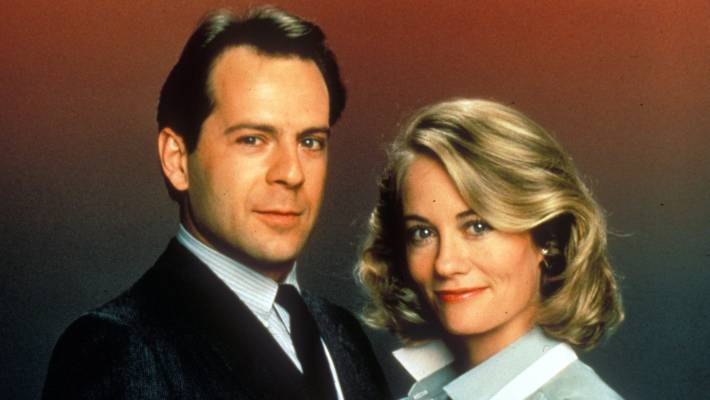
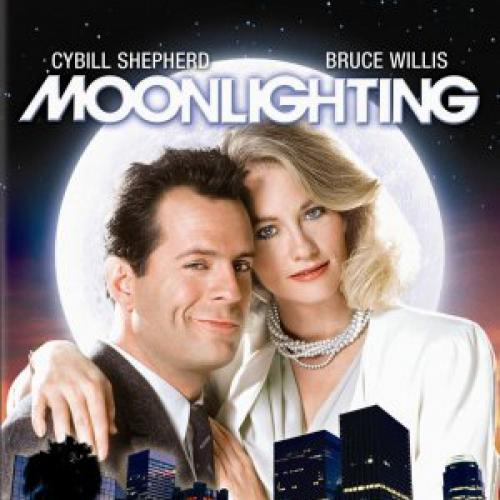
We are in the midst of our series about crime-solving duos. We looked at husband and wife teams on MacMillan and Wife and on Hart to Hart. Today we tackle the wise-cracking David Addison (Bruce Willis) and the sophisticated Maddie Hayes (Cybill Shepherd) on Moonlighting.

Photo: stuff.co.nz

Madelyn Hayes was a successful model who lost all her savings when her investment advisor left the country with her money. Her only assets are her house and a run-down detective agency she used for tax write-offs. Detective Addison convinces her to try something new and run the agency. Addison and Hayes agree on almost nothing except that they both think it’s important to find missing people, foil murder attempts, and spy on unfaithful spouses. Addison is a bit of a ladies’ man, carefree, and easy going; Maddie is not. David is a tap beer in a red cup and Maddie is an exotic champagne in a crystal goblet.

Photo: aveleyman.com

Maddie renames the agency Blue Moon, which was the name of the shampoo she was best known for promoting.

Photo: imdb.com

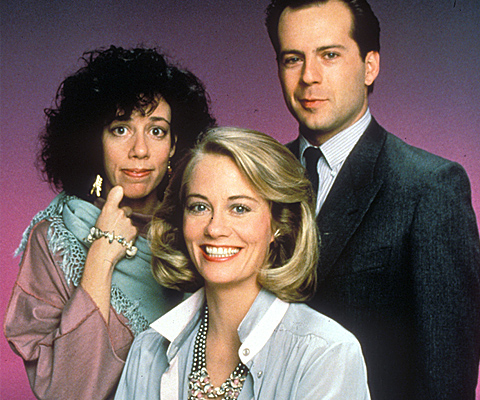
Rounding out the cast of characters are Agnes DiPesto (Allyce Beasley), the receptionist/secretary, and Herbert Viola (Curtis Armstrong), another gumshoe. These were both quirky characters but lovable in their own way. Agnes usually answered the phone in rhyme. Herb is well meaning but not the brightest light bulb. Later in the series, these two explore their own romance.

Photo: konservative-aktien.com

The role of Maddie Hayes was written for Shepherd.

Photo: theidleman.com

Addison’s role was harder to fill. Robert Blake and Rick Dees were both considered for the role. Willis was one of the last people to audition for the spot; he was chosen from about 3000 actors.

Jazz great Al Jarreau cowrote and sang the theme song. The lyrics to the show are:

Some walk by night
Some fly by day
Nothing could change you
Set and sure of the way

There is the sun and moon
They sing their own sweet tune
Watch them when dawn is due
Sharing one space

We’ll walk by night
We’ll fly by day
Moonlighting strangers 
Who just met on the way

Photo: playlists.net

Beginning in 1985 and running until 1989 on ABC in the Tuesday night time slot, the series resulted in only 66 episodes. The show was a new genre. It was a mystery and had drama and romance but was also intentionally funny. It can best be compared to some of the screwball comedies from the 1930s and ‘40s such as It Happened One Night, The Philadelphia Story, or His Girl Friday. The show was also recognized for creating some unusual plots and filming techniques. For example, in one episode, David and Maddie are told about a murder that occurred in a 1940s nightclub. Black and white dream sequences show us how each of them imagined the murder happening. The episode, “Atomic Shakespeare” is an adaptation of The Taming of the Shrew, performed in iambic pentameter. The show begins with a young boy being reprimanded by his mother for watching Moonlighting instead of studying for his Shakespeare test.

Photo: openletr.com

Filming the shows was always expensive due to the specialized lighting and cinematic effects. The estimated cost per episode was a whopping $1.6 million. A typical script for a one-hour length show is about 60 pages. Scripts for Moonlighting tended to be twice as long. An episode from Moonlighting took 14 days rather than the average seven to film. The attention to detail and quality took its toll. Production delays occurred often, and shows weren’t completed in time for airing, resulting in reruns when only 16 of the required 22 episodes were finished each year.

It didn’t help that Shepherd became pregnant during the run of the show, and Willis broke his clavicle skiing. Both of these situations added to the delays. It got so ridiculous that it became a running gag. ABC had an ad campaign showing network executives impatiently waiting for the most recent Moonlighting tape. Television Jeff Jarvis narrated an introduction to one show, telling viewers he wanted to summarize what had been happening on the show that year because it had been so long since a new show had aired.

Despite the problems with filming, both viewers and critics loved the show. Moonlighting received 41 Emmy nominations with 7 wins including one for Willis for Lead Actor in a Drama. In season three, ratings went from 20th place to 9th place.

During the fourth season, Maddie and David finally get together, ending the sexual tension and back-and-forth attraction between the two characters. The ratings then began to decline a bit, but the show still came in at 12th place.

The reason for the ratings drop in the final season, as well as the eventual cancellation of the show, was usually placed on the two stars and their relationship. It’s amazing how much chemistry the characters had because they did not get along well from the start, and it only got worse as the series continued. By the fourth season, they were rarely on the set at the same time. Willis was also developing into a movie star, and after Die Hard, he didn’t want to continue dealing with all the negative issues the show produced.

Photo: ottawacitizen.com

The finale includes Agnes and Herb’s wedding and a weird plot where David and Maddie find the Blue Moon sets being dismantled and learn that the show has been cancelled. The two stars try to figure out what is happening, and the show ends with a message that Blue Moon ceased doing business in 1989.

The limited number of shows made it unpopular for syndication. The series was released on DVD, but they are hard to find and very expensive. On ebay.com, the complete series was going for $250. Amazon listed season three for $99 and season four for $149.

Photo: hitstv.com

The show was an interesting concept. With actors breaking the fourth wall to talk directly to the audience, the interesting plot themes, cinematic lighting and filming techniques, the quick and witty banter between David and Maddie, and the cultural and literature references, it’s not like any show that has aired before or since. It’s always hard when you have two characters attracted to each other when trying to decide if they get together or not. If they do, the audience is often disenchanted with the show; if they don’t, it can drag on too long, so it’s a hard timing to get right. It’s too bad the DVDs are so pricey, especially since syndication was not an option for the show. The characters hit it off perfectly even if the stars did not. There are a lot of factors that made this show special.

What’s Going On? Nothing. Then It Must Be Seinfeld.

August 13 is International Left Handers Day. Looking at classic television shows, there are plenty of famous left handers to celebrate including Pierce Brosnan from Remington Steel, Lisa Kudrow from Friends, Sarah Jessica Parker from Square Pegs, Goldie Hawn from Laugh In, Bruce Willis from Moonlighting, Mary Kate Olsen from Full House, Drew Carey from The Drew Carey Show and Whose Line Is It Anyway?, Tim Allen from Home Improvement and Last Man Standing, and Ed O’Neill from Married . . . with Children and Modern Family.

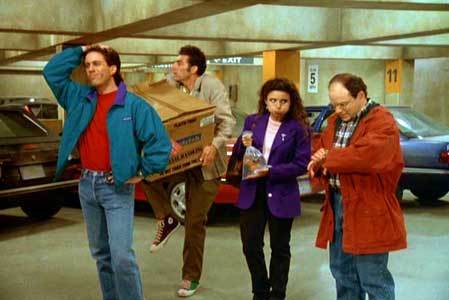
Any of these actors would be worth writing a blog on, but today we are going to concentrate on a show that featured two left handers: Jerry Seinfeld and Jason Alexander. Seinfeld celebrated the continuing misadventures of neurotic New York City stand-up comedian Jerry Seinfeld and his equally neurotic New York City friends.

seinfeld

This show, always defined as being about nothing, was on for nine years, producing 173 episodes. The show featured one of the most unique concepts for a sitcom.  Like Burns and Allen, Jerry Seinfeld stars as himself, a comedian. He and three of his closest friends live in New York City and we get to listen in to their conversations, adventures, and boring daily chores. Each of the main characters has his or her own quirky traits.

seinfeld1

Debuting in 1989, the show was created by Jerry Seinfeld and Larry David. The characters were based on people they knew. Jerry’s best friend was George Costanza (Jason Alexander). His ex-girlfriend and now close friend Elaine Benes (Julia Louis Dreyfus) was often stopping by his apartment to discuss life. Cosmo Kramer (Michael Richards), known as “Kramer,” lived across the hall from Jerry.

jerry

Jerry is usually the calm in the storm in the group, handing out advice and being the voice of reason. He is a germaphobe and a neat freak. He always has a box or two of cereal on top of his refrigerator and we often see him eating it. He also loves the Mets. Jerry was an Abbot and Costello fan in real life and if you watch the show closely, you will see many references to the show and the actors.

seinfeld12

George has been Jerry’s friend since high school. He has a lot of poor traits including being cheap, a liar, and often petty. He often uses an alias, Art Vandelay, as part of his elaborate lies. However, he is loyal to Jerry.  Other actors considered for the role were Danny DeVito, Nathan Lane, David Alan Grier, Kevin Dunn, and Brad Hall.

seinfeld11

Elaine is trying to find Mr. Right but has to date a lot of Mr. Wrongs to get there. She is sometimes to honest for her own good. She has several jobs during the course of the series. Dreyfus beat out Rosie O’Donnell, Patricia Heaton, Mariska Hargitay, Jessica Lundy, Amy Yasbeck, and Megan Mullally for the role.

seinfeld10

Kramer is his wacky neighbor. He wears vintage clothes and is a bit naïve, but intelligent and caring.  As Kramer (Michael Richards) became more popular, his entrance applause grew so prolonged, that the cast complained it was ruining the pacing of their scenes. Directors subsequently asked the audience not to applaud so much when Kramer entered.

seinfeld9

Another recurring character on the show is Newman played by Wayne Knight. Newman lives in the same apartment building as Jerry. He’s a mailman. He bonds with Kramer but doesn’t like Jerry at all.

seinfeld8

Many episodes are based on real life experiences of Seinfeld and David.  Characters and plots from past shows are often referenced or expanded on. Like real life friends who have inside jokes, several themes reappear. Plots are often everyday activities. In one show, Jerry, George, and Elaine spend the episode waiting for a table at a Chinese restaurant.

seinfeld5

Like Friends, it truly was an ensemble cast. While the audience loved Kramer, each of the characters was equally important. In a May 14, 2018 Variety story, authored by Scott Huver, who was reflecting on the popularity of the show, Jason was discussing the last episode. His quote sums up how crucial they all were: “And he (Jerry) said this really beautiful thing. He said, ‘For the rest of our lives when anybody thinks of one of us, they will think of the four of us, and I can’t think of any people that I would rather have that be true of.’ And as we all began to weep over the fact that Jerry had said that, that’s when they started calling our names and we had to go out and pretend that everything’s just hunky dory.”

seinfeld4

Unlike many other shows, Seinfeld was slow to gain a fan following. In season four, they finally it the top 30.  However, the show ranked number one for its entire final year.

Jerry Seinfeld received five Emmy Award nominations for Outstanding Lead Actor in a Comedy Series, but never won. The show was nominated for Outstanding Comedy Series from 1992-1998 but only won the Emmy in 1993.

seinfeld3

Jerry Seinfeld turned down an offer from NBC that would have made him one hundred ten million dollars for a tenth season of the show.  There was talk this past year about a Seinfeld revival. After watching Will and Grace’s revival, I’m not sure that’s a good idea. Rarely do revivals live up to their predecessor’s quality.

The finale was viewed by 76 million people. Many fans found the show offensive. The entire group of friends are taken to jail for violating the Good Samaritan law in Massachusetts. They watch an overweight man being robbed and instead of getting help, they mock him.

final seinfeld

None of the friends did the right thing, but perhaps Seinfeld and Alexander can be excused since they were left-handed. Finales are tough especially for a much-beloved show and this one did not do the show justice. In my opinion, it deserved a more creative going away party.