Angie: Always on the Move

This month we are learning about sitcoms with one name, and today is Angie. Angie had a short run from February 1979 until September of 1980, producing 36 episodes. It was one of the few Garry Marshall shows not to be a long-running hit. He created it with Dale McRaven. We all know Marshall’s amazing career with Happy Days, Laverne and Shirley, The Odd Couple, not to mention all of his great movies. McRaven also had a prolific career as a producer and writer. He’s listed as producer for The Partridge Family, The Betty White Show, Mork and Mindy, and Perfect Strangers. His writing credits includes all of these shows, as well as The Dick Van Dyke Show, That Girl, Get Smart, The Odd Couple, and Room 222 among others.
📷ihearthollywood.com

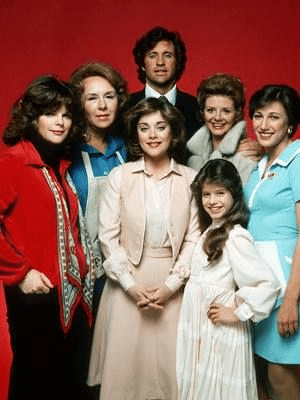
The cast was quite talented: Donna Pescow played Angie, Robert Hays was her boyfriend-later-husband, the amazing Doris Roberts was her mother Theresa before Raymond came along, and Debralee Scott played her sister Marie.

Bradley Benson is a young pediatrician who comes from a wealthy family comprised of his stuffy father Randall (John Randolph), his overbearing sister Joyce (Sharon Spelman), and her daughter Hillary (Tammy Lauren). The show is set in Philadelphia.

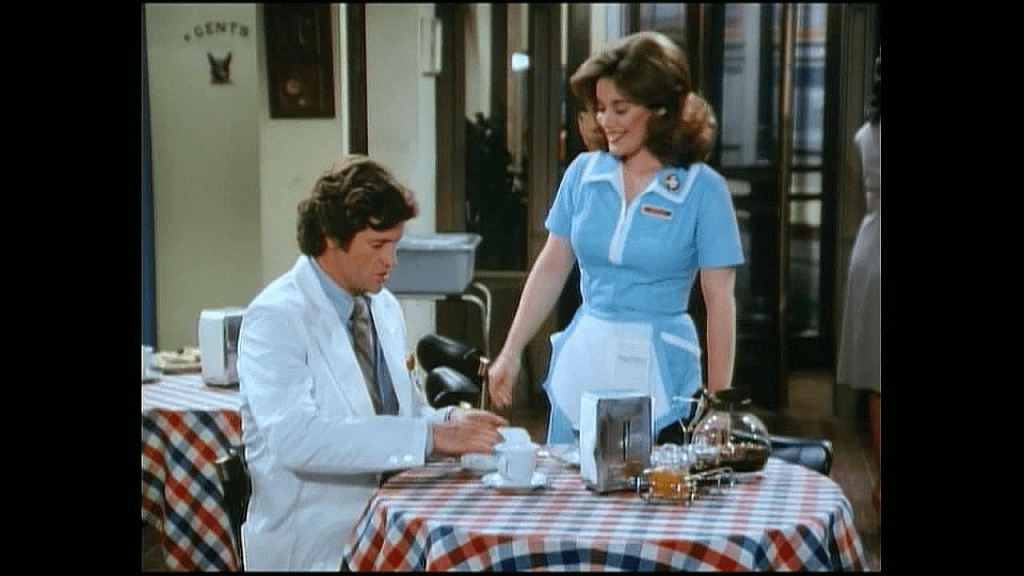
Angie is a coffee-shop waitress who falls in love with Brad. Many scenes are set in the diner with Angie’s friend and co-waitress Didi (Diane Robin). When their families argue about wedding plans, Brad and Angie elope. Later Angie’s mother plans a small family wedding for the two families to get to know each other, and Brad buys the coffee shop for Angie.

At the beginning of the second season, Angie sells the coffee shop to buy a salon with her mother.

📷imdb.com

The theme song was “Different Worlds,” written by Norman Gimbel and Charles Fox. Gimbel is still hard at work and has amassed 494 credits so far while Fox has 131 credits for many impressive television series and big-screen films. Maureen McGovern sang it; she’s best known for her top-forty hit “The Morning After.”

The show was sandwiched between Happy Days and Three’s Company on Tuesday nights, which ensured great ratings. This one was fifth its first week. The show just could not find its fan base. By the end of the season, the Nielsen ratings had fallen drastically, and the show had moved to Monday nights following Monday Night Football. Angie wasn’t the only show to struggle in this time slot. Once it was moved, three other shows—One in a Million, Goodtime Girls, and Laverne and Shirley—all tried this scheduling spot. I’m not sure if the shows were just not very good in 1979, if people were too busy to watch television, or the network heads were inexperienced, but when you look at the schedule from 1979 most prime times had a different show in the slot every season of the year. When it’s not only one show on a network moving, but many shows on a network moving and then all networks having a bunch of shows moving, how are viewers supposed to figure out where anything was? Out of the 54 new shows debuting in 1979, by the next season every network basically had one hit show out of the bunch: ABC-Hart to Hart, CBS-Trapper John MD, and NBC-The Facts of Life. While these are all decent shows, none of them were classics in my opinion. In 1980 another 30 shows were brand new.

📷rewatchclassictv.com

The show was put on hiatus. It did return in April on Saturday nights, but it was officially canceled in May.

When you look at this show on paper, it had all the right elements. First of all, we have Garry Marshall and Dale McRaven, very successful creators and writers. The cast was amazing. Even the theme song was composed and sung by extremely talented people. Then you have the fact that there were not a lot of great shows debuting this year; a decent show should have crushed it. So, what happened here?

I think I’m putting the blame for this one on the network. I watched the pilot and while pilots are meant to pull you back for the next one, most pilots aren’t the best of the series. Some of the pilots for shows I love are almost dreadful. This pilot was not dreadful. The characters were likable, the writing was funny, and the theme was not overdone over the years. It was similar to The Mothers-In-Law from a decade earlier but more of a Dharma and Greg (which came two decades later) where they fall in love despite their economic differences.
📷youtube.com

This series was better than a lot of shows that are currently on the air. I did watch another later episode where the couple elopes. Once again, the writing was good and the characters were a bit eccentric, but the writers knew how far to go to keep them likable and charming rather than odd. If ABC had kept it in a time slot for more than a month or two and given it a bit of time, it might have been a big hit.

If you want to check it out, let me know what you think. For a late seventies/early eighties show, it’s aged very well.

Arnie: Trying to Adjust to a White Collar

This month it’s all about one-named sitcoms and today it’s all about Arnie. Arnie is a series that isn’t talked about much anymore. It debuted in 1970 on CBS and was on the air for two years.

📷imdb.com

David Swift created this series. Swift was a successful director, producer, and writer. He created and wrote for Mister Peepers, The Interns, and Camp Runamuck before Arnie. He also wrote the screenplay for both the 1961 and 1998 version of The Parent Trap. Swift accumulated 51 credits for writing, 23 for directing including The Parent Trap from 1961, and 5 for producing.

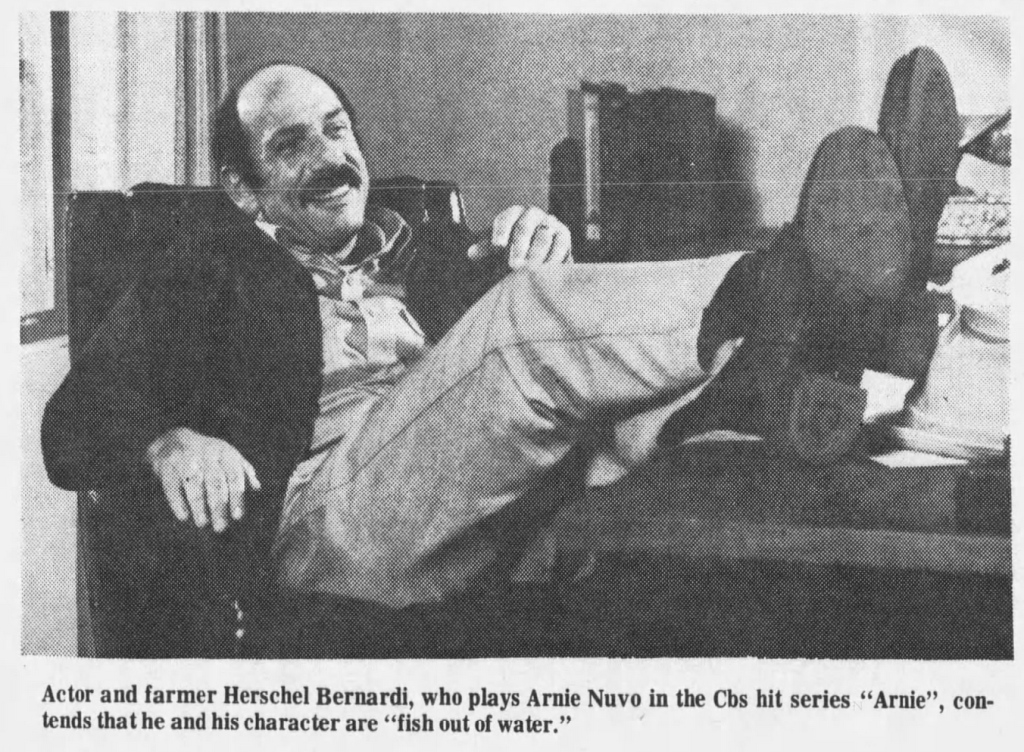
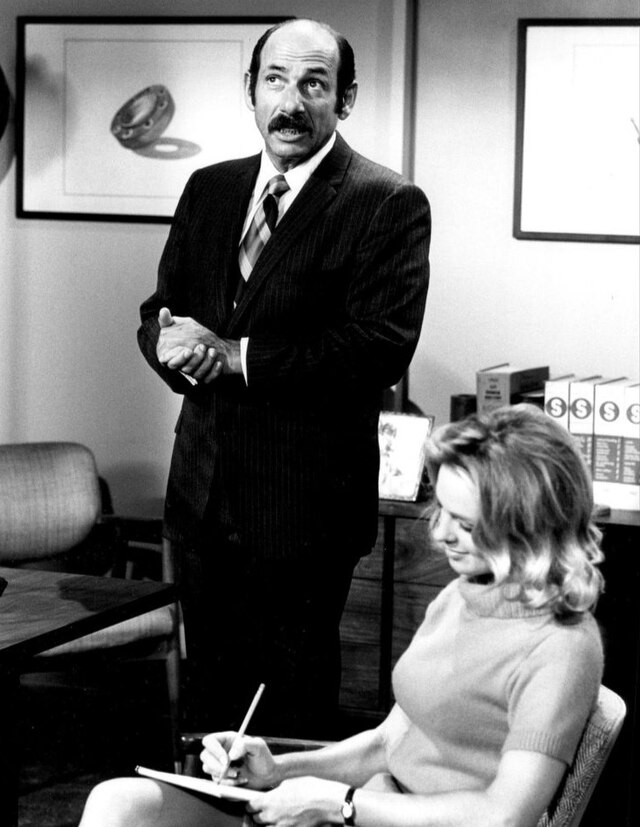
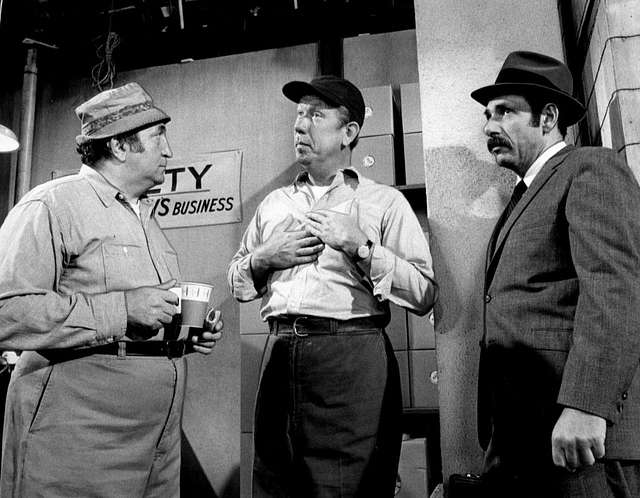
Arnie Nuvo (Herschel Bernardi) is a blue-collar employee at Continental Flange Co. who was promoted to an executive position out of the blue. Arnie tries has a difficult time related to his very wealthy boss and he still has a lot of friends outside of management. He still has a union card so he can mediate difficult labor situations and is respected by the workers.

Sue Ane Langdon played his wife Lilian, Del Russel was his son Richard, and Stephanie Steele was his daughter Andre. Rounding out the cast was Elaine Shore, his secretary Felicia; Tom Pedi, his friend Julius, who still works on the dock; and Roger Bowen, his boss Hamilton Majors Jr.

📷pinterest.com

The show was scheduled before The Mary Tyler Moore show on Saturday nights. Surprisingly, it received an Emmy nomination for best comedy series, but it didn’t receive very high ratings. Getting an Emmy nomination was impressive for this year. Its competition was Love American Style, The Mary Tyler Moore Show, The Odd Couple, and the winner, All in the Family.

Like it typically did, the network (and I’m not picking on CBS, they all did it), decided immediately to turn things topsy turvy instead of giving it some time. Arnie’s neighbor played by Dick Van Patten was let go and Charles Nelson Reilly, a tv chef named The Giddyap Gourmet, moved next door.

The series was moved to Monday night following My Three Sons which was moved from Saturday nights to Tuesday nights as well. That probably didn’t help the ratings because this was the last season of My Three Sons. As much as I love that show, it should have stopped a year earlier than it did. To make it more confusing half-way through the second season, Arnie moved back to Saturday and My Three Sons ended up on the schedule Thursday nights. Both shows were canceled by spring.

📷tralfaz.com

In addition to all the moving around, when it returned for its second season it was up against Monday Night Football, so I’m guessing that spot didn’t help attract people after it moved. Saturday nights its competition was weak; it was primarily up against the movie of the week, The Pearl Bailey Show, and Cade’s County.

The Television Academy interviews included both Eddie Foy and Dick Van Patten discussing this show.

Foy talked about the casting and said Bowen was the best cast member. He said it was a bit of a bland show, not a break-through series, but he thought Herschel was a big star at the time after starring in Zorba. Foy said it was a great show to work on and everyone in the cast had fun.

📷en.wikipedia.com

Dick Van Patten also talked about his time on the show. He said he had come to California for a play and while he was performing, Shirley Booth approached him and said she wanted him to talk to someone about joining the cast of Arnie as the neighbor. Van Patten said he didn’t remember much about the show which supports Foy’s view of it being a bit bland.

It sounds like the network was trying to take advantage of Bernardi’s fame at the time and maybe didn’t take as much care as it should in designing the perfect show for him.

Cagney and Lacy: Creating New Dreams

During the month of November we are going to learn about a few of my favorite crime dramas. As the saying goes, “Ladies first,” so we are beginning with Cagney & Lacey starring Sharon Gless and Tyne Daly.

Photo: datebook-sfchronicle.com

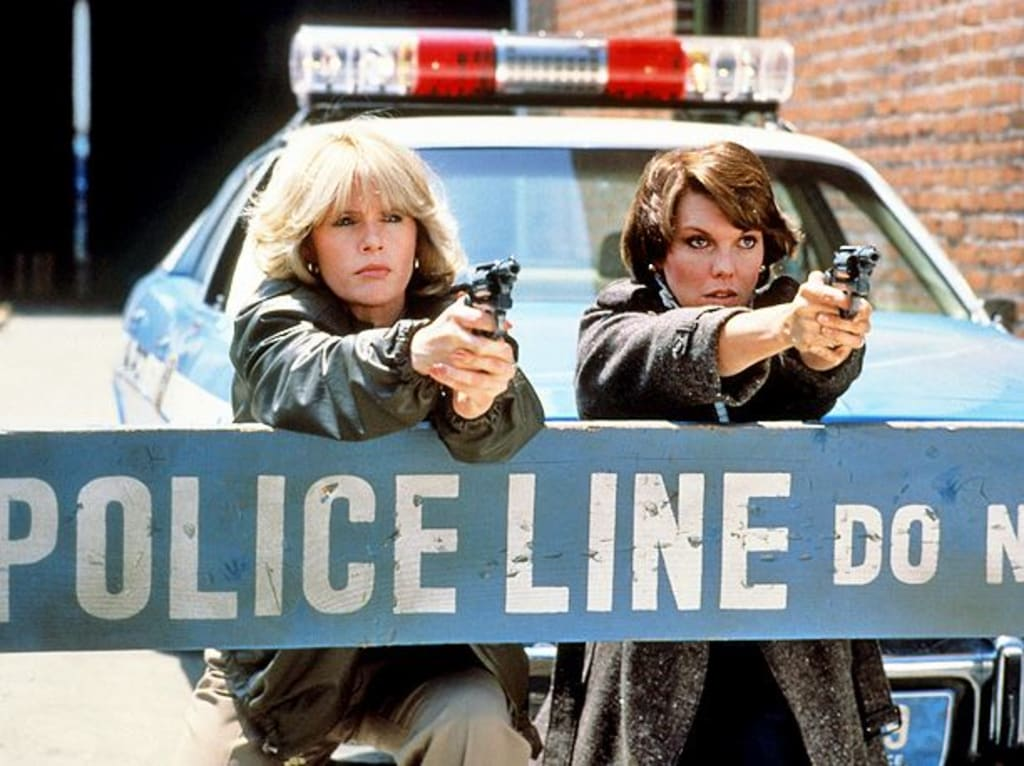
The show debuted in March 1982 and continued to May of 1988. We solve cases with a pair of detectives that seem very different from each other. Christine Cagney (Gless) is a career woman all the way while Mary Beth Lacey (Daly) is also busy raising her family. Cagney’s mother had been a well-to-do professional career woman. She was involved with Charles Cagney, a police officer; the two separated soon after the birth of Chris and her brother Brian. She swung back and forth between the upper-class world and the blue-collar world her father traveled in. She was also an admitted alcoholic and was only committed to her job. Lacey was louder and more talkative and quick to express her opinions. She was a mother first–living in a solidly middle-class world. The duo works in the 14th precinct in Manhattan. Unlike other crime dramas of the past, these two partners were not best friends. They did, however, totally depend on each other and trusted and respected each other. They would die for each other, if necessary, but they never had a close relationship or hung out together after work.

Photo: imdb.com

In the pilot movie, Loretta Swit from M*A*S*H was cast as Cagney; when the show was a go, she could not get out of her M*A*S*H contract, so the role was given to Meg Foster, but when it came back the next season, Gless took over and stayed for the rest of the run of the series. According to CBS, Foster was seen as too aggressive.

Filling out the primary cast was their supervisor, Lt. Bert Samuels (Al Waxman), fellow detectives Marus Petrie (Carl Lumbly) and Victor Isbecki (Martin Koye), and veteran detective Paul La Guardia (Sidney Clute). John Karlen played Lacey’s husband Harvey and her two sons were Harvey Jr. (Tony La Torre) and Michael (Troy Slaten). Cagney was involved with Sgt Dory McKenna (Barry Primus) who struggled with drug addiction and, later, a local attorney, David Keeler (Stephen Macht).

The show was actually canceled after six episodes in 1982. Executive producer Barney Rosenzweig was on a mission to reverse the decision. (Fun fact, Rosenzweig was married to the co-creator of the show, Barbara Corday, at the time, but later married Sharon Gless.) After casting Gless, the network relented. Ratings the next year weren’t that great either. CBS again canceled the show. Fans staged a letter-writing campaign to protest; Daly won the Emmy that year, so the network once again brought the show back. However, by the time they reached that decision, the sets had been destroyed and the stars let out of the contracts. Critics had always loved the show and during the six seasons it was on, either Gless or Daly won the Emmy for Best Lead Actress in a Drama every year. (It actually earned 36 nominations total with 14 wins overall including Best Drama in 1985 and 1986.) Season three found the show in the top ten.

Photo: pinterest.com Cast of Cagney and Lacey

Airing Monday nights, it held its own against Monday Night Football. However, midway through season seven, it was moved to Tuesdays up against thirtysomething. By spring, Cagney and Lacey had slipped to 53rd place and the network canceled it for the third time.

The theme song for the first season was “Ain’t That the Way” by Michael Stull and sung by Marie Cain. Season two brought about a new beginning using an instrumental theme composed by Bill Conti.

Although the series was over, the duo of Cagney and Lacey continued to attract viewers. They appeared in four made-for-television movies: The Return in 1994, Together Again in 1995, The View Through the Glass Ceiling in 1995, and True Convictions in 1996.

Photo: vocalmedia.com

No big surprise for those of you who regularly read my blog–a reboot was put together in January of 2018 featuring Sarah Drew and Michelle Hurd as Cagney and Lacey. In an echo from the past, the pilot was rejected by CBS.

Cagney and Lacey was an influential show. It was more than a show about two women leads though. It was brilliantly written and tackled tough issues: breast cancer, alcoholism, trying to balance the life of a mother with a career. The characters were two of the most interesting characters on television. They redefined what women could be; they acted and appeared like real women in their thirties. They were not Charlie’s Angels.

Photo: pinterest.com

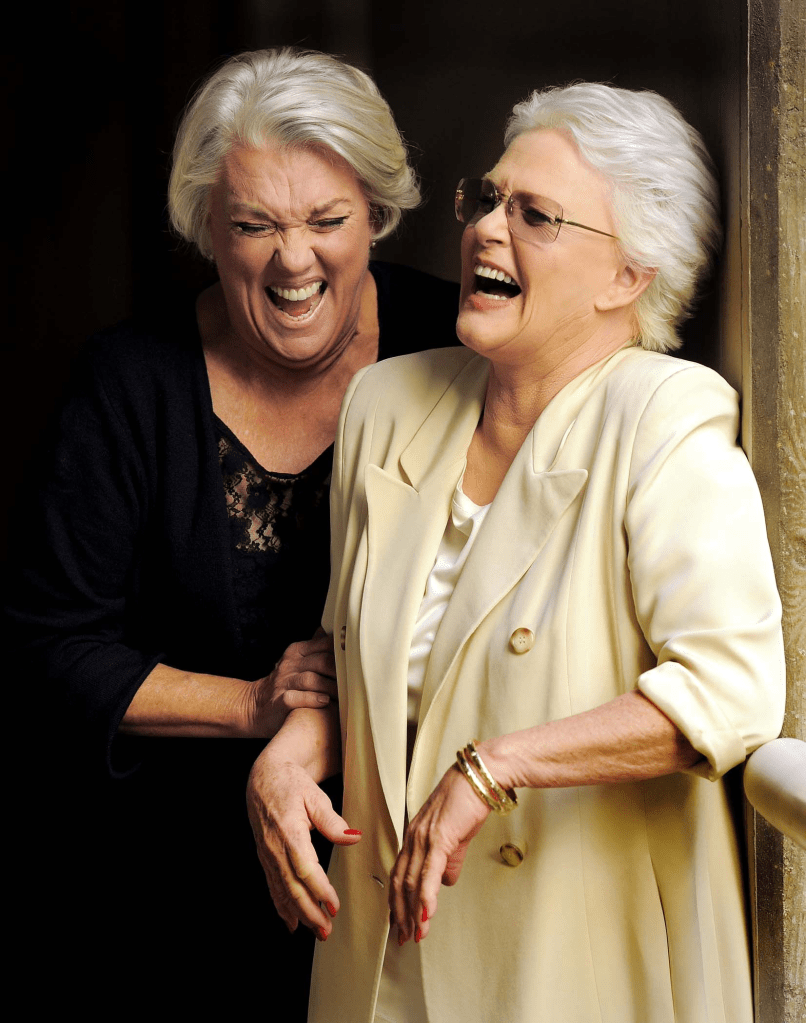
Cagney and Lacey were not close friends but Gless and Daly surely are. In an interview with Sarah Crompton in December of 2011, she described them as “sassy and attractive, they sit alongside each other, cracking jokes, finishing each other’s sentences.”

I love that we all can search for our dreams on television. Sharon Gless shared that “All my life, I sat in front of the little TV that we had and I watched the Oscars every year. My little heart would get so excited and where I lived in Hancock Park you could see the lights in the sky from the Hollywood Theater. Now I’ve made my career in television . . . this year I got into the Motion Picture Academy.” I love to picture another little girl sitting in her living room, watching Cagney and Lacey and dreaming about becoming a police officer.

This Doctor Made House Calls Every Monday Night

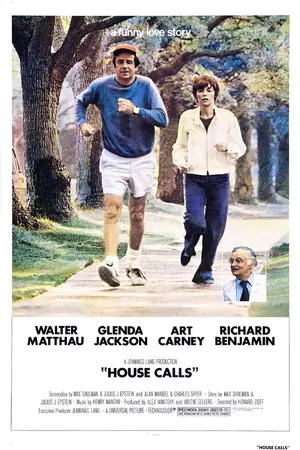
As we wind up our blog series, “The Movie Came First,” we finish with a show from the late seventies, House Calls. The original movie hit the big screen in 1978. The description of the movie is that Charley is a surgeon who’s recently lost his wife. He embarks on a tragicomic romantic quest with one woman after another until he meets up with Ann, a single woman, closer to his own age, who immediately and unexpectedly captures his heart.

House Calls (1978) movie posters
Photo: cinematerial.com

Walter Matthau played Charley and Glenda Jackson was Ann. Art Carney and Richard Benjamin were cast as friends and doctors who work with Walter. Max Shulman and Julius Epstein wrote the screenplay.

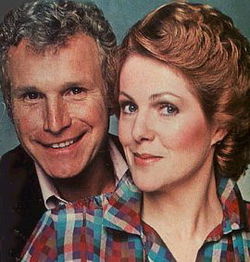
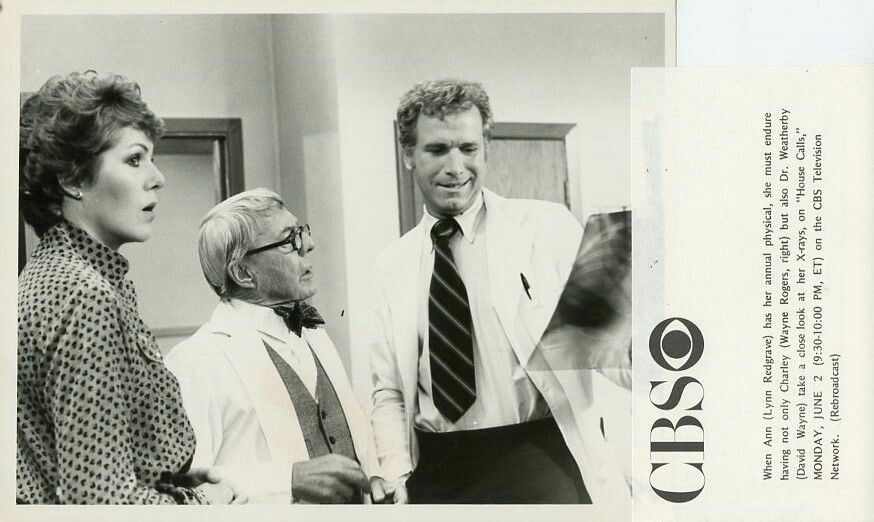
Jump ahead to 1979 and we find House Calls on the television schedule. The writers/creators are still Julius Epstein and Max Shulman. The same four top characters are featured but I thought it was interesting that only three of them got new names. Instead of Charley Nichols, we now have Wayne Rogers as Charley Michaels, Lynn Redgrave took on the role of Ann Anderson in place of Ann Atkinson. Charley’s coworkers are Amos Weatherby played by David Wayne where the original character was Amos Willoughby but Benjamin’s Norman Solomon role is now Normon Solomon, just one vowel change played by Ray Butenika. If there is a meaning behind the names, I never learned about it. Charley and Normon are the Hawkeye and Trapper of the hospital community and Willoughby is the senior doctor who tries to reign them in and doesn’t fire them only because they’re such good doctors.

In this version of the story, Charley and Ann are dating. He’s a surgeon at a San Francisco hospital and she is the new administrative assistant. He doesn’t like to conform to rules, while she insists on it, so while they are dating in their personal life, they often butt heads in the work life.

Photo: wikipedia.com

Redgrave and Rogers had a great chemistry and apparently the relationship of the three doctors provided a lot of funny situations. Providing additional humor were practical head nurse Bradley played by Aneta Corsaut, an older but enthusiastic candy striper Mrs. Phipps played by Deedy Peters, and everyone’s favorite character to hate, Conrad Peckler (Mark Taylor), the executive who was trying to bring order to the hospital.

Fans and critics liked the show; Redgrave was nominated for an Emmy and a Golden Globe, but lost the Emmy to Isabel Sanford for The Jeffersons in 1981.

1980 TV Guide Ad Mash "Christmas" EPS House Calls "Christmas" EPS CBS TV |  Tv guide, 1980s tv shows, Holiday movie

CBS scheduled the show for Monday nights after MASH, Rogers’ previous show. Its competition was Monday Night Football/Baseball on ABC and The Monday Night Movie on NBC. The show stayed on Monday nights for its final two years up against Flamingo Road on ABC and depending on the time of year, Monday Night Football or Dynasty on NBC. The first season it was in the top 20; the second year, it jumped to the top ten and the third season it was in the top 30.

During season three, Lynn Redgrave left the show. There is some confusion as to why she left. Universal Television claimed there was a dispute about her salary; Redgrave insisted it was because the studio would not allow her to breastfeed her baby between takes.

Photo: sitcomsonline.com

Her leave was explained on the show by Charley reading a letter out loud to the staff that she had gone back to England to marry her former husband. After more than two years of the relationship developing between Ann and Charley, I’m guessing that the audience didn’t buy the abrupt ending of their romance. Sharon Gless was brought in as Jane Jeffries who develops a similar relationship with Charley. I’m also assuming that fans weren’t thrilled to think Charley would jump right into a new relationship with Ann’s replacement and the chemistry just wasn’t the same. The network cancelled the show after season three even though it was still in the top 25.

1982 Press Photo-Sharon Gless-House Calls - Sitcoms Online Photo Galleries
Photo: sitcomsonline.com

In an interview on “Pop Goes the Culture,” Rogers discussed the show. He said that he loved his time on House Calls. He related that the pilot had been filmed with another actor and for whatever reason, they needed to replace him and called Rogers to see if he was willing to take over the role.

He said he truly enjoyed working with Redgrave and she was very gifted. He wasn’t sure how much of her firing had to do with the baby demands and how much was subterfuge for more money, but she was managed by her husband at the time and the entire situation backfired. Rogers especially loved her use of language, and they would sometimes improvise tongue twisters into the script.

Photo: pinterest.com

He said like MASH, the show took a serious subject and turned it on its head. One of his favorite episodes had to do with medical marijuana. The older Willoughby was growing pot in the hospital for his patients’ use. He said it was a very funny episode. Rogers wrote two episodes and directed three of them. He talked about one of the shows he wrote, “Institutional Food” which he took a different take on hospital food which was always stereotyped as bad. In this situation, the hospital had a Mexican chef whom everyone liked. He didn’t have a green card and was getting ready to be deported, so the hospital staff was trying to come up with a solution. Finally, Charley decides to adopt this man as his son so he could continue to cook for them.

Rogers was very upset they took the show off the air. They were currently the eleventh most popular show when it was cancelled. He said he wrote a letter to the head of the network programming and to Bill Paley to protest. Paley invited him to lunch in his private quarters but refused to put the show back on the air.

I did find several episodes of the show on YouTube but did not see the DVDs available. I have to admit I saw this show infrequently and never saw the original movie, so I will add that to my list of things to watch in the future. This one sounded like a fun show, but I guess if I’m going to watch Wayne Rogers as a doctor, I’d rather continue watching reruns of MASH. It makes you wonder how long the show would have lasted if the network had not fired Redgrave.

Blowing the Whistle on Monday Night Football: Illegal Formation

Monday Night Football is celebrating its 50th anniversary this month. On September 21, 1970, the ABC broadcasting team took the booth at Cleveland’s Municipal Stadium. A crowd of 85,703 attended the game in person, but millions watched on television. The Cleveland Browns beat the Jets 31-21. ABC doubled the number of cameras per game. Close-ups were used often. The broadcast booth was not like any other that had been on television. The weekly sports show pioneered a variety of technological innovations including slow-motion replays and computerized graphics.

Photo: pinterest.com

In addition to the play-by-play announcer Keith Jackson and color analyst Don Meredith, a third chair was added to the booth. Howard Cosell was added to give a bit of controversy to the broadcast. A TV Guide viewer poll in 1978 named Cosell the most loved — and hated — analyst at the same time. With no sports network on 24 hours a day, Cosell provided recaps of the weekly games during half time.

Photo: espnmediazone.com

The first sponsors were Marlboro Cigarettes, Ford Motor Company, and Goodyear Tires. The show would make history as one of the longest-running prime time television series and one of the highest-rated shows among male viewers.

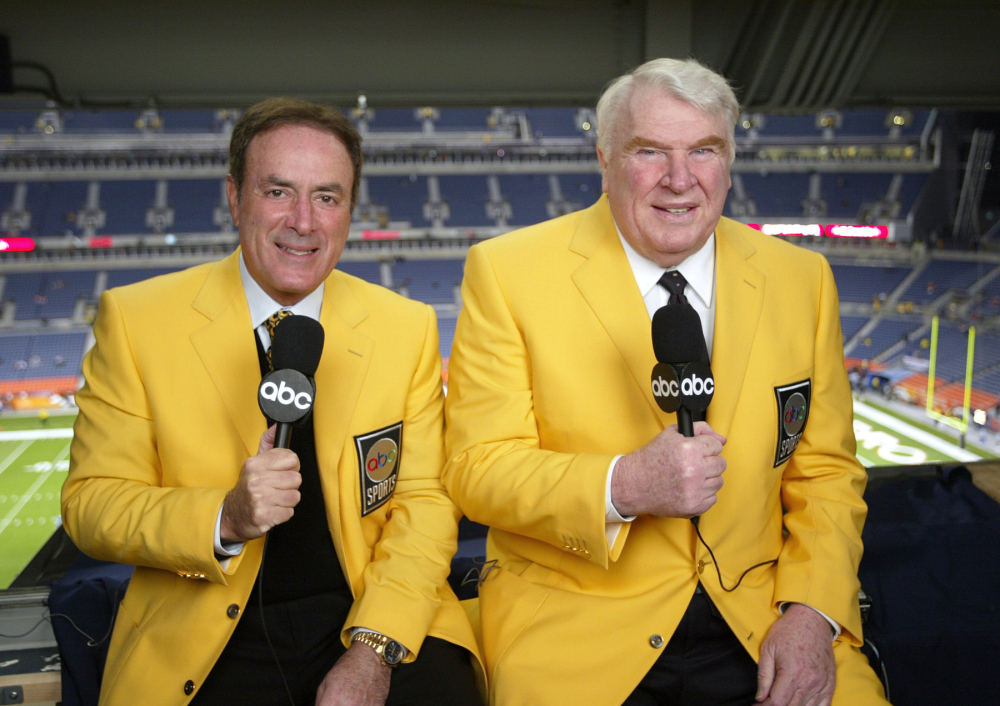
In season two, Frank Gifford took over for Jackson and that trio would continue broadcasting till 1983. In 1975 and 1976, Alex Karras took over for Meredith. From 1979-1983, Fran Tarkenton joined the other three in the booth. Al Michaels and Frank Gifford manned the spot from 1987-1997. A variety of sportscasters joined them in the booth or took over for them until 2005 including O.J. Simpson, Dan Dierdorf, Lynn Swan, Leslie Visser, Boomer Esiason, Dan Fouts, Dennis Miller, Melissa Stark, Eric Dickerson, John Madden, Lisa Guerrero, and Michelle Tafoya.

DENVERus – NOVEMBER 11: (NO ARCHIVING, NO RESALE) In this handout photo provided by ABC, John Madden (R) broadcasts with Al Michaels during the 500th telecast of Monday Night Football in a game between the Denver Broncos and Oakland Raiders November 11, 2002 at Invesco Field at Mile High Stadium in Denver, Colorado. Madden announced his retirement from broadcasting on April 16. (Photo by Craig Sjodin/ABC via Getty Images) ORG XMIT: 85970668 GTY ID: 20D_0206

Hank Williams Jr. redid his song, “All My Rowdy Friends Are Coming Over Tonight” for the theme. When the last show aired on ABC, the song was switched to “Turn Out the Lights, the Party’s Over.”

Photo: thepoliticalinsider.com

In addition to the sportscasters who man the booth, many special guests have appeared on the show. Vice President Spiro Agnew, President Bill Clinton, California governor Ronald Reagan, Placido Domingo, John Lennon, and Kermit the Frog are a few of them.

When ABC first acquired the rights to air MNF in 1970, it did not include any playoff games. The network was eventually allowed into the rotation of channels airing the Super Bowl, starting with Super Bowl XIX in January 1985. When the league expanded the playoffs from a 10-team to a 12-team tournament in 1990, ABC was then given the rights to air the first two Wild Card Playoff games. Originally, ABC’s college football crews would call the first Wild Card Game.

The show would air on Monday nights on ABC until 2005. In 2006, the series moved to ESPN. The show has not been as successful as its earlier days.

In the past fourteen years, there has been a bit of a revolving door to the booth. Showing up on Monday nights we saw Mike Tirico, Tony Kornheiser, Joe Theismann, Suzy Kolber, Michele Tafoya, Ron Jaworski, Jon Gruden, Lisa Salters, Sean McDonough, Joe Tessitore, Jason Witten, and Booger McFarland come and go.

In an article titled “Monday Night Football’s Mid-Life Crisis: From Monopoly to Monotony” by Michael McCarthy in December of 2018, he laid out the current problems.  “As it nears its 50th season, ESPN’s venerable Monday Night Football is struggling with a mid-life crisis. Yes, Monday Night Football changed the face of television. Yes, it can still dominate the sports conversation when it has great games like Rams vs. Chiefs. But Monday Night Football is bad. Too often, the game match-ups are not marquee. The football is not as exciting. The new announce team—featuring three Monday night rookies in Jason Witten, Joe Tessitore, and Booger McFarland—is a work in progress at best, a train wreck at worst. The most famous broadcast booth in sports no longer boasts legendary announcers like Howard Cosell, Dandy Don Meredith, Frank Gifford, John Madden, or Al Michaels. Instead, this season’s crew of Witten, Tessitore, McFarland and Lisa Salters has been roasted by fans and critics.”

Photo: espnpressroom.com

I could not find any announcement of who will be in the booth when football returns. (Note: This came out right before I published my blog this week: A three-man booth of play-by-play man Steve Levy and color commentators Brian Griese and Louis Riddick — who all called the back half of the 2019 Week 1 MNF doubleheader — have been upgraded to the top team for 2020. They replace Joe Tessitore and Booger McFarland. Lisa Salters remains the sideline reporter, a role she has had since joining Mike Tirico and Jon Gruden in 2012. Retired official John Parry returns for a second season as the rules analyst.)

Now ESPN has the added pressure of the Covid-19 virus.  No one knows if there will be a football season or what it will look like if there is. You would think if a show like Monday Night Football lasts for fifty years, they would have it made.  Never take anything for granted. At least ESPN has some extra time to try to figure out a better crew for the next season.

On a lighter note, here are some fun facts about the series. The most Monday night appearances belong to the Miami Dolphins with more than 80. The San Francisco 49ers are the most winning team with 49 wins. The Broncos have played the Raiders 19 times as of 2019 and The Cowboys have faced off against the Redskins 17 times. Candlestick Park in San Francisco, no longer used for the team, hosted the most wins, coming in at 36 including its final Monday night game in December of 2013. The highest-rated Monday Night Football telecast on ABC was the Miami Dolphins’ victory over the previously undefeated Chicago Bears on December 2, 1985, which drew a national Nielsen rating of 29.6 and a share of 46. ABC’s lowest-rated MNF game was the St. Louis Rams’ defeat of the Tampa Bay Buccaneers on October 18, 2004, which drew a 7.7 rating. Regardless of the technical difficulties, watching Monday Night Football is always a win if you’re a fan of the sport.