Eva Gabor: The Woman Behind Lisa Douglas

Photo: findagrave.com

Lisa Douglas was one of the most interesting characters on television. She oozed elegance and glamour. Like Gracie Allen, she had the ability to be believable in her portrayal of someone who is a bit naïve. She never came across as a dumb blonde. She also was likable. Many stars would have appeared arrogant or snobby in her character. Lisa could wear a sequined designer gown to have hot dogs and beans and fit right in with any Hooterville resident. Oliver, who wanted to be a local farmer and a man of the earth, had a much harder time relating to the local folks. Since Lisa Douglas was my only connection with Eva Gabor, I thought it was time to learn more about the woman behind Hooterville’s wealthiest wife.

Photo: latimes.com

Eva was born in 1919 in Budapest, Hungary. She began her career as a cabaret singer and ice skater before migrating to the US. Her older siblings Magda and Zsa Zsa would also end up in the United States. Eva was considered the one with the most talent; apparently even by herself because she once said, “I was the first actress in the family, and I am still the only actress in the family. I shouldn’t be saying it, but it slipped out.”

Photo: dailymail.co.uk

Zsa Zsa was more the celebrity than the actress. She is known for saying “Dahlink” for “Darling.” She would appear in 54 different episodes on a variety of shows (often portraying herself) including Make Room for Daddy, Mister Ed, Gillgian’s Island, F-Troop, My Three Sons, Batman, Bonanza, Laugh In, Empty Nest, and believe it or not, Tattooed Teenage Alien Fighters from Beverly Hills.

Magda either didn’t enjoy acting or wasn’t very good, because after two credits in 1937 Hungarian films, she was not involved in the industry.

Photo: amazon.com

Eva’s first movie was in 1941. She would continue her movie career throughout the next couple of decades appearing in The Last Time I Saw Paris with Elizabeth Taylor in 1954, Artists and Models with Dean Martin and Jerry Lewis in 1955, My Man Godfey with June Allyson and David Niven in 1957, and Gigi with Leslie Caron and Maurice Chevalier in 1958.

Eva would make 36 appearances on shows in the fifties. Most of them were drama such as Pulitzer Prize Playhouse or Kraft Theatre. In 1953 she was given her own talk show. I could not find much information about the show but it was a 15-minute weekly show so she could not have talked too much. Eva was also a successful business woman who sold clothing, wigs, and beauty products. In beauty philosophy was simple: “All any girl needs, at any time in history, is simple velvet and basic diamonds.” Eva also wrote a book in 1954 titled Orchids and Salami. It appears to be about her thoughts on beauty and her ambition and goals.

Photo: imdb.com

She continued her television career during the sixties appearing in many shows including The Ann Sothern Show and Here’s Lucy.

In 1965 she accepted the role of Lisa Douglas in Green Acres. The show would continue until 1971, producing 170 episodes. When her lawyer husband Oliver Douglas decides to leave the rat race and buy a small farm, socialite Lisa does not want to leave New York City. However, she adjusts to life in the small town of Hooterville, charming the locals and making friends. In 1971, shows with rural themes were cancelled and Green Acres left the air.

Photo: pinterest.com

After Green Acres, Gabor would appear in only ten shows from 1975 until 1994.

In 1995 Eva fell in a bathtub in Mexico while on vacation. She experienced complications of respiratory failure and pneumonia, and she passed away in Los Angeles shortly thereafter. Magda passed away two years later from a kidney issue. Zsa Zsa would survive until 2016 when she died of a heart attack.

(L-R) Actresses/sisters Eva and Zsa Zsa Gabor. (Photo by David Mcgough/DMI/Time Life Pictures/Getty Images)

Apart from Lisa Douglas, she might have been best known for her collection of husbands. She married Dr. Erich Valdemar Drimmer in 1939 and divorced him in 1942. In 1943 she married Charles Isaacs whom she divorced in 1950. From 1956-1957 she was married to Dr. John Williams. After divorcing him, she married Richard Brown in 1959. They were married for a record-lasting 13 years before they divorced and she married Frank Jameson in 1973, divorcing him in 1984. She was quoted as saying that “Marriage is too interesting an experiment to be tried only once.” She had no children in any of her marriages.

Her sister Zsa Zsa surpassed her with eleven husbands between 1937 and 2016. Her sayings about marriage included, “I am a marvelous housekeeper. Every time I leave a man, I keep his house.” She also said, “Getting divorced just because you don’t love a man is almost as silly as getting married just because you do.”

Even Magda could not seem to find the right guy. She was married six times. Her longest marriage was three years! Most of them were one year. Both she and Zsa Zsa were married to actor George Sanders.

Photo: pinterest.com

The Gabor sisters were an interesting trio. While Eva primarily made her living as an actress, the other two seemed to be socialities and celebrities, rather than true actresses. Apparently, Zsa Zsa made life harrowing for her sisters, getting in trouble for various things including slapping a policeman. Merv Griffin, who knew them all but was involved with Eva for more than twelve years, tried to explain the appeal of the Gabors. “They were so beautiful, they were so outrageous,” he said.

Who Writes The Songs?: Good Question–Lots of People Including Frank De Vol, Jay Livingston, and Ray Evans.

At this time of year, we tend to watch a lot of football bowl games. Most of the attention centers on the coaches, the quarterbacks, and a handful of other star players like running backs, wide receivers, and occasionally kickers. While these positions influence the games, there is an entire team behind them which determines whether they get a win or a loss. This year I will be trying to look at some of the behind-the-scenes players in the television industry.

Today we look at three composers who often influenced shows, even though many viewers never heard of the song writers.

devol1

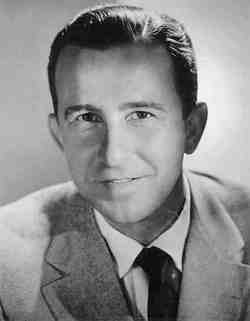
Frank Denny De Vol was born in West Virginia in 1911. His family moved to Canton, Ohio where he grew up. His mother owned a sewing shop, and his father was in charge of the pit orchestra at a local movie theater. He graduated from McKinley High School in 1929 and started at Miami of Ohio University but quit after six weeks. His parents were hoping he would pursue his law degree, but he was set on a career in music.

This wasn’t surprising because he had become a member of the musicians’ union at age 14. He worked for his father at the theater and played the saxophone and violin.

Once he left college, he joined Emerson Gill’s orchestra and traveled around Ohio. Later he became a musician with Horace Heidt’s band, and Horace let him try his hand at arranging. He would then travel with Alvino Rey’s band which led to a long-life friendship with the King Family.

During his career as a traveling musician he married his wife, Grayce McGinty in 1935. The couple’s 54-year-long marriage would produce two daughters.

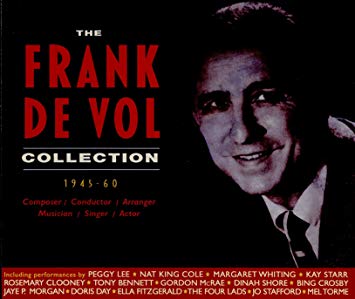
During the 1940s, he would write arrangements for many of the country’s top performers including Tony Bennett, Nat King Cole, Vic Damone, Doris Day, Ella Fitzgerald, Dinah Shore, and Sarah Vaughn. His version of “Nature Boy” for Nat King Cole went to number 1 in 1948.

In 1943 he moved to California and started his own band. He appeared on the radio on KHJ and accompanied many stars including Jack Carson.


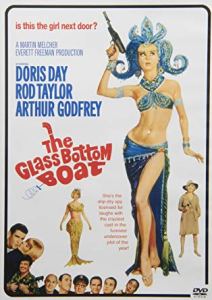
In the 1950s, he moved into movie composing and worked on more than 50 film scores including What Ever Happened to Baby Jane, The Glass Bottom Boat, The Dirty Dozen, and several Herbie movies. He received Academy Award nominations for his work on Pillow Talk (1959), Hush . . . Hush Sweet Charlotte (1964), Cat Ballou (1965), and Guess Who’s Coming to Dinner (1967).


During the 1950s, his orchestra also was frequently seen at the Hollywood Palladium as “Music of the Century.”

devol3


It seems natural that De Vol would ease into television work as well. He composed the jingle for Screen Gems’ “Dancing Sticks,” which appeared on all television series produced by Columbia Pictures.


devol26

Photo: pinterest.com

Frank became the musical director on Edgar Bergen’s game show Do You Trust Your Wife? His orchestra was featured on a variety of musical shows including The Lux Show Starring Rosemary Clooney.


devol21

Today De Vol might be best known for his work as a composer for television series. He wrote the music for My Three Sons, Family Affair, The Brady Bunch, and The Smith Family. My Three Sons theme song was a hit single in 1961 by Lawrence Welk, more musically complex than many sitcom themes of the time. He would continue his work for My Three Sons for all 380 episodes.


devol23

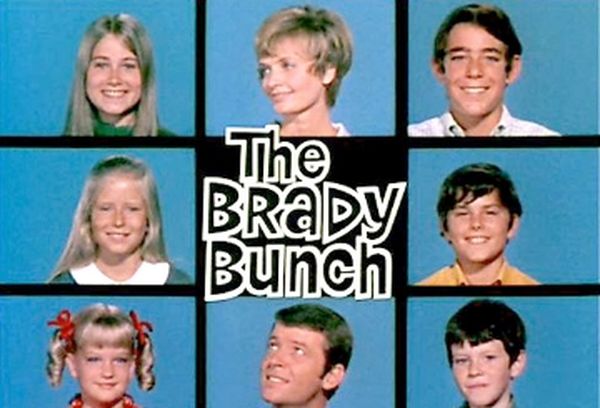
Sherwood Schwartz, the creator of The Brady Bunch, first turned to George Wyle to create the Brady theme. Wyle and Schwartz had composed the theme for Gilligan’s Island. With Wyle already committed to The Andy Williams Show, he approached De Vol. De Vol would provide music for 117 episodes of the original show, as well as music for The Brady Girls Get Married, The Brady Brides, The Bradys, and A Very Brady Sequel.

Frank was credited as composer for 37 movies and television series and listed as part of the music department for 87 total.


devol25

Photo: sitcomsonline.com

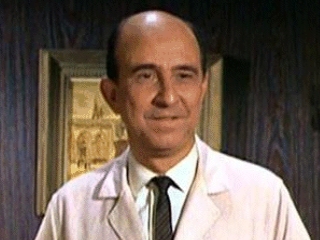
Not only was he musical composer for these shows, but you can see him acting in many of the shows he worked on as well. His first acting appearances were on Betty White’s Show, Life with Elizabeth where he played a variety of roles.


devol28

Photo: aveleyman.com

He then appeared on several television series including State Trooper, My Favorite Martian, The Farmer’s Daughter, Gidget, Please Don’t Eat the Daisies, Bonanza, Petticoat Junction, Get Smart, That Girl, and I Dream of Jeannie (37 different shows in all).

While composing on My Three Sons, he would actually portray a bandleader on the show and a father on The Brady Bunch.


devol2imagenesmy.coom

Photo: imagenesmy.com

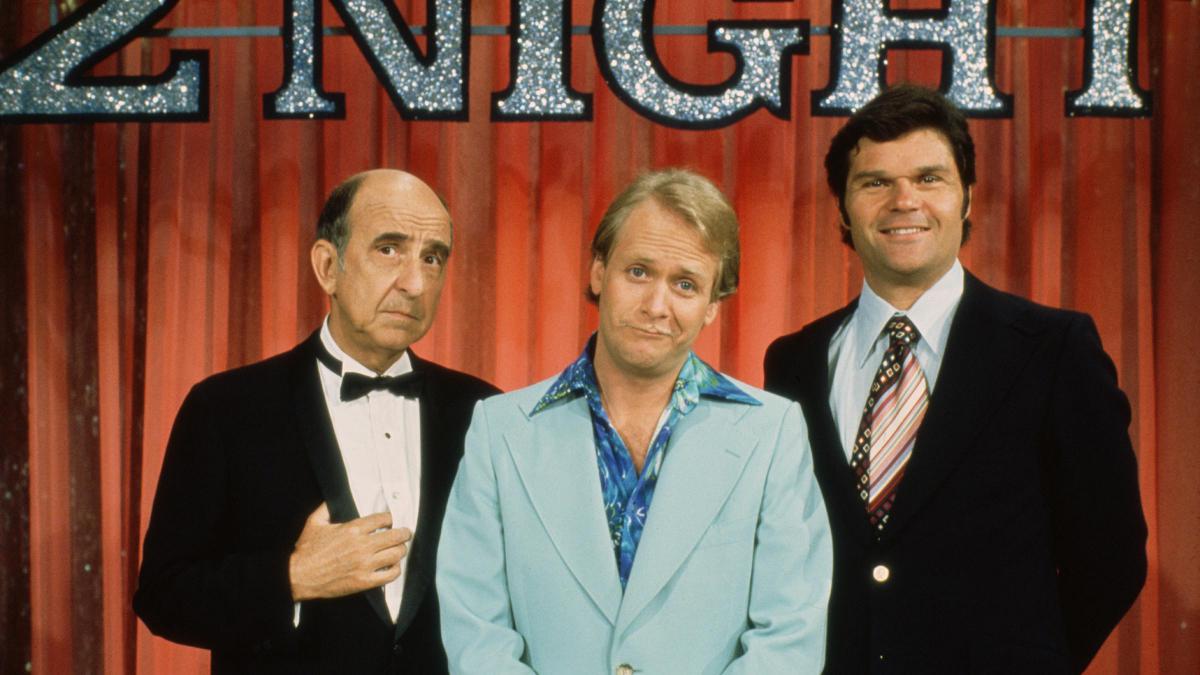
Many people will remember him as the dour-faced band leader Happy Kyne on Fernwood Tonight and America 2-Night, shows starring Martin Mull in the late 1970s.


One of my favorite roles of his was the head of the boys’ camp on the original Parent Trap.

devol27

Photo: tcm.com

His last acting role would be on Charles in Charge, the Scott Baio comedy from 1990.

When he was in his 80s, Frank was still active with the Big Band Academy of America. About this time, he married Helen O’Connell who had been a big band singer and actress. (His first wife passed away in 1989.)

Helen passed away in 1993, and Frank died from congestive heart failure in 1999.


devol24

Photo: pinterest.com

Like so many of these stars of the classic television era, he was a multi-talented guy. He could sing, he could play instruments, he could compose, he could arrange, and he could act. Sadly, when he does his job right, the music is so attuned to the shows that we almost don’t realize it’s there but try listening to a show with no background noise. Thank you Frank De Vol for not becoming an attorney.


We also take a look at a song-writing team of the golden age, Jay Livingston and Ray Evans.

living4


Livingston was born in McDonald, Pennsylvania in 1915. After studying piano with Harry Archer in Pittsburgh, he attended the University of Pennsylvania, majoring in journalism but also studying composition and orchestration.

Ray Evans was born in Salamanca, New York the same year. He also ended up at the University of Pennsylvania, receiving a degree in Economics.

Livingston organized a dance band at the University that played on campus as well as at local nightclubs and even cruise ships during their summer breaks.  One of those band mates was Ray Evans. Evans and Livingston became a partnership and they wrote some of the most iconic songs from film and television.


evans1

Photo: filmmusicsociety.org

After their graduation in 1937, the duo moved to New York City to work in Tin Pan Alley. They wrote for Broadway productions, including special material for Ole Olsen and Chic Johnson.


evans8

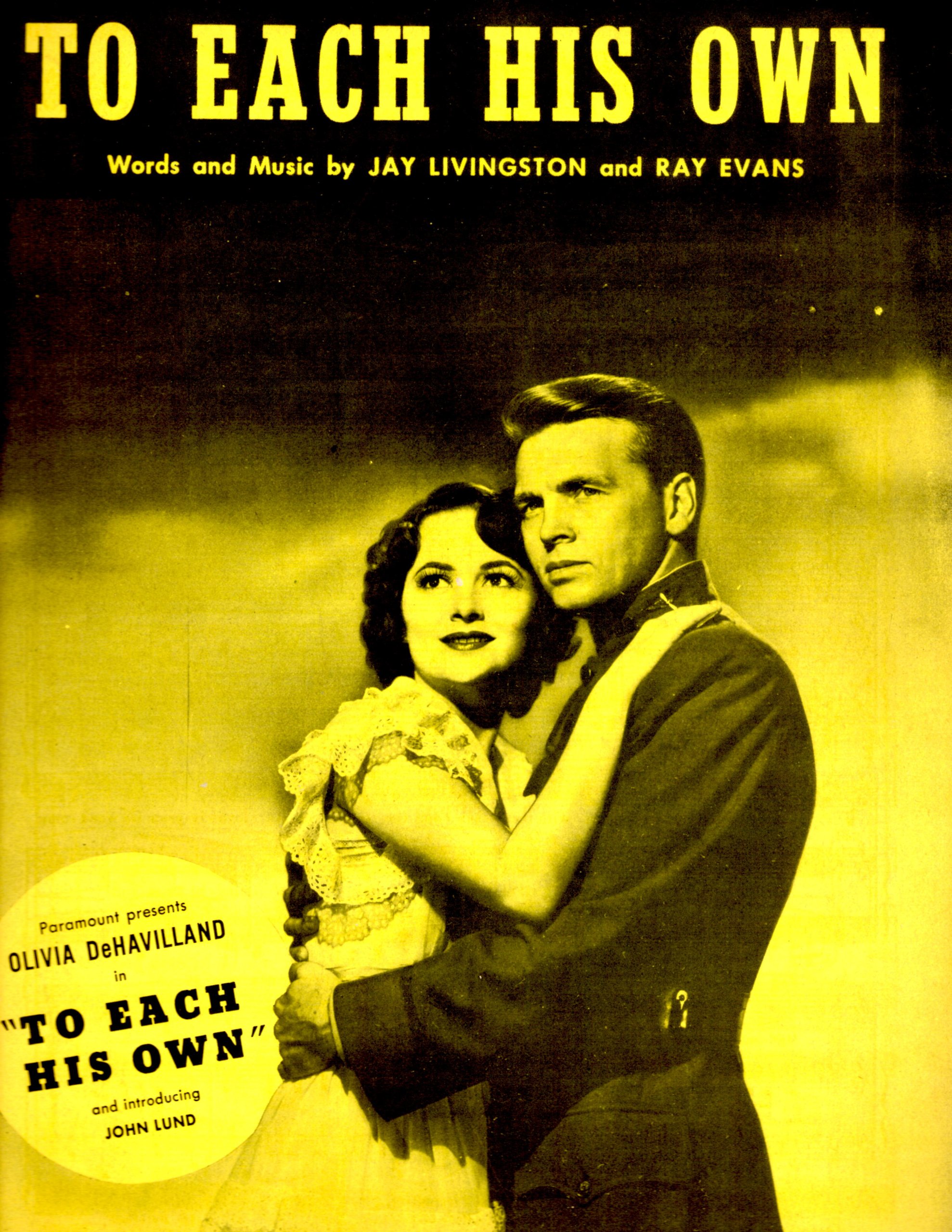
Livingston joined the Army when World War II began while Evans went to work for an aircraft company. When Jay came back home in 1945, he and Evans decided to try their luck in Hollywood. They received a contract from Paramount Pictures, and the team would stay with the company for a decade. Their first film was To Each His Own, starring Olivia DeHaviland, and they were nominated for an Academy Award.

During this time at Paramount, Livingston married Lynne Gordon. It must have been a happy marriage because they were married until 1991 when she passed away.

The exact same year, Evans married Wyn Ritchie. They were married until her death in 2003.

In 1947 the team began writing for Bob Hope for his personal appearances. Throughout the 1940s and 1950s, they would write many tunes that became jukebox favorites and popular songs. In Warren Craig’s book The Greatest Songwriters of Hollywood, he called them “the last of the great songwriters in Hollywood.”


evans2

Photo: pinterest.com

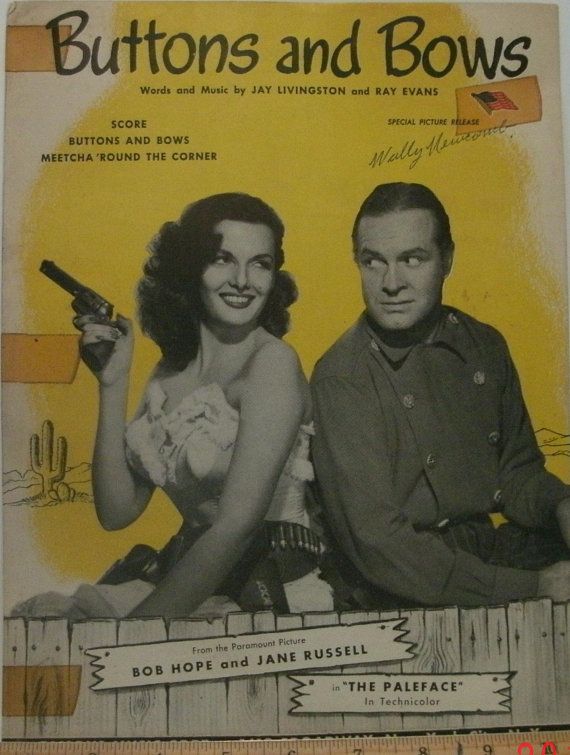
The year 1948 brought them their first Oscar win for “Buttons and Bows,” from Bob Hope’s western comedy, The Paleface. The jukebox version was recorded by Dinah Shore.


evans7

In 1950, they scored their second Academy Award for “Mona Lisa,” written for the movie Captain Carey, USA but made famous by Nat King Cole.


evans10

Photo: moviemovieblogblog.wordpress.com

Evans and Livingston would appear in Sunset Boulevard this same year at the New Year’s Eve party scene.


evans3

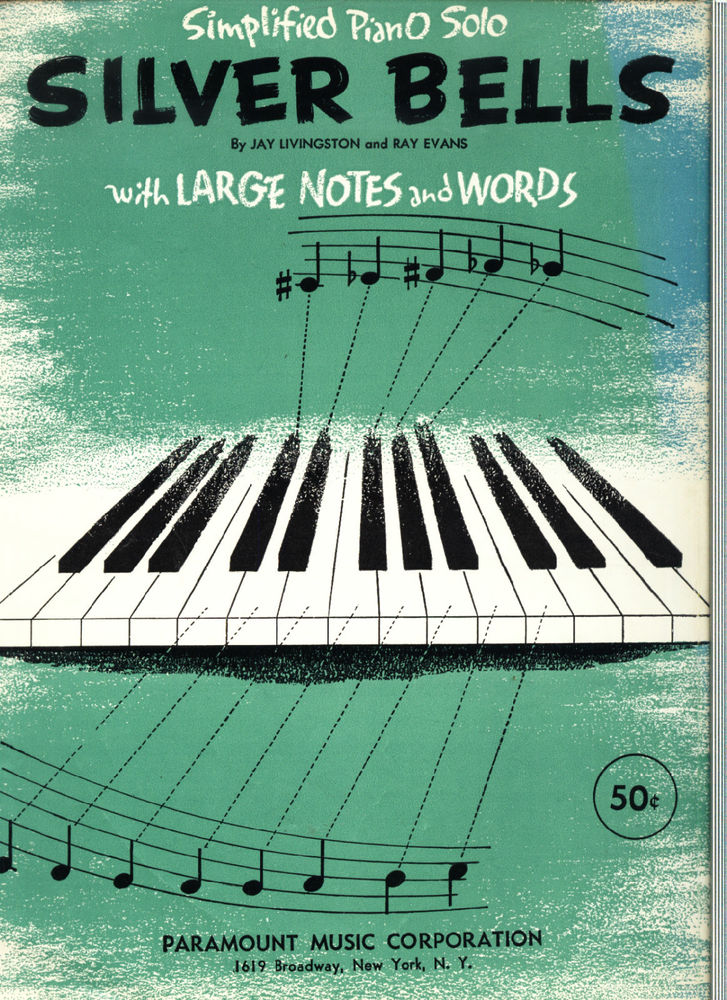
We can all smile and thing of Livingston and Evans each Christmas when we hear “Silver Bells.” The song, originally titled “Tinkle Bells” was written for The Lemon Drop Kid in 1951, also starring Bob Hope. Thankfully, they decided “tinkle” had other connotations and “Silver Bells” it became. (Some sources credits Jay’s wife Lynne with the name change.)

When their Paramount contract ended in 1955, they became free lancers and wrote both individual songs and complete scores for a variety of movies. They would receive ten additional Oscar nominations during their career.


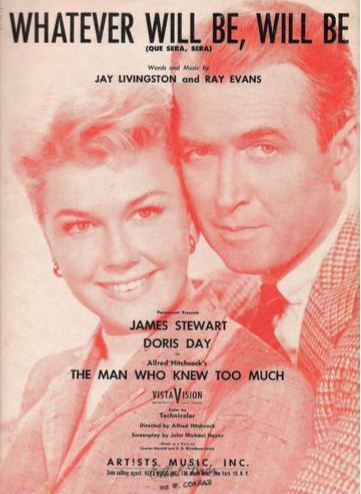
Doris Day had a huge hit in 1956 with “Que Sera, Sera” from The Man Who Knew Too Much with Jimmy Stewart and that hit would win them a third Oscar. The song would also become Doris’s theme song for her television show in 1968.

evans5


In 1957 they began writing the music for the Tammy movies that would be a staple of that era, beginning with Tammy and the Bachelor.

Jay and Ray would return to Broadway in 1958. They were nominated for a Tony for Oh, Captain! They also wrote songs for Let It Ride in 1961, a musical comedy adaptation of Three Men On a Horse, and Sugar Babies in 1979.


evans6

Photo: tidal.com

Though most of their work was in the film industry, the team is probably best known for their television compositions. In 1959, they were asked by Desi Arnaz to write a song for a Western show being developed. The show, thought likely to last a year, didn’t have money for a weekly salary, but he allowed them to keep the rights to the song. Luckily for them, that show, Bonanza, made them millions, and would be on television until 1973.

In 1960 they composed the theme song for The Bugs Bunny Show, “This is it.”


evans4

Photo: deezer.com

In 1961, Mister Ed debuted. Livingston and Evans not only wrote the well-known song, but Livingston is the one singing the line “I am Mister Ed.”

After Lynne’s passing, Jay would marry Shirley Mitchell in 1992.

Livingston and Evans were presented with a star on the Hollywood Boulevard Walk of Fame in 1995.

In 2001, at the age of 86, Jay Livingston died from pnuemonia. Ray Evans lived until 2007 when he passed away from heart failure.


evans9

Photo: rayevans.com

It’s fun to see a friendship and partnership span six decades and be so successful. Although they were born in the same year in the same area of the country and married the same year and their marriages would last decades until the death of a spouse, the two men were very different. In an interview with the Los Angeles Times in 1985, Evans said “I’m nuts about sports, play baseball and tennis every weekend. Jay couldn’t care less. He’s restrained and quiet. I’m more outward going. Jay is a marvelous musician. I have a tin ear. But our tastes are similar, and we both like good music and song.” The duo had 26 songs that sold more than a million records and their total record sales has exceeded 400 million dollars.

Michael Feinstein released an album in 2002 devoted to the team. He said, “they had a strong work ethic and they wrote a lot of plays that have wonderful and sophisticated songs that are quite different from movie songs.”

Like Frank De Vol, most viewers today have probably never heard of Jay Livingston and Ray Evans, although they recognize much of their work. It’s good to look behind the scenes of and dig deeper into the television industry to learn more about all the pioneers who made the era so great.


Mister Ed:

In the 1960s we had some crazy sitcom situations: a wife who was a witch, a genie who was found in a bottle, a dead mother who inhabited a car, and the Munsters who tried to adjust to a normal human world.  One show that was not that incredible was Mister Ed. If someone said they were writing a show about a talking horse, it should sound a bit far-fetched, but when you watched the show, it all seemed quite plausible. Let’s take a look at what made Mister Ed a fairly well-written and enjoyable series.

mred8


Mister Ed was developed by Arthur Lubin, a producer and director. Lubin had worked on the Francis the talking mule movies. He wanted to make a similar show for television. He was unable to gain the rights to Francis, but then he heard about children’s author Walter R. Brooks. Brooks had a series of short stories about a talking horse. His stories were published by Bantam, but since he passed away in 1958, he was never able to see the television show his work inspired.

mred1


The pilot was financed by George Burns and filmed at his McCadden Studio. It was titled “Wilbur Pope and Mister Ed.” Scott McKay played Wilbur Pope, Sandra White played his wife, and Mr. Ed was played by a chestnut gelding that was temperamental and difficult to work with.


mred5

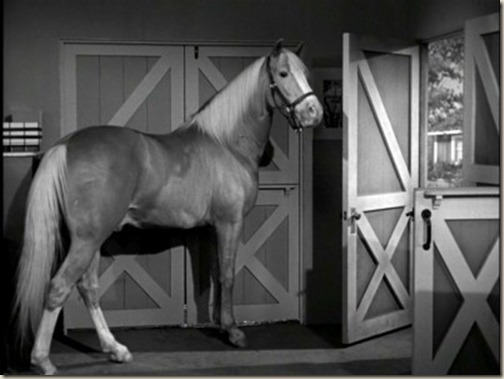
Lubin was not able to sell the show to one of the major networks, so he financed it as a syndication sitcom. The cast was switched up a bit. Bamboo Harvester, a golden Palamino, was brought in as Ed and his voice was kept secret at the time but was Rocky Lane, an older Western star.

Allan Young came on board as the now named Wilbur Post, and Connie Hines played his wife Carol. Young was actually a blonde but in the black and white version, his hair blended into the horse’s, so Connie Hines’ hairdresser would dye Young’s hair brunette. Originally Lubin discussed naming it The Alan Young Show, but Alan did not want to do that in case it bombed. He did, however, buy into the show, which resulted in his earning a lot of money later.

Ed’s singing voice was provided by Sheldon Allman. However, the line “I am Mister Ed” at the end of the theme song was done by the song’s composer, Jay Livingston.

Jay Livingston and Ray Evans wrote the theme song. An instrumental version was used for the first seven episodes, and then lyrics were added. The lyrics are:

A horse is a horse, of course, of course.

And no one can talk to a horse, of course.

That is, of course, unless the horse is the famous Mister Ed.

Go right to the source and ask the horse.

He’ll give you the answer that you’ll endorse.

He’s always on a steady course.

Talk to Mister Ed.

People yakkity-yak a streak and waste your time of day,

But Mister Ed will never speak unless he has something to say.

A horse is a horse, of course, of course.

And this one’ll talk ’til his voice is hoarse.

You never heard of a talking horse?

Well listen to this: I am Mister Ed.


ed7


The first 26 episodes were so popular, CBS picked it up. It aired on CBS from October 1961 until February 1966. During the sixth season, CBS moved the show from the prime time schedule and broadcast it on later on Sunday afternoon. There are 143 episodes in all, and they were all filmed in black and white.


lark

Photo: Hooniverse.com

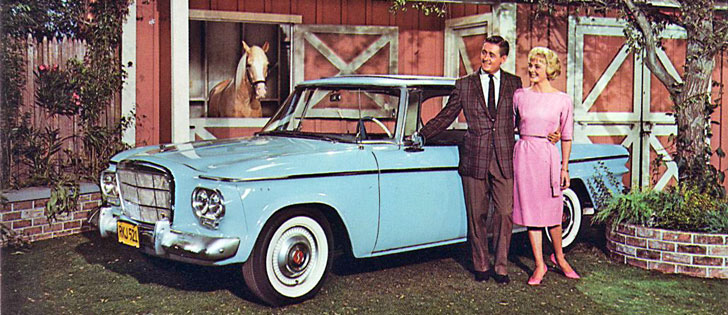
Lubin got Studebaker Packard Corporation to sponsor the show in syndication which it continued to sponsor once CBS picked it up. The Posts own a 1962 Lark convertible. Studebaker’s sales plummeted in the early 1960s, and production stopped in 1963. From then on, Ford provided the cars seen on the show.

Ed also had a double named Pumpkin, a quarterhorse, which was his stunt double. Later Pumpkin was featured in a pudding commercial and went on to appear in another Filmways Presentation show, Green Acres.

The Posts live in Los Angeles. Wilbur was an architect.

mred7

Photo: youtube.com

The Posts’ neighbors and friends were Roger and Kay Addison played by Larry Keating and Edna Skinner.  Keating died in the middle of the series, and Edna continued on the show. Later Wilbur’s former commanding officer, Col. Gordon Kirkwood (Leon Ames) and his wife Winnie (Florence MacMichael) moved into the Addisons’ home.

guest2

Both the Addisons and the Kirkwoods think Wilbur is a bit nuts. They often hear him talking to himself and, to cover for Ed, he gets involved in a lot of awkward situations. Wilbur is also a bit accident prone.

Wilbur’s wife resented the time Wilbur liked to spend with his horse instead of her. Her father, Mr. Higgins (Jack Albertson), thought she should leave Wilbur and considered him a “kook.”

mred9

Mr. Ed only talks to Wilbur. The only reason given for Ed refusing to talk to anyone else is that he thought Wilbur was the only person worth talking to. It worked because Ed was not treated as an unbelievable horse who could talk. He appeared as an equal character. Ed was also quite intelligent. He could read and play chess. He was able to use the phone to get information.  Bamboo Harvester really could answer the phone; he just could not have a conversation. He was also able to open the barn door. Ed would also pout at times when he didn’t get his way and threatened to run away a lot.

mred6

Photo: itschess.blogspot

In an online article, “The World of Mr. Ed-What You Didn’t Know About the Talking Horse,” written by Ed Gross on April 24, 2018, he quoted Ben Starr who wrote 42 of the episodes. He explained that the reason the show worked was because he and producer Lou Derman “really knew how to do that show because we figured out how to make it work for kids and grownups. You had to take care of the grownups, and that was our secret.”

Mister Ed featured a lot of famous guest stars including Mae West, Clint Eastwood, George Burns, Zsa Zsa Gabor, Leo Durocher, Jon Provost, Sebastian Cabot, Donna Douglas, Irene Ryan, Alan Hale Jr., Neil Hamilton, William Bendix, Sharon Tate, and Jack LaLanne.


ed2

Bamboo Harvester was trained by Les Hilton.  At a time when trainers could be considered somewhat cruel, Hilton was always respectful of his animals and never used force or abuse on them. Hilton had to be on the set whenever the horse was. To make Ed appear to be talking, Hilton originally used a nylon thread to open his mouth. Bamboo Harvester was quite smart though and learned to talk on cue whenever Hilton touched his hoof. A story made the rounds that Ed was made to talk by applying peanut butter to the horse’s mouth, but later Young admitted he made that up because it was more interesting than the real story.


ed5

Bamboo Harvester appeared to be a professional. He usually only needed one take to complete his action. Hilton had to teach him to play a variety of sports including riding a skateboard. However, when he got tired of working for the day, he just walked off the set. He received twenty pounds of hay and a gallon of sweet tea daily.

Apparently Young and the horse became close. Young had a great respect for his co-star and after the show ended, he would make trips to see Bamboo Harvester in his retirement.

ed4


I could not find a definite date of death for the horse. There are a lot of conflicting stories about it. Young claimed that the horse was in a stable in California where he lived on Hilton’s property. One version is that one day when Hilton was out of town, Bamboo Harvester was given a tranquilizer because he was having trouble getting up and he died hours later. Another story I read was that the horse was euthanized in 1970 in Oklahoma. He was reported to be suffering from arthritis and kidney problems.

One story I did confirm is that a horse did die in February of 1979 in Oklahoma, but it was not Bamboo Harvester, but a horse that posed for still pictures for the show which led to false reports of his being Mr Ed when he died.

Apparently, a reboot was planned for the Fox network in 2004, starring Sherman Hemsley as the voice of Mr. Ed, David Alan Basche as Wilbur, and Sherilyn Fenn as Carol. I could not find any information whether a pilot was ever filmed or not.

Another movie version was discussed in 2012 when Waterman Entertainment announced they were developing a new feature film based on the television show. Once again, I could not find any further information on the movie.


Mister Ed was popular during its run. A lot of collectible products were created in the 1960s including comic books and board games.

Mister Ed was not a show on my “must-watch” list, and I don’t watch a lot of the reruns. However, when I do catch one, I never feel like I wasted my time. The show worked and felt believable. Currently, it is not on either Me TV or Antenna TV, but it is available on DVD.

We All Love Gracie: The Burns and Allen Show

I am excited that today is my 100th blog, and I have saved a very special show for the occasion. Today you learn everything you ever wanted to know about the George Burns and Gracie Allen Show, one of my all-time favorites.

ba5

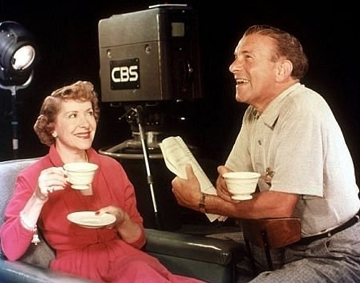
The George Burns and Gracie Allen Show, which premiered on 12 October 1950, was one of the first comedy series to make the successful transition from radio to television. When George and Gracie started in show business, Gracie was the “straight man,” but George figured out quickly that the audience responded to her immediately. They switched roles and they never veered from the formula again. The Burns and Allen Show was the first domestic comedy set in a real couple’s home and the first television series to depict the home life of a working show business couple.

ba19

CBS was lucky enough to have Burns and Allen on their radio and television networks. In 1930, an NBC executive told them the public would not accept them and Gracie’s voice was too squeaky! William Paley was a huge fan of their comedy and wanted them to try this new medium. The television show was very similar to their radio show. One of the first tag lines for the show was “You’ve HEARD them on radio, now SEE them on television.”

ba7

Ralph Levy was the first producer/director. Previously he had worked on variety shows and sports events. When he and George first met, it was not a great first impression. He thought it was the craziest concept he had ever heard for a show. George considered him a bit of a young punk. They put aside their differences and not only became close friends but greatly respected each other’s business decisions. Ralph would leave in 1953 to work for Jack Benny. When Jack did not have weekly shows, Ralph was working for both comedians, but the jobs became too much for one person.

ba10levy

Ralph Levy with George and Gracie

The show was broadcast on Thursdays from October of 1950 until March of 1953. From March of 1953 until September of 1958 when it went off the air, it was on Monday nights. Originally, it was staged live and broadcast every other week. In the fall of 1952, they decided on a weekly format. Shows debuting in New York were considered better commercial successes, so the first six episodes were set in the Mansfield Theatre in New York. The West Coast would not see the show until two weeks after the East Coast did. A kinescope was filmed with a 16 mm camera. Duplicates were made, and these shows were sent on kinescopes across the country. In December of 1950, the cast was allowed to go back home to California to film the rest of the series.

In 1951, George would broadcast all over the US with the placement of coaxial cables. George realized filming the episodes would allow for syndication of the show. The show continued for eight years, producing 239 filmed episodes.

Burns and Allen started McCadden Productions. It was named for the street where George’s brother Willy, one of the writers of the show, lived on. Willy was also their manager. They employed more than 300 people and would go on to produce many shows including Mister Ed and the Bob Cummings Show. George truly valued everyone’s opinion and anyone, even the janitor, could make comments and suggestions for improvements.
ba31

It was a grueling schedule to stick to for eight years. George and the writers met Monday morning. Gracie had wardrobe fittings and studied the newest script. They had rehearsals on Tuesdays, and Wednesdays were typically 12-hour days with filming beginning after another rehearsal. Thursday was Gracie’s only day off. The writers met Thursday as well as all day Friday. On Friday Gracie went shopping for her next show’s wardrobe. George devoted Saturday to narrowing down the script to fit the shooting time. On Sunday George and Gracie met with the director at 10 am to go over the script. Sunday afternoon and evening (as well as other scattered times during the week) Gracie studied and memorized the script.

Carnation Milk became a sponsor immediately and would stay with the show for all eight years. Carnation was like another character on the series. Actors were pitchmen for the products and commercial breaks were often part of the show. Gracie had their milk in full view in her kitchen. Their prop man who helped with this for all eight years was Nat Thurman.

George took his writers off to Palm Springs to work on the new show. The head writer was Paul Henning who would later go on to write, produce, and direct many classic sitcoms including The Beverly Hillbillies, Green Acres, and Petticoat Junction. The other writers were Sid Dorfman, Harvey Helm, Willy Burns and George. The writers were truly funny.  One day Jack Benny sent George a telegram from London.  It just read “What’s new?” George and his writers took an entire afternoon to answer it. They told Jack everything that was new including restaurant menus.
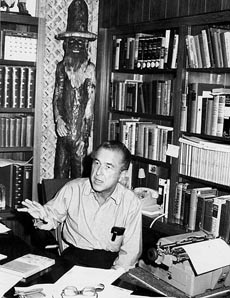
photo posted on post-gazette.com

Paul Henning

The show would often begin with George doing a monologue with his trusty cigar that would explain the beginning of the plot to the viewers. George frequently spoke to the audience during the show. In later years, he would retire to his study to watch the show on his television, therefore knowing what was going on in his absence. The rest of the cast was oblivious to the fact he could do so.

The first show had a very simple plot which was the key to many of their episodes. Gracie and Blanche want to go to the movies. The boys want to go to the fights. George makes up a complicated card game that doesn’t really make sense. He thought the nonsense rules would confuse the girls who would get mad and quit. Instead, Gracie thought the rules made perfect sense and she won the game, dragging the boys to the movies.

ba30

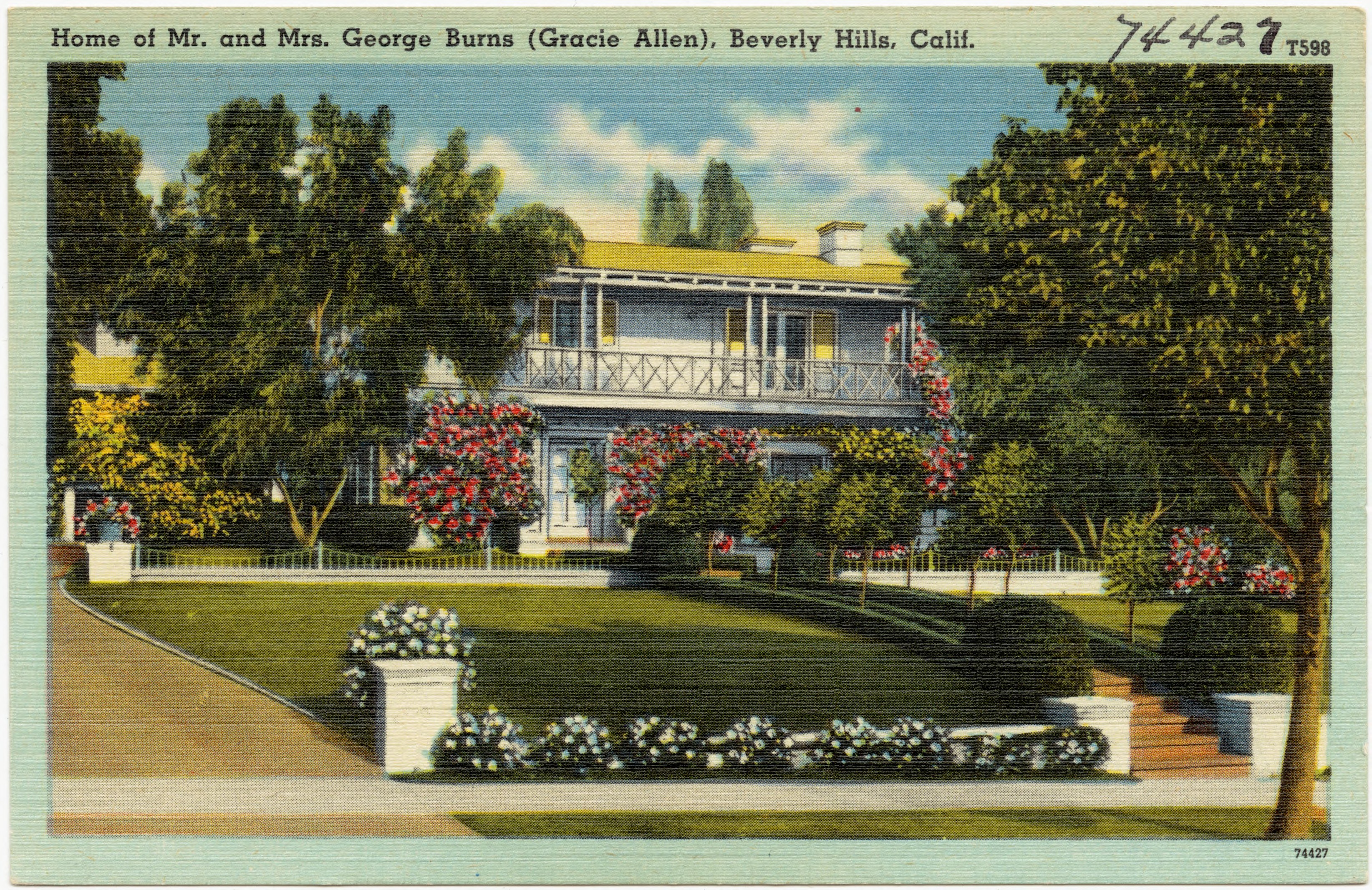
The Burns lived at 312 Maple Drive in Beverly Hills and their best friends and next-door neighbors, Blanche and Harry Morton, lived at 320 Maple Dr. The sets were copied from the Burns’ actual home. A shot of their real home was used on the show for exterior scenes. George continued to live in the house even when they became quite wealthy and George was still living there when he passed away at age 100.The house still exists today. They were not arrogant people. Gracie continued to wear the same $20 engagement ring George bought for her when they had no money.
ba21

The edge of the Burns’ swimming pool which was sometimes seen in the live episodes was an eighteen-inch tank of water which was designed to be quickly rolled on and off the stage. Lighting tricks were employed to create the illusion that the shallow tank had depth. George used the pool in his asides to the audience. One time he was supposed to have fallen in, and he showed up dry and made a comment about how quick things happen on television. Later he has to go into the pool again. He once again is seen completely dry, but this time he says nothing and he wrings a bunch of water out of his cigar.

Starting in the fall of 1955, Burns and Allen would often reappear after the end of the episode, before a curtain decorated with the names and locations of the various theaters where they headlined in their vaudeville days. They would perform one of their routines, often discussing Gracie’s relatives.
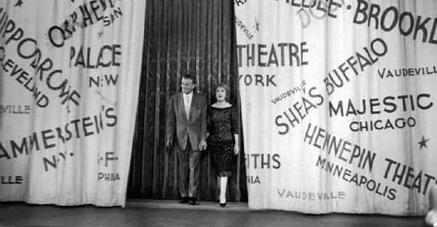
ba14

The theme music was “Love Nest,” composed by Otto Harbach and Louis Hirsch. It was written for a musical comedy show, “Mary.” There are lyrics, but only the instrumental version was used on the Burns and Allen Show.

Bill Goodwin and Harry Von Zell

Several staff members transitioned from radio with George and Gracie. Bill Goodwin continued to play himself, providing announcing duties. When he left in the second season to host his own show, Harry Von Zell took over the announcing duties. In real-life, Harry Von Zell had written several episodes of Wagon Train in 1957. The writers incorporated it into the show by having Harry pitch George ideas for western-themed shows. That year, George dressed like a cowboy from time to time and would say things like, “Meanwhile, back at the ranch.”

Bea Benaderet and Larry Keating

Bea Benaderet also moved from radio to television. She was Blanche Morton for the run of the show, but she went through several husbands (Hal March, John Brown, Fred Clark, and Larry Keating). George was extremely creative in his interaction with the audience. Hal March did the first seven shows; John Brown took over the for the next ten months; and Fred Clark was Harry through 1953 for 74 episodes. In a program “Morton Buys Iron Deer/Gracie Thinks George Needs Glasses,” Blanche is holding a catalog ready to hit Harry who spent $200 on an iron deer. George walks on stage and stops the action. He introduces Larry Keating and tells Bea that he is her new husband. They have a small chat about each other’s work. George stops them and says if they are that nice to each other, no one will believe they are married. He gives a cue, Blanche resumes her position, and hits Harry when he re-enters the scene.

Fred Clark, Hal March and John Brown

Bea and Gracie were close friends. Blanche truly loved Gracie and was extremely loyal to her. They laughed continuously. Bea also loved Gracie in their personal lives.

ba24

George and Gracie’s daughter Sandra and son Ronnie also appeared in the show. In later years, Ronnie would become a regular. Ronnie became very popular; he and Gracie often covered for each other with George, and Ronnie was often busy trying to get her out of a bad situation. When he joined in 1955, the show moved back to New York. Harry Morton gets a temporary job there, so the Burns family went too. This change called for new sets, including the hotel where they all were living and Rumpelmayer’s sandwich and ice cream shop.
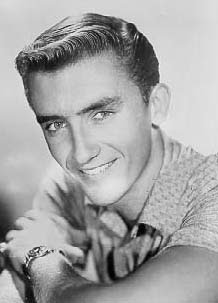
ba3

Ronnie Burns

In the seventh year, the cast went back to Los Angeles. Fred de Cordova, who had taken over for Ralph Levy, left after three years to direct movies. Rod Amateau was brought on for the final two years.  In many ways, the seventh season was their most creative—this is when the “magic” TV screen appeared.

While the ensemble around them was incredible, the heart of the show was Gracie. Gracie always said that her character believed she was the smart one and everyone else was a little off. There was always a touch of reality in her logic. Gracie played her that way and the audience felt protective of her.
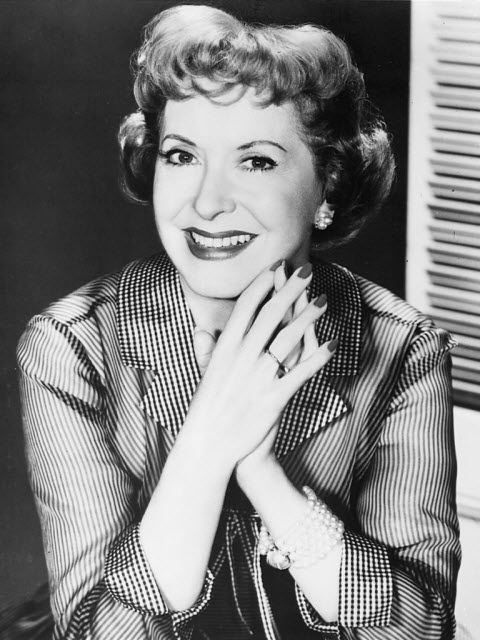
ba1

Gracie was a bit of a perfectionist, but no one worked harder than she did. If she had to perform a task on the show, she did it. In a New York Times article, she commented, “It makes me furious to see an actor go through the motion of writing an address on a piece of paper. They scribble it off in a second and you know they couldn’t have written anything.” Whenever Allen performed a task on the show, whether it was writing a name, sewing a handkerchief, or chopping up vegetables, she meticulously performed the duty while reciting her dialogue.

Everyone around her said she never blew her lines and was in almost every scene. George described her work ethic in his book I Love Her That’s Why: “On the set she gives absolutely no trouble and makes no demands. She arrives on time, does the job, jokes with the crew, and in general behaves less like a star than any actress I know.”

During the eight years that the show was on the air, Gracie Allen never appeared in the same outfit twice, and she had three costume changes in some episodes. Gracie Allen chose her own wardrobe. Jane Vogt was the wardrobe mistress for the rest of the cast. Bertha French was the show’s hair stylist and Gene Roemer did make-up. Gracie trusted Gene so much she typically slept while he got her ready.

The writers knew there were a few rules for writing for Gracie. Cheryl Blythe and Susan Sackett sum them up in their book Say Goodnight Gracie!: “(1) She thinks she is smart. (2) Keep her reactions consistent from week to week. (3) Her logic was illogical and her illogic was logical and then her reasoning worked.” Examples of her logic are: “Shorter cars use so much more gas. With a short car, you have to travel further to go the same distance.”  When the delivery boy tells Gracie he’s in a hurry because Mrs. Vanderlip is waiting for a chicken to make sandwiches, Gracie tells him she’ll wait a long time because it took her 2 years to teach their canary to sing.  Gracie keeps her clocks unplugged to save electricity. When she wants to know the time, she plugs it in.  Or take the time she froze a bunch of water; it will save her time when she needs it because she just has to defrost it.
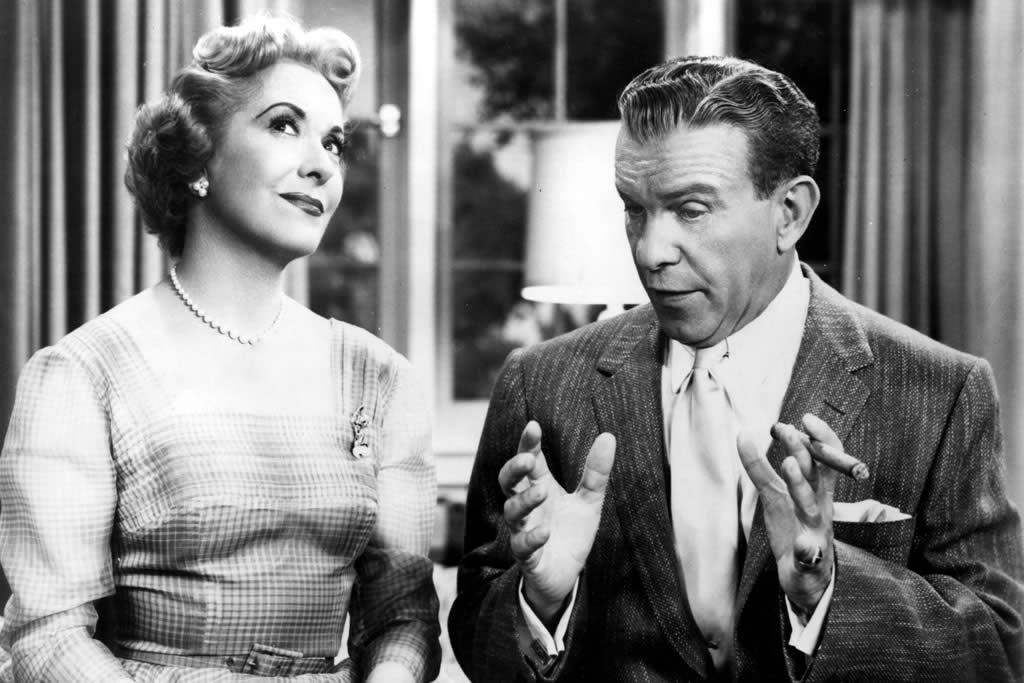
ba2

George gave Gracie most of the credit. Once he commented “You see, to be a straight man you have to have a talent, you have to develop this talent, then you gotta marry her like I did.” The audience liked George because they intuitively realized he adored Gracie.

George was the calm in the middle of the storm around him. Because he always knew what was going on, he remained relaxed when everyone else was confused. And the audience loved the fact that he shared information with them, so they were in on the fun.

Allen announced her retirement on February 17, 1958—effective at the end of the current season. Burns and Allen filmed their last show June 4, 1958.  The plot of the final program was Ronnie fearing he was going to lose his girlfriend to an exchange student. The filming was an emotional experience, although nothing was said about it being Allen’s last performance in the show itself. At the wrap party, Allen took a token sip of champagne from a paper cup, hugged her friend and co-star Bea, and said “Okay, that’s it.” After a brief last look around the set, she said, “And thank you very much, everyone.”

ba23

“She deserved a rest,” Burns said. He explained that she had been working all her life and her lines were the hardest to learn. She had to memorize every word because some lines didn’t make sense.

Although Burns and Allen was never among the top-rated series, it maintained consistently high ratings throughout its eight seasons. The show received a total of twelve Emmy nominations: four for best comedy series, six for Allen as best actress and comedienne, and two for Bea Benaderet as best supporting actress.
ba15

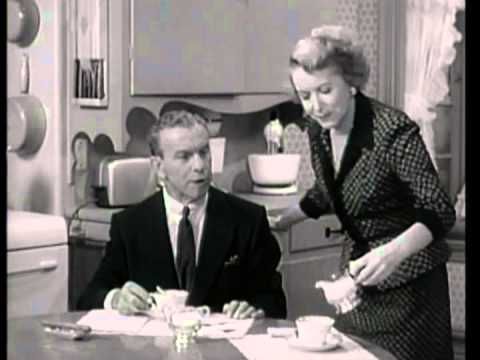
Inspired writing complemented the comic performances, making Burns and Allen an all-time classic. The show holds up remarkably well. The writers purposely kept topical and political humor out of the scripts. They also made sure there were no specific references to the 1950s, so the show did not sound dated in reruns. Their words can say it much better than I ever could, so here are some examples of their creative scripts.

Ralph Hanley: I’m here to help you with your income taxes.

Gracie: Oh, we’re glad, we got tired of paying them all ourselves.

Ralph: For medical you put down a full-length mirror, $50.

Gracie: That’s right, I got it for my father, so he won’t get pneumonia.

Ralph: How’s that?

Gracie: Well, you see, before he only had a half-length mirror, so when he went outside he forgot his pants.

ba13

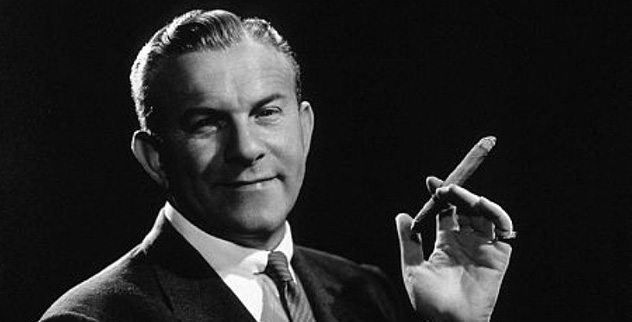
George: Would you ever think that such a beautiful mink coat would come from such an unattractive little thing that looks like a weasel?

Gracie: Oh, George, you’re just fishing—you know I think you’re handsome.
ba6

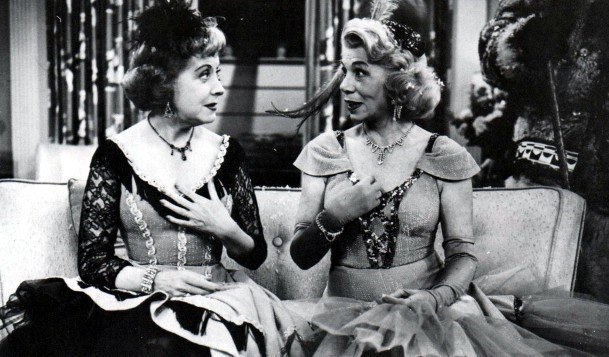
Blanche: I just got a phone call from Lucille Vanderlip and she told me Margie Bates got a beautiful diamond bracelet from her husband.

Gracie: I can’t believe it.

Blanche: Why not?

Gracie: If Lucille’s husband gave another woman a diamond bracelet, you’d think she’d be the last one to mention it.

Blanche: Er . . . Gracie . . . you misunderstood me.
ba22

Gracie: The night before last, George came home from the office feeling terrible.

Blanche: Probably flu.

Gracie: No, he drove the car.

My top ten favorite shows are:

#13, March 15, 1951: The Vanderlips are having a party. Gracie was hoping they would invite the Mortons but there is no room, so she and George decide not to go so they can spend time with Blanche and Harry. Once Burns and Allen decline, the Vanderlips call the Mortons because they now have room, so the Mortons happily attend.

#17, February 12,1953: On the train home from San Francisco, Gracie thinks one of the passengers is planning on murdering his wife. She reports it and confuses the cops who believe Harry Morton has killed Blanche who is missing. Blanche actually is off on a shopping trip.

#38, August 3, 1953: Gracie is a witness to a bank heist. Johnny Velvet, the gangster behind the crime (played by one of my favorites, Sheldon Leonard), kidnaps Gracie so she cannot testify in court. After a couple hours, he takes her back because she is driving him crazy. He decides to kidnap George instead, but his men keep nabbing the wrong guy.
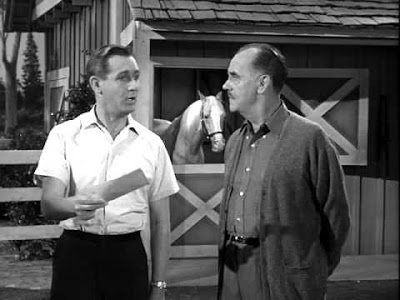
#40, August 17, 1953: Gracie is shopping in a department store when she trips. The store wants to settle quickly before it turns into a big lawsuit. Gracie thinks they are trying to sue her for putting a hole in the carpet. The adjustor meets her and assumes the store is in bigger trouble because she now has a head injury.

#79, April 5, 1954: Gracie, known for denting the car, explains the new ding when she tells him an elephant sat on the car. No one believes her. When the circus owner comes to the house to bring her a check for damages, George thinks it’s a prank to convince him, so he tears up the check. George finally realizes an elephant did indeed sit on the car.

#90, August 2, 1954: George and Gracie decide they want to see a movie with some friends. They are having a tough time coming up with a movie that someone in the group has not already seen. They finally find one everyone can agree on, but then someone else stops by to go with the group and they have seen it.

#118, January 3, 1955: Gracie is talking with a woman in the post office. She wants to retrieve a letter she mailed asking her husband for a divorce. She wrote it when he refused to let her mother come visit. Harry Von Zell overhears part of the discussion and assumes Gracie is divorcing George because he won’t let her mother come. He finally convinces George to invite Gracie’s mother. When George learns the actual story, he fires Harry again.

#192, June 4, 1956: George has given his coat to Harry Von Zell to use because he’s taking a date to the Stork Club. George gets locked into the steam room at the club and can’t get out till morning. He tells Gracie why he didn’t come home, but someone returns his coat from the Stork Club, so she thinks he is lying. He has to bring over everyone who had been involved in getting him out of the steam room to convince her he is telling the truth.

#213, October 29, 1956: Gracie misunderstands a conversation, thinking that the Mortons are moving to Pasadena. Gracie decides she and George will move too and tries to sell their house. As a subplot, Ronnie’s fraternity initiation requires him to say the exact opposite of what people expect to hear for a day. Having Gracie and Ronnie there all day truly confuses George.

#219, Ronnie is dating a girl he met at the store where he works. He leaves his coat at her house and her mother drops it off for him. Gracie assumes the mother is Ronnie’s girlfriend. She decides to get Ronnie fired from his job so he is no longer working with the older woman. She also mentions his seeing an older woman to his real girlfriend, not knowing who she is. Luckily, George sees this on his study television, so he is able to straighten out the mess.

If you have never seen the show, you might want to check out some of these on YouTube. There are also numerous DVD collections from their show specifically to sets of golden age classics variety packs. You can also catch their show on Antenna TV from 5-6 am every weekday, 4-5 am Saturday and Sunday mornings, as well as 9 pm Saturday night and 11 pm Sunday night.