The Rifleman: Spinning Through Life

As we wind up our Riding the Range blog series, we end with another show set in the 1880s: The Rifleman.

đź“·boomermagazine.com

The series was set in the New Mexico Territory and starred Chuck Connors as Lucas McCain and Johnny Crawford as his son Mark.  The show was on ABC from 1958 through April 1963. Lucas McCain was one of the first single parents on television.

The show was created by Arnold Laven and developed by Sam Peckinpah. Peckinpah would go on to direct many famous westerns. The pilot episode was written by Peckinpah and Dennis Hopper starred in it. It was aired on Dick Powell’s Zane Grey Theatre. Some famous people worked behind the scenes. Connors would write several of the episodes and Robert Culp, who would become the co-star of I Spy, wrote a two-part episode. Ida Lupino directed “The Assault” in 1961.

McCain was a Union soldier in the American Civil War. His wife died from smallpox when their son was six, and McCain and Mark move from Oklahoma to New Mexico where Lucas buys a ranch outside North Fork. McCain is not a perfect father; he is often stubborn and opinionated. Sometimes he seems overprotective of his son. He tries to teach Mark life lessons. In one episode, he tells him “A man doesn’t run from a fight, Mark, but that doesn’t mean you go looking to run to one.”

đź“·remmetsweeney.com

Chuck Connors was offered the role of McCain but turned it down because he thought the salary was too low. Several other actors were tested but no one had the same chemistry with the young boy that Connors did, so they made him another offer with a higher salary.

There are some North Fork folk who show up on many of the shows including bartender Marshal Micha Torrance (Paul Fix), Frank (Bill Quinn), hotel owner Lou (Patricia Blair), blacksmith Nels (Joe Higgins), banker John (Harlan Warde), general store owners Milly (Joan Taylor) and Hattie (Hope Summers), and hotel clerk Eddie (John Harmon). Bill Quinn was Bob Newhart’s father-in-law. Patricia Blair left in 1963 to star in Daniel Boone. Hope Summers moved to Mayberry after the show ended and became Aunt Bee’s best friend. Joan Taylor only did a few shows after The Rifleman, but she came into the show with quite a few television appearances. Higgins, Warde, and Harmon were prolific actors who had very successful careers.
đź“·amazon.com

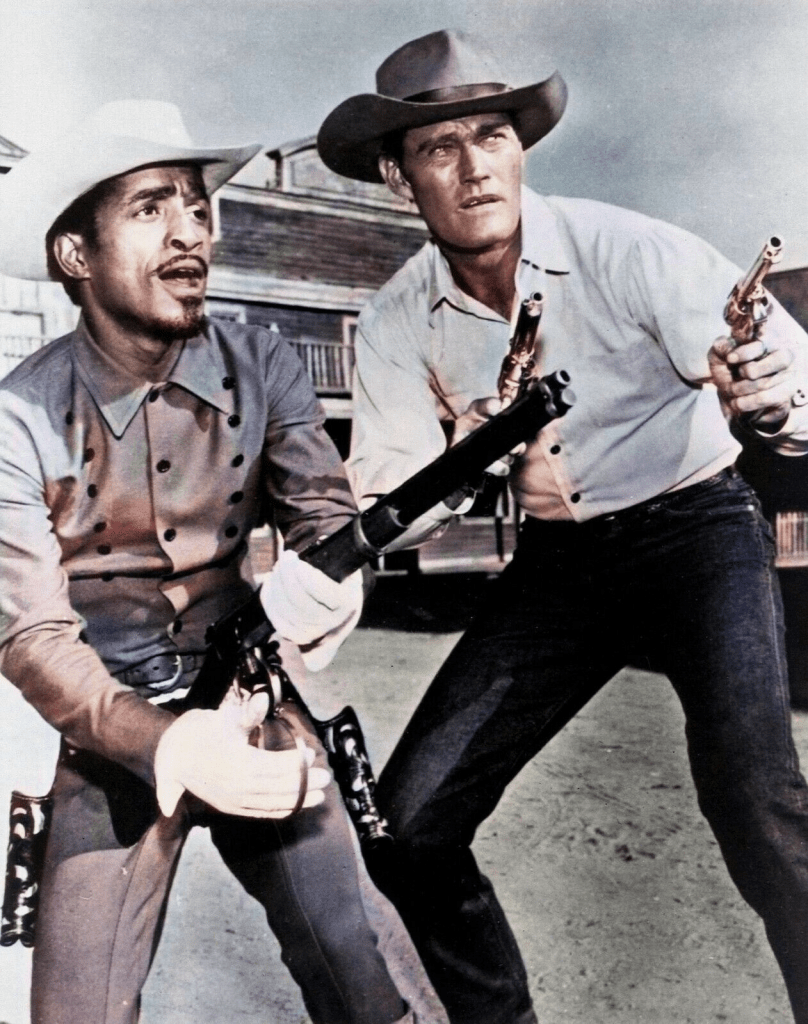
Quite a few well-known stars make their appearance during the run of the show. Some of them include Harry Carey Jr., John Carradine, Lon Chaney Jr., Ellen Corby, Robert Culp, Sammy Davis Jr., Jack Elam, Dabbs Greer, Buddy Hackett, Michael Landon, Agnes Moorehead, Denver Pyle, Pernell Roberts, Robert Vaughn, and Adam West.

There were so many westerns on the air during the fifties and sixties that most of them needed a hook to set them apart. McCain was called The Rifleman because he used a modified Winchester Model 1892 rifle with a large ring lever. The lever design allowed him to cock the rifle by spinning it in his hand and it was rigged to rapid fire which we saw demonstrated in the opening of every show. I guess no one was bothered by the fact that McCain used a rifle that would not be invented until ten years later than the time the show was set in.

The show was on Tuesday nights for the first three seasons. For season four, it moved to Mondays. After the fifth season, the show was canceled due to low ratings. However, Connors and Crawford remained life-long friends. Connors admired Crawford’s work on the set and said he always respected the cast and crew.

đź“·ebay.com

Crawford began his career as a Mouseketeer, one of the original 24. After the show ended, he became a pop singer with five hits. “Cindy’s Birthday” was his most famous and it was No. 8 on the Billboard 100 in 1962. Crawford came into the show with thirty acting credits, and he would go on to have thirty more after the show ended, but he never starred in another series.

Fun fact, The Rifleman was one of the few American shows that was allowed to be shown on Russian television. Apparently Breshnev loved the show. Later he met Chuck Connors when he came to the US. The actor made several trips to Russia.

I have seen this show on MeTV, and it is okay. I’m guessing that the reason it was on five seasons, and the reason it was canceled after five seasons, is because it was another western. Almost every western seemed to be successful in the fifties and sixties, but five years seems to be about the length of most of them with the exception of Gunsmoke, Bonanza and a handful of others. I have to admit that I am not drawn to McCain as a character, although I didn’t dislike him either. If you like westerns and have not seen it, it might be worth checking out.
Little House on the Prairie: Drama On and Off the Set

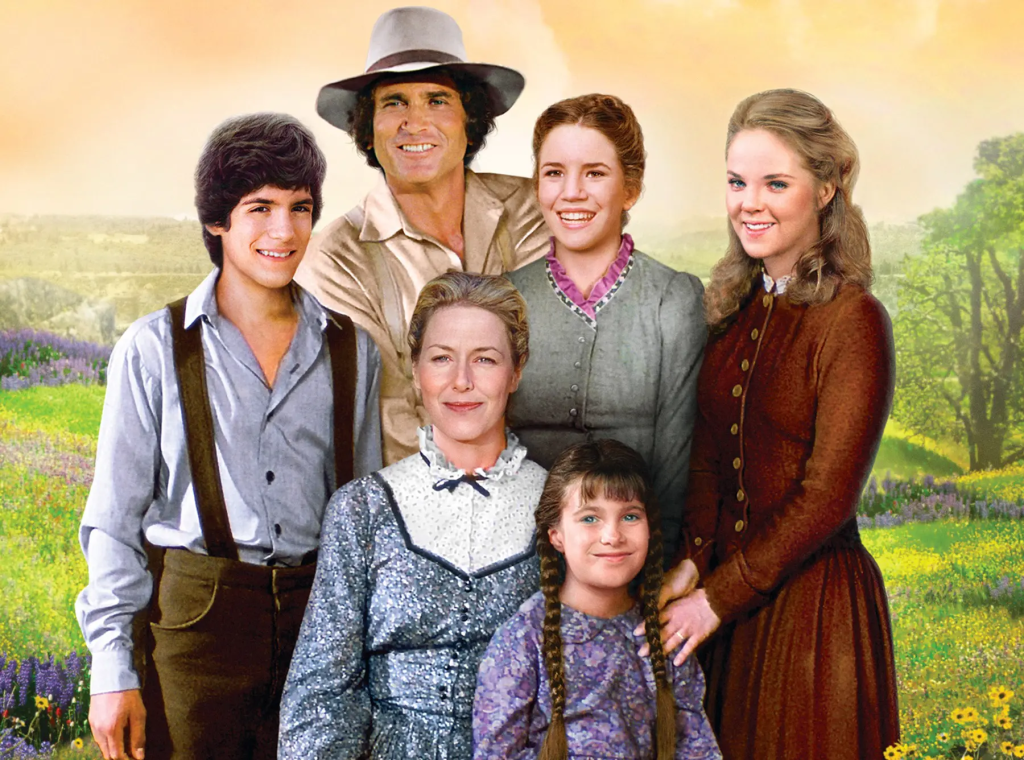
This month we are visiting with some of our favorite families. I absolutely would have included The Waltons this month if we had not covered the show recently. However, another historic family, the Ingalls, is on the schedule. Little House on the Prairie was on the air for nine seasons. Many of us got to know the family through Laura Ingalls Wilder’s books.

đź“·lovemoney.com

Television producer Ed Friendly acquired the film and television rights from the books. Oddly enough, the other show Friendly is known for as producer is Rowan and Martin’s Laugh In. He decided to make Little House a two-hour pilot and asked Michael Landon to direct it. Landon agreed to do so if he could also play Pa, Charles Ingalls. The pilot aired in March of 1974, and in September the series began.

Along with starring in the show, Landon continued to direct as well; he directed 87 of the 204 episodes. The other directors included William F. Claxton, Victor French, Maury Dexter, and Leo Penn.

Landon also got in on the writing of several episodes. He had written several scripts for Bonanza when he appeared on that show, and several of them were recycled for Little House.

đź“·showbizcheatsheet.com

Like The Waltons, while this series was often happy with comedic notes, it dealt with many serious issues as well, including alcoholism, drug addiction, poverty, racism, child abuse, and rape. The show focused on the struggles and joys of a pioneer family living in the late 1800s.

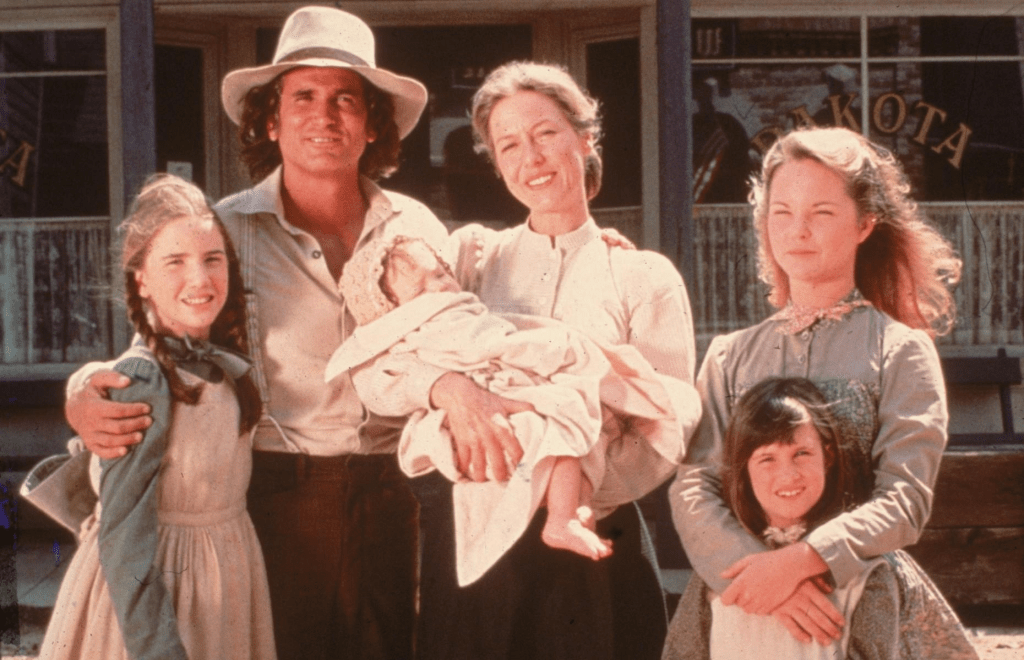
Along with Landon, Karen Grassle played Ma, Melissa Gilbert played Laura, Melissa Sue Anderson was Mary, with Lindsay and Sidney Greenbush alternating as Carrie. In addition to the Ingalls family, other town folk on the show included Nellie Oleson (Alison Arngrim), Nels Oleson (Richard Bull), Harriet Oleson (Katherine “Scottie” MacGregor, and Miss Beadle (Charlotte Stewart).

Some of the guest stars included Willie Aames, Anne Archer, Lew Ayres, Hermione Baddeley, Ken Berry, Ray Bolger, Ernest Borgnine, Johnny and June Carter Cash, Burl Ives, Charles Lane, Vera Miles, Sean Penn, and Ray Walston.

đź“·wikifandom.com

The theme song, “The Little House,” was written and conducted by David Rose. Rose won two Emmys for his work on the show.Although the pilot ranked #3 for the 1974 ratings, the first two seasons were much lower. Season 3 found the show on Monday nights where it remained one of the highest-ranking series through season 7. Season 8 had a significant decline and season 9, with the loss of most of the family members, never really caught on with viewers. However, season two is the only year the show was not in the top 30. The schedule was a bit crazy when you analyze it. Although, this show did have to compete with The Jeffersons and WKRP in Cincinnati, because they were half-hour shows and this was an hour show, many people probably continued watching the second half. For many of these years, there were up to six different shows in this time spot on CBS and many of them changed from year to year, so there were rarely shows in this spot against Little House for more than a month or two.

After eight seasons, both Michael Landon and Karen Grassle were ready to move on; however, Landon did stay on as a director and writer. The show focused on Laura Almanzo and the younger generation for the ninth and final season.

The show was loved by critics as well as viewers and received sixteen Emmy nominations. The series won four of them, all for music and cinematography. The only cast member nominated was Melissa Sue Anderson; she lost to Sada Thompson for Family.

đź“·littlehouseontheprairie.com

Viewers were not ready to leave the Ingalls for good. Three made-for-tv movies were written: Little House: Look Back to Yesterday in 1983, Little House: The Last Farewell and Little House: Bless All the Dear Children, both in 1984. In 2008 the Ingalls’ lives also became a musical at the Guthrie Theater.

One fun story is when the show moved from Paramount to MGM Studios in the late seventies, they were uncovering sets so they could build new ones and found the yellow brick road from the Wizard of Oz which delighted the kids in the cast; I’m guessing it delighted many of the adults as well.

Another fun story was learning what the cast ate on the show. Since beef stew was a popular meal in the 1800s, the family often had that for its meal and when they did, they were actually eating Dinty Moore Beef Stew. When they had chicken, it was KFC that appeared on their plates.

The kids must have been troopers because each episode took about seven days to shoot. They were on location at Big Sky Ranch for four days and in the studio for interior shots about three days. In addition, they were probably witnesses to off-air scenes that were not the best. Grassle and Landon were not close, probably because his role seemed much bigger than hers and he was directing as well. Unfortunately, both Grassle and Landon were alcoholics, and alcohol was part of their life on set. During season four, Grassle quit when she realized the seriousness of her problem. Landon was never able to kick his dependence and died from pancreatitis.

đź“·pinterest.com

Gilbert said that Michael Landon had interesting ways to inspire his kids to get emotional on the set. He worked himself up to become very emotional and with eyes full of tears would ask her “Do you know how much I love you?” which would bring tears to her eyes as well.

It might have been a way to get her to cry, but it was not a lie. Gilbert lost her own father when she was eleven, and Landon became a second father to her. He often had Gilbert at his house on the weekends. She said it was a huge house and the kids ran through the house at will. Often Landon would hide behind doorways and jump out and scare them. Gilbert said Landon provided her with a lot of great advice. The most memorable for her was that nothing is more of a priority than home and family, and no success is as important as loving your people and contributing to a community. And to have fun above all in your career.

That is sage fatherly advice for us all to remember.

TV Guide “Covers” Our Viewing History

I love September. The beginning of fall conjures images of fall leaves, trips to the apple orchard, the sound of football games, and returning to a welcomed routine. One of my favorite autumn memories as a child and teenager was studying the Fall Preview of the TV Guide, so I could decide which shows were “do-not-miss” series.

TV Guide is still available, but there was something special in being able to peruse the upcoming episodes, read the articles, and do the crossword puzzle. Don’t get me wrong, I’m not advocating going back to only three channels plus Public TV, but there was something comforting in knowing what would be on every day on every channel and knowing that all your friends were watching the same thing, and you could discuss it at school. That nostalgic feeling disappears when you are trying to look at 200 channels, not to mention Apple TV, Netflix, Amazon, and the many other options out there.

As much as I enjoyed TV Guide, I knew little about it, so I thought it would be fun to learn some of the history behind this almost-seventy-year-old publication.

In 1948, Lee Wagner printed the New York City area television listings in The TeleVision Guide which was sold on newsstands. Gloria Swanson who starred in The Gloria Swanson Hour appeared on the first cover. With the success of that magazine, Wagner went on to publish issues for both the New England and Baltimore-Washington, DC areas. In 1953, Walter Annenberg bought the series of publications and incorporated them into his Triangle Publications. Wagner would remain a consultant for that business until 1963.

The first magazine titled TV Guide was issued April 3, 1953. It was sold in ten cities and boasted a circulation of 1,560,000. The cover featured a photo of Lucille Ball’s newborn son Desi Arnaz Jr. with the headline, “Lucy’s $50,000,000 Baby.” It cost 15 cents. For the first 52 years of its existence, it was digest size. Triangle Publications, headquartered in Radnor, PA, continued to buy local magazine listings, creating a national publication. Their contemporary building featured a large logo at the entrance, a vast computer system to save data on every television show and movie, and housed editors, production personnel and subscription processors.

In September of 1953, the magazine released its first Fall Preview edition and circulation increased steadily from then on. The guide was available by subscription or at grocery stores. Eventually a color section was added featuring television-related stories, articles about stars, and weekly columns. One of the columns was “Close-Up” which looked at different types of programs. “Cheers and Jeers” was a critique page for specific programs, “Hits and Misses” rated shows from 0 to 10. In addition, certain years included horoscopes, recaps of soap operas, lists of sporting events and crossword puzzles. Next to each television show was a number corresponding to the local channel. A brief description of the program was given. Networks often ran ads for various shows.

Beginning in the late fifties, “color” was set in a rectangular box for those shows that were broadcast in color. By 1972, the majority of programs were full-color, so the abbreviation “BW” was used for shows not in color. Until cable television entered the entertainment business, listings began about 5 am and went until midnight. By August of 1982, the magazine began expanding its coverage of cable programming with “CablePay Section” and “Cable and Pay-TV Movie Guide.”

In August of 1988, Triangle Publications was sold to the News American Corporation for $3 billion. It was one of the largest and the most expensive acquisitions at the time.

In March of 1996, TV Guide launched iGuide, a web portal. In June of 1998, News Corporation sold TV Guide to United Video Satellite Group for $800 million and 60 million shares of stock worth $1.2 billion. “The Robins Report” a review column was added, “Family Page” showcased family-oriented programs, and “Don’t Miss” which was select programs to watch during the week.

In 1999, TV Guide hosted a new award show, TV Guide Awards, telecast on Fox. Winners were chosen by TV Guide subscribers.

In 2002, to commemorate the 50th anniversary of the magazine, six special issues were created: “TV We’ll Always Remember: Our Favorite Stars Share Fifty Years of Memories, Moments, and Magic”; “50 Greatest Shows of All Time”; “Our 50 Greatest Covers of All Time”; “50 Worst Shows of All Time”; “50 Greatest Cartoon Characters of All Time”; and “50 Sexiest Stars of All Time.”

As more cable channels were added, space became a premium and the magazine had to decide which ones to include. In September of 2006, TV Guide launched an updated website with expanded editorial and user-generated content not included in the print edition.

With more channels, less detail was available about shows, and by 2007, circulation had decreased from its peak of twenty million in 1970 to less than three million. The weekly publication went through several other sales. In 2014, it underwent a major redesign. Fourteen pages of listings were eliminated, and programming information was only provided for top-rated broadcast and cable networks and included several new sections including the “Roush Review” where Matt Roush selected the top ten picks from the upcoming week. The size was then reduced to 7” x 10”.

In 2015, it was sold once again to NTVB Media.

Two spinoff magazines were produced by TV Guide: TV Guide Crosswords and TV Guide’s Parents’ Guide to Children’s Entertainment.

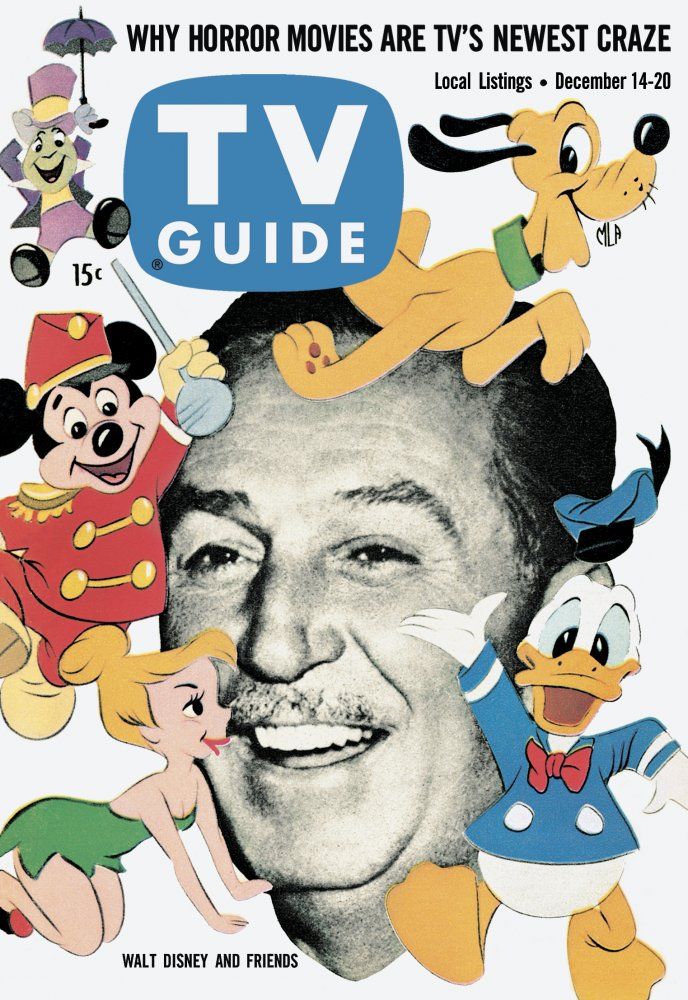
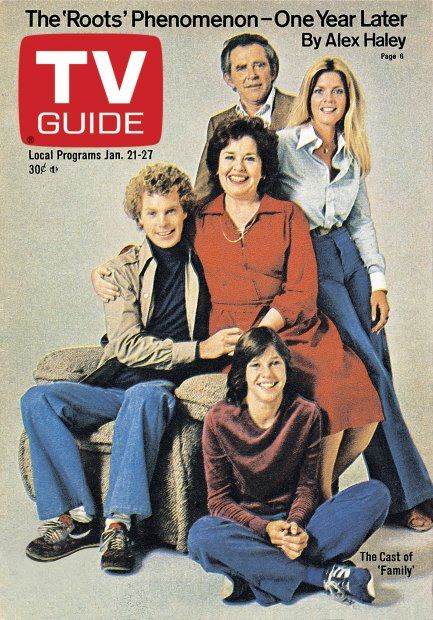
With over 3000 covers, almost every star and television show you can think of has been featured on the publication. The original 1953 cover of Desi remains the most expensive, valued at $3000. Another early cover of George Reeves as Superman runs a close second.

Lucille Ball has appeared on the most covers, with 39 total. Johnny Carson comes in second with 28 covers and Mary Tyler Moore and Michael Landon are tied for third place with 27 each.

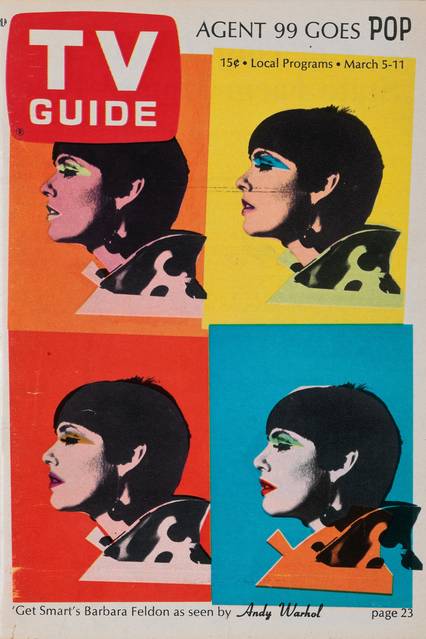
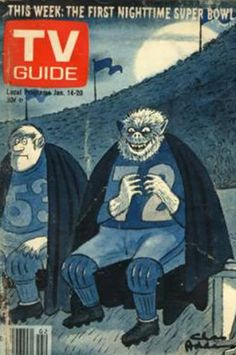
In addition to photographers’ covers, TV Guide has featured a variety of artists over the years including 37 Al Hirschfield pieces, two Charles Addams, one each by Norman Rockwell, Peter Max, Andy Warhol, and Dali.

I guess I’ll have to pick up a TV Guide next time I’m at the grocery store just to see how it compares to my fond memories. I’m guessing I will have to shell out more than $.15. Considering all the changes that have taken place in the television industry since the late 1940s, the magazine has been impressive keeping up with all the transformations and still providing a guide for our viewing.