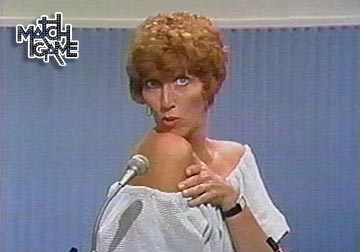
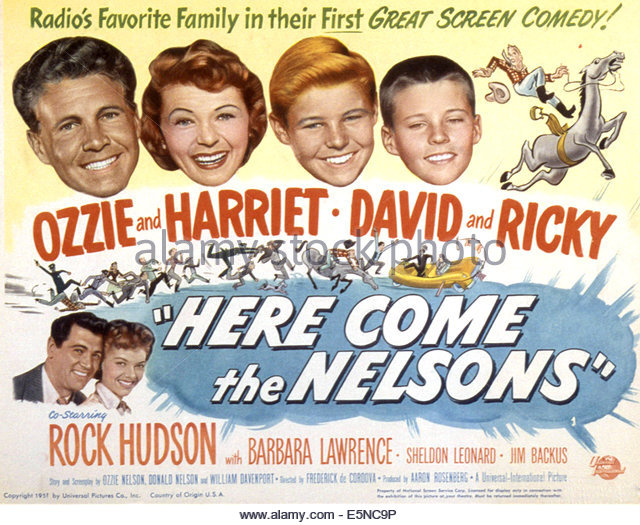
77 Sunset Strip: A Bit Kookie

As we continue with our “Favorite Crime Solvers of the Past,” we turn to 77 Sunset Strip. Even if you never watched the show, you might be familiar with the theme song where they snapped and kept repeating “77 Sunset Strip.”

📷facebook.com

Created by Roy Huggins, the show debuted on ABC in 1958 and ran until spring of 1964. This was the third appearance by Detective Stuart Bailey. In 1946, Huggins’ novel, The Double Take, was published. In 1948, Bailey stepped into the big screen, starring in I Love Trouble played by Franchot Tone. A decade later he showed up on television played by Efrem Zimbalist Jr.

Bailey, a former WWII secret agent and foreign languages professor, works with former government agent Jeff Spencer (Roger Smith). Their office is at 77 Sunset Strip, Suites 101 and 102. Suite 103 is occupied by Suzanne Fabry (Jacqueline Beer), a French switchboard operator who handles phones for several clients including Bailey and Spencer. Occasionally she helps them solve a crime.

Other characters come and go from the offices including Roscoe (Louis Quinn), who gives out horse-racing tips when he’s not at the track; he often is an operative for the duo.

📷allposters.com

Gerald “Kookie” Kookson (Ed Byrnes) is a bit of a kook. He loves rock and roll, is witty, appreciates looking good, and works as a valet at the club next door. But he wants to be a private detective and makes full partner during the show. Kookie provides some comedy with his slang like “ginchiest” for coolest or “piling up Zs” for sleeping. During season 2, Byrnes asked for more money with his character expanding his role, but the answer was a firm no, so he left the show. Warner Brothers eventually settled with him, and he returned in May of that year.

Other occasional visitors include Lt. Roy Gilmore (Byron Keith) and the Frank Ortega Trio (played by themselves), a jazz band, who perform next door. They recorded for Warner Brothers who was also behind the television show.

The show had a fun, witty edge to it making it interesting to watch the interactions of the characters in addition to the crime solving. Bailey and Spencer were updated versions of forties’ noir detectives. Some of the shows had very different plots, something like the shows Moonlighting would feature a few decades later. “The Silent Caper” had no dialogue and, in another one, Bailey finds himself in a ghost town and he’s the only main character in the episode. During the last season in “The Target,” roles were played by crew members who were usually behind the camera including director William Conrad, associate producer James Lydon, and writer Tony Barrett.

Guest stars were plentiful and included Robert Conrad, Dyan Cannon, Cloris Leachman, Shirley MacLaine, Elizabeth Montgomery, Mary Tyler Moore, Roger Moore, William Shatner, Marlo Thomas, Robert Vaughn, and Adam West.

📷starstills.com

Mack David and Jerry Livingston wrote the famous theme which became a top 10 hit on the Billboard chart. The duo worked on several other Warner Brothers crime shows including Surfside Six, Bourbon Street Beat, and Hawaiian Eye, all based on the 77 Sunset Strip formula and exotic location.

By 1963, ratings were declining and the show revamped. If you read my blog often, you realize this is one of my pet peeves. If they want to change the casts, I understand that. However, in this one, like so often, Bailey is suddenly working alone and there is no mention made of any of the other characters, just as if they never existed. They did this on Happy Days, The Doris Day Show, and several other popular series.

In addition to booting the cast, Jack Webb was brought in as executive producer and William Conrad as director. And if the name William Conrad sounds familiar, yes, it is the same person as the man who starred on Cannon. During the fifties and sixties, Conrad racked up 32 directing credits.

Bailey is now a solo investigator. The title didn’t change, but the old office is no longer there nor the club nor the theme song. A new one written by Bob Thompson was used, and the show took on a darker, more serious nature. Bailey gets a secretary named Hannah who we rarely see.

📷ebay.com

The show was on Fridays for its entire run, just switching time slots now and then. By season two it was in the top ten. In seasons three through five, it got its biggest competition from Route 66, which it beat in the ratings. The final season, the show got moved to a later slot, going up against The Alfred Hitchcock Hour but, neither of them were in the top thirty.

Big surprise, viewers weren’t fans of the changes or the more serious tone of the show, and they drifted away. The show was cancelled in February. Efrem Zimbalist Jr. moved over to the FBI. Roy Huggins had a hugely successful career. He would write for and create more top shows including Run for Your Life, Maverick, Alias Smith and Jones, The Rockford Files, and The Fugitive. Viewers at least got the satisfaction of knowing that making such drastic changes to the show caused the end of that story. Stream a few of the early seasons on Philo, Roku, or Pluto TV and let me know what you think.
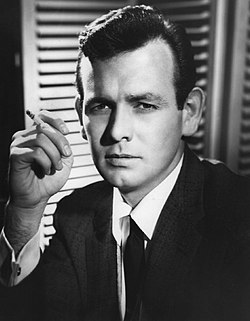
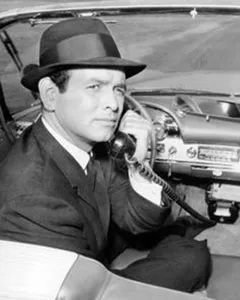
Richard Diamond, Private Detective: Living His Best Life

This month we are discovering some of our favorite “Crime Solvers of the Past.” Up today is a show I listen to on old-time radio quite often: Richard Diamond, Private Detective.

Dick Powell stared on the radio series which began in 1949, and the show ended its run four years later in 1953.

📷wikimedia.org

The television show went on the air in the summer of 1957. CBS aired the show through fall of 1959 when it moved to NBC for its final season. It was much more common in the fifties and sixties for shows to shift networks.

David Janssen starred as Diamond, a former cop in the New York Police Department. The television show kept the film noir atmosphere. It also kept the New York City location and showcased Diamond’s wit and charm with the ladies. Rounding out the cast was Diamond’s former superior Lt. Dennis McGough (Regis Toomey).

The third season moved Diamond to Los Angeles, and everything took on a new look. His life became more glamorous, and he lived in the Hollywood Hills and had a swimming pool. Apparently, private eyes earned a much bigger fee in Los Angeles. After taxis in New York, Diamond drove a new convertible which included a car phone, a high-tech feature for that time period. Lt. McGough remained in New York, and the LA police weren’t so fond of Diamond and his interference with their cases.

📷thrillingdetectives.com

Diamond’s phone calls are collected by Sam.  Often she passes the messages on to Diamond on his phone car. Car phones were pretty cool in this era. We don’t see her face, but we do see her legs on a regular basis. I’ll take their word for it that Sam was played by Mary Tyler Moore for part of season three and Roxane Brooks filled out the rest of year three and season four. No one knew who Sam was until Mary Tyler Moore modeled hosiery in the TV Guide and let the cat out of the bag. She was immediately fired and replaced with Brooks. I also read a version that Moore asked for a raise and was denied it and fired, which prompted her to talk about her identity as Sam on the show.

The theme also took on a contemporary jazz score that was now used for the theme song.

📷famousfixx.com

Apparently, NBC demoted Diamond because for the final season, he lost his ranch house with the fireplace and sunken living room. He lived in an apartment and worked from a typical, small office. The show lost a lot of its elegance, and fans probably missed Diamond’s former life after getting used to him in year three. Lt. Pete Kile (Russ Conway) has now found mutual respect with Diamond and the two of them work together on many of his cases. He also has an understanding with Karen (Barbara Bain), his new girlfriend.

Guest stars were plentiful on the show. Some of the appearances included Claude Akins, Ed Begley, Joey Bishop, Whitney Blake, Charles Bronson, Jack Cassidy, Jack Elam, Charles Lane, and Ruta Lee.

📷posterazzi.com

ABC aired the show on Thursday nights up against Zorro and You Bet Your Life, both shows in the top thirty. The next season it moved to Sunday nights and took on The Loretta Young Show. NBC moved the show to an earlier time slot on Mondays against The Kate Smith Show and the popular western Cheyenne. I’m guessing most families tuned in to one of its competitor’s series that early in the evening.

Maxwell House sponsored season one and Kent Cigarettes took over for season two. It seems that in the fifties coffee and cigarettes are what kept most detectives going.

From what I’ve concluded, the show didn’t age as well as the radio show. It lost some of its comedy and playful dialogue and became more somber and serious. The fact that Richard’s living conditions changed three times, along with the spot on the tv schedule where the show lived, probably didn’t help viewers stay tuned.

Let me qualify that I read many people’s views of the show who thought some of the seasons as high quality as you could get. However, I am just going to keep listening to the radio show and take a pass on watching Diamond’s more stressed-out, serious side on television.

The Dick Van Dyke Show: Writing At Its Best

This blog series is “It’s My Show,” about actors who featured their names in the titles of shows. I’ve definitely saved the best for last: The Dick Van Dyke Show. During the past five plus years of writing my blog, I have realized that my favorite shows are those that feature amazing writing and concentrate on relationships. This show is no exception.

Review: The Dick Van Dyke Show, “The Curious Thing About Women” | This Was  Television
Photo: thiswastelevision.com

From 1961 till 1966, this show aired on CBS, resulting in 158 episodes. Created by Carl Reiner, it was produced by Calvada Productions. Calvada was named for Carl Reiner, Sheldon Leonard, Dick Van Dyke, and Danny Thomas. The show was filmed at Desilu Studios in front of a live audience. Bill Persky and Sam Denoff wrote 29 of the episodes.

The theme song was written by the great Earle Hagen. (For more on Hagen, you can see my blog from December 10, 2018; Hagen wrote many great theme songs including The Danny Thomas Show, Gomer Pyle, I Spy, The Mod Squad, and most memorably, The Andy Griffith Show.)

The Story of Dick Van Dyke and the Ottoman – Once upon a screen…
Photo: pinterest

The opening of the show had Rob walking into the living room. In one version, he trips over an ottoman, falling on the floor. In the another, he steps around the ottoman. You never knew which opening you would see, a fun element of the show.

I love that this show realized our professional lives are equally important to our personal and family life, and this show not only featured both, but often they meshed together just like all our lives do.

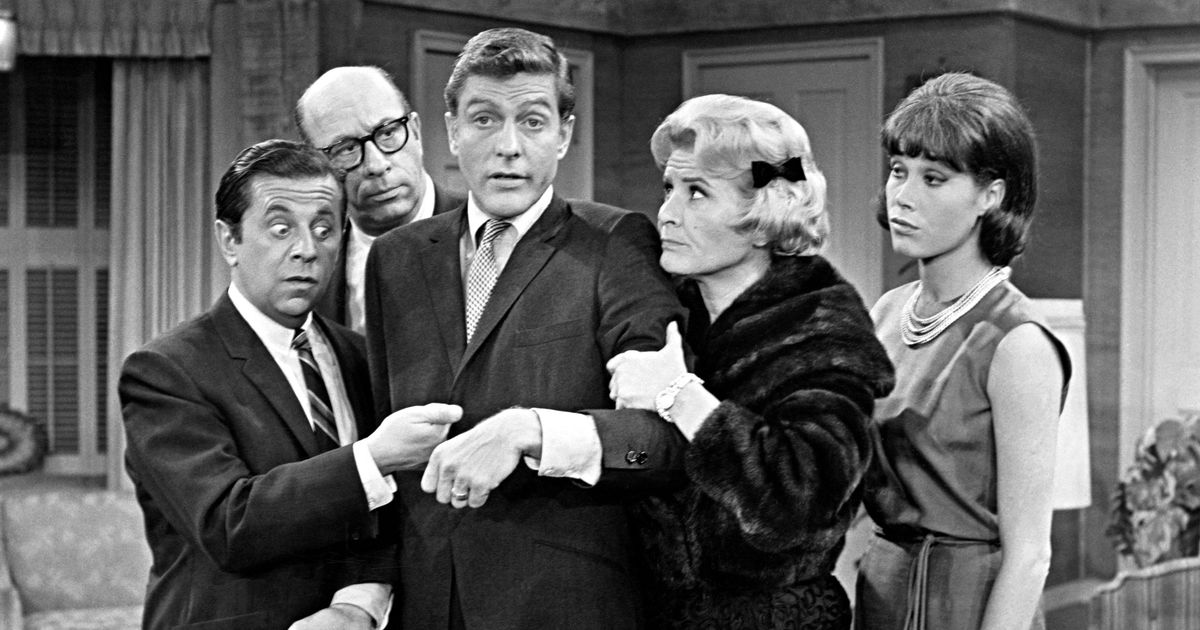
Not only was Rob Petrie’s (Dick Van Dyke) work life part of the show, but he was a television writer, which provided even more insights into what we were watching. Rob writes “The Alan Brady Show” with cowriters Sally (Rose Marie) and Buddy (Morey Amsterdam). Mel (Richard Deacon) is star Alan Brady’s (Carl Reiner) producer. Buddy and Mel have an ongoing feud, insulting each other on a daily basis. (In real life, Deacon and Amsterdam were good friends and often came up with new insults when they had drinks together after work.) Reiner originally planned on starring in the show and played Petrie in the pilot, but he was persuaded to give the role to another actor by Leonard.

The Dick Van Dyke Show' Changed Television as We Know It
Moore, Van Dyke and Mathews–Photo: wideopencountry.com

Rob’s home life consisted of wife Laura (Mary Tyler Moore), son Ritchie (Larry Mathews), and neighbors/best friends Jerry and Millie Helper (Jerry Paris and Ann Morgan Guilbert). Paris directed 84 of the show’s episodes and would go on to a career as a director later.

Recap and React: The Dick Van Dyke Show, season 2, episodes 11 – 15 – The  Motion Pictures
Moore, Paris, Guilbert, and Van Dyke
Photo: motionpictures.com

In the pilot, titled “Head of the Family,” Barbara Britton played Laura, Gary Morgan played Ritchie, Morty Gunty played Buddy, and Sylvia Miles played Sally. Jack Wakefield played Alan Sturdy who was the star of the tv show.

The characters are very much like people we all know, except maybe a bit funnier. Rob loved his wife and son. He was a big fan of cowboy movies and Laurel and Hardy. He met Laura, a USO dancer, when he was in the Army as a Special Services Sergeant in Camp Crowder, Missouri. His brother Stacey appeared on the show a few times (played by real life brother Jerry Van Dyke). Richie is a typical kid who gets in trouble sometimes but is a good kid, just curious and looking to test his boundaries. Their neighbors Millie and Jerry have a son about Richie’s age, and they are their best friends; Jerry is also their dentist.

Mary Tyler Moore | Couple sleeping, Bed, Classic television
Moore, Van Dyke–Photo: pinterest.com

The only thing not realistic about his home life is that Rob and Laura have twin beds. Reiner asked the network to allow the couple to sleep in the same bed, but they would not approve it, so like most sitcom married couples, they had separate beds.  About the only couples who were able to get around the challenge were the Stephens on Bewitched and Katie and Robbie on My Three Sons. The network also didn’t love that Moore wore capri pants but they did end up allowing her to do so.

Rob’s coworkers are also endearing characters. Buddy is energetic and sarcastic. He is married to Pickles and shares a lot of jokes about some of the scatterbrained things she does. We know he is in love with Sally, but they never take their relationship anywhere other than friendship. She is often making fun of herself for looking for a man, but we realize she is very lonely. Mel is an excellent producer who puts up with a lot from both Buddy and Alan.

The Best 'Dick Van Dyke Show' Episodes, Ranked
Amsterdam, Deacon, Van Dyke, Marie, Moore–Photo: vulture.com

Van Dyke had to give up Bye, Bye Birdie to star in the show but definitely made the right choice. The role of Laura was a hard one to cast. Sixty actresses auditioned for the character. Moore almost chose not to go, and when she did, she lied about her age, making herself older than she was. Sally Rogers was based on Lucille Kallen who wrote for Your Show of Shows and Selma Diamond who wrote for Caesar’s Hour.

After the first season, CBS said they were cancelling the show. Procter & Gamble threatened to remove all its advertising and viewers complained loudly. The network didn’t need to worry about ratings in season two; the show was in the top ten by episode three and was popular for the rest of its time on air.

To color or not was a big question during the sixties. Reiner actually considered filming the show in color in the third season until he found out it would add $7000 per episode (the equivalent of about $59,000 today).

Carl Reiner, beloved creator of 'Dick Van Dyke Show,' dies | Taiwan News |  2020/07/01
Deacon, Moore, Van Dyke, Leonard, Reiner, Paris
Photo: taiwannews.com

I’m not the only one who thought this was an amazing show. The series was nominated for 25 Emmy awards and won 15 of them. Reiner won three times for writing, Van Dyke three times for acting, and Moore twice for leading actress in a comedy role.

Some of my favorite episodes are “Pink Pills and Purple Parents” (season 4) a flashback to when Laura meets Rob’s parents. She takes some anti-anxiety medicine Millie gives her. She gets a bit loopy and Rob’s mother thinks she has a drinking problem; “The Ghost of a Chantz” (season four) where Rob, Laura, Buddy, and Sally spend the night in what’s said to be a haunted cabin. Characters disappear one by one and finally we learn that Mel pranked them to test out a concept for a show called Sneaky Camera; “Coast to Coast Big Mouth” (season five) when Laura reveals on a TV game show that Alan is bald and wears a toupee. Laura bravely goes to the office to apologize; another one about Laura, “The Curious Thing About Women” (season one) when Rob writes a comedy skit about Laura’s bad habit of reading his mail. All her friends tease her after it airs, and she tries to deny it, but when a package comes to the house, she opens it and an inflatable raft opens up which she cannot put back; and finally, “That’s My Boy” (season 3) when Rob is convinced that the hospital switched their son with another boy born that day. He has to resolve this, and invites the other couple over to discuss the situation.  When Rob opens the door, he sees an African American couple, and it gets one of the longest audience laughs than any other sitcom episode.

Carl Reiner Knew TV Like the Back of His Head - The New York Times
Moore, Reiner–Photo: nytimes.com

CBS may have wanted to end the show after season one, but they did not want to end it after season five. However, the cast made the decision to quit while they were still producing high-quality shows. I appreciate that they did this. One of the saddest things for me as a viewer is when a show goes on a year or two longer than it should and the quality diminishes greatly.

I just can’t think of anything about this show that needed improving.  It had a great cast, great writers, likable characters, and a timeless quality. Sixty years after the show began, it is just as funny and easy to watch as it was then. Thank you, Carl Reiner and cast, for knowing how to make a memorable show and when to end it to keep it that way.

TV Guide “Covers” Our Viewing History

I love September. The beginning of fall conjures images of fall leaves, trips to the apple orchard, the sound of football games, and returning to a welcomed routine. One of my favorite autumn memories as a child and teenager was studying the Fall Preview of the TV Guide, so I could decide which shows were “do-not-miss” series.

TV Guide is still available, but there was something special in being able to peruse the upcoming episodes, read the articles, and do the crossword puzzle. Don’t get me wrong, I’m not advocating going back to only three channels plus Public TV, but there was something comforting in knowing what would be on every day on every channel and knowing that all your friends were watching the same thing, and you could discuss it at school. That nostalgic feeling disappears when you are trying to look at 200 channels, not to mention Apple TV, Netflix, Amazon, and the many other options out there.

As much as I enjoyed TV Guide, I knew little about it, so I thought it would be fun to learn some of the history behind this almost-seventy-year-old publication.

In 1948, Lee Wagner printed the New York City area television listings in The TeleVision Guide which was sold on newsstands. Gloria Swanson who starred in The Gloria Swanson Hour appeared on the first cover. With the success of that magazine, Wagner went on to publish issues for both the New England and Baltimore-Washington, DC areas. In 1953, Walter Annenberg bought the series of publications and incorporated them into his Triangle Publications. Wagner would remain a consultant for that business until 1963.

The first magazine titled TV Guide was issued April 3, 1953. It was sold in ten cities and boasted a circulation of 1,560,000. The cover featured a photo of Lucille Ball’s newborn son Desi Arnaz Jr. with the headline, “Lucy’s $50,000,000 Baby.” It cost 15 cents. For the first 52 years of its existence, it was digest size. Triangle Publications, headquartered in Radnor, PA, continued to buy local magazine listings, creating a national publication. Their contemporary building featured a large logo at the entrance, a vast computer system to save data on every television show and movie, and housed editors, production personnel and subscription processors.

In September of 1953, the magazine released its first Fall Preview edition and circulation increased steadily from then on. The guide was available by subscription or at grocery stores. Eventually a color section was added featuring television-related stories, articles about stars, and weekly columns. One of the columns was “Close-Up” which looked at different types of programs. “Cheers and Jeers” was a critique page for specific programs, “Hits and Misses” rated shows from 0 to 10. In addition, certain years included horoscopes, recaps of soap operas, lists of sporting events and crossword puzzles. Next to each television show was a number corresponding to the local channel. A brief description of the program was given. Networks often ran ads for various shows.

Beginning in the late fifties, “color” was set in a rectangular box for those shows that were broadcast in color. By 1972, the majority of programs were full-color, so the abbreviation “BW” was used for shows not in color. Until cable television entered the entertainment business, listings began about 5 am and went until midnight. By August of 1982, the magazine began expanding its coverage of cable programming with “CablePay Section” and “Cable and Pay-TV Movie Guide.”

In August of 1988, Triangle Publications was sold to the News American Corporation for $3 billion. It was one of the largest and the most expensive acquisitions at the time.

In March of 1996, TV Guide launched iGuide, a web portal. In June of 1998, News Corporation sold TV Guide to United Video Satellite Group for $800 million and 60 million shares of stock worth $1.2 billion. “The Robins Report” a review column was added, “Family Page” showcased family-oriented programs, and “Don’t Miss” which was select programs to watch during the week.

In 1999, TV Guide hosted a new award show, TV Guide Awards, telecast on Fox. Winners were chosen by TV Guide subscribers.

In 2002, to commemorate the 50th anniversary of the magazine, six special issues were created: “TV We’ll Always Remember: Our Favorite Stars Share Fifty Years of Memories, Moments, and Magic”; “50 Greatest Shows of All Time”; “Our 50 Greatest Covers of All Time”; “50 Worst Shows of All Time”; “50 Greatest Cartoon Characters of All Time”; and “50 Sexiest Stars of All Time.”

As more cable channels were added, space became a premium and the magazine had to decide which ones to include. In September of 2006, TV Guide launched an updated website with expanded editorial and user-generated content not included in the print edition.

With more channels, less detail was available about shows, and by 2007, circulation had decreased from its peak of twenty million in 1970 to less than three million. The weekly publication went through several other sales. In 2014, it underwent a major redesign. Fourteen pages of listings were eliminated, and programming information was only provided for top-rated broadcast and cable networks and included several new sections including the “Roush Review” where Matt Roush selected the top ten picks from the upcoming week. The size was then reduced to 7” x 10”.

In 2015, it was sold once again to NTVB Media.

Two spinoff magazines were produced by TV Guide: TV Guide Crosswords and TV Guide’s Parents’ Guide to Children’s Entertainment.

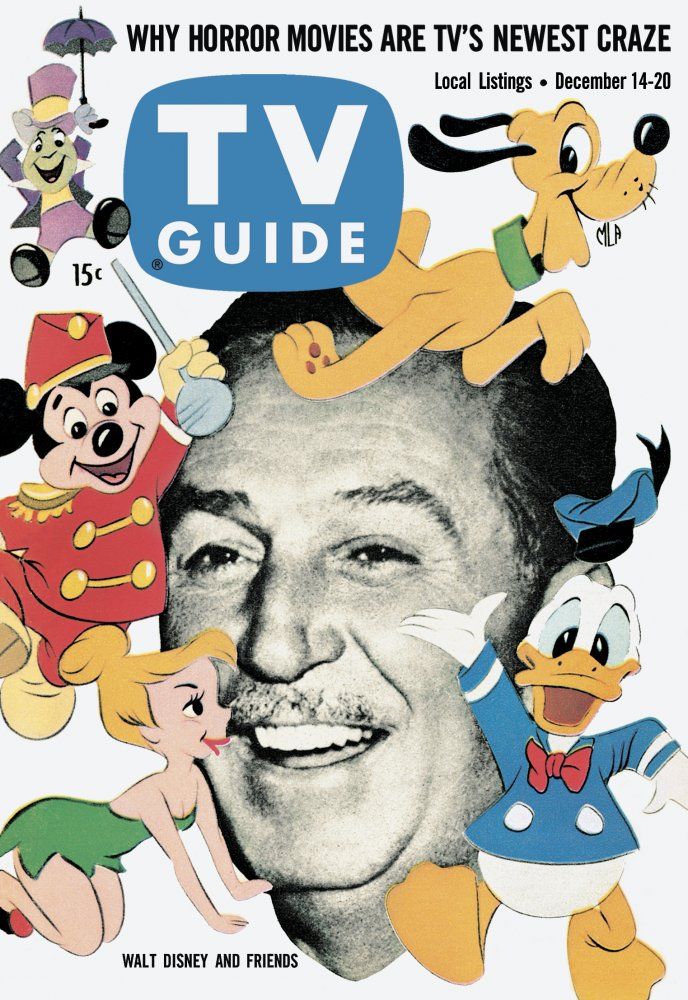
With over 3000 covers, almost every star and television show you can think of has been featured on the publication. The original 1953 cover of Desi remains the most expensive, valued at $3000. Another early cover of George Reeves as Superman runs a close second.

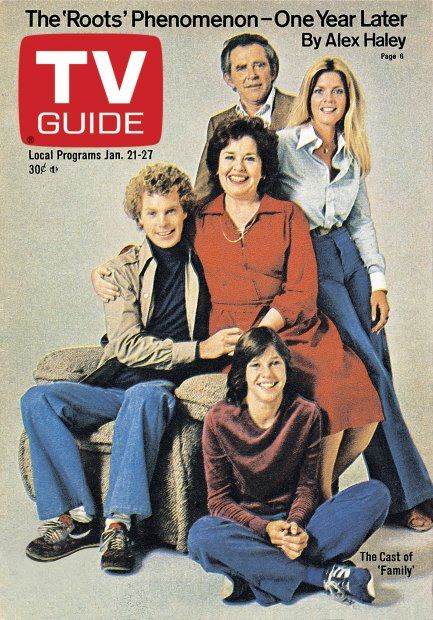
Lucille Ball has appeared on the most covers, with 39 total. Johnny Carson comes in second with 28 covers and Mary Tyler Moore and Michael Landon are tied for third place with 27 each.

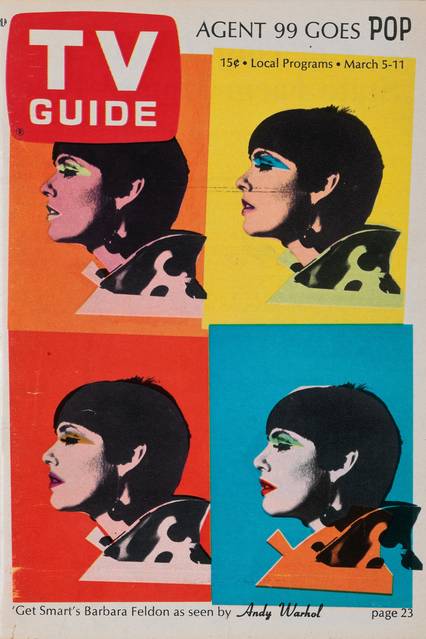
In addition to photographers’ covers, TV Guide has featured a variety of artists over the years including 37 Al Hirschfield pieces, two Charles Addams, one each by Norman Rockwell, Peter Max, Andy Warhol, and Dali.

I guess I’ll have to pick up a TV Guide next time I’m at the grocery store just to see how it compares to my fond memories. I’m guessing I will have to shell out more than $.15. Considering all the changes that have taken place in the television industry since the late 1940s, the magazine has been impressive keeping up with all the transformations and still providing a guide for our viewing.

Georgia Engel: Reflecting Joy

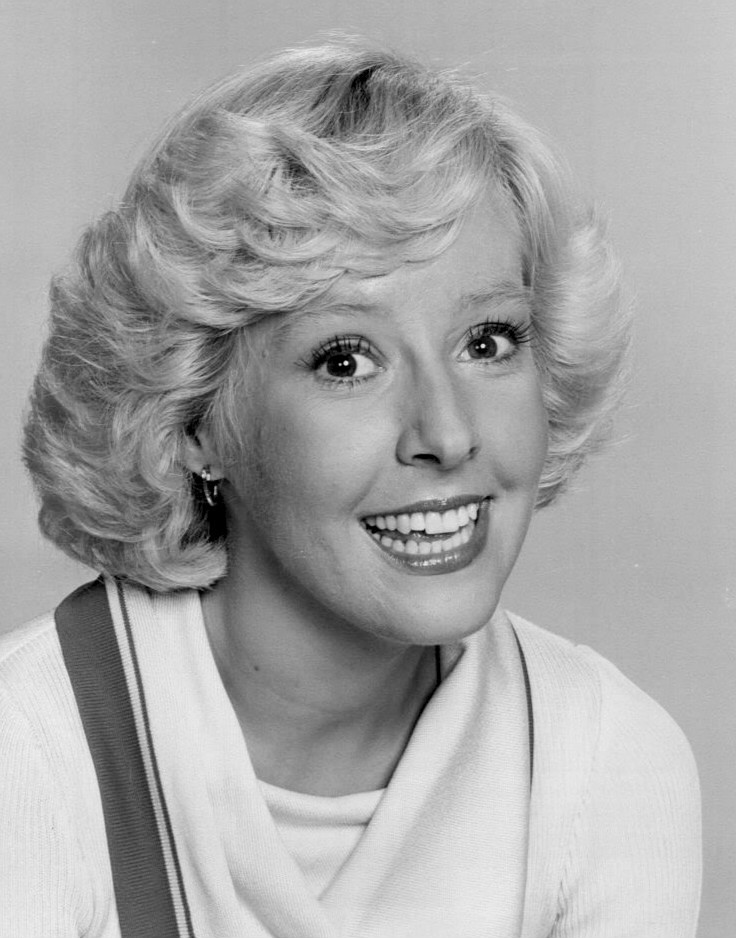
We continue our series to honor television stars who passed away in 2019 by looking at the career of Georgia Engel.

Photo: Wikipedia.com

Georgia was born in Washington DC in 1948 as Georgia Bright Engel. Although she attended several high schools, she graduated from the Academy of the Washington Ballet. Her father was an admiral, and perhaps her family landed in Hawaii, but she went on to earn a theater degree from the University of Hawaii at Manoa.

In 1969, Engel would move to New York City. She was in an off-Broadway production, Lend an Ear and as Minnie Fay in Hello Dolly! for a year. When she was appearing in The House of Blue Leaves, Mary Tyler Moore and her husband Grant Tinker saw her performance one night.

Photo: pressfrom.info

She was cast in The Mary Tyler Moore Show soon after, appearing in 57 episodes as Georgette Baxter, Ted’s girlfriend, and later, wife. Mary described the character as a cross between Stan Laurel and Marilyn Monroe. Georgette was devoted to Ted. She received two Emmy nominations for her role on the classic show.

Photo: vipfaq.com

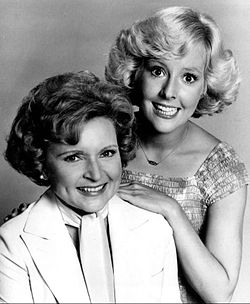
Betty White played Sue Ann Nivens on The Mary Tyler Moore Show, and when White received a show of her own, The Betty White Show, in 1977, she brought Engel in as part of the new series as Mitzi Maloney. The plot featured White as a middle-aged actress who gets the starring role in a police series, Undercover Woman. Unfortunately, she soon learns her ex-spouse, whom she calls “old pickle puss” is the director. Mitzi is her naïve girlfriend and roommate.

Photo: sitcomsonline.com

In 1980 she joined the cast of Goodtime Girls as Loretta Smoot. Set in 1942, the show was about a group of women who shared a small apartment in the Coolidge Boarding House. Loretta was described as a middle-aged war bride waiting for her husband to come back home from the war.

Like so many well-known television stars, Engel did her duty, appearing on The Love Boat (4 episodes) and Fantasy Island (5 episodes).

In 1983 she took on the role of Susan Elliott on Jennifer Slept Here. Ann Jillian starred in this show as Jennifer Farrell. Farrell, a popular movie actress who was run over by an ice cream truck in 1963, had lived in the house. Twenty years later, the Elliott family moves in. Jennifer haunts the place but can only be seen by the Susan’s teenage son.

Between 1991 and 1997 she made 20 appearances on Coach as Shirley Burleigh. Shirley’s husband is the athletic director who clashes with Coach Hayden Fox.

Photo: arizonarepublic.com

From 2003-2005 she was cast as Amy’s mother, Pat MacDougall, on Everybody Loves Raymond. This role would reward her with three Emmy nominations. It’s hard to picture a better couple of wacky parents than Engel and Fred Willard!

The soap opera Passions beckoned her in 2007 where she made several portrayals of Esmeralda.

Photo: stylemagazine.com
On The Office

In 2012 she joined the cast of The Office as Irene, an older woman being aided by Erin.  

Photo: pinterest.com

The years 2012-2015 found her working with Betty White once again as Mamie, Elka’s (White) best friend in Hot in Cleveland. In the fourth season, the two friends run an illegal pharmacy.

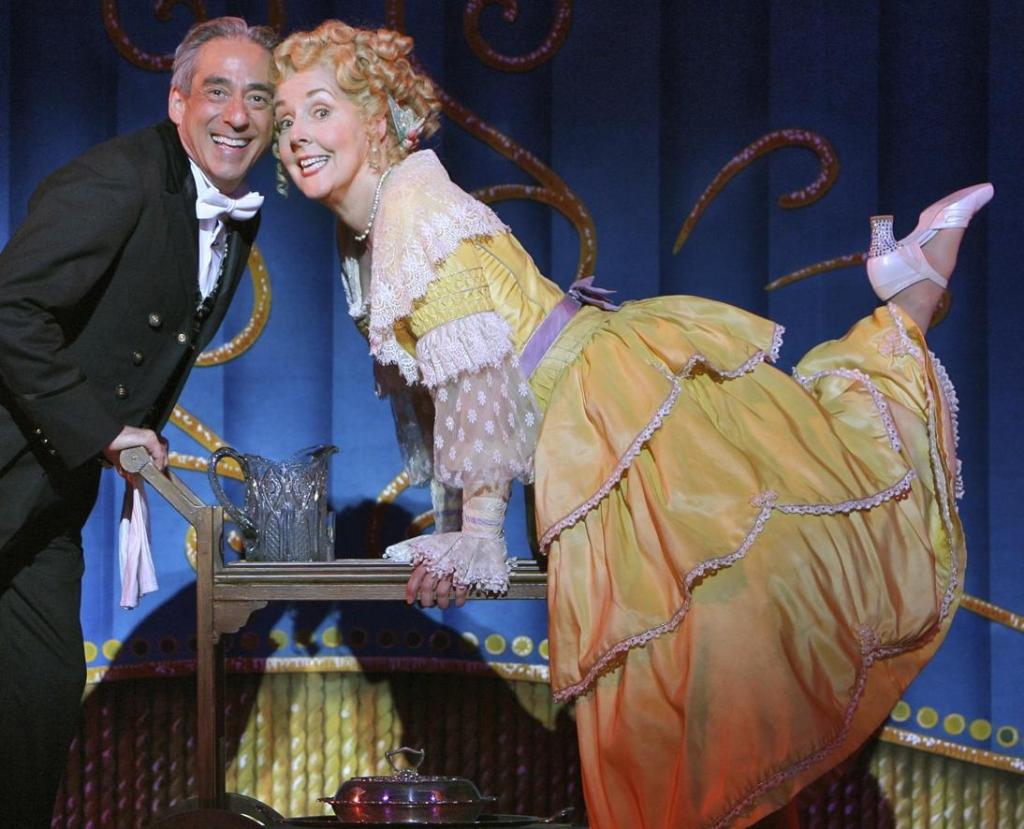
Although Georgia was busy with television, she also found time to get back on the stage. In 2001, she toured with Barbara Eden in the female version of The Odd Couple. She appeared on Broadway in The Drowsy Chaperone with Sutton Foster and Edward Hibbert. She appeared in various productions at The Muny Theater in St. Louis between 2004-2010. 2005 found her playing Agnes Gooch in Mame; 2007 was Aunt Eller in Oklahoma!; 2009 was Mrs. Paroo in The Music Man.

Photo: denverpost.com
The Drowsy Chaperone

In 2015 she was cast in an off-Broadway play, John. Engel won a 2016 Obie for Distinguished Performance by an Actress for her role. Following that play, Engel starred in Gotta Dance, a musical playing in Chicago.

Georgia passed away in Princeton, New Jersey in April of this year. We don’t know what her cause of death was. She was a member of the Christian Scientists. A friend of hers, Joe Quilty, told the New York Times that because of her religious beliefs, she did not contact any doctors.

Photo: insideedition.com

Following Engel’s death, Betty White said she was “one of a kind and the absolute best.” During a 2012 TV Land interview, White commented on her relationship with Georgia: “You don’t get a chance very often in your life to meet a friend like Georgia, let alone an actress that you’re working with, and to suddenly find pure gold.  That’s a privilege.”

Photo: entertainmentheartbeat.com

Perhaps it’s best to end with Georgia Engel’s view of her career. Despite her being typecast as a bit of a ditzy blonde, she said, “Although I play silly parts, in order for others to share in the laughter, I think it’s important to have a heart that’s full of joy and gratitude. Joy is a very holy thing and we can never own it. We can only reflect it.”

Her lengthy and varied television career definitely reflected that joy.

Did I Tell You The One About The Farmer’s Daughter: The Chemistry of Inger Stevens and William Windom

Photo: abebooks.coom

This blog takes a look at a show that is beginning to fade from viewers’ memories. The Farmer’s Daughter debuted in the fall of 1963, starring Inger Stevens as Katy Holstrum and William Windom as Glen Morley.

The show was based on the 1947 movie of the same name starring Loretta Young and Joseph Cotten in the lead roles.

Katy was a student who needed to earn some money and became a governess/housekeeper for Morley’s boys, Steve (Mickey Sholdar), age 14 and Danny (Rory O’Brien), age 8. Morley is a congressman. While Morley is sophisticated and refined, Katy is a no-nonsense type of girl from Minnesota. Morley’s mother Agatha (Cathleen Nesbitt) also lives with the family. The cast is rounded out by Philip Coolidge as Cooper, the family’s butler. In the early seasons, it is obvious that Glen and Katy are falling for each other, and many of the plots are one of them being jealous of the other. In the movie, Katy runs for Congress, but she is not as involved in politics in the television show.

Photo: worthpoint.com

Screen Gems produced the show which aired on ABC. The show was sponsored by Lark Cigarettes and Clairol. The two stars often promoted the products at the end of the episode. In season one, the show was on Friday nights against Burke’s Law on CBS and The Fight of the Week on NBC. Season two found the show opposite The Flintstones and The Addams Family. The show moved to Tuesday nights for season three against A Man Called Shenandoah and Ben Casey. The show was never in the top 25 but, it had respectable ratings. The critics liked the show, and it was nominated for an Emmy for outstanding comedy in 1964 but lost to Mary Tyler Moore for The Dick Van Dyke Show. It was also nominated for Emmys for writing, directing, and best actress. Stevens won the Golden Globe for best female tv star. TV Guide conducted a popularity poll, and she won the female performer of the year with David Janssen of The Fugitive, winning male performer.

At the end of season two, Katy and Glen become engaged. The third season brought full-color episodes. Early in the third season, they marry. After that ratings fell significantly, and the show was not renewed for a fourth season. In the finale, Katy adopts Danny and Steve. The chemistry between Glen and Katie and waiting to see if they got together or not kept viewers tuning in.  Once they married, viewers were not as invested.

Photo: en.wikipedia.org

In 1957, Inger was signed to a seven-picture contract with Paramount. In 1959, she survived after swallowing an overdose of pills and she seemed to recover with a renewed zeal to work on her career and life situation.

Stevens became a favorite actress of many viewers after The Farmer’s Daughter. The cast and crew liked her very much and she was easy to work with. She never got upset when filming ran long or had complications. She and Windom often played practical jokes on each other to bring fun to the workplace. She recalled eating an onion sandwich one day right before they filmed a kissing scene.

After the show was cancelled, she was cast in the movie, A Guide for the Married Man in1967. She then starred in films with Jimmy Stewart, Dean Martin, and Clint Eastwood. She appeared in the made-for-tv film, Run Simon Run with Burt Reynolds in 1970. After seeing the film, Aaron Spelling cast her in an upcoming series, Zig Zag to air in the fall. The show was about a trio who work on hard-to-solve murders. When the show went on the air in 1970, Yvette Mimieux had to take over Inger’s role.

Photo: commons.wikimedia.org

Unfortunately, the sunny disposition Stevens portrayed to the world hid a sad and tragic life and she committed suicide before the show aired. Her housekeeper found her in April; she was semi-conscious and died on the way to the hospital. The cause of death was determined to be acute barbiturate intoxication. The public was saddened and surprised to learn how unhappy she was.

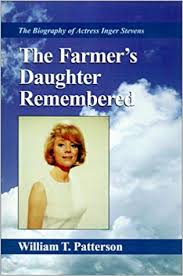
In 2000, William Patterson published the book, The Farmer’s Daughter Remembered. He dove into her life and tried to determine whether she meant to commit suicide or not.

Photo: pinterest.com

Windom also starred in the series, My World and Welcome to It as cartoonist John Monroe and as Dr. Seth Hazzlett on Murder She Wrote in 1985. His first movie role was in To Kill a Mockingbird in 1962. In addition to other films and Broadway, he traveled performing one-man shows of both James Thurber and Ernie Pyle. He passed away of congestive heart failure in 2012 at 88.

Cathleen Nesbitt would continue appearing in television series until 1982 when she passed away at age 93. Although she had appeared in many films, The Farmer’s Daughter was the only series she was featured in regularly.

Photo: en.wikipedia.org
Cathleen Nesbitt

Mickey Sholdar only appeared in five other shows after The Farmer’s Daughter. His last acting appearance was in the movie Babe. I could not verify how he spent his life up to now.

Photo: sitcomsonline.com
Mickey Sholdar and Rory O’Brien

Rory O’Brien, like Sholdar, only appeared in a few shows after the series ended. He was also in one film afterward, Little Big Man. O’Brien left the acting profession in the early 1970s. I could not find any other information on him either.

Photo: famousfix.com
Phillip Coolidge

Philip Coolidge was in many acclaimed movies before he took the role on The Farmer’s Daughter. Like most of his cast mates, he only appeared in a few shows in the mid-1960s, and he passed away in 1967.

Photo: pinterest.com

The show was aired in syndication on CBN, but I cannot find any other channels that carried it, and I cannot find any evidence that it was ever released on DVD. It’s too bad because the show featured a couple with great chemistry and the quick pace of the story and well-written dialogue that made the show memorable will be lost if no one is able to see the show in the future.

She Was Maid For TV: Hazel

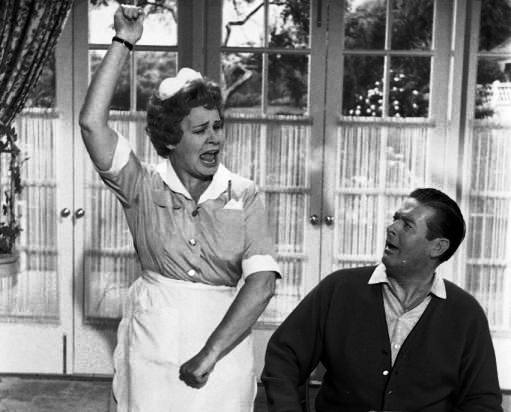
June 4 is Old Maid Day, and what better way to celebrate than with Hazel, the show that Shirley Booth played an unmarried maid on.

hazel15

The show debuted in the fall of 1961. The sitcom was based on Ted Key’s cartoons which appeared in the Saturday Evening Post.

hazel1

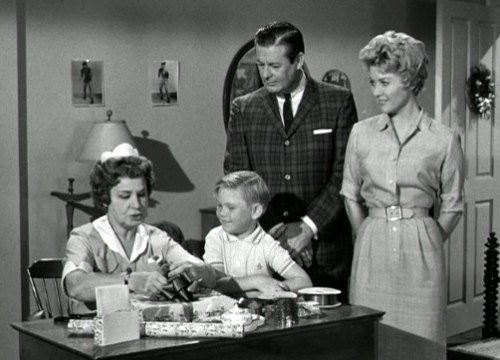
Hazel Burke is a live-in maid for the Baxter family who consists of Dorothy (Whitney Blake), who Hazel calls Missy; George (Don Defore), who Hazel calls Mr. B; and their son Harold (Bobby Buntrock), who Hazel refers to as “Sport.” Hazel worked for Missy’s family and helped raise her, so they are very close. As an aside, Whitney Blake had previously been married to a Baxter and her real daughter was Meredith Baxter.

hazel9

Hazel was on the air for five seasons, producing 154 episodes. Hazel was 4th in the Nielsen ratings for its first year. By the end of Season 4, the show had fallen out of the top 30. Season 1 was black and white except for one episode. Hazel purchases a color television set. RCA owned NBC, which aired the show for the first four years, and this show seemed to be a blatant commercial for colored televisions. Beginning in Season 2, all the shows were filmed in color. The show moved to CBS for its final year. Shirley Booth won an Emmy Award for Best Actress in both 1962 and 1963 and was nominated again in 1964 when she lost to Mary Tyler Moore for The Dick Van Dyke Show.

In 1963, the NAACP threatened to boycott the show’s sponsor if a black member was not added to the cast and, two months later, the network announced a black production executive had joined the show.

hazeld

Hazel is more than a maid for the Baxters; she is family. We also get to know several of Hazel’s friends: the postman Barney Hatfield (Robert Williams), taxi driver Mitch Brady (Dub Taylor), and her best friend, Rosie Hammaker (Maude Prickett) who is also a maid. Apparently, there were a lot of maids in the city because Hazel was president of The Sunshine Girls, a club for maids.

hazel16

Hazel often stuck her nose into issues where it didn’t belong, but she “fixed” the situation in the end. She constantly frustrated George, who would try to put down his foot about an issue. She often would restrict his desserts to get her way or his wife would defend her cause, and he usually gave in.

George had more control at work where he was a successful lawyer at Butterworth, Noll, Hatch, and Baxter. However, Hazel often got involved in issues regarding his clients as well. She pre-empted his authority at work like she did at home, especially when the case involved Harvey Griffin (Howard Smith), one of George’s clients who spent a lot of time at the Baxter house.

hazel3

When the house and George’s work life were running smoothly, Hazel found issues to battle around the community.

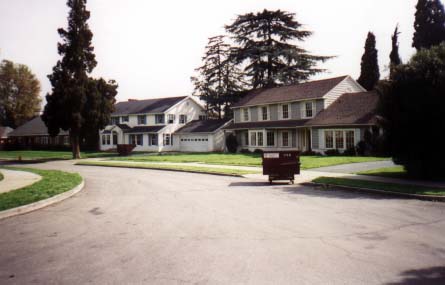
The series was filmed at Columbia Studios in Hollywood. The house façade for the Baxter home was used in several Three Stooges films and was the Lawrence home on Gidget. The house next door was Darrin and Samantha Stephens home on Morning Glory Dr featured on Bewitched.

house1

Sammy Cahn and James Van Huesen wrote the instrumental theme song that played during opening of the show; and The Modernaires sang it at the closing for the first eight episodes in Season 1. Beginning with episode 9, the instrumental was the only version played in both the opening and closing credits. The lyrics were:

People love you everywhere you go Hazel.

Children cross the street to say hello, Hazel.

You charm every Romeo and Casanova,

It’s your personality that wins them over.

You may never be a millionaire Hazel.

Count your friends and you don’t have a care, Hazel.

You’ve got more than wealth untold,

You’ve got a heart of solid gold.

We love you, Hazel,

Just because you’re you.

When NBC ended the show after Season 4, CBS picked it up.  They changed most of the cast, keeping only Hazel and Harold.  The premise is that Dorothy and George are sent to Saudi Arabia for George’s career, so Hazel and Harold move in with George’s younger brother Steve (Ray Fulmer), his wife Barbara (Lynn Borden), and their daughter Susie (Julia Benjamin). A minor character was also added with Ann Jillian as Steve’s receptionist. The ratings were not high but were acceptable.  However, Shirley was ill and required a nurse on set. She decided she could not continue with the show, so Season 5 was its last.

cast

During its first four seasons, Hazel was sponsored by Ford Motor Company. Ford cars were often featured in the shows. The episode was the first show to display the Ford Mustang on television. Bristol-Myers came in as a cosponsor for Season 4, and when the show moved to CBS, Procter & Gamble and Philip Morris were the co-sponsors.

Unfortunately, most of the cast has passed away.

Bobby Buntrock, the youngest member, was the first to die. Only 21, he was in a tragic automobile accident involving a bridge in South Dakota in 1974. That same year, Booth retired to her Massachusetts home.  She passed away at age 94 in 1992 after suffering several health problems including blindness and a broken hip. The next year, Don DeFore died from a cardiac arrest at age 80. Whitney Blake died from esophageal cancer in 2002 at age 76, also living in Massachusetts. Lynn Borden passed away in 2015 after an extended illness. Julia Benjamin and Ray Fulmer are still alive.


Hazel gained a younger audience fan base in the 1970s and 1980s when it was seen in syndication. It currently can be seen on Antenna TV. The first season was released on DVD in 2006 and the last season was released in 2014.

hazel4

Hazel seems to be one of those shows that people love or hate.  I enjoyed watching Hazel in reruns, although I didn’t really care for the final year—it seemed to be working too hard to be fun. TV. Although, this show is not one of those that I watch with fond nostalgia, it is not as syrupy as some shows and better than many shows still on the air. I occasionally catch an episode on Antenna TV. If you want to check it out, Hazel is on daily at 11 EST. It also airs Saturday evening at 6:30 EST and at 8 am both Saturday and Sunday mornings.


This Panelist Gets My “Blank” Endorsement: Brett Somers

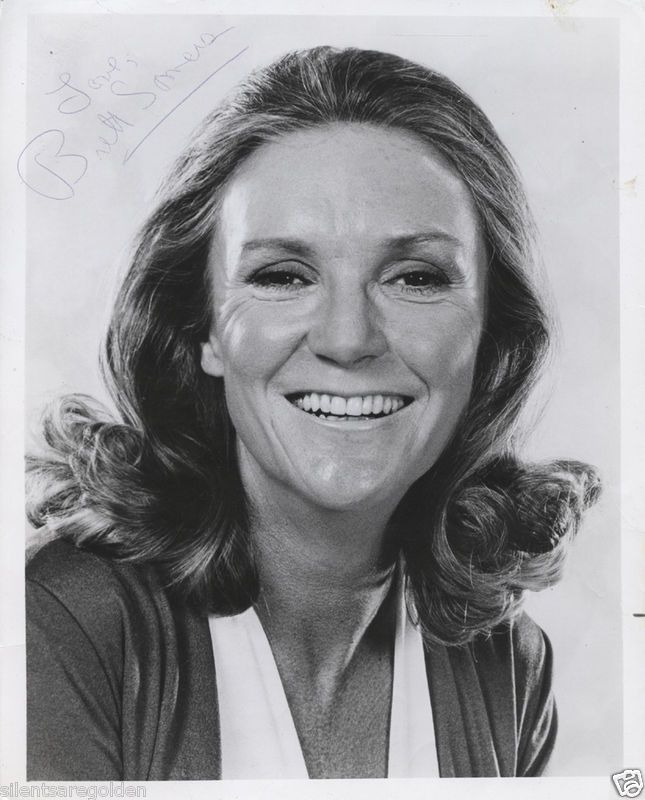
I had so much fun learning about Fannie Flagg, that I decided to tackle getting to know some of the other regular Match Game panelists. Today we meet Brett Somers.  For someone who has fewer than ten acting credits for any given decade, Brett Somers became a well-known star. She became a household name after appearing on Match Game. Let’s learn a bit more about her life.

somers2

Brett was born in July of 1924, and her real name was Audrey Dawn Johnston. While she was born in Canada, she was raised in Maine and spent much of her life in New England. She left home at 18 to pursue an acting career. She chose her stage name for the character “Brett” in Hemingway’s The Sun Also Rises and her mother’s maiden name of “Somers.” She settled in Greenwich Village, married Robert Klein, and had a daughter. She was not married long before they divorced.

somers1

Brett joined the Actors Studio in 1952. She married Jack Klugman in 1953; they would have two sons. In the 1950s, Brett’s television appearances  were all on drama series such as Robert Montgomery Presents and The Kraft Theatre. In the 1960s she appeared primarily on westerns and legal dramas, including The New Breed, Have Gun Will Travel, and The Defenders. In the 1970s, she showed up on a lot of sitcoms. She was in Love American Style, The Mary Tyler Moore Show, and The Odd Couple with her husband Klugman to name a few. On The Odd Couple, she played the role of Blanche, Oscar’s ex-wife.

somers3

In addition to The Odd Couple, Brett had recurring roles on The New Perry Mason Show and Battlestar Gallactica.

Brett had her Broadway debut in Maybe Tuesday in 1957, which closed after five performances. She would appear onstage in Happy Ending, The Seven Year Itch, and The County Girl. She also appeared in three movies: Bus Riley’s Back in Town and A Rage to Live, both from 1965 and in Bone from 1972.

somers10

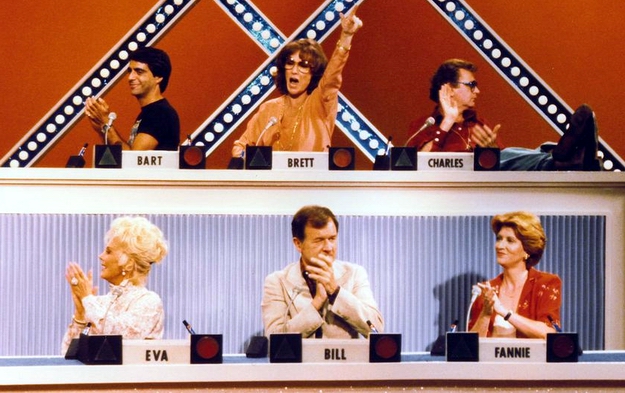
Despite her many television series appearancs, she is best known for her role as a panelist on the various versions of Match Game, amassing 1591 episodes overall. Some viewers compared the show to a cocktail party with money given away. What’s surprising, given her popularity on the show, is that she was not originally part of the cast. Klugman appeared on the first week of the show in 1973, and he suggested they try Somers. They did, and she never left. Her dry sense of humor and great wit provided her a job for nine years.

somers11

Match Game can be seen on The Game Show Network. The concept of the show was easy and fun. Two contestants were each given two questions with a blank in them, such as “The surgeon said, ‘The man I’m operating on must be a magician. When I reached in to pull out his appendix, I got a ___________ instead!’” Six celebrity panelists wrote down their answer to the question and then the contestant got a point for each person who matched their answer.

somers8

Brett and pal Charles Nelson Reilly, who often referred to her as “Susan,” kept each other in stitches and provided entertainment for the other panelists. In a September 12,  2012, Whitney McIntosh (in the blog ”This was Television”) referred to them as “rambunctious school children left to their own devices” which captures their relationship on the show perfectly. Their banter and quick quips kept viewers tuning in. For example, on one show, someone had mentioned that one of the younger panelists had a nice body. Charles turned to Brett remarking that her body was just as beautiful as the other woman’s.  The audience clapped, and Brett had just finished saying thank-you, when Charles added, “But you should take yours back because you’re putting a lot of wrinkles in it.” No one laughed harder than Brett.

In a Playbill interview in July of 2003, Andrews Gans asked Brett why she thought Match Game was still so popular. Somers paused and then answered, “Because of the fact that there was no structure to it. It was just six people having a good time and teasing one another. There was never any meanness. And people really sensed when Charles [Nelson Reilly] would jerk his head and go, ‘She seems a little odd today’ — they knew there was no meanness in it. And, Gene was the greatest straight man who ever lived. He would ask you the questions and would set it up for you. He was wonderful. And I think the relaxation of the atmosphere.”

somers4

After Brett died, Marcia Wallace, on of her best friends, discussed Brett’s career on Match Game. “She was my best friend. I made a lot of friends there. She and Charles were the heart and soul of the show. Their relationship just was magic. And then, of course, I think there was no better host in the world ever than Gene Rayburn. He was funny, he was sassy, he was naughty, he kept the game going, he made the contestants feel good, he set up the celebrities. He was perfect.”

somers9

Not long after Somers started with Match Game, she and Klugman separated. Three years later, in 1977, they divorced but remained friends. Although I read in many reports they never divorced, and many sites listed them as separated but never divorced. I believe California documents exist to show they did divorce a few years after their separation.

In 2003, Somers wrote, co-produced, and acted in a critically acclaimed one-woman cabaret show, An Evening with Brett Somers. Somers wrote the show with Mark Cherry, and he accompanied her on the piano and served as the director and arranger.

Brett shared her thoughts on doing a cabaret show–“It never occurred to me in a million years that I’d be doing a cabaret show. I was standing backstage, and I thought, ‘You’re an older person. You should be lying down somewhere in a nice cool bed watching TV!’ And I went out there, and I just had a great time.”

In 2004, Somers was diagnosed with stomach and colon cancer, but she continued to perform in the show. Brett had a period of remission but passed away in 2007 at her home in Connecticut.

In 2005, Somers reunited with Jack Klugman onstage in Danger, People at Large, three short comedies presented at Fairfield University. It was the first time in three decades that the former couple had performed together.

flagg

In my blog on Fannie Flagg a few weeks ago, I found her reflection on her friendship with Brett and Charles:

 Besides being hilarious, Brett and Charles were two of the smartest people I have ever known. On Match Game, they got such a big kick out of each other! They razzed one another and everybody else on the panel mercilessly, and they were particularly relentless on the people they really liked. It was never mean or hurtful, and they loved it when you razzed them back.

One of the happiest times in my life was in 1980 when I was doing “The Best Little Whorehouse in Texas” on Broadway, and Charles, Brett, and I were staying at the Wyndham Hotel at the same time. Every day at around 4 o’clock in the afternoon they would come to my room for cocktails. Many is the time I would come home from after the show and they would still be sitting there having a good time. The only thing that changed was the position of Charles’ toupee.
In the Gans interview, he asked Brett how she would like to be remembered. Her answer was “I would like them to think that I gave them pleasure and joy.”

I think we can all agree that is how we remember her!


A Tribute to Rose Marie

rosemarie2

Rose Marie had one of the longest-running careers in the entertainment industry – more than 90 years in the business. During her career, she was in vaudeville, on the radio, in the movies, performed in live concerts around the country, did some Broadway, and became most famous for her television performances.


rosemarie6

Born in 1923 as Rose Marie Mazetta, she won a contest at 3 and began performing as Baby Rose Marie. On her official site, she mentions she was born the same day the Broadway show Rose Marie opened. In 1927 at the age of 4 she was featured in a Vitaphone short that opened with Al Jolson’s Jazz Singer.


rosemarie21

By age 5, she had her own national radio show. She worked in vaudeville with Edgar Bergen and Milton Berle. She made several records, and the first one released was with Fletcher Henderson’s orchestra. By 1933 at age 10, she was starring in her first film, International House. During these years, she performed at the White House three times—for Presidents Coolidge, Hoover, and Franklin Roosevelt.


Rose Marie

It was during her vaudeville stint that the doorman informed her and her father that a gentleman wanted to see them in the back alley.  The “gentleman” was Al Capone who called her father Happy Hank and told them that “the guys” wanted to meet Rose Marie. She was taken to Capone’s house the next day where she performed for about 24 guys.  Al gave her a ring with three diamonds which she still had when she passed away. He said they would always take care of her.  He was true to his word. Even after he was incarcerated, Rose Marie was met and protected by the mob for her entire career.  Decades after the most notorious gangsters were gone, men showed up at her shows checking on her just to make sure she was doing okay, getting work,  and not in need of anything. Later she learned that her father, who was an actor by trade, was Capone’s arsonist, the one who burned down buildings of men who disappointed the gangster. There is an article about her meeting with Capone on The Mob Museum’s website. (The Mob Museum is located in Las Vegas.)

rosemarie20


As a teenager, Rose Marie transitioned to clubs, touring the United States. In order to make her sets longer, she began to add comedy to her singing acts.


In 1946 she met Bobby Guy who as with the Kay Kyser Orchestra. They were engaged within a week, and he remained the love of her life until he passed away in 1964. They had one child, Georgianna. Guy would become the lead trumpeter on The Tonight Show.


It was also in 1946 that Rose Marie opened the Flamingo with Jimmy Durante. Jimmy Durante mentored her earlier in her career and she loved him. He was always mentioned as one of her favorite people.  At that time, the only other hotels in Vegas were the Last Frontier and El Rancho. Bugsy Siegel owned the Flamingo, and Rose Marie received work in clubs from her mob connections. She also had a 40-year friendship with Frank Sinatra that was also probably tied to some of their mob connections.


In 1951, Rose Marie tried her hand at Broadway, appearing in Top Banana with Phil Silvers. She knew Silvers from appearing on his radio show with Alice Faye. She played their daughter and Sheldon Leonard (who would hire her for The Dick Van Dyke Show) played their son.

rosemarie5

In 1954, Top Banana was made into a film. Once again Phil Silvers was in it. Rose Marie recorded her musical numbers. The producer tried to manipulate her to have sex with him. She said no in front of several people, and in retaliation he cut all her numbers from the film. In 2017 before her death, she shared the incident on Twitter to help support the women who have been exposing the sexual assault in Hollywood. She appeared in ten movies after that, most of them in the 1980s and 1990s, but she quickly became disillusioned with the film industry.

rosemarie14


Tired of the Hollywood politics, Rose Marie embraced the new television culture. She appeared in Gunsmoke in 1957 and would continue to receive roles in the new medium through 2011. During her career, she appeared on 48 different shows.

In the 1950s, she had a recurring role in The Bob Cummings Show as Martha Randolph and she appeared in The Many Loves of Dobie Gillis. The first sitcom she had a permanent role in was My Sister Eileen; she played the sisters’ friend Bertha. The show ran for 24 shows during 1960 and 1961.


rosemarie17

In 1961, Sheldon Leonard cast Rose Marie in the role of Sally Rogers on The Dick Van Dyke Show. She recommended Morey Amsterdam for the role of Buddy Sorrel whom she had known since age 9. The show was originally to star the office cast with the home life coming in second; however, as things changed, Mary Tyler Moore became the costar with the home life dominating the scripts and Sally and Buddy were featured less. The show produced 158 episodes and is undoubtedly one of the best written sitcoms ever produced. She and Morey received the same salary despite her being a woman. That sounds only fair today, but at the time it was not the normal practice. She loved working on The Dick Van Dyke Show. When asked about her time on the show, Rose Marie said, “We loved each other, we helped each other . . . We were really very close.”


After The Dick Van Dyke Show ended, Rose Marie took roles on several shows including The Monkees and My Three Sons. In 1969, she received a role as Myrna Gibbons on The Doris Day Show, playing Doris’s friend and coworker.


She showed up in many series during the 1980s and 1990s including The Love Boat, Mr. Belvedere, Suddenly Susan, Wings, and was a cast member in Hardball, about a struggling baseball team.


In the 1990s, Rose Marie would take on the role of Frank Fontana’s mother on Murphy Brown. Later she would appear in S.W.AT. as Hilda providing doughnuts and coffee, as well as comic relief, on the show.

rosemarie28

In the late 1990s and early 2000s, Rose Marie transitioned to voice overs for such shows as Hey Arnold and Garfield.

Rose Marie also liked game shows and was a regular on Hollywood Squares through all the different versions.


From 1977-1981, she performed across the country with Helen O’Connell, Rosemary Clooney, and Margaret Whiting. They called the show 4 Girls 4. Rosemary’s nephew, George drove their bus for them.  At some point they made enough money to afford airfare, and George Clooney went on to create a little career for himself.


Rose Marie received the 2184th star on the Hollywood Walk of Fame in 2000. Her baby shoes, along with 40 other items, have become artifacts in the Smithsonian’s American History Museum.

Her hobbies included cooking Italian meals, knitting, and reading; she especially loved Stephen King novels.


rosemariebook

When she first appeared as Baby Rose Marie, someone handed her a bouquet of roses, but she needed to take her bow, so she handed them off and said, “Hold the Roses.” That became the title of her autobiography that was published in 2002.


rosemarielaugh

She was the subject of a documentary Wait For Your Laugh in 2017. Dick Van Dyke said that was her catchphrase, and whenever they were anywhere something funny happened, even a waiter dropping a tray full of food, she always repeated the phrase.


rosemarie10

She accomplished so much in her career you wonder how she could have had any regrets, but she was denied two accomplishments.  She received three Emmy nominations for her role as Sally Rogers but never won an Emmy.  She also wanted to direct and never had an opportunity to do so.


rosemarie3

Sadly, Rose Marie passed away in December. Happily, she left an amazing legacy of performances in a variety of mediums for us to remember her by. While she was so much more than a television star, Sally Rogers will always be one of my favorite characters. Thank you Rose Marie for so many fond memories.

America’s Favorite Family

nelson34

For the last two weeks of 2017 we are going to spend some time with the Nelson family. Ozzie, Harriet, David, and Ricky visited our home every week from 1952-1966. America watched the boys grow from young boys to adult men. Let’s see how the show developed.

nelson5

Oswald George Nelson was born in New Jersey in 1906. He attended Rutgers and graduated with a law degree, but in the 1920s he put a band together to see if he could make a living from music.  A new vocalist named Peggy Lou Snyder joined his band in 1932. Her parents were actors and she grew up on the stage. She had married a comedian Roy Sedley, but he was not funny at home; he was abusive, and she had their marriage annulled. When she joined Ozzie’s band, she changed her name to Harriet Hilliard, and she changed it again in 1935 when she married Ozzie.


nelson10

They did a few radio shows, eventually ending up on the Red Skelton Show. In 1944, they received their own radio show and they called it The Adventures of Ozzie and Harriet. Their boys were played by actors until 1949 when Ozzie and Harriet felt they were old enough to join the cast. Later Ozzie would be criticized for putting his boys on the show and destroying their childhood, but David said his parents tried hard to give the boys a normal upbringing.


nelson11

In 1952, Ozzie and his brother wrote a movie called Here Come the Nelsons which was shown on the big screen.  It functioned as a pilot for a television show they began that same year.  Decades before Seinfeld, these two put together a how about nothing — and everything.  It was about their life and what was happening at home.  Unfortunately, the downside of portraying yourself on television was the pressure of trying to appear the perfect family when everyone realizes there is no such thing.   Growing up before the cameras put a lot of stress on the boys especially to always be “acting.”  David once was quoted as saying, “It’s an awfully big load to carry, to be everyone’s fantasy family.”


nelson2

The Nelsons lived at 822 Sycamore Rd, but the exterior shots were that of their real home at 1822 Camino Palmero St., Hollywood, LA, California.  The interior shots, built to resemble their own home, were filmed at Selzick International Studios in Culver City.


Hotpoint was one of their first sponsors, and viewers would have watched a young Mary Tyler Moore as Happy Hotpoint, a dancing pixie. Actors often addressed the audience directly, drawing them into their life.


Other characters who showed up regularly were their next-door neighbor Thorny played by Don DeFore; Don’s son said in real life he was much like Thorny.


Ozzie and Harriet’s friends Clara and Joe Randolph (Mary Jane Croft and Lyle Talbot) and Doc Williams (Frank Cady) were on the show regularly. Ricky’s friend Wally (Skip Young), and Jack (Jack Wagner) who worked at the malt shop also appeared regularly.  On several episodes you can see a young Barry and Stan Livingston before they were Steve Douglas’s sons.


The show produced 436 episodes, all written in part by Ozzie, produced by Ozzie, directed by Ozzie, and even set buildings were supervised by Ozzie who was considered a workaholic and quite different from the stammering, hesitant, and slightly absent-minded father he played on the small screen.


When Ricky decided he wanted a rock and roll career, it was written into the show, and his popularity is what kept the show going for a good part of the 1960s.


When David married June Blair, she was written into the show, and when Ricky married Kris Harmon (sister of Mark Harmon and mom of actress Tracy Harmon and the Nelson twins who had the band Nelson), she was written in as well.

A lot of the shows centered around the boys. Many of the situations were taken from real life.  When they’re younger, we see them learning life lessons; as they became teenagers, we watched them go through dating issues; and when they became adults, we followed their marriages, parenting choices, and careers.

nelson

In 1966, the show began to be considered old-fashioned even though Ozzie tried to update the scripts. When the show was cancelled that year, it was replaced by a new show starring Adam West called Batman.


img0155A

Ozzie and Harriet tried television again in 1973 with Ozzie’s Girls where Ozzie and Harriet rent out the boys’ rooms to two college students, but the show failed after a year.


nelson23

Ozzie would go on to appear on the Mothers-In-Law, Adam-12, Night Gallery, Bridget Loves Bernie and three episodes of Love American Style. He passed away in 1975 from liver cancer.


nelson27

Harriet appeared in a variety of shows also including Bridget Loves Bernie, Love American Style, The Love Boat, Fantasy Island, Aloha Paradise,  and Happy Days but after Ozzie died, she became a bit of a recluse. The last show she appeared on was her granddaughter Tracy’s show, Father Dowling’s Mysteries. She died in 1994 from emphysema and congenital heart disease.


nelson19

Ricky had a variety of movie and television performances.  His music career continued successfully, although his drug abuse ruined his marriage and stalled his career.  He was killed in 1985 in a plane crash on his way to a performance.


img0517A

David appeared in quite a few movies when the show was over and got into directing and producing.  He and June divorced in 1975, and he married Yvonne O’Connor Huston. He passed away in 2011 from colon cancer.

I cannot imagine living your growing-up years under the microscope of the entire American public.  We have all experienced living near neighbors when they hear something we prefer they didn’t, or we hear something we prefer we didn’t.  This family had millions of people watching them, seeing if they lived up to their perfect image.

nelson4

It’s hard to discuss the show without discussing the repercussions it had on the Nelson clan, but the show itself was a chance to watch a family we admired and hoped to be more like when we became parents.  I have learned that you need to love characters for who they are — period.  Because, often the real humans behind them will let you down and make you sad.  It was hard for me to adjust to watching some of my favorite characters after learning disappointing things about the actors or actresses who portrayed them; often they were not such nice people.  So I made a determined effort to keep characters I love separate from any real life issues.

That said, I think Ozzie and Harriet did the best they could to raise their children under the spotlight with as much normalcy as possible.  They had to deal with real-life issues at home and then come together and play America’s favorite family.  I give them credit just for being able to do that for fourteen years.