The Elegance of What’s My Line

This month, we are looking at popular fifties stars and shows. While the show we are talking about today outlasted the fifties by almost another decade, it gained its popularity during the 1950s. Today we are learning about What’s My Line.
📷wikipedia.com

This panel game show was on CBS. It debuted in 1950 and ran until 1967. The show was produced by Mark Goodson and Bill Todman, and the working title was Occupation Unknown. Perhaps the title should have been What’s My Schedule. The show began on Thursday nights as a live show. Later in season one, it switched to every other Wednesday and then moved to every other Thursday. In October of 1950, it landed on Sunday nights where it would remain throughout the rest of its life.

The original series, which was usually broadcast live, debuted on Thursday, February 2, 1950, at 8:00 p.m. ET. After airing alternate Wednesdays, then alternate Thursdays, finally on October 1, 1950, it had settled into its weekly Sunday 10:30 p.m. ET slot where it would remain until the end of its network run on September 3, 1967.
📷imdb.com

Celebrity panelists ask contestants questions to figure out their occupation. While most of the contestants were not famous, there was a “mystery guest” segment. The panelists were blindfolded for this segment and asked questions to determine the celebrity. People enjoyed watching the panelists banter with each other and the sophisticated humor they shared with us.

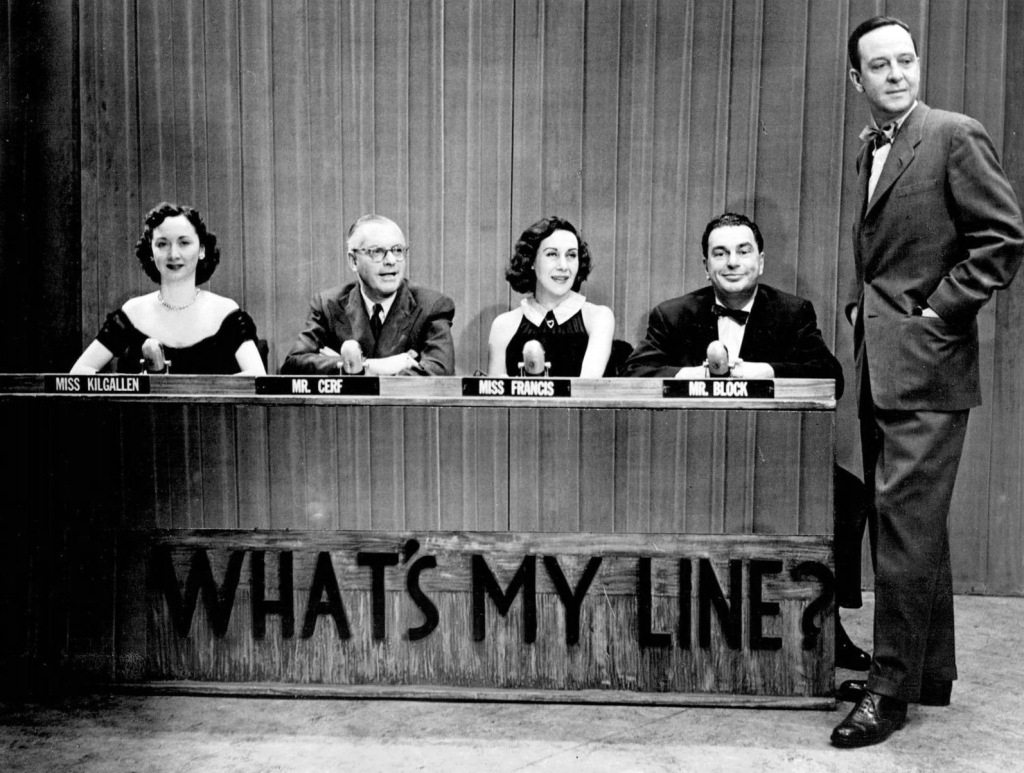
Each episode had four panelists. The most famous panelists were Dorothy Kilgallen, Arlene Francis, and Bennett Cerf. John Daly was the moderator. The first show in the series featured New Jersey governor Harold Hoffman, Kilgallen, poet Louis Untermeyer, and psychiatrist Richard Hoffman. Later in season one, Arlene Francis came  on board with Kilgallen, Untermeyer and writer Hal Block. In season two, Cerf replaced Untermeyer and Steve Allen took over for Block in season three. When Steve Allen left to host The Tonight Show, comedian Fred Allen was part of the panel from 1954 until his death in 1956. Kilgallen was killed in 1965 and her replacement varied for two years. Her death is a mystery itself and well worth reading about. Many people think she was killed because of her investigation into JF Kennedy’s assassination.

📷facebook.com

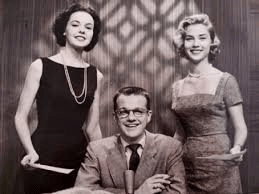
The panelists started the series wearing business clothing, but by 1953 they shifted to formal attire with the men showing up in suits and ties and women in formal gowns and gloves. Unfortunately, we never got to see the beautiful colors of these clothes. Until 1966 everything was filmed in black and white. In the final season, the show was broadcast in color, but the kinescopes were saved in black and white.

Both critics and television viewers liked the show, and it won an Emmy for Best Quiz or Audience Participation Show in 1952, 1953, and 1958.

Because it was a game show, most of the 700 episodes were on kinescope, 16 mm filming. Because many original shows in that era were recorded via kinescope onto silver nitrate film, many networks destroyed recordings to recover the silver. After learning that the network was not keeping the recordings, Goodson and Todman offered to pay for the broadcast and retained the recordings from season three on, however many of those were also lost along the way. A variety of the episodes are stored at different archive centers around the country. My home state houses one from 1951 at the University of Wisconsin Center for Film and Theater Research in Madison.
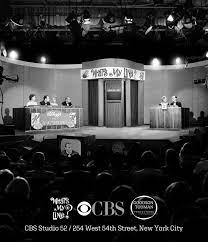
📷facebook.com

The remaining kinescopes which have been digitized have been seen on television on the Game Show Network and 757 of them exist on YouTube.

Many of us remember the reruns and seeing the contestant come on stage and write their name on a chalkboard as Daily said “Will you enter and sign in please.” The very first contestant was Pat Finch who was a hat check girl at the Stork Club.

The first mystery guest was New York Yankees shortstop Phil Ruzzuto. Many of these guests used fake voices to answer questions. Some of the mystery guests who appeared on the show included Julie Andrews, Louis Armstrong, Lucille Ball, Jack Benny, James Cagney, Gary Cooper, Joan Crawford, Salvador Dali, Sammy Davis Jr., Doris Day, Aretha Franklin, Ava Gardner, Judy Garland, Jackie Gleason, Alfred Hitchcock, Bob Hope, Ginger Rogers, Roy Rogers, Eleanor Roosevelt, James Stewart, Elizabeth Taylor, and John Wayne.
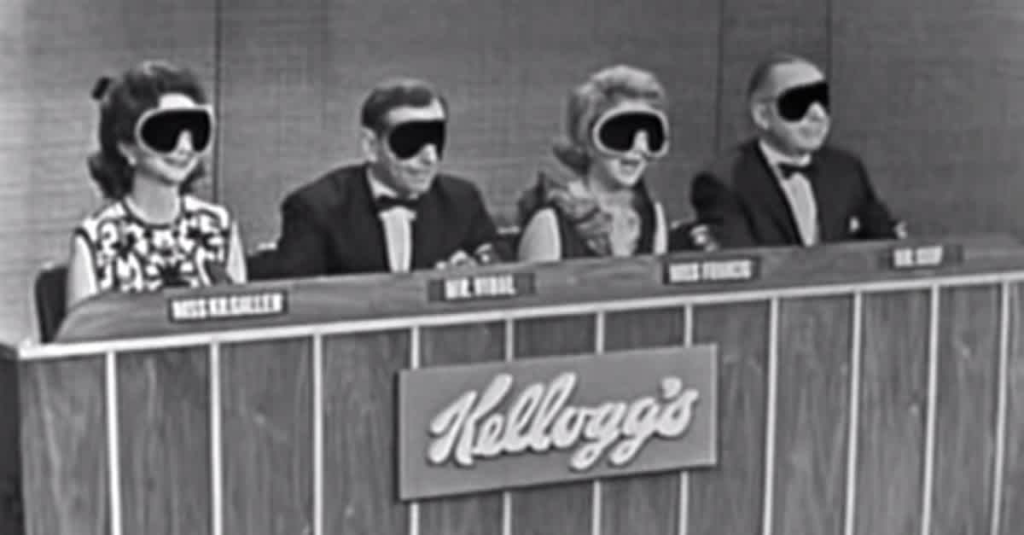
📷littlethings.com Blindfolds come out for a mystery guest

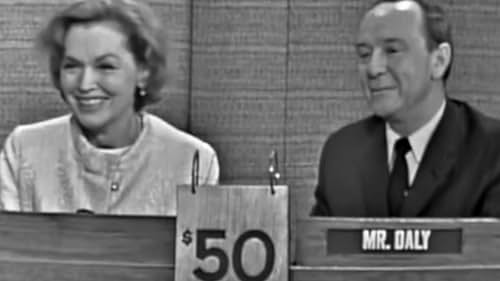
The emcee would choose a panelist who could ask yes or no questions. If the answer was yes, they could continue until they got a no response and then the next panelist would be able to pose questions. If the contestants answered no, Daily flipped a card; when the contestant had ten cards, they won $50.

If you have heard of or even used the term “Is it bigger than a breadbox?,” you might want to know that it came from the show. Steve Allen asked the question in 1953, and it became a standard question after that night. In fact, on one episode, the guest was a breadbox maker, and when Daly could not help laughing at the question, Allen figured it out.
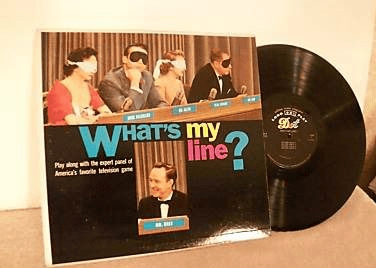
In 1967 The New York Times broke a story that CBS was canceling many of their game shows. None of the panelists had been told that the show was not renewed. Despite the fact that the low costs of the game shows made them profitable, the low ratings led the network to conclude that game shows were no longer suitable for prime-time schedules.

After the show was canceled in 1967, it did go into syndication five days a week. Soupy Sales joined Francis and Cerf on the panel of the reboot. A variety of other panelists took the fourth seat including Joyce Brothers, Jack Cassidy, Bert Convy, Joel Grey, Meredith MacRae, Henry Morgan, Gene Rayburn, and Nipsey Russell. The show ended in 1974. Cerf died during the run of the syndicated series.

It’s hard to believe, but Colonel Harland Sanders was on the show as founder of Kentucky Fried Chicken, although he was not easily recognized at the time, so he was not a mystery guest. While no president ever appeared while in office, Ford, Carter, and Reagan all appeared on the show.

📷youtube.com We switched to a first-name basis in the 70s

It would be fun to see this show on television today, but I’m afraid it would not be the same. In the way that Dick Cavett had a manner of interacting with guests to ask amazing questions with his humor and intelligence, this game show had that same atmosphere. Today, I think the banter would border more on crudeness than wit. There is something charming about a panel of very intelligent people talking with each other, trying to determine the identities of the people they were interviewing while being dressed to the nines that was fun to sit in on and be a part of. I guess that’s why this show is in our series where we are saluting the fifties because that was the era where it could shine.
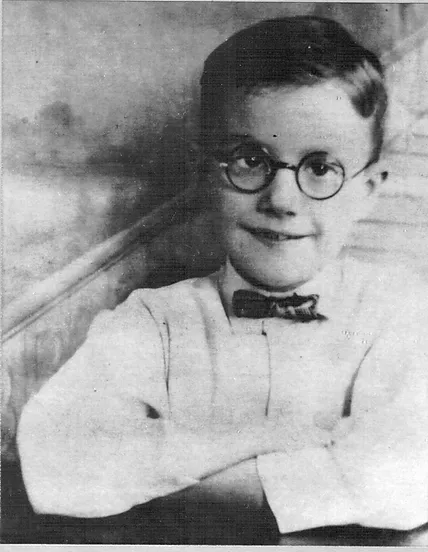
Bill Cullen Wants to Tell the Truth

We have come to our final blog post about four interesting To Tell the Truth panelists. Today we are concentrating on Bill Cullen, who many of us associate with game shows during the era we grew up in.

Born William Cullen in 1920 in Pittsburgh, Pennsylvania, he was an only child. His father owned a Ford dealership there. Like many children in that era, he was diagnosed with polio which left him with physical issues to deal with for the rest of his life. The combination of the effects of polio and a motorcycle accident in 1939, that left him hospitalized for nine months, made it difficult for him to stand or walk for long periods of time.

He was originally a pre-med student but had to leave school because of financial problems. After a break to earn some money, he later returned to college to earn a degree in Fine Arts.

During this time, Cullen was married to Ruth Harrington; the two would divorce in 1948.

In 1939, Cullen worked at WWSW, a Pittsburgh radio station. He was a disc jockey and a play-by-play announcer with Joe Tucker for the Steelers and the Hornets (an earlier hockey team). In 1943 he was hired by KDKA. In 1944 he moved to New York where he got a job as an announcer at CBS.

While working on CBS, he tried his hand at joke writing, supplying Arthur Godfrey, Danny Kaye, and Jack Benny with his humor. He also obtained a writing job for the radio show Easy Aces.

Photo: whosdatedwho.com

During WWII Cullen became a pilot and served in the Civil Air Patrol as an instructor. He had become a pilot at age 13, and it remained one of his great passions his entire life.

In 1945 he was hired as the announcer for a radio quiz show called Give and Take. In 1952, he worked with Mark Goodson and Bill Todman on Winner Take All. This relationship would bring him a lot of work during his gameshow career, and he would host numerous game shows during the late forties and early fifties.

In 1948, Bill tried marriage again, wedding singer Carol Ames. They were married seven years before calling it quits.

Photo: Hudson Theater – Facebook

In 1952, Cullen made the move to television where he would become a household name. During the fifties, he hosted The Bill Cullen Show, Bank on the Stars, Place the Face, Name That Tune, and The Price is Right. Cullen beat out Dick Van Dyke as host of The Price is Right. Later it was determined the demands were too high for him when the show moved to prime time, and he was replaced by Bob Barker.

Not long after his divorce from Ames, Bill married dancer and model Ann Macomber. They would remain married until his death. She passed away in 2018.

He also appeared as a panelist on I’ve Got a Secret from 1952-1967, on To Tell the Truth from 1969-1978, What’s My Line, The Cross Wits, Password, Match Game, and Tattletales.

Not one to sit around, he also hosted Eye Guess, Three on a Match, Blankety Blanks, The 25,000 Pyramid, Chain Reaction, Blockbusters, and The Joker’s Wild. After his stint with The Joker’s Wild, he retired.

After retirement, he was able to spend more time on his hobbies including photography, interior decorating, model airplanes, painting, magic tricks, raising fish, writing plays and poetry, learning the saxophone and guitar, and flying.

In 1969, Cullen got very ill and was diagnosed with pancreatitis that required surgery. The surgery and recuperation took quite a toll on him and left him 30 pounds lighter.

1962 TV Guide

In a TV Guide interview in 1984, Cullen said he was just lucky with game show offers. He said “This is how it happens every time. A known packager comes up with the idea for a new show. The network says do a run-through. They do. The network likes it, and they say, we’ll give you a pilot. Then the network says ‘Who are we going to get to host it?’ Then he says they have the discussion about hiring someone new or someone gets mentioned who didn’t work out on another show. They hire the staff and weeks before the pilot is scheduled, they say, ‘Let’s just go with Bill Cullen.’”

Cullen was nominated for an Emmy three times but only won for Three on a Match in 1973. It was said he hosted more than 25,000 episodes of television during his career. Cullen often filled in for other people including The Tonight Show when Johnny Carson took vacation, for To Tell the Truth when Garry Moore had throat cancer, and for Allen Ludden on Password when he was ill. During the 1960s, he was the first game show announcer to be working on all three networks at the same time. He was also the first game show host to appear on the cover of TV Guide in 1954, and he would go on to have six more covers.

With wife Ann Photo: billcullenarchives.com

It sounds like Cullen was more than satisfied with his career and had no desire to be a television star. With his limp and horn-rimmed glasses with thick lens, he said “I often ask myself, ‘How am I working? I’m certainly not the guy who appeals to women between the ages of 18 and 35.’” When asked if he had frustrations about his career, his response was, “If anything, the industry has treated me better than I deserve. If you don’t have high aspirations—and I don’t—it’s terrific. I like my niche. I’m never under great pressure, and I’ve made a lot of money over the years doing what I enjoy.”

If that isn’t a definition of success, then I’m not sure what is. I have to admit that I think being a panelist on a game show would be a pretty fun gig. I really enjoyed learning about the four panelists of the To Tell the Truth that I remembered watching on television when I was a youngster.

The Price is Right: It’s Been Right for Almost 70 Years

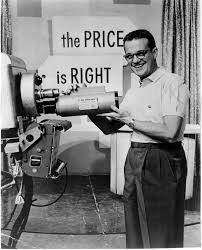
While most of us remember watching The Price is Right with Bob Barker as the emcee, the show actually began in 1956. It was created by Bob Stewart and produced by Mark Goodson and Bill Todman. Bill Cullen was the original host. From 1956-1965 the show aired on NBC. Four contestants bid on a variety of items. Whoever came closest to the actual cost of the item, without exceeding the cost, won the prize. The contestants continued to try to win prizes, and the contestant who won the most came back for the next episode to compete again.

Photo: vulture.com

There was also a home viewer component where fans could guess prize totals by sending in a postcard; these prize packages often included a new car or a luxury vacation.

The show was on during the day, and in 1957 a second version was created for prime time. It aired weekly and was the first game show to be filmed in color. It was in the top ten for years, but when the ratings began to decline in 1963 NBC canceled it, and ABC picked it up. ABC aired the prime-time version for a year and then ended it in 1964. NBC’s daytime version was canceled in 1965.

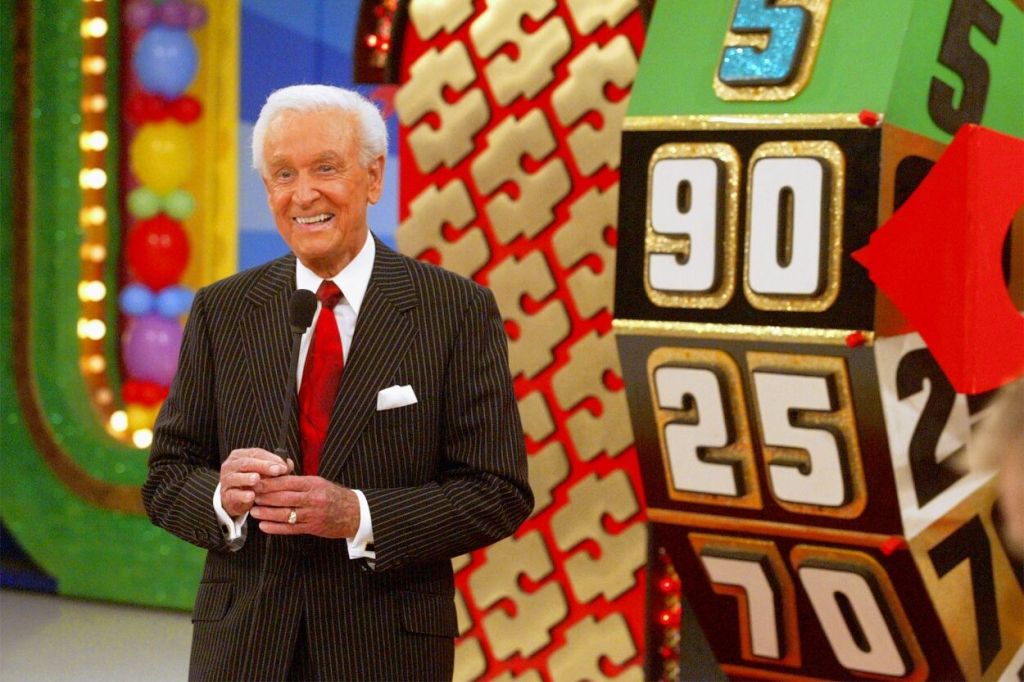
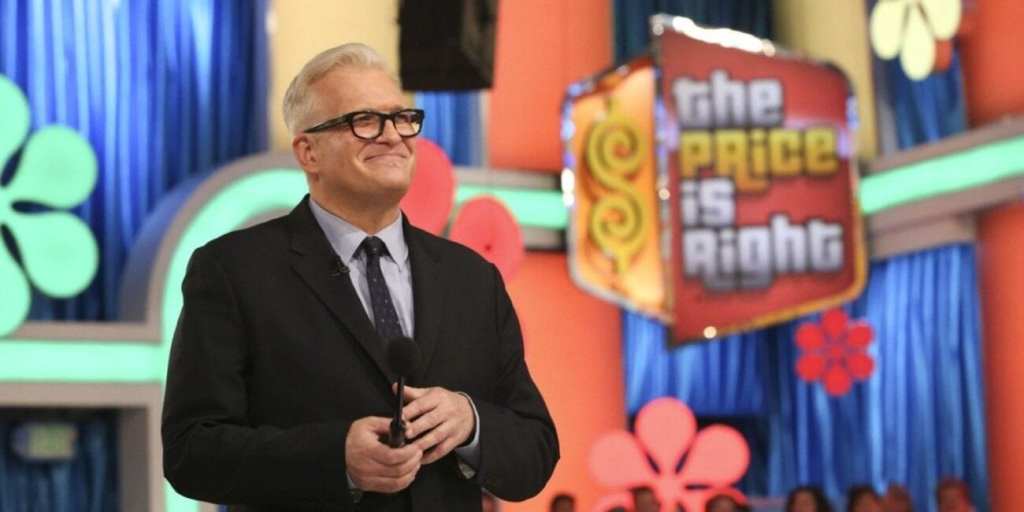
In 1972, the show most of us are familiar with, began with host Bob Barker. Bob would host the long-running show until 2007 when Drew Carey took over the emcee duties. Barker won a lot of awards and honors during his time with the show including 19 Daytime Emmys and a Lifetime Achievement Award.

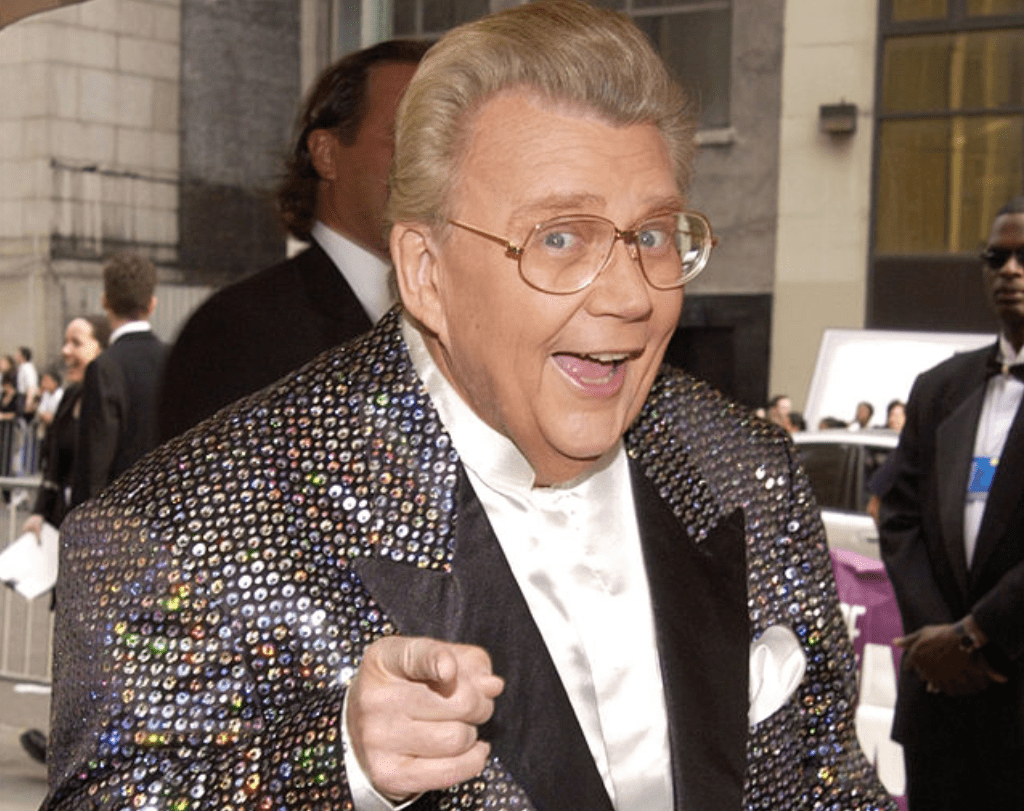
Announcer Rod Roddy Photo: factinate.com

In 1972 the show was called The New Price is Right which changed to The Price is Right in 1973.

Photo: imdb.com

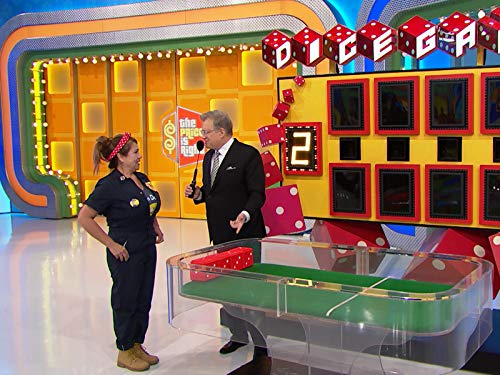
In this version of the show, four contestants are called up to the stage where they try to guess the suggested retail price of a product. Whoever wins gets the prize and is able to play another game for a more expensive prize. The two top winners of the day face off in the showcase. The showcase had a theme of prizes and whoever guessed the cost of all the items without going over the total value won their showcase.

In 1975 the show was expanded from thirty minutes to an hour. The Showcase Showdown was added at this time. For this part of the show, the first three players spun a roulette wheel with spaces from 5 to $1. Players spun once and could stay with that spin or spin a second time and add their two numbers together. Whoever was closest to $1 without going over $1 advanced to the showcase. The last three players of the day went through the same process and the winners went to the Showcase to compete.

Photo: movieguide.com

The show is the longest-running game show in television history. Another fun history fact is that on September 22, 2008, contestant Terry Kneiss guessed his showcase to be worth $23,743 and it was to the penny. The taping was halted to determine if cheating had taken place. However, some detective work revealed that a fan, Ted Slauson, was in the audience sitting next to Terry’s wife Linda. Slauson had legitimately determined the exact prices of a lot of items but since he was not picked to be on the show, he gave the information to Linda.

Another first in television history was one the show did not want to see happen. One day a young woman was called to “Come on down” and not only did she come down but so did her tube top, revealing more than her name to the studio audience.

Talk show host Jenny Jones and Wheel of Fortune letter turner Vanna White were both contestants on the show before they became famous for their own television work.

Photo: pinterest.com

There are 34 retired games and 74 current games. Some of the ones that were played in the early years that are still around include Bullseye, Cliff Hangers, Cover Up, Danger Price, Grocery Game, Hi-Lo, Hole in One (or Two), Plinko, Safe Crackers, Shell Game, Squeeze Play, Switcheroo, Take Two, and 3 Strikes.

After Carey took over, there have been some special editions of the daily shows including Celebrity Week when stars appear to help contestants win their games and the stars win the amount of money equal to the contestants’ prizes to give to a charity of their choice. The other special is The Price is Right Salutes when the show has honored firefighters, policemen, teachers, firefighters and branches of the military.

With all the game shows that have been on the air, it is pretty amazing that Jeopardy, The Price is Right, and Wheel of Fortune have been able to gain new viewers through the decades, providing generations of viewers with special memories of watching the show.