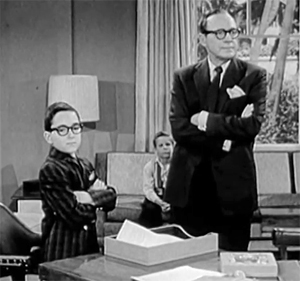
The Tom Ewell Show: Surrounded by Women

Thanks for joining me today. We are having fun with this month’s blog series, “It’s Their Show,” and today we are taking a closer look at The Tom Ewell Show. The shows we are delving into this month were all movie stars jumping from the big screen to the small screen. Some of them landed on their feet and some didn’t.

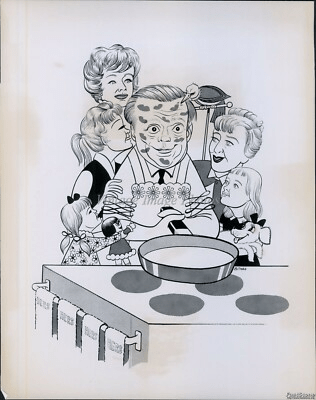
📷ebay.com

While most of the shows we are covering have a star we all know, Tom Ewell is no longer a household name. His first movie was in 1940, and he’s probably best known for The Seven-Year Itch with Marilyn Monroe. He did become a television fixture, starring in the soap Search for Tomorrow as well as a cast member of Baretta in the seventies and Best of the West in the eighties.

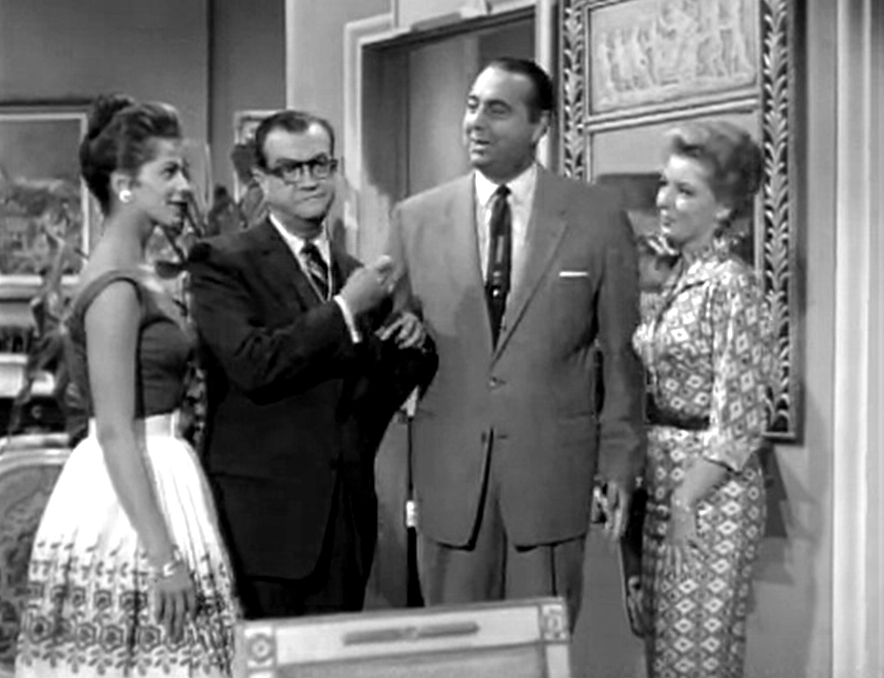
The Tom Ewell Show debuted on CBS in 1960 and was on for one season. The premise is about a guy who has to navigate life with a lot of women: his wife (Marilyn Erskine), daughters (Cynthia Cherault,  Sherry Alberoni and Eileen Chesis), mother-in-law (Mabel Albertson), and a female dog and a parakeet.

Tom Potter is described as a “bumbling” father. I’m not sure why so many shows in the early days featured a wife who caused complications for her husband or a bumbling husband. Potter was a real estate agent. Rounding out the cast are friends pharmacist Howie Fletcher (Norman Fell) and Jim Rafferty (Barry Kelley).

Potter loves sports, but the rest of his household is not too interested. Often, he is watching a sporting event on television while telling his family about the high points when they obviously could care less.

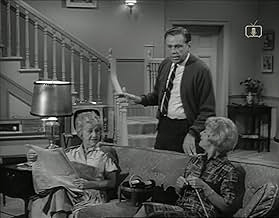
📷imdb.com

The concept of the show was set up in the opening which showed Tom looking around and then being put into a house before seeing the house overrun by women.

The show was created by Madelyn Pugh Davis and Bob Carroll Jr. who wrote for I Love Lucy. Pugh Davis said she based the show on her family. Her family had all girls and a mother-in-law in the house.

Ewell owned the production company in partnership with Davis and Carroll and Four Star Productions. Quaker Oats and Proctor and Gamble alternated sponsorship of the show.

Time reviewed the show after its debut and said “The Tom Ewell Show leads a relentless parade of situation comedies, all designed to show that American family life is as cute as a freckle on a five-year-old. The show, which might also be titled Father Knows Nothing, presents the comic with the excavated face as a bumbler named Potter who is trapped in the customary format: Harassed Man Beaten Down by Wife, Three Daughters, Mother-in-Law. In the opening episode, Ewell could find no better way to outsmart his spendthrift women than closing his bank account and ruining his own credit. For those who may have tuned out early, the women were all set to start spending again.” Not a great review.

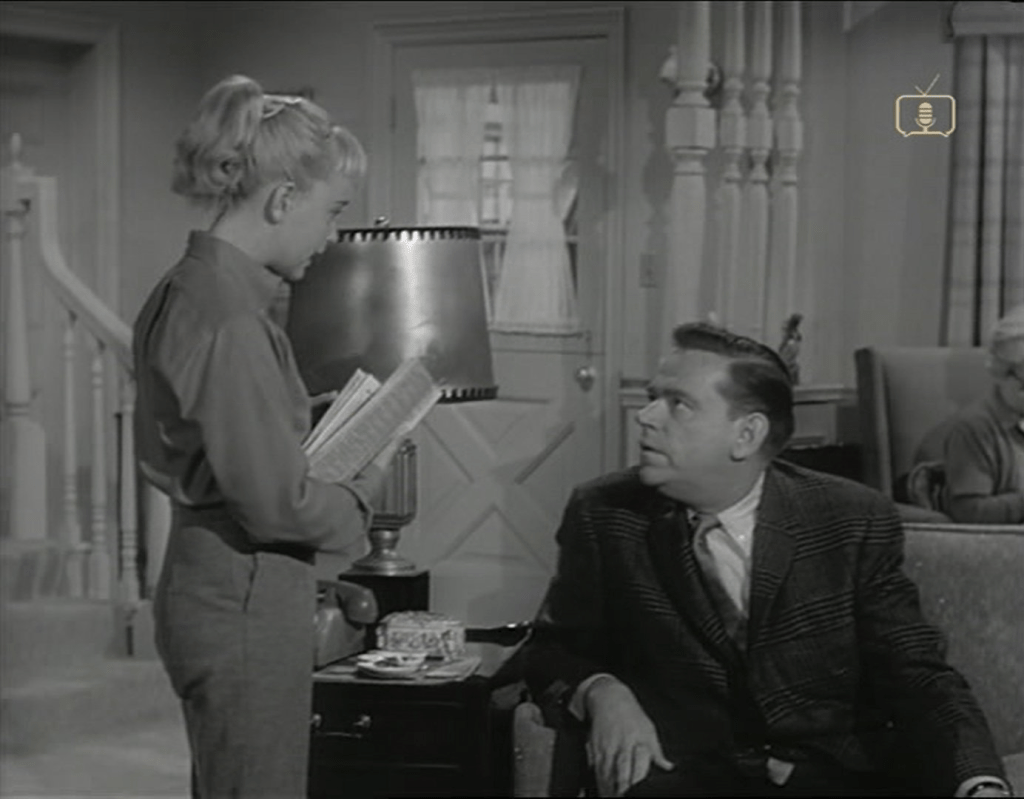
📷imdb.com

This makes the female characters sound very unappealing, but on the show, his wife and daughters were delightful. His mother-in-law liked him and they often bantered back and forth; I think it’s worth watching the show just to see Mabel Albertson in action. However, the plots left a bit to be desired: Tom teaching his wife to drive a car, his daughter learning to play the tuba; and the typical sibling issues of everyone wanting to use the phone and the bathroom at the same time.

The show struggled finding viewers. Associated Press television critic Cynthia Lowry interviewed Ewell that fall, and he said that he had read both the positive and negative reviews of the show. He agreed with the critics who felt that Potter was too inept, and the comedy centered more on that and their family life. He said for December episodes, that issue would be addressed in the writing, and the family dog and parakeet were being dropped from the show. Unfortunately, it was not enough to attract viewers, and the show was canceled after one season.

📷youtube.com “Spelling Bee”

In an episode I watched, “The Spelling Bee,” from late November, Tom is trying to interest his family in golf. When he finally got them to watch a golf match, the females were more interested in what the golf spectators were wearing. And then his youngest daughter ran in and turned the station to a kid’s show. One of his girls is practicing her spelling to try to win a trip to Washington DC by winning the all-state spelling bee.

When Tom leaves the house, he continues to run into fathers and sons who are playing baseball, going fishing, working together, or talking about sports. Tom daydreams he has three boys, but we realize that he is holding a skein of yarn for his daughter while he does so. He tries to talk his oldest girl into going into the real estate business. Later he tries to talk his middle daughter Debbie into giving up spelling for golf. He also tries to get his wife to go bowling with him. When Tom realizes that one of his friends has a son trying to win the spelling bee as well, he turns it into a big sports event and is determined to beat them.

He buys a bunch of dictionaries and then gets up early to “train” Debbie. However, she had already left the house and when she returns, he finds out she’s been on the driving range practicing her golf, so they can be in a father and child golf match. He drills her on spelling the rest of the day. That night Debbie comes down with laryngitis.

📷imdb.com

Her grandmother gives her honey and lemon. The following night they attend the spelling bee, and Tom gives Debbie a pep talk, but then he reminds her he loves her no matter what. Of course, the final two contestants are Debbie and the son of Tom’s friend. She wins, and she and her dad get to travel to Washington, DC where they meet the President. The show ends with Tom telling his friend about all the great non-sport talents his girls have. It was a cute show, and the characters were all likable. There were a few great one-liners. It would not make my top 25 shows, but it was much better than many of the sitcoms in the sixties.

The show had a decent time slot. It was on Tuesday nights at nine, competing with Stagecoach West and Thriller. While both of those shows garnered decent ratings, neither of them was in the top thirty. The primary director was Hy Averback, who would later direct twenty episodes of MASH. So, they had the right elements in place, but the show just could never find its fans.

Larry Rhine talked about writing for the show. Rhine said Ewell was a nice man, but he said Ewell didn’t think the kids should be involved in the show much because they didn’t have the caliber of other actors. Rhine told Ewell they could consider them more as props which seems like a strange concept for a family show, considering that the episode I watched revolved around the daughters.

📷imdb.com

Rhine said Ewell found the show was over when he was on the set one day and he was called to the telephone about a trip he was supposed to take with CBS, and he was told that he was no longer part of the group because he had been fired.

I’m guessing part of the problem with this show getting renewed is that it debuted when westerns were still king and many of the television schedule spots were already filled with them. While it was definitely not a terrible show, the sixties were on the cusp of introducing very different sitcoms than the family-based ones that filled the fifties’ slots. By 1965 we would be tuning into Batman, Honey West, Hogan’s Heroes, The Smothers Brothers Show, and I Dream of Jeannie. However, that said, there are worse ways to spend a weekend than viewing a season of The Tom Ewell Show.

Virginia Sale: What a Character

We are learning about some of our favorite female character actresses. Today we are learning more about the life of Virginia Sale.

📷champaigncounty
history museum.com

Virginia was born in 1899 in Illinois. Her father Frank was a dentist, and her mother Lillie Belle was a poet and truant officer for the Urbana Illinois School District. After graduation, she attended the University of Illinois for two years and then transferred to the American Academy of Dramatic Arts in New York where she graduated in the early twenties. Her brother Charles was a vaudeville comic, and he persuaded her to go to Hollywood to pursue a film career.

She began her career in Hollywood as an extra. In 1931, she did an interview for the Kansas City Star where she said “I had known an assistant director [named Ned] when I lived in New York. He introduced me to King Vidor, then casting for The Crowd. He gave me quite a good bit in the picture, although it lasted only five days. When asked how much salary I wanted, Ned told me to say $350 a week. ‘Well, I think you ought to work for us for $25 a day’ the casting director said. ‘That’s an awful comedown I protested,’ trembling in my boots. ‘All right then, let’s compromise on $35 a day,’ he said. I was awfully glad to get it.” That would be almost $600 a day currently.

📷x.com

During her first two years in Hollywood, Virginia lived at the Hollywood Studio Club. She appeared in 54 films between 1930 and 1935.

The Hollywood Studio Club was created as a safe place for starlets to live. Mary Pickford, along with several other women, was trying to raise money to construct a new building to house actresses. Will Hays gave $20,000 and soon after the studios contributed. Julia Morgan was hired as the architect. She designed an Italian Renaissance Revival style building that opened in 1926. The first floor had a spacious lobby, a library, writing rooms, a dining room, and a stage. The upper stories were single, double, and triple rooms. Men were only allowed to be on the first floor. You had to be between 18-35 years old, be seeking work as an actress, and could stay a maximum of three years. A hundred women lived there, paying $10-15 a week for room and board.

📷mayberrywikifandom.com

Barbara Hale, Donna Reed, Dorothy Malone, Ann B. Davis, Barbara Eden, Sharon Tate, and Sally Struthers were just a few of the women who lived there. The most famous resident was Marilyn Monroe. After the culture shift in the sixties and seventies, the residents decreased until the Club could no longer financially exist. In 1975 the doors were closed, and the contents were auctioned off.

In Hollywood Sale was often cast as an older woman, even though she was still in her twenties. She entered the movie entertainment business just as silent films were ending. Her first role was in Legionnaires in Paris in 1927. During her film work, she met actor and studio executive Sam Wren, and they married in 1935. In 1936 they had twins named Virginia and Christopher.

In the thirties, Virginia developed a one-woman show based on her life growing up in Illinois which she called “American Sketches.” She performed the piece more than 6000 times throughout the thirties, forties, and fifties, even touring Europe during WWII. This sounds like it would have been a fun show to see. Some of the different pieces of the performance included: “Traveling on the Illinois Central” where she portrays a mother trying to keep her son under control after a visit with relatives; “Life of the Party” where she is a giggling, talkative woman who annoys a young man she is trying to impress;
“Mealtime in Indiana” where she impersonates a housewife trying to get ready for the Ladies Guild while preparing supper for her family; “Three O’Clock in the Morning” as a weary hostess trying to get her guests to go home, and “I Remember Abraham Lincoln” where she is Grandma Willoughby reminiscing about her encounters with Lincoln.

📷rottentomatoes.com

She also received some radio work, including a serial, For Those We Love, playing Martha the maid every Sunday for eight years.

Her film career continued to develop during those decades and she appeared in Topper, When Tomorrow Comes, They Died with Their Boots On, and Night and Day.

Sam served in WWII as part of the Air Corps. When he returned home, he had a six-year position as executive secretary for the Actor’s Equity. He was an executive at both Warner Brothers and Columbia studios.

📷imdb.com Topper

In 1949 as television was developing, she and Sam created a sitcom, Wren’s Nest which featured the life of the Wrens starring Virginia, Sam, and the twins. The show aired three times a week. Virginia took over writing duties on the show. Many of her scripts were based on real events that happened to the family. The series contained 47 episodes.

During the fifties, Sale took a break from the big screen, focusing on television shows and commercials. She appeared in several series in the fifties, but she hit her stride during the sixties. If you watch a lot of television from that decade, you can catch her in a variety of shows including The Many Lives of Dobie Gillis, Ben Casey, The Beverly Hillbillies, Wild Wild West, The Andy Griffith Show, Green Acres, and I Spy. She had a recurring role on Petticoat Junction where she played several characters. Her final television role was in Police Woman in 1975.

Sam passed away in 1962, and Virginia lived another thirty years, dying in 1992 from heart failure. Both Sam and Virginia are buried in Arlington National Cemetery. She spent her final years at the Motion Picture and Television Country Hospital in Woodland Hills, California.

📷

Sale could thank Mary Pickford for her home once again. Pickford was part of the Motion Picture Relief Fund which she founded with Joseph Schenck and Reverend Neal Dodd. When several former Hollywood stars died destitute in the thirties, 48 acres were purchased in the San Fernando Valley to build a Motion Picture Country House. In 1948, the Motion Picture Hospital was dedicated on the grounds. Later television actors were invited to live there as well. By that time, the site included a retirement community with individual cottages, administrative offices, and a hospital. Fees are based on the ability to pay. Actors, artists, backlot men, cameramen, directors, extras, producers and security guards are all eligible to live there. To live there, residents must be at least 70 and have worked in the entertainment industry for at least 20 years.

It was fun to learn not only about Virginia Sales but also the places she lived at the beginning and the end of her career.

Learning How to Marry a Millionaire Can Be Fun

Today starts a fun, new blog series, “The Movie Came First.” For the month of December, we’ll be learning about shows that began life as a big-screen movie. Our first sitcom is How to Marry a Millionaire.

In 1953, Betty Grable, Marilyn Monroe, and Lauren Bacall starred in a comedy romance about three women who make a pact to help each other find millionaires to marry but end up finding love instead. Their love interests are played by Cameron Mitchell, David Wayne, and Rory Calhoun.

An interesting fact about this movie is that it was the first one filmed in Cinemascope. In order to highlight the incredible sound, the movie begins with an orchestra performance. It was a bit awkward because it has nothing whatsoever to do with the movie, but is an interesting intro. It was also the first movie to air on television when it appeared on NBC Saturday Night at the Movies in September of 1961.

Another fun fact about the movie is that Merry Anders who would appear in the television show had a bit part as a model in the film.

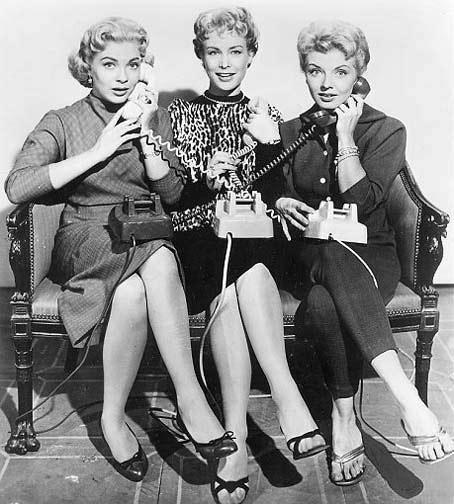
Photo: filmaffinity.com

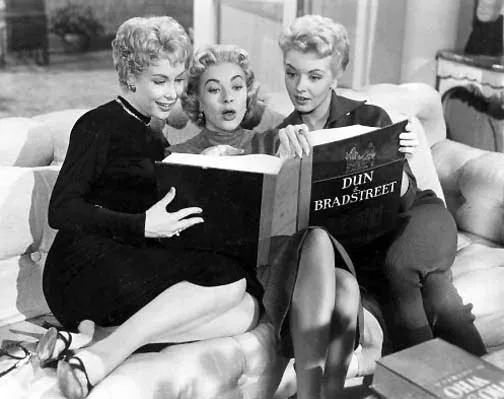
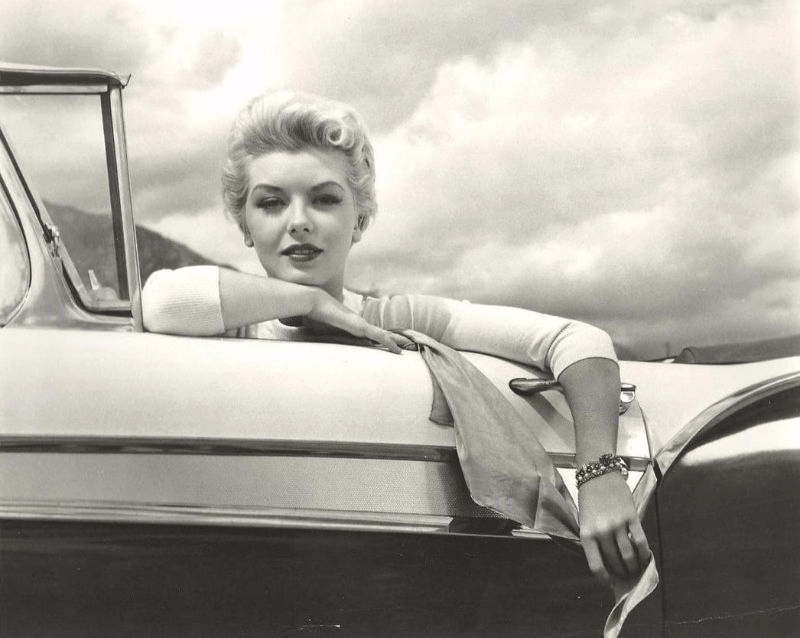
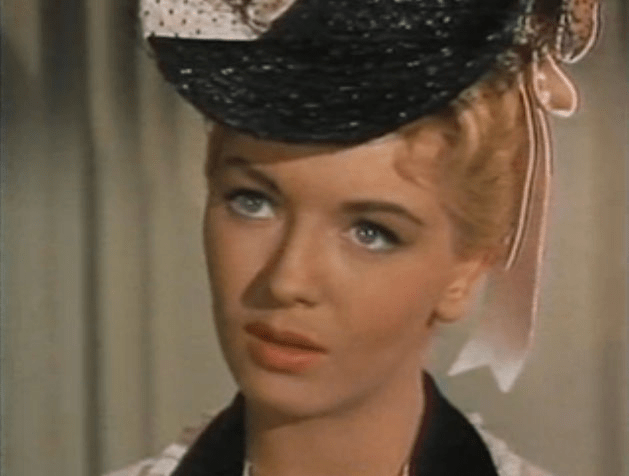
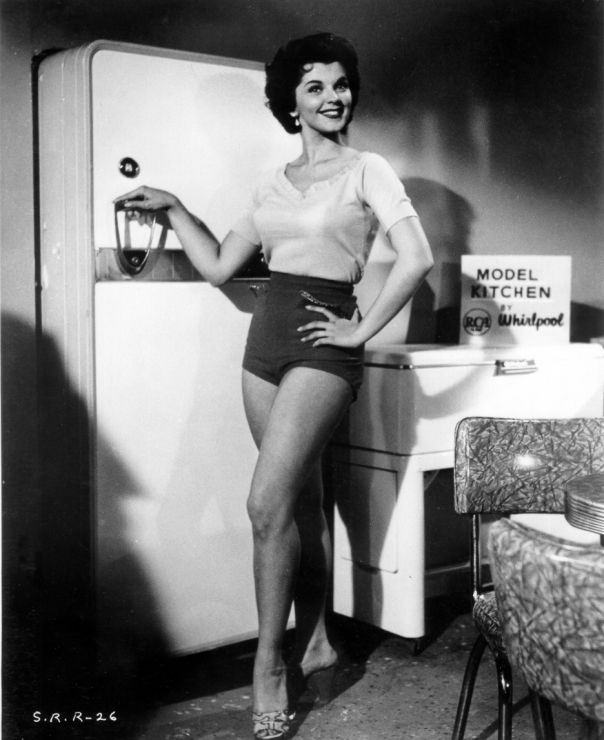
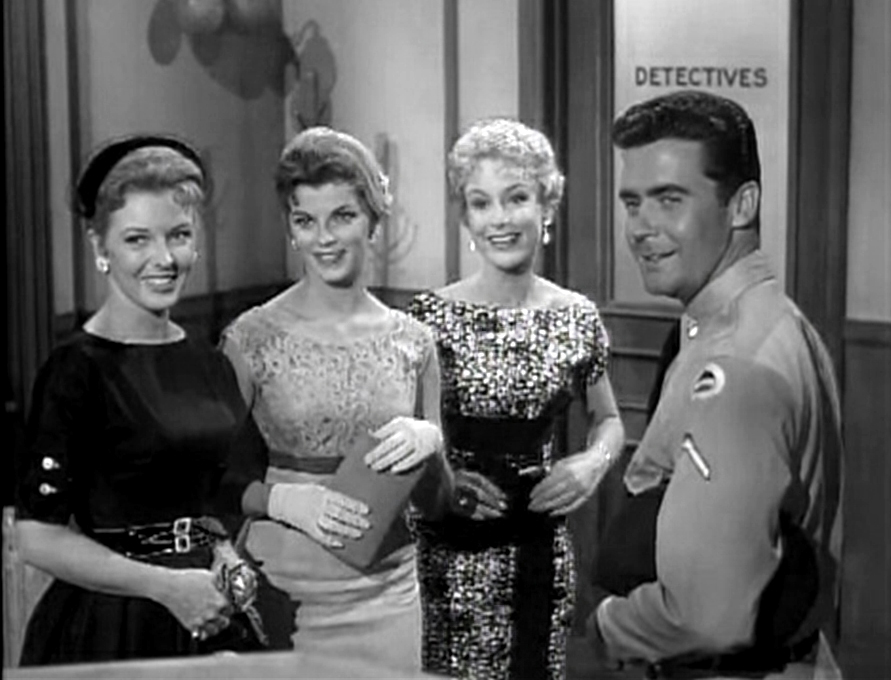
In 1958, the movie came to the small screen with Merry Anders (Mike) filling Lauren Bacall’s role, Barbara Eden (Loco) is the sexy bombshell Monroe played, and Lori Nelson (Greta) is the neutral one in between played by Grable. Greta is the co-host of a quiz show, Go for Broke. Mike, whose real name is Michelle, works as a secretary on Wall Street, and Loco is a fashion model. One of the weekly gags is that Loco has terrible eyesight, but thinks men don’t like girls in glasses, so she often has mishaps not seeing correctly.

In order to find a wealthy husband, they found a chic penthouse apartment while wearing designer clothing even if they could not afford to eat. I guess that’s why they went on a lot of dinner dates.

Photo: imdb.com

The girls are often short of money and have trouble paying the rent on time. Mr. Blandish (Dabbs Greer), their landlord, is always threatening to evict them. The elevator operator Jesse (Jimmy Cross) sometimes helps and sometimes hinders the trio with their get-rich-husbands schemes.

The pilot was filmed in 1957 with Lori Nelson as Greta but her roommates at the time were played by Charlotte Austin (Loco) and Doe Avedon (Mike, who had been married to photographer Richard Avedon). By the time the show was sold in 1958, the roles had been recast and after looking at more than seventy auditions, the producers picked Eden and Anders.

Photo: sitcomsonline.com

Anders discussed the camaraderie of the three stars. She said they were amazingly similar. She said they all wore size 8, all drove Thunderbirds, and all had French poodles and this was before they met. Anders had tested for the role of Mike and Loco because she had been playing a lot of ditzy blonde roles. When she was given the role of Mike, Eden was brought on board as Loco. Anders said the cast worked hard. After filming all week, they did late night interviews and early morning shows. One weekend they were sent to New York for a personal appearance. They got back late Sunday night and still had to be at work early Monday morning.

Photo: wundaba.ne

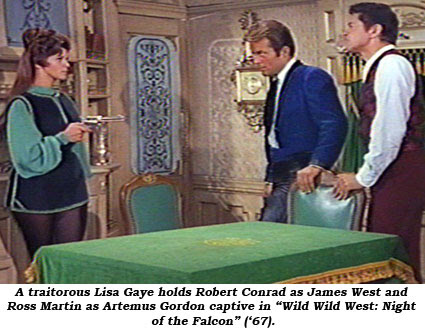
The second season found Nelson out with Lisa Gaye as Gwen in. Nelson claims she was the best actress and that she decided to move on, disliking her character’s development. Other sources say she was fired because she gave an interview criticizing her role. Nelson said her role wasn’t defined well with Anders getting the “Eve Arden wisecracks” and Eden being the sexy, bubbly personality. Greta supposedly married a gas station owner and then moved to California. Only thirteen episodes were aired for season two and then the show was cancelled.

Photo: imdb.com

Barbara Eden was interviewed for the Television Academy and discussed her time on the show. She said she was doing a play in LA when director Mark Robson saw her. He offered her a role in his new movie Peyton Place. However, the studio gave the part to another actress who was under contract at the time; but because of Robeson’s interest, they brought Eden in for a test at Fox. One of the television executives called her and said he had seen the test and read her notices for the LA play and was wondering if she was interested in doing a television series.  He asked her to go to the Fox Western studios for some still shots. When she got there, she thought the part was still in the process of being cast, but realized the stills were being taken because she had the part and the other girls were her costars.

Photo: amazon.com

Eden said she was a huge fan of Marilyn Monroe and had seen the original movie. She felt trying to take on the part by imitating Marilyn would have ended badly because she could never compete with Marilyn’s version, so she took the part and made it her own. Like Anders, she also said the three costars were close and became good friends.

Eden said the time on the show was her “finishing school.” She learned so much about filming before the cameras, lighting details, and building stamina. The stars sometimes filmed up to thirteen hours a day in three-inch heels which she said was painful. After long days, they would be given new dialogue to learn for the next day’s shooting. It was a very tough job but prepared her for film work.

Photo: etsy.com

If you like cultural history, the show is fun to watch just to see the wardrobes and settings. The clothing was provided by Mr. Mort. Mortimer Goldman owned his design business in 1952, producing mid-priced stylish dresses. During the run of the show, Stan Herman came on board as a designer. Throughout the sixties, Herman’s designs were the height of fashion. Stan Herman later opened his own design studio, producing items under his label as well as for other companies. In the 1990s he began appearing on QVC with his design line of comfortable clothing and sleep ware.

The show was pitched to the three major networks, but they all passed on the series. So, in 1958, NTA Film Network sold the show into syndication to 115 stations. It packaged a three-series deal including Man Without a Gun and This is Alice.

Photo: imdb.com

Both critics and fans liked the show, but it had some tough competition. The show aired Friday nights against The Adventures of Ellery Queen, The Wide World of Disney, and Rawhide. Eden said she never knew exactly why the show was cancelled. She assumes that because Fox was trying to be the fourth network and it didn’t work out at the time, all the Fox shows were just dropped.

So, what happened to the NTA network? The company that referred to itself as the fourth network launched in 1956 with 100 affiliate stations. Twentieth Century Fox bought half of the company with the intention of producing original programming. The shows were filmed and then mailed to each station. By 1961, the network was losing money and the flagship station was sold to the Educational Broadcasting Corporation which later became National Educational Television and eventually PBS. One of their largest stations, KTTV in Los Angeles became part of the Fox television network, co-owned by Twentieth Century Fox, part of 21st Century Fox.

Photo: boomtownamerica.com

I was able to watch a few of these shows online. I’m not sure how the fourth network’s ownership affected syndication. Youtube has four episodes available. For this blog, I watched the first episode again. The jokes were a bit overdone and the laugh track was annoying, but I’ve seen worse. There were some charming moments in the show, and Barbara Eden’s comic ability was obvious with some funny scenes about her failure to wear glasses. Take some time to check out one of these four episodes to see what tv looked like in the mid fifties.

What do You Wear to Eat Beans and Franks with Arnold Ziffel?

There is a lot that happens behind the scenes to help make a show a hit. In previous blogs (see the December 2018 blogs about Earl Hagen and Jay Livingston), we learned about composers. This month we’ll take a look at the costumers and the set designers. The wardrobe department has the responsibility to make sure the characters are wearing the appropriate clothing for their character.

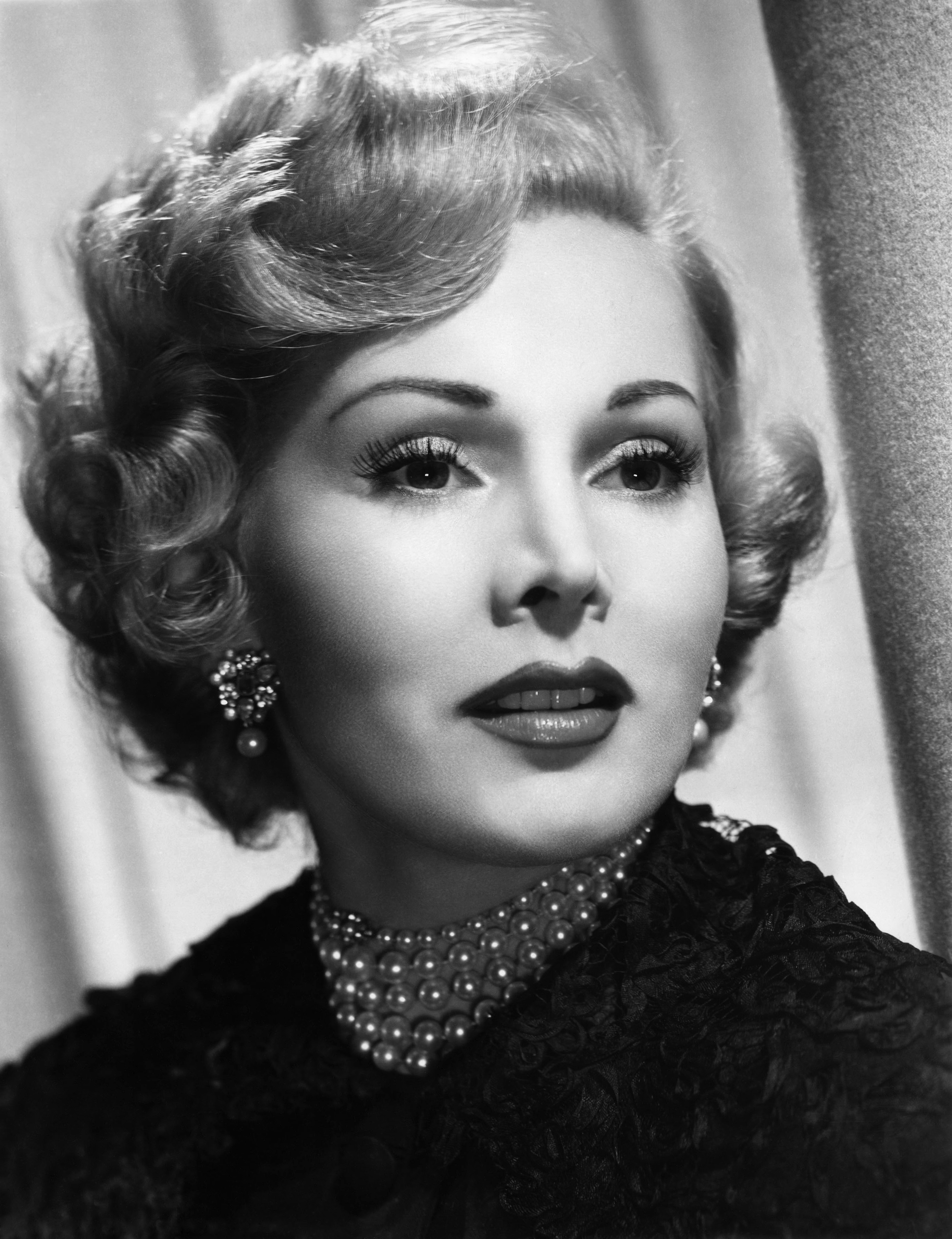
Zsa Zsa Gabor, ca. 1952
Photo: quotesgram.com

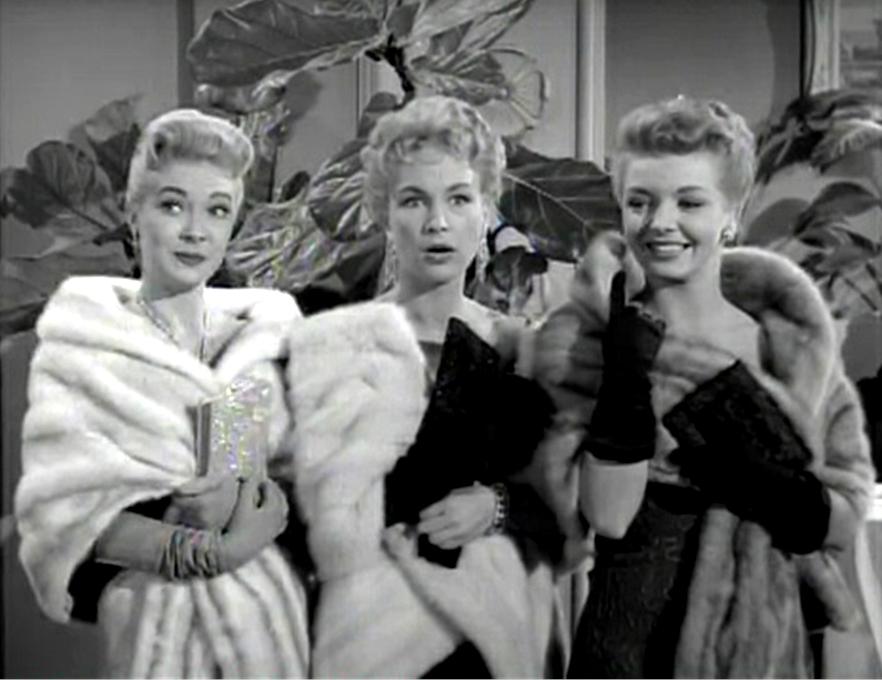
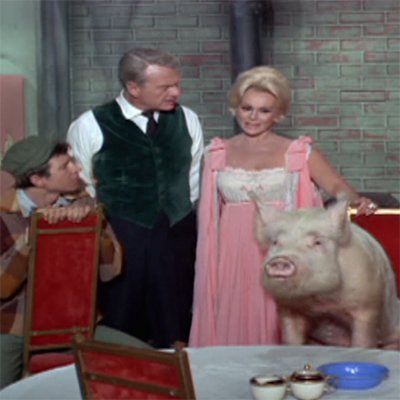
Green Acres presented a challenge for the wardrobe department. Most of the citizens were farmers, so overalls and house dresses fit the bill. Sam Drucker was the grocer, postman, and newspaperman for Hooterville, among other jobs. He always wore a blue shirt with a tie and had his postman vest or grocery apron on. Lisa and Oliver Douglas played an attorney and his wife who relocated from New York City and the social scene to rural Hooterville to run a farm. Oliver often wore suits on his tractor, looking somewhat silly and questioned by the locals. Lisa also continued to wear her glamorous outfits, but somehow, she was accepted by everyone and fit in wherever she went.

Photo: metv.com

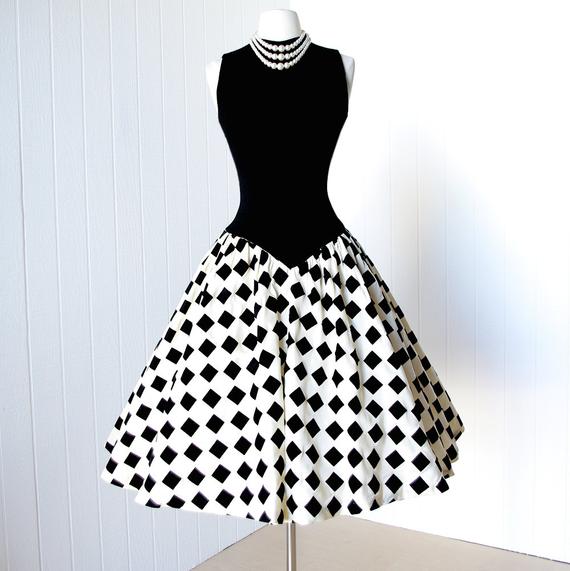
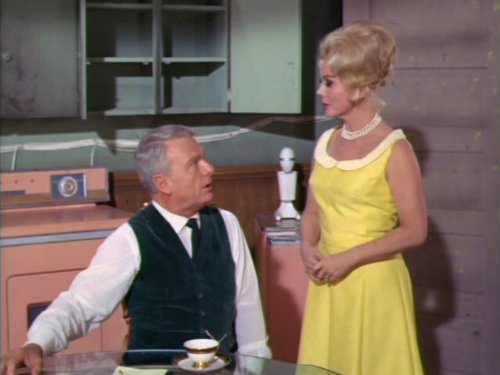
Lisa Douglas could wear anything and look good. She often wore her negligees around the house without being thought a hussy. She could show up in a sequined gown for a local band performance and was just one of the crowd. She wore gowns of boldly colored prints, but she was just as likely to show up in a single-colored sheath dress with a simple strand of pearls.

Photo: imdb.com

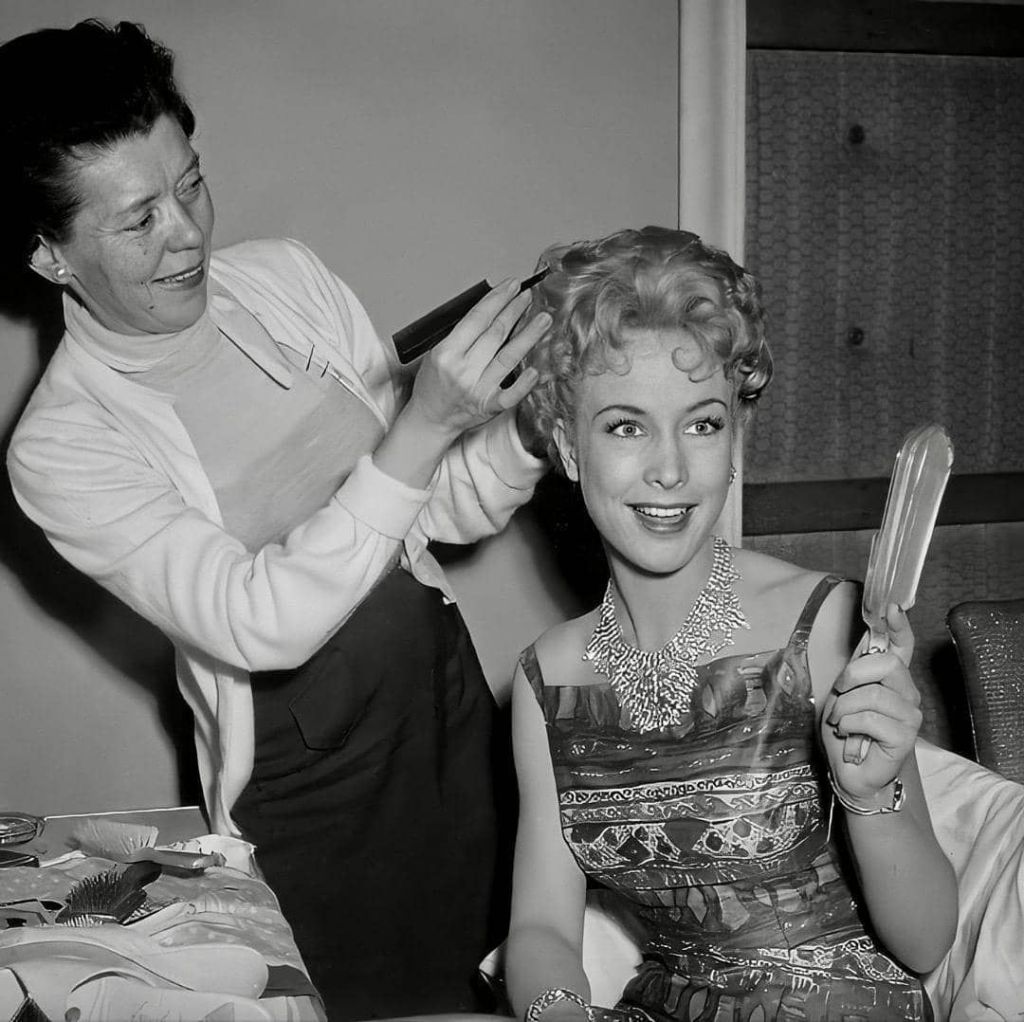
With her lavish updo hairstyle and her extensive collection of jewelry, Lisa was fun to outfit. Three designers were responsible for the majority of Lisa’s wardrobe: Jean Louis, Lucie Ann Claire Sandra, and Nolan Miller.

Jean Louis

Born Jean Louis Berthault in 1907 in Paris, France, he was an Academy Award winner for The Solid Gold Cadillac in 1956 starring Judy Holliday. (Jean was nominated for 13 Academy awards.)

Photo: pinterest.com

He attended the School of Decorative Arts and then went to work for Agnes Drecoll, courtier. In 1935, he moved to New York city where he worked for Hattie Carnegie before going to Hollywood. While working there he began gathering a large clientele, including Wallis Simpson and Irene Dunne.

Photo:
Black gown -1960s Jean Louis Silk Tiered Gown

From 1944-1958, he was head designer for Columbia Pictures. Some of his most creative designs included Rita Hayworth’s black satin dress from Gilda, the beaded gowns worn by Marlene Dietrich, and the sheer, sparkling dress Marilyn Monroe displayed when she sang “Happy Birthday” to John F. Kennedy. He also was the primary designer for Kim Novack.

Photo:
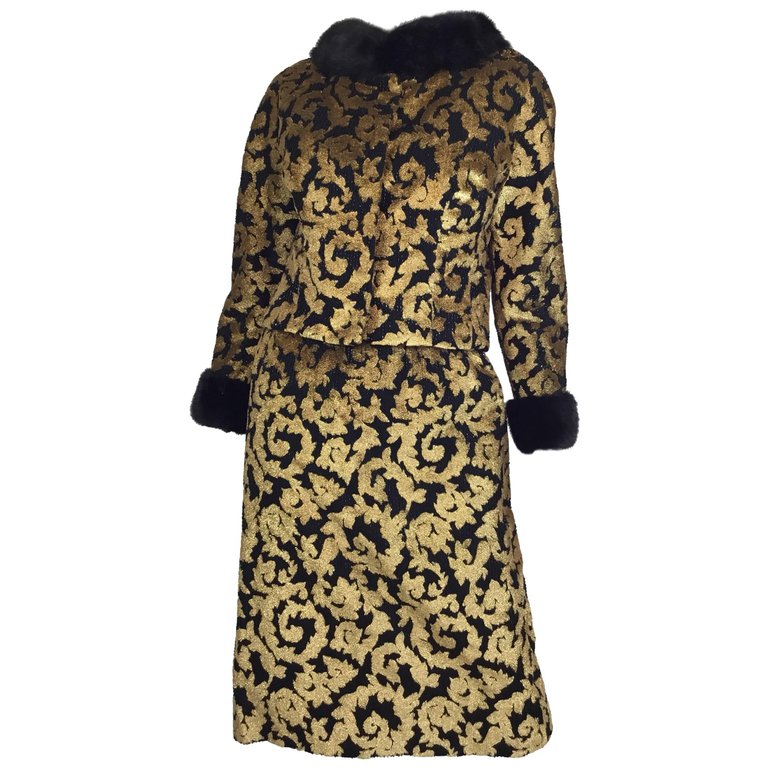
Gold and black lame dress

In 1958 he moved over to Universal. There he began a working relationship with Doris Day, with Pillow Talk, their first collaboration. Journalist Tom Vallance described his work:- “He created a sophisticated allure for Doris that launched a new phase of her career.” James Garner, who also starred with Doris in several films said she “exuded sex appeal while still maintaining her All-American Girl next door image.” Jean Louis also worked with Lana Turner during this era, putting together her colorful wardrobe in Imitation of Life. Jean’s daughter said her father “had the most amazing discerning eye for color. It was a sixth sense for him.”

Jean Louis had designed the clothing for The Loretta Young Show from 1953-1961. She was a close friend of Jean and his wife Maggie. After Maggie passed away, he and Young married in 1993. She was considered one of, if not the best, well-dressed stars. He also designed clothing for Ginger Rogers, Vivian Leigh, Julie Andrews, Katherine Hepburn, and Judy Garland.

Jean began to freelance in 1960. He opened a boutique in Beverly Hills and sold his label, “Jean Louis, Inc.” at better department stores all over the country. During this time, he also updated the United Airlines stewardess uniforms.

Photo: metv.com

From 1965-1967 he designed Lisa Douglas’s dresses on Green Acres. He was the perfect designer for her. Gifted with a great sense of humor, he could undoubtedly relate to the humor on the show.

Photo: thewritelife61.com

As he said during a Vogue interview, “You can use marvelous fabrics, have wonderful, impossible embroidery—in fact, be superluxe and superluxe is what the couture is all about.”

Photo: tumblr.com

In the 1970s, he opened a boutique in France and launched his first fragrance. His career was still flourishing with clients like Jacqueline Kennedy, Sophia Loren, and Bianca Jagger.

Jean Louis passed away in 1997. His influence continues to be felt among designers today. Some of the fashion icons who admit being influenced by him include Michael Kors, Vera Wang, Giorgio Armani, and Zac Posen.

Photo: imdb.com

Lucie Ann-Claire Sandra

Lucie Ann vintage nightgowns are among the most glamorous and desirable negligees ever made. Lucie Onderwyzer founded the fashion company in 1947 in Beverly Hills. Known for bold color and exuberant details like pompoms, bows, rosettes, and rhinestones, she designed for many stars including Elizabeth Taylor.

Photo: pinterest.com
A few of Lisa’s gowns in the background

She designed all the peignoir sets worn by Eva Gabor in Green Acres. Her designs were also featured in other television shows and movies. In one episode of Bewitched, Darrin goes to the store to purchase a Lucie Ann for Samantha.

Photo: pinterest.com
Darrin shopping for Samantha

Lucie passed away in 1988 and her company was bought by Deena Lingerie Co and later Lady Ester Lingerie Company which is still making them today.

Norman Miller

Norman Miller was a wardrobe consultant for Eva on Green Acres.

At www.emmytvlegends.org/interviews/people/nolan-miller, Miller described his relationship with Eva.

 “I adored Eva. We worked together for many years. Later on, our working relationship became a friendship that I really valued. She wasn’t silly. She was a very smart lady. Not so smart with the men of her life. Her home was incredibly elegant. Anything that she needed I would do.” Miller shares about the time when Eva discovered a store called Loehmann’s; the store would buy designer samples and pack them up in huge boxes for stars to pick from. “Eva was a size 8 and the sample sizes were 2, and she’d simply ask me to do my magic and tailor them to her size. I smile at that as Eva could get anyone to change things around for her. I sometimes wonder whether she did understand fully well what was entailed in changing a size 2 into an 8 just like what was entailed in coming up with an animation idea tailor-made for her. She’d bat her eyelashes and sprinkle in a few ‘darlings’ and you find yourself doing what she wanted.”

Photo: pinterest.com
A pink chiffon sleeveless floor-length Nolan Miller dress with accompanying chiffon and ostrich feather wrap worn by Eva Gabor on the television series Green Acres.

Miscellaneous

These three designers were the major forces behind Lisa Douglas’s beautiful fashion style on Green Acres. Gabor had an amazing fashion sense and was well known for her private wardrobe. She also was a successful business woman, owning a multi-million-dollar wig company.

Photo: newyorksocialdiary.com

Eddie Albert tells a great story about Gabor and her fashion. At her funeral, he said he probably saw more of Gabor than any of her five real-life husbands did. And, like any couple, married or not, they had their differences. She, for example, never quite understood his passion for wildlife conservation. “Every time you hear about a sick fish, you make a speech. Vy?,” Albert recalled his co-star saying. “And I would tell her, ‘I think we ought to preserve nature, save wild animals,’ and so on. Well, one day she showed up in a gown made of feathers, and I asked her not to wear it. ‘But so chic!’ she said. And I said, ‘Yes, and ladies will see it and want one, and thousands of birds will die.’ And she said, ‘But, Eddie, feathers don’t come from birds.’ ‘Well,’ I asked, ‘where do they come from?’ And she said, ‘Dahlink. Pillows! Feathers come from pee-lowz!’ ”

Perhaps there was more of Eva Gabor in Lisa Douglas than we realized.

Photo: sitcomsonline.com

Jack Benny: Perhaps the Nicest Guy in Television

Photo: cinema.ucla.edu

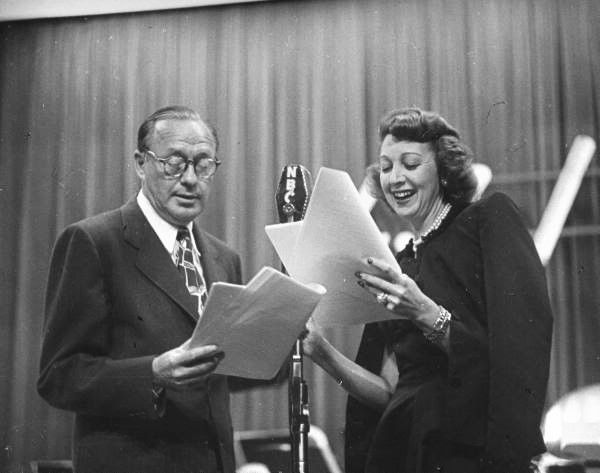
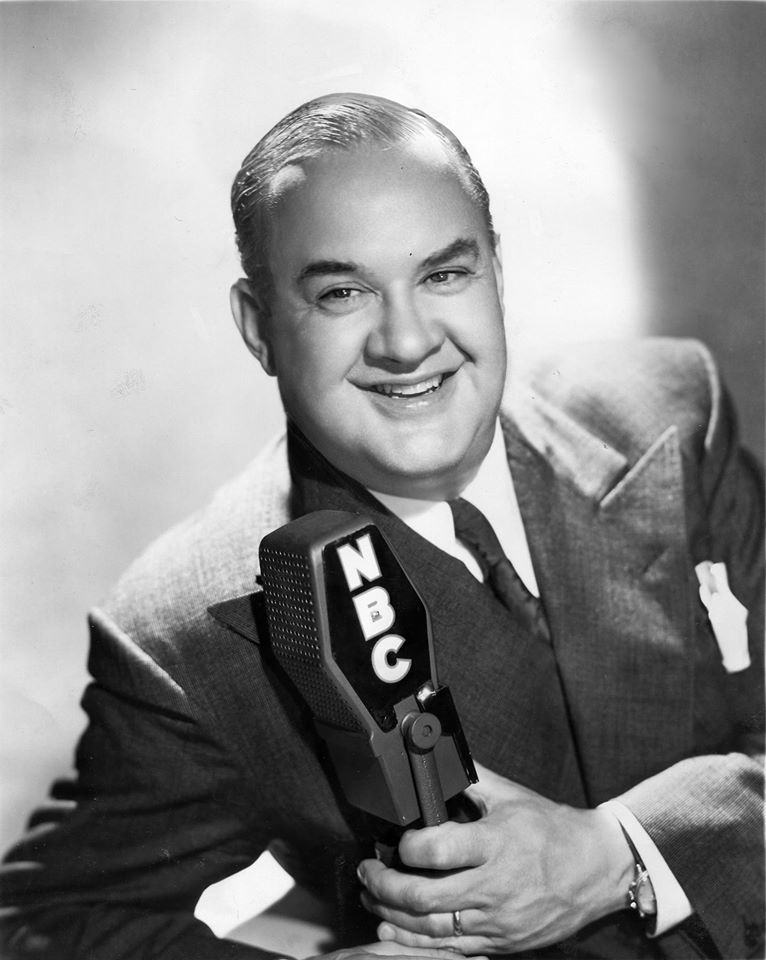
We kick off this new year getting to know one of my favorite entertainers, Jack Benny. While many radio stars had a hard time transitioning to television, Jack, along with his best friend George Burns, made it look easy. Jack’s radio show started in 1932. In 1950 he decided to make the leap to tv, and his show would be on the air until 1965 when he decided it was time to quit.

The series produced 258 episodes. Jack tested the water first, appearing randomly on television before settling into a weekly schedule ten years after the first show debuted (From 1955-1960 he was on every other week). George Balzer and Sam Perrin would write for the show for the entire run, given credit for 255 episodes. Ralph Levy, who helped George and Gracie get their show underway, came on board in 1951 and left in 1962. The well-respected Fred De Cordova directed the most episodes, 75.

Photo: thisdaybenny.com 

Jack’s first shows were filmed at Burns’ McCadden Productions studio and later at Universal Television. His opening and closing monologues were done in front of a live audience but a laugh track was inserted for consistency. Jack brought his quirky radio crew with him: Don Wilson, Eddie “Rochester” Anderson, Dennis Day, Mary Livingstone, and Mel Blanc. Benny’s wife was Sadie Marks. He met her at age 14 in 1919, and they didn’t exactly hit it off. However, in 1927 they realized they were in love and married that year. Benny asked his wife to fill in for a live comedy show to play “Mary Livingstone.” Sadie did and showed her comic persona. She began to appear regularly and later legally changed her name to Mary Livingstone.

Photo: pinterest.com

Benny understood the radio show was so successful because listeners bonded with the characters and considered them friends. Television just added another dimension for viewers to be able to see the characters.

Jack always underplayed his character, often giving the best lines to his cast. He had great timing, knowing when to tell a joke and when to say nothing. It was often said that he did not say funny things, but he said things funny. His catchphrases, “Well” (with a long pause) and “Now, cut that out” are still part of pop culture today.

In the classic age of comedy, sponsors were the key to survival, and Jack was always able to obtain some of the most well-known companies. During his run, he was sponsored by Lucky Strike, Lever Brothers Lux, State Farm Insurance, Lipton Tea, Miles Laboratories, and most memorably, General Foods’ Jell-O. The sponsors never minded that he often made fun of them or their ads. Often, they were some of the funniest moments in the show.

The first show aired in October of 1950. Benny’s first line on that live Sunday night telecast was, “I’d give a million dollars to know what I look like!”

The show’s format didn’t vary much from week to week. Typically, it began with a monologue. The orchestra might play a song or Jack and announcer Don Wilson might have a discussion such as:

DonWilson: I don’t think you know how much it means to me to do the commercial. After all I’m not a funny man. I can’t sing or dance. I don’t lead a band. What are you paying me for?

Jack: Don, you’re hanging yourself.

Photo: oldtimeradiodownloads.com

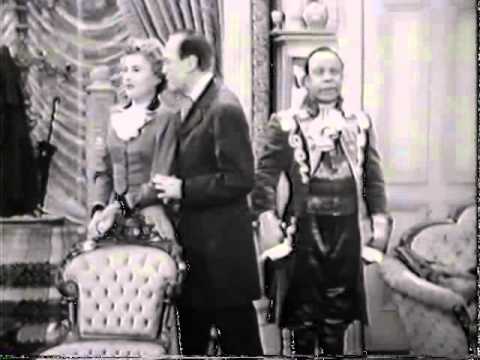
The cast would discuss a current situation, often referring to Benny’s age or frugality, or Mary would read a letter from her mother. Dennis Day would then sing a song followed by a skit, a mini-play, or a satire of a movie. Before Carol Burnett’s incredible movie satires, Jack Benny’s writers created some humorous shows. One example was a 1952 show. It was based on Gaslight from 1944. Called “Autolight,” it starred Barbara Stanwyck.

Photo: youtube.com

Jack continued to feature special guest stars, was a penny pincher, refused to admit he was over 39 years old, and continued to drive his old Maxwell. Here he is with Marilyn Monroe discussing his age:

Marilyn Monroe: What about the difference in our ages?

Jack: Oh, it’s not that big a difference. You’re twenty-five and I’m thirty-nine.

Marilyn Monroe: I know, Jack. But what about twenty-five years from now when I’m fifty and you’re thirty-nine?

Jack: Gee, I never thought of that.

Photo: worthpoint.com

Jack’s view on saving money: “Any man who would walk five miles through the snow, barefoot, just to return a library book so he could save three cents – that’s my kind of guy.”

Photo: imdb.com

Mel Blanc not only “played” the Maxwell but portrayed a variety of characters. Once Benny made the comment, “There’s only five real people in Hollywood.  Everyone else is Mel Blanc.”

Viewers today criticize the way Rochester was treated on the show, but when comparing Benny’s show to Amos ‘n Andy and other shows during the time period, a stark difference can be seen. Rochester was the first black actor to have a recurring role on a radio show. He called Jack, “Jack” or“Mr. Benny” and quite often got the best of him by outwitting him or pointing out one of his deficiencies.

Here’s a typical conversation between Jack and Rochester:

Jack: What do you think of this card I wrote for Don? “To Don from Jacky, Oh golly, oh shucks. I hope that you like it, it cost forty bucks.”

Rochester: It would’ve been hard to rhyme a dollar ninety-eight.

Jack Benny: We’re a little late, so good night, folks.

Photo: americacomesalive.com

The character interactions and the great skits are what made the show so popular. In Jim Bishop’s book about President John F. Kennedy, A Day in the Life of President Kennedy, he wrote that JFK was too busy to watch television, but he always made time for The Jack Benny Show.

Photo: tvnewfrontier.blogspot.com

Jack passed away in 1974. In real life, he was the opposite of the character he played, very generous and a gifted violin player.

His papers, including television archives of his series and special broadcasts and more than 296 television scripts were given to UCLA.

The Jack Benny Program can currently be seen early mornings Sunday through Thursday on Antenna TV.

Life Changes in the Blink of an Eye: The Career of Barbara Eden

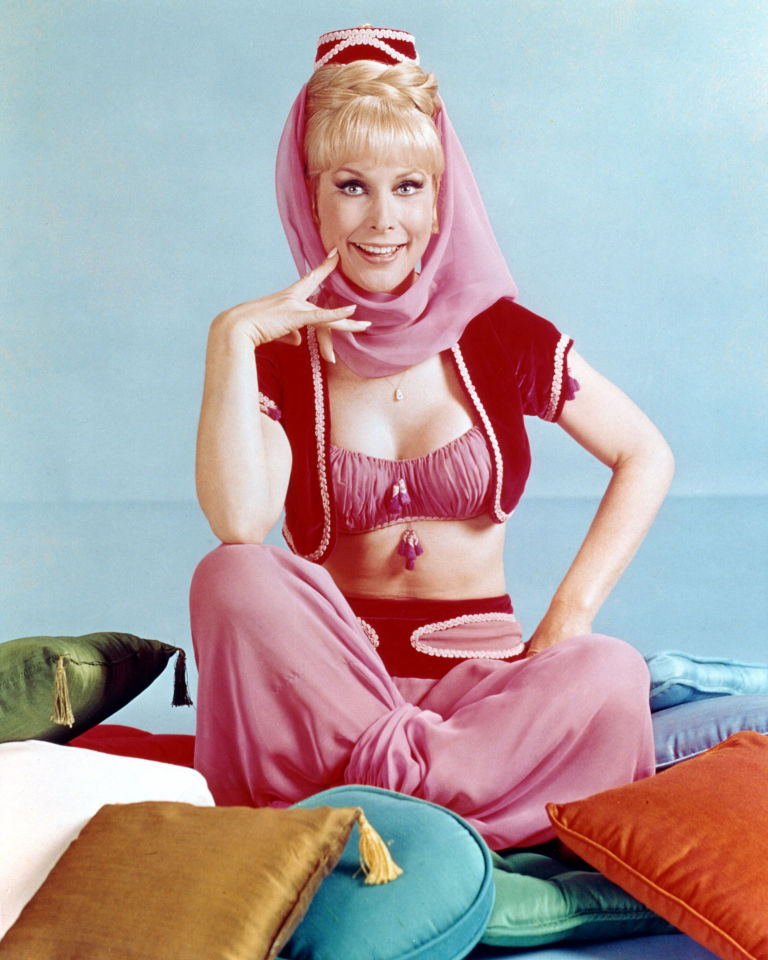
Many baby boomers equate Barbara Eden with I Dream of Jeannie.  While she never escaped her iconic role as Jeannie, she has had a long and full career.
beden1

Barbara Jean Morehead was born in Tucson, Arizona in August of 1931. Her parents divorced when she was three, and she then took her stepfather’s last name of Huff. Moving to California, she went to high school in San Francisco and then studied at the San Francisco City College, the San Francisco Conservatory of Music, and the Elizabeth Holloway School of Theatre. In 1951, she was crowned Miss San Francisco.

She began working in television in 1956, and her career has been going strong ever since. In 1958, she married actor Michael Ansara.  They had a son in 1965 who passed away from a drug overdose.  Eden said of his struggle, “He won a lot of battles, but he lost his personal war.”  She and Ansara divorced in 1974. From 1977-1983 she was married to Charles Donald Fegert.  In 1991, she married her current husband, Jon Eicholtz, and they live in Beverly Hills.

In addition to her screen and television career, she performed in Lake Tahoe, Las Vegas, and Atlantic City. She had an album produced in 1967 and performed on many variety shows.  She traveled with Bob Hope and starred in many musicals and plays.

beden30

She received a Walk of Fame star in 1998.

In 2011, she wrote her autobiography, Jeanne Out of the Bottle.

beden2

She has used her celebrity status to help many nonprofits, raising money for The Trail of the Painted Ponies Breast Cancer Research, the American Cancer Society, the Wellness Community, Make-A-Wish Foundation, the March of Dimes, the American Heart Association, Save the Children, and Childhelp, USA.

Her television career can be divided into three phases, each including a major series.

She began her acting career making appearances in many shows from 1956-1958 including West Point, Highway Patrol, I Love Lucy, The Millionaire, Crossroads, Perry Mason, Gunsmoke, Bachelor Father, December Bride, Father Knows Best, and The Lineup.

In 1957, she received her first starring role in a sitcom, 52 episodes of How to Marry a Millionaire. Based on a movie (starring Marilyn Monroe, Lauren Bacall, and Betty Grable), she starred as Loco Jones, a model. Her friends were Michele Page (Merry Anders), a secretary, and Greta Lindquist (Lori Nelson), a quiz host.  The three women lived together in Manhattan, all sharing the goal of finding a wealthy husband.
beden14

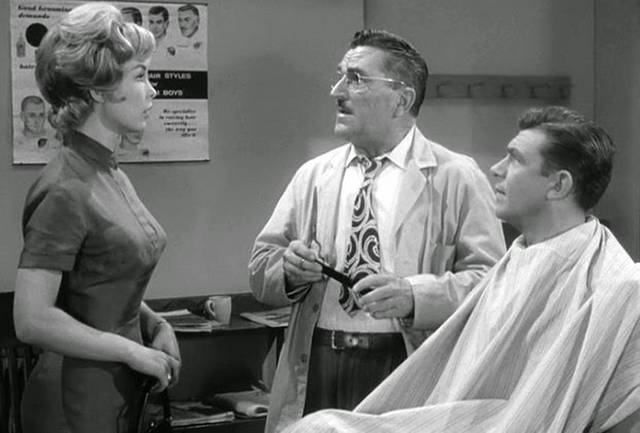
In the 1960s, she made appearances in many more well-known shows including Adventures in Paradise, The Andy Griffith Show, Target: The Corruptors, Cain’s Hundred, Saints and Sinners, Dr. Kildare, Route 66, The Virginian, Rawhide, Burke’s Law, Slattery’s People, The Rogues, and Off to See the Wizard.

In 1965, she took on her role of Jeannie in I Dream of Jeannie.  The show lasted five years, filming 139 episodes. Captain Tony Nelson (Larry Hagman) finds a bottle when he crash lands on a deserted island in the South Pacific. When he opens it, Jeannie emerges.  He brings her home and tries to keep her a secret from NASA. His best friend Roger (Bill Daily) finds out, and he and Tony perform a lot of stunts to avoid anyone else figuring it out.  In the final year of the show, Jeannie and Tony get married, exposing her to the rest of the crew at NASA who know something is different but never figure out what it is. Personally, I like the Jeannie in the first year who is mischievous and intelligent. While the show was only on for five years, certainly not one of the longest-running shows, it defined Eden because since it debuted, it has been on television continually in reruns.

After I Dream of Jeannie, her television career continued as she appeared on NBC Special Treat, Condominium, A Brand New Life, Dallas, Team Supremo, Sabrina the Teenage Witch, George Lopez, and Army Wives.

beden8

Based on the song by Jeannie C. Riley and a movie also starring Eden, she took on the role of Stella Johnson in Harper Valley PTA from 1981-82 with costar Fannie Flagg. The show lasted for 30 episodes. Stella is a widow who moves to Harper Valley with her 13-year-old daughter which is a town filled with hypocrites.  The other women severely criticize her for wearing miniskirts, and not acting like they thought a mother should.  Meanwhile, the board members were always trying to find ways to discredit her.  Fannie Flagg was the beauty shop owner Cassie Bowman.  The show never really caught on with the public. Maybe Stella was too drastic of a role change from Jeannie.

Along with her range of television acting jobs, Eden also was in 26 movies, including Flaming Star in 1960 with Elvis Presley, Voyage to the Bottom of the Sea in 1961, The Brass Bottle in 1964 which led to the idea for the sitcom I Dream of Jeannie, and Harper Valley PTA in 1978 which led to her third series.

In The Brass Bottle, Tony Randall plays Harold Ventimore, an architect who buys an antique urn that houses a djinn played by Burl Ives.  Grateful for being released, the djinn tries to help Harold to show his gratitude.  However, being unfamiliar with contemporary times, he causes a lot of trouble for Harold, especially with his girlfriend Sylvia, played by Eden.

She also starred in 28 made-for-tv movies.  My favorite was The Feminist and the Fuzz which you never see aired on television anymore.

beden9

The Feminist and the Fuzz aired in 1971.  I remember watching this movie when it originally aired.  The story was about a scientist played by Eden and a cop played by David Hartman.  They both end up at an apartment at the same time and have lost so many apartments that they decide to share it until one of them can find somewhere else to live. She is a feminist, and he dates a playboy bunny played by Farrah Fawcett.  One night, the women’s libbers raid the bunny club, and while most of them are being arrested, Hartman carries Eden to a waiting police car and tells him to get her home.  Fawcett, watching this, realizes they have feelings for each other, even though they don’t acknowledge it themselves yet.  The movie had a great cast with Joann Worley, Herb Edelman, Julie Newmar, John McGiver, and Harry Morgan.

If her television show jobs and movie roles were not enough, Barbara appeared as herself on 177 different television variety and game shows from 1961-2016.

At 85, Eden continues her career with credit in Shimmer and Shine in 2016. She has also been to the Mayberry Conventions to meet her fans. She continued her friendship with Larry Hagman up to his death.

One might assume that Eden would want to distance herself from Jeannie and rely on her other body of work, but that is not the case.  Some actors develop a dislike for the character they are unable to shake off, but Eden’s advice to actors is:  “I would embrace the character, because it won’t do any good if you don’t. And another thing: Don’t whine or talk trash about it. I don’t think you ever demean to your public what you’ve done. You’re insulting them if you demean your work.”

beden6

While Jeannie certainly provided Barbara Eden with a lot of fame, future work opportunities, and money (although probably not so much from the tv show directly), taking a survey of her career proves just how versatile of an actress she was.  No one-hit wonder here.  She accumulated a wealth of roles both on television and in the movies. She traveled around the country appearing in musicals and plays. She sang and danced, performing at some of the top clubs in the country.  She appreciated her fans and never demeaned Jeannie in their eyes.  She used her celebrity to raise money for great causes. She had a full career any actress could be proud of.