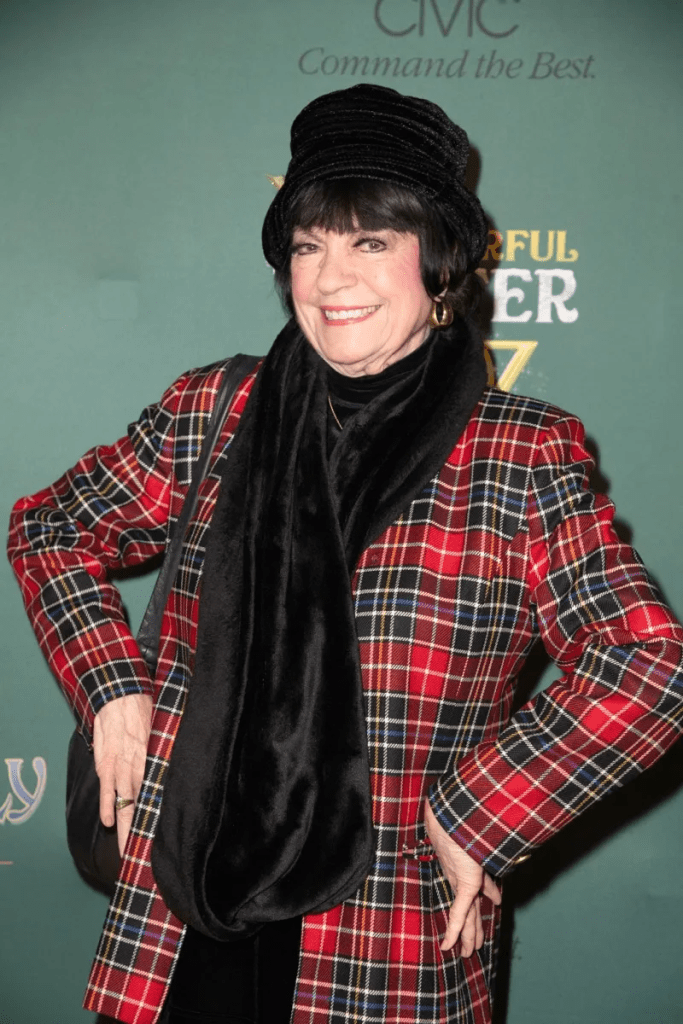
We are winding up a blog series about Supportive Women. One of the women I wanted to include was Jo Anne Worley. I didn’t know much about her apart from her appearances on Rowan & Martin’s Laugh-In and being in my favorite made-for-television movie, The Feminist and the Fuzz.
Jo Anne was born in 1937 in Lowell, Indiana. Her loud voice was not an acting tool. She always felt she was loud. She said, “I have a big mouth, and I’m sorry to say I’ve always had one. When I was young, in church, I never sang with everybody else. I only mouthed the hymns, so I wouldn’t drown anyone else out. I have my quiet moments. But I don’t have many.” She was named school comedienne at her high school.
In one interview with a Lowell reporter, she said “I’ll never forget the place I’d work every summer while in high school. It was called Robert’s Hotel, Gas and Café, and it was at the intersection of US 41 and Highway 2. They had an old juke box in the café where I worked, and I’d sing and joke around whenever the business was slow, which seemed like most of the time.”
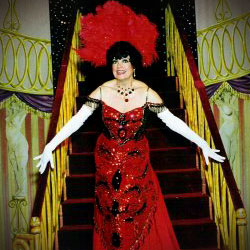
After graduation, Worley moved to Blauvelt, New York to work with the Pickwick Players. She was later offered a scholarship to Midwestern State University in Wichita Falls, Texas. After two years at the school, she moved to Los Angeles City College and enrolled at the Pasadena Playhouse. Her first musical role was in “Wonderful Town.”
📷hellodolly.com
In 1961 she was in the off-Broadway musical show “Billy Barnes Revue” with Charles Nelson Reilly and Larry Hovis (who was Carter on Hogan’s Heroes). The original show in 1959 featured Bert Convy, Joyce Jameson, Patti Regan, Ken Berry, Ann Guilbert, Jackie Joseph, and Len Weinrib.
Jo Anne was in two episodes of The Many Loves of Dobie Gillis in 1961-2. During the rest of the sixties, she was offered several big-screen roles.
In 1964 she was given a role in “Hello, Dolly.” A year later she developed her own comedy and singing act in Greenwich Village where she was discovered there by Merv Griffin.
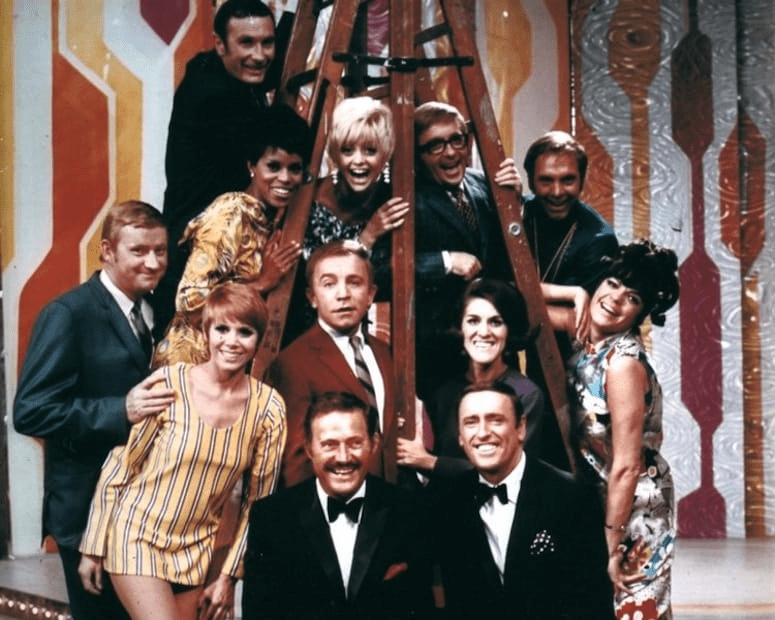
📷palmspringslife.com Laugh-In
Griffin encouraged her to appear on his show which she did forty times. Like Marcia Wallace, who we learned about last week, her appearance on Merv Griffin was seen by someone who recommended her for a new show. In this case, George Schlatter cast her in Rowan & Martin’s Laugh-In.
Worley left the show in 1970. She made guest appearances on The Tonight Show Starring Johnny Carson. She also appeared on several game shows, including SuperPassword, HollywoodSquares, and many versions of Pyramid.
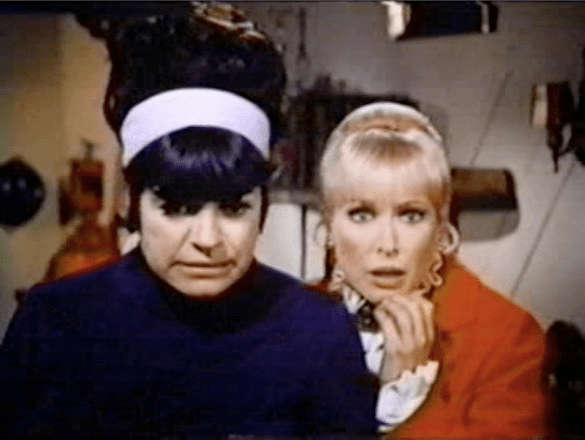
In 1971 she made the television movie I discussed above, The Feminist and the Fuzz. It starred David Hartman, Barbara Eden, Farrah Fawcett, Worley, Julie Newmar, and Henry Morgan. I would love to see it again.
For most of her career, Worley would be providing voices for animation. However, she appeared in a handful of shows during the seventies and eighties, including Adam 12, Love American Style, Hawaii Five-0, CHiPs, Murder She Wrote, The Love Boat, MadAbout You, Curb Your Enthusiasm, and The Middle.
📷modcinema.com Feminist and the Fuzz
In 1975, Worley married Roger Perry. They would stay together for 25 years, divorcing in 2000. Perry has 95 acting credits and appeared in many popular shows in the seventies, eighties, and nineties. He was also in The Feminist and The Fuzz. After divorcing Worley, he would marry actress Joyce Bulifant.
During the seventies and eighties, Worley did a lot of regional theater in Milwaukee and several cities in California.
In the 1990s she got involved with Disney and provided her voice for Beauty and the Beast and A Goofy Movie. She also was on several Disney series including Kim Possible and the Wizards of Waverly Place.
📷bestlife.com
She was in a limited run of a musical production of “The Wizard of Oz,” playing the wicked witch of the west in 1999. In 2007, she appeared on Broadway as Mrs. Tottendale in “The Drowsy Chaperone,” and she reprised the role in 2015 at The Cape Playhouse. She was also cast in “Wicked” as Madame Morrible in 2008.
Jo Anne Worley once said, “my goal in life is to be the kind of person my dog thinks I am.” That seems to be good advice for all of us. It was fun getting to know a little more about this funny woman. We love her as much as her dog did.
When trying to decide who to include in our Supportive Women blog series this month, Marcia Wallace was a no-brainer. Carol was one of my favorite characters on television on The Bob Newhart Show, and I love the fact that her role carried over into an episode of Murphy Brown.
Marcia Wallace was born in 1942 in Iowa. Her father owned a general store where she and her siblings often worked. After performing in a school play, one of her teachers encouraged her to pursue an acting career. After graduation, Marcia enrolled in Parsons College in Fairfield, Iowa where she received a full scholarship. She majored in English and Theater.
Upon her college graduation, Marcia decided to move to New York. The country gal had $148 in her savings. When she arrived in the Big Apple, she took on a variety of part-time jobs including typing scripts and substitute teaching. She joined a summer stock company and did a few commercials. She worked in a Greenwich Village nightclub for a year before creating an improv group, The Fourth Wall, with several friends. While she kept the friends, she lost 100 pounds.
Eventually, Wallace was offered a job with The Merv Griffin Show. When Merv decided to move to LA, he asked Wallace to move with them. She was able to obtain a few roles in series after moving to California. During the sixties and early seventies, she was on Bewitched, The Brady Bunch, Columbo, and Love American Style.
📷tvinsider.com
After Bill Paley had seen her on Merv Griffin, Grant Tinker (producer) called her to offer her a role on a new sitcom, The Bob Newhart Show. The role of Carol was written specifically for her.
Marcia loved her time on the sitcom. She said Bob was the Fred Astaire of comedy, making it look so easy. She also praised Bob for being a treasure. Because of the way the scripts were written, the show doesn’t date itself. It was about human relationships and people struggling to make them work and make life better.
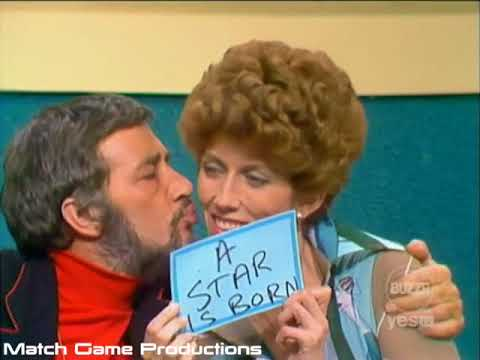
When The Bob NewhartShow went off the air six years later, Marcia jumped on the game show circuit. Shecould be seen on Password Plus; Super Password; Hollywood Squares; Crosswits; Hot Potato; The $25,000 Pyramid; Win, Lose, or Draw; Tattletales; To Tell the Truth; Family Feud; Card Sharks; and my favorite, Match Game.
📷youtube.com
Like so many actresses and actors who perform their role so well, Marcia was typecast after the show ended. In an interview, she said that “I have heard ‘You’re too recognizable for this part.’ I remember once, I desperately wanted to be on the series Nine to Five and they just weren’t going to see me because of that. Every once in a while, something would break my heart.”
Wallace also made appearances on The Love Boat and Fantasy Island in the seventies. During the eighties she would show up on CHiPs, Magnum PI, Taxi, Murder She Wrote, Night Court, and ALF, among other shows.
One of my favorite appearances of Wallace’s occurred in the mid-nineties on Murphy Brown. If you were a fan of that show, you know Murphy could not keep a secretary. There was even a support group that started of her former secretaries. However, when Carol Kester came to work for her, she was overjoyed. Carol was the role Wallace played on The Bob Newhart Show. Unfortunately for Murphy, at one point during the show, Bob Newhart shows up and convinces Carol to return to work for him and Jerry and Murphy lost her perfect assistant.
Most of Wallace’s work after 2000 was for voice work with one exception. In 2009, she had a recurring role on The Young and the Restless as Annie Wilkes for 14 episodes.
In 1985 Marcia was diagnosed with breast cancer. She survived it and became an activist and lecturer on the topic. In 2007, she won the Gilda Radner Courage Award for her work in this area.
In 1986 Marcia married Dennis Hawley in a Buddhist ceremony. Dennis renovated and managed hotels. The couple adopted a little boy, but Dennis passed away three years later.
📷imdb.com
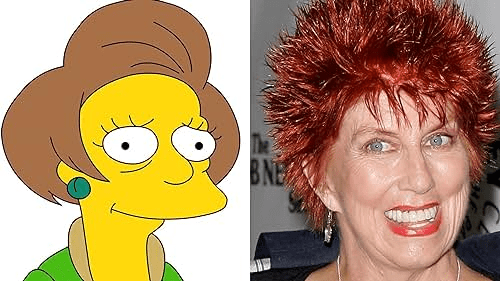
In 1989, a new type of show debuted called The Simpsons. Marcia was asked to provide the voice of Edna Krabappel, school teacher. She probably did not realize she would be associated with that role for another 24 years. Her role as Edna did not end until her passing.
In addition to her television work, Wallace performed on stage. She produced and starred in “An Almost Perfect Person,” a female version of “The Odd Couple,” “Same Time, Next Year” and many others.
In 2004, Wallace published an autobiography, Don’t Look Back, We’re Not Going That Way. She honestly discussed her breast cancer, the loss of her husband, her nervous breakdown, being a single mother, and the ups and downs of her career.
Marcia died from pneumonia and sepsis in 2013. Her coworkers commented on her passing. Yeardley Smith, who voices Lisa on The Simpsons, said “Heaven is now a much funnier place because of you, Marcia.” Bob Newhart said that “Marcia’s death came as quite a shock, she left us too early. She was a talented actress and dear friend.”
📷onceuponascreen.com
I’m so sad that Marcia was typecast and unable to get the roles that she wanted. The networks were very shortsighted during those decades. They didn’t give television fans enough credit for being resilient enough to love the character of Carol while being able to love another character played by Wallace. You saw the same things happen to Adam West, Alan Alda, and Henry Winkler. If that perspective had continued, we never would have had Mary Richards on The Mary Tyler Moore Show or Jay Pritchett from ModernFamily. If someone could be a hit as Al Bundy and then go on to star in another show, anyone can get beyond being stereotyped. Marcia Wallace proved that anyone could survive life’s disappointments with determination and a sense of humor, and perhaps that was her greatest role for us.
As we wind up our “Work It Out” blog series, we finish with a working crew that was very close on and off the set, a television show about a television show, Murphy Brown.
Created by Diane English, the show aired on CBS in the fall of 1988 and ran for a decade. In 2018, a reboot of the original cast had a one-season run of 13 new episodes when we got to catch up on life with the characters.
Murphy Brown is about an investigative journalist, Murphy Brown (Candice Bergman), who works for the news show FYI. I can’t imagine anyone other than Bergen in the role, but English had to fight hard for her because CBS president Kim LeMasters wanted Heather Locklear to have the role.
She is a recovering alcoholic and has a quick wit. Murphy strongly advocates for the integrity of journalism, the unjustness that can be found in politics, and feminist rights. One of her well-known frustrations is that she was so hard on secretaries, they never lasted long and we saw a long string of them come and go during the ten years. Murphy would have 93 of them during the show. One of the best secretary scenes was when Marcia Wallace who played Carol on The Bob Newhart Show worked for her. Murphy finally found a secretary that she loved and then at the end of the show, Bob Newhart appeared as Dr. Hartley and begged Carol to return to work, so she did. In one episode, Murphy finds out that there is actually a support group made up of her former secretaries.
Photo: tumpik.com
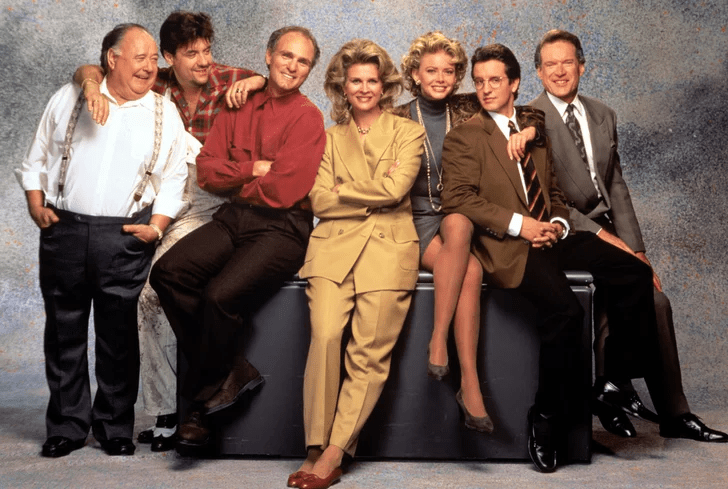
Rounding out the cast was Jim Dial (Charles Kimbrough) who tends to live in the past a bit, Frank Fontana (Joe Regalbuto), Murphy’s best friend, who calls her “Murph.” He is a great reporter but is also a bit insecure. There is a running gag that the producer make him wear a toupee which he hates. Miles Silverberg (Grant Shaud) is that producer; he’s a Harvard grad and overachiever and doesn’t bond with the cast right away. Corky Sherwood (Faith Ford) is a former Miss America. She and Murphy don’t hit it off immediately, but Murphy learns to respect her during the run of the show, and they also become very close. Murphy’s other “person” is Eldin Bernecky (Robert Pastorelli). Eldin is a house painter; he worked around her house for six seasons and he gave her lots of advice and becomes like a brother to her. Then there is Phil (Pat Corley) who owns Phil’s Bar where the crew congregates. The bar is said to be a Washington DC institution and has its share of political knowledge and secrets.
We also get to know (1) Avery Brown (Colleen Dewhurst), Murphy’s mom who is a museum curator. When Dewhurst died in 1991, the producers had Murphy’s mom pass away as well. Murphy named her son Avery. (2) Bill Brown (Darren McGavin), Murphy’s dad, a newspaper publisher. He married a yoga teacher younger than Murphy. Dewhurst won two Emmys for her appearances on this show, and McGavin was nominated in 1990. (3) Audrey Cohen (Jane Leeves) is Miles’ girlfriend for seasons 2-5, but their relationship ended when she took the role of Daphne on Frasier.
Photo: muckrack.com
In 1991, Murphy became pregnant. The father is her on-again, off-again ex-husband. He does not want to get tied down raising a baby, so Murphy becomes a single parent. One fun scene was Murphy’s baby shower which included several famous guests including Katie Couric, Joan Lunden, Paula Zahn, Mary Alice Williams, and Faith Daniels, all well-known news journalists. Baby Avery was played by Haley Joel Osment. Osment would grow up to play roles in more than 100 movies and television series including Forest Gump, The Sixth Sense, and Thunder Alley where he played Harry Turner.
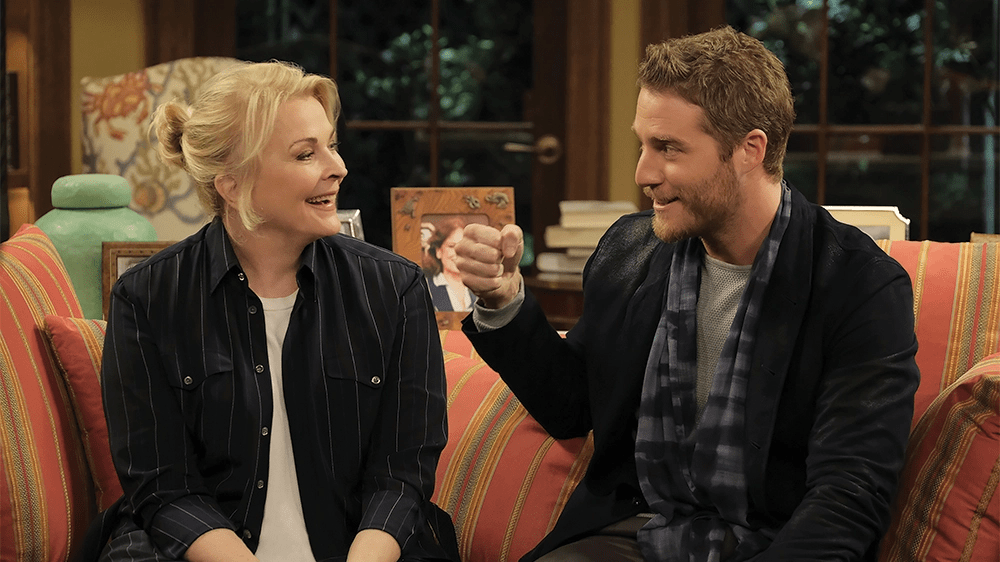
In the revival, Murphy comes out of retirement to go on the air for a show called “Murphy in the Morning.” She brings back her colleagues Frank and Corky and has Miles produce it. Jim meets them once in a while but chooses to stay in retirement. Pat Patel (Nik Dodani) is their social media manager. Murphy’s son Avery (Jake McDorman), who was a baby when the show ended, has his own news show that competes with his mom but the two of them are very close. Murphy is a die-hard liberal and her son is much more conservative. Phil’s bar is still the place to hang out, but it is now run by Phil’s sister Phyllis (Tyne Daly).
Mother and son don’t see eye to eye often. Photo: variety.com
The original show was loved by critics from the beginning, but it took longer to establish an audience. In the third season, it became a top-ten hit and was number three the next year. The show was nominated for 62 Emmys and won 18. After Bergen won five, she declined to be nominated any longer.
By the ninth season, ratings were declining. Shaud left the show and Lily Tomlin took over his role as executive producer Kay Carter-Shepley. For the last season, Murphy is diagnosed with breast cancer. Bergen was presented with an award from the American Cancer Society because there was a 30% increase in the number of women getting mammograms.
Photo: cbsnews.com
Unfortunately, you cannot buy the DVD set to watch. I read that the first season did not sell as well as expected, so they stopped releasing them. However, the music used in the series seems to be the primary reason. The show used a lot of Motown classics that resulted in astronomical licensing fees for every episode and costs were prohibitive for DVDs.
Although this was a well-written show, the then-current political references do date it a bit, but then again, that was part of the show’s mission, so it’s hard to have it both ways. While I appreciate this show, if I’m going to watch a series about a group of coworkers, I would probably gravitate to The Mary Tyler Moore Show or M*A*S*H but Murphy Brown would definitely be in my top ten work shows.
As we continue with our “Work It Out” blog series, today we are taking a long ride with Taxi. This show was created for ABC by James L. Brooks, Stan Daniels, David Davis, and Ed Weinberger and produced by John Charles Walters Co. The show was apparently inspired by an article in The New Yorker, “Night Shifting for the Hip Fleet” by Mark Jacobson in 1975. The article profiled several drivers who worked the night shift for a New York cab company. Taxi was in business from the Fall of 1978 to the Spring of 1982 on ABC and then drove over to NBC for a year.
The show is set primarily at the Sunshine Cab Company in Manhattan. Louie De Palma (Danny DeVito) is the dispatcher that everyone loves to hate. Brooks said that when they went to visit a company as the night drivers were just coming back from their shifts, they saw a dispatcher taking a bribe from a driver for a clean cab. That gave them the idea of Louis. DeVito described Louie as someone who “made life miserable for everyone. The manifestation of what was going on inside of him came out in a mean-spirited way to those around him. Deep down he just wanted people to love him.”
Photo: vodkaster.com
Drivers included Alex Reiger (Judd Hirsch) who considers cab driver his profession as opposed to a temporary get-by job. Elaine Nardo (Marilu Henner) is a single mother who also works at an art gallery. In the first episode when Elaine is hired, Reiger introduces the crew by saying, “You see that guy over there? Now he’s an actor. The guy on the phone? He’s a prize fighter. This lady here: She’s a beautician. The guy behind her? He’s a writer. Me? I’m a cab driver. I’m the only cab driver in this place.”
Tony Banta (Tony Danza) a boxer, and Bobby Wheeler (Jeff Conaway) a struggling actor are other coworkers. We also get to know the Reverend Jim Ignatowski (Christopher Lloyd), an aging hippie who gets a job driving and Latka Gravas (Andy Kaufman), an immigrant mechanic. Latka was a weird character, and I have to say that I did not enjoy him on the show. Andy Kaufman invented the character for a comedy act. During the show, he met and married Simka (Carol Kane).
The person who probably had the easiest audition was Danza. He said that when he went to read for the show, he had broken his third metacarpal on his right hand and had a black eye from knocking out a guy in the ring in Brooklyn. He had never acted before and didn’t really know what he was doing.
Although the show was a sitcom, there were a lot of important issues tackled during the run of the show including addiction, parenthood, obesity, animal abuse, homosexuality, racism, gambling, grief, divorce, and sexual harassment, among others.
Ruth Gordon Photo: ebay.com
This show had more than its share of important guest stars. Ruth Gordon and Eileen Brennan both were nominated for Emmys for their guest appearances, with Gordon winning hers. Other stars who showed up included Marcia Wallace, Penny Marshall, Dr. Joyce Brothers, Edwin Newman, George Wendt, Ted Danson, Tom Selleck, Tom Hanks, and Bubba Smith.
Brooks wrote for The Simpsons and The Mary Tyler Moore Show. Daniels also wrote for The Mary Tyler MooreShow and was best known for The Tonight Show. Davis was one of the writers behind The Bob Newhart Show and Weinberger would go on to write for The Cosby Show. It was no surprise that this show was known for its amazing writing, and the series was nominated for 31 Emmys during its five seasons, it won 18 of them, most impressively it won Outstanding Comedy in 1979, 1980, and 1981. Kane, Hirsch, DeVito, and Lloyd and all won Emmys for acting. James Burrows won two for directing.
Taxi had one of the most-recognized theme songs from the 1980s. “Angela” was written and performed by Bob James.
I did not hear much about conflict on the set, although several performers, including Hirsch, indicated they did not care much for Kaufman. Kaufman had it written in his contract that he only work two days a week, so for most of the filming a guy with a sign around his neck that said “Andy” worked with the cast, so I don’t think there was necessarily a lot of bonding with him anyway.
Conaway was fired after 69 episodes. It was apparently well-known that he had a major addiction problem, and when one of the producers discovered him passed out when he was supposed to be filming, they wrote him out of the episode and then wrote him out of the show.
The cast seemed very happy and like a family. Henner said that they could always express an opinion about their character and thoughts on a scene. Brooks said Burrows was able to bridge the two worlds of writers and actors. He spent time with actors all day and then went to the writers’ room to talk to them and was the liason between the two. Henner agreed and said that Burrows was brilliant at adding memorable moments to a scene. She said in one episode she was losing her mind a bit and someone says the champagne is flat and the producer had her bend over and blow bubbles in the glass. She said it was brilliant.
Photo: rottentomatoes.com
DeVito also mentioned a scene that was special for him. One night when Louie was all alone in the garage, he took out the mic and sang a song. Then he said, “I always wanted to do that.” It was a very heart-warming moment and made Louie more interesting and gave him more depth.
Burrows said that most of the cast was young and they all bonded so well. Sometimes they went roller skating, to dances, and they even had a softball team. Rhea Perlman was on the show off and on and during one of their lunch breaks, she and DeVito got married.
Henner talked about their weekly parties. She said everyone at Paramount wanted to hang out with them including the cast of Happy Days, Mork & Mindy, Laverne & Shirley, and Bosom Buddies. She said that John Travolta and Frances Ford Coppola stopped by. John Belushi hung out with DeVito a lot and was there for one of their get-togethers and he died the next day.
Photo: tvguide.com
Hirsch said the group wanted something to do after the show because they didn’t want to go home; they wanted to hang out together more than anything else.
Brooks probably summed up the show the most eloquently. He said that “there’s a lot of things that take a glow in retrospect. The great thing about Taxi was that there wasn’t a moment on the show they didn’t appreciate how lucky there were to have it. That was the show’s energy. I’ve never seen anything like it. . . People show up at the right time and everyone’s lucky enough to have each other at a certain point. It becomes a beautiful team sport.”
Isn’t that the best tribute anyone could give a show? I’m glad they all had an appreciation for it, and I’m glad they included us in their family.
As we are looking at some of our favorite television families, the series would not be coplete without the Tanners. Airing from 1987 to 1995, Full House appeared on ABC, producing 192 episodes. Jeff Franklin created the show about widower Danny Tanner (Bob Saget) who raised his three daughters: D.J. (Candace Cameron Bure), Stephanie (Jodi Sweetin), and Michelle (Mary Kate and Ashley Olsen) with the help of his brother-in-law Jesse (John Stamos) and best friend Joey (Dave Coulier). DJ’s best friend Kimmy (Andrea Barber) is also on the scene quite often. Interestingly, Coulier was friends with Saget and early in his career, he slept on Saget’s couch while he was trying to become a comedian.
The First Season Cast Members Photo: time.com
Because Saget and Coulier were already friends, the two actors went on a road trip to Las Vegas with Stamos to help them get to know each other. Since Coulier and Stamos were both single at the time, they bonded a lot. On the show, Joey and Jesse also become closer friends, seeming to have more in common with each other than with Danny.
Danny is a sports anchor, his brother-in-law is a musician, and his best friend, a comedian. They juggle schedules to get the girls where they need to go and tuck them in at night.
In season two, Danny becomes the host of a morning show, Wake Up San Francisco. His costar, Rebecca (Lori Loughlin), is young and fun and smart. However, the romance is not between her and Danny; she dates and later marries Jesse.
Saget was always first choice for Danny but because of his schedule, the pilot features John Posey in the role. Jodi Sweetin was brought in after an appearance she made on Valerie. Loughlin was hired for a six-week limited romance but never left once she started.
Photo: entertainmenttonight.com
There were a lot of famous celebrities who appeared on the show including Frankie Avalon, Scott Baio, The Beach Boys, Phyllis Diller, Annette Funicello, Kareem Abdul Jabaar, Little Richard, and Marcia Wallace. On one episode Cameron’s real brother, Kirk Cameron appeared with Chelsea Noble. They began dating and later married.
Surprisingly, the show’s writing staff was inconsistent; Franklin who also wrote for the show was the only writer to stay through eight seasons.
Several of the characters developed catch phrases that were repeated all over the country. Jesse’s was “Have Mercy”; Joey’s was “Cut it Out”; and D.J.’s was “Oh My Lanta.” Stephanie often said “How Rude” while Michelle fittingly had two (one for each twin), with “You Got it Dude” and “You’re in Big Trouble Mister.”
Photo: pinterest.com
The theme song, “Everywhere You Look,” was co-written by Bennett Salvay and Jesse Frederick, with Frederick doing the singing.
The show was in the top thirty every year after season one. It was on Friday nights for most of its run. There was a short time during season two when it was briefly moved to Tuesdays and then aired on both Tuesdays and Fridays to try to build its audience numbers. During season five, the show moved to Tuesdays until it was canceled. Despite its being in the top 25 in 1995, the network decided to end the show. It cited increasing production costs.
Photo: pinterest.com
Fun fact, Dave Coulier made a puppet for the show, Mr. Woodchuck. He sold it to Toys R Us if you are ever looking for a gift for a big fan of the show. Another interesting item is that Ashley Olsen was right-handed while Mary Kate was left-handed, so Michelle is ambidextrous.
Unlike so many of the reboots of shows from the 80s and 90s, this show had a sequel, Fuller House, starring the same cast from 2016-2020. The show recently began appearing in Me TV’s lineup of shows.
The cast was definitely one big family on the show and they considered themselves family off the air as well. This came to light recently after the death of Bob Saget. When asked about how they were doing, Coulier commented, “We pull together as a family during moments like this. We’ve pretty much experienced everything that a real family can experience. Getting picked up, getting canceled, marriages, divorces, births, deaths. I mean, it’s pretty much what every family goes through. And we’ve stuck together through all of it.”
He also said that it “was incredible to have a group of people in our lives like this, where we know we’re going to get that instant support system. It’s pretty special.” Bure said that the cast “genuinely love each other.”
Saget, Stamos, and Coulier truly watched the girls grow up and transition from their kids to their friends. It is these relationships that give the show the special heart-warming atmosphere that surrounds most of the scenes. There are the arguments, misunderstandings, and hurt feelings that all families experience, but there is also unconditional love both on and off the set. We would all be better off if we had a “Full House.”
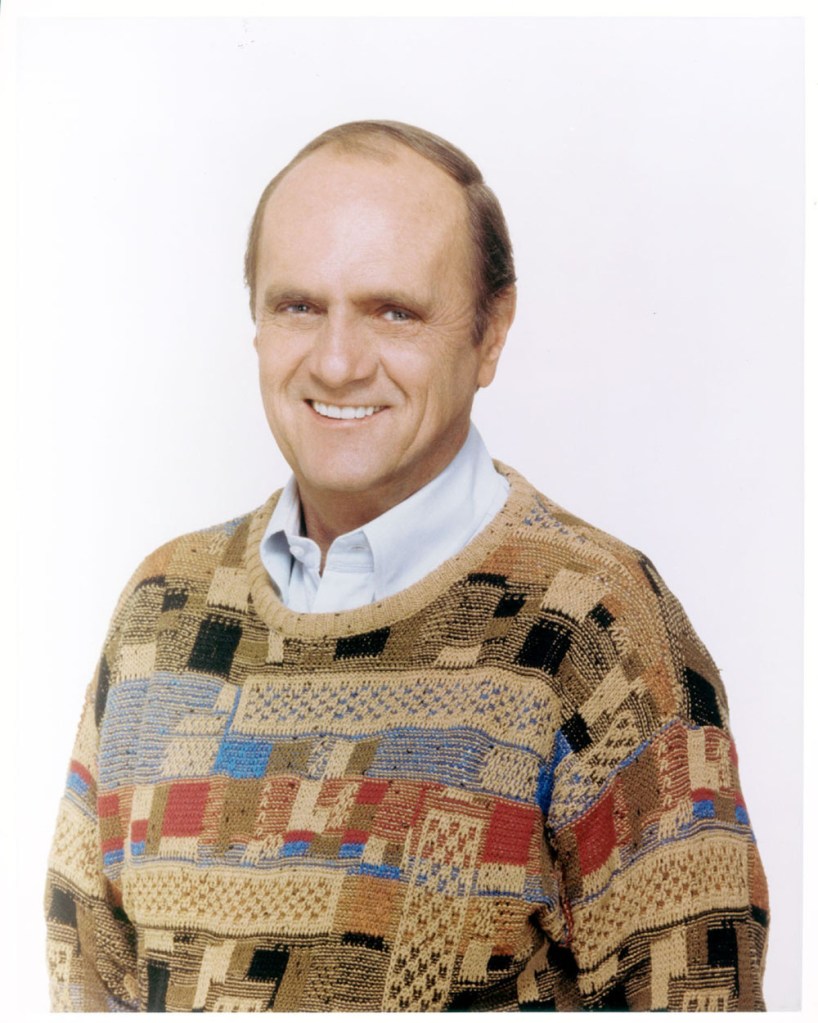
This month I wanted to honor one of our most beloved television comedians: Bob Newhart. Next week we’ll spend some time learning more about The Bob Newhart Show.
Photo: spotify.com
Newhart was born George Robert Newhart in 1929 in Oak Park, IL. He grew up in a typical midwestern family where his father was part owner of a plumbing and heating supply company, and his mom was a housewife. As a young boy, he always wanted to be called Bob. He had a Catholic education and went on to Loyola University of Chicago in 1947. Graduating in 1952 with a business degree, he was soon drafted into the US Army in the Korean war where he stayed until 1954. He considered getting a law degree and went back to Loyola. He decided not to pursue that; some sources site that he was asked to behave unethically during an internship which led him down a different career path.
He worked as an accountant and as an unemployment office clerk. In 1958 he was hired as a copywriter for Fred Niles who was a television producer in Chicago. It was while working here that Newhart and a colleague began entertaining each other by making telephone calls about absurd scenarios. They sent these to radio stations as audition tapes. A radio station disc jockey Dan Sorkin introduced Newhart to a Warner Brothers Records executive who signed him in 1959 based on those recordings. Bob then began creating stand-up routines which he performed at nightclubs.
Photo: discogs.com
He released an album in 1960 which changed his life. Titled, The Button-Down Mind of Bob Newhart, the comedy album made number one on the Billboard charts, and he won a Grammy for best new artist. A follow-up album, The Button-Down Mind Strikes Back was released soon thereafter. He would continue releasing comedy albums in 1961, 1962, 1964, 1965, 1967, 1971, and 1973.
During a 2005 interview for American Masters on public television, Bob stated that his favorite routine was Abe Lincoln vs Madison Avenue which was on his first album. A promoter for Abraham Lincoln has to deal with his reluctance to boost his image. A tv director named Bill Daily suggested the routine to him. Daily would be known later as Howard Borden on The Bob Newhart Show (as well as Roger Healey on I Dream of Jeannie).
The success of that first album led to a variety show titled The Bob Newhart Show. It only lasted a year, but it did receive both an Emmy nomination and a Peabody award. Apparently, he didn’t enjoy his time during the show so much. Halfway through the season he wanted to quit, but his agent explained that being under contract meant that was not possible. At a later date, he referred to his first show, saying “It won an Emmy, a Peabody Award, and a pink slip from NBC. All in the same year.”
He began making the rounds on television shows, appearing on The Dean Martin Show 24 times and The Ed Sullivan Show 8 times. He guest hosted The Tonight Show Starring Johnny Carson 87 times. When discussing his appearances on Johnny’s show, he stated “I remember once when I emceed The Tonight Show in New York, I arrived with my manager’s son. After a while, they asked, ‘When are the rest of your people coming?’ I had to say, ‘This is it.’”
Photo: huffingtonpost.com
In 1962 Newhart accepted his first movie role, Hell is for Heroes, starring Steve McQueen. He would continue to do movie roles throughout his career including the Christmas classic Elf, but the small screen would make him famous.
In 1963 Buddy Hackett introduced Bob to Virginia Quinn, whose father was character actor Bill Quinn. They wed in January of 1963 and 57 years later are still happily married.
Photo: zimbio.com
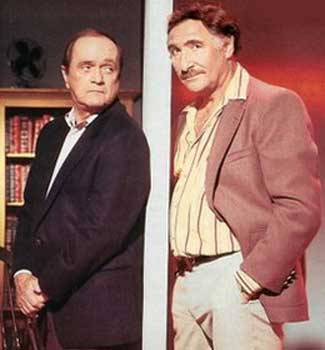
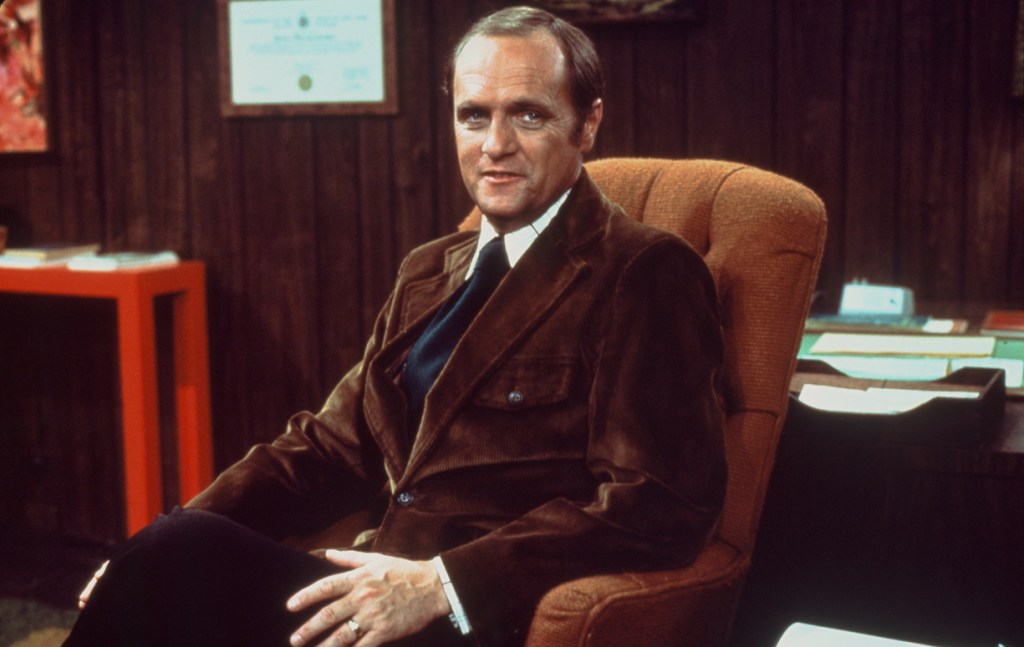
For the next decade, he continued to accept movie and television roles. In 1972, television history was made when The Bob Newhart Show debuted. Until 1978, Newhart played Bob Hartley, psychologist, and we got to know his unusual patients, quirky co-workers, and eccentric friends, including neighbor Howard Borden. Bob chose a psychologist based partly on his old telephone routines. As he said, “Much of my humor comes out of reaction to what other people are saying. A psychologist is a man who listens, who is sympathetic.”
Photo:epiguides.com
In 1982, Bob gave television another go for another eight years. Simply titled Newhart, the show featured Bob as Dick Loudon, an innkeeper and author from Vermont. He still had quirky co-workers and eccentric friends.
Photo: austenauthors.net
On cue a decade later in 1992, Bob showed up in a new show even more simply titled, Bob as Bob McKay a comic book writer and artist who had retired long ago and was trying to get back into the workplace. Unfortunately, after 33 episodes the show was canceled due to low ratings.
Photo: imdb.com
In 1997, Newhart starred in his last sitcom, George and Leo. As George Stoody, a bookstore owner, Newhart offers a temporary home to a full-time magician and part-time criminal who recently robbed a Mafia-owned casino. The series failed to catch on with viewers, and it was canceled after a season as well.
Photo: listosaur.com
Though he never took on another sitcom, Newhart has made appearances with recurring characters in several shows. In 2003, he showed up on ER as Ben Hollander. In 2005, he was Morty on Desperate Housewives. As Judson, he guest starred on The Librarians.
Photo: thewrap.com
Perhaps, younger audiences know him best as Arthur Jeffries or Professor Proton on The Big Bang Theory. He had been Sheldon’s boyhood hero who played the professor on television. Sheldon idolized the professor while the professor tolerated Sheldon.
Photo: upi.com
It’s hard to believe with all of his years being a successful television comedian, but Newhart won his first Emmy in 2013 for his role of Professor Proton. I can’t argue with the nominees for most of the 1970s during the airing of The Bob Newhart Show–names like Tony Randall, Jack Klugman, Alan Alda, and Hal Linden. Even with my bias of Norman Lear shows, I get nominating Carroll O’Connor every single one of those years. I understand the tough competition. What I don’t understand is the fact that he was never nominated during that eight-year period. When Jack Albertson wins, and Bob Newhart is not even nominated that is wrong. During the Newhart years, he was at least nominated three times. But I don’t understand it when John Ritter wins for Three’s Company or Richard Mulligan for Soap and no nomination for Bob Newhart. What especially appalls me is the fact that The Bob Newhart Show was only nominated one year; I can accept the fact that it got beat out by The Mary Tyler Moore Show. I cannot accept is that during this same time, Three’s Company, Mork and Mindy, and Welcome Back Kotter received nominations, and The Bob Newhart Show did not. Anyway, this blog is not about the television academy and its procedures, so let’s move on.
Photo: flickr.com
Even though he was never awarded with an Emmy for his time as Bob Hartley, TV Land placed a life-sized statue of Newhart in front of Navy Pier, complete with an empty couch. He was best friends with Suzanne Pleshette, his wife from the show, and spoke at her funeral. He remembered their time together, “Her laugh. Her laugh. We just laughed. We just had a great time. We all loved each other and respected each other and we got paid for it.” Bob also remains close friends with Marcia Wallace who played his receptionist Carol on the show.
Photo: sitcomsonline.com
While Bob has appeared as different characters throughout his career, he has also remained the same character. With his deadpan delivery and slight stammer, he perfected the straight-man role, surrounding himself with wacky castmates. He has often cited George Gobel and Bob and Ray as influences in his comedy career. When discussing his career choice, he explained “I like the humor to come out of character. When you’re going for a joke, you’re stuck out there if it doesn’t work. There’s nowhere to go. You’ve done the drum role and the cymbal clash and you’re out on the end of the plank.”
Photo: barnesandnoble.com
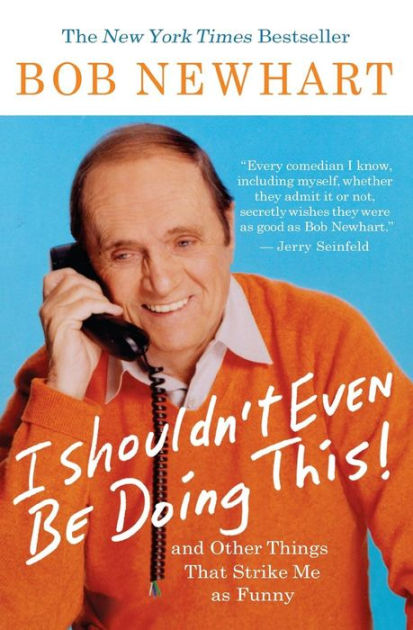
In 2006, he released a book I Shouldn’t Even Be Doing This. It’s a memoir with some of his classic comedy routines. Actor David Hyde Pierce reported that “the only difference between Bob Newhart on stage and Bob Newhart offstage is that there is no stage.”
Photo: parade.com
I am so appreciative of those stars who agree to entertain us for our entire life, such as Betty White, Carol Burnett, and Bob Newhart. They are classic comedians who can make us laugh no matter what. Bob’s view on comedy was that “laughter gives us distance. It allows us to step back from an event, deal with it and then move on.” What an amazing career and what an amazing man. With all its negatives and sometimes destructive tendencies, television can be a harmful place, but a comedian like Bob Newhart demonstrates what a positive and uplifting experience television can be when done right. Thanks for doing it right for sixty years.
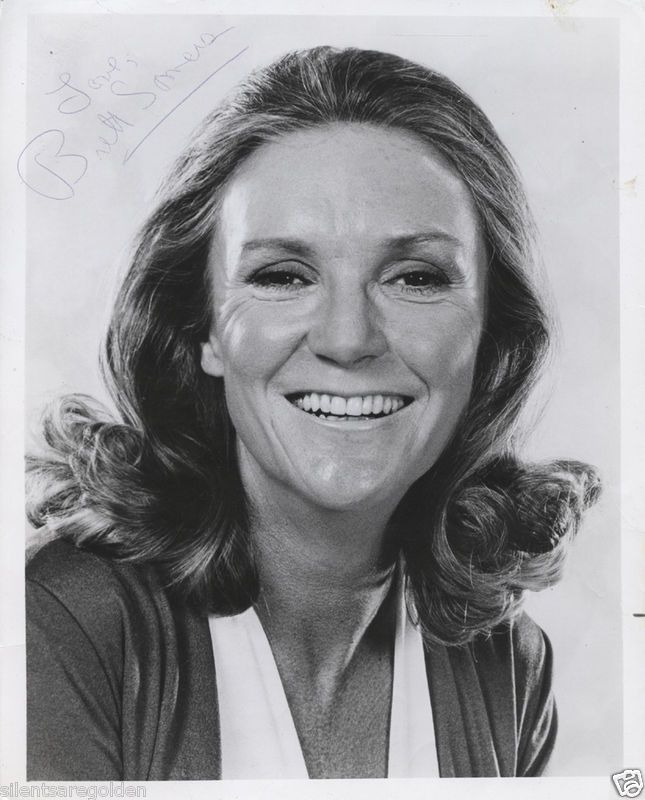
I had so much fun learning about Fannie Flagg, that I decided to tackle getting to know some of the other regular Match Game panelists. Today we meet Brett Somers. For someone who has fewer than ten acting credits for any given decade, Brett Somers became a well-known star. She became a household name after appearing on Match Game. Let’s learn a bit more about her life.
Brett was born in July of 1924, and her real name was Audrey Dawn Johnston. While she was born in Canada, she was raised in Maine and spent much of her life in New England. She left home at 18 to pursue an acting career. She chose her stage name for the character “Brett” in Hemingway’s The Sun Also Rises and her mother’s maiden name of “Somers.” She settled in Greenwich Village, married Robert Klein, and had a daughter. She was not married long before they divorced.
Brett joined the Actors Studio in 1952. She married Jack Klugman in 1953; they would have two sons. In the 1950s, Brett’s television appearances were all on drama series such as Robert Montgomery Presents and The KraftTheatre. In the 1960s she appeared primarily on westerns and legal dramas, including The New Breed, Have Gun Will Travel, and The Defenders. In the 1970s, she showed up on a lot of sitcoms. She was in Love American Style, The Mary TylerMoore Show, and The Odd Couple with her husband Klugman to name a few. On The Odd Couple, she played the role of Blanche, Oscar’s ex-wife.
In addition to The Odd Couple, Brett had recurring roles on The New Perry Mason Show and Battlestar Gallactica.
Brett had her Broadway debut in Maybe Tuesday in 1957, which closed after five performances. She would appear onstage in Happy Ending, The Seven Year Itch, and The County Girl. She also appeared in three movies: Bus Riley’s Back in Town and A Rage to Live, both from 1965 and in Bone from 1972.
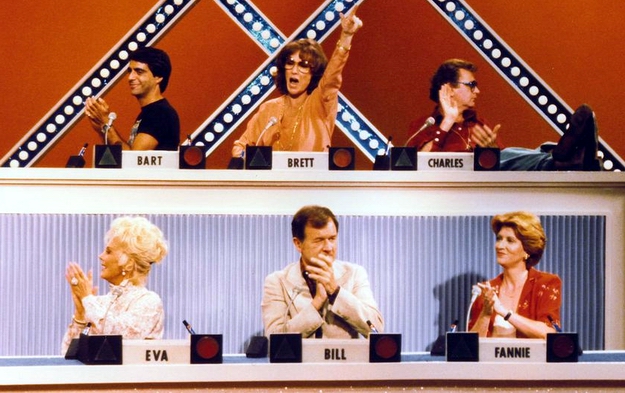
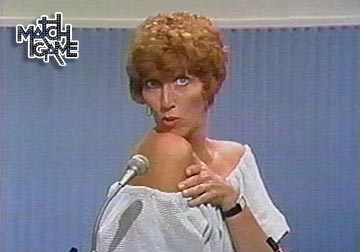
Despite her many television series appearancs, she is best known for her role as a panelist on the various versions of Match Game, amassing 1591 episodes overall. Some viewers compared the show to a cocktail party with money given away. What’s surprising, given her popularity on the show, is that she was not originally part of the cast. Klugman appeared on the first week of the show in 1973, and he suggested they try Somers. They did, and she never left. Her dry sense of humor and great wit provided her a job for nine years.
Match Game can be seen on The Game Show Network. The concept of the show was easy and fun. Two contestants were each given two questions with a blank in them, such as “The surgeon said, ‘The man I’m operating on must be a magician. When I reached in to pull out his appendix, I got a ___________ instead!’” Six celebrity panelists wrote down their answer to the question and then the contestant got a point for each person who matched their answer.
Brett and pal Charles Nelson Reilly, who often referred to her as “Susan,” kept each other in stitches and provided entertainment for the other panelists. In a September 12, 2012, Whitney McIntosh (in the blog ”This was Television”) referred to them as “rambunctious school children left to their own devices” which captures their relationship on the show perfectly. Their banter and quick quips kept viewers tuning in. For example, on one show, someone had mentioned that one of the younger panelists had a nice body. Charles turned to Brett remarking that her body was just as beautiful as the other woman’s. The audience clapped, and Brett had just finished saying thank-you, when Charles added, “But you should take yours back because you’re putting a lot of wrinkles in it.” No one laughed harder than Brett.
In a Playbill interview in July of 2003, Andrews Gans asked Brett why she thought Match Game was still so popular. Somers paused and then answered, “Because of the fact that there was no structure to it. It was just six people having a good time and teasing one another. There was never any meanness. And people really sensed when Charles [Nelson Reilly] would jerk his head and go, ‘She seems a little odd today’ — they knew there was no meanness in it. And, Gene was the greatest straight man who ever lived. He would ask you the questions and would set it up for you. He was wonderful. And I think the relaxation of the atmosphere.”
After Brett died, Marcia Wallace, on of her best friends, discussed Brett’s career on Match Game. “She was my best friend. I made a lot of friends there. She and Charles were the heart and soul of the show. Their relationship just was magic. And then, of course, I think there was no better host in the world ever than Gene Rayburn. He was funny, he was sassy, he was naughty, he kept the game going, he made the contestants feel good, he set up the celebrities. He was perfect.”
Not long after Somers started with Match Game, she and Klugman separated. Three years later, in 1977, they divorced but remained friends. Although I read in many reports they never divorced, and many sites listed them as separated but never divorced. I believe California documents exist to show they did divorce a few years after their separation.
In 2003, Somers wrote, co-produced, and acted in a critically acclaimed one-woman cabaret show, An Evening with Brett Somers. Somers wrote the show with Mark Cherry, and he accompanied her on the piano and served as the director and arranger.
Brett shared her thoughts on doing a cabaret show–“It never occurred to me in a million years that I’d be doing a cabaret show. I was standing backstage, and I thought, ‘You’re an older person. You should be lying down somewhere in a nice cool bed watching TV!’ And I went out there, and I just had a great time.”
In 2004, Somers was diagnosed with stomach and colon cancer, but she continued to perform in the show. Brett had a period of remission but passed away in 2007 at her home in Connecticut.
In 2005, Somers reunited with Jack Klugman onstage in Danger, People at Large, three short comedies presented at Fairfield University. It was the first time in three decades that the former couple had performed together.
In my blog on Fannie Flagg a few weeks ago, I found her reflection on her friendship with Brett and Charles:
Besides being hilarious, Brett and Charles were two of the smartest people I have ever known. On Match Game, they got such a big kick out of each other! They razzed one another and everybody else on the panel mercilessly, and they were particularly relentless on the people they really liked. It was never mean or hurtful, and they loved it when you razzed them back.
One of the happiest times in my life was in 1980 when I was doing “The Best Little Whorehouse in Texas” on Broadway, and Charles, Brett, and I were staying at the Wyndham Hotel at the same time. Every day at around 4 o’clock in the afternoon they would come to my room for cocktails. Many is the time I would come home from after the show and they would still be sitting there having a good time. The only thing that changed was the position of Charles’ toupee.
In the Gans interview, he asked Brett how she would like to be remembered. Her answer was “I would like them to think that I gave them pleasure and joy.”
I think we can all agree that is how we remember her!






















 thewritelife61