As we take a look back at some Classic TV Shows this month, one of the shows I chose I hesitated about. As we all know, some shows included many stereotyped characters and oftentimes inappropriate portrayals. These shows include series like Amos n Andy, Beulah, and Lum and Abner which I just never write about.
I also think it is important to remember some of the shows from the past that make us wince or just turn off the dial now because it reminds us that we have a lot to learn but that we have made improvements in the current series on television. It’s a very complicated subject. If you read the differences of opinions Jimmie Walker had about his character JJ on Good Times compared to John Amos and Esther Rolle’s opinions of the character, you can see just how complex the issue is.
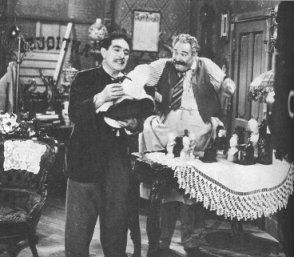
Life with Luigi could fall into this category for sure. However, it has a lot of fans and is still a big draw on Sirius Classic Radio. So, I decided to delve in and learn more about it. It was one of the earliest classic sitcoms transferred from the radio where it was aired from 1948-1953 to television. The show was created by Cy Howard who was the talent behind My Friend Irma. J. Carrol Naish voiced Luigi, and Alan Reed gave life to Pasquale in Life with Luigi.
Luigi Basco arrives in Chicago from Italy and has to make a new life for himself. He attends night school to learn English. His friend Pasquale is always trying to marry his daughter Rosa, played by Jody Gilbert, off to Luigi, who had no intention of being wed to her. Each episode began and ended with news in a letter to Luigi’s mom about his life in America.
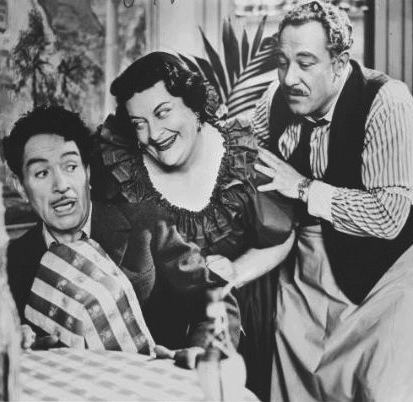
In 1952 CBS decided to air the show on television with Naish and Reed continuing their roles on the small screen. The program was sponsored by Instant Maxwell House Coffee. Norman Tokar was the director along with Mac Benoff who also wrote for the series with Lou Derman. Tokar would go on to direct many of the episodes of Leave It to Beaver and The Donna Reed Show. Benoff became a writer for The Danny Thomas Show while Derman wrote most of the Mister Ed scripts as well as writing for Here’s Lucy and All in the Family. The show followed I Love Lucy, so it had a great lead-in for a new show.
The series had good ratings, but the Italian American community was offended by the stereotyping of Italian immigrants even though (and perhaps more offensive) Naish was actually Irish. Because Luigi did not always understand English phrases, he took things too literally at times which I’m guessing was the problem for fellow Italians. CBS replaced the leads with Vito Scotti as Luigi, Thomas Gomez as Pasquale, and Murial Landers as Rosa. The revisions did not make anyone happy, and the show was finally canceled. The show ran its final episode in December of 1952.
Joseph Patrick Carrol Naish was a very versatile character actor who was born in New York City in 1896. He attended Catholic schools until he ran away from school at age 14 to become a song plugger. At 15 he enlisted in the Navy and after being asked to leave due to his age, re-enlisted during the war and was with the Army-Signals Corps in France. He learned eight languages during this time. He also spent some time in Paris singing and dancing with a group of performers.

While he was in California on the way to China, he was spotted by a Fox studio talent scout and landed a few roles. In 1929, he married another Irish actor, Gladys Heaney. With the dialects he had acquired in the Army, he easily portrayed Asians, Middle Easterners, Hispanics, Frenchmen, Germans, Native Americans, Italians, and East Indians. Time Magazine referred to him as “Hollywood’s one-man United Nations.” Ironically one of the parts he had a hard time obtaining was an Irishman because of his black hair and mustache.
In 1943, Batman was introduced in his first big-screen feature. The first evil villain he had to face was Naish as Prince Daka, a Japanese super spy. Daka had an atomic death ray, an alligator pit, and the ability to turn American scientists into zombies.
During his career, he would obtain almost 225 credits. In 1973, both Naish and his wife passed away. The couple had one child. When he was not acting, he spent time writing, singing, cooking, playing tennis, and playing golf.
Much of the late forties and early fifties were learning curves for television which led to the golden age. Life with Luigi was part of that learning curve. While many people felt the show was honest and well written, it offended a large part of the American population. It would not be the last show to do so. You might want to check out an episode or two for yourself and see how you feel about the show and its portrayals.




 thewritelife61