The Dean Martin Show: One Day of Work a Week

Our theme for March is “Variety is the Spice of Life.” We are looking at several variety shows that debuted in the sixties and seventies. After discussing three shows that weren’t super successful on television, today we look at a long-running show: The Dean Martin Show.
📷chrisnersinger.com

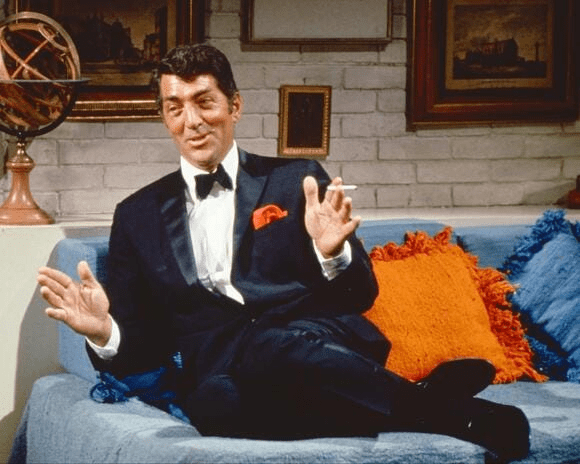
Debuting in 1965 and lasting nine seasons, The Dean Martin Show was on NBC. His theme song was the iconic “Everybody Loves Somebody.” For most of its life, it was on Thursday nights. Season nine brought a change of nights as well as a new format.

Like Judy Garland, whose show we learned about last week, Martin was not sure he wanted to commit to a television schedule, feeling as though he would not be able to take on his favorite movie roles and nightclub performances. So, he asked for a “list of musts” that he knew NBC would not agree to. He asked for a lot of money, a one-day-a-week work schedule of Sunday, and permission for him to only announce ads and sing when he felt like it. Imagine his surprise when they agreed to every demand.

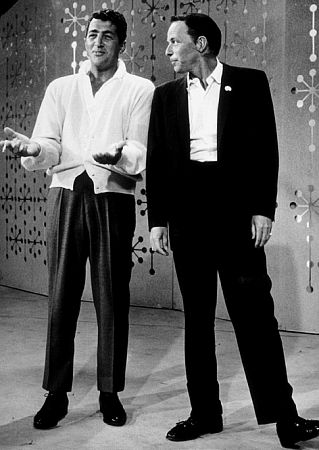
Martin always presented as a shy, drunk playboy, and he continued with this image for the television show. He made it obvious that he was reading his lines from cue cards and if he goofed, it became part of the taped show.
📷imdb.com

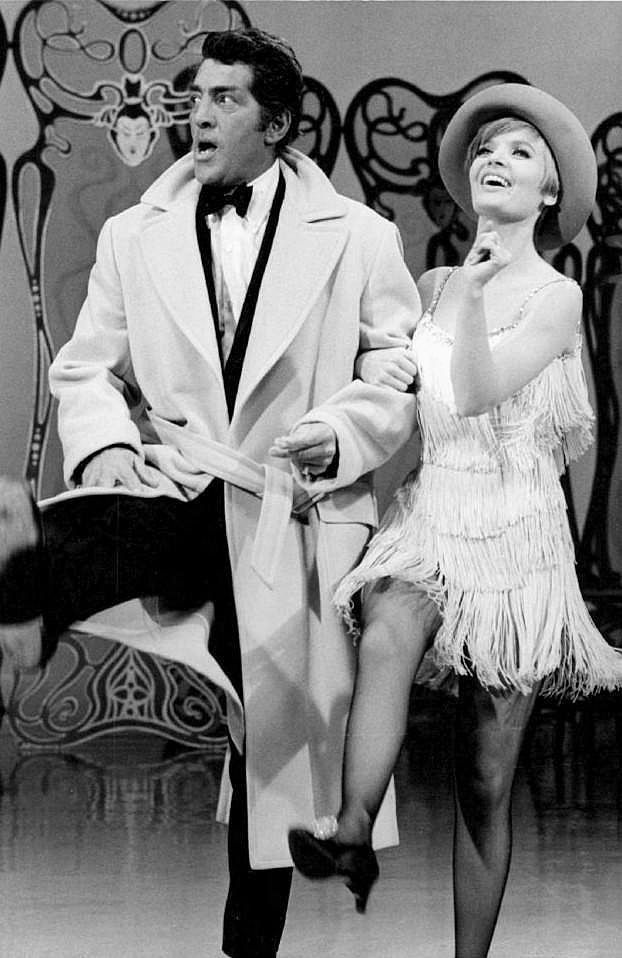
The show had a few recurring features every week. Martin typically sang two songs per show. Sometime during the show, a knock on the closet door led to Martin opening the door to reveal a celebrity guest and Martin himself didn’t know who would be on the other side of the door. The show usually ended with a production number featuring Martin and his guests.

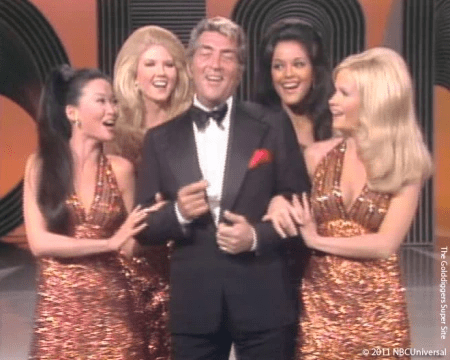
Cast members were hired who did sketches throughout the show. These stars included Tom Bosley, Rodney Dangerfield, Dom DeLuise, Kay Medford, Charles Nelson Reilly, and Nipsey Russell. In later seasons, The Golddiggers appeared. This was a group of chorus girls who first started on the summer replacement show. Not only were Martin’s goofs part of the show, but Charles Nelson Reilly once told a story that on the way to rehearsal, he was driving a convertible, and the script flew out of the car. He wasn’t too concerned though because he said the way the show was done, the script really didn’t matter much.

If you name a celebrity, they were probably on this show. Just a small sampling includes Eddie Albert, Steve Allen, Louis Armstrong, Lucille Ball, Tony Bennett, Rosemary Clooney, Sammy Davis Jr., Phyllis Diller, Duke Ellington, Ella Fitzgerald, Bob Hope, Ethel Merman, Bob Newhart, Dinah Shore, and Frank Sinatra.

The show was nominated for an Emmy 12 times including best variety, music or comedy series in 1968, 1969, and 1970.
📷wordpress.com Golddiggers

The show had decent ratings for the first year but after that it was never great, never awful. It was up against The Thursday Night Movie on CBS and a variety of different shows on ABC which changed from year to year all eight seasons. For the final season, the show was moved to Friday nights, against the popular Love American Style. From 1973-1974 it was titled The Dean Martin Comedy Hour and episodes were celebrity roasts.

The Television Academy did an interview with Greg Garrison, producer and director for The Dean Martin Show. He said there was some turmoil in the first year trying to figure out what this show was. He said they had Bertha the Elephant on one episode, and no adults were interested in that at 10 pm.

Garrison said Martin was extremely generous. Every year he gave Garrison a ten percent ownership in the show until he had 50%. Garrison then told him to stop offering him more because 50% was the most he would agree to. He described Martin as the kindest, nicest, and most generous man he knew. Garrison said he was able to do whatever he wanted to on the show and Martin never second-guessed him. Garrison said one of the hardest decisions he made was cutting Zsa Zsa Gabor’s sketch. He said she gave him no end of trouble, so he finally said they were done, and the sketch was cut. She protested and he told her she would get her check, but the skit was done and it was.
📷wikipedia.com

This was a successful show for almost a decade. It’s hard to find a lot of information about it though. Unlike The Carol Burnett Show where everyone was working together all the time, Martin only showed up on Sundays and most of the time it was the rest of the cast, so perhaps not as many stories were shared.

I watched an episode from 1970, and it was typical of a variety show for the time. Martin began by telling jokes like he put his contacts in backwards and looked at himself all night, so he got no sleep. He talked about going back to his neighborhood where the mayor had a car waiting for him, but luckily, he got out of the way just in time before getting hit. He also mentioned that he and his dog went to school together for years until they had to part because the dog graduated.

He then sang a song all the while holding onto his cigarette. In most of his appearances on the show he had a cigarette or a glass of apple juice purported to be alcohol. Ann Margaret and Bob Newhart were the guest stars in this one. He then went into a skit with Newhart. The show held up pretty well for being more than fifty years old. I admit I feel spoiled after watching The Carol Burnett Show, which I think is impossible to compete with for almost any other variety show, but Martin came across as likeable and the show was better than I anticipated. If you want to check out a few of them, you can get the “Best Of” his shows on Amazon.
The Elegance of What’s My Line

This month, we are looking at popular fifties stars and shows. While the show we are talking about today outlasted the fifties by almost another decade, it gained its popularity during the 1950s. Today we are learning about What’s My Line.

📷wikipedia.com

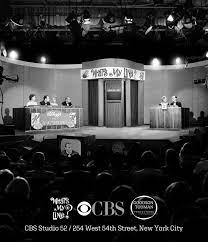
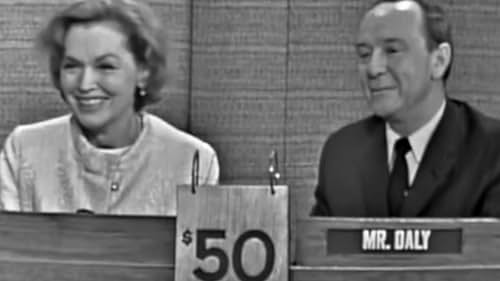
This panel game show was on CBS. It debuted in 1950 and ran until 1967. The show was produced by Mark Goodson and Bill Todman, and the working title was Occupation Unknown. Perhaps the title should have been What’s My Schedule. The show began on Thursday nights as a live show. Later in season one, it switched to every other Wednesday and then moved to every other Thursday. In October of 1950, it landed on Sunday nights where it would remain throughout the rest of its life.

The original series, which was usually broadcast live, debuted on Thursday, February 2, 1950, at 8:00 p.m. ET. After airing alternate Wednesdays, then alternate Thursdays, finally on October 1, 1950, it had settled into its weekly Sunday 10:30 p.m. ET slot where it would remain until the end of its network run on September 3, 1967.

📷imdb.com

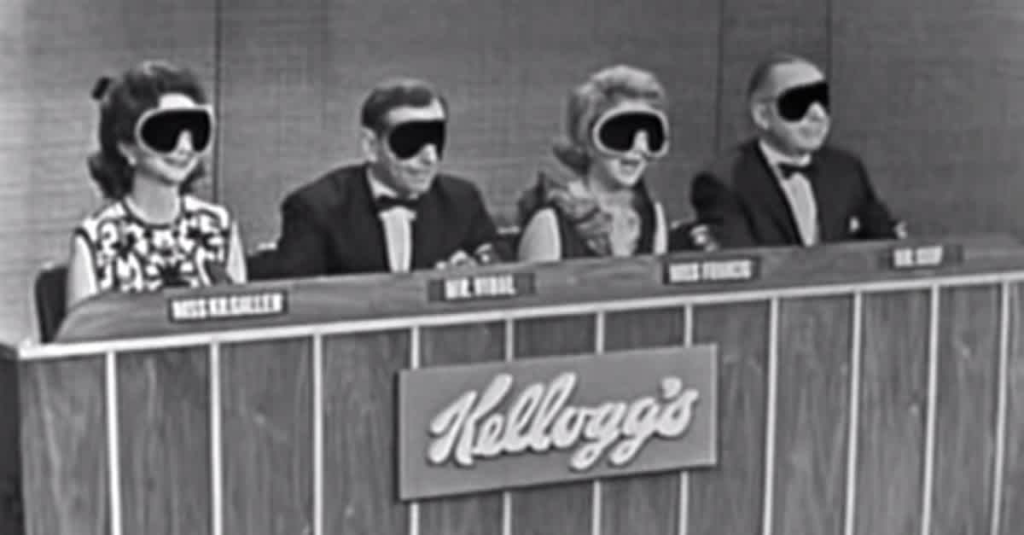
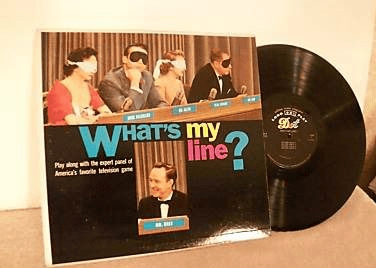
Celebrity panelists ask contestants questions to figure out their occupation. While most of the contestants were not famous, there was a “mystery guest” segment. The panelists were blindfolded for this segment and asked questions to determine the celebrity. People enjoyed watching the panelists banter with each other and the sophisticated humor they shared with us.

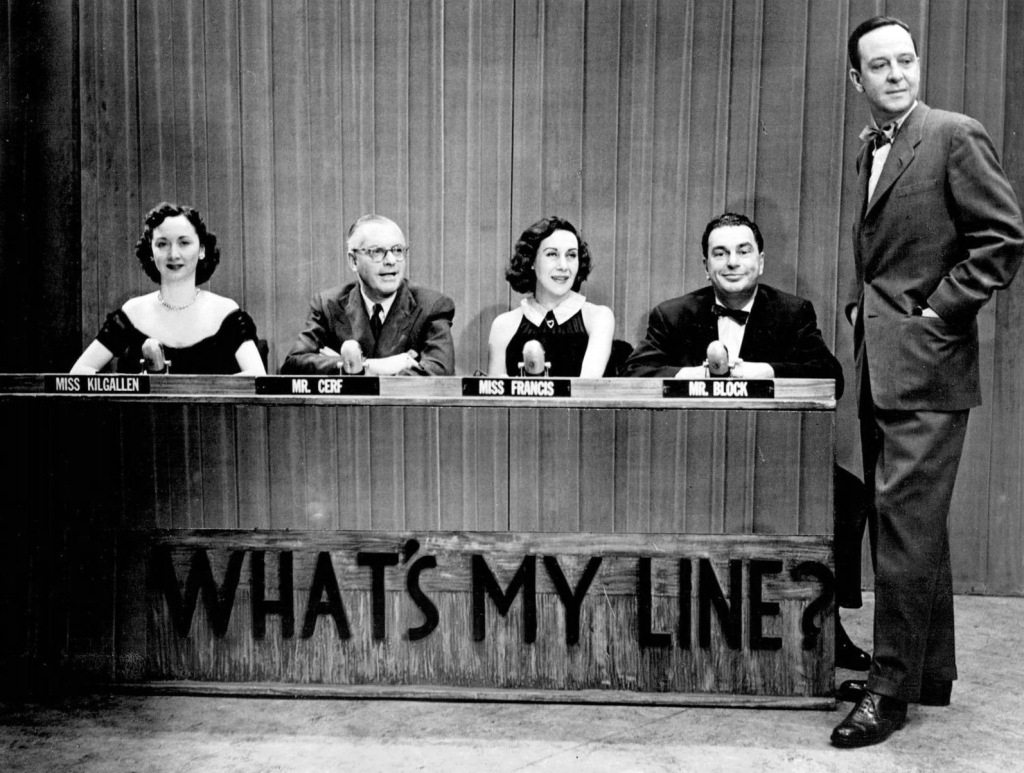
Each episode had four panelists. The most famous panelists were Dorothy Kilgallen, Arlene Francis, and Bennett Cerf. John Daly was the moderator. The first show in the series featured New Jersey governor Harold Hoffman, Kilgallen, poet Louis Untermeyer, and psychiatrist Richard Hoffman. Later in season one, Arlene Francis came  on board with Kilgallen, Untermeyer and writer Hal Block. In season two, Cerf replaced Untermeyer and Steve Allen took over for Block in season three. When Steve Allen left to host The Tonight Show, comedian Fred Allen was part of the panel from 1954 until his death in 1956. Kilgallen was killed in 1965 and her replacement varied for two years. Her death is a mystery itself and well worth reading about. Many people think she was killed because of her investigation into JF Kennedy’s assassination.

📷facebook.com

The panelists started the series wearing business clothing, but by 1953 they shifted to formal attire with the men showing up in suits and ties and women in formal gowns and gloves. Unfortunately, we never got to see the beautiful colors of these clothes. Until 1966 everything was filmed in black and white. In the final season, the show was broadcast in color, but the kinescopes were saved in black and white.

Both critics and television viewers liked the show, and it won an Emmy for Best Quiz or Audience Participation Show in 1952, 1953, and 1958.

Because it was a game show, most of the 700 episodes were on kinescope, 16 mm filming. Because many original shows in that era were recorded via kinescope onto silver nitrate film, many networks destroyed recordings to recover the silver. After learning that the network was not keeping the recordings, Goodson and Todman offered to pay for the broadcast and retained the recordings from season three on, however many of those were also lost along the way. A variety of the episodes are stored at different archive centers around the country. My home state houses one from 1951 at the University of Wisconsin Center for Film and Theater Research in Madison.

📷facebook.com

The remaining kinescopes which have been digitized have been seen on television on the Game Show Network and 757 of them exist on YouTube.

Many of us remember the reruns and seeing the contestant come on stage and write their name on a chalkboard as Daily said “Will you enter and sign in please.” The very first contestant was Pat Finch who was a hat check girl at the Stork Club.

The first mystery guest was New York Yankees shortstop Phil Ruzzuto. Many of these guests used fake voices to answer questions. Some of the mystery guests who appeared on the show included Julie Andrews, Louis Armstrong, Lucille Ball, Jack Benny, James Cagney, Gary Cooper, Joan Crawford, Salvador Dali, Sammy Davis Jr., Doris Day, Aretha Franklin, Ava Gardner, Judy Garland, Jackie Gleason, Alfred Hitchcock, Bob Hope, Ginger Rogers, Roy Rogers, Eleanor Roosevelt, James Stewart, Elizabeth Taylor, and John Wayne.

📷littlethings.com Blindfolds come out for a mystery guest

The emcee would choose a panelist who could ask yes or no questions. If the answer was yes, they could continue until they got a no response and then the next panelist would be able to pose questions. If the contestants answered no, Daily flipped a card; when the contestant had ten cards, they won $50.

If you have heard of or even used the term “Is it bigger than a breadbox?,” you might want to know that it came from the show. Steve Allen asked the question in 1953, and it became a standard question after that night. In fact, on one episode, the guest was a breadbox maker, and when Daly could not help laughing at the question, Allen figured it out.

In 1967 The New York Times broke a story that CBS was canceling many of their game shows. None of the panelists had been told that the show was not renewed. Despite the fact that the low costs of the game shows made them profitable, the low ratings led the network to conclude that game shows were no longer suitable for prime-time schedules.

After the show was canceled in 1967, it did go into syndication five days a week. Soupy Sales joined Francis and Cerf on the panel of the reboot. A variety of other panelists took the fourth seat including Joyce Brothers, Jack Cassidy, Bert Convy, Joel Grey, Meredith MacRae, Henry Morgan, Gene Rayburn, and Nipsey Russell. The show ended in 1974. Cerf died during the run of the syndicated series.

It’s hard to believe, but Colonel Harland Sanders was on the show as founder of Kentucky Fried Chicken, although he was not easily recognized at the time, so he was not a mystery guest. While no president ever appeared while in office, Ford, Carter, and Reagan all appeared on the show.

📷youtube.com We switched to a first-name basis in the 70s

It would be fun to see this show on television today, but I’m afraid it would not be the same. In the way that Dick Cavett had a manner of interacting with guests to ask amazing questions with his humor and intelligence, this game show had that same atmosphere. Today, I think the banter would border more on crudeness than wit. There is something charming about a panel of very intelligent people talking with each other, trying to determine the identities of the people they were interviewing while being dressed to the nines that was fun to sit in on and be a part of. I guess that’s why this show is in our series where we are saluting the fifties because that was the era where it could shine.