Love American Style: Love and the Celebrities

📷groovyhistory.com

This month we are starting a new blog series, Casting Celebrities. We’re going to take a look at four shows that featured a group of celebrities every week. We’ll learn more about Love, American Style; Fantasy Island; The Love Boat, and Supertrain. When we discuss Supertrain, we’ll also look at the small number of stars who appeared on all four shows.

Today we begin with Love, American Style. This show was an iconic 1970s show. Like Laugh In, the clothing, furnishings, and vocabulary do not make it timeless. But it was a lot of fun. This fast-paced anthology series featured two to four mini episodes each week, and between them were quick skits, often featuring a brass bed. Each smaller episode is titled “Love and the _______.”

📷gms.com The regular cast

A troupe of players was featured on each show for the in-between skits. These regulars included William Callaway, Buzz Cooper, Phyllis Davis, Mary Grover, James Hampton, Stuart Margolin, Lynn Marta, Barbara Minkus, and Tracy Reed. Margolin went on to a regular role in The Rockford Files; Tracy Reed was featured in McCloud and Knot’s Landing; Phyllis Davis was part of the cast of Vega$ and Magnum PI, and James Hampton will be familiar if you watched The Doris Day Show or F-Troop.

The show had a memorable and catchy theme song. Written by Arnold Margolin, the first year it was performed by The Cowsills. The snappy melody was set to the following words:

Love, Love, Love

Love, American Style,
Truer than the Red, White and Blue.
Love, American Style,
That’s me and you.

And on a star-spangled night my love,

My love come to me.
You can rest you head on my shoulder.
Out by the dawn’s early light, my love
I will defend your right to try.

Love, American Style,
That’s me and you.

📷imdb.com

During the second and subsequent years that Love, American Style was on the air, the theme song was performed by the Ron Hicklin Group. The Ron Hicklin Group could be heard in a variety of motion pictures and commercials, and they also appeared on recordings with stars such as Paul Revere and the Raiders and Cher. John and Tom Bahler, brothers who sang under The Charles Fox Singers were also part of this group. The band provided television theme song recordings including Batman, That Girl, Happy Days, and Laverne and Shirley. They also did the singing for The Partridge Family theme and songs performed on the show as well as the Brady Bunch Kids. Ron retired in the early 2000s, and Tom does a variety of things. He is also known for writing Bobby Sherman’s hit, “Julie Do You Love Me?”. John married Janet Lennon, one of the Lennon sisters who performed on The Lawrence Welk Show. He currently lives in Branson and conducts the “new” Lawrence Welk orchestra.

Paramount Television developed the show. The executive producer of the show was Arnold Margolin, Stuart’s brother. There were 53 different directors during the four-year run. The series received Emmy nominations for Outstanding Comedy Series in 1970 and 1971; Best Music Composition in 1971, 1972, and 1973, winning in 1973; and winning the Emmy in 1970 for Outstanding Original Music and Lyrics.

📷rewatchclassictv.com

Many people wrote for the show, but Garry Marshall and Jerry Belson received the most credits. One of the writers, Peggy Elliott, was interviewed by the Huffington Post in May of 2013, and she talked about her time writing for the show.

“But the show I loved writing the most, was Love, American Style. For every other show, I was writing for characters created out of someone else’s head. Sure, we could create the occasional guest-star role, and we had been told to make every role, no matter how small, a real person. ‘Think of the actor who’s playing that delivery boy,’ I can hear Billy Persky, the co-creator or That Girl, say: ‘This is a big break for him — it’s the biggest role he’s had so far. Give him something to work with.’

But with Love, American Style, every character was our very own; every situation came out of our heads. Each segment of the hour the show ran each week was a one-act play created entirely by us. Added to the attraction was the fact that we could say and do things that were taboo on every other TV show in the early ‘70s. Arnold Margolin, co-creator of the show with Jim Parker, told me recently that the creative side of the network wanted the show to be more daring, while the censors kept their red pencils ready. There was a full-time position on the show just to run interference.

We must have put both sides through the hoops with one episode we wrote: ‘Love and The Hand-Maiden.’ A young guy was dating a centerfold model. As their relationship developed, he discovered that she had no problem with shedding her clothes, but she always kept her hands covered — with artful poses in magazines, and with gloves in real life. He became obsessed with seeing her hands and came up with one ruse after another to get her to take off her gloves. We had a ball writing it, with one double-entendre after another.”

📷imdb.com

If you were a star of any kind in the early 1970s, you most likely were on Love, American Style.  The show produced 108 episodes, and those shows featured 1112 different actors. Some of the famous names showing up in the credits include Milton Berle, Sid Caesar, Phyllis Diller, Arte Johnson, Ozzie and Harriet Nelson, Regis Philbin, Burt Reynolds, Sonny and Cher, Flip Wilson, and Jo Anne Worley.

Brad Duke wrote a biography about Harrison Ford, and he said Ford had fond memories of appearing on Love, American Style. “He recalled that he had been given little time to prepare his wardrobe for the role of a philosophical hippie in the November 1969 episode, “Love and the Former Marriage.” He appeared on set with long hair and a beard thinking they were appropriate for the role. He was surprised when he was told he needed a haircut and trim and then was given a navy blue dress shirt and vinyl burgundy jeans with a large belt. They even had a scarf with a little ring to put around my neck. And I thought, someone has made a mistake here. So, rather than argue with the wardrobe people, I put on the clothes and went to find the producer. I walked on the set and he was pointed out.  I tapped his shoulder and when he turned around he had on the same clothes I did. He was a hippie producer I guess. At least the check went through, and I got paid.”

The best way to get a good understanding of what the show was like is to look at a couple of the episodes.

January 23, 1970: Love and the Big Night

📷facebook.com

Starring Ann Elder, Buddy Lester, Frank Maxwell, Julie Newmar, and Tony Randall, this episode is often listed as a favorite of viewers. Randall is a married businessman who escorts his voluptuous secretary (Newmar) to her apartment after a late night at the office. Eager to get home to his wife, Randall hurriedly tries to open a stubborn jar of mayonnaise and winds up covered with mayo. Newmar cleans his suit, but while it’s drying, it’s stolen. After a series of amusing mishaps, Randall finally gets back to his own apartment and creeps into bed with his wife–only to find out she’s not there.

February 25, 1972: Love and the Television Set

📷that’s entertainment.com

It starred Harold Gould, Marion Ross, Ron Howard, and Anson Williams. Reading this list of names might give you a hint about what happened to this episode after it aired. Garry Marshall had written a pilot about a 1950s family that did not sell.  He turned it into an episode for Love, American Style. George Lucas caught the episode and was impressed with Ron Howard and offered him a role in his new movie American Graffiti about 1950s teens. The movie was so popular that the network decided to put Marshall’s pilot in the fall line-up as Happy Days. Harold Gould’s role was given to Tom Bosley for the series. When Love, American Style went into syndication, this episode was retitled “Love and the Happy Days.”

October 22, 1970: Love and the Bashful Groom

📷listral.com

This is the episode I recall when I think of the series. When I watched it originally, I was staying overnight at my grandparents’ house and my grandmother was shocked at the “vulgarity.” It really seems quite tame today, but back then it probably was unexpected. She would approve of Tom Bahler marrying Janet Lennon though because I watched Lawrence Welk with her and my grandfather whenever I was at their house.

In this episode, Paul Petersen, Christopher Stone, Meredith MacRae, Jeff Donnell, and Dick Wilson are featured. Harold (Petersen) and Linda (MacRae) are getting married. He learns that she grew up in a nudist colony and is not comfortable being naked for his wedding.  After a soul-searching talk with his best friend, and realizing he loves Linda enough to be uncomfortable, he decides to go through with the ceremony.  He gets to the church a bit late and walks in, only to see that everyone else is dressed in their Sunday best. His bride informs him that they always dress up for weddings. One of the congregation members says something like “Let’s not make him uncomfortable,” and they all begin to undress.  Of course, you see nothing improper, no naked bodies, only clothes flying. This was probably not the best episode to “expose” my grandmother to as a first glimpse of the show.

The show lasted for four years and was cancelled in 1973. In 1985, a reboot was created, but it was on in the mornings and only lasted a few months.  The show was on at the same time as everyone’s favorite game show, The Price is Right. For the 1998 fall season, a pilot was created for prime time, but it was never ordered. While doing my research for this blog, I noticed that there was a Love, American Style project in production, so we may see it resurface again.  I’m not sure I would want to watch a contemporary version of the show though. It was such a product of its time, and I fear what a current version would be like after seeing the reboot of Match Game which has been airing the past few years.

Nanny and the Professor: The Mary Poppins of the 1970s

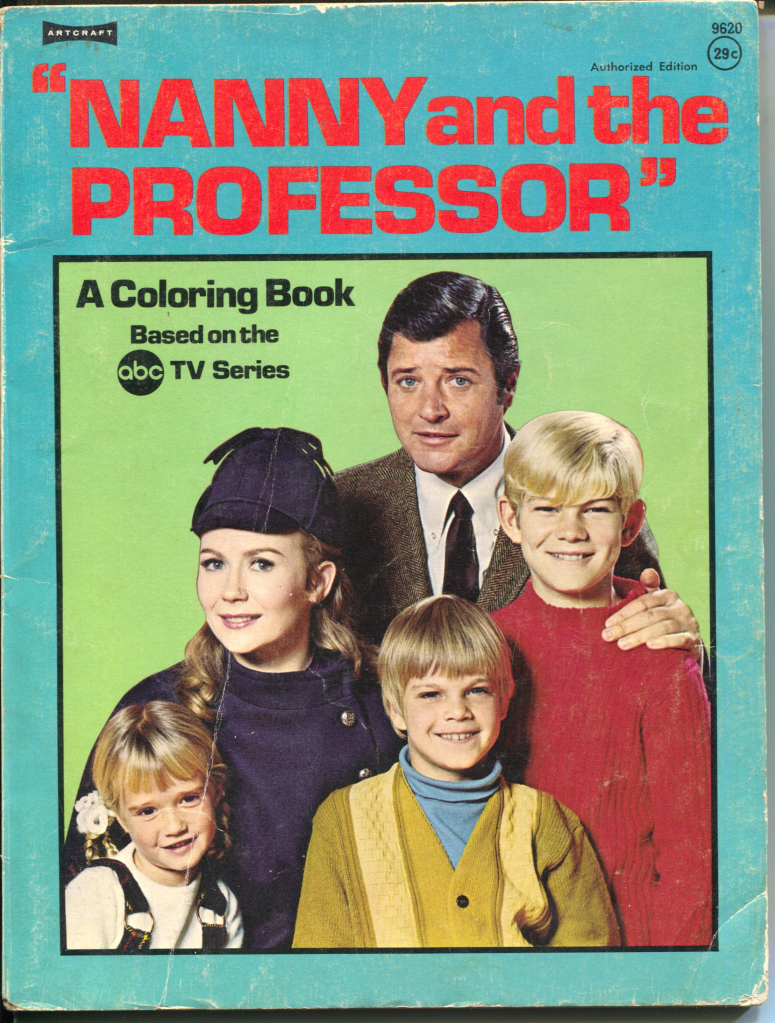
We are starting off the new year with a blog series taking a closer look at some of our favorite families. Between Mary Poppins and The Nanny, we had Nanny and the Professor. A lot of my friends don’t remember this show, but it was part of the ABC lineup for two years. It began its life on Wednesday nights in 1970 followed by The Courtship of Eddie’s Father and then Room 222. The second season, it moved to Friday nights airing after The Brady Bunch and before The Partridge Family. The short third season found the show on Monday nights up against Gunsmoke and Laugh In which surely set it up for failure.

The cast Photo: closerweekl.com

AJ Carothers and Thomas Miller created the show for 20th Century Fox Television.  Carothers was best known for his Disney movies, and this show has that same type of atmosphere. English-born Phoebe Figalilly (Juliet Mills) is hired by Professor Harold Everett (Richard Long) to be the housekeeper and nanny for this three children: very intelligent Hal (David Doremus), prankster Butch (Trent Lehman), and musical prodigy Prudence (Kim Richards) who had a pet rooster named Sebastian. Juliet Mills, sister to Parent Trap star Hayley Mills, was offered the role after auditioning in England. An open casting call was done for the role in London.

Nanny became very close to the three children, and she and Professor Long had a subtle romance. You could tell there was chemistry, and he began working less and hanging out with the family more often.

Nanny had a great intuition, but we were always left wondering if there was more to her secret knowledge than we were aware of. While the Professor hired her, she showed up unannounced for the job. Sometimes she hinted at being much older than she looked. One of the running gags of the show was that she always knew when people were at the front door or on the phone before the doorbell or phone rang. She also seemed to be able to communicate with animals including the kids’ dog Waldo. She also fixed up and drove around in a 1930 roadster which she named Arabella in honor of her favorite aunt.

Nanny had a lot of relatives who showed up at the Everett household from time to time. Uncle Alfred (John Mills, Juliet’s father) entertains the children with this stories and human flying act. Aunt Justine (Ida Lupino) and Aunt Agatha (Majorie Bennett) arrive in a hot air balloon. Uncle Horace (Ray Bolger) claims to be able to make it rain. Aunt Henrietta (Elsa Lanchester) comes with the circus; in another episode she helps get rid of a ghost.

Arabella Photo: ebay.com

Fun fact, the background music was taken from My Favorite Martian. The theme song was called “Nanny” and was written and sung by The Addrisi Brothers. The song is:

Soft and sweet
Wise and wonderful
Oooh our mystical magical nanny

Since the day that nanny came to stay with us
Fantastic things keep happening

Is there really magic in the things she does
Or is love the only magic thing that nanny brings

You know our nanny showed us you can make the impossible happen
Nanny told us have a little bit of faith and lots of love

Phoebe Figalilly is a silly name
And so many silly things keep happening
What is this magic thing about nanny
Is it Love Or is it Magic

The show might be done, but much of the merchandise that was used to promote the show still exists. Colorform sets, coloring books, paper dolls, comic books, View Master reels, and several books are available on ebay.com

Even though the move to Monday night could not have been good for ratings, Mills said the cast was stunned when the show was canceled. In a July 22, 2019 interview with foxnews.com, she said, “I think we were all shocked, actually, and not ready to move on.” She said she does not regret starring in the show, and that the cast was “wonderful, really, very professional and very good. She said the show had a special place in her heart. “I’m proud of it and have very, very happy memories of it, she said. “I’m still recognized all over the place for that as much as anything I’ve ever done, which is extraordinary. People just hear my voice and they turn around, ‘Hey Nanny.’”

Although Nanny and the Professor might not be as well known as other shows of its decade, it deserves to be remembered. Even though it never hit the 100-episode target for syndication, the show was played on other networks after it was canceled. I could not find any network showing reruns or anywhere to stream the show, and the DVDs are currently not available on Amazon but they are available on other DVD websites. It might be worth searching for to have a marathon weekend binge some cold, winter weekend.

The Smothers Brothers Comedy Hour: Fifty Years After Getting the Pink Slip

The late 1960s and early 1970s might have contained the most diverse television shows than any other era. In 1968, there were the rural comedies like Green Acres and The Beverly Hillbillies; there were the standard sitcoms, My Three Sons, Get Smart, That Girl, Bewitched; there were the remains of a few westerns including The High Chaparral, The Virginian, and Gunsmoke; there were crime and thrillers such as Hawaii Five-0 and Mission Impossible; there was the crime/western in The Wild, Wild West, there were gameshows on at night including Let’s Make a Deal, The Dating Game, and The Newlywed Game; there were sci-fi shows like Star Trek and The Land of the Giants; family shows like Lassie; and even Lawrence Welk.

In addition, there were a couple of shows that were a bit edgier and introduced more  provocative concepts and themes. The Mod Squad featured three teens who were helping solve crimes in lieu of jail time, and then there was the almost-impossible-to-describe Laugh In.

Photo: neatorama.com

Similar to Laugh In was The Smothers Brothers Comedy Hour which also debuted in 1967 featuring Tom and Dick Smothers. It had more of a variety format to it but it had the same topical and satirical humor.

Photo: retrokimmer.com
The Who

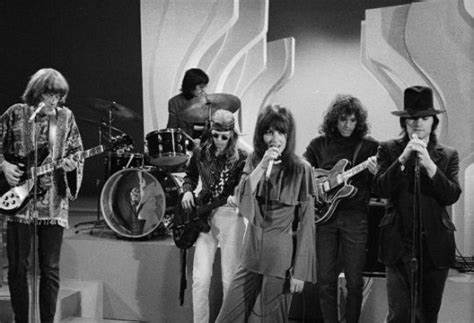
In addition to poking fun at politics, the war, religion, and current issues, you could tune in to the Smothers Brothers for some of the best and sometimes controversial music in the industry. Performers such as Jefferson Airplane, Steppenwolf, Simon and Garfunkel, The Who, Cream, Pete Seeger, and The Doors appeared on the show.

Photo: metro.com
Jefferson Airplane

The show aired Sunday nights against Bonanza on NBC; ABC aired The Sunday Night Movie in its first season and Hee Haw in its second season.

The series had some of the best writers on television: Alan Blye, Hal Goldman, Al Gordon, Steve Martin, Lorenzo Music, Don Novello, Rob Reiner, David Steinberg, and Mason Williams. Reiner and Martin both commented on the show in an interview by Marc Freeman in the Hollywood Reporter 11-25-2017 (“The Smothers Brothers Comedy Hour at 50: The Rise and Fall of a Ground-Breaking Variety Show”).  

Reiner relayed that “you had two cute boy-next-doors wearing red suits, one with the stand-up bass and the other with his guitar. They looked like the sweetest, most innocent kids. You got drawn to them, and then they hit you with the uppercut you didn’t see coming.”

Photo: tvbanter.net

Martin elaborated “When you have the power wrapped up in innocence, it’s more palatable. They were like little boys, but you also had Dickie there to reprimand Tommy when he would make an outrageous statement. It’s like the naughty ventriloquist dummy who can get away with murder as long as the ventriloquist is there to say ‘You can’t say that.’ It’s the perfect setup for getting a message across.”

Photo: pinterest.com
Jack Benny

In addition to the musical acts, hundreds of celebrities appeared on the show between 1967 and 1969, including Jack Benny, Carol Burnett, George Burns, Bette Davis, Jimmy Durante, Barbara Eden, Nanette Fabray, Eva Gabor, Shirley Jones, Don Knotts, Bob Newhart, Tony Randall, Ed Sullivan, Danny Thomas and Jonathan Winters, along with so many others.

Part of the show was the brothers’ ongoing sibling rivalry about whom their parents liked best. They also began to add political satire and ribald humor. Pat Paulsen delivered mock editorials about current topics such as the draft and gun control, and in 1968 he had a mock presidential campaign.

Photo: rollingstone.com
Pat Paulsen for president

Church sermon sketches poked fun at religion. The show lampooned many of the values older Americans valued, often delivering anti-establishment and pro-drug humor. No one was given an exception, and the show lambasted the military, the police, the religious right, and the government.

Battles over content were ongoing with the network. The network pulled Pete Seeger’s performance of his anti-Vietnam War song, “Waist Deep in the Big Muddy.” They nixed Harry Belafonte’s song, “Don’t Stop the Carnival” because it had a video collage behind him of the 1968 Democratic National Convention riots.

Younger viewers were tuning in, and despite the conflicts, the show was picked up for a second season. The network insisted they receive a copy of the show at least ten days in advance for editing. In April of 1969, William Paley canceled the show without notice. Some sources contend it was canceled by CBS president Robert Wood. Some sources cite the issue with unacceptable deadlines and others mention Tom Smothers lobbying the FCC and members of Congress over corporate censorship that brought about the firing. The brothers filed a breach of contract suit against the network and after four years of litigation, a federal court ruled in their favor, awarding them $776,300.

Photo: blogspot.com

Here’s a typical joke from the show that was not as controversial.

Tom: You can tell who’s running the country by how much clothes people wear, see?

Dick: Do you mean that some people can afford more clothes on, and some people have . . . less on? Is that what you mean?

Tom: That’s right.

Dick: I don’t understand.

Tom: See, the ordinary people, you’d say that the ordinary people are the less-ons.

Dick: So, who’s running the country?

Tom: The morons.

The Smothers Brothers elicited humor that was as topical, influential, and critical as anyone had ever heard before on television. Fifty years later, both the network and the brothers realized everyone over-reacted. If the Smothers Brothers had tried to play by the rules a bit, they would not have lost their platform to continue to help change what they saw as a messed-up culture.

Photo: Wikipedia.com

The CBS executives felt the program created too much controversy. In their defense, politicians, especially Lyndon Johnson and Richard Nixon, exerted a lot of pressure on the network. Remember this was a time of three networks and ads are what produced the profits to fund shows. The network received a boatload of hate mail daily about the program and, when viewers begin talking boycotting advertisers, executives sit up a bit straighter and listen.

The Smothers Brothers Show, a less controversial series, debuted in 1975. They had two specials on NBC later and another CBS series in 1988 but never regained the influence they had in the sixties. However, the show did help pave the way for a future that permitted, and later embraced, shows with controversy beginning with All in the Family, continuing with Saturday Night Live, and recently seen on shows such hosted by Jon Stewart and Stephen Colbert. Although the comedy spouted on the show would seem quite tame by today’s standards, the show had an important part in the history of television and the rights of free speech.

Photo: wvxu.com

I have seen some DVDs out there from this show, but they are pricey. Recently I saw season two going for $190. I do see Laugh In on Decades quite often, so perhaps The Smothers Brothers might show up somewhere too, although I’m not sure this show would hold up as well as Laugh In, but the musical performances would be fun to see.