Sylvia Field: What a Character

We are in the middle of our blog series for November, “What a Character!” Today we get to meet the delightful Sylvia Field.

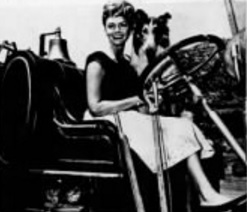
Born Harriet Louisa Johnson in 1901 in Allston, Massachusetts, Field always knew she wanted to act. When she was ten, she saw Maude Adams in “Peter Pan,” and she decided that would be her career as well. After being diagnosed with diphtheria, she was not allowed to attend school for a while. So, when she was feeling better, she ventured down the street to a motion picture company that was filming movies. She was allowed to join the cast and became the “leading lady of the extras.”  

📷facebook.com

Eventually she decided to move to New York. At only 17, she made her Broadway debut in “The Betrothal.” She never did go back to school.

📷wikipedia.com 1927 Broadway shot

A decade later she got her first shot at the big screen in The Home Girl. She was signed by Fox Studios in 1939. Her last acting credit was also for a film, The Cruz Brothers and Miss Malloy in 1980. While she fit a few movies in her career, most of her appearances were on television.

After she began her film career, she married Robert Frowhlich in 1924; they were only married five years. In 1930 she tried marriage again with Harold Moffat; he passed away eight years later. In 1941 she married Ernest Truex, and they remained together until his death in 1973.

Truex had an interesting background. He was born in Kansas where his father was a doctor. In exchange for medical services, one of his father’s patients gave Ernest acting lessons. Ernest performed Shakespeare as a five-year-old child, and was given the nickname, “The Youngest Hamlet.” As a nine-year-old, he and his mother toured the country while he performed. Before he was a decade old, he was in his first Broadway show with Lillian Russell.
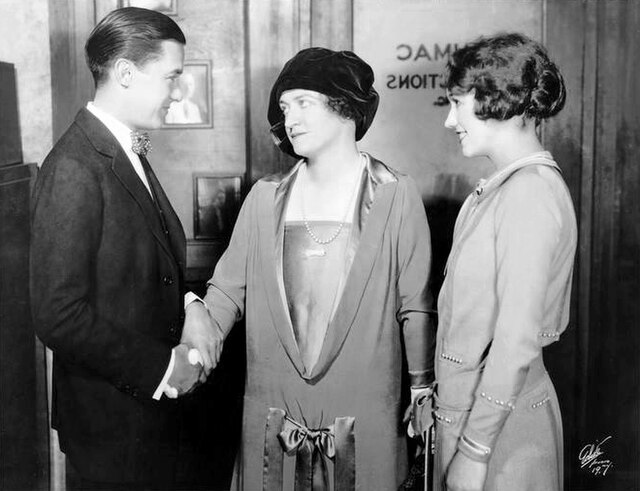
📷wikipedia. The Butter and Egg Man by George Kaufman

In the movies he played the quiet, ineffectual boss. Like Field, he was also a regular cast member in three shows. His were Jamie, Mister Peeper, and The Ann Sothern Show.

Field and Truex traveled around the country in plays together before starring in a local New York series featuring members of their family. The couple had a blended family with Field’s daughter Sally Moffat and Truex’s three sons. All four of the kids became actors. I’m guessing it was like The Adventures of Ozzie and Harriet. The show was on the air for three years before Truex and Field decided to move to California.

Sylvia’s first television appearance was on the Chevrolet Tele-Theater in 1948. She continued accepting roles on many of the drama shows through the mid-fifties. In 1952 she got her first cast role as Mrs. Remington on Mister Peepers. Ernest Truex was also part of the cast, playing Mr. Remington. They played the parents of Nancy, the school nurse, Mister Peepers’ fiancé. (Field and Truex would work together again on a 1966 episode of Petticoat Junction, “Young Love,” as well as in The Ann Sothern Show.)

📷who’sdatedwho.com Field and Truex

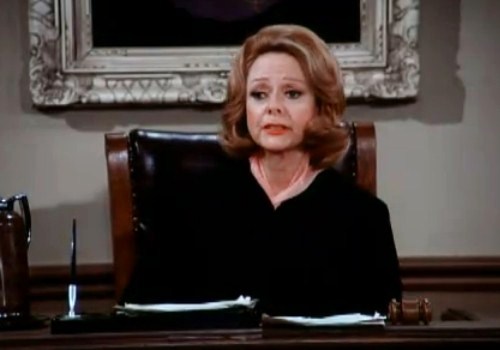
After Mister Peepers was canceled, she accepted a few spots on current shows including The Ann Sothern Show, Father Knows Best, Perry Mason, and The Thin Man.

In 1958 Sylvia received another cast offer to become Aunt Lila on both Annette and The Mickey Mouse Club. These shows shared cast members, so if you were cast on one of them, it was a buy one, get one deal.

Aunt Lila only lasted a year, which was a good thing, because Field was free to accept the role of Martha Wilson on Dennis the Menace, beginning in 1959. She defended Dennis to her husband George for almost four seasons.

Before the 1962 season, her tv husband Joseph Kearns passed away. For the season, Gale Gordon was brought in as George’s brother John, who was staying with Martha while George was away on personal business. However, the next year, Field was written out of the show, and John’s wife Eloise took her place, played by Sara Seegar. John and his wife bought the house from George and Martha, and no explanation was given to why they moved away. Sylvia and Jay North, who played Dennis, remained friends for the rest of her life.

📷WPRI.com Field, North, and Kearns

For the rest of her career, she would show up on television shows including Hazel, Occasional Wife, and Lassie. After Truex’s death, Sylvia accepted a couple of roles but spent much of her time fishing, golfing, watching baseball, and taking care of her avocado orchard. Eventually she had to move to a nursing home where she passed away in 1998.

I always enjoyed Martha Wilson. She and George took on the role of Dennis’s pseudo grandparents. While George was gruff, everyone knew he loved Dennis. Martha was more affectionate and always waiting with cookies, ready to hear about his latest exploits. Field seemed to have a great life. She had a prolific career and then was able to enjoy retirement which so many actors find impossible to do.
Bill Dana: Actor? Script Writer? Author? Talent Agent? Yep

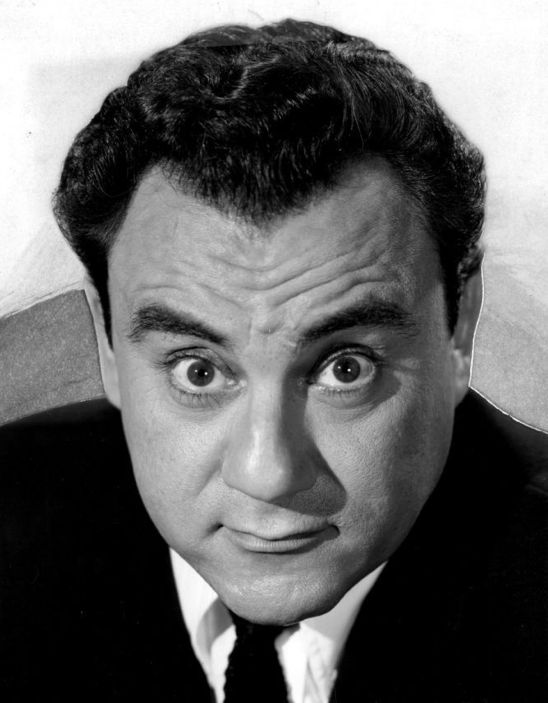
This month we are exploring The Bill Dana Show for our blog series. Last week we talked a bit about the show itself, and for the rest of the weeks, we are looking at some of the other cast members’ careers. Today we begin with Bill Dana himself.

📷findagrave.com

Dana was born William Szathmary in Quincy, Massachusetts in 1924. He was the youngest of six children. His older brother Arthur was fluent in several languages and inspired Bill to learn different accents.

Dana served with the US Army during WWII as a machine gunner and was awarded the Bronze Star Medal.

After the war, Bill enrolled at Emerson College. After graduation, he was hired as a page at NBC’s Studio 6B, or 30 Rock.  He was also trying to break into comedy performing around New York. During the fifties he appeared on The Imogene Coca Show. He also did some writing and producing for The Spike Jones Show.

He met Don Adams and began writing routines for him in the fifties. He and Don would be part of each other’s lives for a bit. Don would be one of the cast members on The Bill Dana Show. Dana would appear on Adams’ show Get Smart, and Dana’s older brother Irving was the composer of the Get Smart theme song. Bill would also cowrite the script for the Get Smart film The Nude Bomb.

📷thenewyorktimes.com

In the late fifties, Steve Allen hired Dana as a writer. Bill created a character, Jose Jimenez, for the “Man in the Street” segments of Allen’s show. Soon Jose became his alter ego. He made appearances as Jose on The Red Skelton Show, The Spike Jones Show, The Danny Thomas Show, and The Ed Sullivan Show. He even had a comedy album featuring the character.

Dana told a story on Ed Sullivan’s show that some people truly thought he was Jose Jimenez. One lady who met him out and about asked if his birth name was Jose Jimenez and he told her, “No, it’s Bill Szathmary.” She said “Wow, no wonder you changed it to Jimenez.”

In 1961, Dana began a recurring role on The Danny Thomas Show. He played Jimenez as an elevator operator. People responded so well that Danny Thomas and Leonard Sheldon spun off the character, now a bellhop at a luxury New York hotel, and The Bill Dana Show was created. In addition to Adams, Jonathan Harrison was part of the cast and Maggie Peterson joined them in season two. The show was on the air for one and a half seasons.

As we discussed last week, some people saw Jimenez as a hard-working immigrant who noticed some of the crazy things Americans did, and others saw him as a stereotyped Latino caricature. The pre-show Jimenez fit the second description better and the show Jimenez leaned more toward the first portrayal. However, as the character developed, viewers were not flocking to the show. It was also up against Lassie which at the time was a huge family show on Sunday nights.

📷wikipedia.com

The last time Jimenez was on the screen as a character was a 1966 episode of Batman in a cameo on the famous wall. Later Dana apologized for his caricature of Jimenez and became a bit of an activist for Latino causes. The National Hispanic Media Coalition endorsed the Jose Jimenez character and invited Dana to sit on their advisory board.

Dana jumped back and forth from actor to writer for a couple of decades. He wrote the script for All in the Family’s episode “Sammy’s Visit” starring Sammy Davis Jr. He also wrote for Bridget Loves Bernie, Chico and the Man, Donny and Marie, The Smothers Brothers Comedy Hour, and Matlock.

His acting landed him in The Courtship of Eddie’s Father, Love American Style, The Snoop Sisters, Police Woman, McMillan and Wife, Ellery Queen, Switch, Vega$, Fantasy Island, The Facts of Life, and Empty Nest among a few others.

He had recurring roles on two additional shows during his career. He was on St. Elsewhere as Howie Mandel’s character’s father for three episodes. He also was Angelo on six episodes of The Golden Girls.

One of his last projects was founding the American Comedy Archives at Emerson College. He and Jenni Matz interviewed more than 60 comedians for this archive, including Phyllis Diller, Norman Lear, Carl Reiner, Betty White, and Jonathan Winters.

Dana was a man of many talents. He also ran a talent management company and an advertising agency. He wrote a book, The Laughter Prescription, with Dr. Laurence J. Peter.

Dana passed away in June of 2017 at his home in Nashville.

Certainly, Dana had a full career. I think starting off with the Jose debacle probably kept him from getting different roles early in his career. He also didn’t seem to know what he wanted to be when he grew up. Was he a comedy writer? A dramatic writer? A variety show writer? Was he an actor? A talent agent? An author? Not that you can’t be more than one thing in life, but in the span of three decades he never seemed to settle on one or two careers. Hopefully he had fun and enjoyed all the different hats he wore.

Give Me a Sarsaparilla: Hopalong Cassidy

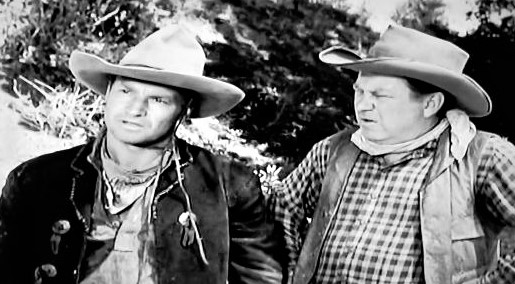
We are celebrating Classic TV for the first month of 2024. Our first choice is a western many kids never missed: Hopalong Cassidy.

📷wideopencountry.com Bill Boyd with Topper

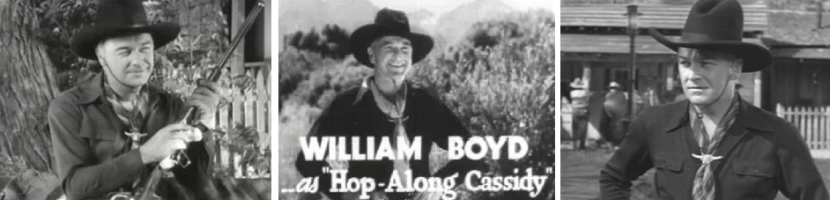
Hopalong Cassidy was introduced to the world by Clarence E. Mulford in 1904 in short stories, and a book was released in 1906. Originally the character had a wooden leg which resulted in his nickname. The first big-screen Hopalong Cassidy film aired in 1935. His nickname was now attributed to a gunshot wound. It starred Bill Boyd, a forty-year-old actor. Boyd’s Hopalong was quite different from the book character. This film Hopalong was a clean-cut hero who drank only sarsaparilla and never took the first shot. By 1948, 66 original movies had been made with ten different sidekicks. That seems like a lot, but from just 1950-1959, about 700 western films were made.

Producer Harry Sherman had become tired of the films. So Boyd invested all of this money buying the rights to the character from Mulford and the rights to the earlier films from Sherman.

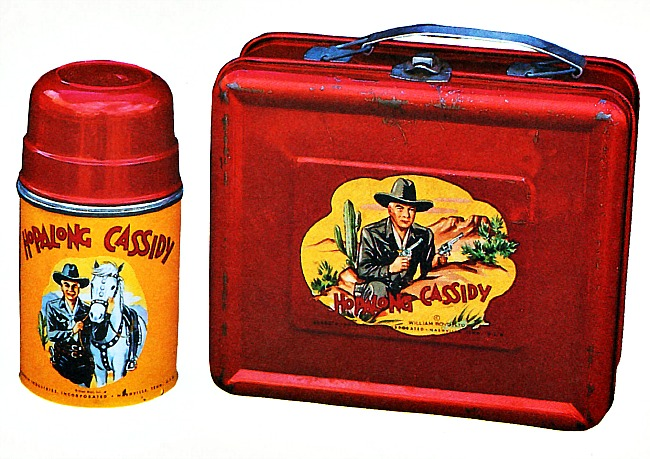
In 1949, NBC began showing the older movies on television. Westerns were huge on television, in movies, and in literature in the fifties, and Hopalong became very popular again. Boyd received all the revenue from the merchandise being sold.

📷imdb.com Boyd with Buchanan

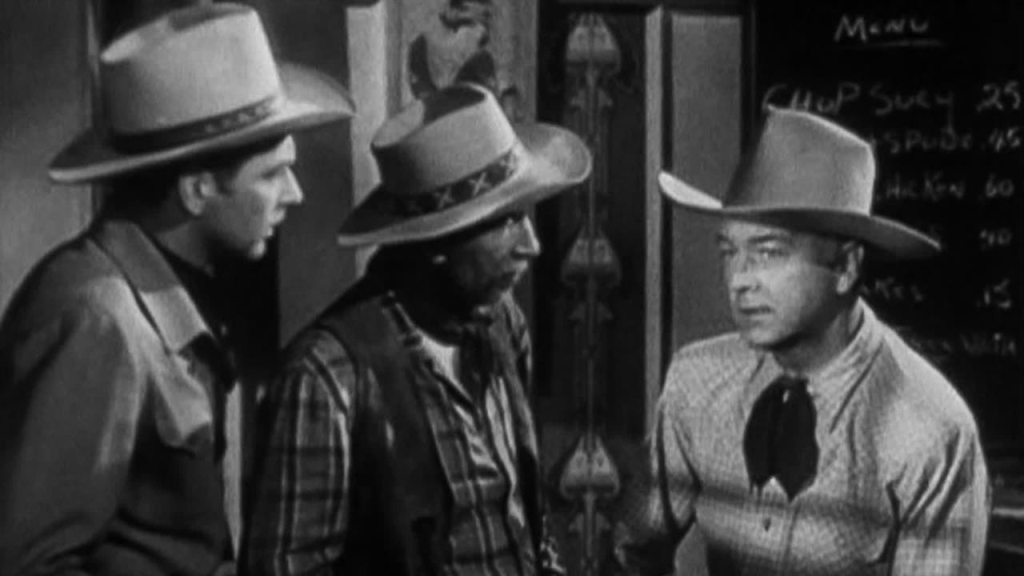
Boyd was offered another show in 1952. From 1952-1955, the show was on the air. There was a different format for the new show. Instead of the typical two companions from the films, Edgar Buchanan took on the role of Red Connors. It was Buchanan’s first television role, but it would not be his last. Boyd provided voiceover for the series. He was now a US Marshal instead of foreman of the Bar 20 ranch. Hopalong still fought crime riding his horse, Topper.

The new series was composed of 40 new episodes, along with 12 older theatrical features that were cut down to 30-minute episodes.

📷crackle.com

One of the reviewers on imdb discussed the show as “being a couple of notches above most of the contemporaries in quality.” He said outdoor scenes were actually filmed outside. He acknowledged that both Boyd and Buchanan were good actors, and Edgar provided both comic relief and dramatic support. The relationship the actors had, along with good writing, produced several really good episodes. He went on to provide information about three of his favorite shows:

“1. Grubstake–A terrific half-hour mystery. Prospector Percy Helton has struck gold. He was grubstaked by five partners. Two have been murdered. A third is Red. Who is the murderer? There is a slew of suspects in a movie-level cast–Christopher Dark, Michael Fox, Robert Paquin, and Timothy Carey(!). Gladys George steals the show as a flighty landlady engaged in a humorous romance with old codger Helton. The solution to the mystery is first rate.

2. The Feud–Two ranchers are bitter enemies. The son of one is murdered from ambush. Suspician naturally falls on his old enemy, B stalwart Steve Darrell, but foreman Hugh Beaumont, soon to become Beaver’s dad, is the culprit. He is having an affair with Darrell’s wife and hopes to get both her and the ranch when Darrell is lynched for the murder. There are some bitter scenes between the jealous Darrell and his unfaithful wife, and even a hot and heavy one between the woman and Beaumont. Perhaps not original, but certainly an adult slant compared to a typical Lone Ranger or Gene or Roy plot.

3. Lawless Legacy–An ordinary plot but given a big lift by Lone Ranger on vacation Clayton Moore as a vicious murderer.”

The series propelled Boyd back into stardom, and he became a famous celebrity, giving talks around the world. Although Hopalong is not as well known today as The Lone Ranger or the Cartwright Boys, his television show is still considered a classic. In 2009, the US Postal Service issued twenty postage stamps honoring early television programs. In this series, which included The Adventures of Ozzie and Harriet, Dragnet, I Love Lucy, Lassie, The Lone Ranger, Perry Mason, The George Burns and Gracie Allen Show, Boyd was pictured sitting on his horse Topper.

In addition to the films and television series, there were 104 radio shows and hundreds of comic books.

By 1955, Boyd was tired of his role and ready to retire. While he was ready to step out of the entertainment business, he wanted to ensure that his staff would continue to have jobs. CBS was getting ready to air a little show they thought might be successful, and his entire crew moved to that series, Gunsmoke, which continued to provide employment for another two decades.

Hopalong Cassidy’s films on television introduced westerns to an entirely new generation and kept westerns in the spotlight for the decade. By March of 1959, eight of the top ten shows were westerns and the television schedule featured thirty different western shows.

📷wordpress.com

I think Boyd was smart to purchase the rights and he was definitely in the right place at the right time to benefit during the fifties. And kudos to him for taking care of his cast and crew.

Raymond Bailey: Banking On a Starring Role

Photo: rottentomatoes.com

This month’s blog series is “Time for Some Texas Tea.” We are learning about some of the stars of The Beverly Hillbillies. Today we are banking on getting to know Milburn Drysdale, also known as Raymond Bailey.

Bailey was born Raymond Thomas Bailey in 1934 in San Francisco, California. When he was only a teenager he made the trek to Hollywood to try his hand at acting. He had a tougher time breaking into the business and worked a lot of odd jobs including day laborer in a silent movie theater where he was fired after sneaking into a mob scene which I found pretty funny and creative. He also worked as a stockbroker and a banker which would come in handy later in his career.

Photo: thenationalwwiimuseum.com

When things did not seem to be working out, he moved to New York City. He had no better luck on the east coast than on the west coast, so he joined the crew as a merchant seaman and toured the world, including China, Japan, the Philippines, the Mediterranean, and Hawaii. While in Hawaii, he also worked on a pineapple plantation, acted in the community theater, and sang for a local radio station.

He decided to give Hollywood a second chance in 1938, and he actually began getting some small movie parts. His first credited role was in SOS Tidal Wave. He was Mr. West in The Green Hornet in 1940. He appeared in 30 movies before Pearl Harbor was struck. When the US entered WWII, he joined the US Merchant Marine. After his time was up, he returned to Hollywood.

In 1951, Bailey married Gaby George and they would remain married until his death. I could not learn much about Gaby, but she was born in another country, and they were married in Manhattan. I’m not sure if she came here earlier in her life or met Bailey while he was traveling the world. She would have been 37 when they married, and I believe she received naturalization papers when she was 55.

The Alfred Hitchcock Show “Breakdown” Photo: completehitchcock.com

Raymond continued receiving big-screen roles, and in 1952 he had his first television appearance in Tales of Tomorrow as Congressman Burns. He appeared in forty-six additional series during the decade of the fifties, including The Donna Reed Show, Jack Benny, Burns and Allen, Gunsmoke, and Private Secretary. His movie career continued with roles in 26 films including Sabrina, Picnic, King Creole, and Vertigo. In the mid-fifties, he also explored Broadway with roles in four plays.

While Bailey didn’t abandon his film career, the sixties found him on the small screen the majority of the time. In the early sixties, he could be seen on a variety of shows including Lassie, The Ann Sothern Show, Bachelor Father, Perry Mason, Bonanza, My Three Sons, and Mister Ed. In 1961, he was offered his first regular role as Mr. Beaumont on My Sister Eileen. He appeared in 25 of the 27 episodes of the show.

Photo: ask.com

In 1962 he was offered the role he would become a household name for: Milton Drysdale on The Beverly Hillbillies. His time as a banker helped him manage millions of dollars in the Clampett accounts. Much to his wife’s chagrin, Drysdale talks the Clampetts into buying the mansion right next to his so he can keep a better eye on them and their money. He was their mentor as they adjusted from country life to city life as much as they could adjust.

Unfortunately, Bailey developed Alzheimer’s, and the symptoms began just as the show was ending. The Beverly Hillbillies was canceled during the “Rural Purge” when all country-related shows were ended by the network in 1971. After the series was canceled, Ray only had two acting credits; they were both in Disney movies that came out in the mid-seventies: Herbie Rides Again and The Strongest Man in the World.

With Nancy Kulp Photo: imdb.com

Baily then became a bit of a recluse until his death in 1980 from a heart attack. It sounds like the only non-family member he kept in touch with was Nancy Kulp who played his secretary Jane on The Beverly Hillbillies.

It was fun to learn more about the career of Raymond Bailey. He certainly defined the word “perseverance.” I’m glad he was able to do what he had a passion for. It would have been interesting to see how he would have done in another comedy series. His Alzheimer’s diagnosis probably ended his career twenty years earlier than it would have. It sounds like he found love and a fulfilling career and that is certainly a success no matter what your profession is.

Land of the Giants: Dogs and Cats and Rats, Oh My!

Photo: imdb.com

This month our blog series is “Kinda Creepy.” Today we are moving forward a couple of years into the late sixties with Land of the Giants.

This science-fiction show was aired on ABC from fall of 1968 to spring of 1970. It was created and produced by Irwin Allen. Five novels were released during this time, three by well-known author Murray Leinster.

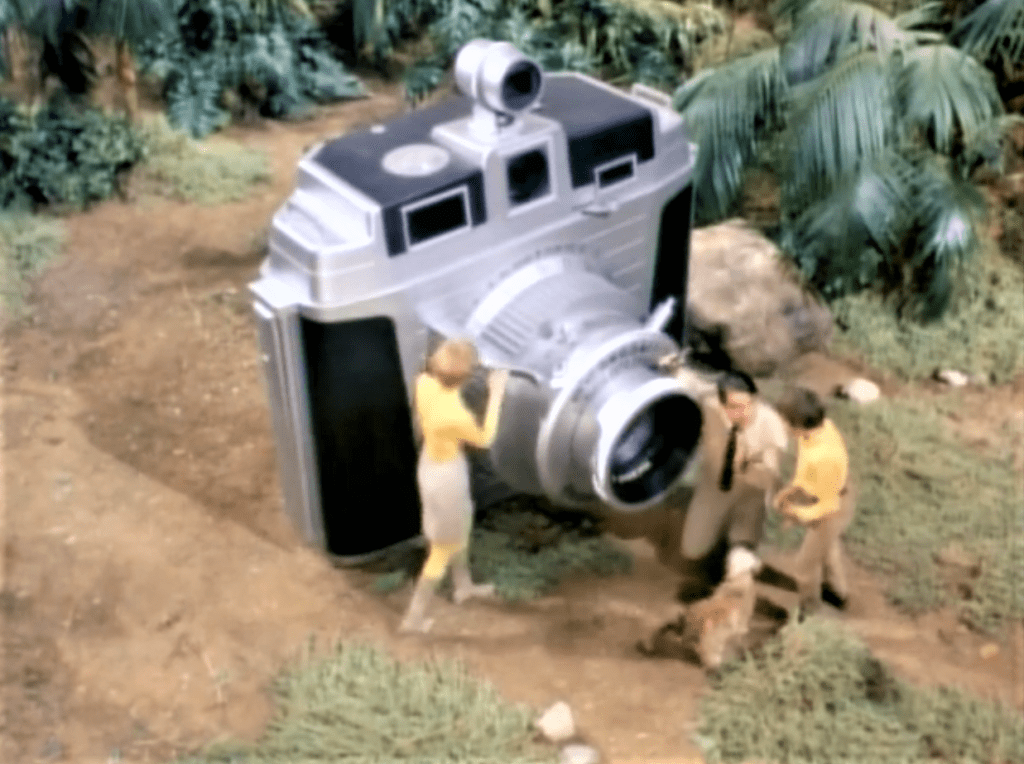
The show was set in 1983 and features the crew and passengers who were on a suborbital transport ship, the Spindrift. The Spindrift is en-route from Los Angeles to London when it encounters a magnetic space storm. It goes through a time warp to an unknown planet where everything is 12 times bigger than on Earth. When the Spindrift lands, it crashes and becomes inoperable.

The crew and passengers include Captain Steve Burton (Gary Conway), First Officer Dan Erickson (Don Marshall), Flight Attendant Betty Hamilton (Heather Young), Passenger Valerie Scott (Deanna Lund), Wealthy Passenger Mark Wilson (Don Matheson), Orphan Passenger Barry Lockridge (Stefan Arngrim), Passenger and Bank Robber Alexander Fitzhugh (Kurt Kasznar), and Inspector Kobick (Kevin Hagen). Fun fact, Matheson and Lund were married in 1970 but divorced before the decade was over.

Photo: deviantart.com

The Giant society resembles that of the United States in 1968. The survivors get around in drains leading from interior rooms to the pavement. The Giants realize they are there somewhere and have offered a reward for their capture. An authoritarian government seems to dominate part of the planet but other groups are at work to help the small Earth people survive. The Giants do have advanced technology including cybernetics, cloning, force fields, magnetic stunners, androids, and teleporters.

Not only do Earthlings have to survive being caught by the Giants, but they have to be wary of pets, especially cats and dogs. Occasionally someone is captured, and other members of the crew have to rescue them.

One article said that in 1969, “boys could be found sitting in front of the television captivated by the antics of red-haired, mini-skirted Valerie as she was menaced by cats, imprisoned in a dollhouse, cloned, prodded by scientists, carried off by an ape, and even used as a pawn on a giant chessboard.”

Photo: invisiblethemeparks.com

The show had a budget of $250,000 an episode. In 1968, it was the most expensive show produced on television. There were a lot of special effects. Gigantic mechanical props were built and used. For example, a slice of bread was made from a four-foot slab of rubber, and one episode had a nine-foot revolver. Some of the props were recycled from Lost in Space, Voyage to the Bottom of the Sea, and Batman. Actors had to do a lot of their own stunts like climbing up curbs and phone cords. The one-hour episodes were filmed in color.

The show aired on Sunday nights against Lassie, so I was surprised it achieved decent ratings so quickly. It stayed on Sunday nights for season two but was up against World of Disney which probably created a bit of a ratings decline. The other show, To Rome with Love, moved around a lot and was probably not much competition. The network decided to cancel the show before the third season, but since the writers were not aware that it was going to happen, no finale was written, and we never learned if the characters made it back to Earth or not. The financial cost was the reason the network cited for the cancellation.

Photo: art.com

Composer extraordinaire John Williams composed the theme for the show; he also composed the theme for Lost in Space.

I don’t really remember the merchandise for this show, but it included comic books, View Master reels, model kits, and a lunch box.

I do remember watching this show and I remember being scared when a large dog was growling at one of the Earthlings. It definitely earned the kinda creepy description. I think I was a bigger fan of The Borrower books. I always wondered if this was one of the inspirations behind Honey I Shrunk the Kids. From what I recall, the concept of the show was better than the reality of the show.

Maudie Prickett: What a Character – Prim and Proper

As we look at some of our favorite character actors, today we learn more about Hazel’s friend Rosie: Maudie Prickett. Prickett had a prolific career with more than 300 credits between the stage, film, and television.

Photo: bewitchedwikifandom.com

Maudie was born in 1914 in Oregon. Her birth name was Maudie Marie Doyle; she married Charles Fillmore Prickett II in 1941 and used her married name for her career. Charles was the co-founder and manager of the Pasadena Playhouse and later became an orthopedic surgeon. They remained married until his death in 1954 and had two children.

Prickett would amass 64 movie credits, with her first being Gold Mine in the Sky in 1938. Her last three movies were made in 1969: The Maltese Bippy, Rascal, and Sweet Charity. She typically played maids, secretaries, spinsters, or nosy neighbors. One of her most recognized movie roles was as Elsie the Plaza Hotel maid in North by Northwest.

In 1952 she received her first television roles, appearing on This is the Life, Hopalong Cassidy, The Doctor, and The Adventures of Superman. While most people are familiar with Hopalong Cassidy and Superman, they may not recognize the other shows. This is the Life was a religious show that began in 1952 and ended in 1988; each episode was a mini-drama that ends with someone becoming a Christian. The Doctor was a medical show where Warner Anderson as the doctor presented a story and then provided comments after the episode. Most of the series dealt with some type of emotional problem.

The look we were used to with Maudie Photo: imdb.com

For the next two decades, Maudie was quite busy with her television career. She often made multiple appearances on a show as different characters. She had a nice blend of both dramas and comedies on her resume.

In 1961 she married Dr. Eakle Cartwright who died in 1962. In 1966 she would try marriage one more time when she wed the mayor of Pasadena, Cyril Cooper who lived five more years.

While watching your favorite classic television shows, you will see her on westerns including Wagon Train, Bonanza, and Gunsmoke. She made her mark on medical series including Ben Casey and Marcus Welby MD. She also appeared in quite a few dramas including The Millionaire, The Untouchables, Lassie, Daniel Boone, The Mod Squad, and McMillan and Wife.

However, it was the sitcom genre that kept her busiest. During the fifties, she could be seen on Topper, Father Knows Best, Leave It to Beaver, and The Donna Reed Show. The sixties found her on Dennis the Menace, Bachelor Father, The Danny Thomas Show, Mister Ed, My Three Sons, Petticoat Junction, The Andy Griffith Show, The Doris Day Show, Gomer Pyle USMC, and Get Smart. During the seventies, she took roles on Mayberry RFD, Bewitched, Love American Style, and Room 222.

Best Friends – with Shirley Booth on Hazel Photo: pinterest.com

All of her recurring roles were on sitcoms: Date with the Angels, The Jack Benny Show, and Hazel. Date with the Angels was Betty White’s second sitcom, and Maudie played Cassie Murphy, a neighbor of the newlyweds. On The Jack Benny Show, she played Mrs. Gordon, the secretary of the Jack Benny Fan Club. Many people remember Prickett from Hazel where she played Rosie. Hazel and Rosie were best friends and always came through for each other but were also very competitive, especially when an eligible bachelor was involved.

In 1976, Maudie passed away from uremic poisoning at the young age of 61. Uremia occurs when there is an increase of toxins in the blood and usually occurs when the kidneys no longer filter them out. It can be treated with medication, dialysis, and transplant surgery, but for some reason, hers must have been untreated which lead to her death.

On Bewitched Photo: sitcomsonline.com

Maudie was a very busy lady, accumulating 164 acting credits between 1938 and 1974. I’m not sure if she was okay with being typecast or if she would have liked some other types of roles, but she certainly made the roles her own. You have to wonder how much more she would have accomplished if she had lived another twenty or thirty years. Her personal life was sad, having three husbands die before her and then she herself dying as middle age was beginning.

I know you read this comment a lot if you follow my blog, but we have another one of those character actors I wish we knew more about. The Television Academy rarely interviews them, and it is tough to find much information beyond their professional resume. One day I will make good on my promise and write a book about these wonderful people who made classic television so fun and believable.

Lassie: This Series Had Five Lives

We are finishing our series Life with Pets. Although the shows we have looked at so far this month have featured some unusual pets, I knew that we had to include man’s best friend at some point, and really, how could you have a blog series about pets without Lassie who was a very unusual dog?

Except for The Hathaways, the other shows we learned about this month were based on a movie, which was often based on a book. Lassie is no exception. English author Eric Knight wrote a book in 1940 called Lassie Come Home. Several films were produced between 1943 and 1951 about Lassie. Once the seventh and final film was completed, Lassie’s (or Pal as he is known in his real life), owner Rudd Weatherwax was given all rights to the Lassie trademark and name. Weatherwax began taking Pal to local fairs and rodeos.

File:Lassie cast 1955.jpg - Wikimedia Commons
Clayton, Rettig, Cleveland Photo: wikimedia.com

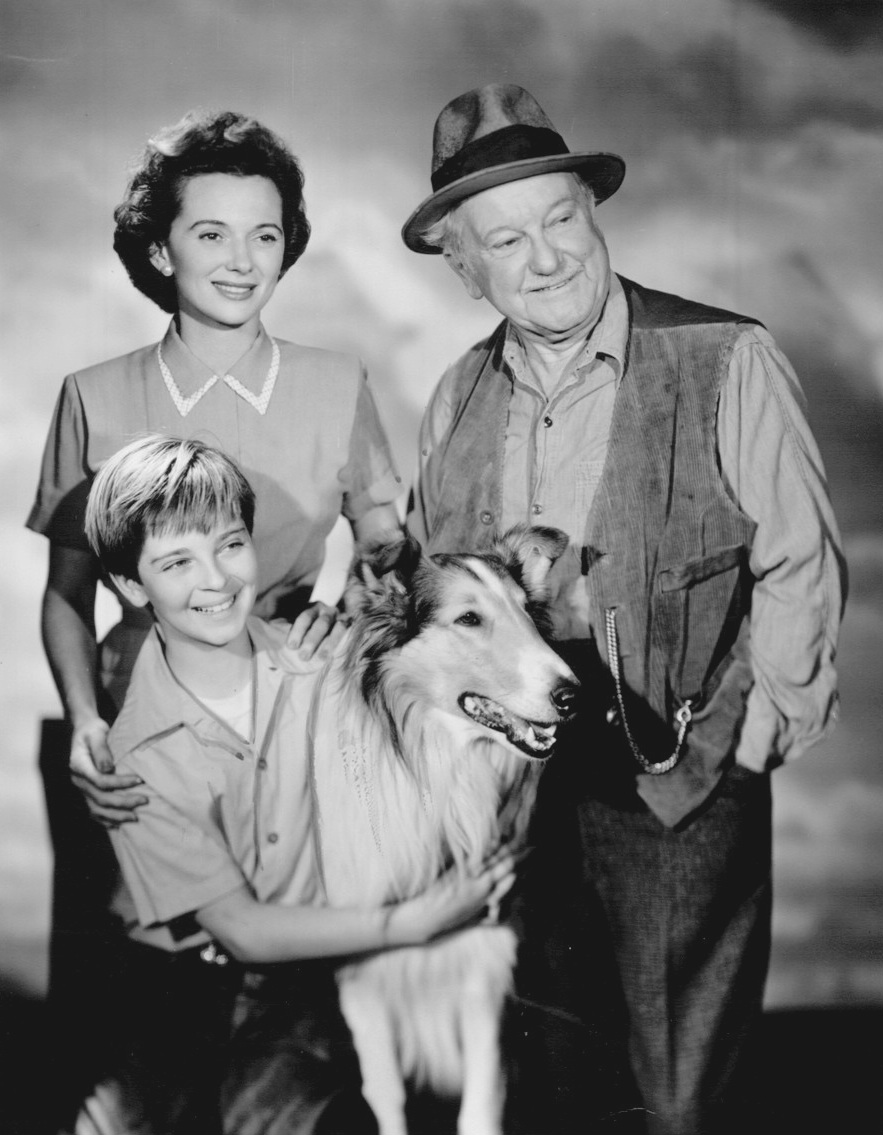
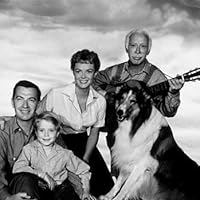
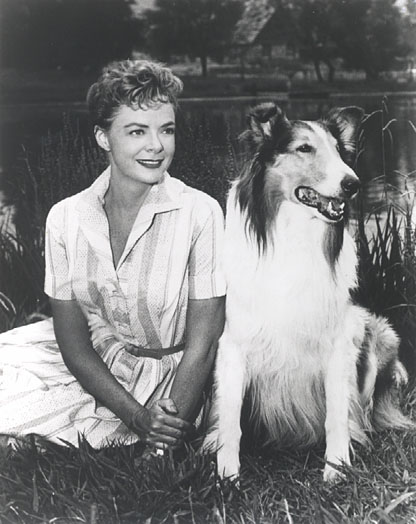
Robert Maxwell convinced him to feature Pal in a weekly television show. The men developed the story of Lassie who lived with a young boy named Jeff Miller (Tommy Rettig), age 11; his widowed mother Ellen (Jan Clayton); and her father-in-law (George Cleveland) who all lived on a farm. The show was approved, Campbell’s Soup agreed to sponsor the first year of shows, and the series debuted in 1954 on Sunday nights at 7 pm EST.

Campbell’s would continue its role as sponsor for 19 more years, which totaled 591 episodes. The company asked to have their products featured on the set, so you will see them in background shots. The soup company held a contest in 1956 to name Lassie’s puppies. Grand prizes included $2,000 and ownership of the pups which were hand-delivered by executives. In 1958, viewers could send in 25 cents and a label from a Swanson’s TV dinner to get a friendship ring; the company mailed 77,715 of them to fans. In 1959, fans could send in five labels from Campbell’s products and receive a wallet with a photo of Lassie. More than 1.3 million were mailed and Campbell’s profits rose 70% after its sponsorship began.

In 1957, Jack Wrather who owned The Lone Ranger and Sergeant Preston of the Yukon purchased the show for $3.25 million. In 1958 Lassie received new owners. Both Clayton and Rettig expressed an interest in wanting to leave the show. Cleveland had passed away the year before. Adoptee Timmy Martin (Jon Provost) becomes his master and they live with his parents, Ruth Martin (Cloris Leachman) and Paul Martin (Jon Shepodd).

Lassie (TV Series 1954–1974) - Photo Gallery - IMDb
Photo: imdb.com

In 1958 Wrather dropped Leachman and Shepodd, replacing them with June Lockhart and Hugh Reilly. A neighbor Cully Wilson (Andy Clyde) was also added.

Lassie received good ratings from 1954-1958. In 1959 it fell out of the top 30. By 1960 with the change in characters, the show shot back and made it to #13 in 1964.

However, just as things were looking up, Provost declined to renew his contract. So, ten years after its debut, the show changed its focus to conservation and environmentalism, teaming Lassie with a group of US Forest Service members. In 1965 the show transitioned to color, but the ratings decline had already begun.

Season 17 transitioned again and this time it was an anthology season with Lassie traveling on her own, finding adventures along the way. CBS cancelled the show after season 17, but it became a syndicated show for networks to pick up.

The final two seasons were spent with Garth Holden (Ron Hayes) on the Holden Ranch, a home for orphaned boys. After season 19, the show went off the air for good.

Five of Pal’s descendants also played the role of Lassie. They included Lassie Jr. (1954-59), Spook (1960), Baby (1960-1966), Mire (1966-1971), and Hey Hey (1971-73). Like the show, Pal lived to be 19.

The show was filmed at Stage One of KTTV in Los Angeles from 1954-57 and then moved to Desilu for a year. The Timmy seasons were filmed at the Grand Canyon and High Sierra and the Forest Service seasons were filmed in Alaska and Puerto Rico, among other sites.

Photo: ashroudofthoughts.com

Most of the plots involved the boys or other characters needing help and Lassie coming to the rescue. However, ironically the biggest spoof of the show is Timmy falling down a well and Lassie saving him, but no one ever fell down a well on the show except Lassie in season 17. It is such an iconic plot, that Provost wrote his autobiography in 2007 and called it Timmy’s in the Well: The Jon Provost Story. On his website, Provost says he kept in touch with Rettig. He says that he always ended their conversations with “Thanks for the dog, Jeff” which was his line in the series when he took over the show.

During the nineteen years that the show was on the air, several theme songs were used. For the first season, the theme was “Secret of the Silent Hills” composed by William Lava. The song was originally created for a 1940 radio show, “The Courageous Dr. Christian.” The song was tweaked a bit for the second and third seasons. An orchestral version of an aria from Faust, “Dio Possente” came in for the next year. Beginning with year five, the most famous version was aired: “Lassie Main & End Title” was created by Les Baxter and whistled by Muzzy Marcellino. After the Martin years, an orchestral version of “The Whistler” was used for a few years, and then Nathan Scott’s arrangement of “Greensleeves’ finished the run.

The series received two Emmy Awards for Best Children’s Program in 1955 and 1956 and a nomination in 1960. In addition, June Lockhart was nominated for Leading Actress in a Dramatic Series in 1959, Jan Clayton was nominated for the same award in 1957 and 1958, and the show was nominated for Best Dramatic Series in 1957.

The series was released on DVD during the years 2001-2007.

I do remember watching Lassie during the Provost years, but I actually was not aware of the other seasons. Like Flipper and Gentle Ben, it was a family show where everyone could sit around the television and watch together on a Sunday evening. With the show being on the air for 19 years, it is fondly remembered by several generations and made a ton of money marketing merchandise.

One of the things I love most about the show is that people are sure they remember Timmy falling into the well. It would be fun to do a blog about things that people are positive they remember but never happened. It’s similar to the Robot on Lost in Space saying “Danger Will Robinson” which he never actually did. It just proves that some shows live on in our imaginations for a long time.

Gentle Ben: A Bear Hug for Everyone

As we continue our blog series about The Life of Pets, we feature a show about a boy and his bear: Gentle Ben. In 1965, Walt Morey published his novel, Gentle Ben. He had written adult books, but then his wife, a teacher, challenged him to write an adventure kids’ book similar to a Jack London story. Gentle Ben is the story about Mark and his bear Ben. He set the story in Alaska, where he had worked, and he said many of the characters were based on real people. He also said the story of a boy befriending a bear was also based on real stories he read and heard about. The book sold almost 3 million copies.

Photo: ebay.com

The Morey family owned some land which became the Walt Morey Park in Wilsonville, Oregon, a bear-themed adventure. An eight-foot statue of Gentle Ben is one of the park sights.

Photo: metv.com

The book became a movie on the big screen, and like Flipper, it moved to the small screen a few years later. In fact, the house for the Ricks family on Flipper is the same house used by the Wedloe family on Gentle Ben.

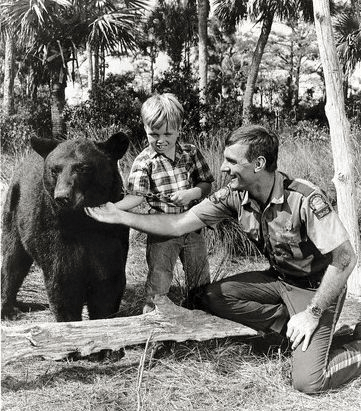
The television show debuted on CBS in 1967 and continued for two seasons, with 58 episodes. The series was produced by Ivan Tors who also produced Flipper, Sea Hunt, and Daktari. The TV show was set in Florida instead of Alaska. Tom Wedloe (Dennis Weaver) is a wildlife officer in the Everglades and he lives with his wife Ellen (Beth Brickell) and son Mark (Clint Howard, Ron’s brother) and his pet bear, Ben. Clint and Ron’s father Rance also penned a few of the scripts for the show.

Other characters showing up weekly included Hank Minegar (Robertson White), a local squatter, and Mark’s friend Willie (Angelo Rutherford).

Photo: DVDTalk.com

Like Flipper, there were several bears who played Ben, but the bear used most was Bruno, a black bear. Bruno had a good disposition and a variety of facial expressions. Bruno and his friends traveled from Canada because they had thicker coats which photographed better. They were declawed and most of their teeth had been removed.

Ben only made animal noises but they were spoken through Candy Candido, a voice actor and musician. I’m not sure why a kookaburra was used for Flipper and a human for Ben; you would think they could have used recordings of a dolphin and a bear. Bruno later moved to Hollywood to continue acting and died about 1980.

Most of the stories featured Tom’s work with wildlife and included animal management, children getting lost in the Everglades, weather disasters, and illegal activities such as poaching.

Gentle Ben was a great success and reached #2 in the ratings its first season. The popularity of the show was translated into a lot of merchandise including a board game, books, a stuffed bear, and comic books. The show was on Sunday nights sandwiched between Lassie and The Ed Sullivan Show.

During its second season, the show failed to even get into the top twenty. Lassie also suffered and received a significant drop in the ratings. I think the fact that the shows were on opposite Walt Disney’s Wonderful World of Color probably had a lot to do with its ratings drop. Also, if you liked animals you had to make a choice because Lassie competed with Wild Kingdom.

While the show highlighted family values and respect for nature, it was criticized for portraying wildlife as a pet. Ben even stayed indoors with the family sometimes. In 1971, National Park Service Officer John Hast recalled that “the television series Gentle Ben was the worst thing that ever happened to us. People saw this big, lovable bear on television and when they see a bear in the park, I guess they think it’s the same one. They don’t realize how wrong they are till they are bleeding.”

Photo: pinterest.com

I think kids from the sixties have fond memories of Gentle Ben, and many kids remember watching it. However, I guess the novelty of the show wore off quickly. You can only have so many things a real bear can do. Compare this show to Mister Ed where featuring a talking horse might seem far-fetched; however, that show lasted on the air eight years because Ed was as much of a character as anyone else on the show.

Shows like Flipper and Gentle Ben had their place, but they just didn’t have the memorable characters, quality scripts, or lush photography that might have extended their popularity. However, they are worth remembering and discussing. They prodded kids to imagine having their own special animal that only they could tame and love.

June Lockhart Rocked the Acting Profession

As we check out some of my favorite actresses this month, this week we learn about one of the most prolific actresses on the small screen. With more than 170 credits between 1938 and 2004, June Lockhart had a very successful career.

See the source image
Photo: ebay.com

Perhaps destiny planned for June to become an actress. Both her parents, Canadian-born Gene and English-born Kathleen Lockhart, were actors and she traveled with them as a young child while they performed. Although she was born in New York City in 1925, she was brought up in Beverly Hills.

See the source image
June with her parents
Photo: mesquitelocalnews.com

She was only 8 when she took the role of Mimsey in “Peter Ibbetson” at the Metropolitan Opera.

In 1938, at age 13, June made her film debut in A Christmas Carol with her parents. She appeared in more than thirty movies, including Meet Me in St. Louis, Sergeant York, All This and Heaven Too, and The Yearling.

Meet Me in St. Louis, 1944 ~ June Lockhart, Judy Garland & Lucille Bremer |  Judy garland, Hollywood, Holiday movie
Photo: pinterest.com Meet Me in St. Louis

In 1948, she won a Tony for Outstanding Performance by a Newcomer for her role in “For Love or Money.”

Although her appearances in film and on Broadway would have been a lucrative career n themselves, it was in television that she found most of her fame. In 1949 she accepted a role on The Ford Theater Hour. During the 1950s she would make 56 appearances on drama theater shows. In addition, she was in Gunsmoke, Have Gun Will Travel, Rawhide, and Wagon Train.

In 1951 she married John Maloney. In 1959 they divorced and that same year, she married John Lindsay whom she was married to until 1970.

But it was in the television show, Lassie from 1958-1964 that she became a household name as Ruth Martin, Timmy’s (Jon Provost) mother. The show was about the Martin family’s life on the farm and the heroics of Timmy’s dog Lassie.

See the source image
Photo: pinterest.com

The 1960s continued to be very productive for her as an actress. She appeared in a variety of television shows, including the dramas Perry Mason, The Man from UNCLE, and The Alfred Hitchcock Hour and the comedies Bewitched, Family Affair, and The Beverly Hillbillies.

See the source image
Photo: thenewyorktimes.com

She also starred in two long-lasting sitcoms. From 1965-1968 she was Maureen Robinson on Lost in Space. On the show, a family with three children travel with Major Don West to colonize a new planet.  Dr. Zach Smith is a stowaway who tried to sabotage their mission by throwing their ship off course and ends up having to live with the people he thought were his enemies.

See the source image
With Bill Mumy
Photo: uncleoldiescollectible.com

In an interview with Bill Mumy who played her son Will on Lost in Space, he said that Lockhart always made time for the kids on the set. He said she kept them occupied between takes which she didn’t need to do. He said “she spent a lot of time nurturing Angela’s and my developing thought processes. Teaching us.”

See the source image
Photo: thedailyissue.com

In 1968 she was offered a role as Dr. Janet Craig for the final two seasons of Petticoat Junction. Bea Benaderet, the star, passed away in 1968, and Janet filled in as a “mother” to the girls.

Although she would not take on any additional regular roles for sitcoms, she continued to keep busy through the 1970s, 1980s, 1990s, and 2000s. During these decades , she could be seen on Love American Style, Marcus Welby, Adam-12, Police Story, Ellery Queen, Happy Days, Magnum PI, Falcon Crest, Quincy, Murder She Wrote, Full House, Roseanne, Drew Carey, Grey’s Anatomy, and in Beverly Hills 90210 where she had a recurring role, along with 33 other series.

See the source image
On Happy Days
Photo: sitcomsline.com

Her last acting role was an animation movie, Bongee Bear and the Kingdom of Rhythm, in 2016.

See the source image
Photo: famousbirthdays.com

Lockhart is an interesting person as well as a successful actress. She hosted the Tournament of Roses parade for eight years and the Macy Thanksgiving parade for five years.

During my research, I learned several surprising things about her. She was an Ambassador for the California State Parks system. She won the NASA award for Exceptional Public Achievement Medal for inspiring the public about space exploration in 2013. She served as a panelist with several White House correspondents on a quiz show Who Said That in the fifties. That job provided her with an open invitation to attend White House briefings which she did and said were fun.

See the source image
Photo: flickr.com

Her hobbies included gold mining, antique motorcars, lighter-than-air aircraft, and learning about the Old West. She kept medical texts near her bed for nighttime reading. She was a member of a kite-flying club. She also loved old steam engines.

See the source image
Photo: blogspot.com

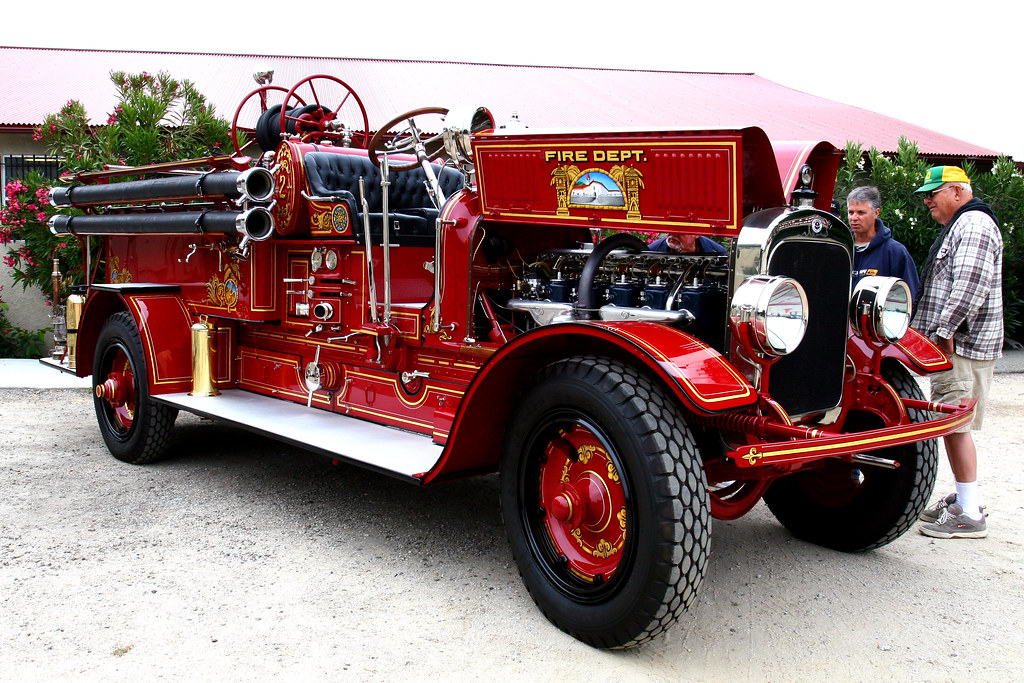
Her husband bought her a 1923 Seagrave pumper fire engine named “Cordelia Delilah Lindsay” which she drove around even though it got two miles to the gallon. She actually had the largest parking space at the studio.

If all those facts aren’t interesting enough, in an interview with Bill Mumy by the Archive of American Television, he relayed that she loved rock and roll. In 1967, she hired the Allman Brothers Band (then called Hour Glass) to play at her house. She took Angela Cartwright and Bill to the Whiskey-A-Go-Go. He also said that “in the 1980s she carried a picture of only one person in her wallet and it was David Bowie.”
See the source image
Photo: pinterest.com

I’m truly impressed that with as busy as she was as an actress, she made time for both her two daughters and her television children, and enjoyed a ton of hobbies as well. It seems she had a joy for learning about new things and continued to add interests to her life. She is a great role model for all of us.

.

The Smothers Brothers Comedy Hour: Fifty Years After Getting the Pink Slip

The late 1960s and early 1970s might have contained the most diverse television shows than any other era. In 1968, there were the rural comedies like Green Acres and The Beverly Hillbillies; there were the standard sitcoms, My Three Sons, Get Smart, That Girl, Bewitched; there were the remains of a few westerns including The High Chaparral, The Virginian, and Gunsmoke; there were crime and thrillers such as Hawaii Five-0 and Mission Impossible; there was the crime/western in The Wild, Wild West, there were gameshows on at night including Let’s Make a Deal, The Dating Game, and The Newlywed Game; there were sci-fi shows like Star Trek and The Land of the Giants; family shows like Lassie; and even Lawrence Welk.

In addition, there were a couple of shows that were a bit edgier and introduced more  provocative concepts and themes. The Mod Squad featured three teens who were helping solve crimes in lieu of jail time, and then there was the almost-impossible-to-describe Laugh In.

Photo: neatorama.com

Similar to Laugh In was The Smothers Brothers Comedy Hour which also debuted in 1967 featuring Tom and Dick Smothers. It had more of a variety format to it but it had the same topical and satirical humor.

Photo: retrokimmer.com
The Who

In addition to poking fun at politics, the war, religion, and current issues, you could tune in to the Smothers Brothers for some of the best and sometimes controversial music in the industry. Performers such as Jefferson Airplane, Steppenwolf, Simon and Garfunkel, The Who, Cream, Pete Seeger, and The Doors appeared on the show.

Photo: metro.com
Jefferson Airplane

The show aired Sunday nights against Bonanza on NBC; ABC aired The Sunday Night Movie in its first season and Hee Haw in its second season.

The series had some of the best writers on television: Alan Blye, Hal Goldman, Al Gordon, Steve Martin, Lorenzo Music, Don Novello, Rob Reiner, David Steinberg, and Mason Williams. Reiner and Martin both commented on the show in an interview by Marc Freeman in the Hollywood Reporter 11-25-2017 (“The Smothers Brothers Comedy Hour at 50: The Rise and Fall of a Ground-Breaking Variety Show”).  

Reiner relayed that “you had two cute boy-next-doors wearing red suits, one with the stand-up bass and the other with his guitar. They looked like the sweetest, most innocent kids. You got drawn to them, and then they hit you with the uppercut you didn’t see coming.”

Photo: tvbanter.net

Martin elaborated “When you have the power wrapped up in innocence, it’s more palatable. They were like little boys, but you also had Dickie there to reprimand Tommy when he would make an outrageous statement. It’s like the naughty ventriloquist dummy who can get away with murder as long as the ventriloquist is there to say ‘You can’t say that.’ It’s the perfect setup for getting a message across.”

Photo: pinterest.com
Jack Benny

In addition to the musical acts, hundreds of celebrities appeared on the show between 1967 and 1969, including Jack Benny, Carol Burnett, George Burns, Bette Davis, Jimmy Durante, Barbara Eden, Nanette Fabray, Eva Gabor, Shirley Jones, Don Knotts, Bob Newhart, Tony Randall, Ed Sullivan, Danny Thomas and Jonathan Winters, along with so many others.

Part of the show was the brothers’ ongoing sibling rivalry about whom their parents liked best. They also began to add political satire and ribald humor. Pat Paulsen delivered mock editorials about current topics such as the draft and gun control, and in 1968 he had a mock presidential campaign.

Photo: rollingstone.com
Pat Paulsen for president

Church sermon sketches poked fun at religion. The show lampooned many of the values older Americans valued, often delivering anti-establishment and pro-drug humor. No one was given an exception, and the show lambasted the military, the police, the religious right, and the government.

Battles over content were ongoing with the network. The network pulled Pete Seeger’s performance of his anti-Vietnam War song, “Waist Deep in the Big Muddy.” They nixed Harry Belafonte’s song, “Don’t Stop the Carnival” because it had a video collage behind him of the 1968 Democratic National Convention riots.

Younger viewers were tuning in, and despite the conflicts, the show was picked up for a second season. The network insisted they receive a copy of the show at least ten days in advance for editing. In April of 1969, William Paley canceled the show without notice. Some sources contend it was canceled by CBS president Robert Wood. Some sources cite the issue with unacceptable deadlines and others mention Tom Smothers lobbying the FCC and members of Congress over corporate censorship that brought about the firing. The brothers filed a breach of contract suit against the network and after four years of litigation, a federal court ruled in their favor, awarding them $776,300.

Photo: blogspot.com

Here’s a typical joke from the show that was not as controversial.

Tom: You can tell who’s running the country by how much clothes people wear, see?

Dick: Do you mean that some people can afford more clothes on, and some people have . . . less on? Is that what you mean?

Tom: That’s right.

Dick: I don’t understand.

Tom: See, the ordinary people, you’d say that the ordinary people are the less-ons.

Dick: So, who’s running the country?

Tom: The morons.

The Smothers Brothers elicited humor that was as topical, influential, and critical as anyone had ever heard before on television. Fifty years later, both the network and the brothers realized everyone over-reacted. If the Smothers Brothers had tried to play by the rules a bit, they would not have lost their platform to continue to help change what they saw as a messed-up culture.

Photo: Wikipedia.com

The CBS executives felt the program created too much controversy. In their defense, politicians, especially Lyndon Johnson and Richard Nixon, exerted a lot of pressure on the network. Remember this was a time of three networks and ads are what produced the profits to fund shows. The network received a boatload of hate mail daily about the program and, when viewers begin talking boycotting advertisers, executives sit up a bit straighter and listen.

The Smothers Brothers Show, a less controversial series, debuted in 1975. They had two specials on NBC later and another CBS series in 1988 but never regained the influence they had in the sixties. However, the show did help pave the way for a future that permitted, and later embraced, shows with controversy beginning with All in the Family, continuing with Saturday Night Live, and recently seen on shows such hosted by Jon Stewart and Stephen Colbert. Although the comedy spouted on the show would seem quite tame by today’s standards, the show had an important part in the history of television and the rights of free speech.

Photo: wvxu.com

I have seen some DVDs out there from this show, but they are pricey. Recently I saw season two going for $190. I do see Laugh In on Decades quite often, so perhaps The Smothers Brothers might show up somewhere too, although I’m not sure this show would hold up as well as Laugh In, but the musical performances would be fun to see.