Bracken’s World: Ahead of Its Time

As we wind up our What in the World? blog series this month, we end with Bracken’s World. Just like the other shows we covered, this one began in the sixties, 1969, and just like the others, it was on for less than two seasons.

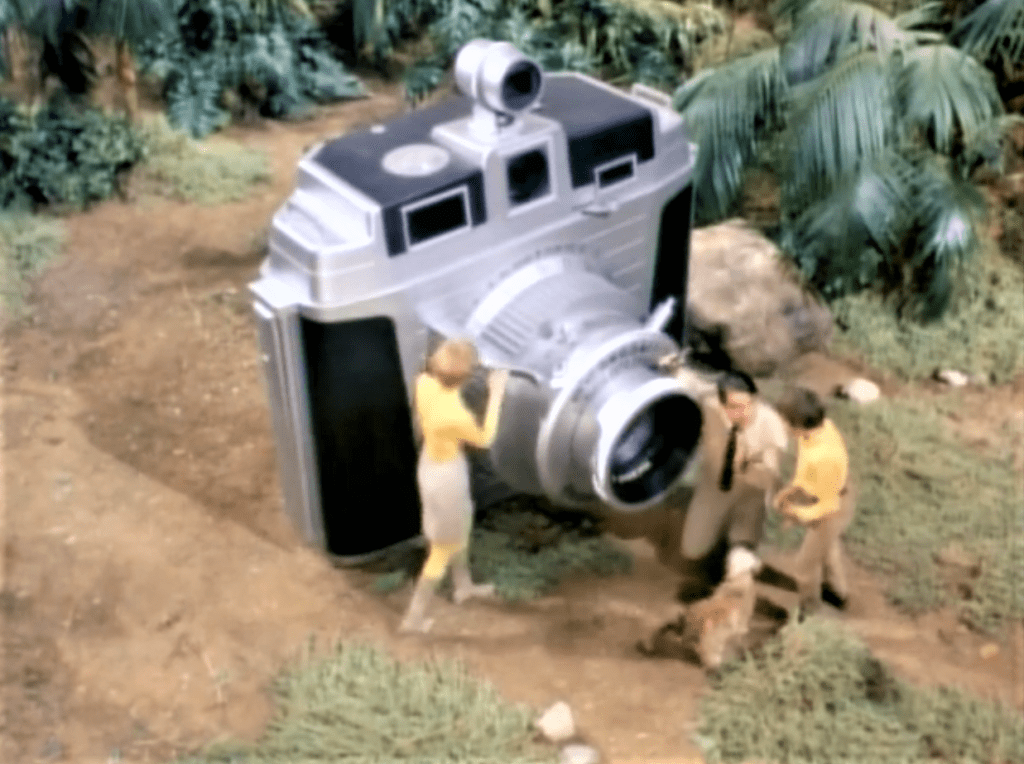
Dorothy Kingsley created the series for NBC. This was her only foray into television; she was a screenplay writer for most of her career. Kingsley wanted to concentrate on the “little people” who work at the studio, rather than the executives. In one blog I read that props from Twentieth Century Fox where the show was filmed were often carted around in the background for authenticity. It would be fun to go back and make a list of the props that were shown around the set; specifically mentioned were props from Planet of the Apes and Land of the Giants.

Watch.plex.tv.com captures the essence of the show in its description “In the glitzy realm of Century Studios, powerful executive John Bracken shapes Hollywood’s fate, navigating ambition, romance, and betrayal through the eyes of his astute secretary Sylvia, who holds the key to both secrets and success.”

Century Studios was a movie studio. John Bracken owned the company, and he was never seen during the first season. Similarly to the way Charlie interacted with Charlie’s Angels, we only heard Bracken on the telephone, voiced by Warren Stevens. Sylvia Caldwell (Eleanor Parker) was his secretary. There were some impressive cast members in this show including stunt man Dennis Cole, Jeanne Cooper, Madlyn Rhue, Linda Harrison, Elizabeth Allen, Karen Jensen, and Laraine Stephens. Most of them played starlets waiting for their big break. Peter Haskell as producer Kevin Grant seemed to be responsible for a lot of the success of the show. Tom Selleck had a recurring role of Roger Haines during the first season. The characters dealt with the problems of the movie industry—drugs, sex, alcohol, and amoral executives.

Being a Hollywood studio, there were also a lot of great guest stars including Anne Baxter, Shelley Fabares, Sally Field, Lee Grant, Carolyn Jones, Ricardo Montalban, Edward G. Robinson, Martin Sheen, Richard Thomas, Forrest Tucker and Raquel Welch.

The series was on Friday nights in the hole filled when Star Trek was canceled. It was referred to as the “Friday night death slot.” The show’s competition was Love American Style and CBS Friday Night at the Movies, which started an hour before Bracken’s World did. I’m not sure when this death slot switched because at that same time, I recall loving Friday nights in the early seventies featuring The Brady Bunch, The Partridge Family, Room 222, The Odd Couple, and Love American Style.

The show’s ratings were not good, so for the second season, things were changed a bit. Parker left part way through season one because she didn’t like the scripts. We now got to see John Bracken in person, but he sounded like Leslie Nielsen who played him instead of John Warren. Dennis Cole was also shown out the door.

Jeanne Cooper had a very different view of the show than Parker. Cooper played one of the starlet’s mom who was also her agent. She said that it allowed viewers to go behind the scenes of a movie studio to get a realistic depiction of what happened when the cameras were off. She said that the cast can take much more time filming movies to discuss the script, but that is not the way television works, and Parker never understood the difference between the two mediums. Cooper felt the writing was much more sophisticated than shows had produced before and that it led the way for shows like LA Law and Boston Legal.

According to Cooper, there were two reasons for the demise of the show. One was that she said Bracken should never have been exposed. He should have stayed a voice who ran a studio like a Louis B. Mayer type. She also said the show was very expensive to produce. Often shows were ordered six at a time back then which gave the crew some wiggle room to have a few expensive shows and then cut back when it got viewers locked in to average out the cost. NBC would only buy two or three at a time. Finally, Stan Rubin, the executive producer, said NBC had to agree to a minimum of four-episode commitments at a time and they refused, so the show was canceled.

The show did seem to be a bit ahead of its time. Perhaps if it had debuted a few years later, it would have found more viewers.

Land of the Giants: Dogs and Cats and Rats, Oh My!

Photo: imdb.com

This month our blog series is “Kinda Creepy.” Today we are moving forward a couple of years into the late sixties with Land of the Giants.

This science-fiction show was aired on ABC from fall of 1968 to spring of 1970. It was created and produced by Irwin Allen. Five novels were released during this time, three by well-known author Murray Leinster.

The show was set in 1983 and features the crew and passengers who were on a suborbital transport ship, the Spindrift. The Spindrift is en-route from Los Angeles to London when it encounters a magnetic space storm. It goes through a time warp to an unknown planet where everything is 12 times bigger than on Earth. When the Spindrift lands, it crashes and becomes inoperable.

The crew and passengers include Captain Steve Burton (Gary Conway), First Officer Dan Erickson (Don Marshall), Flight Attendant Betty Hamilton (Heather Young), Passenger Valerie Scott (Deanna Lund), Wealthy Passenger Mark Wilson (Don Matheson), Orphan Passenger Barry Lockridge (Stefan Arngrim), Passenger and Bank Robber Alexander Fitzhugh (Kurt Kasznar), and Inspector Kobick (Kevin Hagen). Fun fact, Matheson and Lund were married in 1970 but divorced before the decade was over.

Photo: deviantart.com

The Giant society resembles that of the United States in 1968. The survivors get around in drains leading from interior rooms to the pavement. The Giants realize they are there somewhere and have offered a reward for their capture. An authoritarian government seems to dominate part of the planet but other groups are at work to help the small Earth people survive. The Giants do have advanced technology including cybernetics, cloning, force fields, magnetic stunners, androids, and teleporters.

Not only do Earthlings have to survive being caught by the Giants, but they have to be wary of pets, especially cats and dogs. Occasionally someone is captured, and other members of the crew have to rescue them.

One article said that in 1969, “boys could be found sitting in front of the television captivated by the antics of red-haired, mini-skirted Valerie as she was menaced by cats, imprisoned in a dollhouse, cloned, prodded by scientists, carried off by an ape, and even used as a pawn on a giant chessboard.”

Photo: invisiblethemeparks.com

The show had a budget of $250,000 an episode. In 1968, it was the most expensive show produced on television. There were a lot of special effects. Gigantic mechanical props were built and used. For example, a slice of bread was made from a four-foot slab of rubber, and one episode had a nine-foot revolver. Some of the props were recycled from Lost in Space, Voyage to the Bottom of the Sea, and Batman. Actors had to do a lot of their own stunts like climbing up curbs and phone cords. The one-hour episodes were filmed in color.

The show aired on Sunday nights against Lassie, so I was surprised it achieved decent ratings so quickly. It stayed on Sunday nights for season two but was up against World of Disney which probably created a bit of a ratings decline. The other show, To Rome with Love, moved around a lot and was probably not much competition. The network decided to cancel the show before the third season, but since the writers were not aware that it was going to happen, no finale was written, and we never learned if the characters made it back to Earth or not. The financial cost was the reason the network cited for the cancellation.

Photo: art.com

Composer extraordinaire John Williams composed the theme for the show; he also composed the theme for Lost in Space.

I don’t really remember the merchandise for this show, but it included comic books, View Master reels, model kits, and a lunch box.

I do remember watching this show and I remember being scared when a large dog was growling at one of the Earthlings. It definitely earned the kinda creepy description. I think I was a bigger fan of The Borrower books. I always wondered if this was one of the inspirations behind Honey I Shrunk the Kids. From what I recall, the concept of the show was better than the reality of the show.

Honey West: Quality Over Quantity

As we look back at some favorite crime dramas, this week we are traveling back sixty years. From 1965-1966, Honey West appeared in our living rooms. Only thirty episodes were produced, but the show was respected and worth remembering.

Photo: drunktv.com

The show was based on a novel series. Married couple, Gloria and Forrest “Skip” Fickling wrote the books. Skip had been a gunner in the US Army Air Force. According to Skip, they combined Marilyn Monroe and Mike Hammer for the character of Honey West. The novels were published from the late fifties to 1971, with eleven total.

West was one of the first female private eyes on tv. In an episode of Burke’s Law, Ann Francis showed up as Honey West which led to a spin-off. The series was developed by Gwen Bagni and Paul Dubov, writers on Burke’s Law. Aaron Spelling was listed as the producer.

Photo: drunktv.com

West has a partner Sam Bolt (John Ericson). Ericson never received another starring role in a series, but he was a successful actor, amassing 105 acting credits.

Honey is an interesting character. She has a hidden radio in her lipstick case, has a pet ocelot named Bruce, a colorful animal-print wardrobe, and a Cobra convertible. She shares an apartment with her Aunt Meg (Irene Hervey) who shows up in about half of the episodes.

West owns her own investigation firm which she inherited from her father. Her base of operations was behind a fake wall in her living room. She’s very smart and experienced in electronic surveillance. Bolt creates many of the gadgets she uses. They go undercover in a specially equipped van which had a sign “H.W. Bolt & Co., TV Service.” She and Sam could be the inspiration behind Maddie and David from Moonlighting.

Like James Bond, or Max Smart, she uses a number of high-tech instruments: an exploding compact, a garter belt gas mask, tear gas earrings. You don’t have to worry about Honey’s safety. Sam is an ex-Marine, and Honey attained a black belt in judo.

Photo: filmscoremonthly.com

Several of the episodes were written by Richard Levinson and William Link who would go on to write for Columbo and Murder, She Wrote.

The show was canceled after the first year for two primary reasons, one understandable and one which makes me shake my head. I understand that the network determined that it would be cheaper to import The Avengers and show it in the time slot. The second reason is a bit harder to understand: the show was in competition with Gomer Pyle USMC and could not hold its own in the ratings war. I say this with great respect to Jim Nabors whom I love and while Gomer Pyle was an ok show, it’s hard for me to picture it as a show that would draw more viewers than a crime drama.

Francis did receive Golden Globe and Best Actress Emmy nominations that year. She was beat out by Barbara Stanwyck for The Big Valley. The show was described as “sexy, sophisticated and delightfully funny.” According to most of the reviews of the DVDs, it holds up very well after sixty years and is still fun to watch.

Photo: lulu-berlu.com

They had some clever details in the show. There is often at least one instance when the last word of a sentence leads into a funny new scene. The actors often discuss television shows, wondering about their ratings. Honey pulls down an imaginary shade, so viewers won’t watch her sleep. It also had a jazzy theme written by Joseph Mullendore. He had created a lot of the music for Burke’s Law and would go on to provide music for other series, including Land of the Giants and Daniel Boone.

There were several drawbacks mentioned, most notably the lack of color. Not only was color becoming the norm by this time, but Honey West was a show that would have been enhanced by color. It was also criticized for being a 30-minute show. There was not enough time to truly develop both the plot and the characters’ relationships in such a short time.

Photo: pinterest.com

This show reminds me a bit of Barbara Eden’s show How to Marry a Millionaire and Bachelor Father, starring John Forsythe, in that both debuted in 1957; two series that I thought had clever writing, fun characters, witty dialogue, and elegant interiors. On one hand, it is sad it wasn’t given more of a chance to get established with viewers. On the other hand, it sounds like it has thirty mostly great episodes to watch. Maybe an early cancellation allowed the best shows to be saved. I think about I Dream of Jeannie which was released the same year as Honey West. The shows from the first year are fun to watch. Jeanne is witty, clever, mischievous, and smarter than she lets on. During the following years, the episodes were average at best and often sub-par. If I only had the first year’s episodes to watch, I would not feel like I was missing anything.

For less than $20, you can buy the entire DVD season of Honey West. And if it makes you want to go out and get a pet ocelot, who am I to judge?