Cimarron Strip: Steak, Anyone?

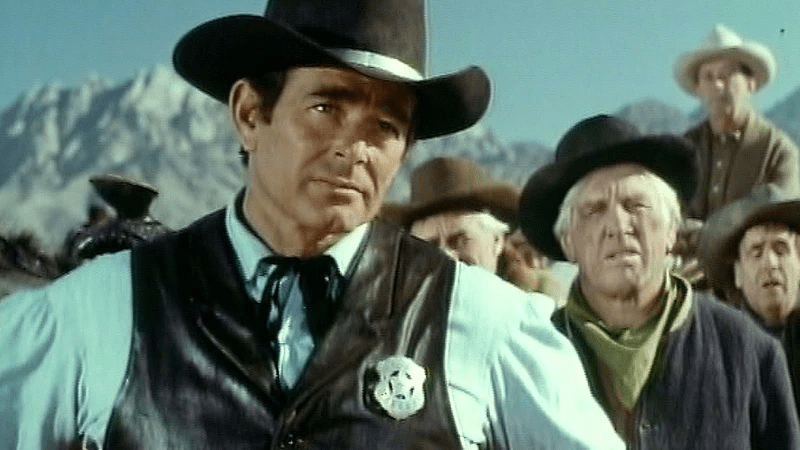
As we wind up our “Go West Young Man” blog series, we turn our attention to Cimarron Strip for the last blog of the series. This show was only on the air for one season, from 1967-68. It was produced by the creators of Gunsmoke, America’s most beloved western. Like The Virginian, it was a 90-minute show.
📷mubi.com

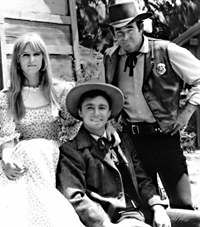
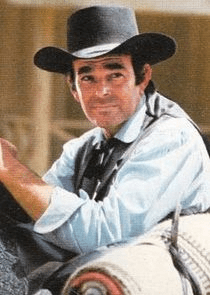
Set in the Oklahoma in 1890, the series occurred in a geographical region called No Man’s Land, an ungoverned area for several decades. Marshal Jim Crown (Stuart Whitman) tries to bring law and order there. Crown arrives only to learn that the sheriff has resigned, and it’s up to him to bring peace to the area with no Army support. We get to know Dulcey Coopersmith (Jill Townsend) who comes to live with her father, but upon her arrival, she discovers he is dead. Her father’s partner MacGregor (Percy Herbert) has let their Wayfarer’s Inn become a bit dilapidated, but Dulcey is determined to bring it back. Marshal Crown stayed there when he was in Cimarron City. Francis Wilde (Randy Boone) often served as Crown’s deputy.
📷pinterest.com

Rounding out the cast is the bartender at the Inn, Fabrizio (Jack Braddock); Major Covington at a nearby Army fort (Andrew Duggan); a Dr. Kihlgren (Karl Swenson); and Hardy Miller (Robert J. Wilke).

The show was on Thursday nights, up against Batman, The Flying Nun, and Bewitched on ABC. It faced Daniel Boone and Ironside on NBC. Definitely some tough competition.

The theme song was composed by Maurice Jarre, who was the scorer for the films Lawrence of Arabia and Doctor Zhivago for which he won two Oscars.

The show never attained the ratings numbers it needed to keep its place on the schedule. From what I have been able to find out, it was well written and well cast. Guest stars kept it interesting, and the scenery was beautifully filmed.
📷tvmaze.com

I’m guessing the main reason the show didn’t make it was just viewer fatigue with the western genre. There were already shows like Bonanza and Gunsmoke which were hugely popular. One more western might just have been one too many, no matter how good it was. In addition to the western series, some of the shows that were on the air when Cimarron Strip debuted included That Girl, Hogan’s Heroes, Mannix, Batman, Lost in Space, Get Smart, and Rowan and Martin’s Laugh In—very different choices than westerns. I do remember Arnold the pig on Green Acres always wanting to watch westerns on television. We still fall prey to this on the major three networks. After ER became popular, the next season featured ten new medical shows. And then most of them get cancelled, not necessarily because they’re bad but because it’s just an overload of medical shows.

Most people don’t want the same supper every night even if it’s steak or lasagna. That said, this seemed to be a steak kind of show, so just because it couldn’t survive the mass onslaught of westerns in the sixties doesn’t mean it’s not worth watching. If you check it out, let me know what you think.
Joan Tompkins: What a Character

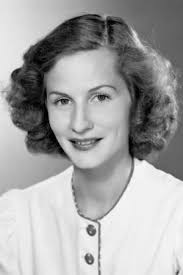
We are starting a blog about Supportive Women, great actresses who made classic television so much better. I’m beginning with Joan Tompkins.

📷tvtime.com

Tompkins was born in 1915 in Mount Vernon, NY. She began her career in stock theater companies in New York in the thirties before appearing on Broadway in several shows including “My Sister Eileen,” “Pride and Prejudice,” and “Fly Away Home.” Henry Fonda was in several the plays with Joan.

In 1936 she married actor Stephen Ker Appleby in New York, but five years later they divorced. Appleby was born in Wales and known best for his 1960s movies. He lived to be 100. From 1942-1951 she was married to Bruce MacFarlane before they divorced. McFarlane died in 1967 and had 28 acting credits in television and film. Joan would then marry a third actor in 1951, Karl Swenson, “the man of a thousand voices.” The two worked together on the radio. Many fans of Little House on the Prairie would recognize Karl as Lars Hanson. Swenson obtained an amazing 175 credits, primarily on television during the two decades before his death.

After WWII Joan became a foster parent for a crippled Polish boy, Tomasz Machcinski. He later became a photographer. In 1994, their story was made into a documentary, “Child from a Catalog.” Machcinski’s life story was very interesting. He was born in the Kampinos Forest in Gorki, Poland. He spent his childhood living in hospitals and orphanages. After developing a relationship with Joan, he graduated as a precision mechanic in 1963. In 1966, he took up photography and created thousands of self-portraits. Some were as historic characters. He chose the stories, make up, and costumes. He once said that he didn’t “use wigs, tricks, but I use everything that happens to my body, such as hair regrowth, tooth loss, diseases, aging, etc.” He has had exhibits in Copenhagen, Beverly Hills, Warsaw, New York, and Paris. Machcinski passed away in 2022.

📷wallofcelebrities.com

Tompkins had a long radio career. She was the voice of Nora Drake on “This is Nora Drake” which was on CBS radio until 1959.

She began her television career in 1954 on an episode of Ponds Theater. Almost all of her 93 acting credits were for television shows. She had a recurring role on a soap, Valiant Woman, appearing in 176 of the 1027 episodes of the show as Marion Walker. Throughout the fifties, she showed up in several dramas as well as The Donna Reed Show, Bachelor Father, and Father Knows Best.

During the sixties, she had two recurring roles. She played Mrs. Brahms on Occasional Wife in 1966-67. I remember her on My Three Sons; between 1967-1970, she appeared as Lorraine Miller, Katie’s mom, nine times.

You can catch glimpses of her on many of your favorite shows from the sixties and seventies, including Hazel; The Danny Thomas Show; Perry Mason; Gomer Pyle: USMC; Dr. Kildare; The Man From UNCLE; Bewitched; Bonanza; The Brady Bunch; Marcus Welby, MD; The Mary Tyler Moore Show; The Mod Squad; and The Bob Newhart Show.

📷imdb.com My Three Sons

Her last television appearances were in 1980. She played Grandma Gertie in an episode of Eight is Enough and a physician in a made-for-tv film, The Night the City Screamed.

Karl and Joan moved to Beverly Hills where they founded an acting company. Karl directed the plays Joan appeared in. After Karl’s death in 1978, Joan joined a writing group and wrote several books. She died at home in 89.

Joan Tompkins is another one of those actresses that made television better during the fifties, sixties, and seventies. I’m glad we could learn a bit more about her and her career.