It Only Takes One Episode to Get Smart

In the mid-1960s, spy shows were all the rage.  James Bond drew large audiences to theaters:  Dr. No in 1962, From Russia with Love in 1963, Goldfinger in 1964, and Thunderball in 1965. Inspector Clouseau was big at the box office too appearing in The Pink Panther in 1963 and A Shot in the Dark in 1964. If you were checking out books at the library, you probably would have read Len Deighton’s The IPCRESS File (1962), The Spy Who Came in From the Cold (1963), or Harriet the Spy (1964). On the small screen, The Avengers was ahead of the curve, premiering in 1961, but in the mid-1960s, we would see some of the classic television shows debut: Mission Impossible began in 1966, The Man from UNCLE showed up in 1964 and in 1965, The Wild, Wild West and I Spy got network approval.

smart7

Another show came on the air in 1965 as well – on September 18, 1965, Get Smart was seen for the first time. Dan Melnick, a partner in Talent Associates thought a spy satire might be a good fit for their upcoming schedule. He recruited Buck Henry and Mel Brooks to write the show. The team took the show to ABC. ABC bought it but they wanted a few changes.  They wanted Tom Poston to take the role of Maxwell Smart. They wanted a dog on the show to add “heart.” Finally, they wanted Smart’s mother to be a major role and envisioned Smart coming home at the end of the episode to explain the case to his mother. Henry and Brooks said no to the mother, so ABC rejected the show and sold it back to Talent Associates.

Grant Tinker from NBC agreed to buy the show with the caveat that Don Adams star in place of Tom Poston.  And so, the creative talent of Brooks and Henry brought Maxwell Smart (Don Adams), Agent 99 (Barbara Feldon), and the Chief (Edward Platt) to life. The show would stay on the air for five seasons, producing 138 episodes.

The first four seasons were filmed at Sunset Bronson Studios.  In 1970, the show moved to CBS and the last season was filmed at CBS Studio Center.

Mel Brooks left the show after the first year, but Buck Henry stayed through 1967 as the story editor.

smartgun

Most of the administrative cast stayed with the show for its run. Leonard B. Stern was the executive producer for all the shows. Irving Szathmary was the music and theme composer, as well as conductor, for all five seasons. Gerald C. Gardner and Dee Caruso were the head writers for the series. Don Adams would get to direct 13 episodes and write 2 of them.

The show centered around the three main characters. Maxwell Smart is Agent 86.  He works for CONTROL, a US government counter-intelligence agency in Washington DC. Max is resourceful.  He is a adept marksman, has hand-to-hand combat skills and is extremely lucky. He uses several cover identities, but the one he uses most often is greeting card salesman. He insists in going by the book and this, along with his clumsy nature, cause problems for him.

smartsmart

He and his partner Agent 99 take on world threats. We never learn Agent 99’s real name, although we think we have in one episode.  In “99 Loses CONTROL”, she says her name is Susan Hilton but at the end of the episode, we learn she was lying. Agent 99 is smart and competent.  Her father was apparently a spy as well.  (In real life, Barbara Feldon was also smart; she won on The $64,000 Question with the category of Shakespeare.) If you look closely, you will often see Agent 99 slouching, sitting, or leaning on something to conceal the fact that she was a bit taller than Adams.
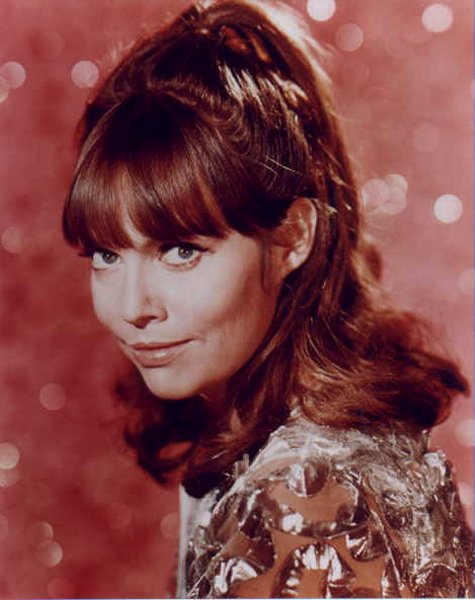
smart15

Their boss, Chief, whose real name is Thaddeus, is sarcastic and grouchy but also serious, sensible, and smart. He began his career as Agent Q and his cover name is often Harold Clark. Other CONTROL agents we meet during the series are Agents 8, 13, and 14, as well as Larrabee, the Chief’s highly inefficient and bumbling assistant.
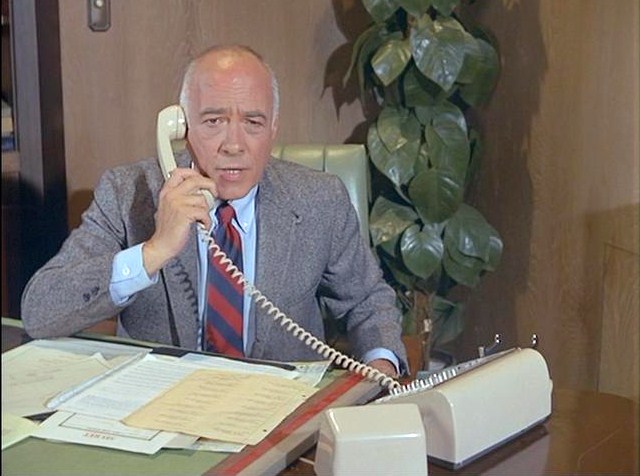
smart10

Their primary enemy is KAOS, an international organization of evil founded in Romania in 1904 (a Delaware corporation for tax purposes!). The two KAOS employees we see most often are Conrad Siegfried (Bernie Kopell), the VP for Public Relations and Terror and his assistant Shtarker (King Moody), whose personality can change from sadistic to childlike. While Siegfried and Smart are mortal enemies, they respect each other.  Sometimes they begin talking like old friends.  In one episode, they are discussing the flavor of cyanide pills each side has that month.  CONTROL is giving out raspberry, and Smart tries to give one to Siegfried.  Like CONTROL, KAOS has a bowling team to build rapport and fellowship among their employees.
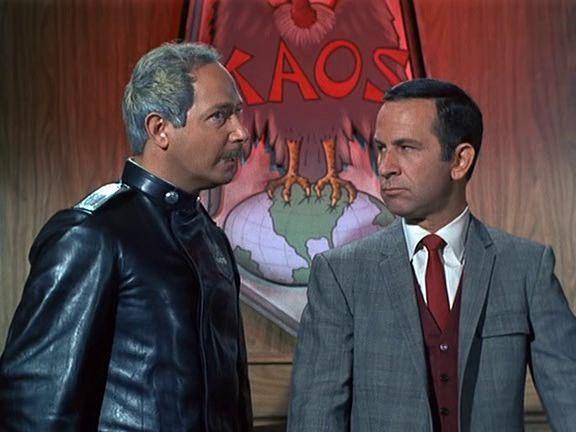
smart13

Another KAOS agent is Hymie the Robot played by Dick Gautier. Dr. Ratton of KAOS built Hymie for evil, but Smart manages to turn the robot into a CONTROL agent. Hymie is faster and stronger than any human.  He also has the ability to swallow any poison and then identify it. He has emotions and a need to maintain neatness.  Unfortunately, he takes commands literally; if Smart says “Get ahold of yourself,” he literally wraps his arms around himself.

smart8

The opening sequence of the show is one of the most spoofed openings in television.  Smart walks through doors that continue to other doors. It was ranked as the number 2 opening out of the top ten by TV Guide viewers in 2010.

The show is still known for its catch phrases that became part of the American vocabulary including “Would you believe?”, “Sorry about that Chief,” “And loving it,” and “I asked you not to tell me that.”

The series is identified with its James Bond-like gadgets.  Telephones could be concealed in neckties, combs, and watches, but most often it is in Smart’s shoe which he had to take off to answer. Agent 99 has a compact phone and a fingernail phone which forces her to look like she is nervously biting her nails to talk on it.

The show features a bullet-proof invisible wall in Smart’s apartment which lowers from the ceiling; he often forgets to put it back up and runs into it. Cameras can be in a bowl of soup.  A laser weapon was concealed in a suit jacket button, the blazer laser. The Cone of Silence are two glass domes that cover Smart and the Chief when they talk about a case.  Smart insists on using it because it’s  regulation; however, they can hardly hear each other, but anyone on the outside can hear their conversation clearly and often reports what the other person said.

smart3

Other weapons and aids for the spies included a parking meter telegraph, a perfume bottle radio transmitter, invisible icing, and a pencil listening device. Guns were hidden in a charm on a charm bracelet, in a pool cue, as a hairbrush, as a flashlight, and in a crutch. CONTROL even had gloves with fingerprints already on them – the fingerprints were KAOS agents so they would get the blame for a break-in.

Blowing up stuff is always good on a spy show and Get Smart had explosive rice; toothpaste that is really a fuse; an exploding wallet, ping pong ball and golf ball; and a horoscope book or lipstick case that contained knock-out gas.

Smart had several cars but his most famous was a red 1965 Sunbeam Tiger.  The two-seat roadster had a machine gun built in, a smoke screen, a radar tracker, and an ejection seat.  When the series went off the air, Don Adams received the car and continued to drive it for ten years.
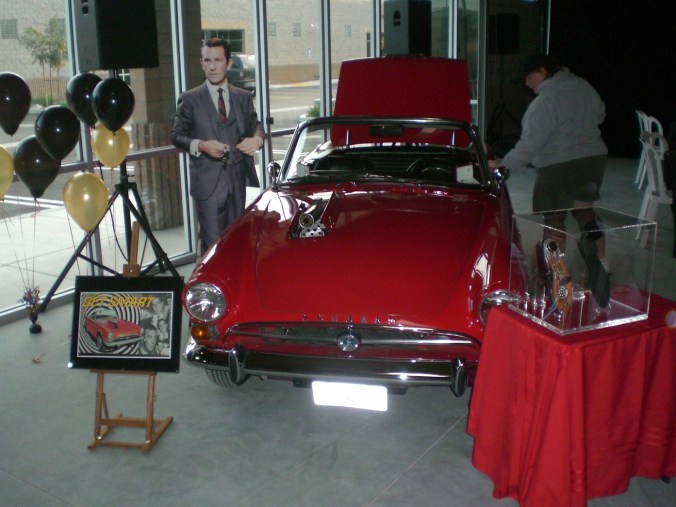
smart14

Get Smart probably had some of the most famous guest stars of any show.  Just a few of these celebrities include Steve Allen, Barbara Bain, Milton Berle, Ernest Borgnine, Carol Burnett, James Caan, Johnny Carson, Wally Cox, Robert Culp, Phyllis Diller, Jamie Farr, Jack Guilford, Bob Hope, Martin Landau, Julie Newmar, Pat Paulson, Tom Poston, Leonard Nimoy, Vincent Price, Don Rickles, and Fred Willard.

The show stayed true to its character through its entire run.  In Season 1, Hymie is introduced and the dog, Fang, disappears. In Season 2, we meet Siegfried. Smart and Agent 99 get engaged and marry in Season 4.  NBC demanded the change to boost ratings. In Season 5, they have twins.  Agent 99 continues working and is one of the first, if not the first, mother to be viewed as a working woman.  When the ratings did not increase, the show was cancelled. It went into syndication where it was very successful. Unfortunately, the DVD set was held up in legal battles and only came out weeks before Adams died.

Get Smart was one of the most clever and creative sitcoms ever airing on television.  It had `21 Emmy nominations including two for Feldon and won 7 of those awards.  Don Adams won best actor on a comedy three times and the show won best comedy twice.

smartemmy

William Johnston came out with 9 paperbacks based on the series in the late 1960s and Dell Comics issued 8 comic books in 1966 and 1967. For the March 5-11, 1966 TV Guide, Andy Warhol designed a pop art piece using Barbara Feldon. Numerous collectibles were created:  board games, lunch boxes, dolls, and model cars.

The show produced many spin-off projects. The Nude Bomb was a theatre release in 1980 with Feldon and Smart reprising their roles. Get Smart Again debuted in 1989 as an ABC TV movie.  After its release, a show appeared on FOX starring Feldon and Smart again called Get Smart in 1995.  In 2008 a movie was made starring Steve Carell and Anne Hathaway. Don Adams was known to later generations as the voice of Inspector Gadget.

carell

Of course, everyone has their favorite episodes, but after reviewing several polls and interviews with Nick at Nite and other 50th anniversary celebrations, I have come up with these top five.  Take a rainy fall day and give them a peek. However, if we are looking just at titles, I have to give a shout out to “Spy, Spy Birdie”, “Bronzefinger”, “Impossible Mission”, and “Tequila Mockingbird”.

  1. A Spy for a Spy
  2. The Not-So-Great Escape
  3. Ship of Spies
  4. The Amazing Harry Hoo
  5. The Little Black Book


smarttrench

Unfortunately, this is one of those shows that doesn’t get as much recognition and respect as it deserves.  Considering how much technology has developed in the last 50 years, the show is still up to date. The dialogue is witty; the characters are likable, even when they’re mortal enemies; and the show is just plain fun.


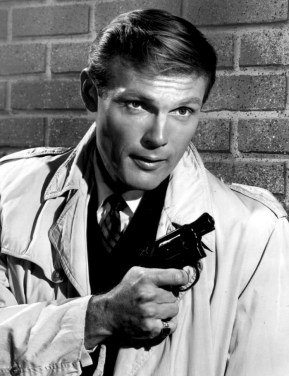
In Memory of Adam West

west1

Adam West was born William West Anderson on September 19, 1928 in Walla Walla, Washington.  He just passed away this summer on June 9. His father farmed and his mother gave up her career as an opera singer and concert pianist.  Like all kids, he had a collection of comic books including Batman. When his parents divorced, he moved to Seattle with his mother. He attended Whitman College in Washington and graduated with a BS in literature. He was drafted into the Army and became an announcer on the American Forces Network television.

After his service career, he became a milkman until he moved to Hawaii to pursue a career in television. In 1959, he took on his stage name of Adam West and moved to Hollywood with his wife and children. He quickly became an actor and appeared in 33 television shows, including 77 Sunset Strip, Maverick, Hawaiian Eye, Tales of West Fargo, Perry Mason, Gunsmoke, Petticoat Junction, and Bewitched.

west4

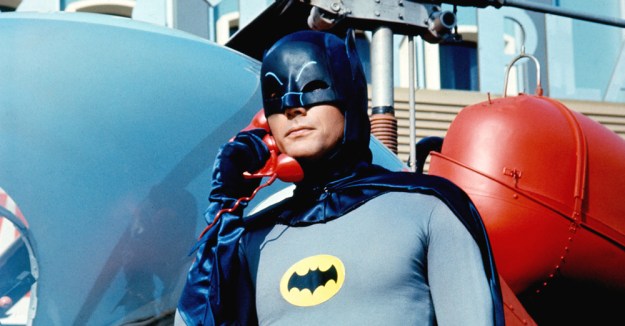
In 1966, William Dozier, producer for a new show about Batman decided to cast West over Lyle Waggoner after seeing him as a James Bond-type character in a Nestle Quik commercial. DC Comics described Batman as 6’2” and that was West’s height.

west2

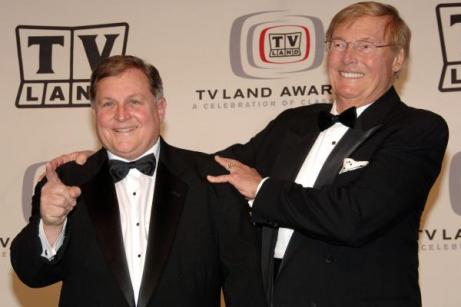
When the series ended, he and Burt Ward found themselves typecast as Batman and Robin.  He did a series of appearances about the Batman character while pursuing a movie career. He ended his career with 49 movies to his credit.

He appeared in 78 television shows after Batman ended including The Big Valley, Emergency, Alice, Police Woman, Laverne and Shirley, The Love Boat, Hart to Hart, Murphy Brown, Diagnosis Murder, News Radio, Drew Carey, King of Queens, and 30 Rock.

After 1990, he apparently embraced his Batman character and appeared on numerous television shows as himself or Batman. When asked about this, he said, “I think it evolved. I learned a long time ago that because people love Batman, I should too. I learned that I shouldn’t resent it even though it prevented me from getting other roles. I really had to become fond of Batman in order to deal with it. I embraced it.”

In 1957, he and his first wife Billie divorced.  He married  dancer Frisbie Dawson in 1957 and divorced in 1962. In 1970, he married Marcelle, and they were together until his death.  He had two children with each of his wives and two stepchildren.

In 1994, he wrote an autobiography Back to the Batcave. In 2012, he received a star on the Hollywood Walk of Fame on Hollywood Boulevard.

west8

West loved outdoor activities and had a lot of hobbies including fishing, sailing, hiking, skiing, golfing, riding motorcycles, swimming, surfing, dancing, traveling, as well as spending time with his family, listening to classic rock, reading, and watching movies.

West died after a short battle with leukemia at age 88. The next week, LA shined the bat signal on city hall to honor him.

While West certainly had a full and varied career despite his typecasting from Batman, I would like to spend some time looking at the series that gave him his fame. Typically, I am not really into super heroes, but I loved this show when I was younger and still get a kick out of watching the campy comedy. I can still hear the narrator saying, “Same bat time, same bat channel.” The show was canceled not only because of low ratings but also because the special effects and lighting had tremendous costs.  When ABC dropped it, they tried to find another network to take it over.  They had no offers, so they dismantled the set. Two weeks later, NBC offered to pick up the show, but decided it was too expensive to start from scratch.

batman4

In the 1960s, Ed Graham Productions received the rights to the comic strip Batman and intended to produce an adventure show similar to Superman or The Lone Ranger. ABC was thinking about a prime time show so DC Comics bought back the rights and sold them to 20th Century Fox. 20th Century gave it to William Dozier to produce.  Dozier had never read comic books and felt that the show should take a campy, pop-art approach. The show was originally an hour-long series, but with only half-hour time slots available, it was changed to a bi-weekly half-hour show.

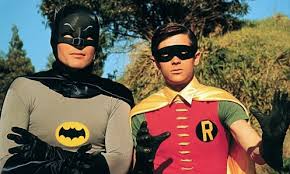
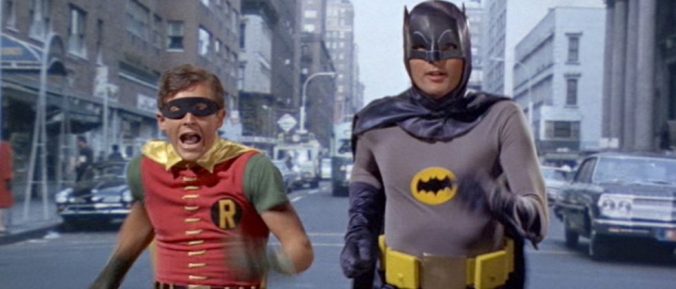
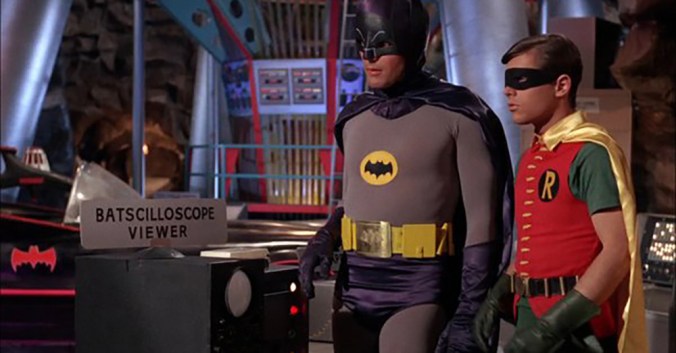
The concept of the show was that millionaire Bruce Wayne and his ward Dick Grayson lead a double life in Gotham City.  When they move a shelf in their library and slide down the bat pole to the bat cave, they become Batman and Robin.  Only their butler Alfred is aware of their real identity. Police Commissioner Gordon calls them on the batphone, often referring to them as the dynamic duo. They usually hop in their bat mobile and speed to city hall to learn what villain is up to no good in their city.

west5

Adam West took the role of Batman/Bruce Wayne and Burt Ward was Robin/Dick Grayson. Other cast members included Alan Napier as Alfred the Butler, Neil Hamilton as Commissioner Gordon, Stafford Repp as Chief O’Hara, Madge Blake as Aunt Harriet, and Yvonne Craig as Batgirl.

My favorite villians included Julie Newmar and Eartha Kitt as Cat Woman, in love with Batman but not willing to give up her criminal life; Burgess Meredith as Penguin always carrying an umbrella; Frank Gorshin as The Riddler leaving riddles for clues; Vincent Price as Egghead a bald-headed genius who loves eggs; Cesar Romero as the Joker who leaves jokes for clues; and Victor Buono as King Tut when evil and Professor William McElroy as his non-evil personality.

The show aired twice a week on back-to-back nights. The first episode would set up the situation and end with the dynamic duo in some dangerous situation. Batman and Robin would get their assignment from the Commissioner and then, using a series of clues, try to figure out who the villain is and then how to defeat them. At some point, there was always a fistfight with the villain’s entourage at which time the villain typically escaped. During the fight, words would pop up on the screen like POW, BAM, ZONK, BOOM. Then the crime fighters would go to look for them at which point the dangerous and perhaps deadly situation occurred and the next episode would summarize what happened on the previous episode before defeating the bad guys for good. They often used inventions like shark repellant bat spray to aid them in their search.

batman5

In Season 3, Bat Girl was added to the cast. The ratings were starting to fall so Dozier wanted to bring in a girl character to attract female viewers. Her real identity was Barbara Gordon, the Commissioner’s daughter.  The Commissioner never seemed to realize she was familiar to him. Because of low ratings, the show also became a once a week series in the third season.  Eartha Kitt took over the Catwoman role since Newmar was filming a movie at the time. Madge Blake’s health was failing, and her role was limited to two appearances during the last season.

The show was cancelled before the next season but it has continued to be popular in reruns. In 1966, an album was released “Batman: The Exclusive Original Soundtrack Album.” It included music by Nelson Riddle, dialogue excerpts from several of the characters in the show, as well as the Batman theme song, Batusi A Go Go, and several other tunes.

A lot of collectibles were produced during the run of the show including trading cards, Batmobile kits, coloring books, lunch boxes, board games, and View-Master reels. In 2013, Mattel designed an action figure line based on the tv characters, and several Hot Wheels/Matchbox cars have been produced. The Batmobile from the show was auctioned in 2013, selling for $4.2 million.  The huge profits from the car as well as the line of action figures prove the continuing interest in and success of this show now 50 years old.

Here are some fun facts I found about the series:

A total of 352 “Holy” words were used by Robin from “Holy Agility” to “Holy Zorro”.

Cesar Romero’s Joker laugh was created almost by accident. Shortly after being cast, Romero met with producers to discuss his role on his series. While waiting to meet with them, Romero happened to see conceptual art of Joker’s costuming. Romero felt the pictures almost looked absurd, and as a result spontaneously broke out into a playfully loud and almost manic laughter. A producer overhearing it responded by telling Romero “That’s it, that’s your Joker’s laugh!”

Burgess Meredith had not smoked in 20 years when he was cast as the Penguin. He came up with the Penguin’s distinctive squawking sound because the cigarettes were irritating his throat. Like his trademark “quack”, the Penguin’s waddling was largely a result of improvisation by Burgess Meredith, as he found it difficult to stand and walk straight while wearing the rubber padded fat suit that was part of his costuming.

Before going on the air, this show received the worst audience test scores in the history of ABC. It only went on the air because so much money had already been invested in it.

This was one of the “in” shows to appear on if you were a big name in Hollywood during the 1960s, and many top names guested on the show, including many who didn’t do much TV otherwise. Those performers who weren’t cast as guest villains could frequently be seen popping their heads out of windows to exchange a few words with Batman and Robin when the latter would be climbing up a building wall. Frank Sinatra, Natalie Wood, and Cary Grant were all fans of the show, and wanted to be on it, but the producers were never able to come up with the right roles for any of them. During the run of the series, this show crossed over with The Green Hornet (1966).

The “Giant Lighted Lucite Map of Gotham City” is a reverse image of St. Louis, right down to Forest Park, Fairground Park, Tower Grove Park, Lafayette Park, and Horseshoe Lake on the Illinois side, as well as the other river and road networks.

Each main villain had their own theme music.

In the first season, Burt Ward (Robin) was paid $350 per week.

Yvonne Craig has stated that she briefly did have a stunt double, but did most of her stunts herself. She actually operated the Batgirl Cycle herself as well. She was an accomplished biker at the time, and actually owned a bike.

Adam West (Bruce Wayne / Batman), Burt Ward (Dick Grayson / Robin) and  Neil Hamilton (Commissioner Gordon) are the only actors to appear in all 120 episodes of the series.

Suzanne Pleshette was one of the original choices to play Catwoman before Julie Newmar landed the role.

The show aired from January 12, 1966 to March 14, 1968 on ABC for 120 episodes. It was one of few TV series to be seen on 2 different nights a week: 7:30 Wednesdays and Thursdays. It remained there for a season and a half (Jan. 1966-Aug. 1967) until it was moved back once a week (Thursdays 7:30) for its final season. The episodes were generally two-parters: Wednesday’s episode was a cliffhanger, resolved in Thursday’s episode. The 1966-1967 season had 2 3-parter episodes (“The Zodiac Crimes/The Joker’s Hard Times/The Penguin Declines”[ep. #2.37-9, 1/11-12 & 18/1967] and “Penguin is a Girl’s Best Friend/Penguin Sets a Trend/Penguin’s Disastrous End”[ep. #2.42-4, 1/26/, 2/1 & 2/1967]) which left cliffhangers that would be solved the following week. When the series was reduced to (mostly) one part episodes during season three, the cliffhanger death traps and threats were still used, but greatly scaled back and occurring at the middle commercial break.

The three primary cast members of The Addams Family each made appearances on Batman. Carolyn Jones played the villainess Marsha, Queen of Diamonds, and John Astin played the Riddler during the second season. Additionally, Ted Cassidy had a window cameo, appearing in his part as Lurch from The Addams Family. Interestingly, Cassidy’s cameo took place in a story involving the Penguin, with whom Jones’ character Marsha teamed up in one of the three-part stories.

In episode 7, Alfred refers to Robin as Mr. Ward, and not Mr. Grayson.

While Superheroes and the movies and television shows they appear in seem to cycle up and down throughout the decades, the popularity of the Batman television show has never wavered.  The fact that Mattel would create action figures based on the original stars almost 50 years after the show debuted says a lot about the fans and the place the show holds in their hearts.

Thank you Adam West for creating such a memorable and well-loved character.  Rest in peace.

batman2

Life Changes in the Blink of an Eye: The Career of Barbara Eden

Many baby boomers equate Barbara Eden with I Dream of Jeannie.  While she never escaped her iconic role as Jeannie, she has had a long and full career.

beden1

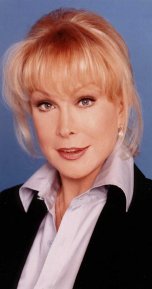
Barbara Jean Morehead was born in Tucson, Arizona in August of 1931. Her parents divorced when she was three, and she then took her stepfather’s last name of Huff. Moving to California, she went to high school in San Francisco and then studied at the San Francisco City College, the San Francisco Conservatory of Music, and the Elizabeth Holloway School of Theatre. In 1951, she was crowned Miss San Francisco.

She began working in television in 1956, and her career has been going strong ever since. In 1958, she married actor Michael Ansara.  They had a son in 1965 who passed away from a drug overdose.  Eden said of his struggle, “He won a lot of battles, but he lost his personal war.”  She and Ansara divorced in 1974. From 1977-1983 she was married to Charles Donald Fegert.  In 1991, she married her current husband, Jon Eicholtz, and they live in Beverly Hills.

In addition to her screen and television career, she performed in Lake Tahoe, Las Vegas, and Atlantic City. She had an album produced in 1967 and performed on many variety shows.  She traveled with Bob Hope and starred in many musicals and plays.

beden30

She received a Walk of Fame star in 1998.

In 2011, she wrote her autobiography, Jeanne Out of the Bottle.

beden2

She has used her celebrity status to help many nonprofits, raising money for The Trail of the Painted Ponies Breast Cancer Research, the American Cancer Society, the Wellness Community, Make-A-Wish Foundation, the March of Dimes, the American Heart Association, Save the Children, and Childhelp, USA.

Her television career can be divided into three phases, each including a major series.

She began her acting career making appearances in many shows from 1956-1958 including West Point, Highway Patrol, I Love Lucy, The Millionaire, Crossroads, Perry Mason, Gunsmoke, Bachelor Father, December Bride, Father Knows Best, and The Lineup.

In 1957, she received her first starring role in a sitcom, 52 episodes of How to Marry a Millionaire. Based on a movie (starring Marilyn Monroe, Lauren Bacall, and Betty Grable), she starred as Loco Jones, a model. Her friends were Michele Page (Merry Anders), a secretary, and Greta Lindquist (Lori Nelson), a quiz host.  The three women lived together in Manhattan, all sharing the goal of finding a wealthy husband.

beden14

In the 1960s, she made appearances in many more well-known shows including Adventures in Paradise, The Andy Griffith Show, Target: The Corruptors, Cain’s Hundred, Saints and Sinners, Dr. Kildare, Route 66, The Virginian, Rawhide, Burke’s Law, Slattery’s People, The Rogues, and Off to See the Wizard.

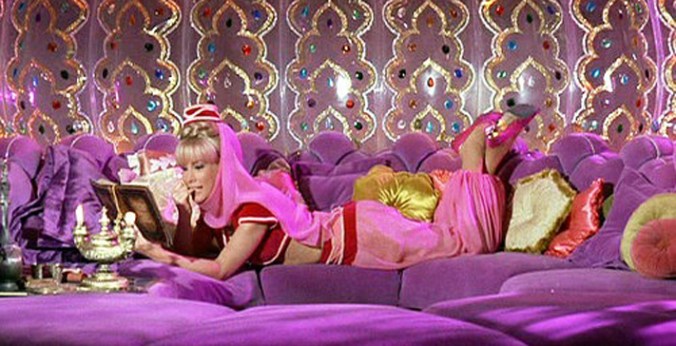
In 1965, she took on her role of Jeannie in I Dream of Jeannie.  The show lasted five years, filming 139 episodes. Captain Tony Nelson (Larry Hagman) finds a bottle when he crash lands on a deserted island in the South Pacific. When he opens it, Jeannie emerges.  He brings her home and tries to keep her a secret from NASA. His best friend Roger (Bill Daily) finds out, and he and Tony perform a lot of stunts to avoid anyone else figuring it out.  In the final year of the show, Jeannie and Tony get married, exposing her to the rest of the crew at NASA who know something is different but never figure out what it is. Personally, I like the Jeannie in the first year who is mischievous and intelligent. While the show was only on for five years, certainly not one of the longest-running shows, it defined Eden because since it debuted, it has been on television continually in reruns.

After I Dream of Jeannie, her television career continued as she appeared on NBC Special Treat, Condominium, A Brand New Life, Dallas, Team Supremo, Sabrina the Teenage Witch, George Lopez, and Army Wives.

beden8

Based on the song by Jeannie C. Riley and a movie also starring Eden, she took on the role of Stella Johnson in Harper Valley PTA from 1981-82 with costar Fannie Flagg. The show lasted for 30 episodes. Stella is a widow who moves to Harper Valley with her 13-year-old daughter which is a town filled with hypocrites.  The other women severely criticize her for wearing miniskirts, and not acting like they thought a mother should.  Meanwhile, the board members were always trying to find ways to discredit her.  Fannie Flagg was the beauty shop owner Cassie Bowman.  The show never really caught on with the public. Maybe Stella was too drastic of a role change from Jeannie.

Along with her range of television acting jobs, Eden also was in 26 movies, including Flaming Star in 1960 with Elvis Presley, Voyage to the Bottom of the Sea in 1961, The Brass Bottle in 1964 which led to the idea for the sitcom I Dream of Jeannie, and Harper Valley PTA in 1978 which led to her third series.

In The Brass Bottle, Tony Randall plays Harold Ventimore, an architect who buys an antique urn that houses a djinn played by Burl Ives.  Grateful for being released, the djinn tries to help Harold to show his gratitude.  However, being unfamiliar with contemporary times, he causes a lot of trouble for Harold, especially with his girlfriend Sylvia, played by Eden.

She also starred in 28 made-for-tv movies.  My favorite was The Feminist and the Fuzz which you never see aired on television anymore.

beden9

The Feminist and the Fuzz aired in 1971.  I remember watching this movie when it originally aired.  The story was about a scientist played by Eden and a cop played by David Hartman.  They both end up at an apartment at the same time and have lost so many apartments that they decide to share it until one of them can find somewhere else to live. She is a feminist, and he dates a playboy bunny played by Farrah Fawcett.  One night, the women’s libbers raid the bunny club, and while most of them are being arrested, Hartman carries Eden to a waiting police car and tells him to get her home.  Fawcett, watching this, realizes they have feelings for each other, even though they don’t acknowledge it themselves yet.  The movie had a great cast with Joann Worley, Herb Edelman, Julie Newmar, John McGiver, and Harry Morgan.

If her television show jobs and movie roles were not enough, Barbara appeared as herself on 177 different television variety and game shows from 1961-2016.

At 85, Eden continues her career with credit in Shimmer and Shine in 2016. She has also been to the Mayberry Conventions to meet her fans. She continued her friendship with Larry Hagman up to his death.

One might assume that Eden would want to distance herself from Jeannie and rely on her other body of work, but that is not the case.  Some actors develop a dislike for the character they are unable to shake off, but Eden’s advice to actors is:  “I would embrace the character, because it won’t do any good if you don’t. And another thing: Don’t whine or talk trash about it. I don’t think you ever demean to your public what you’ve done. You’re insulting them if you demean your work.”

beden6

While Jeannie certainly provided Barbara Eden with a lot of fame, future work opportunities, and money (although probably not so much from the tv show directly), taking a survey of her career proves just how versatile of an actress she was.  No one-hit wonder here.  She accumulated a wealth of roles both on television and in the movies. She traveled around the country appearing in musicals and plays. She sang and danced, performing at some of the top clubs in the country.  She appreciated her fans and never demeaned Jeannie in their eyes.  She used her celebrity to raise money for great causes. She had a full career any actress could be proud of.