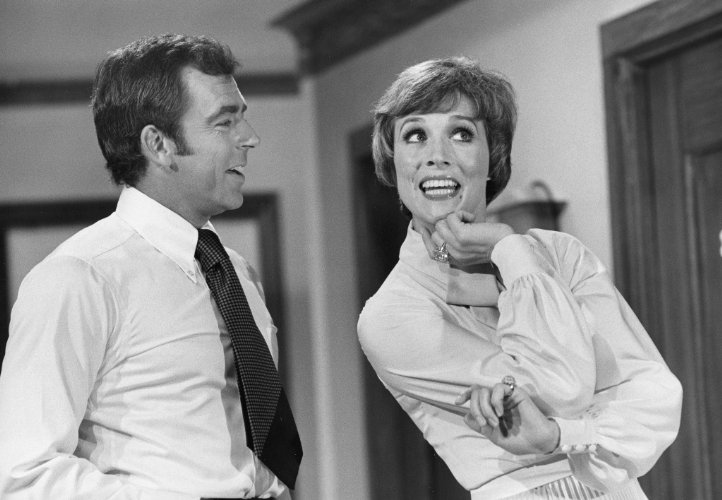
Hey Mulligan! The Mickey Rooney Show


This month our blog series is “It’s Their Show.” Today we are taking a look at The Mickey Rooney Show. This show debuted on NBC in 1954. It was on for one season, producing 39 episodes.

📷singingnewstv.com

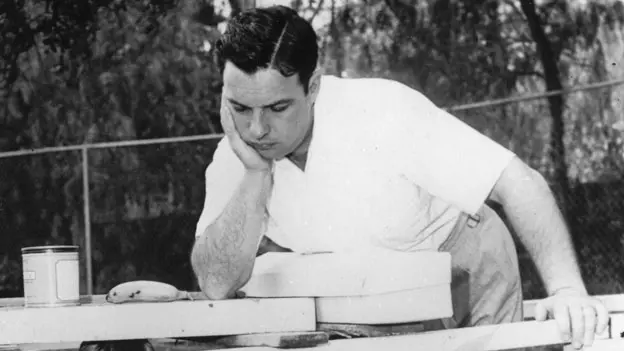
Rooney plays Mickey Mulligan, a Guest Relations Staff member who works at a television network, hoping to land an acting career by taking acting lessons at night. It’s interesting that they set the show at a television network, because only 56% of families had televisions in 1954. It’s also interesting that Rooney was playing a young adult, although he was in his mid-thirties.

Mulligan is not content with his salary of $47.62 a week. Lucky for him, his girlfriend Pat (Carla Balenda) is a secretary to the studio program manager, Charles Brown (John Hubbard). Rounding out the cast is the head of the network (John Hoyt) and Mickey’s best friend Freddie (Joey Forman). Freddie also works at the network, and the two friends often grab lunch at the Hamburger Hut.

📷internetarchive.com

To make ends meet, Mickey lives with his parents, Joe (Regis Toomey) and Nell (Claire Carleton). Joe is a retired police officer who met his wife when he arrested her because she was a burlesque dancer.

There were a lot of talented people behind the camera on this show. Blake Edwards was one of the creators,  an executive producer, and one of the writers on the show. He would write and produce several shows including Richard Diamond Private Detective and Peter Gunn before moving into movies in the sixties. Later in life he would be known for the Pink Panther movies and marrying Julie Andrews.

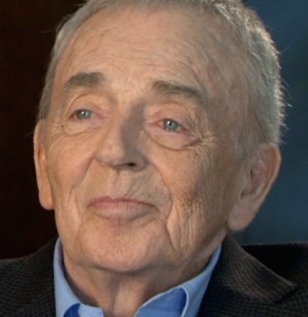
Van Alexander was an arranger for Capitol Records, and he produced the soundtrack for the show. He was a collaborator with Ella Fitzgerald and worked on Bewitched and I Dream of Jeanne as well as big-screen productions.

📷BBC.com Van Alexander

Leslie H. Martinson was one of the primary directors for the show, working on 33 of the episodes. In a Television Academy interview, he discussed working on the series. He said he often had to shoot around Mickey’s role because Mickey was off at the racecourse and then they’d film him when he showed up. He said Rooney was a genius with the way he reacted to things and often his expressions made the entire scene worthwhile.

NBC scheduled the show on Saturday night against The Jackie Gleason Show, which was one of the most popular shows on television at the time. There were some derogatory comments made about Gleason by Rooney that got leaked to the public, and it caused a lot of turmoil for the show before it even aired.

📷amazon.com

The show started with a tagline, sort of like the beginning of That Girl had. While Rooney is boxing, someone yells “Hey Mulligan.” I watched episode 8 of the first year, “Tiger Mulligan.” In this episode, Mulligan’s parents are watching television when Mickey comes home from the gym where he’s working out to be an amateur boxer. His dad is ecstatic, but his mom is not too happy. His girlfriend agrees with her, and she doesn’t like having to sit around by herself at night. His mom, who is a fun character, convinces him that he’s trained too hard and is overly weak. She sets him up by gluing some items to the shelf and making a jar impossible to open. He thinks his mom is stronger than he is and that he needs to pull out of the fight. However, his dad realizes what she’s up to and when he calls her on it, Mickey gets excited for the match. However, at the ring he realizes that his opponent looks like a weakling but has a strong right arm. The fight ends with both of them passing out when they see blood. I really enjoyed the writing, the characters, and the music; I will say that the laugh track was a bit hard to get used to though.

I know something has to go up against the big hits on the television schedule, but it seems like this would have been a fun show if it had competed against a show that wasn’t in the top ten. The entire series is available on DVD if you want to check it out.

The Elegance of What’s My Line

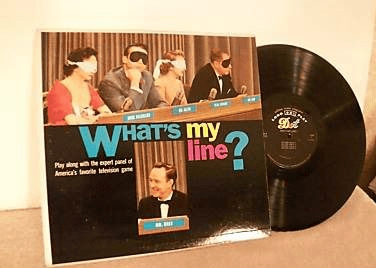
This month, we are looking at popular fifties stars and shows. While the show we are talking about today outlasted the fifties by almost another decade, it gained its popularity during the 1950s. Today we are learning about What’s My Line.

📷wikipedia.com

This panel game show was on CBS. It debuted in 1950 and ran until 1967. The show was produced by Mark Goodson and Bill Todman, and the working title was Occupation Unknown. Perhaps the title should have been What’s My Schedule. The show began on Thursday nights as a live show. Later in season one, it switched to every other Wednesday and then moved to every other Thursday. In October of 1950, it landed on Sunday nights where it would remain throughout the rest of its life.

The original series, which was usually broadcast live, debuted on Thursday, February 2, 1950, at 8:00 p.m. ET. After airing alternate Wednesdays, then alternate Thursdays, finally on October 1, 1950, it had settled into its weekly Sunday 10:30 p.m. ET slot where it would remain until the end of its network run on September 3, 1967.

📷imdb.com

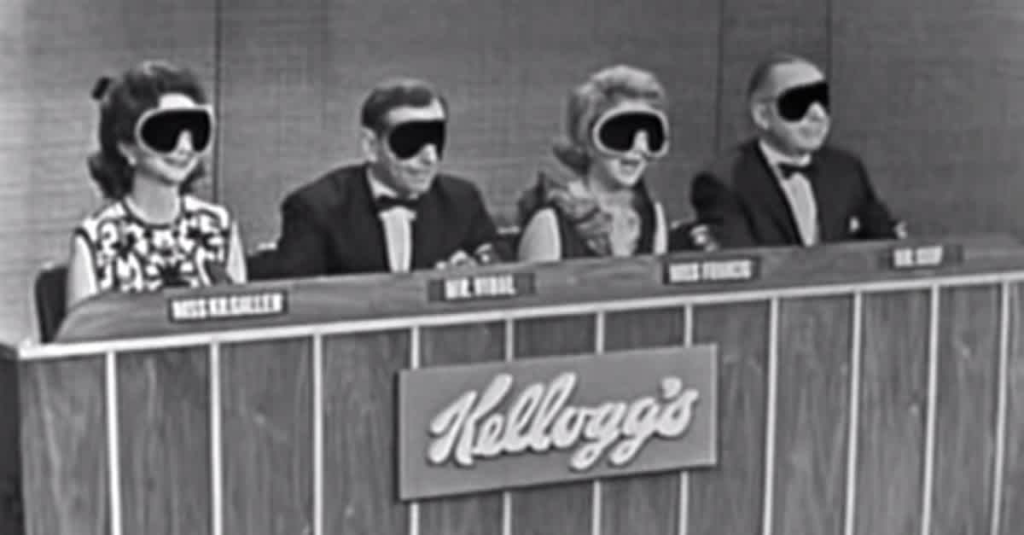
Celebrity panelists ask contestants questions to figure out their occupation. While most of the contestants were not famous, there was a “mystery guest” segment. The panelists were blindfolded for this segment and asked questions to determine the celebrity. People enjoyed watching the panelists banter with each other and the sophisticated humor they shared with us.

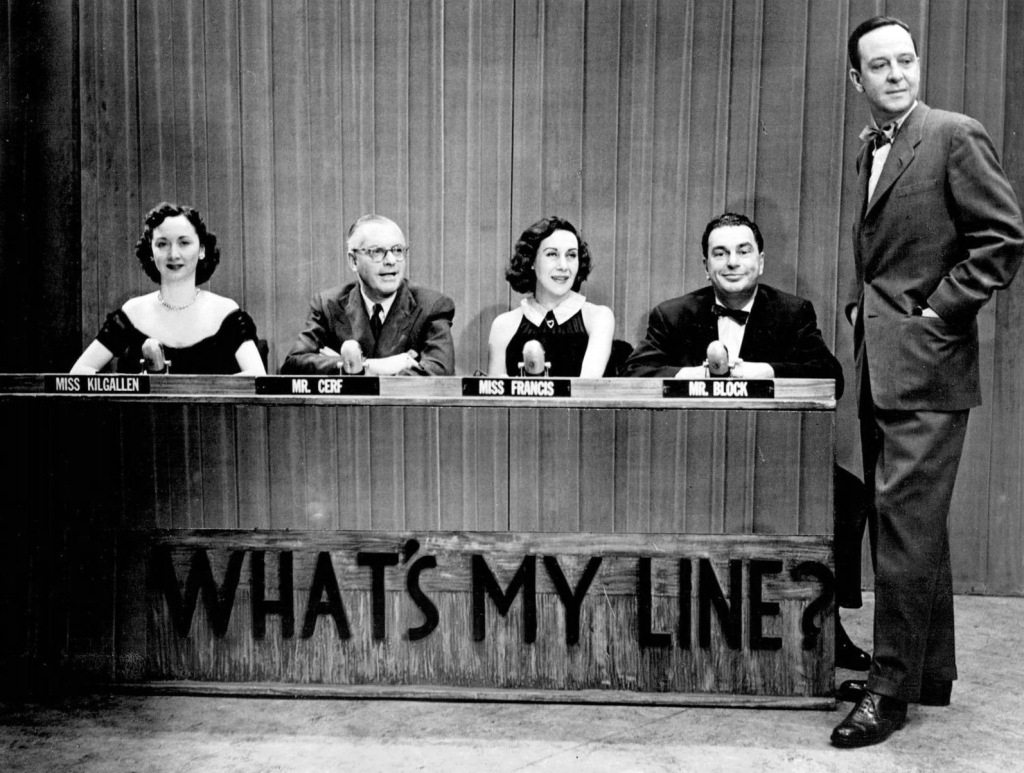
Each episode had four panelists. The most famous panelists were Dorothy Kilgallen, Arlene Francis, and Bennett Cerf. John Daly was the moderator. The first show in the series featured New Jersey governor Harold Hoffman, Kilgallen, poet Louis Untermeyer, and psychiatrist Richard Hoffman. Later in season one, Arlene Francis came  on board with Kilgallen, Untermeyer and writer Hal Block. In season two, Cerf replaced Untermeyer and Steve Allen took over for Block in season three. When Steve Allen left to host The Tonight Show, comedian Fred Allen was part of the panel from 1954 until his death in 1956. Kilgallen was killed in 1965 and her replacement varied for two years. Her death is a mystery itself and well worth reading about. Many people think she was killed because of her investigation into JF Kennedy’s assassination.

📷facebook.com

The panelists started the series wearing business clothing, but by 1953 they shifted to formal attire with the men showing up in suits and ties and women in formal gowns and gloves. Unfortunately, we never got to see the beautiful colors of these clothes. Until 1966 everything was filmed in black and white. In the final season, the show was broadcast in color, but the kinescopes were saved in black and white.

Both critics and television viewers liked the show, and it won an Emmy for Best Quiz or Audience Participation Show in 1952, 1953, and 1958.

Because it was a game show, most of the 700 episodes were on kinescope, 16 mm filming. Because many original shows in that era were recorded via kinescope onto silver nitrate film, many networks destroyed recordings to recover the silver. After learning that the network was not keeping the recordings, Goodson and Todman offered to pay for the broadcast and retained the recordings from season three on, however many of those were also lost along the way. A variety of the episodes are stored at different archive centers around the country. My home state houses one from 1951 at the University of Wisconsin Center for Film and Theater Research in Madison.

📷facebook.com

The remaining kinescopes which have been digitized have been seen on television on the Game Show Network and 757 of them exist on YouTube.

Many of us remember the reruns and seeing the contestant come on stage and write their name on a chalkboard as Daily said “Will you enter and sign in please.” The very first contestant was Pat Finch who was a hat check girl at the Stork Club.

The first mystery guest was New York Yankees shortstop Phil Ruzzuto. Many of these guests used fake voices to answer questions. Some of the mystery guests who appeared on the show included Julie Andrews, Louis Armstrong, Lucille Ball, Jack Benny, James Cagney, Gary Cooper, Joan Crawford, Salvador Dali, Sammy Davis Jr., Doris Day, Aretha Franklin, Ava Gardner, Judy Garland, Jackie Gleason, Alfred Hitchcock, Bob Hope, Ginger Rogers, Roy Rogers, Eleanor Roosevelt, James Stewart, Elizabeth Taylor, and John Wayne.

📷littlethings.com Blindfolds come out for a mystery guest

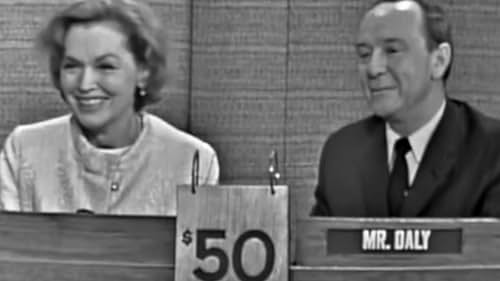
The emcee would choose a panelist who could ask yes or no questions. If the answer was yes, they could continue until they got a no response and then the next panelist would be able to pose questions. If the contestants answered no, Daily flipped a card; when the contestant had ten cards, they won $50.

If you have heard of or even used the term “Is it bigger than a breadbox?,” you might want to know that it came from the show. Steve Allen asked the question in 1953, and it became a standard question after that night. In fact, on one episode, the guest was a breadbox maker, and when Daly could not help laughing at the question, Allen figured it out.

In 1967 The New York Times broke a story that CBS was canceling many of their game shows. None of the panelists had been told that the show was not renewed. Despite the fact that the low costs of the game shows made them profitable, the low ratings led the network to conclude that game shows were no longer suitable for prime-time schedules.

After the show was canceled in 1967, it did go into syndication five days a week. Soupy Sales joined Francis and Cerf on the panel of the reboot. A variety of other panelists took the fourth seat including Joyce Brothers, Jack Cassidy, Bert Convy, Joel Grey, Meredith MacRae, Henry Morgan, Gene Rayburn, and Nipsey Russell. The show ended in 1974. Cerf died during the run of the syndicated series.

It’s hard to believe, but Colonel Harland Sanders was on the show as founder of Kentucky Fried Chicken, although he was not easily recognized at the time, so he was not a mystery guest. While no president ever appeared while in office, Ford, Carter, and Reagan all appeared on the show.

📷youtube.com We switched to a first-name basis in the 70s

It would be fun to see this show on television today, but I’m afraid it would not be the same. In the way that Dick Cavett had a manner of interacting with guests to ask amazing questions with his humor and intelligence, this game show had that same atmosphere. Today, I think the banter would border more on crudeness than wit. There is something charming about a panel of very intelligent people talking with each other, trying to determine the identities of the people they were interviewing while being dressed to the nines that was fun to sit in on and be a part of. I guess that’s why this show is in our series where we are saluting the fifties because that was the era where it could shine.

James Garner: Moving Forward

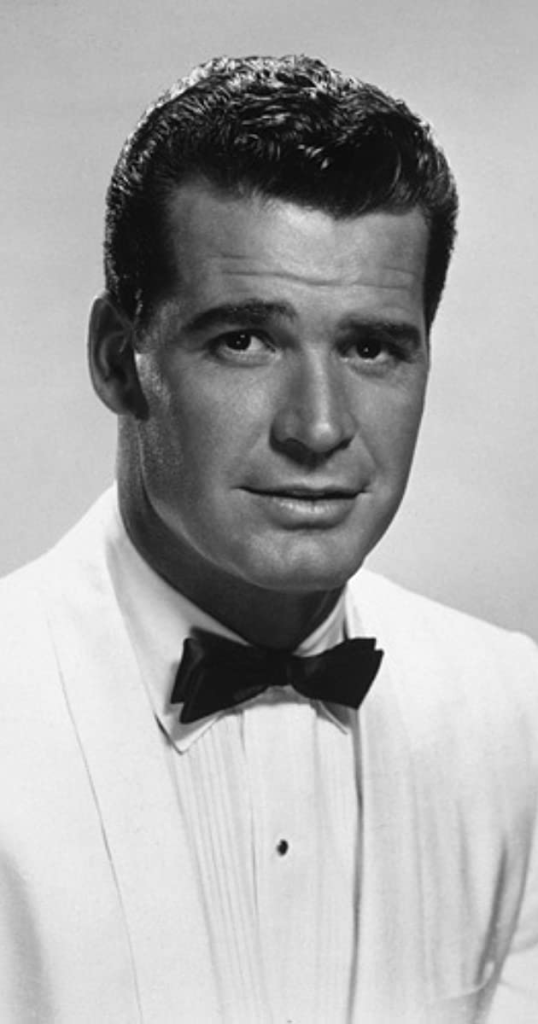
Photo: imdb.com

Today we are winding up our blog series about some of our favorite actors. We finish today with one of my favorites who had a dual big-screen and small-screen career, James Garner.

Garner was born in Norman, Oklahoma as James Scott Bumgarner in 1928. His mother died when he was 4, and his father ran a small store and the family lived above it. When James was 7 the store burned down and his father left the boys and gave them to relatives to raise. Later he moved to Los Angeles and became a carpet layer. James’ first stepmom was very abusive, and they finally had a fight when he hit her and she took off. His second stepmother was a total opposite of the first. He called her Mama Grace and said she was a real mother to him.

At 16 James dropped out of high school to join the Merchant Marines. He liked his shipmates but could never get over his chronic seasickness. In 1945 Garner moved to Los Angeles and enrolled in high school. He was a popular student and played both football and basketball, but he was a terrible student. He moved back to Norman the next year to try high school there again. He dropped out before graduating.

He then joined the California Army National Guard where he served his first seven months in Los Angeles. Then he went to Korea for 14 months as a rifleman in the 5th Regimental Combat Team. He was wounded twice and received two Purple Hearts. He also received his diploma from high school.

After he left the military, he had a variety of odd jobs including laying carpet with his father, pumping gas, installing telephones, chauffeur, dishwasher, janitor, lifeguard, grocery clerk, salesman, oil field worker, and modeling men’s clothing. His entry into the entertainment business is a bit different than most people’s. He was supposed to read lines to lead actors for Broadway production, “The Caine Mutiny Court Martial” in 1954. He was also given a minor, non-speaking role. As he was on the stage, he began to learn about the art of acting.

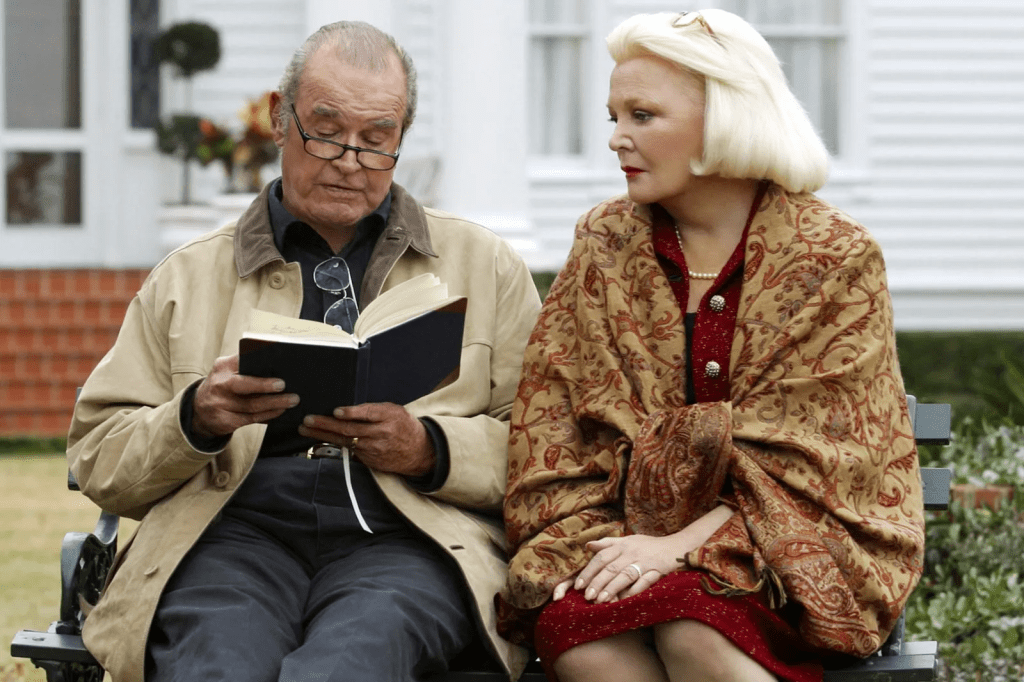
The Notebook Photo: GlamourUK.com

In 1955 he received a bit part on Cheyenne on television. He was also in Warner Brothers Presents. These small parts led to several offers to act in commercials and a larger offer from Warner Brothers to sign a contract for $200 a week. Garner began his big-screen career with Toward the Unknown in 1956. His film career included 46 additional movies with his last being The Notebook.

It was also 1956, when he married his wife Lois Fleishman Clarke; they would remain married until his death, and the couple had two daughters. They had a very short courtship. They met at the Beverly Hills Courthouse at a political rally for Adlai Stevenson and were a married couple two weeks later.

The couple bought a house in the Los Angeles neighborhood of Brentwood where their neighbors were Steve McQueen, O.J. Simpson, Arnold Schwarzenegger, Maria Shriver, and Mark Harmon. They were still living there when James passed away.

Maverick Photo: wikimediacommons.com

His successful movie career did not halt his television career. From 1957 to 1962, Garner starred as Bret Maverick on Maverick. Garner developed the type of role he would be known for as the calm, good-natured, likable, smart guy who gets out of trouble using his wit and street smarts. The show was not canceled by the network; unfortunately, Garner and the producers had a dispute over money, and he decided not to come back for the next season.

In August of 1963, Garner was one of several stars who accompanied Martin Luther King Jr. in his March on Washington. He later also recalled sitting in the third row while listening to King’s “I Have a Dream” speech.

In 1964 he made what he called his favorite film, The Americanization of Emily with Julie Andrews. He played the personal attendant of a Navy admiral and he said it contained the most impassioned speech of his career.

During the sixties and seventies, he continued making movies and showing up in a few places on television, shows like Rowan and Martin’s Laugh In, The Tonight Show, and several tv movies, one about Bret Maverick.

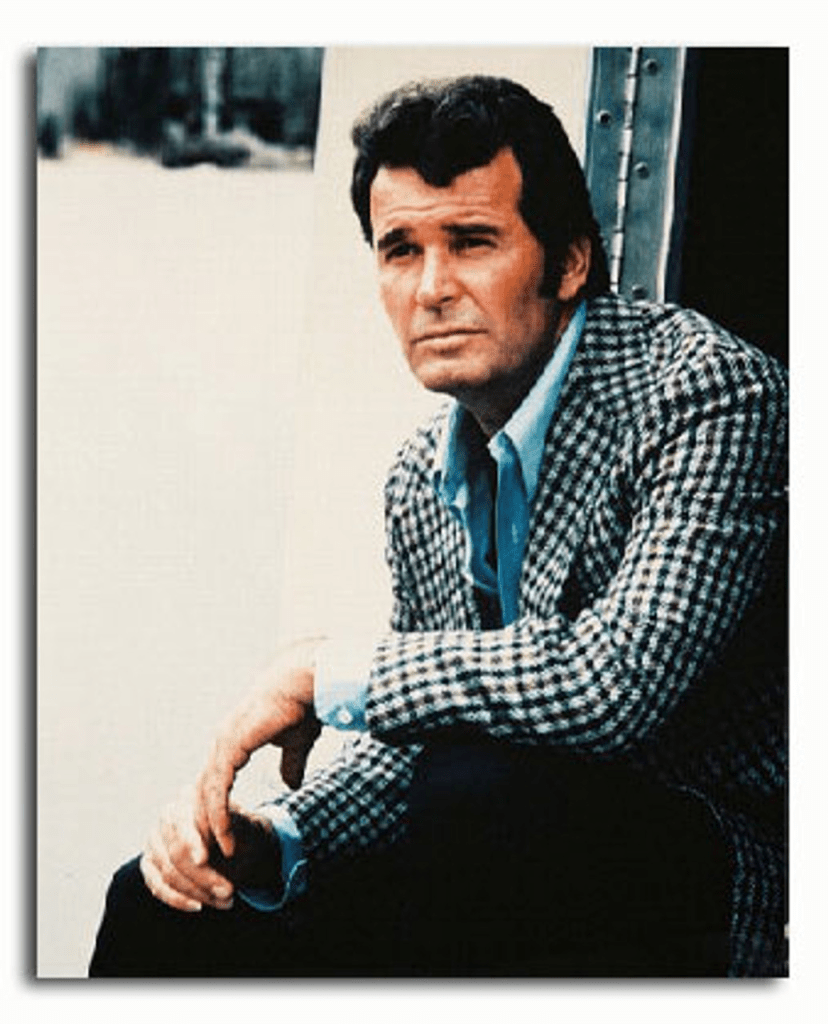
In 1974 he accepted his second role as star of a television series on The Rockford Files. He played Jim Rockford until 1980. Again, the network did not cancel the show which was still very popular but Garner had been having back pain and did not feel that he should continue the weekly series. He probably made the right choice because he was hospitalized with a bleeding ulcer during 1979; he would have quintuple heart bypass surgery in 1988; and both knees replaced in 2000.

Rockford Files Photo: starstills.com

In 1977 Garner began making commercials for Polaroid with Mariette Hartley. They were so convincing of being a married couple, that Hartley had a shirt made that said “I am not James Garner’s wife!” The couple filmed more than 300 commercials together.

After John Ritter passed away in 2003, Garner joined the cast of 8 Simple Rules as Cate’s father Joe and was on the show for the final three seasons.

Garner worked with several charities and foundations during his career. In 2003, he gave $500,000 to the James Garner Chair in the School of Drama for the University of Oklahoma to fund the first-endowed position at that school. He also volunteered with Save the Children.

In 2011, Garner wrote an autobiography called The Garner Files: A Memoir, cowritten with Jon Winokur.

Some of Garner’s hobbies included spending time with his family and political activism. However, his biggest passion was sports. He was a big fan of the Oakland Raiders and could often be seen on the sidelines with the team. He loved golfing. He was inducted into the Off Road Motorsports Hall of Fame in 1978. He owned the American International Racing team in the late sixties and he drove the pace cars for the Indianapolis 500 in 1975, 1977, and 1986.

Photo: flickr.com

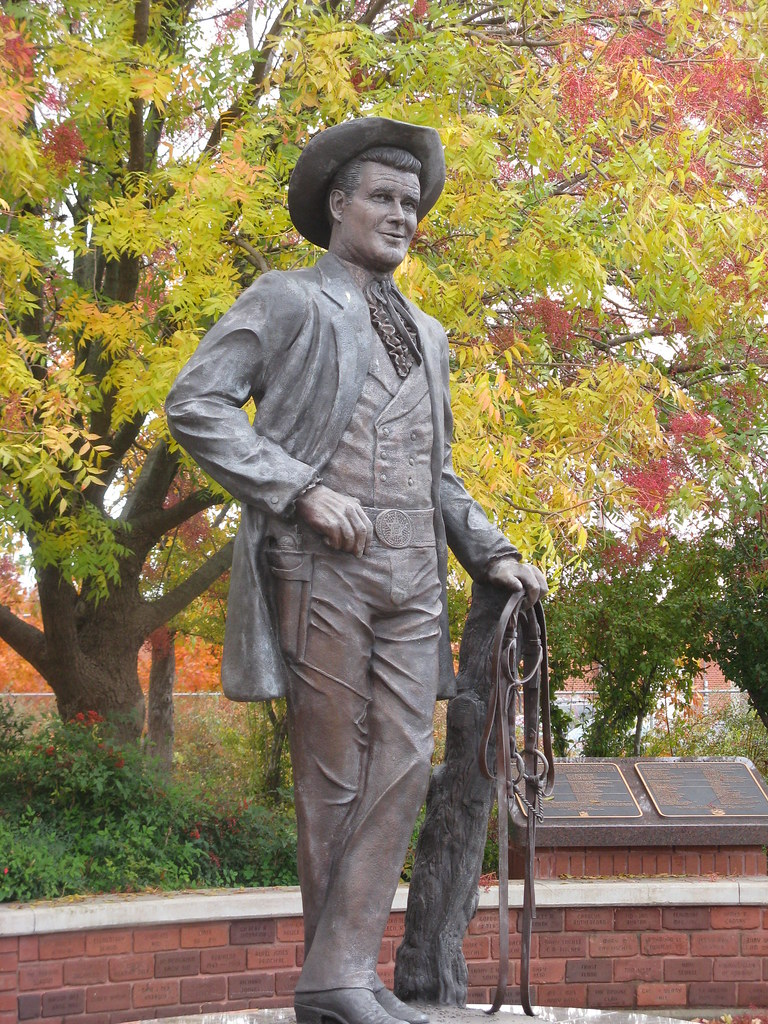
He was also honored by his hometown of Norman, Oklahoma. He has a street named after him there and in 2006, a ten-foot bronze statue as Bret Maverick was erected there.

He was also loved by his coworkers. In 1973, John Wayne named Garner the best American actor in an interview. He was also close friends with Tom Selleck, Sally Field, and Clint Eastwood. When he passed away in 2014 from a heart attack, Sally Field said “My heart just broke. There are few people on this planet I have adored as much as Jimmy Garner. I cherish every moment I spent with him and relive them over and over in my head. He was a diamond.” He was nominated for 15 Emmy awards during his television career, winning in 1977 as Outstanding Lead Actor in a Drama Series for The Rockford Files.

He didn’t do a lot of comedy but I think he was a funny guy. When he was asked if he would ever consider a nude scene, he said “No, I don’t do horror films.”

James always said he was not concerned with fame; he just wanted to make a good living at something he enjoyed. That comes across as something he truly believed in, not just talking the talk. He lived in the same house and was married to the same woman for most of his life. He did work he was proud of and was very successful in both film and television. He loved sports and his career allowed him to participate in more of those activities that he loved. He was also a generous man, giving to causes that he thought were important.

Move Over Darling Photo: moviescene.com

Although not the most important films in his portfolio, I always think of him acting with Doris Day in The Thrill of it All and Move Over Darling. I enjoyed learning about his life and respect him as a person. He never complained about the terrible childhood he had or used it to make excuses when he did make a poor choice; he said you have to just keep moving forward and he moved forward in an honorable way. Thanks for sharing your life with us  and letting us travel forward with you, James Garner.

What do You Wear to Eat Beans and Franks with Arnold Ziffel?

There is a lot that happens behind the scenes to help make a show a hit. In previous blogs (see the December 2018 blogs about Earl Hagen and Jay Livingston), we learned about composers. This month we’ll take a look at the costumers and the set designers. The wardrobe department has the responsibility to make sure the characters are wearing the appropriate clothing for their character.

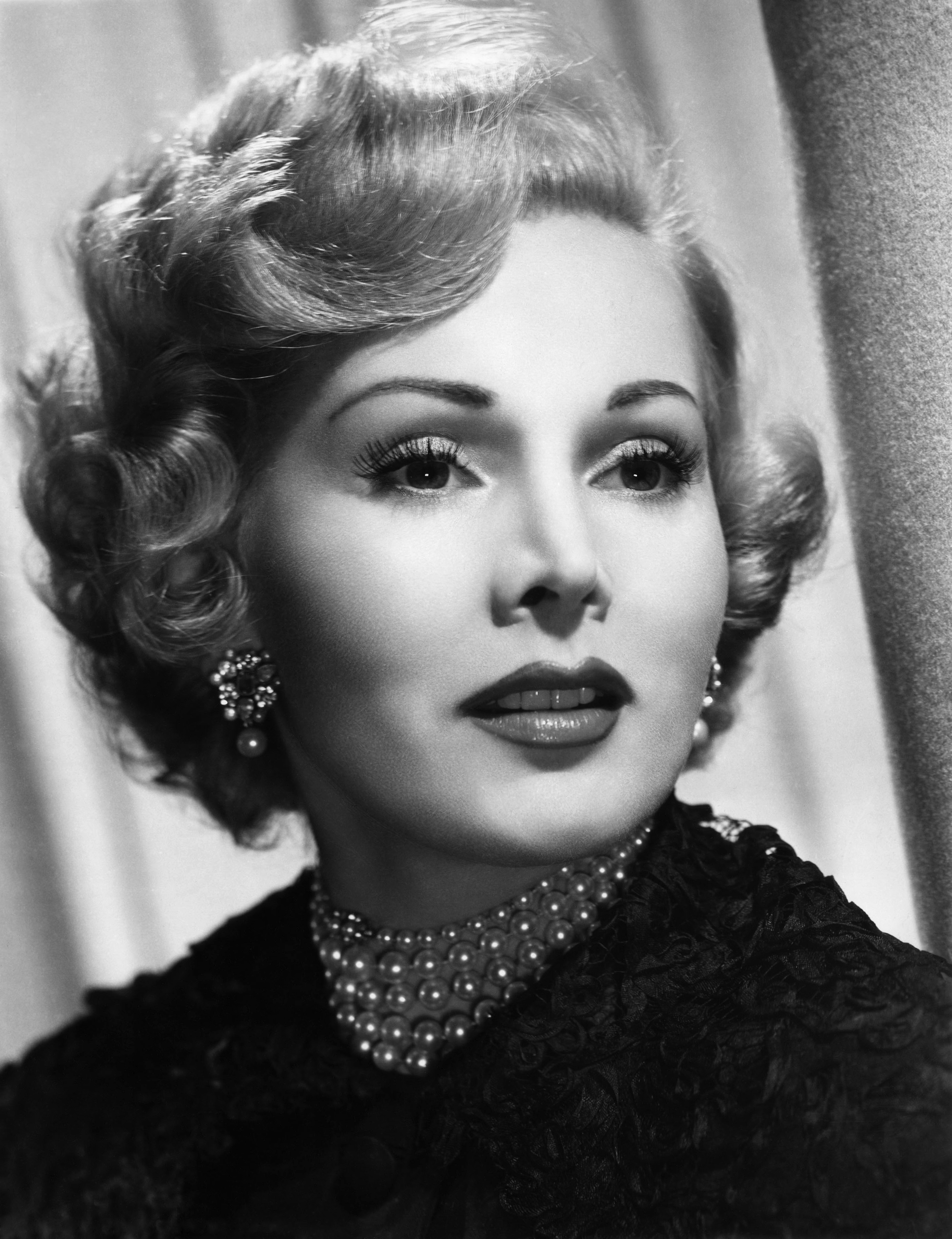
Zsa Zsa Gabor, ca. 1952
Photo: quotesgram.com

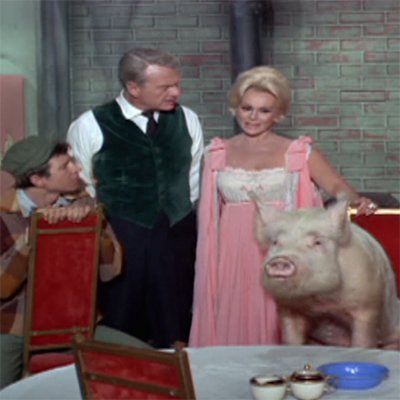
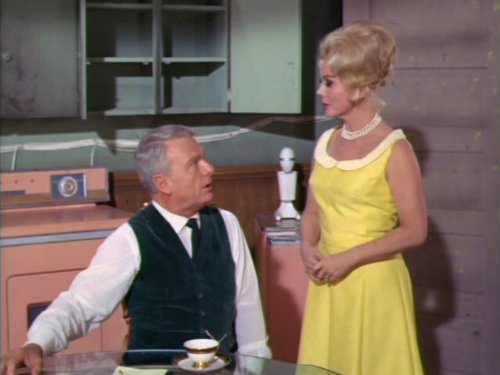
Green Acres presented a challenge for the wardrobe department. Most of the citizens were farmers, so overalls and house dresses fit the bill. Sam Drucker was the grocer, postman, and newspaperman for Hooterville, among other jobs. He always wore a blue shirt with a tie and had his postman vest or grocery apron on. Lisa and Oliver Douglas played an attorney and his wife who relocated from New York City and the social scene to rural Hooterville to run a farm. Oliver often wore suits on his tractor, looking somewhat silly and questioned by the locals. Lisa also continued to wear her glamorous outfits, but somehow, she was accepted by everyone and fit in wherever she went.

Photo: metv.com

Lisa Douglas could wear anything and look good. She often wore her negligees around the house without being thought a hussy. She could show up in a sequined gown for a local band performance and was just one of the crowd. She wore gowns of boldly colored prints, but she was just as likely to show up in a single-colored sheath dress with a simple strand of pearls.

Photo: imdb.com

With her lavish updo hairstyle and her extensive collection of jewelry, Lisa was fun to outfit. Three designers were responsible for the majority of Lisa’s wardrobe: Jean Louis, Lucie Ann Claire Sandra, and Nolan Miller.

Jean Louis

Born Jean Louis Berthault in 1907 in Paris, France, he was an Academy Award winner for The Solid Gold Cadillac in 1956 starring Judy Holliday. (Jean was nominated for 13 Academy awards.)

Photo: pinterest.com

He attended the School of Decorative Arts and then went to work for Agnes Drecoll, courtier. In 1935, he moved to New York city where he worked for Hattie Carnegie before going to Hollywood. While working there he began gathering a large clientele, including Wallis Simpson and Irene Dunne.

Photo:
Black gown -1960s Jean Louis Silk Tiered Gown

From 1944-1958, he was head designer for Columbia Pictures. Some of his most creative designs included Rita Hayworth’s black satin dress from Gilda, the beaded gowns worn by Marlene Dietrich, and the sheer, sparkling dress Marilyn Monroe displayed when she sang “Happy Birthday” to John F. Kennedy. He also was the primary designer for Kim Novack.

Photo:
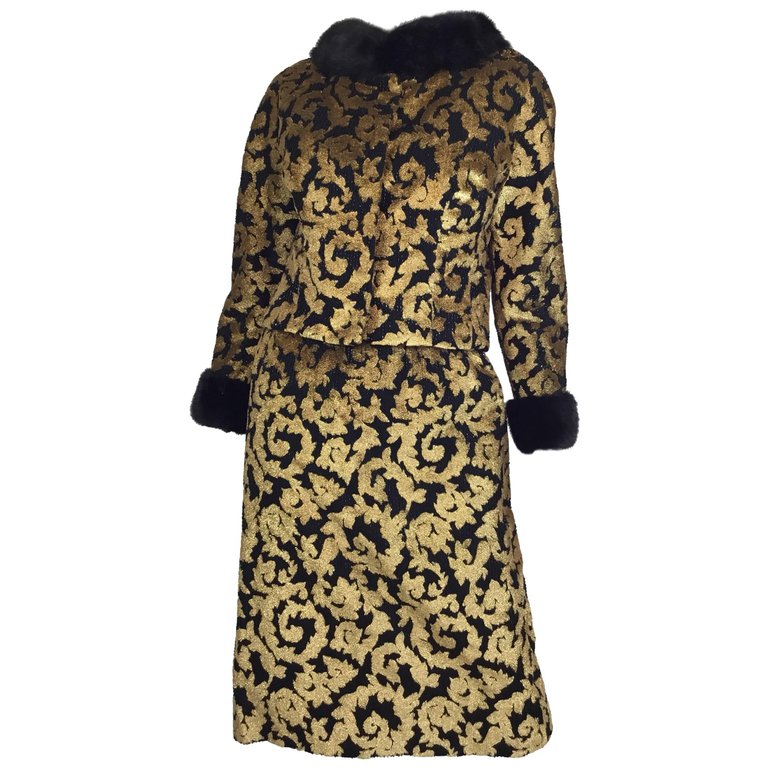
Gold and black lame dress

In 1958 he moved over to Universal. There he began a working relationship with Doris Day, with Pillow Talk, their first collaboration. Journalist Tom Vallance described his work:- “He created a sophisticated allure for Doris that launched a new phase of her career.” James Garner, who also starred with Doris in several films said she “exuded sex appeal while still maintaining her All-American Girl next door image.” Jean Louis also worked with Lana Turner during this era, putting together her colorful wardrobe in Imitation of Life. Jean’s daughter said her father “had the most amazing discerning eye for color. It was a sixth sense for him.”

Jean Louis had designed the clothing for The Loretta Young Show from 1953-1961. She was a close friend of Jean and his wife Maggie. After Maggie passed away, he and Young married in 1993. She was considered one of, if not the best, well-dressed stars. He also designed clothing for Ginger Rogers, Vivian Leigh, Julie Andrews, Katherine Hepburn, and Judy Garland.

Jean began to freelance in 1960. He opened a boutique in Beverly Hills and sold his label, “Jean Louis, Inc.” at better department stores all over the country. During this time, he also updated the United Airlines stewardess uniforms.

Photo: metv.com

From 1965-1967 he designed Lisa Douglas’s dresses on Green Acres. He was the perfect designer for her. Gifted with a great sense of humor, he could undoubtedly relate to the humor on the show.

Photo: thewritelife61.com

As he said during a Vogue interview, “You can use marvelous fabrics, have wonderful, impossible embroidery—in fact, be superluxe and superluxe is what the couture is all about.”

Photo: tumblr.com

In the 1970s, he opened a boutique in France and launched his first fragrance. His career was still flourishing with clients like Jacqueline Kennedy, Sophia Loren, and Bianca Jagger.

Jean Louis passed away in 1997. His influence continues to be felt among designers today. Some of the fashion icons who admit being influenced by him include Michael Kors, Vera Wang, Giorgio Armani, and Zac Posen.

Photo: imdb.com

Lucie Ann-Claire Sandra

Lucie Ann vintage nightgowns are among the most glamorous and desirable negligees ever made. Lucie Onderwyzer founded the fashion company in 1947 in Beverly Hills. Known for bold color and exuberant details like pompoms, bows, rosettes, and rhinestones, she designed for many stars including Elizabeth Taylor.

Photo: pinterest.com
A few of Lisa’s gowns in the background

She designed all the peignoir sets worn by Eva Gabor in Green Acres. Her designs were also featured in other television shows and movies. In one episode of Bewitched, Darrin goes to the store to purchase a Lucie Ann for Samantha.

Photo: pinterest.com
Darrin shopping for Samantha

Lucie passed away in 1988 and her company was bought by Deena Lingerie Co and later Lady Ester Lingerie Company which is still making them today.

Norman Miller

Norman Miller was a wardrobe consultant for Eva on Green Acres.

At www.emmytvlegends.org/interviews/people/nolan-miller, Miller described his relationship with Eva.

 “I adored Eva. We worked together for many years. Later on, our working relationship became a friendship that I really valued. She wasn’t silly. She was a very smart lady. Not so smart with the men of her life. Her home was incredibly elegant. Anything that she needed I would do.” Miller shares about the time when Eva discovered a store called Loehmann’s; the store would buy designer samples and pack them up in huge boxes for stars to pick from. “Eva was a size 8 and the sample sizes were 2, and she’d simply ask me to do my magic and tailor them to her size. I smile at that as Eva could get anyone to change things around for her. I sometimes wonder whether she did understand fully well what was entailed in changing a size 2 into an 8 just like what was entailed in coming up with an animation idea tailor-made for her. She’d bat her eyelashes and sprinkle in a few ‘darlings’ and you find yourself doing what she wanted.”

Photo: pinterest.com
A pink chiffon sleeveless floor-length Nolan Miller dress with accompanying chiffon and ostrich feather wrap worn by Eva Gabor on the television series Green Acres.

Miscellaneous

These three designers were the major forces behind Lisa Douglas’s beautiful fashion style on Green Acres. Gabor had an amazing fashion sense and was well known for her private wardrobe. She also was a successful business woman, owning a multi-million-dollar wig company.

Photo: newyorksocialdiary.com

Eddie Albert tells a great story about Gabor and her fashion. At her funeral, he said he probably saw more of Gabor than any of her five real-life husbands did. And, like any couple, married or not, they had their differences. She, for example, never quite understood his passion for wildlife conservation. “Every time you hear about a sick fish, you make a speech. Vy?,” Albert recalled his co-star saying. “And I would tell her, ‘I think we ought to preserve nature, save wild animals,’ and so on. Well, one day she showed up in a gown made of feathers, and I asked her not to wear it. ‘But so chic!’ she said. And I said, ‘Yes, and ladies will see it and want one, and thousands of birds will die.’ And she said, ‘But, Eddie, feathers don’t come from birds.’ ‘Well,’ I asked, ‘where do they come from?’ And she said, ‘Dahlink. Pillows! Feathers come from pee-lowz!’ ”

Perhaps there was more of Eva Gabor in Lisa Douglas than we realized.

Photo: sitcomsonline.com

When She Tugged on Her Ear, She Tugged At Our Hearts

Today’s topic had me thinking about how much better things are in a group.  Roses are beautiful on their own but pair them with some complementary-colored blooms and everything comes alive.  Juicy watermelon is perfect on a hot, summer day, but combine it with berries, kiwi, and peaches, and all the tastes meld together. One book is a treasure on its own, but put ten together, and you have a library. There’s never a bad choice when deciding between vanilla, chocolate, or strawberry ice cream, but someone invented Neapolitan so you could get all three.

This works for our show this week as well.  Look at the work of Carol Burnett, Harvey Korman, Tim Conway, Vicki Lawrence, and Lyle Waggoner and you will find gems, but put them together and you have a sparkling jewelry box full of wonderful things.

cast

These performers came together between 1967 and 1978 working on The Carol Burnett Show. Let’s see how that came to be.

Carol Burnett – Carol is a truly versatile performer; she acts, sings, does comedy, dances, has been on the stage, and has appeared on the big screen as well as the small screen. America has always had a love affair with her.

carol1

She was born in Texas and moved to Hollywood with her grandmother. One of her first jobs was working as an usherette.  She received an anonymous gift of money that covered a year at UCLA where she majored in journalism. At one point she decided to switch her major to theater arts and English and planned to be a playwright. She gained some experience performing in several college productions. Her good luck continued when she received another gift – a $100 interest-free loan to move to New York City to try her hand at musical comedy.  She worked as a hat girl and began her acting career.  She married Don Saroyan in 1955. In 1959 she got her first big break, appearing in the Broadway show, Once Upon a Mattress for which she received a Tony nomination. Around this time, she became friends with Jim Nabors; he would be a life-long friend and her daughter’s godfather. When the Carol Burnett Show started, he became the first guest every season and was her good luck charm.

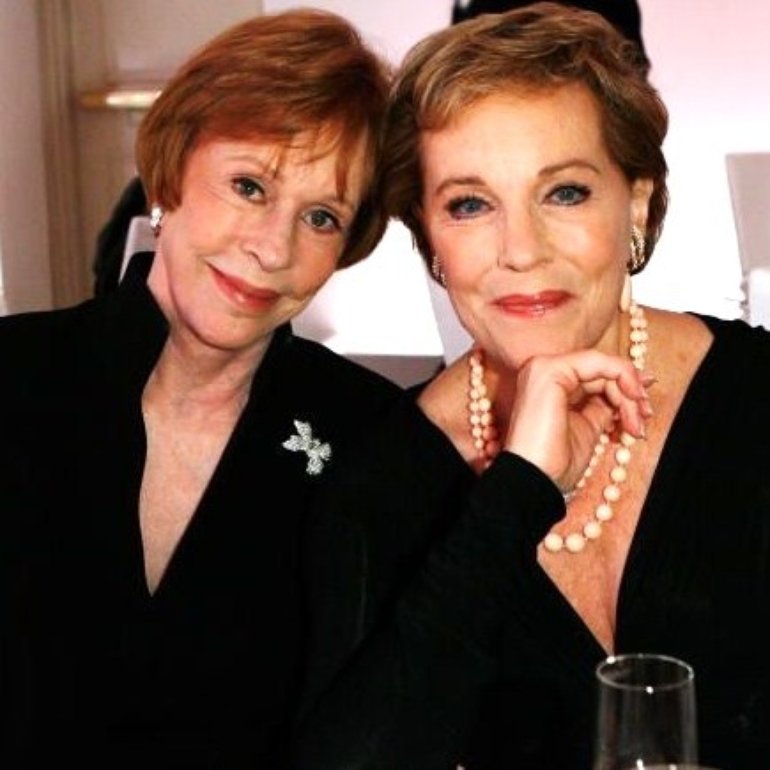
Soon after she began appearing on television and won her first Emmy in 1962 for her work on The Paul Winchell Show. This was also the year she and Don divorced. In 1963, she married Joe Hamilton, and they had three children. Lucille Ball had become a mentor to her, and they also remained friends for life.  Lucy sent her flowers every birthday.  On her birthday in 1989, Carol awoke to the news that Lucy had died.  She received her flowers later that day.
carol9

She did several specials with Julie Andrews, Dolly Parton, and Beverly Sills. Carol had a clause that she could decide to do a permanent variety show which would expire in 1967. Carol decided to take advantage of the clause and do the variety show.  The network tried to talk her out of it because they said variety shows tended to be men’s territory.  They offered her a sitcom of her own, but luckily for us, she stuck to her guns.

In 1974, she went back to the stage to star with Rock Hudson in I Do I Do. In 1984 she and Joe divorced.  She would win her second Emmy for her work on Mad About You.

In 1995, she returned to Broadway to appear in Moon Over Buffalo which gained her a second Tony nomination.

Carol was the Grand Marshal for the 109th Rose Bowl Parade. She has written five books. She has remained close friends with many of her costars including her show cast, Jim Nabors, Betty White, Beverly Sills, Julie Andrews.

Not only did she help a young Vicki Lawrence, but other stars looked to her for help as well. Jim Carrey sent her his resume at age 10.

In 2001, Carol married again. Her current husband Brian Miller is a drummer for the Hollywood Bowl Orchestra. Most recently she guest starred on several episodes of Hawaii Five-0.

Harvey Korman – Born in Chicago, Korman served in the US Navy during World War II. After the war, he studied at the Goodman School of Drama.  He attended classes at DePaul University and the Chicago Art Institute. During 1950, 1957, and 1958 he was part of the Peninsula Players in Fish Creek, Door County, Wisconsin.

carol19

His first television role was on the Donna Reed Show in 1960. He also married that year and they had two children. He continued to act on television on such shows as Dr. Kildare, Perry Mason, Route 66, Jack Benny, Hazel, Here’s Lucy, and Gidget – 30 shows in all; he also appeared in many movies. You might recognize his voice if you watch The Flintstones; he played the role of the Great Gazoo. His first big break was on The Danny Kaye Show in 1963. With his expressive voice, he played a wide assortment of characters. In was due to his work on Danny Kaye, that Carol recruited him for her show in 1967.

In 1977, he made the tough decision to leave The Carol Burnett Show and star in his own vehicle, The Harvey Korman Show.  The show was about an out-of-work actor Harvey Kavanaugh who lived with his daughter. The critics thought Korman was wonderful in the show, but the show got very low ratings and was cancelled after six episodes. Then he was an out-of-work actor in real life. Dick Van Dyke had taken his place on the Carol Burnett Show so he could not return.

carol20

After his show fizzled out, he went back to movies. In 1977 he divorced his first wife. In 1982 he remarried and had two more children.  Korman continued to make tv appearances on a variety of shows such as the Love Boat, Ellen, and ER. He also made movies. He is probably best known for two of his movies: Blazing Saddles and High Anxiety.  In 1983-84, he appeared in Mama’s Family with Carol Burnett and Vicki Lawrence. In 2008, he passed away from a ruptured abdominal aortic aneurysm that was diagnosed four months prior.

Tim Conway – Conway was born in Ohio and joined the Army, serving at a radio station. After the war, he studied at Bowling Green State University, majoring in tv and radio. He married in 1961 and they had 6 children.

tim

He was discovered by Rose Marie and became a regular on The Steve Allen Show. He earned even more fame when he joined the cast of McHale’s Navy in 1962. McHale’s Navy had two different formats.  I was surprised to learn that Joseph Heller (author of Catch-22) wrote one episode but removed himself from the credits when he had an argument with the producer. Conway became very close to Ernest Borgnine and considered him his mentor. Later the two of them would work together in SpongeBob Square Pants as old superheroes.

After McHale’s Navy, he was cast in Rango. A comedy/western, Conway played Rango. He was an inept Ranger, but his father was the head of the Texas Rangers, so he was moved to a very quiet post.  Unfortunately, a crime wave broke out after his arrival. The show lasted for 17 episodes.

Conway got his own show in 1970, but it never really worked and was cancelled after 12 episodes. He played an airline pilot who was not very good at flying. He and his partner owned a decrepit airplane and they were always fighting creditors, barely making a living.

He was on Carol Burnett throughout the years of her show, and in 1975 he became a regular. When the show ended, he kept busy with television shows, appearing in more than 50 shows including Newhart, Larry Sanders, Drew Carey, Ellen, Yes Dear, Hot in Cleveland, Laverne and Shirley, The Love Boat, Roseanne, and Ally McBeal. He also performed around the country with Harvey Korman and began making his Dorf videos. In 1984 he married his current wife.


Vicki Lawrence –  Vicki grew up in California. When Vicki Lawrence was 17, she wrote Carol a fan letter.  She was entered in a Miss Fireball contest, and someone told her she resembled Carol. She asked for some advice about her performance. Carol not only gave her advice – she drove all the way to watch the contest.  She told her they would talk about her career. A short time later, while Vicki was singing with the Young Americans, Carol offered the inexperienced girl a regular role on her show.

vicki

Vicki was mentored by both Harvey Korman and Carol Burnett, and her talent blossomed during her years on the variety show. In 1974, she recorded the hit song “The Night the Lights Went Out in Georgia.”

In 1983, she was offered her own show based on one of the Carol Burnett skits, Mama’s Family.

She hosted Win, Lose, or Draw and has appeared in stage performances. She spends most of her time now giving speeches for women’s groups and charities.

Lyle Waggoner – Born in Kansas City, Kansas, Waggoner was the heart throb of the show. He sold encyclopedias door to door. To jump start his career, he appeared in summer stock. He received roles in a lot of bad sci fi and beach party films. His career might have been different because he was in consideration for Batman, but the part went to Adam West. He was hired as the emcee of Carol’s show but progressed to being a part of the ensemble playing in a variety of skits. He left The Carol Burnett Show in 1973. He was offered a role in Wonder Woman in 1975. His career never picked up after that. He now runs a rental trailer company which is the largest one in Hollywood. He has been married more than fifty years, and he and his wife have two sons.

carol27

The Carol Burnett Show

The show was the best and the last variety show to be on television. Carol wanted to develop her own cast. She handpicked her costars. She hired The Ernie Flatt Dancers to do all the choreography. The head male dancer for the run was Don Crichton.

Artie Malvin was the musical writer. Carol used a live 28-piece orchestra conducted by Harry Zimmerman for the first three years and Peter Matz for the final eight years. She had a guest star on every week, often a singer.  Some of the performers included Ella Fitzgerald, Bing Crosby, Mel Torme, Perry Como, Lena Horne, The Carpenters, Sammy Davis Jr., and Ray Charles.  Steve Lawrence was on 25 times and Eydie Gorme performed 13. Unfortunately, when the show went into syndication, it became a half-hour show, and the musical numbers were cut.

Sonny and Cher taped next door and Carol often popped in on their taping and Sonny and Cher visited her show.

Some of Carol’s favorite guests included Bernadette Peters, Alan Alda, Roddy McDowell, Paul Lynde, Bob Newhart, Rita Hayworth, James Stewart, Gloria Swanson, Vincent Price, the Smothers Brothers, Donald O’Connor, Lucille Ball, Rock Hudson, Mickey Rooney, Betty White, and Nanette Fabray. The only guest star Carol was not able to book was Bette Davis.  She demanded too much money.

The Carol Burnett Show received 22 Emmy Awards during the 11 seasons it was on the air. Harvey Korman was nominated for six of those and won four. Lawrence also received five Emmy nominations and one win.

Bob Mackie was her favorite designer, and he designed all the costumes for The Carol Burnett Show. Typically, he had to design 60-70 outfits per week, adding up to 18,000 over the course of the show.

For the first 3-4 minutes of each show, Carol appeared in a Bob Mackie creation and took questions from the audience. Some of these are the funniest parts of the show.

The cast would rehearse every day, and they did two tapings on Friday.  If the first taping went fine and they got what they needed, they would let Tim Conway improvise on the second taping and many of his unrehearsed moments made it into the show.

The show aired on Monday nights up against Big Valley and I Spy. In Season 5, they were moved to Wednesday nights up against Adam-12 on one network and Bewitched and The Courtship of Eddie’s Father on the other. In 1972, they made their final move to Saturday nights. The final year they faced some stiff competition against The Love Boat.

Some of her favorite regular skits were Stella Toddler where Burnett played an older character who always seemed to get tripped, whacked by something, or knocked down; Mrs. Wiggins who was an inappropriately dressed and incompetent secretary to Mr. Tudball; a woman who watched commercials on tv —  a cast member showed an item each week that drove the woman crazy; Marion from Canoga Falls in “As the Stomach Turns”; Chiquita, Burnett’s imitation of Charo; Nora Desmond, a has-been silent film star and her butler Max; The Old Folks where Burnett and Korman talked on the porch reminiscing; and Shirley Dimple, based on Shirley Temple.

Carol loved the parodies they did of old movies.  Some of the original stars loved them, and some were quite unhappy with the comedies. Her favorite was “Went with the Wind” with Starlett O’Hara, Rat Butler, and Mr. Brashley. The curtain rod in the dress was conceived by Bob Mackie. Coming down the stairs, Starlett replies to Rat’s compliment on the dress, “Thank you.  I saw it in the window and couldn’t resist.” The dress is now at the Smithsonian Museum. She also liked “Pillow Squawk”, a Doris Day parody.

She was always complimentary about her entire cast. One of her quotes was “When you play tennis, it’s important to play with a better player because it makes your game better.  Well, Harvey made my game better. I miss him dreadfully. And Tim Conway, God bless him, is just genius when it comes to improvising, coming up with stuff that we never rehearsed.”

These compliments were returned by her costars. Harvey Korman was quoted as saying, “We were an ensemble, and Carol had the most incredible attitude. I’ve never worked with a star of that magnitude who was willing to give so much away.”

carol18

Of course, everyone watches to see how Tim Conway makes Harvey Korman laugh during their skits.  Apparently, Tim had a knack for improving the scripts and throwing in lines and action that Korman didn’t anticipate. Here’s Tim Conway on Harvey Korman: “He was one of the brightest people I’ve ever met, but the man could not tie his own shoes . . .  I would put him on constantly . . . We were on an airplane and we refueled in Arizona. Taxing on the next runway, I said, ‘Harvey, I don’t know if the guy put the gas cap back on. It was on the wing and now it’s not.’ Harvey got worried. So, he got up and went to the pilot and said, ‘Your gas cap’s not on.’ The pilot just looked at him.  There is no gas cap.”

One of the memorable parts of the show is the opening and closing theme song.  She always ended the show with “I’m so glad we had this time together, just to have a laugh or sing a song. Seems we just get started, and before you know it, comes the time we have to say so long.” Then she tugged her ear. She would tug on her left ear which was a message to her grandmother that things were going well, and she missed her.

No matter how many years go by, the show remains a timeless comedy.  It has a balance of silliness and savvy. It’s hard to believe that the generations growing up in the 1980s and 1990s have never seen a variety show.  I love to catch reruns of this show.  I laugh out loud through the show.  Thank you, Carol for spending time with us. The show currently can be shown on Me TV at 10:00 pm with Mama’s Family airing at 8:00 pm.

Garry Marshall: A Tribute To The Man Who Created So Many Happy Days For All Of Us

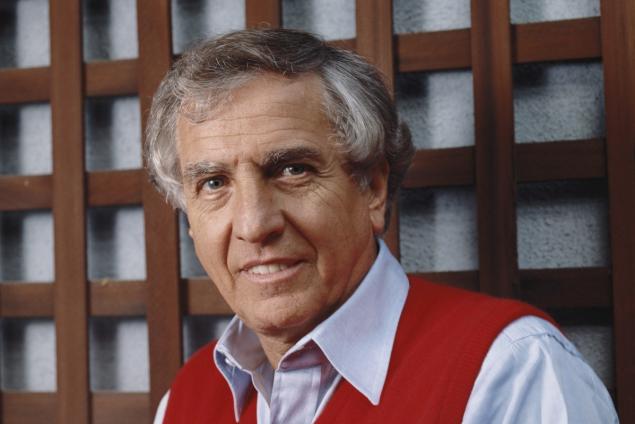
Today we get to honor one of my all-time favorites in the celebrity world – Garry Marshall.  By all accounts, whatever you read, he was hilarious, humble, and hard-working.  He was known as a family man, always putting them first. Let’s learn a little bit about his life.

garry1

His Early Life

Garry Kent Marshall was born in The Bronx, New York on November 13, 1934, the son of Anthony Wallace Marshall, a director and producer of industrial films, and Marjorie Irene, a  teacher who ran a tap dance school. His father changed his last name from Masciarelli to Marshall before Garry was born.

Marshall had a typical childhood which included “the usual bruised knees, runny nose, dead frogs and stolen bases.” But he said his formative years were primarily devoted to discovering girls, making people laugh, and learning to play drums. “When I was growing up, there were three drummers I admired: Gene Krupa, Max Roach, and this little girl drummer in my school who used to blow in my ear after practice.”

His brother is Ronny Marshall Hallin, a television producer; his sister is Penny Marshall, actress and director; and his brother-in-law for ten years was Rob Reiner, actor and director.

garry14

Garry decided to attend Northwestern University to major in journalism.  After graduation, he was drafted into the Army and sent to Korea as part of the Special Services.  He was able to write and produce shows which set him on a new career path once he returned to the United States. Discussing his service, he said, “The lowest musical experience of my life came when I was in the Army. I was a solo marching snare drummer and kept cadence for my battalion. One day while my battalion was marching, I was playing so badly that the Captain shot a hole through my drum with a .45 revolver.”

Garry moved to New York after the Army and met Fred Freeman.  The two of them began writing together.  To support himself while his writing career got underway, Garry supplemented his income playing drums and writing for the Daily News sports department.

His TV Production Career

Marshall began his career as a joke writer for comedians and became a writer for The Tonight Show with Jack Paar. He eventually secured a staff writing position on The Joey Bishop Show. There he met Jerry Belson in 1961, with whom he would go on to write two feature films, a Broadway play, and episodes for a variety of TV series including The Dick Van Dyke Show, The Lucy Show, and I Spy.

In 1963, he married Barbara; they would have three children.

garry16

Marshall and Belson’s first television series as creator-producers was Hey, Landlord, which lasted one season (1966–67).

Their next series was more successful. They adapted Neil Simon’s play The Odd Couple for television. Felix Unger and Oscar Madison are total opposites but best friends.  Garry’s sister Penny would play Myrna in the show.

T4DODCO EC002

Marshall continued to borrow from The Odd Couple throughout his career. Over and over again he employed the comic device of coupling two distinctly different characters: the hip and the square on Happy Days, the earthling and the Orkan on Mork and Mindy, the rich and the poor on Angie, and, later, the businessman and the prostitute in the movie Pretty Woman.

Most of his hit television series were created and executive produced by him. Rather than forming his own independent production company, which had become standard procedure for producers at the time, Marshall remained at Paramount to make a succession of hit situation comedies for ABC. By the end of the 1978-79 season, four of the five highest-rated shows of the year were Marshall’s.

garry13

In the Norman Lear era, when series like All in the Family tackled social issues, Marshall focused on younger viewers with lighter, more escapist fare, most of it set in the supposedly simpler past. In an interview reprinted in American Television Genres (1985), Marshall recalled that, after producing the adult-oriented Odd Couple, he had been anxious to make shows “that both kids and their parents could watch.”

His philosophy to get younger viewers: “You have to do something silly to get their attention. Then I like to knock them off their chairs with laughter. I go for the gut. I want them to laugh hard.  I don’t want them quietly staring at a bright, witty show.”

Happy Days debuted as a series in January of 1974, and by the 1976-77 season it was the most popular show on TV. Most people don’t realize this, but the show began as a skit on Love American Style, and I remember watching it when it aired the first time. The show was set in Milwaukee in the 1950s, focusing on a group of high school friends; the Cunningham family; and Fonzie, the cool guy in town.

garry5

Regarding Fonzie, Marshall said, “I knew that if I could get him over the garage, I could get him into the kitchen; he could become a member of the family.”

He worked with a variety of his family members throughout his career. His mother appeared in the Happy Days episode, Happy Days: Beauty Contest as “Mrs. Weiss,” the piano player.

Laverne and Shirley was a spin-off of Happy Days.  Two friends, Brewery workers, get involved in various kinds of trouble.  Marshall explained his idea for the show: “No one else on TV is doing early Lucy.  The other ladies on sitcoms are classy – they’re well off, smart, and they dress well. Laverne and Shirley are definitely not classy. They’re blue collar workers who went to work right after high school.  They’re decent people.”

garry6

Happy Days would produce two more shows in Joanie Loves Chachi that explored the life of Joannie Cunningham and Fonz’s nephew Chachi after high school as they tried to figure out their relationship and Mork and Mindy, a show starring Robin Williams and Pam Dawber about an alien living in Colorado.

His Acting Career

A la Hitchcock, Marshall turns up as an uncredited actor in the background, occasionally appearing in cameos on his own hit TV shows.

garrya

On Dick Van Dyke, he appeared as referee in a 1965 episode and a bartender in a 1966 episode. If you look closely, you will see him as a random man in three Odd Couple episodes. He showed up as a drummer in two Laverne and Shirley shows and on a Happy Days episode.

He had a small re-occurring part on Murphy Brown and provided the voice for two Simpsons shows (“Eight Misbehavin’” and “Homer the Father”).

In 2014, Marshall appeared in a guest star role in a Two and a Half Men.

He continued to show up in comedies until his death, the last one being Brooklyn Nine-Nine.

When he made the switch to movies, he continued to find small roles for himself. He plays a first baseman in  Runaway Bride, an audition director in Beaches, and a bum in Pretty Woman. It seems there was no part too small. He also played his real-life sister’s husband in Hocus Pocus in 1993.

His Directing Career

His career as a film director was just as impressive, yielding several gems and cult classics, from Pretty Woman to Runaway Bride to The Princess Diaries.

In the early 1980s, he met Héctor Elizondo while playing basketball and they became great friends. Marshall was known for his obsession with basketball: his contract often obligated studios to provide a basketball court on his film locations.

garry3

Elizondo appeared in every film that Marshall directed, beginning with his first feature film Young Doctors in Love. Elizondo once noted that he is written into all of Marshall’s contracts whether he wanted to do the film or not.

In the opening credits of Exit to Eden (their eighth film together), Elizondo is credited “As Usual … Hector Elizondo.” In 1984, Marshall had a film hit as the writer and director of The Flamingo Kid. He later produced Nothing in Common with Tom Hanks and Jackie Gleason and Overboard with Goldie Hawn and Kurt Russell.

In 1988, he directed the legendary weepie Beaches, starring Barbara Hershey and Bette Midler.

Although he was original choice to direct Sleepless in Seattle, Nora Ephron ended up with the job. His most famous movie as director also won him an Oscar nomination for Pretty Woman in 1990.

garry10

Pretty Woman star Richard Gere said of Marshall in Variety: “He was a mentor and a cheerleader and one of the funniest men who ever lived. He had a heart of the purest gold and a soul full of mischief.”

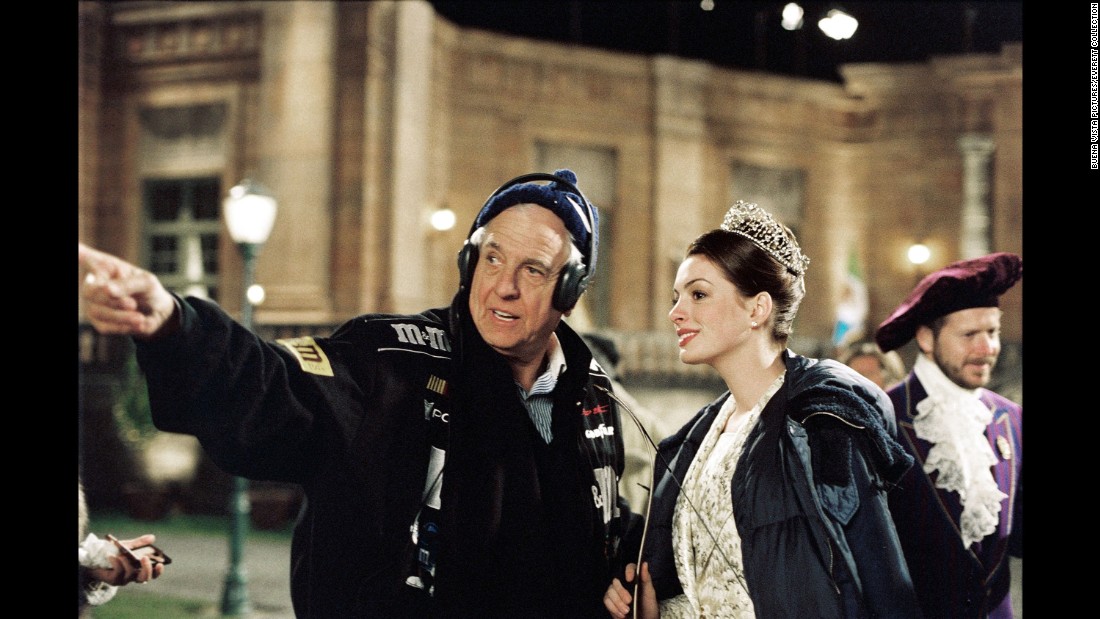
Some people might be surprised to find out that Garry was the director for The Princess Diaries and The Princess Diaries 2 starring Anne Hathaway and Julie Andrews.  Garry considers Julie Andrews one of his favorite actresses because “she could act, she can sing, she’s a lady who can curse with perfect diction.”

garry17

He seemed to be surrounded by family whether at home or work.  In his last movie, Mother’s Day, he re-united with Julia Roberts, Kate Hudson, and, of course, Hector Elizondo. His sister Penny provided narration; his son Scott helped direct; and his wife, Barbara, a nurse, played a nurse in the film. (“She has her own costume,” Marshall joked.) There were also a few grandchildren  included in certain scenes.

garry11

Awards

When he gave a speech upon accepting the Lifetime Achievement Prize given at the American Comedy Awards in 1990, Marshall said, “If television is the education of the American people, then I am recess.”

In addition, he received the Valentine Davies Award (1995), the Women in Film Lucy Award in recognition of excellence and innovation in creative works that have enhanced the perception of women through the medium of television, the Television Hall of Fame for his contributions to the field of television in 1997, the National Association of Broadcasters’ Broadcasting Hall of Fame in 2012, the Laurel Award for TV Writing Achievement in 2014, as well as a star on the Hollywood Walk of Fame.

garry12

Conclusion

On the morning of July 19, 2016, Marshall died at a hospital in Burbank, California at the age of 81 due to complications of pneumonia after suffering a stroke.

Robin Williams’s daughter Zelda wrote, “RIP Garry. You forever changed my father’s life, and thus, mine. Thank you for capturing so much joy on film, over and over.”

Henry Winkler tweeted, “Larger than life, funnier than most, wise and the definition of a friend.”

“How could one individual work parts of seven decades in the entertainment industry and make zero enemies?” Ron Howard asked, “Garry achieved that, and it was the result of his absolute integrity as a man and as an artist.”

Garry Marshall was an amazing and talented man.  He was a family man above all else.  He was an actor with 84 credits, a writer with 40 credits, a producer with 31 credits, and a director with 30 credits.  He was a drummer and a journalist.  His career covered more than six decades and his star was shining bright when he left show business.

He will be remembered for creating television shows that touched viewers and drew them into the world their characters inhabited.  We rooted for all of them and looked forward to spending time with them each week.  He created some of the most memorable characters on television. He also provided many lovable movies for our DVD collections with Pretty Woman at the top of the list.

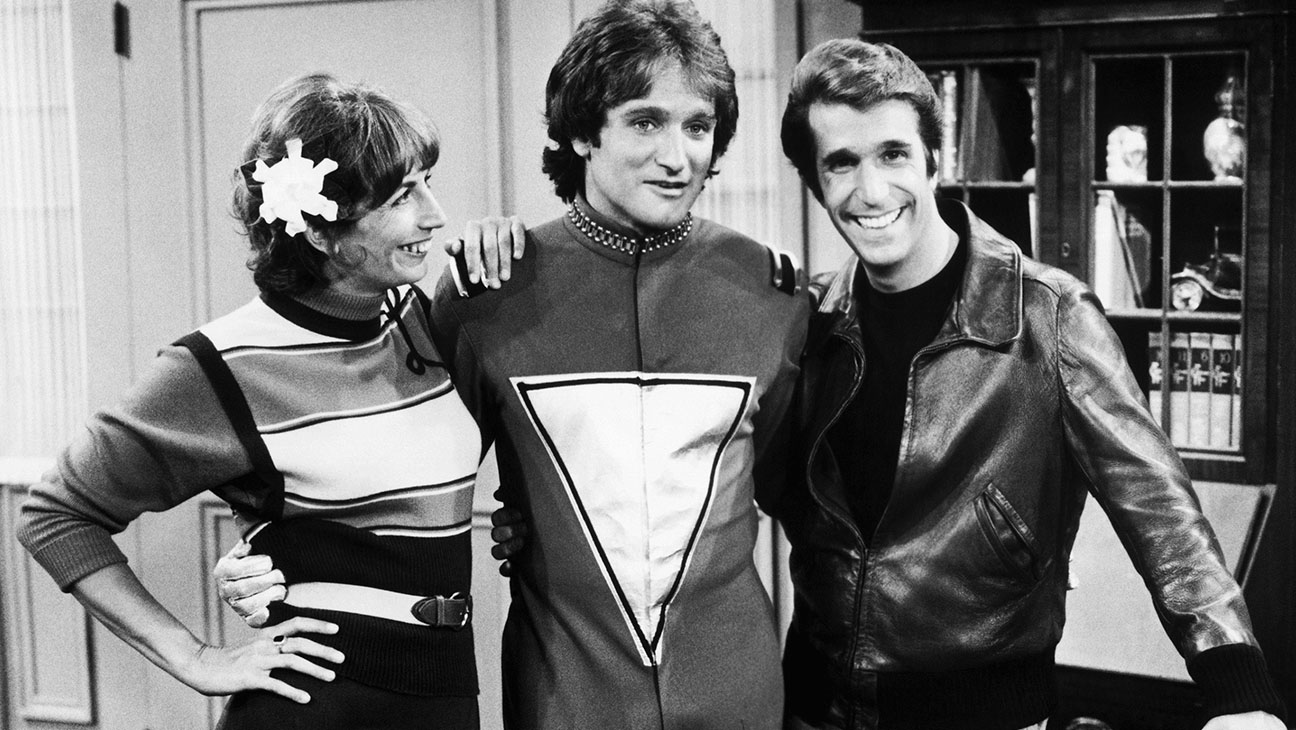
HAPPY DAYS, from left: Penny Marshall, Robin Williams, Henry Winkler, 1974-84.

He wrote My Happy Days in Hollywood in 2012.  This is one of my all-time favorite classic television era autobiographies.  He not only discusses his successes but admits to all his screw ups and mistakes as well.  It’s a refreshingly honest account by a down-to-earth and humble man.  It’s one of the best ways to get to know this fascinating guy and is a wonderful tribute to a man who quietly influenced generations of actors and actresses. Let’s end by hearing how his book was perceived by some of those people who knew him best.

book
“Garry Marshall is walking entertainment. He is smart, insightful, funny…and so is his book.” ―Henry Winkler

“Even though he speaks slowly with a distinctive New Yorkese Bronx accent, he has managed to quickly create, write, and produce a raft of beloved television series that speak ‘American’. I am happy that he gifted us with a witty memoir (about his Happy Days in Hollywood).” ―Carl Reiner

“Thanks to my brother I have a life.  I’m sorry I almost ruined his during Laverne & Shirley.” ―Penny Marshall

“I never thought my fairy godmother would look―or sound―like Garry. He is a gift of a human being, and this book is wicked sweet.” ―Anne Hathaway
 
“Garry Marshall is one of the most beloved and talented people I know…and maybe the most normal guy in the business. This wonderful biography will allow readers to discover for themselves the decent and kind man who writes and directs with such a huge heart—all grounded from humble beginnings in The Bronx. This is a must-read book.” —Julie Andrews
 
“Garry Marshall is quite simply one of my favorite people. He is loving, loyal, and hilarious! Having made movies with Garry when I was 20, 30, and 40…I guess you could say Garry and Barbara have raised me! In a time where people have lost touch with things to laugh about, this book is sure to be a cure.” —Julia Roberts

July is the Perfect Time for Berry Picking

berry1

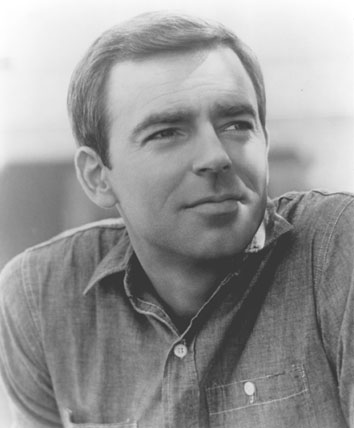
Ken Berry was born in Moline, IL in 1933. After watching a group perform when he was 13, he decided he wanted to be a dancer. He loved Fred Astaire and Gene Kelly movies, especially Easter Parade, Royal Wedding, and On the Town. At 16, he traveled with the Horace Heidt Youth Opportunity Program, performing in small towns for 15 months.

berry12

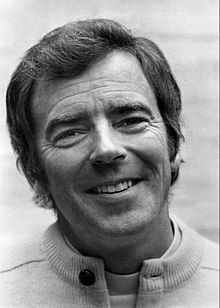
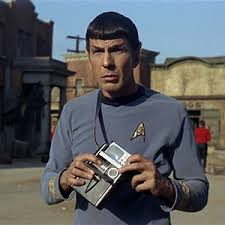
He went into the army at Fort Bragg and was in the artillery. He was then moved to an entertainment division under Leonard Nimoy. During his second year, he won the All-Army Talent competition which allowed him to appear on Ed Sullivan in 1948. Nimoy encouraged him to move to Los Angeles where he made some connections for Berry. Both 20th Century Fox and Universal offered him jobs and he accepted the Universal contract.  In 1956, he opened for Abbott and Costello for their stage act. In 1957, Berry enrolled in Falcon Studios to study acting. He worked at the Cabaret Theater, making $11 per week. The same year he won Arthur Godfrey’s Talent Show.

berry6

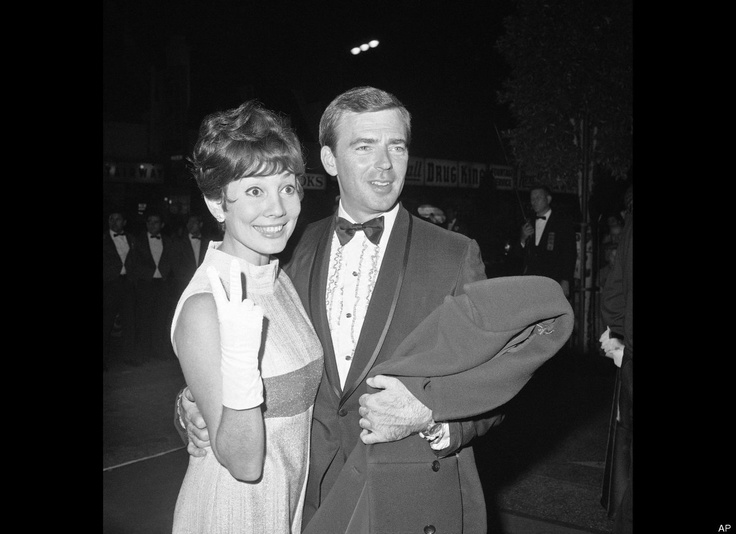
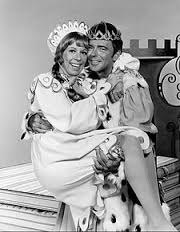
In 1958, he received an opportunity to join the Billy Barnes Revue. While in the Billy Barnes Revue, Berry met Jackie Joseph, and they married in 1960. His work in the BBR led to several lucrative connections. Lucille Ball saw him and offered him a job with Desilu Studios for $50 per week. Carol Burnett also watched a performance and had him on her variety show. (In 1972, she would offer him the co-starring role with her in Once Upon a Mattress, a television movie.)

berry7

The first Desilu show he had a regular role on was the Ann Sothern Show. On the air from 1958-1961, Ann played Katy O’Connor who worked at a New York hotel. Originally, Mr. Macauley (Ernest Truex) was her boss, but he was berated by his controlling wife (Reta Shaw). Katy’s best friend from her previous show Private Secretary, which aired from 1953-1957, was Ann Tyrrell as Vi.  In this show, her name is Olive. The format wasn’t working, so Mr. Macauley the hotel owner, was transferred to Calcutta and James Devrey (Don Porter also from Private Secretary) took over.  Ratings improved, and the show was renewed for another season. During this season, Louis Nye was introduced as a funny dentist in the hotel who dates and marries Olive, and Berry played bellboy Woody Hamilton, replacing Jack Mullaney.  Most of the episodes revolve around the staff and guests of the hotel. As in Private Secretary, there is a lingering romance between Mr. Devrey and Katy throughout the run of the show. The ratings fell drastically in 1961 after the show was moved to Thursdays, and the network cancelled it.

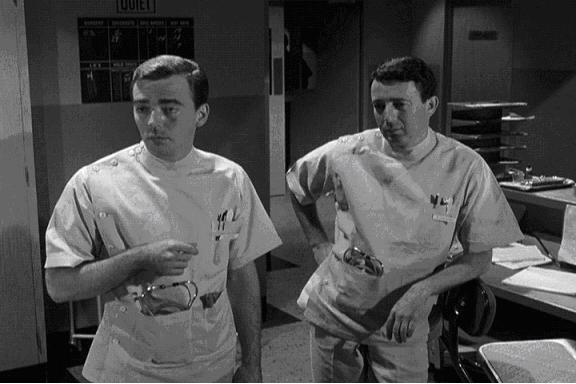
In 1961, Berry obtained a job with Dr. Kildare, appearing in 25 episodes as Dr. John Kapish. Richard Chamberlin starred in the series about a doctor working in an urban hospital under his mentor Dr. Leonard Gillespie (Raymond Massey). In the third season, Dr. Kildare was promoted to resident and the series centered on his patients. The show aired until 1966, but Berry left the show in 1964. This was one of the shows that paved the way for Marcus Welby, MD and the medical dramas today including ER and Gray’s Anatomy.

berry13

He also appeared on several shows in the early 1960s: The Jim Backus Show, Hennesey, Ensign O’Toole, The Dick Van Dyke Show, Hazel, and No Time for Sergeants, among others.

berry3

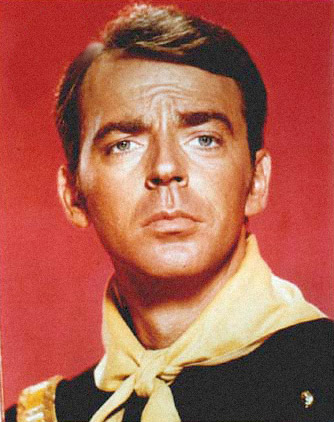
In 1965, he was offered the lead in F-Troop. The show was set during the Civil War.  Berry played Will Parmenter.  At a critical moment during the Battle of Appomattox, Will gets credit for the defeat.  He is a private and was sent to get his commanding officer’s laundry. He was sneezing continuously, but the men thought he was saying “Charge,” so they did.  They won a decisive battle, and Will was promoted for his quick decision-making skills and bravery. He was then promoted to Fort Courage.

berry5

The cast had a crazy bunch of characters. The NCOs at the fort, Sergeant O’Rourke (Forrest Tucker) and Corporal Agarn (Larry Storch) are always scheming to raise money. The Hekawis tribe, with Chief Wild Eagle (Frank de Kova) worked on shady business deals with them. Although the officers manipulate Will, they are also protective of him. Melody Patterson plays Jane Thrift, Will’s girlfriend, who is always pressuring him to propose. The show relied on a lot of puns, slapstick, and running gags.

When F-Troop was cancelled two years later, Berry headlined the cast of Mayberry RFD as widower Sam Jones because Andy Griffith was leaving the show. Since Andy and Helen had married and moved away, Aunt Bee became Sam’s housekeeper. Sam and his son were introduced in Griffith’s final season when Sam is elected to the town council. Arlene Golonka plays Millie, Sam’s love interest. The show was rated as high as 4th and only as low as 15th, so it continued to pull in good ratings, but in 1971, the show was cancelled in the general “rural house cleaning” that the network performed getting rid of any shows such as Green Acres, Beverly Hillbillies, Petticoat Junction, etc.

During the late 1960s and 1970s, he was on 14 shows including The Danny Thomas Show, The Lucy Show, Love American Style, The Brady Bunch, and The Love Boat.

berry18

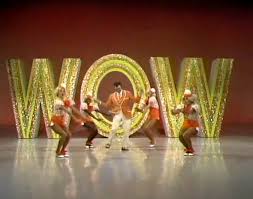
The network developed a show Ken Berry WOW, a variety show that lasted five episodes that Berry was not wowed with. In 1973, Sherwood Schwartz wrote a pilot for a Brady Bunch spinoff called Kelly’s Kids. The concept of the show was that Berry adopts three boys, one white, one African American, and one Asian. No network showed an interest in the show.

One of the most unusual jobs he had occurred in 1976.  An album called “Ken Berry RFD,” where he sang, backed by a full orchestra, was released. He and Joseph divorced that same year. Joseph later remarried and continued to have a long and full career.  She appeared on a variety of sitcoms including Designing Women, Full House, Newhart, Love American Style, Petticoat Junction, That Girl, Hogan’s Heroes, McHale’s Navy, F-Troop, and the Andy Griffith Show. She also had a productive movie career, including Gremlins, The Cheyenne Social Club, With Six You Get Eggroll, Who’s Minding the Mint, and Little Shop of Horrors.

Taking a break from television, Ken went on the road, performing in stock shows around the country.  He also played Caesar’s Palace between Andy Griffith and Jerry Van Dyke.

berry16

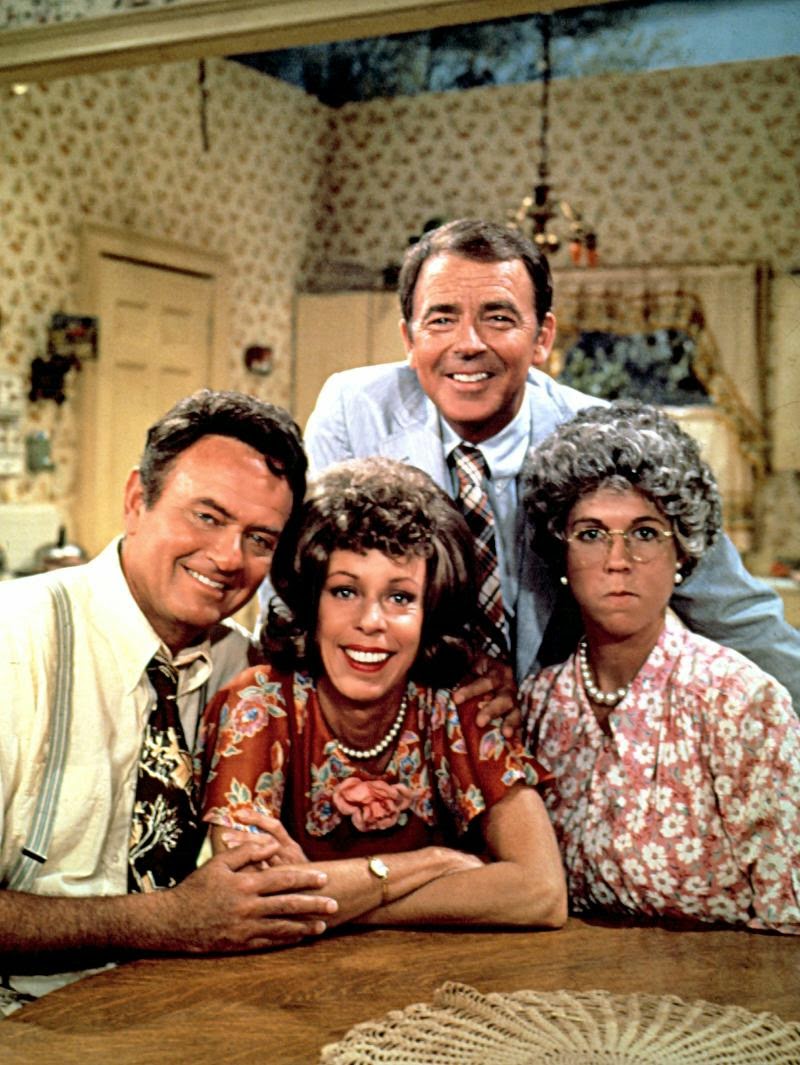
He returned to television to join the cast of Mama’s Family with Vickie Lawrence. The show derived from a skit on the Carol Burnett Show which led to a TV movie called Eunice. It featured the Harper family and their neighbors and friends. The matriarch is Thelma Harper (Lawrence) who speaks her mind freely. She is hot tempered and sarcastic, but she loves her family as she berates them. And they typically deserve a berating. They move back in with her and are happy to have her clean and cook for them as well.

For the first season and part of the second, the show was on NBC. Thelma lives with her spinster sister Fran (Rue McClanahan) who is a journalist. After Thelma’s daughter-in-law leaves her family, they move in with Thelma. Her son Vint began a relationship with Thelma’s next-door neighbor Naomi Oates (Dorothy Lyman). Her children from the Burnett sketch, Ellen (Betty White) and Eunice (Burnett), along with hubby Ed (Harvey Korman) are seen during this time.

berry17

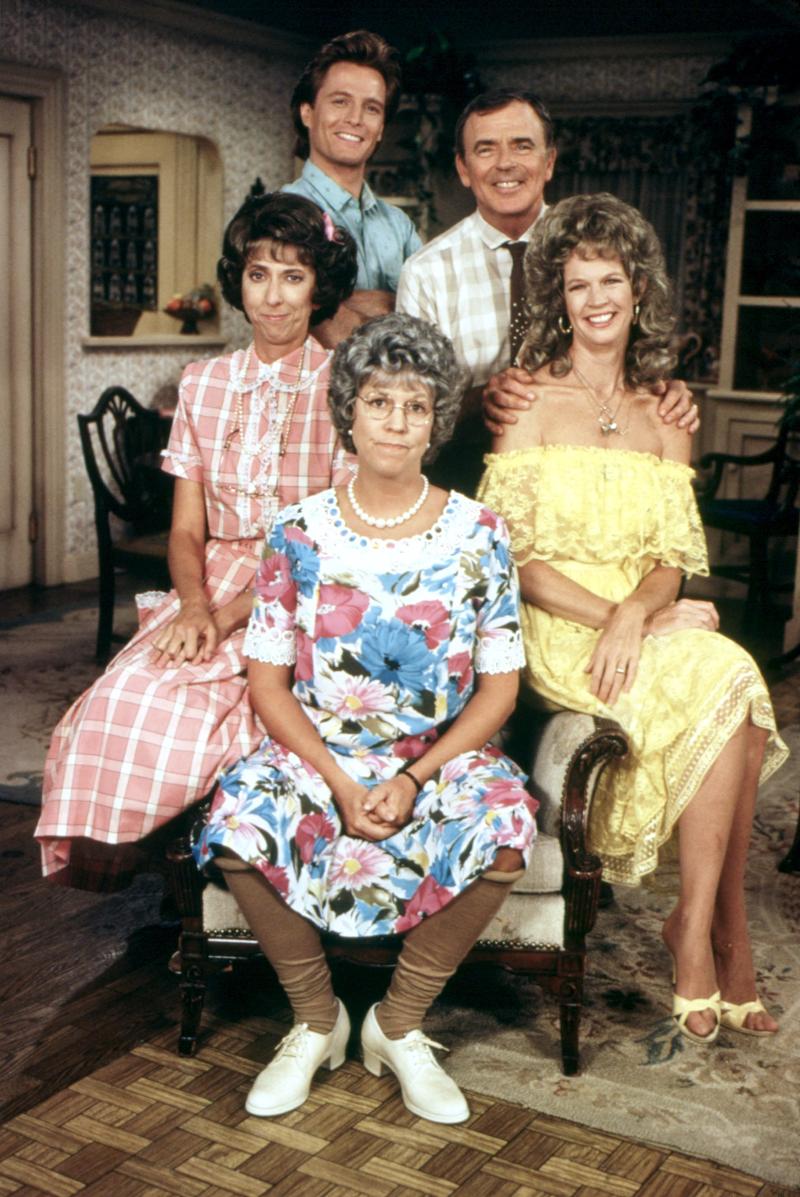
The show was cancelled after two years and went into syndication.  The reruns were so popular, 100 new episodes were ordered. A new set had to be constructed and some cast adjustments were made as well. Lawrence, Berry and Lyman were the only original characters on this new version. Since White and McClanahan were now starring on The Golden Girls, and Burnette and Korman chose not to return, a new character was created. Mitchel (Allan Kayser) was Eunice’s son who was always getting into trouble. Another addition was Beverly Archer who played Iola Boylen, Thelma’s neighbor and best friend.

Once Mama’s Family was cancelled the second time, Berry traveled around the country, appearing in “The Music Man”, “Gene Kelly’s Salute to Broadway”, and “I Do I Do” with Loretta Swit. He also went back to television for brief appearances on several shows including CHiPs, Fantasy Island, Gimme a Break, Small Wonder, Golden Girls, The New Batman, and Maggie Winters.

berry20

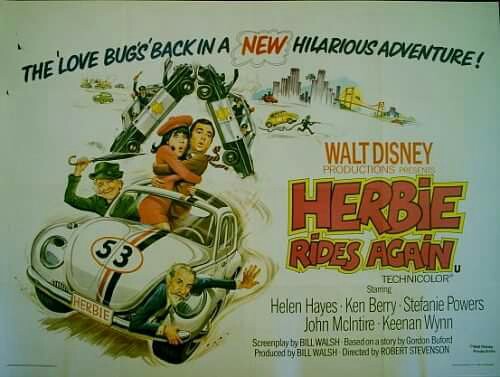
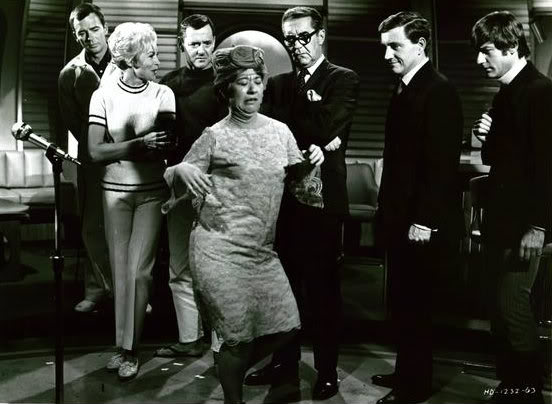
Berry also appeared in six movies including Two for Seesaw (1962), The Lively Set (1964), Hello Down There (1969), Herbie Rides Again (1974), Guardian of the Wilderness (1976), and The Cat from Outer Space (1978).

Guardian of the Wilderness was based on the life of Galen Clark who convinced Abraham Lincoln to make Yosemite Park the first public land grant. It covers a series of unusual adventures Clark had as he battled lumber companies to save wilderness land.  One of my favorite quintessential 1960s movies was Hello Down There.  Tony Randall and Janet Leigh star.  Randall is an architect who creates an underwater home.  To prove a family could live there, he cajoles his family to moving there for the summer.  His kids are in a band so they force him to take the entire band or no one.  Charlotte Rae is their housekeeper. Berry plays a rare role for him as the bad guy.

berry19

Early in his career, Ken appeared in a variety of commercials. From the mid-1970s to the mid-1980s, he was the spokesman for Kinney Shoes.

He appeared in two game shows, Hollywood Squares and Tattletales.  He also starred as himself on a variety of shows including Art Linkletter, Joey Bishop, Leslie Uggams, Jim Nabors, Julie Andrews, Sonny and Cher, Dean Martin, Laugh In, and Mike Douglas.

berry10

Berry retired in 1999. Berry loves cars and was an avid motorcyclist and camper.

Although Berry was never in a hugely successful series, he had a long and full career that any actor would be proud of.  Hopefully his well-deserved retirement has been fun and full of memories.

berry2