The Elegance of What’s My Line

This month, we are looking at popular fifties stars and shows. While the show we are talking about today outlasted the fifties by almost another decade, it gained its popularity during the 1950s. Today we are learning about What’s My Line.
📷wikipedia.com

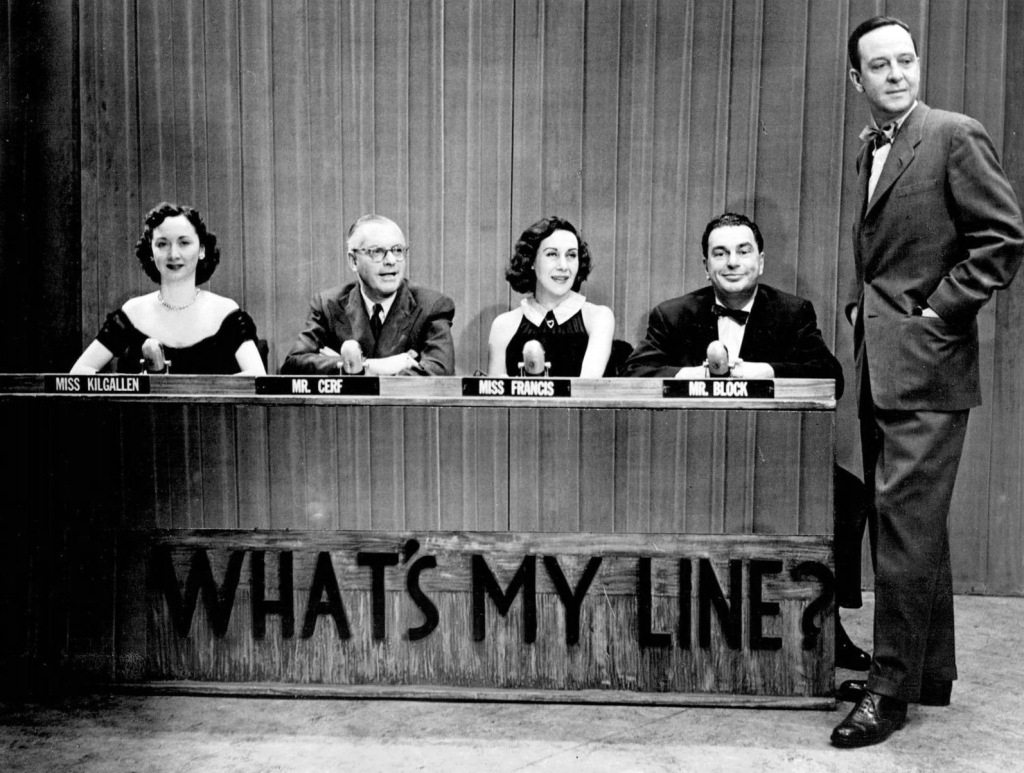
This panel game show was on CBS. It debuted in 1950 and ran until 1967. The show was produced by Mark Goodson and Bill Todman, and the working title was Occupation Unknown. Perhaps the title should have been What’s My Schedule. The show began on Thursday nights as a live show. Later in season one, it switched to every other Wednesday and then moved to every other Thursday. In October of 1950, it landed on Sunday nights where it would remain throughout the rest of its life.

The original series, which was usually broadcast live, debuted on Thursday, February 2, 1950, at 8:00 p.m. ET. After airing alternate Wednesdays, then alternate Thursdays, finally on October 1, 1950, it had settled into its weekly Sunday 10:30 p.m. ET slot where it would remain until the end of its network run on September 3, 1967.
📷imdb.com

Celebrity panelists ask contestants questions to figure out their occupation. While most of the contestants were not famous, there was a “mystery guest” segment. The panelists were blindfolded for this segment and asked questions to determine the celebrity. People enjoyed watching the panelists banter with each other and the sophisticated humor they shared with us.

Each episode had four panelists. The most famous panelists were Dorothy Kilgallen, Arlene Francis, and Bennett Cerf. John Daly was the moderator. The first show in the series featured New Jersey governor Harold Hoffman, Kilgallen, poet Louis Untermeyer, and psychiatrist Richard Hoffman. Later in season one, Arlene Francis came  on board with Kilgallen, Untermeyer and writer Hal Block. In season two, Cerf replaced Untermeyer and Steve Allen took over for Block in season three. When Steve Allen left to host The Tonight Show, comedian Fred Allen was part of the panel from 1954 until his death in 1956. Kilgallen was killed in 1965 and her replacement varied for two years. Her death is a mystery itself and well worth reading about. Many people think she was killed because of her investigation into JF Kennedy’s assassination.

📷facebook.com

The panelists started the series wearing business clothing, but by 1953 they shifted to formal attire with the men showing up in suits and ties and women in formal gowns and gloves. Unfortunately, we never got to see the beautiful colors of these clothes. Until 1966 everything was filmed in black and white. In the final season, the show was broadcast in color, but the kinescopes were saved in black and white.

Both critics and television viewers liked the show, and it won an Emmy for Best Quiz or Audience Participation Show in 1952, 1953, and 1958.

Because it was a game show, most of the 700 episodes were on kinescope, 16 mm filming. Because many original shows in that era were recorded via kinescope onto silver nitrate film, many networks destroyed recordings to recover the silver. After learning that the network was not keeping the recordings, Goodson and Todman offered to pay for the broadcast and retained the recordings from season three on, however many of those were also lost along the way. A variety of the episodes are stored at different archive centers around the country. My home state houses one from 1951 at the University of Wisconsin Center for Film and Theater Research in Madison.
📷facebook.com

The remaining kinescopes which have been digitized have been seen on television on the Game Show Network and 757 of them exist on YouTube.

Many of us remember the reruns and seeing the contestant come on stage and write their name on a chalkboard as Daily said “Will you enter and sign in please.” The very first contestant was Pat Finch who was a hat check girl at the Stork Club.

The first mystery guest was New York Yankees shortstop Phil Ruzzuto. Many of these guests used fake voices to answer questions. Some of the mystery guests who appeared on the show included Julie Andrews, Louis Armstrong, Lucille Ball, Jack Benny, James Cagney, Gary Cooper, Joan Crawford, Salvador Dali, Sammy Davis Jr., Doris Day, Aretha Franklin, Ava Gardner, Judy Garland, Jackie Gleason, Alfred Hitchcock, Bob Hope, Ginger Rogers, Roy Rogers, Eleanor Roosevelt, James Stewart, Elizabeth Taylor, and John Wayne.
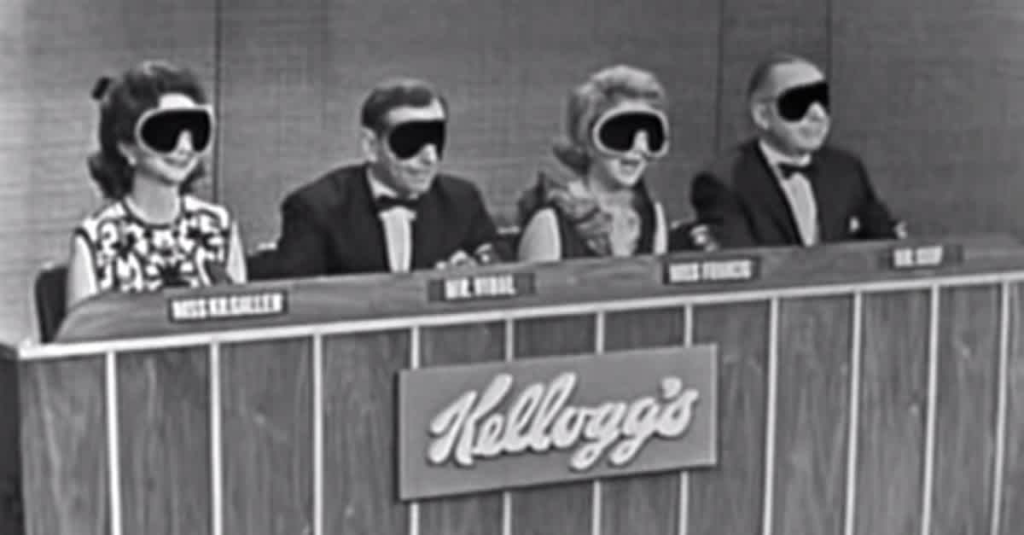
📷littlethings.com Blindfolds come out for a mystery guest

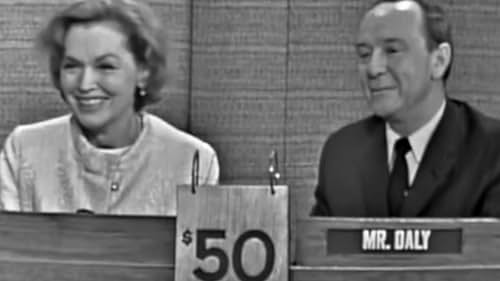
The emcee would choose a panelist who could ask yes or no questions. If the answer was yes, they could continue until they got a no response and then the next panelist would be able to pose questions. If the contestants answered no, Daily flipped a card; when the contestant had ten cards, they won $50.

If you have heard of or even used the term “Is it bigger than a breadbox?,” you might want to know that it came from the show. Steve Allen asked the question in 1953, and it became a standard question after that night. In fact, on one episode, the guest was a breadbox maker, and when Daly could not help laughing at the question, Allen figured it out.
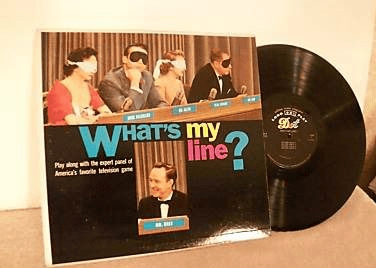
In 1967 The New York Times broke a story that CBS was canceling many of their game shows. None of the panelists had been told that the show was not renewed. Despite the fact that the low costs of the game shows made them profitable, the low ratings led the network to conclude that game shows were no longer suitable for prime-time schedules.

After the show was canceled in 1967, it did go into syndication five days a week. Soupy Sales joined Francis and Cerf on the panel of the reboot. A variety of other panelists took the fourth seat including Joyce Brothers, Jack Cassidy, Bert Convy, Joel Grey, Meredith MacRae, Henry Morgan, Gene Rayburn, and Nipsey Russell. The show ended in 1974. Cerf died during the run of the syndicated series.

It’s hard to believe, but Colonel Harland Sanders was on the show as founder of Kentucky Fried Chicken, although he was not easily recognized at the time, so he was not a mystery guest. While no president ever appeared while in office, Ford, Carter, and Reagan all appeared on the show.

📷youtube.com We switched to a first-name basis in the 70s

It would be fun to see this show on television today, but I’m afraid it would not be the same. In the way that Dick Cavett had a manner of interacting with guests to ask amazing questions with his humor and intelligence, this game show had that same atmosphere. Today, I think the banter would border more on crudeness than wit. There is something charming about a panel of very intelligent people talking with each other, trying to determine the identities of the people they were interviewing while being dressed to the nines that was fun to sit in on and be a part of. I guess that’s why this show is in our series where we are saluting the fifties because that was the era where it could shine.
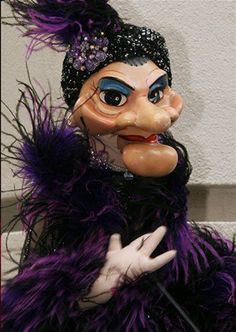
“Time to Get Things Started”

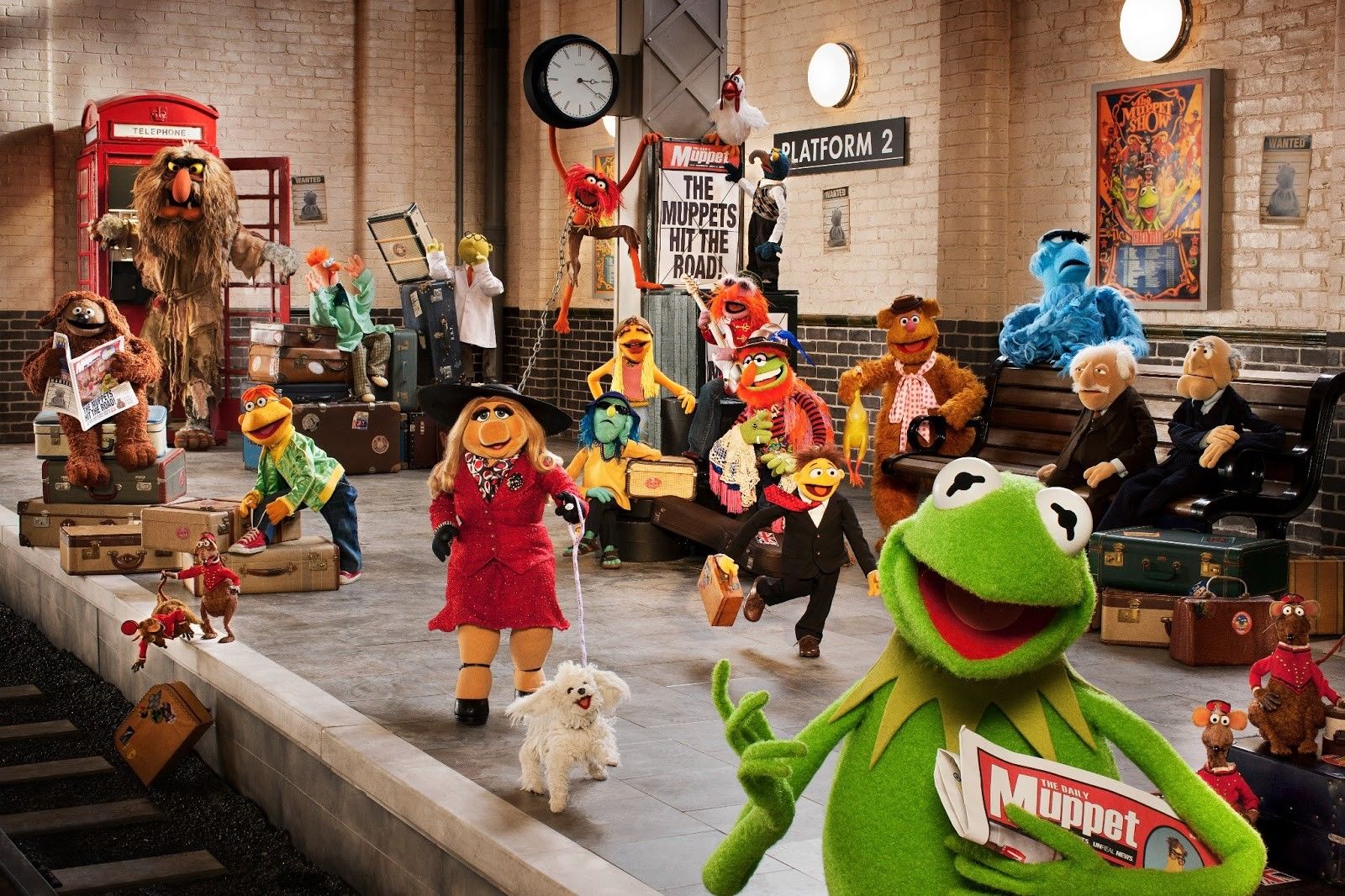
John Lennon said, “Reality leaves a lot to the imagination.”  That is especially true when looking at our two television shows today.  We are going to explore two shows that mixed reality and fantasy, or humanity and puppets more accurately.  Madame’s Place and The Muppets are both what they now call a mockumentary. Both shows featured a puppet hosting a late-night tv show, interacting with humans.  On Madame’s Place, Madame was the only non-human, while The Muppets blended muppets and humans throughout the show. We’ll also take a quick peek at the men behind the fantasy: Wayland Flowers and Jim Henson.

Madame’s Place debuted in 1982 while The Muppets began in 2015, 33 years apart.  Both shows lasted one season and featured celebrities interacting with the characters.  Both Madame and Miss Piggy had Jay Leno on their show. Both shows also went beyond the professional lives of their stars, featuring their personal lives as well.

Madame’s Place

madame9

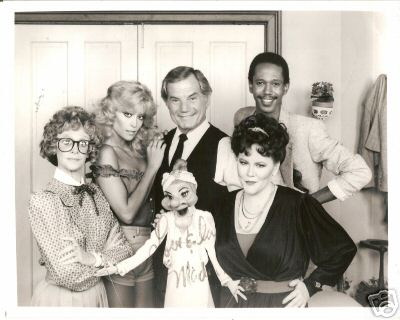
Madame lived in a large mansion. All 51 episodes included her three-person staff:  Bernadette Van Gilder (Susan Tolsky) who was her secretary; Walter Pinkerton (Johnny Haymer) who was an ex-boxer, now butler; and her niece Sara Joy Pitts (Judy Landers) who was a bit of a dumb blonde.   A young Corey Feldman appeared in half the shows as Buzzy St. James, the next-door neighbor boy.

madame4

Madame clad herself in feathers and sequins. Madame was never described as politically correct, and she did not mince words with her staff or her nightly guests. She always had a witty comeback.

Some of the guests on her show included Frankie Avalon, Joyce Brothers, Scatman Crothers, Phyllis Diller, Eva Gabor, George Gobel, Arsenio Hall, Pee-Wee Herman, Jay Leno, Anthony Newley, Charles Nelson Reilly, Debbie Reynolds, John Schneider, William Shatner, Toni Tenille, Betty White, and Fred Willard.

I was surprised to learn that Wayland Flowers was actually born Wayland Parrott Flowers in Georgia in 1939.  He passed away in 1988 in California from cancer. He always performed with Madame, and their first break happened when they were cast on The Andy Williams Show in the mid-1960s.  They appeared on Laugh-In, The Hollywood Squares, and The Mike Douglas Show, as well as four years on Solid Gold.

wayland

Flowers once said that Madame had a mind of her own, and sometimes what she said shocked him.

If you wish to see Madame in action, there are several youtube videos of her. Madame’s Place s0le13 is an episode where Madame holds a contest to determine her next (and 7th) husband.

The Muppets

Like Madame’s Place, The Muppets showed life on a late-night talk show.  The gang is all here. Kermit and Miss Piggy have ended their relationship, but it is obvious they still have feelings for each other.  The show is Up Late with Miss Piggy. Before the show went live, Kermit always said, “Time to get things started.”

Kermit is the executive producer; his best friend, Fozzy Bear, is the co-host; Gonzo is the head writer with fellow writers Rizzo the Rat and Pepe the King Prawn; Scooter is in charge of talent, Bobo is the stage manager; Dr. Bunsen Honeydew and Beaker are the prop handlers; Uncle Deadly is in charge of Miss Piggy’s wardrobe; Sam the Eagle is in charge of the network’s Standards and Practices; Denise, another Pig, and Kermit’s current girlfriend, is in charge of marketing; the house band is the Electric Mayhem; and we’re not totally sure what the Swedish Chef actually does. Rowlf the Dog owns a bar across the street and many of the characters retire there after the show to talk about the evening’s performances.

The show mixes humans and muppets.  For example, Fozzy is dating a human girl, and her parents don’t approve.

The show cleverly made fun of a lot of the late-night shows. Some of the guests who came to dish with Piggy included Christina Applegate, Elizabeth Banks, Jason Bateman, Jere Burns, Kristen Chenoweth, Laurence Fishburn, Josh Groban, Joan Jett, Mindy Kaling, Jay Leno, Willie Nelson, and Reese Witherspoon.

The show was cancelled after one year.  A lot of people complained about The Muppets living as adults in adult situations.  This was unfair criticism because the Muppets began as a show aimed at adults.

Jim Henson was born in Mississippi in 1936 and died in New York in 1990. He began creating puppets in high school.  While at the University of Maryland, he created a show starring Kermit among other now-unknown puppets called Sam and Friends, an adult show.  The show appeared in television in the Washington, DC area from 1955-1961.The puppets lip-synched popular songs and acted in sketches spoofing television shows.  Henson founded Muppets, Inc. in 1958. The Muppets then appeared on late night talk shows.

henson

In 1969, the Muppets moved to Sesame Street where they became famous. The Muppet Show was on television from 1976-81, and the crew made several movies including The Muppet Movie, The Great Muppet Caper, and The Muppets Take Manhattan.

muppets3

In the 1980s, Disney became involved with the Muppets and several television shows occurred (The Jim Henson Hour in 1989 and Muppets Tonight from 1996-98), along with a couple more movies. In 2004, Disney acquired all rights to the Muppets and made additional movies.

I’m not sure why neither of these shows made it to year two.  Maybe people just couldn’t accept the interaction of puppets and humans.  With The Muppets, I think some people who would have liked the show assumed it was for kids while people who assumed it was for kids were unhappy it was an adult show.

I found both shows a lot of fun.  They didn’t take themselves or celebrities too seriously. Another show I fell in love with that put kids’ characters into modern situations was the New Looney Tunes, but that’s a show we’ll explore in detail in a future blog.


I could not find an author for the following quote:  “It’s not reality that shapes us, but the lens through which your brain views the world that shapes your reality.” I don’t know about you, but in watching the news and reading newspapers (ok, almost no one reads newspapers anymore), I find reality is not a fun place to dwell in.  I will happily add a bit of fantasy.  It seems to produce a lot of great one-liners.

Piggy: I’m telling you this because we’re friends: we are no longer friends.

********************************************************************

Fozzie: I knew you wouldn’t approve it so I went over your head.
Kermit: I’m the boss.
Fozzie: Oh that’s right. So I went behind your back.

********************************************************************************

Cousin Charlie: Well, if you need me I’ll be in my dressing room practicing my collection of one-liners.
Madame: Well, be sure to do a good job darling. They’re all in your face.
*********************************************************************************

Madame: These are my Summer Diamonds. Some are diamonds, some are not.