We are learning about some of our favorite female character actresses. Today we are learning more about the life of Virginia Sale.

history museum.com
Virginia was born in 1899 in Illinois. Her father Frank was a dentist, and her mother Lillie Belle was a poet and truant officer for the Urbana Illinois School District. After graduation, she attended the University of Illinois for two years and then transferred to the American Academy of Dramatic Arts in New York where she graduated in the early twenties. Her brother Charles was a vaudeville comic, and he persuaded her to go to Hollywood to pursue a film career.
She began her career in Hollywood as an extra. In 1931, she did an interview for the Kansas City Star where she said “I had known an assistant director [named Ned] when I lived in New York. He introduced me to King Vidor, then casting for The Crowd. He gave me quite a good bit in the picture, although it lasted only five days. When asked how much salary I wanted, Ned told me to say $350 a week. ‘Well, I think you ought to work for us for $25 a day’ the casting director said. ‘That’s an awful comedown I protested,’ trembling in my boots. ‘All right then, let’s compromise on $35 a day,’ he said. I was awfully glad to get it.” That would be almost $600 a day currently.

During her first two years in Hollywood, Virginia lived at the Hollywood Studio Club. She appeared in 54 films between 1930 and 1935.
The Hollywood Studio Club was created as a safe place for starlets to live. Mary Pickford, along with several other women, was trying to raise money to construct a new building to house actresses. Will Hays gave $20,000 and soon after the studios contributed. Julia Morgan was hired as the architect. She designed an Italian Renaissance Revival style building that opened in 1926. The first floor had a spacious lobby, a library, writing rooms, a dining room, and a stage. The upper stories were single, double, and triple rooms. Men were only allowed to be on the first floor. You had to be between 18-35 years old, be seeking work as an actress, and could stay a maximum of three years. A hundred women lived there, paying $10-15 a week for room and board.

Barbara Hale, Donna Reed, Dorothy Malone, Ann B. Davis, Barbara Eden, Sharon Tate, and Sally Struthers were just a few of the women who lived there. The most famous resident was Marilyn Monroe. After the culture shift in the sixties and seventies, the residents decreased until the Club could no longer financially exist. In 1975 the doors were closed, and the contents were auctioned off.
In Hollywood Sale was often cast as an older woman, even though she was still in her twenties. She entered the movie entertainment business just as silent films were ending. Her first role was in Legionnaires in Paris in 1927. During her film work, she met actor and studio executive Sam Wren, and they married in 1935. In 1936 they had twins named Virginia and Christopher.
In the thirties, Virginia developed a one-woman show based on her life growing up in Illinois which she called “American Sketches.” She performed the piece more than 6000 times throughout the thirties, forties, and fifties, even touring Europe during WWII. This sounds like it would have been a fun show to see. Some of the different pieces of the performance included: “Traveling on the Illinois Central” where she portrays a mother trying to keep her son under control after a visit with relatives; “Life of the Party” where she is a giggling, talkative woman who annoys a young man she is trying to impress;
“Mealtime in Indiana” where she impersonates a housewife trying to get ready for the Ladies Guild while preparing supper for her family; “Three O’Clock in the Morning” as a weary hostess trying to get her guests to go home, and “I Remember Abraham Lincoln” where she is Grandma Willoughby reminiscing about her encounters with Lincoln.

She also received some radio work, including a serial, For Those We Love, playing Martha the maid every Sunday for eight years.
Her film career continued to develop during those decades and she appeared in Topper, When Tomorrow Comes, They Died with Their Boots On, and Night and Day.
Sam served in WWII as part of the Air Corps. When he returned home, he had a six-year position as executive secretary for the Actor’s Equity. He was an executive at both Warner Brothers and Columbia studios.

In 1949 as television was developing, she and Sam created a sitcom, Wren’s Nest which featured the life of the Wrens starring Virginia, Sam, and the twins. The show aired three times a week. Virginia took over writing duties on the show. Many of her scripts were based on real events that happened to the family. The series contained 47 episodes.
During the fifties, Sale took a break from the big screen, focusing on television shows and commercials. She appeared in several series in the fifties, but she hit her stride during the sixties. If you watch a lot of television from that decade, you can catch her in a variety of shows including The Many Lives of Dobie Gillis, Ben Casey, The Beverly Hillbillies, Wild Wild West, The Andy Griffith Show, Green Acres, and I Spy. She had a recurring role on Petticoat Junction where she played several characters. Her final television role was in Police Woman in 1975.
Sam passed away in 1962, and Virginia lived another thirty years, dying in 1992 from heart failure. Both Sam and Virginia are buried in Arlington National Cemetery. She spent her final years at the Motion Picture and Television Country Hospital in Woodland Hills, California.
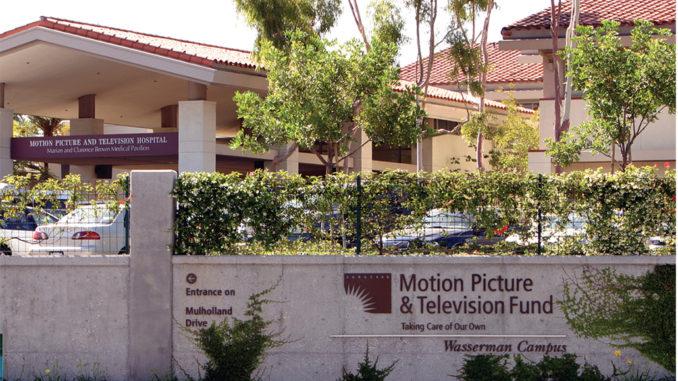
Sale could thank Mary Pickford for her home once again. Pickford was part of the Motion Picture Relief Fund which she founded with Joseph Schenck and Reverend Neal Dodd. When several former Hollywood stars died destitute in the thirties, 48 acres were purchased in the San Fernando Valley to build a Motion Picture Country House. In 1948, the Motion Picture Hospital was dedicated on the grounds. Later television actors were invited to live there as well. By that time, the site included a retirement community with individual cottages, administrative offices, and a hospital. Fees are based on the ability to pay. Actors, artists, backlot men, cameramen, directors, extras, producers and security guards are all eligible to live there. To live there, residents must be at least 70 and have worked in the entertainment industry for at least 20 years.
It was fun to learn not only about Virginia Sales but also the places she lived at the beginning and the end of her career.
 thewritelife61