In Memory of Adam West

west1

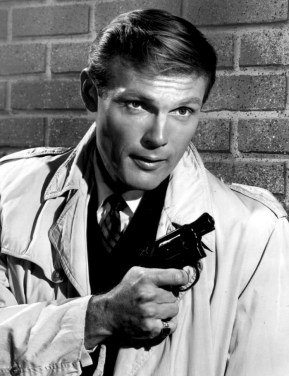
Adam West was born William West Anderson on September 19, 1928 in Walla Walla, Washington.  He just passed away this summer on June 9. His father farmed and his mother gave up her career as an opera singer and concert pianist.  Like all kids, he had a collection of comic books including Batman. When his parents divorced, he moved to Seattle with his mother. He attended Whitman College in Washington and graduated with a BS in literature. He was drafted into the Army and became an announcer on the American Forces Network television.

After his service career, he became a milkman until he moved to Hawaii to pursue a career in television. In 1959, he took on his stage name of Adam West and moved to Hollywood with his wife and children. He quickly became an actor and appeared in 33 television shows, including 77 Sunset Strip, Maverick, Hawaiian Eye, Tales of West Fargo, Perry Mason, Gunsmoke, Petticoat Junction, and Bewitched.
west4

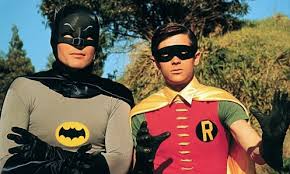
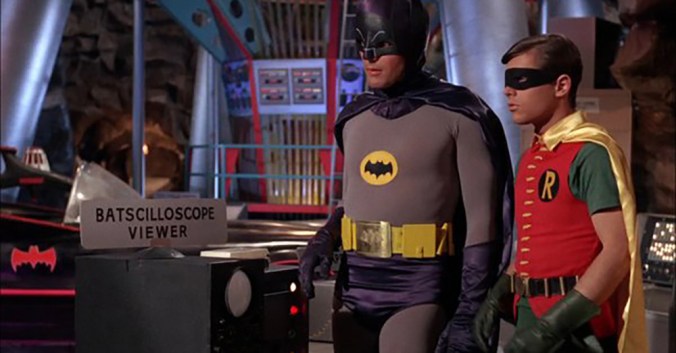
In 1966, William Dozier, producer for a new show about Batman decided to cast West over Lyle Waggoner after seeing him as a James Bond-type character in a Nestle Quik commercial. DC Comics described Batman as 6’2” and that was West’s height.
west2

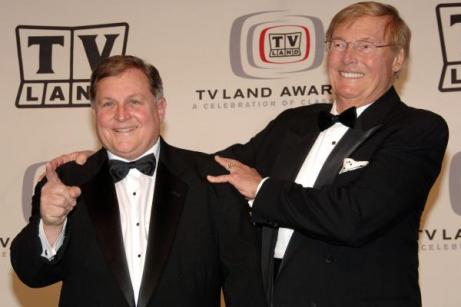
When the series ended, he and Burt Ward found themselves typecast as Batman and Robin.  He did a series of appearances about the Batman character while pursuing a movie career. He ended his career with 49 movies to his credit.

He appeared in 78 television shows after Batman ended including The Big Valley, Emergency, Alice, Police Woman, Laverne and Shirley, The Love Boat, Hart to Hart, Murphy Brown, Diagnosis Murder, News Radio, Drew Carey, King of Queens, and 30 Rock.

After 1990, he apparently embraced his Batman character and appeared on numerous television shows as himself or Batman. When asked about this, he said, “I think it evolved. I learned a long time ago that because people love Batman, I should too. I learned that I shouldn’t resent it even though it prevented me from getting other roles. I really had to become fond of Batman in order to deal with it. I embraced it.”

In 1957, he and his first wife Billie divorced.  He married  dancer Frisbie Dawson in 1957 and divorced in 1962. In 1970, he married Marcelle, and they were together until his death.  He had two children with each of his wives and two stepchildren.

In 1994, he wrote an autobiography Back to the Batcave. In 2012, he received a star on the Hollywood Walk of Fame on Hollywood Boulevard.
west8

West loved outdoor activities and had a lot of hobbies including fishing, sailing, hiking, skiing, golfing, riding motorcycles, swimming, surfing, dancing, traveling, as well as spending time with his family, listening to classic rock, reading, and watching movies.

West died after a short battle with leukemia at age 88. The next week, LA shined the bat signal on city hall to honor him.

While West certainly had a full and varied career despite his typecasting from Batman, I would like to spend some time looking at the series that gave him his fame. Typically, I am not really into super heroes, but I loved this show when I was younger and still get a kick out of watching the campy comedy. I can still hear the narrator saying, “Same bat time, same bat channel.” The show was canceled not only because of low ratings but also because the special effects and lighting had tremendous costs.  When ABC dropped it, they tried to find another network to take it over.  They had no offers, so they dismantled the set. Two weeks later, NBC offered to pick up the show, but decided it was too expensive to start from scratch.
batman4

In the 1960s, Ed Graham Productions received the rights to the comic strip Batman and intended to produce an adventure show similar to Superman or The Lone Ranger. ABC was thinking about a prime time show so DC Comics bought back the rights and sold them to 20th Century Fox. 20th Century gave it to William Dozier to produce.  Dozier had never read comic books and felt that the show should take a campy, pop-art approach. The show was originally an hour-long series, but with only half-hour time slots available, it was changed to a bi-weekly half-hour show.

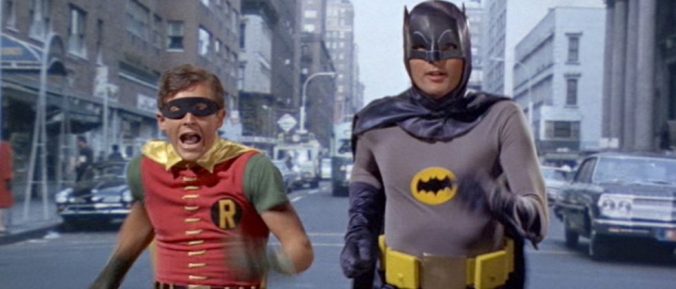
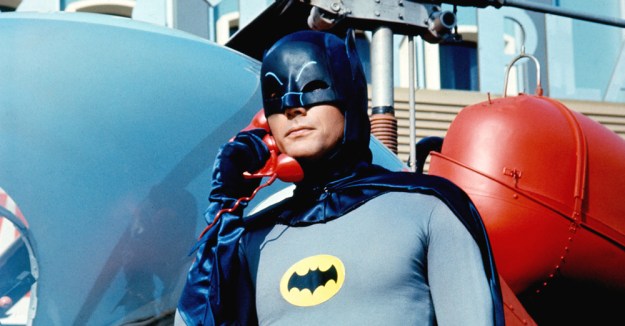
The concept of the show was that millionaire Bruce Wayne and his ward Dick Grayson lead a double life in Gotham City.  When they move a shelf in their library and slide down the bat pole to the bat cave, they become Batman and Robin.  Only their butler Alfred is aware of their real identity. Police Commissioner Gordon calls them on the batphone, often referring to them as the dynamic duo. They usually hop in their bat mobile and speed to city hall to learn what villain is up to no good in their city.
west5

Adam West took the role of Batman/Bruce Wayne and Burt Ward was Robin/Dick Grayson. Other cast members included Alan Napier as Alfred the Butler, Neil Hamilton as Commissioner Gordon, Stafford Repp as Chief O’Hara, Madge Blake as Aunt Harriet, and Yvonne Craig as Batgirl.

My favorite villians included Julie Newmar and Eartha Kitt as Cat Woman, in love with Batman but not willing to give up her criminal life; Burgess Meredith as Penguin always carrying an umbrella; Frank Gorshin as The Riddler leaving riddles for clues; Vincent Price as Egghead a bald-headed genius who loves eggs; Cesar Romero as the Joker who leaves jokes for clues; and Victor Buono as King Tut when evil and Professor William McElroy as his non-evil personality.

The show aired twice a week on back-to-back nights. The first episode would set up the situation and end with the dynamic duo in some dangerous situation. Batman and Robin would get their assignment from the Commissioner and then, using a series of clues, try to figure out who the villain is and then how to defeat them. At some point, there was always a fistfight with the villain’s entourage at which time the villain typically escaped. During the fight, words would pop up on the screen like POW, BAM, ZONK, BOOM. Then the crime fighters would go to look for them at which point the dangerous and perhaps deadly situation occurred and the next episode would summarize what happened on the previous episode before defeating the bad guys for good. They often used inventions like shark repellant bat spray to aid them in their search.
batman5

In Season 3, Bat Girl was added to the cast. The ratings were starting to fall so Dozier wanted to bring in a girl character to attract female viewers. Her real identity was Barbara Gordon, the Commissioner’s daughter.  The Commissioner never seemed to realize she was familiar to him. Because of low ratings, the show also became a once a week series in the third season.  Eartha Kitt took over the Catwoman role since Newmar was filming a movie at the time. Madge Blake’s health was failing, and her role was limited to two appearances during the last season.

The show was cancelled before the next season but it has continued to be popular in reruns. In 1966, an album was released “Batman: The Exclusive Original Soundtrack Album.” It included music by Nelson Riddle, dialogue excerpts from several of the characters in the show, as well as the Batman theme song, Batusi A Go Go, and several other tunes.

A lot of collectibles were produced during the run of the show including trading cards, Batmobile kits, coloring books, lunch boxes, board games, and View-Master reels. In 2013, Mattel designed an action figure line based on the tv characters, and several Hot Wheels/Matchbox cars have been produced. The Batmobile from the show was auctioned in 2013, selling for $4.2 million.  The huge profits from the car as well as the line of action figures prove the continuing interest in and success of this show now 50 years old.

Here are some fun facts I found about the series:

A total of 352 “Holy” words were used by Robin from “Holy Agility” to “Holy Zorro”.

Cesar Romero’s Joker laugh was created almost by accident. Shortly after being cast, Romero met with producers to discuss his role on his series. While waiting to meet with them, Romero happened to see conceptual art of Joker’s costuming. Romero felt the pictures almost looked absurd, and as a result spontaneously broke out into a playfully loud and almost manic laughter. A producer overhearing it responded by telling Romero “That’s it, that’s your Joker’s laugh!”

Burgess Meredith had not smoked in 20 years when he was cast as the Penguin. He came up with the Penguin’s distinctive squawking sound because the cigarettes were irritating his throat. Like his trademark “quack”, the Penguin’s waddling was largely a result of improvisation by Burgess Meredith, as he found it difficult to stand and walk straight while wearing the rubber padded fat suit that was part of his costuming.

Before going on the air, this show received the worst audience test scores in the history of ABC. It only went on the air because so much money had already been invested in it.

This was one of the “in” shows to appear on if you were a big name in Hollywood during the 1960s, and many top names guested on the show, including many who didn’t do much TV otherwise. Those performers who weren’t cast as guest villains could frequently be seen popping their heads out of windows to exchange a few words with Batman and Robin when the latter would be climbing up a building wall. Frank Sinatra, Natalie Wood, and Cary Grant were all fans of the show, and wanted to be on it, but the producers were never able to come up with the right roles for any of them. During the run of the series, this show crossed over with The Green Hornet (1966).

The “Giant Lighted Lucite Map of Gotham City” is a reverse image of St. Louis, right down to Forest Park, Fairground Park, Tower Grove Park, Lafayette Park, and Horseshoe Lake on the Illinois side, as well as the other river and road networks.

Each main villain had their own theme music.

In the first season, Burt Ward (Robin) was paid $350 per week.

Yvonne Craig has stated that she briefly did have a stunt double, but did most of her stunts herself. She actually operated the Batgirl Cycle herself as well. She was an accomplished biker at the time, and actually owned a bike.

Adam West (Bruce Wayne / Batman), Burt Ward (Dick Grayson / Robin) and  Neil Hamilton (Commissioner Gordon) are the only actors to appear in all 120 episodes of the series.

Suzanne Pleshette was one of the original choices to play Catwoman before Julie Newmar landed the role.

The show aired from January 12, 1966 to March 14, 1968 on ABC for 120 episodes. It was one of few TV series to be seen on 2 different nights a week: 7:30 Wednesdays and Thursdays. It remained there for a season and a half (Jan. 1966-Aug. 1967) until it was moved back once a week (Thursdays 7:30) for its final season. The episodes were generally two-parters: Wednesday’s episode was a cliffhanger, resolved in Thursday’s episode. The 1966-1967 season had 2 3-parter episodes (“The Zodiac Crimes/The Joker’s Hard Times/The Penguin Declines”[ep. #2.37-9, 1/11-12 & 18/1967] and “Penguin is a Girl’s Best Friend/Penguin Sets a Trend/Penguin’s Disastrous End”[ep. #2.42-4, 1/26/, 2/1 & 2/1967]) which left cliffhangers that would be solved the following week. When the series was reduced to (mostly) one part episodes during season three, the cliffhanger death traps and threats were still used, but greatly scaled back and occurring at the middle commercial break.

The three primary cast members of The Addams Family each made appearances on Batman. Carolyn Jones played the villainess Marsha, Queen of Diamonds, and John Astin played the Riddler during the second season. Additionally, Ted Cassidy had a window cameo, appearing in his part as Lurch from The Addams Family. Interestingly, Cassidy’s cameo took place in a story involving the Penguin, with whom Jones’ character Marsha teamed up in one of the three-part stories.

In episode 7, Alfred refers to Robin as Mr. Ward, and not Mr. Grayson.

While Superheroes and the movies and television shows they appear in seem to cycle up and down throughout the decades, the popularity of the Batman television show has never wavered.  The fact that Mattel would create action figures based on the original stars almost 50 years after the show debuted says a lot about the fans and the place the show holds in their hearts.

Thank you Adam West for creating such a memorable and well-loved character.  Rest in peace.

batman2

Tonight’s Partridge Family Episode Features . . .

first2

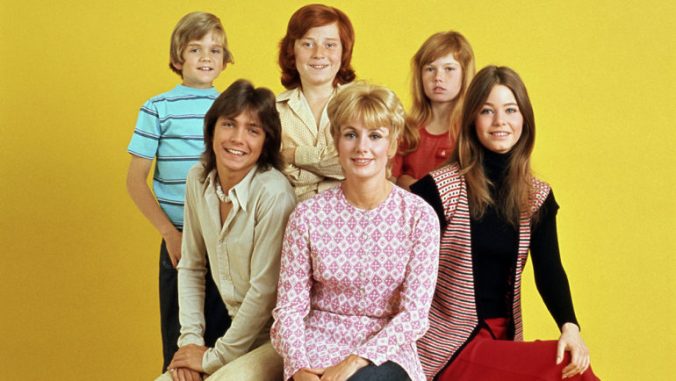
The Partridge Family (ABC) later seasons (1971 – 1974) Shown from left: (top) Brian Forster, Danny Bonaduce, Suzanne Crough; (front) David Cassidy, Shirley Jones, Susan Dey

Ask any girl who grew up in the late sixties and early seventies and they will tell you their favorite night of television was Friday.  We looked forward to watching The Brady Bunch, The Partridge Family, Room 222, The Odd Couple, and Love American Style, but the first hour of the night was the only “can’t miss” one. Boys coming of age in that era might have a tough time deciding between Samantha Stevens and Jeannie, but almost every girl will tell you Keith Partridge beat out Greg Brady hands down. Like most nine-year-olds in 1970, I had a huge crush on Keith Partridge. Watching the episodes today takes me right back to that time, and I feel like a kid on Friday night again.

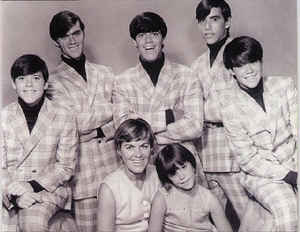
The Partridge Family aired from 1970-1974, and the concept was based on the Cowsills.  The Cowsill family grew up in Rhode Island, and by 1967 the band consisted of siblings ages 8-19 and their mother. Although the group no longer includes all the siblings, they still tour and record.

partridge1


I still enjoy watching the episodes today.  Even though the show is filled with nostalgia as far as clothing and interior décor, the problems faced by the Partridge Family were primarily the same problems faced by all families with kids and many of the shows have a timeless appeal. I’m not sure that anyone not growing up during that time period realizes the impact of the Partridge Family.  I still have the Partridge Family game, we had trading cards that were collected and the back of the cards put together formed a puzzle.  I had paperback books featuring the Partridge Family and lots of kids had albums, lunch boxes and other collectible memorabilia. Danny is often referred to as a brat, but I like the character of Danny Partridge.  Then again, I liked all the Partridge Family members.

collection3

However, what I wanted to talk about in this blog is the unbelievable guest stars that the show was able to attract.  Of course, Shirley Jones was a well-liked and famous movie star and she had a lot of connections in the industry.  However, the names of the people who appeared on an episode of The Partridge Family during those four short years is incredible. I counted more than 50 looking at various shows over the years.  Let’s look at some of those guest stars.

Ray Bolger, the Scarecrow, and Margaret Hamilton, the wicked witch, from the Wizard of Oz both made appearances.  Ray Bolger played Shirley Partridge’s father on several shows. Margaret Hamilton is Rueben’s mother.

Two Dick Van Dyke Show cast members were featured:  Morey Amsterdam, Buddy Sorrel and Ann Morgan Guilbert, Milly Helper. Amsterdam provided Danny with some bad comedy material in the first season. Guilbert is married to Norman Fell in the show and they visit Shirley when their son Keith’s age develops a crush on Shirley which he mistakenly thinks is reciprocated.

partridge15

In addition to Ann and Morey, there were a lot of previous sitcom stars on the show.  John Astin from the Addams Family, plays an eccentric millionaire. Edgar Buchanan, Uncle Joe from Petticoat Junction, plays a judge which he also portrayed in the movie, Move Over Darling, starring Doris Day and James Garner. Rosemary DeCamp played Shirley’s mother.  Rosemary had been featured on lots of tv shows.  She was on Love That Bob and was Ann Marie’s mother on That Girl. Arte Johnson from Laugh-In was in two episodes, one as an artist who paints a nude on the family garage when they are out of town.  Harry Morgan, a sitcom veteran, played, a man faking whiplash in the first season and appeared again in 1972 as another character. William Schallert who was Patty Lane’s father on The Patty Duke Show stars as a folk musician whose career has taken a nose dive. Ronne Troup who played Polly on My Three Sons was on the show as the fourth season began as their neighbor complains about their music.

Not only were the past tv stars featured but a lot of up and coming stars showed up. Meredith Baxter gifts a million dollars to the Partridges and they find they don’t enjoy being wealthy. Bert Convy played one of Shirley’s serious boyfriends on three shows. Norman Fell is the father of a young man who gets a crush on Shirley when she goes back to school using her maiden name. He later married Helen and was Stanley Roper on Three’s Company. Pat Harrington Jr. appeared the first season and came back as someone else three years later. While he was in hundreds of tv episodes, he is probably most often recognized as Schneider from One Day at a Time.  The Partridges try to set up Ann Jillian with their delivery boy to build up his confidence.  If she had dated him, she might not have ended up a waitress on It’s a Living. Gordon Jump who was a veteran tv guest star, best known as Arthur Carlson from WKRP in Cincinnati, was on seven episodes as different characters. Richard Mulligan appeared in one show as Shirley’s boyfriend but also came back for another episode two years later; we know him as Burt on Soap and Dr. Westin on Empty Nest. Annette O’Toole plays Keith’s girlfriend in the second season; later her marriage with Nash doesn’t work out on Nash Bridges. Rob Reiner, who will soon be “Meathead” on All in The Family, appears as Snake, a rough biker with a heart of gold who likes Laurie.  Vic Tayback who we know best as Mel on Alice appeared as three different characters on three different shows, Nancy Walker is the mother of Shirley’s date before she was Rhoda’s mom in later years.

Three of the five Charlie’s Angels showed up on different shows:  Farrah Fawcett was a “pretty girl” the kids hire to try to get Harry Morgan to reveal that his whiplash is not real. Cheryl Ladd is the popular girl Keith wants to take to the dance after promising to take Laurie’s friend. Jaclyn Smith plays the niece of Shirley’s boyfriend.  When he buys her a ring for graduation, the kids assume she is his fiancé and take matters into their own hands.

We had big stars from different genres including Johnny Cash playing himself and introducing the first concert the family is performing in Vegas. Richard Pryor talks the Partridges into playing for his charity event, and Bobby Sherman plays a singer, Bobby Conway. This episode actually turned into a spinoff for a short time.

Many famous or soon-to-be-famous movie stars can be spied on episodes including Jackie Coogan who replaced Ray Bolger as Shirley’s father on two later shows. Jodie Foster and Danny have a love/hate relationship when their parents are dating. Lou Gosset Jr., producing a charity event with Richard Pryor, asks the Partridges to fill in when a group cancels. Mark Hamill is Laurie’s boyfriend before he even knew Princess Leia. Charlotte Rae, a bit out of her typical character, plays a doctor.

I could continue, but every blog has to end sometime. It is amazing how many famous people were willing to appear in a new sitcom not only once but up to seven times as seven different characters. It says a lot about the reputation of the show. Let’s finish up with some fun facts about the show.

  1. Shirley Jones was recruited to be Carol Brady but passed and took The Partridge Family
  2. Partridge had passed away in the first episode, but his first name is never mentioned on the show.
  3. Rueben Kincaid’s middle name is Clarence.
  4. When the Partridges are asked to replace another musical act for a charity event put on by Richard Pryor and Lou Gossett Jr., the group that cancelled is the Temptations.
  5. When Laurie gets braces, she can hear radio signals in her mouth, and it interferes with her performing. The music she “hears” in her mouth is The Rolling Stones.

Gee, Mom There’s Nothin’ To Watch on TV

After complaining about the number of lack-luster shows on the 2016-17 schedule, I decided to look back 50 years to see how the line-up looked in 1966.  I was surprised to learn that things haven’t really changed too much.

One of my all-time favorite shows aired in the fall of 1966–That Girl.  I’ll write about the show next week.  Two other shows that debuted in 1966 were Family Affair and The Monkees, shows I would not consider classic comedies but shows we remember nonetheless.

Let’s take a look at the other shows from fall of 1966.  Let me know how many of these, if any, you remember.

The Hero – Richard Mulligan (later to star in Soap and Empty Nest) plays Sam Garret, a TV actor on a western who was scared of horses, allergic to sagebrush, and extremely clumsy.  If you don’t’ remember this show, don’t feel bad; it only lasted four months.

19661

Hey Landlord – A writer (Will Hutchins) and a comedian (Sandy Baron) become landlords for a Manhattan brownstone.  Apparently they only had a one-year lease, because they were gone by 1967.  Cast members included Ann Morgan Guilbert (Milly from the Dick Van Dyke Show) and Sally Field (Gidget, the Flying Nun, and Nora on Brothers and Sisters).

19662

It’s About Time – Two astronauts break the time barrier and end up in the Prehistoric Era. After saving a boy, they get to know his family.  When they return home in 1966, they realize the family hid themselves aboard the rocket.  The astronauts have to keep them secret from NASA officials, and the family has to learn to live in a modern society.  Someone might have dreamed about Jeannie, but no one dreamed about this show.

19663

The Jean Arthur Show – Movie star Jean Arthur is part of a mother-son law firm, Marshall & Marshall.  Arthur gets involved in their clients’ wacky situations.  After three months, they were legally cancelled.

1966

Love On a Rooftop – Judy Carne and Peter Duel are a young couple living in San Francisco.  He’s an apprentice architect and she’s an art student who gave up her rich father’s money for marrying him.  Rich Little played their neighbor Stan who composed menus for a living.  The network said “Sock it to Them” by cancelling the show.

19665

Mr. Terrific – Two friends Stanley and Hal are roommates.  Stan works for the government. When they give him a pill, he becomes Mr. Terrific, crime solver.  They send him on missions, but the pill only lasts an hour so it wears off at the worst of times.  I don’t think the network thought it too terrific, because it was gone in seven months.

19666

My Name’s McGooley, What’s Yours? – The show centered around a scheming father, his daughter and her husband, a beer-guzzling loser.  I think it took longer to read the title than to watch the episodes because it was not renewed for the next year.

19667

Occasional Wife – A baby food company only hires married men as executives, so Peter convinces his friend Greta to pose as his wife when necessary.  They live on different floors of the same apartment building and get into a lot of complicated situations.  Apparently viewers only watched occasionally because it was cut from the schedule.

19668

Pistols ‘n Petticoats – Ann Sheridan came to the TV screen to play Hank, short for Henrietta, a member of a family in Wretched, Colorado in 1871.  The family has to keep law and order in the town because the local sheriff is incompetent.  People did believe they were wretched, and it was gone before 1967.

19669

The Pruitts of Southhampton – The premise of this show was that a formerly wealthy family realizes they owe $10,000,000 in taxes and has to downsize their lifestyle while keeping it from all their friends.  The network agreed they were poor and cut it for 1967.  What was amazing about this show not being a hit was the cast:  John Astin, Richard Deacon, Billy De Wolfe, Phyllis Diller, Reginald Gardiner, Marty Ingels, Gypsy Rose Lee, Paul Lynde, John McGiver, and Louis Nye.  Talk about a dream cast.

196610

Rango – Tim Conway starred in this western sitcom.  His Rango character was totally inept and was assigned to a town with a 20-year peaceful record where he couldn’t get into trouble.  Of course, after he arrives, a crime spree begins.  ABC decided the show inept as well, and it was cancelled after a few months.

196611

The Rounders – Westerns were definitely a theme in 1966.  In this version, two not-very-bright cowboys are hired as hands at a ranch.  After four months, the network rounded up the cast and ran them out of Dodge.

196612

Run Buddy Run – Buddy Overstreet, a shy accountant, is in a steam room when he overhears gangsters plotting a murder.  When they realize Buddy knows their plan, they try to capture him.  After only four months, the network cancelled Buddy before the gangsters could.

196613

The Tammy Grimes Show – Tammy Grimes, a Broadway star, plays a young heiress who’s on a small allowance until she turns 30.  She tries to fulfill her elaborate lifestyle with wacky schemes.  Dick Sargent (Darrin on Bewitched) plays her boring twin brother.  Perhaps the show had a small allowance too because it only lasted three weeks!

196614

Whoo!  This line-up of shows makes Family Affair, which lasted five years, and The Monkees, which lasted two years, look like successful, classic shows.  It doesn’t make this fall’s shows any better, but at least we’re in good company.  We’ll talk about That Girl next week.