As we take a look back at some Classic TV Shows this month, one of the shows I chose I hesitated about. As we all know, some shows included many stereotyped characters and oftentimes inappropriate portrayals. These shows include series like Amos n Andy, Beulah, and Lum and Abner which I just never write about.
📷wikipedia.com
I also think it is important to remember some of the shows from the past that make us wince or just turn off the dial now because it reminds us that we have a lot to learn but that we have made improvements in the current series on television. It’s a very complicated subject. If you read the differences of opinions Jimmie Walker had about his character JJ on Good Times compared to John Amos and Esther Rolle’s opinions of the character, you can see just how complex the issue is.
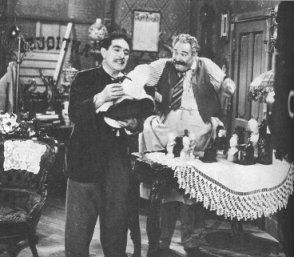
Life with Luigi could fall into this category for sure. However, it has a lot of fans and is still a big draw on Sirius Classic Radio. So, I decided to delve in and learn more about it. It was one of the earliest classic sitcoms transferred from the radio where it was aired from 1948-1953 to television. The show was created by Cy Howard who was the talent behind My Friend Irma. J. Carrol Naish voiced Luigi, and Alan Reed gave life to Pasquale in Life with Luigi.
Luigi Basco arrives in Chicago from Italy and has to make a new life for himself. He attends night school to learn English. His friend Pasquale is always trying to marry his daughter Rosa, played by Jody Gilbert, off to Luigi, who had no intention of being wed to her. Each episode began and ended with news in a letter to Luigi’s mom about his life in America.
📷alchetron.com
In 1952 CBS decided to air the show on television with Naish and Reed continuing their roles on the small screen. The program was sponsored by Instant Maxwell House Coffee. Norman Tokar was the director along with Mac Benoff who also wrote for the series with Lou Derman. Tokar would go on to direct many of the episodes of Leave It to Beaver and The Donna Reed Show. Benoff became a writer for The Danny Thomas Show while Derman wrote most of the Mister Ed scripts as well as writing for Here’s Lucy and All in the Family. The show followed I Love Lucy, so it had a great lead-in for a new show.
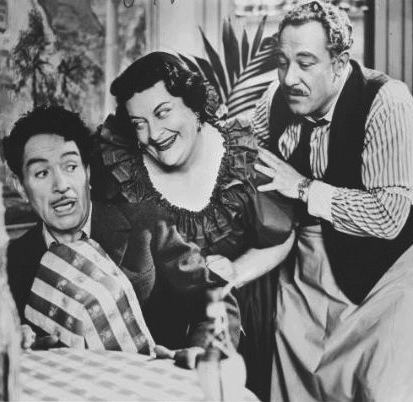
The series had good ratings, but the Italian American community was offended by the stereotyping of Italian immigrants even though (and perhaps more offensive) Naish was actually Irish. Because Luigi did not always understand English phrases, he took things too literally at times which I’m guessing was the problem for fellow Italians. CBS replaced the leads with Vito Scotti as Luigi, Thomas Gomez as Pasquale, and Murial Landers as Rosa. The revisions did not make anyone happy, and the show was finally canceled. The show ran its final episode in December of 1952.
Joseph Patrick Carrol Naish was a very versatile character actor who was born in New York City in 1896. He attended Catholic schools until he ran away from school at age 14 to become a song plugger. At 15 he enlisted in the Navy and after being asked to leave due to his age, re-enlisted during the war and was with the Army-Signals Corps in France. He learned eight languages during this time. He also spent some time in Paris singing and dancing with a group of performers.
📷radiospirits.com
While he was in California on the way to China, he was spotted by a Fox studio talent scout and landed a few roles. In 1929, he married another Irish actor, Gladys Heaney. With the dialects he had acquired in the Army, he easily portrayed Asians, Middle Easterners, Hispanics, Frenchmen, Germans, Native Americans, Italians, and East Indians. Time Magazine referred to him as “Hollywood’s one-man United Nations.” Ironically one of the parts he had a hard time obtaining was an Irishman because of his black hair and mustache.
In 1943, Batman was introduced in his first big-screen feature. The first evil villain he had to face was Naish as Prince Daka, a Japanese super spy. Daka had an atomic death ray, an alligator pit, and the ability to turn American scientists into zombies.
During his career, he would obtain almost 225 credits. In 1973, both Naish and his wife passed away. The couple had one child. When he was not acting, he spent time writing, singing, cooking, playing tennis, and playing golf.
Much of the late forties and early fifties were learning curves for television which led to the golden age. Life with Luigi was part of that learning curve. While many people felt the show was honest and well written, it offended a large part of the American population. It would not be the last show to do so. You might want to check out an episode or two for yourself and see how you feel about the show and its portrayals.
Last week we looked at shows that debuted in 1973, fifty years ago in our “Potpourri” blog series. Today we are concentrating on one of the successful shows of that 1973 class (and there were not a lot of them): Good Times and I’m am considering this blog “Flopourri” for Florida Evans.
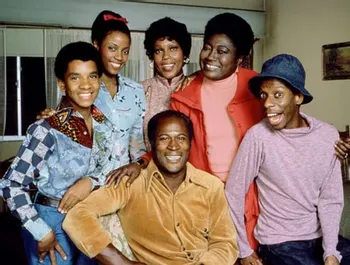
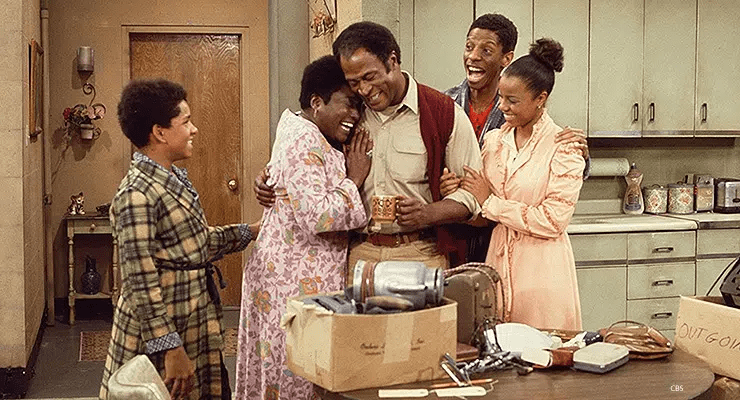
Cast of Good Times Photo: tvtropes.com
For those of you who have been with me for the past six and a half years. You may be surprised to find me featuring a Norman Lear show. I readily admit that I have a Norman Lear bias. It’s nothing personal with Norman, but I just did not enjoy most of his shows: All in the Family, The Jeffersons, Maude, Diff’rent Strokes, Sanford and Son, and Carter Country, among others. I did think that Mary Hartman, Mary Hartman was an interesting concept, just too hard to sustain, and I admit that I liked Fernwood Tonight. I still bypass these shows on MeTV and Antenna TV when they are on the schedule. However, I will be the first to say that they were important historical shows in the evolution of television. They were relevant shows that changed the way sitcoms were written and presented a lot of important topics for people to debate.
So, whether I enjoyed watching Good Times or not, and it was not, it was an important show that gained a devoted following and was on for six seasons, producing 133 episodes. The show was produced by Lear and created by Eric Monte and Mike Evans. Evans played Lionel Jefferson on The Jeffersons. He left the show to work on this series and when Good Times was canceled, he returned to The Jeffersons.
Florida Evans (Esther Rolle) was Maude’s maid. Maude was a spinoff from All in the Family and Good Times was a spinoff from Maude, so this was the first show to be created from a spinoff.
Photo: showbizzcheatsheets.com
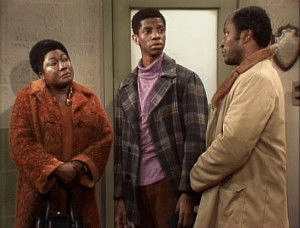
The Evans family lives in the Chicago projects. The area is not named but the opening and closing credits show photos of Cabrini-Green. The family consisted of Florida, her husband James (John Amos), their kids JJ, 17 (Jimmie Walker), Thelma, 16 (BerNadette Stanis), and Michael, 13 (Ralph Carter). The show also featured Florida’s best friend Willona (Ja’Net DuBois) and Nathan Bookman (Johnny Brown), the building superintendent. The family never has enough money. James is often out of work, but he also works two jobs when he gets a chance to bring in money for their family. He is a proud man and does not believe in handouts.
Many of the shows deal with gang warfare, financial issues, muggings, unemployment, rent parties, racism, and evictions. It was one of the first shows to have an almost all-black cast. Florida and James are good parents who try to teach their children values and ethical behavior. Michael was an especially interesting character who was intelligent, an advocate who loved African American history, and tried his best to make the world a better and more fair place to live.
Photo: JacksonUpperco.com
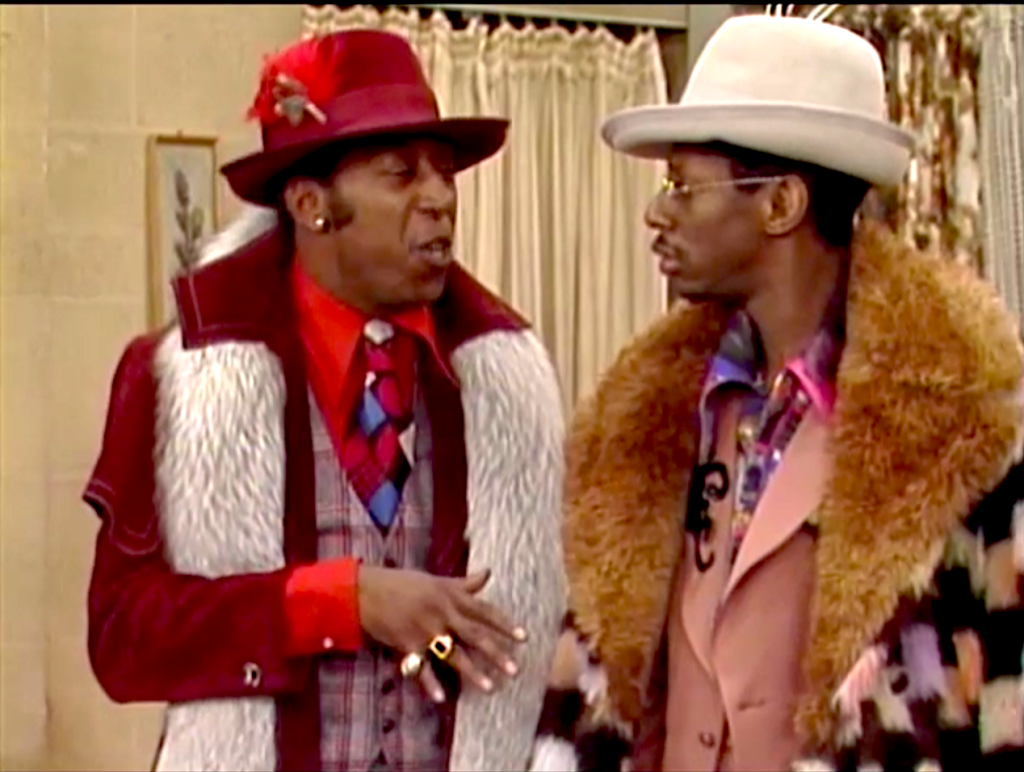
Other recurring characters include Ned the Wino (Raymond Allen), who often can be seen in their building. In one episode, JJ, an artist, paints Ned as Jesus and, in another, well-meaning Michael tries to reform him by letting him stay at their house but it does not work out. Carl Dixon (Moses Gunn) is a shop owner in the area. After James’ death, Florida begins dating him and eventually they marry and move to Arizona. Esther tells Willona in a later season that Carl died from lung cancer. Pimp Marion Williams (Theodore Wilson) is a neighbor who is known for his flashy clothing and jewelry. Lenny (Dap Sugar Willie) is the neighborhood hustler who sells stolen items. Wanda (Helen Martin) runs a women’s support group in their building. Alderman Fred C. Davis (Albert Reed Jr.) is a politician with a shady past.
A lot of celebrities appeared on the show during its run including Debbie Allen, Sorrell Booke, Rosalind Cash, William Christopher, Gary Coleman, Alice Ghostley, Ron Glass, Robert Guillaume, Gordon Jump, Jay Leno, Charlotte Rae, Philip Michael Thomas, and Carl Weathers.
The theme, a gospel-sounding song with a choir in the background, was composed by Dave Grusin and the lyrics were written by Alan and Marilyn Bergman. It talked about the hard living conditions the family had to endure which was not thought of as “Good Times.” Performed by Jim Gilstrap and Blinky Williams, the lyrics were:
Good Times. Any time you meet a payment. – Good Times. Any time you need a friend. – Good Times. Any time you’re out from under. Not getting hassled, not getting hustled. Keepin’ your head above water, Making a wave when you can.
Temporary lay offs. – Good Times. Easy credit rip offs. – Good Times. Scratchin’ and surviving. – Good Times. Hangin in a chow line – Good Times. Ain’t we lucky we got ’em – Good Times.
Photo: thatsentertainment.com
One of my favorite things about the show was the use of nicknames, maybe because my family is fond of nicknames as well. James called Thelma “Baby Girl” and referred to Michael as the “Militant Midget” for his activism. Willona’s name for Michael was “Gramps,” while JJ called him “Miguel.” The other residents also got their own monikers including Willona as “The Rona Barrett of the Projects” and Wanda as “Weeping Wanda.”
Good Times was created as a show that focused on Rolle and Amos. Both stars expected the show to deal with serious topics even though it was a comedy. They also wanted the characters to be positive role models.
JJ began to be featured in more of the episodes. “Dynomite” became his catchphrase and he said it at least once in every episode. As the writers focused more on his character and the way he behaved, important topics were put on the back burner sometimes.
Both Rolle and Amos felt that the character of JJ and the way he was being developed as more of a foolish and unintelligent person was creating a negative role model. Both stars became disillusioned with the direction of the show and voiced their criticism, Amos more often. They thought the uneducated, slacker type of behavior that JJ expressed was harmful to young viewers. Lear finally fired Amos at the end of the third season because of his negative opinions. The cast had no idea that he had been fired until they read the script where he passed away. Rolle quit at the end of season four.
Walker didn’t see it the same way. He said in an interview that he does not remember saying one word to Amos or Rolle that was not part of the script. He defended his character saying that he didn’t commit overly criminal acts on the show and compared his character to the Fonz on Happy Days. He does have a point. He was deeply hurt that Amos and Rolle, along with many black community members, considered his character a “perpetuation of negative stereotypes.”
Photo: showbizcheatsheet.com
Perhaps part of the controversy came from Walker’s own personality. He considered himself a comedian, not an actor. He said he was never comfortable with the dramatic storylines. Lear wanted Jimmie to take acting classes but he refused. Rolle, Amos, and Carter were dramatic actors and took their roles more seriously. When Rolle died in 1998, Walker was the only cast member who did not attend her funeral.
In season five, Janet Jackson joined the cast as Penny, an abused girl abandoned by her mother, adopted by Willona. Ratings began to decline. With Rolle’s absence, the essence of the show was gone.
Producers asked Rolle to come back even as a guest role. Rolle rejoined the cast for season six after she was promised higher-quality scripts. She also wanted the character of Carl Dixon written out of the show. She felt Florida would not have remarried so quickly, but that was how writers depicted her absence from the show when she left.
However, it was too late and the show continued to decline in ratings. The continual moving of the show on the schedule also didn’t help things. The show began on Friday nights for season one; moved to Tuesdays for seasons two and three; had two different time slots on Wednesdays for seasons four and five; and ended up moving three different times for season six: Saturday at 8 for episode one, Saturday at 8:30 for episodes 2-10, and Wednesdays at 8:30 for episodes 11-22.
Photo: pinterest.com
The series finale in 1979 gave each character a happy-ever-after. JJ becomes a comic book artist. Michael begins college and moves into the dorms. Thelma and her husband move to the Gold Coast when he gets an offer from the Chicago Bears. Thelma is pregnant and they ask Florida to move with them to help care for the baby. Coincidentally, Willona becomes head buyer for her boutique and moves into the same luxury apartments with Penny.
Unfortunately, the show is remembered now more for its controversy than anything else. Amos talked about his “early departure from the show, I felt that with two younger children—one of whom aspired to become a Supreme Court Justice . . . and the other a surgeon . . . there was too much emphasis being put on J.J. and his chicken hat saying ‘Dynomite!” every third page when just as much emphasis and mileage could have been gotten out of my other two children and the concomitant jokes and humor that could have come out of that.” He later said in an interview with VladTV that the scripts on the show led to “an inaccurate portrayal of African-Americans. Their perception or their idea of what a Black family would be and what a Black father would be was totally different from mine, and mine was steeped in reality.”
He did have good things to say about Rolle and her character: “Florida was the glue that kept the family together. It showed a Black family that had the same trials and tribulations as the rest of America, especially those who were financially challenged . . . it told the story of who we were on a comedic basis. And I’ve always contended, as some of my mentors taught me, the best way to get a message across to people is through humor.”
Photo: urbanhollywood411.com
Rolle concurred as she told Ebony in 1975 about JJ: “He’s eighteen and he doesn’t work. . . He can’t read or write. He doesn’t think. The show didn’t start out to be that. Michael’s role of a bright, thinking child has been reduced.”
Walker was interviewed at age 70 by Rebeka Knott and still disagrees with his costars. In that interview, he said that his co-stars, “killed the goose that laid the golden egg. These people, anytime you said anything, they get crazy, they get upset. They don’t get it man.”
So, what are we to make of the show and its success or failure? It still remains an important program in television history. It featured a black cast and focused on a family that struggles with many issues both white and black low-income families could identify with. If Michael had appeared in a reality show as an adult, perhaps it would have been The Cosby Show. A lot of families, black and white, could identify with the issues of that show as well. And, hopefully, they understood where the success of that second generation came from–parents who worked hard and taught their children important values and emphasized hard work and goals that allowed the next generation to have more success than the previous one.
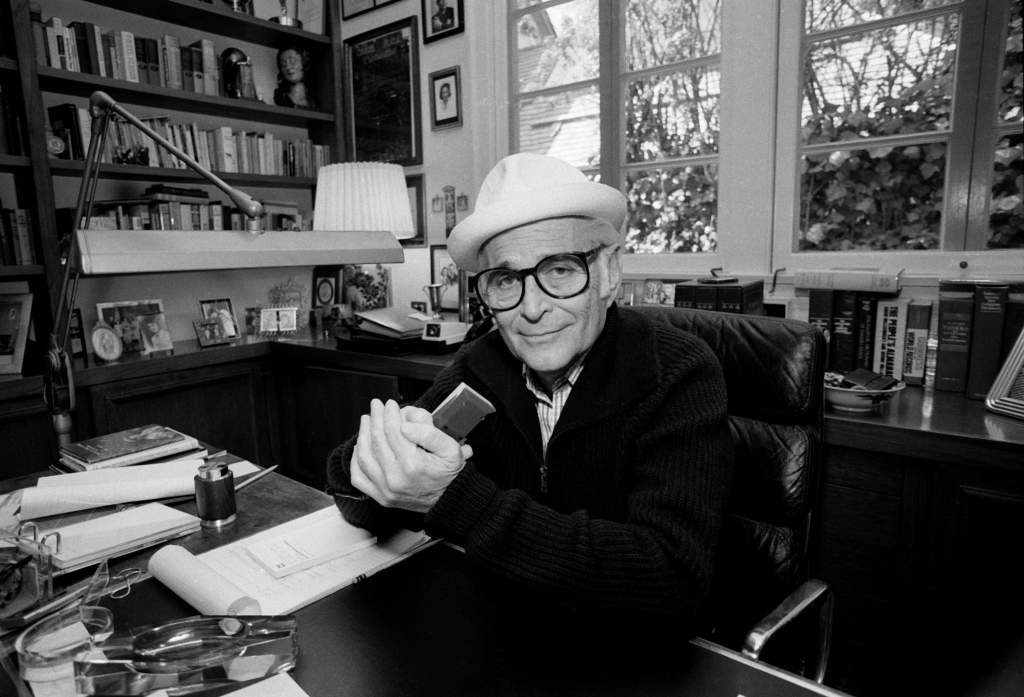
Norman Lear Photo: vibe.com
It’s actually what any good television show does. Regardless of the setting and the characters, it teaches us about how other people live and provides plots many of us can identify with or teaches us about other characters whom we can appreciate and learn more about their individual struggles and journeys whether they follow the same path we do or take a different fork in the road.
It would be interesting to talk with Rolle and Amos today to get their perspective. They were right to ask for better scripts and to showcase their other children who had bigger dreams and hopes. But perhaps Walker is also not that far off. He did portray a different type of character– one that obviously many people identified with or enjoyed spending time with. Don’t most families have a combination of good and not-so-good role models? Hopefully, we learn as much from the characters in our lives who make poorer decisions as we do from those who choose wisely. I’ll leave it up to you whether you think the tv show is worth watching today or not.




 thewritelife61