Linda Evans’ Destiny was Working with John Forsythe

This month we are looking at some of our favorite “Supportive Women.” Today we are taking a closer look at the career of Linda Evans.

Photo: vintageeveryday.com

Born Linda Evenstad in 1942 in Hartford, Connecticut, she was the middle child of three sisters. Both her parents were professional dancers. When she was six months old, the family moved to North Hollywood. Linda graduated from Hollywood High School with Stefanie Powers, who we will be talking about next week. Like Morgan Fairchild, who we will be discussing in two weeks, Linda took drama classes to help her deal with shyness.

Linda was engaged to Patrick Curtis, but they never married. He later became a press agent and married Raquel Welch.

Linda’s first two roles were on two of my favorite sitcoms. In 1960, she guest starred on Bachelor Father where Bentley Greg (John Forsythe) raised his niece Kelly (Noreen Corcoran) with the help of his houseboy Peter (Sammee Tong). Her second appearance was on The Adventures of Ozzie and Harriet. During the sixties, she would appear on a variety of shows including Dr. Kildare, Wagon Train, and My Favorite Martian.

Photo: pinterest.com

Her first made-for-tv movie was 1962’s Buttons with Beaus, and her first big screen feature came a year later in Twilight of Honor; her second movie was Beach Blanket Bingo in 1965 where she played Sugar Kane.

It was in 1965 that Evans began dating film director John Derek. They would marry in 1968 and separate in 1973 when Linda learned he was dating the actress who became known as Bo Derek.

1965 was also the year she was offered her first role as a regular cast member of a series. She became Audra Barkley from 1965-1969 on The Big Valley. The western was very popular. Similar to Bonanza, in this show, Victoria Barkley managed to raise her family and keep the villains at bay.

She and Barbara Stanwyck, who played her mother Victoria on the show, became very close. Stanwyck continued to refer to her as Audra after the show ended. Linda says Barbara was a great mentor and friend to her.

In 1967 when Derek was filming Evel Knievel’s famous motorcycle jump over the fountains at Caesar’s Place in Las Vegas, he asked Linda to take over one of the cameras, and she shot the famous footage of Knievel’s devastating crash.

During the 1970s she kept busy with television appearances on dramas including McCloud, Banacek, Harry O, McMillan and Wife, and The Rockford Files.

With “mom” Barbara Stanwyck Photo: imdb.com

In 1975, she married Stan Herman, a real estate tycoon. They were married four years before splitting up. She never married again.

From 1976-1977 she again accepted a role as a regular on the show Hunter. The series only lasted fourteen episodes before being canceled. Not to be confused with the show from the 1980s, in this one, US government special agents James Hunter (Tony Franciscus) and Marty Shaw (Evans) take on missions around the world. He posed as a bookstore owner, and her cover was a model. I admit I have never seen this show, but it sounds like a seventies version of I Spy.

During the 1980s, her career was split between two primary shows: The Love Boat and Dynasty. Dynasty was on the air from 1981-1989. When Dallas became extremely popular, ABC commissioned Aaron Spelling to come up with a primetime soap opera of its own. Evans was back on the air working with John Forsythe again as Blake Carrington, her wealthy husband. The basic premise of the show was that it was an upper-class version of the Hatfields and the McCoys with the Carringtons and the Colbys feuding in the oil business in Denver, Colorado.

Dynasty with Forsythe and Collins Photo: imdb.com

Evans and Forsythe remained close friends for the rest of his life. She said he was “so magical. This show was so serious and he was funny personally. We’d be fighting and people would be strangling each other and he made me laugh all day long, I’ll be forever grateful to him for that.” The person Linda was often strangling was Joan Collins who played Alexis Carrington Colby, Blake’s first wife.

By 1984 the show had reached number one in the rankings. Linda was nominated for an Emmy for Outstanding Lead Actress in a Drama Series in 1983. She was beat out by Tyne Daly from Cagney and Lacey.

After the show was canceled, Evans stepped out of the limelight for the most part. She did film five made-for-tv movies during the 1990s and guest starred on Germany’s version of The Love Boat, Das Traumschiff, in 2020. In 2021, she was in a big-screen feature, Swan Song.

In 2011 Evans published a book, Recipes for Life: My Memories, a combination of candid memoir and inspirational cookbook. Despite her perfect figure, one of her weaknesses is pizza. On premierspeakers.com on April 10, 2018, she was quoted as saying “I love pizza so much, that if you wake me up in the middle of the night and ask me if I’d like to eat a slice, I’ll say YES. Kenny Rogers used to have it delivered to me while I was filming The Gambler.

Photo: dailyexpress.com

Linda seemed to enjoy her career. She is remembered for several well-known characters in Audra Barkley and Crystal Carrington. While she has given up acting for the most part, I would not be surprised to see her back on the big screen for another part or two if it’s the right offer.
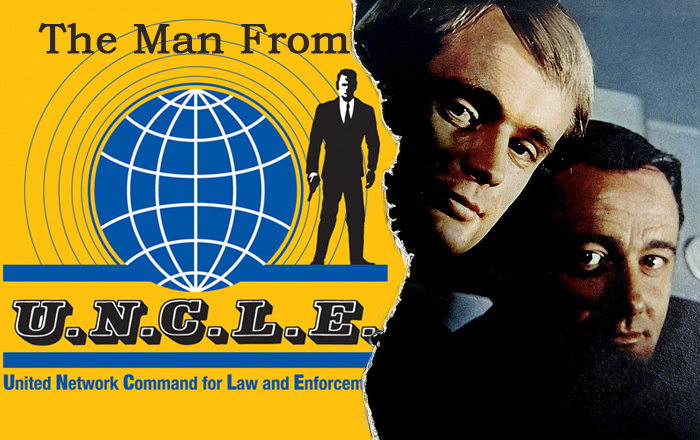
The Man From UNCLE: What Happens When James Bond Comes Out of the Cold and Into TV

We are in the midst of our Murder, Mystery, and Mayhem series this month. In the mid-1960s, westerns were still the most popular show on television with rural sitcoms coming on the scene. Crime shows still had their fair share of air time, but spy shows were non-existent. With the end of the Cold War, Bond movies, and books like The Spy Who Came in From the Cold, these types of thrillers were bound to hit the small screen. From 1964-1968, The Man from UNCLE took us behind the scenes to observe the dangerous life of special agents.

Photo: booktrib.com

Beginning on Tuesday nights on NBC, the show was produced by Metro Goldwyn Mayer. The creator, Norman Felton, asked Ian Fleming to act as a consultant. (Some sources list Felton as the sole creator; some credit Sam Rolfe as a co-creator.) The book The James Bond Films mentions that Fleming suggested two characters: Napoleon Solo and April Dancer. Napoleon Solo became one of the main characters on The Man from UNCLE, and we will learn more about April Dancer later. Solo was also a villain in the movie Goldfinger. Originally titled “Solo,image of ” the popularity of the film led to a title change in the television show to The Man from Uncle.

Photo: filmandfurniture.com

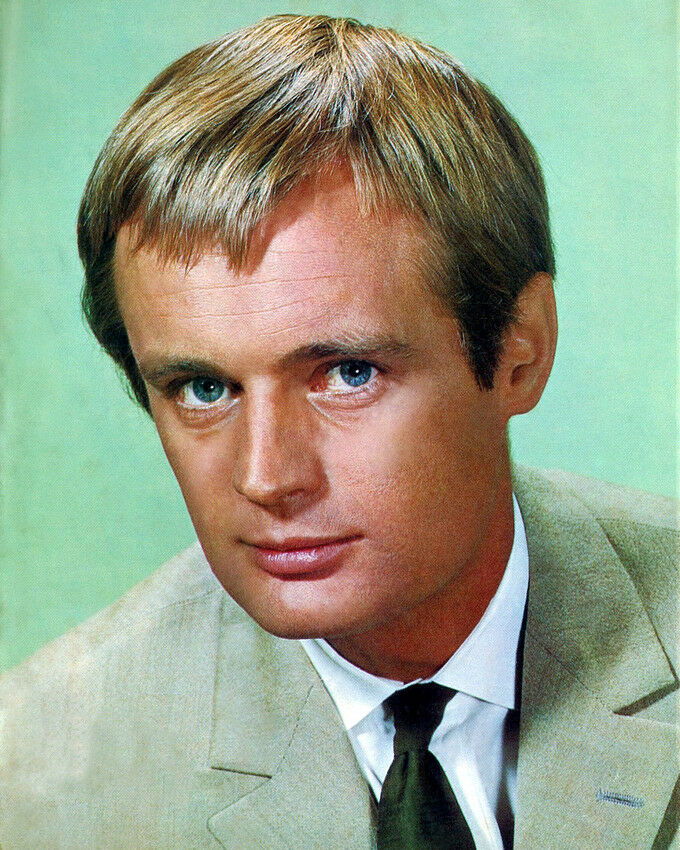
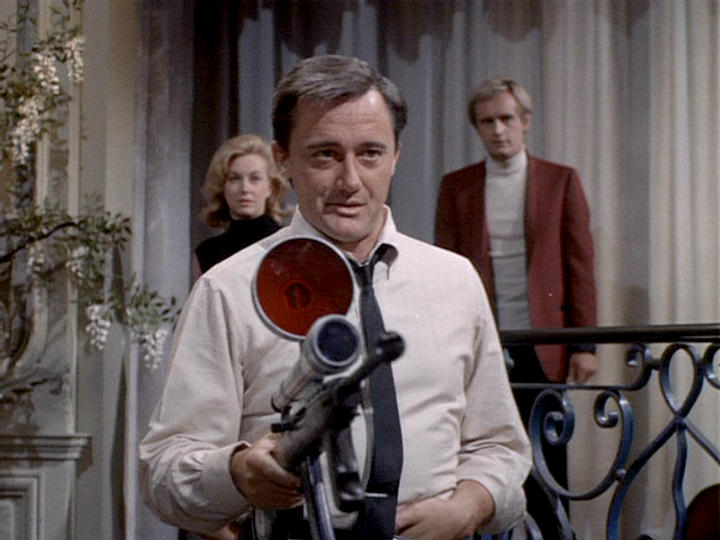
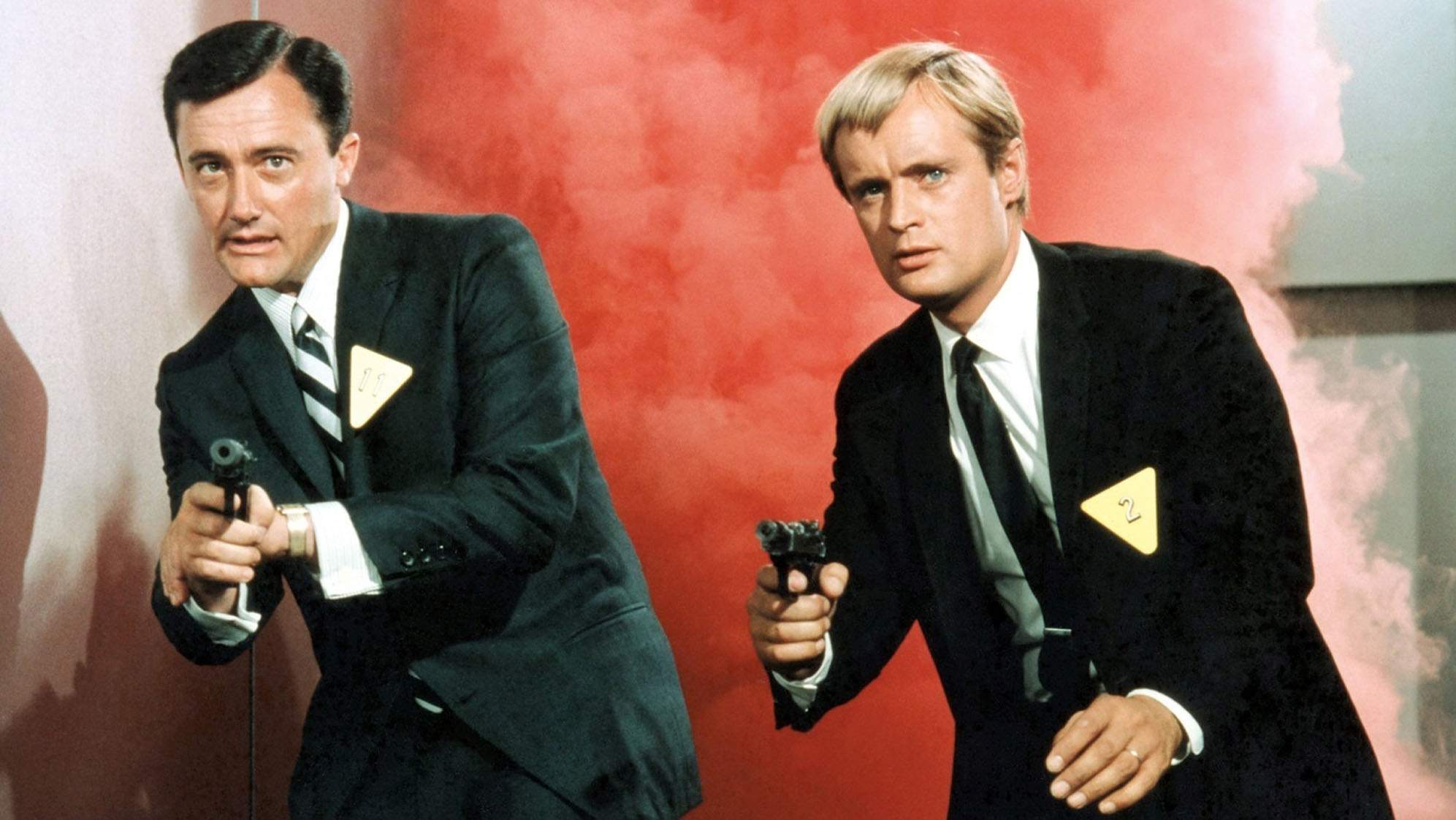
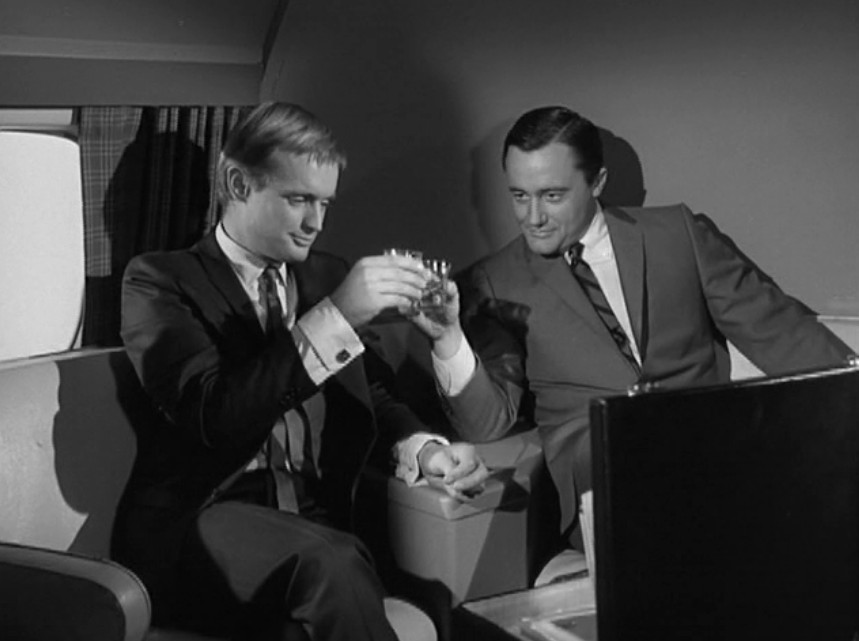
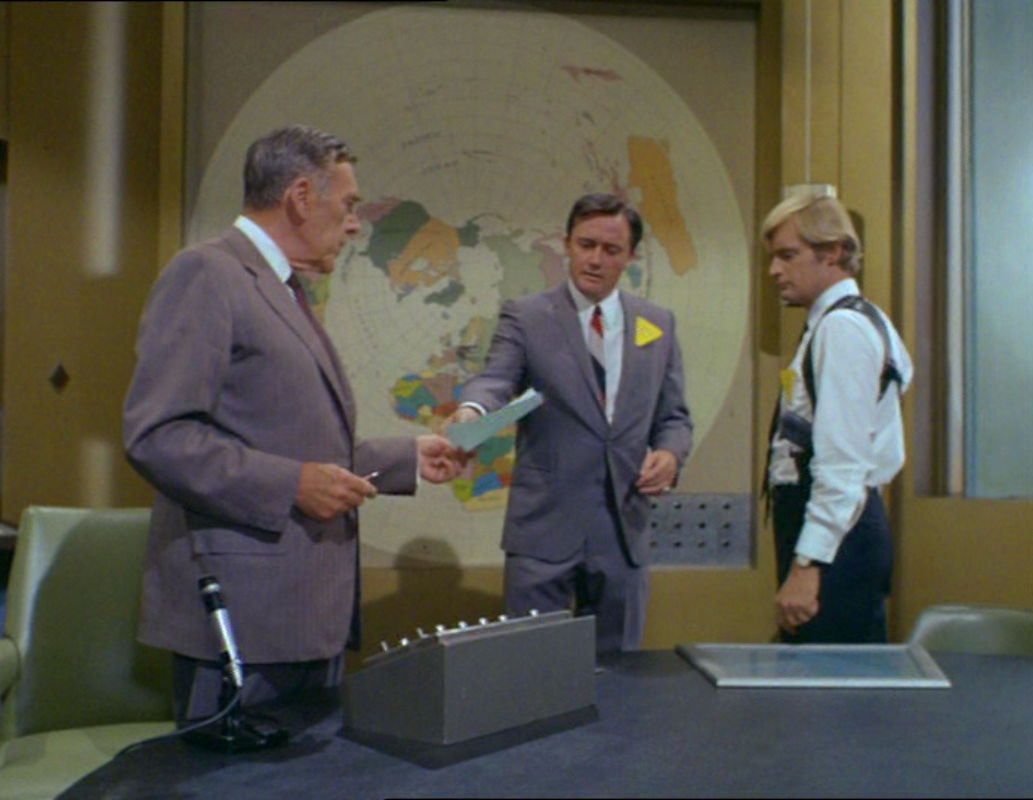
Solo (Robert Vaughn), being an American, was set up in a partnership with a Russian, Illya Kuryakin (David McCallum). The duo would take on multinational secret intelligence work under UNCLE, The United Network Command for Law and Enforcement. They sometimes worked with Alexander Waverly (Leo G. Carroll) who headed up an English organization. They frequently went up against THRUSH. We never learned who was part of THRUSH or what their goals were, apart from taking over the world of, course.

Photo: ebay.com
David McCallum

Solo was supposed to be the typical ladies’ man, with Kuryakin being the intelligent, funny, and loyal partner, but McCallum turned into an instant celebrity. Hysterical fans attended promotional appearances and magazines gave he and his wife Jill Ireland little peace and quiet. One article I read discussed an incident in Baton Rouge, LA when McCallum was locked in a bathroom so the police could clear out the screaming women. When he was supposed to do a spot in a Macy’s store in New York, police had to disperse 15,000 screaming women who made it too dangerous for him to appear and did “a colossal amount of damage” to the store.

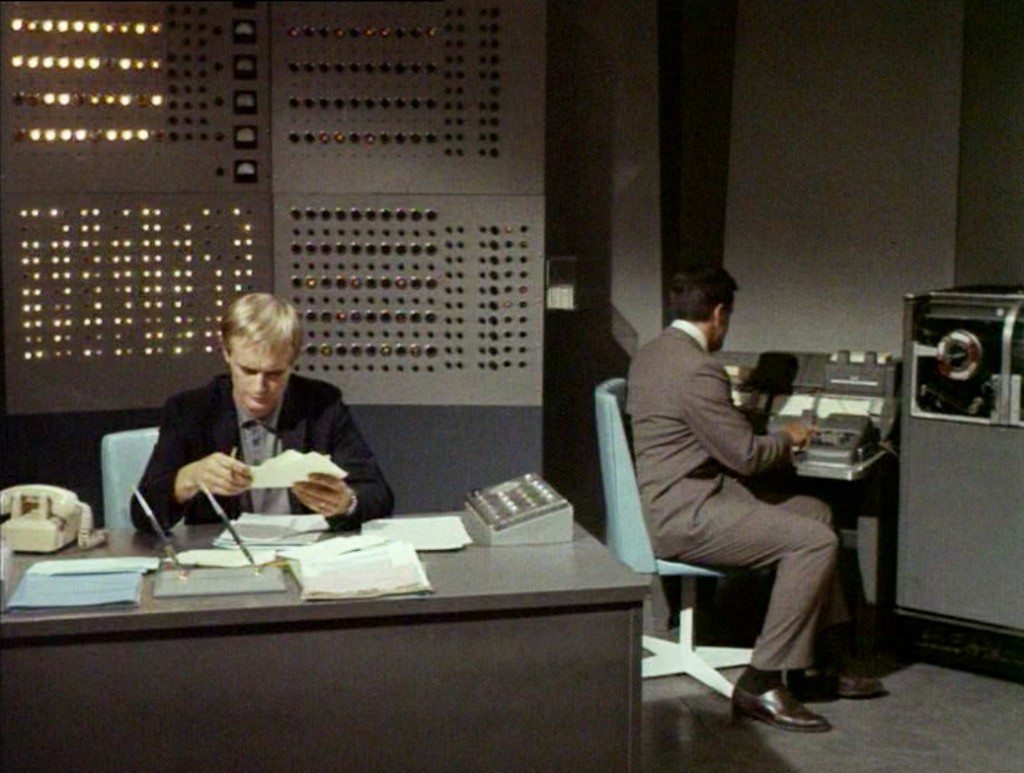
Solo and Kuryakin accessed their secret headquarters through a tailor’s shop, Del Floria’s.

Photo: filmandfurniture.com

In an interesting twist, the creators decided to feature an “innocent character,”–a Joe Doe or Jane Smith who the viewers could identify with—in every episode.

The theme music was created by Jerry Goldsmith, changing slightly each season as new composers came on board, eight in all.

Photo: imdb.com

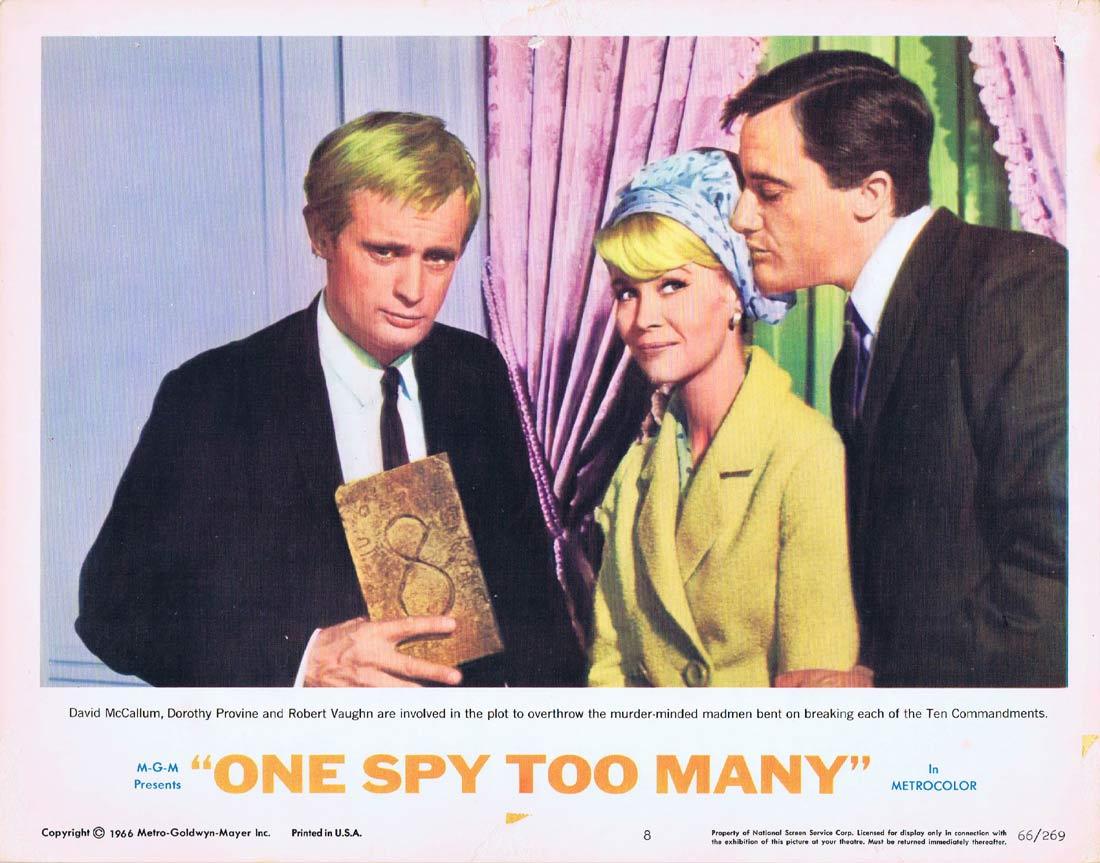
With the exception of one show, the episodes were titled “The ______ Affair.” Every year at least one two-part show was aired. The pair of shows became theatrical films released in Europe. Additional footage was added to the movies. Some of these films were later seen on American television and include To Trap a Spy (1964), The Spy with My Face (1965), One Spy Too Many (1966), The Spy in the Green Hat (1967), and How to Steal the World (1968), among others.

Photo: imdb.com

Although stuntmen were hired for the two leads, they also did their own stunts. Typically, the actor and stuntman did each stunt, and the final version combined the best of them. However, McCallum tried to avoid heights, and Vaughn disliked water scenes.

Like Get Smart, the recurring characters were a small group, and guest stars were necessary for each episode. Both high-profile and up-and-coming actors were eager to appear on the show. William Shatner and Leonard Nimoy can be seen together in “The Project Strigas Affair” two years before they starred on Star Trek. Other actors who appeared include Judy Carne, Joan Collins, Yvonne Craig, Broderick Crawford, Robert Culp, Chad Everett, Barbara Feldon, Anne Francis, Werner Klemperer, Janet Leigh, June Lockhart, Jack Lord, Ricardo Montalban, Leslie Nielsen, Carroll O’Connor, Vincent Price, Cesar Romero, Kurt Russell, Sonny and Cher, and Telly Savalas.

Photo: theunclefiles.com

Of course, spies need technological gadgets to get a leg up on the competition. Some of their communication devices included a security badge and a business card. They could also communicate with a portable satellite disguised as a cigarette case or fountain pen.

Like all good crime fighters, the duo needed a car, and theirs was a Piranha Coupe, based on the Chevrolet Corvair.

Photo: tvguide.com

Weapons were also a necessity in their line of work. The UNCLE Special was a semi-automatic weapon which was useful except at night when THRUSH had access to a “sniperscope” which allowed the villains to shoot in total darkness.

The gadgets, props, and clothing for the show were so popular that they are exhibited in the Ronald Reagan Presidential Library. The CIA also exhibits some of the show’s items.

Season 1 was a great success even though partway through the season, the show moved from Tuesdays to Mondays. With season 2 came more “tongue-in-cheek” dialogue, and the series switched from black and white to full color. Athough the show was moved to Friday nights, its popularity continued.

Photo: mtv.com

Season 3 added a campy element, a la the Batman and The Monkees craze, against the stars’ wishes. The ratings decreased and the show never attained the same quality and ratings again. It was renewed for a fourth season but cancelled partway through when there was no increase in viewership.

Although the show was only extremely popular for two years, it garnered eight Emmy nominations and five Golden Globe nominations, including a win for David McCallum as best star in 1966.

Photo: filmandfurniture.com

Of course, like all popular shows from the 1960s, a tv movie was made a few years later and a big-screen remake came decades later.

The Return of the Man from UNCLE: The Fifteen Years Later Affair was seen on CBS, not NBC, in 1983 with both Vaughn and McCallum reprising their roles. At the beginning of the movie, we learn that although THRUSH was obliterated with the arrest of its leader, he has now escaped from prison. Rather than stick with the chemistry of the two leads, the tv movie pairs each lead with a younger agent.

In 2015, Guy Ritchie’s big-screen The Man from UNCLE was set in the 1960s featuring Solo (Henry Cavill), Kuryakin (Armie Hammer), and Gaby Teller (Alicia Vikander). The trio must work together in a joint mission to stop an evil organization from using Gaby’s father’s expertise in science to build a nuclear bomb. All the while, they don’t totally trust each other, and secretly put their own country’s agendas first. As far as reboots go, the film was actually a good rendition of the original show.

Photo: worthpoint.com

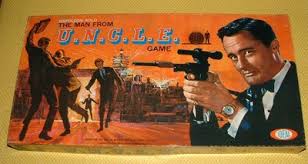
Of course, there was no limit to the merchandising in connection with the show. Several comic books based on the series were published, as well as two dozen novels. In addition to membership cards, viewers could show their love

for the show with board games, action figures, model kits, lunch boxes, and toy guns.

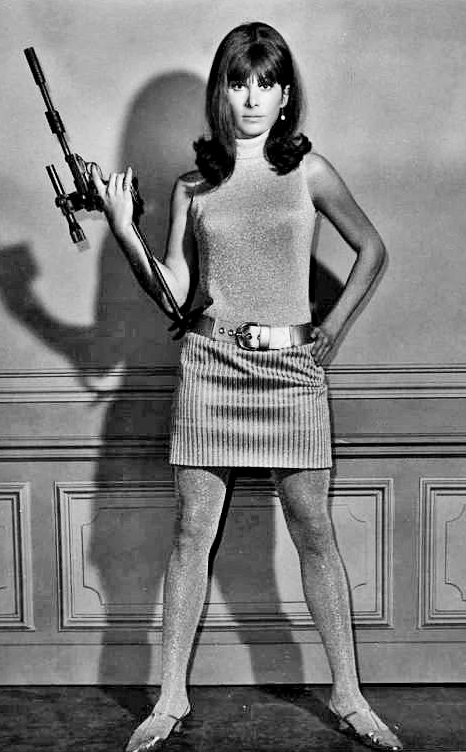
I did promise to get back to April Dancer. Halfway through The Man from UNCLE series, the network released a spin-off, The Girl from UNCLE starring Stefanie Powers as April Dancer. Not as popular as the original, it was cancelled after one season.

Photo: sixtiescity.net

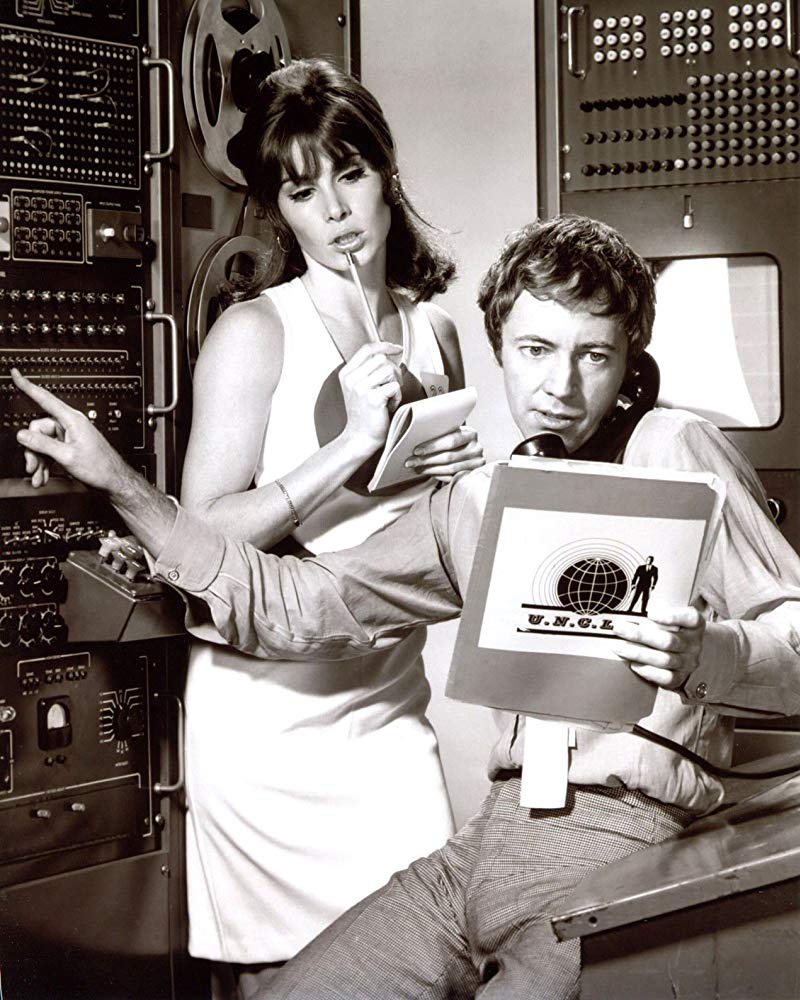
Dancer works with British agent Mark Slate (Noel Harrison). Leo G. Carroll appeared as Mr. Waverly in this series also. Luckily Powers was fluent in several languages, because Dancer often went undercover with a foreign accent.

Photo: business.facebook.com

Unfortunately, Dancer reeled in the bad guys, but Slate was the one who got to kill them. However, April did get some cool gadgets such as a perfume atomizer that sprayed gas and exploding jewelry.

This show also used Goldsmith’s theme music in an arrangement by Dave Grusin.

Both The Girl from UNCLE and The Man from UNCLE are available on DVD.

Although The Man from UNCLE was only hugely popular for two years and The Girl from UNCLE never attained a fan base, the shows ’ concept spawned a huge pop culture obsession. At one point, more than 10,000 letters a week were delivered to the network. The show sparked an interest in spy shows that would pave the way for future shows such as Mission Impossible; The Wild, Wild West; I Spy; and Get Smart. Like The Man from UNCLE, each of these shows would result in reboot big-screen movies in later decades, as well as a large output of memorabilia.

Photo: oldies.com

It’s interesting that this show feels dated now with the current technology, yet Get Smart continues to be a hit. I think the humor and campiness of Get Smart keeps it relevant which is ironic, because that is what basically brought about the end of The Man from UNCLE. Despite its current non-relevancy, it was an important part of pop culture and deserves to be celebrated for its cult status in the mid-sixties and the realistic portrayal of spies to generations of viewers.