We’re continuing our blog series, “The Movie Came First.” Today we get to learn more about Father of the Bride. Whether you gravitate to Elizabeth Taylor and Spencer Tracy in the original movie or Kimberly Williams-Paisley and Steve Martin in the remake, you might have enjoyed the television show which aired in 1961. All three versions feature a father whose daughter is getting married, as he deals with the emotional pain of losing her, the financial reparations, and the disorganized turmoil that goes into planning the wedding.
The movie starred Elizabeth Taylor as Kay Banks with Spencer Tracy and Joan Bennett as her parents, Ellie and Stanley. Her fiancé Buckley Dunstan is portrayed by Don Taylor and his parents are Billie Burke and Moroni Olsen as Doris and Herbert. The film was nominated for Academy Awards for Best Actor in a Leading Role (William Holden won for Sunset Boulevard), Best Picture (All About Eve was the winner), and Best Writing, Screenplay (also Sunset Boulevard as winner).
Stanley narrates his feelings and perspectives throughout the film. For example, he talks about losing his daughter: “Who giveth this woman? This woman. But she’s not a woman. She’s still a child. And she’s leaving us. What’s it going to be like to come home and not find her? Not to hear her voice calling “Hi Pops” as I come in? I suddenly realized what I was doing. I was giving up Kay. Something inside me began to hurt.”
Photo: hulu.com
He also shares his thoughts on weddings: “I would like to say a few words about weddings. I’ve just been through one. Not my own. My daughter’s. Someday in the far future I may be able to remember it with tender indulgence, but not now. I always used to think that marriages were a simple affair. Boy meets girl. Fall in love. They get married. Have babies. Eventually the babies grow up and meet other babies. They fall in love. Get married. Have babies. And so on and on and on. Looked at that way, it’s not only simple, it’s downright monotonous. But I was wrong.”
Photo: wikipedia.com
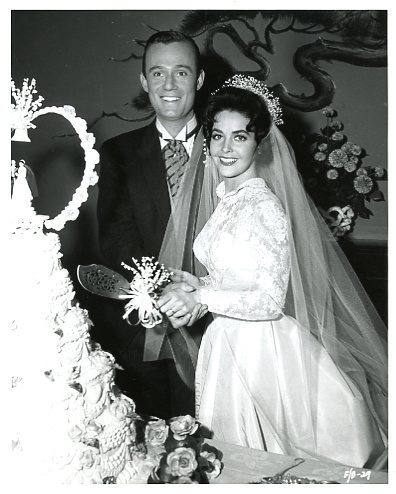
In 1961 the movie was reworked for the small screen, produced by MGM Television. The characters remained the same. In the tv version, Leon Ames was Stanley, Ruth Warrick was Ellie, Myrna Fahey was Kay, Burt Metcalfe was Buckley, Ransom Sherman was Herbert, and Lurene Tuttle was Doris. We also see Ruby Dandridge cast as their housekeeper Delilah and Rickie Sorenson as Tommy, Kay’s little brother.
The first shows in season one featured an animated cupid holding a magic wand to start the show, but the season transitioned into a photo of the entire cast gathered on the Banks’ staircase.
Photo: youtube.com
The sponsors of the show were Campbell’s Soups and General Mills.
I was surprised to see that there were 24 writers but then in looking through the episodes, the majority of the shows mirrored the movie so closely it was more of rewriting than writing.
Photo: blogspot.com
The show aired on Friday nights and its competition was The Dinah Shore Show and 77 Sunset Strip. I would have thought given the adult themes of 77 Sunset Strip, this show would be a popular family show to watch. However, the ratings must not have been very good, because it was cancelled after one season. Not many of the shows debuting this fall even lasted the season. In addition to Father of the Bride, the following shows were cancelled: The Bob Cummings Show, The Hathaways, Holiday Lodge, Ichabod and Me, Margie, Mrs. G Goes to College, Oh, Those Bells, One Happy Family, Room for One More, and Window on Main Street. The successful season debuts included Car 54 Where Are You?, The Dick Van Dyke Show, Mr. Ed, Hazel, The Lucy Show, and The Joey Bishop Show.
Photo: amazon.com
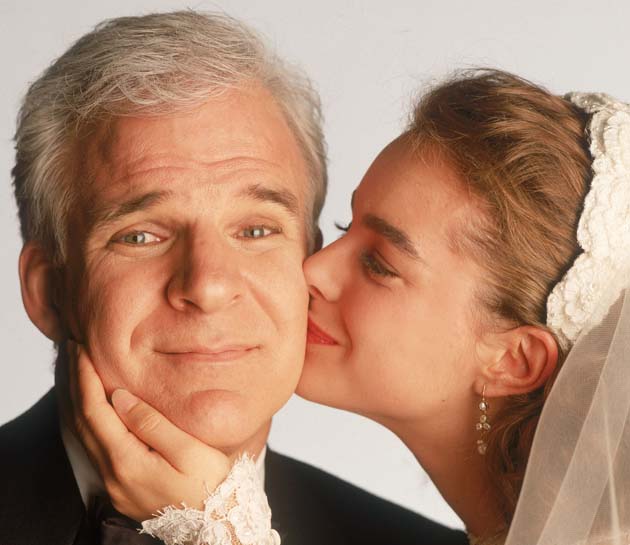
YouTube has the opening credits, but I could not find anywhere to watch episodes of this show. I guess my recommendation would be to forget about the show and watch the 1950 or 1991 movie version. I’m not often a fan of reboots of movies, but I love the Steve Martin-Diane Keaton version of this movie, so both films are great choices. Better yet, watch them both and then choose your favorite.
We are in the third blog of our series “The Men of November.” Born Charles Thomas Aldrich Jr. in 1906, Gale Gordon is remembered fondly for being Lucille Ball’s nemesis on several of her television sitcoms.
Photo: oldtimeradio.com
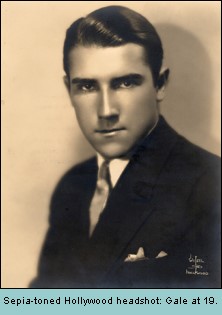
Both his parents were entertainers, and they traveled to England to perform when he was only one. For eight years, he lived in England. After returning to the United States for a few years, Gordon returned to London to complete his education at the Woodbridge School in Suffolk.
Gale at 19 Photo: lucyfan.com
Gale followed in his parents’ footsteps, and his first theatrical job was as an extra in “The Dancers” in 1923. Richard Bennett (father of Constance and Joan Bennett) starred in the stage production. Gordon worked as Bennett’s dresser, and Bennett taught him all about make-up, mentored him as an actor, and helped him to develop his voice.
By 1925, Gordon traveled to Hollywood, tackling roles in stage, film, and radio. Gordon talked about his first radio performance: “They asked me to come to a Hollywood studio in 1926 and try this new thing called ‘radio.’ They didn’t pay me, of course. They just wanted to fill up some time. So, I sang, ‘It Ain’t Gonna Rain No More, No More’ and accompanied myself on the ukulele. You might say I almost killed radio before it was born. I haven’t played an instrument on the air since.”
Photo: radiospirits.com
In seven short years, Gordon became the highest-paid actor in radio in Hollywood. He was the male lead for Mary Pickford in her serial. He was on almost every popular show on the air. It wasn’t unusual for him to appear on three or more programs in a week. Gordon was the first actor to play Flash Gordon in 1935.
His radio work also provided some other benefits. While appearing on an episode of Death Valley Days in New York, he met Virginia Curley. They married in 1937.
Gale and Virginia Photo: lucyfan.com
In 1941, after playing primarily dramatic roles, Gordon became a regular on Fibber McGee and Molly. Playing Mayor LaTrivia, Gale was on the show for a dozen years. There was a brief interruption in 1942 when he left the show and enlisted in the US Coast Guard for three years. He rose to the rank of Petty Officer First Class, and his service took him around the world to many dangerous places.
One of the roles he is best known for was Principal Osgood Conklin on Our Miss Brooks. Gordon described Conklin in a TV Guide interview: “There was nothing subtle about Osgood. No nuances. Just a lot of very satisfying acid, bluster, and bellowing, with an occasional weak moment of cordiality thrown in for leavening. It was practically impossible to overplay him. Even when he was being cordial, he was like an elephant trying to waltz.”
In 1950, he could be heard as John Granby on Granby’s Green Acres which later became the sitcom Green Acres.
With Bea Benederet Photo: wikipedia.com
While trying to reign in the chaos at Madison High School as Osgood Conklin, Gale was also the refined banker, Rudolph Atterbury, on My Favorite Husband, Lucille Ball’s radio comedy. Atterbury’s wife was played by Bea Benederet.
As television gained popularity, it was inevitable that some of radio’s favorite shows would make the transition to the small screen. While it was entirely possible to play several different characters on the radio, television production didn’t offer the same flexibility. When My Favorite Husband was retooled for television as I Love Lucy, Ball planned on bringing Gordon and Benederet along with her. However, Gale was committed to Our Miss Brooks, and Bea was playing a major role on Burns and Allen on television.
Asked about those days, Gale described himself as “a quiet, reserved, pipe-smoking homebody.” He said he always had a good balance of professional and personal interests. In addition to acting, he wrote books (Nursery Rhymes for Hollywood Babies and Leaves from the Story Trees), painted, and maintained a ranch. He and Virginia bought a 150-acre property about three hours away from Hollywood. They grew carob trees. Gordon was not a rancher in name only; he raised the trees, built the house, installed the plumbing, completed carpentry and handiwork, put in a swimming pool, and built a two-story building that served as garage and studio.
Our Miss Brooks Photo: amazon.com
In 1952, Eve Arden decided to take Our Miss Brooks to television. While Gale continued his role as Conklin on the show, he also guest starred on a couple of I Love Lucy episodes. Our Miss Brooks had a successful run for four years.
When the show ended in 1956, CBS was quick to sign Gordon on for another show. They paired him with Bob Sweeney in The Box Brothers (sometimes called The Brothers). Unfortunately, the series only lasted for 26 weeks.
The Box Brothers Photo: imdb.com
In 1958, Gordon was a regular on Sally where he played department store owner Bascomb Bleacher. He also appeared with Walter Brennan on The Real McCoys.
In 1959, December Bride which aired from 1954-1959, went off the air, spinning off a new show Pete and Gladys starring Harry Morgan and Cara Williams. Morgan appeared as Pete Porter on December Bride. On the new show, Gale played Pete’s Uncle Paul.
Dennis the Menace Photo: pinterest.com
In 1962 he was cast as Mr. Wilson on Dennis the Menace. At the same time, Lucille Ball was creating a new show, The Lucy Show. She wanted Gordon to appear as Mr. Barnsdahl, a banker. When he was not available, Lucille turned to Charles Lane. She said she loved working with Lane, but always wanted to work with Gale again, so when Dennis the Menace was cancelled, she quickly signed Gordon; Lane moved over to Bea Benederet’s new sitcom, Petticoat Junction, as the despicable Homer Bedloe. And thus Theodore J. Mooney was born.
Photo: welovelucy.com
For the next eleven years, through several different series titles, Lucy and Gale worked together. They would both retire in 1974. When describing his time on Lucy’s shows, Gale related in a Good Morning America interview in 1982 that “I always had a wonderful feeling of anticipation going to work every week, which is very, very rare. I don’t care what business you are in. But to really look forward to getting into the nitty gritty and working hard for four days—which is all the time we had to do the show—is really unique. To look forward to it for eleven years, that’s doubly unique.” He went on to praise Lucy for her work ethic: “Her attitude has never changed. Every show she ever did was always the most important show of her life. And I think that is the secret of her success.”
Photo: oldtimeradio.com
One surprising thing I learned was that Gordon was known for his ability to do cartwheels. He can be seen doing them on several episodes of Here’s Lucy. At the time, he was earning $25,000 an episode. Compare that to today when the stars of The Big Bang Theory received a million dollars an episode.
Gale and Virginia enjoyed twenty years of retirement. Virginia would pass away in 1995 at Red Terrace Health Center in Escondido, California. One month later, Gordon died from lung cancer at the same facility.
In 1999, Gale was inducted into the Radio Hall of Fame. Known for playing a variety of gruff, formal professionals, everyone knew that the bellow and bluster his characters spewed was great acting. In real life, Gale was one of the sweetest, kindest men around. He once said, “I am never nasty—unless I get paid for it.”
Photo: wikipedia.com
It’s hard to describe the influence Gale Gordon has had on generations of actors and the number of hours of entertainment he has provided to generations of television and radio fans. It’s always fun to listen or watch Connie Brooks trying to pull a fast one over on Osgood Conklin or Lucy Carmichael trying Mr. Mooney’s patience with her latest scatter-brained plan. Thank you Gale Gordon!
Dark Shadows was a unique concept. It was billed as a soap opera. From June of 1966 until April of 1971, it aired daily on ABC. I remember hurrying home from school to catch up on the lives of the Collins family, past and present, in their beautiful, but creepy, mansion in Collinsport, Maine. The show morphed back and forth into different eras and many actors played roles in different time periods.
Photo: obitoftheday.com
Barnabas Collins and Dr. Julia Hoffman are probably the two characters most associated with the series. What is surprising is that they weren’t part of the original cast. The vampire came on close to the end of the first year.
I have read about a lot of different ways producers came up with ideas for shows, but this one is one of the most unusual. Dan Curtis had a dream in 1965 about a mysterious woman on a train. He pitched the idea to ABC who gave it a green light. Art Wallace was brought on board to turn the dream into a pilot. The show was originally called “Shadows on the Wall.” Other titles considered were “The House on Widows’ Hill” and “Terror at Collinwood.” Curtis took over as creator and executive producer. Directors Lela Swift, John Sedwick, and Henry Kaplan were hired. Robert Cobert developed the musical score. Sy Tomashoff designed the eerie set.
Photo:
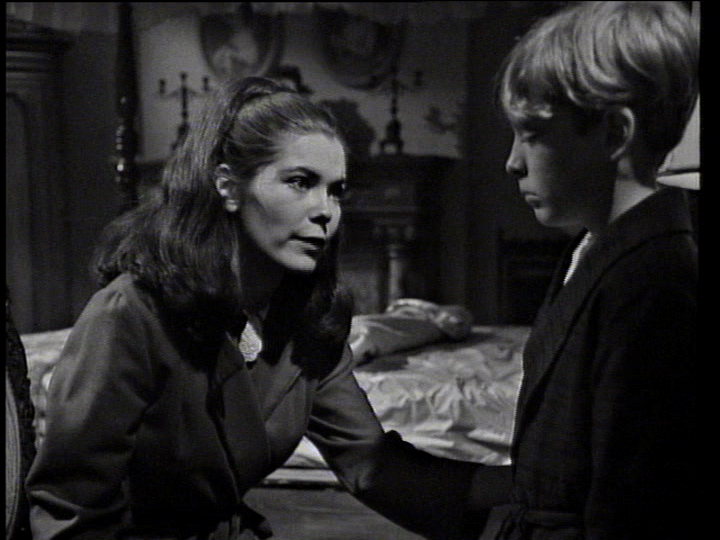
The dream became the story of a governess Victoria Winters who arrives at Collinwood for a new job but is also looking for the answers to her mysterious past.
Photo: pinterest.com
The show was one of 18 soap operas on the air in the late sixties. The ratings were not great. In December the show came in 13th of 18. When a third of the shows were cancelled, Dark Shadows’ ratings looked even worse—13th of 13. The show was given an ultimatum—26 weeks to increase viewership or it was done. So, Barnabas Collins was added to the show. Bert Convy was considered for the role of Barnabas before Jonathan Frid got the part. During the second year, the show began to be filmed in color which also helped.
During an interview with Ron Sproat, he said that he and fellow writer Gordon Russell had just met with Curtis and they were told a vampire would be added to the show. Leaving on the elevator, they decided right there that Barnabas would be a reluctant vampire with a conscious.
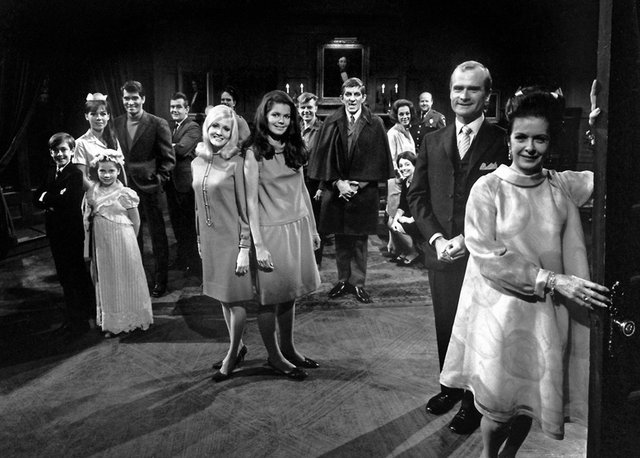
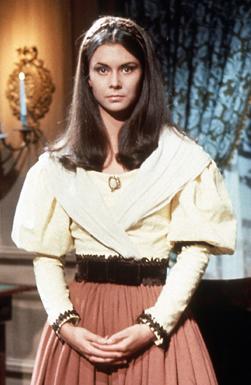
Twenty-eight characters were in at least seventy shows. Most of the actors who played them were unknown at the time, but some of the well-known stars now include Jonathan Frid (Barnabas Collins), Grayson Hall (Dr. Julia Hoffman), Alexandra Isles (Victoria Winters), Joan Bennett (Elizabeth Collins Stoddard), David Selby (Quentin Collins), Kathryn Leigh Scott (Maggie Collins), Lara Parker (Angelique), Roger Davis (Jeff Clark), and Kate Jackson (Daphne Harridge).
Photo: quizly.com
The music is very memorable for those of us who watched the show. The original soundtrack was in the top 20 US Billboard albums in 1969. The song, “Quentin’s Theme” earned Cobert an Emmy nomination and it peaked at 13 on the Billboard 100.
It definitely took a while for the show to hit its stride. Variety’s review of the first show was not favorable: “Writer Art Wallace took so much time getting into his story that the first episode of the Neo Gothic soaper added up to one big yawn.” It wasn’t until episode 52 that evidence of a real ghost appeared.
Photo: pinterest.com
A basic guide to the episodes is (1) Contemporary Era – Episodes 1-365, (2) The 1795 Era – Episodes 366-460, (3) Contemporary Era – Episodes 461-699. (4) The 1897 Era – Episodes 700-883, (5) The Contemporary Era – Episodes 884-1060, (6) The Future Era – Episodes 1061-1070, (7) The Ghosts of Gerard Stiles and Daphne Harridge Haunting Collinwood/The 1840 Era – Episodes 1071-1186, and (8) The Parallel Time of Contemporary and 1841 – Episodes 1187-1245. (These are not exact because there is some paralleling in different times; also even though 1225 episodes were produced, because of various numbering discrepancies, the final episode was listed as #1245.)
Photo: pinterest.com
As the stories were developed, we learn that the Collins were a wealthy family who had been in Maine for generations. Elizabeth Collins Stoddard and her daughter Carolyn live on the estate. Mr. Stoddard has been missing for twenty years. Elizabeth’s brother Roger Collins and his son David also live there. Roger’s wife had died in a fire. This is the family Victoria Winters works for. When Barnabas came on the show, he said he was a distant cousin of the family but is really a vampire who is not a cousin but was the original Barnabas who lived in the house in the 1700s.
Photo: pinterest.com
Parallel times revealed how Barnabas became a vampire, the relationship he had with a witch Angelique, and we meet Barnabas’ true love Josette Dupres. During the show, Roger brings home a new bride who turns out to be the real Angelique.
Photo: tumblr.com Angelique
Barnabas meets a young woman named Maggie who reminds him of Josette. Along the way he kidnaps her. Dr. Julia Hoffman wants to transform Barnabas from a vampire back to a man. They are close friends and she is the only one who knows who he truly is; it is obvious that she is in love with him.
Joan Bennett and Louis Edmonds were the only characters to appear in both the first and last episodes.
DARK SHADOWS – Show Coverage – June 12, 1966. (Photo by ABC Photo Archives/ABC via Getty Images)LOUIS EDMONDS;JOAN BENNETT
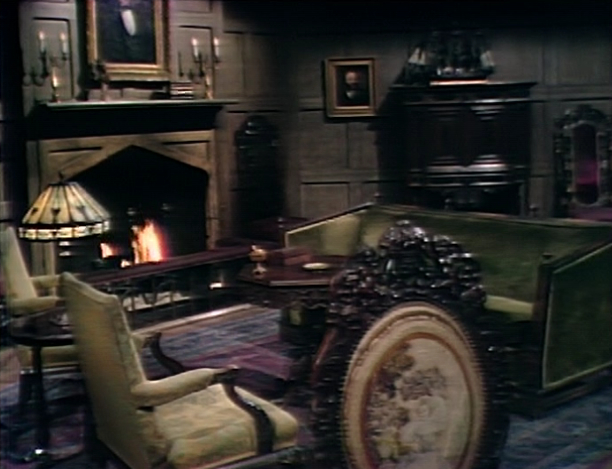
Although the show was set in Maine, the show’s exteriors were filmed in Essex, Connecticut. The Griswold Inn was used for the Collinsport Inn; the post office was the Collinsport Police Station, and The Carey Mansion in Newport, Rhode Island was the Collinswood mansion. All the interiors were filmed on sound stages in Manhattan.
Photo: youtube.com
Portraits were inexpensive, but useful, props for the show. There is a portrait of Barnabas which was painted in the 1700s. However, Frid did not pose for it because he had not been hired yet, so Robert Costello, the line producer stepped in and the face was added later. Quentin Collins’ portrait aged and whenever an injury occurred to him, he was fine but the portrait showed the harm. Angelique also had a portrait of herself. This artwork had powers too; when anything happened to her, the portrait cracked and faded; it was not restored until her health was.
Photo: pinterest.com
The weekly budget for creating five episodes was only $70,000. There was little money for decorating and props. Barnabas’ black onyx ring came from Woolworth’s. The prop department painted a green gem black.
The special effects were pretty impressive for where technology was at the time of the show’s existence. Often shows featured ghostly apparitions or other supernatural occurrences. One camera operator realized he could use plastic wrap or Vaseline around the edges of the lens for dream sequences.
Photo: tvbanter.net
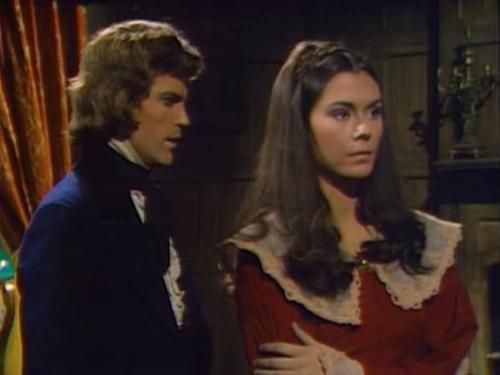
It was shot with live-to-tape format which meant each scene was done in one take. Because of this the show is famous for its goofs: crew members visible in a scene, props didn’t work, equipment above actors’ heads, or people calling each other by the wrong names. During one shooting, Kate Jackson’s dress caught on fire because she was surrounded by candles. The camera crew had to keep filming while the fire was put out. At that time, the thought was that the show would only ever be seen once.
Photo: pinterest.com
By 1969 the show had peaked, and many kids were tuning in to watch a storyline set in 1897 with 7-9 million viewers watching daily. When the 1897 plot was over, the writers were trying to come up with another popular story. They decided on “The Leviathans” which proved to not be very popular.
When an economic recession hit in 1971, the networks were forced to cut costs. To make matters worse, cigarette advertising was banned from television which slashed networks’ profits even more. Since Dark Shadows was primarily watched by a younger demographic who were not necessarily purchasing household goods, the show was cancelled. Creator Curtis said he was actually relieved. He said “I was just hoping it was going to end. I couldn’t squeeze my brain any harder to come up with just one more story. I just wanted to move on and out.”
Some episodes have been in a syndication package since 1975. However, the Sci-Fi Channel was granted permission to run all 1225 episodes and they aired in reruns between 1992 and 2003.
Photo: darkshadowseveryday.com
With all the reboots, this show had a different twist. In 2003, the original cast gathered together for a reunion play. It was recorded for MPI and in 2006 audio dramas for a company called Big Finish began, allowing new generations of fans to listen to the show.
With this large of a cast, you would expect to hear about some personality conflicts. However, no rumors of this have surfaced. One of the cast members said that the time the crew spent together daily rehearsing lines and filming made them a close-knit bunch.
Photo: headhuntershorrorhouse.com
A lot of shows that were not in the top ten when they originally aired like The Brady Bunch or Gilligan’s Island have become fan favorites. Dark Shadows might not be known by as many viewers, but those who love it are extremely loyal. It has become a cult classic with an annual convention similar to The Andy Griffith Show. Held annually since 1983, the official Dark Shadows Convention is typically in New York or Los Angeles. Many cast and crew members are there, question-and-answer sessions are held, autographs can be obtained, dinner with the stars is on the menu, and plenty of merchandise is for sale.
There are fan clubs to join and even Dark Shadows cruises where you can meet and mingle with the original cast.
Photo: pinterest.com
If you are more of a homebody, you can buy the complete series. At a price of $599, Amazon features it for only $349. It’s a big, scary price but with 1225 episodes, that is a lot of binge watching. You’ll enjoy more than 612 hours of eerie fun. You could watch an hour and a half a day and it would take a little over a year to finish.
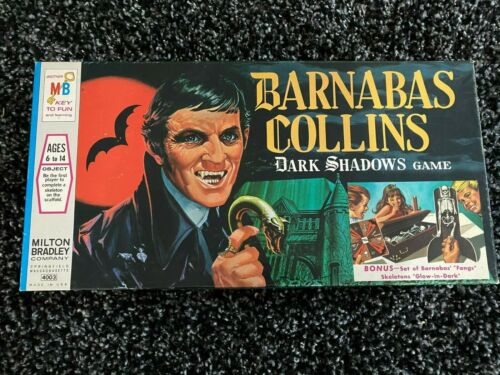
Personally, I am not willing to invest that much money or time into the show, but I have fond memories watching it. I read the books that were published and had a Barnabas Collins jigsaw puzzle. On rainy days the girls in our neighborhood gathered in a basement and often played Dark Shadows.
There was always a fight over who got to be Angelique or Daphne. My favorite episodes back then involved a dollhouse that came to life.
With so many wonderful memories associated with the show, I’m not sure I’m willing to risk watching the original episodes again, but I understand why so many people continue to revisit them.












 thewritelife61