“Mad About You” . . . And Them

Photo: today.com

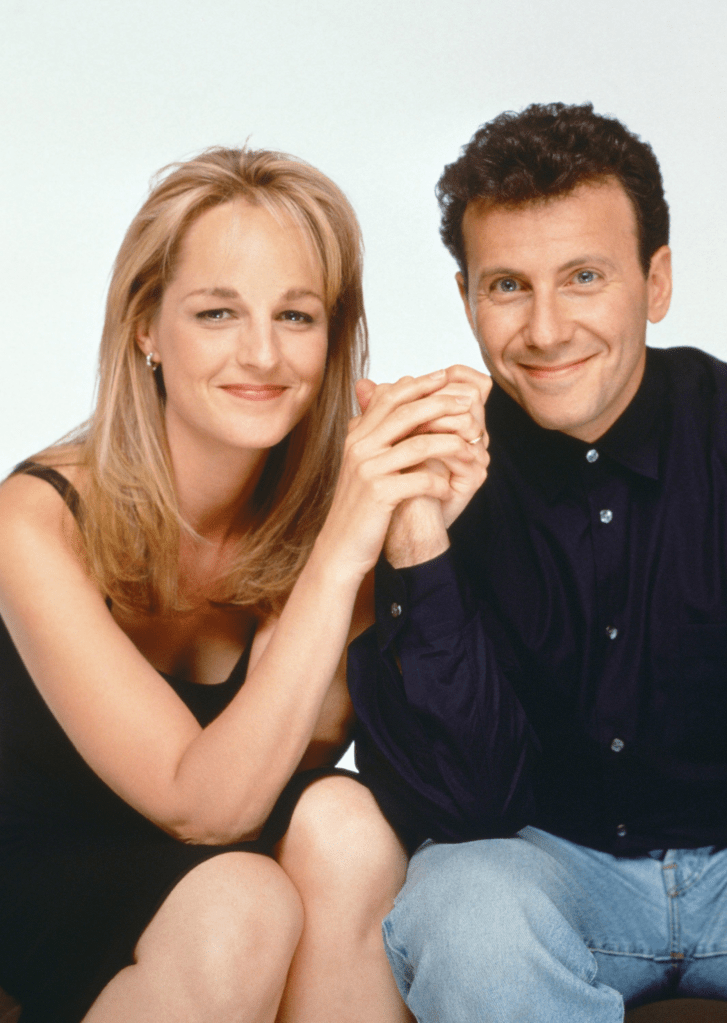
For our blog series this month, we are looking at some of our favorite duos from the eighties and nineties in “Duos to Love.” Today we will meet Paul and Jamie Buchman and their daughter Mabel. Yep, it’s Mad About You. It’s not about you, it’s about them, but I am mad about you too—very thankful you are on this journey with me learning about the golden, and sometimes tarnished, age of television.

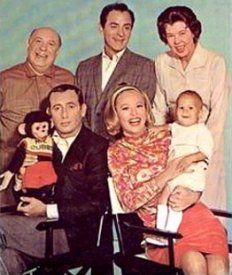
In 1992, NBC aired Mad About You. The series was about newlyweds Paul (Paul Reiser) and Jamie (Helen Hunt) Buchman, He was a documentary filmmaker and she worked in public relations. They lived in Greenwich Village for seven years until they were canceled. Both Teri Hatcher and Valerie Bertinelli were considered for the role of Jamie. It’s hard to imagine anyone but Helen in the role. I think the critics agreed; Hunt was nominated for six Emmy Awards for Best Actress in a Comedy Series. In 1993, she lost to Roseanne Arnold for Roseanne; in 1994 and 1995, she lost to Candice Bergen for Murphy Brown; in 1996 and 1997 and 1998 she won. Overall, the show won thirty-four nominations, with twelve wins.
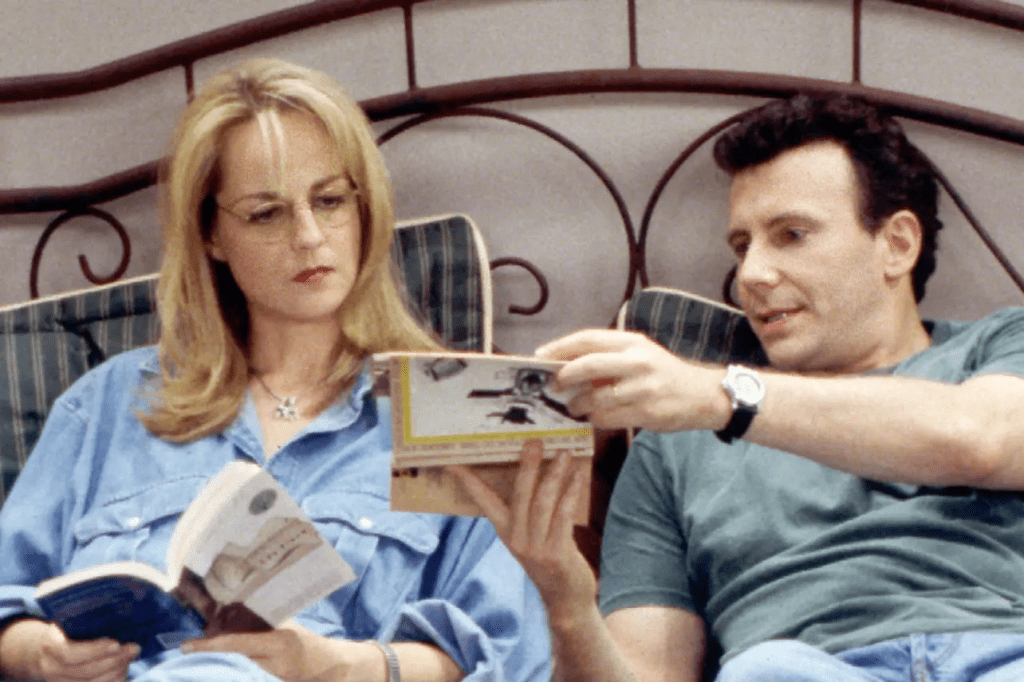
Photo: decider.com

For seasons one through six, the two top stars received $250,000 per episode but in season seven they got a nice raise, landing $1,000,000 per episode.

Before Mabel (Alyssa and Justin Baric) came along, their “baby” was Murray their dog. Paul met Jamie while he was on a walk with Murray. They meet at a newsstand when they are both looking for The New York Times. In real life, the two stars met because Hunt was sharing a house with a good friend of Paul’s wife, Paula. After reading Reiser’s pilot, Hunt changed her mind about concentrating on her film career and wanted the role.

When Reiser pitched the idea to NBC he said it was about the life of a couple in their private moments. He compared it to a couple going to a party but this show was more about what happens when they leave the party and it’s just the two of them in the car talking on the way home. Reiser also compared it to the successful thirtysomething but “shorter and funnier.”

Carol Burnett Photo: deadline.com

The rest of the cast included Lisa Semple (Anne Ramsay), Jamie’s older sister; Fran Devanow (Lelia Kenzle), Jamie’s best friend; Ira Buchman (John Pankow), Paul’s cousin and friend; Sylvia Buchman (Cynthia Harris), Paul’s mother-in-law who is not in the running for Best Mother-in-Law according to Jamie; Burt Buchman (Louis Zorich), Paul’s father; and Dr. Mark Devanow (Richard Kind), Fran’s ex-husband who is a bit eccentric but not too odd because he wins her back as his wife during the show’s run.

There were a lot of recurring characters on this show. Several showed up more often than others: Debbie Buchman (Robin Bartlett), Paul’s sister; Dr. Joan Golfinos (Suzie Plakson), Debbie’s life partner; Nat Ostertag (Hank Azaria), the Buchmans’ dog walker; Mr. Wicker (Jerry Adler), the apartment building superintendent; Dr. Sheila Kleinman (Mo Gaffney), the Buchmans’ therapist; Maggie Conway (Judy Geeson), their neighbor; Jay Selby (Tommy Hinkley), Paul’s college friend; and Sid (George O. Petrie), Paul’s colleague.

Lisa Kudrow Photo: biography.com

However, there were also a few very famous recurring characters. Mel Brooks showed up as Paul’s uncle Phil in four shows. Cyndi Lauper was Ira’s on/off again girlfriend Marianne in five episodes. Jamie’s mom was in 15 shows but played by three different women: Carol Burnett (10), Penny Fuller (4) and Nancy Dussault (1). Another interesting recurring character was Lisa Kudrow. She was Ursula Buffay, the waitress at their favorite restaurant, Riff’s. She appeared 24 times and when Friends was created, her twin sister Phoebe was written into the show. In one episode after not seeing Ursula much, Paul asks her where she has been and she says “I’ve been hanging out with friends.”

You can imagine how huge the guest star list is for this series. Get ready for auctioneer speed and I will list some of them; just know I am leaving out a lot of famous and fun people. Here goes: We have Ed Asner, Kevin Bacon, Christie Brinkley, Garth Brooks, Sid Caesar, Tim Conway, Ellen DeGeneres, Jamie Farr, Barbara Feldon, Al Gore, Seth Green, Billy Joel, Nathan Lane, Jerry Lewis, Yoko Ono, Regis Philbin, Carl Reiner, Jerry Seinfeld, and Bruce Willis.

Paul Reiser also composed the theme song, “Final Frontier,” with Don Was. Both Andrew Gold and Anita Baker versions of the song were used during the eight-year run. Reiser also played the piano for the theme recording.
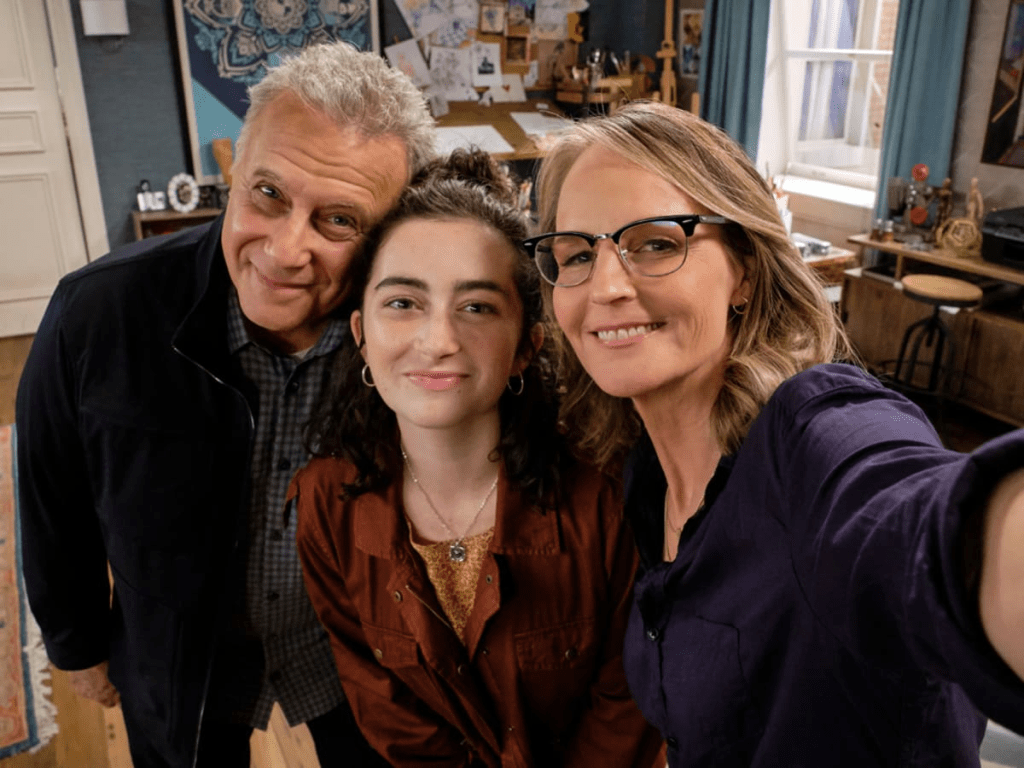
Mabel grows up. Photo: parade.com

In 2019, a twelve-episode revival series debuted. Both Reiser and Hunt returned for the sequel. The Buchmans are now empty nesters after dropping Mabel off at college. Other veterans returning included Ramsay, Pankow, Kind, Harris, Adler, Gaffney, and Carol Burnett. Abby Quinn was Mabel.

This was a popular show that was always discussed around the water cooler. It’s first year on NBC it aired Wednesday nights against In the Heat of the Night and Coach; Coach was in the top twenty. The next season it was moved to Thursdays nights and oddly was still up against In the Heat of the Night but was also on against The Simpsons. Season three found it with little competition and it was ranked eleventh place for the year. As networks do, now that it had a dedicated audience, it was moved to Tuesday nights where it dropped out of the top forty. The show remained in the Tuesday slot, still up against Roseanne but its audience returned and it crept into the top twenty again. It remained in the same spot for its final two years, one year competing with JAG and the next year against Home Improvement which was a top-ten show. I know this was a lot of detail, but I think it helps to think about how much the schedule moving can potentially hurt a show. Fans get used to a certain night and sometimes clear their schedule for that evening and when shows continue to move around, it is frustrating for everyone. Now, we can just DVR shows and it’s not such a big deal.

Photo: tvseriesfinale.com

This was a well-written show, and the producers and writers spent a lot of time on character development. It had some quirky moments and did some fun plot twists that kept it fun and fresh. Of course, both Hunt and Reiser were amazing actors and went on to great success in the movies. I did not see much about how the 2019 reboot was received by viewers. Considering the competition that the show faced as the network moved it around, it did very well for its seven years. The critics loved it and it was certainly recognized by the Emmy committee every year. I am hoping it will come to Antenna or ME TV soon and we can again spend some time with the Buchmans.
Ben Casey: The Bad Boy of Medicine

Medical series have been a staple since television started. This month we are checking out a few of the favorites in a blog series: “Examining Our Favorite Medical Shows.” First up is a show that was on in the sixties: Ben Casey.

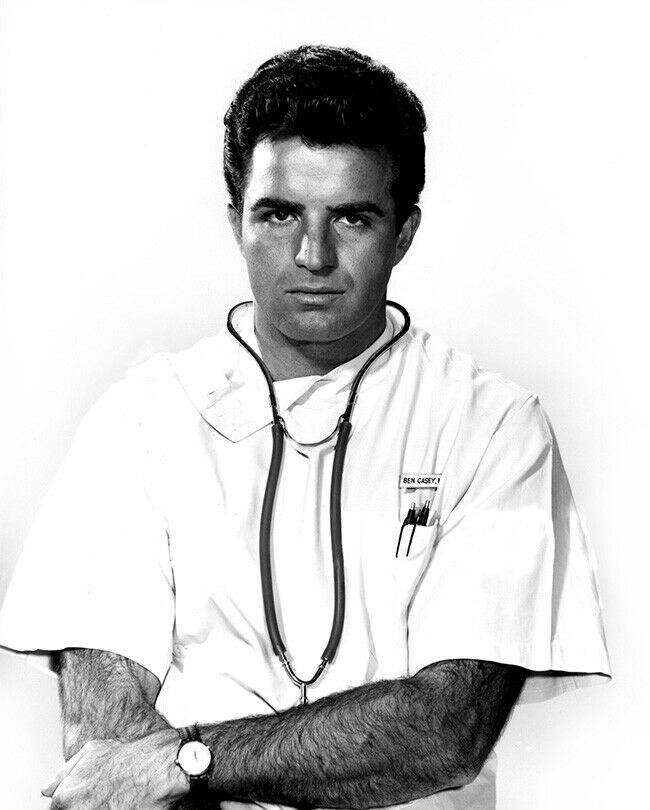
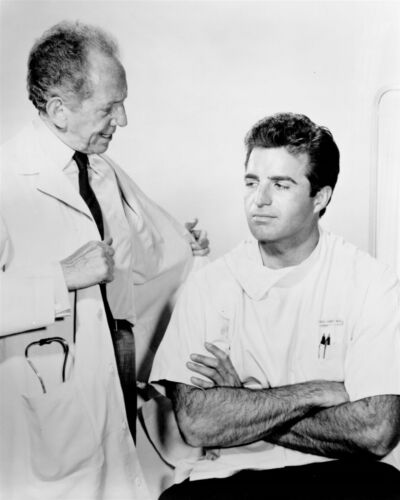
Jaffe and Edwards Photo: ebay.com

Ben Casey was on the air from 1961-66 on ABC. Created by James E. Moser, the character of Ben Casey was based on Dr. Allan Max Warner who was a neurosurgeon. Warner worked closely with the actors to show them how to handle instruments and patients. It was not a cheap show to produce. More than $50,000 of medical equipment was purchased for the show and each 60-minute episode had a budget of $115,000. Warner later changed to psychiatry because he said his association with the show prevented him from becoming board-certified. Dr. Joseph Ransohoff, another neurosurgeon, became the medical consultant.

The series followed Ben Casey (Vince Edwards), an idealistic neurosurgeon at County General. Dr. David Zorba is his mentor (Sam Jaffe). In the final season, Jaffe left and the new chief of neurosurgery was Dr. Daniel Niles Freeland (Franchot Tone). Rounding out the cast were Dr. Ted Hoffman (Harry Landers), Dr. Maggie Graham (Bettye Ackerman), orderly Nick Kanavaras (Nick Dennis), and Nurse Willis (Jeanne Bates). The show had a gritty edge to it and featured the life of doctors working in a city hospital and the tough physical and ethical situations they had to deal with.

Several sources said that Cliff Robertson and Jack Lord turned down the role of Ben Casey. Also, Russell Johnson said he auditioned for the role, but was rejected and his next audition was for the role of the Professor on Gilligan’s Island. However, I read several other sources that mentioned that Bing Crosby discovered Edwards and planned a television show to feature his find. Bettye Ackerman’s character was cast as an anesthesiologist who was supposed to be Casey’s love interest but they never developed any chemistry. In real life, Ackerman was married to Jaffe.

Photo: nostalgiacentral.com

Filmed at Desilu Studios, the series was produced by Bing Crosby Productions. The show had 33 directors including Sydney Pollack; Vince Edwards directed seven of the episodes. However, its writing staff was even bigger with about 80 different people penning scripts. I never understood how that worked so well. As a writer, I would want to get to know the characters I was writing for and then continue to learn about them, but during the sixties, there were a lot of people who only contributed one or two scripts to any given series.

The theme music was written by David Raksin and pianist Valjean made it a top-40 hit.

The show was on Monday nights for its first three seasons. Season four, it moved to Wednesdays and returned to Mondays for the final two seasons. The first season it ranked in the top 20 and moved into the top 10 for its second year. Once the network moved the show to Wednesdays where it had to compete with The Beverly Hillbillies and The Dick Van Dyke Show, it fell out of the top thirty and never returned to its former popularity. During the last season, several changes were made. Casey fell in love with Jane Hancock, a woman who came out of a 13-year-long coma. The episodes also began to continue from one to another instead of being stand-alone stories, encouraging viewers to find out what happens the next week.

Photo: pinterest.com

During the run of the show, four novels were written based on the series (1962-3), as well as a daily (1962-1966) and Sunday (1964-1966) newspaper comic strip by Jerry Capp and ten Dell Comic books (1962-64). There was even a board game created called Ben Casey MD. And even more surprising was a doll called Dr. Ben Casey’s Patient. Surely children were not exposed to the show.

Photo: pinterest.com

Another medical show, Dr. Kildare, aired the same year as Ben Casey. The shows were often confused, but they were really quite different. Dr. Kildare was an intern who respected his mentors and the doctors he served under. He was the handsome guy next door, friendly and always striving to help his patients. Casey was brash and had already served his learning time, so he more often bucked the system and was not as respectful to the doctors working with him. He was handsome but in a more wild, bad boy, appearance. However, both shows tackled some very interesting and controversial subjects from the medical field.

Ben Casey might have gone off the air, but he did not disappear. The show has been parodied on a variety of shows including The Flintstones. “Ben Casey” was used by American troops in Vietnam War as slang for a medic. In 1988, a made-for-tv-movie The Return of Ben Casey brought Edwards back to the small screen. It was a syndicated show, and aired with the hope that it would be a pilot for a new series, but none of the networks picked it up.

Photo: collectors.com

The cast was not holding hands and singing Kumbaya, but it did function amidst a lot of dysfunction. Director Mark Rydell discussed Edwards’ gambling problem which became the show’s gambling problem. Landers who played Dr. Hoffman said Edwards was constantly asking the cast and crew for money to take to the race track, and he would be gone for hours at a time. He often came in with $20-30 thousand dollars in his pocket, demanding that he leave filming by 11; other stars had to stand in for him to tape the rest of the show. Despite his unprofessional behavior, several stars liked Edwards. Jaffe, who had many conflicts with Edwards, was not one of them which is why he eventually left the show. Director Jerry Lewis and guest star Sammy Davis Jr. also had problems with Edwards. Landers also mentioned that when Tone took over Jaffe’s role, he was constantly drunk on the set. When Landers directed the show, he kept Tone sitting down so viewers would not see that he was swaying.

Considering all the issues the show had, the number of writers contributing scripts, the unprofessional behavior of several of the actors, and the movement of the show from Monday to Wednesday where it had stiff competition, the show actually did well and was popular with viewers for five years. It set the tone for many of the shows that would follow including Marcus Welby, Medical Center, and ER. Next week we will learn more about Dr. Kildare.

Everybody’s Friend, Marie Wilson

This month our blog series is “They Call Me Wilson,” and we will be looking at actors with the last name of Wilson.  Today we begin our series with Marie Wilson, a familiar face in television in the 1950s.

See the source image
Photo: e.n. wikipedia.org

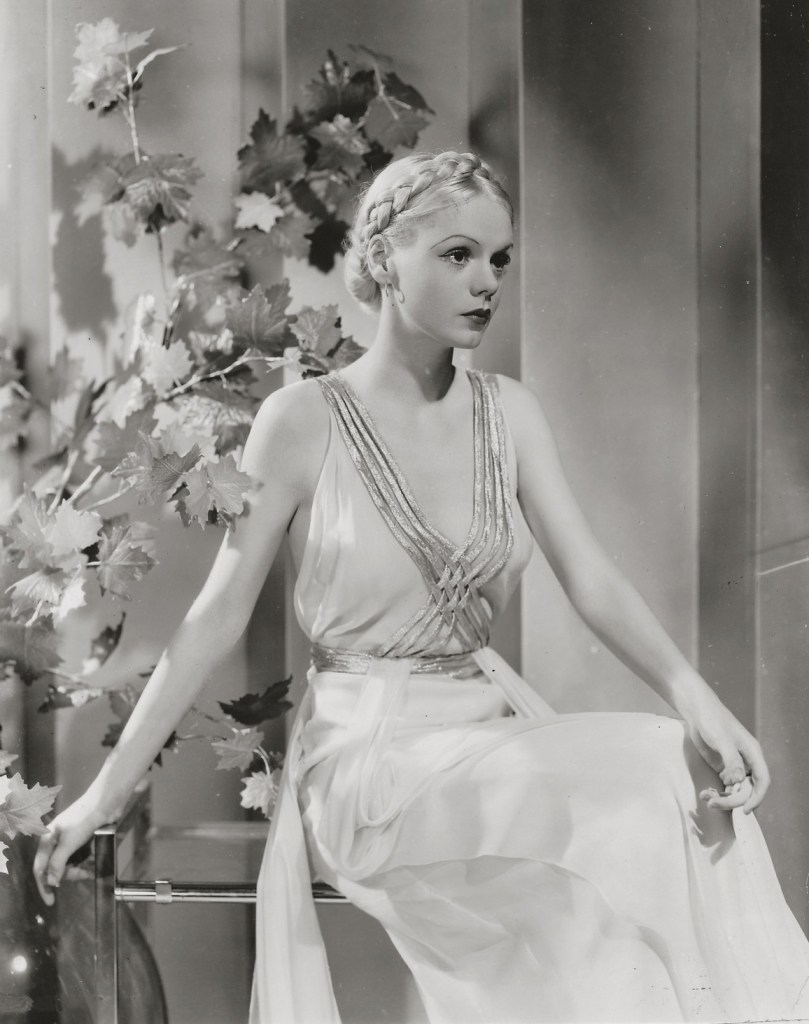
Marie was born Katherine Elizabeth Wilson in August of 1916 in California. Her nickname in high school was “Maybelle.” After her father died, the family moved to Hollywood. She graduated from high school in 1933, and by 1934, she had received her first movie credit. One source mentioned that her parents divorced when she was only seven months old and her father, Wally Wilson, passed away when she was five. She received an $11,000 trust which helped her take time to pursue a career in acting. Her stepfather, Frank White, raised her.

Photo: blogspot.com

Her first role was as a passenger in Down to Their Last Yacht, but she would go on to appear in more than fifty films. The plot of this movie was that a family loses everything in the Depression except their yacht. Several men who feel bad for their daughter decide to host a Monte Carlo night.  The group rigs the roulette wheel so that the house is the winner although she knows nothing about it.

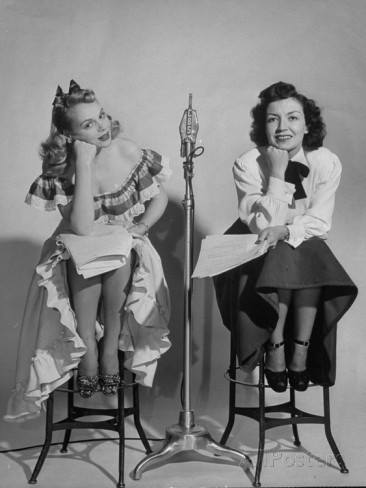
From 1947 to 1953 she also accepted a role on radio as the scatterbrained Irma on My Friend Irma. The show was very popular with well-written scripts and accomplished acting.

Wilson with Cathy Lewis–Photo: oldtimeradiodownloads.com

During this time, she also starred in a couple of films about Irma in My Friend Irma and My Friend Irma Goes West. A duo by the name of Dean Martin and Jerry Lewis starred in the movie version of My Friend Irma.

See the source image

Not content with Irma occupying space in two big medias, My Friend Irma aired on television from 1952-1954. Irma was a secretary living with roommate and friend Jane Stacy (Cathy Lewis) in a run-down apartment owned by Mrs. O’Reilly (Gloria Gordon). Neighbor Professor Kropotkin (Sig Arno) got involved in the girls’ lives as well as Jane’s boyfriend, millionaire Richard Rhinelander III (Brooks West) whose mother was played by the amazing Margaret Dumont. After Jane moves to Panama at the end of season one, Kay Foster (Mary Shipp) became Irma’s new roommate. Her boyfriend was Joe Vance (Hal March). The new neighbor was Mr. Corday (John Carradine), an actor and just for some new plots, Irma’s seven-year-old nephew Bobby (Richard Eyer) moves into the apartment.

Photo: oldtimeradiodownloads.com

During her time on radio, she married actor Allan Nixon. Apparently, he struggled because he was a bit player while her career flourished.  He was arrested numerous times for drunk and disorderly conduct, and they divorced in 1950. Another big disappointment occurred in 1950 when she lost the role of Billie Dawn in Born Yesterday to Judy Holliday.

The following year she married Robert Fallon, another fellow actor, and they remained together until her death in 1972.

Marie’s appearances on television waned in the sixties.  She appeared on The Ed Sullivan Show in 1960 and on Comedy Spot in 1962. Comedy Spot had a different premise.  As a summer replacement for Red Skelton, it featured unsold pilots for comedy series and reruns from comedic anthology shows.

Photo: oldtimeradioclassics.com

In 1963 she would appear on two episodes of Burke’s Law and in one episode of Empire.

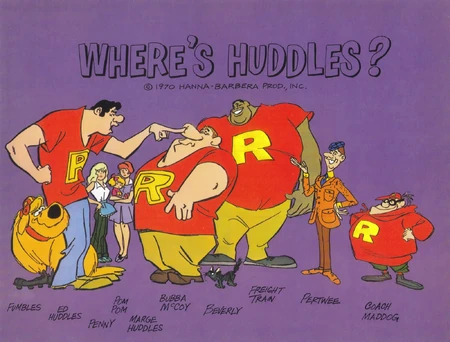
In 1970 she returned to a weekly animation series on Where’s Huddles? She had the role of football wife Penny McCoy. Unfortunately, it was cancelled after only ten episodes. This show was about the lives of football families on and off the field and featured a lot of talent including Paul Lynde, Jean Vander Pyl, Allan Reed, and Mel Blanc.

See the source image
Photo: hanna-barbera.wikia.com

Her last appearance was on Love American Style as Margaret Cooperman in 1972 in “Love and the Girlish Groom.”

Wilson was recognized for each of her Irma media hits with a Walk of Fame star for radio at 6301 Hollywood Boulevard, for television at 6765 Hollywood Boulevard, and for movies at 6601 Hollywood Boulevard.

Photo: pinterest.com

Not many actresses can claim their leg is a famous sculpture but Wilson’s left leg was used to cast a 35-foot sculpture located outside the Theme Hosiery plant in Los Angeles. The leg was wearing nylons to promote them to the public in 1949.

Marie had a long and successful career but was typecast early in life and unable to shake that image.  It may have contributed her loss of the part in Born Yesterday which might have changed her career dramatically. Discussing her life in entertainment, Wilson said “Show business has been very good to me and I’m not complaining, but some day I just wish someone would offer me a different kind of role. My closest friends admit that whenever they tell someone they know me, they have to convince them that I’m really not dumb. To tell you the truth, I think people are disappointed that I’m not.”

See the source image
Photo: pinterest.com

As we’ve seen so often in this blog, it’s hard not to be grateful for a lucrative career in entertainment, but it’s tough to be locked into one type of role and never given a chance to show your depths as an actor. Thanks for being our friend, Marie.


The Joey Bishop Show: Versions 1, 2, 3, and 4!

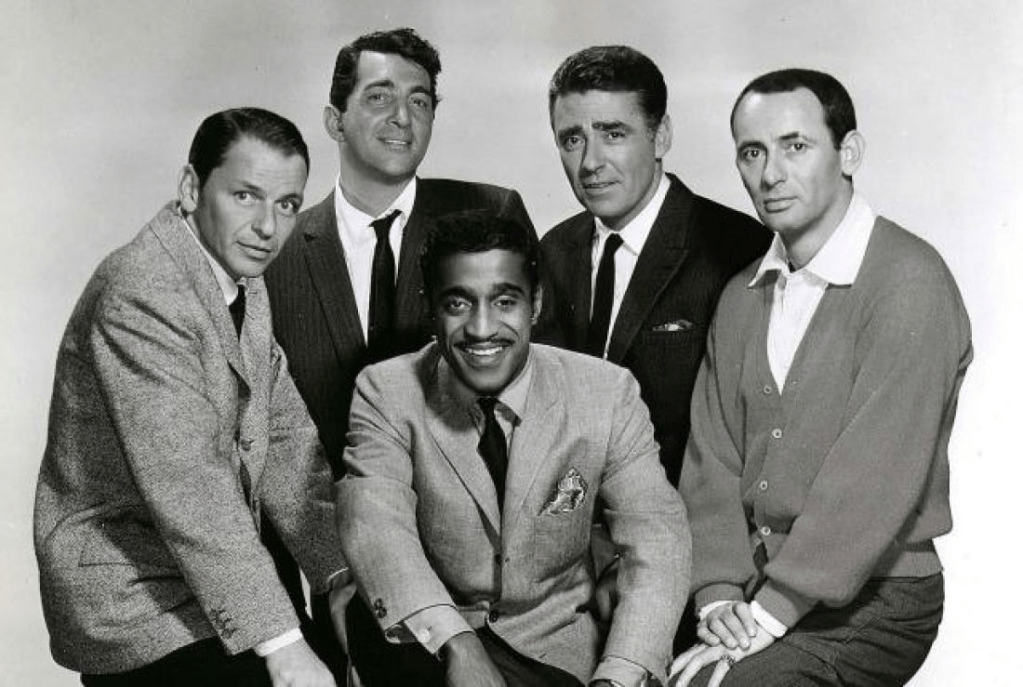
Although the Rat Pack have all passed on, their influence still surrounds us. We can listen to Frank Sinatra’s music channel on Sirius. Jerry Lewis and Dean Martin movies still play late at night. Sammy Davis Jr. and Peter Lawford can both be seen on a variety of sitcom reruns. One member we don’t see as often is Joey Bishop. While he is not as well known as the other friends, he actually was the only one of the group who starred in his own sitcom.

Photo: mentalfloss.com

Two series went by the name “The Joey Bishop Show.” One was a sitcom and aired from 1961-1965, producing 125 episodes. For most of the run, Joey played a talk show host named Joey Barnes. The other show was an actual talk show that he hosted which ran from 1967-1969 and produced 682 episodes.

Photo: amazon.com

This blog looks at the sitcom created by Danny Thomas and Louis F. Edelman specifically for Joey Bishop. Danny served as executive producer, and the show was filmed at Desilu Studios before a live audience. When it debuted in 1961, it was filmed in black and white. One episode was shot in color and then the second and third seasons followed suit. NBC canceled the show after season three and CBS picked it up but filmed that season in black and white again. I imagine fans of the show weren’t happy to go from color to gray tones again; it would be like visiting Oz and then being sent back to Kansas.

Photo: tumblr.com
Version 2

Like The Andy Griffith Show, the pilot was an episode of the Danny Thomas Show. Joey played Joey Mason who was an incompetent public relations staffer. Danny arrives in Los Angeles exhausted but has no place to stay and is forced to sleep at Joey’s house with his parents and his two sisters, the younger one being Stella, an aspiring actress played by Marlo Thomas.

Photo: wikimedia.com

Before airing the next fall, the pilot had some revisions. Now Joey’s last name was Barnes. His father was dropped from the cast but two family members were added:  a younger brother named Larry (Warren Berlinger) and a brother-in-law Frank (Joe Flynn) who was married to Betty (Virginia Vincent), the older sister. His mother continued to be played by Madge Blake who would go on to play Aunt Harriet on Batman.

Joey continued his public relations career and supports his family. The secretary at the PR firm, Barbara (Nancy Hadley) is his girlfriend. A lot of the plots revolve around family members taking advantage of Joey’s influence which they think is significant but is really almost nonexistent.

The show didn’t do well in the ratings, so it was retooled once again. Betty, Frank, and Barbara were all dropped from the show. The series was renewed for a second season, but the show would change its format again.

Photo: newsfromme.com
Newly married

From season two on, Bishop became the host of a New York City talk show. The cast from the first season disappeared altogether in this fourth reincarnation. Abby Dalton plays Joey’s wife Ellie. The couple now live in a posh apartment building and, at the end of the second season, they have a baby boy. Hilda (Mary Treen) is the Barnes’ maid and baby nurse, and she often trades insults with Joey similar to the banter Florence and George had on The Jeffersons a decade later. The Jillsons (Joe Besser and Maxine Semon) are the superintendents of the building. Like Howard’s mother on The Big Bang, Maxine is heard but not seen. Guy Marks played Freddie, Joey’s manager.

Photo: akaguymarks.weebly.com
Version 3

There were some rumors that Joe Flynn had been let go the prior season because he was too popular; this would mean that Bishop was so insecure that he was willing to totally revamp his show to get rid of one character. That doesn’t seem to make sense. However, Cynthia Lowry’s column in The Evening Independent from September of 1963 reported that “Actor’s feuds can be very fierce. Joe Flynn, who now plays the sarcastic Captain Binghamton in McHale’s Navy still is so annoyed with The Joey Bishop Show that he doesn’t even mention it in his list of acting credits – although he included brief appearances on Hawaiian Eye, Ozzie and Harriet, and The Eddie Fisher Show. Flynn played a sharp-tongued ne’er do well brother-in-law during the first year of the Bishop comedy, a role that was swept away with a lot of others when the series was completely revamped.”

One review for the second season by Bob Thomas, AP Movie-TV Writer in the Ocala Star-Banner from August of 1962 stated:

“About the only resemblance between last season’s Joey Bishop show and the coming season’s is the name. It’s still The Joey Bishop Show, NBC having vetoed the comedian’s suggestion to call it The New Joey Bishop Show. Bishop fans may be startled to find their hero is no longer a press agent but a late-night television comic. Furthermore, he has jettisoned his mother, bless her heart, for a curvy wife. And he has acquired a whole new bunch of pals. That Joey was able to make these changes is one the minor miracles of television. Just about everyone, Joey especially, agreed that something was wrong with last season’s shows. When a series pulls a wrongo, it is usually yanked at the first sign of spring. But the series had somehow managed to best its competition on ABC and CBS and rack up an impressive rating. So, when Joey promised a clean sweep in format for the next season, NBC went along. I found Joey in the midst of his fourth show, and absolutely happy – for him. That is, he smiled every 15 minutes. I asked what went wrong the first season. ‘I showed up,’ he replied. But on a more analytical basis, he continued: ‘We did many things wrong. We didn’t have enough time to prepare. We violated a very basic concept in comedy. When you have a clever comedian -and in modesty I think I am-you surround him with funny people. When you have a funny comedian, you surround him with clever people. I made the mistake of working with clever people,’ he said. ‘Now I am working with funny people – Guy Marks, who is a bright young comedian; Joe Besser, who can get laughs just walking on stage; and Abby Dalton from the ‘Hennessy Show, a brilliant talent.’

Photo: sitcomsonline.com

Another review a few weeks later agreed: “Joey Bishop also returned to NBC – on Saturday night. This season he is more poised, more famous, and a successful established night club comedian. He also picked up a wife on the show. The first show involved one of those typical newlywed situations that television situation comedies specialize in. High point of the show, however, was an imitation by Guy Marks, who plays Joeys manager, of a flamingo. Don’t ask how they managed to get that in, but it was very funny! —-”

Photo: youtube.com
Despite the rumors, Bishop proves he’s a team player

Once again there was talk of feuding between the star and a cast member, this time Guy Marks, because he was receiving great reviews. Marks was around for the first 18 episodes and when he left, Corbett Monica came on board as Larry Corbett, Joey’s head writer.

The Montreal Gazette in January of 1963 featured an article by Dorothy Kilgallen that explained, “It’s no secret that the parting between Joey Bishop and Guy Marks was far from friendly, but no one revealed that they were close to the fisticuffs stage.” Some cast members sided with Marks. Other cast members claimed Joey was not egotistical and wanted everyone to succeed. I was not able to determine whose version was closer to the truth, but it is not surprising that the show didn’t last as long as it could have between constant cast changes and in-fighting on the set.

There were also some controversies regarding the writing on the show. In the book Sitcom Writers Talk Shop by Paula Finn, Irma and Austin Kalish who wrote for many great sitcoms in the sixties and seventies were interviewed. She asked the pair if they ever recycled stories for show. They responded no, and continued with this story:

IK: We were once writing The Joey Bishop Show, and we went in to pitch shows to the story editor.

AK: We pitched five shows to him.

IK: And he said, Those sound like good ideas, but you know, I have to pitch them to Joey first. And then our agent called and told us he got word that Joey didnt like any of those ideas. Fine.

AK: Five weeks later–week after week after week after week after week–

IK: Our ideas came on.

AK: Our ideas were stolen. Eventually that guy, the story editor on The Joey Bishop Show, came to us for a job. Needless to say, what goes around comes around.”

Another great writer, Joel Rapp, shared another story about this series. We had a contract for six Joey Bishop Shows and we wrote the first one, and then we went to watch the taping. And there were about three words of our script left in what they finally shot. We asked the producer what happened, and he said Joey got hold of the script, and he changed everything. But we still got the writer credit, which was fine. So then we wrote a second script, and the same thing happened. So for the third script, we turned in thirty-six blank pages, and we were fired. And it was fine with us. We were making plenty of money and had other jobs.”

Of course, many guest stars appeared on the show as themselves being interviewed by Joey, including The Andrews Sisters, Edgar Bergen, Milton Berle, Willie Davis, Don Drysdale, Robert Goulet, Don Knotts, Jerry Lewis, Jack Paar, and Andy Williams.

Photo: sitcomsonline.com

Other guest stars who appeared on the show in roles other than themselves included Jack Albertson, Parley Baer, Frank Cady, Jackie Coogan, Nancy Kulp, Sue Ane Langdon, Howard McNear, Barbara Stanwyck, and Dawn Wells.

The theme song was also axed from the first season. “Sometimes I’m Happy” by Irving Caesar and Vincent Youmans was exchanged for “Joey” by Sammy Cahn and Jimmy Van Huesen.

Photo: allstarpicsfamousfix.com

During the third season, one episode was filmed but never shown. John F. Kennedy was a friend of the Rat Pack. On November 15, 1963 Vaughn Meader, who often impersonated the President, was filmed in an episode as the impersonator of President Kennedy. A week later the assassination in Dallas occurred, and the episode was never seen live or in syndication. Most of the sources I consulted could never determine if the episode had been archived or destroyed.

Following all the changes, the ratings had increased during season two but season three saw lower ratings once again, and NBC decided not to renew the show. At the same time, Danny Thomas decided not to return for a twelfth season in his show, so CBS picked up Joey’s show. However, the show went up against the much-loved Bonanza, and the ratings never recovered, so CBS then canceled the show after the fourth season.

Photo: commons.wikimedia.com

Chuck Rothman, who wrote a blog about the show May 28, 2017 on blogspot.com, described it as “filled with gentle comedy. The jokes may have worn a little thin, but the stories hold up surprisingly well. Barnes is a decent guy with a sense of humor and Bishop’s relaxed and subtle style—he never appeared to work to be funny—was charming to watch.”

Another viewer on imdb wrote that “personally, I failed to see the humor of the situations in this show that centered around a dull, middle-aged man who was still living with his mother . . . who was repeatedly being fired from his job.”

Obviously, they were describing two different versions of the show, but there certainly was a difference of opinion.

If you never had a chance to watch the show, Antenna TV began airing it in 2017; the network even transferred the first season’s 35mm film to a more modern technology so it can also be aired. Currently, you can view the show on Antenna TV at 7-8 am (EST) weekdays and 3-4 am (EST) Saturdays.

Photo: commons.wikimedia.org

I have watched a few of the shows on Antenna TV and enjoyed them. All the episodes I was able to watch were during the final three seasons, but it would be interesting to catch a couple from the first year and compare them.


.

Milton Frome: What a Character!

As we continue looking at some of our well-known character actors, today we consider the career of Milton Frome. Frome was born in Philadelphia in 1909. He began acting in his mid-20s.

Photo: watchviooz.com

His first major movie role was in Ride ‘em Cowgirl in 1939. Frome would go on to appear in 55 movies (including The Nutty Professor, Bye Bye Birdie, and With Six You Get Eggroll), as well as five made-for-TV movies. He also had a thriving television career beginning with Chevrolet Tele-Theatre in 1950.

Photo: amazon.com

Appearing in 34 different shows during the fifties, he performed in a variety of genres including dramas, comedies and westerns.

Photo: jimnolt.com
The Adventures of Superman

During that decade you would have seen him on I Love Lucy, Lassie, The Adventures of Superman, Playhouse Theater, The Thin Man, and The Gale Storm Show. He also worked with many comic legends on television, including Milton Berle, Red Skelton, and Dean Martin and Jerry Lewis.

Photo: tumblr.com
I Love Lucy

His career escalated in the sixties when he would accept roles in 48 programs. He showed up in dramas, including The Twilight Zone, 77 Sunset Strip, and Dr. Kildare. He also found his way into many westerns such as Bat Masterson, Death Valley Days, Gunslinger, Big Valley, Rawhide, and Wagon Train. However, he seemed to excel at comedies and during the 1950s you could have spied him in many sitcoms. He accepted parts in Bachelor Father, Pete and Gladys, The Jim Backus Show, The Dick Van Dyke Show, Mister Ed, The Joey Bishop Show, I Dream of Jeannie, My Favorite Martian, The Donna Reed Show, Gomer Pyle USMC, Bewitched, The Monkees, The Patty Duke Show, Petticoat Junction, and The Andy Griffith Show.

Photo: coolcherrycream.com
The Monkees

Frome was never offered a permanent role in a series, but he did have a recurring role in The Beverly Hillbillies, appearing eight times as Lawrence Chapman, who managed Jed Clampets Mammoth Studios.

Photo: imdb.com
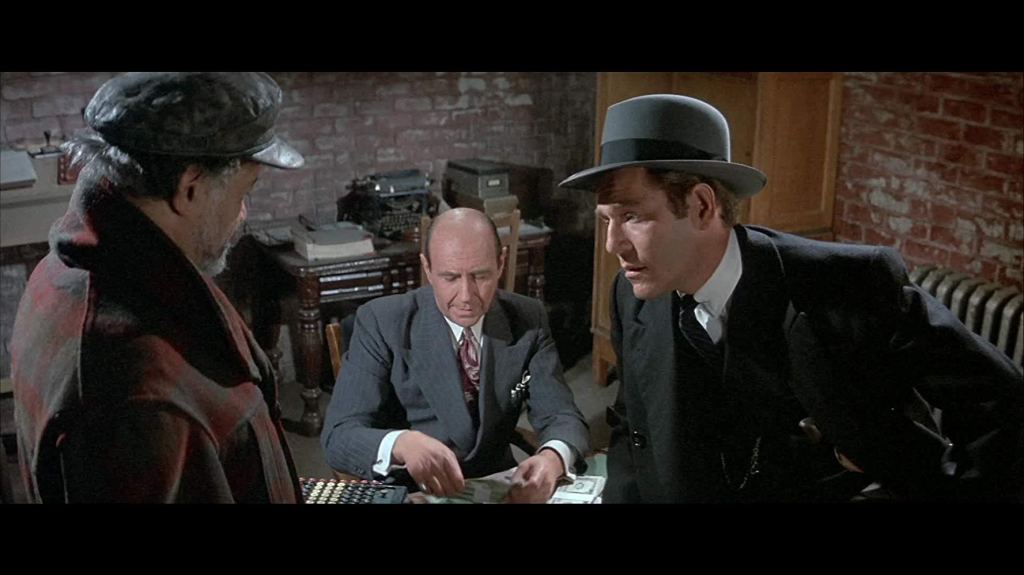
St. Valentine’s Day Massacre

His television career slowed down a bit in the 1970s and became nonexistent by 1983, but he did make appearances in shows like Ironside, Columbo, Here’s Lucy, The Streets of San Francisco, Sanford and Son, and Trapper John MD. He also appeared in two Love American Style episodes in 1971 and 1973. In the 1973 episode, “Love and the Anniversary,” he played “The Man” and his son Michael played a bellhop.

Photo: sitcomsonline.coom
The Jerry Lewis Show

At some point, Frome married Marjorie Ann Widman, but I could not verify when they married. I also could not verify if Michael was their son, or his son from another relationship.*

Photo: batman.wikia.com
Batman

Frome passed away in 1989 from congestive heart failure.

While it is now easy to analyze and detail an actors professional career, it was very tough to find any information about Fromes personal life or his working relationships with other actors. It makes me sad that these hard-working actors who provided so much to our classic television-watching experiences are just not well known. Hopefully blogs like mine keep them in television viewers memories, and some day maybe I will have time to write a book about these unsung heroes of our pop culture history. Thanks for all you contributed to the golden age of television Milton Frome!

*In June of 2021, I heard from Jane Wallace Casey who provided some additional information for us: “I am Milton Frome’s niece. His first wife was Barbara Wallace with whom he had his son Michael.”