The Jim Backus Show: It Was Hot Off the Wire

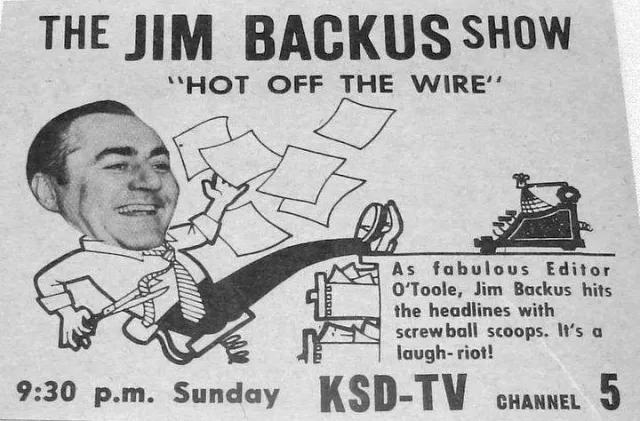
This month we are in a blog series, “It’s Their Show.” Today we are taking a closer look at The Jim Backus Show. Most people know Backus today as Mr. Howell on Gilligan’s Island. While he did show up on several television series, cartoons, and made-for-tv movies for Gilligan’s Island, Backus had a long and successful career without any Gilligan appearances. He started in the movies in 1948 and wound up his career with an amazing 253 credits.
📷thrillingdaysofyesteryear.com

In addition to being the voice of Mr. Magoo, Backus starred in several other series including I Married Joan and Blondie.

In 1960, The Jim Backus Show debuted.  It was one of the first syndicated shows, so it’s hard to gauge how it did against its competition. However, I will say what I can tell you is that there were still 13 westerns on the air during the week, so while the influence of the Plains was waning, it was still very popular. It was also a year that lots of stars had made the plunge to dip their toe into the television industry. There were 11 stars with their own shows that year in addition to Backus, including Jack Benny, Ann Sothern, Danny Thomas, Andy Griffith, and Donna Reed. 

The series had a great cast. They had several good directors, including Gene Reynolds who produced MASH and Lou Grant and a lot of good writers, including Jay Somers who would go on to create and write Green Acres. However, they had 14 directors and more than 40 writers to produce those 39 episodes. They also had a great line up of guest stars including Ken Berry, Charles Lane, Jayne Meadows, Zasu Pitts, Tom Poston, and Bill Quinn.
📷youtube.com

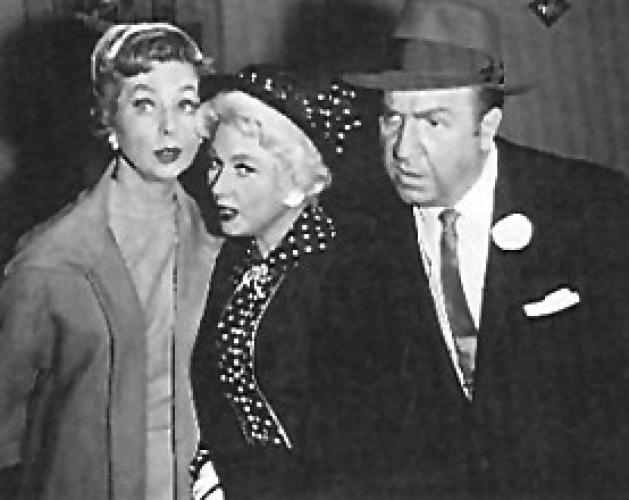
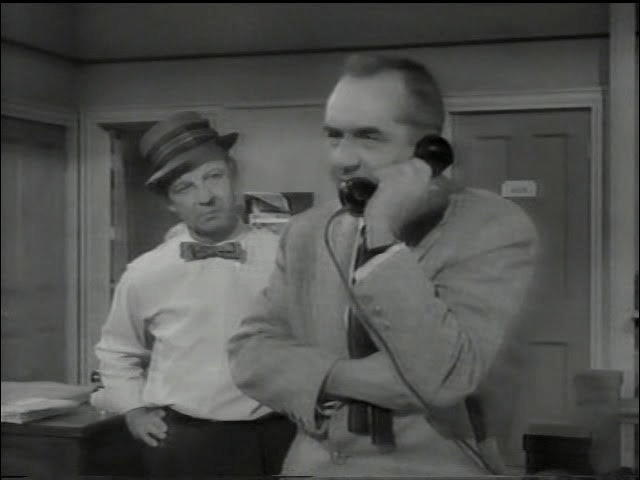
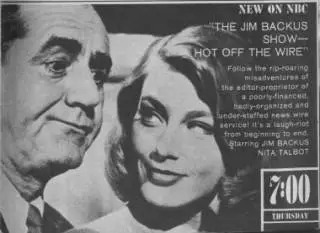
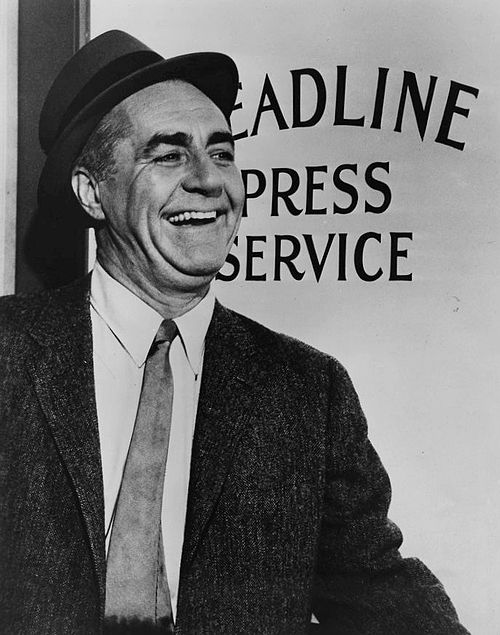
Backus is Mike O’Toole, the editor and owner of a news service struggling to make a go of it. He often doesn’t have the money to pay his rent or his staff’s salaries. Working with O’Toole are reporters Dora (Nita Talbot) and Dave (Bill McLean) as well as Sidney (Bobs Watson), their office boy. When they weren’t working, they spent some time at Heartless Harry’s, a bar downstairs that was popular with newspaper people. He truly was heartless, because he wouldn’t let anyone from Mike’s company in the bar unless they put down a $10 deposit.

One of the episodes I watched for this blog was #5, “No Help Wanted.” The opening pans the big city before moving down to the office of the wire service with Mike in the window joined by Dora.

The episode begins with Mike and Dora’s car breaking down in the middle of nowhere. There’s a large estate in the distance, but Mike won’t let Dora ask them for help until he’s tried to fix the problem himself.
Directed by Gene Reynolds and written by Dick Chevillat and Jay Sommers, the plot is that a retired stage actress, Catherine Lyden (Linda Watkins), has lots of money and loves living a normal life. Her former agent keeps trying to lure her back into show business. She decides to clean the maid’s house so she can hire someone, but when Dora and Mike meet her, they recognize her, and they think she is destitute and try to help her. After they get back to the office, they buy her some groceries and clothes. She tries to tell them that she has plenty of things and she doesn’t need their help. O’Toole writes a story about her having to work as a maid to make ends meet and puts a photo in the paper with her holding a pail and looking disheveled. When the article appears, several people contact her to try to help her out. When Mike and Dora get her contract from the playwright who is trying to hire her, they tell her that it’s a form to get a retraction from the paper.

After she signs it,  they tell her the truth, that it’s a five-year contract and she begins to cry. Surprisingly they never do find out she wasn’t down and out. They think she is crying from gratitude, and they leave.

📷internetarchive.com

There were some fun bits of dialogue especially between Dora and Mike, and the filming was very different from most sitcoms, but I was drawn in by it. One of the things that I found most interesting about this episode is the soundtrack. There is some laughter in the background, but you hear birds, the office machinery running, and the sounds of the city. It’s like you’re right in the location with the cast and hear what they would hear.

This was a tough episode for me though. First of all, I kept waiting for Lyden to be touched by the fact that they were trying to help her and maybe that made her realize the public missed her. However, she never cared that they were spending their hard-earned money on her. She truly was upset when they tricked her, and I found it tough to watch because they never learn she was not destitute and truly was happy and they have now made her miserable for five years. It just didn’t have that feel-good ambiance we expect our sitcoms to feature.
📷wikipedia.com

The series produced 39 episodes before being canceled. I’m guessing the fact that it didn’t make it had something to do with the fact that it was on different nights and times across the country.

Sometimes these shows are hard to find. They all had two names. The Tom Ewell Show was known as The Trouble with Tom, The Phyllis Diller Show was known as The Pruitts of South Hampton, and The Jim Backus Show went by Hot Off the Wire.  With so much competition from other stars trying to vie for their spot on the schedule and being a syndicated show, I’m guessing it was hard to lure enough fans to make it worthwhile to produce a second season of the show.
Everyone Could Use A Private Secretary

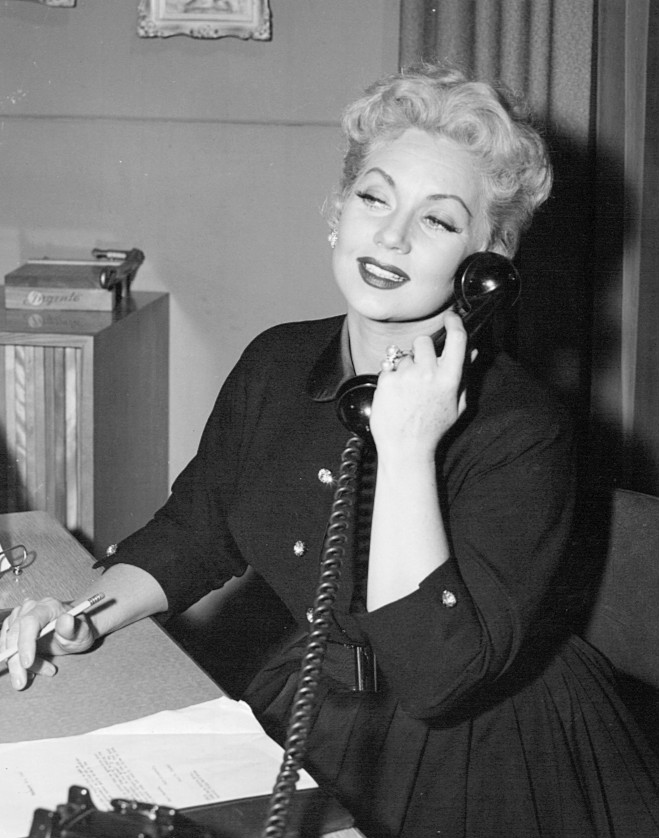
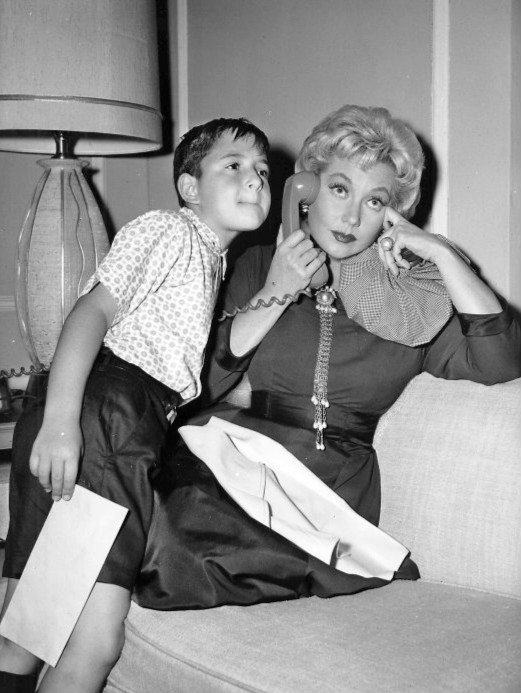
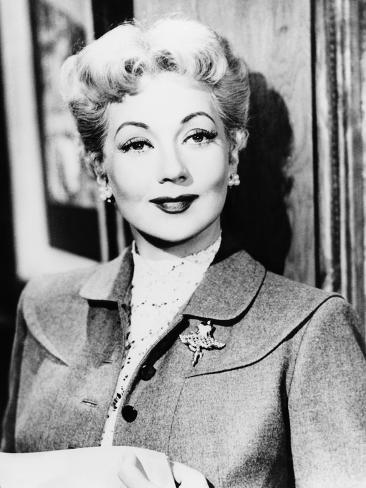
After learning a bit about the career of Ann Sothern last week, today we take a look at two of her shows: Private Secretary and The Ann Sothern Show. Although they were two different shows, the second almost seemed like a continuation of the first. To make things even more complicated, when the shows went into syndication, Private Secretary was renamed Susie and all the episodes of Susie would air, followed by The Ann Sothern Show and then back to Susie.

Photo: allposters.com

As we learned last week, Ann suffered from hepatitis for three years. With her medical bills mounting and less film work coming in, she needed to make a living, so she turned to television to revive her career.

After appearing in series of ten Maisie films earlier in her career, Ann had a solid fan base. Ann was a smart business woman and she had a 42% ownership in her new show, Private Secretary. The show debuted in 1953.

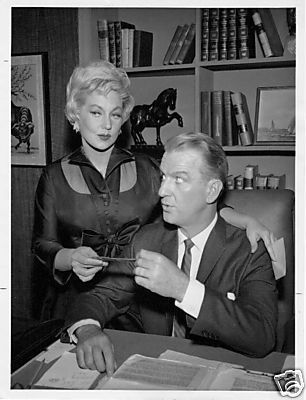
Sothern with Don Porter–Photo: pinterest.com

Ann portrays Susie MacNamara, a former actress and WAC WWII veteran; she is the secretary to Peter Sands (Don Porter), a talent agent. Susie often complicates life for her boss, although she means well.

One of her best friends was Violet (Ann Tyrell), their receptionist. Cagey Calhoun (Jesse White) is always trying to cause trouble for Peter as a rival talent agent.

Sothern with Ann Tyrell and Jesse White–Photo: episodate.com

While the scripts weren’t ground-breaking, they were well written and witty. Some shows reference one of Mr. Sands’ clients, actress Harriet Lake, which was Ann’s real name.

The show was noted for its state-of-the-art set decoration featuring IBM typewriters and Western Electric phone systems, as well as stylish furnishings.

Photo: wikimedia.com

The show was on Sunday nights on CBS and alternated weeks with highly rated Jack Benny Show.  I have never seen this with any other show but Lucky Strikes, the show’s sponsor also financed The Jack Benny Show on CBS and Your Hit Parade on NBC. So, when Your Hit Parade was on hiatus for summer, Private Secretary’s reruns were shown on that network and then new shows would begin in the fall back on CBS.

The show continued to have great ratings but in 1957, even though the show was renewed for the next year, Ann got into an argument with producer Jack Chertok and she left the series which ended. I could never find definitively why they argued, but it had to do with the show’s profits.  

Photo: wikipedia.com

Sothern was nominated for Best Actress Emmy for 1955, 1956 and 1957, losing to Loretta Young, Lucille Ball, and Nanette Fabray.

Instead of a sixth year of Private Secretary on CBS, The Ann Sothern Show debuted in 1958 as a weekly show. Chertok kept the rights to the title, hoping to get another actress to fill the MacNamara role. This show was created by Bob Schiller and Bob Weiskopf. Desi Arnaz would produce the show which worked out as Ann and Lucille Ball were very close friends. They appeared on each other’s shows.

In The Ann Sothern Show, Ann now plays Katy O’Connor, the assistant manager of an upscale New York hotel, The Bartley House. Her secretary is Olive Smith (Ann Tyrrell), the front desk clerk is Paul Martine (Jacques Scott), and the bell boy is Johnny Wallace (Jack Mullaney). Later Ken Berry replaced Mullaney as Woody Hamilton.

Many of the cast members from the former show appear on the new series. Although Katy has a boss she answers to, she has a lot of authority running the hotel. Katy’s first boss is Jason Macauley (Ernest Truex), a man who is dominated by his nagging wife Florence (Reta Shaw). When ratings were not great, Truex was replaced by Don Porter as James Devery. As in Private Secretary, there are some romantic currents between Katy and James. Olive’s boyfriend, a dentist, Dr. Gray, is played by Louis Nye. In season two, Jesse White showed up as Oscar Pudney an unethical newsstand owner near the hotel.

Sothern with Jacques Scott–Photo: wikipedia.com

The storylines often revolved around the personal life of the staff and stories about guests staying at the hotel. The concept provided the opportunity to attract a variety of guest stars during its run. In addition to Lucille Ball, actors who appeared on the show included Jack Albertson, Frances Bavier, Constance Bennett, Eva Gabor, Joel Grey, Van Johnson, Jayne Meadows, Howard McNear, Janis Page, Cesar Romero, and Connie Stevens.

Once again Ann was nominated for an Emmy is 1959 but lost to Jane Wyatt for Father Knows Best.

Post Cereals and General Foods were sponsors for this show, and the cast would often appear in commercials at the end of the show. Ann would then sign off with “Well, goodnight everybody. Stay happy!”

Photo: pinterest.com

For the second year, the show’s ratings were decent but not great. The show was moved to Thursday nights up against The Untouchables, a top ten show. The ratings declined, so it was cancelled.

The final episode ended in a cliffhanger. Mr. Devery finally realizes that he is in love with Katy and proposes to her. They kiss but the show ends before Katy can answer yes or no.

I remember watching the shows in syndication and I thought they were good. Ann Sothern appeared to be a likable person and a hard-working actress. Both shows were often in the top 25% of the ratings. With all the reboots that have been done, I have never heard of either of these shows as possibilities and they seem to be good options for a contemporary show.

If you want to check out the shows, Private Secretary has several DVD options. The only place I could find The Ann Sothern Show was on etsy, and the site specifically mentions that it is “not a retail set nor is this a commercial studio release.” Maybe with all the classic television networks debuting, we will see Private Secretary back on the air again soon.

Heigh-Ho Louis Nye!

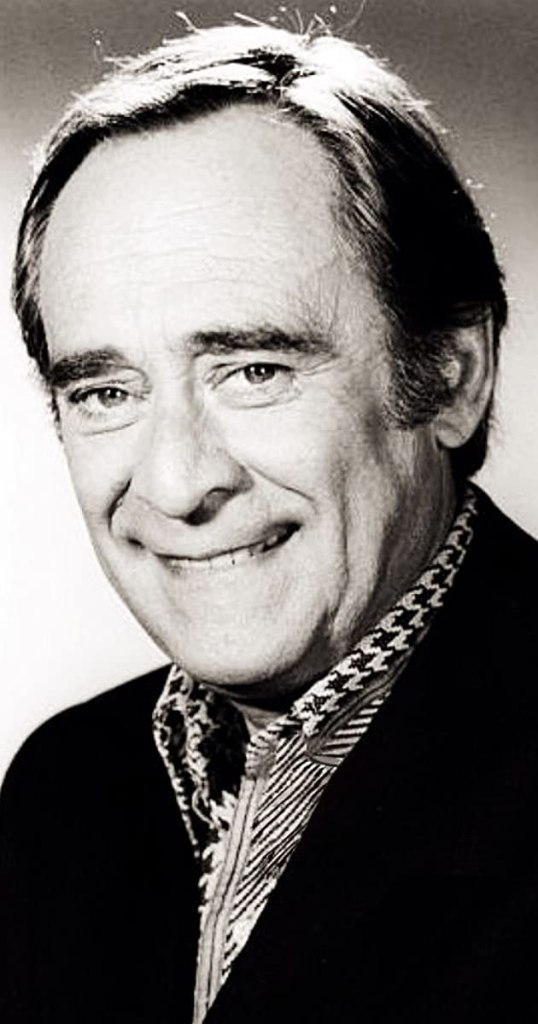
Finishing off our “Men of November” series is Louis Nye.  If you watched television in the sixties, you will recognize Louis, but you might not know why.

Photo:

Born Louis Neistat in Connecticut in 1917, he was the son of parents who emigrated to the US from the Russian Empire and became naturalized citizens in 1911. Louis wanted to get involved in acting but his grades weren’t good enough for him to participate in the drama club.  He opted for work on WTIC Radio instead. He also joined the Hartford Players.

The work on local radio led to his decision to move to New York City to work on the radio, often on soap operas. Nye married songwriter Anita Leonard in 1940. Unlike many Hollywood couples, they remained married until Nye’s death.

**FILE** Steve Allen, third from left, and some of the original cast members of the popular 1950’s television show, “Steve Allen Show,” gathered in Beverly Hills, Calif. in this Oct. 4, 1990 file photo to honor Allen and to celebrate the re-broadcast of 100 episodes of his show on HA! TV Comedy Channel. They are, from left: Tom Poston, Don Knotts, Allen, Louis Nye, Pat Harrington Jr., and Bill Dana. Nye died Sunday at his home in Los Angeles after a long battle with lung cancer, his son, Peter Nye, told The Associated Press on Monday. He was 92. (AP Photo/Kevork Djansezian, FILE)

World War II interrupted his career. He was assigned to run the recreation hall in Missouri. He would entertain troops and was able to meet Carl Reiner, who had a similar sense of humor, and who was also part of Special Services performing in shows across the Pacific.

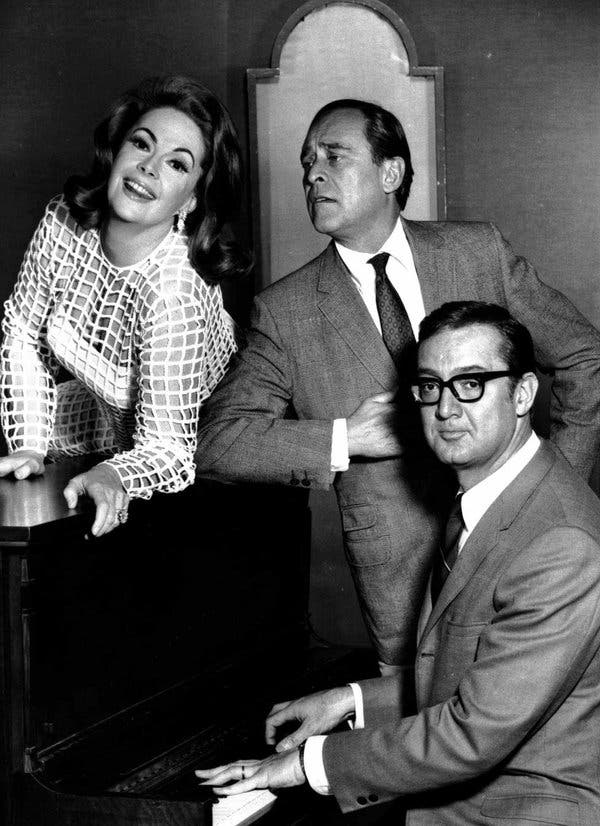
With Steve Allen and Jayne Meadows Photo: nytimes.com

After the war ended, he returned to New York, getting jobs on television and appearing on Broadway. His first tv role was on The Admiral Broadway Revue in 1949. He appeared on several shows during the fifties but was best known for his work on The Steve Allen Plymouth Show and the New Steve Allen Show. He became close to the entire cast which included Don Knotts, Tom Poston, Pat Harrington Jr., Dayton Allen, Gabriel Dell, and Bill Dana. Nye often portrayed wealthy citizens during the “Man on the Street” sketches. When he took on the role of Gordon Hathaway, the egotistical Country Club snob, saying “Hi-ho Steverino,” Allen often cracked up. When the show moved to Los Angeles, Nye went with it.

Photo: youtube.com

His first recurring role was that of dentist Delbert Gray on The Ann Sothern Show in 1960 and 1961. He was very busy during the sixties, appearing on a variety of shows including The Bob Hope Show, The Jack Benny Show, Mike Douglas, The Munsters, Jackie Gleason, and Phyllis Diller. From 1962-66, he would pop in on The Beverly Hillbillies as Sonny Drysdale, the spoiled stepson of banker Milburn Drysdale.

Photo: imdb.com

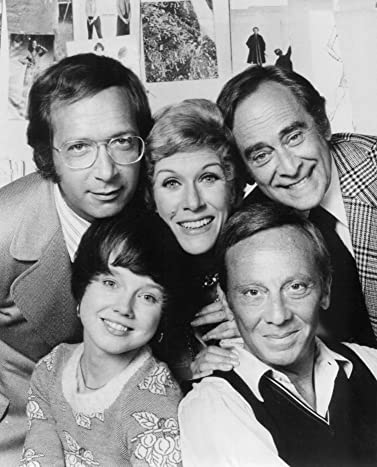
In the seventies, he could be seen on shows such as Laugh-In, Love American Style, Laverne and Shirley, Starsky and Hutch, and Fantasy Island. He was offered a permanent role on Needles and Pins in 1973. The show only lasted for 14 episodes. The series was about the garment industry. Women’s clothing manufacture Nathan Davidson (Norman Fell) works with a group of employees including characters played by Nye and Bernie Kopell.  It didn’t receive great reviews and many of the writers said it talked about the garment industry but showed very little and was set in one small spot, inhibiting what plots were even available.

During those decades Nye would also get offers on the big screen from time to time but most of the roles were smaller cameo parts. However, he appeared with a lot of celebrities in these epics including Bob Hope, Jack Lemmon, Lucille Ball, Dean Martin, Walter Matthau, and Jack Webb.

He also recorded several comedy albums using several of his characterizations. One of his most successful LPs was “Heigh-Ho Madison Avenue.” It parodied market research, advertising agencies and post-WWII society.  Some of the pieces on the album include “The Gray Flannel Blues,” “The Ten Commandments of Madison Avenue (Plus Big Bonus Commandments),” and “The Conspicuous Consumption Cantata.”

Asea on the Love Boat
Photo: drunk tv.com

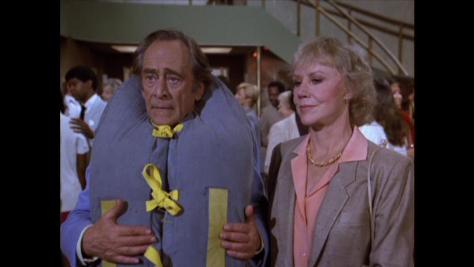
He continued to keep busy in the eighties on a variety of shows including Here’s Boomer, Aloha Paradise, The Love Boat, The Cosby Show, and St. Elsewhere.

Curb Your Enthusiasm Photo: youtube.com

His last role was another recurring one where he played Jeff Garlin’s father on Curb Your Enthusiasm from 2000-2005. Nye passed away from lung cancer in 2005.

I’m not sure what to think about Nye’s career.  I think in the right role, he would have excelled in a television comedy or a big screen epic which he never had the opportunity to do. He was multi-talented and appeared on Broadway, in clubs, and on the radio, and he created comedy albums as well as appearing in movies and television. However, I often read quotes of his where he said he only wanted to be funny at parties and always considered himself a serious actor. He was so brilliant and funny with his 15 accents and wide range of characterizations that he seemed pigeon-holed as a comedy character actor early in his career. I wondered if he was sad that he never had the chance to appear in a classic drama, or if he accepted his successful career for what it was, just being thankful he was in the entertainment industry for his entire working life.

Photo: wikifandom.com

Since we cannot ask him directly, all we can do is tip our hats to him in appreciation for the decades of laughter and entertainment he provided for us. Thank you, Mr. Nye.