The Toast of the Town: The First Variety Show

We are ending our “They Were the First” blog series with the first variety show to air on TV. During the first few decades of television, variety shows were always popular. And the show that drew in viewers every week was The Ed Sullivan Show.
Ed Sullivan Show – Motor City Radio Flashbacks
Photo: motorcityflashbacks.com

The Ed Sullivan Show debuted on CBS as The Toast of the Town on June 20, 1948. (The show was changed from The Toast of the Town to The Ed Sullivan Show in 1955.) If you watched the first episode, you would have enjoyed Martin and Lewis performing, jazz singer Monica Lewis, Richard Rodgers and Oscar Hammerstein previewing their score to South Pacific which would open on Broadway in 1949, a troupe of singing firemen, and a boxing referee who would be in charge of the Joe Louis-Jersey Joe Walcott match. The last show of the series from March 27, 1971 featured pop singer Melanie, soprano singer Joanna Simon (sister of singer Carly Simon), Danny Davis and the Nashville Brass, and multi-lingual singers Sandler and Young.

Ed Sullivan and the eye of a generation | The ed sullivan show, Old tv  shows, Tv on the radio
Photo: pinterest.com

It was on Sunday evenings at 9 pm ET and would continue airing Sunday evenings in the network schedule until it went off the air in 1971. Sullivan presented a vaudeville (vaudeo as some execs referred to it) type format with guests from almost every genre of entertainment: popular singers, comedians, dancers, actors, acrobatic acts, opera singers, sports and classical musicians.

Even if you never watched the show, you probably can hear Sullivan’s dead-pan introductions in your head. He was mimicked for years for his notorious monotoned voice and his bungling of introductions. Cher always complained that they were introduced as “Sonny and Chair.” When he was mad at Buddy Holly, he introduced him as something like “Buddy Hollared.”

CBS had its own symphony orchestra in the early years (as did NBC). Some of the orchestra members became part of the orchestra conducted by Ray Bloch on Toast of the Town. It was an incredible group of musicians who could play for a wide array of genres (imagine switching from The Jackson Five to Ella Fitzgerald to Itzhak Perlman to a ballet in one night). Each member was a specialist and had no trouble performing a spectrum of musical genres. In addition to the orchestra, the June Taylor Toastettes also danced on the show.

Most performers looked at an invitation from the show as their ticket to stardom. Harry Belafonte was a popular performer in the mid-fifties on the show, Elvis Presley made his first appearance on September 9, 1956, and The Beatles made the show one of their first stops when they came to America in 1964.
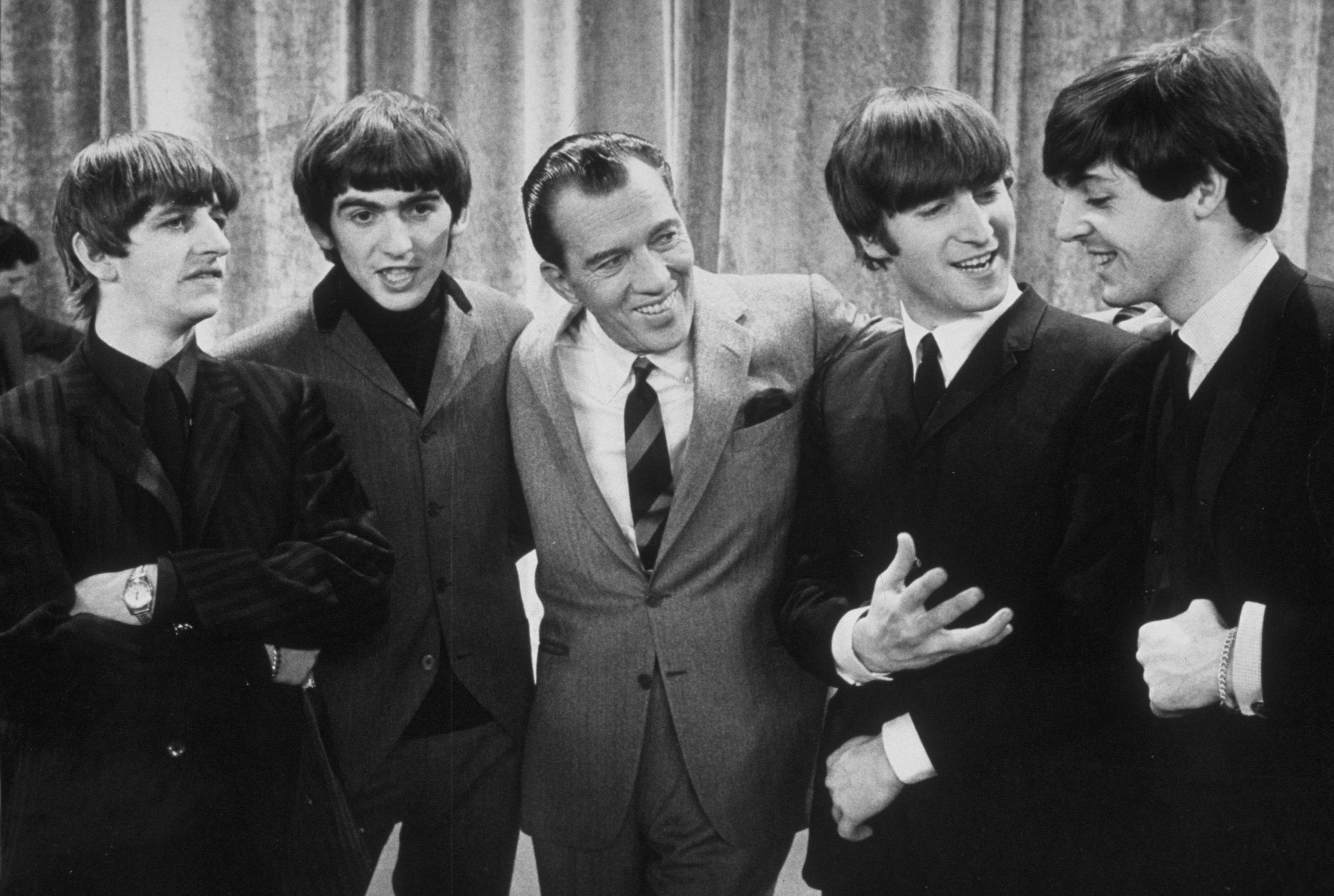
10 Facts About The Beatles's 'Ed Sullivan Show' Debut | Mental Floss
The Beatles Photo: mentalfloss.com

While most people would not be surprised to learn Belafonte, Dinah Shore, and Irving Berlin made their debuts on the show, they might not have expected that Ed also hosted Bob Dylan, The Rolling Stones, The Doors, and Janis Joplin.

Until 1962, the show’s main sponsor was the Ford Motor Company, specifically the Lincoln-Mercury Division. Sullivan would read live ads on the air during these decades. Color came to the Ed Sullivan Show in 1965.

The show was broadcast live. Originally it came from the Maxine Elliott Theatre (CBS TV Studio 51) at Broadway and 39th St. and moved to its permanent home CBS-TV Studio 50 which eventually was renamed the Ed Sullivan Theater.
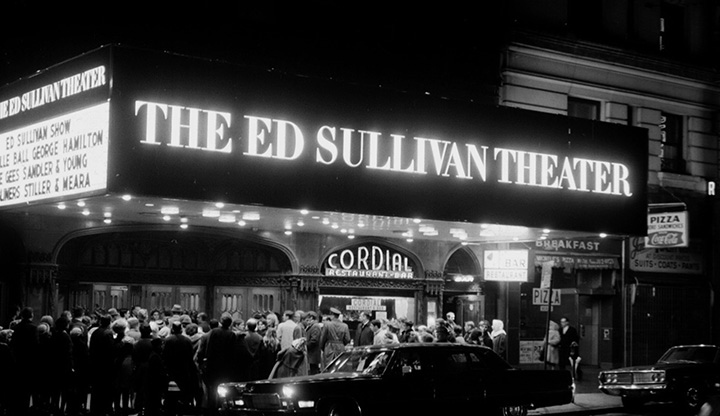
The Incredible History Of The Late Show's Ed Sullivan Theater - Recommended  Photos - CBS.com
Photo: cbs.com

The show did very well attracting viewers. Until 1968, it was in the top twenty for its entire history. In 1969, it dropped to 23rd and in 1970, it hit 27th but still did pretty well, landing in the top thirty. However, the network decided that the show was attracting the wrong demographic, namely older Americans. The show was cancelled in spring of 1971, so Ed was not able to put together a final good-bye; the show just ended.

In 1990, Andrew Solt (SOFA Entertainment) purchased exclusive rights to the library of The Ed Sullivan Show from Ed’s daughter. The collection includes 1087 hours of kinescopes and videotapes. Most of the shows that have been released have been on VHS/DVD sets. However, in 2021 MeTV began airing half-hour packages of performances on, when else but, Sunday evenings.

So, you might be wondering how Ed Sullivan became the emcee of such a long-running, successful show. Alan King once said, “Ed Sullivan can’t sing, can’t dance, and can’t tell a joke, but he does it better than anyone else.”

Although his onscreen persona was not very exciting, off screen his life was just the opposite. He loved New York night life and was a world traveler. He was a bit eccentric and lived at the Delmonico Hotel.

Ed was a twin but, sadly, his brother was sickly and only lived a few months. In the 1920s, Sullivan had hosted radio programs with Broadway themes. He was able to work with Jimmy Durante, Irving Berlin, and Jack Benny, among others.

In 1926 he began dating Sylvia Weinstein; their families were opposed to a Catholic-Jewish marriage and they dated three years before wedding. The couple had a glamorous, exciting life, hobnobbing with the rich and famous.

Ed worked as a newspaper reporter, covering sports till 1931. At that time, he was asked to write a Broadway feature and The New York Daily News hired him to write a regular column about New York.
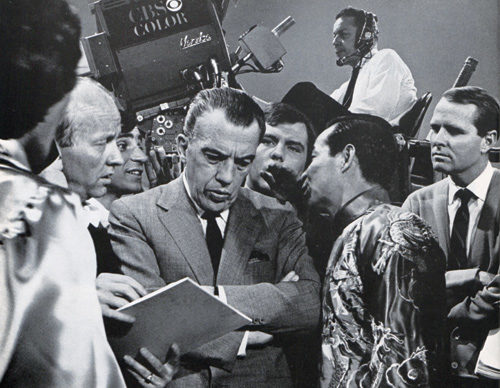
What Makes Ed Sullivan Tick? | The Saturday Evening Post
Photo: thesaturdayeveningpost.com

In 1947, Sullivan emceed the Harvest Moon Ball for the Daily News which was televised. After that event, CBS offered him the variety show. Although he was known for having controversies, asking musicians to change lyrics or eliminate songs he thought were not appropriate for his show, he was respected in the industry for being color-blind to talent. Despite racism within the industry, he supported talented individuals despite their race, gender, or background. He featured many African American guests who went on to become stars on his show. He and Louis Armstrong were close friends, and Sullivan paid for the funeral of Bill Bojangles Robinson after he died penniless. Sullivan also appreciated Motown and often invited their artists on the show.

When you look at what television was like in the late forties and all the changes that the next several decades would bring, it is pretty amazing to have Meet the Press, which began in 1947 and Toast of the Town which began in 1948 to have such long lives on air. These shows not only learned to adjust to social and technical changes, they were quality shows that stood the test of time. After learning more about The Ed Sullivan Show, I am curious to learn more about the man behind the show. I hope you have enjoyed getting to know a little bit more about the early days of the classic television this month.

The Dick Cavett Show: Television’s Classiest Talk Show Host

Dick Cavett made a career of being a talk show host. He began on ABC in March of 1968 and ended on TCM in 2007. In between, he showed up during the day, in prime time, late at night, on PBS, in syndication, and on CNBC. The Dick Cavett Show seems to refer to all the shows as a collected whole, so that’s how I will present it in my blog.

Image result for images of dick cavett
Photo: chicagotribune.com

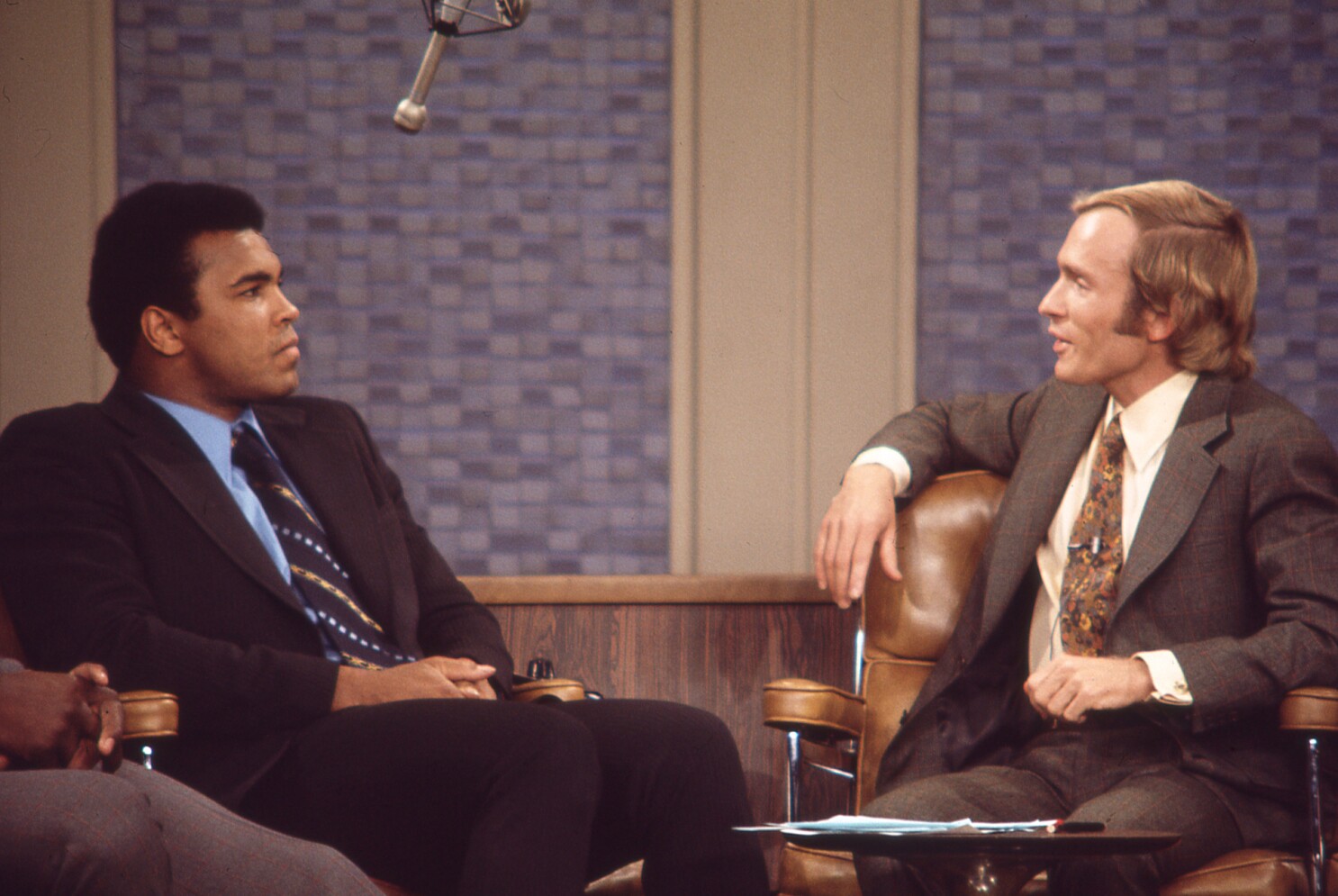
If you have ever seen Cavett in action, he has such a smooth, polite manner that sometimes you forget he may be asking an invasive question. Some of the most memorable shows were conversations with Christine Jorgenson (who walked off the show in 1968); Groucho Marx (1969); Jimi Hendrix (1969); The Woodstock Show (1969); Eric Clapton (1970); Alfred Lunt, Lynn Fontanne and Noel Coward (1970); Orson Welles (1970); Salvador Dali (1971); John Kerry debating on Vietnam (1971); Watergate and Beyond (1974); Angela Davis (1972); Jackie Robinson (1972); Marlon Brando (1973); Katharine Hepburn (1973); Carol Burnett (1974); and  Mohammad Ali (several shows). As you can see, in addition to entertainers, Cavett interviewed influential authors, politicians, athletes, and newsmakers.

Image result for images of dick cavett
Talking to the Great One: Ali Photo: latimes.com

Cavett often had several guests on each show, but sometimes he devoted the entire night to one person such as Laurence Olivier, Judy Garland, Bette Davis, Janis Joplin, Alfred Hitchcock, Fred Astaire, Gloria Swanson, Lucille Ball, Bob Hope, and David Bowie.

Politics were often covered by Cavett, and over the years, he interviewed many including political guests including Carl Bernstein and Bob Woodward, Walter Cronkite, John Ehrlichman, John Dean, Gerald Ford, Barry Goldwater, Henry Kissinger, and G. Gordon Liddy.

In various interviews of his own, Cavett mentioned different shows that were memorable or brought in a lot of mail. Early in the show’s history, Cavett was interviewing Peter Falk, Ben Gazzara, and John Cassavetes about a movie they were in. Cassavetes was so drunk and incoherent, Cavett walked off the stage.

Image result for images of dick cavett
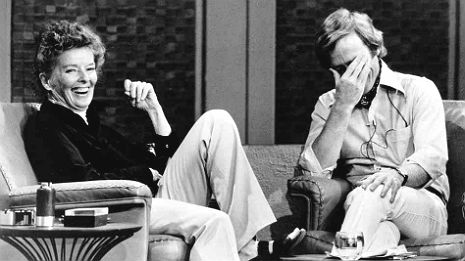
Laughing with Katharine Hepburn Photo: dangerousminds.com

Georgia governor Lester Maddox appeared in a panel with Truman Capote and Jim Brown about segregation. Cavett made a reference to “bigots” who supported Maddox. When Maddox demanded an apology, Cavett apologized to Georgians who supported him without being a bigot. Maddox left the studio. However, later Maddox relented and made another appearance, and Cavett walked off the set as a joke.

One memorable episode was something no host wants to encounter. Publisher J. I. Rodale was on the show. Cavett was talking to another guest when Rodale seemed to be snoring, but everyone soon realized something was wrong. He actually died there on the set. The audience didn’t even realize it until Cavett called for a doctor. The program was taped but not aired.

Director Ingmar Bergman did few television interviews and no US interviews, but he made an exception for Dick Cavett.

Image result for images of dick cavett
With David Bowie Photo: nostalgiacentral.com

So, what types of things might you have learned from Cavett’s show? Well, Hitchcock explained how some of his most ingenious special effects worked.  Gale Sayers talked about the movie Brian’s Song (maybe he could have given me a hint how not to cry every single time I see the movie.).  BB King revealed what his name stands for. Jack Benny demonstrated how to play the violin. Melba Moore told what it was like to open at the Apollo Theater. James Garner explained how he accidentally broke co-star Doris Day’s ribs, and Jacques Cousteau discussed the mystery of manatees.

And finally, I had to find out who was Cavett’s favorite interview, and who were the ones that got away? The two he never got to interview but always wished he had was an easier answer to find: Cary Grant and Frank Sinatra.

Image result for images of dick cavett and groucho marx
Photo: WBUR

It was a lot harder to answer the first question.  If you read the other three blogs in this series, you know the other talk show hosts (Mike Douglas, Phil Donahue, and Tom Snyder) began careers in Ohio. I was hoping to find an Ohio link for Dick, and that’s when I found the answer to my question of his favorite interviewee.  Cavett landed in Cleveland at the end of his career, which seems fitting since he is ending this series.

He was talking about an upcoming show at The Nightclub in Cleveland and mentioned Jack Paar was his mentor. (Cavett wrote for The Tonight Show when Paar hosted it, and Paar began his career in Canton, Ohio; I know it’s one coincidence after another.) Jack told him he didn’t need humor, singing, or anything except a desire to have a conversation. Then Cavett said, “I watch clips from the shows when I’m invited to give a talk and they show them, and I’m always surprised by the number of little delightful moments I’ve forgotten. I watched a moment the other night when Groucho was on the show with [zoologist] Jim Fowler. And Fowler brought a sloth on the stage, and Groucho said, ‘That’s the lousiest-looking dog I’ve ever seen.’ I’d forgotten that. That was the same night Groucho proposed marriage to Truman Capote. . . .’I love to do Q&A with the audience, but there’s only one forbidden question, and it doesn’t have anything to do with sex or politics,’ he said. ‘The forbidden question is, Who has been your most interesting guest?’ . . . But then he went on to say that ‘If pushed to the wall, I have to admit that Groucho was the guest who meant the most to me.’ Cavett said that ‘In a letter from Miriam, Groucho’s daughter, she wrote, ‘My father thought the world of you.’ It gets me even now when I say that out loud.’”

Image result for images of dick cavett and groucho marx
The unique Groucho Marx Photo: pinterest.com

In 2005 several box sets were released of some of Cavett’s shows. They are collected by theme of the interviewee such as The Rock Icons, etc. The network Decades, which recently went off the air, broadcast these shows also. Before the network was disbanded, I was able to watch about ten of these episodes, and they were as good as I had hoped for.

I have really enjoyed reviewing these talk show hosts and their guest interviews this month.  It makes me want to invite a bunch of friends over, one at a time, for coffee and conversation.  Just be forewarned, if I invite you over, I may have a list of questions I’ll want to be asking you.