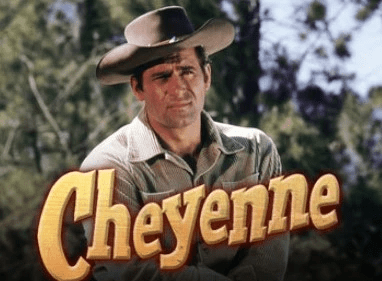
In June, we are advising “Go West Young Man” as we peek back at a few of our favorite westerns. First up is Cheyenne. Cheyenne debuted in 1955; it was the first hour-long Western. It would remain on the air for eight years, producing 108 episodes.
📷rewatchclassictv.com
Clint Walker starred as Cheyenne Bodie, a cowboy who explores the wild west after the Civil War. Early in the show, we learn that Bodie’s parents were killed by an unknown Native American tribe. A Cheyenne tribe found him and raised him till he was 12 when they sent him to live with a White family.
Because Cheyenne is traveling, guest stars change from week to week. The series was part of Warner Brothers Presents which alternated a weekly show with Cheyenne, Casablanca, and Kings Row.
For the first four seasons, the show was on Tuesday nights; then it moved to Mondays for the final four years. It was in the top thirty, and often the top twenty, for most of its television life, despite being up against The Phil Silvers Show; Richard Diamond, Private Detective; Dragnet; and the game shows To Tell the Truth and I’ve Got a Secret. Because Warner Brothers was used to making movies, the television show was produced with a movie feel to it.
In 1958, Walker went on strike. His contract stipulated that he had to give Warner Brothers 50% of his personal appearance fees, and he could only record music with the Warner Brothers label. He wanted 100% of his fees and to be able to record wherever he chose. I never learned what they settled on, but Walker returned to the show.
📷wikipedia.com
During his travels, Cheyenne often advocates for justice in the places he visits, sometimes working as a sheriff or deputy. Another theme of the show is the distrust of Native Americans. Cheyenne is sympathetic to their plight and is loyal to the Cheyenne tribe that raised him. Many of the plots were taken directly from Warner Brothers movies of the past and reworked a bit.
The theme song was composed by William Lava and Stanley Davis Jones. They both worked on The Mickey Mouse Club with Jones composing for the Spin and Marty shorts. Lava also provided music for Zorro, The Twilight Zone, and 77 Sunset Strip.
During Clint Walker’s interview with the Television Academy, he talked about his time on the show. He said he became aware of how many people liked the show when they sent him out to functions, and he started to realize how many fans he had in each town and then thinking of all the towns in the United States. He received a lot of fan mail from people who liked the values of the show. Some young men told him they no longer had fathers or uncles, and he was their role model.
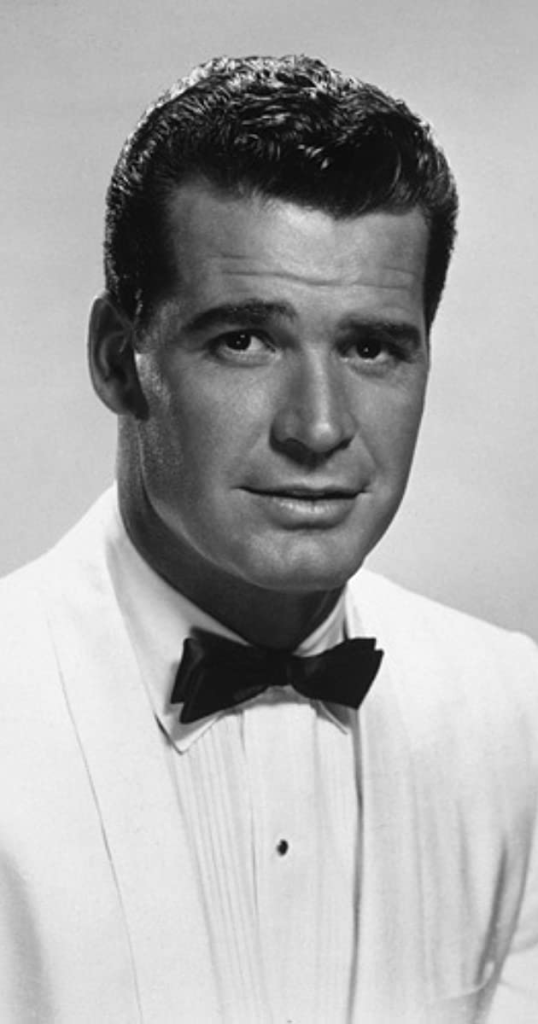
📷imdb.com James Garner
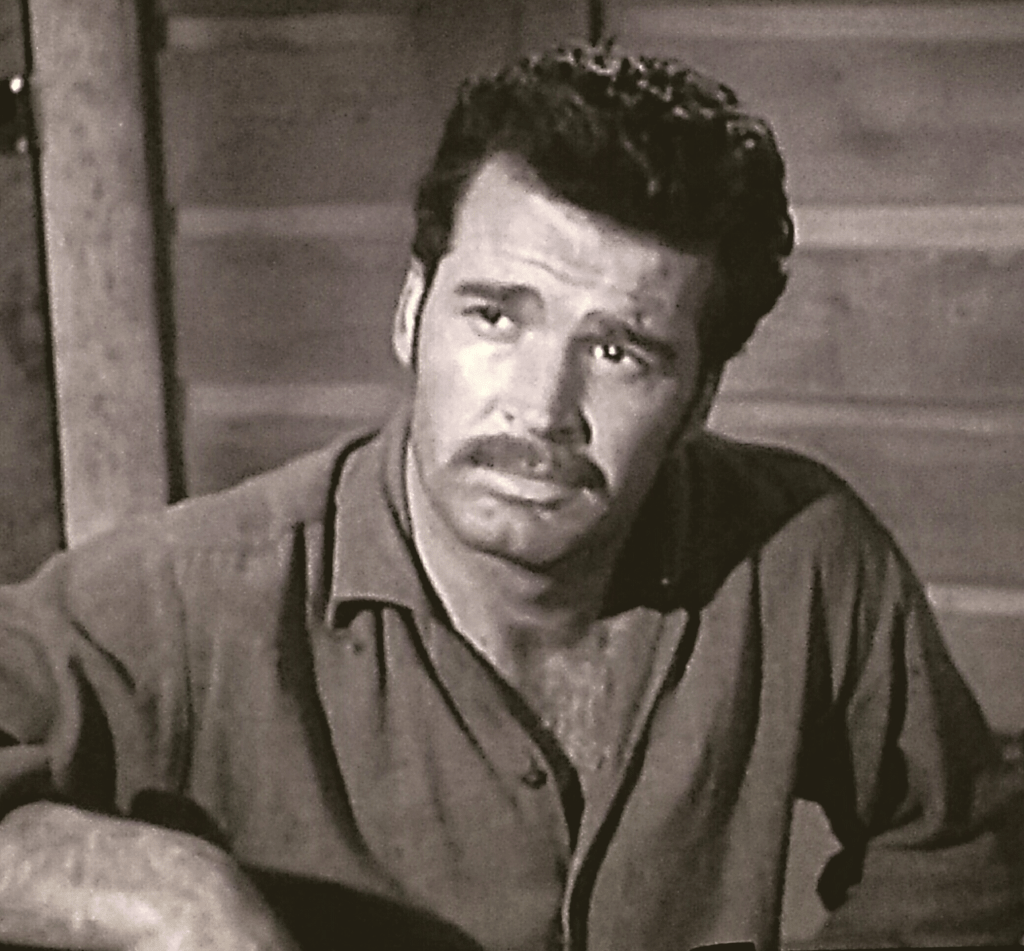
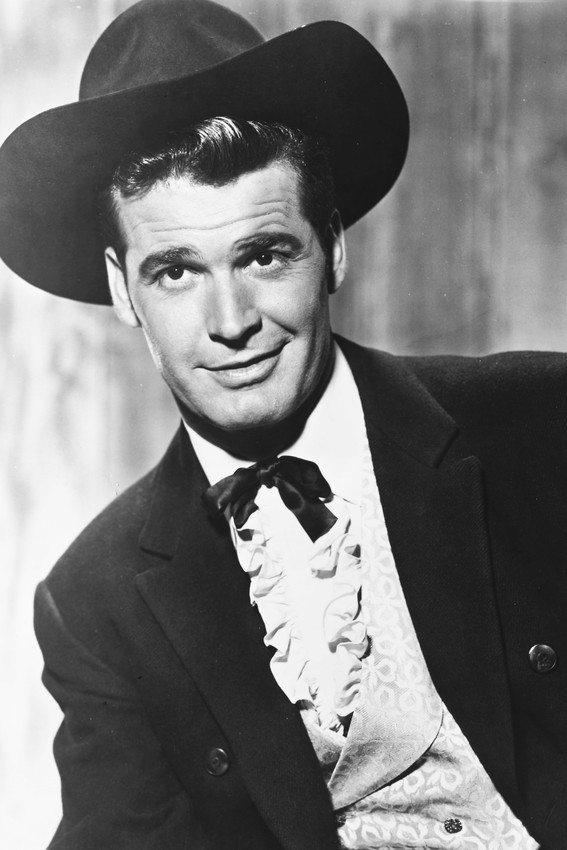
I also heard a fun story about casting during this show. Richard Bare explained during his interview that he was in a bar one night and a friend introduced him to an actor. The next day a meeting was called where Jack Warner informed them that he wanted some new faces introduced during the show. Bare remembered the young actor he met at the bar the night before but couldn’t remember his name. He called the bar and was told that the actor’s name was Jim Baumgartner, so he asked them to tell him to come to the studio when he showed up again. Finally, Baumgartner called Bare the day before they began shooting. He came in and did an audition. The crew was going on location the next day, so they had to decide immediately if he was part of the show. When Jack Warner saw the clips, he said to give that kid a seven-year contract, and that’s how James Garner started working in westerns.
There is no doubt Cheyenne was a popular show. It was interesting enough to keep viewers’ attention for an hour. The episodes seem to be well written. In an era when there were tons of westerns to watch, this one was in the top section of that list. The show still can be streamed on several places. If you want to live in the Old West for a bit, why not join Cheyenne and see what it was like.
Welcome to the Riding the Range blog series. We are looking at some of the best-loved westerns from the fifties and sixties. Today Maverick is up.
📷bonanza.com
James Garner plays poker-playing Bret Maverick on this show that featured a bit more humor than some westerns. Set on riverboats and in old west saloons, the show ran from fall of 1957 through July of 1962.
The show, created by James Huggins, debuted on NBC on Sunday nights. It was up against some tough competition with Jack Benny which alternated weeks with BachelorFather. The show remained on Sunday nights for its entire run.
While Garner was the star, during the first season, Bret’s brother Bart (Jack Kelly) shows up. The brothers appear in alternate episodes, sometimes teaming up for a game or two. The brothers were drawn to adventure and to dangerous situations. They often found trouble in finances or love. However, they were true gentlemen and always did the right thing. Unfortunately, they were both slow with the gun, but fast with the fist. In one episode, Bart mentioned that “my brother Bret can outdraw me any day of the week, and he’s known as the Second-Slowest Gun in the West.”
📷wikipedia.com
After season three, Garner left due to contract disputes. Garner sued Warner Brothers for breach of contract. They had suspended him without pay during a writers’ strike. The studio claimed they had no scripts with the writers on strike, but court testimony revealed that they had about 100 scripts on hand and could have been filming, so Garner was released from his contract.
After Garner’s departure, Roger Moore made his appearance as Beau Maverick, cousin. The first choice to fill the role was given to Sean Connery who turned it down. Later Connery would play James Bond and his replacement when he left was Roger Moore. However, it wasn’t long before Moore chose to leave and was replaced by Robert Colbert as brother Brent.
📷westernclippings.com
During the last season, Colbert was just not called back or notified that he was no longer part of the show. However, they had a season to fill so Garner reruns were alternated with Kelly original episodes for the fifth season. I guess all the other Maverick brothers and cousins had moved out west. Are you confused yet because I am.
The announcer for the show was Ed Reimers. Reimers was the “Voice of Allstate” from 1957-1979, reminding people that they were “in good hands with Allstate.”
The theme song was written by David Buttolph and Paul Francis Webster.
There were some fun episodes on the show. “Shady Deal at Sunny Acres” featured Garner in a rocking chair, whittling and seeming to “ponder” a way to get $15,000 back which was stolen while brother Bart is running a complicated sting operation to do just that.
“Duel at Sundown” is fun for the cast. Clint Eastwood shows up as one of the bad guys. Edgar Buchanan and Abby Dalton are also featured in the show.
“Escape to Tampico” used items from the set of Rick’s Café Americain and the show includes to many Casablanca references to people and dialogue in the show.
📷flickr.com
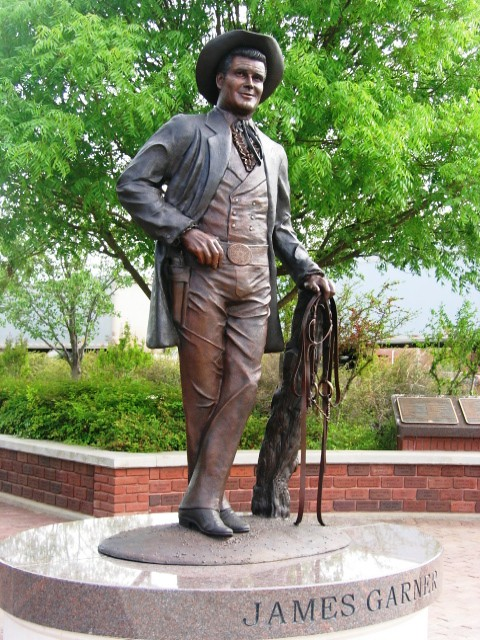
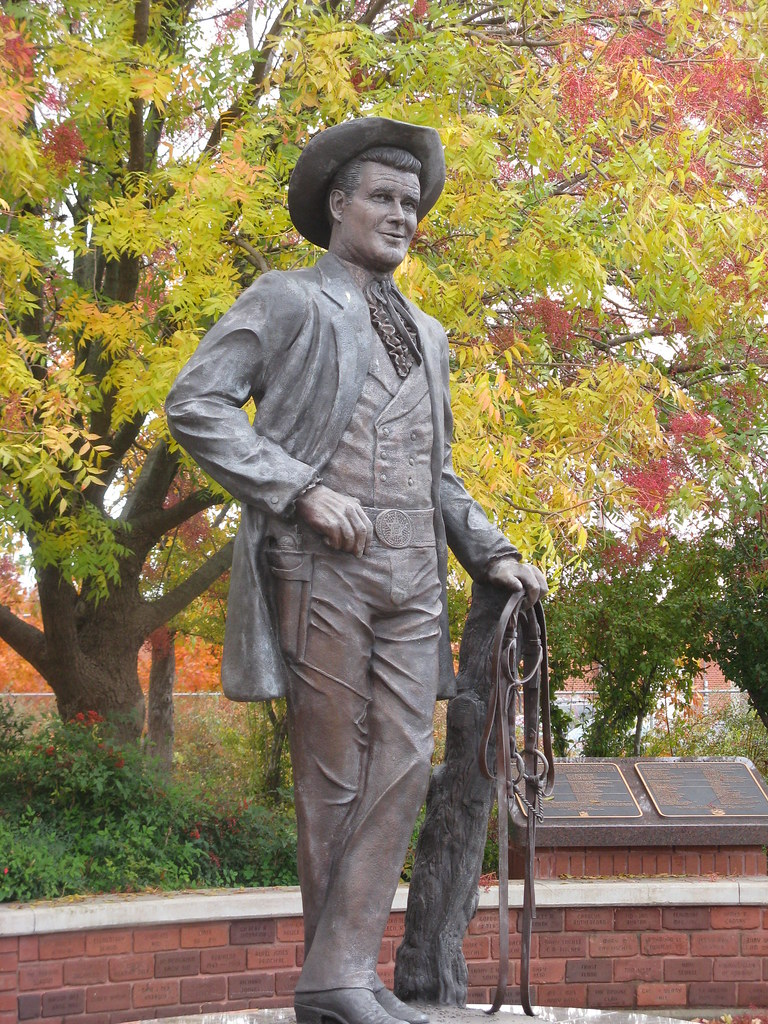
Despite the short time he was on the show, Garner got a statue in honor of his character. Norman, Oklahoma has a ten-foot-tall statue of Garner as Bret Maverick, which was dedicated in 2006.
It’s too bad that neither the network nor Warner Brothers could not get its act together with this show. It had a bit of everything: drama, comedy, romance, adventure. However, you are already starting off alternating the brothers, and with the constant replacements, it’s no wonder fans just walked away, and the ratings dropped drastically. Some of the episodes were so unusual and creative for their time that the show could have been a huge hit and a long-running show. I’m amazed the show managed to stick around for five seasons. Garner, Kelly, Moore, and Colbert all went on to prolific and successful careers in film and television.
Today we are winding up our blog series about some of our favorite actors. We finish today with one of my favorites who had a dual big-screen and small-screen career, James Garner.
Garner was born in Norman, Oklahoma as James Scott Bumgarner in 1928. His mother died when he was 4, and his father ran a small store and the family lived above it. When James was 7 the store burned down and his father left the boys and gave them to relatives to raise. Later he moved to Los Angeles and became a carpet layer. James’ first stepmom was very abusive, and they finally had a fight when he hit her and she took off. His second stepmother was a total opposite of the first. He called her Mama Grace and said she was a real mother to him.
At 16 James dropped out of high school to join the Merchant Marines. He liked his shipmates but could never get over his chronic seasickness. In 1945 Garner moved to Los Angeles and enrolled in high school. He was a popular student and played both football and basketball, but he was a terrible student. He moved back to Norman the next year to try high school there again. He dropped out before graduating.
He then joined the California Army National Guard where he served his first seven months in Los Angeles. Then he went to Korea for 14 months as a rifleman in the 5th Regimental Combat Team. He was wounded twice and received two Purple Hearts. He also received his diploma from high school.
After he left the military, he had a variety of odd jobs including laying carpet with his father, pumping gas, installing telephones, chauffeur, dishwasher, janitor, lifeguard, grocery clerk, salesman, oil field worker, and modeling men’s clothing. His entry into the entertainment business is a bit different than most people’s. He was supposed to read lines to lead actors for Broadway production, “The Caine Mutiny Court Martial” in 1954. He was also given a minor, non-speaking role. As he was on the stage, he began to learn about the art of acting.
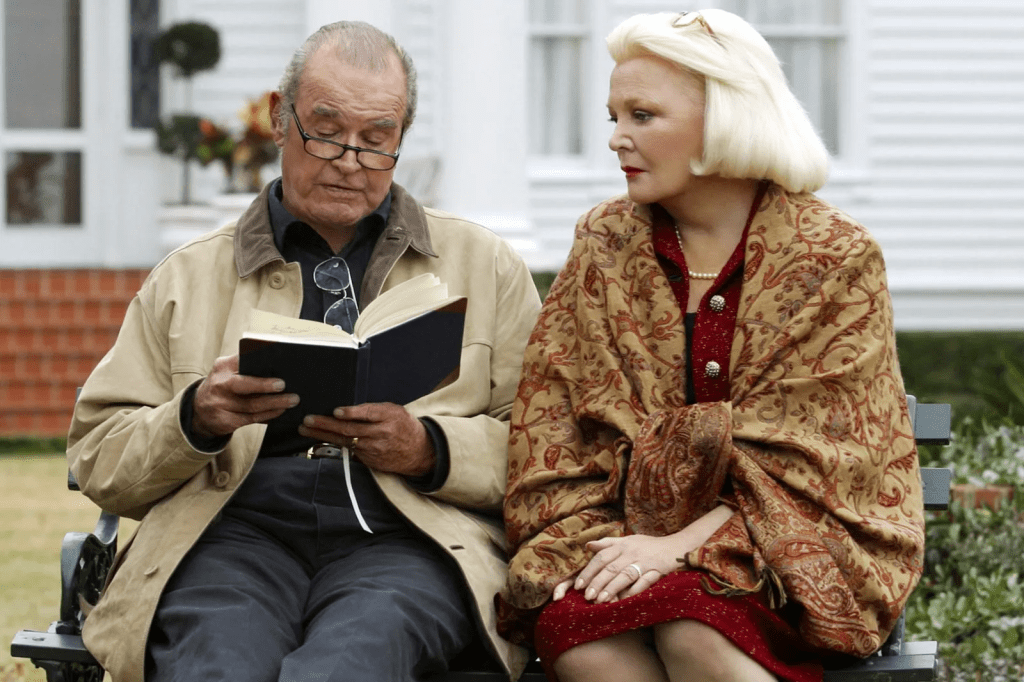
The Notebook Photo: GlamourUK.com
In 1955 he received a bit part on Cheyenne on television. He was also in Warner Brothers Presents. These small parts led to several offers to act in commercials and a larger offer from Warner Brothers to sign a contract for $200 a week. Garner began his big-screen career with Toward the Unknown in 1956. His film career included 46 additional movies with his last being The Notebook.
It was also 1956, when he married his wife Lois Fleishman Clarke; they would remain married until his death, and the couple had two daughters. They had a very short courtship. They met at the Beverly Hills Courthouse at a political rally for Adlai Stevenson and were a married couple two weeks later.
The couple bought a house in the Los Angeles neighborhood of Brentwood where their neighbors were Steve McQueen, O.J. Simpson, Arnold Schwarzenegger, Maria Shriver, and Mark Harmon. They were still living there when James passed away.
Maverick Photo: wikimediacommons.com
His successful movie career did not halt his television career. From 1957 to 1962, Garner starred as Bret Maverick on Maverick. Garner developed the type of role he would be known for as the calm, good-natured, likable, smart guy who gets out of trouble using his wit and street smarts. The show was not canceled by the network; unfortunately, Garner and the producers had a dispute over money, and he decided not to come back for the next season.
In August of 1963, Garner was one of several stars who accompanied Martin Luther King Jr. in his March on Washington. He later also recalled sitting in the third row while listening to King’s “I Have a Dream” speech.
In 1964 he made what he called his favorite film, The Americanization of Emily with Julie Andrews. He played the personal attendant of a Navy admiral and he said it contained the most impassioned speech of his career.
During the sixties and seventies, he continued making movies and showing up in a few places on television, shows like Rowan and Martin’s Laugh In, The Tonight Show, and several tv movies, one about Bret Maverick.
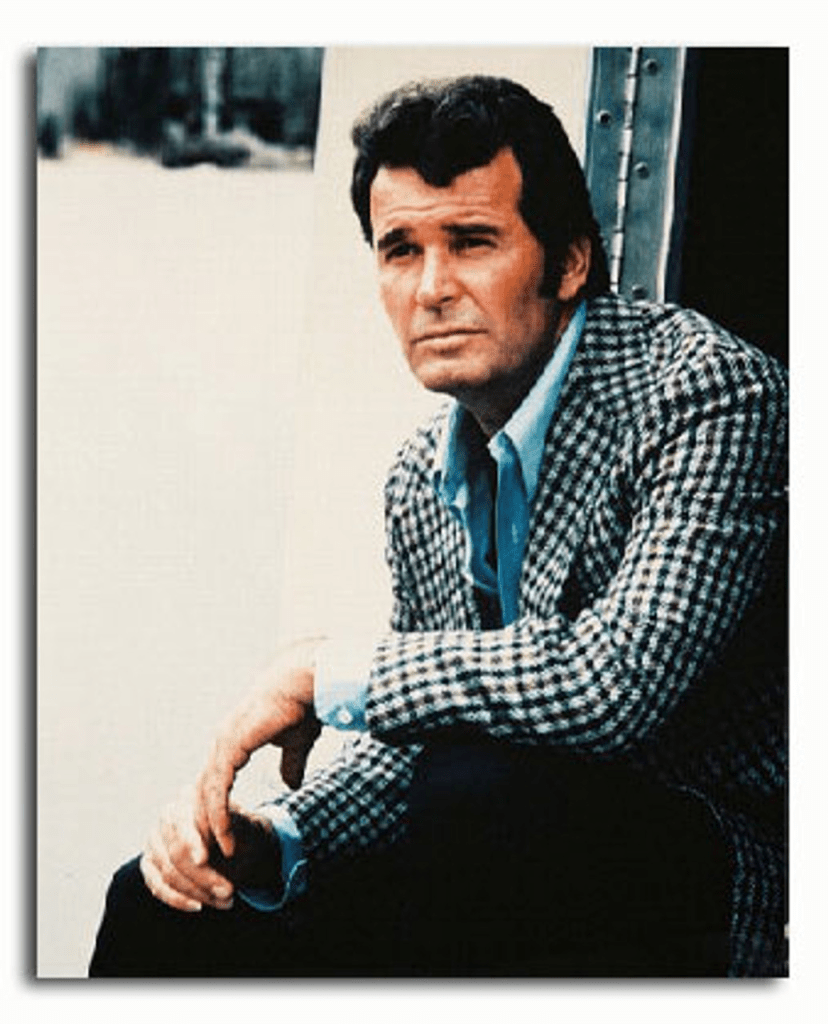
In 1974 he accepted his second role as star of a television series on The Rockford Files. He played Jim Rockford until 1980. Again, the network did not cancel the show which was still very popular but Garner had been having back pain and did not feel that he should continue the weekly series. He probably made the right choice because he was hospitalized with a bleeding ulcer during 1979; he would have quintuple heart bypass surgery in 1988; and both knees replaced in 2000.
Rockford Files Photo: starstills.com
In 1977 Garner began making commercials for Polaroid with Mariette Hartley. They were so convincing of being a married couple, that Hartley had a shirt made that said “I am not James Garner’s wife!” The couple filmed more than 300 commercials together.
After John Ritter passed away in 2003, Garner joined the cast of 8 Simple Rules as Cate’s father Joe and was on the show for the final three seasons.
Garner worked with several charities and foundations during his career. In 2003, he gave $500,000 to the James Garner Chair in the School of Drama for the University of Oklahoma to fund the first-endowed position at that school. He also volunteered with Save the Children.
In 2011, Garner wrote an autobiography called The Garner Files: A Memoir, cowritten with Jon Winokur.
Some of Garner’s hobbies included spending time with his family and political activism. However, his biggest passion was sports. He was a big fan of the Oakland Raiders and could often be seen on the sidelines with the team. He loved golfing. He was inducted into the Off Road Motorsports Hall of Fame in 1978. He owned the American International Racing team in the late sixties and he drove the pace cars for the Indianapolis 500 in 1975, 1977, and 1986.
Photo: flickr.com
He was also honored by his hometown of Norman, Oklahoma. He has a street named after him there and in 2006, a ten-foot bronze statue as Bret Maverick was erected there.
He was also loved by his coworkers. In 1973, John Wayne named Garner the best American actor in an interview. He was also close friends with Tom Selleck, Sally Field, and Clint Eastwood. When he passed away in 2014 from a heart attack, Sally Field said “My heart just broke. There are few people on this planet I have adored as much as Jimmy Garner. I cherish every moment I spent with him and relive them over and over in my head. He was a diamond.” He was nominated for 15 Emmy awards during his television career, winning in 1977 as Outstanding Lead Actor in a Drama Series for The Rockford Files.
He didn’t do a lot of comedy but I think he was a funny guy. When he was asked if he would ever consider a nude scene, he said “No, I don’t do horror films.”
James always said he was not concerned with fame; he just wanted to make a good living at something he enjoyed. That comes across as something he truly believed in, not just talking the talk. He lived in the same house and was married to the same woman for most of his life. He did work he was proud of and was very successful in both film and television. He loved sports and his career allowed him to participate in more of those activities that he loved. He was also a generous man, giving to causes that he thought were important.
Move Over Darling Photo: moviescene.com
Although not the most important films in his portfolio, I always think of him acting with Doris Day in The Thrill of it All and Move Over Darling. I enjoyed learning about his life and respect him as a person. He never complained about the terrible childhood he had or used it to make excuses when he did make a poor choice; he said you have to just keep moving forward and he moved forward in an honorable way. Thanks for sharing your life with us and letting us travel forward with you, James Garner.
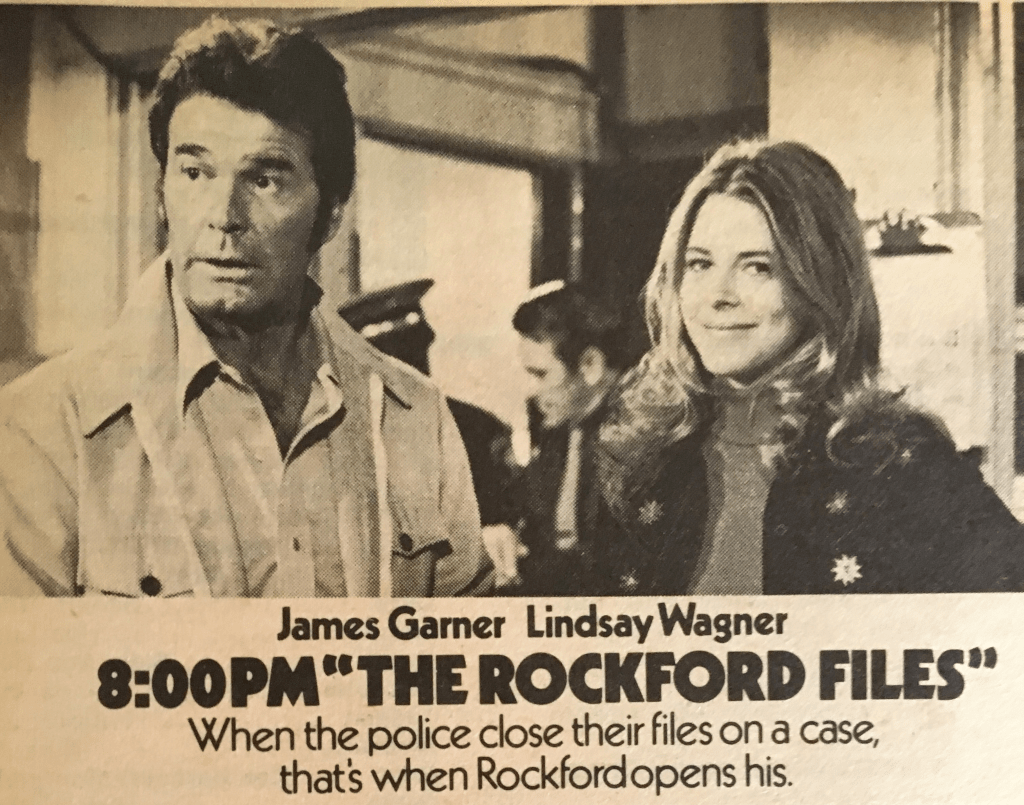
As we are taking a look back at some favorite crime shows, The Rockford Files with its memorable answering machine message opening and fun theme song, is one that definitely is worth exploring. The show was on NBC from 1974-1980.
Photo: thetvprofessor.com
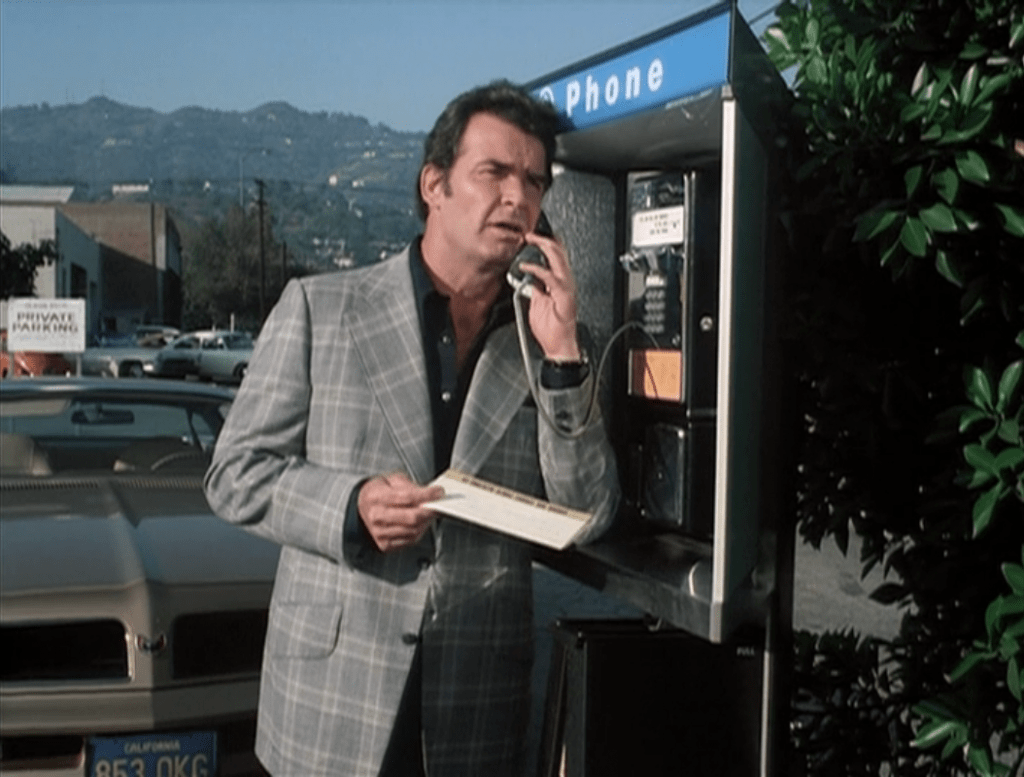
Jim Rockford (James Garner) is not the average TV detective of the seventies. He does not have an elegant apartment; his clothes come off the rack, not a designer’s showroom; and he doesn’t have a sexy assistant, just his dad, a former truck driver who sometimes helps him out. He lives in a small mobile home in a parking lot; the home also serves as his office.
Creators Roy Huggins and Stephen J. Cannell created the show. Huggins had also been the force behind Maverick which also starred Garner from 1957-1962. Robert Blake was also considered for this role, but Huggins cast him in Baretta, another one of his shows.
Rockford has a gun, but no permit for it. However, he prefers to talk his way out of most situations. He tends to work on cold cases, missing persons, and low-budget insurance scams.
The story was that Rockford was incarcerated in San Quentin for five years for a crime he did not commit. Eventually, he was pardoned, but now he is having a tough time making ends meet. He’s a private eye who charges $200 a day (about $1000 today) but he doesn’t get enough work to do more than pay the rent and incidentals.
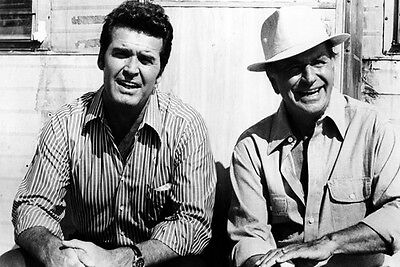
Garner with Noah Beery Jr. Photo: ebay.com
His father Joe (Noah Beery Jr.) nags Jim to find a more secure job and to settle down and get married. Jim’s friend Joe Santos (Dennis Becker), a sergeant for the LA Police Department, also helps him out from time to time.
Rounding out the cast were Evelyn “Angel” Martin (Stuart Margolin) who had been Jim’s friend in prison. His con artist schemes cause a lot of headaches for Jim. Beth Davenport (Gretchen Corbett) is Jim’s attorney and sometimes girlfriend. Lt Diehl (Tom Atkins) was on the first half of the show while Lt Doug Chapman (James Luisi) was on the final three seasons. Neither of them like Rockford much.
This show had an impressive list of guest stars, including Lou Gossett Jr., Isaac Hayes, Rita Moreno, Tom Selleck, and Dionne Warwick. Garner’s brother Jack also shows up in quite a few bit parts; you can see him as a policeman and gas station attendant, among other minor roles.
Photo: autoweek.com
Jim drove a gold Pontiac Firebird. Rockford was known for his “turn-around” to evade police and criminals, a procedure commonly taught to Secret Service agents. As Garner described it in his autobiography, “When you are going straight in reverse about 35 mph, you come off the gas pedal, go hard left, and pull on the emergency brake. That locks the wheels and throws the front end around.” Then you release everything, hit the gas, and off you go in the opposite direction.”
The theme song for the show was written by Mike Post and Pete Carpenter. It went through several versions over the years. It hit the Billboard Top Ten in 1975.
When I think of the show, the iconic answering machine introduction is what comes to mind. After two rings, you heard, “This is Jim Rockford. At the tone, leave your name and message. I’ll get back to you.” Typically, the message was its own little skit which help us get to know a little bit more about Rockford. The writers had to come up with 122 different messages during the run of the show.
Photo: travalanche.com
The show was popular with viewers throughout the four seasons. However, after being #12 in its first year, it fell to #58 by season five. In 1979, Garner was advised by his doctors to take some time off because he was suffering some knee and back problems, as well as dealing with an ulcer. Until then, he had performed many of his own stunts on the show. When the physical pain did not get dramatically better, Garner decided not to continue with the show, and the network canceled the program midseason.
It was also popular with critics. James Garner was nominated for Outstanding Lead Actor in a Drama in 1976, 1977, 1978, and 1979; he won in 1977. The show was nominated for Outstanding Drama Series from 1978-1980; the show won in 1978. There were an additional nine nominations with Margolin winning two and Rita Moreno winning two.
Photo: imdb.com
If you were a fan of the show, you will know a few of these fun facts about Rockford. One of his favorite foods was tacos, and he ate a lot of them on the show. When he needs an alias, he typically was Jim Taggert. Rockford’s full name is James Scott Rockford; the star of the show’s name is James Scott Garner. Rockford was a Korean vet, and one of his military friends was played by the great Hector Elizondo. He cares for a stray cat who lives near his home. And, last but not least, a running gag of the show is that even though Rockford’s job involves crucial details, he can never remember license plate numbers.
This show holds up well today. The show is on DVD and can be found on several cable channels. Check it out, even if you just want some inspiration for creative voice mails.
Dick Cavett made a career of being a talk show host. He began on ABC in March of 1968 and ended on TCM in 2007. In between, he showed up during the day, in prime time, late at night, on PBS, in syndication, and on CNBC. The Dick Cavett Show seems to refer to all the shows as a collected whole, so that’s how I will present it in my blog.
Photo: chicagotribune.com
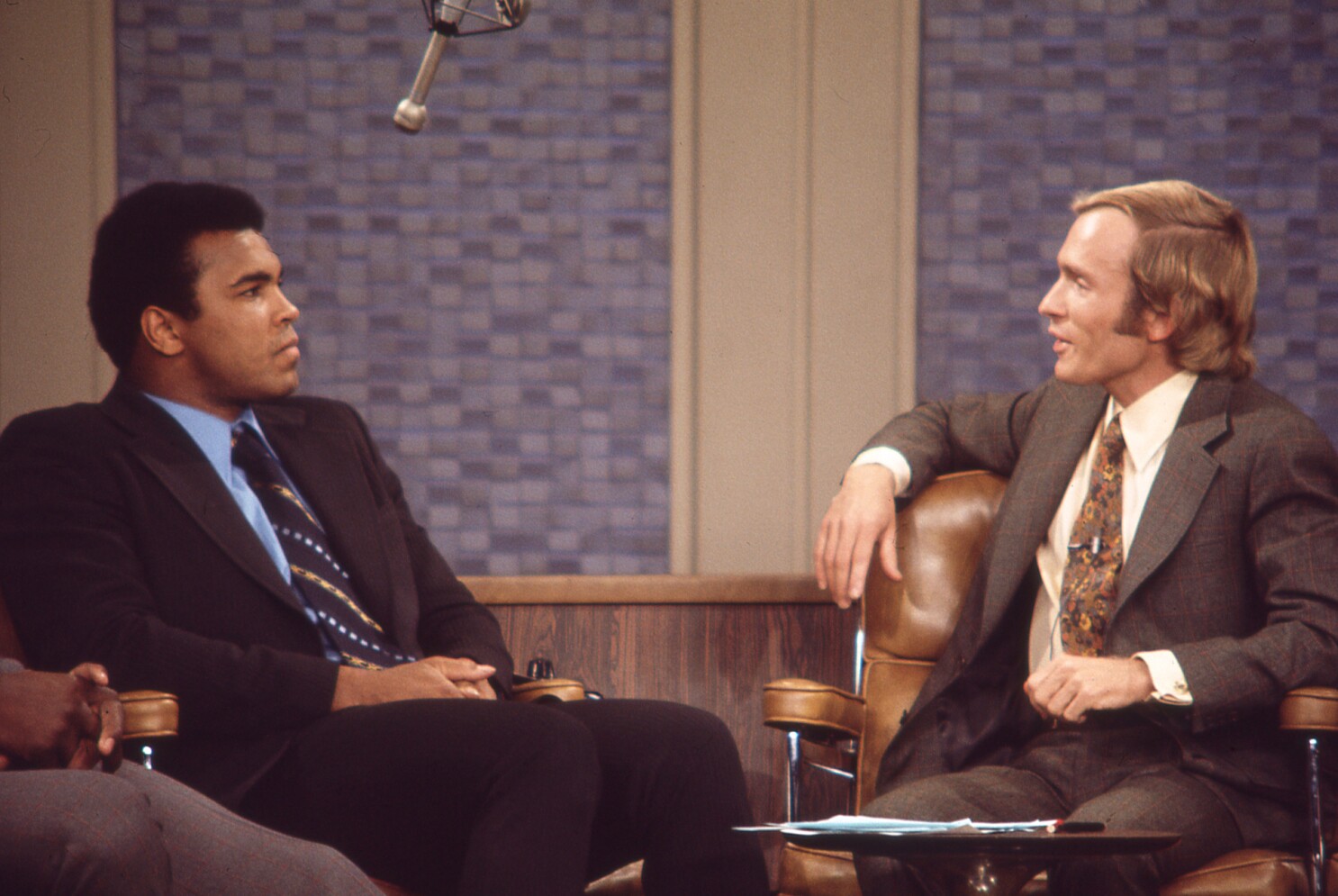
If you have ever seen Cavett in action, he has such a smooth, polite manner that sometimes you forget he may be asking an invasive question. Some of the most memorable shows were conversations with Christine Jorgenson (who walked off the show in 1968); Groucho Marx (1969); Jimi Hendrix (1969); The Woodstock Show (1969); Eric Clapton (1970); Alfred Lunt, Lynn Fontanne and Noel Coward (1970); Orson Welles (1970); Salvador Dali (1971); John Kerry debating on Vietnam (1971); Watergate and Beyond (1974); Angela Davis (1972); Jackie Robinson (1972); Marlon Brando (1973); Katharine Hepburn (1973); Carol Burnett (1974); and Mohammad Ali (several shows). As you can see, in addition to entertainers, Cavett interviewed influential authors, politicians, athletes, and newsmakers.
Talking to the Great One: Ali Photo: latimes.com
Cavett often had several guests on each show, but sometimes he devoted the entire night to one person such as Laurence Olivier, Judy Garland, Bette Davis, Janis Joplin, Alfred Hitchcock, Fred Astaire, Gloria Swanson, Lucille Ball, Bob Hope, and David Bowie.
Politics were often covered by Cavett, and over the years, he interviewed many including political guests including Carl Bernstein and Bob Woodward, Walter Cronkite, John Ehrlichman, John Dean, Gerald Ford, Barry Goldwater, Henry Kissinger, and G. Gordon Liddy.
In various interviews of his own, Cavett mentioned different shows that were memorable or brought in a lot of mail. Early in the show’s history, Cavett was interviewing Peter Falk, Ben Gazzara, and John Cassavetes about a movie they were in. Cassavetes was so drunk and incoherent, Cavett walked off the stage.
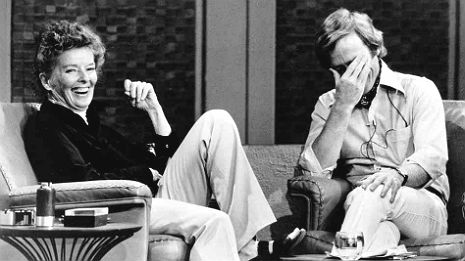
Laughing with Katharine Hepburn Photo: dangerousminds.com
Georgia governor Lester Maddox appeared in a panel with Truman Capote and Jim Brown about segregation. Cavett made a reference to “bigots” who supported Maddox. When Maddox demanded an apology, Cavett apologized to Georgians who supported him without being a bigot. Maddox left the studio. However, later Maddox relented and made another appearance, and Cavett walked off the set as a joke.
One memorable episode was something no host wants to encounter. Publisher J. I. Rodale was on the show. Cavett was talking to another guest when Rodale seemed to be snoring, but everyone soon realized something was wrong. He actually died there on the set. The audience didn’t even realize it until Cavett called for a doctor. The program was taped but not aired.
Director Ingmar Bergman did few television interviews and no US interviews, but he made an exception for Dick Cavett.
With David Bowie Photo: nostalgiacentral.com
So, what types of things might you have learned from Cavett’s show? Well, Hitchcock explained how some of his most ingenious special effects worked. Gale Sayers talked about the movie Brian’s Song (maybe he could have given me a hint how not to cry every single time I see the movie.). BB King revealed what his name stands for. Jack Benny demonstrated how to play the violin. Melba Moore told what it was like to open at the Apollo Theater. James Garner explained how he accidentally broke co-star Doris Day’s ribs, and Jacques Cousteau discussed the mystery of manatees.
And finally, I had to find out who was Cavett’s favorite interview, and who were the ones that got away? The two he never got to interview but always wished he had was an easier answer to find: Cary Grant and Frank Sinatra.
Photo: WBUR
It was a lot harder to answer the first question. If you read the other three blogs in this series, you know the other talk show hosts (Mike Douglas, Phil Donahue, and Tom Snyder) began careers in Ohio. I was hoping to find an Ohio link for Dick, and that’s when I found the answer to my question of his favorite interviewee. Cavett landed in Cleveland at the end of his career, which seems fitting since he is ending this series.
He was talking about an upcoming show at The Nightclub in Cleveland and mentioned Jack Paar was his mentor. (Cavett wrote for The Tonight Show when Paar hosted it, and Paar began his career in Canton, Ohio; I know it’s one coincidence after another.) Jack told him he didn’t need humor, singing, or anything except a desire to have a conversation. Then Cavett said, “I watch clips from the shows when I’m invited to give a talk and they show them, and I’m always surprised by the number of little delightful moments I’ve forgotten. I watched a moment the other night when Groucho was on the show with [zoologist] Jim Fowler. And Fowler brought a sloth on the stage, and Groucho said, ‘That’s the lousiest-looking dog I’ve ever seen.’ I’d forgotten that. That was the same night Groucho proposed marriage to Truman Capote. . . .’I love to do Q&A with the audience, but there’s only one forbidden question, and it doesn’t have anything to do with sex or politics,’ he said. ‘The forbidden question is, Who has been your most interesting guest?’ . . . But then he went on to say that ‘If pushed to the wall, I have to admit that Groucho was the guest who meant the most to me.’ Cavett said that ‘In a letter from Miriam, Groucho’s daughter, she wrote, ‘My father thought the world of you.’ It gets me even now when I say that out loud.’”
The unique Groucho Marx Photo: pinterest.com
In 2005 several box sets were released of some of Cavett’s shows. They are collected by theme of the interviewee such as The Rock Icons, etc. The network Decades, which recently went off the air, broadcast these shows also. Before the network was disbanded, I was able to watch about ten of these episodes, and they were as good as I had hoped for.
I have really enjoyed reviewing these talk show hosts and their guest interviews this month. It makes me want to invite a bunch of friends over, one at a time, for coffee and conversation. Just be forewarned, if I invite you over, I may have a list of questions I’ll want to be asking you.
There is a lot that happens behind the scenes to help make a show a hit. In previous blogs (see the December 2018 blogs about Earl Hagen and Jay Livingston), we learned about composers. This month we’ll take a look at the costumers and the set designers. The wardrobe department has the responsibility to make sure the characters are wearing the appropriate clothing for their character.
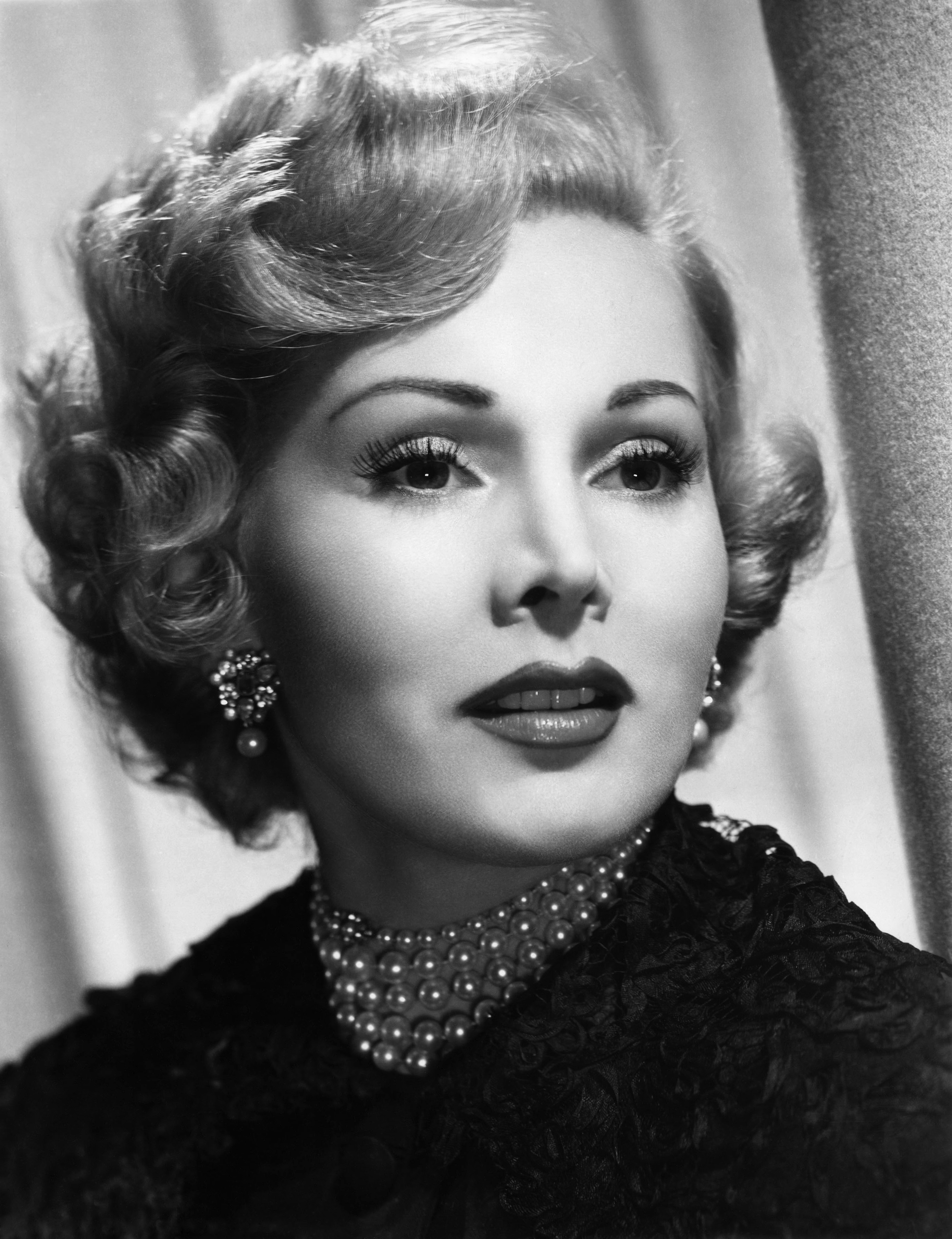
Zsa Zsa Gabor, ca. 1952 Photo: quotesgram.com
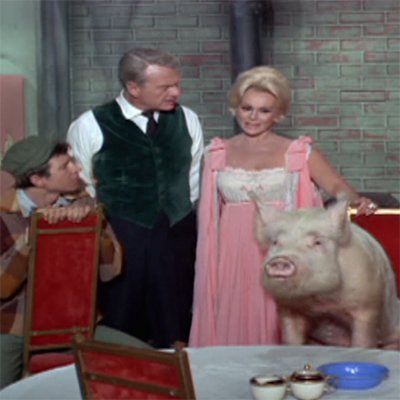
Green Acres presented a challenge for the wardrobe department. Most of the citizens were farmers, so overalls and house dresses fit the bill. Sam Drucker was the grocer, postman, and newspaperman for Hooterville, among other jobs. He always wore a blue shirt with a tie and had his postman vest or grocery apron on. Lisa and Oliver Douglas played an attorney and his wife who relocated from New York City and the social scene to rural Hooterville to run a farm. Oliver often wore suits on his tractor, looking somewhat silly and questioned by the locals. Lisa also continued to wear her glamorous outfits, but somehow, she was accepted by everyone and fit in wherever she went.
Photo: metv.com
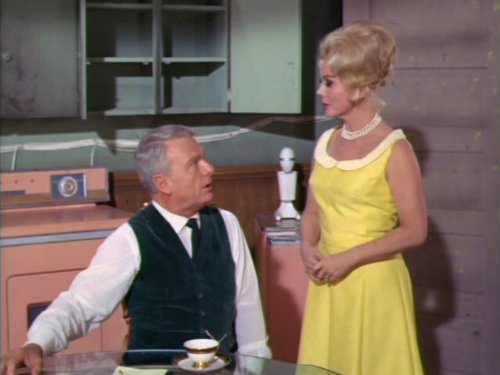
Lisa Douglas could wear anything and look good. She often wore her negligees around the house without being thought a hussy. She could show up in a sequined gown for a local band performance and was just one of the crowd. She wore gowns of boldly colored prints, but she was just as likely to show up in a single-colored sheath dress with a simple strand of pearls.
Photo: imdb.com
With
her lavish updo hairstyle and her extensive collection of jewelry, Lisa was fun
to outfit. Three designers were responsible for the majority of Lisa’s
wardrobe: Jean Louis, Lucie Ann Claire Sandra, and Nolan Miller.
Jean Louis
Born Jean Louis Berthault in 1907 in Paris, France, he was an Academy Award winner for The Solid Gold Cadillac in 1956 starring Judy Holliday. (Jean was nominated for 13 Academy awards.)
Photo: pinterest.com
He attended the School of Decorative Arts and then went to work for Agnes Drecoll, courtier. In 1935, he moved to New York city where he worked for Hattie Carnegie before going to Hollywood. While working there he began gathering a large clientele, including Wallis Simpson and Irene Dunne.
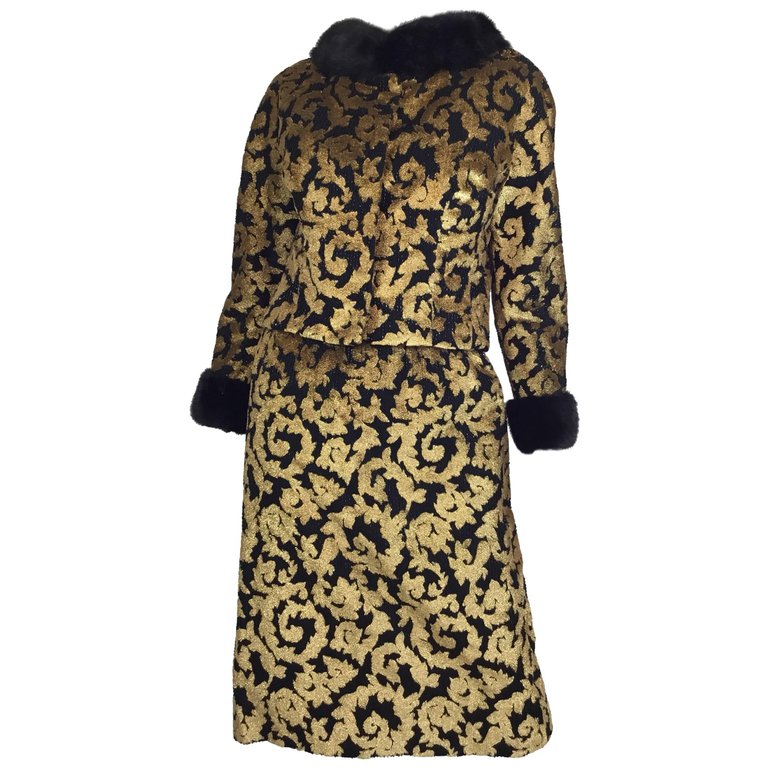
Photo: Black gown -1960s Jean Louis Silk Tiered Gown
From 1944-1958,
he was head designer for Columbia Pictures. Some of his most creative designs
included Rita Hayworth’s black satin dress from Gilda, the beaded gowns worn by
Marlene Dietrich, and the sheer, sparkling dress Marilyn Monroe displayed when
she sang “Happy Birthday” to John F. Kennedy. He also was the primary designer
for Kim Novack.
Photo: Gold and black lame dress
In 1958 he moved over to Universal. There he began a working relationship with Doris Day, with Pillow Talk, their first collaboration. Journalist Tom Vallance described his work:- “He created a sophisticated allure for Doris that launched a new phase of her career.” James Garner, who also starred with Doris in several films said she “exuded sex appeal while still maintaining her All-American Girl next door image.” Jean Louis also worked with Lana Turner during this era, putting together her colorful wardrobe in Imitation of Life. Jean’s daughter said her father “had the most amazing discerning eye for color. It was a sixth sense for him.”
Jean Louis had designed the clothing for The Loretta Young Show from 1953-1961. She was a close friend of Jean and his wife Maggie. After Maggie passed away, he and Young married in 1993. She was considered one of, if not the best, well-dressed stars. He also designed clothing for Ginger Rogers, Vivian Leigh, Julie Andrews, Katherine Hepburn, and Judy Garland.
Jean began to freelance in 1960. He opened a boutique in Beverly Hills and sold his label, “Jean Louis, Inc.” at better department stores all over the country. During this time, he also updated the United Airlines stewardess uniforms.
Photo: metv.com
From 1965-1967 he designed Lisa Douglas’s dresses on Green Acres. He was the perfect designer for her. Gifted with a great sense of humor, he could undoubtedly relate to the humor on the show.
Photo: thewritelife61.com
As he said during a Vogue interview, “You can use marvelous fabrics, have wonderful, impossible embroidery—in fact, be superluxe and superluxe is what the couture is all about.”
Photo: tumblr.com
In the 1970s,
he opened a boutique in France and launched his first fragrance. His career was
still flourishing with clients like Jacqueline Kennedy, Sophia Loren, and
Bianca Jagger.
Jean Louis
passed away in 1997. His influence continues to be felt among designers today.
Some of the fashion icons who admit being influenced by him include Michael
Kors, Vera Wang, Giorgio Armani, and Zac Posen.
Photo: imdb.com
Lucie Ann-Claire Sandra
Lucie Ann vintage nightgowns are among the most glamorous and desirable negligees ever made. Lucie Onderwyzer founded the fashion company in 1947 in Beverly Hills. Known for bold color and exuberant details like pompoms, bows, rosettes, and rhinestones, she designed for many stars including Elizabeth Taylor.
Photo: pinterest.com A few of Lisa’s gowns in the background
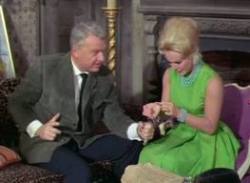
She designed all the peignoir sets worn by Eva Gabor in Green Acres. Her designs were also featured in other television shows and movies. In one episode of Bewitched, Darrin goes to the store to purchase a Lucie Ann for Samantha.
Photo: pinterest.com Darrin shopping for Samantha
Lucie passed away in 1988 and her company was bought by Deena Lingerie Co and later Lady Ester Lingerie Company which is still making them today.
Norman Miller
Norman Miller
was a wardrobe consultant for Eva on Green
Acres.
“I adored Eva. We worked together for many years. Later on, our working relationship became a friendship that I really valued. She wasn’t silly. She was a very smart lady. Not so smart with the men of her life. Her home was incredibly elegant. Anything that she needed I would do.” Miller shares about the time when Eva discovered a store called Loehmann’s; the store would buy designer samples and pack them up in huge boxes for stars to pick from. “Eva was a size 8 and the sample sizes were 2, and she’d simply ask me to do my magic and tailor them to her size. I smile at that as Eva could get anyone to change things around for her. I sometimes wonder whether she did understand fully well what was entailed in changing a size 2 into an 8 just like what was entailed in coming up with an animation idea tailor-made for her. She’d bat her eyelashes and sprinkle in a few ‘darlings’ and you find yourself doing what she wanted.”
Photo: pinterest.com A pink chiffon sleeveless floor-length Nolan Miller dress with accompanying chiffon and ostrich feather wrap worn by Eva Gabor on the television series Green Acres.
Miscellaneous
These three designers were the major forces behind Lisa Douglas’s beautiful fashion style on Green Acres. Gabor had an amazing fashion sense and was well known for her private wardrobe. She also was a successful business woman, owning a multi-million-dollar wig company.
Photo: newyorksocialdiary.com
Eddie Albert tells a great story about Gabor and her fashion. At her funeral, he said he probably saw more of Gabor than any of her five real-life husbands did. And, like any couple, married or not, they had their differences. She, for example, never quite understood his passion for wildlife conservation. “Every time you hear about a sick fish, you make a speech. Vy?,” Albert recalled his co-star saying. “And I would tell her, ‘I think we ought to preserve nature, save wild animals,’ and so on. Well, one day she showed up in a gown made of feathers, and I asked her not to wear it. ‘But so chic!’ she said. And I said, ‘Yes, and ladies will see it and want one, and thousands of birds will die.’ And she said, ‘But, Eddie, feathers don’t come from birds.’ ‘Well,’ I asked, ‘where do they come from?’ And she said, ‘Dahlink. Pillows! Feathers come from pee-lowz!’ ”
Perhaps there was more of Eva Gabor in Lisa Douglas than we realized.
The Partridge Family (ABC) later seasons (1971 – 1974) Shown from left: (top) Brian Forster, Danny Bonaduce, Suzanne Crough; (front) David Cassidy, Shirley Jones, Susan Dey
Ask any girl who grew up in the late sixties and early seventies and they will tell you their favorite night of television was Friday. We looked forward to watching The Brady Bunch, The Partridge Family, Room 222, The Odd Couple, and Love American Style, but the first hour of the night was the only “can’t miss” one. Boys coming of age in that era might have a tough time deciding between Samantha Stevens and Jeannie, but almost every girl will tell you Keith Partridge beat out Greg Brady hands down. Like most nine-year-olds in 1970, I had a huge crush on Keith Partridge. Watching the episodes today takes me right back to that time, and I feel like a kid on Friday night again.
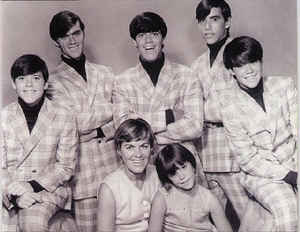
The Partridge Family aired from 1970-1974, and the concept was based on the Cowsills. The Cowsill family grew up in Rhode Island, and by 1967 the band consisted of siblings ages 8-19 and their mother. Although the group no longer includes all the siblings, they still tour and record.
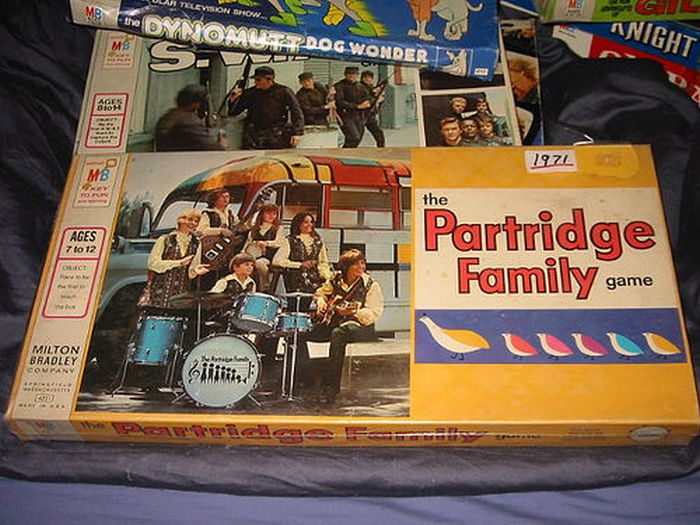
I still enjoy watching the episodes today. Even though the show is filled with nostalgia as far as clothing and interior décor, the problems faced by the Partridge Family were primarily the same problems faced by all families with kids and many of the shows have a timeless appeal. I’m not sure that anyone not growing up during that time period realizes the impact of the Partridge Family. I still have the Partridge Family game, we had trading cards that were collected and the back of the cards put together formed a puzzle. I had paperback books featuring the Partridge Family and lots of kids had albums, lunch boxes and other collectible memorabilia. Danny is often referred to as a brat, but I like the character of Danny Partridge. Then again, I liked all the Partridge Family members.
However, what I wanted to talk about in this blog is the unbelievable guest stars that the show was able to attract. Of course, Shirley Jones was a well-liked and famous movie star and she had a lot of connections in the industry. However, the names of the people who appeared on an episode of The Partridge Family during those four short years is incredible. I counted more than 50 looking at various shows over the years. Let’s look at some of those guest stars.
Ray Bolger, the Scarecrow, and Margaret Hamilton, the wicked witch, from the Wizard of Oz both made appearances. Ray Bolger played Shirley Partridge’s father on several shows. Margaret Hamilton is Rueben’s mother.
Two Dick Van Dyke Show cast members were featured: Morey Amsterdam, Buddy Sorrel and Ann Morgan Guilbert, Milly Helper. Amsterdam provided Danny with some bad comedy material in the first season. Guilbert is married to Norman Fell in the show and they visit Shirley when their son Keith’s age develops a crush on Shirley which he mistakenly thinks is reciprocated.
In addition to Ann and Morey, there were a lot of previous sitcom stars on the show. John Astin from the Addams Family, plays an eccentric millionaire. Edgar Buchanan, Uncle Joe from Petticoat Junction, plays a judge which he also portrayed in the movie, Move Over Darling, starring Doris Day and James Garner. Rosemary DeCamp played Shirley’s mother. Rosemary had been featured on lots of tv shows. She was on Love That Bob and was Ann Marie’s mother on That Girl. Arte Johnson from Laugh-In was in two episodes, one as an artist who paints a nude on the family garage when they are out of town. Harry Morgan, a sitcom veteran, played, a man faking whiplash in the first season and appeared again in 1972 as another character. William Schallert who was Patty Lane’s father on The Patty Duke Show stars as a folk musician whose career has taken a nose dive. Ronne Troup who played Polly on My Three Sons was on the show as the fourth season began as their neighbor complains about their music.
Not only were the past tv stars featured but a lot of up and coming stars showed up. MeredithBaxter gifts a million dollars to the Partridges and they find they don’t enjoy being wealthy. Bert Convy played one of Shirley’s serious boyfriends on three shows. Norman Fell is the father of a young man who gets a crush on Shirley when she goes back to school using her maiden name. He later married Helen and was Stanley Roper on Three’s Company. Pat Harrington Jr. appeared the first season and came back as someone else three years later. While he was in hundreds of tv episodes, he is probably most often recognized as Schneider from One Day at a Time. The Partridges try to set up Ann Jillian with their delivery boy to build up his confidence. If she had dated him, she might not have ended up a waitress on It’s a Living. Gordon Jump who was a veteran tv guest star, best known as Arthur Carlson from WKRP in Cincinnati, was on seven episodes as different characters. Richard Mulligan appeared in one show as Shirley’s boyfriend but also came back for another episode two years later; we know him as Burt on Soap and Dr. Westin on Empty Nest. Annette O’Toole plays Keith’s girlfriend in the second season; later her marriage with Nash doesn’t work out on NashBridges. Rob Reiner, who will soon be “Meathead” on All in The Family, appears as Snake, a rough biker with a heart of gold who likes Laurie. VicTayback who we know best as Mel on Alice appeared as three different characters on three different shows, Nancy Walker is the mother of Shirley’s date before she was Rhoda’s mom in later years.
Three of the five Charlie’s Angels showed up on different shows: Farrah Fawcett was a “pretty girl” the kids hire to try to get Harry Morgan to reveal that his whiplash is not real. Cheryl Ladd is the popular girl Keith wants to take to the dance after promising to take Laurie’s friend. Jaclyn Smith plays the niece of Shirley’s boyfriend. When he buys her a ring for graduation, the kids assume she is his fiancé and take matters into their own hands.
We had big stars from different genres including Johnny Cash playing himself and introducing the first concert the family is performing in Vegas. Richard Pryor talks the Partridges into playing for his charity event, and Bobby Sherman plays a singer, Bobby Conway. This episode actually turned into a spinoff for a short time.
Many famous or soon-to-be-famous movie stars can be spied on episodes including JackieCoogan who replaced Ray Bolger as Shirley’s father on two later shows. Jodie Foster and Danny have a love/hate relationship when their parents are dating. Lou Gosset Jr., producing a charity event with Richard Pryor, asks the Partridges to fill in when a group cancels. MarkHamill is Laurie’s boyfriend before he even knew Princess Leia. Charlotte Rae, a bit out of her typical character, plays a doctor.
I could continue, but every blog has to end sometime. It is amazing how many famous people were willing to appear in a new sitcom not only once but up to seven times as seven different characters. It says a lot about the reputation of the show. Let’s finish up with some fun facts about the show.
Shirley Jones was recruited to be Carol Brady but passed and took The Partridge Family
Partridge had passed away in the first episode, but his first name is never mentioned on the show.
Rueben Kincaid’s middle name is Clarence.
When the Partridges are asked to replace another musical act for a charity event put on by Richard Pryor and Lou Gossett Jr., the group that cancelled is the Temptations.
When Laurie gets braces, she can hear radio signals in her mouth, and it interferes with her performing. The music she “hears” in her mouth is The Rolling Stones.


















 thewritelife61