Medical series have been a staple since television started. This month we are checking out a few of the favorites in a blog series: “Examining Our Favorite Medical Shows.” First up is a show that was on in the sixties: Ben Casey.
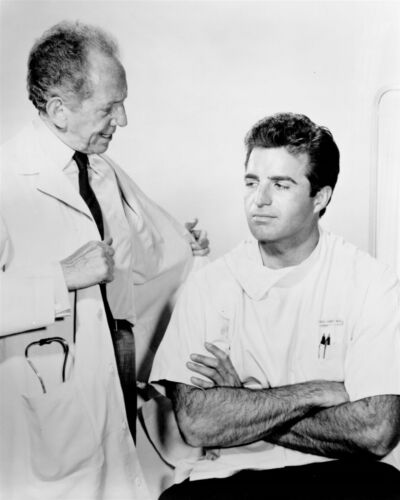
Ben Casey was on the air from 1961-66 on ABC. Created by James E. Moser, the character of Ben Casey was based on Dr. Allan Max Warner who was a neurosurgeon. Warner worked closely with the actors to show them how to handle instruments and patients. It was not a cheap show to produce. More than $50,000 of medical equipment was purchased for the show and each 60-minute episode had a budget of $115,000. Warner later changed to psychiatry because he said his association with the show prevented him from becoming board-certified. Dr. Joseph Ransohoff, another neurosurgeon, became the medical consultant.
The series followed Ben Casey (Vince Edwards), an idealistic neurosurgeon at County General. Dr. David Zorba is his mentor (Sam Jaffe). In the final season, Jaffe left and the new chief of neurosurgery was Dr. Daniel Niles Freeland (Franchot Tone). Rounding out the cast were Dr. Ted Hoffman (Harry Landers), Dr. Maggie Graham (Bettye Ackerman), orderly Nick Kanavaras (Nick Dennis), and Nurse Willis (Jeanne Bates). The show had a gritty edge to it and featured the life of doctors working in a city hospital and the tough physical and ethical situations they had to deal with.
Several sources said that Cliff Robertson and Jack Lord turned down the role of Ben Casey. Also, Russell Johnson said he auditioned for the role, but was rejected and his next audition was for the role of the Professor on Gilligan’s Island. However, I read several other sources that mentioned that Bing Crosby discovered Edwards and planned a television show to feature his find. Bettye Ackerman’s character was cast as an anesthesiologist who was supposed to be Casey’s love interest but they never developed any chemistry. In real life, Ackerman was married to Jaffe.

Filmed at Desilu Studios, the series was produced by Bing Crosby Productions. The show had 33 directors including Sydney Pollack; Vince Edwards directed seven of the episodes. However, its writing staff was even bigger with about 80 different people penning scripts. I never understood how that worked so well. As a writer, I would want to get to know the characters I was writing for and then continue to learn about them, but during the sixties, there were a lot of people who only contributed one or two scripts to any given series.
The theme music was written by David Raksin and pianist Valjean made it a top-40 hit.
The show was on Monday nights for its first three seasons. Season four, it moved to Wednesdays and returned to Mondays for the final two seasons. The first season it ranked in the top 20 and moved into the top 10 for its second year. Once the network moved the show to Wednesdays where it had to compete with The Beverly Hillbillies and The Dick Van Dyke Show, it fell out of the top thirty and never returned to its former popularity. During the last season, several changes were made. Casey fell in love with Jane Hancock, a woman who came out of a 13-year-long coma. The episodes also began to continue from one to another instead of being stand-alone stories, encouraging viewers to find out what happens the next week.

During the run of the show, four novels were written based on the series (1962-3), as well as a daily (1962-1966) and Sunday (1964-1966) newspaper comic strip by Jerry Capp and ten Dell Comic books (1962-64). There was even a board game created called Ben Casey MD. And even more surprising was a doll called Dr. Ben Casey’s Patient. Surely children were not exposed to the show.

Another medical show, Dr. Kildare, aired the same year as Ben Casey. The shows were often confused, but they were really quite different. Dr. Kildare was an intern who respected his mentors and the doctors he served under. He was the handsome guy next door, friendly and always striving to help his patients. Casey was brash and had already served his learning time, so he more often bucked the system and was not as respectful to the doctors working with him. He was handsome but in a more wild, bad boy, appearance. However, both shows tackled some very interesting and controversial subjects from the medical field.
Ben Casey might have gone off the air, but he did not disappear. The show has been parodied on a variety of shows including The Flintstones. “Ben Casey” was used by American troops in Vietnam War as slang for a medic. In 1988, a made-for-tv-movie The Return of Ben Casey brought Edwards back to the small screen. It was a syndicated show, and aired with the hope that it would be a pilot for a new series, but none of the networks picked it up.
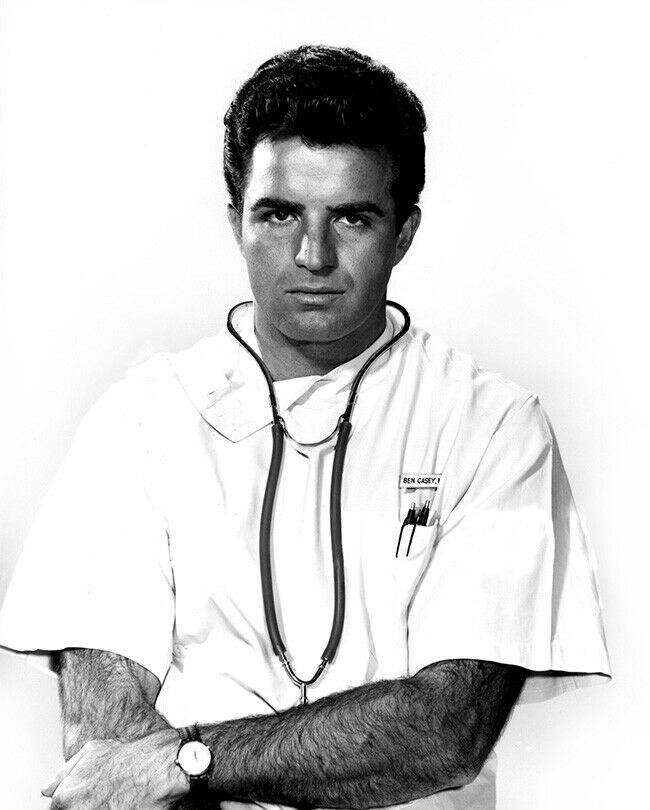
The cast was not holding hands and singing Kumbaya, but it did function amidst a lot of dysfunction. Director Mark Rydell discussed Edwards’ gambling problem which became the show’s gambling problem. Landers who played Dr. Hoffman said Edwards was constantly asking the cast and crew for money to take to the race track, and he would be gone for hours at a time. He often came in with $20-30 thousand dollars in his pocket, demanding that he leave filming by 11; other stars had to stand in for him to tape the rest of the show. Despite his unprofessional behavior, several stars liked Edwards. Jaffe, who had many conflicts with Edwards, was not one of them which is why he eventually left the show. Director Jerry Lewis and guest star Sammy Davis Jr. also had problems with Edwards. Landers also mentioned that when Tone took over Jaffe’s role, he was constantly drunk on the set. When Landers directed the show, he kept Tone sitting down so viewers would not see that he was swaying.
Considering all the issues the show had, the number of writers contributing scripts, the unprofessional behavior of several of the actors, and the movement of the show from Monday to Wednesday where it had stiff competition, the show actually did well and was popular with viewers for five years. It set the tone for many of the shows that would follow including Marcus Welby, Medical Center, and ER. Next week we will learn more about Dr. Kildare.
 thewritelife61