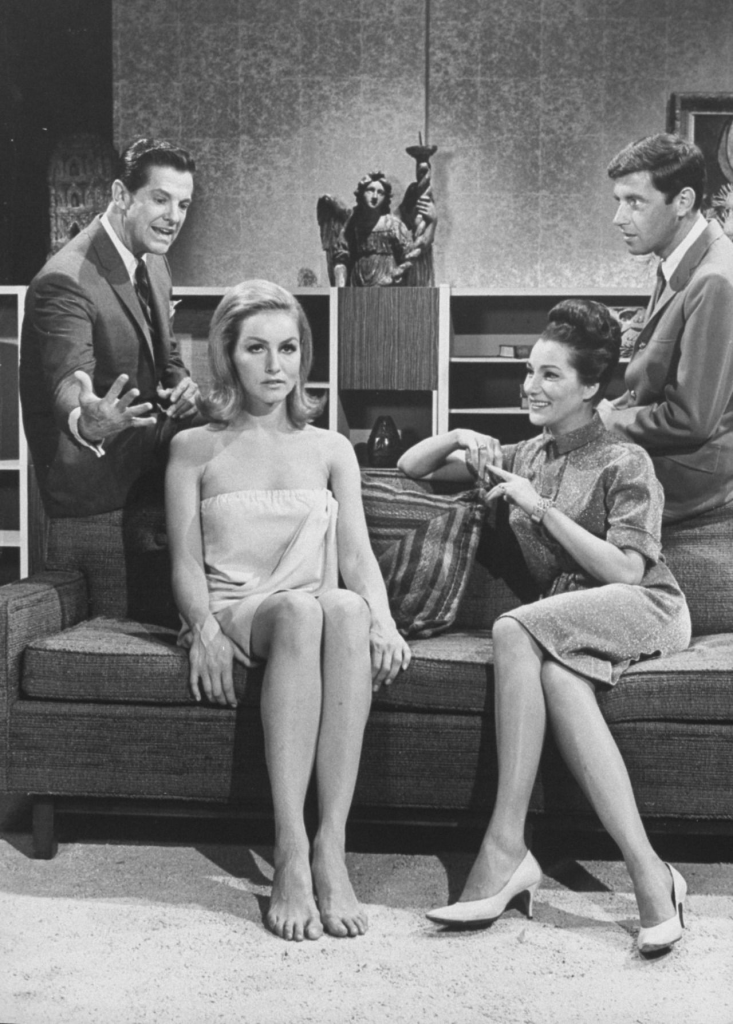
The Felony Squad: They Were Men Against Evil

This month we are taking a look at some of our favorite “Crime Solvers of the Past.” Today we wrap up the blog series with The Felony Squad which ran three seasons, debuting on ABC in 1966.

📷blu-ray.com

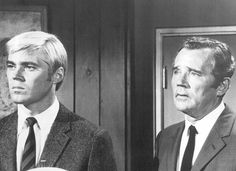
Originally titled “Men Against Evil,” the show was going to be more of a soap opera feel which was broadcast twice a week. However, by the time the show aired, most of the personal relationships had been taken out of the plot. The series focused on Sergeant Sam Stone (Howard Duff) and Rookie Detective Jim Briggs (Dennis Cole). Rounding out the cast was Desk Sergeant Dan Briggs (Ben Alexander), also known as Dad to Jim and District Attorney Adam Fisher (Len Wayland). The first seasons included Captain Frank Nye (Barney Phillips) while later seasons featured Captain Ed Franks (Robert DoQui).

The show was known for having some big names in directing, writing, and guest stars. Many of the directors racked up more than 75 credits each and included George McCowan who worked on The Mod Squad and Cannon, Allen Reisner known for Hawaii Five-0, Lee Katzin who directed Mission Impossible, Laslo Benedek known for work on Perry Mason, and Vincent McEveety who directed stars in Murder She Wrote, Heat of the Night, and Simon & Simon. Howard Duff jumped behind the camera in season two to direct “Deadly Abductors” after directing seven episodes of Camp Runamuck a couple of years earlier.

Crafting scripts for the show were writers such as Richard Murphy who was the creator of this show, Don Brinkley who worked on Trapper John and Medical Center, Jack Turley who wrote for Cannon and The Man from UNCLE, and John Kneubuhl who also wrote for the Wild Wild West.
📷pinterest.com

A handful of the guest stars included Ed Asner, Richard Dreyfuss, Robert Duvall, Roddy McDowell, Ricardo Montalban, George Takei, Vic Tayback, and Cicely Tyson.

The Felony Squad theme was composed by Pete Rugolo. Rugolo had 83 credits in the business including writing music for a wide variety of television genres including Leave It to Beaver, The Fugitive, and Family. This theme was an instrumental and very reminiscent of a sixties action movie.

I couldn’t find a lot of reviews, but the New York Times’ Jack Gould described it as “a very old-fashioned and conventional yarn about tight-lipped detectives doing a day’s work.”

The series was on Monday nights until 1968 when it was moved to Fridays. The first two seasons the show was up against The Andy Griffith Show which was in the top ten. For the final season, the show moved to the weekend where it was up against an Andy Griffith Show spinoff, Gomer Pyle USMC, which was also a top ten.

The show obviously did well to stay on the air three years when it faced such tough competition. I wonder if being a 30-minute show as opposed to an hour was part of its downfall. No matter how great the writers are, it’s tough to get sophisticated and detailed enough with a plot to wrap up in half an hour. The show certainly found talented directors, writers, cast members, and guest stars. The show was shot in color and had a different feel to it, more realistic. The action is right in your face like you’re on set instead of watching from far off. Considering it maintained decent ratings before it was moved, it would have been interesting to see what would have happened if this show had been the competition with a newer show to see how it fared. Fans loved it, so if you want to see something different, check out a few episodes. I’m not sure why this series isn’t seen more, but YouTube is your best bet to find the most available episodes. Also, as a fun aside, if you want to see Stone, check out Batman’s second season episode, “The Impractical Joker,” when Duff as Stone peers out the window while watching the Dynamic Duo climb the wall.
My World . . . And Welcome To It: Just a Fantasy

This month we are in the midst of What in the World? Every sitcom has the word “world” in it. On deck today is My World . . . and Welcome to It. This half-hour show was based on the cartoons of James Thurber. It debuted in 1969 and was on the air for a year.

📷martin crookall- wordpress.com

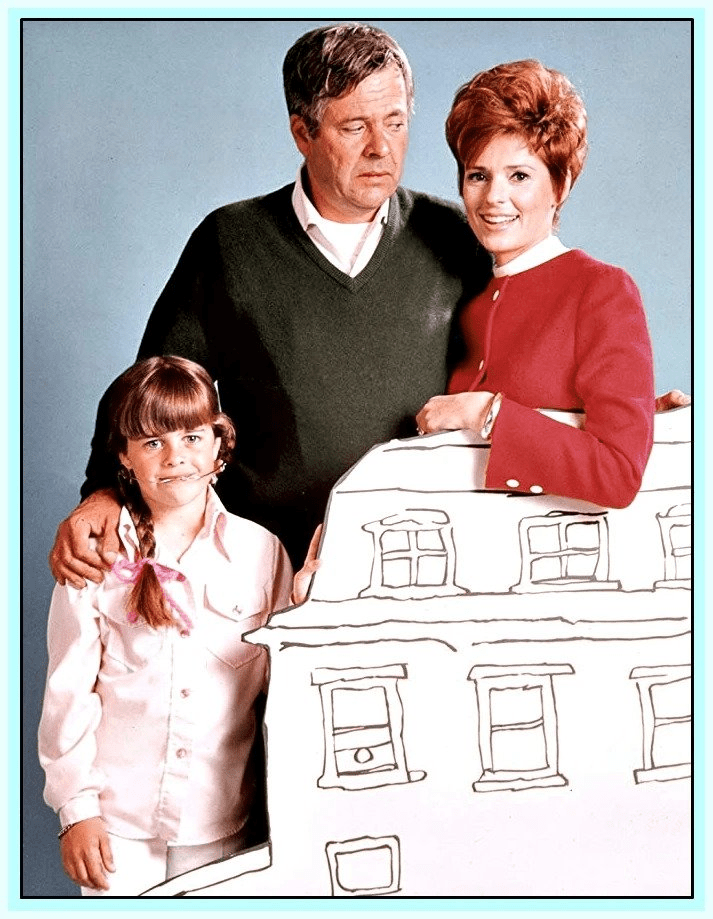
William Windom played John Monroe a cartoonist who works for a magazine similar to the New Yorker called The Manhattanite. Monroe lives with his wife Ellen (Joan Hotchkis) and their daughter Lydia (Lisa Gerritsen). John often daydreams about his daughter’s future and the “older” Lydias were played by Talia Shire and Cindy Williams.

The name John Monroe was Thurber’s alto-ego in his book Owl in the Attic. He frequently daydreams and those are cleverly incorporated into the series.

The episodes opened with John observing different aspects of his life. The use of the cartoons created a fantasy life dream world where he escaped life situations he could not process.

Mel Shavelson created the show for NBC. He wrote and directed the pilot with one of my all-time favorites Sheldon Leonard as executive producer. The animation in the series was done by DePattie-Freleng Enterprises.

Rounding out the cast was Henry Morgan as Philip Jensen, a magazine writer based on Robert Benchley and Harold J. Stone as editor Hamilton.

📷moviedatabase.com

The show was on Monday nights at 7:30 and was up against Gunsmoke. While it had a lot of great reviews from the critics, the viewers were not there in droves. Percy Shain of the Boston Globe referred to the show as “a joy and treasure.” Bob Williams of the New York Post wrote that it was “it’s warm, it’s witty, and it’s a sophisticated cut above the best of the TV network situation comedies.”

Not every critic treated it so kindly, however. Jack Gould of the New York Times felt it was “hackneyed gibberish relieved only by an occasional Thurber drawing” and Norman Mark of the Chicago Daily News decided that it “tried to appeal to all parts of the TV audience and failed.”

Perhaps Barry Harrison of the Washington Evening Star understood the show better than the other critics and had “an uneasy feeling [that] it is not long for TV.” His prediction came true when the series was canceled after one season.

According to Howard Anderson Jr. in his Television Academy interview, one of the major reasons for the cancellation was that it was so expensive to do the filming with a blue screen behind Windom for all the animation.

And then after it was canceled, it won the Emmy for Outstanding Comedy and Windom picked up the Emmy for Leading Role in a Comedy. The series it was up against included Love American Style, Room 222, The Bill Cosby Show, and The Courtship of Eddie’s Father. Windom won over Lloyd Haynes in Room 222 and Bill Cosby of The Bill Cosby Show.

📷billmadison.blogspot.com

The fans did send a lot of mail to the network, but with the so-so ratings and the fact that the animation made this one an expensive show to create, NBC did not put it back on the schedule.

After the show ended, Windom created a one-man play based on Thurber’s works and toured the country throughout the seventies. Perhaps if the network had given it some time after winning the Emmys, this show might have been more successful. It sounds like an interesting concept, although I also get the feeling that it might not have appealed to women; many of the descriptions I read discussed John’s fantasies that his wife and daughter were things to escape from. It’s worth taking a look at and seeing how it has fared over the last sixty years.

How My Living Doll Became Cat Woman

This month we are learning more about some of our favorite robots in this blog series called “I Robot.” Today we go back to the mid-sixties for My Living Doll.

Photo: pinterest.com

This was both a science fiction and comedy show that debuted in September of 1964. Jack Chertok produced it for Television Productions with CBS. The show was filmed at Desilu studios. Chertok had been the creative force behind My Favorite Martian. James Aubrey, president of CBS, approached Chertok about doing another show. He did not even require a pilot to be made. Chertok’s writers from My Favorite Martian, Bill Kelsay and Al Martin, created the show from an idea proposed by Leo Guild. Kelsay wrote many of the episodes for Date with the Angels starring Betty White and several My Three Sons plots. Martin wrote for many earlier shows and screenplays including Roy Rogers.

The plot they created was that Dr. Bob McDonald (Bob Cummings), a psychiatrist for the Air Force, was given Rhoda Miller (Julie Newmar), a lifelike robot to protect. He was trying to keep her out of the hands of the military. Rhoda’s formal name was AF709. Dr. Carl Miller (Henry Beckman) built her for the US Air Force but she eventually lands in McDonald’s care when Miller is transferred to Pakistan. His job is to help educate her to be the perfect woman while keeping her true identity a secret. Beauty marks on her back were the control buttons. Her main power switch was on her right elbow. Her eyes could be covered to prompt a system relaxation. Rhoda’s memory bank contained 50 million pieces of information. Bob told his coworkers Rhoda was Dr. Miller’s niece, and she took on the role of his secretary at the office, typing 240 words a minute. On other episodes, she learned to calculate where dice would fall and how to make trick shots playing pool.

In one episode, Rhoda is asked to play Chopin’s “Fantasie Impromptu” on the piano. Newmar actually played the piece herself. She had studied under concert pianist Dr. MacIntyre, and she said that scene is the only one she’s done with her playing the piano which had been her career choice before acting.

Meeting the Robot Photo: pinterest.com

Like I Dream of Jeanne, many of the episodes deal with Bob trying to keep Rhoda out of trouble while she is learning what society and the current culture is like. Rhoda learns human emotions throughout the first season; perhaps this would have led to a romantic relationship between the robot and the doctor.

Rounding out the cast was Peter Robinson (Jack Mullaney), Bob’s neighbor and coworker who thinks Rhoda is someone he wants to date. Irene Adams (Doris Dowling) plays Bob’s sister who moves in to act as housekeeper and chaperone so the neighbors are not suspicious of a single woman living there. On Love That Bob, Rosemary DeCamp played Bob’s sister who moves in to take care of the household for him. Mrs. Moffat was added later on as Peter’s housekeeper.

The show never really found its viewer base. The New York Times reviewer Jack Gould noted that it “very probably had the makings of a popular novelty hit . . . with Miss Newmar giving a light and amusing performance as the automated dish, the premise could work out . . . Bob Cummings, an old hand at chaperoning pretty girls, again is cast in his familiar assignment.”

Newmar didn’t feel that Cummings was the right actor for the role. She said that “They originally wanted Efrem Zimbalist Jr. It was not a flip part—it needed a straight actor who could play opposite this bizarre creature so the comedy would come off. That quality was lost when they hired Bob. The show could have been wonderful. I think it would have run for many seasons had they hired Efrem because he had the right qualities.”

Photo: yiddio.com

The ratings were not good; however, another issue was the fact that it was on Sunday nights against Bonanza, one of the most popular shows ever. In December, CBS moved the show to Wednesday nights but the ratings did not improve. In January, Cummings asked to be written off the show. CBS agreed but never got a replacement for him. He was said to have been transferred to Pakistan, and Robinson took over caring for Rhoda with his housekeeper living in his house again to keep the neighbors from talking.

Apparently, Cummings and Newmar never hit it off. She complained that he had tried to teach her to act and that he seemed unhappy that she was getting more press attention. Later Newmar stated that the real trouble on the set was Cumming’s addiction to methamphetamines. She said he had erratic behavior and became increasingly more depressed and insecure.

In her new home Photo: imdb.com

After Cummings left the show, another five episodes were aired, and then the show was canceled. The show ended up ranking 79th out of 96 shows. Two decades later, producer Howard Leeds would go on to create the show we will discuss next week, Small Wonder.

I was not able to confirm it, but I read several sources that said this show coined the term, That does not compute” which is what Rhoda said when she was asked something she did not understand.

During the summer of 1965, CBS aired repeats of the show. After that, the show was never seen on television again in the United States. Rumors were rampant about whether the 26 episodes had been damaged in a fire, hidden by Chertok, or destroyed. Two episodes seemed to have survived, but there were also reports that six or ten existed in all. CBS was able to obtain about half the episodes somewhere and released a DVD with them on it. We will have to see if the additional episodes ever show up or not.

Transitioning to Cat Woman Photo:designyoutrust.com

This was another of those shows that seemed to suffer from an identity complex. Cummings was known as a ladies’ man to viewers from his seasons on Love That Bob. If the show was not going for romance, then it seems that Newmar was correct in her assessment of Cummings being the wrong person for the role. With Bewitched debuting the same year and I Dream of Jeanne coming right on the heels of My Living Doll, it seems like one of the shows might not obtain enough viewers. Cummings’ addiction problems certainly did not help the show. Newmar should probably be happy the show ended when it did, allowing her to step into the role of Cat Woman on Batman. Like My Living Doll, Cat Woman had all the qualities Batman admired and wanted in a romantic partner, but unlike Rhoda who was not human, Cat Woman was all too human and too much of a villain to allow Batman to act on his passion for her.

Although the show debuted almost sixty years ago, many of the issues of working with a robot are still with us today as scientists work on giving robots a sense of humor and some empathy. We are seeing more of them in the workplace, and it will be interesting to see if any new shows take up the subject in the near future.