The old cliché is that April showers bring May flowers. So, today we get a glimpse of April Showers. I’m just grateful that I did not have to research shows about snowstorms, since Wisconsin received one to two feet of snow two weeks ago, and we’re still waiting for our first April shower. Let’s look at some of the best sitcom episodes about rain.
I am not a fan of Married . . . With Children, but when looking at sitcom episodes about rain, “Who’ll Stop the Rain” needs to be on the list. The title was taken from the Creedence Clearwater Revival song. During a weekend of rain, Al tries several times to fix the house’s leaky roof. He keeps falling off, and his family can’t decide if his worst trait is stupidity or being cheap. While Al continues to climb the ladder, and his family continues to debate his mental status, in a subplot, Steve lands a job at a pet store. He brings home a guinea pig for a pet. Unfortunately, the guinea bites Marcy and she finds out that the bite is full of venom.
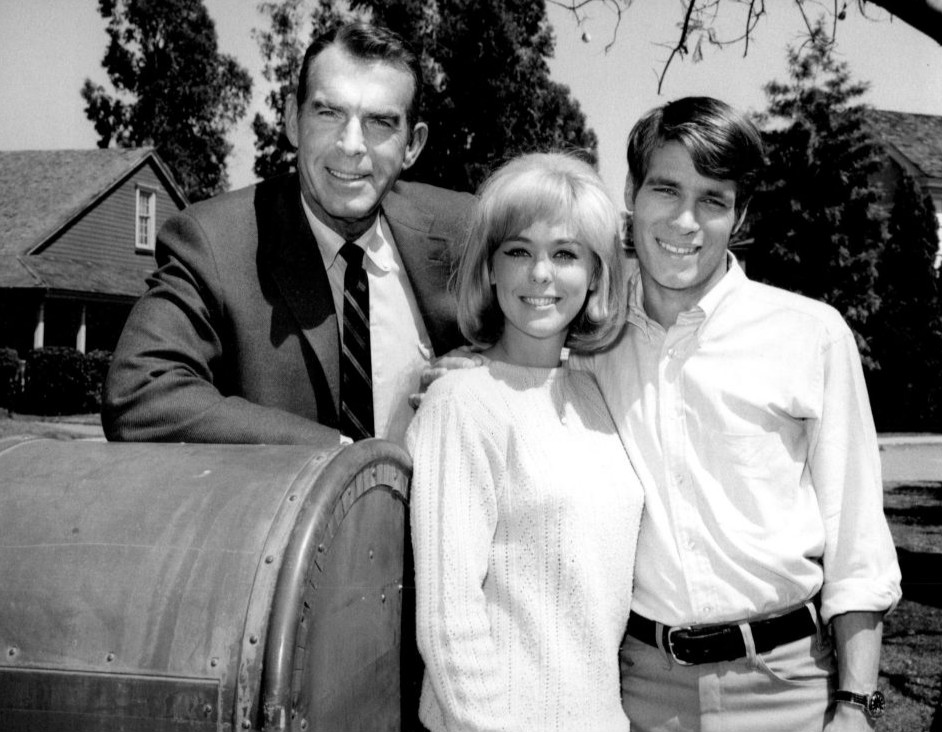
One of my favorite rain episodes is a My Three Sons show titled “The Sky is Falling.” This episode is from the seventh season. Robbie and Katie are married and now have three sons. Rob is under some pressure to provide for his family. A friend of Robbie’s, Steve Franken, convinces him he can make a ton of money selling real estate, so Robbie considers quitting school. During a torrential rain, the storm reveals several flaws in a house he’s selling. Robbie must decide if he will cover up the problems or be honest with the potential buyers and lose the sale.
Another great rain show is the Barney Miller episode “Rain,” an episode from Season 2. Written by Tony Sheehan, the episode features Stanley Brock, Phil Leeds, and Sidney Miller. The team must continue their work even though the precinct roof is threatening to collapse due to a downpour. As the show opens, everyone is unhappy with the weather. There is a deluge of rain out the window, and you can hear the drop of water hitting a pan. Harris and Chano are sent to a nightclub to break up a fight.

The maintenance man reports that there are 6 inches of water on the roof. Fish opens an umbrella when a large leak occurs. Everyone who looks out the window gets depressed and complains about their life.

Harris and Chano bring in a comedian, Jackie Ace. When the audience didn’t like his jokes, he started insulting them. It turned into a free for all, and the owner wants him to pay for damages. He is booked on disorderly conduct. His act is Bicentennial impersonations such as Benedict Arnold turning to Ethan Hale and saying, “Just hang in there kid.” Barney asks Fish if they found a crime for the comedian, and Fish says only his monologue. Jack Soo who plays Yemana with deadpan delivery and a wry sense of humor, uses the rain coming from the ceiling to make coffee.
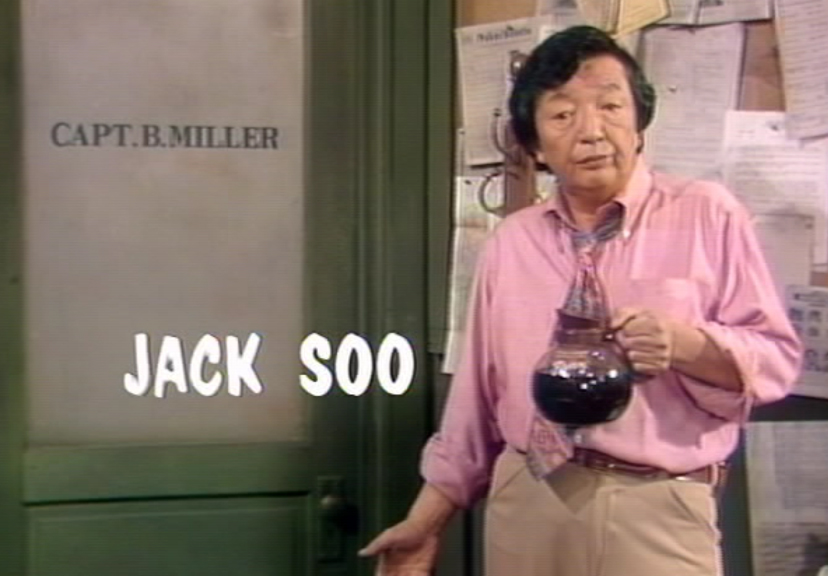
Every time we see the room there are more containers collecting water. Eventually the maintenance man reports they now have 5 feet of water on the roof, and it is coming from the buildings surrounding the precinct. Even the file drawers fill up with water. The emergency department for the city says there is no way the roof can collapse. When no nightclub guests press charges, the officers let Jackie Ace go. Eventually part of the roof collapses and Barney, who is typically mild mannered and calm, loses his temper. He has finally had it, and he decides to call the City and give them a piece of his mind, but now the phone line is washed out. At the end of the show when the rain has finally stopped, Barney apologizes to the crew for getting so mad, but they tell him not to worry about it. He just said what they all were feeling.
My favorite rain episode, hands down, is “The Rains Came” from Green Acres. This quirky episode is from the first season. It begins in the Pixley Courtroom. As everyone enters, Mr. Haney introduces Oliver and Lisa to his attorney, Diller Fangworth, played by J. Pat O’Malley. Fangworth doesn’t believe Oliver is really a lawyer because he’s never seen him hanging out with the other lawyers at the saloon across the street. Mr. Haney reprimands Oliver for not settling the lawsuit and gives him another chance to pay. He does take time to compliment Lisa on her sophisticated outfit in the middle of the speech. Fangworth removes his coat and plays with his suspenders. Haney tells Oliver the judge’s favorite actor is Spencer Tracy, and as Fangworth begins questioning the witnesses, he is obviously using his impersonation of Spencer from Inherit the Wind. At one point, the judge tells him he’s seen enough of his Tracy mimicking in the past and to put his coat back on.

When the judge asks who is representing Oliver, and Oliver says he is an attorney, the judge asks why he’s never seen him across the street at the saloon. We learn that Haney is suing Oliver for $350 for services rendered. Oliver says he did agree to pay $350 but services were not rendered. They begin to recall what led up to the lawsuit.

Eb is the first witness. He takes the stand, and the judge makes him remove his hat. Eb bought the hat just to go with the suit, so he is not happy. Plus, he worries his hair is now a mess while he testifies. Eb recalls that on the 86th day of the drought, Lisa was talking to Rudolph the sunflower outside their back door. Oliver finds Lisa talking to the plant and thinks the heat has gotten the better of her. When she waters the flower, Oliver reminds here they have acres of plants dying from lack of water. She says she is not wasting water because there is a story from her old country that if you water a sunflower right outside your door, you can ask him for one favor and he must grant it. She is going to ask him for rain. Oliver tells her she is being ridiculous and sends her inside. Then he stops and stares at the sunflower and, making sure no one sees him, he waters it.
The second witness was Hank Kimble. He’s eating lunch when they call him up which leads to some confusion. He takes the oath but feels compelled to say while he doesn’t lie, he did in fact lie to his mother once. The judge stops him and tells him just to answer the questions. Kimble admits Oliver asked him how they could get it to rain, and Kimble said they could seed a cloud; unfortunately, there were no clouds to seed.
Everyone retires to the saloon across the street for lunch. When they reconvene, it’s Mr. Haney’s turn to take the stand. He explains that he and Oliver discussed the drought, and Haney offered to make it rain for $100 with his rain machine. When Oliver says there is no such thing, Haney reveals Chief Thundercloud, played by Robert Strauss. The chief begins playing a drum, but Oliver cuts him off and refuses to pay $100. Haney pulls out jars of water specimens from different areas around the country where the chief has brought rain.
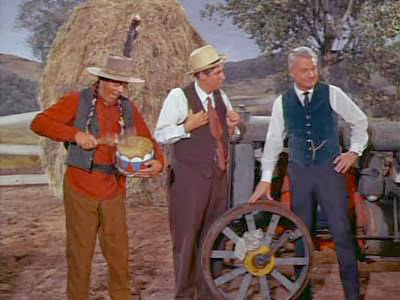
A couple days later, Haney comes back to give Oliver a second chance. The Chief says he has to work harder now because it’s dryer, so the cost is $350. Oliver agrees to a double or nothing payment. If the Chief brings rain, Oliver will pay, but if not, they get nothing. The Chief does his dance, but after a couple minutes he stops because he is tired and asks Oliver for a glass of water. Oliver sends then both away. Haney tells the Chief he no longer wants his services. The Chief is walking around Hooterville and meets Lisa at the house; he tells her he needs a job. She tells him to do whatever handyman chores he sees need done and they will pay him. She relays this to Oliver who realizes who he is. He goes outside and finds the Chief washing his car. Oliver tells him to stop wasting water on the car. Suddenly, a rain storm begins.
Mr. Haney is sure it was from the Chief’s dancing, Lisa thinks it is the sunflower, and Oliver says it’s because the Chief washed his car, and everyone knows as soon as you wash the car, it rains.
The judge (played by Howard Smith), tired of the entire bunch, dismisses the case. Everyone returns home.
At home, Oliver finds Lisa talking to Rudolph again. She said she asked Rudolph to bring rain when Oliver was arguing with the Chief about washing the car. Oliver tells her that is silly, so she asks Rudolph to make it rain. Instantly, Oliver has rain coming down on him and looks amazed till he looks up and sees Eb squirting him with a hose.
The characters make this episode funny. Their expressions and mannerisms from Fangworth’s Tracy impersonation to Eb worrying about his hair to Kimble feeling the need to admit he once lied to his mother add dimension to the quirkiness the characters always exhibit. I liked the fact that the judge was not portrayed as a country hick; he is an intelligent and no-nonsense guy who just wants to get his job done right. I also thought it was great that while Oliver knows its crazy that watering a sunflower could produce rain, he still takes time to water Rudolph. It’s a well-written script featuring the true traits of the Hooterville citizens at their best.
Enjoy these rainy days of spring when you can stay indoors and watch old tv episodes.


 thewritelife61