Jonathan Harris: Oh the Pain

This month our blog series is “All About The Bill Dana Show,” and we are learning about the careers of some of the cast members. Last week we looked at the life of Maggie Peterson, and today we are getting to know Jonathan Harris.

📷LostinSpaceWikiFandom.com

Harris was born Jonathan Daniel Charasuchin in the Bronx in 1914. His father worked in Manhattan’s garment district. His family often took in borders to make ends meet, and when they did, the border got Jonathan’s room, and he slept on a couple of dining room chairs.

By age 12, Harris was working at a pharmacy as a stockboy. Although money might have been short, Harris’s family’s love of music and theater was not. As a family they listened to opera in the dining room. Whenever they had some extra cash, they would take in a Broadway play. Harris was interested in archeology, poetry, and Shakespeare. He disliked his Bronx accent and taught himself to develop a British one.

Harris was able to graduate at age 16 from James Monroe High School. His pharmacy job paid off when he graduated from Fordham University with a pharmacology degree in 1936. Before entering college, Jonathan took the name “Harris” in place of his birth name.

In 1938 Harris married his high school sweetheart, Gertrude Bregman. They were married until his death.

While working in several pharmacies, Harris also worked on his acting skills. He created a phony resume which he used to land a spot in a local acting company. In 1942 he played a Polish officer in the Broadway production, “The Heart of a City.” He was persistent. He said that he went to Mr. Miller’s office to audition for a part in the play for two weeks, and everyday Mr. Miller’s secretary sent him away. Finally, she let him in, and Mr. Miller gave him his first part. Then he lied and said he could do a Polish accent. He then went to the Polish Consulate to listen to how they talked. So, despite a fake resume, being turned away for weeks, and then lying about an accent, he was a success in the play.
📷amazon.com

In 1949, Harris made his television debut in The Chevrolet Tele-Theatre. Throughout the fifties he would continue to appear in dramatic playhouse series.

In 1959 he had a recurring role in Zorro as Don Carlos Fernandez as well as an appearance on Father Knows Best.

The sixties brought him roles in several well-known series including The Twilight Zone, Bonanza, and The Adventures of Ozzie and Harriet.

In 1963 he was offered the role of Mr. Phillips, the hotel manager on The Bill Dana Show. I won’t elaborate on this series, but if you missed the first blog in March, you can read about this show which was on the air for a season and a half.

Harris did an interview with the Television Academy. He said that when he read the script for The Bill Dana Show, he decided he had to come up with some other characteristics for Mr. Phillips. He made him devoid of humor. But he said he was a different man with his wife on the show, played by Amzie Strickland. Harris said Bill Dana was wonderful to work with. He also said that the writing was so good on that show that he never had to re-write anything. However, if something felt off, he would ask Sheldon Leonard about changing it, and Leonard was always open minded about revisions.

Harris continued to appear on dramatic shows while waiting for his next role.
📷thenewyorktimes.com

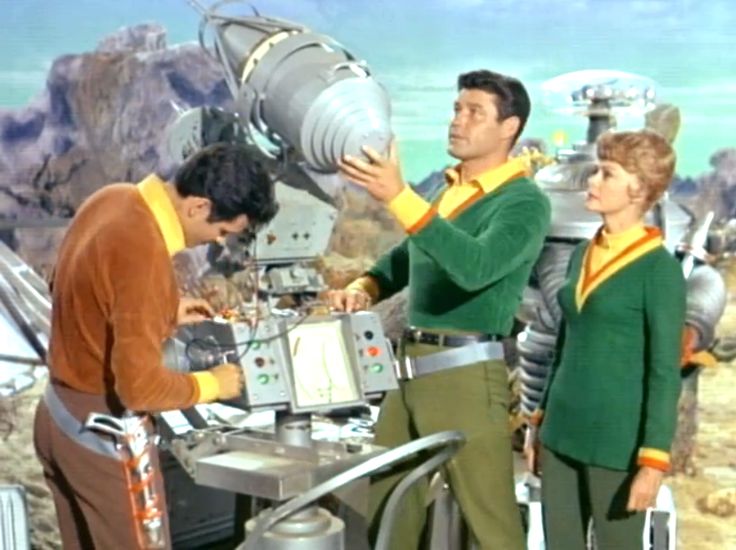
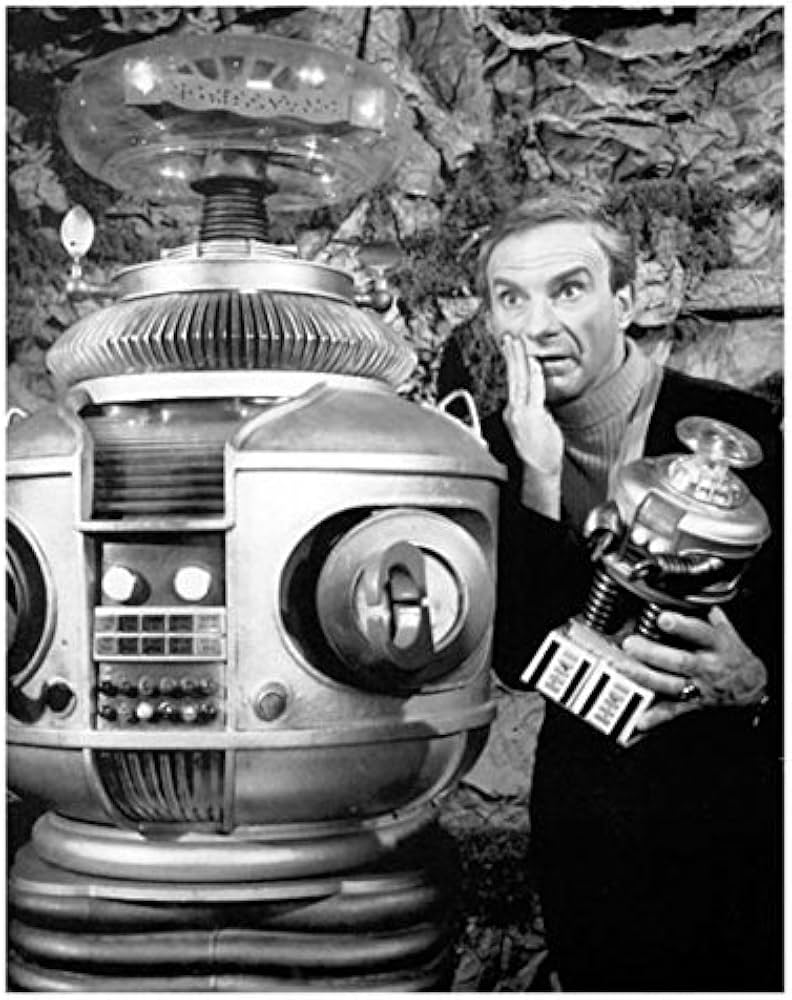
In 1965 Lost in Space was put on the fall schedule. Harris played Dr. Zachary Smith. Neither his role nor the Robot were in the pilot of the series, but they were both brought in before the show began.

The show was a big hit with viewers. Harris felt his character, who was not trusted by the family, needed a bit of comedy, so he began to adlib his dialogue. Irwin Allen, creator of the show, approved the changes and allowed him to be considered a writer. Harris said he was a good re-writer, but he was never a writer.

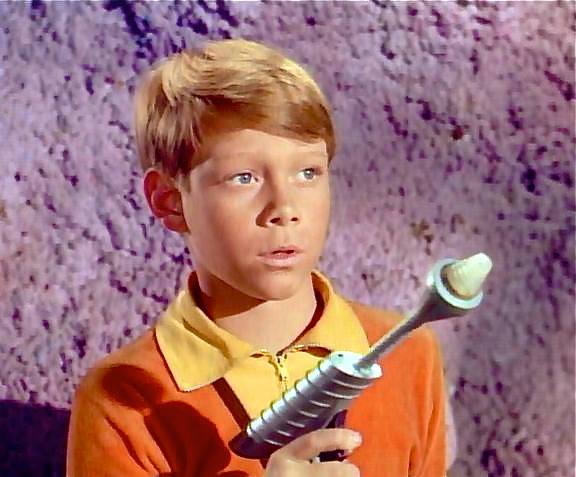
Bill Mumy, who played the son on the show and interacted with Smith quite a bit said that Harris “truly, truly singlehandedly created the character of Dr. Zachary Smith that we know—this man we love to hate, coward who would cower behind the little boy, ‘Oh the pain! Save me, William! That’s all him.”

The show was still high in the ratings during its third season, but the writers were running out of ideas, and the show was canceled after 83 episodes.

📷imdb.com

In the seventies, Harris joined the casts of two Saturday morning series, Space Academy and Uncle Croc’s Block. Uncle Croc’s Block was a very weird show in my memory. Even though it was on Saturday mornings, he parodied kids’ shows. Uncle Croc, played by Charles Nelson Reilly, butts heads with his program director Basil Bitterbottom, Harris’s role; Phyllis Diller played Witchy Goo to round out the cast. Uncle Croc has a sidekick Rabbit Ears and introduced the cartoons.

He also continued to appear on other series, and you can spot him in The Ghost and Mrs. Muir, Land of the Giants, Get Smart, Bewitched, McMillan and Wife, Love American Style, and Vega$.

After the mid-seventies, most of his work was in the animation field.

He also became a drama coach, and Chuck Norris was one of his students.

📷billmumy.com

In 1990, the cast of Lost in Space reunited for the 25th anniversary. More than 30,000 fans attended the event.

Harris also spent time on his hobbies, which were many. He loved gourmet cooking, watching movies, reading, traveling, painting, magic, playing piano, gardening, dancing, knitting, and spending time with this family. He also kept his interest in listening to opera that he cultivated as a child.

He passed away in 2007 from a blood clot that traveled to his heart.

Harris was a talented actor. I’m not sure why he was never offered another sitcom or a chance to play a different type of character. I’m glad he found a home in animation, but I wonder if he regretted leaving Broadway for television. It was fun to learn more about this man and his career.

Land of the Giants: Dogs and Cats and Rats, Oh My!

Photo: imdb.com

This month our blog series is “Kinda Creepy.” Today we are moving forward a couple of years into the late sixties with Land of the Giants.

This science-fiction show was aired on ABC from fall of 1968 to spring of 1970. It was created and produced by Irwin Allen. Five novels were released during this time, three by well-known author Murray Leinster.

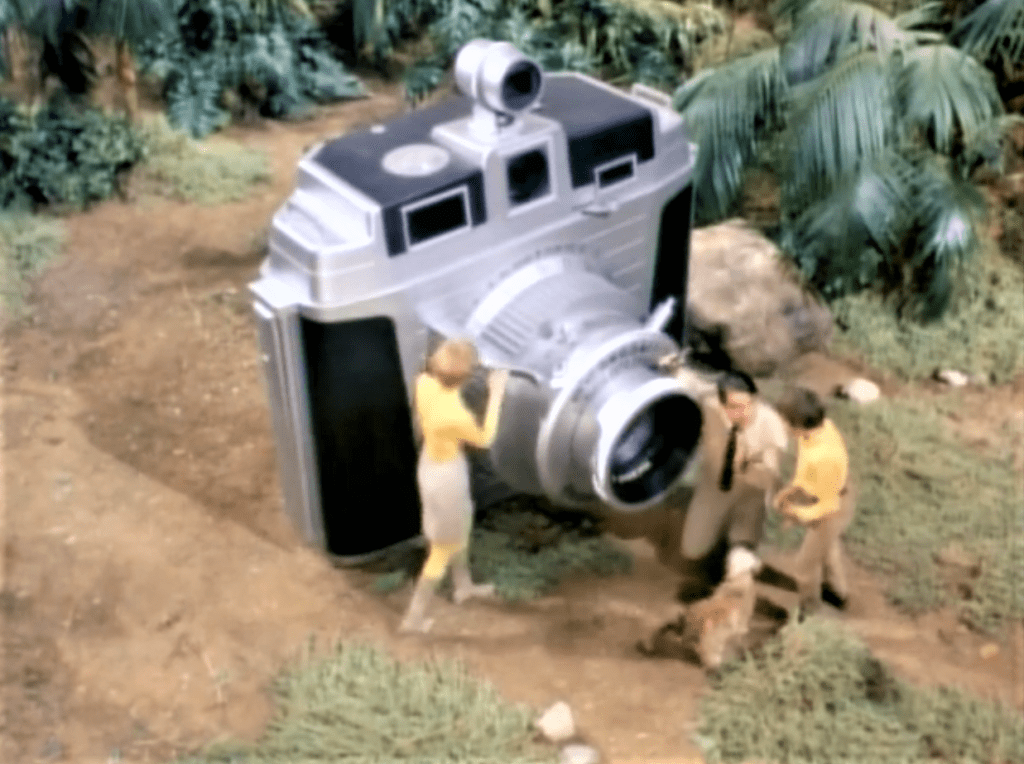
The show was set in 1983 and features the crew and passengers who were on a suborbital transport ship, the Spindrift. The Spindrift is en-route from Los Angeles to London when it encounters a magnetic space storm. It goes through a time warp to an unknown planet where everything is 12 times bigger than on Earth. When the Spindrift lands, it crashes and becomes inoperable.

The crew and passengers include Captain Steve Burton (Gary Conway), First Officer Dan Erickson (Don Marshall), Flight Attendant Betty Hamilton (Heather Young), Passenger Valerie Scott (Deanna Lund), Wealthy Passenger Mark Wilson (Don Matheson), Orphan Passenger Barry Lockridge (Stefan Arngrim), Passenger and Bank Robber Alexander Fitzhugh (Kurt Kasznar), and Inspector Kobick (Kevin Hagen). Fun fact, Matheson and Lund were married in 1970 but divorced before the decade was over.

Photo: deviantart.com

The Giant society resembles that of the United States in 1968. The survivors get around in drains leading from interior rooms to the pavement. The Giants realize they are there somewhere and have offered a reward for their capture. An authoritarian government seems to dominate part of the planet but other groups are at work to help the small Earth people survive. The Giants do have advanced technology including cybernetics, cloning, force fields, magnetic stunners, androids, and teleporters.

Not only do Earthlings have to survive being caught by the Giants, but they have to be wary of pets, especially cats and dogs. Occasionally someone is captured, and other members of the crew have to rescue them.

One article said that in 1969, “boys could be found sitting in front of the television captivated by the antics of red-haired, mini-skirted Valerie as she was menaced by cats, imprisoned in a dollhouse, cloned, prodded by scientists, carried off by an ape, and even used as a pawn on a giant chessboard.”

Photo: invisiblethemeparks.com

The show had a budget of $250,000 an episode. In 1968, it was the most expensive show produced on television. There were a lot of special effects. Gigantic mechanical props were built and used. For example, a slice of bread was made from a four-foot slab of rubber, and one episode had a nine-foot revolver. Some of the props were recycled from Lost in Space, Voyage to the Bottom of the Sea, and Batman. Actors had to do a lot of their own stunts like climbing up curbs and phone cords. The one-hour episodes were filmed in color.

The show aired on Sunday nights against Lassie, so I was surprised it achieved decent ratings so quickly. It stayed on Sunday nights for season two but was up against World of Disney which probably created a bit of a ratings decline. The other show, To Rome with Love, moved around a lot and was probably not much competition. The network decided to cancel the show before the third season, but since the writers were not aware that it was going to happen, no finale was written, and we never learned if the characters made it back to Earth or not. The financial cost was the reason the network cited for the cancellation.

Photo: art.com

Composer extraordinaire John Williams composed the theme for the show; he also composed the theme for Lost in Space.

I don’t really remember the merchandise for this show, but it included comic books, View Master reels, model kits, and a lunch box.

I do remember watching this show and I remember being scared when a large dog was growling at one of the Earthlings. It definitely earned the kinda creepy description. I think I was a bigger fan of The Borrower books. I always wondered if this was one of the inspirations behind Honey I Shrunk the Kids. From what I recall, the concept of the show was better than the reality of the show.

Danger Will Robinson: Lost in Space Revisited

Airing in 1965, Lost in Space follows the travels of a family whose ship is off course, traveling through outer space. The show was on the air for three seasons, producing 84 episodes.

Photo: nytimes.com

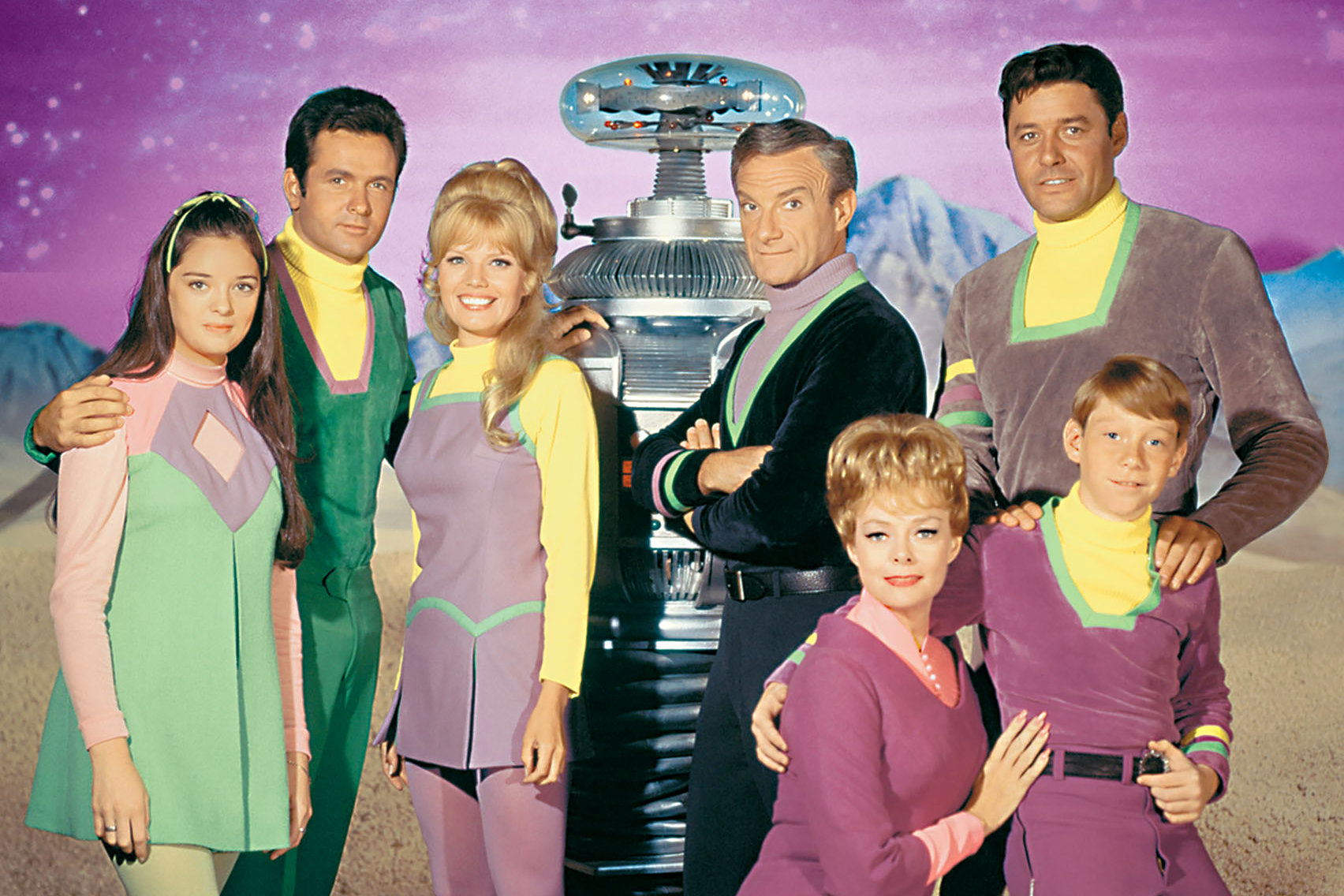
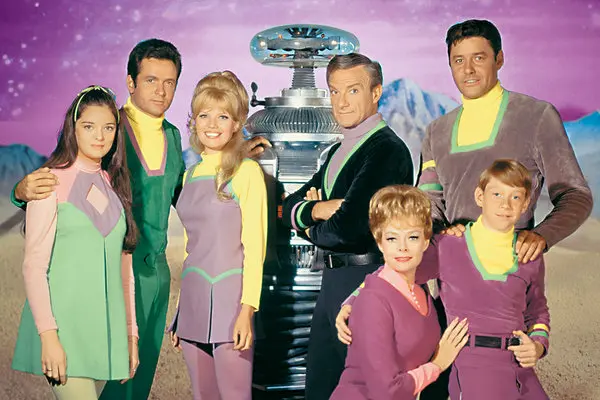
The premise of the show was that in 1997, earth becomes overpopulated. Professor John Robinson (Guy Williams); his wife Maureen (June Lockheart); and their kids, Judy (Marta Kristen), Penny (Angela Cartwright), and Will (Billy Mumy) are selected to go to the third planet in the Alpha Centauri star system to establish a new colony. Major Don West (Mark Goddard) is also accompanying them. Doctor Zachary Smith (Jonathan Harris) an enemy government agent is sent to sabotage the mission. He becomes trapped on the ship after he reprograms the robot (voiced by Dick Tufeld), altering the course for the spaceship, the Jupiter 2. The group is now lost and trying to find their way back home. During the course of the show, Smith becomes less sinister. It was no secret that the show was a science fiction version of Swiss Family Robinson.

The pilot, created by Irwin Allen, was titled “No Place to Hide.” A ship called the Gemini 12 was supposed to take a family on a 98-year journey to a new planet. When an asteroid knocks the shop off course, the family must try to find their way back. CBS bought the series, choosing Lost in Space over another new show, Star Trek. Dr. Smith and the Robinsons’ robot were added to the cast and the ship was renamed Jupiter 2.

Photo: fandom.com

Dr. Robinson was an astrophysicist who specialized in planetary geology. Williams who played the part was a well-known actor who had starred in the show Zorro. He thought his lead role would be a dramatic part, but the show became increasingly campy like Batman, and Williams’ role was more of a supporting character than a star. He was bitter about the turn of events and when the show was cancelled, he moved to Argentina where Zorro was popular and never acted again.

Photo: en.wikipedia.org

Maureen Robinson was also a doctor; she was a biochemist who also performed housewife duties such as preparing meals and tending the garden. Her chores were not too taxing though because the “auto-matic laundry” took seconds to clean, iron, fold, and package clothing in plastic bags. The dishwasher also did a load in seconds. In addition to the hydroponic garden maintained by Maureen, the crew had protein pills available that would substitute for food during emergencies. One fun fact I learned about Lockhart was that she had the largest parking spot on the 20th Century Fox lot because she often drove a 1923 Seagrave fire truck.

West was the pilot of the Jupiter 2 and the only crew member who could land the ship.

Photo: digitalvortex.info

Judy is the oldest child. Being the oldest, she was allowed a more glamorous wardrobe and hairstyle. There was always the undercurrent that she and West would get together. Penny is eleven and loves animals and classical music. She finds a pet similar to a chimpanzee which she named “Bloop.” Will is nine and the youngest member of the family, but he is a genius when it comes to electronics and computer technology.

Photo: pinterest.ca
Photo: tvdatabase.wiki.com

Dr. Smith is an expert in cybernetics. Carroll O’Connor, Jack Elam, and Victor Buono were all considered for the part of Dr. Smith. Smith was only supposed to be a guest star but became the best-loved character in the show. Harris rewrote many of his lines that he considered boring. He redefined his character as an attention-getting egoist with a flamboyant style and arrogant dialogue.

Photo: nytimes.com

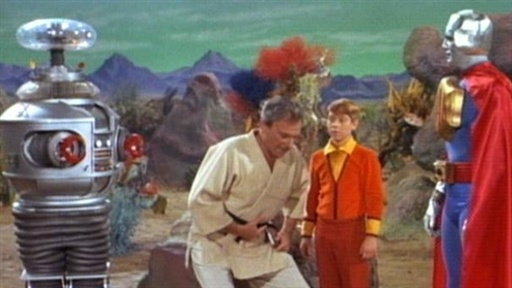
The Robot is an M-3, Model B9, General Utility Non-Theorizing Environmental Robot which had no name. It did have superhuman strength and weaponry that was futuristic in nature. It can display human characteristics such as laughter, sadness, and mockery.

Photo: denofgeek.com

The robot was designed by Robert Kinoshita. It cost $75,000 to produce and weighed more than 200 pounds. Kinoshita also designed Robby the Robot for the Forbidden Planet in 1956. The Lost in Space robot was a Burroughs B-205. It had a flashing light and large reel-to-reel tape drives. It could be seen in a variety of movies and television shows, including Voyage to the Bottom of the Sea (1964), Batman (1966), The Land of the Giants (1968), and Austin Powers: The Spy Who Shagged Me (1999).

A number of stars chose to appear on the show including Werner Klemperer, Kurt Russell, Wally Cox, Lyle Waggoner, Arte Johnson, Hans Conried, and Daniel J. Travanti.

The pilot and many shows from season one used Bernard Herrmann’s score from The Day the Earth Stood Still, a 1951 film. John Williams wrote the opening and closing themes for the show. Season three used a faster tempo version and the opening featured live action shots of the cast. The theme music is unforgettable, and although I haven’t seen the show since its original airing until recently, I immediately remembered the entire score.

Photo: friends-club.info

In season one, the ship crashes on an alien world, later identified as Priplanus. The crew spends most of the season on the planet, surviving many adventures. Most of the episodes emphasize the daily life of the Robinsons adjusting to their new conditions. The show was on Wednesday nights against The Adventures of Ozzie and Harriet and The Patty Duke Show on ABC and The Virginian on NBC.

Photo: pinterest.ca

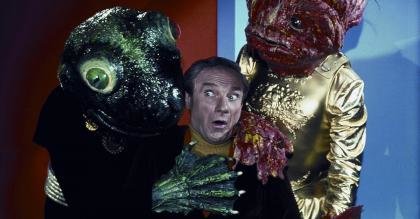
In season two, the ship is repaired and launched into space. Priplanus is destroyed after a series of earthquakes. Eventually, the spaceship lands on another planet and is delayed there. The show became campier during this time because it was scheduled against Batman for a second year. Costumes were brighter and the show was filmed in color. Most of the plots featured outlandish villains. More emphasis was placed on Will, Dr. Smith, and the robot and serious science fiction was sacrificed. Like season one, each episode ended with a cliff hanger.

Photo: pinterest.com

Season three shows the Jupiter 2 travelling through space visiting a new setting on each episode. A space pod allows transportation between the ship and the planets they explore. Humor was still a mainstay of the show and the crew encountered space hippies, pirates, intergalactic zoos, and ice princesses. The cliff hanger disappeared, and the robot would show highlights from the upcoming episode before the closing credits. The show continued its slot on Wednesdays and was still on opposite The Virginian on NBC but also The Avengers on ABC

Photo: mightymega.com

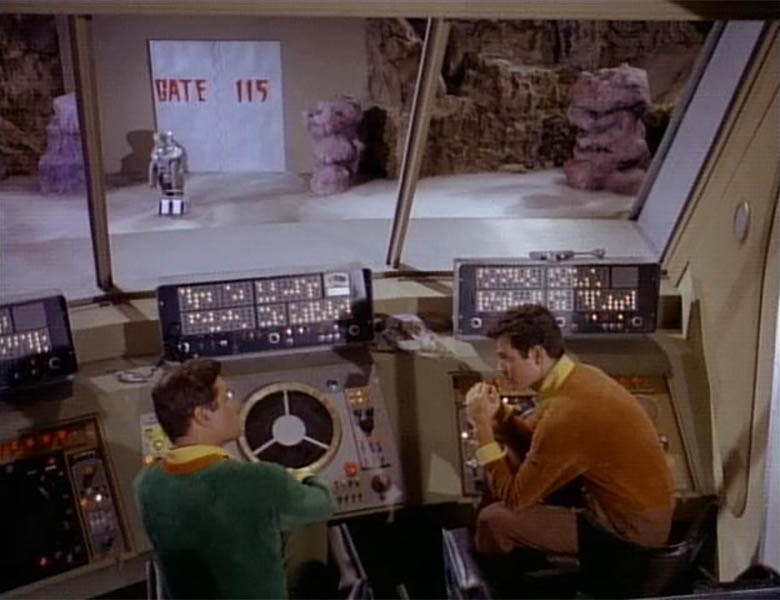
The show was probably best known for its technology and futuristic props. The Jupiter 2 was a two-deck spacecraft, nuclear powered. It used “deutronium” for fuel. The crew slept in Murphy beds. A laboratory was also designed as part of the spaceship. The characters could travel between two levels by an electronic glide tube elevator or a ladder. The ship could be entered or exited through an airlock on the upper deck or landing struts on the lower deck.

Photo: pinterest.com

The crew traveled on the Chariot. It had six bucket seats for passengers, a radio transceiver, a public address system, a rack holding laser rifles, and interior spotlights.

The crew members could use a jet pack, the Bell Rocket Belt. The robot ran air and soil tests. He could detect threats with his scanner and produce a smoke screen for protection. He could understand speech and speak to the crew. He claimed he could read minds by translating thought waves back into words.

Photo: view.yahoo.com

One of the things Lost In Space is best remembered for is the catchphrase, “Danger Will Robinson.” What is funny is that it was only used one time in the series. Smith also had several lines he is remembered for: “Oh, the pain, the pain” and “Never fear, Smith is here” are two of them. He also was famous for his alliterative phrases such as “Bubble-headed booby,” “Cackling Cacophony,” “Tin-Plated Traitor,” “Blithering Blatherskyte,” and “Traitorous Transistorized Toad” which he used to insult the robot.

Photo: en.wikipedia.org

Lost in Space ranked in the top 35 shows all three seasons it was on the air (32nd, 35th, and 33rd respectively). It was ranked number three in the top five favorite new shows of 1965-66, along with The Big Valley, Get Smart, I Dream of Jeannie, and F-Troop. The show was nominated for an Emmy for Cinematography Special Photographic Effects in 1966 and for Achievement in Visual Arts & Make-up in 1968 but did not win either award.

Despite its good ratings, CBS Chairman William Paley hated the show and didn’t understand why it was popular. He instructed his executives to cancel it the minute its ratings dipped. Unfortunately, it was never able to air a finale.

Photo: metv.com

In the 1970s, Mumy wrote a script for a reunion movie. He arranged for the casting and had approval from 20th Century Fox and CBS. However, Allen who was worried that Mumy might be entitled to a copyright claim on the original, refused to even review the script. Without his okay, the reunion was never able to be filmed.

Lost in Space was successful in reruns and syndication. All three seasons are available on DVD. Like many science-fiction shows and movies from the 1960s, it was eerily predictive of technology and glaringly wrong at the same time. The show is campy, but I don’t mind that. Along with The Monkees and Batman, it seems to fit the times it was produced in.

Photo: lrmonline.com

Perhaps it’s not that bad that Mumy was not able to film the reunion. The show was made into a movie in 1998 which received poor reviews. Legendary Television has brought a reboot of the show to Netflix in 2018.  It is currently getting ready for its second season. It has not received the greatest reviews either. Lost in Space can be seen on Antenna TV on Saturday nights, so you might want to catch an episode or two this winter. Sometimes the real thing just can’t be duplicated.

Photo: pinterest.com