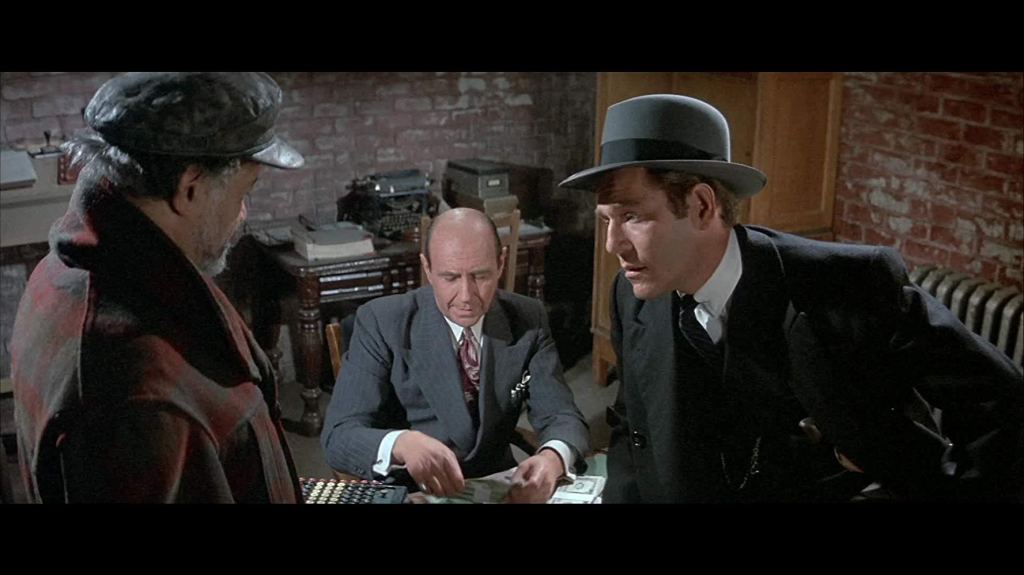
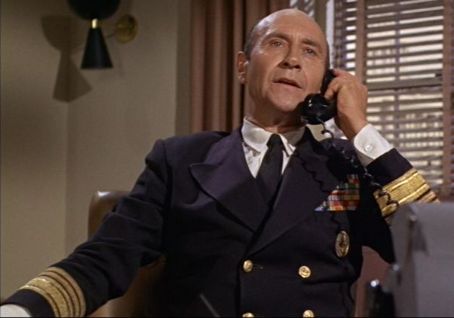
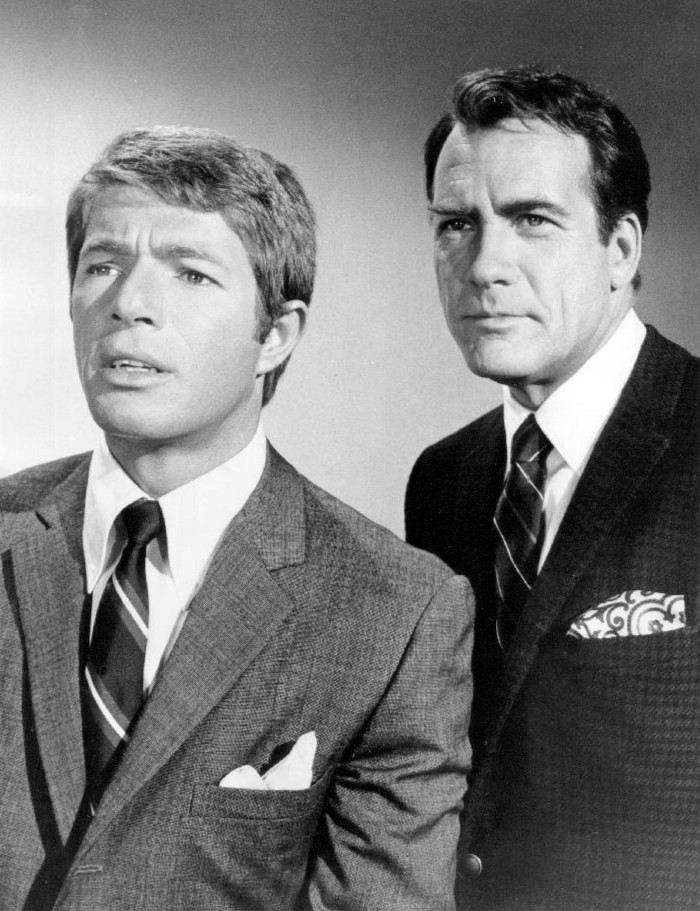
Sandra Gould: What a Character

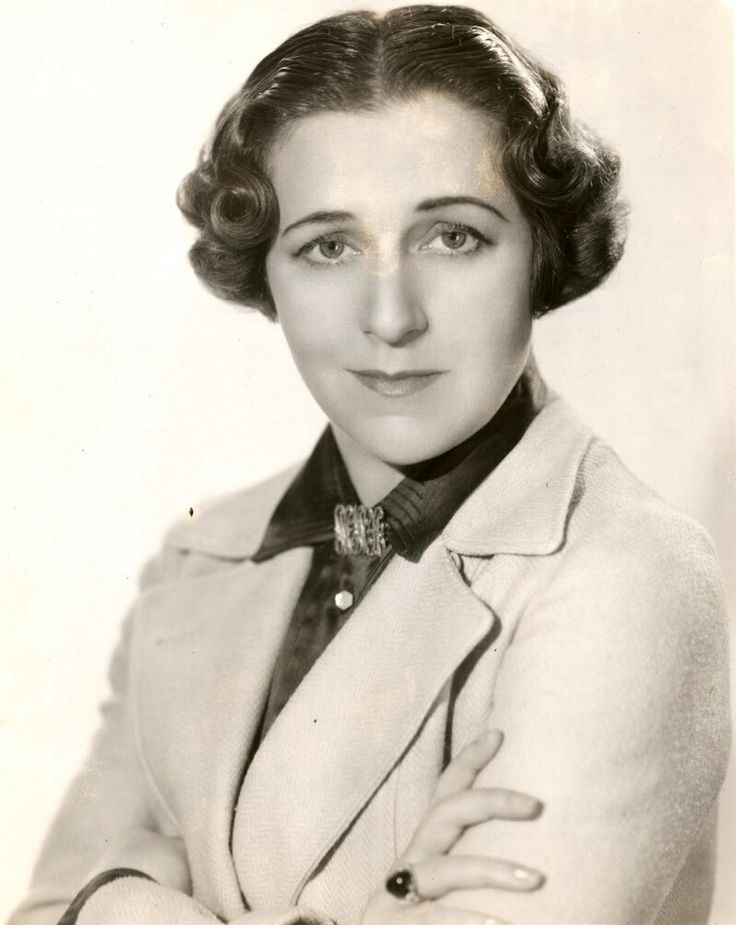
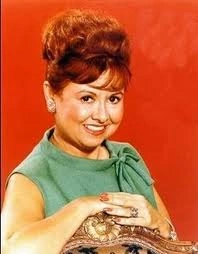
We are winding up our blog series “What a Character” with Sandra Gould. I have to be honest, I had an unfair bias against Sandra Gould.  I didn’t know a lot about her career, I just knew that she replaced Alice Pearce as Gladys Kravitz, and it was a bad replacement. It wasn’t Sandra’s fault—I blame the show’s producers.
📷pinterest.com

Some actors truly are irreplaceable. Eartha Kitt, while a great Cat Woman, just wasn’t Julie Newmar. Imagine trying to replace Henry Winkler as the Fonz halfway into the show. Can you picture tuning into MASH and finding Hawkeye was now played by someone other than Alan Alda?  Pearce was perfect in that role and, despite her being nosy and annoying, she was likable and that is hard to do. Gould’s Gladys was loud and brash, and I felt like I heard fingernails on a chalkboard whenever she was in a scene.

As long as I’m oversharing, I never cared for Dick Sargent either. While he was able to replace Dick York in some ways, York was just Darrin. Okay, I’m done and ready to talk about the good aspects of Sandra Gould and her long career.

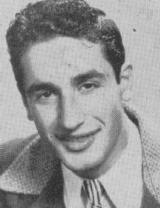
Gould was born in Brooklyn in 1916. She entered the entertainment business early becoming a kid dancer in the Cat Skills by age 13.

📷threads.com

Gould found a lot of success on radio, appearing on “My Friend Irma” and “Duffy’s Tavern.” Her first radio job came along when she was only 9 on “The Danny Thomas Show.” Gould was with Jack Benny for almost fifteen years.

In 1938 she married Larry Berns, a broadcasting executive. They were married until his death in 1965. Berns joined CBS in 1942 writing and producing radio and TV series including Our Miss Brooks. He later worked on McHale’s Navy and Broadside.

Sandra’s first role was in the big screen T-Men in 1947. Most of her roles were inept or gabby women, typically a telephone operator, nurse, receptionist, landlady, or saleswoman. Gould once mentioned that she played an operator more than any other actress. I did notice 10-15% of her roles mentioned switchboard operators.
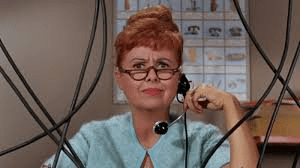
📷facebook.com

While she continued to appear in movies, most of her acting credits came on television. She appeared in Oboler Comedy Theater in 1949. In the early days of television, many of the series were drama or comedy reenactments of movies or plays. Sometimes, new stories were written for these episodes. Gould continued with these roles into the mid-fifties.

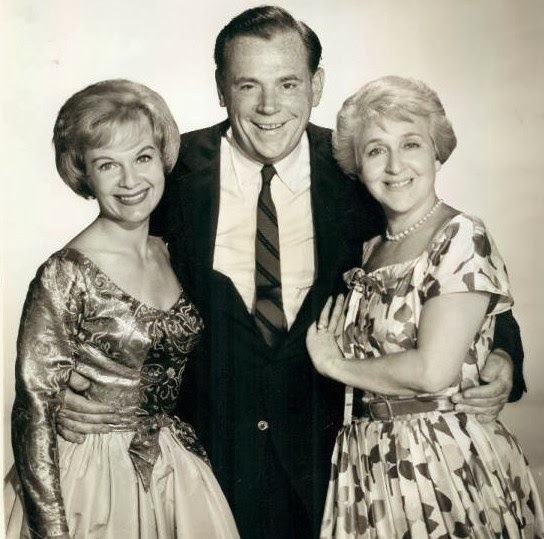
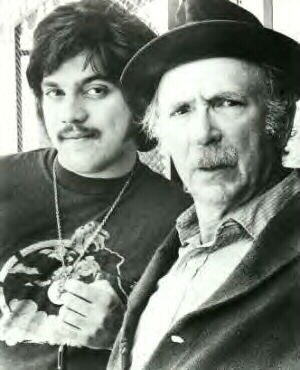
From 1952-55 she appeared as Mildred on I Married Joan. This series starred Joan Davis and Jim Backus. He was a judge, and she was another “Lucy Ricardo” always getting into mischief or causing hardships for her husband.

📷tumblr.com

Gould was kept very busy with offers during the end of the fifties and throughout the sixties. She could be seen doing comedy on Our Miss Brooks, I Love Lucy, The Jack Benny Program, My Three Sons, The Brady Bunch, and I Dream of Jeannie among others. She also tried western life on Wagon Train. Her drama performances included Hawaiian Eye and I Spy. She even dipped her toe into animation on The Flintstones.

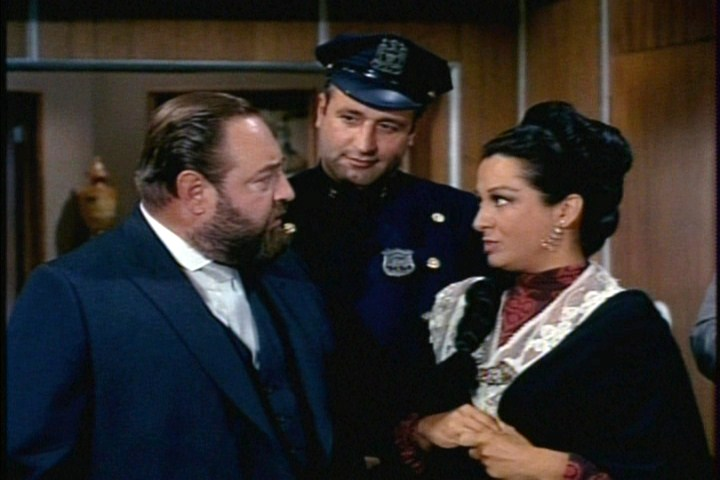
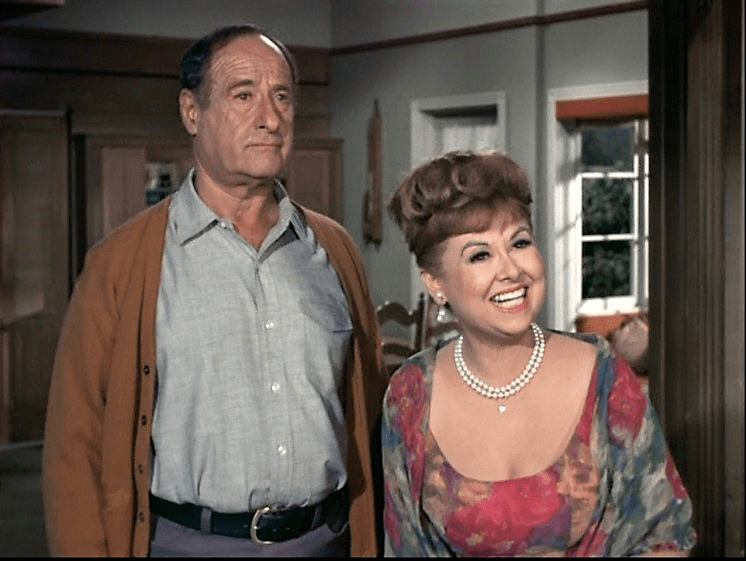
At the end of the sixties, she was given the Glady Kravitz role. Pearce and Gould split the character’s appearances: Pearce had 27 episodes with Gould having 29.

Gould had stepped away from acting for a time. She published two books for girls: Always Say Maybe and Sexpots and Pans. They both seem quite dated today in their advice to girls to get the right type of husband. At the time she accepted the role of Gladys she said she had gone through a very rough year. Her husband died. Then her writing partner Peter Barry died. Then Alice Pearce, who was a good friend of hers. She had no desire to take over the role, but George Tobias who played Abner and was also a friend, called her to come in for an audition.
📷imdb.com

I could not find any information about she and Barry collaborating. One article specifically mentioned that they wrote scripts for Honey West, Tammy, and The John Forsythe Show, but I don’t see either of their names as writers for these shows. Barry is listed as a writer for 23 shows in the late fifties and early sixties, and he was a radio scriptwriter. Perhaps they had written some scripts that were never filmed.

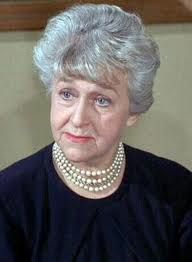
I guess I am in the minority on the Bewitched issue because most sites I visited described her role similarly, usually something like Hollywood Spotlight’s description: “her over-the-top performance and shrill voice were popular with viewers, and she succeeded ultimately in making the character her own.” She also reprised her role as Gladys in the sitcom Tabitha in 1977 which was about Darrin and Samantha’s daughter as an adult.

Some time during her stint on Bewitched, she got married again to Hollingsworth Morse, and they were together until his death in 1988. Hollingsworth was a director and assistant director on almost 90 programs and movies including McHale’s Navy, Dukes of Hazzard, and Mork and Mindy.

The seventies and eighties found her primarily in drama roles, although she could be spotted in a handful of sitcoms. You can catch her on Columbo, Marcus Welby MD, Ironside, Crazy Like a Fox, and MacGyver. During the nineties, she took on roles that were described as “old lady” on Friends and on her last appearance which was Boy Meets World in 1999.

📷bewitched wiki.com

Not long after filming this episode, Gould passed away from a stroke following heart surgery.

Gould had a long and successful career and certainly made the nosy, gabby character her own. I’m glad the job on Bewitched helped her get through a very sad and difficult time in her life. However, I still am claiming she was not right for Gladys who should have been written off the show and just replaced with a new neighbor. But I respect Gould and the characters she made her own on the big and little screens.
Cimarron Strip: Steak, Anyone?

As we wind up our “Go West Young Man” blog series, we turn our attention to Cimarron Strip for the last blog of the series. This show was only on the air for one season, from 1967-68. It was produced by the creators of Gunsmoke, America’s most beloved western. Like The Virginian, it was a 90-minute show.

📷mubi.com

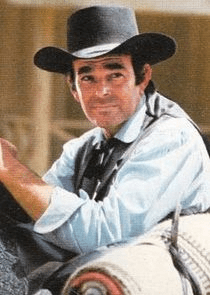
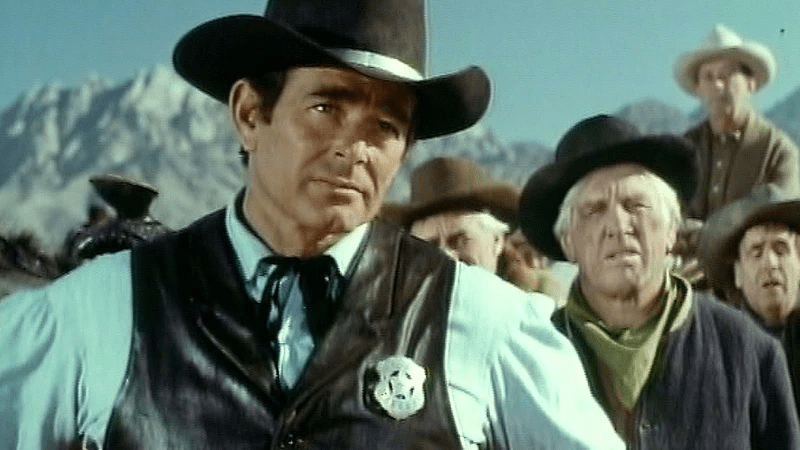
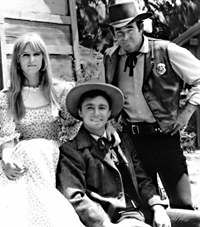
Set in the Oklahoma in 1890, the series occurred in a geographical region called No Man’s Land, an ungoverned area for several decades. Marshal Jim Crown (Stuart Whitman) tries to bring law and order there. Crown arrives only to learn that the sheriff has resigned, and it’s up to him to bring peace to the area with no Army support. We get to know Dulcey Coopersmith (Jill Townsend) who comes to live with her father, but upon her arrival, she discovers he is dead. Her father’s partner MacGregor (Percy Herbert) has let their Wayfarer’s Inn become a bit dilapidated, but Dulcey is determined to bring it back. Marshal Crown stayed there when he was in Cimarron City. Francis Wilde (Randy Boone) often served as Crown’s deputy.

📷pinterest.com

Rounding out the cast is the bartender at the Inn, Fabrizio (Jack Braddock); Major Covington at a nearby Army fort (Andrew Duggan); a Dr. Kihlgren (Karl Swenson); and Hardy Miller (Robert J. Wilke).

The show was on Thursday nights, up against Batman, The Flying Nun, and Bewitched on ABC. It faced Daniel Boone and Ironside on NBC. Definitely some tough competition.

The theme song was composed by Maurice Jarre, who was the scorer for the films Lawrence of Arabia and Doctor Zhivago for which he won two Oscars.

The show never attained the ratings numbers it needed to keep its place on the schedule. From what I have been able to find out, it was well written and well cast. Guest stars kept it interesting, and the scenery was beautifully filmed.

📷tvmaze.com

I’m guessing the main reason the show didn’t make it was just viewer fatigue with the western genre. There were already shows like Bonanza and Gunsmoke which were hugely popular. One more western might just have been one too many, no matter how good it was. In addition to the western series, some of the shows that were on the air when Cimarron Strip debuted included That Girl, Hogan’s Heroes, Mannix, Batman, Lost in Space, Get Smart, and Rowan and Martin’s Laugh In—very different choices than westerns. I do remember Arnold the pig on Green Acres always wanting to watch westerns on television. We still fall prey to this on the major three networks. After ER became popular, the next season featured ten new medical shows. And then most of them get cancelled, not necessarily because they’re bad but because it’s just an overload of medical shows.
Most people don’t want the same supper every night even if it’s steak or lasagna. That said, this seemed to be a steak kind of show, so just because it couldn’t survive the mass onslaught of westerns in the sixties doesn’t mean it’s not worth watching. If you check it out, let me know what you think.

Vic Tayback: Cooking Up Some Fun

This month we are celebrating some of our favorite Supportive Men, actors who usually are not the star of a show but add the special flavor only they can to some of our favorite shows.

Before we move on to our topic today, can I just say a huge THANK YOU to all of you who have joined me on this journey through classic television. Today is my 400th blog and it has been so much fun. Next week will be 401, but for today we are looking at the career of Vic Tayback.

📷graduation photo

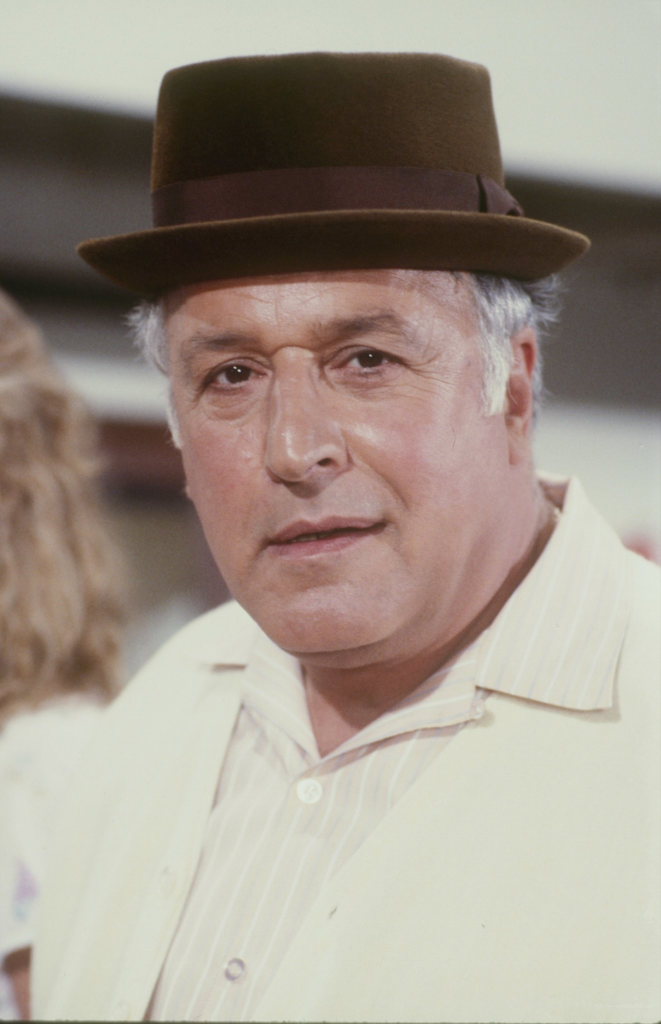
Most of us probably know him best as Mel on Alice; he played Mel Sharples in both the original movie, Alice Doesn’t Live Here Anymore, as well as the television show that was on for nine years.

Tayback was born in Brooklyn in 1930. His parents settled there after leaving Aleppo, Syria. During his teenage years, the family moved to California where he attended Burbank High School. He loved sports and played on a variety of teams, his favorite being football.

After high school, he enrolled at Glendale Community College. He also spent some time with the US Navy.

With his love of sports, he decided to attend the Frederick A. Speare School of Radio and TV Broadcasting to be a sports broadcaster. While there he was required to perform in a production of “Stalag 17” for one of his classes. He wasn’t thrilled about doing so, but he realized that he loved making people laugh and decided to switch his career to acting. While trying to break into the industry, he paid his dues driving a cab and working as a bank teller.

📷embarrassingtreasures.com Family Affair

The first of Tayback’s astounding 151 acting credits occurred in 1958 in a little-remembered series, Buckskin. This western was set in Annie O’Connell’s boarding house in Buckskin, Montana in 1880 and the stories were told by ten-year-old Jody. Vic continued to receive a few other appearances on television in the late fifties, as well as two films.

In the sixties, Tayback’s career took off. He would show up on 32 television episodes and 9 big-screen films, including With Six You Get Eggroll with Doris Day and Brian Keith. His tv roles were in comedies such as F-Troop, I Dream of Jeannie, Family Affair, Get Smart, The Monkees, and That Girl. He also could be seen in a variety of dramas that included 77 Sunset Strip, Dr. Kildare, Rawhide, Cimarron Strip, Star Trek, and Mission Impossible.

📷newyorkdailynews.com The Cheap Detective

The sixties also found Vic in the role of groom. In 1963, Tayback married Sheila Barnard, and they remained married until his death.

During the seventies, his appearances escalated to more than forty television series and ten movies. Some of his television shows included Bonanza, The Mary Tyler Moore Show, Bewitched, Columbo, Mannix, Ironside, Mod Squad, The Partridge Family, All in the Family, Barney Miller, Cannon, Medical Center, Family, and Hawaii Five-0. His movies included a few genres running from Disney’s The Shaggy DA to Papillon (Papillon was the story of a French convict who befriends a fellow criminal in South America in the 1930s, and he plans an escape).

It was during the mid-seventies that he was offered the role of Mel Sharples. In 1974 the movie was released, and the television show aired in 1976. The show was very popular with viewers. Vic said he and Mel were somewhat similar characters. While people still quote Flo on the show with her “Kiss my grits,” Tayback had his own tagline on the show, “Stow it.”

📷imdb.com Alice

If you didn’t see the show, it featured a greasy-spoon diner in Phoenix, Arizona. Alice moves there after the death of her husband with her son Tommy. She becomes a waitress at Mel’s along with sassy Flo and shy, gullible Vera. Despite the bad food, they have a lot of regulars who come in for a meal. If you want to visit the restaurant, the building it was based on is at 1747 NW Grand Ave in Phoenix and was called Pat’s Family Restaurant. (It was also featured in American Graffiti.) It is now called Mel’s Diner. According to Trip Advisor, it is ranked #448 out of 1795 restaurants in Phoenix.

📷imdb.com

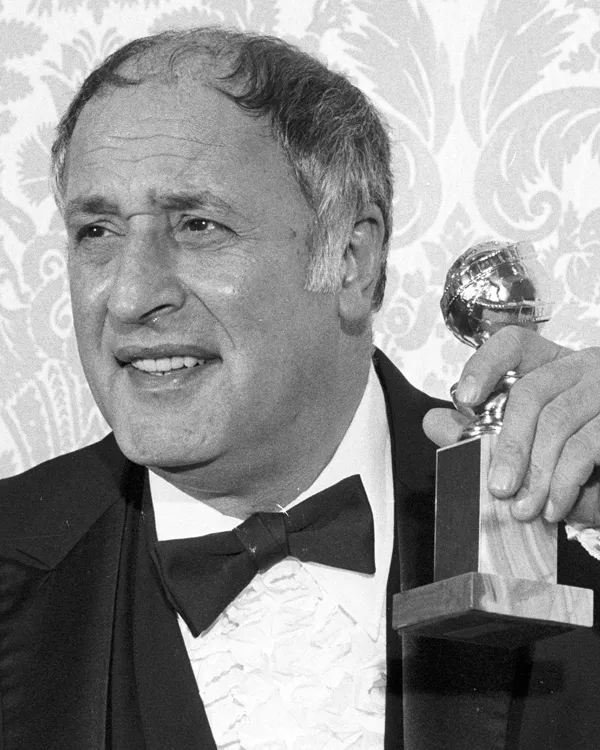
The role of Mel won Tayback Golden Globe awards in both 1979 and 1980. In 1978 he was nominated for an Emmy as Supporting Actor in a Comedy. While he did not win, he was in some amazing company. That year, fellow nominees included Harry Morgan and Gary Burghoff for M*A*S*H, Tom Bosley in Happy Days, and Rob Reiner from All in the Family, who took home the win that year.

The series aired on Saturday nights and the first year was in the top thirty. In 1977, its second season, it was moved to Sunday nights, following All in the Family where it rose into the top ten. In 1979, All in the Family left the airwaves, and Alice then followed One Day at a Time. Seasons three-five, it continued to be in the top thirty. In 1981, the show was moved to Monday nights up against M*A*S*H where it fell out of the top 30. However, season seven found it back on Sundays following The Jeffersons where it rose back into the top thirty. However, it took another dive in ratings the next year and then was cancelled. I think it probably stayed on the air a year or two beyond when it should have. However, interestingly enough, the year it was cancelled, CBS introduced 15 new shows. I’m not sure most people have ever heard of any of them; they were all gone by 1986 with the exception of The Twilight Zone (reboot) and West 57th, which was a news show aimed at younger audiences.

Vic was also an avid horse-racing fan and owned quite a few thoroughbreds. On Alice, Mel was also a track fan, and sometimes the writers asked Mel for names of horses they could use, and he often gave them names of his horses.

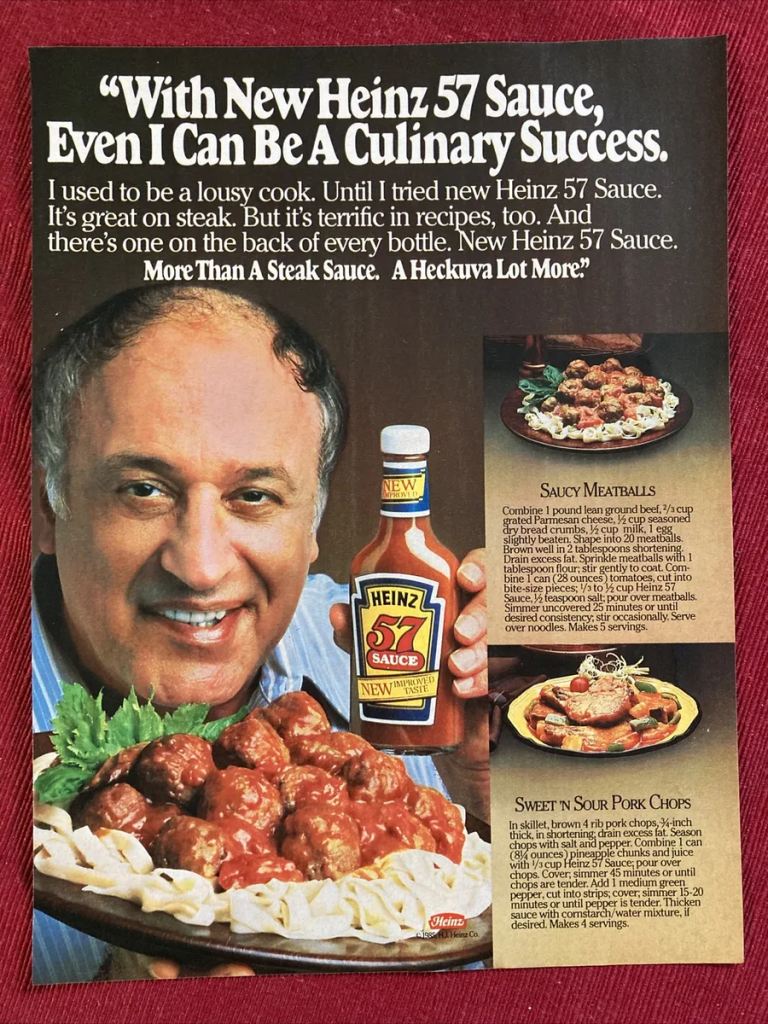
On the show, Vic was often made fun of for his bad cooking. In a 1985 interview he said, “If I walked into a restaurant, the other diners would look around and say, ‘I hope you’re not cooking.’” Heinz then offered him the role of spokesperson for their Heniz 57 sauce and his line in the commercials, was “I used to be a lousy cook.” He was also remembered for an Aqua Velva commercial he did with Pete Rose.

Unfortunately, Tayback was a heavy smoker which caused heart trouble for him. While doing Alice, he had a triple-bypass surgery. While he did try to quit numerous times, he just could never kick the habit. In 1990, he died from a heart attack at age 60.

📷goldenglobes.com

While we were cheated of several decades of performances from Vic with his early death, he did leave an amazing legacy in the Company of Angels theater in Los Angeles. According to its website, “In 1959, a group of actors, including Tayback, Leonard Nimoy, Richard Chamberlin, and Vic Morrow founded the theater to provide a space for actors and other theater artists to work on their craft free of commercial constraints.”

Thank you, Vic Tayback, for deciding to make people laugh in your career and investing in the future of acting so those memories continue in the future.

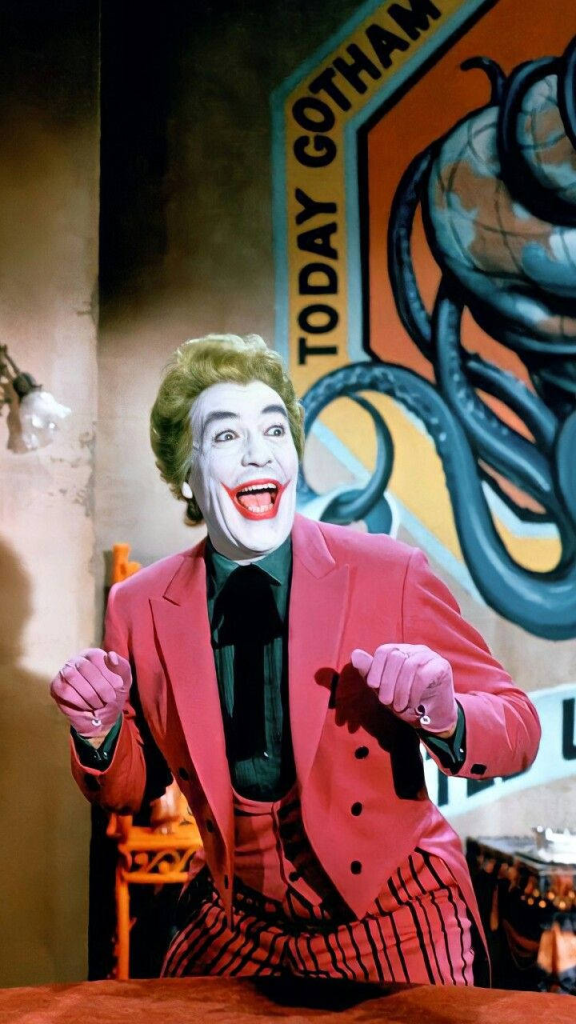
Cesar Romero: Batman’s Most Joy-Filled Villain

We are winding up our series: Bam! Pow! Batman Villains. Today it’s all about The Joker: Cesar Romero.

📷turnerclassicmovies.com

Romero was born in New York City in 1907. His father was an import/export merchant, and his mother was a concert singer. He grew up in Bradley Beach, New Jersey. His father lost most of his money during the 1929 Wall Street Crash.

Romero teamed up with dancer Lisbeth Higgins and they formed a professional dance partnership, appearing in nightclubs and theaters throughout New York City including the Ambassador Roof and the Montmartre Café. Although he had no professional training, he was often compared to Fred Astaire. He also was cast in several off-Broadway productions including “Stella Brady” and “Dinner at Eight.”

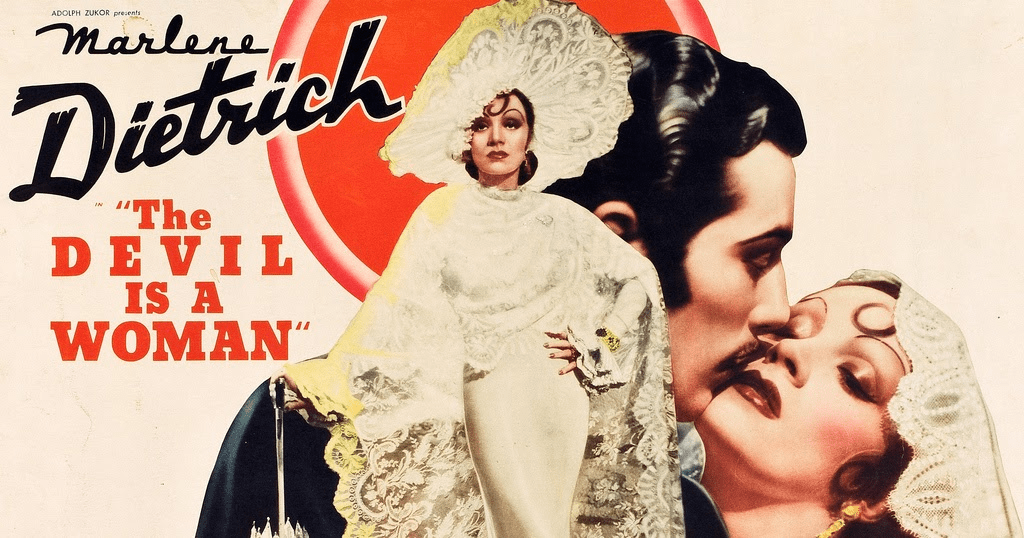
Later Romero would refer to himself as the Latin from Manhattan and he provided for his family members who followed him to Hollywood. He played the stereotypical Latin lover during the thirties and forties, including The Devil is a Woman with Marlene Dietrich in 1935. However, he also made westerns and did a bit of dancing during these decades on the big screen.

His friendship with Frank Sinatra brought him roles in Around the World in 80 Days, Pepe, Marriage on the Rocks, and Oceans’ 11.

📷imdb.com Wagon Train

In 1942, Cesar enlisted in the US Coast Guard, serving in the Pacific Theater of Operations. After his military career ended, Romero returned to his acting career.

His television career began in 1948 in the show, Variety. During the fifties he was primarily appearing on dramas, but he did show up on Private Secretary with Ann Sothern and continued his western roles on Wagon Train, Zorro, and Death Valley Days.

The sixties kept him extremely busy on television. He kept people laughing on Pete and Gladys, The Ann Sothern Show, Get Smart, and Here’s Lucy. He rode the range on Stagecoach West, Bonanza, Rawhide, and Daniel Boone. He stayed dramatic on shows including 77 Sunset Strip, Dr. Kildare, and Ben Casey.

📷wallpaper.com

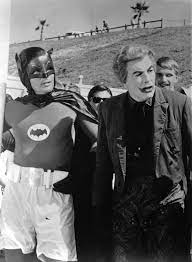
However, the show he was best known for in the sixties, is the show that made him part of my blog series this month, Batman. He had to endure a long time in the make-up chair. He refused to shave his mustache for the role, so white face makeup was smeared all over his face until it was hidden.

Romero admitted that this role reinvigorated his career. When he was offered the role of the Joker, he was 59 years old. Romero said the role was “the kind of part where you can do everything you’ve been told not to do as an actor. You can be as hammy as you want.”

He discussed how surprised he was when William Dozier called him about the show. He said Dozier told him that “the important characters were all villains. They had done the first two with the Riddler and the Penguin with Frank Gorshin and Burgess Meredith, and now they were ready to do the third, and the villain was the Joker. He said, ‘I would like you to play the part.’ So, I said I would like to read the script and know what it is all about. He said, ‘Come on over to the studio, and I will show you the film of the first episode.’ Of course, it was great. I said, ‘Let me read this Joker part, and if it is as good as the first one, hell yes, I will do it.’ So I read the script, and I thought it was a gas, and I said, ‘Sure, I’ll do it.’”

No serious villain, the Joker was cheerful and extroverted. He oozed goofiness and always appeared to be having a great time carrying out his nefarious activities. Dressed in his famous purple costume, he had his own automobile that could rival the Batmobile.

📷facebook.com

While most of the villains saw Batman and Robin as roadblocks in their evil schemes and problems to take care of, the Joker found great joy in taking down the superheroes. In one episode he says “Oh, but I must, I must! Why, outwitting Batman is my sole delight, my heaven on earth, my very paradise!”

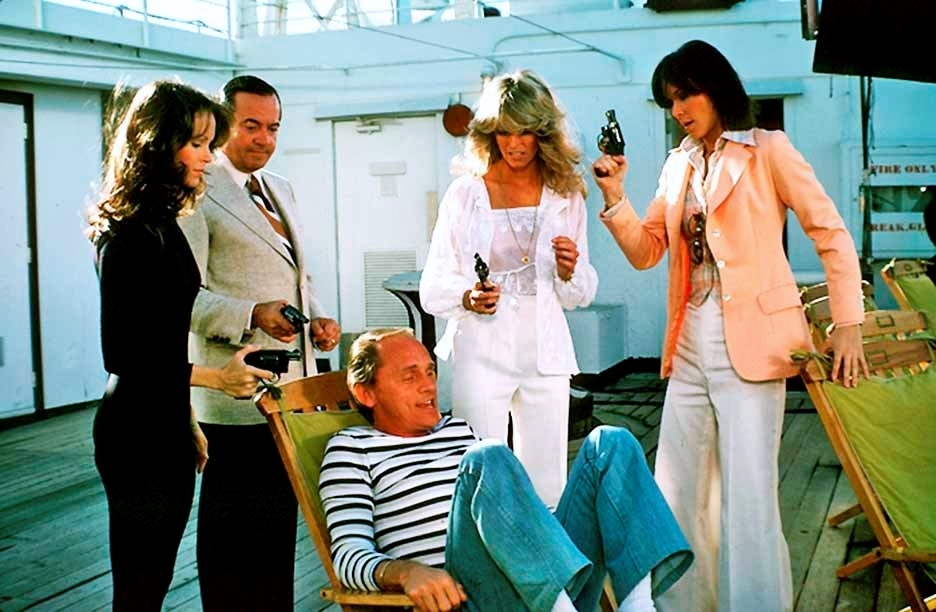
You couldn’t miss him if you watched almost any television in the 1970s and 1980s. He appeared on a ton of shows, just a few of which included Bewitched, Nanny and the Professor, Love American Style, The Love Boat, Night Gallery, Mod Squad, Ironside, Medical Center, Charlie’s Angels, and Hart to Hart.

From 1985-88, he was a regular on Falcon Crest. Earl Hamner Jr., the creator of The Waltons, created this show featuring the Gioberti family, owners of Falcon Crest Winery. Romero played the love interest of matriarch Angela Channing, played by Jane Wyman.

He finished his career in the 1990s. He was in his eighties when he appeared on The Golden Girls, and Murder She Wrote, his last television role.

Romero also played a role in politics. As a registered Republican, he was very involved in many campaigns. He worked for Nixon-Lodge in 1960 and later supported Lodge in his run for President. When Lodge did not get the results that he hoped for, Romero turned his support to Barry Goldwater for the general election. He also worked for his friend George Murphy in his run in the California senate race. He later helped Ronald Reagan in his gubernatorial runs in California as well as his presidential campaigns.

It was reported in many articles that Romero had 30 tuxedos and more than 500 suits. That is not surprising because he had a clothing line, Cesar Romero Ltd. He was also a model and spokesperson for Petrocelli suits in the sixties.

Romero stopped acting in 1990. He remained busy though with several ventures including hosting classic movie programs on television. In 1994, Romero died from complications of a blood clot on New Year’s Day. He was being treated for bronchitis and pneumonia.

I enjoyed getting to know a bit more about Cesar Romero, but, I have to admit, that I don’t feel like I know him much better than I did before. He seemed to have been stereotyped as a Latin lover and then again as the Joker. I would like to go back and watch some of his appearances on westerns. It was hard to find much information about Romero beyond his career and political interests.

📷etsy.com

I know The Joker was not his most challenging role, but he will always have a place in America’s heart for the work he did on Batman as will these fun super villains we got to know this month.

Frank Gorshin: Batman’s Most Puzzling Villain

This month, our theme is Bam! Pow! Batman Villains. We have learned a bit about the careers of the Joker and Cat Woman, and today we are spending some time with the Riddler, portrayed by Frank Gorshin.

📷imdb.com

Gorshin started out as an impressionist and comedian before transitioning into acting.

Frank was born in Pittsburgh in 1933 into a blue-collar, middle-class family. His mom was a seamstress, and his father was a railroad worker. His paternal grandparents arrived in the US from Slovenia and his mother was born in Slovenia, coming to the Pittsburgh area as a young girl; his parents were very involved in the Slovenian community, both singing with the Preseren, a Slovenian singing society.

When he was 15, Gorshin got a part-time job as an usher at the Sheridan Square Theatre. He studied the mannerisms of the actors he watched in those movies and developed an impressionist act. Some of his favorite actors to mimic included James Cagney, Cary Grant, Al Jolson, and Edward Robinson. After entering a talent contest in 1951, he won a week-long engagement at the Carousel nightclub in New York.

Sadly, Gorshin’s older brother was hit by a car two days before and died. His parents convinced him to keep his performance schedule and sent him to New York.

After high school, Gorshin enrolled at the Carnegie Tech School of Drama (now Carnegie Mellon University).

📷imdb.com

At age 20, Frank was drafted into the US Army and sent to Germany. He was an entertainer in Special Services for a year and a half. When Gorshin left the Army, he began his acting career, appearing in four movies and on television in Alfred Hitchcock Presents.

I can’t imagine the horror Gorshin’s parents felt when getting a call in 1957 that their son had fallen asleep while driving from Pittsburgh to Hollywood, a 39-hour trip for a screen test. With their other son passing away from a car crash six years earlier, now they had to deal with the fact that their other son was in a coma with a fractured skull. Luckily, he made a full recovery.

Another big event occurring in 1957 was his marriage to Christina Randazzo. They had a son and separated later in life, but they never did divorce as far as I could tell.

Until his death, Gorshin would appear in more than sixty big-screen films. During the fifties, he only appeared in a handful of television series, but that would change in the 1960s. Some of the most memorable shows included The Defenders, The Munsters, Star Trek, and The High Chapparal. With his comedy act, he visited The Ed Sullivan Show four times. The first time he did his impressionist act on the series, he would be scheduled with this new band called The Beatles.

📷metv.com

The sixties also found him on Batman, his reason for being in this month’s blog series. He said that he developed a fiendish laugh at Hollywood parties. “I listened to myself laugh and discovered that the funniest jokes brought out the high-pitched giggle that I use on the show. With further study, I came to realize that it wasn’t so much how I laughed as what I laughed at that created the sense of the menace.”

He did not love the unitards that many of the comic book villains wore, so he asked for a green business suit and bowler hat, covered with question marks since he always left riddles for Batman and Robin to solve. He often said “Riddle me this, Batman” which became a catchphrase of the mid-sixties.

Gorshin said “When I was first approached to play the Riddler, I thought it was a joke. Then I discovered the show had a good script and agreed to do the role. Now I am in love with the character.”

📷imdb.com

Gorshin was the only villain to be nominated for an Emmy. He got the nod in 1966 for the episode “Hi Diddle Riddle.” He had some tough competition, going against Werner Klemperer as Colonel Klink on Hogan’s Heroes, Morey Amsterdam on The Dick Van Dyke Show, and winner Don Knotts on The Andy Griffith Show.

Gorshin was in ten episodes of the show, but after appearing numerous times, he was unavailable, and the producers replaced him with John Astin. I realized hindsight is 20/20 as they say, so the producers were never considering the effect the show would have on pop culture and the decades it would be a fan favorite, but that switch seems extreme. However, they did it with Julie Newmar and Eartha Kitt as well, so maybe they figured if you have to replace a villain, let’s replace them with someone very different from the original. Gorshin, however, was not a fan of being replaced but did get over it enough to accept his tenth episode role in season three and appeared as Riddler in the 1979 made-for-television movie Legends of the Superheroes.

Frank made his Broadway debut in 1969 in the musical biography, “Jimmy” which was about the controversial life of New York mayor Jimmy Walker.

Gorshin was very busy in the seventies and eighties. Among the twenty plus shows he appeared on were The Virginian, Martin and Rowan’s Laugh In, Ironside, Hawaii Five-0, Charlie’s Angels, and Murder She Wrote.

In the last three decades of his life, he spent more time making big-screen films. One thing I found surprising is that Gorshin appeared in three soap operas, all at different times in his career: General Hospital in 1963, The Edge of Night in 1982, and The Bold and the Beautiful in 1999.

In the early 2000s, Gorshin did a one-man Broadway show, portraying George Burns. He was reunited with his Batman cast in a made-for-tv movie, Return to the Batcave: The Misadventures of Adam and Burt. His last appearance was on CSI: Crime Scene Investigation on “Grave Danger” on which he played himself. The episode was directed by Quentin Tarantino and was dedicated to Gorshin.

📷discogs.com

Unfortunately, Gorshin was a heavy smoker throughout his life. Adam West once said that “Frank could reduce a cigarette to ash with one draw” and his nightclub performances warned patrons they would be exposed to a lot of second-hand smoke if they attended. Not surprisingly, he died from lung cancer, complicated by emphysema and pneumonia.

I enjoyed getting to know Frank Gorshin in this blog. While I was much more familiar with the careers of Burgess Meredith and Julie Newmar, Gorshin and Cesar Romero are actors I knew very little about. I hope you are also enjoying getting to know these fun “villains.”

Burgess Meredith: America’s Favorite Villain

Bam! Pow! It’s Batman Villain Month. We will be looking at the career of an actor who played a Batman baddie every week this month. We are beginning with my favorite, The Penguin, played by Burgess Meredith.

📷pinterest.com

Oliver Burgess Meredith was born in Cleveland, Ohio in 1907. His father was a physician, and his mother was born into a family of Methodist revivalists. Burgess followed his Methodist faith for his entire life. After high school, he enrolled at Amherst College, until 1932 when he became a reporter for the Stamford Advocate. He worked in a variety of jobs while getting started in acting including retail, an editor, a merchant marine, and a runner on Wall Street.

He joined Eva Le Gallienne’s Civic Repertory Theatre in New York City. His Broadway debut was in this company’s “Romeo and Juliet” in 1930. His film debut came in 1935 in Winterset. Later in his career, he would return to Broadway as a director. He shared a Tony Award with James Thurber for their collaboration on “A Thurber Carnival” in 1960, and he earned a Tony nomination for his staging of “Ulysses in Nighttown” in 1974. In the late seventies, he directed Fionnula Flanagan’s one-woman play, “James Joyce’s Women” which toured for several years.

Meredith had more success in acting than marriage. Helen Derby Merrien Burgess was his wife from 1932-1935. His marriage to actress Margaret Perry only lasted two years, ending in 1938.

In 1942, Burgess enlisted in the US Army Air Forces for WWII, reaching the rank of captain. He was discharged in 1945. Meredith married another actress, Paulette Goddard, and they were together from 1944-1949. However, in 1951 he married Kaja Sundsten and they were together until his death.

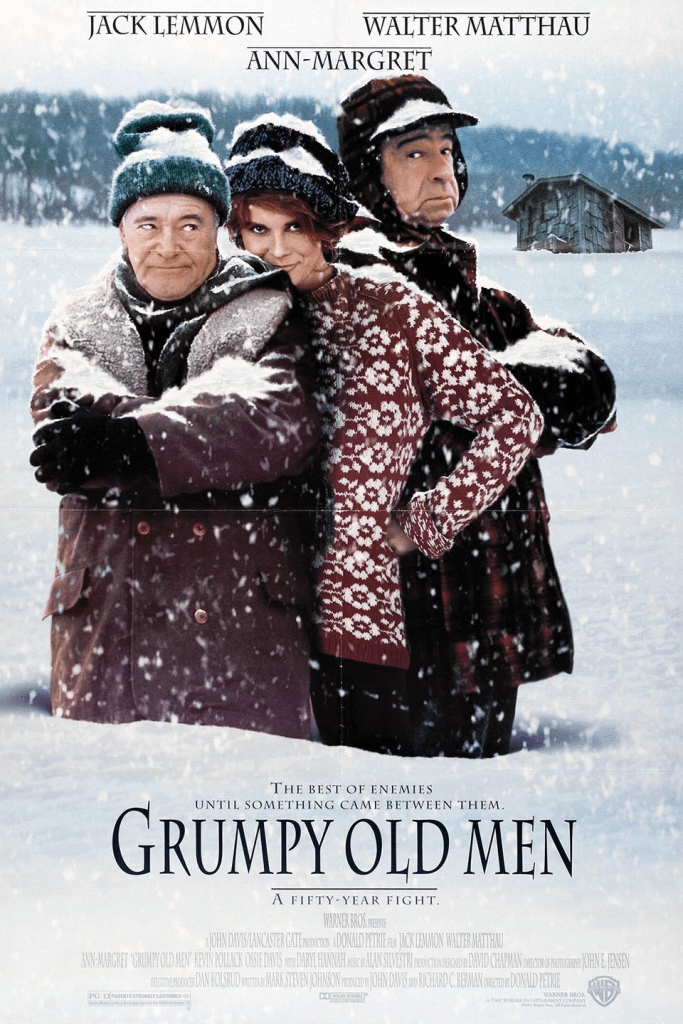
Meredith would appear in 80 movies during his career, as well as a number of made-for-television movies. He might be best known in the past few decades for Grumpy Old Men and Grumpier Old Men in the 1990s.

However, it was television where he found the most acclaim. His first appearances came in 1949 on the Ford Theater Hour and The Silver Theater. Throughout the fifties he continued receiving offers for theatric roles on these types of programs. During the early sixties, he was everywhere. You could catch his appearances on dramas such as The Naked City, Ben Casey, The Twilight Zone, The Bold Ones, Room 222, Ironside, and Mannix. He rode onto many western sets including Wagon Train, Rawhide, The Wild, Wild West, Bonanza, Daniel Boone, and The Virginian. He found his way onto several comedies such as Please Don’t Eat the Daisies and The Monkees.

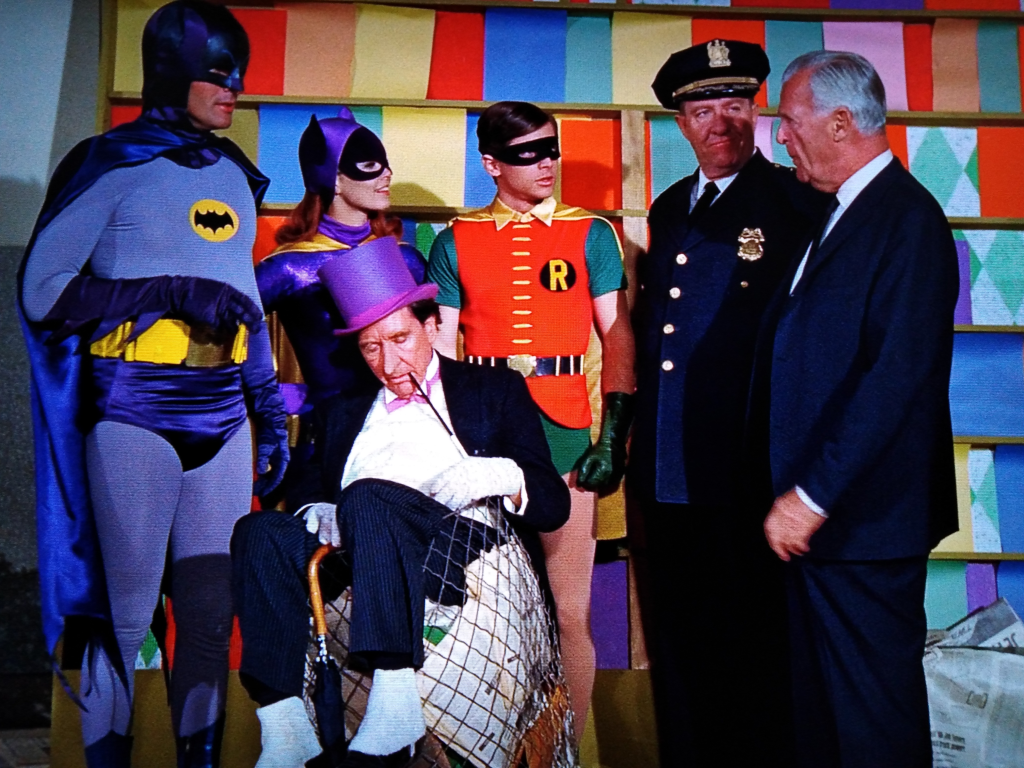
Given the astounding number of drama shows that he chose roles on, it is a bit surprising that one of his best-known roles was the campy, humorous 1960s series Batman. From 1966-1968, he made 21 appearances as the Penguin. When he appeared on The Monkees, it was also as the Penguin. Originally the producers wanted Spencer Tracy for the role of Penguin. Tracy said he would not accept the offer unless his character was allowed to kill Batman. So, Meredith got the role. The cast loved him, and the producers made sure there was always a Penguin script waiting so whenever Burgess was free, it could be filmed.

📷dcdatabase.com

He was perfect for the role with his raspy voice and that iconic Penguin laugh. The laugh came about because Burgess had given up smoking but had to smoke for his role on Batman. When he coughed, he covered it up with his trademark laugh. When asked why he did Batman, he replied that he did it “for two reasons, one of which was the salary. The other was that, after the first few episodes, Batman became the in-thing to do. Everybody would either play a villain or appear as himself in that cameo showcase where a celebrity would poke his head through the window of a building that Batman and Robin were climbing. Actually, we didn’t get as much money from the show as you might think, although we were paid decent money for the feature film version. The main impetus to continue appearing on Batman—beyond the desire to get some TV work—was that it was fashionable.”

Later in his career, Burgess continued appearing on the big screen and provided voice-over work and a bit of animation. Unfortunately, he was named as an unfriendly witness by the House Un-American Activities Commission which ended his studio work for several decades. Burgess also did commercial work and was known for his roles for Skippy Peanut Butter and United Air Lines.

📷imdb.com

Meredith was a life-long Democrat and was generous to the Democratic party. He was an environmentalist and tried to end pollution. He was also fascinated by intelligent animals, especially dolphins. One night he said he felt a dolphin needed help while staying at a friend’s beach house. He ran out to the beach and found a dolphin caught in a net under a dock and was able to save its life. He was nominated for two Academy Awards, both for Supporting Actor in Rocky and The Day of the Locust. A 21-acre park in Pomona, New York was named for him; he provided the funding to incorporate the village.

In 1997, Meredith died from complications of Alzheimer’s. His former Batman costar, Adam West, spoke at his memorial service.

While almost all of the bad guys on Batman were memorable, the Penguin and Cat Woman were by far my favorites. We will look at the career of Julie Newmar next week.

Pernell Roberts: A Man of Many Talents

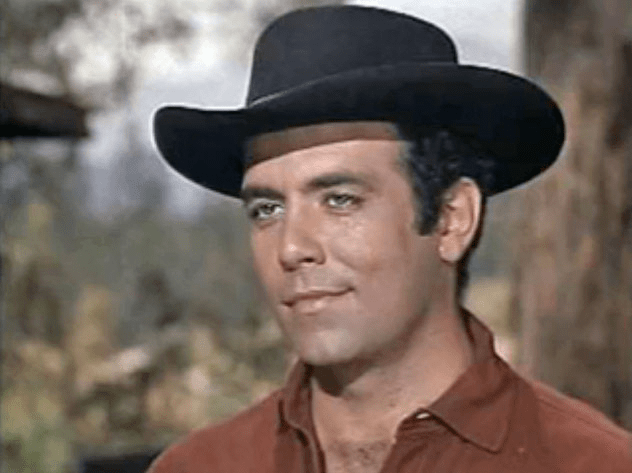
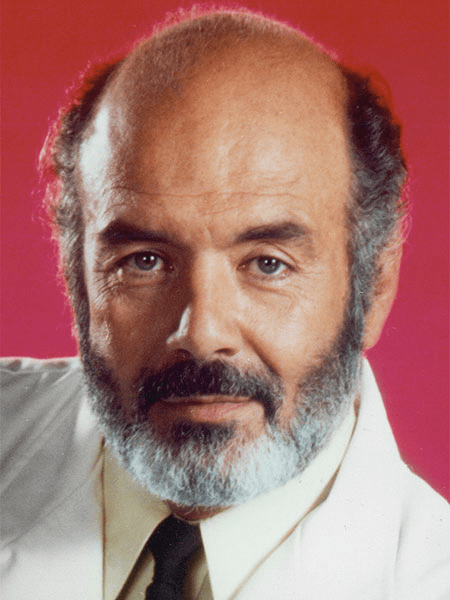
We are up close and personal this month with some of our favorite male television stars, and Pernell Roberts is definitely on that short list. Pernell Roberts was well known to television viewers in the early sixties and the early eighties. Some fans might not even realize the two characters he was best known for, Adam Cartwright on Bonanza and Dr. John McIntyre on Trapper John, MD were played by the same man.

The Family of Bonanza Photo: toledoblade.com

Pernell Elven Roberts Jr. was born an only child in 1928. He was named for his father who was a Dr. Pepper salesman. During high school, Roberts played the horn, acted in several school and church plays, played basketball, and sang in the local USO shows. He enrolled at Georgia Tech but then enlisted in the US Marine Corps. He played both the tuba and horn in the Marine Corps Band while sometimes tackling the sousaphone and percussion parts. After his time in the Marines, he enrolled at the University of Maryland where he enjoyed participating in classical theater. He left college to continue his acting career.

In 1949, he had his professional stage debut in “The Man Who Came to Dinner” with Moss Hart and Kitty Carlisle. He then took on several roles in Philadelphia.

In 1951, Roberts married Vera Mowry; she was a professor of theatre history at Washington State University. They divorced in 1959. They had one son who was killed in a motorcycle accident in 1989.

In 1952, Roberts made the big move to New York City appearing in off-Broadway shows. Several of his costars were Joanne Woodward and Robert Culp. He performed several Shakespeare roles.

In 1956, Roberts made his television debut in Kraft Theatre. In 1957, he signed with Columbia Pictures. His first big-screen role was as Burl Ives’ son in Desire Under the Elms. His second role was with Glenn Ford and Shirley MacLaine in The Sheepman.

Roberts continued to accept television roles with ten appearances in 1958 and six in 1959.

Photo: simple.wikipedia.org

From 1959-1965 he would portray Adam Cartwright, Ben’s oldest son on Bonanza. Each of the brothers had a different mother, and Adam was the only Cartwright to attend college, studying architectural engineering. After acting in classical theater for so much of his early career, the transition to a weekly series was a difficult one for Roberts. He thought it a bit ridiculous that the independent sons had to get their father’s permission for everything they did. He wanted to act in a show with greater social relevance. So, although the show would continue until 1973, he left in 1965 after appearing in 202 episodes. The storyline was that Adam was traveling in Europe or living on the east coast. Bonanza producer David Dortort said Roberts was “rebellious, outspoken . . . and aloof, but could make any scene he was in better.”

The Odd Couple Photo: sitcomsonline.com

During this time on the show, Roberts married again in 1962; he wed Judith Roberts and they would divorce in 1971.

After leaving Bonanza, Roberts returned to theater, playing a variety of roles. He toured with many musicals including “The King and I”, “Kiss Me Kate”, “Camelot”, and “The Music Man.”

Pernell also became involved in the civil rights movement, joining Dick Gregory, Joan Baez, and Harry Belafonte in the sixties demonstrations including the March on Selma.

On Mission Impossible Photo: ebay.com

From 1972-1996, Roberts was married to Kara Knack. They also divorced.

Throughout the late sixties and seventies, Pernell continued appearing in television series and made-for-tv movies. You’ll see him in westerns such as Gunsmoke, The Big Valley, and The Virginian; spy genres including Wild Wild West, Mission Impossible, and The Girl from U.N.C.L.E.; crime shows including Hawaii Five-0, Mannix, Police Story, Ironside, Cannon, and The Rockford Files; and several medical series—Marcus Welby, West Side Medical, and Quincy. He even showed up on The Twilight Zone and The Odd Couple.

Photo: televisionacademy.com

Perhaps he enjoyed those medical shows because he returned to television to star in his own series in 1979, playing Trapper John, MD. The plot was featured Trapper John from M*A*S*H later in his career at San Francisco Memorial Hospital where he was Chief of Surgery. He worked with a young surgeon who had also served in a MASH unit, Alonzo “Gonzo” Gates (Gregory Harrison). The series lasted seven seasons.

In 1979, he told TV Guide that he chose to return to a weekly show because he had “seen his father age and realized it was a vulnerable time to be without financial security.” Roberts felt the role allowed him to use his dramatic range of acting skills and to address important social issues.

In the 1990s, Roberts took on very few television appearances; his last television performance was in Diagnosis: Murder in 1997.

Roberts would attempt marriage one last time in 1999 when he wed Eleanor Criswell. When Pernell passed away in 2010 from pancreatic cancer after being diagnosed in 2007, they were still together.

Photo: Facebook.com

Pernell also enjoyed golfing, swimming, playing tennis, running, reading, cooking, and singing. He appeared on two record albums during his career. The cast of Bonanza recorded an album in 1959 and he released a folk music album in 1962, titled “Come All Ye Fair and Tender Ladies.”

He certainly had a long and varied career: music, movies, Broadway, and television. He also used his fame to help causes he believed in. I don’t think he is remembered as well as he should be. Maybe it’s because he left Bonanza too early to be included on a lot of the memorabilia that came out of that show or because there was such a gap between his two series that he starred in. Whatever the reason, I hope this blog has helped recall some of our memories of the three decades he spent entertaining us.

Mabel Albertson: What a Character!

As we wind up our What a Character series, it seemed fitting to end with Mabel Albertson, perhaps the most recognizable of our character actors. She is often remembered for playing the mother of well-known characters. Mabel was born in Massachusetts in 1901. Her mother, who was a stock actress, helped support the family by working in a shoe factory. Mabel’s brother Jack would also become a famous actor.

Photo: pinterest.com

Mabel knew she wanted to get involved in the entertainment business at a young age. When she was 13, she played the piano for $5 a performance. She graduated from the New England School of Speech and Expression.

Albertson began working in stock, vaudeville, and night clubs and appeared with Jimmy Durante. Eventually she moved to California where she became involved with the Pasadena Playhouse where Charles Lane got his start.

Photo: youtube.com

Mabel married Austin Ripley, and they had a son in 1926, but their marriage soon dissolved. Mabel decided to pursue a career in film. Although she would have credits for 27 movies during her career, her film career was not what she hoped for. So, she switched gears and tried out radio. During the 1930s, she co-starred with Phil Baker on The Armour Hour and from 1936-37, she was in Dress Rehearsal with Pinky Lee. She also did some writing for the show.

photo: imdb.com
All The Fine Young Cannibals

In 1937 Mabel married writer Ken Englund who adopted her son George. He began writing for Paramount Pictures and later would be hired by RKO, Columbia Studios, 20th Century Fox, and The Samuel Goldwyn Company.

Photo: pinterest.com
Burns and Allen

Although her husband’s career was made on the big screen, her career really took off when television made its appearance. Her first role on the small screen was on the Chevron Theater in 1952. During the 1950s, she appeared in 21 different shows. Although many of her roles were on the playhouse and theater shows, she also showed up on Burns and Allen, Topper, December Bride, Bachelor Father, Jack Benny, and Have Gun Will Travel. In 1955, she was offered a role in Those Whiting Girls. She played the girls’ mother. The show was on the air until 1957.

Photo: sitcomsonline.com
Those Whiting Girls

Mabel became the “face” of television sitcom mothers. She played Phyllis Stephens, Darrin’s mother on Bewitched and often said “Frank, take me home, I’m getting a sick headache.” Her husband wrote several Bewitched episodes (season 1, episodes 25 and 30).

Photo: pinterest.com
Bewitched

She played Mabel, Paul Lynde’s mother-in-law on The Paul Lynde Show; she was the mother of Marilyn’s boyfriend on The Munsters, as well as Alice’s mother on Bob & Carol & Ted & Alice. Fans of That Girl will remember her as Don Hollister’s mother, and she was seen on The Andy Griffith Show as Howard Sprague’s mother. Her last mother role was on the New Dick Van Dyke Show as his mom.

Photo: jacksonupperco.com
That Girl

Her most successful years were the 1960s when she appeared in 39 television shows, including Perry Mason; Ben Casey; My Three Sons; Hazel; Ozzie and Harriet; The Wild, Wild West; Daniel Boone; Gomer Pyle USMC; Love American Style; and Gunsmoke. A review for her performance on Gunsmoke is posted by jlthornb5110 on imdb.

The review states that her role of Kate Heller is one “of the standout episodes of the series with Miss Mabel Albertson giving what is nothing less than the performance of a lifetime. Beautifully written by Kate Hite, this is a powerful presentation and one in which Albertson truly shines. The climax is absolutely soul shattering and among the most dramatically emotional ever filmed for television. Miss Albertson plays it with a sensitivity and an incredible insight you will never forget. The character of Kate Heller is heartbreaking but quietly strong, a survivor of the psychological brutality of loneliness in the old west and the violence that was part of existence. Mabel Albertson gives the character everything she has within her, brings her to life, and makes her one of the most unforgettable personalities to ever appear on Gunsmoke or any other television series in history.”

Photo: cscottrollins.blogspot.com
The Tom Ewell Show

She was offered a role as a permanent cast member in The Tom Ewell Show in 1960. The premise of the show is that real estate agent Tom Potter played by Ewell must learn to live in a household of females including his wife, his three girls and his mother-in-law Irene played by Albertson. Even their dog, Mitzi, was a girl. Although Mabel’s brother Jack would be best remembered for his role on Chico and the Man, he appeared on this series with his sister in 1960. The series aired 32 episodes before it was canceled.

Photo: findagrave.com
Jack Albertson

I’m not sure where she found time for Broadway during this decade, but she was in The Egg in 1962 and Xmas in Las Vegas in 1965.

While her career began to slow down in the seventies, she was still quite busy, appearing in The Doris Day Show, Ironside, Marcus Welby, and The Mary Tyler Moore Show, among others. She appeared in an episode of Arnie with her brother in 1970. She also worked with her daughter-in-law, Cloris Leachman, in the movie Pete and Tillie in 1974.

Photo: pinterest.com
Frank, I feel a headache coming on

Her family continued to attract talented actors. Her granddaughter-in-law was actress Sharon Stone.

In 1975, Mabel was forced to retire. Her memory was beginning to fail, and she was later diagnosed with Alzheimer’s Disease. She passed away from the illness in 1982.

Photo: pinterest.com

Like Milton Frome, I was both sad and disappointed to learn how little information there was about Mabel Albertson. I thought I would learn more about her working relationships considering she had a fifty-year career and played iconic mother roles on so many well-loved shows.

As we wrap of this edition of What a Character! series, my hope is that you recognize and acknowledge these actors when you see them when tuning in to your favorite classic shows and remember how much they contributed to our television history. Personally, to keep Mabel’s memory alive, I think any time we are having a family situation, I will turn to my husband and whisper, “Frank, take me home, I’m getting a sick headache.”

Milton Frome: What a Character!

As we continue looking at some of our well-known character actors, today we consider the career of Milton Frome. Frome was born in Philadelphia in 1909. He began acting in his mid-20s.

Photo: watchviooz.com

His first major movie role was in Ride ‘em Cowgirl in 1939. Frome would go on to appear in 55 movies (including The Nutty Professor, Bye Bye Birdie, and With Six You Get Eggroll), as well as five made-for-TV movies. He also had a thriving television career beginning with Chevrolet Tele-Theatre in 1950.

Photo: amazon.com

Appearing in 34 different shows during the fifties, he performed in a variety of genres including dramas, comedies and westerns.

Photo: jimnolt.com
The Adventures of Superman

During that decade you would have seen him on I Love Lucy, Lassie, The Adventures of Superman, Playhouse Theater, The Thin Man, and The Gale Storm Show. He also worked with many comic legends on television, including Milton Berle, Red Skelton, and Dean Martin and Jerry Lewis.

Photo: tumblr.com
I Love Lucy

His career escalated in the sixties when he would accept roles in 48 programs. He showed up in dramas, including The Twilight Zone, 77 Sunset Strip, and Dr. Kildare. He also found his way into many westerns such as Bat Masterson, Death Valley Days, Gunslinger, Big Valley, Rawhide, and Wagon Train. However, he seemed to excel at comedies and during the 1950s you could have spied him in many sitcoms. He accepted parts in Bachelor Father, Pete and Gladys, The Jim Backus Show, The Dick Van Dyke Show, Mister Ed, The Joey Bishop Show, I Dream of Jeannie, My Favorite Martian, The Donna Reed Show, Gomer Pyle USMC, Bewitched, The Monkees, The Patty Duke Show, Petticoat Junction, and The Andy Griffith Show.

Photo: coolcherrycream.com
The Monkees

Frome was never offered a permanent role in a series, but he did have a recurring role in The Beverly Hillbillies, appearing eight times as Lawrence Chapman, who managed Jed Clampets Mammoth Studios.

Photo: imdb.com
St. Valentine’s Day Massacre

His television career slowed down a bit in the 1970s and became nonexistent by 1983, but he did make appearances in shows like Ironside, Columbo, Here’s Lucy, The Streets of San Francisco, Sanford and Son, and Trapper John MD. He also appeared in two Love American Style episodes in 1971 and 1973. In the 1973 episode, “Love and the Anniversary,” he played “The Man” and his son Michael played a bellhop.

Photo: sitcomsonline.coom
The Jerry Lewis Show

At some point, Frome married Marjorie Ann Widman, but I could not verify when they married. I also could not verify if Michael was their son, or his son from another relationship.*

Photo: batman.wikia.com
Batman

Frome passed away in 1989 from congestive heart failure.

While it is now easy to analyze and detail an actors professional career, it was very tough to find any information about Fromes personal life or his working relationships with other actors. It makes me sad that these hard-working actors who provided so much to our classic television-watching experiences are just not well known. Hopefully blogs like mine keep them in television viewers memories, and some day maybe I will have time to write a book about these unsung heroes of our pop culture history. Thanks for all you contributed to the golden age of television Milton Frome!

*In June of 2021, I heard from Jane Wallace Casey who provided some additional information for us: “I am Milton Frome’s niece. His first wife was Barbara Wallace with whom he had his son Michael.”

Paging Dr. Stone: The Career of Carl Betz

For the month of June, we are celebrating some of our favorite fathers. One of my favorite dads was Carl Betz in his role as Dr. Alex Stone on The Donna Reed Show.

Photo: imdb.com

Betz was born in Mary of 1921 in Pittsburgh, PA. He came from an upper middle-class family, and his father was a laboratory chemist.

While still in school, Betz started a rep theater company with several friends. They performed plays in his grandmother’s basement.

During WWII, he served in the army.  He was deployed to Italy and North Africa and left the military as a technical sergeant with the Corps of Engineers.

Photo: loadtve.biz

When he returned to the States, he enrolled at Carnegie Institute of Technology (now Carnegie Mellon) in Pittsburgh, majoring in drama. While going to school at Carnegie, he played football and made an appearance in the Sugar Bowl against Texas Christian University.

His first job after graduation was a radio announcer. He moved to New York and worked as a doorman at Radio City Music Hall while auditioning for Broadway productions. He received his first part in “The Long Watch” in 1952. He then toured in “The Voice of the Turtle” with Veronica Lake.

In discussing his work as a young adult, he said, “Those were good times for the beginning actor. There were so many summer stock companies. We worked for room and board and the princely sum of $45 a week.  By eliminating haircuts, we managed to keep ourselves in shaving cream, clean shirts, and beer.”

Twentieth Century Fox offered him a contract, and he received a number of supporting roles in films. In 1953, he made an incredible six movies.

In 1952 he married Lois Harmon. They had one son and divorced in 1961.

His first job on television was a soap opera, Love of Life. Throughout the fifties and sixties, he performed in a variety of plays, including “The Seven-Year Itch” and “The Zoo Story.”

Photo: ebay.com
On Perry Mason

In the mid-1950s, he began appearing on television shows, and shows up in reruns on Perry Mason, Gunsmoke, Alfred Hitchcock Presents, and Mike Hammer.

Photo: famousdude.com

In 1958, Carl was offered the role of Alex Stone on The Donna Reed Show, and he was with the show until it ended in 1965. The heart-warming show centered around Donna and Alex Stone, a pediatrician, and their two children, Jeff (Pete Petersen) and Mary (Shelly Fabares). Betz continued his stage career in his off time with the show.

Photo: betrendsetter.com

Both Carl and Donna were protective of their television children. In an interview in 2011 when Petersen was 66, he discussed his second set of parents. “They made a commitment to Shelley and me as surrogate parents to be on our side and be with us for the long haul. They kept that commitment up to their deaths.”

As Alex, Betz was the voice of reason. When anyone got too worried, he gave advice and put things in perspective. He had a fun side to him and could always see the humor in situations. He was a caring doctor and had fun in life, realizing death and illness were always lurking around the corner. He often made fun of Donna and the kids but in a loving way, not cruel. His comments typically illustrated that things were not as dower as they appeared. But when there was an emergency or a serious situation, he was calm and collected and took charge.

Carl continued to take roles during breaks in taping for The Donna Reed Show. In 1964, Betz received amazing reviews for his performance as the Rev. T. Lawrence Shannon in “The Night of the Iguana.”

During his time on the show, he ironically married Gloria Stone, and they would remain married until his death in 1978.

Photo: commons.wikimedia.org
With co-star Stephen Young

In 1967, he starred in Judd for the Defense where he played an attorney. Clifton Judd, a lawyer based in Texas, would travel across the country to defend a client. Many cases involved labor unions, draft evasions, civil rights, and murder. The series featured a number of guest stars, including Ed Asner, Mike Farrell, Norman Fell, Beverly Garland, Ron Howard, Ted Knight, Cloris Leachman, Ruta Lee, Gavin MacLeod, Vera Miles, Tom Selleck, and Dennis Weaver. The critics gave the show great reviews, but the ratings were always a struggle. In 1969, ABC cancelled the series and that same year, Betz won the Emmy for Outstanding Performer by an Actor in a Leading Role in a Dramatic Series.

Photo: moviestore.com

Once the series was cancelled, Betz continued in plays and also picked up several television appearances on a variety of shows, such as Love American Style, Medical Center, McCloud, The Mod Squad, Ironside, The FBI, Mission Impossible, Barnaby Jones, and Quincy ME. Since he handled comedy so well on The Donna Reed Show, I was surprised to learn that most of his career was spent on drama or crime shows.

Photo: mashable.com
On Love American Style with Harrison Ford

In 1977, Betz was diagnosed with lung cancer. He kept the illness a secret until November when he was hospitalized. He died in January of 1978, 56 years young. Ironically, thinking about celebrating fathers, my dad also died at age 56.

Photo: commons.wikimedia.org

From all accounts, Carl Betz wanted to be an actor from a very young age. Fortunately, he was able to spend most of his life in the entertainment business.  Unfortunately, his life ended much too early, and his career was cut short. Any time someone can spend their life pursuing their passion, it’s a life well spent. Happy Father’s Day to one of our favorite dads.