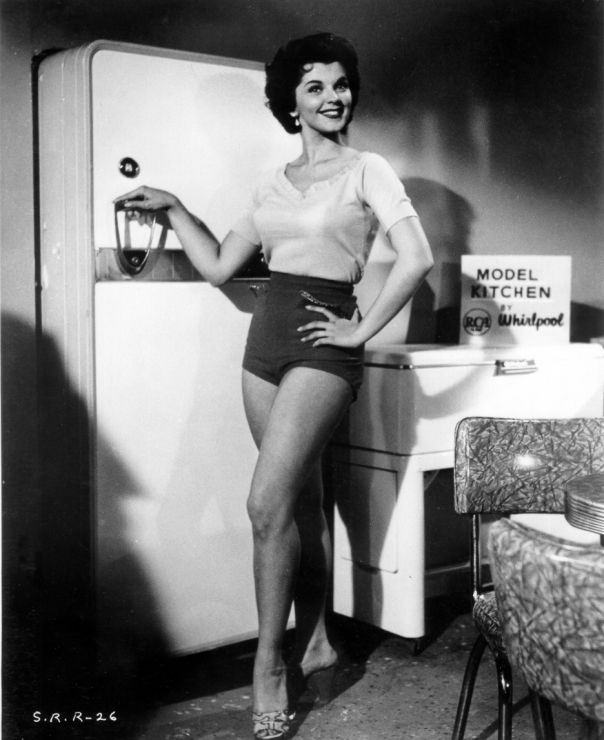
We started the year off with “Worth a Million,” learning about the careers of several of the cast members from How to Marry a Millionaire. This show debuted in 1957 and aired for two years. Today we focus on Merry Anders.
📷pinterest.com
According to imdb.com, the plot of the show is “Motherly Mike, ditzy but sexy Loco, and sensible Greta move to the big city to find themselves wealthy men to turn into husbands. After the first year Greta gets married with Gwen the new roommate in this syndicated series.”
Merry Anders, who played Mike, also had a small part as a model in the 1953 Marilyn Monroe movie that the series was based on.
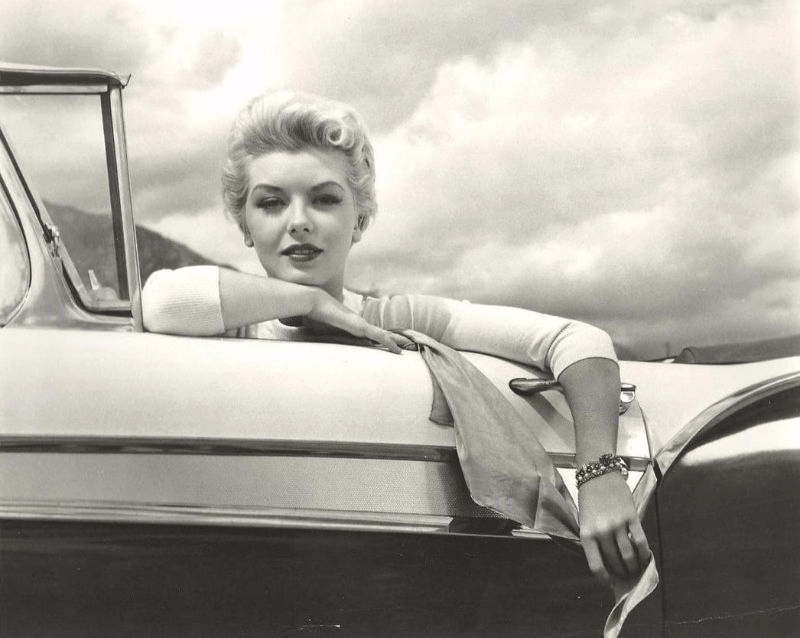
Anders was born Merry Anders in Chicago in 1934. When she was 15, she and her mother visited Los Angeles for two weeks and never left. Former actress Rita Leroy encouraged her to begin a modeling career, and Anders studied acting at the Ben Bard Playhouse. A talent scout spotted her there, signing her to a film contract for 20th Century Fox in 1951.
📷vintageeveryday.com
Her first film was Golden Girl that same year. She continued with small roles on the big screen and various offers on television before being offered a cast role in It’s Always Jan in 1955. When it was canceled, she took the part of Mike on How to Marry a Millionaire. Her next cast role came a decade later on Dragnet.
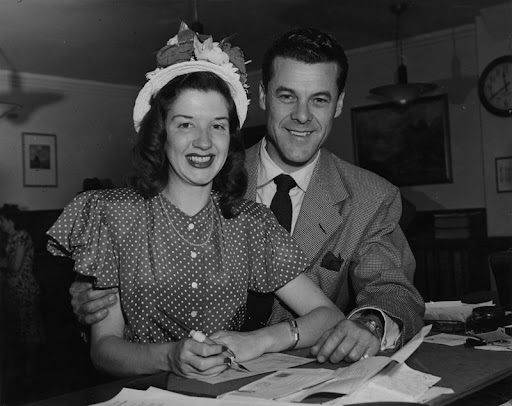
Anders was married to John Stephens, a producer, but they separated after four months. He was abusive, and when she found out she was pregnant, she divorced him.
By 1968 it was clear that her career was in a rut, and she accepted a job as a receptionist at Litton Industries. Her last role was a two-part Gunsmoke story which aired in 1971. In 1972, she officially retired from acting. She became a customer relations coordinator at Litton where she remained for another twenty years.
📷wikipedia.com On Gunsmoke
She shared that she had a couple of years where she only grossed about three thousand dollars, and she couldn’t make a living. She said, “her dad wrote her a letter and said, ‘Get out of that movie business, get yourself a decent job, girl!’ I was divorced and it’s hard to raise a child, have a nice home, put up the appearance of success, drive a car in perfect running shape and everything when you’re on unemployment.”
In 1986 Anders married again, this time to engineer Richard Benedict and they were together until his death in 1999. Anders passed away in 2012, but no cause was shared. Before her retirement, she was in 45 big-screen films including Three Coins in theFountain, Desk Set, and Airport. Add another 46 television shows including The Ann Sothern Show; Richard Diamond, Private Detective; Bonanza; Perry Mason; and Get Smart. Overall, she racked up 91 credits in two decades which is impressive. I hope she enjoyed her life after acting and was able to share lots of great stories with her family and friends.
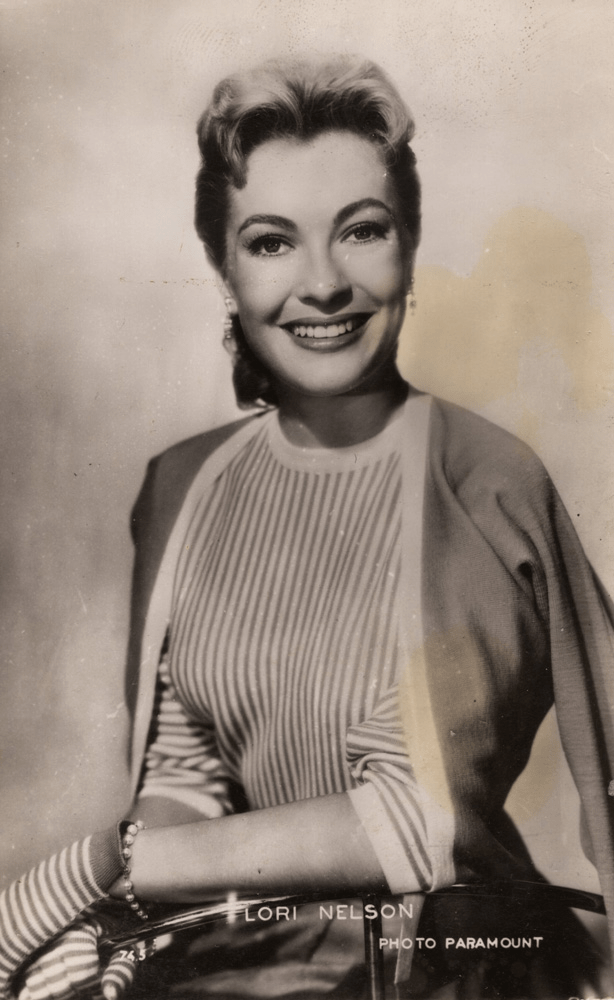
It’s 2026! And it’s a new month, so we are starting the year off with “Worth a Million.” This month we are learning about the careers of several of the cast members from How to Marry a Millionaire. This show debuted in 1957 and aired for two years. Up today is Lori Nelson.
📷imdb.com first season, How to Marry a Millionaire
According to imdb.com, the plot of the show is “Motherly Mike (Merry Anders), ditzy but sexy Loco (Barbara Eden), and sensible Greta (Lori Nelson) move to the big city to find themselves wealthy men to turn into husbands. After the first year Greta gets married with Gwen (Lisa Gaye) the new roommate in this syndicated series.”
In season two, Lori Nelson left the show. She felt she was the best actress in the series, and she did not like the development of her character. She claimed Anders got all the wisecrack dialogue while Eden was the sexy, bubbly star. So, the writers married Greta off to a gas station owner, and they moved to California. Lisa Gaye was then hired as Gwen to take her place.
Lori was born Dixie Kay Nelson in New Mexico in 1933. Her father managed a metal mine company there. At age two she appeared in local theater productions. She was voted Santa Fe’s most-talented and beautiful child and toured the state as “Santa Fe’s Shirley Temple.”
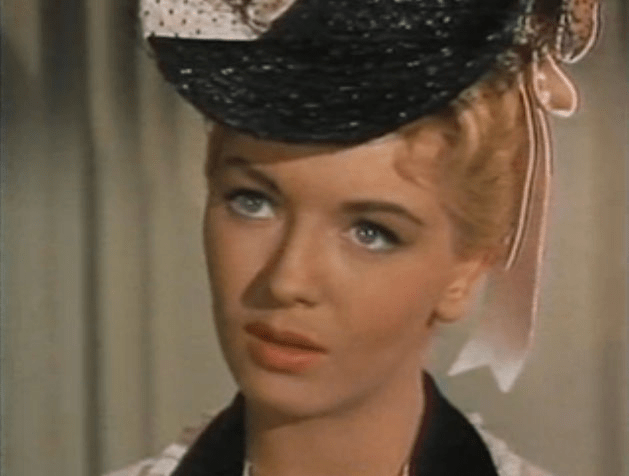
By the time she was four, her family was living in California. By the ripe old age of five, Nelson won the Little Miss American pageant, and she toured veterans’ hospitals, took roles in local theater productions, and modeled for photographers.
📷virtualhistory.com
When she was seven, she contracted rheumatic fever and was bedridden for four years. After she recovered, she continued her entertainment work and became Miss Encino at age 17.
While working as a model in 1950, Nelson signed a seven-year contract with Universal-International. Her film debut was in a western, Bend of the River.
She continued to appear in films throughout her career, taking roles in 24, with her last one being the uneventful The Naked Monster in 2005. I sometimes wonder how movies like this ever end up on the big screen before someone with a bit of common sense stops it. The description for this one, according to imdb.com is “A brain-dead sheriff, a stolid secret agent, and a sexy scientist team with a grumpy retired monster fighter to battle a 60-foot, three-eyed cross between a man and a dinosaur.” However, if you have seen this movie and want to make a case for it, I’d love to hear more about it.
Nelson transitioned to television with her role in How to Marry a Millionaire. After she left the show, she continued to take offers from a variety of series, 18 in all, including Wagon Train, Tales of West Fargo, and Bachelor Father, with Family Affair being her last television appearance in 1971.
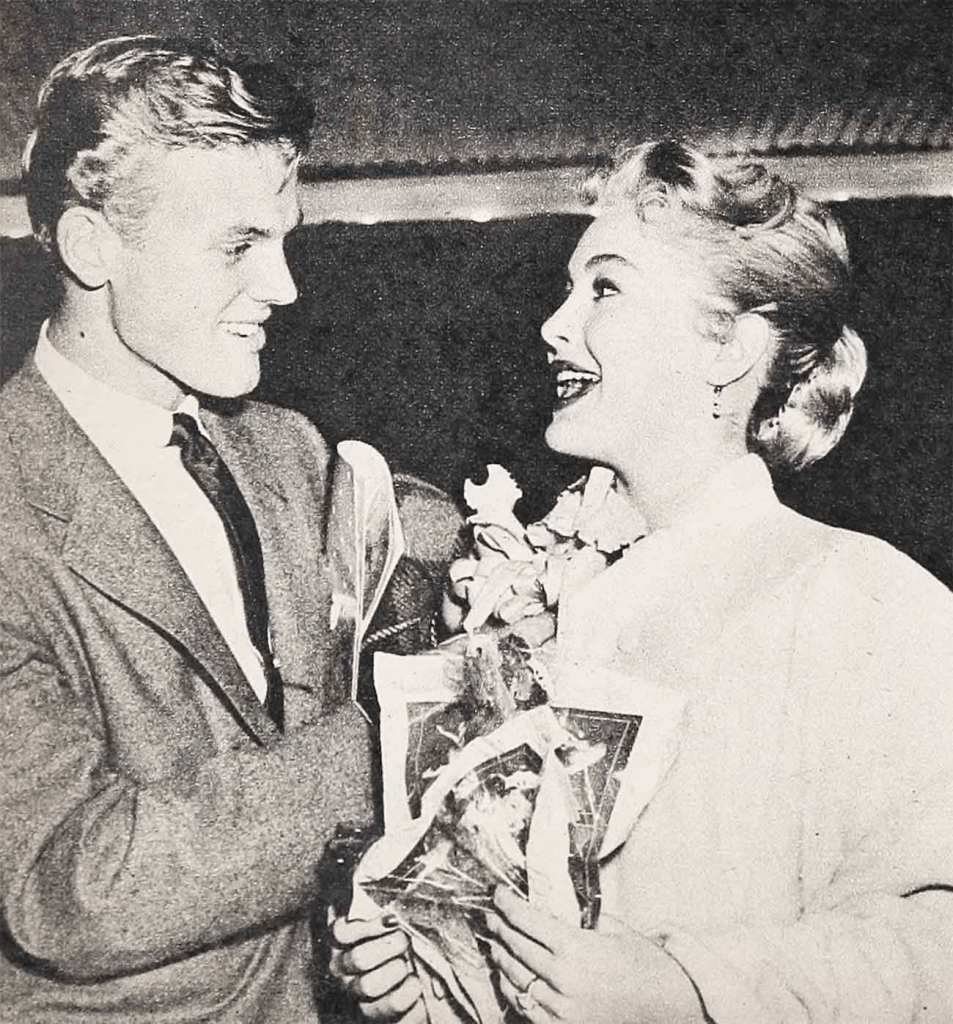
📷vintagepaparazzi.com with Tab Hunter
Nelson began dating Tab Hunter in the fifties and their friends thought they would marry. In his autobiography, Hunter relayed that he almost married Nelson, but he was also involved with figure skater Ronald Robertson at the time and was struggling to determine his sexual identity. Nelson and Hunter ended their relationship, but they remained friends, and she guest starred in several episodes of The Tab Hunter Show.
In 1960 Nelson married composer Johnny Mann and the couple had two daughters before divorcing in 1973. In 1983 she married Joseph Reiner, a police officer. After 1971, she was only in a handful of movies and videos. I’m guessing she didn’t miss the limelight; she said she always preferred popcorn and peanut butter to champagne and caviar.
Nelson died at age 87 from Alzheimer’s disease. I don’t think Nelson had the career that she had envisioned for herself, but I’m grateful we have her as part of the history of this blog and How to Marry a Millionaire. The episodes I watched had some witty dialogue and fun plots.
Welcome to 2026! Our blog theme this month is “Worth a Million.” We are learning about the careers of several cast members from How to Marry a Millionaire. This show debuted in 1957 and aired for two years.
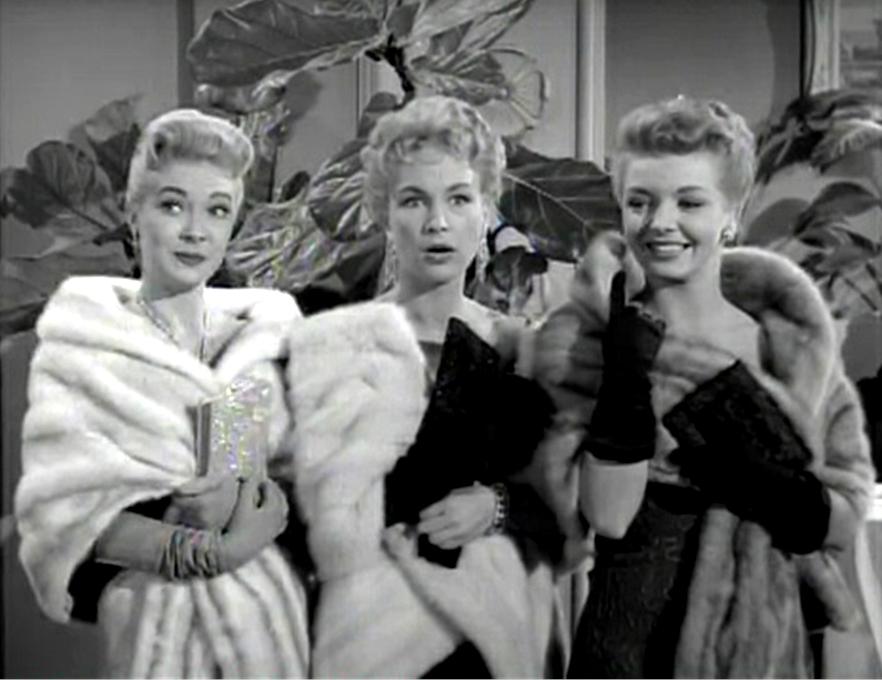
📷instagram Cast of season 2
The show was based on a movie that came out in 1953 starring Marilyn Monroe. The stars were Merry Anders, Barbara Eden, and Lori Nelson. Nelson was not happy with her role. She felt Anders got all the wisecrack comments as the smart girl and Eden got all the funny lines as the bombshell, while she was overlooked. There is a discrepancy whether she quit or was fired, but either way, she did not return for season two. Lisa Gaye was the new roommate Gwen Kirby, but hopefully she did not pay too much to sublet, because after thirteen episodes, the show was cancelled.
Like Jimmy Cross, who we learned about last week, Gaye never was part of another cast again, but she was busy during the sixties, amassing almost 100 credits. Her last appearance was on The Mod Squad in 1970, her only seventies appearance.
Gaye was born in Colorado in 1935. I’m sure she was influenced by both parents—her mother was an actress, and her father was an artist. In the late thirties, the family moved to Los Angeles. Gaye’s mother was determined to get all of her children an acting career after their daughter Teala was signed by Paramount. (Her siblings include Teala Loring (32 credits), Debra Paget (45 credits), and Frank Griffin (78 credits primarily for make-up).
Gaye made her first appearance at age 7, and by age 17, she was offered a seven-year contract with Universal. She jumped back and forth from movies to television during her career.
📷pinterest.com
Her other recurring role was as a model in Love That Bob. Lisa did an interview (http://www.westernclippings.com/interview/lisagaye) and she was asked about her favorite directors. I was surprised to read that she chose Bob Cummings. She said Bob not only starred in the show but often directed episodes. She said “He had terrific timing for comedy; he understood comedy. He knew what he wanted and sometimes there would be take after take until he got it right. He taught me a lot.” It surprised me because typically when I read comments about Cummings, they are more negative than positive.
For example, Julie Newmar didn’t feel that Cummings was the right actor for her costar on My Living Doll. She said that “They originally wanted Efrem Zimbalist Jr. It was not a flip part—it needed a straight actor who could play opposite this bizarre creature so the comedy would come off. That quality was lost when they hired Bob. The show could have been wonderful. I think it would have run for many seasons had they hired Efrem because he had the right qualities.”
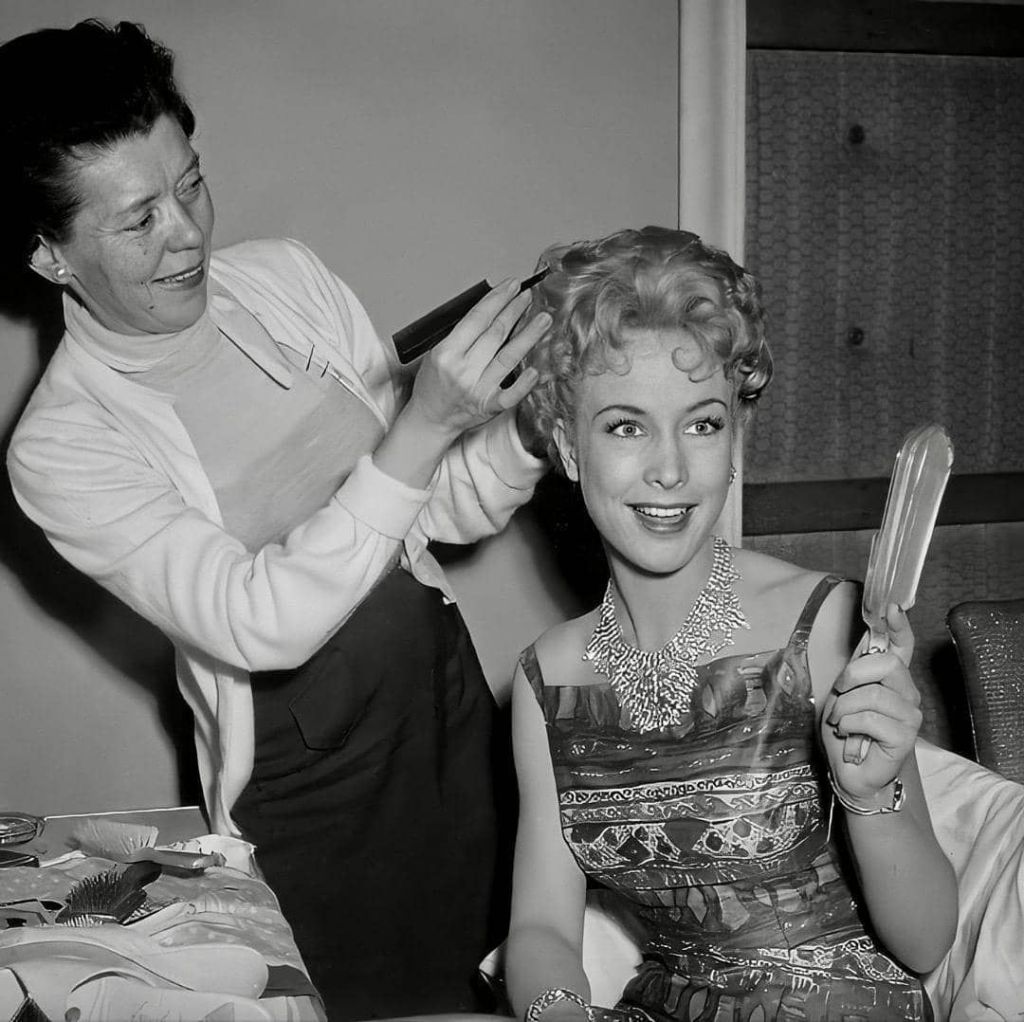
I couldn’t find much about Gaye’s thoughts on How to Marry a Millionaire. She did mention that in the early days of television there often weren’t hairdressers or make-up artists, and the actors had to do that themselves.
📷imdb.com
In an interview for the Television Academy, Everett Greenbaum said How to Marry a Millionaire was the worst collaboration he ever did. He inherited a writing partner, Milt Pascal, and said they did not work the same way at all. For example, if there was a horse in the scene, Milt would say, “Let’s come up with three horse jokes to write the scene around.” Greenbaum then wrote his own script for the show. Since Spencer Tracy and Katherine Hepburn had just done Desk Set and had a computer available, Greenbaum wrote an episode about the computer choosing dates for the girls.
Barbara Eden talked a bit about the show in her interview with the Academy also. She said it was her finishing school. She mentioned that she liked Lisa Gaye very much. She said it was a hard job though. They had to wear very high-heeled shoes and be on the set for thirteen hours a day.
Eden was asked why the series was cancelled. She thought it was because it was a syndicated show that was being filmed to transition to a fourth television network that Fox was trying to establish at the time. When it became obvious that there wasn’t going to be a fourth network, all those shows were canceled.
In 1955 Gaye married Bently Ware and they were together until his death in 1977.
📷imdb.com
Gaye’s career might have been much different in 1961. She auditioned for the role of Anita in the film version of West Side Story and was seriously considered for the part, but the role eventually went to Rita Moreno. She did have a film career, but her roles were not major ones and the movies were good, but not necessarily Oscar quality. She was in The Glenn Miller Story, Rock Around the Clock, and Shake, Rattle & Roll. In the Miller biopic, she was part of a screaming crowd, but she was able to use more skills in other movies. Gaye loved dancing and originally wanted to be a ballerina.
Gaye described what it was like to be at Universal at that time. She said it was the only studio where you were given lessons in drama, singing, dancing, fencing, horseback riding. She said, “it was awesome . . . and you got paid to learn.”
If Gaye wanted to talk about a day that might have changed her life, she might have mentioned a day in 1958. She said she was working with Steve McQueen on Wanted: Dead or Alive. As she tells the story, “We were shooting on the back lot and he asked me if I’d like a ride back to the soundstage, on his motorcycle. So, I certainly said ‘Sure.’ I made a big mistake by getting on his motorcycle. We went all over that lot, and not at a slow pace! He didn’t slow down—he was always on the cutting edge. We zoomed right up to the soundstage where the doors were closed. He had it arranged that someone inside would open them at the last minute, but I thought we were goners for sure. After that ride, I said, ‘Thank you,’ and never rode with him again.”
📷westernclippings.com
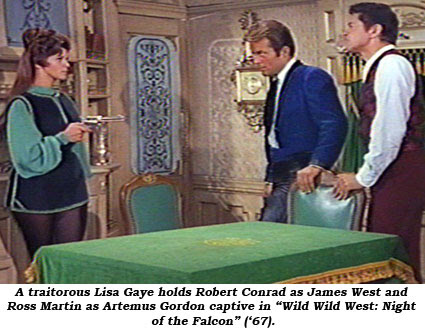
She also discussed another close call when she was appearing on The Wild Wild West in an episode titled “The Night of the Falcon.” She was supposed to ride a horse with the falcon. She declined. She said she would ride the horse or handle the falcon but not both. So, her stunt double was given the task. Gaye had to sit on a ladder, so it looked like she was on a horse. When she was sitting up there, she noticed the trainer looked rough and she assumed he had gone through a windshield because he had stitches all over his face. Her double was riding the horse with the bird when it screeched, causing the horse to rear up and throw her double. She later learned that the falcon attacked his trainer, chewing up his face.
While Gaye didn’t have a recurring role on Death Valley Days, she was on it more than any other actor, nine times. She said she liked the fact that the stories were all true. She had another close call on that series as well. She was on a horse when it was spooked and was dragged for some distance. There was a wrangler who was supposed to catch the horse if it took off, but the horse ran over the wrangler; luckily, she was full of mud but okay.
Lisa said in the late sixties her career seemed to hit a rock. She didn’t know why, but she never worked again. She said after her husband passed away, she went to Houston to help her daughter who had six kids. She said she became a receptionist at the local religious TV station for 19 years.
It’s too bad that Lisa’s career hit a wall, but it sounds like she enjoyed being able to help raise her grandchildren. After such a successful couple of decades, it’s hard to know why she suddenly was not receiving any offers.
It’s 2026! And it’s January, so we are starting the year off with “Worth a Million.” This month we are learning about the careers of several of the cast members from How to Marry a Millionaire. This show debuted in 1957 and aired for two years.
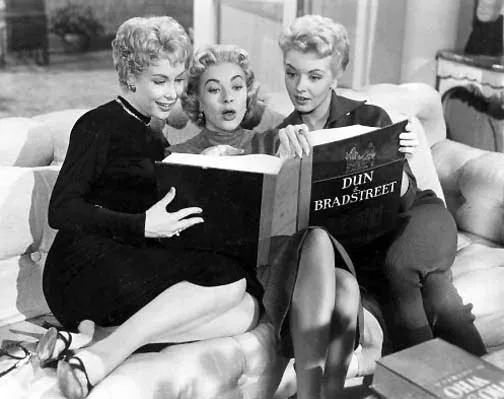
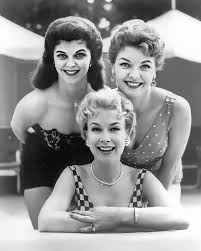
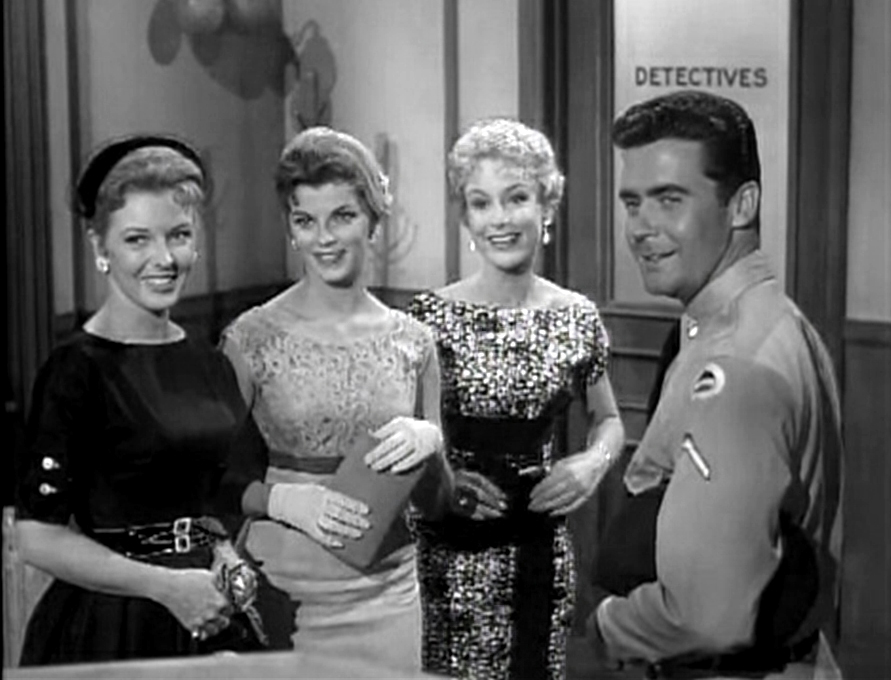
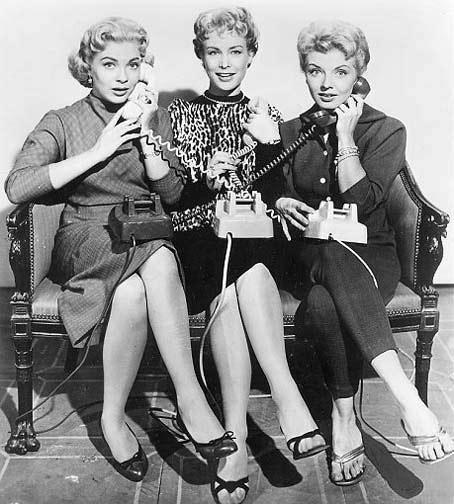
📷tmdb.com The first year cast of women
According to imdb.com, the plot is “Motherly Mike, ditzy but sexy Loco, and sensible Greta move to the big city to find themselves wealthy men to turn into husbands. After the first year Greta gets married with Gwen moving in as the new roommate in this syndicated series.”
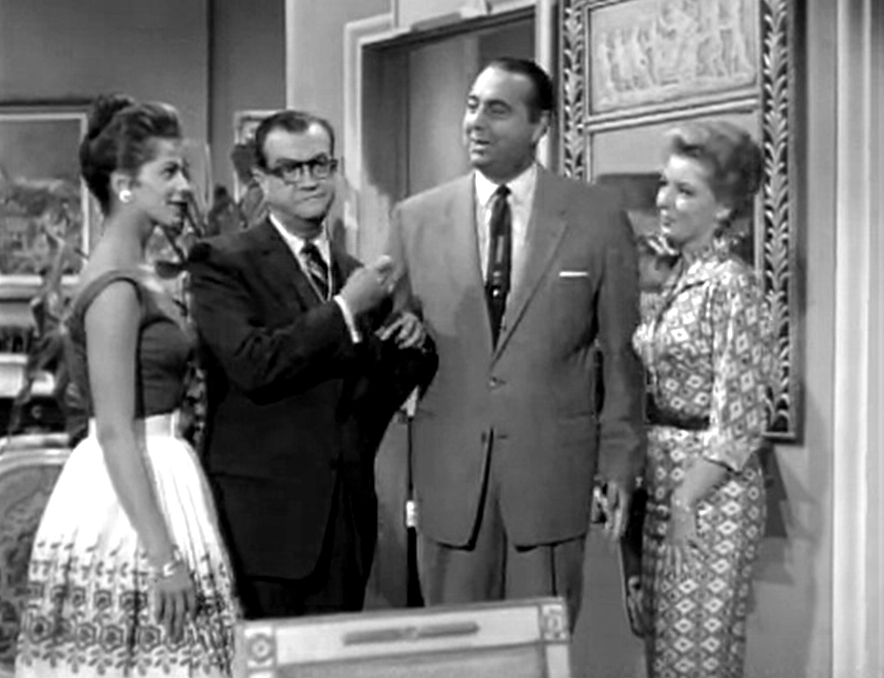
The six members of the cast included Merry Anders (Mike), Lori Nelson (Greta), Barbara Eden (Loco), Jimmy Cross (Jesse), Lisa Gaye (Gwen), and Joseph Kearns (Mr. Tobey). During the past decade, we have learned a lot about Barbara Eden, best known as Jeannie in I Dream of Jeannie and Kearns who we remember as Mr. Wilson in Dennis the Menace. So, this month we are learning about the four remaining stars, and we begin today with Jimmy Cross.
📷imdb.com Cross as elevator attendant
Cross was born in 1907 in New York. At age 40, he married actress Peggy Ryan, but they divorced after the seven-year itch. Ryan was a popular face for a while. She and Donald O’Connor were supposed to be the next Judy Garland/Mickey Rooney couple. Ryan’s parents were Vaudeville dancers, and she was on stage by age two. She was an amazing dancer and singer. After she and Cross divorced, she tried another short-term marriage to Ray McDonald before meeting Eddie Sherman whom she was with for almost fifty years. You might remember her as Jenny, Steve McGarrett’s secretary on the original Hawaii Five-0.
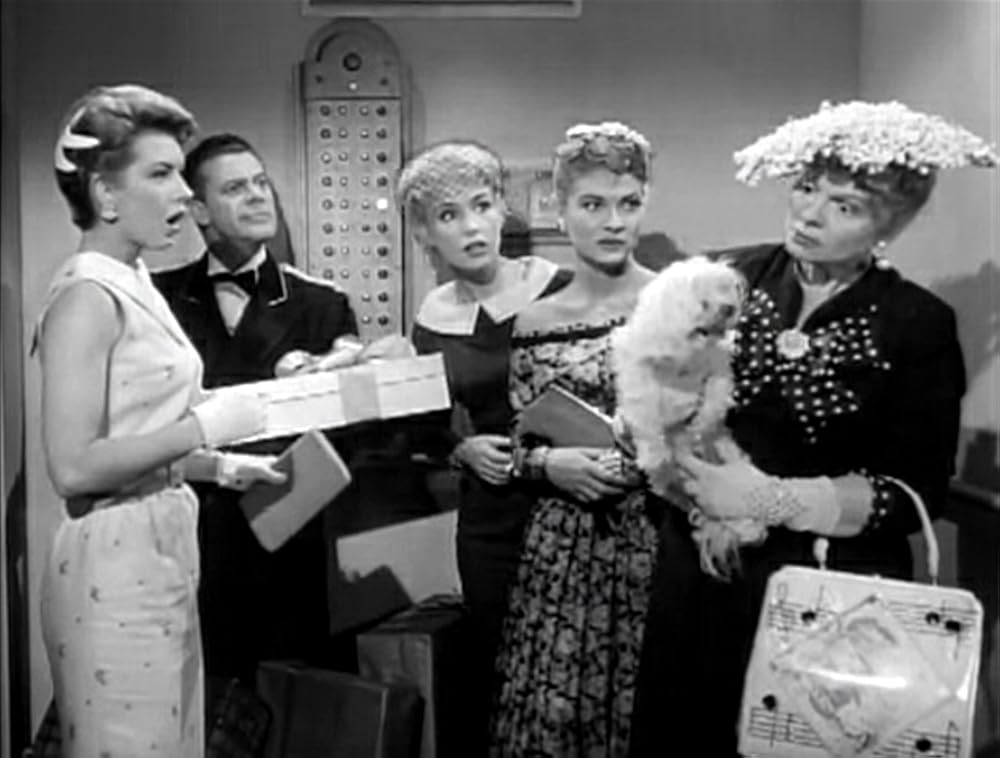
On How to Marry a Millionaire, Cross played the elevator man, at age 50, who worked in the apartment building where the girls lived. He sometimes helps and sometimes hinders the trio with their get-rich-husband schemes.
This was the only series he costarred in, but he did show up on The Red Skelton Show 46 times.
Cross typically played a background role, often a bartender, drunk, or photographer. However, he was busy and appeared on almost every popular show during the sixties and seventies, garnering almost 100 credits during those decades. His last role was in BJ and the Bear in 1979, two years before his death.
📷thevalleytimes.com With Wife Peggy Ryan
Cross also had a decent movie career. Again, he was not front and center but had some fun parts and if you look quickly, you will see him in several popular movies including North by Northwest, Bells Are Ringing, Hello Dolly, and The Poseidon Adventure.
I wish I knew more about Cross. There just isn’t much information out there considering how long he worked in the entertainment industry. This is one of those cases where his work might have to speak for itself. That said, this show got a lot of good reviews when it came out and Cross, while not being a star, added a fun element to the episodes he was in.
As we look back at some favorite crime dramas, this week we are traveling back sixty years. From 1965-1966, Honey West appeared in our living rooms. Only thirty episodes were produced, but the show was respected and worth remembering.
Photo: drunktv.com
The show was based on a novel series. Married couple, Gloria and Forrest “Skip” Fickling wrote the books. Skip had been a gunner in the US Army Air Force. According to Skip, they combined Marilyn Monroe and Mike Hammer for the character of Honey West. The novels were published from the late fifties to 1971, with eleven total.
West was one of the first female private eyes on tv. In an episode of Burke’s Law, Ann Francis showed up as Honey West which led to a spin-off. The series was developed by Gwen Bagni and Paul Dubov, writers on Burke’s Law. Aaron Spelling was listed as the producer.
Photo: drunktv.com
West has a partner Sam Bolt (John Ericson). Ericson never received another starring role in a series, but he was a successful actor, amassing 105 acting credits.
Honey is an interesting character. She has a hidden radio in her lipstick case, has a pet ocelot named Bruce, a colorful animal-print wardrobe, and a Cobra convertible. She shares an apartment with her Aunt Meg (Irene Hervey) who shows up in about half of the episodes.
West owns her own investigation firm which she inherited from her father. Her base of operations was behind a fake wall in her living room. She’s very smart and experienced in electronic surveillance. Bolt creates many of the gadgets she uses. They go undercover in a specially equipped van which had a sign “H.W. Bolt & Co., TV Service.” She and Sam could be the inspiration behind Maddie and David from Moonlighting.
Like James Bond, or Max Smart, she uses a number of high-tech instruments: an exploding compact, a garter belt gas mask, tear gas earrings. You don’t have to worry about Honey’s safety. Sam is an ex-Marine, and Honey attained a black belt in judo.
Photo: filmscoremonthly.com
Several of the episodes were written by Richard Levinson and William Link who would go on to write for Columbo and Murder, She Wrote.
The show was canceled after the first year for two primary reasons, one understandable and one which makes me shake my head. I understand that the network determined that it would be cheaper to import The Avengers and show it in the time slot. The second reason is a bit harder to understand: the show was in competition with Gomer Pyle USMC and could not hold its own in the ratings war. I say this with great respect to Jim Nabors whom I love and while Gomer Pyle was an ok show, it’s hard for me to picture it as a show that would draw more viewers than a crime drama.
Francis did receive Golden Globe and Best Actress Emmy nominations that year. She was beat out by Barbara Stanwyck for The Big Valley. The show was described as “sexy, sophisticated and delightfully funny.” According to most of the reviews of the DVDs, it holds up very well after sixty years and is still fun to watch.
Photo: lulu-berlu.com
They had some clever details in the show. There is often at least one instance when the last word of a sentence leads into a funny new scene. The actors often discuss television shows, wondering about their ratings. Honey pulls down an imaginary shade, so viewers won’t watch her sleep. It also had a jazzy theme written by Joseph Mullendore. He had created a lot of the music for Burke’s Law and would go on to provide music for other series, including Land of the Giants and Daniel Boone.
There were several drawbacks mentioned, most notably the lack of color. Not only was color becoming the norm by this time, but Honey West was a show that would have been enhanced by color. It was also criticized for being a 30-minute show. There was not enough time to truly develop both the plot and the characters’ relationships in such a short time.
Photo: pinterest.com
This show reminds me a bit of Barbara Eden’s show How to Marry a Millionaire and Bachelor Father, starring John Forsythe, in that both debuted in 1957; two series that I thought had clever writing, fun characters, witty dialogue, and elegant interiors. On one hand, it is sad it wasn’t given more of a chance to get established with viewers. On the other hand, it sounds like it has thirty mostly great episodes to watch. Maybe an early cancellation allowed the best shows to be saved. I think about I Dream of Jeannie which was released the same year as Honey West. The shows from the first year are fun to watch. Jeanne is witty, clever, mischievous, and smarter than she lets on. During the following years, the episodes were average at best and often sub-par. If I only had the first year’s episodes to watch, I would not feel like I was missing anything.
For less than $20, you can buy the entire DVD season of Honey West. And if it makes you want to go out and get a pet ocelot, who am I to judge?
Today starts a fun, new blog series, “The Movie Came First.” For the month of December, we’ll be learning about shows that began life as a big-screen movie. Our first sitcom is How to Marry a Millionaire.
In 1953, Betty Grable, Marilyn Monroe, and Lauren Bacall starred in a comedy romance about three women who make a pact to help each other find millionaires to marry but end up finding love instead. Their love interests are played by Cameron Mitchell, David Wayne, and Rory Calhoun.
An interesting fact about this movie is that it was the first one filmed in Cinemascope. In order to highlight the incredible sound, the movie begins with an orchestra performance. It was a bit awkward because it has nothing whatsoever to do with the movie, but is an interesting intro. It was also the first movie to air on television when it appeared on NBC Saturday Night at the Movies in September of 1961.
Another fun fact about the movie is that Merry Anders who would appear in the television show had a bit part as a model in the film.
Photo: filmaffinity.com
In 1958, the movie came to the small screen with Merry Anders (Mike) filling Lauren Bacall’s role, Barbara Eden (Loco) is the sexy bombshell Monroe played, and Lori Nelson (Greta) is the neutral one in between played by Grable. Greta is the co-host of a quiz show, Go for Broke. Mike, whose real name is Michelle, works as a secretary on Wall Street, and Loco is a fashion model. One of the weekly gags is that Loco has terrible eyesight, but thinks men don’t like girls in glasses, so she often has mishaps not seeing correctly.
In order to find a wealthy husband, they found a chic penthouse apartment while wearing designer clothing even if they could not afford to eat. I guess that’s why they went on a lot of dinner dates.
Photo: imdb.com
The girls are often short of money and have trouble paying the rent on time. Mr. Blandish (Dabbs Greer), their landlord, is always threatening to evict them. The elevator operator Jesse (Jimmy Cross) sometimes helps and sometimes hinders the trio with their get-rich-husbands schemes.
The pilot was filmed in 1957 with Lori Nelson as Greta but her roommates at the time were played by Charlotte Austin (Loco) and Doe Avedon (Mike, who had been married to photographer Richard Avedon). By the time the show was sold in 1958, the roles had been recast and after looking at more than seventy auditions, the producers picked Eden and Anders.
Photo: sitcomsonline.com
Anders discussed the camaraderie of the three stars. She said they were amazingly similar. She said they all wore size 8, all drove Thunderbirds, and all had French poodles and this was before they met. Anders had tested for the role of Mike and Loco because she had been playing a lot of ditzy blonde roles. When she was given the role of Mike, Eden was brought on board as Loco. Anders said the cast worked hard. After filming all week, they did late night interviews and early morning shows. One weekend they were sent to New York for a personal appearance. They got back late Sunday night and still had to be at work early Monday morning.
Photo: wundaba.ne
The second season found Nelson out with Lisa Gaye as Gwen in. Nelson claims she was the best actress and that she decided to move on, disliking her character’s development. Other sources say she was fired because she gave an interview criticizing her role. Nelson said her role wasn’t defined well with Anders getting the “Eve Arden wisecracks” and Eden being the sexy, bubbly personality. Greta supposedly married a gas station owner and then moved to California. Only thirteen episodes were aired for season two and then the show was cancelled.
Photo: imdb.com
Barbara Eden was interviewed for the Television Academy and discussed her time on the show. She said she was doing a play in LA when director Mark Robson saw her. He offered her a role in his new movie Peyton Place. However, the studio gave the part to another actress who was under contract at the time; but because of Robeson’s interest, they brought Eden in for a test at Fox. One of the television executives called her and said he had seen the test and read her notices for the LA play and was wondering if she was interested in doing a television series. He asked her to go to the Fox Western studios for some still shots. When she got there, she thought the part was still in the process of being cast, but realized the stills were being taken because she had the part and the other girls were her costars.
Photo: amazon.com
Eden said she was a huge fan of Marilyn Monroe and had seen the original movie. She felt trying to take on the part by imitating Marilyn would have ended badly because she could never compete with Marilyn’s version, so she took the part and made it her own. Like Anders, she also said the three costars were close and became good friends.
Eden said the time on the show was her “finishing school.” She learned so much about filming before the cameras, lighting details, and building stamina. The stars sometimes filmed up to thirteen hours a day in three-inch heels which she said was painful. After long days, they would be given new dialogue to learn for the next day’s shooting. It was a very tough job but prepared her for film work.
Photo: etsy.com
If you like cultural history, the show is fun to watch just to see the wardrobes and settings. The clothing was provided by Mr. Mort. Mortimer Goldman owned his design business in 1952, producing mid-priced stylish dresses. During the run of the show, Stan Herman came on board as a designer. Throughout the sixties, Herman’s designs were the height of fashion. Stan Herman later opened his own design studio, producing items under his label as well as for other companies. In the 1990s he began appearing on QVC with his design line of comfortable clothing and sleep ware.
The show was pitched to the three major networks, but they all passed on the series. So, in 1958, NTA Film Network sold the show into syndication to 115 stations. It packaged a three-series deal including Man Without a Gun and This is Alice.
Photo: imdb.com
Both critics and fans liked the show, but it had some tough competition. The show aired Friday nights against The Adventures of Ellery Queen, The Wide World of Disney, and Rawhide. Eden said she never knew exactly why the show was cancelled. She assumes that because Fox was trying to be the fourth network and it didn’t work out at the time, all the Fox shows were just dropped.
So, what happened to the NTA network? The company that referred to itself as the fourth network launched in 1956 with 100 affiliate stations. Twentieth Century Fox bought half of the company with the intention of producing original programming. The shows were filmed and then mailed to each station. By 1961, the network was losing money and the flagship station was sold to the Educational Broadcasting Corporation which later became National Educational Television and eventually PBS. One of their largest stations, KTTV in Los Angeles became part of the Fox television network, co-owned by Twentieth Century Fox, part of 21st Century Fox.
Photo: boomtownamerica.com
I was able to watch a few of these shows online. I’m not sure how the fourth network’s ownership affected syndication. Youtube has four episodes available. For this blog, I watched the first episode again. The jokes were a bit overdone and the laugh track was annoying, but I’ve seen worse. There were some charming moments in the show, and Barbara Eden’s comic ability was obvious with some funny scenes about her failure to wear glasses. Take some time to check out one of these four episodes to see what tv looked like in the mid fifties.











 thewritelife61