Florida Friebus: What a Character

đź“·danahallschool.com

As we continue our What a Character blog series, today we get to talk about the woman behind one of my favorite characters, Lillian Bakerman from The Bob Newhart Show. That woman is Florida Friebus.

Friebus was born in Massachusetts in 1909. She was named for her mother’s favorite aunt, not the southern state. Weirdly, her paternal grandmother was also named Florida. Her family was involved in the theater. Her father Theodore was a leading stage actor with Boston’s Castle Square Players and a silent film star. Her mom’s mother, Georgine Flagg, was part of the Augustin Daly stock company in Manhattan.

When she was only eight years old, Florida’s father passed away. Her mother had studied at the Dana Hall Schools and applied for a position of housemother there. Florida was able to study at Tenacre during this time. She participated in the first Christmas pageant in 1921. Florida not only learned a lot about acting, but she also was presented with classes in political history, music, art, languages, and literature.

đź“·facebook.com with Richard Waring

Friebus moved to New York to study at the Theater Guild School. She began her acting career in 1929 in when she appeared with the Civic Repertory Theater in “The Cradle Song.” In 1932, she worked on an adaptation of “Alice in Wonderland” with Eva Le Gallienne, and she took on the role of the Cheshire Cat.

In 1934, Friebus married Richard Waring. They would divorce in 1952, and she never remarried.

Friebus was elected to the Council of the Actors’ Equity Association in 1949, and she spent 16 years on the board.

Florida read stories to children on her KNXT show, Look and Listen, in Los Angeles.

đź“·imdb.com

Her first television role was in 1948 on The Ford Theater Hour. Her television drama appearances continued into the 1950s and she also appeared on several sitcoms, including The Goldbergs, Father Knows Best, Bachelor Father, and The Donna Reed Show. In 1959 she accepted a role that made her a household name: Winnie Gillis on The Many Loves of Dobie Gillis. For four seasons she tried to defend Dobie and his crazy dilemmas when his father became exasperated with him.

The show was based on a 1951 book, The Many Loves of Dobie Gillis by Max Shulman about the romantic adventures of a student at the University of Minnesota. Shulman wrote for the series. He would also write The Tender Trap which became a movie in 1955 and House Calls which became a 1978 movie; Shulman became head writer for the television series based on House Calls.

The sixties and seventies found Florida in a variety of both dramas and sitcoms. A few of these series included Ben Casey, Peyton Place, The Doris Day Show, The Mary Tyler Moore Show, The Partridge Family, Gunsmoke, Room 222, and Barnaby Jones.
đź“·sitcomsonline.com

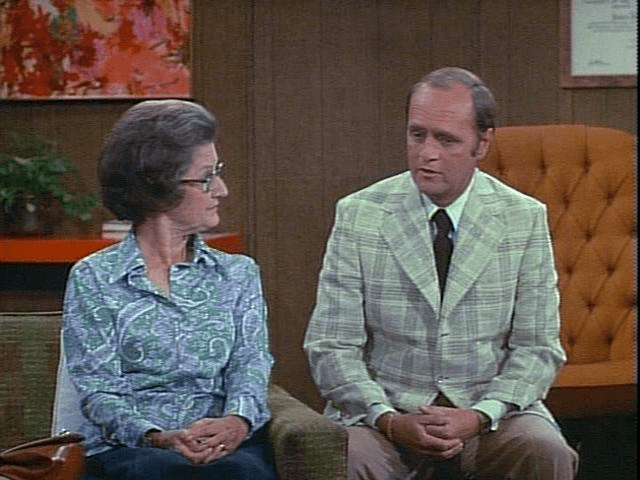
In 1972 she accepted the role of Lillian Bakerman on The Bob Newhart Show. During the show’s run, she made 19 appearances trying to encourage the other patients in her therapy group. She is often seen knitting while the group talks. One of her fears is flying, and her catchphrase is “Isn’t that nice.”

Her last appearance was in 1982 on The New Odd Couple as, who else but Mrs. Bakerman.

In 1988, Friebus passed away from cancer at 78 years old.
This Doctor Made House Calls Every Monday Night

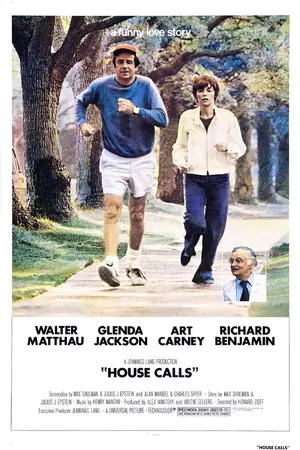
As we wind up our blog series, “The Movie Came First,” we finish with a show from the late seventies, House Calls. The original movie hit the big screen in 1978. The description of the movie is that Charley is a surgeon who’s recently lost his wife. He embarks on a tragicomic romantic quest with one woman after another until he meets up with Ann, a single woman, closer to his own age, who immediately and unexpectedly captures his heart.

House Calls (1978) movie posters
Photo: cinematerial.com

Walter Matthau played Charley and Glenda Jackson was Ann. Art Carney and Richard Benjamin were cast as friends and doctors who work with Walter. Max Shulman and Julius Epstein wrote the screenplay.

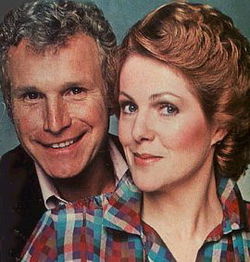
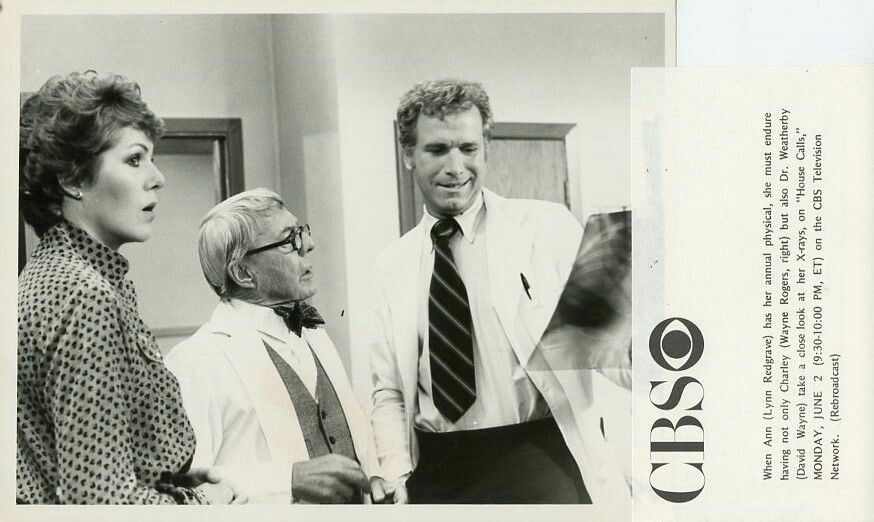
Jump ahead to 1979 and we find House Calls on the television schedule. The writers/creators are still Julius Epstein and Max Shulman. The same four top characters are featured but I thought it was interesting that only three of them got new names. Instead of Charley Nichols, we now have Wayne Rogers as Charley Michaels, Lynn Redgrave took on the role of Ann Anderson in place of Ann Atkinson. Charley’s coworkers are Amos Weatherby played by David Wayne where the original character was Amos Willoughby but Benjamin’s Norman Solomon role is now Normon Solomon, just one vowel change played by Ray Butenika. If there is a meaning behind the names, I never learned about it. Charley and Normon are the Hawkeye and Trapper of the hospital community and Willoughby is the senior doctor who tries to reign them in and doesn’t fire them only because they’re such good doctors.

In this version of the story, Charley and Ann are dating. He’s a surgeon at a San Francisco hospital and she is the new administrative assistant. He doesn’t like to conform to rules, while she insists on it, so while they are dating in their personal life, they often butt heads in the work life.

Photo: wikipedia.com

Redgrave and Rogers had a great chemistry and apparently the relationship of the three doctors provided a lot of funny situations. Providing additional humor were practical head nurse Bradley played by Aneta Corsaut, an older but enthusiastic candy striper Mrs. Phipps played by Deedy Peters, and everyone’s favorite character to hate, Conrad Peckler (Mark Taylor), the executive who was trying to bring order to the hospital.

Fans and critics liked the show; Redgrave was nominated for an Emmy and a Golden Globe, but lost the Emmy to Isabel Sanford for The Jeffersons in 1981.

1980 TV Guide Ad Mash "Christmas" EPS House Calls "Christmas" EPS CBS TV |  Tv guide, 1980s tv shows, Holiday movie

CBS scheduled the show for Monday nights after MASH, Rogers’ previous show. Its competition was Monday Night Football/Baseball on ABC and The Monday Night Movie on NBC. The show stayed on Monday nights for its final two years up against Flamingo Road on ABC and depending on the time of year, Monday Night Football or Dynasty on NBC. The first season it was in the top 20; the second year, it jumped to the top ten and the third season it was in the top 30.

During season three, Lynn Redgrave left the show. There is some confusion as to why she left. Universal Television claimed there was a dispute about her salary; Redgrave insisted it was because the studio would not allow her to breastfeed her baby between takes.

Photo: sitcomsonline.com

Her leave was explained on the show by Charley reading a letter out loud to the staff that she had gone back to England to marry her former husband. After more than two years of the relationship developing between Ann and Charley, I’m guessing that the audience didn’t buy the abrupt ending of their romance. Sharon Gless was brought in as Jane Jeffries who develops a similar relationship with Charley. I’m also assuming that fans weren’t thrilled to think Charley would jump right into a new relationship with Ann’s replacement and the chemistry just wasn’t the same. The network cancelled the show after season three even though it was still in the top 25.

1982 Press Photo-Sharon Gless-House Calls - Sitcoms Online Photo Galleries
Photo: sitcomsonline.com

In an interview on “Pop Goes the Culture,” Rogers discussed the show. He said that he loved his time on House Calls. He related that the pilot had been filmed with another actor and for whatever reason, they needed to replace him and called Rogers to see if he was willing to take over the role.

He said he truly enjoyed working with Redgrave and she was very gifted. He wasn’t sure how much of her firing had to do with the baby demands and how much was subterfuge for more money, but she was managed by her husband at the time and the entire situation backfired. Rogers especially loved her use of language, and they would sometimes improvise tongue twisters into the script.

Photo: pinterest.com

He said like MASH, the show took a serious subject and turned it on its head. One of his favorite episodes had to do with medical marijuana. The older Willoughby was growing pot in the hospital for his patients’ use. He said it was a very funny episode. Rogers wrote two episodes and directed three of them. He talked about one of the shows he wrote, “Institutional Food” which he took a different take on hospital food which was always stereotyped as bad. In this situation, the hospital had a Mexican chef whom everyone liked. He didn’t have a green card and was getting ready to be deported, so the hospital staff was trying to come up with a solution. Finally, Charley decides to adopt this man as his son so he could continue to cook for them.

Rogers was very upset they took the show off the air. They were currently the eleventh most popular show when it was cancelled. He said he wrote a letter to the head of the network programming and to Bill Paley to protest. Paley invited him to lunch in his private quarters but refused to put the show back on the air.

I did find several episodes of the show on YouTube but did not see the DVDs available. I have to admit I saw this show infrequently and never saw the original movie, so I will add that to my list of things to watch in the future. This one sounded like a fun show, but I guess if I’m going to watch Wayne Rogers as a doctor, I’d rather continue watching reruns of MASH. It makes you wonder how long the show would have lasted if the network had not fired Redgrave.