George Tobias: Following His Own Dream

As we learn about a few Bewitching characters this month, I had to include the Kravitzes, Abner and Gladys, a/k/a George Tobias and Alice Pearce. Today let’s take a closer look at the career of George Tobias.
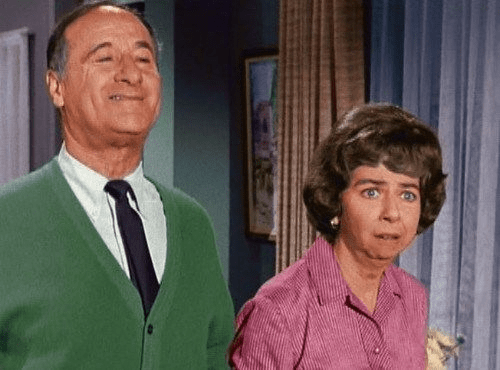
📷pinterest.com The Kravitzes

Tobias was born in New York in 1901. He was the son of Russian-Jewish immigrants, and his parents were active in the Yiddish theatre. After his older brother joined them, they tried to discourage George from following in their footsteps. In a St. Louis Post Dispatch interview in 1940, Tobias said “They made up their minds very definitely that I was not going to spend my life nearly starving as they did. They wanted me to be a doctor or lawyer, but I knew from a very early age that I would follow the same career as my mother, father and brother . . . so whenever I got an acting job in between other jobs, I had to keep it from my family.”

At age 15, Tobias was in local productions, making his Broadway debut at age 23. In 1939, Warner Brothers offered him a contract, and he appeared in 65 big-screen productions during his career, including parts in This is the Army and Marjorie Morningstar. Tobias appeared in four Oscar Best Picture nominees: Ninotchka (1939), Sergeant York (1941), Yankee Doodle Dandy (1942), and Mildred Pierce (1945).

Tobias’s television career began in 1954 in Our Miss Brooks. He would go on to earn 34 additional television credits before he retired in 1977.
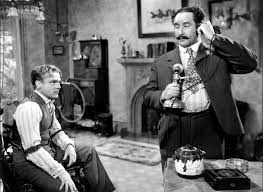
📷imdb.com With James Cagney in The Strawberry Blonde

His first cast role was in Hudson’s Bay playing Pierre Falcon in 1959. This show centered on Hudson’s Bay Company and its fur trade shortly after North America’s colonization. Trappers, explorers, Native Americans, and both the French and British navigate the territory, seeking fortune, fame, and adventure.

In 1960, he showed up as Penrose on season one of Adventures in Paradise in a show about the adventures of the Tiki III and crew as they sailed from island to island through the South Pacific, carrying cargo and the odd passenger from one drama to another.

From 1964-1971, Tobias was part of the Bewitched cast as Abner Kravitz. He put up with his wife Gladys despite thinking she was high strung, delusional, and just plain kookie.

In 1966, Doris Day’s movie The Glass Bottom Boat was released. Pearce and George Tobias were cast as next-door neighbors in the film. Although they weren’t named Gladys and Abner, the Fenimores were a carbon copy of the Kravitzes.
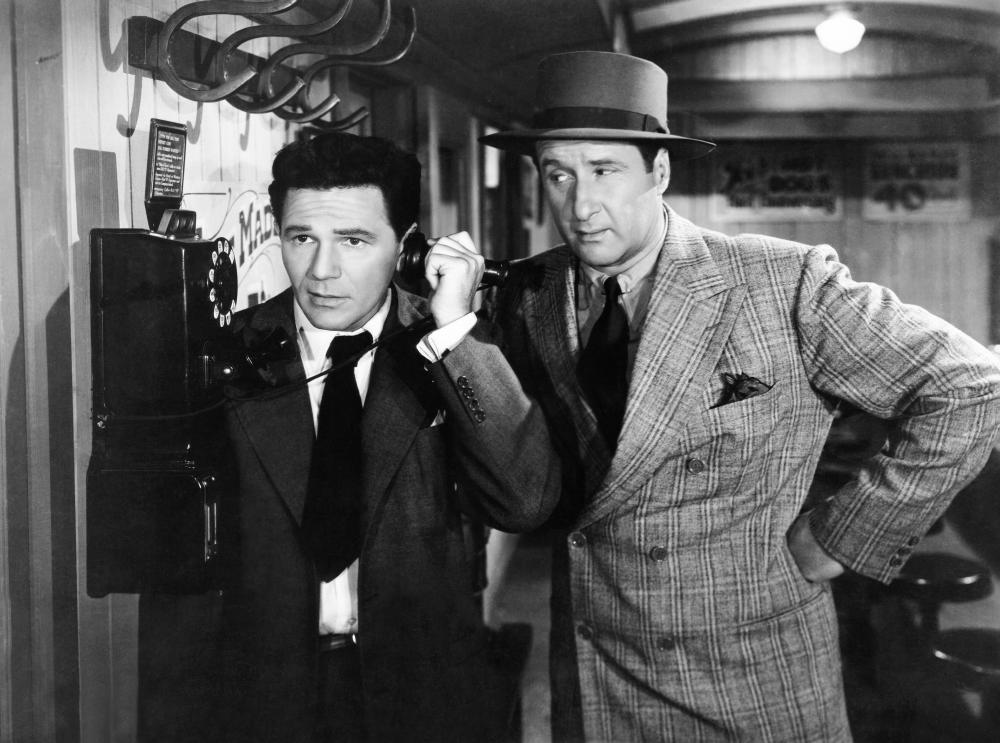
📷tvinsider.com 1946 Nobody Lives Forever

George’s last regular role was in The Waltons during seasons one and two when he played junkman Vernon Rutley.

While Tobias took on a few more roles before retiring, 1977 was his last year of acting, appearing on Tabitha when he reprised his role of Abner Kravitz. Tabitha was Darrin and Samantha’s daughter, now an adult.

Tobias passed away in 1980 from bladder cancer. He never married or had children, although he had a 40-year on-and-off relationship with actress Milicent Patrick. Patrick had an active career in entertainment from 1941-1961; she was also a commercial artist, fashion designer, and children’s book illustrator.

Even though Tobias was no longer living, he had one more adventure to journey through. The hearse with his body was stolen on its way to the mortuary. The car was in a fender-bender, and while the two drivers exchanged information, a carjacker made off with the hearse. The car and body were found shortly afterward.
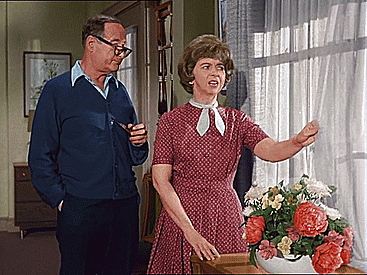
📷pinterest.com

In his book, Bewitched Forever, Herbie J. Pilato discusses how rugged and tough Tobias was in real life. He said he was “quite the equestrian. He owned and trained many horses, loved to play polo, and was a volunteer mounted policeman.” David White, who played Larry Tate, told Pilato that George “was a sheriff out in Peach Blossom, California, where he lived. He had a badge and everything.”

I always like Abner and Gladys Kravitz. I’m happy Tobias stuck to his guns and continued with his acting career, despite his parents’ worries. It sounds like he had a happy and successful life.

David White: The Man Behind McMahon and Tate

This month our blog series is Supportive Men. These actors were not the stars of the series, but they contributed a lot of fun to the show. First up is David White who we know best as Larry Tate from Bewitched.

White was born near Denver, Colorado, in 1916. His family moved around a bit. He lived in Pennsylvania and Missouri and graduated from Los Angeles City College. He worked at the Pasadena Playhouse before enlisting in the Marine Corps during WWII. After his four years in the military, he began acting again with the Cleveland Play House.

📷pinterest.com On The Phil Silvers Show

In 1949, White found himself living in New York where he made his Broadway debut in “Leaf and Bough.” The theater critics were not kind in their reviews, and the show closed after three performances. The following year, he tried the stage again in “The Birdcage” with Maureen Stapleton. He was then given a role in “The Anniversary Waltz,” co-starring Macdonald Carey and Kitty Carlisle which ran for 611 nights. He paid his dues, working in a variety of jobs while trying to establish his acting career. His resume included a farm laborer, a truck driver, a doorman at the Roxy Theater, and working at the J.H. Taylor Management Co.

In the 1950s, David began his long television career. His first appearance was in The Philco Playhouse production of “Rich Boy” with Grace Kelly. While most of his roles were in dramatic shows and westerns, he did a few comedies including Father Knows Best, My Favorite Martian, The Farmer’s Daughter,  and My Three Sons. Most of his roles were as corrupt businessmen or arrogant politicians.

📷dvdizzy.com In The Apartment

In 1952, David married actress Mary Welch. Welch appeared in several successful plays on Broadway. She was a member of Lee Strasberg’s Actor’s Studio before opening her own school called The Welch Workshop. White and Welch worked together in only one production, at a regional theater, in “Tea and Sympathy.” In 1958 she died of complications from their second pregnancy. They had a son Jonathan and sadly, he died in 1988 in the bombing of the Pan Am Flight 103 over Lockerbie, Scotland. (This was a tragic incident when Libyan terrorists planted a bomb on a plane flying from London to New York. It exploded 35 minutes into the trip and killed all 259 people on board and 11 people in the neighborhood where it landed.)

After his wife died, White and his son moved to Hollywood where White launched a big-screen career. His film debut was in 1957 with Tony Curtis, Barbara Nichols and Burt Lancaster in The Sweet Smell of Success. He only had 16 movies in his credits, but they included The Apartment, Sunrise at Campbello, and Brewster’s Millons.

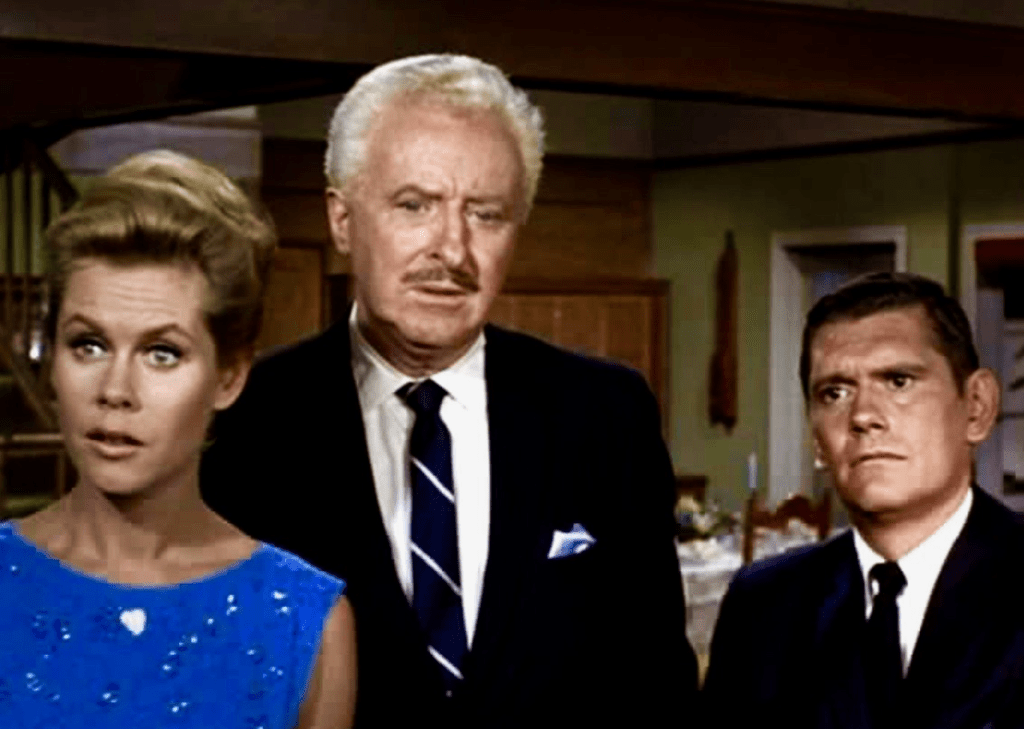
📷closerweekly.com On Bewitched

From 1964-1972, he perfected the comedic role of Larry Tate on Bewitched. As president of McMann & Tate, he was constantly firing Darrin for one reason or another, usually related to some circumstance caused by Samantha’s family. White also directed one episode of the series, “Sam’s Double Mother Trouble.”

During an interview with Herbie J. Pilato (author of Bewitched Forever), White said he “got the part because I was an honest man, and that’s how Larry and I were different. I’m not two-faced, and he was. I had more integrity than Larry ever had. I was smarter and had a deeper sense of values. I had to diminish who I was to play Larry, whom I viewed as a very insecure person who only had a certain brilliance in certain areas. He was smart enough to hire people who possessed the skills he did not—like Darrin. I wasn’t born to play Larry. I had to create him. He was a make-believe character of his own truth slated in a comedy series. When playing humor and farce you take that truth and stretch it as far as it will go. But not any farther. When I was playing Larry, though he was a funny character, I never tried to be funny. To me, acting has to do with fulfilling the needs of the character you’re playing, not the actor who’s playing him. Although the one thing the actor and the character have in common is that both have needs. A real heavy is a man who doesn’t have any moral structure whatsoever; one who ends up cheating or even killing someone. Larry was selfish, but he was never that extreme. If anything, he was still a little kid who never matured.”

📷x.com Bewitched

In that same interview, White said his favorite Bewitched episodes were “Moment of Truth” (Season 3, Episode 2 when Samantha has to tell Darrin Tabitha is also a witch and they try to keep the secret from the Tates), “Bewitched, Bothered and Infuriated” (Season 3, Episode 31 when Clara tells them about a future newspaper article that says Larry broke his leg on their trip, so Darrin and Samantha try to protect him while causing a lot of annoyance to Larry and Louise), and “Toys in Babeland” (Season 4, Episode 2 when Endora brings one of Tabitha’s toys to babysit her while she runs a quick errand which leads Tabitha to bring a lot of toys to life).

After the show ended, White continued both his television and film careers. He also continued in the theater, primarily with Theatre West and the Mark Taper Forum in Los Angeles.

📷imdb.com My Three Sons

During the seventies and eighties, he showed up in a variety of popular shows including Adam-12, Cagney and Lacey, Cannon, Columbo, Dallas, Dynasty, Love American Style, Mission Impossible, Qunicy M.E., Room 222, The Odd Couple, The Love Boat, The Mary Tyler Moore Show, and The Rockford Files.

After his son’s death, White became a bit of a recluse. He had just begun working again when he passed away from a heart attack in 1990 at the age of 74. Certainly, David White had a successful career, amidst his personal heartbreaks, appearing on the stage, in films, and on television. It would have been wonderful if he had another chance to be part of the cast of another hit show, maybe a dramatic role. However, if you only costar in one show, the role of Larry Tate and the memories we have of him on Bewitched is a great one to have.