My World . . . And Welcome To It: Just a Fantasy

This month we are in the midst of What in the World? Every sitcom has the word “world” in it. On deck today is My World . . . and Welcome to It. This half-hour show was based on the cartoons of James Thurber. It debuted in 1969 and was on the air for a year.
📷martin crookall- wordpress.com

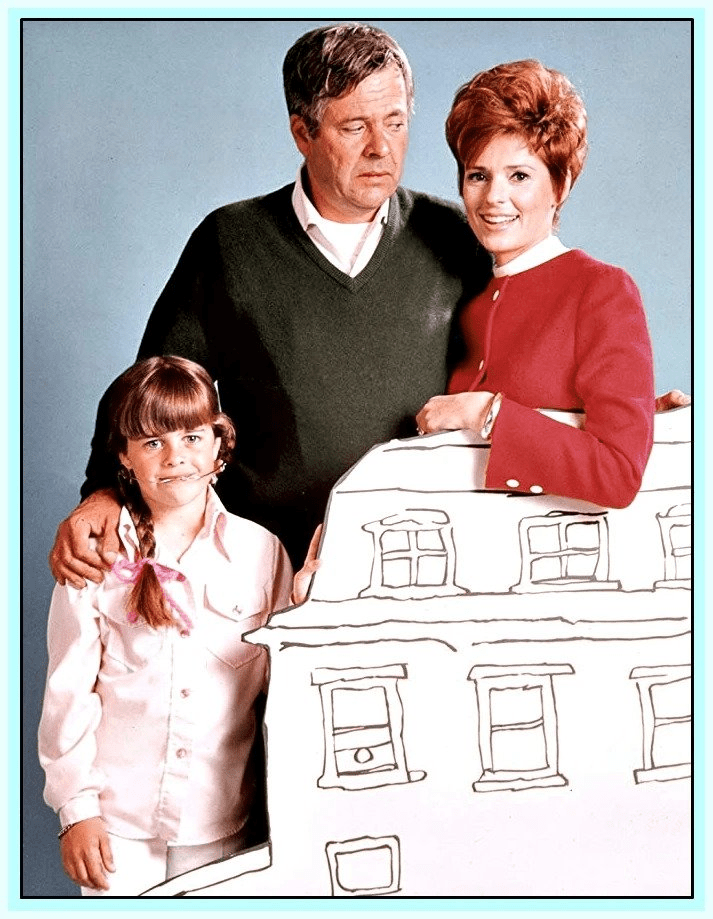
William Windom played John Monroe a cartoonist who works for a magazine similar to the New Yorker called The Manhattanite. Monroe lives with his wife Ellen (Joan Hotchkis) and their daughter Lydia (Lisa Gerritsen). John often daydreams about his daughter’s future and the “older” Lydias were played by Talia Shire and Cindy Williams.

The name John Monroe was Thurber’s alto-ego in his book Owl in the Attic. He frequently daydreams and those are cleverly incorporated into the series.

The episodes opened with John observing different aspects of his life. The use of the cartoons created a fantasy life dream world where he escaped life situations he could not process.

Mel Shavelson created the show for NBC. He wrote and directed the pilot with one of my all-time favorites Sheldon Leonard as executive producer. The animation in the series was done by DePattie-Freleng Enterprises.

Rounding out the cast was Henry Morgan as Philip Jensen, a magazine writer based on Robert Benchley and Harold J. Stone as editor Hamilton.

📷moviedatabase.com

The show was on Monday nights at 7:30 and was up against Gunsmoke. While it had a lot of great reviews from the critics, the viewers were not there in droves. Percy Shain of the Boston Globe referred to the show as “a joy and treasure.” Bob Williams of the New York Post wrote that it was “it’s warm, it’s witty, and it’s a sophisticated cut above the best of the TV network situation comedies.”

Not every critic treated it so kindly, however. Jack Gould of the New York Times felt it was “hackneyed gibberish relieved only by an occasional Thurber drawing” and Norman Mark of the Chicago Daily News decided that it “tried to appeal to all parts of the TV audience and failed.”

Perhaps Barry Harrison of the Washington Evening Star understood the show better than the other critics and had “an uneasy feeling [that] it is not long for TV.” His prediction came true when the series was canceled after one season.

According to Howard Anderson Jr. in his Television Academy interview, one of the major reasons for the cancellation was that it was so expensive to do the filming with a blue screen behind Windom for all the animation.

And then after it was canceled, it won the Emmy for Outstanding Comedy and Windom picked up the Emmy for Leading Role in a Comedy. The series it was up against included Love American Style, Room 222, The Bill Cosby Show, and The Courtship of Eddie’s Father. Windom won over Lloyd Haynes in Room 222 and Bill Cosby of The Bill Cosby Show.

📷billmadison.blogspot.com

The fans did send a lot of mail to the network, but with the so-so ratings and the fact that the animation made this one an expensive show to create, NBC did not put it back on the schedule.

After the show ended, Windom created a one-man play based on Thurber’s works and toured the country throughout the seventies. Perhaps if the network had given it some time after winning the Emmys, this show might have been more successful. It sounds like an interesting concept, although I also get the feeling that it might not have appealed to women; many of the descriptions I read discussed John’s fantasies that his wife and daughter were things to escape from. It’s worth taking a look at and seeing how it has fared over the last sixty years.
The Elegance of What’s My Line

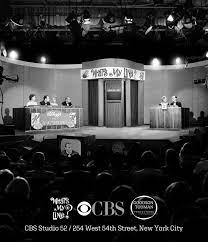
This month, we are looking at popular fifties stars and shows. While the show we are talking about today outlasted the fifties by almost another decade, it gained its popularity during the 1950s. Today we are learning about What’s My Line.

📷wikipedia.com

This panel game show was on CBS. It debuted in 1950 and ran until 1967. The show was produced by Mark Goodson and Bill Todman, and the working title was Occupation Unknown. Perhaps the title should have been What’s My Schedule. The show began on Thursday nights as a live show. Later in season one, it switched to every other Wednesday and then moved to every other Thursday. In October of 1950, it landed on Sunday nights where it would remain throughout the rest of its life.

The original series, which was usually broadcast live, debuted on Thursday, February 2, 1950, at 8:00 p.m. ET. After airing alternate Wednesdays, then alternate Thursdays, finally on October 1, 1950, it had settled into its weekly Sunday 10:30 p.m. ET slot where it would remain until the end of its network run on September 3, 1967.

📷imdb.com

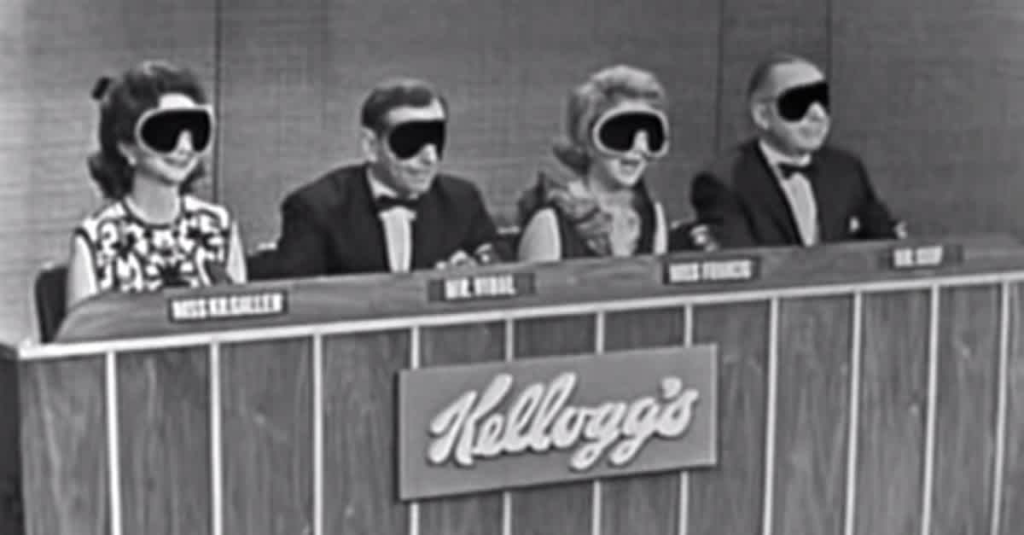
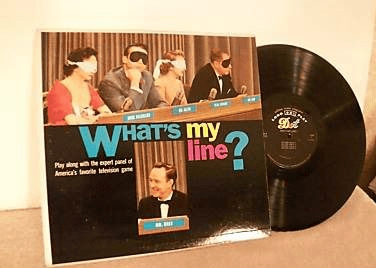
Celebrity panelists ask contestants questions to figure out their occupation. While most of the contestants were not famous, there was a “mystery guest” segment. The panelists were blindfolded for this segment and asked questions to determine the celebrity. People enjoyed watching the panelists banter with each other and the sophisticated humor they shared with us.

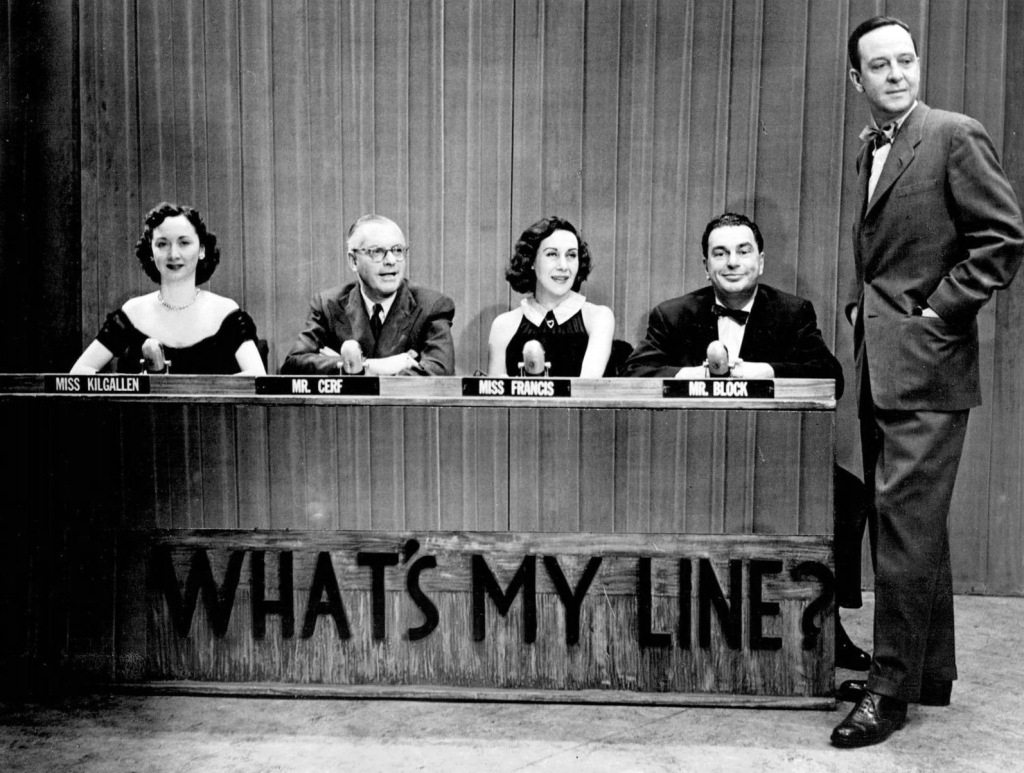
Each episode had four panelists. The most famous panelists were Dorothy Kilgallen, Arlene Francis, and Bennett Cerf. John Daly was the moderator. The first show in the series featured New Jersey governor Harold Hoffman, Kilgallen, poet Louis Untermeyer, and psychiatrist Richard Hoffman. Later in season one, Arlene Francis came  on board with Kilgallen, Untermeyer and writer Hal Block. In season two, Cerf replaced Untermeyer and Steve Allen took over for Block in season three. When Steve Allen left to host The Tonight Show, comedian Fred Allen was part of the panel from 1954 until his death in 1956. Kilgallen was killed in 1965 and her replacement varied for two years. Her death is a mystery itself and well worth reading about. Many people think she was killed because of her investigation into JF Kennedy’s assassination.

📷facebook.com

The panelists started the series wearing business clothing, but by 1953 they shifted to formal attire with the men showing up in suits and ties and women in formal gowns and gloves. Unfortunately, we never got to see the beautiful colors of these clothes. Until 1966 everything was filmed in black and white. In the final season, the show was broadcast in color, but the kinescopes were saved in black and white.

Both critics and television viewers liked the show, and it won an Emmy for Best Quiz or Audience Participation Show in 1952, 1953, and 1958.

Because it was a game show, most of the 700 episodes were on kinescope, 16 mm filming. Because many original shows in that era were recorded via kinescope onto silver nitrate film, many networks destroyed recordings to recover the silver. After learning that the network was not keeping the recordings, Goodson and Todman offered to pay for the broadcast and retained the recordings from season three on, however many of those were also lost along the way. A variety of the episodes are stored at different archive centers around the country. My home state houses one from 1951 at the University of Wisconsin Center for Film and Theater Research in Madison.

📷facebook.com

The remaining kinescopes which have been digitized have been seen on television on the Game Show Network and 757 of them exist on YouTube.

Many of us remember the reruns and seeing the contestant come on stage and write their name on a chalkboard as Daily said “Will you enter and sign in please.” The very first contestant was Pat Finch who was a hat check girl at the Stork Club.

The first mystery guest was New York Yankees shortstop Phil Ruzzuto. Many of these guests used fake voices to answer questions. Some of the mystery guests who appeared on the show included Julie Andrews, Louis Armstrong, Lucille Ball, Jack Benny, James Cagney, Gary Cooper, Joan Crawford, Salvador Dali, Sammy Davis Jr., Doris Day, Aretha Franklin, Ava Gardner, Judy Garland, Jackie Gleason, Alfred Hitchcock, Bob Hope, Ginger Rogers, Roy Rogers, Eleanor Roosevelt, James Stewart, Elizabeth Taylor, and John Wayne.

📷littlethings.com Blindfolds come out for a mystery guest

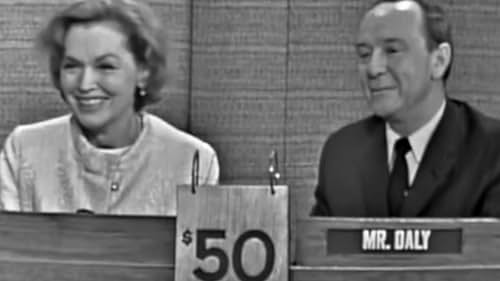
The emcee would choose a panelist who could ask yes or no questions. If the answer was yes, they could continue until they got a no response and then the next panelist would be able to pose questions. If the contestants answered no, Daily flipped a card; when the contestant had ten cards, they won $50.

If you have heard of or even used the term “Is it bigger than a breadbox?,” you might want to know that it came from the show. Steve Allen asked the question in 1953, and it became a standard question after that night. In fact, on one episode, the guest was a breadbox maker, and when Daly could not help laughing at the question, Allen figured it out.

In 1967 The New York Times broke a story that CBS was canceling many of their game shows. None of the panelists had been told that the show was not renewed. Despite the fact that the low costs of the game shows made them profitable, the low ratings led the network to conclude that game shows were no longer suitable for prime-time schedules.

After the show was canceled in 1967, it did go into syndication five days a week. Soupy Sales joined Francis and Cerf on the panel of the reboot. A variety of other panelists took the fourth seat including Joyce Brothers, Jack Cassidy, Bert Convy, Joel Grey, Meredith MacRae, Henry Morgan, Gene Rayburn, and Nipsey Russell. The show ended in 1974. Cerf died during the run of the syndicated series.

It’s hard to believe, but Colonel Harland Sanders was on the show as founder of Kentucky Fried Chicken, although he was not easily recognized at the time, so he was not a mystery guest. While no president ever appeared while in office, Ford, Carter, and Reagan all appeared on the show.

📷youtube.com We switched to a first-name basis in the 70s

It would be fun to see this show on television today, but I’m afraid it would not be the same. In the way that Dick Cavett had a manner of interacting with guests to ask amazing questions with his humor and intelligence, this game show had that same atmosphere. Today, I think the banter would border more on crudeness than wit. There is something charming about a panel of very intelligent people talking with each other, trying to determine the identities of the people they were interviewing while being dressed to the nines that was fun to sit in on and be a part of. I guess that’s why this show is in our series where we are saluting the fifties because that was the era where it could shine.

Jo Anne Worley: What a Character

📷imdb.com

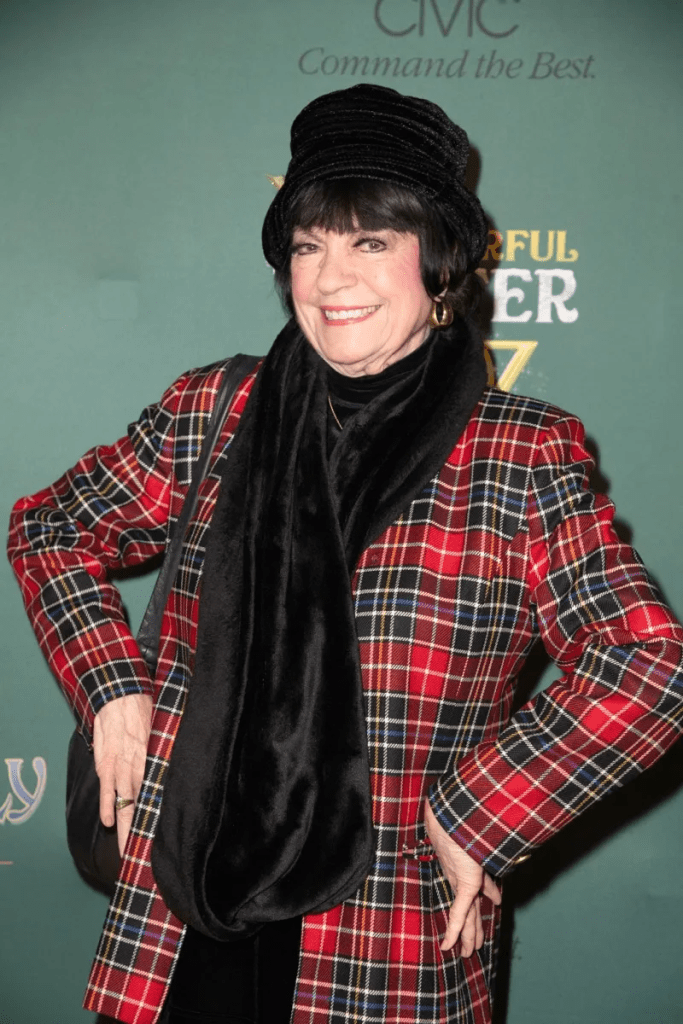
We are winding up a blog series about Supportive Women. One of the women I wanted to include was Jo Anne Worley. I didn’t know much about her apart from her appearances on Rowan & Martin’s Laugh-In and being in my favorite made-for-television movie, The Feminist and the Fuzz.

Jo Anne was born in 1937 in Lowell, Indiana. Her loud voice was not an acting tool. She always felt she was loud. She said, “I have a big mouth, and I’m sorry to say I’ve always had one. When I was young, in church, I never sang with everybody else. I only mouthed the hymns, so I wouldn’t drown anyone else out. I have my quiet moments. But I don’t have many.” She was named school comedienne at her high school.

In one interview with a Lowell reporter, she said “I’ll never forget the place I’d work every summer while in high school. It was called Robert’s Hotel, Gas and Café, and it was at the intersection of US 41 and Highway 2. They had an old juke box in the café where I worked, and I’d sing and joke around whenever the business was slow, which seemed like most of the time.”

After graduation, Worley moved to Blauvelt, New York to work with the Pickwick Players. She was later offered a scholarship to Midwestern State University in Wichita Falls, Texas. After two years at the school, she moved to Los Angeles City College and enrolled at the Pasadena Playhouse. Her first musical role was in “Wonderful Town.”

📷hellodolly.com

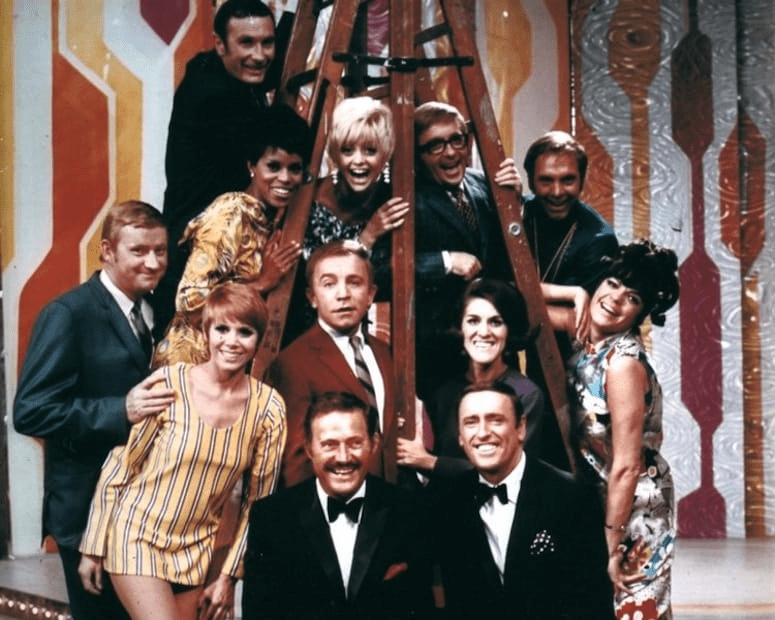
In 1961 she was in the off-Broadway musical show “Billy Barnes Revue” with Charles Nelson Reilly and Larry Hovis (who was Carter on Hogan’s Heroes). The original show in 1959 featured Bert Convy, Joyce Jameson, Patti Regan, Ken Berry, Ann Guilbert, Jackie Joseph, and Len Weinrib.

Jo Anne was in two episodes of The Many Loves of Dobie Gillis in 1961-2. During the rest of the sixties, she was offered several big-screen roles.

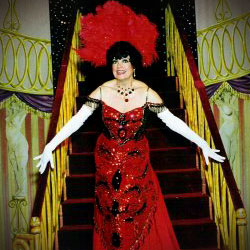
In 1964 she was given a role in “Hello, Dolly.” A year later she developed her own comedy and singing act in Greenwich Village where she was discovered there by Merv Griffin.

📷palmspringslife.com Laugh-In

Griffin encouraged her to appear on his show which she did forty times. Like Marcia Wallace, who we learned about last week, her appearance on Merv Griffin was seen by someone who recommended her for a new show. In this case, George Schlatter cast her in Rowan & Martin’s Laugh-In.

Worley left the show in 1970. She made guest appearances on The Tonight Show Starring Johnny Carson. She also appeared on several game shows, including Super Password, Hollywood Squares, and many versions of Pyramid.

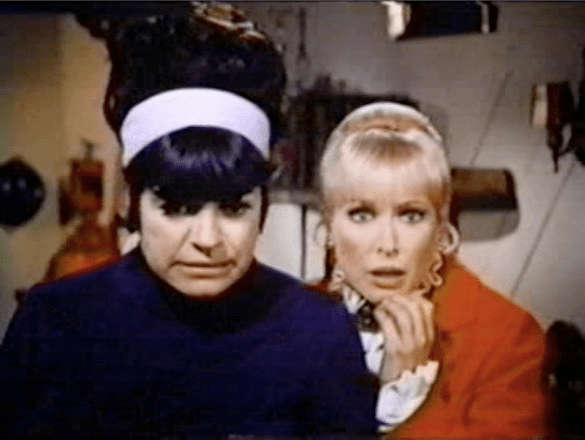
In 1971 she made the television movie I discussed above, The Feminist and the Fuzz. It starred David Hartman, Barbara Eden, Farrah Fawcett, Worley, Julie Newmar, and Henry Morgan. I would love to see it again.

For most of her career, Worley would be providing voices for animation. However, she appeared in a handful of shows during the seventies and eighties, including Adam 12, Love American Style, Hawaii Five-0, CHiPs, Murder She Wrote, The Love Boat, Mad About You, Curb Your Enthusiasm, and The Middle.

📷modcinema.com Feminist and the Fuzz

In 1975, Worley married Roger Perry. They would stay together for 25 years, divorcing in 2000. Perry has 95 acting credits and appeared in many popular shows in the seventies, eighties, and nineties. He was also in The Feminist and The Fuzz. After divorcing Worley, he would marry actress Joyce Bulifant.

During the seventies and eighties, Worley did a lot of regional theater in Milwaukee and several cities in California.

In the 1990s she got involved with Disney and provided her voice for Beauty and the Beast and A Goofy Movie. She also was on several Disney series including Kim Possible and the Wizards of Waverly Place.

📷bestlife.com

She was in a limited run of a musical production of “The Wizard of Oz,” playing the wicked witch of the west in 1999. In 2007, she appeared on Broadway as Mrs. Tottendale in “The Drowsy Chaperone,” and she reprised the role in 2015 at The Cape Playhouse. She was also cast in “Wicked” as Madame Morrible in 2008.

Jo Anne Worley once said, “my goal in life is to be the kind of person my dog thinks I am.” That seems to be good advice for all of us. It was fun getting to know a little more about this funny woman. We love her as much as her dog did.