As we ponder the What in the World? blog series this month, today we are taking a look at Shirley’s World.
This sitcom starred Shirley MacLaine as a photographer. For a variety of reasons, this show was doomed to fail. Let’s learn why that was the case.
📷imdb.com
ABC aired this show in 1971. It was co-produced by ITC Entertainment, a British company and American producer Sheldon Leonard. As I’ve said many times, Sheldon is one of my favorite classic television people. When he did a show, quality was guaranteed. In this sitcom, Shirley Logan (Shirley MacLaine) worked at World Illustrated magazine and her editor Dennis Croft (John Gregson) sent her around the world on assignments. However, Shirley always managed to find herself in dangerous situations while trying to help clients she was only supposed to photograph. One site described it as “the indomitable and highly resourceful Shirley met more than her share of high drama and intrigue—meeting would-be Soviet defectors, interviewing film stars, and even becoming a circus clown—with a few hilarious moments along the way.”
The opening of the show is very confusing. It’s a collage of photos one after another of Shirley with her camera out and about. If you didn’t know what the show was about, and it sounds like a lot of the crew and cast never did figure that out, you would assume this was a documentary or a mystery show. It does not read as a comedy.
There is a similarity to Sheldon Leonard’s series I Spy with shows set around the world. Rather than being videotaped, this series was shot on film. Because it was set all over, the producers decided against a laugh track or live audience. This gave the sense of a mini film; although laugh tracks can be annoying, the lack of laughter was also a detriment for a sitcom.
📷rewatchclassictv.com
I could not determine what set things off, but MacLaine and her British crew had what was often described as a “mutual loathing” of each other. She also seemed to have issues with the writers. After voicing often how much she disliked some of the scripts, she was banned from seeing them until 48 hours before shooting began. Eleven writers were credited with scripts, including Rob Reiner. From what I read about “fans,” the writing did leave a lot to be desired.
The show aired Wednesday nights. It was up against the second half of Medical Center and the NBC Mystery Movie which included Columbo, McMillan and Wife, and McCloud. So not only was it against two shows in the top 20, but if someone began watching either of those two shows, they were not switching halfway through the episode to watch Shirley’s World.
David Hofstede reviewed the show in his Comfort TV blog in February of 2023 (https://comforttv.blogspot.com/2023/02/shirley-you-cant-be-serious-visiting.html). As he tells us, “I gave up after ten episodes because all of them suffered from the same flaws. There’s nothing here for a viewer to follow that seems at all credible. Shirley MacLaine’s acting talent is unquestionable, from The Apartment to Sweet Charity to Terms of Endearment. Yet here she doesn’t seem to know what to do with the character or the situations she encounters. She laughs in serious moments—is that because she didn’t know what else to do?”
📷rewatchclassictv.com
Another review mentioned that apart from one small reference to Shirley being from Idaho, we don’t know anything about her.
In the early decades of television, we saw many stars who made that transition to television beautifully—Burns and Allen, Jack Benny, Debbie Reynolds, but there are also plenty like Henry Fonda and Jimmy Stewart who didn’t.
I understand 20/20 is everything as we look back in time, but it’s hard to understand how this show even got on the air. We have a great film star in MacLaine and an amazing producer in Leonard, and that is about it for the positives.
The show was expensive to create due to overseas locations and untypical filming techniques, it was poorly written, the character was never developed, the bi-nation crew didn’t get along, it was put on the schedule against two top-twenty shows that were an hour long, and never seemed to figure out if it was a sitcom, a drama, or a mystery.
Some things are just not meant to be, and Shirley’s World appears to be one of them.
We are starting a blog about Supportive Women, great actresses who made classic television so much better. I’m beginning with Joan Tompkins.
📷tvtime.com
Tompkins was born in 1915 in Mount Vernon, NY. She began her career in stock theater companies in New York in the thirties before appearing on Broadway in several shows including “My Sister Eileen,” “Pride and Prejudice,” and “Fly Away Home.” Henry Fonda was in several the plays with Joan.
In 1936 she married actor Stephen Ker Appleby in New York, but five years later they divorced. Appleby was born in Wales and known best for his 1960s movies. He lived to be 100. From 1942-1951 she was married to Bruce MacFarlane before they divorced. McFarlane died in 1967 and had 28 acting credits in television and film. Joan would then marry a third actor in 1951, Karl Swenson, “the man of a thousand voices.” The two worked together on the radio. Many fans of Little House on the Prairie would recognize Karl as Lars Hanson. Swenson obtained an amazing 175 credits, primarily on television during the two decades before his death.
After WWII Joan became a foster parent for a crippled Polish boy, Tomasz Machcinski. He later became a photographer. In 1994, their story was made into a documentary, “Child from a Catalog.” Machcinski’s life story was very interesting. He was born in the Kampinos Forest in Gorki, Poland. He spent his childhood living in hospitals and orphanages. After developing a relationship with Joan, he graduated as a precision mechanic in 1963. In 1966, he took up photography and created thousands of self-portraits. Some were as historic characters. He chose the stories, make up, and costumes. He once said that he didn’t “use wigs, tricks, but I use everything that happens to my body, such as hair regrowth, tooth loss, diseases, aging, etc.” He has had exhibits in Copenhagen, Beverly Hills, Warsaw, New York, and Paris. Machcinski passed away in 2022.
📷wallofcelebrities.com
Tompkins had a long radio career. She was the voice of Nora Drake on “This is Nora Drake” which was on CBS radio until 1959.
She began her television career in 1954 on an episode of Ponds Theater. Almost all of her 93 acting credits were for television shows. She had a recurring role on a soap, Valiant Woman, appearing in 176 of the 1027 episodes of the show as Marion Walker. Throughout the fifties, she showed up in several dramas as well as The Donna Reed Show, Bachelor Father, and Father Knows Best.
During the sixties, she had two recurring roles. She played Mrs. Brahms on Occasional Wife in 1966-67. I remember her on My Three Sons; between 1967-1970, she appeared as Lorraine Miller, Katie’s mom, nine times.
You can catch glimpses of her on many of your favorite shows from the sixties and seventies, including Hazel; The Danny Thomas Show; Perry Mason; Gomer Pyle: USMC; Dr. Kildare; The Man From UNCLE; Bewitched; Bonanza; The Brady Bunch; MarcusWelby, MD; The Mary Tyler Moore Show; The Mod Squad; and The Bob Newhart Show.
📷imdb.com My Three Sons
Her last television appearances were in 1980. She played Grandma Gertie in an episode of Eight is Enough and a physician in a made-for-tv film, The Night the City Screamed.
Karl and Joan moved to Beverly Hills where they founded an acting company. Karl directed the plays Joan appeared in. After Karl’s death in 1978, Joan joined a writing group and wrote several books. She died at home in 89.
Joan Tompkins is another one of those actresses that made television better during the fifties, sixties, and seventies. I’m glad we could learn a bit more about her and her career.
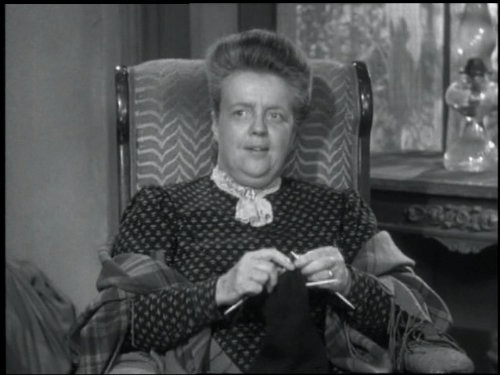
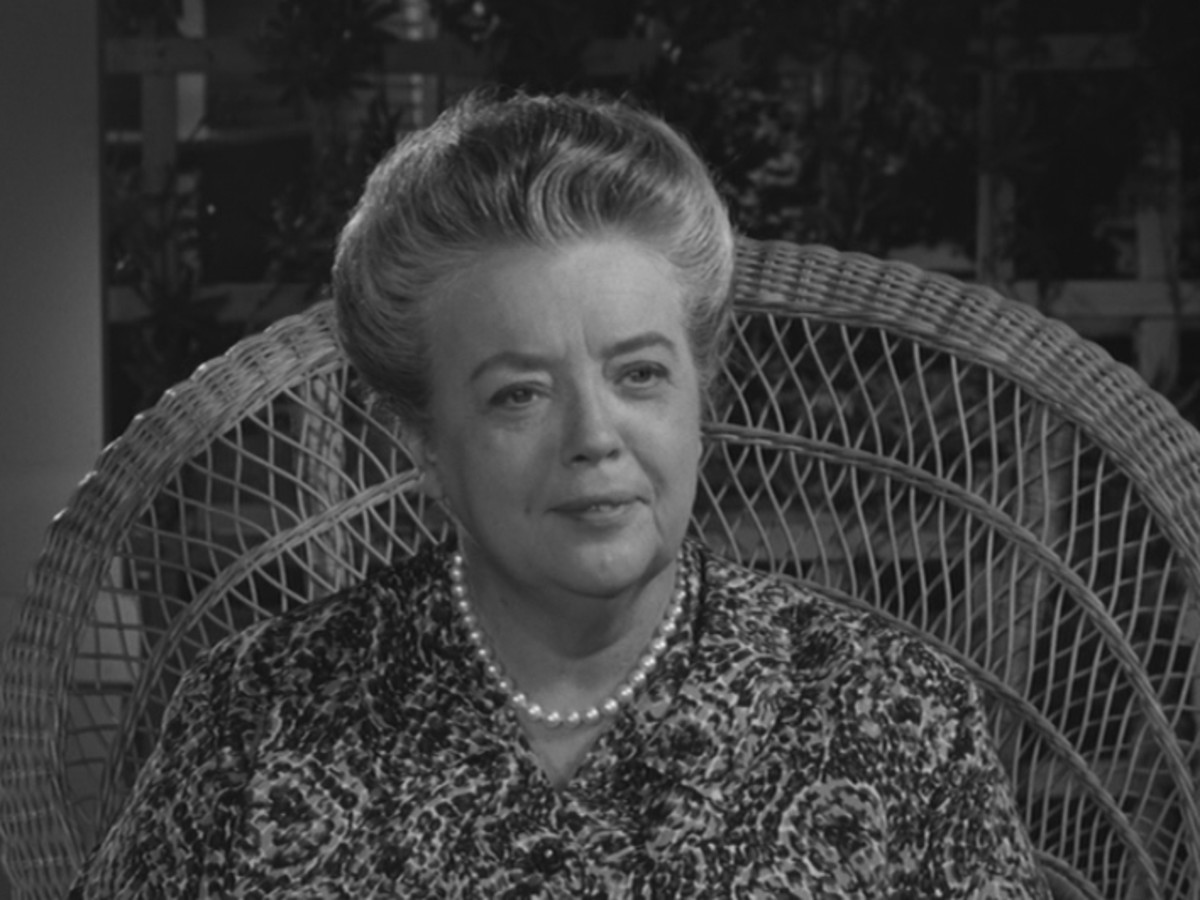
We are kicking off the new year learning about some of our favorite women from the golden age of television. Today we learn about an actress who was often described as difficult to work with personally but a consummate actress. Today let’s meet Frances Bavier, everyone’s favorite aunt.
Photo: mayberryfandom.com
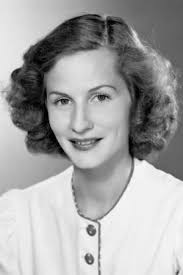
Born in a traditional brownstone in New York City in 1902, Frances planned on becoming a teacher and attended Columbia University. However, she felt drawn to the stage and found herself enrolled at the American Academy of Dramatic Arts. Graduating in 1925, she received her first Broadway role the same year, appearing in “The Poor Nut.” Her big break came in the production of “On Borrowed Time.” Her last Broadway appearance was in 1951 with Henry Fonda in “Point of No Return.”
A young Frances image: Twitter
Bavier would be part of the Broadway scene for a few decades before moving into films. Perhaps her best-known silver screen role was Mrs. Barley in The Day the Earth Stood Still. Bavier would continue to appear in movies throughout her career including her last performance which was in Benji in 1974.
In 1928 Frances married Russell Carpenter, a military man, and they divorced in 1933. During WWII Frances toured with the USO to entertain the troops. Frances reflected on her marriage later in life and said that he was a very charming man but did not understand her need to be an actress. She said as much as she loved him, she loved acting more.
Her first television roles were in drama series such as Ford Television Theater, Chevron Theater, and Pepsi Cola Playhouse among others in the early fifties. The mid-fifties found her in a variety of series, including Duffy’s Tavern, The Lone Ranger, Dragnet, The Ann Sothern Show, Perry Mason, and Wagon Train.
On the Lone Ranger Photo: imdb.com
Frances would be offered two recurring roles in sitcoms during this time. From 1954-56, she was one of the cast members of It’s a Great Life as Amy Morgan who ran a boarding house. When that show ended, she was cast on The Eve Arden Show as Nora, Eve’s mother and housekeeper.
In 1960 she happened to be cast as Henrietta Perkins in an episode of Make Room for Daddy with Danny Thomas. That particular show featured a little town called Mayberry where Danny and his boys were pulled over for speeding and met Sheriff Andy Taylor. When that episode became its own show, Henrietta Perkins transitioned to Aunt Bee.
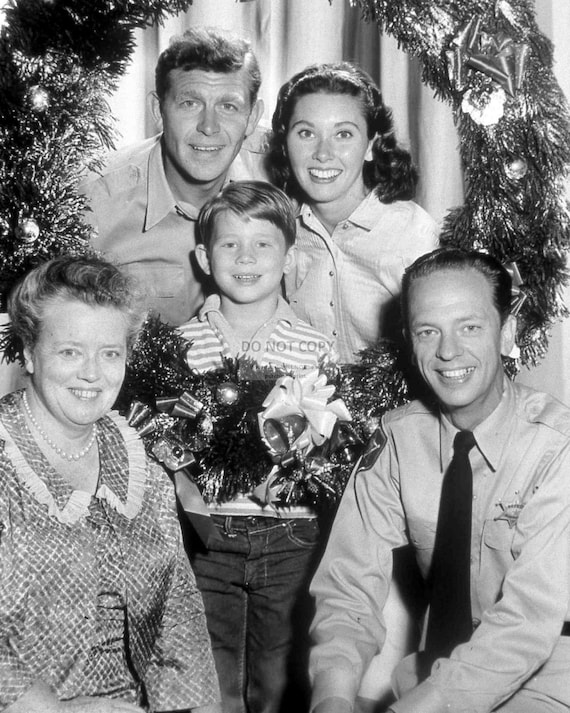
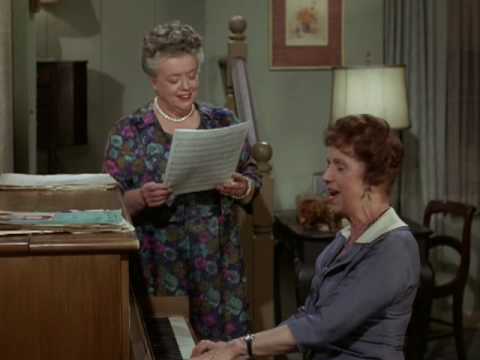
Aunt Bee was a major character in The Andy Griffith Show, and Bavier continued with the show when it became Mayberry R.F.D. with Ken Berry as the star. Bavier was nominated and won the Emmy for her role in 1967.
An early season with Ellie Walker Photo: etsy.com
Fans loved the relationship Andy and Aunt Bee had, although in real life Andy and Frances were not close. The entire staff was cautious in their approach when working with her because she was easily offended. Ron Howard, always tactful, was pressed on his relationship with her and just replied that “I just don’t think she enjoyed being around children that much.” Producer Sheldon Leonard commented, “[She] was a rather remote lady. Highly professional and a fine comedienne, fine actress with very individual character. She was rather self-contained and was not part of the general hi-jinks that centered upon Andy on the set.”
Producer Richard Linke commented that “She was very touchy and moody due to her age, and you had to be very careful how you treated her and what you said around her. I think Andy offended her a few times, but they became very close friends.”
“I think Frances thought I was a gentleman,” mused actor Jack Dodson, who played Howard Sprague on the show. “I’m not, really, not any more so than anybody else. Since I had fewer scenes to do with her, I had fewer opportunities to swear in front of her, which is why we never had any difficulties. Frances was temperamental and moody, but she kept 99 percent of that to herself. Once in a while, she would get mad at someone. She was the only person in the whole company whose feelings you had to be careful not to hurt.”
Pop culture historian Geoffrey Mark, wrote, “She was a very talented lady, but she was very difficult to work with, and nobody could really figure it out. Eve Arden had trouble with her on The Eve Arden Show. That’s the earliest I can point to where Frances was already getting to be persnickety. I can only repeat what I was told, but on The Andy Griffith Show, Howard Morris, who played Ernest T. Bass on the show and directed episodes of it, said that directing Frances was like stepping on a landmine. If you would ask her to move three inches to the right to get in the proper frame, or, ‘Could you stand up when you say that line?’, she’d blow a fuse and refuse. It was, like, ‘I’m an actress and I know what I’m doing. How dare you try to tell me when to walk and where?’ It’s like yes, you are an actress, but an actress takes direction from the director. Why in the world would you make what is already a stressful situation more stressful?”
Emmy with Don Knotts Photo: 99.9 kekb
However, Andy mentioned during a Larry King interview that Frances phoned him four months before her death and apologized to him for being difficult to work with. Perhaps being alone and reflecting on her past behavior gave her some perspective on the situation, because she told a reporter with the Times Record in Troy, NY that “I don’t have a lot of friends. I don’t see how anyone my age working as hard as I do can have a big social life. I get very annoyed with people and the older I get, the crankier I am. This work has had an effect on my personality. I’m impatient with people and oriented to action.”
In 1972, Bavier retired. She bought a home in Siler City, North Carolina. The stately house is a three-story brick home with stone accents and located at 503 West Elk St. The house was built in 1951 by a local doctor. When asked about her choice of retirement, she said that she “fell in love with North Carolina, all the pretty roads and trees.”
Photo: newsobserver.com
It must have been a bit of a lonely life though. She was pretty much a recluse and lived with 14 house cats. She had no children, and there was no family living nearby. She promoted both Easter Seals and Christmas Seals and often wrote letters to her fans. In an interview with the San Bernardino County Sun, she talked about one of her hobbies: launching imaginary expeditions to remote corners of the world via her collection of maps. During the production of TheAndy Griffith Show, Frances mentioned in an interview in the Charlotte News that when she felt lonely, she went to a supermarket and somebody would always look at her and smile and say “Why, hello, Aunt Bee.”
With Hope Summers in Mayberry Photo: youtube.com
Frances realized the 3700 residents of Siler City had a difficult job relating to her as well. As she put it during a local TV interview, she was “a 70-year-old lady that probably wants to be alone and they’re having a problem with trying to be friendly and show their friendliness, and at the same time not intrude. That makes it very difficult for them. Living here has been a difficult adjustment for me. I have a great deal to learn from Siler City and North Carolina. It’s an entirely different and new way of life.”
Photo: classicmoviehub.com
When she passed away in 1989, she left a trust fund of $100,000 to the police department in Siler City that would provide an annual bonus to all police personnel. Most of her $700,000 estate was left to the hospital foundation. She was buried in her adopted hometown, and her tombstone reads “Aunt Bee. To live in the hearts of those left behind is not to die.”
Frances mentioned in several interviews that she loved the character of Bee, but it was hard to be stereotyped in one role. She told The Charlotte News that “Once in a while I get a hankering to play a really bad woman. . . I was really vicious in a Lone Ranger episode, but so many people wrote in outraged at what I was doing, I guess it was a mistake. Sometimes it gets me down to think I’ve lost my own identity as an actress. But other times I get a lift when I realize that I’m really doing quite well.
I can’t imagine having to become another person for so much of my life and always having to be that person to so many people that you would feel like people didn’t really know you as you. The Andy Griffith Show is one of those shows that you read about where the cast truly had a special bond and formed close ties, and Frances must have felt bad that she was not part of that group even if it was her own choice to be excluded. She must have developed a love for Mayberry since she decided to find a small town similar to it where she could live out the rest of her life. Even though she says she never got over her homesickness for New York, she chose to be buried in Siler City as well. I’d like to think she finally found her own Mayberry where she could live and bond with the community as Frances instead of Bee, but it sounds like that continued to be a struggle for her. I hope she realizes how many people loved her character and the joy she has brought to so many fans in the past six decades.
We wrap up
our series Just a Couple of Characters this week with Mary Wickes and Susan
Oliver. Mary and Susan are very different character actors, but you will
immediately recognize them. Let’s learn a bit more.
Mary Wickes
Photo: imdb.com
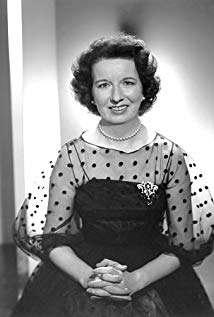
It’s not surprising that Mary shortened her last name to “Wickes” after being born Mary Wickenhauser in 1910 in St. Louis. Her father was a banker, and the family had plenty of money. After high school, Mary attended Washington University in St. Louis, majoring in political science, planning a career in law. One of her professors suggested she try theater, and she dipped her toe into it doing summer theater in Stockbridge, Massachusetts.
Photo: flickr.com
After deciding a career in acting was for her, she moved to New York. She quickly found a role in “The Farmer Takes a Wife” on Broadway in 1934. In this show, which starred Henry Fonda, Mary was Margaret Hamilton’s understudy. Mary had a chance to perform during the run and received excellent reviews.
Photo: tcm.com The Man Who Came to Dinner
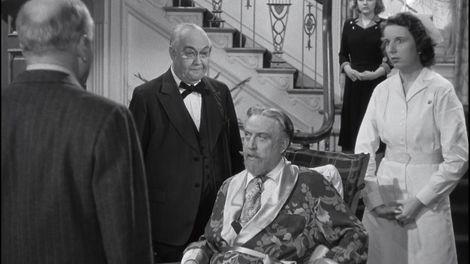
Mary understood that comedy was the field she needed to pursue. She was lucky enough to continue getting roles on Broadway, appearing in several shows throughout the 1930s, including “Stage Door” in 1936 and “Hitch Your Wagon” in 1937. She also was cast in “The Man Who Came to Dinner” as Nurse Preen with Monty Woolley. She continued to receive encouraging reviews. When Warner Brothers decide to turn the play into a movie, both Mary and Woolley were part of the cast. Mary became known for being a bit sarcastic and witty. She was given roles in the film, Now Voyager with Bette Davis, again playing a nurse.
Photo: viennasclassichollywood.com By the Light of the Silvery Moon
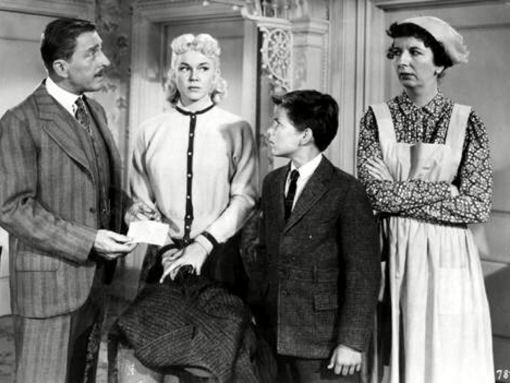
Mary flip flopped from Broadway to Hollywood, taking roles that interested her. She would appear in both Moonlight Bay (1951) and By the Light of the Silvery Moon (1953) with Doris Day; White Christmas (1954), and The Music Man (1962).
Mary had cornered the market in roles of smart-alecky teachers, nurses, and housekeepers in film. When she transitioned to television, she often continued in these roles. Her first two recurring roles were housekeepers named Alice on Halls of Ivy from 1954-55 and Katie on Annette in 1958. From 1956-1958, she played Liz O’Neill, Danny Thomas’s press agent on Make Room for Daddy. Throughout the 1950s she also appeared on numerous shows including Zorro.
Photo: pinterest.com
One of my favorite episodes with Mary was the 1952 episode “The Ballet” on I Love Lucy where Wickes played Madame Lamond, a formidable ballet teacher who taught Lucy. Wickes and Lucy would remain life-long friends. After Mary’s death, Lucie Arnez talked about her relationship with their family: “For my brother and me, Mary was just like one of the family. If any of us were sick or even in bed with a cold, Mary would show up at the backdoor with a kettle of chicken soup. She could be loud and boisterous and as demanding as any of the characters she played, but she was also very loving and giving. What a lady.” Mary would appear on numerous episodes of Lucille Ball’s other shows in the 1960s and 1970s.
Photo: aurorasginjoint.com
In the 1960s, Mary continued to show up on a variety of shows. We see her on My Three Sons, Bonanza, F-Troop, The Doris Day Show, The Donna ReedShow, and I Spy. She also had recurring roles on three shows during the decade: TheGertrude Berg Show, Dennis the Menace, and Temple Houston. In the Gertrude Berg Show, Mary was landlady, Winona Maxfield. She was hilarious on Dennis the Menace, playing Miss Cathcart, an older neighbor looking for a man. On Temple Houston, she played Ida Goff. Temple was Sam Houston’s real son who was a circuit-riding lawyer.
Photo: en.wikipedia.org The cast of Doc
As Mary aged, she progressed to the cranky relative or nosy neighbor type of character. In the 1970s she was a regular on Julia, Doc, and The Jimmy Stewart Show. On Julia, she was Dr. Chegley’s wife, Melba. She went back to her role as a nurse on Doc. On the Jimmy Stewart Show, she is Mrs. Bullard. Two of my favorite episodes of her from the 1970s were her roles on Columbo and M*A*S*H. On Columbo, Mary plays a landlady of a victim who’s been murdered. She and Columbo have a priceless conversation during the show, “Suitable for Framing” in 1971. On M*A*S*H, Mary played Colonel Reese who is observing Margaret and the nurses.
Photo: aurorasginjoint.com
In the 1980s, Mary’s schedule slowed down a bit. She did revive her role as a maid on The Love Boat in 1981. From 1989-1991, she took another regular role as housekeeper Marie Murkin on Father Dowling Mysteries.
Photo: hometheaterforum.com
In the 1990s, Mary was doing more voice overs. She taped five episodes of Life with Louie which aired from 1995-1997 and was Laverne in The Hunchback of Notre Dame in 1996. Unfortunately, she would not live to see them on the big screen. In 1995, she passed away after having respiratory problems. While a patient in the hospital, she fell and broke her hip. She died of complications caused by the surgery.
Mary never married or had children and as part of her legacy, she left a $2 million donation in memory of her parents to the Television, Film and Theater Arts at Washington University.
Susan Oliver
Photo: amazon.com
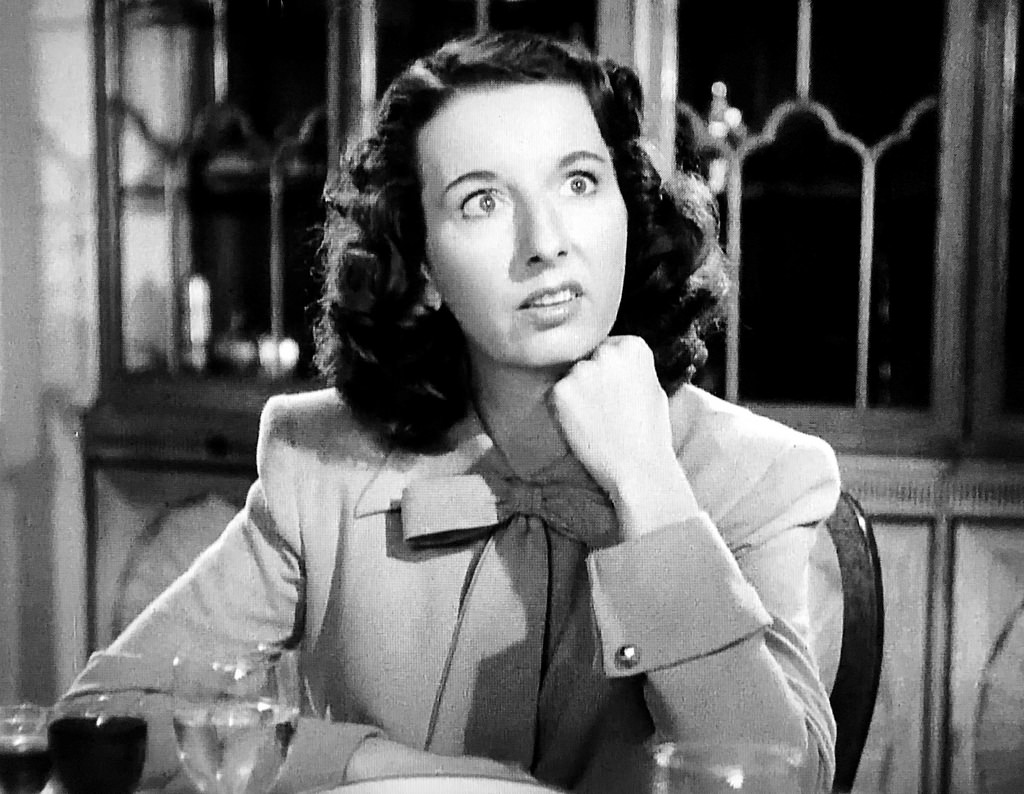
More than twenty years younger than Wickes, Susan Oliver was born in 1932 in New York City. Her real name as Charlotte Gercke. Her father was a political reporter for the New York World. Her parents divorced when she was quite young, and she grew up in boarding schools. She traveled with her father to Japan when he took a post there. She studied at the Tokyo International College, studying American pop culture. While Wickes was the wise-cracking comedic foil, Oliver was often the leading lady character with blue eyes, blonde hair and heart-shaped face.
Photo: trekdivos79.blogspot.com on The Wild Wild West
In 1949, she
traveled to LA to see her mother who had found her niche as “astrologer to the
stars.” Susan then enrolled at Swarthmore College. After graduation, she
continued acting courses at New York City’s Neighborhood Playhouse.
Her first Broadway part came in 1957 as the daughter or a Revolutionary veteran, “Small War on Murray Hill.”
Photo: manfuncle2014.blogspot.com The Man from U.N.C.L.E.
Returning to LA, she started a film career. Though she would appear in 15 big-screen movies, television is where she spent most of her time. She put in her due diligence in the 1950s and 1960s. Her first job was on The Goodyear Playhouse in 1955. She continued with a lot of drama and theater for the first few years of her career. She took roles in a variety of shows including: Father Knows Best, Suspicion, The David Niven Show, Bonanza, The Twilight Zone, The Adventures of Ozzie and Harriet, The Alfred Hitchcock Hour, Wagon Train, Route 66, The Fugitive, The Andy Griffith Show, Ben Casey, Mannix, Dr. Kildare, The Man from UNCLE, I Spy, Gomer Pyle, My Three Sons, and the Wild, Wild West.
Photo: imdb.com
I read several times that she turned down lead roles in series to retain her independence, but I never read any specific roles she turned down. In 1966 she accepted a recurring role of Ann Howard in Peyton Place. She had signed a contract for a year, but after five months, her character was killed on the show. She made a pilot for a show titled, “Apartment in Rome” that did not sell.
Photo: en.wikipedia.com on Peyton Place
Oliver never did get another show of her own, but she continued to guest on shows throughout the 1970s and 1980s, including Love American Style, Gunsmoke, The FBI, Streets of San Francisco, The Love Boat, Magnum PI, Murder She Wrote, and Simon and Simon.
Photo: flickr.com on Murder She Wrote
One of the reasons, she didn’t want to be tied down was her interest in flying. In 1959, a Boeing 707 she was a passenger on plummeted 30,000 feet for the Atlantic Ocean before leveling out. After that scare, she decided to learn to become a pilot. In 1964, she started flying single-engine planes. Bill Lear brought her on board to become the first woman to train on his new Lear Jet. She would star in a movie about Amelia Earhart. She also later wrote about her flying experiences in an autobiography, Odyssey: A Daring Transatlantic Journey in 1983.
Photo: imdb.com
In the mid-1970s, she stopped accepting most acting roles and quit flying. She enrolled at the 1974 AFI Directing Workshop for Women with peers Lily Tomlin, Margot Kidder, Kathleen Nolan, and Maya Angelou. During the final season of M*A*S*H she directed an episode of the show. She would later direct an episode of Trapper John, MD.
At age 58, Oliver was diagnosed with colorectal, and eventually lung, cancer. She died in 1990.
Oliver was an
interesting actress. Apparently, she loved acting, but never wanted to be tied
down. She not only was a aviator and director but a writer. She was a practicing
Buddhist and a baseball expert as well.
Wickes and Oliver were very different women with very different interests and acting roles. They both remained single and devoted themselves to their careers. But they were both women who were always in demand for their acting ability.











 thewritelife61