Dharma and Greg: Showing Us It’s Not So Hard for Opposites to Attract

Photo: pinterest.com

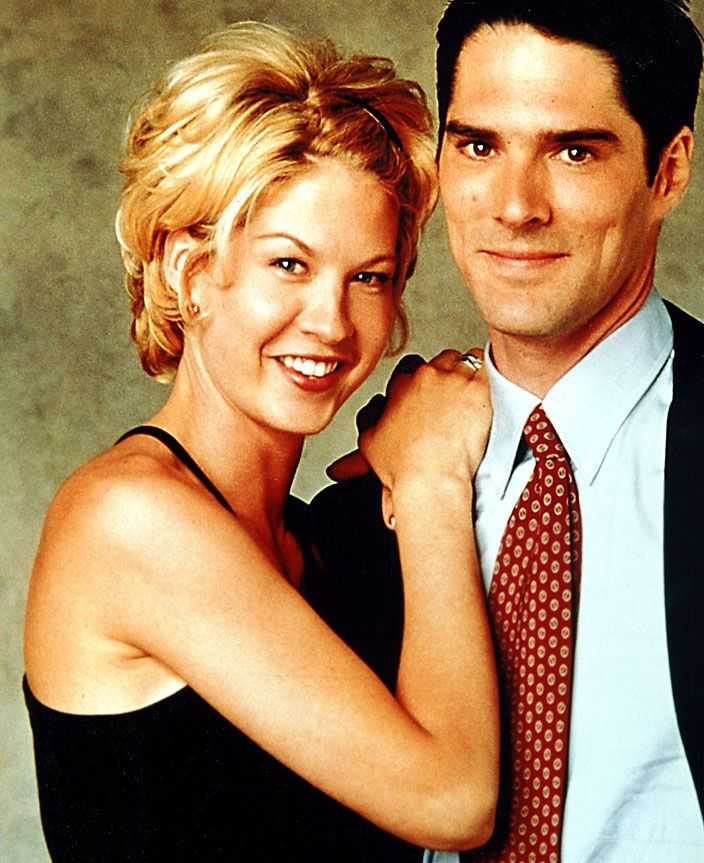
As we wrap up our “Duos to Love” blog series, we finish with a couple that is always fun to hang out with: Dharma and Greg. This show aired for five years, teaching us that opposites do indeed attract.

Before we get into hearing more about this quirky show, I want to take a minute to thank all of you who read my blog. This month, I published my 365th article. That means many of us have now been spending time together every week for more than seven years. I’m not sure how long the run will last, but I can tell you that I have at least four more years scheduled, so just a big THANK YOU!

So onto Dharma and Greg. Created by executive producers Dottie Dartland and Chuck Lorre, this sitcom debuted on ABC in September of 1997. Chuck Lorre would go on to create other popular shows including Two and a Half Men, Mike and Molly, and The Big Bang Theory. Dartland had been a producer on Caroline in the City and Grace Under Fire.

Spontaneous free spirit Dharma Finkelstein (Jenna Elfman) is a yoga instructor; organized and conservative Greg Montgomery (Thomas Gibson) is an attorney. Educated at Harvard and Stanford, Greg’s family was very Republican and very wealthy. Dharma’s parents, who home-schooled her, sort of, are not wealthy and definitely not Republican, having lived as hippies.

Kitty (Susan Sullivan) and Edward (Mitchell Ryan) Montgomery are socialites who expected a very different type of woman for their daughter-in-law. Edward is a bit eccentric who deals with his wife by consuming martinis and Scotch. Abigail O’Neil (Mimi Kennedy) and Larry Finkelstein (Alan Rachins) are not married, although they have been together for decades. Abigail is a devoted vegan. Myron loves conspiracy theories; but he has a lot of other interests. He always tells people that he is wanted by the FBI.

Photo: promipool.com

Rounding out the cast was Jane (Shae D’lyn), Dharma’s friend who hates men and gradually disappears from the show by the last season; Peter, (Joel Murray) Greg’s best friend and colleague who is a bit lazy and is not a good attorney at all. Marcie (Helen Greenberg) and Susan (Susan Chuang) are friends of Dharma’s from the Co-op.

The theme song was written and performed by Dennis C. Brown. He created several other theme songs, including Grace Under Fire, Mike and Molly, and Two and a Half Men.

For the first three seasons, the show was in the top 25 on Wednesday nights. It had some competition from Beverly Hills 90210 on Fox for the first two seasons. It moved to Tuesdays during season three and ratings increased. However, in season four, ratings began to decline and never really picked up. Its competition that night was Will and Grace. Unfortunately, in season six it was on against Frasier; by the last season, they lost too many viewers but when Fraiser moved nights, they had to take on #14 JAG. The highest-rated show was during season three with 20 million viewers while the finale episode only attracted 6.8 million.
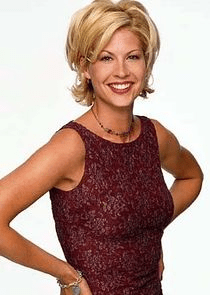
Photo: nextepisode.com

Dharma and Greg did make a return, however. In season nine, episode one, they showed up as Dharma and Greg taking a tour of Charlie Harper’s house after his death in Two and a Half Men.

Elfman received three Emmy nominations. In 1998 and 1999, she lost to Helen Hunt for Mad About You and to Patricia Heaton for Everybody Loves Raymond in 2000

The shows had a nice blend of humor and warm fuzzy moments. Eventually, the parents learn to respect and like each other even if they would not choose each other as friends. Let’s take a look at several episodes that show this blend of heart-warming and comic elements.

Photo: sharetv.com

In season one, episode 9, “He Ain’t Heavy, He’s My Father,” Greg has to have background checks done on both his and Dharma’s family. The results come back revealing that Larry is not, and never was, wanted by the FBI. Dharma knows that this will devastate him rather than make him happy. So, the pair stages a “crime” where Larry steals his file and then assumes the only reason that he is no longer wanted is that his file is missing.

In season two, episode 8, “Like, Dharma’s Totally Got a Date,” Dharma accepts the invitation of a neighbor boy to go to a dance at his high school. Because she was home-schooled, she was never able to attend a school dance. Dharma convinces Donald to find someone his own age at the dance and then is a bit lonely, only to realize Greg has shown up and the two of them have a special moment dancing together.
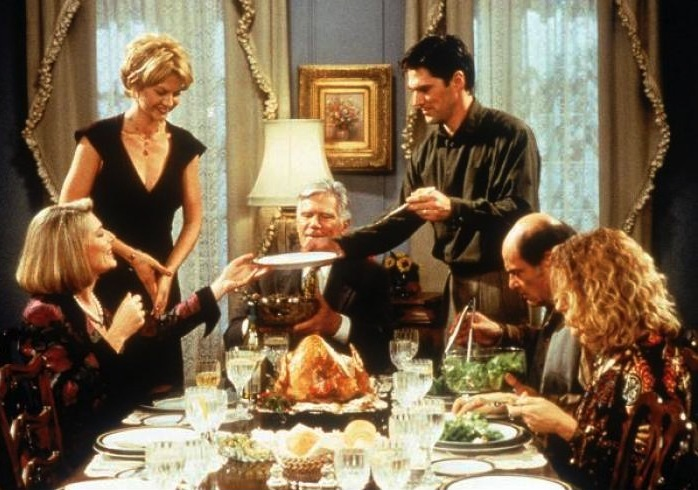
Photo: imdb.com

And, in season two, episode 20, “Dharma Drags Edward Out of Retirement,” Dharma needs investing help in her job and convinces Edward to help her get things figured out. Kitty does not like the fact that he is spending all his time working again and tells Dharma know she is unhappy. At the end of the show, Kitty joins Edward on the project and the two of them enjoy working together.

These episodes display why the show was so good. While the cast could have so easily been stereotyped and shallow, everyone truly learns to like and respect each other despite their differences. That is not something we have become used to in our divisive society. Maybe we should all watch a few seasons and remember how easy that is to do if we give everyone a chance.

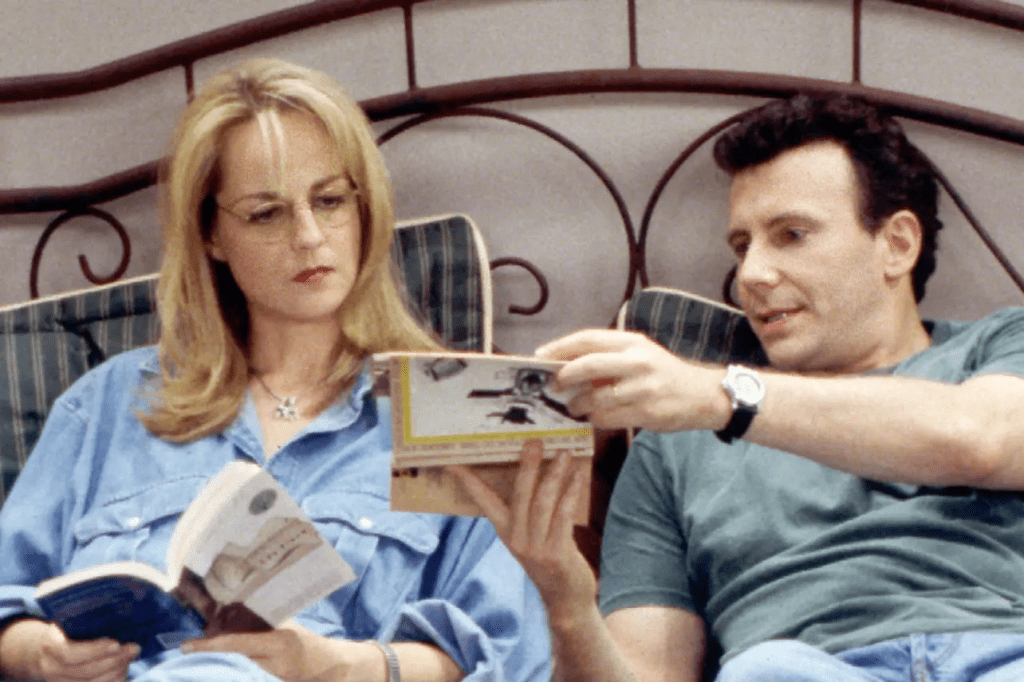
“Mad About You” . . . And Them

Photo: today.com

For our blog series this month, we are looking at some of our favorite duos from the eighties and nineties in “Duos to Love.” Today we will meet Paul and Jamie Buchman and their daughter Mabel. Yep, it’s Mad About You. It’s not about you, it’s about them, but I am mad about you too—very thankful you are on this journey with me learning about the golden, and sometimes tarnished, age of television.

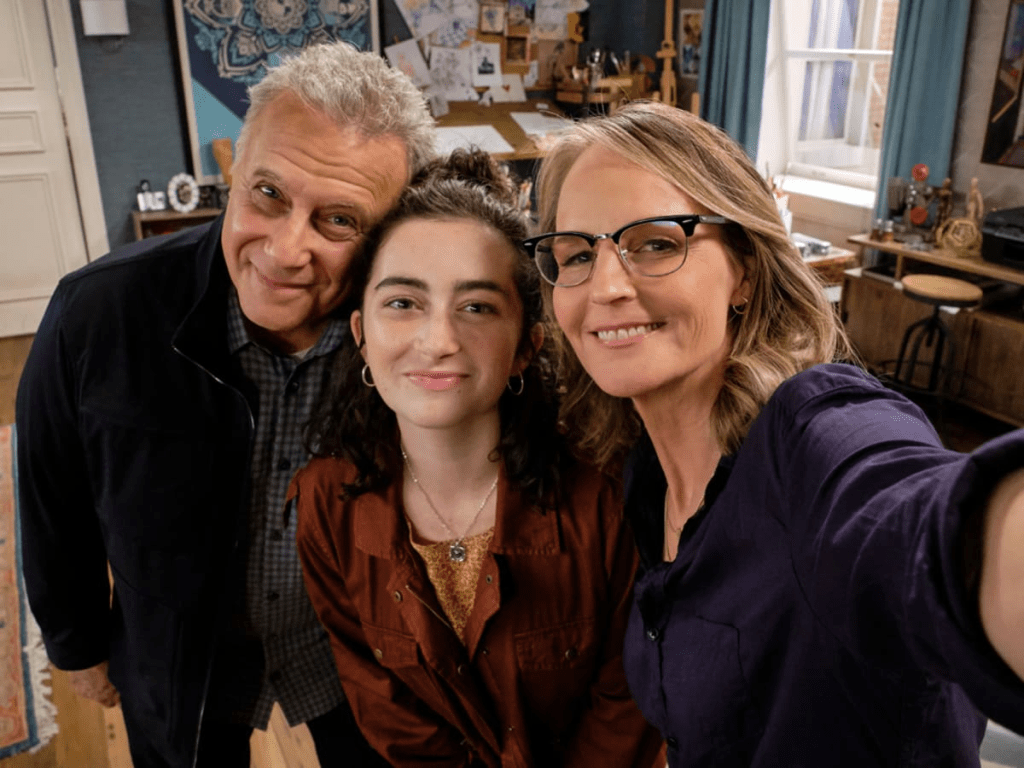
In 1992, NBC aired Mad About You. The series was about newlyweds Paul (Paul Reiser) and Jamie (Helen Hunt) Buchman, He was a documentary filmmaker and she worked in public relations. They lived in Greenwich Village for seven years until they were canceled. Both Teri Hatcher and Valerie Bertinelli were considered for the role of Jamie. It’s hard to imagine anyone but Helen in the role. I think the critics agreed; Hunt was nominated for six Emmy Awards for Best Actress in a Comedy Series. In 1993, she lost to Roseanne Arnold for Roseanne; in 1994 and 1995, she lost to Candice Bergen for Murphy Brown; in 1996 and 1997 and 1998 she won. Overall, the show won thirty-four nominations, with twelve wins.

Photo: decider.com

For seasons one through six, the two top stars received $250,000 per episode but in season seven they got a nice raise, landing $1,000,000 per episode.

Before Mabel (Alyssa and Justin Baric) came along, their “baby” was Murray their dog. Paul met Jamie while he was on a walk with Murray. They meet at a newsstand when they are both looking for The New York Times. In real life, the two stars met because Hunt was sharing a house with a good friend of Paul’s wife, Paula. After reading Reiser’s pilot, Hunt changed her mind about concentrating on her film career and wanted the role.

When Reiser pitched the idea to NBC he said it was about the life of a couple in their private moments. He compared it to a couple going to a party but this show was more about what happens when they leave the party and it’s just the two of them in the car talking on the way home. Reiser also compared it to the successful thirtysomething but “shorter and funnier.”

Carol Burnett Photo: deadline.com

The rest of the cast included Lisa Semple (Anne Ramsay), Jamie’s older sister; Fran Devanow (Lelia Kenzle), Jamie’s best friend; Ira Buchman (John Pankow), Paul’s cousin and friend; Sylvia Buchman (Cynthia Harris), Paul’s mother-in-law who is not in the running for Best Mother-in-Law according to Jamie; Burt Buchman (Louis Zorich), Paul’s father; and Dr. Mark Devanow (Richard Kind), Fran’s ex-husband who is a bit eccentric but not too odd because he wins her back as his wife during the show’s run.

There were a lot of recurring characters on this show. Several showed up more often than others: Debbie Buchman (Robin Bartlett), Paul’s sister; Dr. Joan Golfinos (Suzie Plakson), Debbie’s life partner; Nat Ostertag (Hank Azaria), the Buchmans’ dog walker; Mr. Wicker (Jerry Adler), the apartment building superintendent; Dr. Sheila Kleinman (Mo Gaffney), the Buchmans’ therapist; Maggie Conway (Judy Geeson), their neighbor; Jay Selby (Tommy Hinkley), Paul’s college friend; and Sid (George O. Petrie), Paul’s colleague.

Lisa Kudrow Photo: biography.com

However, there were also a few very famous recurring characters. Mel Brooks showed up as Paul’s uncle Phil in four shows. Cyndi Lauper was Ira’s on/off again girlfriend Marianne in five episodes. Jamie’s mom was in 15 shows but played by three different women: Carol Burnett (10), Penny Fuller (4) and Nancy Dussault (1). Another interesting recurring character was Lisa Kudrow. She was Ursula Buffay, the waitress at their favorite restaurant, Riff’s. She appeared 24 times and when Friends was created, her twin sister Phoebe was written into the show. In one episode after not seeing Ursula much, Paul asks her where she has been and she says “I’ve been hanging out with friends.”

You can imagine how huge the guest star list is for this series. Get ready for auctioneer speed and I will list some of them; just know I am leaving out a lot of famous and fun people. Here goes: We have Ed Asner, Kevin Bacon, Christie Brinkley, Garth Brooks, Sid Caesar, Tim Conway, Ellen DeGeneres, Jamie Farr, Barbara Feldon, Al Gore, Seth Green, Billy Joel, Nathan Lane, Jerry Lewis, Yoko Ono, Regis Philbin, Carl Reiner, Jerry Seinfeld, and Bruce Willis.

Paul Reiser also composed the theme song, “Final Frontier,” with Don Was. Both Andrew Gold and Anita Baker versions of the song were used during the eight-year run. Reiser also played the piano for the theme recording.

Mabel grows up. Photo: parade.com

In 2019, a twelve-episode revival series debuted. Both Reiser and Hunt returned for the sequel. The Buchmans are now empty nesters after dropping Mabel off at college. Other veterans returning included Ramsay, Pankow, Kind, Harris, Adler, Gaffney, and Carol Burnett. Abby Quinn was Mabel.

This was a popular show that was always discussed around the water cooler. It’s first year on NBC it aired Wednesday nights against In the Heat of the Night and Coach; Coach was in the top twenty. The next season it was moved to Thursdays nights and oddly was still up against In the Heat of the Night but was also on against The Simpsons. Season three found it with little competition and it was ranked eleventh place for the year. As networks do, now that it had a dedicated audience, it was moved to Tuesday nights where it dropped out of the top forty. The show remained in the Tuesday slot, still up against Roseanne but its audience returned and it crept into the top twenty again. It remained in the same spot for its final two years, one year competing with JAG and the next year against Home Improvement which was a top-ten show. I know this was a lot of detail, but I think it helps to think about how much the schedule moving can potentially hurt a show. Fans get used to a certain night and sometimes clear their schedule for that evening and when shows continue to move around, it is frustrating for everyone. Now, we can just DVR shows and it’s not such a big deal.

Photo: tvseriesfinale.com

This was a well-written show, and the producers and writers spent a lot of time on character development. It had some quirky moments and did some fun plot twists that kept it fun and fresh. Of course, both Hunt and Reiser were amazing actors and went on to great success in the movies. I did not see much about how the 2019 reboot was received by viewers. Considering the competition that the show faced as the network moved it around, it did very well for its seven years. The critics loved it and it was certainly recognized by the Emmy committee every year. I am hoping it will come to Antenna or ME TV soon and we can again spend some time with the Buchmans.

St. Elsewhere: Medicine Doesn’t Always Give Us The Ending We Wanted

Today we are winding up our blog series, “Examining Some of Our Favorite Medical Shows.” Six years seems to be the magic number of seasons for many medical shows and it was no different for our series today: St. Elsewhere.

Photo: starstills.com

St. Elsewhere was created by Joshua Rand and John Falsey. It aired on NBC from 1982-88. It was produced by MTM Enterprises, Mary Tyler Moore’s company that also produced Hill Street Blues; both shows had large casts, realistic plots, and continuing storylines.

The show was talked about a lot, but I was surprised to learn that it never ranked higher than 47th in the Nielsen ratings, and that was in the final season. The reason it stayed on the air so long despite lower ratings was that it did very well with the 18-49 year age group with the networks were trying to appeal to. It did win 13 Emmys for writing, acting, and directing. (Overall the show won 13 Emmys out of 62 nominations.)

St. Elsewhere was set in St. Eligius Hospital, a rundown Boston teaching hospital. Its elevators don’t work and they still use an ancient tube system to send messages from one floor to another. Apparently “St. Elsewhere” was a slang term that referred to not well-equipped hospitals that served patients who were turned away from more well-respected institutions. The building that served as the hospital façade was the Franklin House on East Newton Street in Boston, which was originally a hotel for women. Young working women lived there including Faye Dunaway after she graduated from Boston University.

The show intertwined the professional and private lives of the medical staff and patients. It dealt with many cutting-edge social issues including heart transplants, artificial hearts, AIDS, religious conflicts, suicide, and gender identities.

Photo: people.com

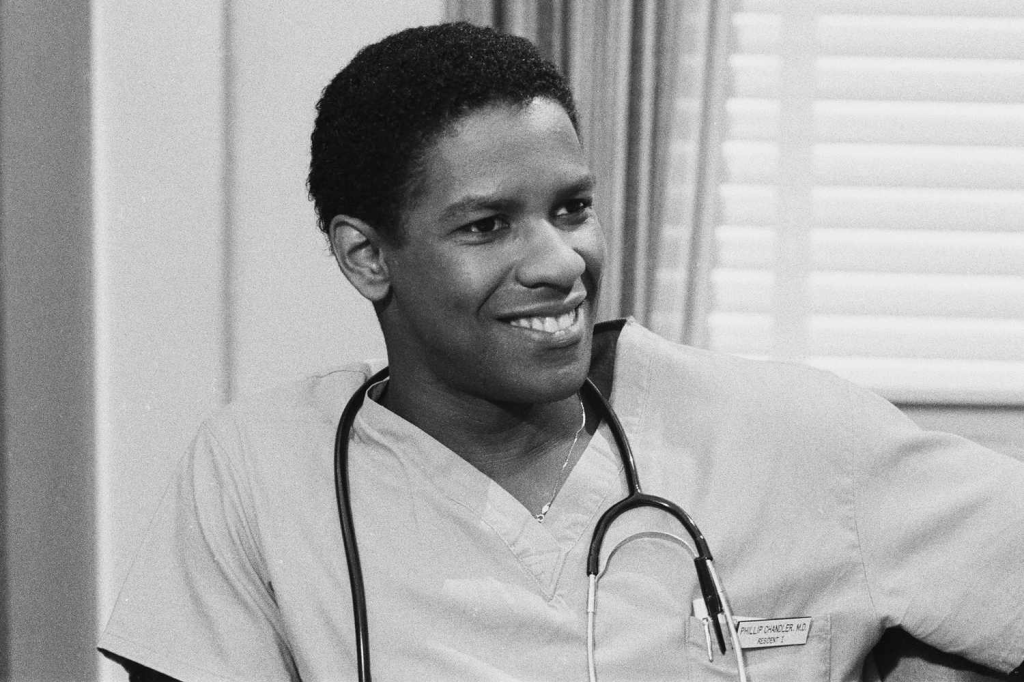
Surgeon Dr. Mark Craig (William Daniels) informs the staff that their hospital was considered a “dumping ground.” Craig helped train the interns along with Dr. Donald Westphall (Ed Flanders) and Dr. Auschlander (Norman Lloyd). Flanders was a popular character and the role was originally offered to Hal Linden who turned it down. Other members of the stellar cast included Ed Begley Jr. (playing Dr. Ehrlich), David Birney (playing Dr. Samuels), Mark Harmon (playing Dr. Caldwell), Ronnie Cox (playing Gideon), Helen Hunt (playing Clancy Williams), Howie Mandel (playing Dr. Fiscus), Christina Pickles (playing Nurse Rosenthal), and Denzel Washington (playing Dr. Chandler). This was a fitting role for Denzel who was a pre-med student in college.

Daniels was sent five scripts. He thought the writing was wonderful and having so many scripts displayed how the ensemble cast would be used. He might have a large part one week and then three weeks with small parts. He said Dr. Craig was like him in many ways. He ran the gamut from angry to nice in minutes. It fit his temperament and was wonderful to play him.

Daniels met a surgeon and followed him around the hospital, including in the operating room for an open-heart surgery procedure. He said he used some of the medical information, but he did not like the surgeon as a person and did not model Dr. Craig on him. He said using so much medical jargon was difficult and he had to learn about it before he went in to rehearse. He said that Dr. Craig had some funny lines in the show. He said he did not have any input with the writers on his character; in fact, they never really saw the writers.

Photo: ebay.com

Among the many guest stars were James Coco and Doris Roberts who both picked up Emmys as a mentally challenged boyfriend and a bag lady. It was an interesting storyline where two couples are followed through their medical care. One couple is upper middle class and the other has no money. Nothing is said; there are only observations of the action. The wealthier woman leaves the hospital with no cure but a high hospital bill for many tests. The bag lady, Cora, learns she needs to have both feet amputated because of gangrene, but she needs to take care of Arnie, her mentally challenged boyfriend, so she refused the surgery.

Roberts was asked about her role on the show in a Television Academy interview. She said Coco had received the script and called her to say she needed to audition for the role of his girlfriend. When Doris reached out, they declined, so she reached out to Bruce Paltrow, who was a producer and writer for the show, and she was hired. She did a lot of research watching homeless people. She realized that most people squatted because they did not want to lie down because they were worried about having things stolen. This is how her character got gangrene. When asked about what she thought happened to the character she said she thinks she died shortly after. Roberts got emotional discussing the role and said it still makes her cry. She said it was the best dramatic role she ever played.

Doris said one funny moment came at the Emmy Awards. When they called her name, she did not know what to do with her purse, so she handed it to Jimmy Coco. The next name called was his so he came on stage with the purse and mentioned he didn’t use one often but it came from Doris. Then a few nights later he was on the Tonight Show, and when he came on stage he had her purse and in it was a cigar, a half-eaten sandwich, and a few other items.

Photo: ebay.com

The show was classified as a drama, but it included comedy, as well as inspiring moments of interaction and care. One of these scenes is when Jack, a resident, has to deal with his wife’s death. She is an organ donor, and her heart is given to a female patient. Jack sneaks into the patient’s room when she is sleeping so he can listen to his wife’s heart.

Jazz musician Dave Grusin composed the theme. Grusin won twelve Grammys. He won an Academy Award for his score of The Milagro Beanfield War in 1988. He also scored some popular films including The Graduate, On Golden Pond, The Fabulous Baker Boys, and Tootsie. Before writing the theme for St. Elsewhere, he cowrote the themes for Good Times and Baretta.

One of the most interesting things about the writing on St. Elsewhere was the number of allusions to other television shows and movies and several cross-overs. There are many of these but some of the most fun ones for me included (1) the public loudspeakers often page characters from other television shows, (2) one of the characters on The White Shadow, Warren Coolidge, becomes an orderly and sometimes wears Carver high school shirts, (3) a psychiatric patient who watches The Mary Tyler Moore Show believes that he is Mary Richards and has an encounter with Betty White, and she says she is not Sue Anne Nivens, (4) Dr. Craig once mentions serving in Korea with B.J. Hunnicutt, and (5) the teaching doctors are seen at the bar at Cheers in one episode.

Photo: imdb.com

The hour-long show started on Tuesday nights. The show was canceled after the first year. Then Grant Tinker changed his mind and they were back on the air. For the second season, it was moved to Wednesdays where it remained until it was canceled.

The finale of this show gets talked about almost as much as Newhart. However, while fans loved the Newhart ending, there was a lot of controversy over the ending of St. Elsewhere.

Warning: This is a spoiler alert if you haven’t seen the show and want to watch it. After wrapping up several storylines, the final scene is a much younger Dr. Westphal and his son Tommy (Chad Allen) who has autism. Westphal is obviously a construction worker. Dr. Auschlander appears to be Westphal’s father. Tommy is playing with a snow globe and the two “doctors” discuss the fact that Tommy spends much of his day staring at the snow globe. They set the globe down and when the camera goes in close, we see St. Eligius inside.

We are left to assume that the entire series had been Tommy’s imagination. In other words, the show was fiction but the fiction was also fiction inside someone’s mind. Viewers understandably were confused and upset.

Photo: paleymatters.com

Later the cast did a special on Entertainment Weekly and was asked to share their thoughts about the finale. Here are a few of the comments. Chad Allen said, “From the mind of a young person whose fantasies were coming to life before him, it was neat.” William Daniels said he was “shocked, actually. I had no idea of their plans to do that. . . it was a provocative ending. A surprise to everybody.” Ed Begley Jr. felt that “it was quite fitting for what they had done the previous six years. They always tried to be out there, beyond the limits of what was being done before. They tried to think outside the box. . . . It was bold and shocking and upset some people.  . . . It was highly unpredictable, just like every episode.” Howie Mandel knew it would offend half the viewers and appeal to the other half, but he described it as “ahead of its time, pretty ingenious, and creative and not like anything else.” Mark Harmon had been killed off earlier in the series, but said, “It made me smile when I heard about what they did because it was so them. They made a choice. and the choice is interesting.” Noman Lloyd said he “never bought it. I said at the time we were shooting, ‘This is a cheat.’ For me, it was a cheat.”

I will admit this was not a show I regularly watched. I find the entire philosophy of the ending fascinating. Many felt they had been cheated by getting pulled into the lives of characters for six years that never existed. However, if they are on a television series, did they ever exist? It shows how real characters become to us when we invest in a show and invite these people into our homes every week.

If you didn’t watch the show in the eighties, you can find it on Hulu and make your own decision about the finale. I do admit that I never look at snow globes the same way anymore.

Married . . . with Children

The title is the only reference I’ll be making to that 1980s show.  In honor of our 29th anniversary today, I thought I would look at sitcoms dealing primarily with marriage.  Surprisingly, there have not been as many as one would think.  It’s amazing how many sitcoms are about single parents, families, friends, or co-workers.  If there are any similarities between our married life and Al and Peg Bundy’s life, I really don’t want to know about them.  So, let’s look at a few sitcoms that did focus on blessed unions.

The George Burns and Gracie Allen Show – George Burns and Gracie Allen filmed 120 episodes for their television series.  They were married in real life, and the set design for the show was based on their real-life home. Gracie was zany, but her literal perspective of the way life worked made uncanny sense.  George loved Gracie and knew that she was the center of his marriage and career. George was very generous and made numerous gifts to Cedars-Sinai Medical Center which is at the intersection of George Burns Road and Gracie Allen Drive. I love looking at marriage that way – it’s an intersection found at the center of a very diverse couple.

marriage1


I Love Lucy – In 1953, I Love Lucy joined the Monday night line-up with The George Burns and Gracie Allen Show. Lucy and Ricky (Lucille Ball and Desi Arnaz) are probably the most famous married couple. For six years, they took ordinary situations and exaggerated them. Lucy’s hare-brained schemes created an endless source of comedy. However, the problems with couple faced were believable, and they were the same problems other young couples were facing the first couple years of marriage like how to pay the rent, buying a new dress, and dealing with in-laws.

marriage2


Pete and Gladys – Starring Harry Morgan and Cara Williams, this was one of, if not the first, spinoff.  Pete Porter was a neighbor featured on December Bride for six years.  When the show went off the air, we finally met Gladys, his wife.  He was an affectionate and caring husband and she was a very nice homemaker.  Unfortunately, the show only lasted two seasons, although Harry Morgan went on to star in many television shows.

marriage3


The Dick Van Dyke Show – Dick and Laura Petrie (Dick Van Dyke and Mary Tyler Moore) showed us an intimate side of married life for five years.  They were funny and had an interesting life.  Sometimes they even watched a bit of television at night.  They were a couple who admitted they were a bit insecure about parenting.  They worked through their problems with humor and logic. Although Dick was a writer and Laura a stay-at-home mom, they were equal intellectuals and that was the basis of their relationship.

marriage4


The Bob Newhart Show – Bob and Emily Hartley (Bob Newhart and Suzanne Pleshette) were another couple who were intellectual equals.  They were funny, understanding, and warm.  They argued about real issues, and they made up.  Both the characters had very definite identities, and they did not always see eye to eye, but they respected each other and loved each other deeply.

marriage5


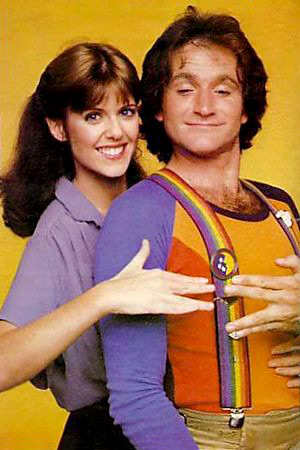
Mork and MindyMork and Mindy was a sitcom about an alien and the girl next door (Robin Williams and Pam Dawber). If most American couples think they have some impossible issues to work through, they should watch a few episodes of Mork and Mindy. The show lived on for four years, primarily because of Robin Williams’ wild improvisations and Pam Dawber’s believable love for Mork. Mork and Mindy was not only a spinoff from Happy Days, but it was actually inspired by a Dick Van Dyke Show episode “It May Look Like a Walnut.” Director Jerry Paris created the idea when Garry Marshall mentioned that his son would like to see a spaceman on television. Paris, who played Jerry Helper on the Dick Van Dyke Show, remembered that episode and invented Mork.  In season four, Mork laid an egg, in more ways than one, and the show was cancelled.

marriage6


Dharma and Greg – When free spirit Dharma and lawyer Greg (Jenna Elfman and Thomas Gibson) get married on their first date, the show was born.  They have conflicting views on everything except how much they love each other.  These views lead to comical situations – imagine a Republican and Democrat married in today’s political climate! Dharma overshares all her views and feelings, while Greg was raised to not talk about such things.  I think a lot of us can relate to that.

marriage7


Mad About You – Paul and Jamie Buchman (Paul Reiser and Helen Hunt) are newlyweds who cope with life as a recently married couple.  They point out the gentle humor of everyday life situations. One description of the show said that this show starts after a party when the husband and wife are alone in the car discussing the evening. For seven seasons, they tackled the issues so when the series was over, there was no “seven-year itch” to worry about.

A fun fact, Carl Reiner reprised his Alan Brady role from the Dick Van Dyke Show on Mad About You.  The episode made several references to the classic sitcom, including Jamie saying “Oh Paul,” an aside to Laura Petrie’s famous “Oh Rob.”

marriage8

These were several of the couples we watched during our life who indirectly influenced the way we viewed marriage. Each of the couples has something to teach us about successful marriages. One review of Burns and Allen concluded that “the George Burns and Gracie Allen Show exuded excellence, with a unique format, interesting plots, a great cast, and virtually non-stop comedy featuring the unparalleled zany wit of Gracie.”  I would consider it a compliment if that was a review for our marriage as well.