Dick York: His Job Was Back-Breaking Work

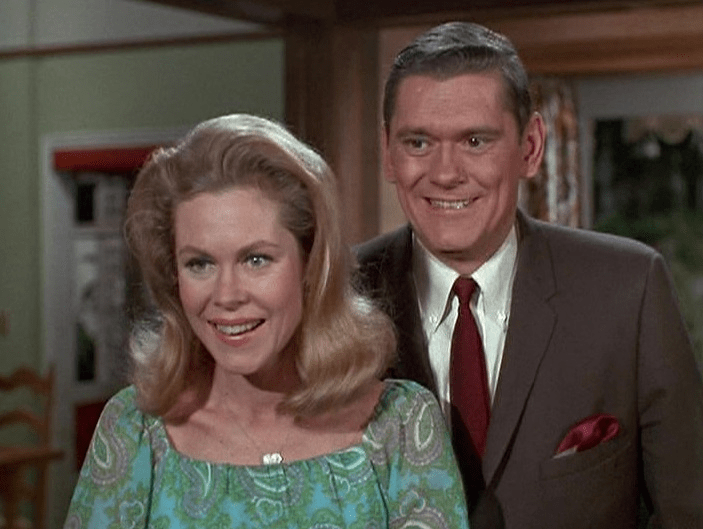
This month we are learning about some Bewitching characters and their careers. Today we get to learn more about Dick York, the first actor to portray Darrin Stephens.
📷imdb.com the first Darrin Stephens

York was born in 1928 in Fort Wayne, Indiana, part of a working-class family; his father was a salesman, and his mother was a seamstress. During his younger years, the family relocated to Chicago, and at 15 he began acting on the radio in “That Brewster Boy.”

He would appear in hundreds of radio episodes and instructional films before heading to New York City in 1951 where he lived at the YMCA. In New York, he appeared on Broadway and then began his film career. That same year, York married Joan Alt. While he was doing the radio show “Jack Armstrong, All-American Boy,” they met when she came in to do a commercial.
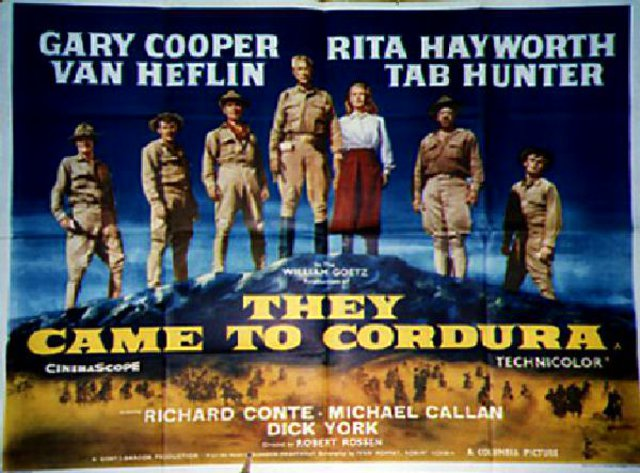
In 1959, he was filming They Came to Cordura with Gary Cooper and Rita Hayworth when he suffered a back injury on the set. As York described it, “Gary Cooper and I were propelling a handcar carrying several wounded men down a railroad track. I was on the bottom stroke of this sort of teeter-totter mechanism that made the handcar run. I was just lifting the handle up as the director yelled ‘Cut’ and one of the wounded cast members reached up and grabbed the handle. Now, instead of lifting the expected weight, I was suddenly, jarringly, lifting his entire weight off the flatbed—180 pounds or so. The muscles along the right side of my back tore. They just snapped and let loose. And that was the start of it all: the pain, the painkillers, the addiction, the lost career.”

However, the injury didn’t catch up with him at that exact moment. A year later he was offered a role in Inherit the Wind. He would end up in ten films during his career, but it was television where he spent most of his time.
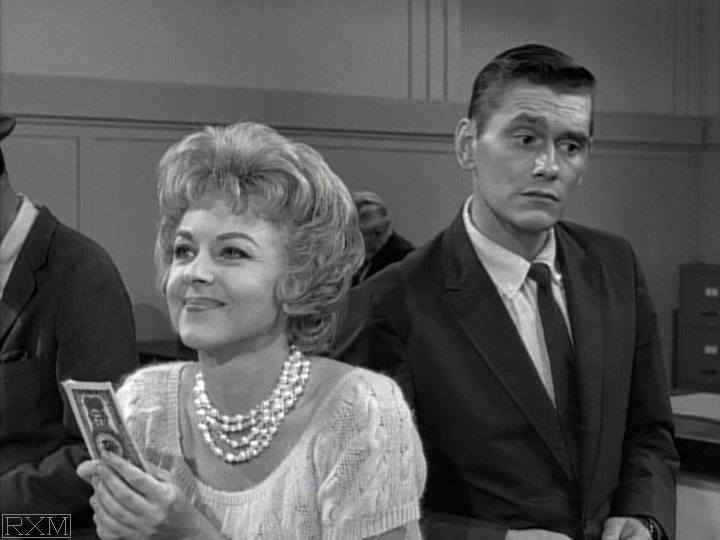
📷imdb.com The Twilight Zone

A couple of years later he was part of the cast of Going My Way for a season. His television career continued, and you’ll see him in episodes of The Twilight Zone, Dr. Kildare, Alfred Hitchcock Presents, Route 66, and Wagon Train, among others.

In 1964 he was offered the role that made him a house-hold name, Darrin Stephens on Bewitched. York was with the series for five years and was nominated for an Emmy in 1968. York was nominated along with Richard Benjamin from He and She and Brian Keith and Sebastian Cabot from Family Affair, but they were all beat by Don Adams from Get Smart.

His back caused him a lot of pain while on the Bewitched set. The crew constructed a wall where he could lean between scenes, but half-way through season three, he was diagnosed with a degenerative spine condition which often sent shooting pains through his body. Watching seasons three and four, Darrin often can be found lying down or on the couch in many of his scenes.

Things escalated during the fifth season. York fell ill with a temperature of 105 degrees. He was feeling awful but decided to try to get through a few scenes. He was sitting on a scaffolding with Maurice Evans, Samantha’s dad on the show, when he told a crew member that he thought he should get down. “He started to help me down and that’s the last thing I remember until I woke up on the floor. That’s about all I remember of the incident . . . I’d managed to bite a very large hole in the side of my tongue before they could pry my teeth apart.” While he was in the hospital, he and William Asher had the tough talk about his future, and he agreed he needed to quit; he was then replaced with Dick Sargent.

In his autobiography, York says the next 18 months found him bedridden and dependent on painkillers. He got off the meds, but it took six months. He was able to beat his addiction. He and Joan had five children that needed care.
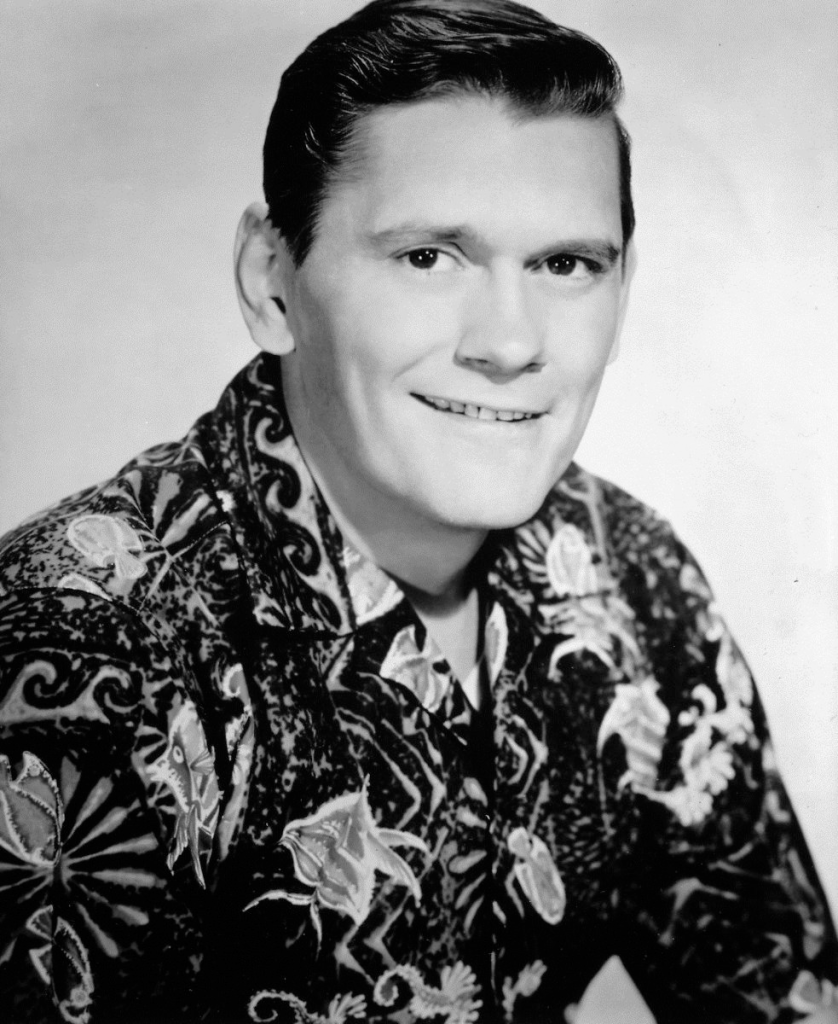
📷wikipedia.com

The family struggled economically after his addiction. In the mid-seventies, a real estate investment of theirs failed, and they were forced to go on welfare. In the early eighties the couple moved to Michigan to help care for York’s mother-in-law; they were surviving on a $650 monthly pension from the Screen Actors Guild.

York always kept a positive attitude. While he was bedridden, he made phone calls to help raise money for the homeless. He said, “I’ve been blessed. I have no complaints. I’ve been surrounded by people in radio, on stage, and in motion pictures and television who love me. The things that have gone wrong have been simply physical things.” He tried to revive his career, appearing on Simon & Simon and Fantasy Island, but it was just too late.

In addition to his back issues, York smoked three packs of cigarettes a day, and he eventually was diagnosed with emphysema. By 1989, he needed oxygen to help him breathe. He passed away from complications of the disease in 1992 at the young age of 63.

What a sad and painful ending to such a promising career. It’s amazing that someone in that kind of torment could still reach out to help others and try to spin a positive attitude about what he was grateful for. Thank you, Dick York, for leaving us with 68 great roles and the chance to get to know Darrin Stephens.

Diana: Might Have Moved Too Quick

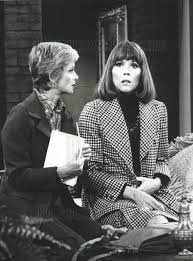
As we take a peek at some one-named sitcoms, today we travel back about fifty years to 1973 and visit Diana which debuted on NBC. Created by Leonard Stern, the show was filmed in front of a live audience. Stern was the creator behind several series including McMillan and Wife and He and She. In addition to this show, he wrote for several series including The Phil Silvers Show, Get Smart, and Holmes and Yo-Yo. He has a decent amount of producing credits including executive producer for Get Smart.

📷en.wikipedia.com

The premise is that divorced Diana Smythe (Diana Rigg) moves from London to New York City as a fashion coordinator for a department store. Her brother lets her live in his apartment while he’s out of town. Not only does Diana have to deal with learning about life in America, she has to take care of her brothers great dane Gulliver. Quickly, she realizes a lot of women have keys to her brother’s apartment and they show up regularly.

Rounding out the cast was neighbor Holly (Carole Androsky), copywriter Howard (Richard B. Shull), window decorator Marshall (Robert Moore), her bosses Norman and Norman Bronik (David Sheiner and Barbara Barrie), and friend Jeff (Richard Mulligan), a mystery novel writer.

Jerry Fielding composed the Diana theme. Fielding was a three-time Oscar nominee with 115 composing credits including McMillan and Wife, Mannix, Hogan’s Heroes, and Star Trek. He also was listed as part of the music department for lots of great series and movies.

📷wikimediacommons.com

Riggs took on the role due to the success of The Mary Tyler Moore Show and wanted to do something similar. I will say they tried a bit too hard to be similar. Their apartments are almost identical, and the work set was also set up with one coworker next to Diana and her boss’s office to the right. The show was placed on the Monday night schedule before Here’s Lucy. It was up against Gunsmoke and The Rookies. Gunsmoke had been on forever and was still in the top 20 while The Rookies was in the top 30. While a lot of shows debuted in 1973, the only real hit was Happy Days.

This show might have wanted to emulate The Mary Tyler Moore Show, but it lacked a few things including the amazing cast, the great writing, and the perfect timeslot. Fans never warmed up to this show and the ratings never took off, so the show was canceled before the end of the season.

📷facebook.com

It wasn’t a terrible show, but it wasn’t anything worth watching either. I thought the dialogue was not great and it tried way too hard. The jokes seem a bit tired. While the cast also wasn’t awful, they weren’t overly likable either. I think that there were valid reasons this one was canceled after only 15 episodes. At least she had The Avengers to remember which was a much better and beloved show. Diana summed up how this series fared when she related a story that when she arrived in American, the network had her picked up at the airport in a limousine and when she left America after a canceled show, they sent her to the airport in a shabby, yellow cab. I guess limousines and shabby cabs are part of all of our lives.

Blondie: Some Shows Are Better Being Forgotten

This month we are taking a look at some classic sitcoms that many people don’t remember anymore.

Blondie is one of those shows. It was based on the Chic Young comic strip and debuted on NBC in 1957, lasting one year. The series was resurrected in 1968 and the reboot also lasted a season.

📷wikipedia.com The 1957 version

Blondie had become very popular with fans. Beginning in 1938, 28 movies were made starring Penny Singleton and Arthur Lake. Blondie also showed up on the radio from 1939 to 1950.  Many products had been based on the characters including comic books, coloring books, lunch boxes, and board games.

The 1957 series starred half the movie duo. Lake took on his role of Dagwood Bumstead, but Pamela Britton was offered the role of Blondie Bumstead. Their kids, Cookie and Alexander, were played by Ann Barnes and Stuffy Singer. Florenz Ames was boss J.C. Dithers with Elvia Allmana as his wife Cora. Rounding out the cast was Harold Peary as neighbor Herb Woodley.

📷imdb.com The 1968 version

A decade later Will Hutchins and Patricia Harty play Dagwood and Blondie, Jim and Henny Backus play the Dithers, and Pamelyn Ferdin and Peter Robbins are their kids. The only advantage this series had over the original was color.

The comic strip, movies, radio show and both sitcoms all encompassed the familiar Bumstead elements: Dagwood being physically and socially awkward; their dog Daisy, and Dagwood’s love of napping and huge sandwiches.

The reboot was produced by Joe Connelly and Bob Mosher, the faces behind Leave It to Beaver and The Munsters. There was room in the schedule after the network cancelled He and She, a sitcom starring real life spouses Paula Prentiss and Richard Benjamin. The show is described on imdb.com as “Dick and Paula Hollister are a couple living in New York. Dick is a comic-book artist who has become famous for creating a superhero called Jetman, which has been turned into a TV show starring egocentric actor Oscar North.” During its one season of 26 episodes, the show received seven Emmy nominations, including a win for writing. It’s too bad that show was given the axe and Blondie moved in because the Prentiss-Benjamin show was much more creative and felt new, while Blondie felt extremely old.

No surprise, the ratings were not great. This is even worse when you see what the show was in competition with: The Ugliest Girl in Town, which would also be gone by 1969, and Daniel Boone. The one new 1968 show to return on CBS was Hawaii Five-0 which seems so much more sophisticated than Blondie; it’s hard to believe they both debuted the same year.

📷yahoo.com Hawaii Five-0

Perhaps the fans didn’t tune in because the critics panned the show before it aired. The Milwaukee Journal’s Wade Mosby said it was “a horrendously contrived piece of fluff that should have never been snatched from the comic pages.” Don Page of the Los Angeles Times called it “an unmitigated disaster,” and Cynthia Lowry of the Associated Press described it as “dismal.”

By November, rumors were that the show was already cancelled, and its last episode aired in January. The show probably relied too much on slapstick and unsophisticated humor; things that might have been fine in the 1930s but were passe by the 1960s. Sometimes a show is cancelled just because it’s a badly written and executed show. It seems Blondie fell into this category not once but twice.

Off the top of my head, I can only recall two comic strips becoming popular television shows: The Archies and The Addams Family. Because the Blondie characters were not very dimensional and got into the same situations over and over, they just never were able to translate into sustainable television characters. I think there’s a good reason that many people don’t remember this show and perhaps it’s better that way.