They say, “Variety is the Spice of Life” and we are going to see if that’s true this month. During the fifties, sixties, and seventies, variety shows were a big part of the television schedule. If you were a singer or a dancer, you likely had an opportunity to have your own show.
📷imdb.com
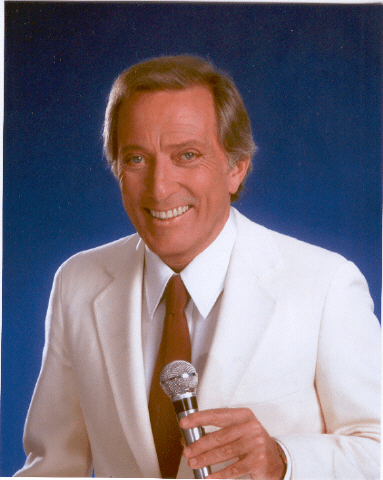
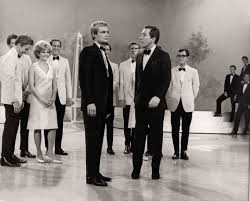
From 1962-1970, Andy Williams entertained us in our living rooms. Williams had a weekly series from 1962-1967 before deciding he wanted to cut back to three specials a year. By 1968 he changed his mind and went back to a weekly series that was on the air till 1971. When the show came back in 1968 it included more rock and roll, a talking bear, and psychedelic lighting which never seemed to fit what I thought of as Williams’ style.
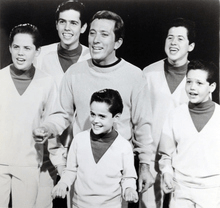
Like many variety shows, Williams had a cast of performers who helped out with skits and songs. During the run of his show, The Osmond Brothers, Jonathan Winters, Ray Stevens, and the Lennon Sisters were part of the act. In 1963 the show won for Outstanding Variety Series. Like Carol Burnett, guest stars also appeared weekly on the show. I remember watching his show, especially at Christmas and loved the Osmonds who Williams discovered at Disneyland; he originally introduced them as “a youthful barbershop harmony group from Odgen, Utah.”
📷thesaltlaketribune.com
Andy’s show debuted on NBC on Thursday nights. It was up against The Alfred Hitchcock Hour. The second season ended up on Tuesday nights taking on The Fugitive and The Jack Benny Show. Season three found it on Monday nights with the competition being a few new sitcoms and it continued in the same slot season four with Hazel as its strongest competitor. Believe it or not, season five found the show on Sunday night. No wonder it wasn’t in the top 30, no one could ever find it from year to year.
Once the show returned in 1968 with its 60s trippy themes it was on Saturday tackling the long-running The Jackie Gleason Show and the newer game shows Dating Game and Let’s Make a Deal. The only thing that changed the final year was that The Jackie Gleason Show was replaced with Mission Impossible. In addition to moving around so often, the show had to compete with a lot of other variety shows during that decade. Just a few others included Carol Burnett, Flip Wilson, Dean Martin, Dinah Shore, and Perry Como.
📷facebook.com
Eventually, Williams created his own very successful show in Branson, Missouri where he lived and performed until he passed away from bladder cancer in 2012.
I think overall Andy Williams had one of the more successful variety programs. No one did it better than Carol Burnett. I think Williams had a hard time trying to fit his style into the late sixties and early seventies. When he started, Perry Como and Nat King Cole were known for their variety series, but when his last show debuted, he was competing with people like Flip Wilson and Sonny and Cher. I’m exaggerating to a point, but it was like he began singing with Lawrence Welk and tried to change to singing with The Rolling Stones; he just needed to find his own lane and stay there.
We are in the middle of our blog series for November, “What a Character!” Today we get to meet the delightful Sylvia Field.
Born Harriet Louisa Johnson in 1901 in Allston, Massachusetts, Field always knew she wanted to act. When she was ten, she saw Maude Adams in “Peter Pan,” and she decided that would be her career as well. After being diagnosed with diphtheria, she was not allowed to attend school for a while. So, when she was feeling better, she ventured down the street to a motion picture company that was filming movies. She was allowed to join the cast and became the “leading lady of the extras.”
📷facebook.com
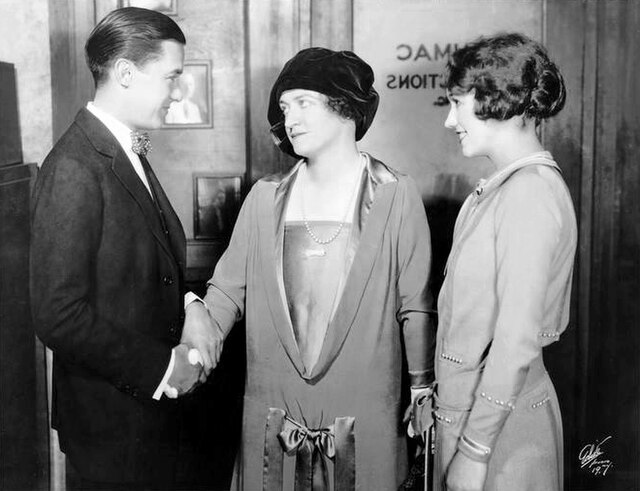
Eventually she decided to move to New York. At only 17, she made her Broadway debut in “The Betrothal.” She never did go back to school.
📷wikipedia.com 1927 Broadway shot
A decade later she got her first shot at the big screen in The Home Girl. She was signed by Fox Studios in 1939. Her last acting credit was also for a film, The Cruz Brothers and Miss Malloy in 1980. While she fit a few movies in her career, most of her appearances were on television.
After she began her film career, she married Robert Frowhlich in 1924; they were only married five years. In 1930 she tried marriage again with Harold Moffat; he passed away eight years later. In 1941 she married Ernest Truex, and they remained together until his death in 1973.
Truex had an interesting background. He was born in Kansas where his father was a doctor. In exchange for medical services, one of his father’s patients gave Ernest acting lessons. Ernest performed Shakespeare as a five-year-old child, and was given the nickname, “The Youngest Hamlet.” As a nine-year-old, he and his mother toured the country while he performed. Before he was a decade old, he was in his first Broadway show with Lillian Russell.
📷wikipedia. The Butter and Egg Man by George Kaufman
In the movies he played the quiet, ineffectual boss. Like Field, he was also a regular cast member in three shows. His were Jamie, Mister Peeper, and The Ann Sothern Show.
Field and Truex traveled around the country in plays together before starring in a local New York series featuring members of their family. The couple had a blended family with Field’s daughter Sally Moffat and Truex’s three sons. All four of the kids became actors. I’m guessing it was like The Adventures ofOzzie and Harriet. The show was on the air for three years before Truex and Field decided to move to California.
Sylvia’s first television appearance was on the Chevrolet Tele-Theater in 1948. She continued accepting roles on many of the drama shows through the mid-fifties. In 1952 she got her first cast role as Mrs. Remington on Mister Peepers. Ernest Truex was also part of the cast, playing Mr. Remington. They played the parents of Nancy, the school nurse, Mister Peepers’ fiancé. (Field and Truex would work together again on a 1966 episode of Petticoat Junction, “Young Love,” as well as in The Ann Sothern Show.)
📷who’sdatedwho.com Field and Truex
After Mister Peepers was canceled, she accepted a few spots on current shows including The Ann Sothern Show, Father Knows Best, Perry Mason, and The Thin Man.
In 1958 Sylvia received another cast offer to become Aunt Lila on both Annette and The Mickey Mouse Club. These shows shared cast members, so if you were cast on one of them, it was a buy one, get one deal.
Aunt Lila only lasted a year, which was a good thing, because Field was free to accept the role of Martha Wilson on Dennis the Menace, beginning in 1959. She defended Dennis to her husband George for almost four seasons.
Before the 1962 season, her tv husband Joseph Kearns passed away. For the season, Gale Gordon was brought in as George’s brother John, who was staying with Martha while George was away on personal business. However, the next year, Field was written out of the show, and John’s wife Eloise took her place, played by Sara Seegar. John and his wife bought the house from George and Martha, and no explanation was given to why they moved away. Sylvia and Jay North, who played Dennis, remained friends for the rest of her life.
📷WPRI.com Field, North, and Kearns
For the rest of her career, she would show up on television shows including Hazel, Occasional Wife, and Lassie. After Truex’s death, Sylvia accepted a couple of roles but spent much of her time fishing, golfing, watching baseball, and taking care of her avocado orchard. Eventually she had to move to a nursing home where she passed away in 1998.
I always enjoyed Martha Wilson. She and George took on the role of Dennis’s pseudo grandparents. While George was gruff, everyone knew he loved Dennis. Martha was more affectionate and always waiting with cookies, ready to hear about his latest exploits. Field seemed to have a great life. She had a prolific career and then was able to enjoy retirement which so many actors find impossible to do.
This month our blog series is “It’s Their Show.” Today we are taking a look at The Mickey Rooney Show. This show debuted on NBC in 1954. It was on for one season, producing 39 episodes.
📷singingnewstv.com
Rooney plays Mickey Mulligan, a Guest Relations Staff member who works at a television network, hoping to land an acting career by taking acting lessons at night. It’s interesting that they set the show at a television network, because only 56% of families had televisions in 1954. It’s also interesting that Rooney was playing a young adult, although he was in his mid-thirties.
Mulligan is not content with his salary of $47.62 a week. Lucky for him, his girlfriend Pat (Carla Balenda) is a secretary to the studio program manager, Charles Brown (John Hubbard). Rounding out the cast is the head of the network (John Hoyt) and Mickey’s best friend Freddie (Joey Forman). Freddie also works at the network, and the two friends often grab lunch at the Hamburger Hut.
📷internetarchive.com
To make ends meet, Mickey lives with his parents, Joe (Regis Toomey) and Nell (Claire Carleton). Joe is a retired police officer who met his wife when he arrested her because she was a burlesque dancer.
There were a lot of talented people behind the camera on this show. Blake Edwards was one of the creators, an executive producer, and one of the writers on the show. He would write and produce several shows including Richard Diamond Private Detective and Peter Gunn before moving into movies in the sixties. Later in life he would be known for the Pink Panther movies and marrying Julie Andrews.
Van Alexander was an arranger for Capitol Records, and he produced the soundtrack for the show. He was a collaborator with Ella Fitzgerald and worked on Bewitched and I Dream of Jeanne as well as big-screen productions.
📷BBC.com Van Alexander
Leslie H. Martinson was one of the primary directors for the show, working on 33 of the episodes. In a Television Academy interview, he discussed working on the series. He said he often had to shoot around Mickey’s role because Mickey was off at the racecourse and then they’d film him when he showed up. He said Rooney was a genius with the way he reacted to things and often his expressions made the entire scene worthwhile.
NBC scheduled the show on Saturday night against The Jackie Gleason Show, which was one of the most popular shows on television at the time. There were some derogatory comments made about Gleason by Rooney that got leaked to the public, and it caused a lot of turmoil for the show before it even aired.
📷amazon.com
The show started with a tagline, sort of like the beginning of That Girl had. While Rooney is boxing, someone yells “Hey Mulligan.” I watched episode 8 of the first year, “Tiger Mulligan.” In this episode, Mulligan’s parents are watching television when Mickey comes home from the gym where he’s working out to be an amateur boxer. His dad is ecstatic, but his mom is not too happy. His girlfriend agrees with her, and she doesn’t like having to sit around by herself at night. His mom, who is a fun character, convinces him that he’s trained too hard and is overly weak. She sets him up by gluing some items to the shelf and making a jar impossible to open. He thinks his mom is stronger than he is and that he needs to pull out of the fight. However, his dad realizes what she’s up to and when he calls her on it, Mickey gets excited for the match. However, at the ring he realizes that his opponent looks like a weakling but has a strong right arm. The fight ends with both of them passing out when they see blood. I really enjoyed the writing, the characters, and the music; I will say that the laugh track was a bit hard to get used to though.
I know something has to go up against the big hits on the television schedule, but it seems like this would have been a fun show if it had competed against a show that wasn’t in the top ten. The entire series is available on DVD if you want to check it out.
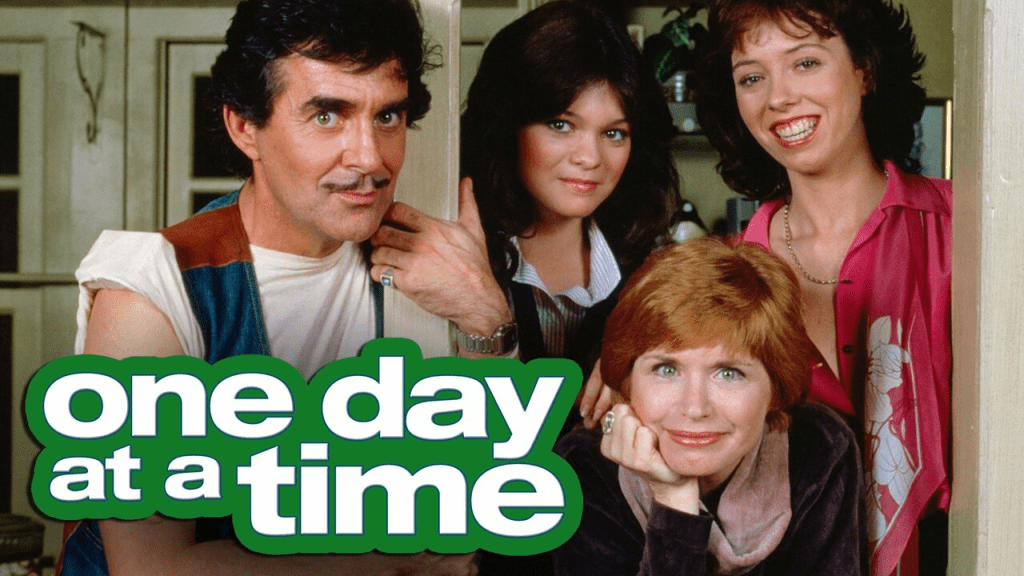
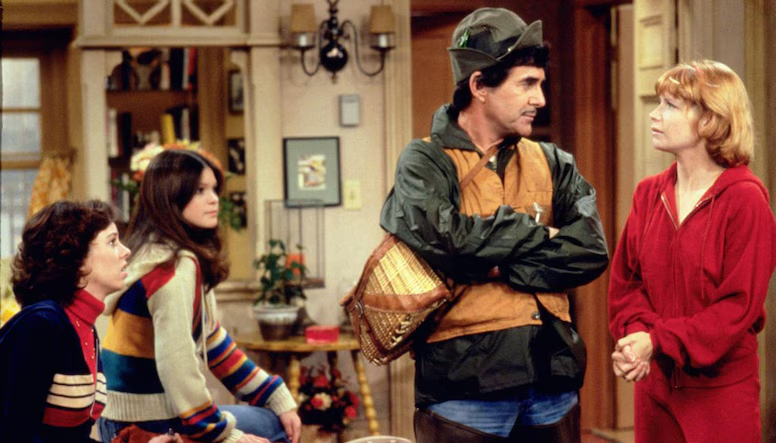
For this Reboot series, we are ending with One Day at a Time. This show was about a divorced mom, Ann Romano (Bonnie Franklin) whose father is not in the picture much anymore. She moves her two teenaged daughters, Barbara (Valerie Bertinelli) and Julie (Mackenzie Phillips) from Logansport, Indiana to Indianapolis. Barbara is the funny daughter who is always doing the right thing, while Julie is rebellious and angry. Schneider (Pat Harrington Jr.) is their building supervisor, and he takes on a bit of a parental role with the girls.
📷tvinsider.com
In the early seasons, Ann dates her divorce lawyer David (Richard Masur). However, after becoming engaged, Ann realizes David wants children of his own and she is not ready to go down that road again, so they break up. Her ex remarries and he eventually enters their lives again.
Julie marries Max (Michael Lembeck), a flight attendant, and they eventually have a daughter. Barbara marries a dental student Mark (Boyd Gaines). In the finale, Ann decides to take a job in London and Schneider moves to Florida to take care of his niece and nephew.
The series was created by husband-and-wife team Whitney Blake and Allan Manings. Blake was Dorothy Baxter on Hazel. Blake based the show on her experiences as a single mother raising three children. It debuted in 1975 and aired until 1984.
📷enews.com
Franklin was not happy with the scripts in the first season. She said that she threatened to quit unless the quality improved for the second season.
Phillips dealt with substance abuse, and she was fired after the fifth season. She did come back later for a few appearances. When she entered rehab in 1980, the plot was that Julie and Max moved to Houston. In the seventh season, she returned for a two-part episode. In the final season, she collapsed on the set. When the producer asked her to take a urinalysis test, she told them not to bother and she was fired for the last time. Lembeck continued with the show, and he raised their daughter after it was said Julie left them. While Phillips was unkind, to put it nicely, to Bertinelli early in the series, they eventually became closer. Bertinelli was one of the few people who stood by her after she released a shocking autobiography. Later Glenn Scarpelli joined the cast as Alex. His father had been Ann’s boyfriend and after his father dies in a car accident, Alex asks to move in with Ann and Barbara.
📷mentalfloss.com
Family members Nanette Fabray and Shelly Fabares both took roles in the series; Nanette played Ann’s mom and Shelly was a coworker. Howard Hesseman also joined the cast as Sam who would marry Ann.
The show was filmed before a studio audience. That surprised me a bit. I went back to watch a few shows for this blog, and I was surprised how dark the series was for a sitcom. Many of the shows, especially Norman Lear shows, were not very light-hearted. I remember liking this show as a teenager/young adult, but I must admit, they were hard to sit through the second time around, and it is not a show that I would choose to watch again.
The theme song was “This Is It.” Brill Building composed the music with lyrics by Jeff and Nancy Barry. Polly Cutter sang the song.
It is amazing that the show did so well in the ratings because it was moved around on the schedule eleven times during its run. For most of its life, it was in the top 20.
📷tmz.com
The show still had decent ratings after its nine seasons, but Franklin decided she was ready to be done. Harrington was the only cast member to win an Emmy. A 1984 spinoff was discussed for Schneider, but that show never came to fruition. It seems fitting for Harrington to win the Emmy. He has 166 acting credits, and appeared in movies with Elvis Presley and Robert Redford. He said 100 actors auditioned for the role of Schneider. He said that he was a family man with four kids and needed to put food on the table, so he went for it.
In 2005, there was a One Day at a Time Reunion on CBS. Franklin, Phillips, Bertinelli, and Harrington discussed their time on the show. The documentary featured private interviews with Masur, Fabares, Fabray, Lembeck, and Scarpelli.
At least three seasons were released on DVD, but I have not seen any references to seasons four-nine.
📷deadline.com
In 2017 a reboot was made of One Day at a Time. Three original cast members showed up on the new series. Phillips appeared as a counselor and former veteran leading a support group with PTSD, Glenn Scarpelli was in season three, and Lembeck directed the season one episode “Sex Talk.”
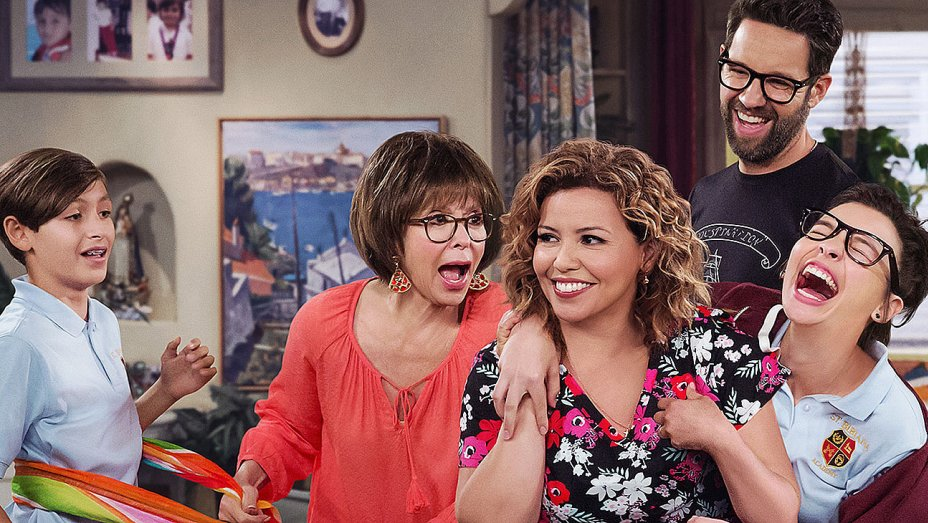
The remake was developed by Gloria Calderon Kellett and Mike Royce with a Latino cast for Netflix. The stars were Justina Machado, Todd Grinnell, Marcel Ruiz, Stephen Tobolowsky, and Rita Moreno. The Cuban family lives in LA. A single mother and former veteran dealing with PTSD, Penelope Alvarez (Justina Machado) lives with her daughter, Elena (Isabella Gomez), and son Alex (Marcel Ruiz), and her mom Lydia (Rita Moreno). Pat Schneider (Todd Grinnell) is the supervisor. Penelope works for Dr. Leslie Berkowitz (Stephen Tobolwsky). The reboot also focused on some tough subjects including mental illness, immigration, sexism, homophobia, gender identity, and racism. It aired for four seasons.
The critics were all on board. It was listed as one of the best shows of 2017 and received a variety of awards including four Emmy nominations. Robert Lloyd of the Los Angeles Times wrote that it was “lively without being rushed” and David Wiegand of the San Francisco Chronicle felt it “was nicely written . . . and the performances are almost universally engaging.” Verna Gay of Newsday called Machado “flat out terrific.”
📷superlagar.live
This time around, Gloria Estefan sang “This Is It.”
The series was canceled after four seasons. The network said it did not have enough viewers, despite the fact that Rotten Tomatoes gave it a 100% rating for every year. It was praised for dealing with many hard subjects and featuring a matriarchy of three generations of women who make their way through life and support each other even when they don’t agree with each other.
I think that the failure of this show to make it to five seasons is a common factor that we will see in streaming shows. Networks had more of an incentive to keep shows around when there were fewer options. Now there are so many shows available that it’s almost impossible to know what is available to watch. Considering that three networks used to get most of the viewers tuning in, now you can multiply that by hundreds. I’m not sure what it will take to keep a show running more than three years anymore.
I hope you enjoyed taking a look at four reboots that succeeded in bringing back original viewers and building a new fan base for themselves. I’d love to hear if any of these were shows you would root for.
We are starting a blog about Supportive Women, great actresses who made classic television so much better. I’m beginning with Joan Tompkins.
📷tvtime.com
Tompkins was born in 1915 in Mount Vernon, NY. She began her career in stock theater companies in New York in the thirties before appearing on Broadway in several shows including “My Sister Eileen,” “Pride and Prejudice,” and “Fly Away Home.” Henry Fonda was in several the plays with Joan.
In 1936 she married actor Stephen Ker Appleby in New York, but five years later they divorced. Appleby was born in Wales and known best for his 1960s movies. He lived to be 100. From 1942-1951 she was married to Bruce MacFarlane before they divorced. McFarlane died in 1967 and had 28 acting credits in television and film. Joan would then marry a third actor in 1951, Karl Swenson, “the man of a thousand voices.” The two worked together on the radio. Many fans of Little House on the Prairie would recognize Karl as Lars Hanson. Swenson obtained an amazing 175 credits, primarily on television during the two decades before his death.
After WWII Joan became a foster parent for a crippled Polish boy, Tomasz Machcinski. He later became a photographer. In 1994, their story was made into a documentary, “Child from a Catalog.” Machcinski’s life story was very interesting. He was born in the Kampinos Forest in Gorki, Poland. He spent his childhood living in hospitals and orphanages. After developing a relationship with Joan, he graduated as a precision mechanic in 1963. In 1966, he took up photography and created thousands of self-portraits. Some were as historic characters. He chose the stories, make up, and costumes. He once said that he didn’t “use wigs, tricks, but I use everything that happens to my body, such as hair regrowth, tooth loss, diseases, aging, etc.” He has had exhibits in Copenhagen, Beverly Hills, Warsaw, New York, and Paris. Machcinski passed away in 2022.
📷wallofcelebrities.com
Tompkins had a long radio career. She was the voice of Nora Drake on “This is Nora Drake” which was on CBS radio until 1959.
She began her television career in 1954 on an episode of Ponds Theater. Almost all of her 93 acting credits were for television shows. She had a recurring role on a soap, Valiant Woman, appearing in 176 of the 1027 episodes of the show as Marion Walker. Throughout the fifties, she showed up in several dramas as well as The Donna Reed Show, Bachelor Father, and Father Knows Best.
During the sixties, she had two recurring roles. She played Mrs. Brahms on Occasional Wife in 1966-67. I remember her on My Three Sons; between 1967-1970, she appeared as Lorraine Miller, Katie’s mom, nine times.
You can catch glimpses of her on many of your favorite shows from the sixties and seventies, including Hazel; The Danny Thomas Show; Perry Mason; Gomer Pyle: USMC; Dr. Kildare; The Man From UNCLE; Bewitched; Bonanza; The Brady Bunch; MarcusWelby, MD; The Mary Tyler Moore Show; The Mod Squad; and The Bob Newhart Show.
📷imdb.com My Three Sons
Her last television appearances were in 1980. She played Grandma Gertie in an episode of Eight is Enough and a physician in a made-for-tv film, The Night the City Screamed.
Karl and Joan moved to Beverly Hills where they founded an acting company. Karl directed the plays Joan appeared in. After Karl’s death in 1978, Joan joined a writing group and wrote several books. She died at home in 89.
Joan Tompkins is another one of those actresses that made television better during the fifties, sixties, and seventies. I’m glad we could learn a bit more about her and her career.
Our last two shows are both set in Springfield, and we might do a bit of comparison and contrast next week. This week we are checking out the Anderson family on Father Knows Best.
📷wikimedia.com
The show debuted on NBC radio in 1949. For five years it was sponsored primarily by General Foods. None of the television cast members were part of the radio show, but you would recognize the voice of Jean Vander Pyl from The Flintstones.
A couple of months before the show ended on radio, it made its move to television. This was not all that unusual in the early days of television, but the show began on CBS for a year, then it was picked up by NBC for three years, and then it returned to CBS for two years.
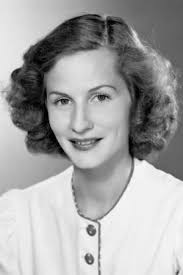
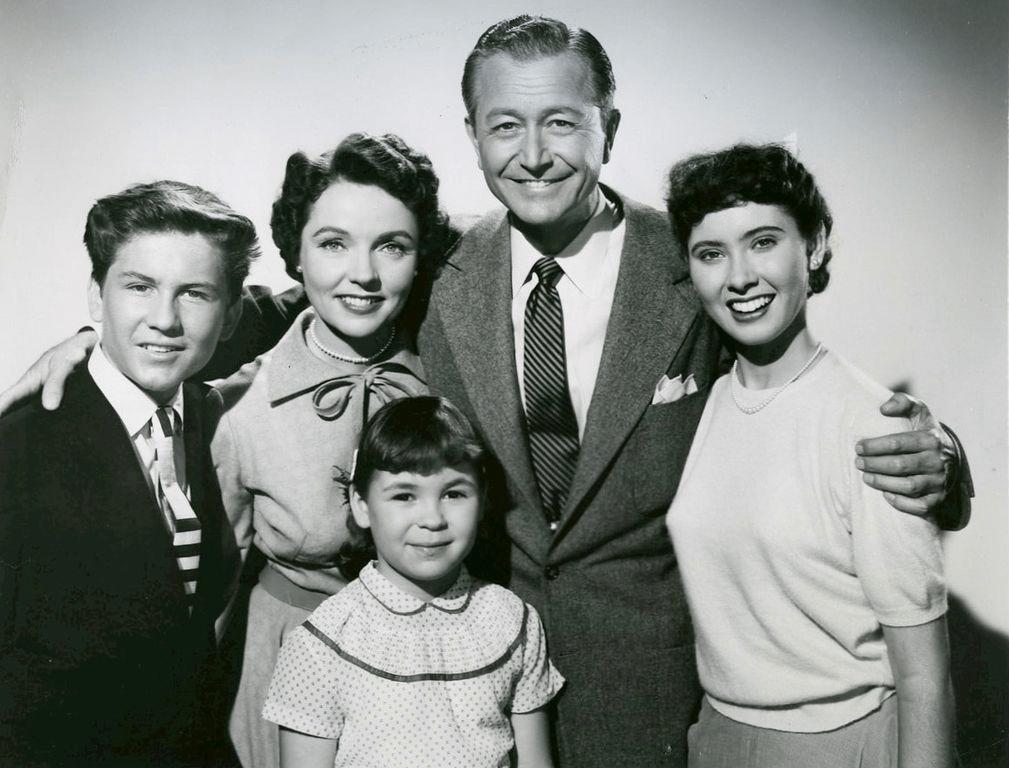
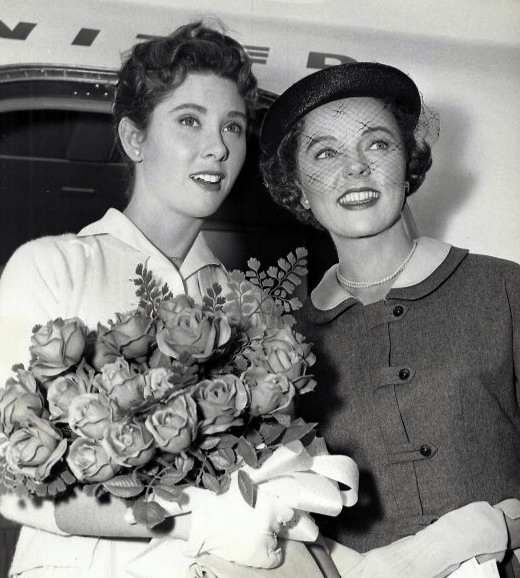
The pilot aired on an episode of The Ford Television Theatre and was called “Keep It in the Family.” While the show was picked up, only Robert Young was retained from the original cast. Joining him were Jane Wyatt as Margaret, Elinor Donahue as Betty, Bill Gray as Bud, and Lauren Chapin as Kathy.
📷evergreenarchives.com
I think we all have this stereotyped vision of the Anderson family in our memories. In fact, the US Department of the Treasury requested a 30-minute episode of the show that was never aired on television. It was distributed to schools, churches, and civic groups to promote the sale of savings bonds. However, when I watch the show today, I think it got some unfair criticism. There are several episodes when Margaret has just had it with cleaning and cooking for an ungrateful family. The kids are sometimes portrayed as thoughtless and self-absorbed. The three children often disappoint their parents and sometimes the parents are not good role models. I don’t say that in a negative way—it’s a realistic description of a lot of us as teenagers and parents at times.
📷imdb.com
Robert Young and his business partner Eugene B. Rodney developed the show with Screen Gems. Casting was not an easy task. One of the things they were trying to avoid was stereotyping. They wanted Bud to be absorbed but not flip. Young and Rodney mentioned that it was not easy to do the gags in the right tone, but they knew they had their Bud in Gray in a scene where Jim is worried about Betty getting too serious. Rodney relayed the following story: “As an example”, said Mr. Rodney, “when Jim, worried about Betty’s going steady, reads aloud a newspaper story about a girl eloping and taking $200 with which her aunt was to buy a TV set, our Bud had to be able to look up and ask seriously, ‘What size screen, dad?’ Billy Gray was the only actor that could do it the way we wanted.”
Kathy was a bit harder to cast for; seventy-eight girls auditioned for the role. Chapin had no acting experience before the show, but she seemed more like a regular kid. They wanted Betty to be attractive but not sophisticated. Donahue talked about her auditions in a Television Academy interview. She auditioned once and had to hop out of the tub and run to the audition with her hair a bit of a mess, and they told her she was too young for the part. Her agent got her hair cut, dressed her in a suit with heels and got another tryout for her, but they said she was too old. Her agent kept pestering them to give her one more shot and they did not want to, but finally Rodney agreed if her agent would quit calling him, so they brought her in again. She was all nerves and very anxious and Young tried to calm her down and she auditioned again and felt that she had embarrassed herself and that she had made a terrible impression. However, they called a month later to say that she had been hired.
📷wikimediacommons.com
Jane Wyatt was offered the role of Margaret and rejected it. She wanted to do a show in New York, but when they sent her the script and she read it, she loved it and agreed to the part.
The show began on Sunday nights. It seems a bit odd today that this wholesome family show on Sunday nights was sponsored by Lorillard’s Kent cigarettes. The show became popular with America, but the ratings were not high enough for Kent Cigarettes, and they decided not to extend the 26-episode contract. Fans sent letters, and television columnists got in on the action, encouraging fans to write the president of the CBS network. Kent canceled and Scott Paper then picked it up. Scott moved the show to NBC. By the second season, more than 19 million households watched the show on Wednesday evenings. In 1958 NBC decided to cancel the show, but CBS took it up again for two more years. In 1960 there was a writers’ strike and it lasted long enough that Robert Young decided he was ready to move on in his career. Jane Wyatt was also ready to retire and enjoy her family. The sad thing was that they were never able to say goodbye to each other or wind up the show.
📷imdb.com
Good scripts were critical for both Rodney and Young. They wanted character motivation. Roswell Rogers and Paul West, the primary writers for the show, took a lot of their material from their own lives. The two writers had seven children between them and included moral lessons built in.
The two major directors were Peter Tewksbury and William D. Russell. As co-owner of the show, Rodney served as producer. He knew everything about the characters. Jane Wyatt related an incident when she asked Rodney what she could do to improve her characterization of Margaret. Rodney told her to love her children as much as her husband. Wyatt realized at that moment that she had been concentrating on the relationship between Jim and Margaret more than her motherly feelings.
📷pinterest.com
If you are a pop culture fan, you will recognize the house as the home of Mr. Wilson on Dennis the Menace and Major Nelson on I Dream of Jeannie. If you pay close attention, sometimes you can see the house in episodes of Bewitched, Hazel, The Monkees, and The Partridge Family. Gracie Allen would have approved of the show’s interior. She liked to do the activity that she was supposed to be doing on the show, and the Andersons had working appliances in their kitchen. While the bedrooms were interchangeable so they could film any of the characters’ rooms, the kitchen had red wallpaper, white cabinets, and blue countertops. Every morning, coffee and sweet rolls were served, and lunches were kept in the refrigerator.
The theme song was titled “Waiting.” It had lyrics but they were never used on the show. It was written by Don A. Ferris and Irving Friedman.
The show was nominated for an Emmy 20 times with 6 wins: Robert Young won for Best Actor in 1957 and 1958, Jane Wyatt won for Best Actress in 1958, 1959 and 1960, and the show received Best Direction for A Single Episode in 1959.
📷closerweekly.com
The Andersons had a special place in the heart of many kids growing up during the fifties and in 1977, two reunion movies were made: Father Knows Best Reunion in May and Father Knows Best: Home for Christmas in December. We learn that Betty is a widow with two daughters, Bud is married with one son, and Kathy is recently engaged to a doctor.
Despite the abrupt ending of the show, the cast kept in touch. Donahue said that she really loved Robert Young and considered him her father figure. She, Chapin, and Gray all were in families without a father, although Gray saw his occasionally, so Robert did become a father for them. She said he never had a cross word for any of them and if they were behaving unprofessionally or causing trouble, he would take off his glasses and look down and that was their cue to do better. Perhaps that is why the show rings true for so many people. On the set, their “father” truly did know best.
As we look at some of our favorite character actors, today we learn more about Hazel’s friend Rosie: Maudie Prickett. Prickett had a prolific career with more than 300 credits between the stage, film, and television.
Photo: bewitchedwikifandom.com
Maudie was born in 1914 in Oregon. Her birth name was Maudie Marie Doyle; she married Charles Fillmore Prickett II in 1941 and used her married name for her career. Charles was the co-founder and manager of the Pasadena Playhouse and later became an orthopedic surgeon. They remained married until his death in 1954 and had two children.
Prickett would amass 64 movie credits, with her first being Gold Mine in the Sky in 1938. Her last three movies were made in 1969: The Maltese Bippy, Rascal, and Sweet Charity. She typically played maids, secretaries, spinsters, or nosy neighbors. One of her most recognized movie roles was as Elsie the Plaza Hotel maid in North by Northwest.
In 1952 she received her first television roles, appearing on This is the Life, Hopalong Cassidy, The Doctor, and The Adventures of Superman. While most people are familiar with Hopalong Cassidy and Superman, they may not recognize the other shows. This is the Life was a religious show that began in 1952 and ended in 1988; each episode was a mini-drama that ends with someone becoming a Christian. The Doctor was a medical show where Warner Anderson as the doctor presented a story and then provided comments after the episode. Most of the series dealt with some type of emotional problem.
The look we were used to with Maudie Photo: imdb.com
For the next two decades, Maudie was quite busy with her television career. She often made multiple appearances on a show as different characters. She had a nice blend of both dramas and comedies on her resume.
In 1961 she married Dr. Eakle Cartwright who died in 1962. In 1966 she would try marriage one more time when she wed the mayor of Pasadena, Cyril Cooper who lived five more years.
While watching your favorite classic television shows, you will see her on westerns including Wagon Train, Bonanza, and Gunsmoke. She made her mark on medical series including Ben Casey and Marcus Welby MD. She also appeared in quite a few dramas including The Millionaire, The Untouchables, Lassie, Daniel Boone, The Mod Squad, and McMillan and Wife.
However, it was the sitcom genre that kept her busiest. During the fifties, she could be seen on Topper, Father Knows Best, Leave It to Beaver, and The Donna Reed Show. The sixties found her on Dennis the Menace, Bachelor Father, The Danny Thomas Show, Mister Ed, My Three Sons, Petticoat Junction, The Andy Griffith Show, The Doris Day Show, Gomer Pyle USMC, and Get Smart. During the seventies, she took roles on Mayberry RFD, Bewitched, Love American Style, and Room 222.
Best Friends – with Shirley Booth on Hazel Photo: pinterest.com
All of her recurring roles were on sitcoms: Date with the Angels, The Jack Benny Show, and Hazel. Date with the Angels was Betty White’s second sitcom, and Maudie played Cassie Murphy, a neighbor of the newlyweds. On The Jack Benny Show, she played Mrs. Gordon, the secretary of the Jack Benny Fan Club. Many people remember Prickett from Hazel where she played Rosie. Hazel and Rosie were best friends and always came through for each other but were also very competitive, especially when an eligible bachelor was involved.
In 1976, Maudie passed away from uremic poisoning at the young age of 61. Uremia occurs when there is an increase of toxins in the blood and usually occurs when the kidneys no longer filter them out. It can be treated with medication, dialysis, and transplant surgery, but for some reason, hers must have been untreated which lead to her death.
On Bewitched Photo: sitcomsonline.com
Maudie was a very busy lady, accumulating 164 acting credits between 1938 and 1974. I’m not sure if she was okay with being typecast or if she would have liked some other types of roles, but she certainly made the roles her own. You have to wonder how much more she would have accomplished if she had lived another twenty or thirty years. Her personal life was sad, having three husbands die before her and then she herself dying as middle age was beginning.
I know you read this comment a lot if you follow my blog, but we have another one of those character actors I wish we knew more about. The Television Academy rarely interviews them, and it is tough to find much information beyond their professional resume. One day I will make good on my promise and write a book about these wonderful people who made classic television so fun and believable.
We are devoting this month to some of our favorite television actresses. If you ever watched Green Acres, you will have fond memories of Ralph Monroe, played by Mary Grace Canfield.
Photo: tvtonight.com
Canfield was born in Rochester, NY in 1924. In her late twenties, she began acting with regional theater companies. She appeared in a few Broadway plays, but they were not big successes. In 1950 she married Charles Carey Jr, but they divorced five years later.
While she continued to appear on stage until 1964, she tried her hand on television in 1954 on an episode of Goodyear Playhouse.
During the fifties, Canfield continued appearing in a variety of televised drama series and several big-screen movies, including Pollyanna.
Pollyanna Photo: femaleartswallpaper.com
From 1961-62 she was part of the cast of The Hathaways. She played Amanda Allison, the housekeeper, on the show. Starring Peggy Cass and Jack Weston, the series was about a couple who were raising three chimps: Candy, Charlie, and Enoch.
During the early sixties, Canfield appeared on many of our favorite shows including Hazel, The Interns, The Andy Griffith Show, The Joey Bishop Show, The Farmer’s Daughter, and General Hospital. Mary Grace showed up on Bewitched as Harriet Kravitz, Abner’s sister.
Gomer’s date in Mayberry Photo: pinterest.com
From 1965-71, she played Ralph Monroe, handyman to her brother Alf on GreenAcres. Canfield appeared in forty of the episodes of the show’s run. Ralph always showed up in bib overalls with her baseball cap on backwards, a somewhat better carpenter than her inept brother. The brother and sister team could not finish a project on time or in an acceptable condition. In one episode, Lisa gave her a makeover. In later shows, Ralph admits she is in love with farm agent Hank Kimble.
In a 2006 interview in the Bangor Daily News, she said she felt a bit bad about being remembered for Ralph, not because she didn’t appreciate the character but “only in the sense that it was so easy and undemanding. It’s being known for something easy to do instead of something you worked hard to achieve.”
Photo: thatsentertainment.com With Oliver and
with Lisa Photo: louisthemoviebuff.com
In the seventies and eighties, Mary Grace made a handful of appearances on shows including Love American Style, The Love Boat, Family, and Cagney and Lacey.
About this time, she moved to Sedgwick, Maine which she fell in love with while performing in the area. Surprisingly, after more than three decades of being single, Canfield tried marriage again when she wed John Theodore Bischof; they were together until she passed away from lung cancer at age 89. Canfield had to move back to California when her health became an issue.
Photo: sitcomsonline.com
Although I tried, I could not find much information about Mary Grace which made me sad. I could not learn anything about her personal life other than that she had two children, so I don’t know what her hobbies were, what dreams she did not achieve in her career, or what her favorite role was. I would have loved to have seen Canfield get a part in another sitcom after life on Green Acres. However, I thoroughly enjoyed Green Acres and part of that enjoyment came from the quirky but lovable characters who inhabited Hooterville. Ralph Monroe was one of the best.
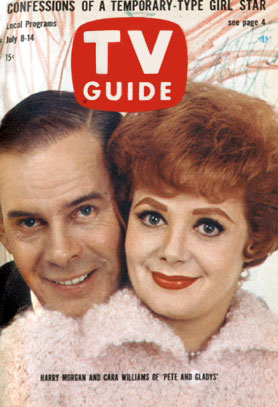
In the 1950s, one of the most popular sitcoms was December Bride starring Spring Byington. For five seasons, Henry Morgan, insurance salesman, played her next-door neighbor Pete Porter.
The show was cancelled in 1959, and in 1960 Pete showed up on the air again in a spin-off show titled “Pete and Gladys. He had often referred to his wife on December Bride, but we never got to meet her in person. Cara Williams took on the role of scatterbrained, but beautiful, Gladys. Like December Bride, this show was created by Parke Levy. Harry Morgan said Parke Levy was a very kind and knowledgeable man; he was one of the pioneers of sitcoms.
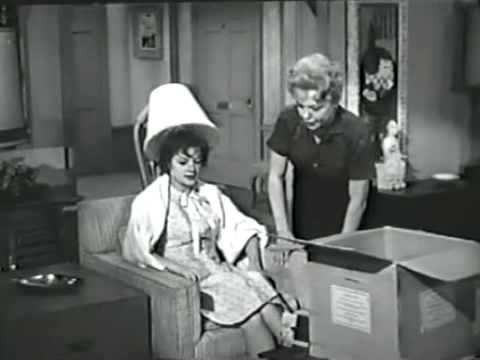
Cara Williams and Verna Felton–Photo: youtube.com
Verna Felton as Hilda Crocker also moved to the new show. Frances Rafferty who had played Ruth on December Bride also shows up on Pete and Gladys, but she is Nancy on the new show. For some reason, producers think we won’t notice missing characters but on December Bride, Pete had a baby daughter named Linda. However, she does not exist in the spinoff. We also get to know Pete’s uncle played by Gale Gordon and Gladys’s best friend Alice (Barbara Stuart). Morgan said not only was Gordon a great actor, but he was a very funny man.
Gale Gordon and Williams–Photo: youtube.com
Pete who worked for Springer, Slocum, and Klever which sounded more like a shoddy law firm than an insurance company. He and Gladys Hooper had eloped nine years earlier. Pete told Gladys he had single-handedly capture a Japanese patrol, although it later came to light that he spent his military career as a clerk in the PX. Gladys was a housewife and kept busy as entertainment chair of the Junior Matron’s League of the Children’s Hospital and a member of the Westwood Bowling League.
Harry Morgan, Williams and Felton–Photo: dailymotion.com
While December Bride was in the top ten for four of its five years, Pete and Gladys never reached those numbers. Williams was nominated for an Emmy for Leading Actress in a Comedy although she lost to Shirley Booth from Hazel. The show only lasted two years. Whether a blessing or a curse, the show took over I Love Lucy’s spot on Monday nights and viewers probably could not help comparing the two shows. Director James V. Kern moved from Lucy to this show along with writers Bob Schiller and Bob Weiskopf.
Morgan, Williams, and Felton–Photo: sitcomsonline.com
However, for a two-year show, the number of guest stars was pretty impressive. Watching the show you can catch Jack Albertson, Morey Amsterdam, Bea Benaderet, Whitney Blake, Frank Cady, Richard Deacon, Donna Douglas, Sterling Holloway, Ron Howard, Ted Night, Nancy Kulp, Charles Lane, Howard McNear, Cesar Romero, and Reta Shaw. Morgan said that the guest stars got an exorbitant amount of money compared to the regular cast.
Morgan said Cara Williams was very talented, but she was not easy to work with. Often, they had different ideas about how a scene should go. She had a strong personality and was sometimes described as self-centered. Morgan said he admired her even though filming wasn’t always done smoothly. He recalled one time that she was demanding something and director Jack Arnold was tired of arguing, so he laid on the floor on his back, yelled, “Roll ‘em”, and when the scene sounded done, yelled “Cut.” Then he got up and left which was his way of answering her.
Morgan and Williams–Photo: nostalgiacentral.com
Not surprisingly, Morgan said he enjoyed his time on December Bride more than on Pete and Gladys, and he thought the former was the better show. However, if you take some time to watch December Bride, you might want to check out a few episodes of Pete and Gladys just to meet the woman Pete was always complaining about. Unfortunately, both were listed on Amazon, but neither one was currently available. I did see a December Bride DVD on etsy for a whopping $170. I do remember Pete and Gladys in syndication when I was younger, but I have never seen December Bride on a network schedule. YouTube does have a number of episodes for both series, but be warned, some of the December Bride episodes have been colorized.
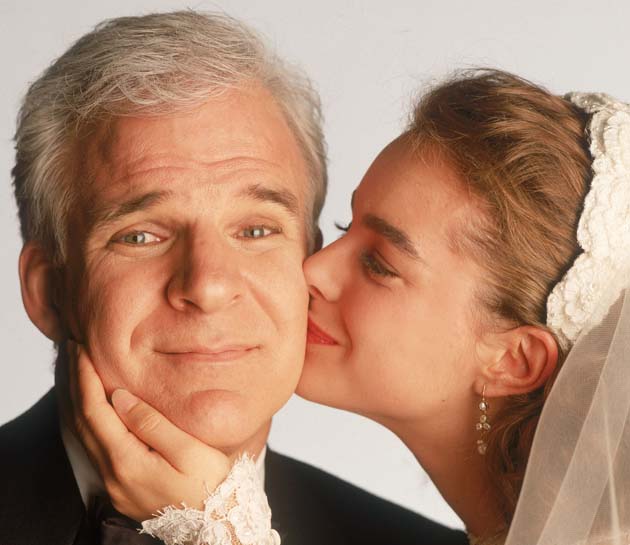
We’re continuing our blog series, “The Movie Came First.” Today we get to learn more about Father of the Bride. Whether you gravitate to Elizabeth Taylor and Spencer Tracy in the original movie or Kimberly Williams-Paisley and Steve Martin in the remake, you might have enjoyed the television show which aired in 1961. All three versions feature a father whose daughter is getting married, as he deals with the emotional pain of losing her, the financial reparations, and the disorganized turmoil that goes into planning the wedding.
The movie starred Elizabeth Taylor as Kay Banks with Spencer Tracy and Joan Bennett as her parents, Ellie and Stanley. Her fiancé Buckley Dunstan is portrayed by Don Taylor and his parents are Billie Burke and Moroni Olsen as Doris and Herbert. The film was nominated for Academy Awards for Best Actor in a Leading Role (William Holden won for Sunset Boulevard), Best Picture (All About Eve was the winner), and Best Writing, Screenplay (also Sunset Boulevard as winner).
Stanley narrates his feelings and perspectives throughout the film. For example, he talks about losing his daughter: “Who giveth this woman? This woman. But she’s not a woman. She’s still a child. And she’s leaving us. What’s it going to be like to come home and not find her? Not to hear her voice calling “Hi Pops” as I come in? I suddenly realized what I was doing. I was giving up Kay. Something inside me began to hurt.”
Photo: hulu.com
He also shares his thoughts on weddings: “I would like to say a few words about weddings. I’ve just been through one. Not my own. My daughter’s. Someday in the far future I may be able to remember it with tender indulgence, but not now. I always used to think that marriages were a simple affair. Boy meets girl. Fall in love. They get married. Have babies. Eventually the babies grow up and meet other babies. They fall in love. Get married. Have babies. And so on and on and on. Looked at that way, it’s not only simple, it’s downright monotonous. But I was wrong.”
Photo: wikipedia.com
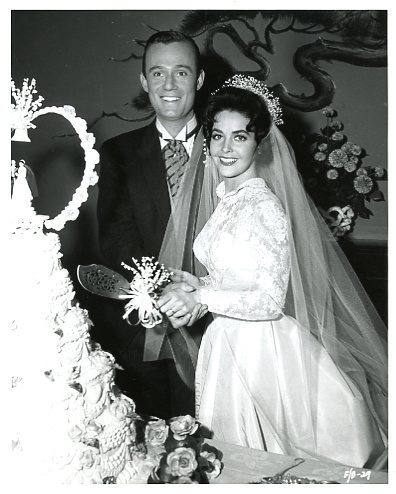
In 1961 the movie was reworked for the small screen, produced by MGM Television. The characters remained the same. In the tv version, Leon Ames was Stanley, Ruth Warrick was Ellie, Myrna Fahey was Kay, Burt Metcalfe was Buckley, Ransom Sherman was Herbert, and Lurene Tuttle was Doris. We also see Ruby Dandridge cast as their housekeeper Delilah and Rickie Sorenson as Tommy, Kay’s little brother.
The first shows in season one featured an animated cupid holding a magic wand to start the show, but the season transitioned into a photo of the entire cast gathered on the Banks’ staircase.
Photo: youtube.com
The sponsors of the show were Campbell’s Soups and General Mills.
I was surprised to see that there were 24 writers but then in looking through the episodes, the majority of the shows mirrored the movie so closely it was more of rewriting than writing.
Photo: blogspot.com
The show aired on Friday nights and its competition was The Dinah Shore Show and 77 Sunset Strip. I would have thought given the adult themes of 77 Sunset Strip, this show would be a popular family show to watch. However, the ratings must not have been very good, because it was cancelled after one season. Not many of the shows debuting this fall even lasted the season. In addition to Father of the Bride, the following shows were cancelled: The Bob Cummings Show, The Hathaways, Holiday Lodge, Ichabod and Me, Margie, Mrs. G Goes to College, Oh, Those Bells, One Happy Family, Room for One More, and Window on Main Street. The successful season debuts included Car 54 Where Are You?, The Dick Van Dyke Show, Mr. Ed, Hazel, The Lucy Show, and The Joey Bishop Show.
Photo: amazon.com
YouTube has the opening credits, but I could not find anywhere to watch episodes of this show. I guess my recommendation would be to forget about the show and watch the 1950 or 1991 movie version. I’m not often a fan of reboots of movies, but I love the Steve Martin-Diane Keaton version of this movie, so both films are great choices. Better yet, watch them both and then choose your favorite.


















 thewritelife61