Jess Oppenheimer: The Brains Behind I Love Lucy

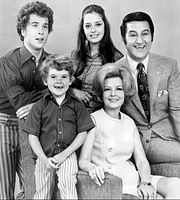
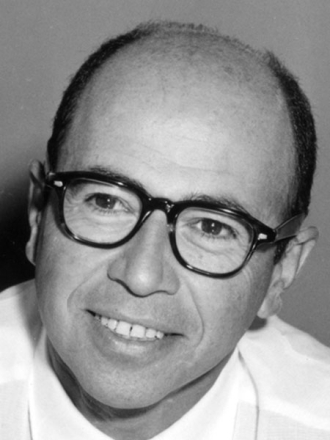
As we are learning all about Lucille Ball and her shows this first month of 2025, the month would not be complete without getting to know Jess Oppenheimer, the man Lucy called “the brains” behind I Love Lucy. He was also the producer and head writer of the show. Director William Asher said “he was the field general. Jess presided over all the meetings and ran the whole show. He was very sharp.”
📷televisionacademy.com

Oppenheimer was born in San Francisco in 1913. He took part in a study of gifted children in Stanford Professor Lewis Terman’s project. Ironically, one of Terman’s quotes about Jess was that he “could detect no signs of a sense of humor.” Jess’s father James owned the largest luggage store in San Francisco, but he died in an accident when Jess was 16.

Oppenheimer went on to attend Stanford in the 1930s. He started to spend a lot of his free time at radio station KFRC and performed in a comedy sketch he wrote for the show “Blue Monday Jamboree.”

In 1936 he moved to Hollywood and was hired as a writer on Fred Astaire’s radio show. He later went to work for Jack Benny as well as Edgar Bergen and Charlie McCarthy, George Burns and Gracie Allen, Bing Crosby, Marlene Dietrich, Judy Garland, Bob Hope, and Ginger Rogers.

When World War II began, Oppenheimer joined the US Coast Guard where he met Jack Dempsey and Cesar Romero. While he was there, he was diagnosed with double vision which had bothered him his entire life but had never been addressed.

Agent Ray Stark was Fanny Brice’s son-in-law and later Stark recruited him to write for her Baby Snooks Show based on his reputation in the Coast Guard.

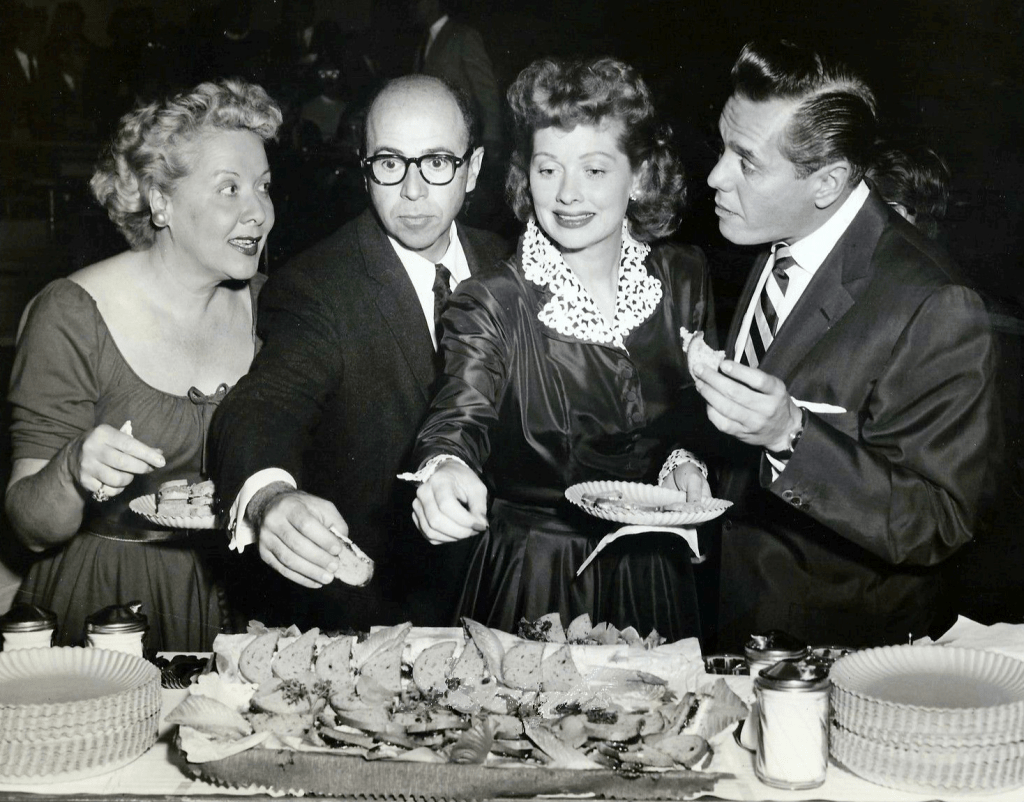
In 1942, Oppenheimer met Estelle Weiss, an employee of Wallichs Music City. They married in 1947 and were together for the rest of his life.
📷wikipedia.com

In 1948, CBS hired Oppenheimer to write a script for a new radio show, “My Favorite Husband.” Several of the scripts portrayed the wife, played by Lucille Ball, as a sophisticated socialite. When Jess added slapstick comedy and transitioned her to a childlike, impulsive, naïve wife, the show was a big success.

In 1950, CBS moved the show to television to star Lucy and her real-life husband Desi Arnaz. Lucy demanded that Oppenheimer stay in charge. Jess suggested doing a show “about a middle-class working stiff who works very hard at his job as a bandleader and likes nothing better than to come home at night and relax with this wife who doesn’t like staying home and is dying to get into show business.” He suggested the title “I Love Lucy.”

For the first five seasons, Oppenheimer was the producer and head writer, with help from Madelyn Pugh and Bob Carroll Jr. as other writers. As part of his contract, Oppenheimer received 20% of the ownership in the show. He gave Pugh and Carroll each 5% of that amount.

A wannabe actor, Oppenheimer appeared on I Love Lucy in two episodes. In #6, “The Audition,” he was one of three TV executives who audition Desi and in #127, “The Tour,” he walks in front of the bus before Ethel and Lucy board it. In one of the more famous episodes, #30, “Lucy Does a TV Commercial,” Jess is the voice that tells Lucy to go ahead and begin her commercial.

📷

In 1956, Oppenheimer moved to NBC where he became a producer of special shows.

During the sixties, Oppenheimer created and produced three other sitcoms. In 1960 he worked with Annie Farge and Marshall Thompson on Angel; in 1963 with Glynis Johns on Glynis, and with Debbie Reynolds on The Debbie Reynolds Show. He also was listed as writer, producer, and director for the 1967 season of Get Smart.

Oppenheimer received two Emmys and seven nominations. His Emmys were for Producer for Best Situation Comedy, I Love Lucy, in 1953 and 1954. He was also nominated for Producer for Best Situation Comedy, I Love Lucy, in 1952 and 1955; for Best Comedy Writer, I Love Lucy, in 1955 and 1956; for Best Single Program of the Year, General Motors 50th Anniversary Show in 1958; Program of the Year, The Danny Kaye Show with Lucille Ball in 1963; and Outstanding Program Achievement in Humor, The Danny Kaye Show with Lucille Ball in 1963.

He was also an inventor with 18 patents. One of his inventions was an in-the-lens teleprompter.

In 1962, Lucille Ball brought a new sitcom to television; however, Oppenheimer sued the show, claiming that Lucy Carmichael was Lucy Ricardo, his character, He received a financial settlement, and the character was changed, but unfortunately, it ruined the friendship between Oppenheimer and Ball.

The Oppenheimer family lived on Burlingame Avenue in Los Angeles. In a funny twist, Jess bought the house from MGM hairstylist Sydney Guilaroff; he was the person who turned Ball into a redhead for the 1943 movie, DuBarry was a Lady.

📷instagram

Jess’s best friends were Mel Blanc, Hans Conried, and Jerry Hausner, who had played Ricky’s agent on I Love Lucy.

In 1988, Oppenheimer had an intestinal surgery; he died shortly after from heart failure. At his death, Lucille Ball said he was “a true genius” and said that “she owed so much to his creativity and his friendship.”

I love hearing stories about people like Jess Oppenheimer and Sheldon Leonard who are creative geniuses and are the influence and inspiration for so many of the classic television shows.

Supertrain: The Show That Derailed Before It Got Going

📷letsgetoutofhere.com

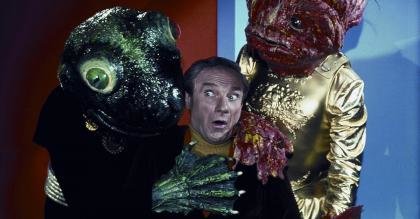
We are winding up our series, Casting Celebrities. This month we have looked at several shows that relied on stars for their characters every week. We’ve checked out Love American Style, Fantasy Island, and The Love Boat. If you don’t remember today’s show, don’t beat yourself up about it. It was on the air for less than three months. That said, they still had a lot of stars show up. While Love American Style had 109 episodes, Fantasy Island claims 154, and The Love Boat includes 250, this show had 9!

Supertrain debuted on NBC in February of 1979. Here is part of the problem: it was described as a science fiction-adventure-drama. Sounds like a show that isn’t sure what it is.

📷imdb.com

Instead of an exotic island or a cruise ship, this show takes place aboard a nuclear-powered high-speed super train. However, it might as well have been a cruise ship. You could swim in the pool, go to the gym, or the library. There was plenty of shopping and nightlife including a discotheque. It ran between New York City and Los Angeles, with stops in Chicago, Denver, and for some strange reason, a fictional town of Desert Junction in Texas.

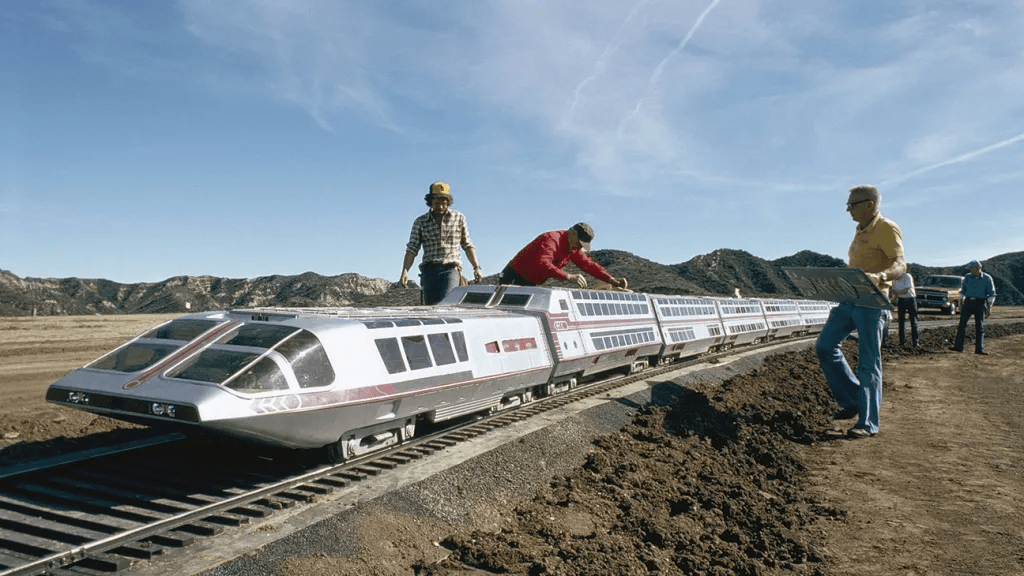
Problem number two for the show: it was the most expensive series to be produced at that time. NBC paid $10 million for three trains. There was a full-size train with passenger cars and two model trains for exterior shots.

Ned Parsons was brought on as art director to build the train. Parsons moved from his home in Newport Beach to the MGM studio lot for three months. He was on call 24 hours a day, supervising 200 construction workers who covered three shifts. The costs to do this averaged $60,000 a day for building materials. The lumber used for the set could have built 22 homes.

📷thehollywoodreporter.com

Before the show even aired, it was reported that the network had spent $12 million dollars. And despite the high cost of the train, there were a lot of complaints about it being unattractive and unrealistic. It was described as dark and dingy; one article said it was more of a superbus than a supertrain. Although they publicized this train as a high-speed one, viewers asked if it goes 200 mph, why does it take so long to go from New York to Los Angeles?

Problem number three: it was heavily advertised but received poor reviews and low ratings. More people tuned in to watch a 2-hour episode of Charlie’s Angels than the 2-hour debut of this show.

Problem number four: to help the quality and ratings, the producer was replaced, the cast was cut in half and some of them switched jobs, and it became more of a sitcom , and it was moved from Wednesdays to Saturdays. What? Remember this show only lasted nine episodes.

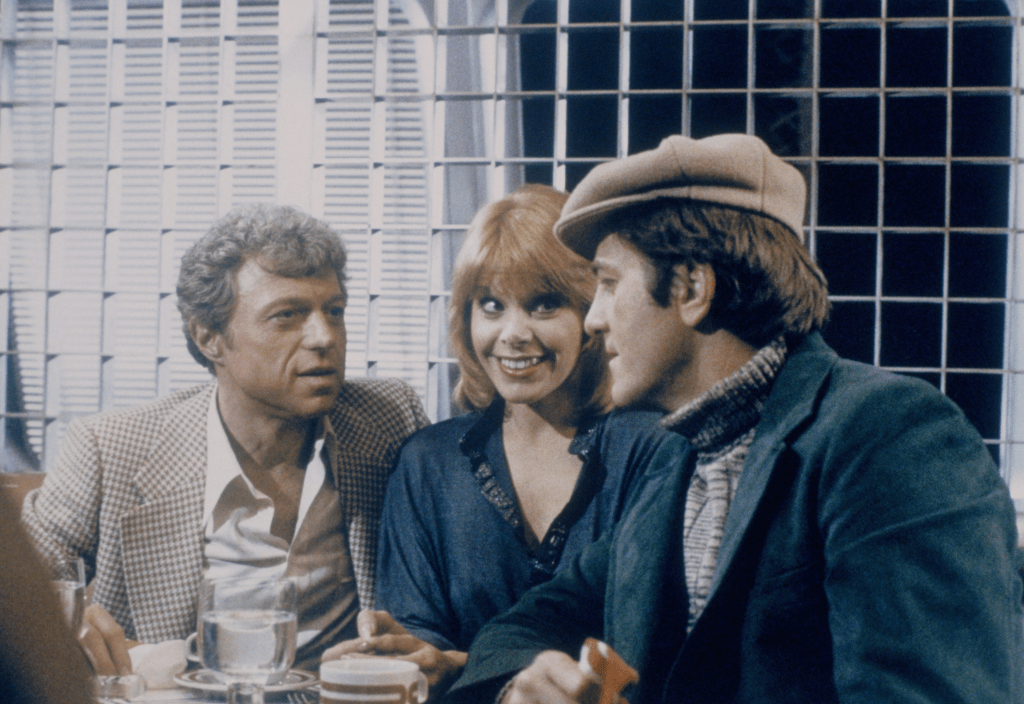
Once the cast shake up took place, five remaining characters were left. Dr. Dan Lewis (Robert Alda), nurse Rose Casey (Nita Talbot), conductor Harry Flood (Edward Andrews), relations officer Dave Noonan (Patrick Collins), and chief porter George Boone (Harrison Page).  Seems like an experienced and quality cast, so I don’t think any of the blame falls on them.

The BBC bought the show for $25,000 an episode before it was shown on American television. Their plan was to begin airing the show in the fall of 1979, but remember by May of 1979 the show was off the network so BBC never aired any of the episodes.

One bright spot coming through the tunnel for the show was the music, with the exception of the second theme song which was listed as blah. Bob Cobert provided the primarily disco music. Cobert won an Emmy for his music in War and Remembrance.

Supertrain has been called one of the greatest television flops ever and that’s not an exaggeration. Here are a few of the reactions critics had to the show in 1979. A Variety review said “it’s a Love Boat on wheels which has yet to get on track.”

📷imdb.com

TV Guide reviewer Robert MacKenzie said that “in the long two-hour premiere, Steve Lawrence was a talent agent and gambling addict in debt to a gangster named Big Ed. Aboard the Supertrain, someone kept trying to put Lawrence away by planting a suitcase bomb in his room, dumping him into a pool when he was unconscious, and locking him in a steam room with friend Don Meredith. Our attention was called to several suspects . . . sometime in the second hour I wanted to get off and catch a bus home.”

Telefilm Review shared that “NBC’s highly promoted show Supertrain features a slick new train of tomorrow, with a script from yesterday . . . it seeks to overwhelm but underwhelms instead.”

Nothing I read gives me any reason to contradict any of these reviews. One fun story I could take away from this debacle was building the train and then what happened to such a behemoth and the model trains? We know one of the model trains crashed and was ruined during the show’s production. Were the others scrapped to recoup at least a small cost? Nope.

📷theherald-mail.com

According to a Herald-Mail article from July of 2018, Ben Thoburn went to Hagerstown to pick up a jukebox he purchased and saw an old train in the guy’s barn. It was much bigger than a typical model railroad set. Plexiglass served as windows and it had a futuristic design.

Thoburn bought the train and then set about researching it. Jack Morrissey was a LA film producer who bought the train from Thoburn.  According to Thoburn, NBC sold the model train to a manufacturer in Philadelphia. When the company went bankrupt (maybe the train is cursed), the train was left in its headquarters. A cabinet maker eventually bought the building and sold the train to the man Thorburn bought it from. Because some other items were stacked on some of the cars, there was a little bit of damage. Morissey didn’t have specific plans for the train; he just wanted a piece of television history. At least something good was salvaged from this otherwise not-good show.

📷losangelestimes.com bill barty

While we are finished with our exploration of the four shows that featured stars in their casts, I did promise to provide one more fun fact. There are a lot of stars who were on Fantasy Island and The Love Boat. When you add in Love American Style, that number is still quite high. However, remember Supertrain was only one the air for nine episodes. So what stars appeared on all four of these series? Let’s find out.

elaine joyce

That roster includes eleven stars. None of the crew or staff appeared on all four shows. Regular cast members Edward Andrews and Nita Talbot both appeared on all four shows. Henry Jones shows up on all of them, but I do have a disclaimer that he was on The New Love American Style, a reboot that happened in 1985. We are left with Billy Barty, Hans Conried, Steve Franken, Elaine Joyce, Bernie Kopell, Roddy McDowell, Abe Vigoda, and Keenan Wynn as the remaining stars who can be found on all four shows. Equally as fascinating was the fact that Ron Delaney, Al Hansen, Disco Flo, Michael Minor, Chris Moriana, Bob Shaw, and Annie Starr only appeared on Supertrain and they have no other acting credits at all. Was their affiliation with the show so bad they quit acting? Who knows without a lot more research.
I hope you enjoyed learning more about these celebrity shows and learning which stars managed to get jobs on all four of these shows.

The Tony Randall Show: It May Have Been Judged Too Quickly

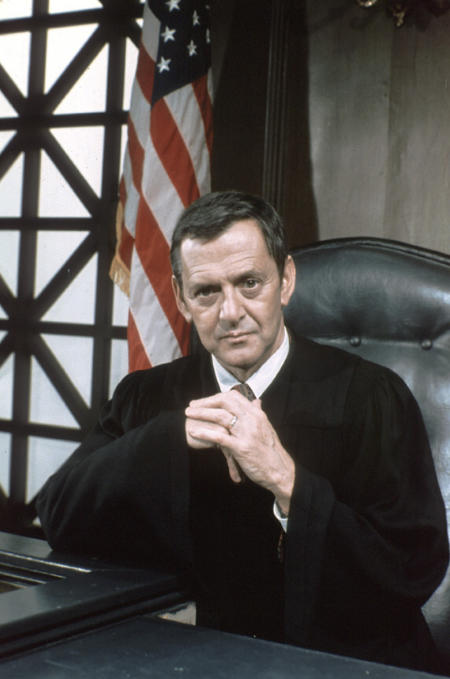
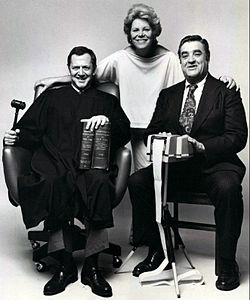
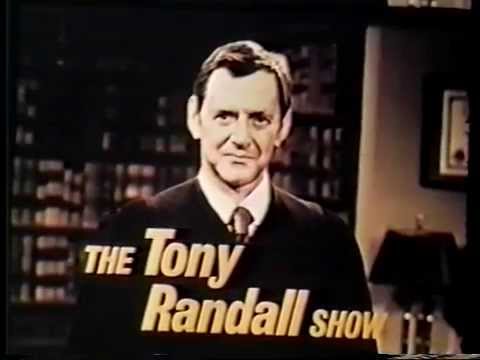
As we wind up our “Don’t Judge Me” blog series, today we’ve been sent to the bench to sit along side Judge Walter Franklin (Tony Randall) on The Tony Randall Show. Judge Franklin is a middle-aged, single-parent, widower living in Philadelphia. His extremely bright kids–teenage daughter Roberta (Devon Scott) and preteen son Oliver (Brad Savage) live with the judge, along with daffy housekeeper Bonnie (Rachel Roberts). At work we get to know his severe secretary “Miss” Janet Reubner (Allyn Ann McLerie), court reporter Jack Terwilliger (Barney Martin), and Mario Lanza (Zane Lasky), no not THAT Mario Lanza, but an overbearing assistant the judge does not care for. Judge Eleanor Cooper (Diana Muldaur) plays his co-worker and “lady friend.”

Photo: wikipedia.com

In the second season, Penny Peyser took over the role of Roberta, and Hans Conried joined the cast as Walter’s father. A lot of famous guest stars found themselves in front of the judge during the two years it was on the air. A handful of stars who appeared around Judge Franklin included Victor Buono, Beverly Garland, Michael Keaton, Hal Smith, David Ogden Stiers, and Dick Van Patten.

If this sounds a little bit like the concept of The Mary Tyler Moore Show where we see a professional at work and at home, that’s because The Tony Randall Show was produced by MTM Enterprises and created by Tom Patchett and Jay Tarses. This was the duo that produced The Bob Newhart Show a few years earlier.

Photo: tvdads.com

The Tony Randall Show debuted on ABC in 1976. When ABC cancelled the show, it was picked up by CBS for a second season. Surprisingly, the show was not cancelled by ABC for low ratings. The show was holding its own going up against Hawaii Five-0 and Best Sellers on Thursday nights. Apparently, Patchett and Tarses did not get along with Tony Randall.  Unfortunately, they did not get along with each other either, and on top of that, they refused to take calls from ABC president Fred Silverman. Tiring of the drama, Silverman ended the show. On CBS, the show moved to Saturday nights and was on at the same time as Operation Petticoat and The Bionic Woman. When CBS cancelled the show, it was done for good.

Photo: jacksonupperco.com

Reflecting on the show, Grant Tinker remembered “Tony was born to work in front of a live audience, and the writing was largely first rate. Ultimately, however, three strong egos could not live together. Since Tony was obviously essential, Tom and Jay retreated to their office and oversaw from a distance, giving two of MTM’s younger writers, Hugh Wilson and Gary David Goldberg their first chance to produce.” (Wilson would go on to create WKRP in Cincinnati and Goldberg would create Family Ties and Brooklyn Bridge.)

Photo: wikipedia.com

At least this turmoil produced some good results. Goldberg said from his time on The Tony Randall Show, he learned you need to hire good people and let them do their job, and that if you have to remind people you are the producer, you’re probably not a very good one.

Ken Levine discussed working with Randall in his blog from June of 2007 (kenlevine.blogspot.com/2007/06/working-with-tony-randall.html). According to Levine, Randall “was the consummate professional. Not only did he know all of his lines, he knew everyone else’s too. . . . I loved working with Tony Randall. Of course, it helped that he thought I was funny and that I didn’t smoke.”

Photo: imdb.com

Everyone seemed to enjoy working with Randall. In a Television Academy interview, Asaad Kelada, one of the directors for the show, described Randall as a “fascinating, erudite, funny man.” He talked about the way he warmed up an audience before the show with his stories. It must have been a fun set sometimes because Kelada said he used to wear a sweater over his shoulders, and it became his trademark. One day he said there was a bit of extra energy on the set, and he suddenly realized absolutely everyone on set from the cameramen to gophers to stars were wearing sweaters, blankets, or towels around their shoulders. The Television Academy also did interviews with Abby Singer, production manager for the show, and Hugh Wilson about his writing and producing. Singer said Randall was “a good guy.” When asked if the rumors that Randall was particular were true, he said “Yes, he was so particular it was unbelievable. You couldn’t even whisper when he was on the set, but he was a sweet guy.” Wilson backed their comments up, saying “It was super to work with Tony Randall. He was a vast library of show business information and very nice.”

Despite all the problems on the set, Randall was nominated for a Golden Globe for his role of Judge Franklin. He lost to Henry Winkler for Happy Days.

Photo: youtube.com

I could not find any official DVDs for The Tony Randall Show, but some of the episodes can be found online. It sounds like the show had all the right ingredients but either did not have enough time to find its true voice or appeared a bit too late in the 1970s at a time when things were changing in television programming. Anytime you can watch Tony Randall on the small screen (or the big screen for that matter) is a special opportunity.

Make Room for Daddy: The Show That Persevered

As we wind up our salute to fathers during Father’s Day month, we finish with Make Room for Daddy. This iconic show doesn’t get the respect that I Love Lucy did, but it is one of the first iconic family sitcoms. This sitcom had to survive cast changes, network moves, and ratings fluctuations.

Photo: famousfix.com

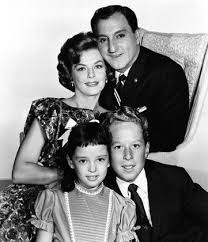
The show debuted on ABC in 1953. In 1957, it moved to CBS until 1964 when it went off the air. Danny Williams (Danny Thomas), a nightclub singer and comedian, tries to balance his work life with his family life. Danny obviously loves his children but is not an overly affectionate dad and is just as likely to tell his son Rusty, “I love you, you little jerk.”

In March of 1953, Thomas singed a contract for the show and picked Desilu Studios for filming because of their three-camera method. Several of the working titles for the show were “The Children’s Hour” and “Here Comes Daddy.”

The title of the show was from a Thomas family joke. Whenever Danny was away for work, his children had the run of the house. They slept in the master bedroom with their mother, even putting clothes in the dresser there, so when he came home from a tour or a filming, he told them it was time to spread out and “make room for daddy.”

Danny has three children (two in seasons 1-4 and three in seasons 5 and after): Terry (Sherry Jackson and later Penney Parker), Linda (Lelani Sorenson, then Angela Cartwright), and Rusty (Rusty Hamer). The first three seasons his wife Margaret was played by Jean Hagen. They had Terry and Rusty. Louise (Louise Beavers) was their maid. When Beavers passed away, Amanda Randolph took over the role. Terry was later played by Penney Parker. Mary Tyler Moore auditioned for the role, but Danny felt Mary’s nose did not match his as well as Parker’s.

Photo: en.wikipedia.org

The show was filmed live before 300 people, so there was a lot of pressure on the younger kids to know their lines. All three children continued in successful acting careers after the show. (Unfortunately, Hamer had a harder time finding good roles as an adult and committed suicide at 42. Cartwright left acting to focus on a career as a photographer.  Jackson continued acting.)

Photo: pureflix.com

With Danny Thomas’s connections, you can imagine the quality of guest stars this show was able to feature. Some of the bigger names include Lucille Ball, Milton Berle, Sammy Davis Jr., Jimmy Durante, Shirley Jones, and Dinah Shore. If you looked at a Who’s Who in Comedy Sitcoms, you would find a huge percentage of them on this show.

Like many shows from this era, the original sponsor was The American Tobacco Company, advertising its brands like Lucky Strike, Pall Mall, and Tareyton.

While the theme song went through variations during the run of the show, it was always a version of “Danny Boy.”

Photo: youtube.com

The show was popular and did well in the ratings but had not made the top 30 after three years. Jean Hagen decided to leave the show.

At the beginning of the fourth season, the title changed to The Danny Thomas Show. Thomas and producer Sheldon Leonard were trying to decide how to explain Hagen’s absence. Divorce was not acceptable and filling the same role with another actress didn’t seem like a good option either. They decided to have her die between seasons.

The emphasis of the show now switched to Danny being a widower. The family moved from their home to an apartment. Danny dated occasionally and almost got engaged to singer before learning she didn’t like children. The ratings were declining with the new format, so it was decided to have Danny marry again.

Mary Wickes played the role of Liz O’Neal, Danny’s press agent from 1955-1957.

Photo: jacksonupperco.com
Mary Wickes in the background

At the end of the 1957 season, Rusty becomes ill, and Danny hires Kathy O’Hara (Marjorie Lord) as his nurse. Kathy was a widow with a young girl (Lelani Sorenson). Danny and the kids both fall in love with her and they become engaged in the season finale. ABC cancelled the show, but CBS* was looking for a show to take over the spot of I Love Lucy which was ending its production, so they took it over and put it on the schedule for the fall of 1957.

The first episode of the fifth season “Lose Me in Las Vegas” centered on Danny and Kathy who had married an were on their honeymoon. Angela Cartwright took over the role of Kathy’s daughter from Sorenson. Danny adopted Linda. The family moved into a larger apartment. The ratings skyrocketed, and it was the number 2 show by the end of the season.

Photo: peoplequiz.com

Sherry Jackson decided to leave the show during season six, and her absence was explained by her going to a school in Paris. Jackson had a five-year contract which she honored. She and Hagen had been very close, and Jackson wanted to leave when Hagen did, but Hagen only had a three-year contract.

In season seven, Terry comes back, now played by Penney Parker. During the season she gets engaged and eventually marries Pat (Pat Harrington Jr.), a friend of Danny’s. Terry and Pat move to California and are rarely mentioned afterward.

Photo:closerweekly.com

Make Room for Daddy might have had the first spinoff of a character not in the cast. In one of the episodes from 1960, “Danny Meets Andy Griffith,” Danny is pulled over in Mayberry and is detained in the jail. Sheriff Andy Taylor is featured in the show, and The Andy Griffith Show was created.

“The Danny Thomas Show” (aka “Make Room for Daddy”) Pat Carroll, Sid Melton circa 1950s Photo by Gabi Rona

For the final two seasons, Danny and Kathy traveled for much of the series. They toured Europe while Rusty and Linda stayed home with Danny’s manager Charlie (Sid Melton) and his wife Bunny (Pat Carroll). Thomas decided to retire from the show in 1964. The show ended on a high note, still ranking number nine.

Photo: pinterest.com

Although the show ended in 1964, NBC brought back the main cast of Thomas, Lord, Cartwright, Hamer, Jackson, Randolph, and Hans Conried, Uncle Tonoose, to star in a two-hour reunion special, The Danny Thomas TV Family Reunion.  Having a reunion show was another first accomplished by this sitcom.

Photo: en.wikipedia.org

In 1969, CBS created their own reunion special, titled Make Room for Grandaddy. It had such high ratings that CBS put it on the schedule, but Thomas didn’t like the time slot and pulled the show.

In 1970, ABC tried again. Sherry Jackson again was Terry, but her husband now was Bill; what happened to Pat? Terry had a six-year-old son Michael (Michael Hughes) whom Terry left with Danny and Kathy (still played by Thomas and Lord) to join Bill, a soldier stationed overseas. The show only lasted one year. One of the reasons given was that Sheldon Leonard was no longer controlling the scripts and actors, and the show was moved from Wednesdays to Thursdays during the season.

The show was so popular with kids that a comic book series was developed.

Photo: pinterest.com

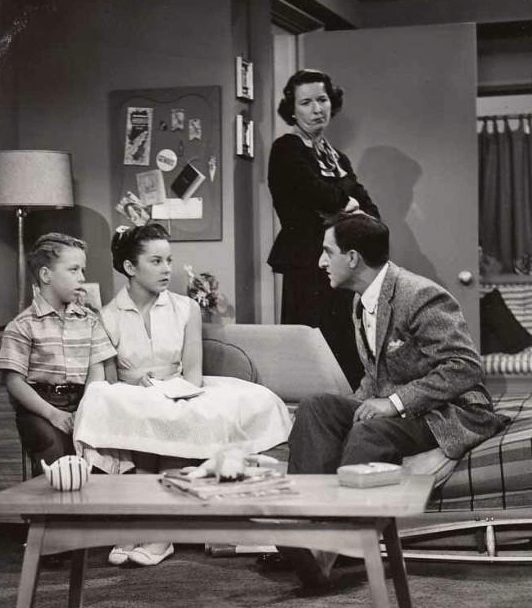
As I mentioned, this show does not get the credit it deserves. While Danny tended to be short-tempered and Kathy was the voice of reason, the scripts for the entire series were well written and realistic. It had an extremely talented cast. Unlike some series, the children really carried the show. The children acted like children, not mature adults, in most ways, but they created great characters and were very funny. Rusty always had a viewpoint on any given situation. Their moments are the ones that make this show so memorable. Many of the episodes center around the kids. A typical example is “Casanova Junior ” : Rusty hasn’t asked a girl to the school dance because he has no confidence. Danny gives him some pointers and now the girls are falling all over themselves to go out with Rusty. The only problem is Rusty, he’s gone from no confidence to treating the girls badly and Danny is not happy about it.

Photo: facebook.com

The show ended in the top ten. It created the first sitcom spinoff of a non-cast member and the first reunion movie. I specify “non-cast” member because December Bride included Pete Porter in its cast, and he talked about his wife Gladys. Later the show Pete and Gladys was created.

Despite the challenges it faced with cast members coming and going, the change from ABC to NBC, and the characters growing up on the show with changed the dynamics of the series, the show continued to garner great ratings and was given a second life in a new series in Make Room for Grandaddy. Along with The Donna Reed Show, it was one of the trend-setting family sitcoms from the 1950s and ’60s.

*Thanks to reader Howard Ian Stern for letting me know I originally had the wrong network listed.

Danger Will Robinson: Lost in Space Revisited

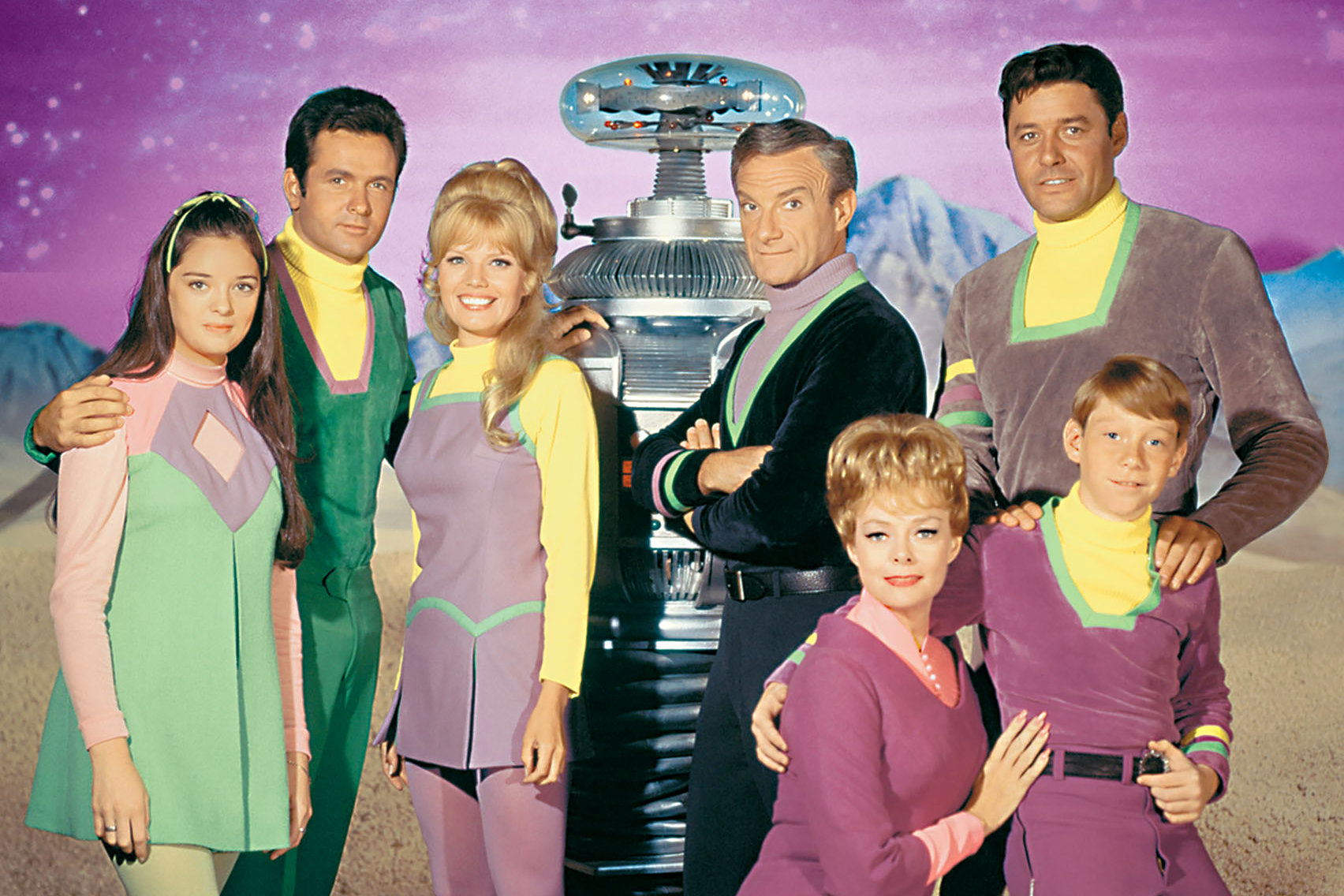
Airing in 1965, Lost in Space follows the travels of a family whose ship is off course, traveling through outer space. The show was on the air for three seasons, producing 84 episodes.

Photo: nytimes.com

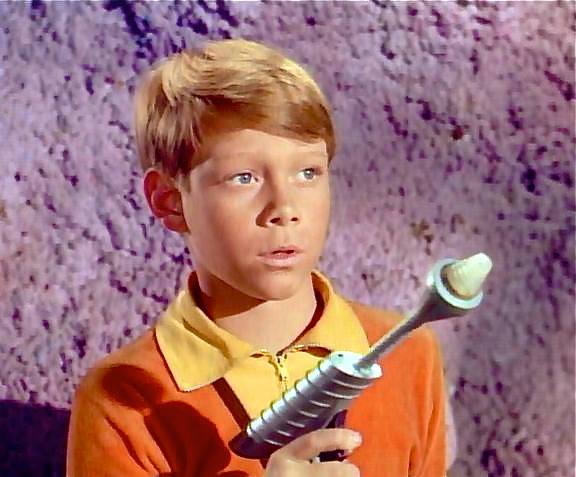
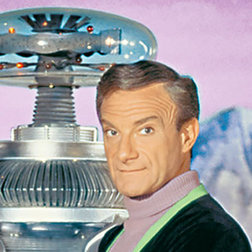
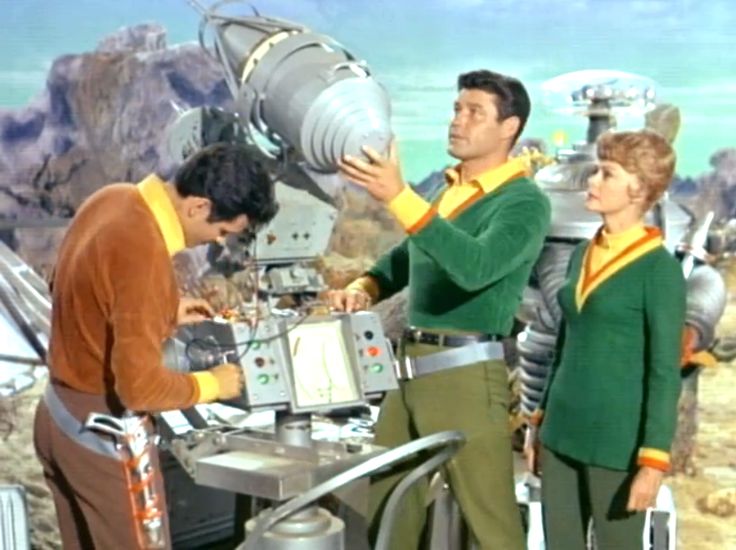
The premise of the show was that in 1997, earth becomes overpopulated. Professor John Robinson (Guy Williams); his wife Maureen (June Lockheart); and their kids, Judy (Marta Kristen), Penny (Angela Cartwright), and Will (Billy Mumy) are selected to go to the third planet in the Alpha Centauri star system to establish a new colony. Major Don West (Mark Goddard) is also accompanying them. Doctor Zachary Smith (Jonathan Harris) an enemy government agent is sent to sabotage the mission. He becomes trapped on the ship after he reprograms the robot (voiced by Dick Tufeld), altering the course for the spaceship, the Jupiter 2. The group is now lost and trying to find their way back home. During the course of the show, Smith becomes less sinister. It was no secret that the show was a science fiction version of Swiss Family Robinson.

The pilot, created by Irwin Allen, was titled “No Place to Hide.” A ship called the Gemini 12 was supposed to take a family on a 98-year journey to a new planet. When an asteroid knocks the shop off course, the family must try to find their way back. CBS bought the series, choosing Lost in Space over another new show, Star Trek. Dr. Smith and the Robinsons’ robot were added to the cast and the ship was renamed Jupiter 2.

Photo: fandom.com

Dr. Robinson was an astrophysicist who specialized in planetary geology. Williams who played the part was a well-known actor who had starred in the show Zorro. He thought his lead role would be a dramatic part, but the show became increasingly campy like Batman, and Williams’ role was more of a supporting character than a star. He was bitter about the turn of events and when the show was cancelled, he moved to Argentina where Zorro was popular and never acted again.

Photo: en.wikipedia.org

Maureen Robinson was also a doctor; she was a biochemist who also performed housewife duties such as preparing meals and tending the garden. Her chores were not too taxing though because the “auto-matic laundry” took seconds to clean, iron, fold, and package clothing in plastic bags. The dishwasher also did a load in seconds. In addition to the hydroponic garden maintained by Maureen, the crew had protein pills available that would substitute for food during emergencies. One fun fact I learned about Lockhart was that she had the largest parking spot on the 20th Century Fox lot because she often drove a 1923 Seagrave fire truck.

West was the pilot of the Jupiter 2 and the only crew member who could land the ship.

Photo: digitalvortex.info

Judy is the oldest child. Being the oldest, she was allowed a more glamorous wardrobe and hairstyle. There was always the undercurrent that she and West would get together. Penny is eleven and loves animals and classical music. She finds a pet similar to a chimpanzee which she named “Bloop.” Will is nine and the youngest member of the family, but he is a genius when it comes to electronics and computer technology.

Photo: pinterest.ca
Photo: tvdatabase.wiki.com

Dr. Smith is an expert in cybernetics. Carroll O’Connor, Jack Elam, and Victor Buono were all considered for the part of Dr. Smith. Smith was only supposed to be a guest star but became the best-loved character in the show. Harris rewrote many of his lines that he considered boring. He redefined his character as an attention-getting egoist with a flamboyant style and arrogant dialogue.

Photo: nytimes.com

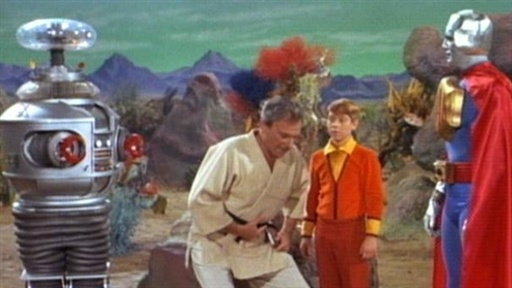
The Robot is an M-3, Model B9, General Utility Non-Theorizing Environmental Robot which had no name. It did have superhuman strength and weaponry that was futuristic in nature. It can display human characteristics such as laughter, sadness, and mockery.

Photo: denofgeek.com

The robot was designed by Robert Kinoshita. It cost $75,000 to produce and weighed more than 200 pounds. Kinoshita also designed Robby the Robot for the Forbidden Planet in 1956. The Lost in Space robot was a Burroughs B-205. It had a flashing light and large reel-to-reel tape drives. It could be seen in a variety of movies and television shows, including Voyage to the Bottom of the Sea (1964), Batman (1966), The Land of the Giants (1968), and Austin Powers: The Spy Who Shagged Me (1999).

A number of stars chose to appear on the show including Werner Klemperer, Kurt Russell, Wally Cox, Lyle Waggoner, Arte Johnson, Hans Conried, and Daniel J. Travanti.

The pilot and many shows from season one used Bernard Herrmann’s score from The Day the Earth Stood Still, a 1951 film. John Williams wrote the opening and closing themes for the show. Season three used a faster tempo version and the opening featured live action shots of the cast. The theme music is unforgettable, and although I haven’t seen the show since its original airing until recently, I immediately remembered the entire score.

Photo: friends-club.info

In season one, the ship crashes on an alien world, later identified as Priplanus. The crew spends most of the season on the planet, surviving many adventures. Most of the episodes emphasize the daily life of the Robinsons adjusting to their new conditions. The show was on Wednesday nights against The Adventures of Ozzie and Harriet and The Patty Duke Show on ABC and The Virginian on NBC.

Photo: pinterest.ca

In season two, the ship is repaired and launched into space. Priplanus is destroyed after a series of earthquakes. Eventually, the spaceship lands on another planet and is delayed there. The show became campier during this time because it was scheduled against Batman for a second year. Costumes were brighter and the show was filmed in color. Most of the plots featured outlandish villains. More emphasis was placed on Will, Dr. Smith, and the robot and serious science fiction was sacrificed. Like season one, each episode ended with a cliff hanger.

Photo: pinterest.com

Season three shows the Jupiter 2 travelling through space visiting a new setting on each episode. A space pod allows transportation between the ship and the planets they explore. Humor was still a mainstay of the show and the crew encountered space hippies, pirates, intergalactic zoos, and ice princesses. The cliff hanger disappeared, and the robot would show highlights from the upcoming episode before the closing credits. The show continued its slot on Wednesdays and was still on opposite The Virginian on NBC but also The Avengers on ABC

Photo: mightymega.com

The show was probably best known for its technology and futuristic props. The Jupiter 2 was a two-deck spacecraft, nuclear powered. It used “deutronium” for fuel. The crew slept in Murphy beds. A laboratory was also designed as part of the spaceship. The characters could travel between two levels by an electronic glide tube elevator or a ladder. The ship could be entered or exited through an airlock on the upper deck or landing struts on the lower deck.

Photo: pinterest.com

The crew traveled on the Chariot. It had six bucket seats for passengers, a radio transceiver, a public address system, a rack holding laser rifles, and interior spotlights.

The crew members could use a jet pack, the Bell Rocket Belt. The robot ran air and soil tests. He could detect threats with his scanner and produce a smoke screen for protection. He could understand speech and speak to the crew. He claimed he could read minds by translating thought waves back into words.

Photo: view.yahoo.com

One of the things Lost In Space is best remembered for is the catchphrase, “Danger Will Robinson.” What is funny is that it was only used one time in the series. Smith also had several lines he is remembered for: “Oh, the pain, the pain” and “Never fear, Smith is here” are two of them. He also was famous for his alliterative phrases such as “Bubble-headed booby,” “Cackling Cacophony,” “Tin-Plated Traitor,” “Blithering Blatherskyte,” and “Traitorous Transistorized Toad” which he used to insult the robot.

Photo: en.wikipedia.org

Lost in Space ranked in the top 35 shows all three seasons it was on the air (32nd, 35th, and 33rd respectively). It was ranked number three in the top five favorite new shows of 1965-66, along with The Big Valley, Get Smart, I Dream of Jeannie, and F-Troop. The show was nominated for an Emmy for Cinematography Special Photographic Effects in 1966 and for Achievement in Visual Arts & Make-up in 1968 but did not win either award.

Despite its good ratings, CBS Chairman William Paley hated the show and didn’t understand why it was popular. He instructed his executives to cancel it the minute its ratings dipped. Unfortunately, it was never able to air a finale.

Photo: metv.com

In the 1970s, Mumy wrote a script for a reunion movie. He arranged for the casting and had approval from 20th Century Fox and CBS. However, Allen who was worried that Mumy might be entitled to a copyright claim on the original, refused to even review the script. Without his okay, the reunion was never able to be filmed.

Lost in Space was successful in reruns and syndication. All three seasons are available on DVD. Like many science-fiction shows and movies from the 1960s, it was eerily predictive of technology and glaringly wrong at the same time. The show is campy, but I don’t mind that. Along with The Monkees and Batman, it seems to fit the times it was produced in.

Photo: lrmonline.com

Perhaps it’s not that bad that Mumy was not able to film the reunion. The show was made into a movie in 1998 which received poor reviews. Legendary Television has brought a reboot of the show to Netflix in 2018.  It is currently getting ready for its second season. It has not received the greatest reviews either. Lost in Space can be seen on Antenna TV on Saturday nights, so you might want to catch an episode or two this winter. Sometimes the real thing just can’t be duplicated.

Photo: pinterest.com

It’s The Professor and a Whole Lot of Other People: Russell Johnson and Guest Stars

johnson2

Russell Johnson was born in Pennsylvania in 1924. He had six siblings. His father died from pneumonia when Russ was only 8, and his youngest brother died the following year. He was sent to Girard College, a boarding school for fatherless boys located in Philadelphia. He struggled early in his education, being held back for a year. In high school he made the National Honor Society.
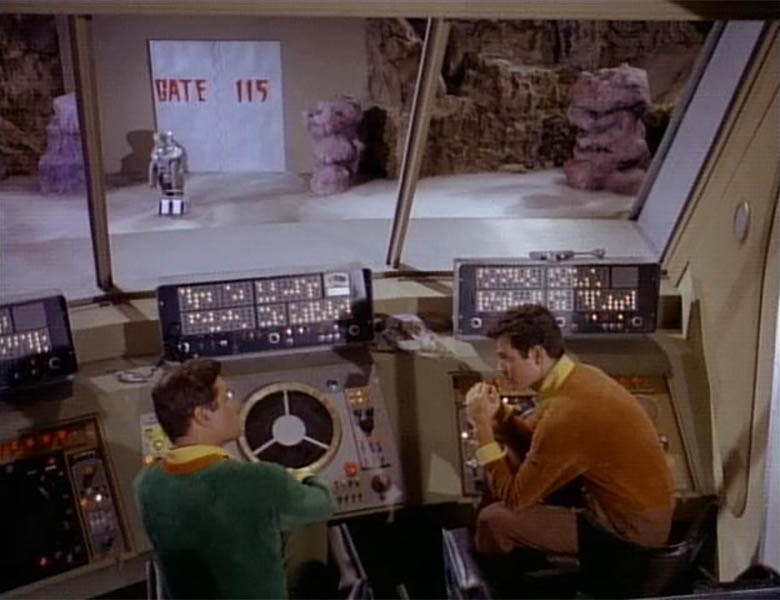
In 1943, he married Edith Cahoon. They would divorce in 1948.

During World War II, Johnson joined the Army Air Corps and received the Purple Heart after his plane was shot down in the Philippines in 1945. Johnson flew 44 combat missions in the Pacific Theater. Once the war was over, Russ used his GI Bill to enroll in the Actors’ Lab in Hollywood to study acting. While there he met Kay Cousins, and they married in 1949 and were married until her death in 1980.


johnson4movie

Johnson’s big-screen career began in 1952. He was a friend of Audie Murphy and would appear in three of his films in the early 1950s. He was in a variety of movies throughout the 1950s, mainly westerns and sci fi classics such as It Came from Outer Space.


johnson3

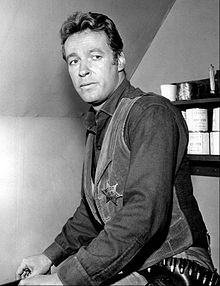
Russell began receiving roles on television in 1950. In the 1950s he would be seen on 28 different shows. In 1959 he was offered a role in a western, Black Saddle. Johnson was Marshal Gib Scott. The show was on for one season.


johnson1

During the 1960s, Russell’s television work increased, and he appeared on 39 series including The Twilight Zone, Route 66, Ben Casey, Laramie, 77 Sunset Strip, Outer Limits, and Big Valley. In 1964 he was offered the role of The Professor on Gilligan’s Island, replacing John Gabriel who was a teacher in the pilot. Roy Hinkley was a genius who made complex inventions from the simple materials he found on the island. As we have learned, most of the cast of Gilligan’s Island was typecast after the show was cancelled, and they had a hard time getting other roles. Johnson discussed this circumstance in a later interview: “It used to make me upset to be typecast as the Professor . . . but as the years have gone by, I’ve given in. I am the Professor, and that’s the way it is. . . Besides, the show went into syndication and parents are happy to have their children watch the reruns. No one gets hurt. There are no murders, no car crashes. Just good, plain, silly fun. It’s brought a lot of joy to people, and that’s not a bad legacy.”

gilligan11


Although he had trouble at first, he did go on to appear in 45 different shows from 1970-1997, including That Girl, Marcus Welby, Cannon, McMillan and Wife, Lou Grant, Bosom Buddies, Dallas, Fame, Newhart, ALF, and Roseanne. He had a recurring role on Owen Marshall, Counselor at Law from 1971-1973.

johnson1


In 1982, Russell married for a third time. He married Connie Dane, and they were married until his death from kidney failure in 2014.

In 1993, he published his memoirs, Here on Gilligan’s Isle.

gilligan9

Like so many of the tv icons in the 1960s—Barbara Eden, Adam West, Butch Patrick, David Cassidy, Maureen McCormick—Russell struggled with his alter ego, eventually accepting his role as the Professor. While being tied to one character for 50 years makes it tough to get the roles you want, it’s hard to be critical of a personality that gives such pleasure to decades of viewers and makes you a household name for half a century. Being given the chance to portray a character that America loves is a hazard of the business but is certainly better than never receiving a starring role.

You Never Know Who Might Show Up

With a show like Gilligan’s Island, you would assume it would be almost impossible to have guest stars. After all, they are on a deserted island. Except for the native people who might be living there, where would stars come from? Amazingly, Gilligan’s Island featured many guest stars over the years. Let’s look at a few of them.

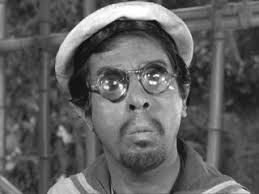
Vito Scotti appeared on four different episodes playing Dr. Boris Balinkoff, mad scientist, twice, a Japanese sailor, and a Japanese soldier who does not believe World War II is over.

vito


Mel Blanc could be heard portraying a parrot several times and a frog.

blanc


Hans Conried visited the island twice as Wrongway Feldman, an incompetent pilot who had crashed on the island years before.

conried


Kurt Russell was a modern-day Tarzan.

russell


Richard Kiel, a Russian agent, pretended to be a ghost to scare the castaways off the island so he could have the oil rights. When the cast turns the tables and acts like ghosts, he didn’t stick around long.

kiel


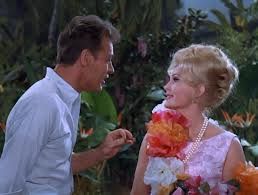
Zsa Zsa Gabor was a rich socialite who falls in love with the Professor.

gabor


Larry Storch is a robber hiding out on the island and pretending to be a doctor.

storch


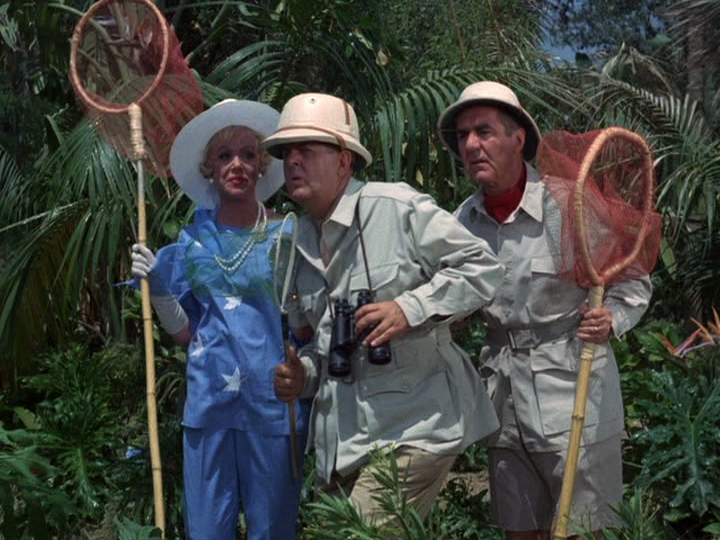
John McGiver was Lord Beasley Waterford, famous butterfly collector.

mcgiver


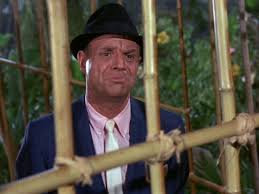
Don Rickles is con man Norbert Wiley who is hiding out on the island.  He kidnaps Mrs. Howell and later Ginger, planning on getting ransom for each castaway.  After the Professor puts him in jail, Ginger convinces them to let him out for a party.  Norbert steals jewelry and other items from the castaways and leaves the island.

rickles


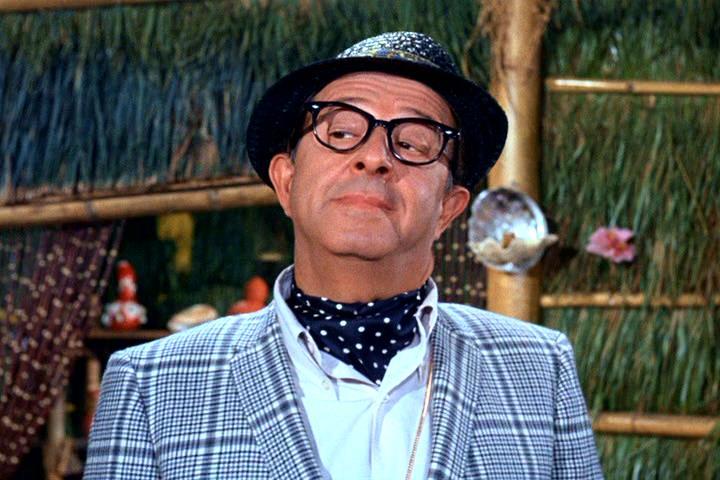
Phil Silvers crashes onto the island as Herbert Hecuba, arrogant movie producer. He orders everyone around like they’re his servants.  He is not impressed with Ginger’s acting ability, so the castaways write and perform a play to show off her talents. In the middle of the night, Hecuba takes off with their play, claiming it as his own back in the US.

silvers


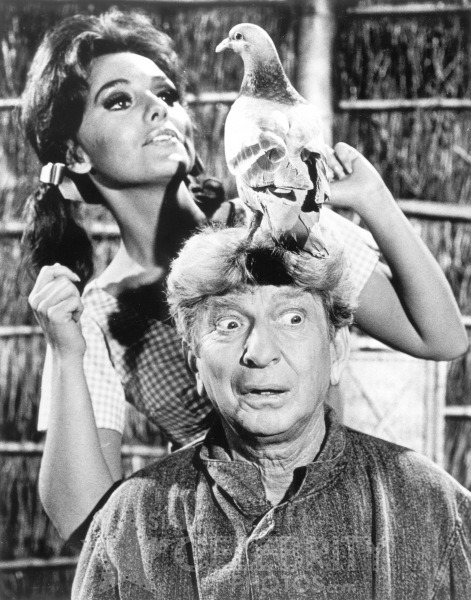
Sterling Holloway is an escapee from a prison and the owner of a pigeon. The Professor thinks he can get a message back to the States through the pigeon, but when Birdy finds out he is paroled, he sends the bird off first.

holloway

A variety of actors played natives on the show. In all, there were 54 guest stars given credit on the show.

In addition, Bob Denver, Tina Louise, and Jim Backus all had guest starring roles playing people who were look-alikes for Gilligan, Ginger, and Mr. Howell.

I guess it’s a good lesson to always keep up appearances because you never know who might show up when you’re stranded on an island.