Cimarron Strip: Steak, Anyone?

As we wind up our “Go West Young Man” blog series, we turn our attention to Cimarron Strip for the last blog of the series. This show was only on the air for one season, from 1967-68. It was produced by the creators of Gunsmoke, America’s most beloved western. Like The Virginian, it was a 90-minute show.

📷mubi.com

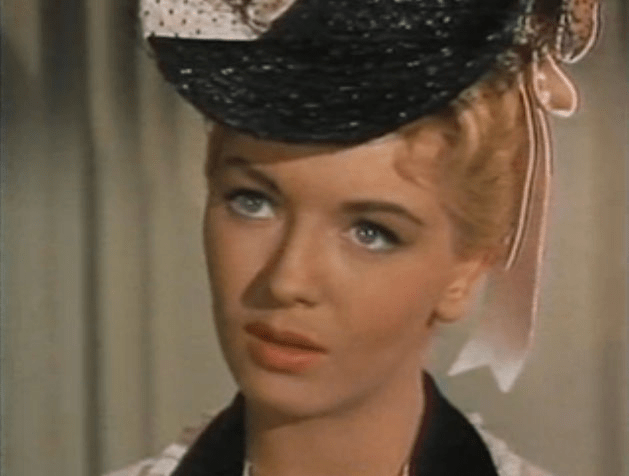
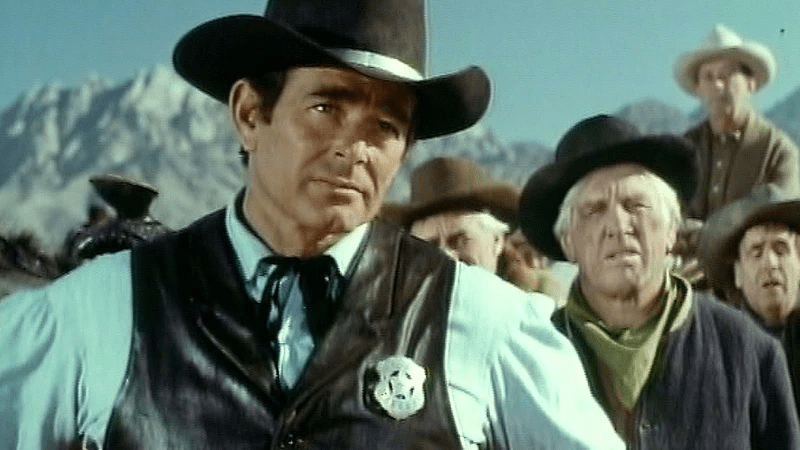
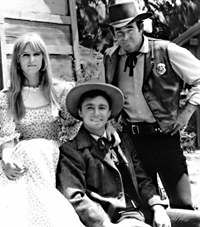
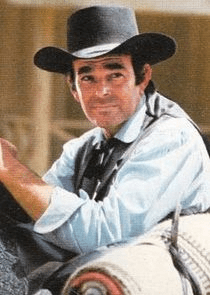
Set in the Oklahoma in 1890, the series occurred in a geographical region called No Man’s Land, an ungoverned area for several decades. Marshal Jim Crown (Stuart Whitman) tries to bring law and order there. Crown arrives only to learn that the sheriff has resigned, and it’s up to him to bring peace to the area with no Army support. We get to know Dulcey Coopersmith (Jill Townsend) who comes to live with her father, but upon her arrival, she discovers he is dead. Her father’s partner MacGregor (Percy Herbert) has let their Wayfarer’s Inn become a bit dilapidated, but Dulcey is determined to bring it back. Marshal Crown stayed there when he was in Cimarron City. Francis Wilde (Randy Boone) often served as Crown’s deputy.

📷pinterest.com

Rounding out the cast is the bartender at the Inn, Fabrizio (Jack Braddock); Major Covington at a nearby Army fort (Andrew Duggan); a Dr. Kihlgren (Karl Swenson); and Hardy Miller (Robert J. Wilke).

The show was on Thursday nights, up against Batman, The Flying Nun, and Bewitched on ABC. It faced Daniel Boone and Ironside on NBC. Definitely some tough competition.

The theme song was composed by Maurice Jarre, who was the scorer for the films Lawrence of Arabia and Doctor Zhivago for which he won two Oscars.

The show never attained the ratings numbers it needed to keep its place on the schedule. From what I have been able to find out, it was well written and well cast. Guest stars kept it interesting, and the scenery was beautifully filmed.

📷tvmaze.com

I’m guessing the main reason the show didn’t make it was just viewer fatigue with the western genre. There were already shows like Bonanza and Gunsmoke which were hugely popular. One more western might just have been one too many, no matter how good it was. In addition to the western series, some of the shows that were on the air when Cimarron Strip debuted included That Girl, Hogan’s Heroes, Mannix, Batman, Lost in Space, Get Smart, and Rowan and Martin’s Laugh In—very different choices than westerns. I do remember Arnold the pig on Green Acres always wanting to watch westerns on television. We still fall prey to this on the major three networks. After ER became popular, the next season featured ten new medical shows. And then most of them get cancelled, not necessarily because they’re bad but because it’s just an overload of medical shows.

Most people don’t want the same supper every night even if it’s steak or lasagna. That said, this seemed to be a steak kind of show, so just because it couldn’t survive the mass onslaught of westerns in the sixties doesn’t mean it’s not worth watching. If you check it out, let me know what you think.

The Virginian: Where Nobody Knows Your Name

As we get ready to “Go West Young Man,”  today our blog series is getting to know the The Virginian (which is sometimes confusing because it was renamed The Men from Shiloh later for part of the series). This series debuted on NBC in 1962. It produced 249 episodes, running until 1971, making it the third longest-running western (Gunsmoke and Bonanza were the top two).

📷wikipedia.com

Lew Wasserman was involved with Universal, and they produced Wagon Train which was on NBC. Universal sold the series to ABC in 1962 after it had been on the air for three years, and NBC was not happy, but Wasserman told them that he had a new show for them, The Virginian.

It was also the first 90-minute western. Like Stagecoach West, it was set in the Wyoming Territory. While the pilot was black and white, the rest of the series was filmed in color.

The series was based on an Owen Wister novel, The Virginian: Horseman of the Plains which was published in 1902.

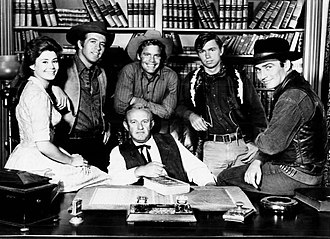
The series featured a foreman at the Shiloh Ranch near Medicine Bow played by James Drury. The foreman was never referred to by his name. Drury once said, “Nobody knows the name of my character, not even me.” His sidekick was Trampas (Doug McClure). Sheriff Abbott (Ross Elliott) also shows up on and off throughout the nine seasons. For the first four seasons, the ranch owner, Judge Henry Garth (Lee J. Cobb) and his daughter Betsy (Roberta Shore) also live there. The cast changed fairly often throughout the series, but Drury and McClure were along for the entire ride.

📷ebay.com

The plots of the show often revolve around themes of prejudice, injustice, being a responsible and hard worker, and standing up for the right thing.

During the final season, the show changed its title, and the series changed quite a bit. There was a new theme song, and it took on more of the character of the popular spaghetti westerns. Stewart Granger and Lee Majors joined the cast. While the ratings increased, the network was intent on cancelling the show, along with the rural purge that happened at that time.

Later when the show was no longer on the air, Drury discussed two of his castmates, one he admired and considered a friend and one he did not! About Grainger who joined the show for the last year, Drury said, “He was a disaster, and I couldn’t stand him. He wanted everything changed to make him the star of the show.  . . . He also fired the whole camera crew and hired a new crew for his episodes.” However, on reflecting about his co-star Doug McClure, Drury recalled “off-screen Doug was quite like his character, and you couldn’t help but smile when he walked into a room because he was full of good humor and good spirits all the time. He could cheer anybody up. He became my best friend, and I still miss him terribly—you couldn’t ask for a better co-star.”

As you can imagine, being on the air for nine years meant a lot of guest stars showed up on the series, including Eddie Albert, Charles Bronson, Robert Culp, Joan Crawford, Bette Davis, Patty Duke, Robert Duvall, Harrison Ford, Jack Lord, Lee Marvin, Vera Miles, Leonard Nimoy, Ryan O’Neal, Robert Redford, George C. Scott, William Shatner and Franchot Tone.

📷facebook.com

The Virginian was on Wednesday nights for its entire run. When it began, it was up against Wagon Train on ABC while CBS ran CBS Reports and The Many Loves of Dobie Gillis. Both The Virginian and Wagon Train managed to hit the top thirty that year. The next year, its biggest competition was The Adventures of Ozzie and Harriet followed by The Patty Duke Show. The Nelsons hit the top thirty and The Virginian and The Patty Duke Show were in the top twenty. The show continued to be in the top twenty or top thirty for the rest of its run, hitting the top ten in 1966, despite being on at the same time as many popular sitcoms during those years, including Batman, The Beverly Hillbillies, The Courtship of Eddie’s Father, Gomer Pyle USMC, Lost in Space, Mister Ed, and My Living Doll. It was still in the top twenty when it was canceled.

This show is fondly remembered by viewers who tuned it at the time. It’s been in syndication for decades, racking up new generations of fans. In one of his later interviews, Drury talked about the appeal of the show. He said, “People now tell me about their grandkids who discover the show on cable and start watching it. It’s a wonderful feeling to know the show is still viable after all these years.” That alone is reason to be proud of working on this show.

My World . . . And Welcome To It: Just a Fantasy

This month we are in the midst of What in the World? Every sitcom has the word “world” in it. On deck today is My World . . . and Welcome to It. This half-hour show was based on the cartoons of James Thurber. It debuted in 1969 and was on the air for a year.

📷martin crookall- wordpress.com

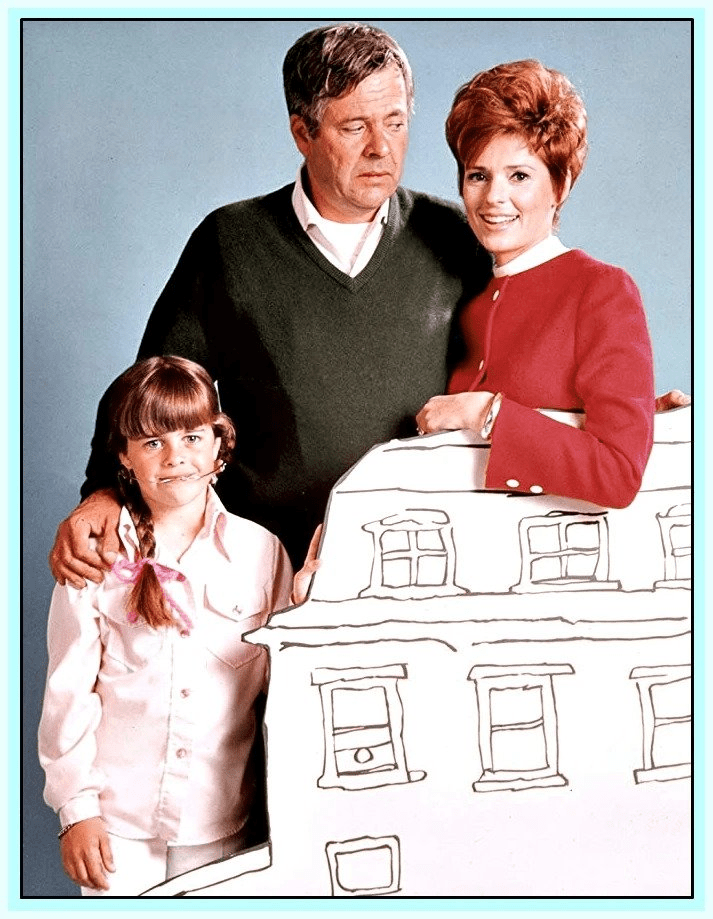
William Windom played John Monroe a cartoonist who works for a magazine similar to the New Yorker called The Manhattanite. Monroe lives with his wife Ellen (Joan Hotchkis) and their daughter Lydia (Lisa Gerritsen). John often daydreams about his daughter’s future and the “older” Lydias were played by Talia Shire and Cindy Williams.

The name John Monroe was Thurber’s alto-ego in his book Owl in the Attic. He frequently daydreams and those are cleverly incorporated into the series.

The episodes opened with John observing different aspects of his life. The use of the cartoons created a fantasy life dream world where he escaped life situations he could not process.

Mel Shavelson created the show for NBC. He wrote and directed the pilot with one of my all-time favorites Sheldon Leonard as executive producer. The animation in the series was done by DePattie-Freleng Enterprises.

Rounding out the cast was Henry Morgan as Philip Jensen, a magazine writer based on Robert Benchley and Harold J. Stone as editor Hamilton.

📷moviedatabase.com

The show was on Monday nights at 7:30 and was up against Gunsmoke. While it had a lot of great reviews from the critics, the viewers were not there in droves. Percy Shain of the Boston Globe referred to the show as “a joy and treasure.” Bob Williams of the New York Post wrote that it was “it’s warm, it’s witty, and it’s a sophisticated cut above the best of the TV network situation comedies.”

Not every critic treated it so kindly, however. Jack Gould of the New York Times felt it was “hackneyed gibberish relieved only by an occasional Thurber drawing” and Norman Mark of the Chicago Daily News decided that it “tried to appeal to all parts of the TV audience and failed.”

Perhaps Barry Harrison of the Washington Evening Star understood the show better than the other critics and had “an uneasy feeling [that] it is not long for TV.” His prediction came true when the series was canceled after one season.

According to Howard Anderson Jr. in his Television Academy interview, one of the major reasons for the cancellation was that it was so expensive to do the filming with a blue screen behind Windom for all the animation.

And then after it was canceled, it won the Emmy for Outstanding Comedy and Windom picked up the Emmy for Leading Role in a Comedy. The series it was up against included Love American Style, Room 222, The Bill Cosby Show, and The Courtship of Eddie’s Father. Windom won over Lloyd Haynes in Room 222 and Bill Cosby of The Bill Cosby Show.

📷billmadison.blogspot.com

The fans did send a lot of mail to the network, but with the so-so ratings and the fact that the animation made this one an expensive show to create, NBC did not put it back on the schedule.

After the show ended, Windom created a one-man play based on Thurber’s works and toured the country throughout the seventies. Perhaps if the network had given it some time after winning the Emmys, this show might have been more successful. It sounds like an interesting concept, although I also get the feeling that it might not have appealed to women; many of the descriptions I read discussed John’s fantasies that his wife and daughter were things to escape from. It’s worth taking a look at and seeing how it has fared over the last sixty years.

Florida Friebus: What a Character

📷danahallschool.com

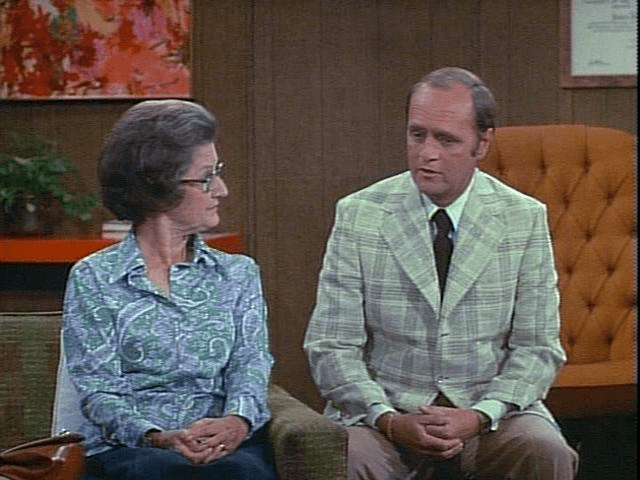
As we continue our What a Character blog series, today we get to talk about the woman behind one of my favorite characters, Lillian Bakerman from The Bob Newhart Show. That woman is Florida Friebus.

Friebus was born in Massachusetts in 1909. She was named for her mother’s favorite aunt, not the southern state. Weirdly, her paternal grandmother was also named Florida. Her family was involved in the theater. Her father Theodore was a leading stage actor with Boston’s Castle Square Players and a silent film star. Her mom’s mother, Georgine Flagg, was part of the Augustin Daly stock company in Manhattan.

When she was only eight years old, Florida’s father passed away. Her mother had studied at the Dana Hall Schools and applied for a position of housemother there. Florida was able to study at Tenacre during this time. She participated in the first Christmas pageant in 1921. Florida not only learned a lot about acting, but she also was presented with classes in political history, music, art, languages, and literature.

📷facebook.com with Richard Waring

Friebus moved to New York to study at the Theater Guild School. She began her acting career in 1929 in when she appeared with the Civic Repertory Theater in “The Cradle Song.” In 1932, she worked on an adaptation of “Alice in Wonderland” with Eva Le Gallienne, and she took on the role of the Cheshire Cat.

In 1934, Friebus married Richard Waring. They would divorce in 1952, and she never remarried.

Friebus was elected to the Council of the Actors’ Equity Association in 1949, and she spent 16 years on the board.

Florida read stories to children on her KNXT show, Look and Listen, in Los Angeles.

📷imdb.com

Her first television role was in 1948 on The Ford Theater Hour. Her television drama appearances continued into the 1950s and she also appeared on several sitcoms, including The Goldbergs, Father Knows Best, Bachelor Father, and The Donna Reed Show. In 1959 she accepted a role that made her a household name: Winnie Gillis on The Many Loves of Dobie Gillis. For four seasons she tried to defend Dobie and his crazy dilemmas when his father became exasperated with him.

The show was based on a 1951 book, The Many Loves of Dobie Gillis by Max Shulman about the romantic adventures of a student at the University of Minnesota. Shulman wrote for the series. He would also write The Tender Trap which became a movie in 1955 and House Calls which became a 1978 movie; Shulman became head writer for the television series based on House Calls.

The sixties and seventies found Florida in a variety of both dramas and sitcoms. A few of these series included Ben Casey, Peyton Place, The Doris Day Show, The Mary Tyler Moore Show, The Partridge Family, Gunsmoke, Room 222, and Barnaby Jones.

📷sitcomsonline.com

In 1972 she accepted the role of Lillian Bakerman on The Bob Newhart Show. During the show’s run, she made 19 appearances trying to encourage the other patients in her therapy group. She is often seen knitting while the group talks. One of her fears is flying, and her catchphrase is “Isn’t that nice.”

Her last appearance was in 1982 on The New Odd Couple as, who else but Mrs. Bakerman.

In 1988, Friebus passed away from cancer at 78 years old.

The Rifleman: Spinning Through Life

As we wind up our Riding the Range blog series, we end with another show set in the 1880s: The Rifleman.

📷boomermagazine.com

The series was set in the New Mexico Territory and starred Chuck Connors as Lucas McCain and Johnny Crawford as his son Mark.  The show was on ABC from 1958 through April 1963. Lucas McCain was one of the first single parents on television.

The show was created by Arnold Laven and developed by Sam Peckinpah. Peckinpah would go on to direct many famous westerns. The pilot episode was written by Peckinpah and Dennis Hopper starred in it. It was aired on Dick Powell’s Zane Grey Theatre. Some famous people worked behind the scenes. Connors would write several of the episodes and Robert Culp, who would become the co-star of I Spy, wrote a two-part episode. Ida Lupino directed “The Assault” in 1961.

McCain was a Union soldier in the American Civil War. His wife died from smallpox when their son was six, and McCain and Mark move from Oklahoma to New Mexico where Lucas buys a ranch outside North Fork. McCain is not a perfect father; he is often stubborn and opinionated. Sometimes he seems overprotective of his son. He tries to teach Mark life lessons. In one episode, he tells him “A man doesn’t run from a fight, Mark, but that doesn’t mean you go looking to run to one.”

📷remmetsweeney.com

Chuck Connors was offered the role of McCain but turned it down because he thought the salary was too low. Several other actors were tested but no one had the same chemistry with the young boy that Connors did, so they made him another offer with a higher salary.

There are some North Fork folk who show up on many of the shows including bartender Marshal Micha Torrance (Paul Fix), Frank (Bill Quinn), hotel owner Lou (Patricia Blair), blacksmith Nels (Joe Higgins), banker John (Harlan Warde), general store owners Milly (Joan Taylor) and Hattie (Hope Summers), and hotel clerk Eddie (John Harmon). Bill Quinn was Bob Newhart’s father-in-law. Patricia Blair left in 1963 to star in Daniel Boone. Hope Summers moved to Mayberry after the show ended and became Aunt Bee’s best friend. Joan Taylor only did a few shows after The Rifleman, but she came into the show with quite a few television appearances. Higgins, Warde, and Harmon were prolific actors who had very successful careers.

📷amazon.com

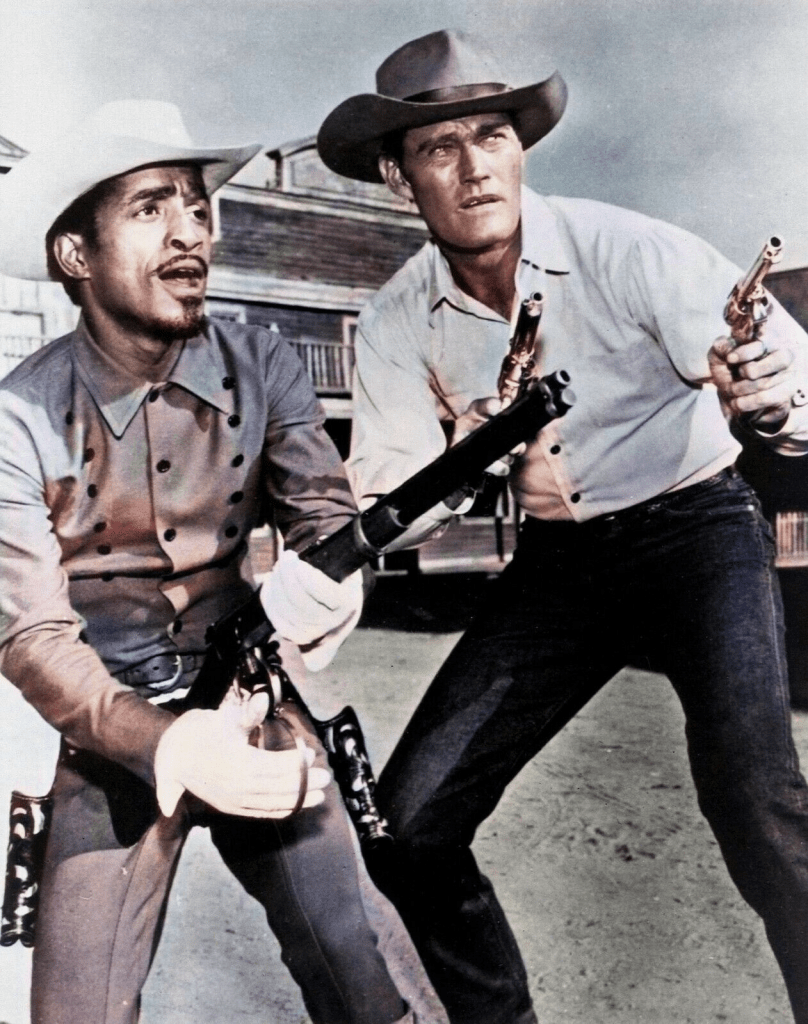
Quite a few well-known stars make their appearance during the run of the show. Some of them include Harry Carey Jr., John Carradine, Lon Chaney Jr., Ellen Corby, Robert Culp, Sammy Davis Jr., Jack Elam, Dabbs Greer, Buddy Hackett, Michael Landon, Agnes Moorehead, Denver Pyle, Pernell Roberts, Robert Vaughn, and Adam West.

There were so many westerns on the air during the fifties and sixties that most of them needed a hook to set them apart. McCain was called The Rifleman because he used a modified Winchester Model 1892 rifle with a large ring lever. The lever design allowed him to cock the rifle by spinning it in his hand and it was rigged to rapid fire which we saw demonstrated in the opening of every show. I guess no one was bothered by the fact that McCain used a rifle that would not be invented until ten years later than the time the show was set in.

The show was on Tuesday nights for the first three seasons. For season four, it moved to Mondays. After the fifth season, the show was canceled due to low ratings. However, Connors and Crawford remained life-long friends. Connors admired Crawford’s work on the set and said he always respected the cast and crew.
📷ebay.com

Crawford began his career as a Mouseketeer, one of the original 24. After the show ended, he became a pop singer with five hits. “Cindy’s Birthday” was his most famous and it was No. 8 on the Billboard 100 in 1962. Crawford came into the show with thirty acting credits, and he would go on to have thirty more after the show ended, but he never starred in another series.

Fun fact, The Rifleman was one of the few American shows that was allowed to be shown on Russian television. Apparently Breshnev loved the show. Later he met Chuck Connors when he came to the US. The actor made several trips to Russia.

I have seen this show on MeTV, and it is okay. I’m guessing that the reason it was on five seasons, and the reason it was canceled after five seasons, is because it was another western. Almost every western seemed to be successful in the fifties and sixties, but five years seems to be about the length of most of them with the exception of Gunsmoke, Bonanza and a handful of others. I have to admit that I am not drawn to McCain as a character, although I didn’t dislike him either. If you like westerns and have not seen it, it might be worth checking out.

Vera Miles: What a Character

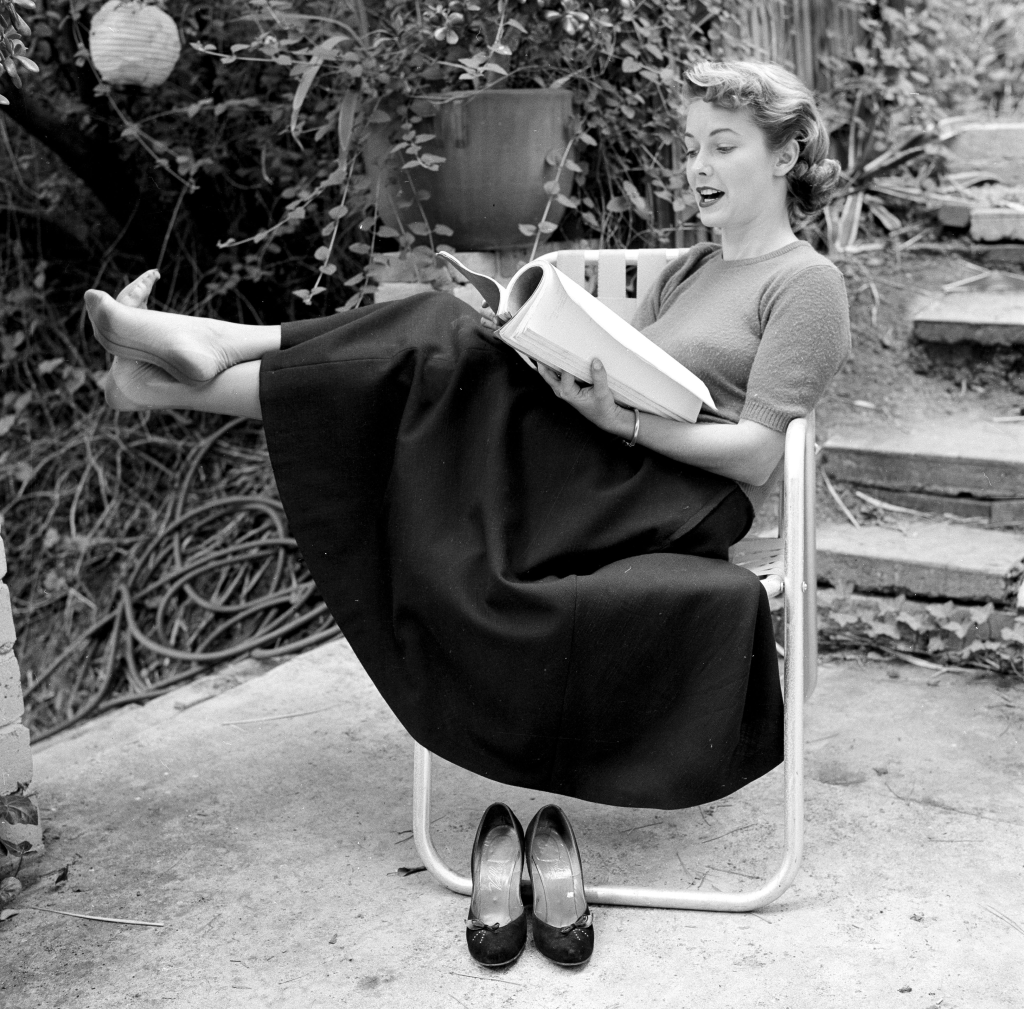
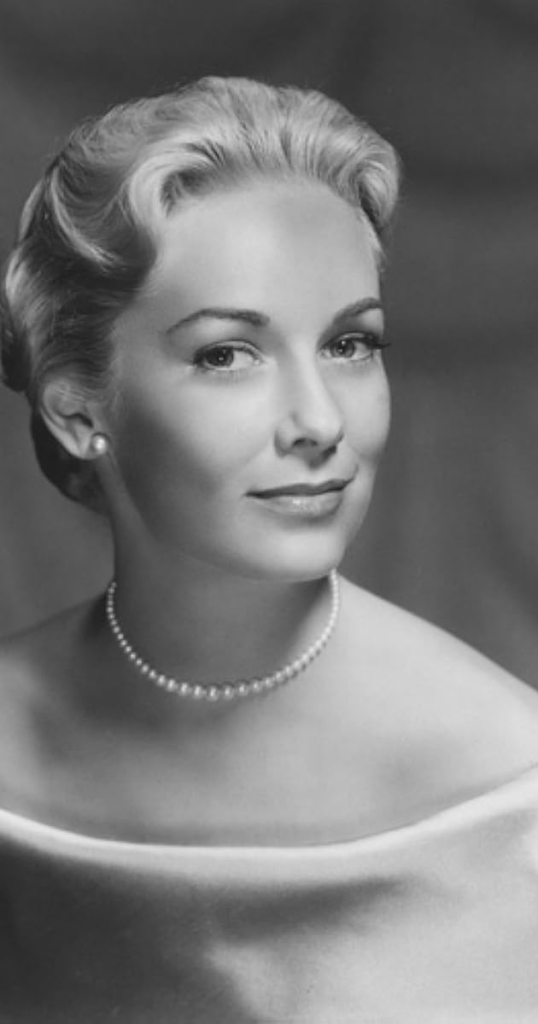
During this month of Supportive Women, I am excited to learn more about Vera Miles. For four decades, Miles appeared in our homes as well as on the big screen. With 162 credits, she may have visited your living room more than most of your family members.

📷facts.net

Vera Ralston was born in Boise City, Oklahoma in 1929. She grew up in Pratt, Kansas, and later she moved to Wichita where she graduated from high school and worked nights as a Western Union operator-typist. In 1948 she won the Miss Kansas pageant and was third runner-up in the Miss America contest that year. Miss Minnesota won the crown.

A year later she moved to Los Angeles to pursue a career in television and movies. Not long after arriving in Hollywood, Vera married photographer and stuntman Bob Miles. One source said that she enrolled at UCLA, hoping to become a teacher.

Bob Miles has 13 acting credits and 14 stuntman credits. The cast of Bonanza must have liked him because he appeared as a stuntman 99 times and as an actor on the show 76 times.

📷photos.com

After the birth of her children, she began doing some modeling and taking on a few roles to help provide income. Vera used her husband’s last name because there was already a Vera Ralston in the industry.

She appeared as a contestant in a 1951 episode of You Bet Your Life with Groucho Marx. Along with her partner, she won $8 in the quiz portion of the show but gave the wrong response to the De Soto-Plymouth question which was “Who was the first Chief Justice of the Supreme Court?” When Groucho asked her what titles she had held as a beauty contestant, in addition to Miss Kansas, she mentioned that she was Miss Chamber of Commerce, Miss Wichita, Miss Texas Grapefruit, and Miss New Maid Margarine.

She received her first movie role in 1950 and her first credit in 1952. In The Rose Bowl Story, a romantic comedy, she played a Tournament of Roses Queen. She would appear in about 40 additional movies during her career and quite a few made-for-television movies as well. She often worked with Alfred Hitchcock and was cast in Psycho.

In 1951 she appeared on Fireside Theater, her first television role. While she had more than 100 credits performing on television, surprisingly she never starred in a series. The only recurring character she had was Ernestine Coulter on My Three Sons.

📷fotogrammas.com

In 1956 she married Gordon Scott after divorcing Miles in 1954. They also divorced in 1960. Scott appeared to only work in Hollywood for a five-year period according to imdb.com. From 1960-1971 she tried marriage again with Keith Larsen, but their marriage also ended in divorce. Since the third time was not the charm, for two years in the mid-seventies, she wed Robert Jones but that ended in divorce as well.

During the fifties, she fit roles around her movie appearances, and you can see her in episodes of dramatic theater shows. In the sixties, she had no trouble finding work and she showed up on The Twilight Zone, Route 66, Wagon Train, I Spy, The Man from UNCLE, The FBI, and Mannix. Work did not slow down in the seventies, and you can spot her in a variety of shows including Gunsmoke, Hawaii 5-O, Bonanza, Cannon, Columbo, and Barnaby Jones. She might have taken thing a bit easier in the eighties, but she still worked on four or five shows a year, including Magnum, PI; Little House on the Prairie; The Love Boat; Hotel; and Murder She Wrote. Her last credit was for a movie titled Separate Lives in 1995.

📷imdb.com

Miles was a member of the Church of Jesus Christ of Latter-Day Saints and visited Salt Lake City quite often.

Early in her career, Miles appeared to be almost a clone of Grace Kelly but that never materialized into a movie star career. Hitchcock hired her for Vertigo with Jimmy Stewart, but her pregnancy caused her to back out of the movie, and Kim Novak received the starring role. Perhaps, that movie would have changed the trajectory of her film career. I’m surprised that she was never given an opportunity to star in a television show. With 162 credits, she had a prolific and busy career. I will definitely try to spot her when I watch some of my favorite classic shows.

..

Leslie Nielsen: Always One to Let ‘er Rip

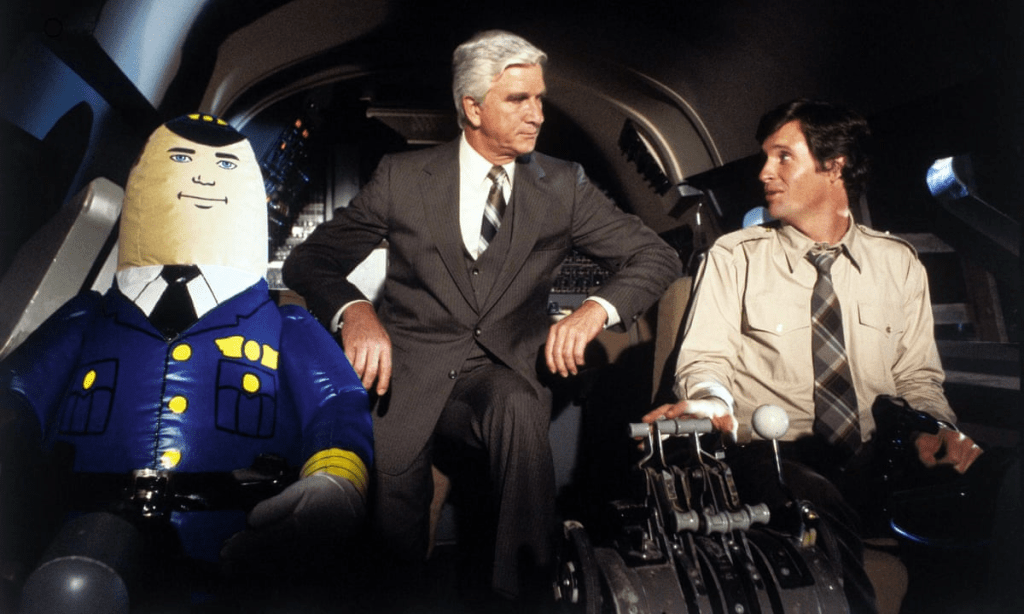
In this last blog in our series of Supportive Men, today’s actor might not be someone most people expect to see when talking about television. When most people think about Leslie Nielsen, they think of Airplane! and some of his other movies. While he did have a prolific movie career, he also has a well-deserved place in television. This guy amassed 259 (150 in television) acting credits during his six-decade long career.

📷tmdb.com

Nielsen was born in Saskatchewan, Canada in 1926. His mother was from Wales, and his father was a Royal Canadian Mounted Policeman. His older brother served in politics, being a Canadian Member of Parliament, a cabinet minister, and a Deputy Prime Minister of Canada. I read several sources that said his father was abusive, and Leslie wanted to move out as soon as possible.

Leslie enlisted in the Royal Canadian Air Force, serving until the end of WWII. He was legally deaf, wearing hearing aids most of his life, but he was able to train as an aerial gunner.

After the war, he worked as a disc jockey in Calgary, Alberta before enrolling at the Lorne Greene Academy of Radio Arts in Toronto. He was offered a scholarship at the Neighborhood Playhouse in New York.

📷wikipedia.com Bonanza

He made five television appearances in 1950 with the first being on The Actor’s Studio. He continued working in television, primarily on dramatic theater series, through the 1950s. In 1956, he had his first big-screen roles, appearing in four movies that year including Ransom, Forbidden Planet, The Vagabond King, (Nielsen later referred to this film as the “Vagabond Turkey”) and The Opposite Sex.

Leslie discussed his role in Forbidden Planet: “Supposedly a science fiction version of Shakespeare’s The Tempest . . . The Trekkies today regard it as the forerunner of Star Trek. I just had to wear a tight uniform and make eyes at Anne Francis. I was pretty thin back then.”

He became an American citizen in 1958 but continued to be proud of his Canadian citizenship as well.

While most of his credits for the late fifties were movies, he jumped back into television in the sixties, appearing in forty different shows. Many of them were dramatic theater roles, but you can spot him in Alfred Hitchcock Presents, Route 66, Wagon Train, Daniel Boone, The Wild Wild West, Dr. Kildare, Bonanza, The Man From U.N.C.L.E., and Gunsmoke. His only recurring role during this decade was on Peyton Place where he played Kenneth and Vincent Markham in 18 episodes.

📷pinterest.com on M*A*S*H

The seventies were almost a repeat of the sixties. His recurring role was on The Bold Ones. He also appeared in Medical Center, Mod Squad, M*A*S*H, Barnaby Jones, Hawaii Five-0, Kojak, Columbo, and The Love Boat.

1980 brought him the role of Dr. Rumack on Airplane!. Nelson’s deadpan delivery of lines in that movie is what most fans today remember about his career. Of course, his response to the line of “Surely you can’t be serious?” of “I am serious. And don’t call me Shirley” is still repeated today. Leslie said, “he was pleased and honored that he had a chance to deliver that line.” Film critic Roger Ebert once called him “the Laurence Olivier of spoofs.”

📷themoviebuff.com Airplane!

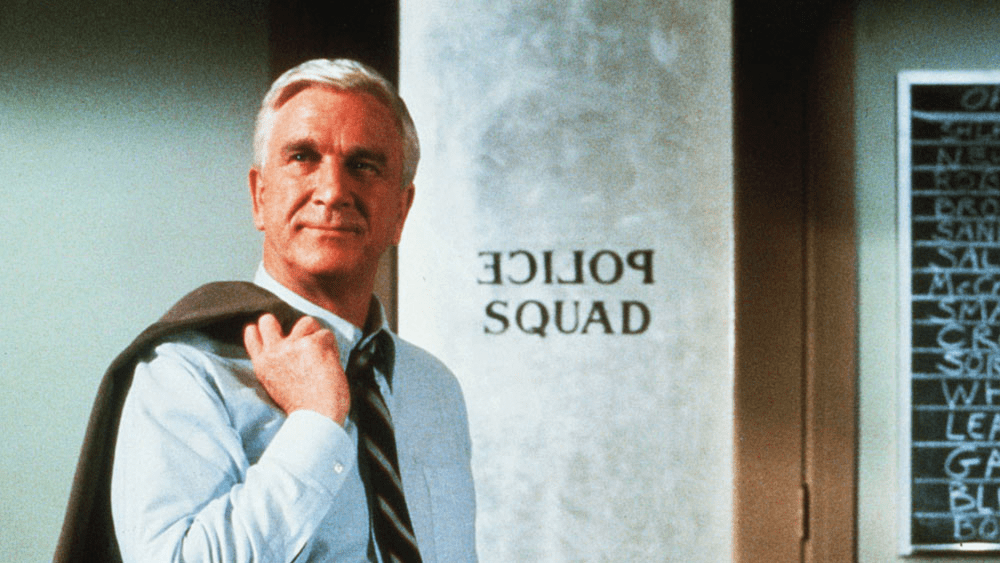
He continued in these types of roles in Police Squad and Naked Gun and the sequels. His movie roles increased in the eighties and nineties, but he continued to accept television roles off and on. You can catch him on Murder She Wrote, Highway to Heaven, Who’s the Boss, The Golden Girls, and Evening Shade.

His roles continued throughout the 2000s until his death, but the last decade included fewer memorable shows, although he worked less overall. When reflecting on this, Neilsen said that “I’m afraid if I don’t keep moving, they’re going to catch me . . . I am 81 years old, and I want to see what’s around the corner, and I don’t see any reason in the world not to keep working. But I am starting to value my down time a great deal because I am realizing there might be other things to do that I am overlooking.”

📷npr.org Police Squad

While Nielsen was very successful in his career, he was not as successful with his marriages. From 1950-56, he was married to Monica Boyar. His longest relationship was with wife Alisande Ullman from 1958-1973. He then married Brooks Oliver for two years from 1981-83 and then Barbaree Earl from 2001-2010.

One of his hobbies was golfing, and he later did some humorous instruction videos about the sport. He once said, “I have no goals or ambition. I do, however, wish to work enough to maintain whatever celebrity status I have so that they will continue to invite me to golf tournaments.”

Nielsen died in his sleep in 2010 from pneumonia.

He received two Walk of Fame stars: one in Hollywood in 1988 and one in Toronto in 2001. Nielsen was known for his flatulence gags, especially on movie sets, and his tombstone says “Let ‘er Rip.”

While Nielsen’s career is impressive, what I loved most about him is that he seemed to thoroughly enjoy life. That’s a great reminder for us all. Our best role should be enjoying life to the best of our ability.

Give Me a Sarsaparilla: Hopalong Cassidy

We are celebrating Classic TV for the first month of 2024. Our first choice is a western many kids never missed: Hopalong Cassidy.

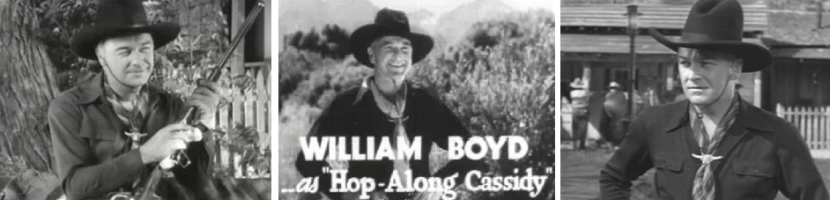
📷wideopencountry.com Bill Boyd with Topper

Hopalong Cassidy was introduced to the world by Clarence E. Mulford in 1904 in short stories, and a book was released in 1906. Originally the character had a wooden leg which resulted in his nickname. The first big-screen Hopalong Cassidy film aired in 1935. His nickname was now attributed to a gunshot wound. It starred Bill Boyd, a forty-year-old actor. Boyd’s Hopalong was quite different from the book character. This film Hopalong was a clean-cut hero who drank only sarsaparilla and never took the first shot. By 1948, 66 original movies had been made with ten different sidekicks. That seems like a lot, but from just 1950-1959, about 700 western films were made.

Producer Harry Sherman had become tired of the films. So Boyd invested all of this money buying the rights to the character from Mulford and the rights to the earlier films from Sherman.

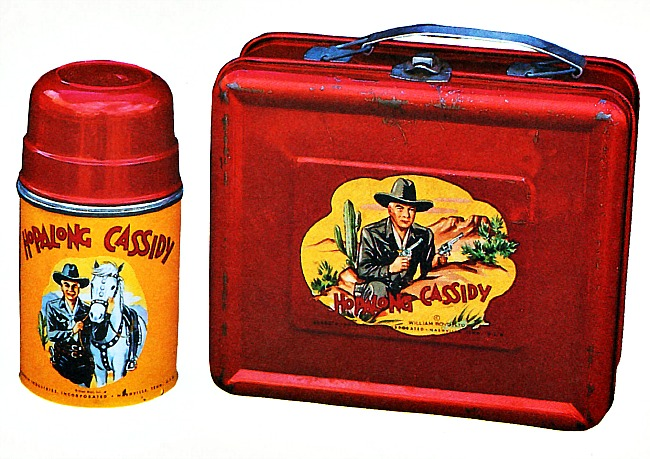
In 1949, NBC began showing the older movies on television. Westerns were huge on television, in movies, and in literature in the fifties, and Hopalong became very popular again. Boyd received all the revenue from the merchandise being sold.

📷imdb.com Boyd with Buchanan

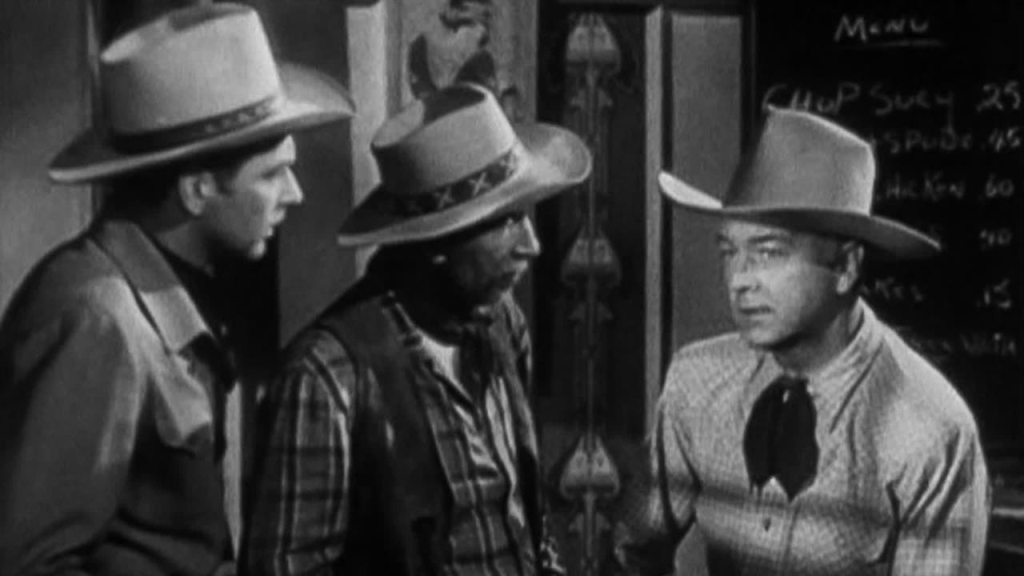
Boyd was offered another show in 1952. From 1952-1955, the show was on the air. There was a different format for the new show. Instead of the typical two companions from the films, Edgar Buchanan took on the role of Red Connors. It was Buchanan’s first television role, but it would not be his last. Boyd provided voiceover for the series. He was now a US Marshal instead of foreman of the Bar 20 ranch. Hopalong still fought crime riding his horse, Topper.

The new series was composed of 40 new episodes, along with 12 older theatrical features that were cut down to 30-minute episodes.

📷crackle.com

One of the reviewers on imdb discussed the show as “being a couple of notches above most of the contemporaries in quality.” He said outdoor scenes were actually filmed outside. He acknowledged that both Boyd and Buchanan were good actors, and Edgar provided both comic relief and dramatic support. The relationship the actors had, along with good writing, produced several really good episodes. He went on to provide information about three of his favorite shows:

“1. Grubstake–A terrific half-hour mystery. Prospector Percy Helton has struck gold. He was grubstaked by five partners. Two have been murdered. A third is Red. Who is the murderer? There is a slew of suspects in a movie-level cast–Christopher Dark, Michael Fox, Robert Paquin, and Timothy Carey(!). Gladys George steals the show as a flighty landlady engaged in a humorous romance with old codger Helton. The solution to the mystery is first rate.

2. The Feud–Two ranchers are bitter enemies. The son of one is murdered from ambush. Suspician naturally falls on his old enemy, B stalwart Steve Darrell, but foreman Hugh Beaumont, soon to become Beaver’s dad, is the culprit. He is having an affair with Darrell’s wife and hopes to get both her and the ranch when Darrell is lynched for the murder. There are some bitter scenes between the jealous Darrell and his unfaithful wife, and even a hot and heavy one between the woman and Beaumont. Perhaps not original, but certainly an adult slant compared to a typical Lone Ranger or Gene or Roy plot.

3. Lawless Legacy–An ordinary plot but given a big lift by Lone Ranger on vacation Clayton Moore as a vicious murderer.”

The series propelled Boyd back into stardom, and he became a famous celebrity, giving talks around the world. Although Hopalong is not as well known today as The Lone Ranger or the Cartwright Boys, his television show is still considered a classic. In 2009, the US Postal Service issued twenty postage stamps honoring early television programs. In this series, which included The Adventures of Ozzie and Harriet, Dragnet, I Love Lucy, Lassie, The Lone Ranger, Perry Mason, The George Burns and Gracie Allen Show, Boyd was pictured sitting on his horse Topper.

In addition to the films and television series, there were 104 radio shows and hundreds of comic books.

By 1955, Boyd was tired of his role and ready to retire. While he was ready to step out of the entertainment business, he wanted to ensure that his staff would continue to have jobs. CBS was getting ready to air a little show they thought might be successful, and his entire crew moved to that series, Gunsmoke, which continued to provide employment for another two decades.

Hopalong Cassidy’s films on television introduced westerns to an entirely new generation and kept westerns in the spotlight for the decade. By March of 1959, eight of the top ten shows were westerns and the television schedule featured thirty different western shows.

📷wordpress.com

I think Boyd was smart to purchase the rights and he was definitely in the right place at the right time to benefit during the fifties. And kudos to him for taking care of his cast and crew.

Raymond Bailey: Banking On a Starring Role

Photo: rottentomatoes.com

This month’s blog series is “Time for Some Texas Tea.” We are learning about some of the stars of The Beverly Hillbillies. Today we are banking on getting to know Milburn Drysdale, also known as Raymond Bailey.

Bailey was born Raymond Thomas Bailey in 1934 in San Francisco, California. When he was only a teenager he made the trek to Hollywood to try his hand at acting. He had a tougher time breaking into the business and worked a lot of odd jobs including day laborer in a silent movie theater where he was fired after sneaking into a mob scene which I found pretty funny and creative. He also worked as a stockbroker and a banker which would come in handy later in his career.

Photo: thenationalwwiimuseum.com

When things did not seem to be working out, he moved to New York City. He had no better luck on the east coast than on the west coast, so he joined the crew as a merchant seaman and toured the world, including China, Japan, the Philippines, the Mediterranean, and Hawaii. While in Hawaii, he also worked on a pineapple plantation, acted in the community theater, and sang for a local radio station.

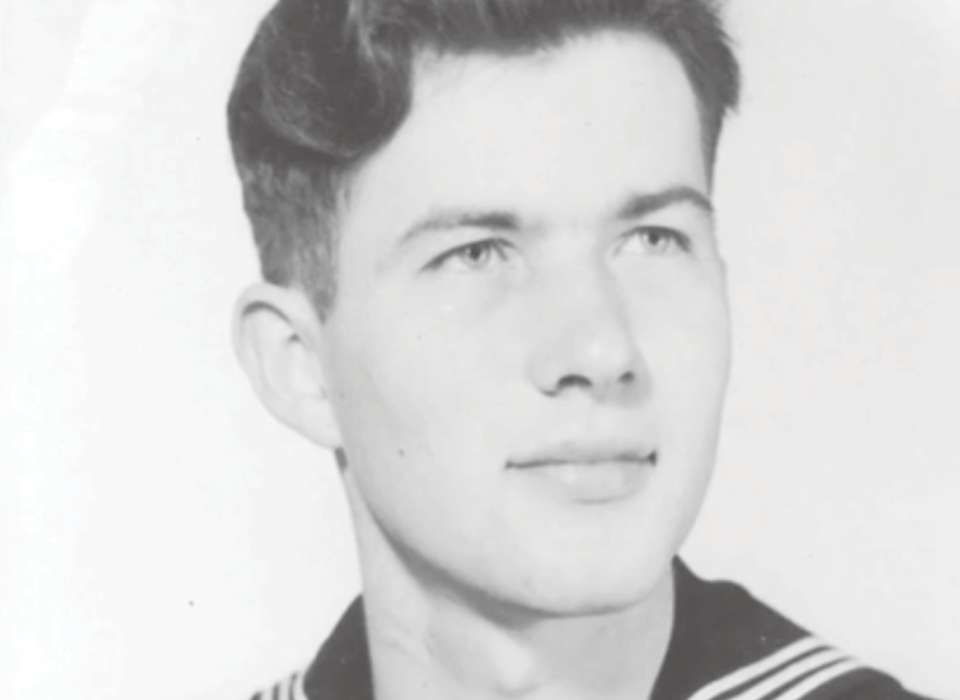
He decided to give Hollywood a second chance in 1938, and he actually began getting some small movie parts. His first credited role was in SOS Tidal Wave. He was Mr. West in The Green Hornet in 1940. He appeared in 30 movies before Pearl Harbor was struck. When the US entered WWII, he joined the US Merchant Marine. After his time was up, he returned to Hollywood.

In 1951, Bailey married Gaby George and they would remain married until his death. I could not learn much about Gaby, but she was born in another country, and they were married in Manhattan. I’m not sure if she came here earlier in her life or met Bailey while he was traveling the world. She would have been 37 when they married, and I believe she received naturalization papers when she was 55.

The Alfred Hitchcock Show “Breakdown” Photo: completehitchcock.com

Raymond continued receiving big-screen roles, and in 1952 he had his first television appearance in Tales of Tomorrow as Congressman Burns. He appeared in forty-six additional series during the decade of the fifties, including The Donna Reed Show, Jack Benny, Burns and Allen, Gunsmoke, and Private Secretary. His movie career continued with roles in 26 films including Sabrina, Picnic, King Creole, and Vertigo. In the mid-fifties, he also explored Broadway with roles in four plays.

While Bailey didn’t abandon his film career, the sixties found him on the small screen the majority of the time. In the early sixties, he could be seen on a variety of shows including Lassie, The Ann Sothern Show, Bachelor Father, Perry Mason, Bonanza, My Three Sons, and Mister Ed. In 1961, he was offered his first regular role as Mr. Beaumont on My Sister Eileen. He appeared in 25 of the 27 episodes of the show.

Photo: ask.com

In 1962 he was offered the role he would become a household name for: Milton Drysdale on The Beverly Hillbillies. His time as a banker helped him manage millions of dollars in the Clampett accounts. Much to his wife’s chagrin, Drysdale talks the Clampetts into buying the mansion right next to his so he can keep a better eye on them and their money. He was their mentor as they adjusted from country life to city life as much as they could adjust.

Unfortunately, Bailey developed Alzheimer’s, and the symptoms began just as the show was ending. The Beverly Hillbillies was canceled during the “Rural Purge” when all country-related shows were ended by the network in 1971. After the series was canceled, Ray only had two acting credits; they were both in Disney movies that came out in the mid-seventies: Herbie Rides Again and The Strongest Man in the World.

With Nancy Kulp Photo: imdb.com

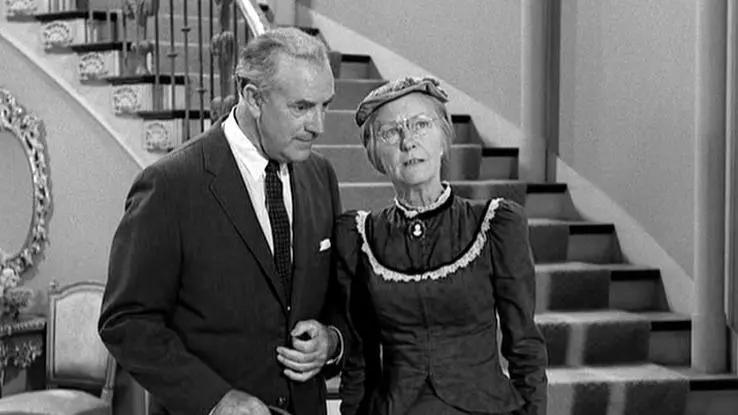
Baily then became a bit of a recluse until his death in 1980 from a heart attack. It sounds like the only non-family member he kept in touch with was Nancy Kulp who played his secretary Jane on The Beverly Hillbillies.

It was fun to learn more about the career of Raymond Bailey. He certainly defined the word “perseverance.” I’m glad he was able to do what he had a passion for. It would have been interesting to see how he would have done in another comedy series. His Alzheimer’s diagnosis probably ended his career twenty years earlier than it would have. It sounds like he found love and a fulfilling career and that is certainly a success no matter what your profession is.

Not Anyone Can Pull a Stunt Like This

Since this month is a Potpourri Month, I thought it might be fun to look at the career of stuntmen on television. I’m calling this one “Propourri” because you have to be well trained to do these types of stunts.

Left to right: stuntmen Bob Miles, Bob Herron, Whitey Hughes, actor Michael Dunn, stuntman John Hudkins, Bill Shannon, and actor Quintin Sondergaard. Photo: famousfix.com

A stuntman or stuntwoman is a person who performs dangerous action sequences in a movie or television show. They have usually had extensive training to do these perilous moves safely. Sometimes they are hired as a team with a stunt crew, rigging coordinator, and special effects coordinator.

Stuntmen like Evel Knievel are daredevils who perform for a live audience. If someone fills in for a specific actor all the time, they are stunt doubles. So, what type of stunts do these professionals perform? Sometimes it’s car crashes, explosions, fights, or falls.

The first stuntmen to entertain audiences were performers who traveled around, often in circuses. Later these types of performers worked with Buffalo Bill and in shows that celebrated the Old West.

Today we are going to concentrate on television performers. Currently, stunt professionals must be certified to obtain the insurance producers need to obtain.

The Academy of Television Arts and Sciences now awards Emmys for stunt coordinators but there is no Oscar for this work.

Life-threatening injuries are not uncommon in this work and sadly, deaths do still occur. While most of my research found stuntmen killed in movies, I only found one relating to television. In 1985, Reid Rondell was killed in a helicopter explosion filming Airwolf.

I thought it would be fun to look at the careers of a few stuntmen from the golden age of television. Most of these men made their money in films, but all three of them had  successful careers working on television shows as well.

Whitey Hughes

Photo: findagrave.com

Whitey Hughes was born in 1920 in Arkoma, Oklahoma. He grew up on a farm, so in addition to working with plows and horse teams, he learned to break horses with his father. When he was sixteen, the family moved to Los Angeles. After graduating from high school, Whitey became a Screen Actors Guild member in 1947.

Whitey began his movie career in 1946. During the fifties, he worked on a lot of western films. Hughes said that in the early part of his career, he often had to be a double for the leading lady. (We’ll come back to this subject later in the blog.) He did stunt work for a variety of actresses including Anne Baxter, Rita Hayworth, Barbara Hershey, Virginia Mayo, Stephanie Powers, and Lana Turner.

Photo: westernclippings.com

Speaking of women, one of the roles, Whitey loved best was being the husband of Dotti; they were married for seventy years.

During the fifties, Whitey worked on a lot of westerns including Cheyenne. In the sixties, you would see him on Rawhide or as Kurt Russell’s double on The Magical World of Disney. If you want to see him in action, the best show to watch would be The Wild Wild West; his crew did some amazing things on that show and Whitey coordinated the stunt work for 1965-1968.

The eighties found him in Fantasy Island, Wonder Woman, and BJ and the Bear while in the nineties he was part of Little House on the Prairie and The Fall Guy. His last work was in a movie in 1998. In 2009, Whitey died in his sleep. It is good he died peacefully; I can’t imagine the toll that this type of work took on his body for fifty years.

Hal Needham

Photo: themoviedatabase.com

Hal Needham was born in 1931 in Memphis, Tennessee. He served as a paratrooper in the US Army during the Korean War. After the war, he worked as an arborist doing tree-topping services. He was also the billboard model for Viceroy Cigarettes while he was trying to establish his career in Hollywood.

Hal’s first big job was the stunt double for Richard Boone on Have Gun, Will Travel. From 1957-63 he was in 225 episodes. During the sixties, he would show up in many television series including Laramie, Wagon Train, Laredo, The Wild, Wild West, Star Trek, Gunsmoke, Big Valley, and Mannix.

Hal was the highest-paid stuntman in the world. That seems fitting because during his career he broke 56 bones, broke his back twice, punctured a lung, and lost a few teeth.

Needham was responsible for wrecking hundreds of cars, fell from many buildings, was dragged by horses, perfected boat stunts and was the first human to test the car airbag.

He revolutionized the work of stuntmen and worked to get his craft recognized and appreciated. He mentored up-and-coming professionals.

With Burt Reynolds Photo: youtube.com

His career transitioned from a stuntman to a stunt coordinator to a second unit director to a director. In all, he would work on 4500 television episodes and in 310 films, according to imdb.com. He made his directing debut on a movie he wrote called Smokey and the Bandit with Burt Reynolds and would go on to direct Hooper and The Cannonball Run for Reynolds among other series and films.

In 1977 Gabriel Toys debuted the Hal Needham Western Movie Stunt Set with a cardboard saloon movie set, lights, props, a movie camera, and an action figure that could break through a balcony railing, break a table and crash through the window. They have become highly collectible.

Photo: pinterest.com

Needham owned a NASCAR race team. He also set a Guinness World Record as the financier and owner of the Budweiser Rocket Car which is now on display at the Smithsonian’s National Air and Space Museum.

He also managed to win both an Emmy and an Oscar. Reynolds and Needham were close friends; Needham lived in Reynold’s guest house for 12 years and their relationship was used as the basis for the plot in Once Upon a Time in Hollywood.

Bob Herron

Bob Herron was born in 1924 in California. When his parents divorced, he moved to Hawaii with his father. The swimming and high diving he did there was a boost to his stunt career. His mother married Ace Hudkins who was a supplier of horses to the movie industry. Herron helped his stepfather in this business before enlisting in the Navy.

Photo: imdb.com

In 1950 he began doing stunt work. His first job was on Rocky Mountain with Errol Flynn and he was shot off horses. This would be a piece of cake compared to his role in Oklahoma Crude where he fell 55 feet from the top of an oil derrick into a stack of boxes.

In the sixties, he began his stunt work on television. He was in Gunsmoke, I Spy, I Dream of Jeannie, The Man from UNCLE, The Girl from UNCLE, Star Trek, Mission Impossible, Get Smart, and Bonanza. He doubled for Ross Martin in The Wild, Wild West. During the seventies, he appeared on Petrocelli, Little House on the Prairie, Marcus Welby, The Mary Tyler Moore Show, The Rockford Files, Kojak, and Charlie’s Angels among other shows. He was still going in the eighties doing his stunts on Hart to Hart, Magnum PI, Remington Steele, the Dukes of Hazzard, Matt Houston, Airwolf, The A-Team, and MacGyver. Despite being almost seventy, he continued in the nineties on shows like Father Dowling’s Murder Mysteries, The Wonder Years, and Murder She Wrote.

I did smile a bit to see shows like I Dream of Jeannie and The Mary Tyler Moore Show on this list. The Jeannie episode is one where she brings her great-grandfather to Cocoa Beach to show Tony how to desalinate water and the Mary episode is one where Sue Anne falls in love with someone who doesn’t return the feelings. I guess it proves you never know where a stunt person will show up.

I don’t know how he managed to survive sixty years performing dangerous stunts but he must have been in amazing physical shape.

I did promise to come back to men having to double for women in the forties and fifties. Thankfully, that is no longer the case, and women’s numbers are increasing among the 3400 stunt performers in SAG.

Former gymnast Shauna Duggins did the hard fighting work in Jennifer Garner’s show Alias. Because pay is determined by union contracts, stuntwomen do not suffer from the pay discrimination that sometimes shows up in the industry. Stunt performers are paid a minimum of $1005 for one day of work and they can negotiate higher pay based on their experience.

Shauna Duggins and Jennifer Garner
Photo: broadwayworld.com

Duggins was at the University of California Davis when she first thought about being a stuntwoman. She learned more about martial arts and spent hours working out in gyms after graduation. In 2000 she auditioned for stunt work in The X Files as Krista Allen’s double and got the job. Then she was in Charlie’s Angels for Kelly Lynch and Cameron Diaz.

It was after that movie that she got the role on Alias where she worked for five years. To protect these women, SAG has a 24/7 hotline for performers to phone if they feel they have been the victim of sexual abuse.

In 2018 Duggins won an Emmy after twenty years in the business. Her advice to young women who decide to make this their career: “train as much as you can in various skills. Go to different gyms with stunt performers, train with all of them and just learn from each other.”

I’m glad we took some time to learn about the tough and dangerous job these performers do. It was so interesting to learn a little bit about some of these industry stars.