Dick York: His Job Was Back-Breaking Work

This month we are learning about some Bewitching characters and their careers. Today we get to learn more about Dick York, the first actor to portray Darrin Stephens.
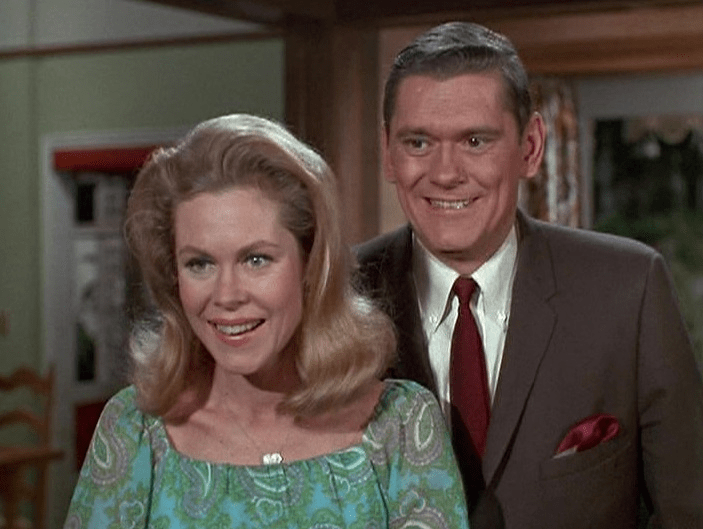
📷imdb.com the first Darrin Stephens

York was born in 1928 in Fort Wayne, Indiana, part of a working-class family; his father was a salesman, and his mother was a seamstress. During his younger years, the family relocated to Chicago, and at 15 he began acting on the radio in “That Brewster Boy.”

He would appear in hundreds of radio episodes and instructional films before heading to New York City in 1951 where he lived at the YMCA. In New York, he appeared on Broadway and then began his film career. That same year, York married Joan Alt. While he was doing the radio show “Jack Armstrong, All-American Boy,” they met when she came in to do a commercial.
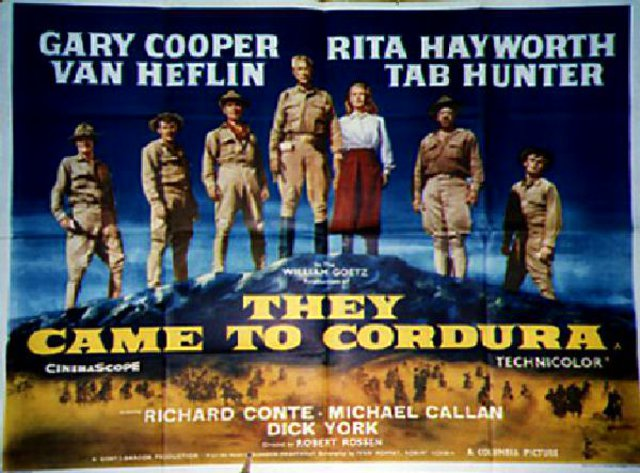
In 1959, he was filming They Came to Cordura with Gary Cooper and Rita Hayworth when he suffered a back injury on the set. As York described it, “Gary Cooper and I were propelling a handcar carrying several wounded men down a railroad track. I was on the bottom stroke of this sort of teeter-totter mechanism that made the handcar run. I was just lifting the handle up as the director yelled ‘Cut’ and one of the wounded cast members reached up and grabbed the handle. Now, instead of lifting the expected weight, I was suddenly, jarringly, lifting his entire weight off the flatbed—180 pounds or so. The muscles along the right side of my back tore. They just snapped and let loose. And that was the start of it all: the pain, the painkillers, the addiction, the lost career.”

However, the injury didn’t catch up with him at that exact moment. A year later he was offered a role in Inherit the Wind. He would end up in ten films during his career, but it was television where he spent most of his time.
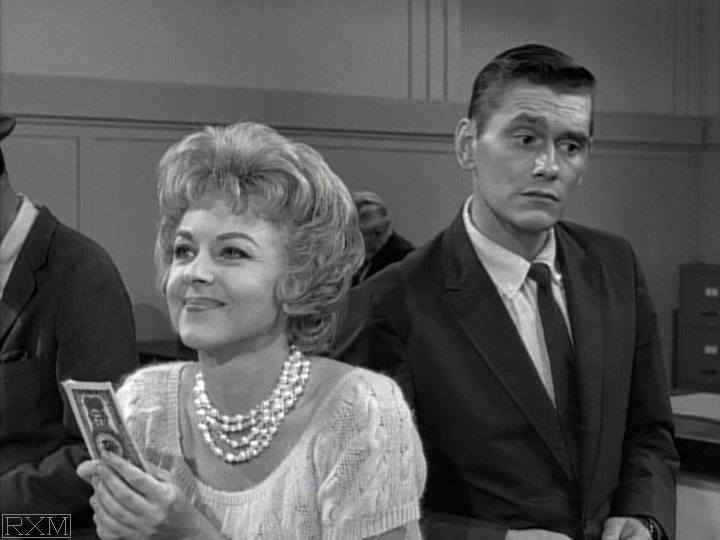
📷imdb.com The Twilight Zone

A couple of years later he was part of the cast of Going My Way for a season. His television career continued, and you’ll see him in episodes of The Twilight Zone, Dr. Kildare, Alfred Hitchcock Presents, Route 66, and Wagon Train, among others.

In 1964 he was offered the role that made him a house-hold name, Darrin Stephens on Bewitched. York was with the series for five years and was nominated for an Emmy in 1968. York was nominated along with Richard Benjamin from He and She and Brian Keith and Sebastian Cabot from Family Affair, but they were all beat by Don Adams from Get Smart.

His back caused him a lot of pain while on the Bewitched set. The crew constructed a wall where he could lean between scenes, but half-way through season three, he was diagnosed with a degenerative spine condition which often sent shooting pains through his body. Watching seasons three and four, Darrin often can be found lying down or on the couch in many of his scenes.

Things escalated during the fifth season. York fell ill with a temperature of 105 degrees. He was feeling awful but decided to try to get through a few scenes. He was sitting on a scaffolding with Maurice Evans, Samantha’s dad on the show, when he told a crew member that he thought he should get down. “He started to help me down and that’s the last thing I remember until I woke up on the floor. That’s about all I remember of the incident . . . I’d managed to bite a very large hole in the side of my tongue before they could pry my teeth apart.” While he was in the hospital, he and William Asher had the tough talk about his future, and he agreed he needed to quit; he was then replaced with Dick Sargent.

In his autobiography, York says the next 18 months found him bedridden and dependent on painkillers. He got off the meds, but it took six months. He was able to beat his addiction. He and Joan had five children that needed care.
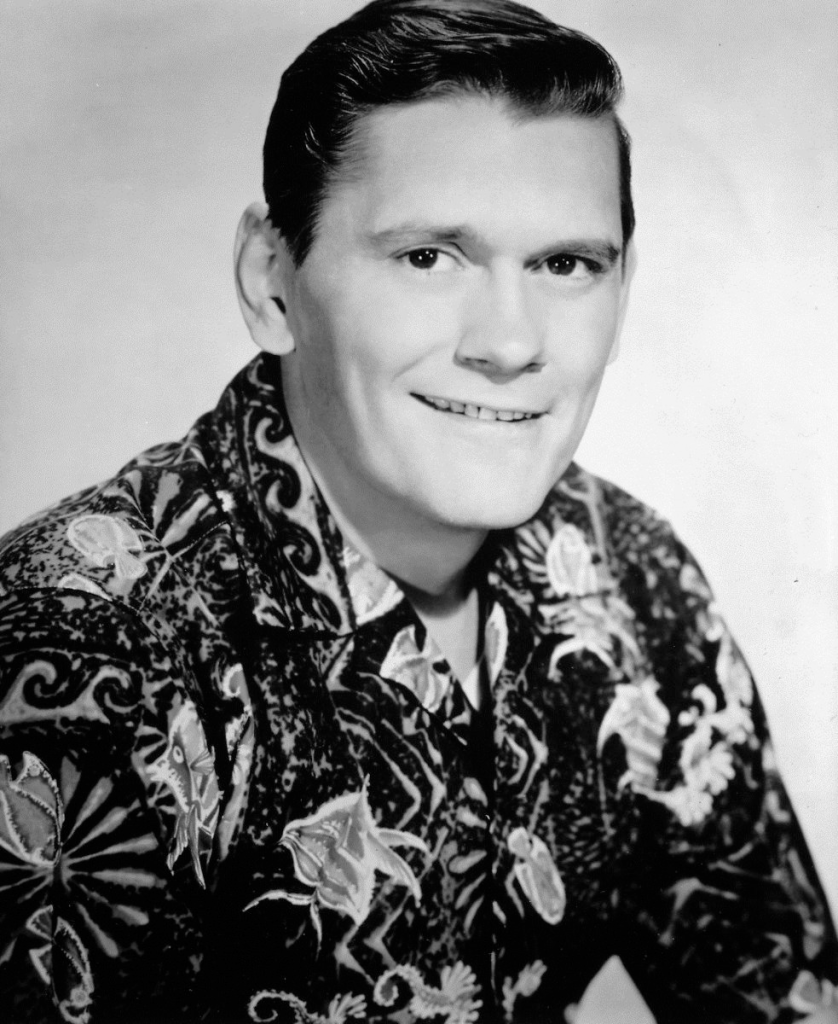
📷wikipedia.com

The family struggled economically after his addiction. In the mid-seventies, a real estate investment of theirs failed, and they were forced to go on welfare. In the early eighties the couple moved to Michigan to help care for York’s mother-in-law; they were surviving on a $650 monthly pension from the Screen Actors Guild.

York always kept a positive attitude. While he was bedridden, he made phone calls to help raise money for the homeless. He said, “I’ve been blessed. I have no complaints. I’ve been surrounded by people in radio, on stage, and in motion pictures and television who love me. The things that have gone wrong have been simply physical things.” He tried to revive his career, appearing on Simon & Simon and Fantasy Island, but it was just too late.

In addition to his back issues, York smoked three packs of cigarettes a day, and he eventually was diagnosed with emphysema. By 1989, he needed oxygen to help him breathe. He passed away from complications of the disease in 1992 at the young age of 63.

What a sad and painful ending to such a promising career. It’s amazing that someone in that kind of torment could still reach out to help others and try to spin a positive attitude about what he was grateful for. Thank you, Dick York, for leaving us with 68 great roles and the chance to get to know Darrin Stephens.
Stars Who Jump From the Big Screen to the Small Screen Don’t Always Land on Their Feet

While it is not uncommon for stars to transition from television to movies–think about Robin Williams, Sally Field, Melissa McCarthy, and Tom Hanks–it is less likely to see stars move from the big screen to the small screen.  Jane Fonda has transitioned to television in Frankie and Grace and Fred MacMurray did it with My Three Sons.  For most stars, the move has not worked out very well. Let’s look at a few stars who tried to make the conversion.

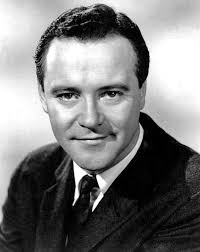
That Wonderful Guy – Jack Lemmon (1949)

Neil Hamilton (best known as Commissioner Gordon on Batman) plays Franklin Westbrook, a conceited drama critic who dislikes almost everything. Jack Lemmon plays Harold, a Midwesterner who thinks working for Westbrook will help him become worldly and give a boost to his acting career. His girlfriend is played by his real wife Cynthia Stone. The episodes revolved around his romantic and business adventures in New York City.  Perhaps Westbrook panned the show because it was cancelled after three episodes.

movielemmon1


Heaven for Betsy – Jack Lemmon (1952)

Three years later, Lemmon gave it another try. In this show, Lemmon plays Peter Bell, a toy store buyer. His wife Cynthia again played his wife Betsy. The series was based on a sketch “The Couple Next Door” that Lemmon and his wife played regularly on the Frances Langford/Don Ameche Show. Each episode lasted 15 minutes, and it told about the newlyweds’ struggles in New York City. Instead of three episodes, this series lasted three months.

movieslemmon2


Honestly Celeste – Celeste Holm (1954)

After playing Ado Annie in Oklahoma, Holm tried her hand at television. She plays Celeste Anders, a Minnesota college professor living in Manhattan, who is getting journalism experience working for the NY Express. Celeste wrote stories ranging from modern art to underprivileged families. She also dated the publisher’s son Bob Wallace, played by Scott McKay. After three months, she was sent back to school in Minnesota. What was most surprising about this failure was that Norman Lear (who would go on to create dozens of shows) and Larry Gelbart (who later created M*A*S*H) were both part of the writing staff.


Going My Way – Gene Kelly (1962)

Bridging television and movies, Gene Kelly redid Bing Crosby’s movie from 1944 for the small screen. Kelly is Father Chuck O’Malley, a progressive priest assigned to the slums of New York. Father Fitzgibbon played by Leo G. Carroll is a cantankerous, old priest. Dick York was his boyhood pal Tom Colwell who ran the community center. Mrs. Featherstone (Nydia Westman) played the rectory housekeeper. The list of guest stars on the show was very impressive, but after a year, the network told Kelly to keep going and cancelled the show.


The Bing Crosby Show – Bing Crosby (1964)

I guess Bing decided if Gene Kelly could enter television with his old movie, he might also give it a try. He plays Bing Collins a former singer. He is now an electrical engineer married to Ellie (Beverly Garland) with two daughters Janice (Carol Faylen), 15, and boy crazy and Joyce (Diane Sherry), 10, who had a high IQ. It lasted one season. Not surprisingly, this series also attracted a lot of big-name guest stars including Frankie Avalon, Jack Benny, Dennis Day, Joan Fontaine, and George Gobel. Apparently, Garland had a thing for engineers because she would marry aeronautical engineer Steve Douglas on My Three Sons.


Mickey – Mickey Rooney (1964)

Mickey plays Mickey Grady who leaves the Coast Guard to manage a posh hotel, Newport Arms in California, with his wife Nora (Emmaline Henry) and two young boys. His real son plays one of his sons on the show. Sammee Tong plays the hotel’s manager. The former supervisor has left a lot of problems for Mickey. The show was cancelled in January airing only 17 episodes.


One of the Boys – Mickey Rooney (1982)

After vowing never to work on television again, Rooney tried it again 18 years later. Now he plays 66-year-old Oliver Nugent, rescued from a nursing home by his grandson Adam Shields (Dana Carvey). Adam is a college student who takes him in. Adam’s roommate, Jonathan Burns (Nathan Lane) is not so happy about the situation. Oliver looks for a job and lands one singing in a restaurant. Also appearing in the cast was Scatman Crothers who sang with Oliver and had also left the nursing home.  A young Meg Ryan played Adam’s girlfriend Jane. The show debuted at 18th place in the ratings but by within a month it had dropped to 68th. Even with this cast, the show was cancelled after an unlucky 13 episodes.

movies10


Jimmy Stewart Show – Jimmy Stewart (1971)

Jimmy Stewart jumped to the small screen with great anticipation and excitement by viewers. He  played anthropology professor Jim Howard. Howard teaches at Josiah Kessel College, started by his grandfather.  His house is full with his wife, his son Peter, Peter’s wife Wendy, and his grandson Jake. He also has a young son Teddy, who happens to be the same age as his grandson. His friend Luther Quince often stops by to eat and give advice. Jim talks to the audience during the show and wishes them love, peace, and laughter at the end of each episode. Even beloved Jimmy Stewart was unable to save this show which was cancelled after one season.


The Doris Day Show – Doris Day (1968)

Doris Day was the most successful actor moving from film to television. However, I think the reason she managed to keep her show on the air for five seasons was because she changed the format so often that CBS did not realize it was the same show.  In 1968, Day is Doris Martin, a widow with two kids. She moves from the city to Mill Valley, CA to live on her father’s ranch.

The second season she commutes to San Francisco after accepting a job as an executive secretary to Michael Nicholson (MacLean Stevenson), the editor of Today’s Magazine. Rose Marie was Myrna Gibbons and Denver Pyle again played her father Buck Webb.

In 1970, Doris and the kids move to an apartment over an Italian restaurant run by Kaye Ballard and Bernie Kopell. Billy De Wolfe was her neighbor. Now Doris is writing feature stories for the magazine.

When the show returned the next fall, Doris was single and a reporter for a magazine. Her new boss was Cy Bennett (John Dehner) and she had a boyfriend Peter Lawford but later her boyfriend turned into Patrick O’Neal. There was no restaurant.

By 1973, the network caught up with all the changes and cancelled the show.


It was interesting that so many actors failed in television when they were such celebrated movie stars. The radio stars seemed to have better luck making the transition. Jack Benny and Burns and Allen had long-lasting and popular shows. It’s hard to imagine actors like Ryan Gosling, Amy Adams, Julia Roberts, or Ben Affleck bombing on a television series today.

I think for now I will continue to choose to watch Pillow Talk, Move Over Darling, Harvey, The Philadelphia Story, Some Like It Hot, Singing in the Rain, and Hope and Crosby’s Road movies and set aside the television DVDs these stars appeared in.