The Elegance of What’s My Line

This month, we are looking at popular fifties stars and shows. While the show we are talking about today outlasted the fifties by almost another decade, it gained its popularity during the 1950s. Today we are learning about What’s My Line.
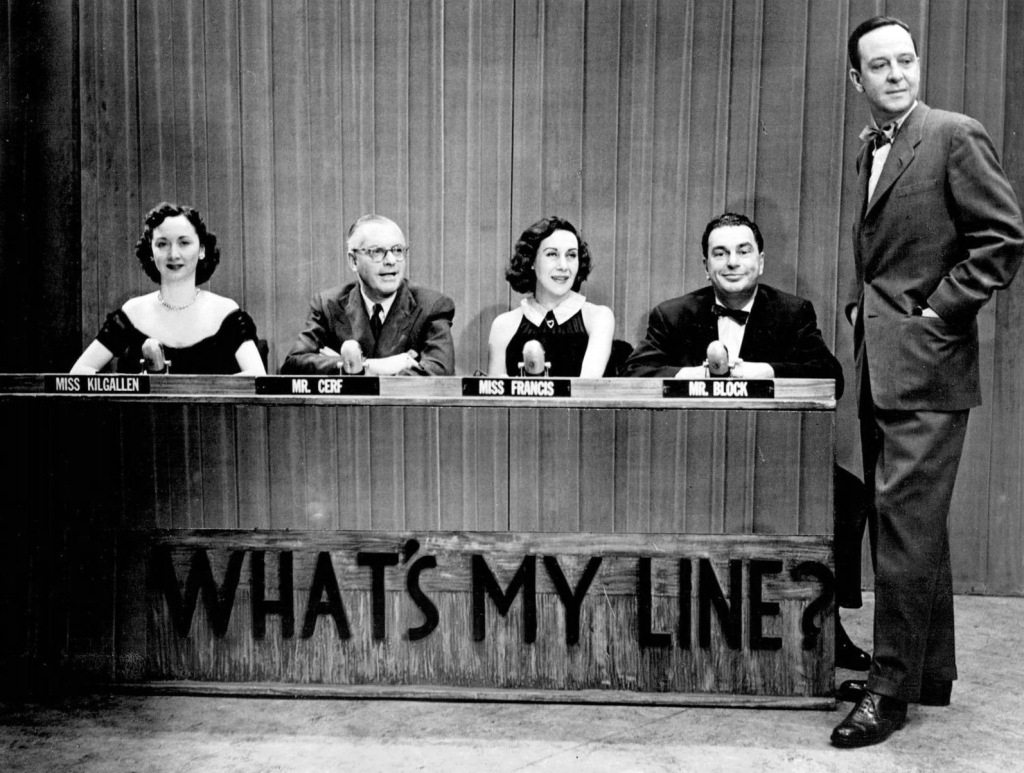
📷wikipedia.com

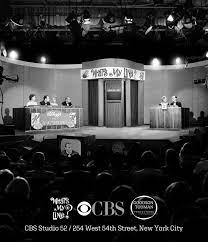
This panel game show was on CBS. It debuted in 1950 and ran until 1967. The show was produced by Mark Goodson and Bill Todman, and the working title was Occupation Unknown. Perhaps the title should have been What’s My Schedule. The show began on Thursday nights as a live show. Later in season one, it switched to every other Wednesday and then moved to every other Thursday. In October of 1950, it landed on Sunday nights where it would remain throughout the rest of its life.

The original series, which was usually broadcast live, debuted on Thursday, February 2, 1950, at 8:00 p.m. ET. After airing alternate Wednesdays, then alternate Thursdays, finally on October 1, 1950, it had settled into its weekly Sunday 10:30 p.m. ET slot where it would remain until the end of its network run on September 3, 1967.
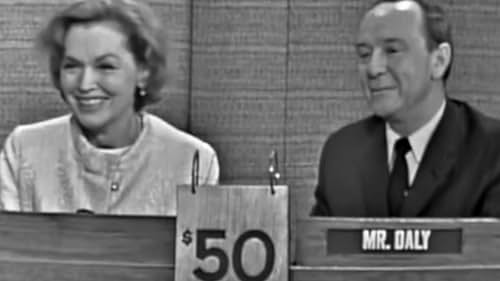
📷imdb.com

Celebrity panelists ask contestants questions to figure out their occupation. While most of the contestants were not famous, there was a “mystery guest” segment. The panelists were blindfolded for this segment and asked questions to determine the celebrity. People enjoyed watching the panelists banter with each other and the sophisticated humor they shared with us.

Each episode had four panelists. The most famous panelists were Dorothy Kilgallen, Arlene Francis, and Bennett Cerf. John Daly was the moderator. The first show in the series featured New Jersey governor Harold Hoffman, Kilgallen, poet Louis Untermeyer, and psychiatrist Richard Hoffman. Later in season one, Arlene Francis came  on board with Kilgallen, Untermeyer and writer Hal Block. In season two, Cerf replaced Untermeyer and Steve Allen took over for Block in season three. When Steve Allen left to host The Tonight Show, comedian Fred Allen was part of the panel from 1954 until his death in 1956. Kilgallen was killed in 1965 and her replacement varied for two years. Her death is a mystery itself and well worth reading about. Many people think she was killed because of her investigation into JF Kennedy’s assassination.

📷facebook.com

The panelists started the series wearing business clothing, but by 1953 they shifted to formal attire with the men showing up in suits and ties and women in formal gowns and gloves. Unfortunately, we never got to see the beautiful colors of these clothes. Until 1966 everything was filmed in black and white. In the final season, the show was broadcast in color, but the kinescopes were saved in black and white.

Both critics and television viewers liked the show, and it won an Emmy for Best Quiz or Audience Participation Show in 1952, 1953, and 1958.

Because it was a game show, most of the 700 episodes were on kinescope, 16 mm filming. Because many original shows in that era were recorded via kinescope onto silver nitrate film, many networks destroyed recordings to recover the silver. After learning that the network was not keeping the recordings, Goodson and Todman offered to pay for the broadcast and retained the recordings from season three on, however many of those were also lost along the way. A variety of the episodes are stored at different archive centers around the country. My home state houses one from 1951 at the University of Wisconsin Center for Film and Theater Research in Madison.
📷facebook.com

The remaining kinescopes which have been digitized have been seen on television on the Game Show Network and 757 of them exist on YouTube.

Many of us remember the reruns and seeing the contestant come on stage and write their name on a chalkboard as Daily said “Will you enter and sign in please.” The very first contestant was Pat Finch who was a hat check girl at the Stork Club.

The first mystery guest was New York Yankees shortstop Phil Ruzzuto. Many of these guests used fake voices to answer questions. Some of the mystery guests who appeared on the show included Julie Andrews, Louis Armstrong, Lucille Ball, Jack Benny, James Cagney, Gary Cooper, Joan Crawford, Salvador Dali, Sammy Davis Jr., Doris Day, Aretha Franklin, Ava Gardner, Judy Garland, Jackie Gleason, Alfred Hitchcock, Bob Hope, Ginger Rogers, Roy Rogers, Eleanor Roosevelt, James Stewart, Elizabeth Taylor, and John Wayne.
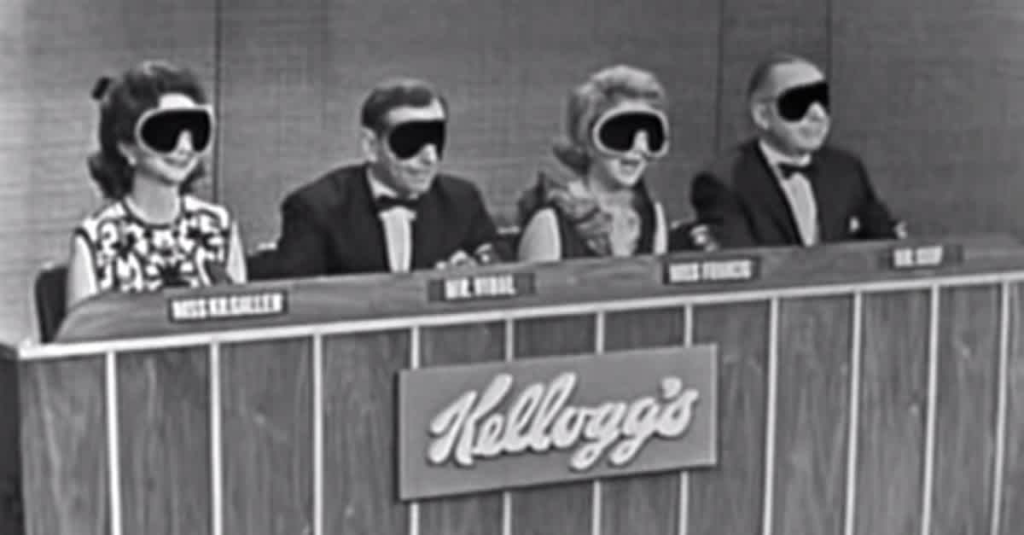
📷littlethings.com Blindfolds come out for a mystery guest

The emcee would choose a panelist who could ask yes or no questions. If the answer was yes, they could continue until they got a no response and then the next panelist would be able to pose questions. If the contestants answered no, Daily flipped a card; when the contestant had ten cards, they won $50.

If you have heard of or even used the term “Is it bigger than a breadbox?,” you might want to know that it came from the show. Steve Allen asked the question in 1953, and it became a standard question after that night. In fact, on one episode, the guest was a breadbox maker, and when Daly could not help laughing at the question, Allen figured it out.
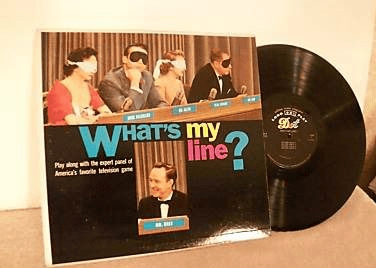
In 1967 The New York Times broke a story that CBS was canceling many of their game shows. None of the panelists had been told that the show was not renewed. Despite the fact that the low costs of the game shows made them profitable, the low ratings led the network to conclude that game shows were no longer suitable for prime-time schedules.

After the show was canceled in 1967, it did go into syndication five days a week. Soupy Sales joined Francis and Cerf on the panel of the reboot. A variety of other panelists took the fourth seat including Joyce Brothers, Jack Cassidy, Bert Convy, Joel Grey, Meredith MacRae, Henry Morgan, Gene Rayburn, and Nipsey Russell. The show ended in 1974. Cerf died during the run of the syndicated series.

It’s hard to believe, but Colonel Harland Sanders was on the show as founder of Kentucky Fried Chicken, although he was not easily recognized at the time, so he was not a mystery guest. While no president ever appeared while in office, Ford, Carter, and Reagan all appeared on the show.

📷youtube.com We switched to a first-name basis in the 70s

It would be fun to see this show on television today, but I’m afraid it would not be the same. In the way that Dick Cavett had a manner of interacting with guests to ask amazing questions with his humor and intelligence, this game show had that same atmosphere. Today, I think the banter would border more on crudeness than wit. There is something charming about a panel of very intelligent people talking with each other, trying to determine the identities of the people they were interviewing while being dressed to the nines that was fun to sit in on and be a part of. I guess that’s why this show is in our series where we are saluting the fifties because that was the era where it could shine.

Meet the Press: The First News Show

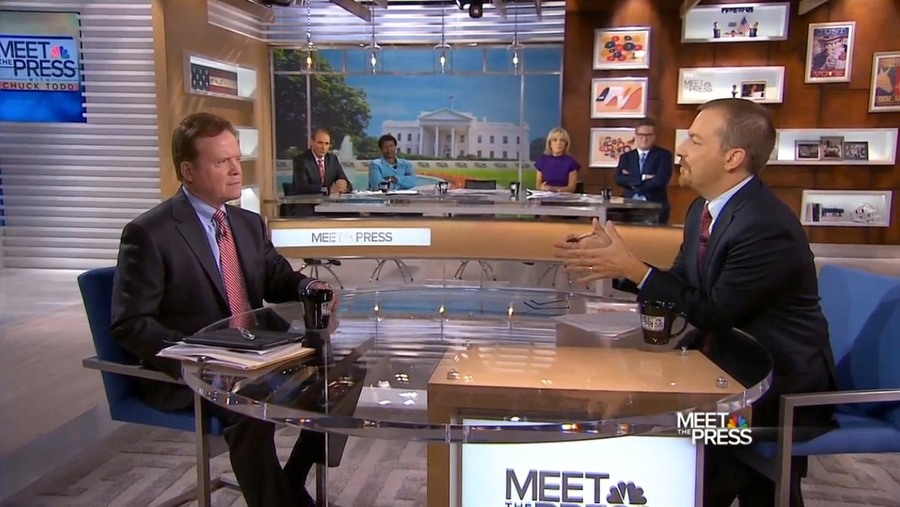
We are in the midst of our “It’s the First” blog series, and today we are talking about a show that debuted in 1947 to bring us the news: Meet the Press (although the show actually began on radio in 1945). Although we hear a lot about Gunsmoke and The Simpsons being on air for so many years, rarely do people talk about the fact that Meet the Press was one of the first television shows and is still going strong. Of course, it looks a bit different than it did when it first began.

The show, which will be celebrating its 75th anniversary next year, features interviews with national leaders about politics, economics, foreign policy and other critical global topics. Noted journalists and experts provide analysis, discussion, and reviews of the past week’s events. The show began during the second official television season. It was the first live network news show, and was the first live news show that a sitting president appeared on; in this case it was Gerald Ford.

The program has had twelve different hosts during its history beginning with Martha Rountree. The first guest was James Farley who had served as postmaster general, Democratic National Committee chairman, and campaign manager for Franklin D. Roosevelt.

See the source image
Martha Rountree and Gov. Thomas Dewey Photo: flowersforsocrates.com

Meet the Press is on the air in most markets on Sunday morning on NBC. It is also on Sirius/XM and syndicated on Westwood One, and is often replayed on C-Span.

For the first forty-five years of its airing, it was a 30-minute program but was extended to an hour in 1992. General Foods was the sponsor for the first television seasons. Rountree, the only female, hosted until 1953 when Ned Brooks took over for 12 years. Lawrence Spivak, who had hosted the radio version was the moderator until 1975. Bill Monroe stepped up to the plate next, hosting until 1984. The next seven years had a revolving door of hosts including Roger Mudd and Marvin Kalb, cohosts; Chris Wallace; and Garrick Utley.

See the source image
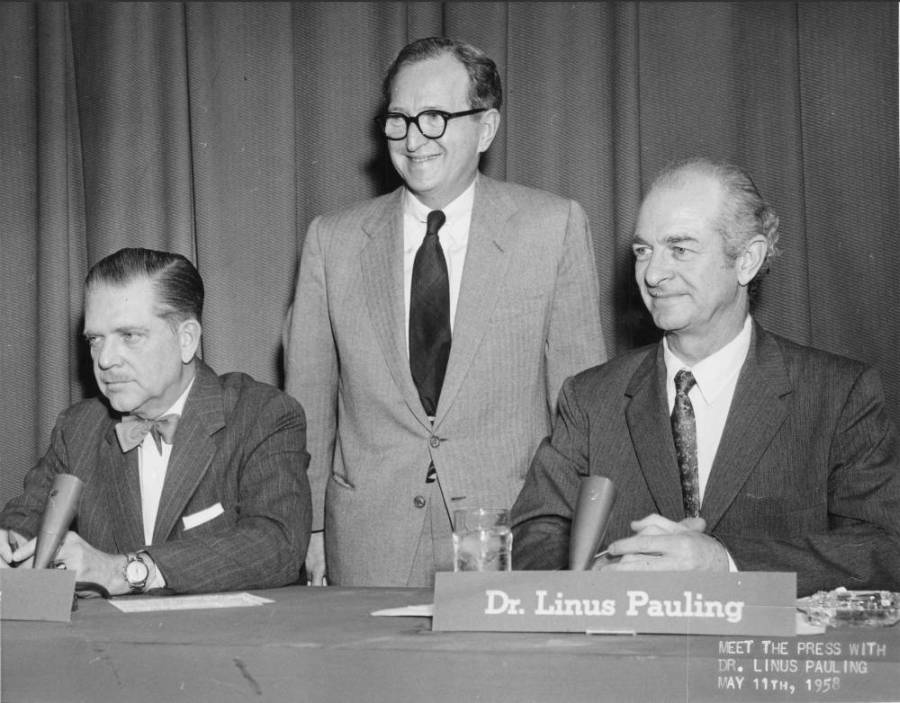
Ned Brooks, Lawrence Spivak and Dr. Linus Pauling Photo: oregonstateuniversity.com

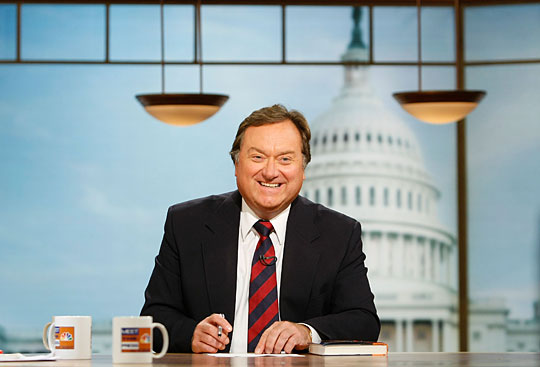
Tim Russert, network bureau chief in Washington DC took over in 1991 and remained with the show until his death in 2008. After his death, Tom Brokaw had a special edition of the show dedicated to Russert, leaving his chair empty on the set.

See the source image
Ned Brooks with Joe McCarthy Photo: eyesofageneration.com

NBC news anchor Brian Williams hosted the next regularly scheduled show following Russert’s death and Brokaw became interim host through the 2008 general elections. Following the elections, Brokaw continued the first half hour with David Gregory taking over the second half hour. Gregory became the sole host in December of 2008.

In an attempt to gain viewers, a new set and theme song were introduced in 2010. Ratings continued to decline, and in 2013 the show, which had typically been the number one Sunday news program, dropped to third place.

See the source image
Photo: newscaststudio.com

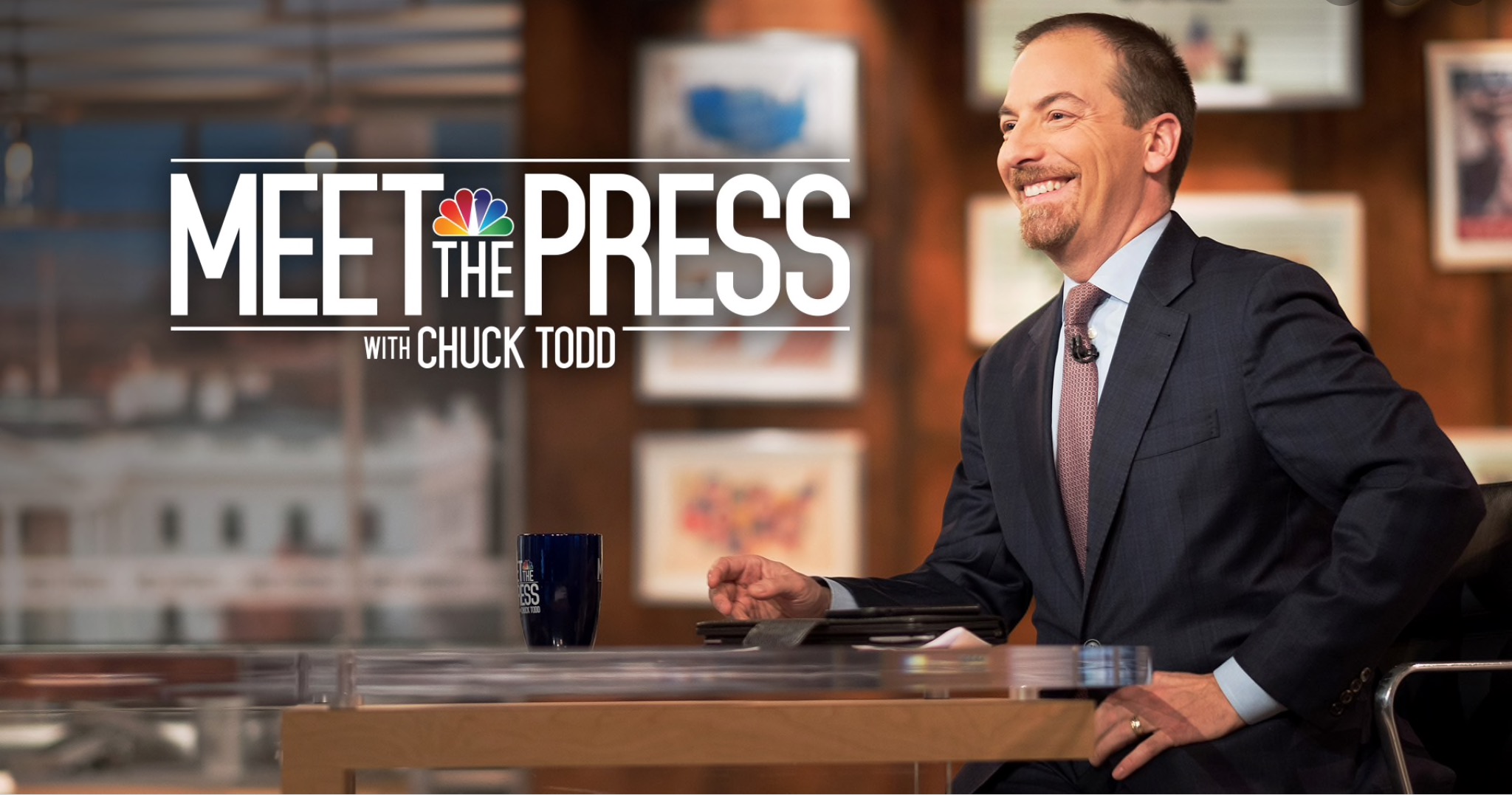
In 2014, Chuck Todd, NBC’s chief White House correspondent took over the reins of the show. The show never regained its former numbers, but its Facebook ratings have skyrocketed.

Some of the most-watched episodes included Elizabeth Bentley, a courier with a Community spy ring, in 1948; Fidel Castro in 1959; and Martin Luther King Jr. in 1963.

See the source image
Fidel Castro on Meet the Press Photo: pinterest.com

Every US president since JFK has appeared on the show, although most after their presidencies.

Todd, who is still running the show, shared some of his thoughts about why Meet the Press has been so influential. About the Sunday time slot, he said that “I think that the reason it has survived is because the idea of using Sunday as a day of reflection is sort of ingrained in the news business, too,” Todd said. “We continue to believe that Sunday mornings are when we’re going to sit down and try to figure out what the heck’s going on in the country.”

See the source image
Tim Russert Photo: npr.org

Todd also discussed Russert’s relevance on the show when he said, “Every moderator leaves an imprint. Tim has two giant imprints. He took Meet the Press to an hour. And he made the round table a vital and regular part of the show. Tim also made it seem less like an insider show. He realized it was at its best when explaining Washington to America but also bringing America to Washington.”

It’s hard to fault the show too much for its decline in ratings. When you consider, how many news choices there currently are, I think it is amazing that any news show has been able to remain on the air for almost 75 years.

See the source image
Chuck Todd Photo: youtube.com

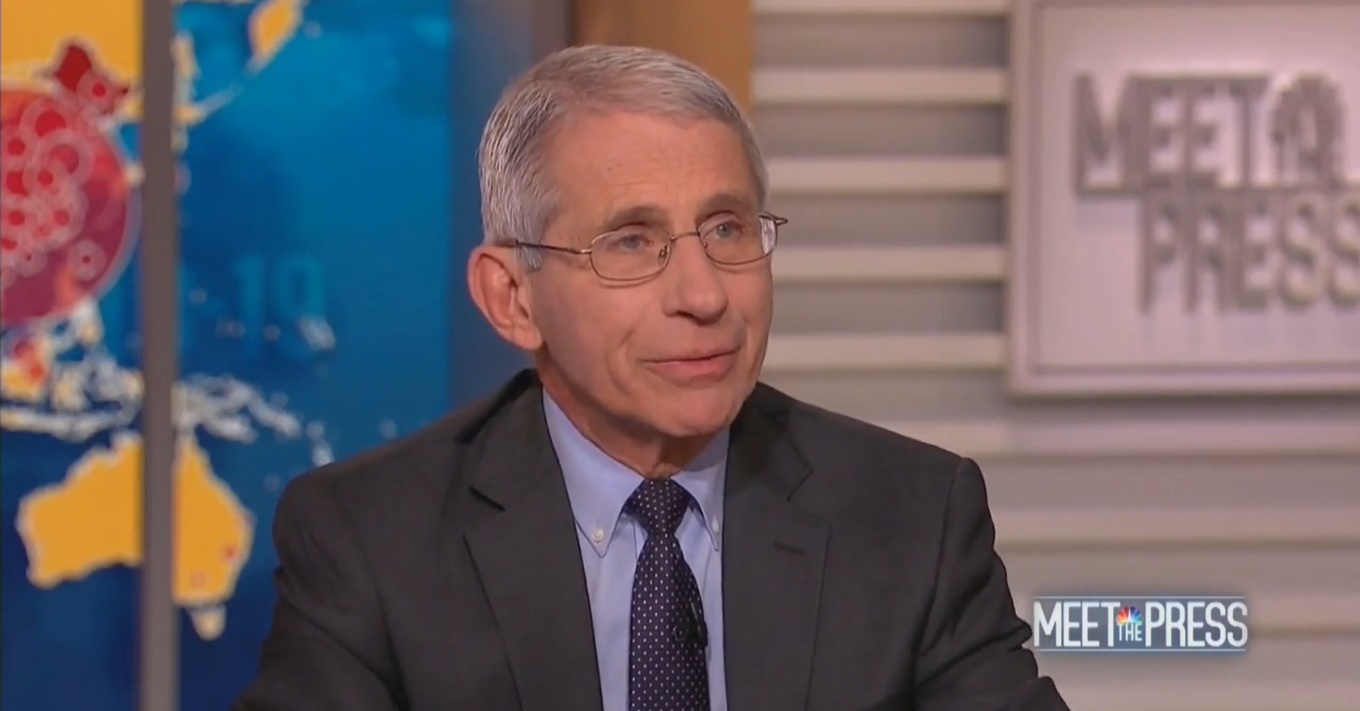
The combination of Trump as president and the Covid pandemic has helped the show’s ratings a bit. In March of 2020 Dr. Anthony Fauci appeared on the show. According to Nielsen data, 4.657 million views tuned in making the show the most-watched one on that day. An additional 952,000 people watched rebroadcasts on NBC and MSNBC, the highest-rated show since January 2009.

See the source image
Dr. Anthony Fauci Photo: mediaite.com

It will be interesting to learn what celebrations are planned for 2022. If you have not checked in to see what Meet the Press is all about, take a listen this month.

The Dick Cavett Show: Television’s Classiest Talk Show Host

Dick Cavett made a career of being a talk show host. He began on ABC in March of 1968 and ended on TCM in 2007. In between, he showed up during the day, in prime time, late at night, on PBS, in syndication, and on CNBC. The Dick Cavett Show seems to refer to all the shows as a collected whole, so that’s how I will present it in my blog.

Image result for images of dick cavett
Photo: chicagotribune.com

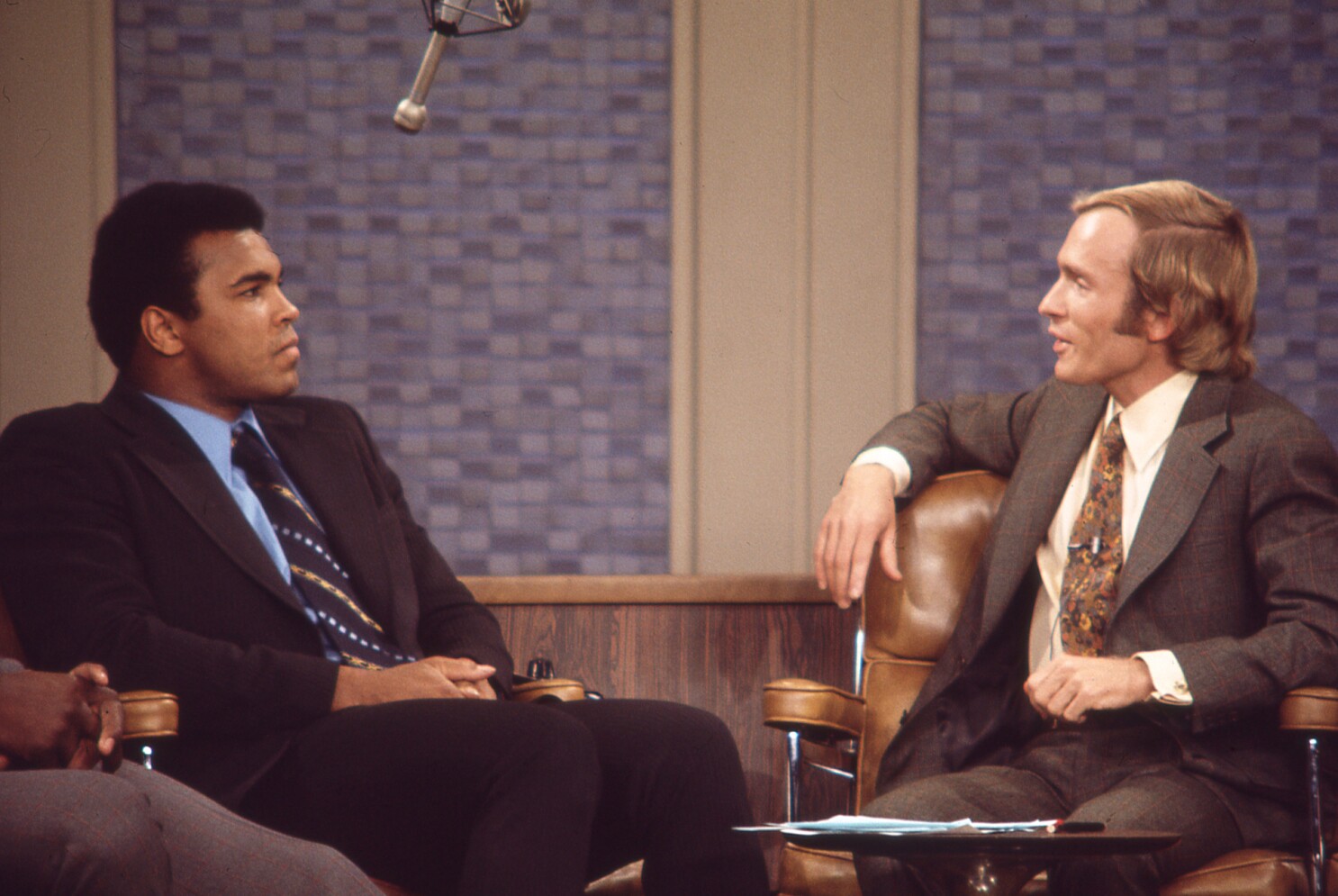
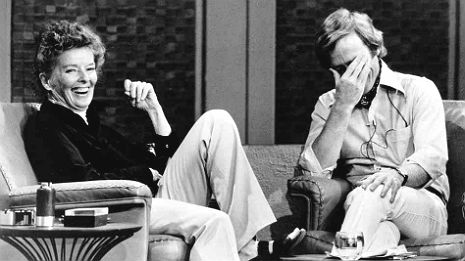
If you have ever seen Cavett in action, he has such a smooth, polite manner that sometimes you forget he may be asking an invasive question. Some of the most memorable shows were conversations with Christine Jorgenson (who walked off the show in 1968); Groucho Marx (1969); Jimi Hendrix (1969); The Woodstock Show (1969); Eric Clapton (1970); Alfred Lunt, Lynn Fontanne and Noel Coward (1970); Orson Welles (1970); Salvador Dali (1971); John Kerry debating on Vietnam (1971); Watergate and Beyond (1974); Angela Davis (1972); Jackie Robinson (1972); Marlon Brando (1973); Katharine Hepburn (1973); Carol Burnett (1974); and  Mohammad Ali (several shows). As you can see, in addition to entertainers, Cavett interviewed influential authors, politicians, athletes, and newsmakers.

Image result for images of dick cavett
Talking to the Great One: Ali Photo: latimes.com

Cavett often had several guests on each show, but sometimes he devoted the entire night to one person such as Laurence Olivier, Judy Garland, Bette Davis, Janis Joplin, Alfred Hitchcock, Fred Astaire, Gloria Swanson, Lucille Ball, Bob Hope, and David Bowie.

Politics were often covered by Cavett, and over the years, he interviewed many including political guests including Carl Bernstein and Bob Woodward, Walter Cronkite, John Ehrlichman, John Dean, Gerald Ford, Barry Goldwater, Henry Kissinger, and G. Gordon Liddy.

In various interviews of his own, Cavett mentioned different shows that were memorable or brought in a lot of mail. Early in the show’s history, Cavett was interviewing Peter Falk, Ben Gazzara, and John Cassavetes about a movie they were in. Cassavetes was so drunk and incoherent, Cavett walked off the stage.

Image result for images of dick cavett
Laughing with Katharine Hepburn Photo: dangerousminds.com

Georgia governor Lester Maddox appeared in a panel with Truman Capote and Jim Brown about segregation. Cavett made a reference to “bigots” who supported Maddox. When Maddox demanded an apology, Cavett apologized to Georgians who supported him without being a bigot. Maddox left the studio. However, later Maddox relented and made another appearance, and Cavett walked off the set as a joke.

One memorable episode was something no host wants to encounter. Publisher J. I. Rodale was on the show. Cavett was talking to another guest when Rodale seemed to be snoring, but everyone soon realized something was wrong. He actually died there on the set. The audience didn’t even realize it until Cavett called for a doctor. The program was taped but not aired.

Director Ingmar Bergman did few television interviews and no US interviews, but he made an exception for Dick Cavett.

Image result for images of dick cavett
With David Bowie Photo: nostalgiacentral.com

So, what types of things might you have learned from Cavett’s show? Well, Hitchcock explained how some of his most ingenious special effects worked.  Gale Sayers talked about the movie Brian’s Song (maybe he could have given me a hint how not to cry every single time I see the movie.).  BB King revealed what his name stands for. Jack Benny demonstrated how to play the violin. Melba Moore told what it was like to open at the Apollo Theater. James Garner explained how he accidentally broke co-star Doris Day’s ribs, and Jacques Cousteau discussed the mystery of manatees.

And finally, I had to find out who was Cavett’s favorite interview, and who were the ones that got away? The two he never got to interview but always wished he had was an easier answer to find: Cary Grant and Frank Sinatra.

Image result for images of dick cavett and groucho marx
Photo: WBUR

It was a lot harder to answer the first question.  If you read the other three blogs in this series, you know the other talk show hosts (Mike Douglas, Phil Donahue, and Tom Snyder) began careers in Ohio. I was hoping to find an Ohio link for Dick, and that’s when I found the answer to my question of his favorite interviewee.  Cavett landed in Cleveland at the end of his career, which seems fitting since he is ending this series.

He was talking about an upcoming show at The Nightclub in Cleveland and mentioned Jack Paar was his mentor. (Cavett wrote for The Tonight Show when Paar hosted it, and Paar began his career in Canton, Ohio; I know it’s one coincidence after another.) Jack told him he didn’t need humor, singing, or anything except a desire to have a conversation. Then Cavett said, “I watch clips from the shows when I’m invited to give a talk and they show them, and I’m always surprised by the number of little delightful moments I’ve forgotten. I watched a moment the other night when Groucho was on the show with [zoologist] Jim Fowler. And Fowler brought a sloth on the stage, and Groucho said, ‘That’s the lousiest-looking dog I’ve ever seen.’ I’d forgotten that. That was the same night Groucho proposed marriage to Truman Capote. . . .’I love to do Q&A with the audience, but there’s only one forbidden question, and it doesn’t have anything to do with sex or politics,’ he said. ‘The forbidden question is, Who has been your most interesting guest?’ . . . But then he went on to say that ‘If pushed to the wall, I have to admit that Groucho was the guest who meant the most to me.’ Cavett said that ‘In a letter from Miriam, Groucho’s daughter, she wrote, ‘My father thought the world of you.’ It gets me even now when I say that out loud.’”

Image result for images of dick cavett and groucho marx
The unique Groucho Marx Photo: pinterest.com

In 2005 several box sets were released of some of Cavett’s shows. They are collected by theme of the interviewee such as The Rock Icons, etc. The network Decades, which recently went off the air, broadcast these shows also. Before the network was disbanded, I was able to watch about ten of these episodes, and they were as good as I had hoped for.

I have really enjoyed reviewing these talk show hosts and their guest interviews this month.  It makes me want to invite a bunch of friends over, one at a time, for coffee and conversation.  Just be forewarned, if I invite you over, I may have a list of questions I’ll want to be asking you.