This month we are celebrating, “Go West Young Man” by taking a look at some of the westerns from the fifties and sixties. Up today is Wagon Train. This series debuted on NBC in 1957; in 1962 it moseyed over to ABC for its final three seasons. Lew Wasserman was involved with Universal which produced Wagon Train. When they sold the series to ABC, NBC was not happy, but Wasserman told them that he had a new show for them, The Virginian, which we’ll learn about in two weeks.
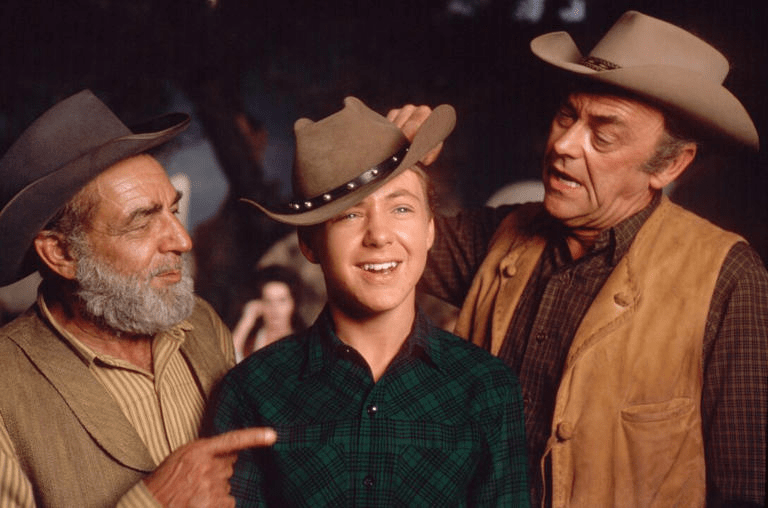
📷pinterest.com
The series was very popular, jumping to number one immediately. The plot is that a large wagon train is traveling through the west from Missouri to California. Ward Bond starred as the wagon master Seth Adams (when he died in 1960, John McIntire took over). Robert Horton played scout Flint McCullough; eventually he opted to leave and was replaced by Robert Fuller. Oddly, Horton and Fuller shared a birthday and were six years apart in age.
If I listed all the guest stars during the eight seasons, you would still be reading this next Monday. Just know, there were a lot.
The show was adapted from a 1950 John Ford film titled Wagon Master. In a 1960 episode, John Ford stepped in to direct an episode, “The Colter Craven Story.” One guest star I have to mention in this one was John Wayne. He speaks from the shadows as General Sherman (Wayne’s real name was Marion Michael Morrison, so for this credit, he went by Michael Morris) in this episode.
The original theme song was written by Henri Rene and Bob Russell and conducted by Stanley Wilson. A more contemporary theme accompanied season two, and it changed a few more times during the run of the show.
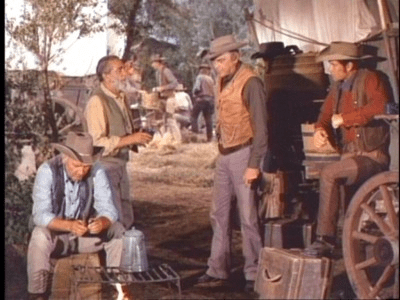
📷msn.com
The show had a huge budget for the time: $100,000 (about a million in today’s world of television). It was about 40% more expensive than most westerns at the time, and that is part of why it was able to feature so many guest stars.
When Gene Roddenberry pitched Star Trek to the networks, he described it as “a Wagon Train traveling across the universe.” He also hired writer Gene L. Coon who wrote 23 episodes of Wagon Train.
While wagon trains are considered an icon from our history, so was the product of the series’ first sponsor, the Edsel Division of the Ford Motor Co.
The show was an hour long and shot in black and white for the first six seasons. For season seven, the network filmed the show in color and increased the length to 90 minutes. The ratings were still high but didn’t increase, so the network could not justify the changes, and the television show went back to an hour in black and white.
📷dvdtalk.com
The show was placed on Wednesday nights up against Leave it to Beaver and Disneyland. Even with that competition, it was in the top thirty and by its second season, had jumped to the top ten where it stayed until it was sold to ABC. ABC kept the show on Wednesday nights, and it ran against The Virginian, both being in the top thirty in 1962.
So many people have fond memories of this show. It was on six seasons, but I think it was finally cancelled even though it was in the top thirty because of the western overload, ushering in the shows like Get Smart, The Man From UNCLE, Lost in Space, and The Smothers Brothers Show. Check out your favorite guest stars who were on the show and watch those episodes to see what it was like.
It’s Eerie Shows month. Last week we learned about Alfred Hitchcock Presents, a thriller anthology show. Today we have another anthology series of science fiction themes – The Outer Limits. The show examined the nature of man every week and included many classic science fiction themes such as life in outer space, time travel, and human evolution.
The original title of the show was Please Stand By. It was on ABC from 1963-65. Joseph Stefano was the producer for season one and the creative guiding force, writing more episodes than anyone else. He was the writer of Hitchcock’s film, Psycho. Harlan Ellison, a prolific writer, wrote two episodes for season two. Robert Towne wrote a script for the show and later received an Oscar for his writing for Chinatown.
The show also employed a well-known cinematographer in Conrad Hall. He worked on a variety of television shows and in film, winning Oscars for Butch Cassidy and the Sundance Kid, American Beauty, and Road to Perdition; he was nominated for another seven movies.
📷imdb.com
The shows began with a Control Voice saying:
“There is nothing wrong with your television set. Do not attempt to adjust the picture. We are controlling transmission. If we wish to make it louder, we will bring up the volume. If we wish to make it softer, we will tune it to a whisper. We will control the horizontal. We will control the vertical. We can roll the image, make it flutter. We can change the focus to a soft blur or sharpen it to crystal clarity. For the next hour, sit quietly and we will control all that you see and hear. We repeat: There is nothing wrong with your television set. You are about to participate in a great adventure. You are about to experience the awe and mystery which reaches from the inner mind to The Outer Limits.”
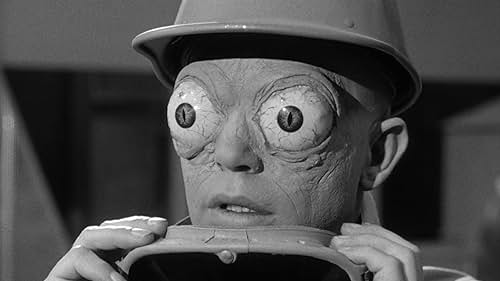
Seasons one and two were a bit different with season two focusing more on hard science. Sometimes we forget that special effects were not something these crew members had much experience with on television. Often, the cast was experimenting, just trying to find solutions to creating these new effects. Robert Justman, who was one of the assistant directors on the show, talked about how they created monsters on the show in his Television Academy interview. He said for one of the first monsters, they had planned to use a negative image instead of a positive one, but that was not enough. He got the idea to rub the image with Vaseline and it created these iridescent spots on it which gave them their monster.
📷moviemarket.com
The music for season one was by Dominic Frontiere and season two was supplied by Harry Lubin. Frontiere was credited with 59 shows and films, including Matt Houston and Vega$. Lubin was best known for his music on The Loretta Young Show and One Step Beyond.
Season one garnered good ratings and their fans were very loyal. However, the ratings dipped in season two after changing focus and moving from Monday to Saturday night. Stefano knew that competing with The Jackie GleasonShow on Saturday night meant the show was over, and he left before season two started.
The episodes of The Outer Limits were often confused with The Twilight Zone, not only by viewers but by actors appearing in them. We’ll learn more about The Twilight Zone next week.
Another fan of the show was Gene Roddenberry. He was often on set, and the show would become a big influence on Star Trek later in the decade. A lot of the crew, cast, costumes, and props on The Outer Limits made their way into StarTrek episodes.
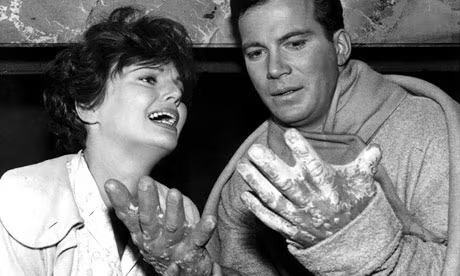
📷theguardian.com
Like so many shows, this one was revived in 1995, and it ran for seven seasons.
I’m not sure why but I don’t remember watching this show in reruns the way I did The Twilight Zone. Maybe it was not shown as often or maybe it was on when our family was watching other shows, but it was interesting to learn what made it different from The Twilight Zone. I’m not sure how many of the “monster” episodes would compete with the special effects of today, but it’s worth taking a look at a few of them and the science they not only developed but the technology that was invented.
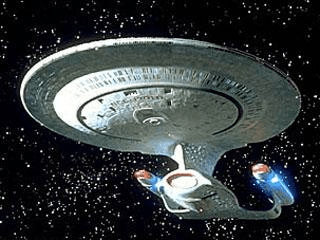
Today we are winding up our “I Robot” blog series. We began our journey with Buck Rogers in the 25th Century, an outer space drama that was not that successful. Today we are at the other end of the universe spectrum, discussing Star Trek: The Next Generation. You will be very familiar with this show if you were a teen or young adult in the late eighties and early nineties or if you were a devoted fan of The Big Bang Theory.
The Cast Photo startrek.com
Gene Roddenberry, the creator of Star Trek, brought Star Trek: The Next Generation to the small screen two decades later; this show would stay on the air for seven seasons, producing 178 episodes. The series is set in the 24th century; the original show was set in the 23rd. Earth belongs to the United Federation of Planets, and this show features a Starfleet ship, the USS Enterprise, as it explores the Milky Way.
Roddenberry served as executive producer, as did Maurice Hurley, Rick Berman, Michael Piller, and Jen Taylor. The show focuses on the mission and the personal lives of the crew members: Captain Jean-Luc Picard (Patrick Stewart), William Riker (Jonathan Frakes), Worf (Michael Dorn), Geordi La Forge (LeVar Burton), Deanna Troi (Marina Sirtis), Tasha Yar (Denise Crosby), Wesley Crusher (Wil Wheaton), Dr. Beverly Crusher (Gates McFadden), and our major concern today, Data (Brent Spiner).
Photo: startrek.com
The show was very popular, and by its fifth season, reached 12 million viewers. The show would go on to spur other Star Trek series and movies, as well as novels and comic books.
Critics also liked the show, and it received 19 Emmy Awards and a Peabody. In 1994 it became the first syndication show to be nominated for an Outstanding Drama Series Emmy.
The theme was also a nod to the original series, combining Alexander Courage’s original piece with Jerry Goldsmith’s theme for Star Trek: The Motion Picture released in 1979.
In an unusual deal, Paramount decided to broadcast the show in first-run syndication on independent networks. As a “barter syndication,” the show was offered to local stations for free. The station got five minutes of commercial time to sell to local businesses, and Paramount sold seven minutes to national advertisers. Stations had to agree to purchase reruns in the future, and only those stations that participated in this deal were able to purchase reruns of the original series which was still extremely popular.
Some sites stated that Paramount received $1 million for advertising for every episode; by 1992 the studio received $90 million a year and the episodes cost $2 million each to produce.
The show debuted in 1987. The first season did not start off so well. The show had a $1.3 million per episode budget. The staff had a lot of creative freedom, but many of the writers had disagreements with Roddenberry and left the show. They felt that Roddenberry was too strict with the themes and the characterizations. It’s hard to argue with his vision too much because it won several Emmys and was extremely popular.
Photo: treknews.com
Season two brought some critical changes to the series. Beverly Crusher was replaced by Chief Medical Officer Katherine Pulaski (Diana Muldaur). Whoopi Goldberg guest starred in her first episode. The plots were more sophisticated and there were some comic elements sprinkled throughout the drama.
Personnel changes were made for season three. Head writer Hurley was let go. Roddenberry suffered from some health issues which necessitated his stepping back and Berman took over more production chores. Season four had eight episodes nominated for Emmys. The episode “Family” was the only one that did not feature Data. Crusher left the show in season four as well.
Roddenberry passed away during season five. During season six, astronaut Mae Jemison came on board as Lt. Palmer, and Stephen Hawking appeared in the season six cliffhanger.
Photo: tor.com
The final season introduced themes that would carry into Star Trek: Deep Space Nine and Star Trek: Voyager. The finale of the show was filmed in Toronto where thousands of people watched in person.
The cast was surprised that the seventh season was the last one, because they had contracted for eight seasons. Paramount wanted to make several films and felt that the movies would be less successful if the television show was still airing. The cast must have been close because they claimed to be life-long friends, and in 1992 when Burton married, Spiner was best man and Stewart, Frakes, and Dorn were ushers.
Data was an android who served as lieutenant commander. Data’s perspective on humanity was similar to Spock’s in the original show. Spiner would also be cast as Data in 2020 in Picard. Data was found by Starfleet in 2338. He was the sole survivor on Omicron Theta in the rubble of a colony left after an attack from the Crystalline Entity.
Dr. Noonian Soong built Data on Omicron Theta. He had an evil twin, (who doesn’t have one on television?), named Lore. Eventually, Data dismantled Lore. One resource I read said that Data was destroyed during the Enterprise E’s battle with the Scimitar in 2378. I have to take their word for that because my Star Trek trivia is not advanced enough to confirm or deny it.
In 1974 Roddenberry created a project for television called The Questor Tapes. The show centered around an android who was studying humanity. When The Next Generation was proposed, Roddenberry reinvented this android and combined it with Xon, the curious Vulcan from Star Trek: Phase II and came up with Data. However, Spiner said he modeled Data after Disney’s Pinocchio.
Photo: aniandizzy.com
Fun fact, since we started with Buck Rogers in this month’s blog, Data has a positronic brain—in 1981, Buck Rogers used this same term in one of their episodes. They both were honoring Isaac Asimov who first used the term in his story “Runaround” in 1942.
According to Spiner, Data was pronounced “dat-uh” but Stewart, being British, said “day-tah.” On the show Data has a pet cat named Spot. Spiner was not fond of that idea because he was not a cat fan at all.
Data was supposed to be the Chief Science Officer, the same position Spock had on the original show. The uniform for that position was blue. Unfortunately, the blue clashed with his make-up. He was transferred to the Chief Operations Officer with a gold uniform. I never really understood why the Chief Science Officer could not wear a gold uniform. This was a new generation and I did not think that there were other shows from that century that made it impossible to portray that officer in gold? I mean, sports teams change their colors from time to time. However, if I am missing something, please feel free to enlighten me.
Obviously, comparing Buck Rogers to Star Trek: The Next Generation, it is easy to see why the Next Generation was on the air so much longer and attracted so many more fans.
Photo: startrek.com
Data was a fun character. While he can blink and age, we are reminded that he is not human. His duties with the crew included navigation and systems control. Because androids don’t sleep, he was able to take the night shift. Data was interested in literature and the humanities. He likes mysteries. Like Spock, with his lack of emotions, love is very hard, if not impossible, for him. He does make many friends though. He can’t get sick which is convenient if the rest of the crew is affected, but computer viruses can damage him. While he can process data in a millisecond, his inability to read human emotions is troubling for him. Although he does feel a bit arrogant; as he said “I am superior, sir, but I would gladly give it up to be human.” I can’t argue with his claim of superiority when I look around at some of the things humans have been doing the past three or four years.
If I had to go through life with a robot, based on the four we discussed this month, Data would definitely be my choice. I hope you had fun with this series.
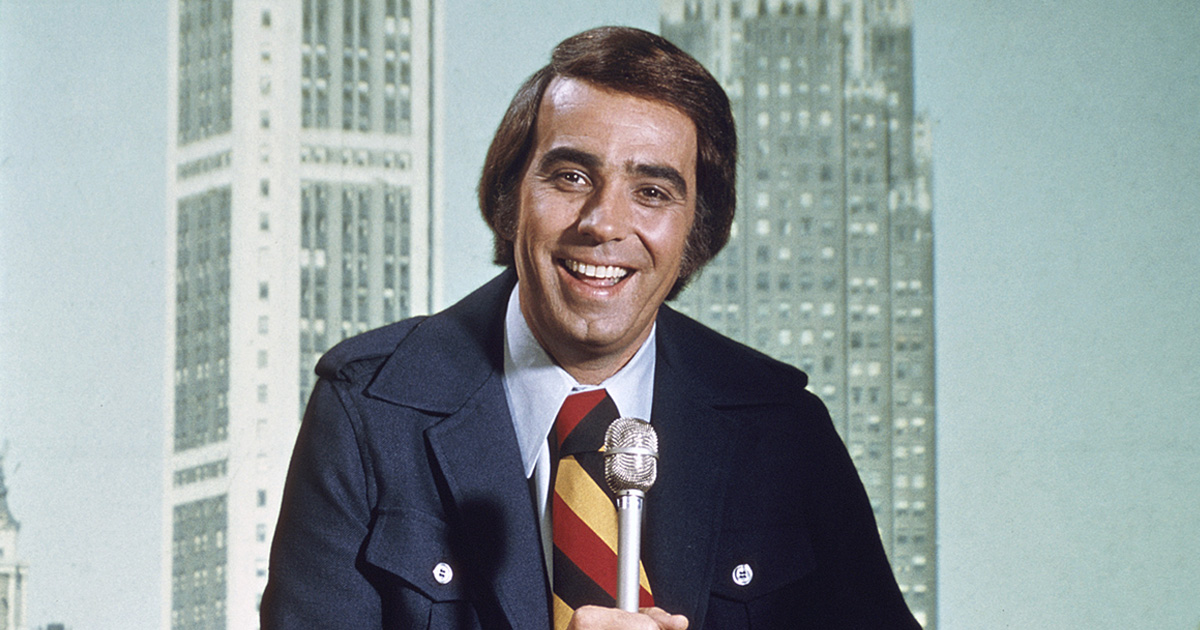
As we continue learning about popular talk shows of the past, today we look at one that was on really, really late: Tomorrow with Tom Snyder.
Photo: postindependent.com
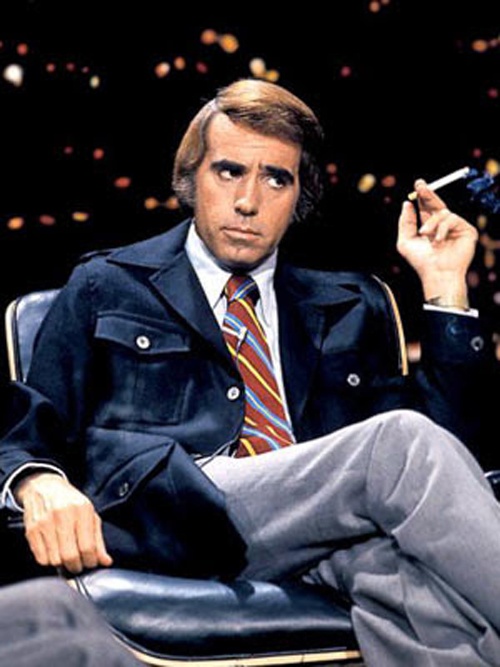
Often labeled as The Tomorrow Show, this program was on NBC from 1973-1982. After the light chatting and exchange of humorous stories on The Tonight Show with Johnny Carson, you could hear Snyder having in-depth conversations with his guests. He was not afraid to ask the hard-hitting questions and do a bit of interrogation with the person in the chair across from him.
This was back when everyone smoked on television. Turn on Match Game and you see smoke rising from almost every celebrity’s cubicle, catch an episode of The Andy Griffith Show and you might see Andy puffing away, Fred Flintstone and Barney Rubble advertised cigarettes, and the quintessential memory of Tom Snyder is him sitting in the chair, with a cigarette.
Photo: pinterest.com
Dan Aykroyd did a great impression of him on several Saturday Night Live episodes. Snyder’s catch phrase was “Fire up a colortini, sit back, relax, and watch the pictures, now, as they fly through the air.” Snyder was easy and tough to portray. He did not have the humor of Carson, the intelligence of Paar or the wit of Steve Allen, but his enthusiasm was contagious. His lack of polished and prepared questions often led to some incredible celebrity insights.
Dan Akroyd’s version of Snyder Photo: pinterest.com
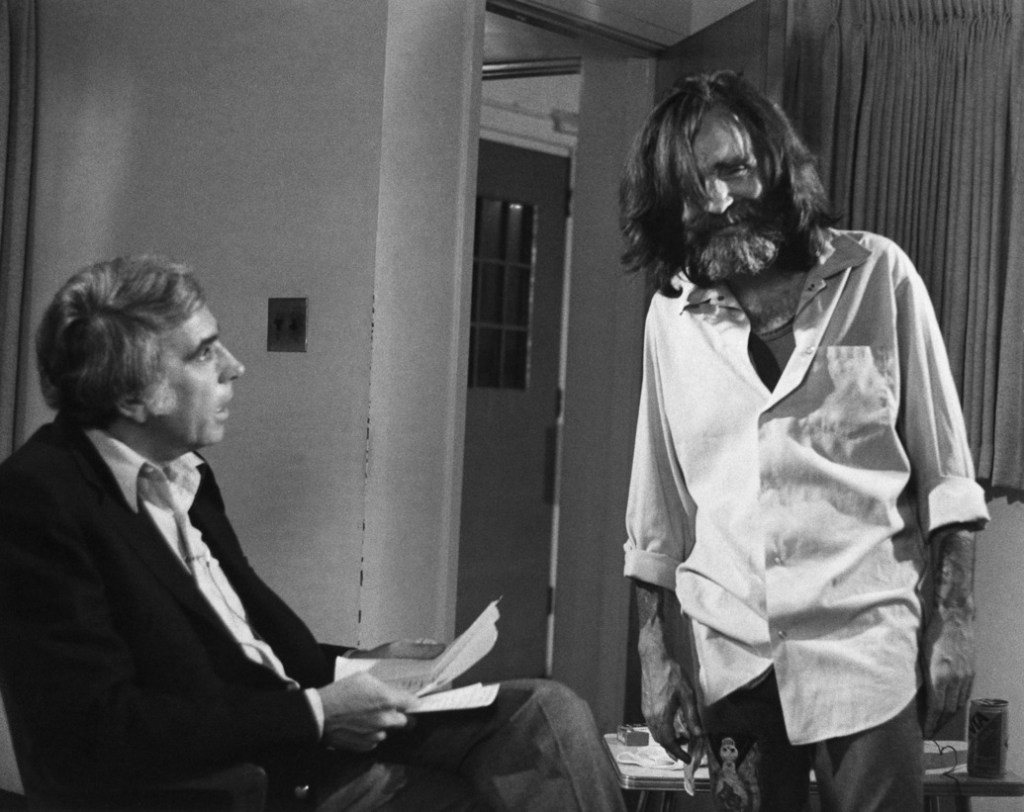
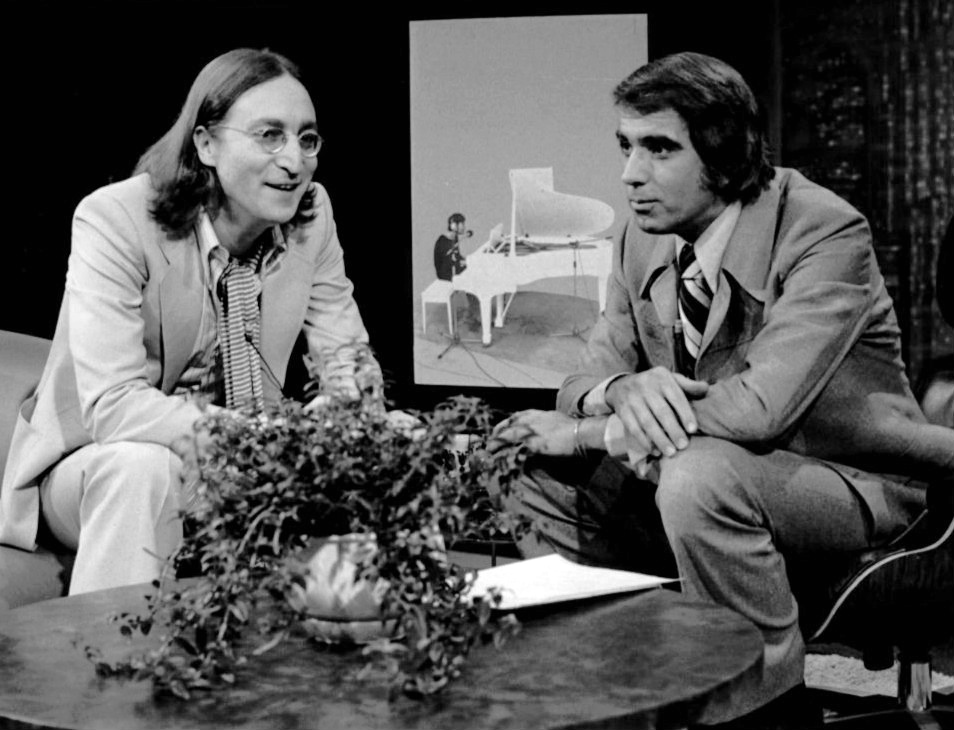
You never knew what you were in for when you turned on this show. Perhaps it was an interview with Harlan Elison, Elvis Costello, John Lennon, Ayn Rand, Johnny Rotten of The Sex Pistols, Kiss with an obviously drunk Ace Frehley being corralled by the rest of the band members, or one of the most disturbing, Charles Manson.
Trying to Interview Charles Manson Photo: rollingstone.com
One of the most fun shows was his interview with Disney animator Ward Kimball discussing his full-size and toy train collections. I wish I could see the show from April 4, 1978 when he interviewed George Fenneman, Harry von Zell, Don Wilson, and John Reed King, several of the most amazing announcers ever. (I have done blogs on Fenneman, von Zell with the Burns and Allen Show, and Wilson; I was not familiar with King but he hosted a lot of television and radio games shows, but I’m sorry to say I did not recognize any of the titles.)
A few other shows that looked interesting included his interview with Alfred Hitchcock about his fifty-year film career; his discussion with producer-creator Gene Roddenberry, actors DeForest Kelley, James Doohan, Walter Koenig and convention organizer Al Schuster about Star Trek; and his talk with singers Ella Mae Morse, Margaret Whiting, Lina Romay, and Kay Starr about life in the big-band era.
With favorite guest John Lennon Photo: wikipedia.com
Snyder often cited his most embarrassing moment of the show as his interview with Meat Loaf, whose real name is Marvin Lee Aday. Snyder said for the first ten minutes of the interview, he referred to the singer as “Meatball.”
When the ratings began to decline, the network opted to put David Letterman in the 1:30 EST slot and offered Snyder the 2:30 spot which he declined.
Kiss Photo: fanpop.com
I’m not sure if it was Snyder’s call or the network’s but he never had an original theme song. He started with “Love’s Theme” by the Love Unlimited Orchestra, used Dylan’s “Lay Lady Lay” for a time, and later used “Love is the Message” by T.S.O.P. (The Sound of Philadelphia).
Snyder was born in 1936 in Milwaukee, Wisconsin. Although he had a life-long love of radio, his plan was to study medicine. Eventually, he switched his major to journalism and was hired as a radio reporter at WRIT in Milwaukee.
In the 1960s Snyder transitioned to television, and one of his jobs was where else but Cleveland, Ohio. (If you read all my blogs this month, you’ll see Mike Douglas and Phil Donahue also started tv careers in Ohio.)
In 1970, Snyder moved to Los Angeles from Philadelphia to anchor the 6 pm newscast. He continued to broadcast the news along with the Tomorrow show. When the show was cancelled, he moved back to New York to continue his news career with ABC. He finished his career with ABC back in Los Angeles where he returned in 1985.
Photo: legacy.com
Don’t get me wrong—I love Jimmy Fallon, and he has some fascinating guests, but I miss real conversations because it’s hard to get to true portrayals of someone in a ten-minute chat. I don’t know if viewers would be willing to sit through an hour-long interview these days; everyone wants the quick clips, but it’s like forgoing reading The Adventures of Huckleberry Finn to read the cliff notes. You might get the highlights but you miss the small pleasures and the “aha moments.” I guess I miss “aha moments.”








 thewritelife61