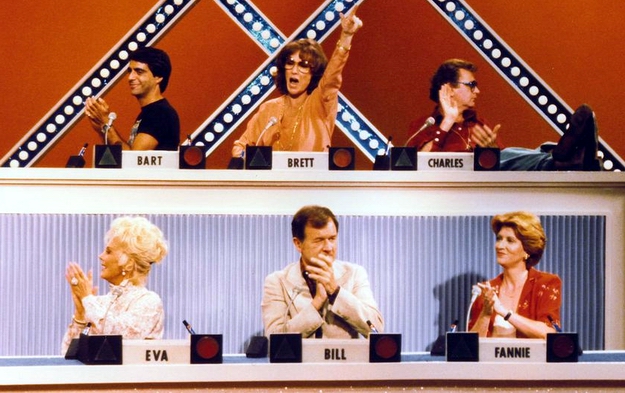
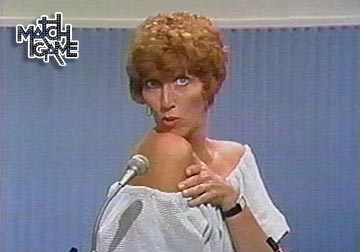
The Elegance of What’s My Line

This month, we are looking at popular fifties stars and shows. While the show we are talking about today outlasted the fifties by almost another decade, it gained its popularity during the 1950s. Today we are learning about What’s My Line.
📷wikipedia.com

This panel game show was on CBS. It debuted in 1950 and ran until 1967. The show was produced by Mark Goodson and Bill Todman, and the working title was Occupation Unknown. Perhaps the title should have been What’s My Schedule. The show began on Thursday nights as a live show. Later in season one, it switched to every other Wednesday and then moved to every other Thursday. In October of 1950, it landed on Sunday nights where it would remain throughout the rest of its life.

The original series, which was usually broadcast live, debuted on Thursday, February 2, 1950, at 8:00 p.m. ET. After airing alternate Wednesdays, then alternate Thursdays, finally on October 1, 1950, it had settled into its weekly Sunday 10:30 p.m. ET slot where it would remain until the end of its network run on September 3, 1967.
📷imdb.com

Celebrity panelists ask contestants questions to figure out their occupation. While most of the contestants were not famous, there was a “mystery guest” segment. The panelists were blindfolded for this segment and asked questions to determine the celebrity. People enjoyed watching the panelists banter with each other and the sophisticated humor they shared with us.

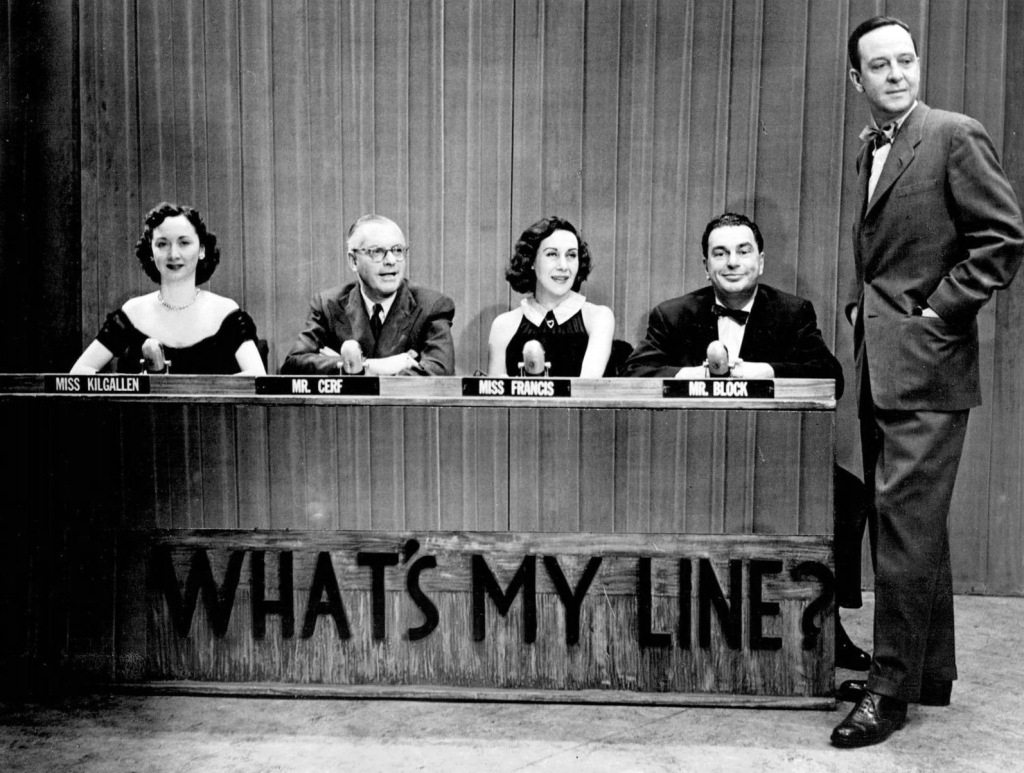
Each episode had four panelists. The most famous panelists were Dorothy Kilgallen, Arlene Francis, and Bennett Cerf. John Daly was the moderator. The first show in the series featured New Jersey governor Harold Hoffman, Kilgallen, poet Louis Untermeyer, and psychiatrist Richard Hoffman. Later in season one, Arlene Francis came  on board with Kilgallen, Untermeyer and writer Hal Block. In season two, Cerf replaced Untermeyer and Steve Allen took over for Block in season three. When Steve Allen left to host The Tonight Show, comedian Fred Allen was part of the panel from 1954 until his death in 1956. Kilgallen was killed in 1965 and her replacement varied for two years. Her death is a mystery itself and well worth reading about. Many people think she was killed because of her investigation into JF Kennedy’s assassination.

📷facebook.com

The panelists started the series wearing business clothing, but by 1953 they shifted to formal attire with the men showing up in suits and ties and women in formal gowns and gloves. Unfortunately, we never got to see the beautiful colors of these clothes. Until 1966 everything was filmed in black and white. In the final season, the show was broadcast in color, but the kinescopes were saved in black and white.

Both critics and television viewers liked the show, and it won an Emmy for Best Quiz or Audience Participation Show in 1952, 1953, and 1958.

Because it was a game show, most of the 700 episodes were on kinescope, 16 mm filming. Because many original shows in that era were recorded via kinescope onto silver nitrate film, many networks destroyed recordings to recover the silver. After learning that the network was not keeping the recordings, Goodson and Todman offered to pay for the broadcast and retained the recordings from season three on, however many of those were also lost along the way. A variety of the episodes are stored at different archive centers around the country. My home state houses one from 1951 at the University of Wisconsin Center for Film and Theater Research in Madison.
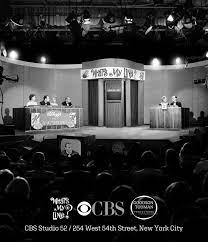
📷facebook.com

The remaining kinescopes which have been digitized have been seen on television on the Game Show Network and 757 of them exist on YouTube.

Many of us remember the reruns and seeing the contestant come on stage and write their name on a chalkboard as Daily said “Will you enter and sign in please.” The very first contestant was Pat Finch who was a hat check girl at the Stork Club.

The first mystery guest was New York Yankees shortstop Phil Ruzzuto. Many of these guests used fake voices to answer questions. Some of the mystery guests who appeared on the show included Julie Andrews, Louis Armstrong, Lucille Ball, Jack Benny, James Cagney, Gary Cooper, Joan Crawford, Salvador Dali, Sammy Davis Jr., Doris Day, Aretha Franklin, Ava Gardner, Judy Garland, Jackie Gleason, Alfred Hitchcock, Bob Hope, Ginger Rogers, Roy Rogers, Eleanor Roosevelt, James Stewart, Elizabeth Taylor, and John Wayne.
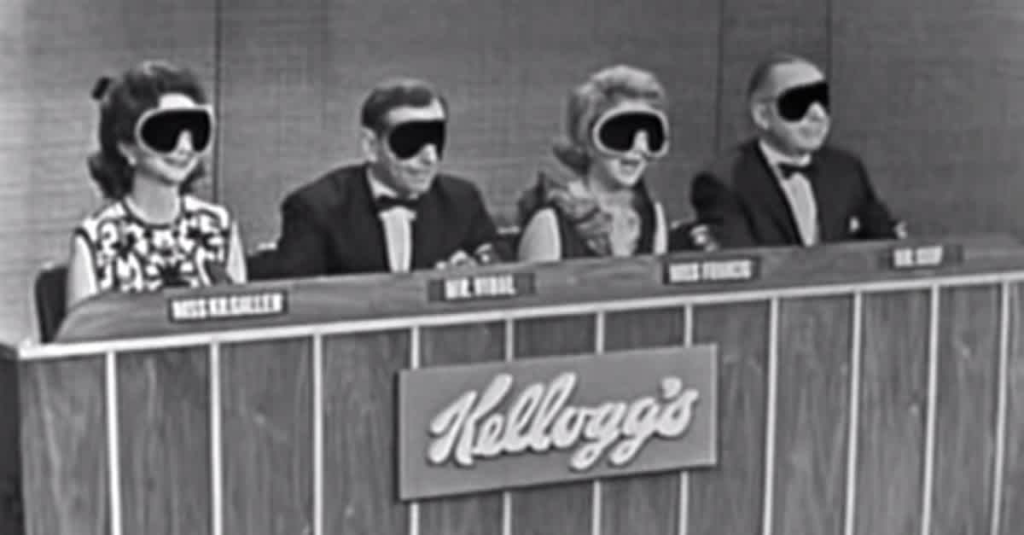
📷littlethings.com Blindfolds come out for a mystery guest

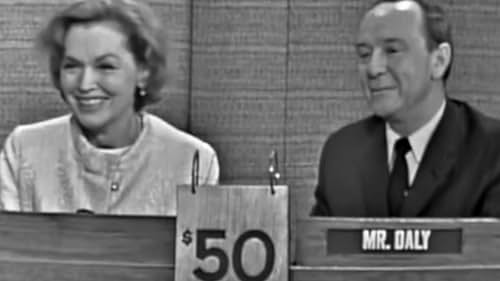
The emcee would choose a panelist who could ask yes or no questions. If the answer was yes, they could continue until they got a no response and then the next panelist would be able to pose questions. If the contestants answered no, Daily flipped a card; when the contestant had ten cards, they won $50.

If you have heard of or even used the term “Is it bigger than a breadbox?,” you might want to know that it came from the show. Steve Allen asked the question in 1953, and it became a standard question after that night. In fact, on one episode, the guest was a breadbox maker, and when Daly could not help laughing at the question, Allen figured it out.
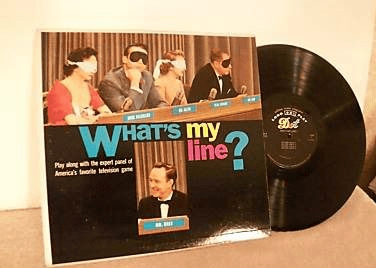
In 1967 The New York Times broke a story that CBS was canceling many of their game shows. None of the panelists had been told that the show was not renewed. Despite the fact that the low costs of the game shows made them profitable, the low ratings led the network to conclude that game shows were no longer suitable for prime-time schedules.

After the show was canceled in 1967, it did go into syndication five days a week. Soupy Sales joined Francis and Cerf on the panel of the reboot. A variety of other panelists took the fourth seat including Joyce Brothers, Jack Cassidy, Bert Convy, Joel Grey, Meredith MacRae, Henry Morgan, Gene Rayburn, and Nipsey Russell. The show ended in 1974. Cerf died during the run of the syndicated series.

It’s hard to believe, but Colonel Harland Sanders was on the show as founder of Kentucky Fried Chicken, although he was not easily recognized at the time, so he was not a mystery guest. While no president ever appeared while in office, Ford, Carter, and Reagan all appeared on the show.

📷youtube.com We switched to a first-name basis in the 70s

It would be fun to see this show on television today, but I’m afraid it would not be the same. In the way that Dick Cavett had a manner of interacting with guests to ask amazing questions with his humor and intelligence, this game show had that same atmosphere. Today, I think the banter would border more on crudeness than wit. There is something charming about a panel of very intelligent people talking with each other, trying to determine the identities of the people they were interviewing while being dressed to the nines that was fun to sit in on and be a part of. I guess that’s why this show is in our series where we are saluting the fifties because that was the era where it could shine.
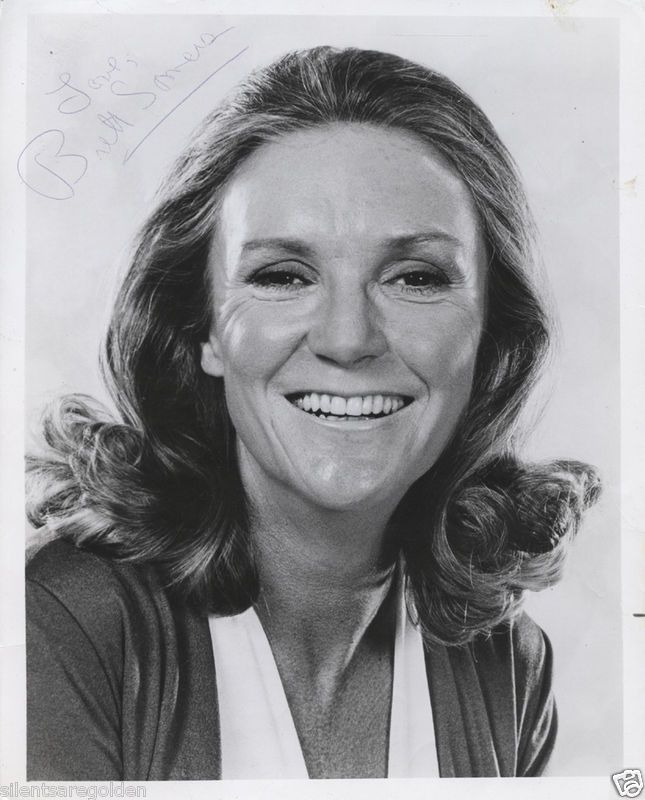
This Panelist Gets My “Blank” Endorsement: Brett Somers

I had so much fun learning about Fannie Flagg, that I decided to tackle getting to know some of the other regular Match Game panelists. Today we meet Brett Somers.  For someone who has fewer than ten acting credits for any given decade, Brett Somers became a well-known star. She became a household name after appearing on Match Game. Let’s learn a bit more about her life.

somers2

Brett was born in July of 1924, and her real name was Audrey Dawn Johnston. While she was born in Canada, she was raised in Maine and spent much of her life in New England. She left home at 18 to pursue an acting career. She chose her stage name for the character “Brett” in Hemingway’s The Sun Also Rises and her mother’s maiden name of “Somers.” She settled in Greenwich Village, married Robert Klein, and had a daughter. She was not married long before they divorced.

somers1

Brett joined the Actors Studio in 1952. She married Jack Klugman in 1953; they would have two sons. In the 1950s, Brett’s television appearances  were all on drama series such as Robert Montgomery Presents and The Kraft Theatre. In the 1960s she appeared primarily on westerns and legal dramas, including The New Breed, Have Gun Will Travel, and The Defenders. In the 1970s, she showed up on a lot of sitcoms. She was in Love American Style, The Mary Tyler Moore Show, and The Odd Couple with her husband Klugman to name a few. On The Odd Couple, she played the role of Blanche, Oscar’s ex-wife.

somers3

In addition to The Odd Couple, Brett had recurring roles on The New Perry Mason Show and Battlestar Gallactica.

Brett had her Broadway debut in Maybe Tuesday in 1957, which closed after five performances. She would appear onstage in Happy Ending, The Seven Year Itch, and The County Girl. She also appeared in three movies: Bus Riley’s Back in Town and A Rage to Live, both from 1965 and in Bone from 1972.

somers10

Despite her many television series appearancs, she is best known for her role as a panelist on the various versions of Match Game, amassing 1591 episodes overall. Some viewers compared the show to a cocktail party with money given away. What’s surprising, given her popularity on the show, is that she was not originally part of the cast. Klugman appeared on the first week of the show in 1973, and he suggested they try Somers. They did, and she never left. Her dry sense of humor and great wit provided her a job for nine years.

somers11

Match Game can be seen on The Game Show Network. The concept of the show was easy and fun. Two contestants were each given two questions with a blank in them, such as “The surgeon said, ‘The man I’m operating on must be a magician. When I reached in to pull out his appendix, I got a ___________ instead!’” Six celebrity panelists wrote down their answer to the question and then the contestant got a point for each person who matched their answer.

somers8

Brett and pal Charles Nelson Reilly, who often referred to her as “Susan,” kept each other in stitches and provided entertainment for the other panelists. In a September 12,  2012, Whitney McIntosh (in the blog ”This was Television”) referred to them as “rambunctious school children left to their own devices” which captures their relationship on the show perfectly. Their banter and quick quips kept viewers tuning in. For example, on one show, someone had mentioned that one of the younger panelists had a nice body. Charles turned to Brett remarking that her body was just as beautiful as the other woman’s.  The audience clapped, and Brett had just finished saying thank-you, when Charles added, “But you should take yours back because you’re putting a lot of wrinkles in it.” No one laughed harder than Brett.

In a Playbill interview in July of 2003, Andrews Gans asked Brett why she thought Match Game was still so popular. Somers paused and then answered, “Because of the fact that there was no structure to it. It was just six people having a good time and teasing one another. There was never any meanness. And people really sensed when Charles [Nelson Reilly] would jerk his head and go, ‘She seems a little odd today’ — they knew there was no meanness in it. And, Gene was the greatest straight man who ever lived. He would ask you the questions and would set it up for you. He was wonderful. And I think the relaxation of the atmosphere.”

somers4

After Brett died, Marcia Wallace, on of her best friends, discussed Brett’s career on Match Game. “She was my best friend. I made a lot of friends there. She and Charles were the heart and soul of the show. Their relationship just was magic. And then, of course, I think there was no better host in the world ever than Gene Rayburn. He was funny, he was sassy, he was naughty, he kept the game going, he made the contestants feel good, he set up the celebrities. He was perfect.”

somers9

Not long after Somers started with Match Game, she and Klugman separated. Three years later, in 1977, they divorced but remained friends. Although I read in many reports they never divorced, and many sites listed them as separated but never divorced. I believe California documents exist to show they did divorce a few years after their separation.

In 2003, Somers wrote, co-produced, and acted in a critically acclaimed one-woman cabaret show, An Evening with Brett Somers. Somers wrote the show with Mark Cherry, and he accompanied her on the piano and served as the director and arranger.

Brett shared her thoughts on doing a cabaret show–“It never occurred to me in a million years that I’d be doing a cabaret show. I was standing backstage, and I thought, ‘You’re an older person. You should be lying down somewhere in a nice cool bed watching TV!’ And I went out there, and I just had a great time.”

In 2004, Somers was diagnosed with stomach and colon cancer, but she continued to perform in the show. Brett had a period of remission but passed away in 2007 at her home in Connecticut.

In 2005, Somers reunited with Jack Klugman onstage in Danger, People at Large, three short comedies presented at Fairfield University. It was the first time in three decades that the former couple had performed together.

flagg

In my blog on Fannie Flagg a few weeks ago, I found her reflection on her friendship with Brett and Charles:

 Besides being hilarious, Brett and Charles were two of the smartest people I have ever known. On Match Game, they got such a big kick out of each other! They razzed one another and everybody else on the panel mercilessly, and they were particularly relentless on the people they really liked. It was never mean or hurtful, and they loved it when you razzed them back.

One of the happiest times in my life was in 1980 when I was doing “The Best Little Whorehouse in Texas” on Broadway, and Charles, Brett, and I were staying at the Wyndham Hotel at the same time. Every day at around 4 o’clock in the afternoon they would come to my room for cocktails. Many is the time I would come home from after the show and they would still be sitting there having a good time. The only thing that changed was the position of Charles’ toupee.
In the Gans interview, he asked Brett how she would like to be remembered. Her answer was “I would like them to think that I gave them pleasure and joy.”

I think we can all agree that is how we remember her!


1917 Was A Very Good Year

This week I was inspired by the blog “Once upon a screen . . .” to take a look at television pioneers who were born in 1917. (For some great articles on pop culture, movies, and television, check out her blog at aurorasginjoint.com.) Let’s get to know 17 of the stars who helped shape the direction of television during the golden age.

Herbert Anderson. Best known for his role as Henry Mitchell on Dennis the Menace, Anderson began his career making movies.  He transitioned to television in 1953, appearing on 61 shows over the years.  He appeared in episodes on such shows as Gunsmoke, Petticoat Junction, Batman, I Dream of Jeannie, Man from U.N.C.L.E., My Three Sons, Bewitched, and The Waltons.  One of my favorites is the first season of The Brady Bunch.  The kids are sick and both parents call a doctor.  The girls were used to a woman played by Marion Ross while the boys always had a man, Anderson.  After weighing factors to pick one of them, the family decides to keep both doctors. He died from a heart attack in 1994.

Carl Ballantine. Ballantine began his career as a magician and inspired many famous magicians since.  He began working in Las Vegas and on television as a magician.  Eventually he transferred to movie roles and after appearing in McHale’s Navy on the big screen, took on the same role of Lester Gruber on the television series. He went on to appear on 33 additional tv shows including That Girl, Laverne and Shirley, Trapper John MD, and Night Court. He passed away at his home in 2009.

bellamy1

Earl Bellamy. Earl Bellamy directed episodes for 101 different television shows.  He is best known for The Lone Ranger and The Tales of Wells Fargo.  He directed 82 episodes for Bachelor Father, one of my all-time favorite sitcoms.  In the 1960s he specialized in sitcoms including That Girl, The Brady Bunch, The Partridge Family, and My Three Sons while the 1970s saw him transition to dramas including Marcus Welby MD, The FBI, Medical Center, and Eight is Enough. In 2003 he passed away from a heart attack.

Ernest Borgnine.  Best known of his Oscar-winning role of Marty in 1955, Ernest enlisted in the Navy in 1935 until 1941.  In 1942 he re-enlisted and served until 1945.  After doing some factory work, he decided to go to school to study acting and began his career on Broadway.  He was also in the movie McHale’s Navy and went on to tackle the role in the television series.  He loved working with Tim Conway and in later years they did the voices for Mermaid Man and Barnacle Boy in SpongeBob SquarePants. He appeared in 47 different shows over the years, including the series Airwolf which he starred in. Borgnine appeared in the final episode of ER which he won an Emmy for. He was married five times, including a 32-day marriage to Ethel Merman.  His last marriage to Tova lasted 39 years. He died of kidney failure in 2012.

Raymond Burr. Best known as Perry Mason, Burr started his career on Broadway in the 1940s and then appeared in 50 films from 1946-1957. In 1956 he auditioned for the role of Hamilton Burger, the DA in Perry Mason.  He was told he could have the starring role if he lost about 60 pounds which he accomplished. He later starred in Ironside, another crime drama and appeared on a variety of other shows.  Burr had many interests including raising and cross-breeding orchids; collecting wine, art, stamps and sea shells; reading; and breeding dogs.  He was extremely generous, giving away much of his money over the years.  He passed away from cancer in 1993.

Phyllis Diller. Known for her wild hair and clothing, Diller was one of the pioneering stand-up female comedians.  She appeared in films in the 1940s, worked in radio in the 1950s, and began her stand-up career in 1955. Her first television appearance was in You Bet Your Life.  She appeared in 40 shows including Batman, CHIPs, Full House, and The Drew Carey Show.  She had her own show titled The Pruitts of Southampton, and in reruns The Phyllis Diller Show that ran from 1966-67.  She recorded comedy albums in the 1960s, wrote several books during her career, was an accomplished pianist, performing with symphony orchestras across the US and taught herself painting which she continued throughout the 1960s and 70s. Her husband Fang was not real, but she used him in her comedy routines.  She died of natural causes in 2012. My first memory of Diller was in the movie Boy Did I Dial a Wrong Number with Bob Hope which my parents took me to at the drive in.

Ross Elliott. A prolific actor on stage, film, and television, Elliott appeared in 184 different shows from sitcoms to westerns to medial dramas, all between 1951 and 1983. He passed away from cancer in 1999.

June Foray.  One of the greatest voice actors ever, Foray has been active in the industry since she had her own radio show.  She did off-air voices for many sitcoms including I Love Lucy, Father Knows Best, Jack Benny, Rawhide, Get Smart, Lost In Space, and Bewitched.  She also appeared in more than 76 animated series.  She is perhaps best known as Rocky in Rocky and Bullwinkle and as Cindy Lou Who in How the Grinch Stole Christmas and Karen and other voices in Frosty the Snowman. Foray is still alive today.

Zsa Zsa Gabor.  Unlike her sister Eva who became known as Lisa Douglas on Green Acres, Zsa Zsa seemed to make a career out of playing herself.  Of the 80 appearances she made in film and television, 20 of them were as herself. She was a true celebrity.  Crowned Miss Hungary in 1936, she came to the US in 1941 and began her career.  She was known for her extravagant lifestyle and many marriages: 9 with 7 divorces (including one to Conrad Hilton) and 1 annulment.

Sid Melton.  Known to most viewers today as handyman Alf Monroe on Green Acres, Melton began as a film star and went on to appear in 71 shows including Topper, Bachelor Father, Make Room for Daddy, That Girl, Petticoat Junction, I Dream of Jeannie, and Empty Nest. He died from pneumonia in 2011.

Alice Pearce. Although her career was cut short due to illness, I included Alice Pearce because her role as Gladys Kravitz in so memorable.  After spending her childhood in Europe, Pearce started on Broadway and after appearing in On the Town, she was brought to Hollywood to reprise her role in the movie version. She began specializing in comedy in the 1940s. In 1964 she turned down the role of Grandmama in The Addams Family and shortly after was offered the role of Gladys in Bewitched. She was already diagnosed with ovarian cancer when she began her role but didn’t tell anyone and was able to act for two seasons before she passed away from the disease. She received an Emmy for her work on Bewitched.

Gene Rayburn. One of the kings of game shows, Rayburn began his career as an actor, taking over for Dick Van Dyke in Bye Bye Birdie when Van Dyke began his television show. While he was on numerous game shows as a panelist or host over the years, Rayburn is best known for Match Game which first ran from 1962-69. It was revived again in 1973 and took several formats in the following years.  He died from heart failure in 1999.

Isabel Sanford. Best known as Louise Jefferson, she grew up in Harlem and performed in amateur nights at the Apollo Theatre. Her Broadway debut was in 1965.  After appearing as a maid in Guess Who’s Coming to Dinner, she was cast by Norman Lear in All in the Family which led to the series The Jeffersons.  When the show ended in 1985, she appeared in a variety of other shows until 2002.  She passed away from natural causes in 2004.

Sidney Sheldon.  A writer and producer, Sheldon created The Patty Duke Show, I Dream of Jeannie, and Hart to Hart, writing many of the scripts for all three series. After he turned 50, he began a career writing romantic suspense novels.  He died from pneumonia in 2007.

Robert Sterling. A clothing salesman before getting into acting, Sterling was best known for his role as George Kerby in Topper from 1953-55.  His wife, Anne Jeffreys played his wife in the show. From 1943-49 he was married to Ann Sothern. He appeared in 36 shows between 1951 and 1986. He passed away from natural causes in 2006.

Jesse White.  While White was a hard-working character actor, he is best known for his commercials as the Maytag repairman from 1967-88. After appearing in films for many years, he transitioned to television in the 1950s.  His daughter Carole Ita White also became an actress best known for Laverne and Shirley. White appeared in 113 shows, never receiving a regular series.

Jane Wyman. Wyman began working at Warner Brothers at age 16, claiming to be 19. Although she was a successful film star and began in television in 1955 with her own show, Jane Wyman Presents Fireside Theater, she is probably best known for her role on Falcon’s Crest from 1981-90 and her marriage to Ronald Reagan. She died in her sleep from natural causes in 2007.

These are just a handful of television mavericks that influenced television as we know it today.  I was amazed at the variety of different talents each of these stars displayed.  In comparing their television appearances, it’s surprising how many of them overlap and worked on the same shows.  What I found most surprising was that Ballantine, Diller, Melton, Sanford, Sterling, White and White’s daughter all appeared on Love American Style while Bellamy, Borgnine, Burr, Diller, Gabor, Rayburn, Sanford, White, and Wyman all guest starred on The Love Boat.  During my research, I ran across many shows that will become future blog topics.

Another fun fact about celebrating stars born in 1917 is that this week we are traveling to Pennsylvania to celebrate my grandmother’s 100th birthday who was also born in 1917.  Happy Birthday Mamie.