Alice Pearce: Going Through a Phase

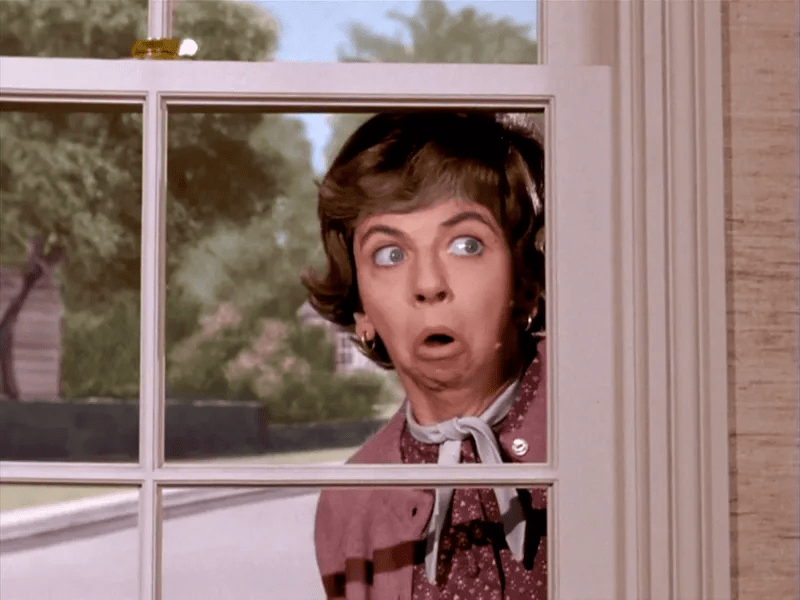
Alice Pearce does not have the number of acting credits that many golden- age character actresses possess because she passed away at an early age. Many of us recognize her as Gladys Kravitz.
📷closerweekly.com

Pearce was born in New York City in 1917. She was an only child. Her father was a foreign banking specialist, and her family moved to Europe when she was a toddler. They had what I would imagine was a magical life, living in Brussels, Antwerp, Rome, and Paris. However, Alice was not a fan of Europe and never went back. In an article in the Buffalo News in July of 1965 she said that she hated living there and just wanted to be an average American kid who was allowed to walk to the movies or the drug store without a chaperone.

While living in Europe, she fell off a swing at age nine after losing her grip on the chain and landed on her chin. From that point on, she had an underdeveloped chin.

Pearce enrolled in Sarah Lawrence College in 1940, graduating with a degree in drama. After graduation, Alice moved to Maine to do summer stock. Leonard Stillman saw her there and cast her in “New Faces of 1943,” where she received great reviews.

Although her parents did not approve, Alice began working as a comedienne in nightclubs, auditioning on Broadway. Her parents didn’t know much about theater at the time, and they didn’t see it as a stable career. She moved to New York and sold underwear at Macy’s to make ends meet.
📷rottentomatoes On the Town

Alice always had a sense of humor about herself and her looks. She related a story in an interview with the Buffalo News in February of 1965 that during this time she and a few women performed at army camps and hospitals during the war. She said they were at a hospital one day and Imogene Coca was walking down the hall to do the show. One man in a bathrobe saw her and yelled that if they all looked like her, he was going back to bed. A minute later, Alice appeared. The man said they did all look alike and he went back to bed.

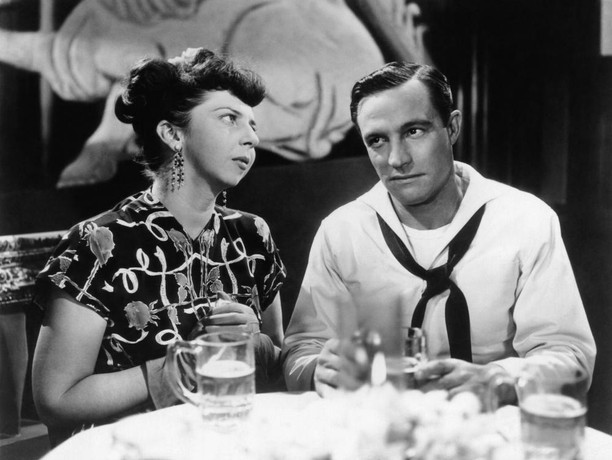
From 1944-46, she was a cast member in the original Broadway production, “On the Town.” Gene Kelly was so impressed with her performance that he brought her to Hollywood as a cast member in the big-screen film of the play in 1949. In both versions, Alice played Lucy Schmeeler, a “unsexy adenoidal” blind date.

Her performance in On the Town was so popular that she was given her own television variety show, The Alice Pearce Show which she described as “fifteen minutes of songs, topical skits, and me.” Pearce co-hosted the show with pianist Mark Lawrence. It was on for fifteen minutes every Friday, but it was cancelled after six episodes.
📷moviestillsdb.com The Disorderly Orderly

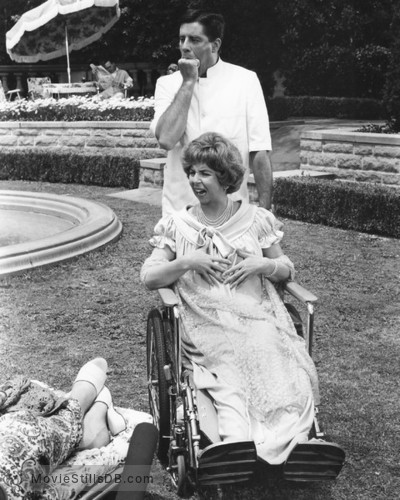
Throughout the fifties, Pearce continued to appear on Broadway and on the big screen. Alice had fourteen film roles.  She was spot-on as a hypochondriac in The Disorderly Orderly with Jerry Lewis as she describes her numerous physical ailments and symptoms.

I think Alice was hoping for a more prolific film career. After her death, an AP article that ran in many national papers related a story Pearce had told several times. She said that for one audition she went to, they were looking for an “Alice Pearce type,” so she thought it was a shoe in. About ten women were in the waiting room. Alice did her audition but didn’t get the part!

During the fifties, she appeared on 13 television series, many of them dramatic playhouse shows. In 1953, Alice was cast in two sitcoms, and both would last a year. In Jamie, she appeared in eight episodes as Annie Moakum. The show was about an orphan, Jamie, who lands in one “foster” home after another until he moves in with Aunt Laurie where he meets Grandpa; the two of them become best friends, sharing a variety of adventures.

In The Jean Carroll Show, Alice played their neighbor in six episodes. This show only lasted three months. It was a typical sitcom about Jean, her bumbling husband Herbie and her daughter who doesn’t even have a first name in the credits.

Alice found herself in sixteen series during the sixties including Many Happy Returns. Many Happy Returns was a show that only lasted 26 episodes. It starred John McGiver as Walter Burnley who was a supervisor of the Returns Department at Krockmeyer’s Department Store. A widower, he lives with this daughter played by Elinor Donahue and her husband Bob and daughter Laurie.
📷facebook.com

1964 was a great year for Pearce. When she was in the Broadway production of “Bells Are Ringing,” she met director Paul Davis whom she married in 1964. At that time, Davis owned one of the top art galleries in Los Angeles. Alice loved art and did some painting herself.

That same year she was asked to play the role of Grandmama in The Addams Family. She turned down the part which went to Blossom Rock.

It ended up being a good career move to turn down The Addams Family, because later in 1964 she was offered the role of Gladys Kravitz on Bewitched. She was perfect as the nosy neighbor always in the Stephens’ business. After spying on her neighbors and seeing something that could not be explained logically, she would shrilly yell, “Abner, Abner” and relate the newest situation. Of course, witchcraft always took care of the problem before she could prove anything odd had occurred, and she was considered eccentric and high strung by the other neighbors and her husband. Pearce appeared in 27 episodes before passing away from ovarian cancer in 1966 at age 48. She was adored by her Bewitched family.

Alice had been acting for a couple of decades and had become a household name. In the July 1965 Buffalo News interview, Alice mentioned that even though she was 47, her parents had moved to La Jolla, California and still felt acting was a phase she would outgrow.

In 1966, Doris Day’s movie The Glass Bottom Boat was released. Pearce and George Tobias were cast as next-door neighbors in the film. Although they weren’t named Gladys and Abner, the Fenimores were a carbon copy of the Kravitzes.
Alice was diagnosed with terminal cancer before she joined the Bewitched cast. After she died, Elizabeth Montgomery and her husband William Asher offered Davis a job as director on the show. He had stepped away from his career to help care for Alice.

Alice worked until the last two weeks of her life. She commented on how her attitude helped her deal with her diagnosis: “I feel the progress of the disease in my case is unusual because of my mental attitude. I am a supremely happy woman. I have never been beautiful, but I have been blessed with a rich career and the love of two fine men. The strength I have found in the devotion of my dear Paul is beyond measure.”

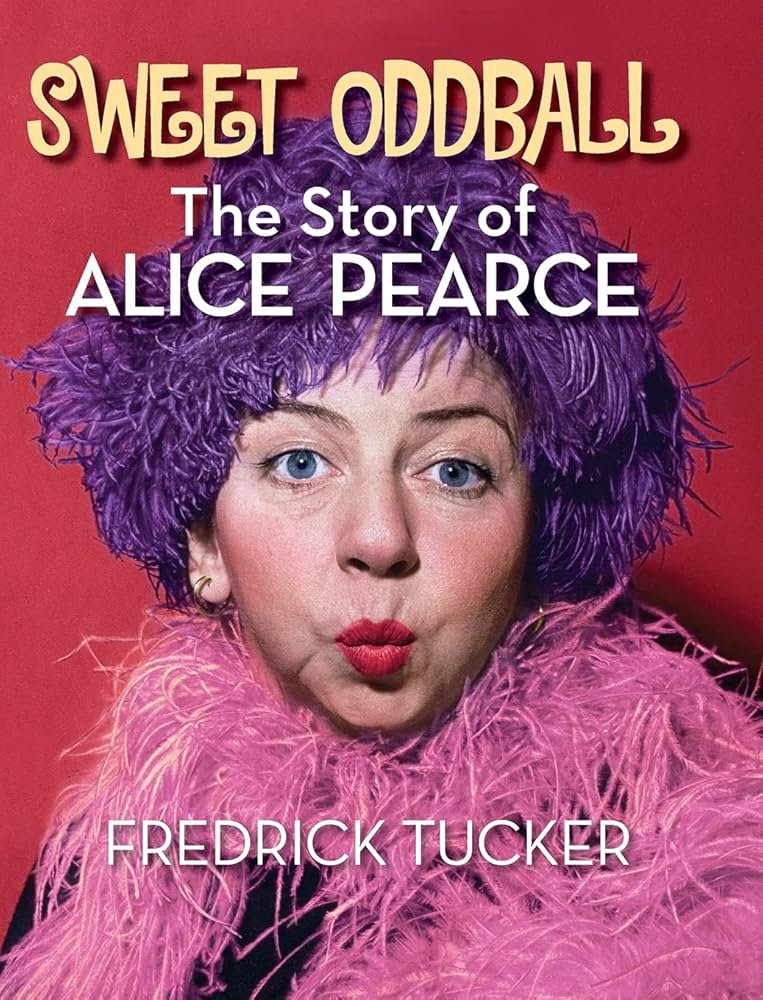
Frederick Turner wrote a book, Sweet Oddball: The Story of Alice Pearce. He recalled a quote that he had heard about Pearce, describing her as “’the adenoidal lass with the most beautiful, homely face on Broadway who carved out a unique career playing wallflowers, nitwits, nags and oddball characters.” I think Alice would be just fine with that description. Although she left us much too soon, she was an amazing comedienne who I’m sure would have had a long and satisfying career, and perhaps her own sitcom, had she lived a few more decades.

The Love Boat: Overflowing with Celebrities

📷themeanderingtraveler.com

This month in Casting for Celebrities, we are looking at some of the shows that used television and movie stars in their casts every week. The Love Boat was on the water from 1977 until 1986. An extension of the show, The Love Boat: The Next Wave, was on from 1998-1999 with many of the original characters.  There were also four three-hour specials aired in 1986, 1987, and 1990.

If you are one of the five people in America that have never seen the show, it aired on ABC on Saturday nights. It was another Aaron Spelling production like Fantasy Island which we discussed last week.

A book, The Love Boats, by Jeraldine Saunders who was a cruise director for a passenger cruise line was used as the basis for the original made-for-tv movie in 1976.

The stars on this show played guests (and occasionally themselves) on the MS Pacific Princess run by Captain Merrill Stubing (Gavin MacLeod). His crew included Dr. Adam Bricker (Bernie Kopell), Purser Gopher Smith (Fred Grandy), bartender Isaac Washington (Ted Lange), and cruise director Julie McCoy (Lauren Tewes). In season three, Stubing’s daughter Vickie (Jill Whelan) came aboard. During the last three seasons, photographer Ace Covington Evans (Ted McGinley) joined the group and Judy McCoy (Patricia Klous) who was Julie’s sister took her place for the final two seasons.

📷julienslive.com

Lucky crew, this series was sometimes set on board the Pacific Princess or the Island Princess, depending on their schedules. A handful of other boats were used in several episodes and movies as well. Many of the shows were filmed in California. Unfortunately, both the Pacific Princess and the Island Princess were sold for scrap in 2013 and 2015 respectively.

Each episode contained several stories and all three titles are combined in one series title; for example “Captain & the Lady/Centerfold/One If by Land.”

Jack Jones sang The Love Boat theme. (Note: Dionne Warwick recorded the song for the final season, but I never learned why.) The lyrics were written by Paul Williams and the music was composed by Charles Fox. The words were:

Love, exciting and new
Come aboard, we’re expecting you
Love, life’s sweetest reward
Let it flow, it floats back to you

Love Boat soon will be making another run
The Love Boat promises something for everyone
Set a course for adventure
Your mind on a new romance

Love won’t hurt anymore
It’s an open smile on a friendly shore
Yes, love
It’s love

Love Boat soon will be making another run
The Love Boat promises something for everyone
Set a course for adventure
Your mind on a new romance

Love won’t hurt anymore
It’s an open smile on a friendly shore
It’s love, it’s love, it’s love
It’s the Love Boat, it’s the Love Boat

📷reddit.com

For its first seven seasons, the show was very successful. It usually ranked in the top twenty. However, after falling out of the top thirty and then the top fifty the next year, the show was canceled after nine years.

Spelling offered McLeod the role of Captain Stubing. Ted Lange did not have to audition. He was offered the role after being seen on a previous show, That’s My Mama. Spelling’s first choice for Dr. Bricker was Dick Van Patten but because he was involved with Eight is Enough, Kopell got the role. Lauren Tewes was chosen from a group of more than a hundred actresses auditioning for the role.

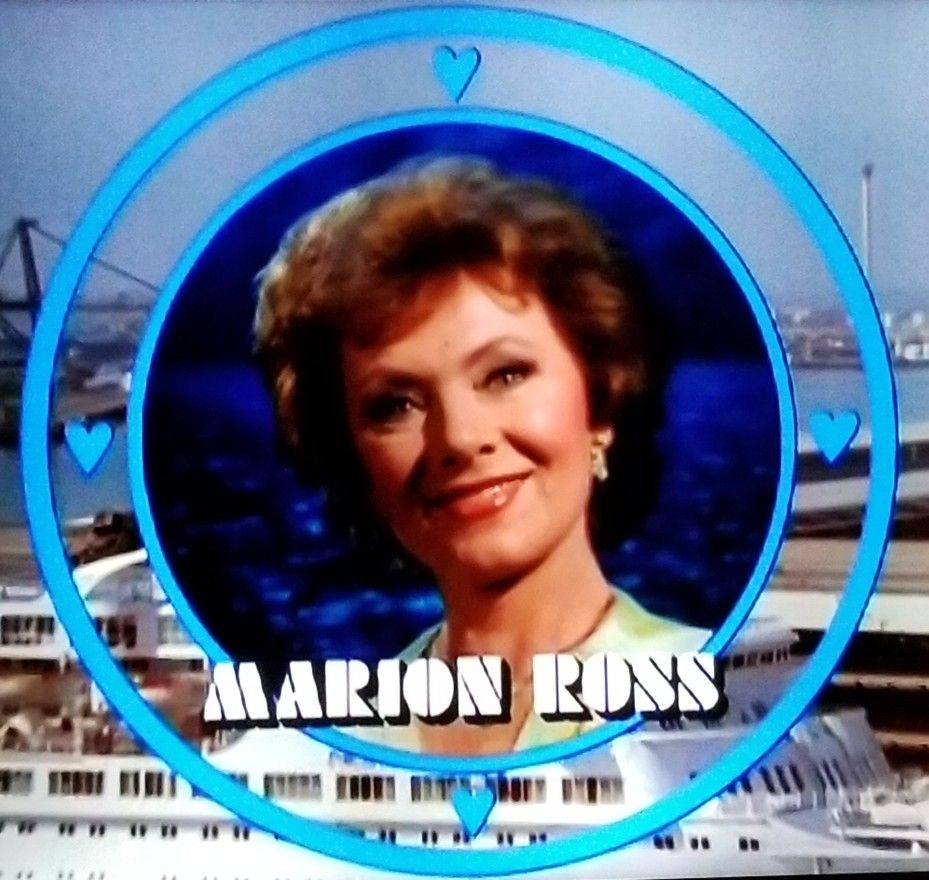
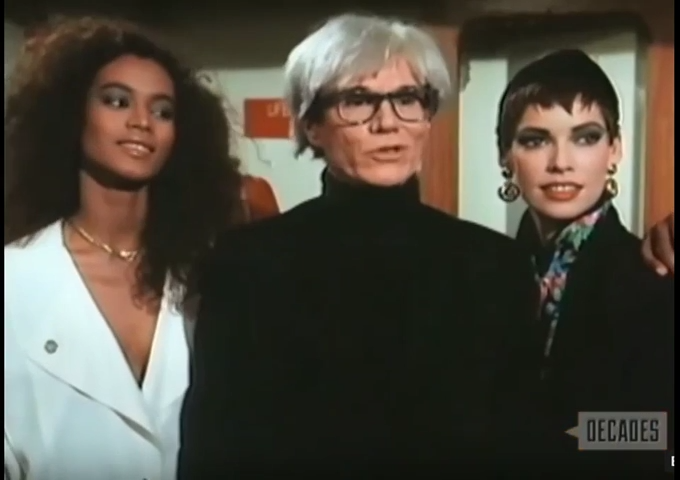
More than 550 guest stars appeared on the show during its run. There were movie stars like Gene Kelly, Ginger Rogers, and Joan Fontaine. There were Broadway stars including Ethel Merman and Robert Goulet. TV stars abounded like Don Adams, Lorne Greene, Florence Henderson, and Eve Arden. Music was represented by The Pointer Sisters, Cab Calloway, and Janet Jackson. Sports stars were on board including Dick Butkus and Joe Namath. And then there were the celebrities like Bob Mackie and Andy Warhol. Marion Ross holds the record with 14 appearances.

📷boingboing.com

For some reason, The Love Boat does not have the same “time warp” problems as Fantasy Island. It’s been translated into more than 29 different languages and appeared in more than 93 countries. It’s very popular in syndication.

Before the Hallmark Channel debuted, this is where you went to watch people fall in love every week. It’s hard to remember how many people just happened to run into an ex on the ship or meet the perfect soul mate after being mistreated.

Apparently, the cast is still close. In a recent interview, Lange said his experience on The Love Boat was life changing. He also said that the beauty of the show was that they are all still friends. “I just directed Fred in ‘Give ‘em Hell Harry’ in Indiana and I’m going to New York to stay with Bernie and his wife. . . . Bernie is more like my brother, and Fred is like my best friend.”

Whelan described McLeod as an “incredible, protective man. He was just like a dad.”

If you need a reminder that love is still alive and well, you can check out the show on DVD or on ME TV on Sundays.

The Jimmy Stewart Show: Past Its Prime Before It Started

For this blog series, “It’s My Show,” we are looking at stars who had shows named for them.  This blog takes a look at The Jimmy Stewart Show which aired in 1971.

The Jimmy Stewart Show - Where to Watch Every Episode Streaming Online |  Reelgood
Photo: reelgood.com

At the beginning of the golden age of television, several stars decided to plunge into the small screen, but most stars kept their distance, not trusting that television would ever go anywhere. Stars like Jack Benny, Burns and Allen, and Lucille Ball created successful shows that continued for years. Once Hollywood realized that television was here to stay, they were okay with their stars dipping their feet into the series life.

In the 1970s another round of stars decided to try their luck at their own show. Jimmy Stewart was one of those screen stars, and he had a huge fan base. Viewers were greatly anticipating watching his show.

The Jimmy Stewart Show - Complete - 1971 - 7 DVDS – TV Museum DVDs
Photo: tvmuseum.com

Hal Kanter was the creator, writer, and sometimes director for the series which showed viewers the frequently chaotic home and work life of Professor Jim Howard. Kantor developed the show Julia and would later create Chico and the Man. Howard teaches anthropology at the Josiah Kessel College in Easy Valley, California which happened to be founded by his grandfather. Also living in the house are his wife Martha (Julie Adams), his son Peter (Jonathan Daly), daughter-in-law Wendy (Ellen Geer, daughter of Will Geer) and grandson Jake (Kirby Furlong). Martha and Jim also have a younger son, Teddy (Dennis Larson) who is almost the same age as Jim’s grandson. Peter’s family is living there temporarily after their house burns down. In a twist I didn’t see coming, Jim was babysitting and fell asleep with a cigar which is what caused both the house to burn down and his son to be unhappy with him for the first few episodes.

Howard’s best friend, Luther Quince (John McGiver), a local bachelor and professor, often stops by for meals and to discuss life with Jim.

When Jimmy Stewart Had His Own Sitcom – (Travalanche)
Photo: travalanche@wordpress.com

Rounding out the cast were a few recurring characters including Jo Bullard (Mary Wickes), president of the Women’s Action Group; Agatha Dwiggins (Jeff Donnell), a scatterbrained busybody, Dimitri Karpopolis (Richard Annis), college football hero; local businessman Fred Shimmel (Rickie Layne), chatty milkman Woodrow Yamada (Jack Soo), and students Janice Morton (Kate Jackson), Norman Lansworth (Lou Manor) and Ida Levin (Melissa Newman).

I read that except for Stewart, the casting for the family seemed to be off and never engendered any warmth for viewers. Jimmy wanted his real wife Gloria to play Martha, but after she was tested, the network said they wanted someone more experienced. More than fifty women were considered for the role, and twenty of them were brought in to read with Stewart.

However, John McGiver received a lot of praise for his character. Luther and Jim were quite different. Jim rode his bike to school while Luther drove a Rolls Royce.

The show really didn’t speak to viewers, and ratings, which weren’t great, got worse. The series was cancelled after 24 episodes. Stewart was not sad about the cancellation. Apparently, he was given the option to do the same type of work schedule Fred MacMurray had arranged for My Three Sons where he only filmed a small part of the year and everyone else filmed around him, but he declined. However, Stewart said he later regretted not trying that because he didn’t enjoy the long hours filming this show.

THE JIMMY STEWART SHOW Guest Star KATE JACKSON 1971 VERY RARE - YouTube
Photo: youtube.com

The show debuted in the fall of 1971 on Sunday nights. It was sandwiched between The Wonderful World of Disney and Bonanza, both big hits.

Like George Burns, James Stewart talked directly to the television audience during the opening and closing when he says “And, as always, my family and I wish you peace and love—and laughter.” During some episodes he makes an aside to the camera, and the rest of the cast thinks he’s just mumbling to himself.

This was one of the few shows during this time period that didn’t use a laugh track. Maybe that’s for the best because it doesn’t sound like there was much to laugh about in this show. It definitely shows its age today with Stewart making remarks about student protests, women’s lib, and industrial development. It obviously pandered to an older, conservative audience.

The show was filmed on a few sets and backlots. The building used for the university was known as “Hank’s School” because it first was used on a show from the sixties called Hank. It was also Boatwright University on The Waltons.

The Jimmy Stewart Show (TV Series 1971–1972) - IMDb
Photo: imdb.com

Sometimes there is a downside to blog writing about the past and our favorite stars. Jimmy Stewart has always been someone I admired and respected. A couple of his movies like The Philadelphia Story and Harvey are some of my of all-time favorites. When doing research, sometimes you learn things you wish you didn’t know.

Apparently, Stewart had gotten a reputation during the filming of The Man Who Shot Liberty Valence as a racist, but no one ever talked about it, and there didn’t seem to be any other controversy in his films.  However, during the production of this show, he had actor Hal Williams fired. I read several accounts that all supported that view that Stewart told Kanter that he didn’t think it would be appropriate for a black person to be ordering him around on television. His words, often quoted were, “Blacks are bossing white people all over the country, and now we’re going to have the same damn thing on prime-time television? A black is going to be lecturing me with millions of people watching? No way. I get casting approval and Williams is out.” I never read how Kantor reacted or how it affected their relationship; however, after casting Diahann Carroll as the first black actor to star in a series, it must have been disheartening to hear this from Stewart.

I understand those were different times and many people were raised as racists. We could debate the causes of people being prejudiced for hours.  However, this makes me very sad and I can’t look at Jimmy Stewart the way I did before. It doesn’t help to realize that there are still somehow a lot of Jimmy Stewarts out there sixty years later.

Comfort TV: Peace, Love, and Laughter: The Jimmy Stewart Show
Photo: comforttv.com

As far as his show goes, I think it was just not where fans were at in that time period. Some of the other series on at the time included The Partridge Family, The Doris Day Show, Love American Style, Room 222, The Mary Tyler Moore Show, and All in the Family. By comparison, Jimmy’s show seems out of touch and old fashioned. Its competition was the F.B.I and Sunday Night at the Movies, both shows that started during The Wonderful World of Disney. If a show didn’t succeed following Disney and leading into Bonanza, it must have greatly disillusioned viewers. Jimmy was not alone as a star who couldn’t make the successful leap to television. Other stars who bombed with their shows include Jack Lemmon, Celeste Holm, Gene Kelly, Bing Crosby, Mickey Rooney, and Henry Fonda.

Although this show is available on DVD, my suggestion is to bypass it and read a good book instead.

Stars Who Jump From the Big Screen to the Small Screen Don’t Always Land on Their Feet

While it is not uncommon for stars to transition from television to movies–think about Robin Williams, Sally Field, Melissa McCarthy, and Tom Hanks–it is less likely to see stars move from the big screen to the small screen.  Jane Fonda has transitioned to television in Frankie and Grace and Fred MacMurray did it with My Three Sons.  For most stars, the move has not worked out very well. Let’s look at a few stars who tried to make the conversion.

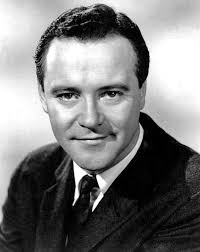
That Wonderful Guy – Jack Lemmon (1949)

Neil Hamilton (best known as Commissioner Gordon on Batman) plays Franklin Westbrook, a conceited drama critic who dislikes almost everything. Jack Lemmon plays Harold, a Midwesterner who thinks working for Westbrook will help him become worldly and give a boost to his acting career. His girlfriend is played by his real wife Cynthia Stone. The episodes revolved around his romantic and business adventures in New York City.  Perhaps Westbrook panned the show because it was cancelled after three episodes.

movielemmon1


Heaven for Betsy – Jack Lemmon (1952)

Three years later, Lemmon gave it another try. In this show, Lemmon plays Peter Bell, a toy store buyer. His wife Cynthia again played his wife Betsy. The series was based on a sketch “The Couple Next Door” that Lemmon and his wife played regularly on the Frances Langford/Don Ameche Show. Each episode lasted 15 minutes, and it told about the newlyweds’ struggles in New York City. Instead of three episodes, this series lasted three months.

movieslemmon2


Honestly Celeste – Celeste Holm (1954)

After playing Ado Annie in Oklahoma, Holm tried her hand at television. She plays Celeste Anders, a Minnesota college professor living in Manhattan, who is getting journalism experience working for the NY Express. Celeste wrote stories ranging from modern art to underprivileged families. She also dated the publisher’s son Bob Wallace, played by Scott McKay. After three months, she was sent back to school in Minnesota. What was most surprising about this failure was that Norman Lear (who would go on to create dozens of shows) and Larry Gelbart (who later created M*A*S*H) were both part of the writing staff.


Going My Way – Gene Kelly (1962)

Bridging television and movies, Gene Kelly redid Bing Crosby’s movie from 1944 for the small screen. Kelly is Father Chuck O’Malley, a progressive priest assigned to the slums of New York. Father Fitzgibbon played by Leo G. Carroll is a cantankerous, old priest. Dick York was his boyhood pal Tom Colwell who ran the community center. Mrs. Featherstone (Nydia Westman) played the rectory housekeeper. The list of guest stars on the show was very impressive, but after a year, the network told Kelly to keep going and cancelled the show.


The Bing Crosby Show – Bing Crosby (1964)

I guess Bing decided if Gene Kelly could enter television with his old movie, he might also give it a try. He plays Bing Collins a former singer. He is now an electrical engineer married to Ellie (Beverly Garland) with two daughters Janice (Carol Faylen), 15, and boy crazy and Joyce (Diane Sherry), 10, who had a high IQ. It lasted one season. Not surprisingly, this series also attracted a lot of big-name guest stars including Frankie Avalon, Jack Benny, Dennis Day, Joan Fontaine, and George Gobel. Apparently, Garland had a thing for engineers because she would marry aeronautical engineer Steve Douglas on My Three Sons.


Mickey – Mickey Rooney (1964)

Mickey plays Mickey Grady who leaves the Coast Guard to manage a posh hotel, Newport Arms in California, with his wife Nora (Emmaline Henry) and two young boys. His real son plays one of his sons on the show. Sammee Tong plays the hotel’s manager. The former supervisor has left a lot of problems for Mickey. The show was cancelled in January airing only 17 episodes.


One of the Boys – Mickey Rooney (1982)

After vowing never to work on television again, Rooney tried it again 18 years later. Now he plays 66-year-old Oliver Nugent, rescued from a nursing home by his grandson Adam Shields (Dana Carvey). Adam is a college student who takes him in. Adam’s roommate, Jonathan Burns (Nathan Lane) is not so happy about the situation. Oliver looks for a job and lands one singing in a restaurant. Also appearing in the cast was Scatman Crothers who sang with Oliver and had also left the nursing home.  A young Meg Ryan played Adam’s girlfriend Jane. The show debuted at 18th place in the ratings but by within a month it had dropped to 68th. Even with this cast, the show was cancelled after an unlucky 13 episodes.

movies10


Jimmy Stewart Show – Jimmy Stewart (1971)

Jimmy Stewart jumped to the small screen with great anticipation and excitement by viewers. He  played anthropology professor Jim Howard. Howard teaches at Josiah Kessel College, started by his grandfather.  His house is full with his wife, his son Peter, Peter’s wife Wendy, and his grandson Jake. He also has a young son Teddy, who happens to be the same age as his grandson. His friend Luther Quince often stops by to eat and give advice. Jim talks to the audience during the show and wishes them love, peace, and laughter at the end of each episode. Even beloved Jimmy Stewart was unable to save this show which was cancelled after one season.


The Doris Day Show – Doris Day (1968)

Doris Day was the most successful actor moving from film to television. However, I think the reason she managed to keep her show on the air for five seasons was because she changed the format so often that CBS did not realize it was the same show.  In 1968, Day is Doris Martin, a widow with two kids. She moves from the city to Mill Valley, CA to live on her father’s ranch.

The second season she commutes to San Francisco after accepting a job as an executive secretary to Michael Nicholson (MacLean Stevenson), the editor of Today’s Magazine. Rose Marie was Myrna Gibbons and Denver Pyle again played her father Buck Webb.

In 1970, Doris and the kids move to an apartment over an Italian restaurant run by Kaye Ballard and Bernie Kopell. Billy De Wolfe was her neighbor. Now Doris is writing feature stories for the magazine.

When the show returned the next fall, Doris was single and a reporter for a magazine. Her new boss was Cy Bennett (John Dehner) and she had a boyfriend Peter Lawford but later her boyfriend turned into Patrick O’Neal. There was no restaurant.

By 1973, the network caught up with all the changes and cancelled the show.


It was interesting that so many actors failed in television when they were such celebrated movie stars. The radio stars seemed to have better luck making the transition. Jack Benny and Burns and Allen had long-lasting and popular shows. It’s hard to imagine actors like Ryan Gosling, Amy Adams, Julia Roberts, or Ben Affleck bombing on a television series today.

I think for now I will continue to choose to watch Pillow Talk, Move Over Darling, Harvey, The Philadelphia Story, Some Like It Hot, Singing in the Rain, and Hope and Crosby’s Road movies and set aside the television DVDs these stars appeared in.