Dick York: His Job Was Back-Breaking Work

This month we are learning about some Bewitching characters and their careers. Today we get to learn more about Dick York, the first actor to portray Darrin Stephens.
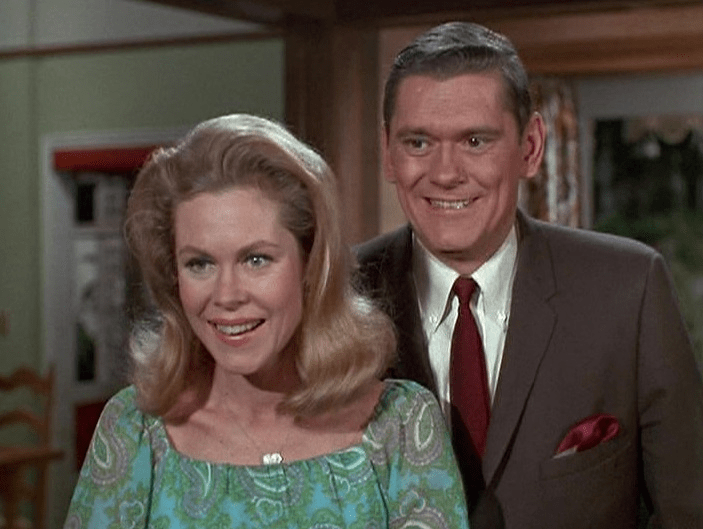
📷imdb.com the first Darrin Stephens

York was born in 1928 in Fort Wayne, Indiana, part of a working-class family; his father was a salesman, and his mother was a seamstress. During his younger years, the family relocated to Chicago, and at 15 he began acting on the radio in “That Brewster Boy.”

He would appear in hundreds of radio episodes and instructional films before heading to New York City in 1951 where he lived at the YMCA. In New York, he appeared on Broadway and then began his film career. That same year, York married Joan Alt. While he was doing the radio show “Jack Armstrong, All-American Boy,” they met when she came in to do a commercial.
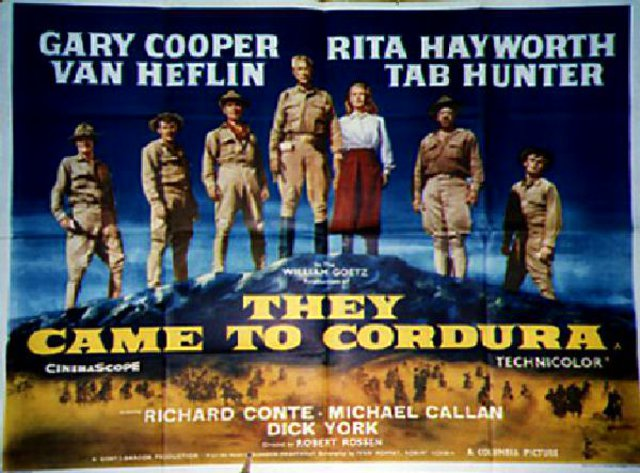
In 1959, he was filming They Came to Cordura with Gary Cooper and Rita Hayworth when he suffered a back injury on the set. As York described it, “Gary Cooper and I were propelling a handcar carrying several wounded men down a railroad track. I was on the bottom stroke of this sort of teeter-totter mechanism that made the handcar run. I was just lifting the handle up as the director yelled ‘Cut’ and one of the wounded cast members reached up and grabbed the handle. Now, instead of lifting the expected weight, I was suddenly, jarringly, lifting his entire weight off the flatbed—180 pounds or so. The muscles along the right side of my back tore. They just snapped and let loose. And that was the start of it all: the pain, the painkillers, the addiction, the lost career.”

However, the injury didn’t catch up with him at that exact moment. A year later he was offered a role in Inherit the Wind. He would end up in ten films during his career, but it was television where he spent most of his time.
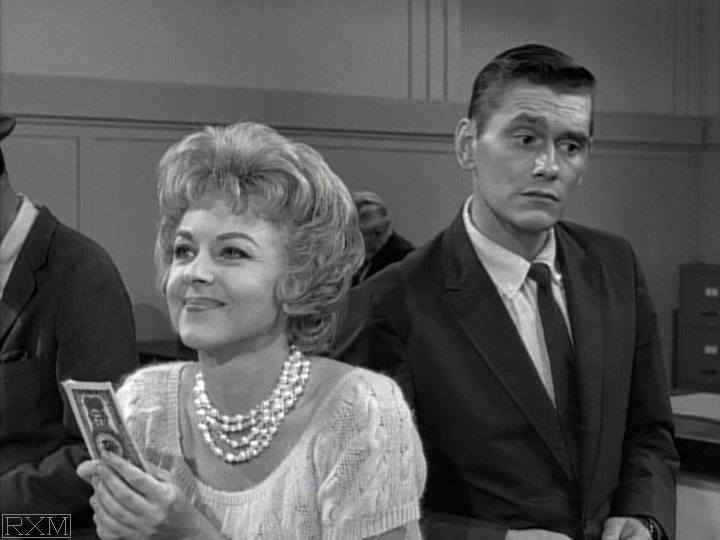
📷imdb.com The Twilight Zone

A couple of years later he was part of the cast of Going My Way for a season. His television career continued, and you’ll see him in episodes of The Twilight Zone, Dr. Kildare, Alfred Hitchcock Presents, Route 66, and Wagon Train, among others.

In 1964 he was offered the role that made him a house-hold name, Darrin Stephens on Bewitched. York was with the series for five years and was nominated for an Emmy in 1968. York was nominated along with Richard Benjamin from He and She and Brian Keith and Sebastian Cabot from Family Affair, but they were all beat by Don Adams from Get Smart.

His back caused him a lot of pain while on the Bewitched set. The crew constructed a wall where he could lean between scenes, but half-way through season three, he was diagnosed with a degenerative spine condition which often sent shooting pains through his body. Watching seasons three and four, Darrin often can be found lying down or on the couch in many of his scenes.

Things escalated during the fifth season. York fell ill with a temperature of 105 degrees. He was feeling awful but decided to try to get through a few scenes. He was sitting on a scaffolding with Maurice Evans, Samantha’s dad on the show, when he told a crew member that he thought he should get down. “He started to help me down and that’s the last thing I remember until I woke up on the floor. That’s about all I remember of the incident . . . I’d managed to bite a very large hole in the side of my tongue before they could pry my teeth apart.” While he was in the hospital, he and William Asher had the tough talk about his future, and he agreed he needed to quit; he was then replaced with Dick Sargent.

In his autobiography, York says the next 18 months found him bedridden and dependent on painkillers. He got off the meds, but it took six months. He was able to beat his addiction. He and Joan had five children that needed care.
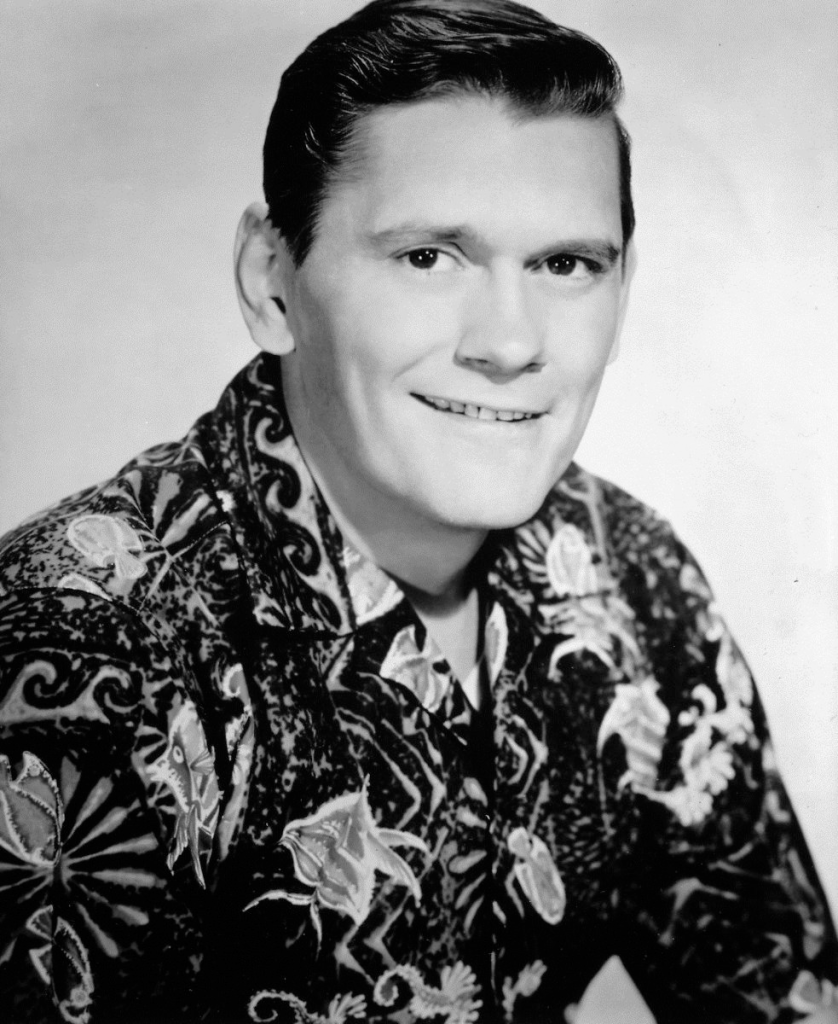
📷wikipedia.com

The family struggled economically after his addiction. In the mid-seventies, a real estate investment of theirs failed, and they were forced to go on welfare. In the early eighties the couple moved to Michigan to help care for York’s mother-in-law; they were surviving on a $650 monthly pension from the Screen Actors Guild.

York always kept a positive attitude. While he was bedridden, he made phone calls to help raise money for the homeless. He said, “I’ve been blessed. I have no complaints. I’ve been surrounded by people in radio, on stage, and in motion pictures and television who love me. The things that have gone wrong have been simply physical things.” He tried to revive his career, appearing on Simon & Simon and Fantasy Island, but it was just too late.

In addition to his back issues, York smoked three packs of cigarettes a day, and he eventually was diagnosed with emphysema. By 1989, he needed oxygen to help him breathe. He passed away from complications of the disease in 1992 at the young age of 63.

What a sad and painful ending to such a promising career. It’s amazing that someone in that kind of torment could still reach out to help others and try to spin a positive attitude about what he was grateful for. Thank you, Dick York, for leaving us with 68 great roles and the chance to get to know Darrin Stephens.
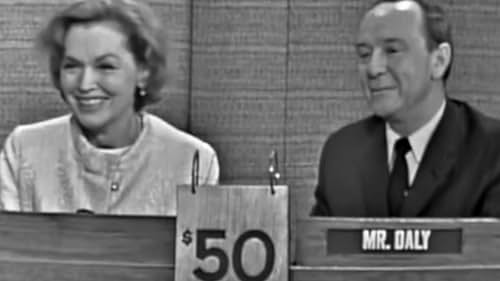
The Elegance of What’s My Line

This month, we are looking at popular fifties stars and shows. While the show we are talking about today outlasted the fifties by almost another decade, it gained its popularity during the 1950s. Today we are learning about What’s My Line.

📷wikipedia.com

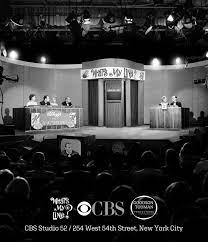
This panel game show was on CBS. It debuted in 1950 and ran until 1967. The show was produced by Mark Goodson and Bill Todman, and the working title was Occupation Unknown. Perhaps the title should have been What’s My Schedule. The show began on Thursday nights as a live show. Later in season one, it switched to every other Wednesday and then moved to every other Thursday. In October of 1950, it landed on Sunday nights where it would remain throughout the rest of its life.

The original series, which was usually broadcast live, debuted on Thursday, February 2, 1950, at 8:00 p.m. ET. After airing alternate Wednesdays, then alternate Thursdays, finally on October 1, 1950, it had settled into its weekly Sunday 10:30 p.m. ET slot where it would remain until the end of its network run on September 3, 1967.

📷imdb.com

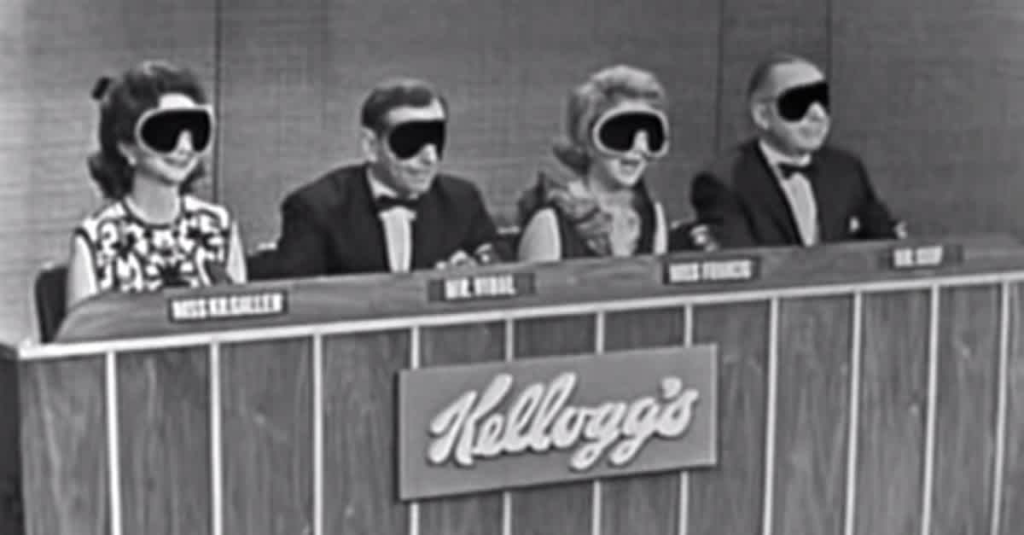
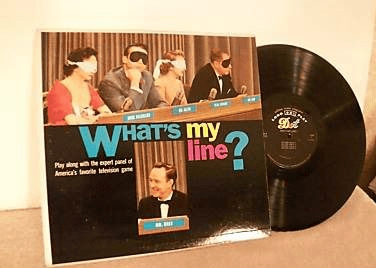
Celebrity panelists ask contestants questions to figure out their occupation. While most of the contestants were not famous, there was a “mystery guest” segment. The panelists were blindfolded for this segment and asked questions to determine the celebrity. People enjoyed watching the panelists banter with each other and the sophisticated humor they shared with us.

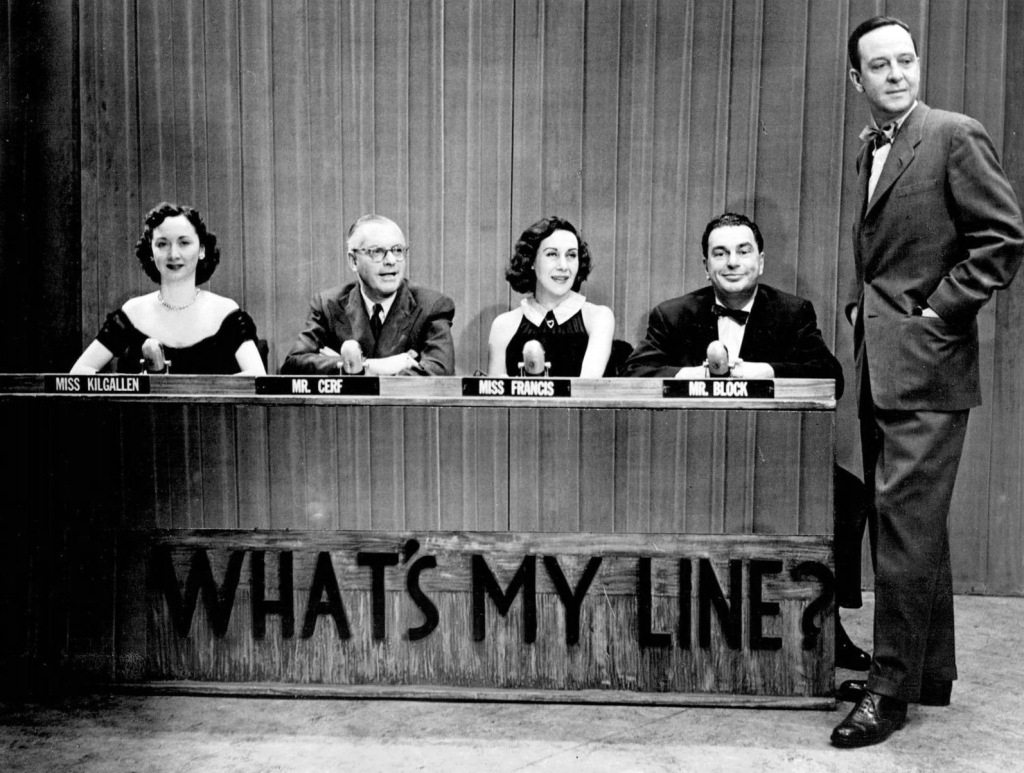
Each episode had four panelists. The most famous panelists were Dorothy Kilgallen, Arlene Francis, and Bennett Cerf. John Daly was the moderator. The first show in the series featured New Jersey governor Harold Hoffman, Kilgallen, poet Louis Untermeyer, and psychiatrist Richard Hoffman. Later in season one, Arlene Francis came  on board with Kilgallen, Untermeyer and writer Hal Block. In season two, Cerf replaced Untermeyer and Steve Allen took over for Block in season three. When Steve Allen left to host The Tonight Show, comedian Fred Allen was part of the panel from 1954 until his death in 1956. Kilgallen was killed in 1965 and her replacement varied for two years. Her death is a mystery itself and well worth reading about. Many people think she was killed because of her investigation into JF Kennedy’s assassination.

📷facebook.com

The panelists started the series wearing business clothing, but by 1953 they shifted to formal attire with the men showing up in suits and ties and women in formal gowns and gloves. Unfortunately, we never got to see the beautiful colors of these clothes. Until 1966 everything was filmed in black and white. In the final season, the show was broadcast in color, but the kinescopes were saved in black and white.

Both critics and television viewers liked the show, and it won an Emmy for Best Quiz or Audience Participation Show in 1952, 1953, and 1958.

Because it was a game show, most of the 700 episodes were on kinescope, 16 mm filming. Because many original shows in that era were recorded via kinescope onto silver nitrate film, many networks destroyed recordings to recover the silver. After learning that the network was not keeping the recordings, Goodson and Todman offered to pay for the broadcast and retained the recordings from season three on, however many of those were also lost along the way. A variety of the episodes are stored at different archive centers around the country. My home state houses one from 1951 at the University of Wisconsin Center for Film and Theater Research in Madison.

📷facebook.com

The remaining kinescopes which have been digitized have been seen on television on the Game Show Network and 757 of them exist on YouTube.

Many of us remember the reruns and seeing the contestant come on stage and write their name on a chalkboard as Daily said “Will you enter and sign in please.” The very first contestant was Pat Finch who was a hat check girl at the Stork Club.

The first mystery guest was New York Yankees shortstop Phil Ruzzuto. Many of these guests used fake voices to answer questions. Some of the mystery guests who appeared on the show included Julie Andrews, Louis Armstrong, Lucille Ball, Jack Benny, James Cagney, Gary Cooper, Joan Crawford, Salvador Dali, Sammy Davis Jr., Doris Day, Aretha Franklin, Ava Gardner, Judy Garland, Jackie Gleason, Alfred Hitchcock, Bob Hope, Ginger Rogers, Roy Rogers, Eleanor Roosevelt, James Stewart, Elizabeth Taylor, and John Wayne.

📷littlethings.com Blindfolds come out for a mystery guest

The emcee would choose a panelist who could ask yes or no questions. If the answer was yes, they could continue until they got a no response and then the next panelist would be able to pose questions. If the contestants answered no, Daily flipped a card; when the contestant had ten cards, they won $50.

If you have heard of or even used the term “Is it bigger than a breadbox?,” you might want to know that it came from the show. Steve Allen asked the question in 1953, and it became a standard question after that night. In fact, on one episode, the guest was a breadbox maker, and when Daly could not help laughing at the question, Allen figured it out.

In 1967 The New York Times broke a story that CBS was canceling many of their game shows. None of the panelists had been told that the show was not renewed. Despite the fact that the low costs of the game shows made them profitable, the low ratings led the network to conclude that game shows were no longer suitable for prime-time schedules.

After the show was canceled in 1967, it did go into syndication five days a week. Soupy Sales joined Francis and Cerf on the panel of the reboot. A variety of other panelists took the fourth seat including Joyce Brothers, Jack Cassidy, Bert Convy, Joel Grey, Meredith MacRae, Henry Morgan, Gene Rayburn, and Nipsey Russell. The show ended in 1974. Cerf died during the run of the syndicated series.

It’s hard to believe, but Colonel Harland Sanders was on the show as founder of Kentucky Fried Chicken, although he was not easily recognized at the time, so he was not a mystery guest. While no president ever appeared while in office, Ford, Carter, and Reagan all appeared on the show.

📷youtube.com We switched to a first-name basis in the 70s

It would be fun to see this show on television today, but I’m afraid it would not be the same. In the way that Dick Cavett had a manner of interacting with guests to ask amazing questions with his humor and intelligence, this game show had that same atmosphere. Today, I think the banter would border more on crudeness than wit. There is something charming about a panel of very intelligent people talking with each other, trying to determine the identities of the people they were interviewing while being dressed to the nines that was fun to sit in on and be a part of. I guess that’s why this show is in our series where we are saluting the fifties because that was the era where it could shine.