The Simpsons: No One Grow Up in Springfield Here

This month we are looking at several of our favorite TV families. Last week we talked about the Andersons from Springfield, and I can’t help comparing our show today to that one: The Simpsons are also from Springfield. They both have three children. While you could make some comparisons between Marge and Margaret, Homer and Jim would not have much in common.
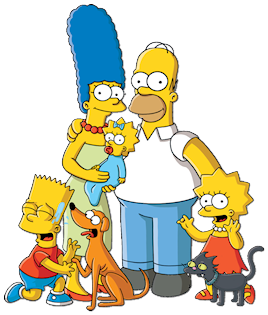
📷wikipedia.com

Right off the bat, I want to admit that if you are looking for a comprehensive reflection on the show, this blog entry will not be that. I could write about this show for volumes and not cover it truly well. That said, I thought it was an important show in television history and family series that we should still talk about it, even if it is briefly. This show has been on the air so long it is hard to imagine: 2024 is the 37th year the show has been on the air. I got married the year it began, and I now have a teenage grandson. We are looking at almost 800 episodes.

So, let’s go back to the beginning. In 1987, Matt Groening developed an American animated series called The Simpsons to air on Fox Broadcasting Co. It was written as a satire of the Simpson family: Homer, Marge, Bart, Lisa, and Maggie. It was set in Springfield and has caricatured any and everything you can possibly think of.
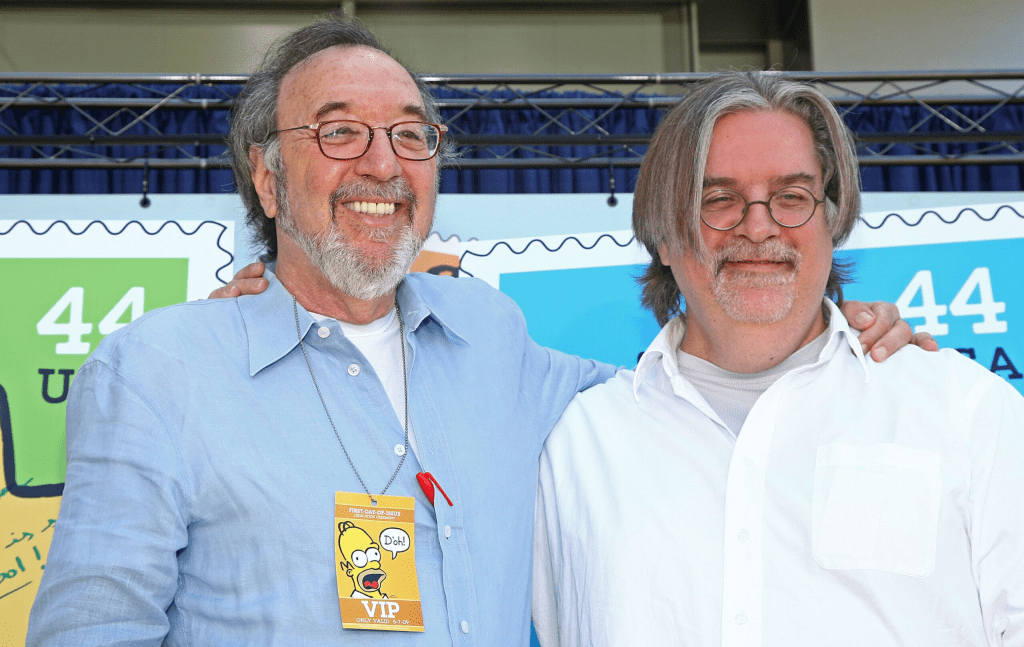
📷thebounce.com James L. Brooks and Matt Groening

James L. Brooks, of The Mary Tyler Moore Show and Taxi fame, was the producer. The first animation shorts appeared on The Tracey Ullman Show and it eventually became its own series. It holds the record for longest-running American animated series and longest-running American sitcom. In 2007 The Simpsons Movie grossed over $527 million dollars. In 2023 it was renewed for its 35th and 36th seasons, ensuring it goes through 2025.

I will say that many fans consider the golden age of the show to be from 1989-1995 and feel that the quality has not held up as well; however, the show has won 35 Emmys.

The show is about the Simpson family. Homer, the father, works at the Springfield Nuclear Power Plant as a safety inspector. Marge, his wife, has beautiful blue hair. (The blue hair was a thing before having blue hair was a thing, and the characters have yellow skin colors, so it would catch the attention of viewers flashing through the channels for something to watch.) They have three children: Bart, a very mischievous ten-year-old; Lisa, a precocious eight-year-old; and baby Maggie. Grandpa Simpson lives nearby in the Springfield Retirement Home. Luckily, they never age, or Bart would be a 47-year-old mischievous son and grandpa would be well over 120. Santa’s Little Helper is their dog and Snowball II (after Snowball I died) is their cat.
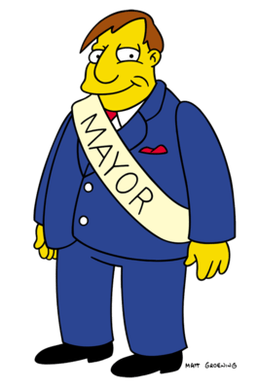
📷wikipedia. Mayor Quimby

In addition to the family, we have met many community members during the three decades plus that the show has been on. Just to name a few, we have Homer’s coworkers Lenny and Carl; Seymour Skinner the school principal; teachers Edna Krabappel and Elizabeth Hoover; neighbor Ed Flanders; Mayor Quimby; reporter Kent Brockman; tycoon Charles Montgomery Burns; Burns’ executive assistant Waylon Smithers; and Krusty the Clown.

Throughout the entire run, Groening and Brooks remained executive producers. There have been oodles of writers on the show. Typically, they are a group of sixteen writers who propose ideas and then turn the best into scripts.

I bet none of the voice actors in the late eighties thought they would still be employed on this show in 2024. Dan Castellaneta is Homer, Grandpa, and Krusty the Clown. Julie Kavner is Marge. Nancy Cartwright is Bart and Maggie. Yeardley Smith is Lisa. It has been a lucrative career. Until 1998, they were paid $30,000 an episode. From 1998 until 2004, they earned $125,000 an episode. A strike ensued in 2004. and after negotiations, we know that they make somewhere between $250,000 to $360,000 an episode. It has been up and down since, but right now hovers around $300,000.

I did not have time to get into all the differences in the animation studios that have been part of the show, but Klasky Csupo, AKOM, Anivision, Rough Draft Studios, and USAnimation, and Toonzone Entertainment have all worked on the show.
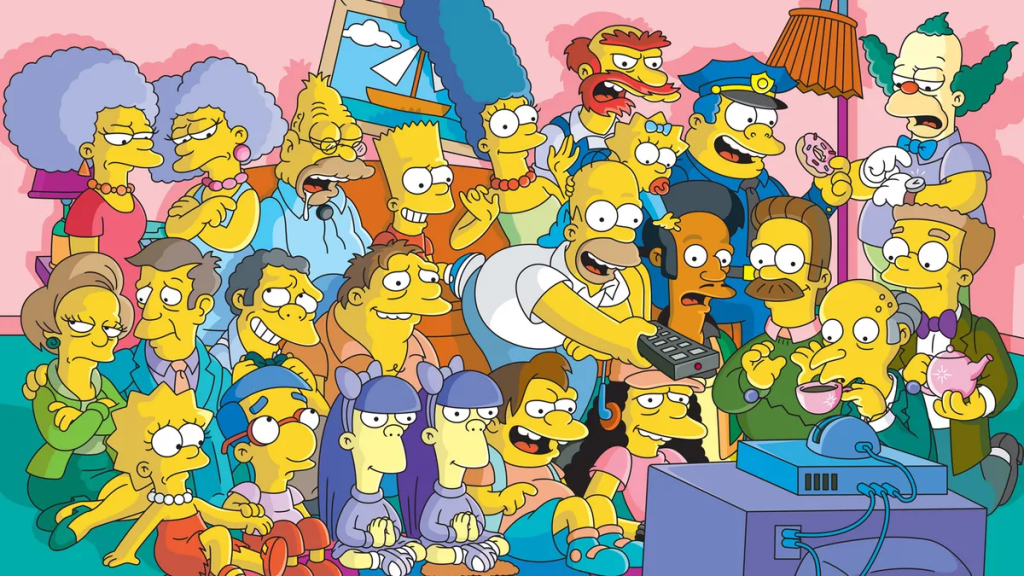
📷cnet.com

As I mentioned, everything and anything is up for being satirized on the show: nuclear power plants, education, middle-class Americans, wealthy Americans, conservatives, liberals, religion, atheists, sexuality, homosexuality. If you can name a theme, you can find an episode to fit it.

The show tries to appeal to a variety of generations. I guess they need to, to keep their original viewers which may have switched from 20 somethings then to retired somethings now.

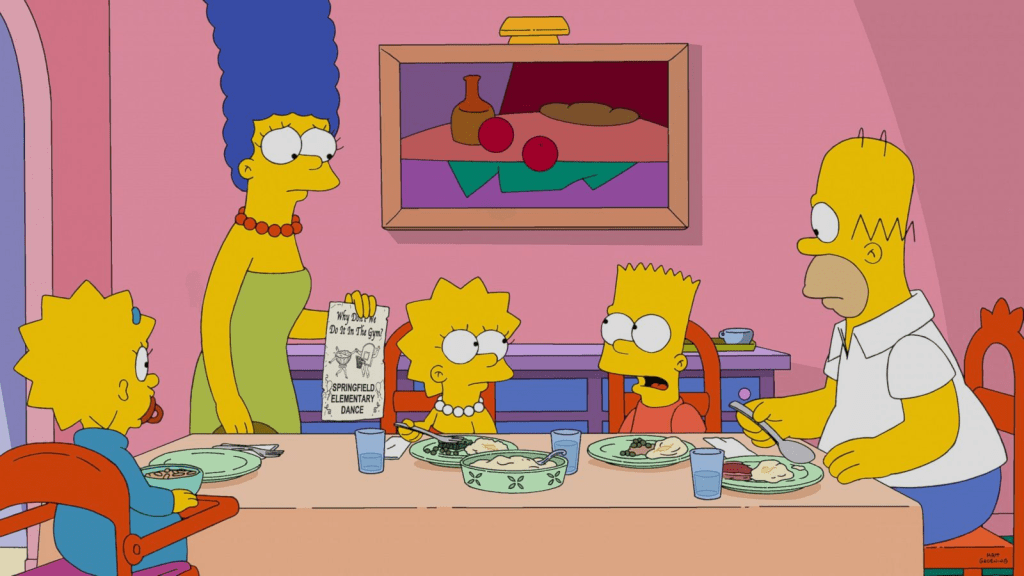
Whether they have ever seen the show or not, many Americans recognize the catchphrases from the show, including Bart’s “Ay caramba!,” “Eat my shorts,” and “Don’t have a cow, man.” Homer’s quip “D’oh” is another as is Mr. Burn’s “Excellent” and Krusty’s “I didn’t do it.”
📷abcnews.com

As you can imagine, critics of the show are legion and from every part of American life. At least they offend everyone. They even make fun of Fox TV.

And with more than three decades of episodes, the merchandising has been over the top; it currently is a billion-dollar industry. There are comic books, board games galore, figurines, t-shirts, etc., etc.

Almost every season is now available on DVD, just in case you have a decade to catch up.

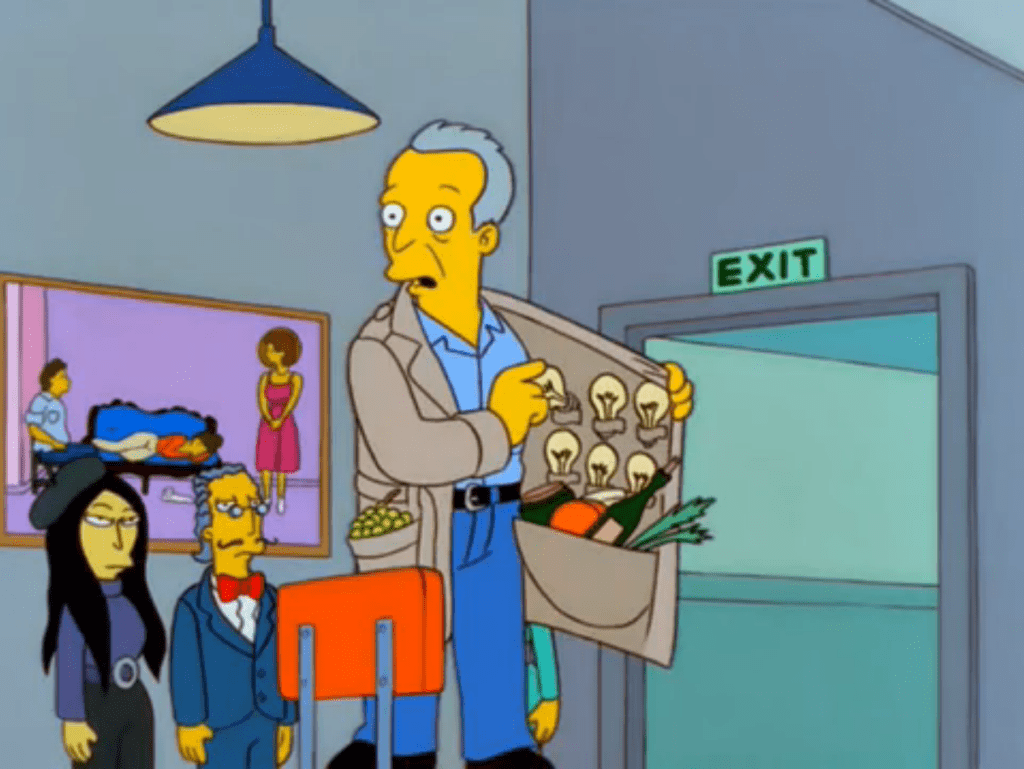
Let’s end with a few fun facts. Several people are banned for life from the comic book store, including Bart, Milhouse Van Houten, Sideshow Bob Terwilliger, Nelson Muntz, George Lucas, and Matt Groening. The most-often parodied films are Citizen Kane, The Godfather, 2001: A Space Odyssey, The Shining, and A Clockwork Orange. Like Batman, celebrities are so eager to make a guest appearance they are willing to be bad guys. Jasper Johns was portrayed as a kleptomaniac, Gary Coleman was a pathetic has-been, and Tom Arnold was an obnoxious nontalent who gets fired for being a bad actor.

📷wikifandom.com george lucas

The fact that so many celebrities are enthusiastic to appear on the show probably sums up how popular and how embedded The Simpsons is in our culture. It’s hard to think of another show with such lasting appeal. There are a few Sunday news shows that might have been on the air as long, but their popularity is not comparable. Actually, because the show has been on the air for so many decades, it may have
📷artinthemovies.com Jasper Johns

curtailed its viewers somewhat. I have never been able to become a dedicated fan because I could not devote the weekly time for so many years to watch the show. I will say that whenever I watch an episode, I always find something valuable in it. Even if the show is not one of their better episodes, and with 800 episodes, you know there are a few “klinkers,” there are always some great one-liners.

If you are one of those people who have lived under a rock or been a hermit without a television for more than 30 years, you might want to watch at least a few episodes to see what all the fuss is about. You won’t be disappointed.
Good Times Doesn’t Always Mean Good Show

Last week we looked at shows that debuted in 1973, fifty years ago in our “Potpourri” blog series. Today we are concentrating on one of the successful shows of that 1973 class (and there were not a lot of them): Good Times and I’m am considering this blog “Flopourri” for Florida Evans.

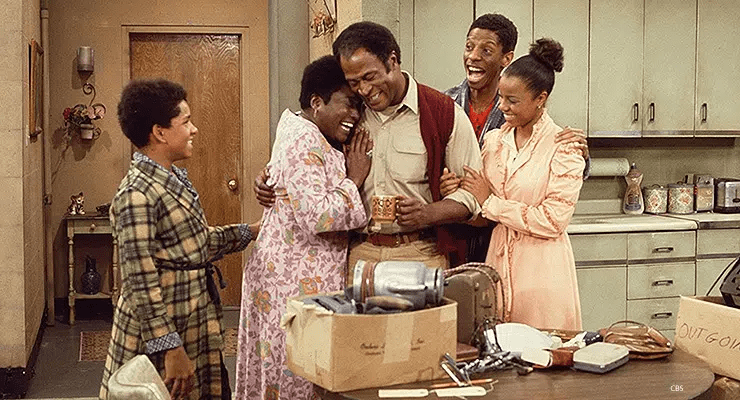
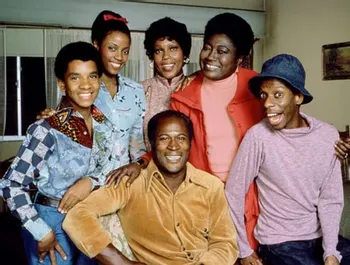
Cast of Good Times Photo: tvtropes.com

For those of you who have been with me for the past six and a half years. You may be surprised to find me featuring a Norman Lear show. I readily admit that I have a Norman Lear bias. It’s nothing personal with Norman, but I just did not enjoy most of his shows: All in the Family, The Jeffersons, Maude, Diff’rent Strokes, Sanford and Son, and Carter Country, among others. I did think that Mary Hartman, Mary Hartman was an interesting concept, just too hard to sustain, and I admit that I liked Fernwood Tonight. I still bypass these shows on MeTV and Antenna TV when they are on the schedule. However, I will be the first to say that they were important historical shows in the evolution of television. They were relevant shows that changed the way sitcoms were written and presented a lot of important topics for people to debate.

So, whether I enjoyed watching Good Times or not, and it was not, it was an important show that gained a devoted following and was on for six seasons, producing 133 episodes. The show was produced by Lear and created by Eric Monte and Mike Evans. Evans played Lionel Jefferson on The Jeffersons. He left the show to work on this series and when Good Times was canceled, he returned to The Jeffersons.

Florida Evans (Esther Rolle) was Maude’s maid. Maude was a spinoff from All in the Family and Good Times was a spinoff from Maude, so this was the first show to be created from a spinoff.

Photo: showbizzcheatsheets.com

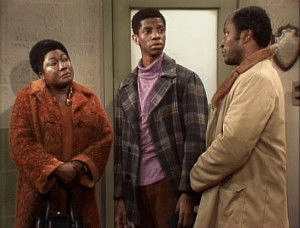
The Evans family lives in the Chicago projects. The area is not named but the opening and closing credits show photos of Cabrini-Green. The family consisted of Florida, her husband James (John Amos), their kids JJ, 17 (Jimmie Walker), Thelma, 16 (BerNadette Stanis), and Michael, 13 (Ralph Carter). The show also featured Florida’s best friend Willona (Ja’Net DuBois) and Nathan Bookman (Johnny Brown), the building superintendent. The family never has enough money. James is often out of work, but he also works two jobs when he gets a chance to bring in money for their family. He is a proud man and does not believe in handouts.

Many of the shows deal with gang warfare, financial issues, muggings, unemployment, rent parties, racism, and evictions. It was one of the first shows to have an almost all-black cast. Florida and James are good parents who try to teach their children values and ethical behavior. Michael was an especially interesting character who was intelligent, an advocate who loved African American history, and tried his best to make the world a better and more fair place to live.

Photo: JacksonUpperco.com

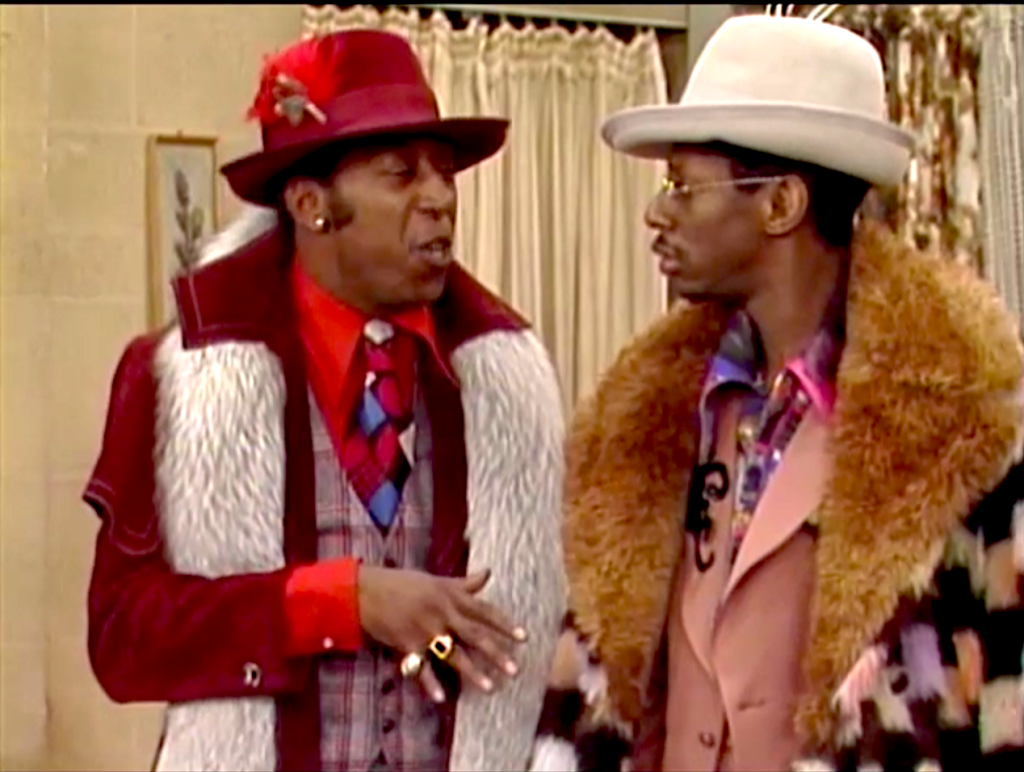
Other recurring characters include Ned the Wino (Raymond Allen), who often can be seen in their building. In one episode, JJ, an artist, paints Ned as Jesus and, in another, well-meaning Michael tries to reform him by letting him stay at their house but it does not work out. Carl Dixon (Moses Gunn) is a shop owner in the area. After James’ death, Florida begins dating him and eventually they marry and move to Arizona. Esther tells Willona in a later season that Carl died from lung cancer. Pimp Marion Williams (Theodore Wilson) is a neighbor who is known for his flashy clothing and jewelry. Lenny (Dap Sugar Willie) is the neighborhood hustler who sells stolen items. Wanda (Helen Martin) runs a women’s support group in their building. Alderman Fred C. Davis (Albert Reed Jr.) is a politician with a shady past.

A lot of celebrities appeared on the show during its run including Debbie Allen, Sorrell Booke, Rosalind Cash, William Christopher, Gary Coleman, Alice Ghostley, Ron Glass, Robert Guillaume, Gordon Jump, Jay Leno, Charlotte Rae, Philip Michael Thomas, and Carl Weathers.

The theme, a gospel-sounding song with a choir in the background, was composed by Dave Grusin and the lyrics were written by Alan and Marilyn Bergman. It talked about the hard living conditions the family had to endure which was not thought of as “Good Times.” Performed by Jim Gilstrap and Blinky Williams, the lyrics were:

Good Times.
Any time you meet a payment. – Good Times.
Any time you need a friend. – Good Times.
Any time you’re out from under.
Not getting hassled, not getting hustled.
Keepin’ your head above water,
Making a wave when you can.

Temporary lay offs. – Good Times.
Easy credit rip offs. – Good Times.
Scratchin’ and surviving. – Good Times.
Hangin in a chow line – Good Times.
Ain’t we lucky we got ’em – Good Times.

Photo: thatsentertainment.com

One of my favorite things about the show was the use of nicknames, maybe because my family is fond of nicknames as well. James called Thelma “Baby Girl” and referred to Michael as the “Militant Midget” for his activism. Willona’s name for Michael was “Gramps,” while JJ called him “Miguel.” The other residents also got their own monikers including Willona as “The Rona Barrett of the Projects” and Wanda as “Weeping Wanda.”

Good Times was created as a show that focused on Rolle and Amos. Both stars expected the show to deal with serious topics even though it was a comedy. They also wanted the characters to be positive role models.

JJ began to be featured in more of the episodes. “Dynomite” became his catchphrase and he said it at least once in every episode. As the writers focused more on his character and the way he behaved, important topics were put on the back burner sometimes.

Both Rolle and Amos felt that the character of JJ and the way he was being developed as more of a foolish and unintelligent person was creating a negative role model. Both stars became disillusioned with the direction of the show and voiced their criticism, Amos more often. They thought the uneducated, slacker type of behavior that JJ expressed was harmful to young viewers. Lear finally fired Amos at the end of the third season because of his negative opinions. The cast had no idea that he had been fired until they read the script where he passed away. Rolle quit at the end of season four.

Walker didn’t see it the same way. He said in an interview that he does not remember saying one word to Amos or Rolle that was not part of the script. He defended his character saying that he didn’t commit overly criminal acts on the show and compared his character to the Fonz on Happy Days. He does have a point. He was deeply hurt that Amos and Rolle, along with many black community members, considered his character a “perpetuation of negative stereotypes.”

Photo: showbizcheatsheet.com

Perhaps part of the controversy came from Walker’s own personality. He considered himself a comedian, not an actor. He said he was never comfortable with the dramatic storylines. Lear wanted Jimmie to take acting classes but he refused. Rolle, Amos, and Carter were dramatic actors and took their roles more seriously. When Rolle died in 1998, Walker was the only cast member who did not attend her funeral.

In season five, Janet Jackson joined the cast as Penny, an abused girl abandoned by her mother, adopted by Willona. Ratings began to decline. With Rolle’s absence, the essence of the show was gone.

Producers asked Rolle to come back even as a guest role. Rolle rejoined the cast for season six after she was promised higher-quality scripts. She also wanted the character of Carl Dixon written out of the show. She felt Florida would not have remarried so quickly, but that was how writers depicted her absence from the show when she left.

However, it was too late and the show continued to decline in ratings. The continual moving of the show on the schedule also didn’t help things. The show began on Friday nights for season one; moved to Tuesdays for seasons two and three; had two different time slots on Wednesdays for seasons four and five; and ended up moving three different times for season six: Saturday at 8 for episode one, Saturday at 8:30 for episodes 2-10, and Wednesdays at 8:30 for episodes 11-22.

Photo: pinterest.com

The series finale in 1979 gave each character a happy-ever-after. JJ becomes a comic book artist. Michael begins college and moves into the dorms. Thelma and her husband move to the Gold Coast when he gets an offer from the Chicago Bears. Thelma is pregnant and they ask Florida to move with them to help care for the baby. Coincidentally, Willona becomes head buyer for her boutique and moves into the same luxury apartments with Penny.

Unfortunately, the show is remembered now more for its controversy than anything else. Amos talked about his “early departure from the show, I felt that with two younger children—one of whom aspired to become a Supreme Court Justice . . . and the other a surgeon . . . there was too much emphasis being put on J.J. and his chicken hat saying ‘Dynomite!” every third page when just as much emphasis and mileage could have been gotten out of my other two children and the concomitant jokes and humor that could have come out of that.” He later said in an interview with VladTV that the scripts on the show led to “an inaccurate portrayal of African-Americans. Their perception or their idea of what a Black family would be and what a Black father would be was totally different from mine, and mine was steeped in reality.”

He did have good things to say about Rolle and her character: “Florida was the glue that kept the family together. It showed a Black family that had the same trials and tribulations as the rest of America, especially those who were financially challenged . . . it told the story of who we were on a comedic basis. And I’ve always contended, as some of my mentors taught me, the best way to get a message across to people is through humor.”

Photo: urbanhollywood411.com

Rolle concurred as she told Ebony in 1975 about JJ: “He’s eighteen and he doesn’t work. . . He can’t read or write. He doesn’t think. The show didn’t start out to be that. Michael’s role of a bright, thinking child has been reduced.”

Walker was interviewed at age 70 by Rebeka Knott and still disagrees with his costars. In that interview, he said that his co-stars, “killed the goose that laid the golden egg. These people, anytime you said anything, they get crazy, they get upset. They don’t get it man.”

So, what are we to make of the show and its success or failure? It still remains an important program in television history. It featured a black cast and focused on a family that struggles with many issues both white and black low-income families could identify with. If Michael had appeared in a reality show as an adult, perhaps it would have been The Cosby Show. A lot of families, black and white, could identify with the issues of that show as well. And, hopefully, they understood where the success of that second generation came from–parents who worked hard and taught their children important values and emphasized hard work and goals that allowed the next generation to have more success than the previous one.

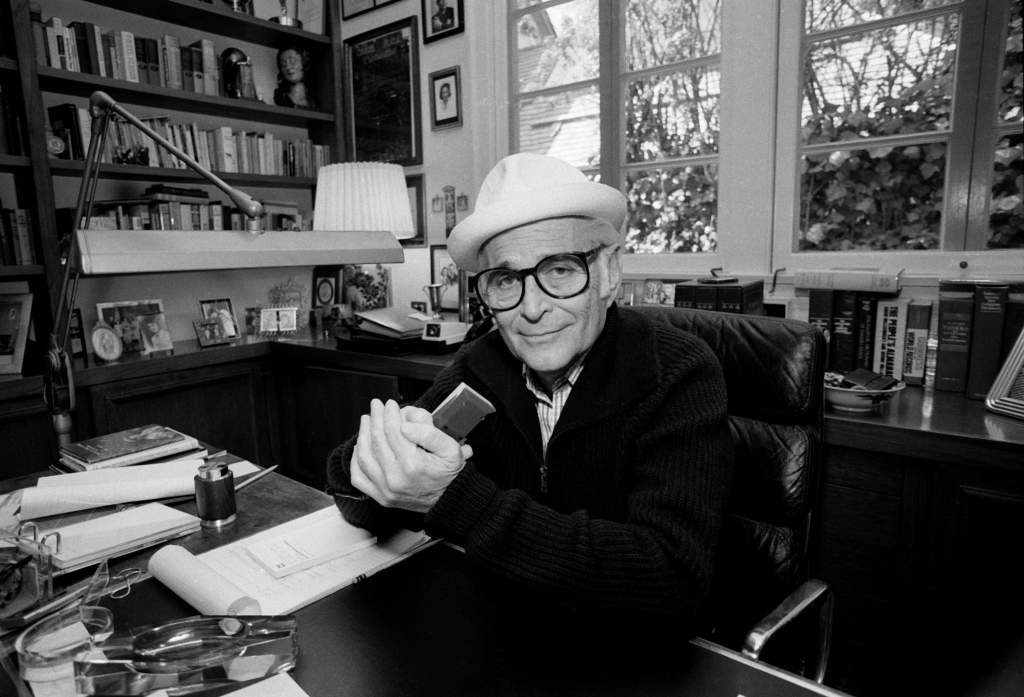
Norman Lear Photo: vibe.com

It’s actually what any good television show does. Regardless of the setting and the characters, it teaches us about how other people live and provides plots many of us can identify with or teaches us about other characters whom we can appreciate and learn more about their individual struggles and journeys whether they follow the same path we do or take a different fork in the road.

It would be interesting to talk with Rolle and Amos today to get their perspective. They were right to ask for better scripts and to showcase their other children who had bigger dreams and hopes. But perhaps Walker is also not that far off. He did portray a different type of character– one that obviously many people identified with or enjoyed spending time with. Don’t most families have a combination of good and not-so-good role models? Hopefully, we learn as much from the characters in our lives who make poorer decisions as we do from those who choose wisely. I’ll leave it up to you whether you think the tv show is worth watching today or not.

Buck Rogers Is Not for This Century

I am calling this month’s blog series, “I Robot.”  We are taking a look at some popular shows that featured robots. I did not include Lost in Space in this group because I did devote a blog to the show that discussed that robot in some detail.

Cast of Buck Rogers Photo: pinterest.com

Today we start with a show that was a fan favorite in the 1980s, although full disclosure, I had never seen this show until I wrote this blog: Buck Rogers in the 25th Century.

Because Star Wars was so popular, Universal decided to develop a television show about space. Glen Larson was the primary face behind the creation. The original plan was to make a series of Buck Rogers made-for-tv movies for NBC. Larson was also behind the show Battlestar Galactica.

Universal changed plans and filmed a big-screen movie about Buck Rogers. It had good reviews, netting $21 million. After the success of the film, NBC asked for a weekly series. Buck Rogers was not a new concept; he was created in 1928 by Philip Francis Nowlan and had been featured in a variety of media including comic strips, books, and radio. The original movie was edited for television, and it became the first two episodes of the series.

The concept of the show was that Captain William “Buck” Rogers (Gil Gerard) was a NASA pilot commanding Ranger 3 which was launched into outer space in 1987. Because of a part malfunction, Buck is frozen for 504 years and his spacecraft is found in 2491. At this time, he learns the Earth was recovering from a nuclear war.

Photo: buckrogersguide.blogspot.com

Buck has to try to assimilate into the 25th-century culture. Because he was previously a pilot, he is placed in the Earth Defense department. Buck is often undercover. He works with Colonel Wilma Deering (Erin Gray), a starfighter pilot. Stargates were artificially created portals in space to help travel between stars. If you watch the episodes closely, you will notice a subtle shift in Wilma’s hair color. Gray was required to dye her hair blonde for the first season. As the season progresses, the color begins to fade and she was allowed to do that, so by the second season, she has brunette hair.

Another coworker is Twiki, a small robot (Felix Silla and voiced by Mel Blanc). Twiki provided much of the humor on the show. Also helping the trio was Dr. Theopolis (voiced by Eri Server), a small computer disk who understood Twiki and was part of the Computer Council. In the first season, the group received its orders from Dr. Elias Huer (Tim O’Connor).

It was a bit kitschy a la Batman. Several villains are involved in plots. In the first season, the “bad guy” was Princess Ardala (Pamela Hensley) who tried to conquer Earth. Most of the population resided in New Chicago and the rest of the planet was being explored again, and new cities were popping up like New Detroit, New Manhattan, New Phoenix, etc.

In the original story, Buck awakes after 500 years to learn that America was overrun by Mongol invaders and in ruins. Wilma and Dr. Huer are both part of that story, as are Killer Kane and Ardala Valmar.

The Villians Photo: moriareviews.com

For a show that did not produce very many episodes, a lot of celebrities were featured on the show including Gary Coleman, Jamie Lee Curtis, Peter Graves, Jack Palance, Markie Post, Dorothy Stratten, and Vera Miles. A few of the stars who played Batman’s foes show up on Buck Rogers including Cesar Romero, Frank Gorshin, Roddy McDowall, and Julie Newmar.

The opening theme music for the show was composed by Stu Phillips and arranged by Johnny Harris. Harris added a 45-second audio clip when Rogers is spinning and then begins with the main theme.

The show debuted in September of 1979. It was popular with viewers, but critics were not on board with the show. Gerard did not like the direction his character was taking. He was in favor of more series stories and felt like his character was just used to make continual jokes and not taken seriously. At times he even rewrote scripts to favor his character over other roles. There was a lot of tension on the set. Two of the writers and script editors left in the middle of the year. Gerard was reprimanded by the network, and he said he hoped that the series would not be picked up for a second season.

Photo: denofgeeks.com

James Van Hise said the show’s scripts “never took advantage of what they had at hand.” And he said Larson exploited a well-loved character in popular culture. John Javna in his book The Best of Science Fiction TV described the show as the worst science fiction show of all time. Bill Lengeman said the acting was wooden and specified that the episode “Space Rockers” was the worst episode of TV science fiction he had ever seen. Many critics were not happy with the way the women were treated in the second season. Ardala was dismissed, and Wilma lost her respectful position, almost becoming an inconsequential sidekick to Buck.

An actors’ strike delayed filming for season two. A new set of producers was brought in and the format was tweaked. Buck, Wilma, and Twiki were now on a spaceship called the Searcher with a mission to look for lost groups of humanity. Many of the previous characters were no longer part of the series, including Theopolis, Ardala, and Dr. Huer. The Starfighter on the series was created by Ralph McQuarrie and had been one of his designs for Battlestar Galactica.

Taking on more of a Star Trek aura, the new characters included Admiral Efram Asimov, a distant relative of Isaac Asimov (Jay Garner) who commands the Searcher; Hawk (Thom Christopher) an alien who represents the Bird people, now almost extinct; like Spock, he remained straight-faced while others are enjoying emotional moments; Dr. Goodfellow (Wilfrid Hyde-White) an elderly scientist; and Crichton (voiced by Jeff David) a robot built by Goodfellow who disdains humans.

The storylines became more serious and an underlying romance was hinted at between Buck and Wilma. Although the changes were what he asked for, Gerard later complained again about the show. Larson might have been second-guessing himself for casting Gerard. His first choice for the role was Kurt Russell. However, he was concentrating on his movie career and had no interest in coming back to television. Interestingly, Russell had been passed over for the role of Han Solo in Star Wars, losing to Harrison Ford. Ratings dropped in the second season. After only producing 21 episodes for season one, NBC canceled the show after 11 episodes in season two.

Despite the small number of shows produced, Universal released the show on DVD in 2004, but the first two episodes were replaced with the original big-screen movie. The series can also be streamed on NBC’s app.

New books and comic books were produced in the eighties. There were also several sets of action figures released by Mego. Milton Bradley debuted a Buck Rogers board game. You could also purchase jigsaw puzzles, model kits of space ships, die-cast toys, trading cards, and a lunch box.

Although the show garnered no Emmys for acting which is not surprising, it did receive five nominations. In season one, Bruce Broughton won for Outstanding Achievement in Music Composition for a Series. Other nominations included Outstanding Cinematography for a Series in season one, Outstanding Art Direction for a Series in season two, and Outstanding Costume Design for a Series in both seasons. The miniature sets for the landing bays and launch tubes were built with Styrofoam. Although they were inexpensive, combined with clever lighting, they appeared as complex architectural sets.

The show was beloved by its fan base. It’s hard to say why it had such a short life. There seem to be many reasons it didn’t last. With the success of Star Wars, everyone jumped on the outer space bandwagon, and the viewers could only watch so many of them. Gerard certainly did not help the ratings with his complaints and dissatisfaction with the show. Getting rid of Princess Ardala and reducing the role of Wilma to a minor character did not help retain female viewers. The show never seemed to be able to figure out what it was. Was it a Star Wars? Was it Batman? Was it Star Trek? It just seemed to not be very well planned or developed.

Twiki Photo: imdb.com

If you enjoy science fiction, it might be worth watching. After all, there are only 32 episodes, and if nothing else, you might want to watch to see if in the decades since it debuted, it still makes that list of worst science fiction shows. I’d be interested in hearing what you decide. As for this blog series on robots. I can happily relay that Twiki won the TV Land Awards in 2008 for Most Awesome Robot!