Oh Magoo, You’ve Done It Again

Welcome to October, and welcome to our blog series for the month, “Get Animated.” Up first on the schedule is Mister Magoo.

📷imdb.com

This show was originally aired from 1960 to 1962. It was produced by United Productions of America, and each episode was made up of five four-minute cartoons. Jim Backus voiced Mr. Magoo and other famous voice actors on the show included Bea Benadaret, Mel Blanc, Dawes Butler, June Foray, Paul Frees, Jerry Hausner, Frank Nelson, Benny Rubin, and Jean Vander Pyl.

Mr. Magoo’s first appearance was in 1949 in “The Ragtime Bear.” Created by Milard Kaufman and John Hubley, Mr. Magoo was originally a parody of Joseph McCarthy, a mean-spirited, hateful man. It was meant to protest the Hollywood Blacklist. However, Kaufman found himself on one of these lists and passed the character of Mr. Magoo to Pete Burness. Burness depicted Magoo as a senile old man who was too stubborn to admit his eyesight was going. Backus was already voicing Mr. Quincy Magoo in 1949, so he lived with the character for decades.

In 1964, a similar series debuted called The Famous Adventures of Mr. Magoo which was on one season, and What’s New Mr. Magoo popped up in 1977. Backus continued to voice Magoo until the 1997 big-screen movie when Leslie Nielsen took on the role.

The show won two Oscars for Best Short Subject, but these were both in the mid-fifties before the television show debuted.

📷pinterest.com

I remember watching reruns of the shows when I was a kid, and while I thought some of the shows were funny, I wasn’t a huge fan. I was much more into Scooby Doo, Josie and the Pussycats, and The Archies.

Many kids identified Mr. Magoo with a grandparent: an elderly person who wasn’t ready to accept the fact that they were aging and had some limitations. Mr. Magoo got into a lot of complicated situations because he couldn’t see very well and refused to admit it. He would do things like think he was walking into a men’s clothing store when he was in an army recruitment office and try to purchase clothing.

When making the talk show rounds in the sixties, Backus told a story about how he prepared for the series. He put a fake rubber nose that pinched his own nose, giving it a nasal twang. After being Magoo for a bit, he was able to produce the voice without the fake nose. One of Magoo’s taglines was “Oh, Magoo, you’ve done it again.”

One of the tough things about this show was Magoo’s houseboy Cholly, whose real name was Charlie. Cholly was a stereotype of a Chinese man featuring huge buck teeth and fractured English diction. While several shows had Chinese or Black employees during this era, most of them were not so negative. Rochester often got the better of Jack Benny on his show. On Bachelor Father, one of my favorite sitcoms, Bentley lived with his niece and Peter, his houseboy. But Peter was more of a brother and felt free to speak his mind to Bentley; he was not a demeaning caricature.

📷pinterest.com

Backus seemed to vacillate on whether he liked or detested Magoo. In an article from 2023, Jim Korkis talked about Backus’ relationship with the animated character. Backus once admitted that “I’d like to bury the old creep and get some good dramatic roles in movies. He’s a pain in the posterior. Every time I start to be a serious actor I lose out because someone—usually a producer—says I’m Magoo.” However, Jim also drove around in a car with the license plate “Q MAGOO.”

He said Backus saw his father in the Magoo character who was isolated from most of the world. Another influence for determining the voice was a character Backus developed for his nightclub act. Backus described him as “the loud man in the train club car.

In an Ohio State University publication, Backus said his association with Magoo helped him out one night. He was trying to reserve a table at a restaurant with no luck. He called back as Mr. Magoo, and they gave him a table right away.

Say Jell-o to Don Wilson

As we continue with our “They Call Me Wilson” series, today we learn about the career of Don Wilson.  With 33 movie credits, he only starred in seven television shows, but if you were a fan of Jack Benny or Batman, you will recognize him immediately.

Photo: oldtimeradio.com

Wilson was born in 1900 in Nebraska. Not much is known about his early life, but in one interview in 1980, he mentioned he went to high school in Boulder, CO. He played football at the University of Colorado and was an excellent golfer.

Denver was also the place he began his radio career, singing on KFEL in 1923. Wilson talked about a group he was part of, the Columbia Trio, in Denver beginning in 1925; they played on the radio and appeared in clubs when they needed a late substitute. One of their clients for commercials was for Piggly Wiggly and the store brought the three musicians to California when the company decided to open up new stores in California and renamed them the Piggly Wiggly Trio.

By the end of the decade, he was working full time at station KFI and later at KHJ both in Los Angeles. In an interview later in his life, he said he bought a Packard from Earle C. Anthony, and the Cadillac sponsor Don Lee, who owned KFI did not take it kindly and fired Wilson.

Apparently, he couldn’t decide which direction he wanted his career to go. During the early thirties, he worked as a sportscaster and covered the opening of the 1932 Summer Olympics for NBC. He also announced five Rose Bowls. He was mentored by Ted Hussey and said he was the greatest sports announcer bar none as well as a generous and knowledgeable man.

He took on Broadway roles in 1932 and 1934. He also began radio announcing for programs in the mid-thirties, first working with Benny in 1934.

Being perhaps indecisive, he also had a hard time with his love life. His first marriage was to Lucy Saufley in 1927; in 1940, he divorced Saufley and he married Peggy Kent whose father was president of 20th Century Fox. In 1942, the same month his divorce became final , he married a Polish countess, Marusia Radunska and this relationship lasted seven years. When he married his fourth wife, Lois Corbett in 1950, he finally found a lifetime partner.

He would be a member of the Jack Benny television family for 31 years, but when he was hired, although it was as a permanent cast member, he was at least the fourth announcer in two years to work on the show. Wilson said he thinks he was chosen partly because he laughed at all the right lines. He said luckily, in person, Benny was much more generous with his salary than was portrayed on the show.

When Benny made the foray into television in 1950, Wilson went along and would continue to costar on the show until it ended in 1965.

The cast of The Jack Benny Show-Photo: tvtropes.com

Although Don was listed as announcer for the Benny show, like Harry Von Zell on Burns and Allen, he was really part of the cast. His good-natured, friendly manner and booming Midwestern voice made him a pleasant person who often took the brunt of jokes by Benny, often due to his 6 foot, 300-pound physique. Wilson’s wife Lois appeared as his wife on the show for fifteen years, so it was a family affair. She also acted on other radio shows.

Benny producer Irving Fein, said Don “was a great foil for Jack. He was the hearty announcer who tried to get the commercial on the air and Jack would try to thwart him. Sometimes Don would have the Sportsmen Quartet sneak in the commercial. Don would tell Jack the Sportsmen were going to do a song. Then they would sing a chorus of a song and the final chorus would be the commercial.” The first commercial Wilson pitched on the show was for General Tires. Jell-O, part of General Foods, sponsored the show for ten years, and Lucky Strike then took over for another fifteen years.

Photo: jackbennypodcast.com

His coworkers said he rarely misspoke his lines, but when he did, they took advantage of it. In an interview on speakingofradio.com, Don told a story that during one 1950 broadcast, he relayed a bunch of information and Jack asked him when he learned all that and Don said he read it in columnist Drew Pearson’s article, but he mistakenly said Dreer Pooson. Later during the murder-mystery story, Benny approached Frank Nelson and asked, “Pardon me, are you the doorman?” Instead of the written line, Nelson asked, “Well who do you think I am, Dreer Pooson?” That line got a lot of applause and laughter.

He said Benny was a quiet listener and preferred to stay in the background reacting to other actors. However, Wilson said that “when he was eventually on, he could top everybody. . . He wasn’t a one-liner comedian . . . he was a real thoroughbred professional, start to finish.  He always demanded the very, very best that he could possibly get and if ever there was an irreplaceable man, Jack Benny would be that man.”

Wilson with Jack Benny and Dennis Day–Photo: radiospirits.info

Don discussed how the show worked. He said “Jack’s philosophy was that the bigger he could make the supporting people, the bigger the Jack Benny Show became and the bigger Jack Benny therefore became.”  Wilson said he was thoughtful and generous and would not allow anything off-color in the show, so it was fit for family watching. He said in one episode, Benny sat off to one side and the cast spoke to him, but he didn’t actually utter a line until the last few minutes of the show. He said Jack often came up with the idea for a show but then turned it over to the writers and let them do their part.

He said some of his most enjoyable shows were when he traveled with Jack performing for military audiences. Jack would try to move the brass, so the enlisted men could have front-row seats.

Wilson did announcing work for a variety of programs in the heyday of radio. He worked with Bing Crosby, Fanny Brice, and Alan Young. He also worked for Chesterfield when they sponsored a show with Glenn Miller.  When Miller went into the war, Harry James took over that spot, and Don continued working with him.

Wilson said in the early years of television, they did two live presentations, one for the east coast and one for the west coast.  In between they would tweak lines and rehearse those changes. Eventually, the show was taped, so the cast did not have to do two live performances.

Radio Guide, in addition to other award groups, awarded Don the Announcer of the Year Award for fifteen years straight.

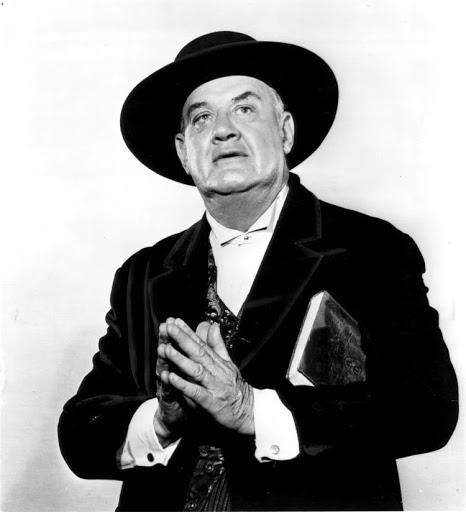
While on Benny’s show, Don also made several appearances on other television shows in the fifties and sixties. He showed up on Screen Directors Playhouse in 1955 and on The Red Skelton Show in 1959. He was a preacher on Death Valley Days in 1959.

Photo: radiospirits.com

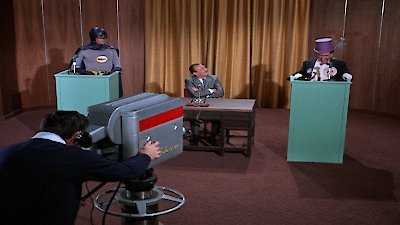
In the sixties, he could be seen in the Mel-O-Toons in 1960 which presented short, five-minute stories often based on fairy tales. He was also on Harrigan and Son in 1961. His last role was after Jack Benny went off the air. He was Walter Klondike, a newscaster spoof on Walter Kronkite, on Batman in 1966.

Watch Batman Season 2 Episode 18 - Dizzoner the Penguin Online Now
Photo: yidio.com

Don passed away due to a stroke in 1982.

I really enjoyed listening to several interviews with Don. He was so appreciative of his career and the people he was able to work with during his entertainment opportunities. Listening to someone who was able to get in on the beginning of radio and then do the same thing with television was very interesting and informative. I hope he realizes how much we all appreciated him.