Sherwood Schwartz was born in November of 1916 in New Passic, New Jersey. The Pawnshop starring Charlie Chaplin was showing in theaters. These silent films would lead to radio and television developments that would change the course of Schwartz’s life.

Photo: charliechaplin.com
After getting his undergrad degree in New York, Sherwood moved to California to attend school and get his Masters in Biology. His goal was to have a career in endocrinology doing research. Unfortunately, he was put on a waiting list because the medical schools he applied to had a quota for the number of Jewish students they would accept. It was suggested that he change his name and religion. He refused and never did get into medical school.

Photo: tvparty.com
While waiting, he submitted jokes to Bob Hope for his radio show. He picked Hope’s show specifically because his brother Al worked for the show. (Al wanted to be a comedy writer, but his parents made him get a degree first. After passing the bar, he informed them he was off to California.) Bob Hope asked Sherwood to join his brother on staff and he accepted. He honed his comedy skills writing for four years with Bob Hope.
In 1941 he married Mildred Seidman and they had a family of four children. Sherwood also wrote for the Alan Young Show on radio.
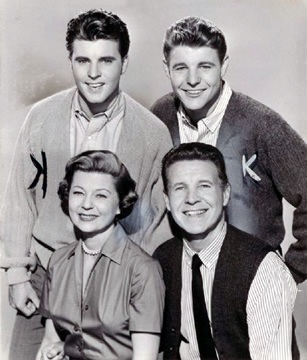
Photo: tvseriesfinale.com
During World War II, he wrote for the Armed Forces Radio and when the war was over, he joined the staff of The Adventures of Ozzie and Harriet. Ozzie Nelson has a reputation for being a perfectionist. When Schwartz was asked about this, he gave the following example: “Oh absolutely. Absolutely true. That is the only man I know who, after his show was in reruns would take the reruns and re-edit them because he wasn’t happy with something. When it was too late to do anything with them, he still did it.”

Photo: wikipedia.org
In the 1950s, Schwartz made the move to television. He took a position with the writers on I Married Joan starring Joan Davis and Jim Backus. He described the difficulty in writing for her show. “She refused to do the show unless a writer was on the set. She wanted to be able to say I need a better line and have that provided to her right then and there. Since there were only three writers for the show, one had to be on the set while the other two continued working on upcoming scripts.” As he put it, “The stage would be quiet for a moment, 75 production people were scattered around the stage and you had to get a better line or a better blackout. That’s enormous pressure for a writer. It was a rough week (when it was his turn to be on set).”
He became the head writer on The Red Skelton Show where he also worked with his brother. He did not enjoy working with Skelton. Skelton had a reputation for treating writers badly. Schwartz received an Emmy for his work on the show. The final straw was when Sherwood was listening to an interview with Skelton. He was asked why his show was so successful, and he replied, “Every week, when I get those lousy scripts from the writers I yawn. And the voice of God tells me how to fix things.” Sherwood decided the pay was not worth the grief of working for Skelton, so he left the series.
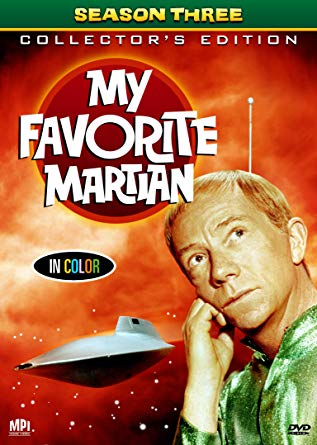
He was then hired to retool My Favorite Martian in 1963 co-starring Bill Bixby and Ray Walston. CBS asked him to do some “reconstruction” work for the series, and he worked on seven episodes. He said the pilot was a great blueprint, but the writers were not following it as well as they should have. They were concentrating on Tim and his problems when the show needed to feature the challenges the Martian was having adapting to life on earth.
During this time, he was thinking about his own series. When he and his brother worked in the radio industry, they came up with an idea for a show called Help, about seven servants who work for a rich family. He now began to take that idea and expand it. What if he took seven people from all different walks of life–but how to get them in one place was the stumbling block.
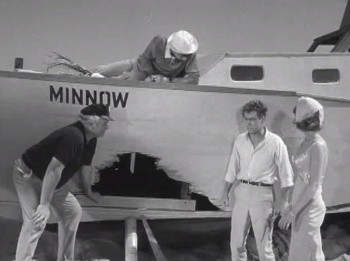
Photo:mgtow.com
It began to come together when he placed them on a deserted island. Later that year the pilot was shot with a movie star, a professor, a millionaire and his wife, a farm girl, a skipper, and his first mate inhabiting an island while waiting to be rescued. It was not an elite or snobby show to be sure. FCC chairman Newton Minnow is the person who called television a “vast wasteland,” and in his honor, the Skipper’s boat was christened The SS Minnow.
Viewers always loved the show, but critics not so much. Schwartz said the critics never understood “the big picture” of what the characters represented. The San Francisco Chronicle’s Terrence O’Flaherty wrote that “It is difficult for me to believe that Gilligan’s Island was written, directed and filmed by adults.” UPI’s Rick DuBrow wrote “It is impossible that a more inept, moronic or humorless show has ever appeared on the home tube.” Ouch!
Schwartz said he was not “disheartened by the reviews . . . only a bit angry with the lack of understanding of what was being attempted.” As he continued, “these are the same men who are forever saying ‘For heaven’s sake, won’t somebody give us something other than the wife and the husband and the two children?’”
He once admitted “I honestly think I could sit down and write a show tonight that the critics would love, and I know it would be canceled within four weeks. I know what the critics love. We write and produce for people, not for critics.”

Photo: latimes.com
The show also gave him a new skill as a lyric writer. Along with George Wyle, he wrote the theme song for Gilligan’s Island.
Although the show was popular with viewers, executive William Paley never liked it. The show was being moved around the schedule, and in order to move Bonanza to a different time spot, he cancelled Gilligan’s Island. Gilligan’s Island was on the air for three years, but it established Schwartz’s reputation as a producer and writer.
Apparently, many people felt the show was realistic. A coast guard colonel called Sherwood and later showed him letters from people who were concerned about the castaways being stranded on the island and asking the coast guard to rescue them.
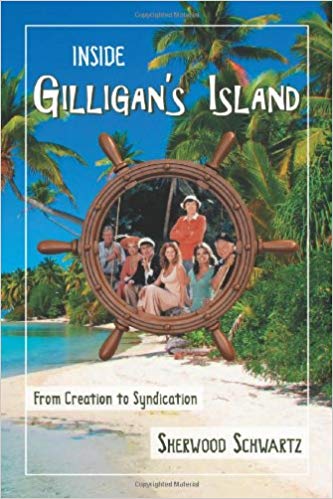
Although the show was cancelled, it never really went away. Two animated series and three TV movies would spin off the show. It has also been on air in reruns since 1967. In 1988, Sherwood wrote a book, Inside Gilligan’s Island.
With the cancellation of Gilligan’s Island, Sherwood began work on another new show. He had read an article that reported nearly one-third of American households included at least one child from a previous marriage. He decided to feature this sociological change and wrote a script about a woman with three daughters who marries a man with three sons. The networks all liked the idea but were asking for some major changes which he refused to make.
In 1968 the movie, Yours, Mine and Ours came out about a blended family and the networks now wanted the show. The series, starring Robert Reed and Florence Henderson as Mike and Carol Brady, aired on ABC from 1969 to 1974. The Brady kids were played by Maureen McCormick, Barry Williams, Eve Plumb, Susan Olsen, Christopher Knight, and Mike Lookinland. Ann B. Davis played Alice, the housekeeper.
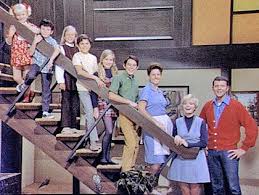
Photo: boston.cbslocal.com
Again, the critics dismissed the show. What surprised me was that The Brady Bunch never did as well as Gilligan’s Island in the ratings. When it debuted, I was eight, and we all looked forward to Friday night when we would plant ourselves to watch The Brady Bunch and beginning in 1970, The Partridge Family, The Odd Couple, and Love American Style.
While the critics wrote the show off as unrealistic, many of the scripts were taken from the Schwartz family’s life. His daughter said she was not thrilled to watch the show and see a story about her life as part of the plot.
Similarly to Gilligan, once again, Schwartz wrote The Brady Bunch theme song, this time with Frank DeVol.
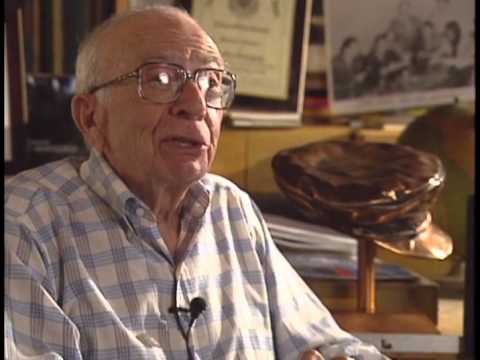
Photo: youtube.com
There are a lot of rumors that Robert Reed and Sherwood did not get along. After a lot of research, I’ve determined that Reed was never happy about what he saw as an inferior role. I think he wanted to do Shakespeare-quality shows in a time when there was not a need for that type of show. He seemed to nitpick the scripts too much and was too literal. Although I’ve read some memos where I totally agree with his interpretation, you can only spend so much time dissecting everything. On one show, he walks into the kitchen where the women are cooking strawberries and his line is, “This smells like strawberry heaven.” He wasted time writing a memo about the fact that he researched what strawberries smell like cooking and determined that they had no smell. He needed to learn to pick his battles, I guess.
In another similarity to Gilligan’s Island, not only did The Brady Bunch never leave the air after it was cancelled, but it too resulted in many other versions. An animated series, The Brady Kids, appeared on Saturday morning. Several TV movies, including The Brady Girls Get Married and A Very Brady Christmas were produced in the 1980s. That movie spawned a reboot of the original tv series which didn’t last long on the air. Finally, Sherwood also produced a movie for Paramount, A Very Brady Sequel, a satire of the original television show, in 1994.

Sherwood’s son Lloyd helped produce and write the tv movies and the Paramount film. In addition, they wrote a book together, Brady, Brady, Brady: The Complete Story of The Brady Bunch as Told by the Father/Son Team Who Really Knew. The reviews of Sherwood’s book about Gilligan’s Island are mostly positive. This book had very mixed reviews. Most fans seemed to enjoy the first part of the book told by Sherwood, but the majority of readers dismissed the second part, primarily written by Lloyd, as insensitive and egotistical. Few people had any positive comments about Lloyd’s involvement.
Although Schwartz would never repeat the success he had with The Brady Bunch or Gilligan’s Island, he did create several other series.
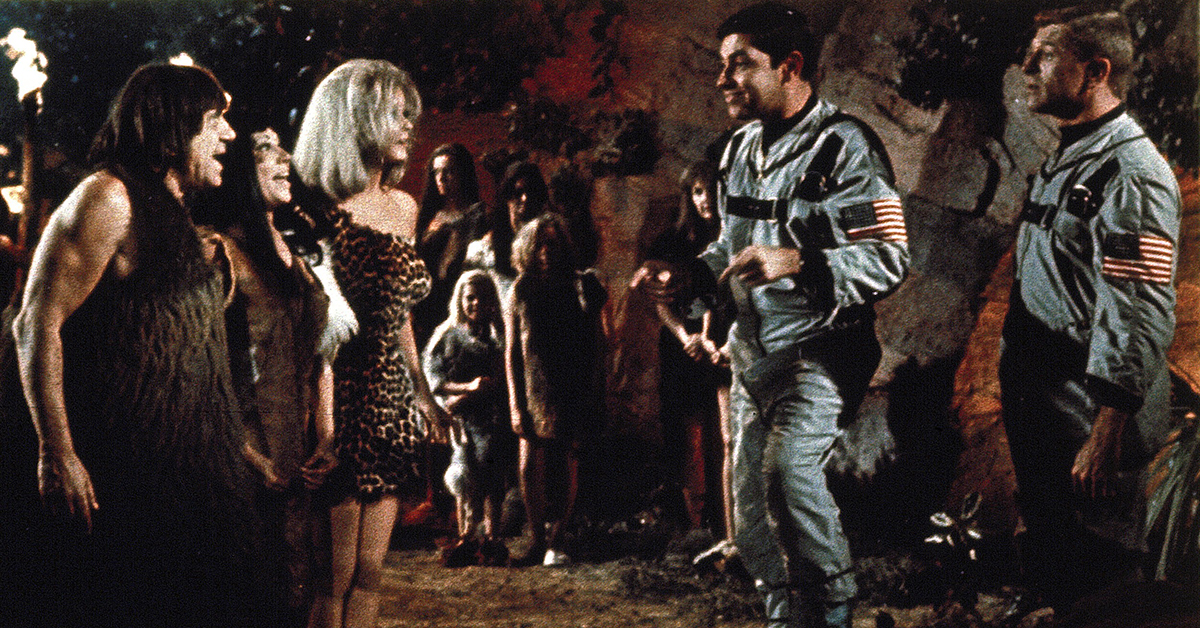
Photo: metv.com
In 1966 after Gilligan ended, he produced It’s About Time where two astronauts end up in a prehistoric era and must learn to live with the natives. This show lasted one year, and 26 episodes were written.
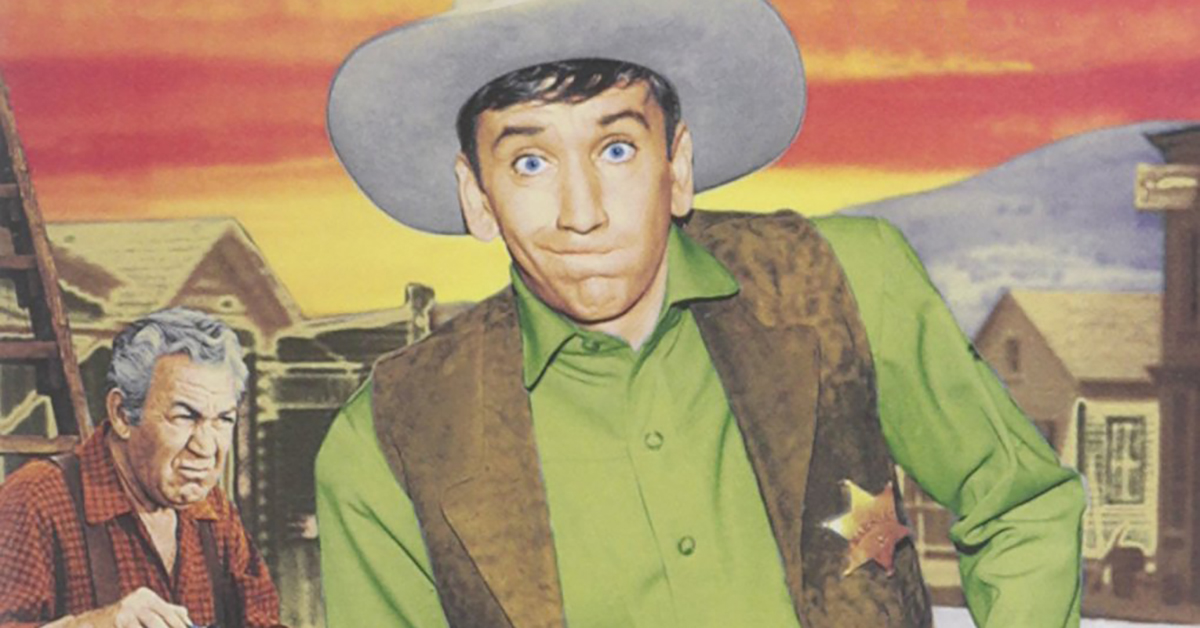
Photo: metv.com
In 1973, Bob Denver again worked with Leonard in Dusty’s Trail. Seven travelers similar to the castaways get separated from their wagon team heading west and must work together to try to catch up to their group. Sounds rather familiar. Season one ended up with 27 episodes.
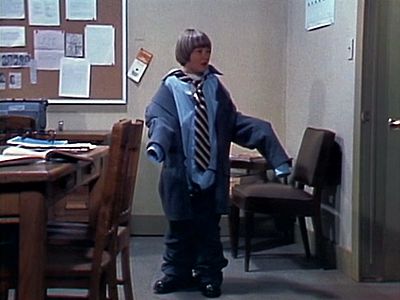
Photo: lockerdome.com
Big John, Little John aired in 1976 and was a situation comedy on Saturday mornings featuring a man who turns into a 12-year-old after drinking from the fountain of youth. Only 13 episodes were produced.

Photo: sitcomsonline.com
Finally, in 1981, Schwartz took the song “Harper Valley PTA” and turned it into a series with Barbara Eden and Fanny Flagg. Once again, Sherwood wrote the theme song. The show was on the air for two years and produced 30 episodes.
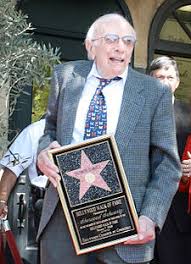
Photo: wikipedia.org
In 2008 he was awarded both a star on the Hollywood Walk of Fame and inducted into the Television Hall of Fame.
In 2011, Sherwood died peacefully in his sleep from natural causes. Although he and Reed may not have been close, the rest of his cast seem to have nothing but good things to say about him.
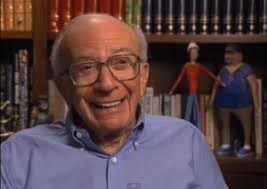
Photo: emmytvlegends.org
Florence Henderson quoted, “Sherwood was a wonderful writer and producer, but more importantly he was a wonderful husband, father, grandfather and friend. I don’t ever remember him losing his temper. Ultimately, he was a wonderful teacher in life and again, in death, he taught us how to leave with dignity and courage.”
Barry Williams who played Greg, the oldest Brady, said, “As much as Robert Reed was like a dad to me, Sherwood was like a grandpa.”

Photo: today.com
Oldest daughter Marcia played by Maureen McCormick, noted that “My mom, father and I would all go to Sherwood for advice because he always had a great answer.”
Tina Louise, Ginger from Gilligan’s Island, said he “brought laughter and comfort to millions of people. Gilligan’s Island was a family, He will be in our hearts forever.”

Photo: tabletmag.com
Bob Denver who always had wonderful things to say about him, summed up working with him on a radio interview he did with Peter Anthony from Montreal radio station CJAD 800 AM on January 6, 1994. “Sherwood, as a producer, he was one of the best writer producers. It’s amazing. That man was just amazing. We never knew there were any problems when we were shooting. He kept all the network craziness away from us. He was writing scripts literally four months in advance, so that special effects and props always got them in plenty of time . . . you just memorized your words and went down there and had a great time. It wasn’t until afterwards when I left that I realized that not everybody was in the same situation. So, every time I had a chance to work with him, I did.”
Schwartz had two unbelievably successful television series. But more than that, he knew how to use their brand and marketing to keep them going. Here we are 50 years later, and kids today still understand references to both shows. They have both been on the air continuously since they were first cancelled. Generations have watched the shows. The two theme songs, co-written by him, are two of the best-known songs from television history.
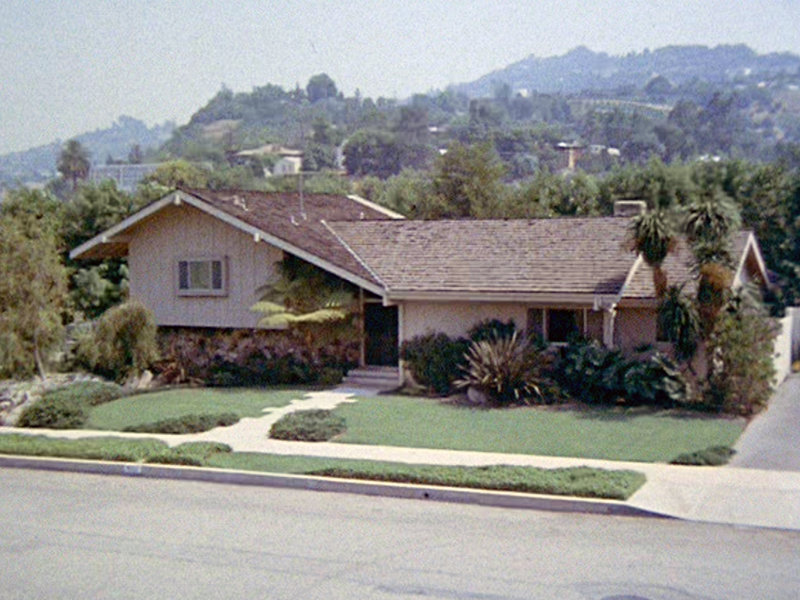
Photo: npr.org
I thought Paul Lieberstein (producer of The Office) summed up Schwartz’s influence best. In an email to Vulture, he wrote, “There was no one who shaped my childhood more. I could easily draw you a map of Gilligan’s Island and a floor plan of the Brady Bunch house—and I’m not even sure if my own childhood home had two stories.” And speaking of that blueprint, in 2019, exactly 50 years since The Brady Bunch debuted, HGTV has bought the house used for exterior shots for The Brady Bunch and will be renovating it. Once again generations will be watching The Brady Bunch cast with HGTV and learning about the show as the brand continues.





 thewritelife61